“gen de Kloas’n” / Klais*

IMG_1186

Teachers told us
The Romans built this place
They built a wall and a temple on the edge of the
Empire garrison town
They lived and they died
They prayed to their gods
But the stone gods did not make a sound
And their empire crumbled
Till all that was left
Were the stones the workmen found

— Sting, “All This Time”

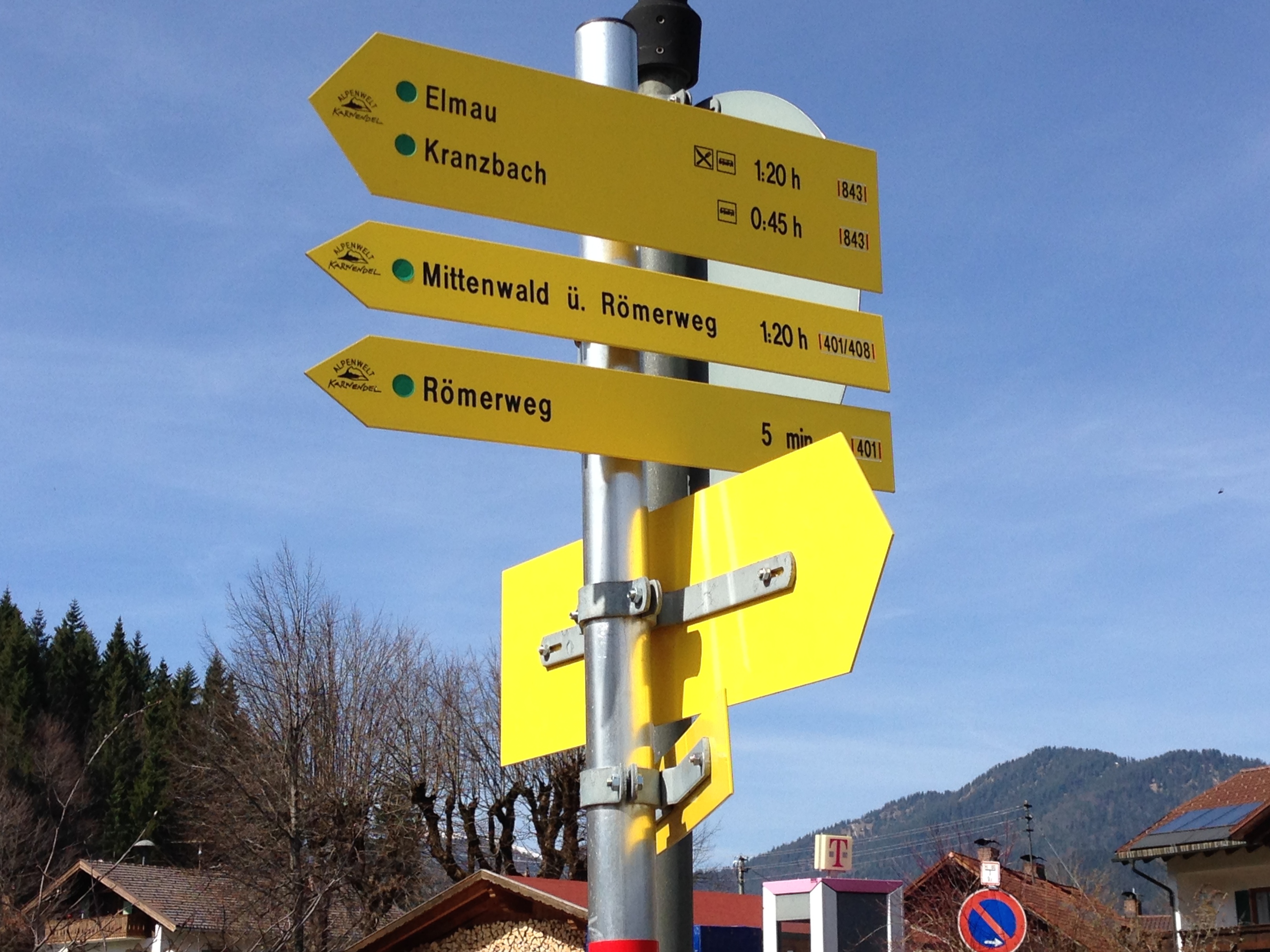
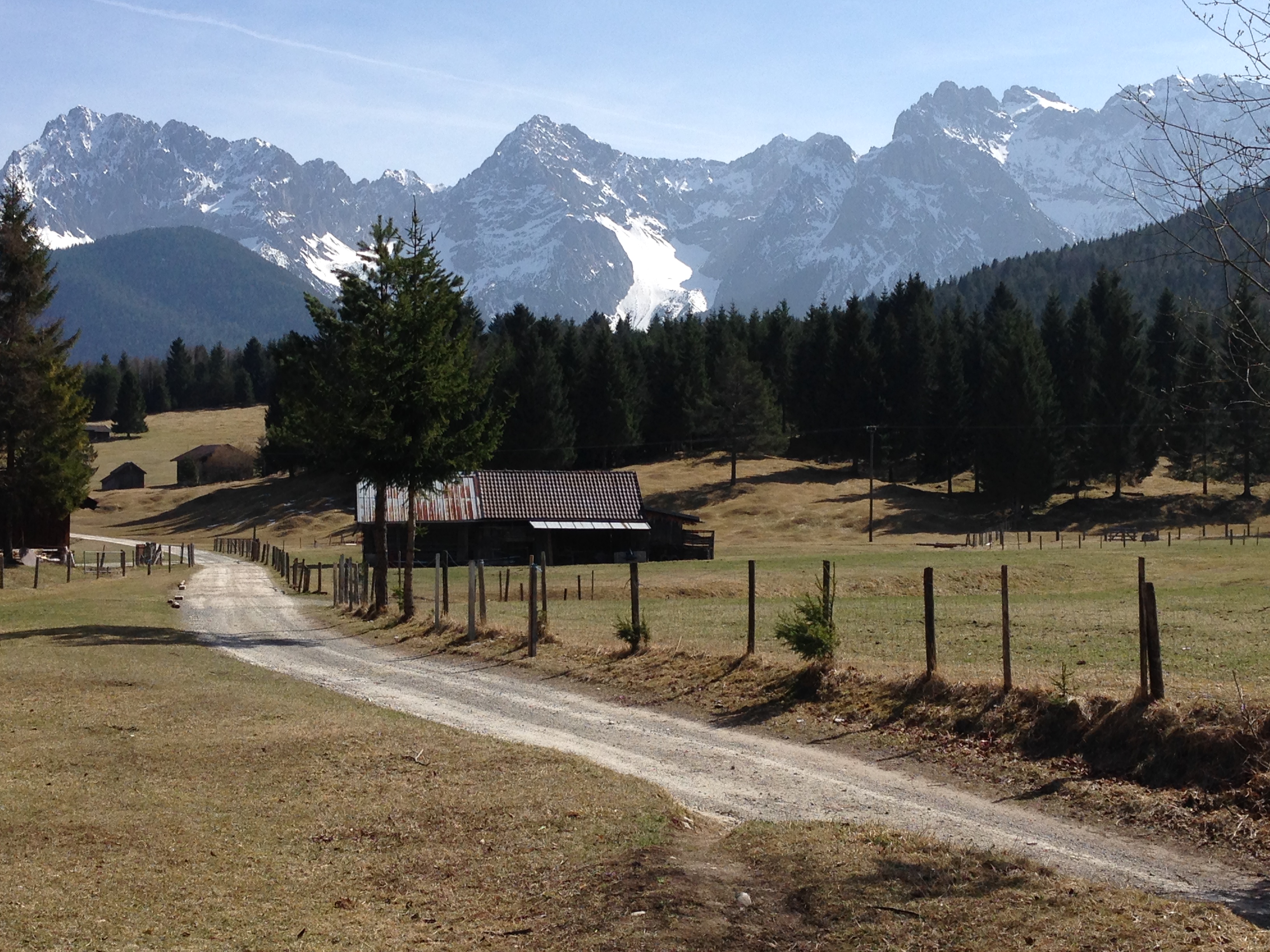
The train from Innsbruck to Munich over Mittenwald stops in Klais, an unassuming alpine village of small hotels (for the tourists who come to ski in the winter and hike in the summer) and locals who probably work in Mittenwald or Garmisch-Partenkirchen. Last week I unboarded there to take a look at some  local attractions, one in particular.

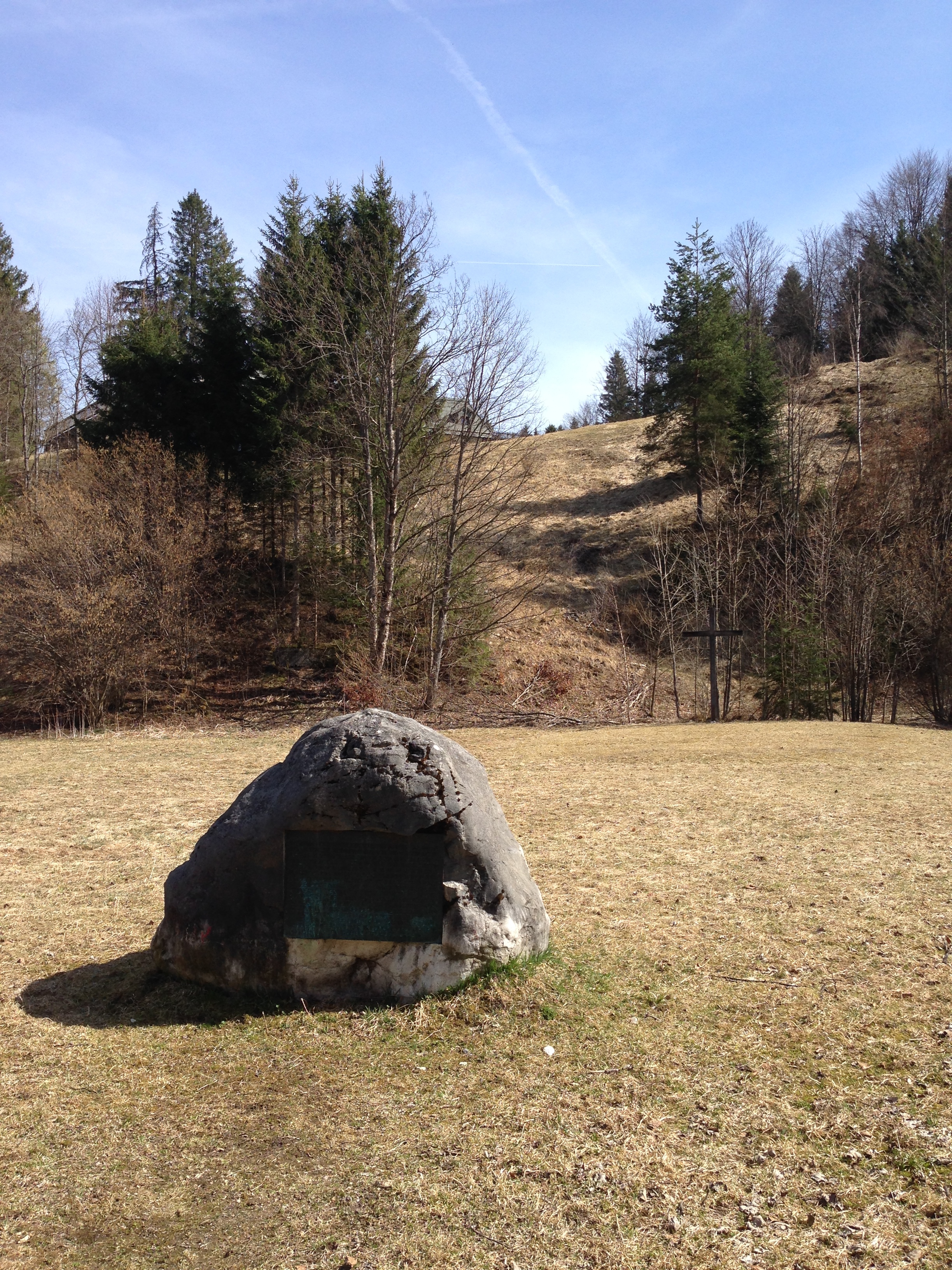
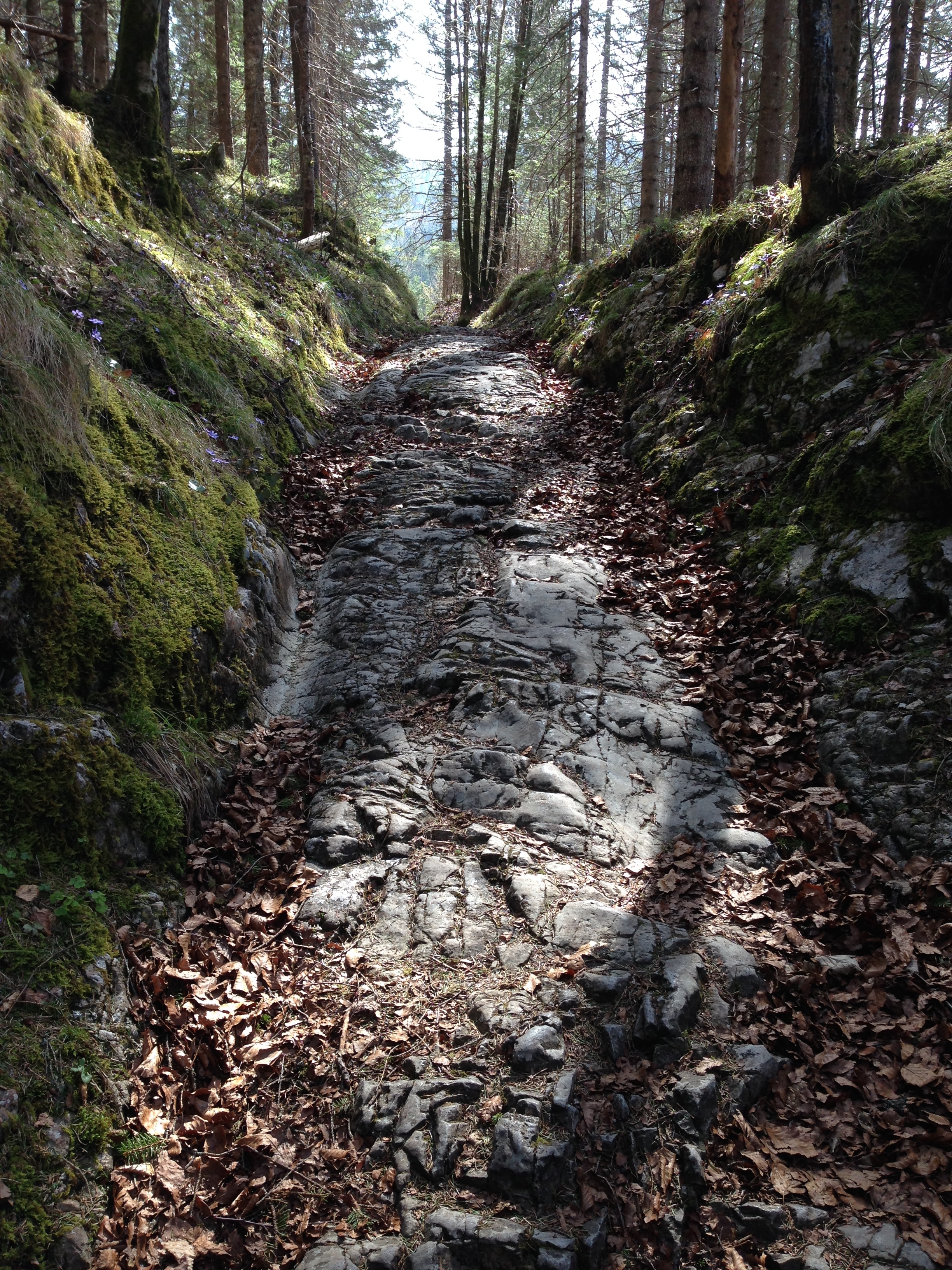
IMG_1190First, along the small path called Römerweg (more on that in a bit), one comes across the Kirchfeld (church field), in which a boulder rests. This is the site of the old original Scharnitz Abbey (g), founded in 763 and whose monks moved to another area in 772. Excavations in the late 20th century found a church foundation, traces of living quarters, and a small graveyard. Just a minute further along the path, however, one comes to this:
IMG_1199

A path cut right out of the rock. This is what remains locally of the old Roman “Via Raetia”, which ran over the Alps via the Brenner Pass, Innsbruck, and then on to the Roman provincial capital Augusta Vindelicorum, now known as Augsburg.

IMG_1205
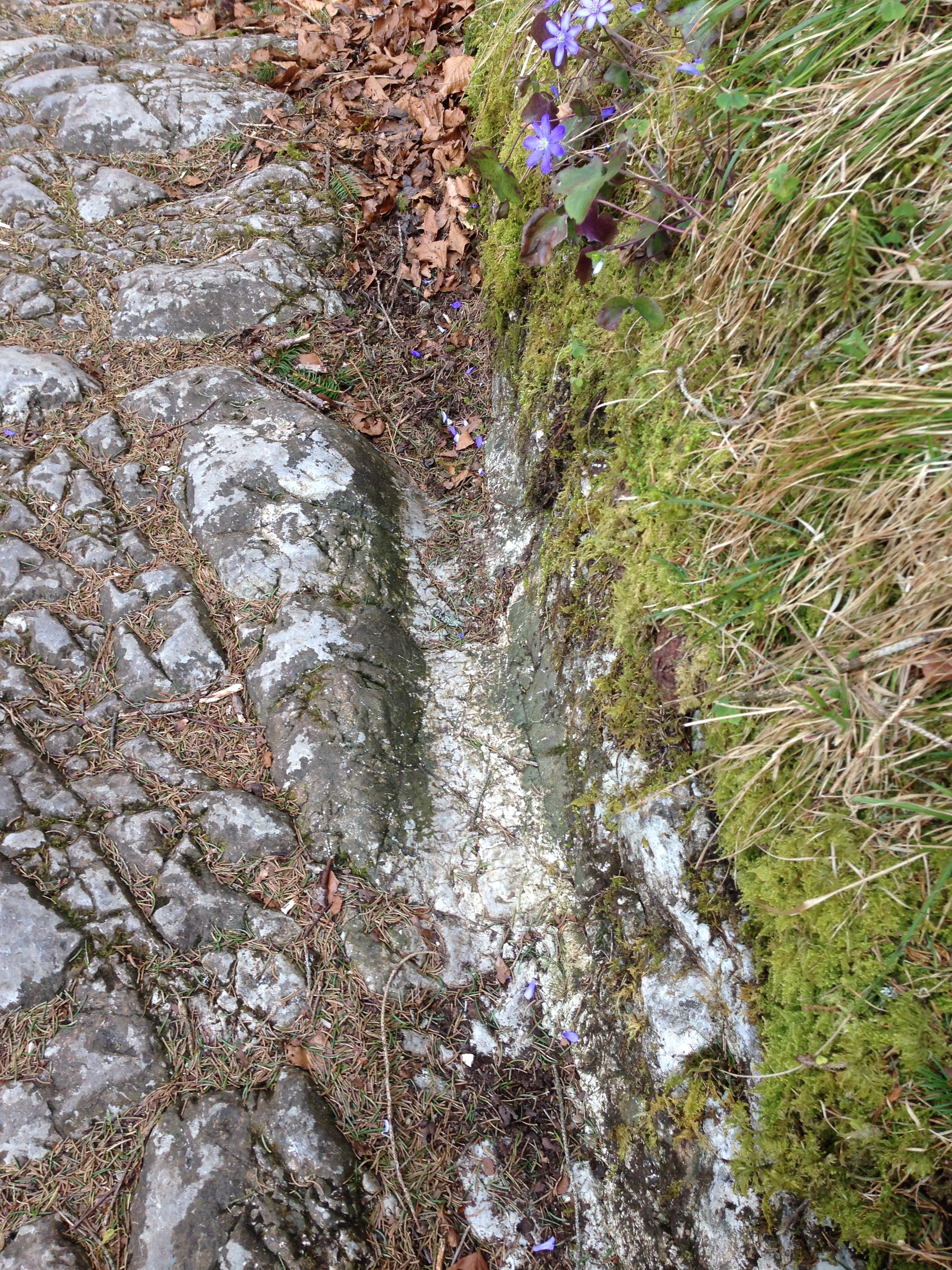
Above, a closer look at one of the grooves which helped determine, by the distance between them, that this road was used by Roman wagons and not wagons from the middle ages, when parts of this route were still very much in use.  (In researching this I stumbled upon a old tale which claimed that the US standard railroad gauge descends directly from the distance of the grooves left by “Roman chariots”. This story is false, for several reasons, but one of them being that the Roman army didn’t use chariots, which were so light that they wouldn’t have been leaving grooves anyway. The grooves come from plain old horse-drawn carts laden with goods, for army use or for trade.)

IMG_1200Römerweg ends here at this unpaved road, which leads to the main road back to Mittenwald. The Via Raetia probably does not lie beneath it, but rather somewhere hidden under pasture. Or maybe it does. One could cycle a bit of the general area of the road, although there is no fixed bike route as there is with parts of the Via Julia. The “Via Raetica Bike Path” is something else altogether, along the Danube near the Roman frontier. This online compendium of the Via Raetia would be useful in planning a route. Perhaps, with some deeper research and field work, I could publish my own someday…
*Ah yes, the title to this post.  A sign at the abbey site mentions, in the original documents pertaining to the dedication of the abbey, that the faithful of Mittenwald came to the church gen de Kloas’n [Geleisen], or “along the wheel tracks”. Although it has also been put forward that the village of Klais got it’s name from the Kloster, or even from the possibility of a clausura (military camp), the connection to the Geleisen seems to me the best answer.

AND: why you can’t walk/cycle a Roman road in it’s entirety. Note the lines indicating the tracks. Image from here (g).
www.kaluwi.de:Esch_Ech.html

Frühjahr

The German word Frühjahr is, according to the online dictionaries, a synonym for Frühling, or “spring” (the season). However I sometimes have taken the word to mean “beginning of the year”, and so, with the proximity of the advent of spring for the ancient Irish Celts (February 1) and for ancient Rome (February 5), Frühjahr seems like just the right word for now.  Das deutsche Wort Frühjahr ist nach einen online Wörterbuch ein Synomym für die Jahreszeit Frühling. Allerdings habe ich gelegentlich den Begriff als „Beginn des Jahres“ verstanden, und so, kurz vor Ankunft des Frühlings (für die altertümlichen irischen Kelten der 1.Februar, für die Römer der 5. Februar), scheint mir Frühjahr  das richtige Worte für gerade diesen Zeit, jetzt,  zu sein.

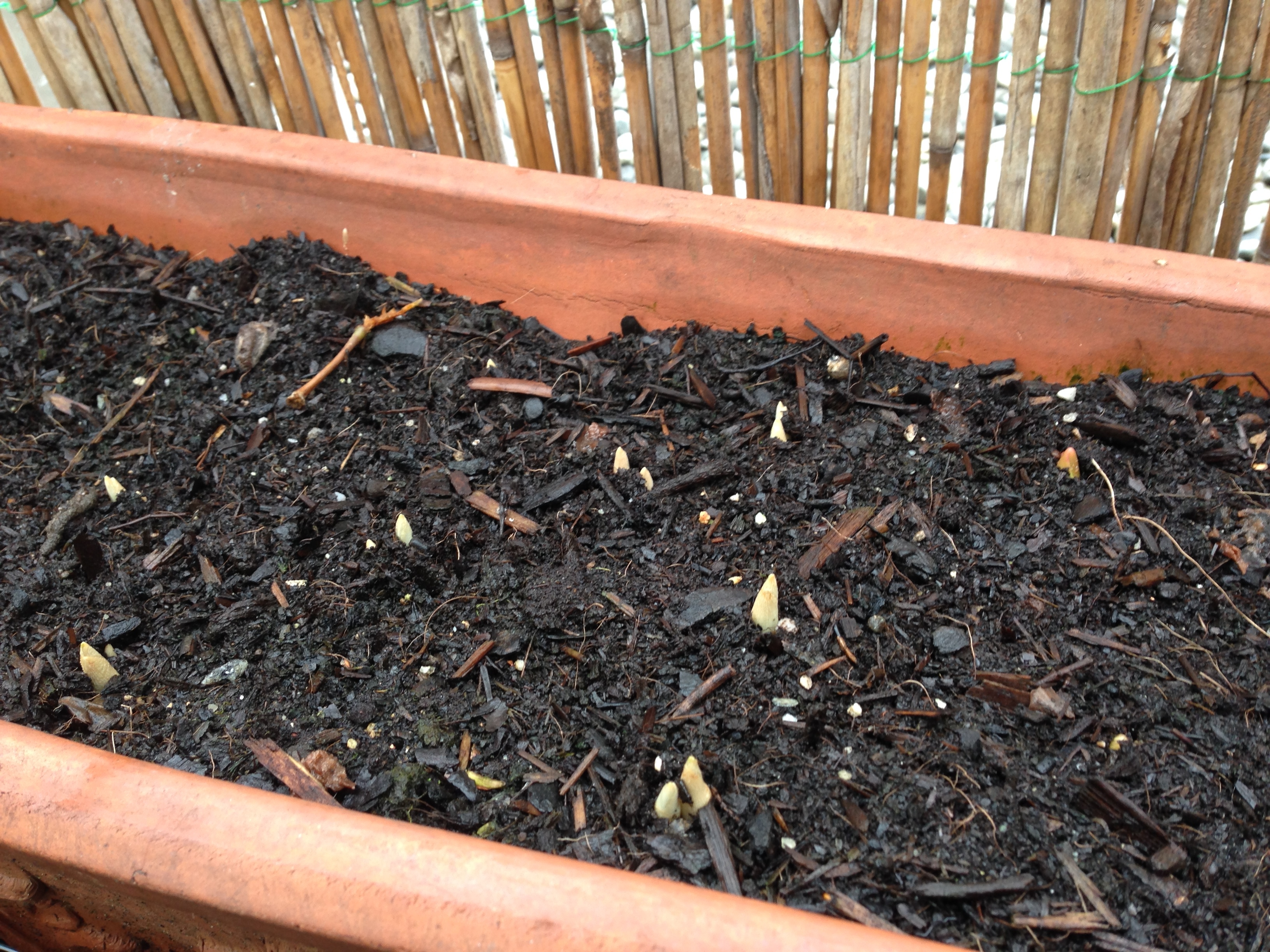
IMG_1075Flower bulbs are sprouting from the soil already. It still seems  a little early for this. Blumentriebe sprießen schon aus dem Boden. Es scheint noch immer etwas zu früh dafür.

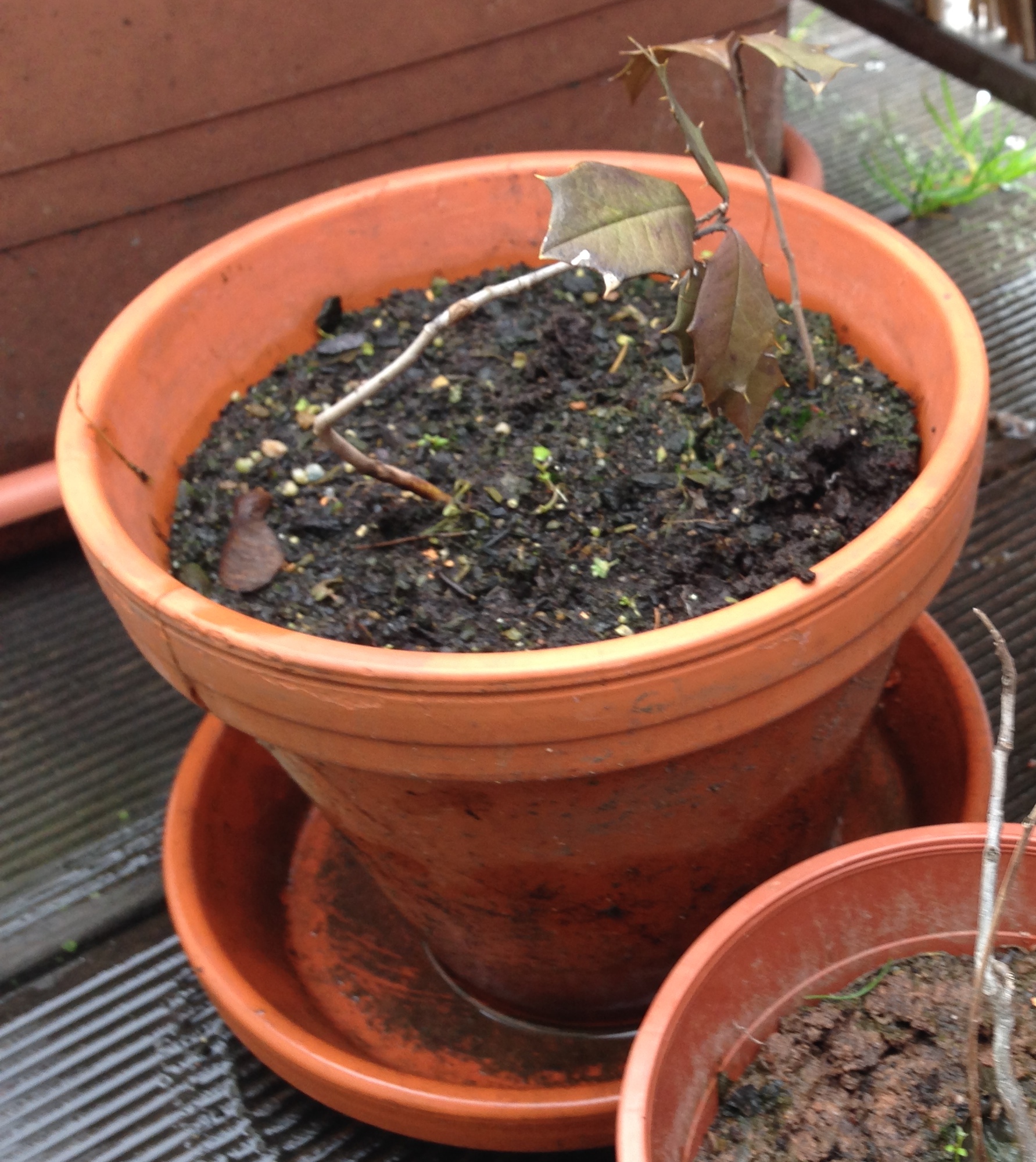
IMG_1076As an experiment, we took two small wild hollies or Ilex (Stechpalme) and transplanted them to pots on the terrace. One looked not to have survived the transplanting but we decided to wait and see if it rallies after the winter. (They are both from private ground with permission from the owner.)  Wir haben versuchweise zwei wilde Stechplamen in Töpfe auf der Terrasse umgesetzt. Einer sah so aus als hätte er das nicht überlebt, aber wir entschieden uns dafür den Winter abzuwarten um zu sehen, was sich noch zeigt. (die Pflanzen wurden mit Erlaubnis des Besitzers von einem  privaten Grundstück geholt).

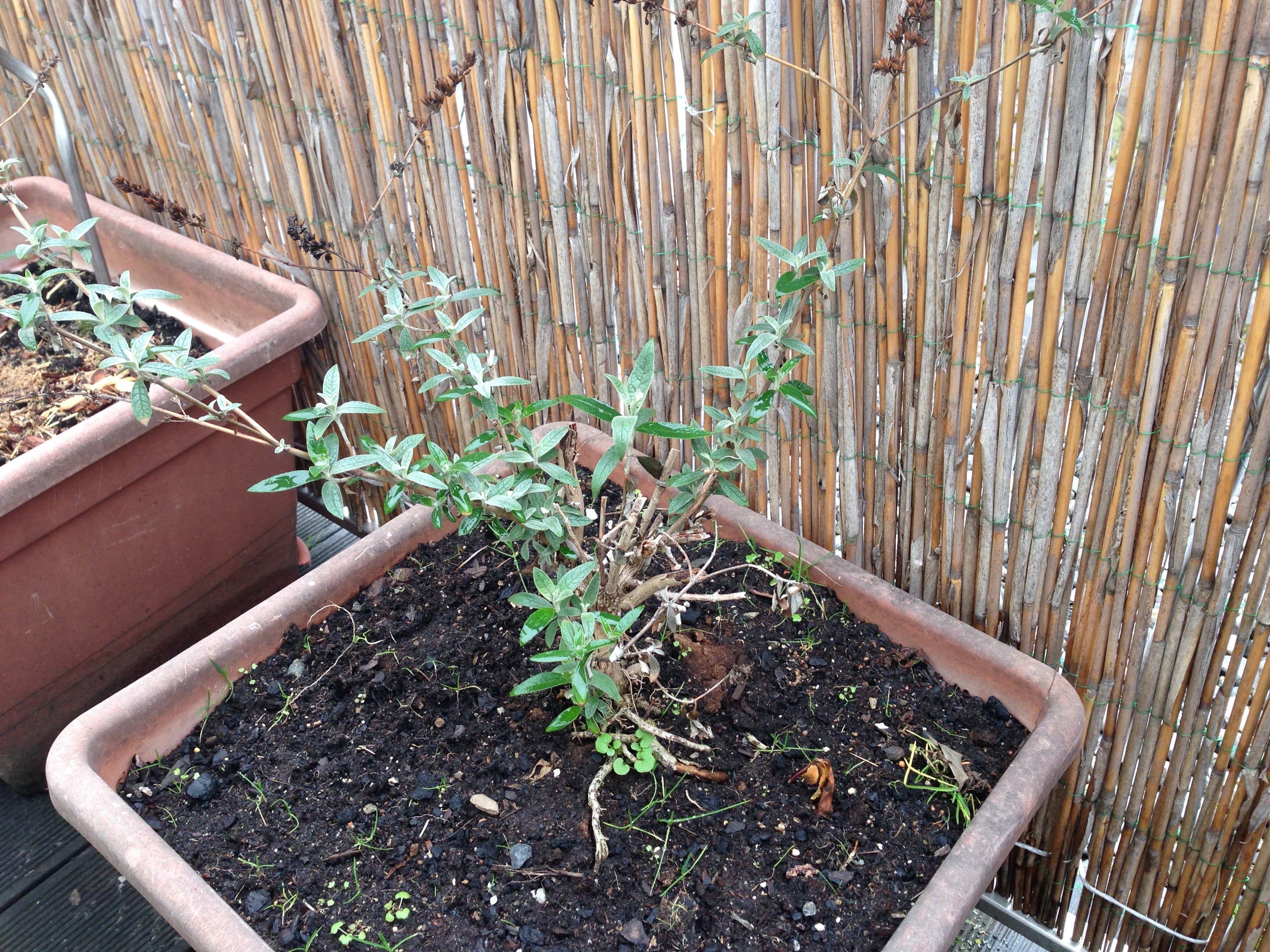
IMG_1077Another transplant was this butterfly bush, Buddleia (Schmetterlingsflieder). Bought at a garden center, it survived the trip and took to its new home right away. I learned later that Buddleia will grow almost anywhere, including vacant lots and abandoned railways. There are clusters of the plant growing in an old lot on Amraser Strasse behind the train station here in Innsbruck, and later I noticed more along my train ride to Bavaria, especially around the station at Murnau, where an abandoned track area is now a field of high grass and wildflowers. I shall cut it back in March to stimulate growth.      Außerdem haben wir einen Schmetterlingsflieder gesetzt. Gekauft in einem Gartencenter, hat er die Umsiedlung überlebt und fühlt sich schon wie zuhause. Später habe ich erfahren, dass der Schmetterlingsflieder praktisch überall wächst, unter anderem auf Brachen und aufgelassenen Eisenbahnen. Ansammlungen der Pflanze wachsen auf einem alten Grundstück an der Amraserstraße hinter dem Bahnhof Innsbruck, später habe ich ihn auch auf der Zugfahrt nach Bayern gesehen – besonders in der Umgebung des Bahnhofs Murnau  auf verlassenen Gleisanlagen die von hohem Gras und Wildblumen überwuchert sind. Ich werde ihn im Frühjahr zurückschneiden, um sein Wachstum anzuregen.

Jackson Memorial

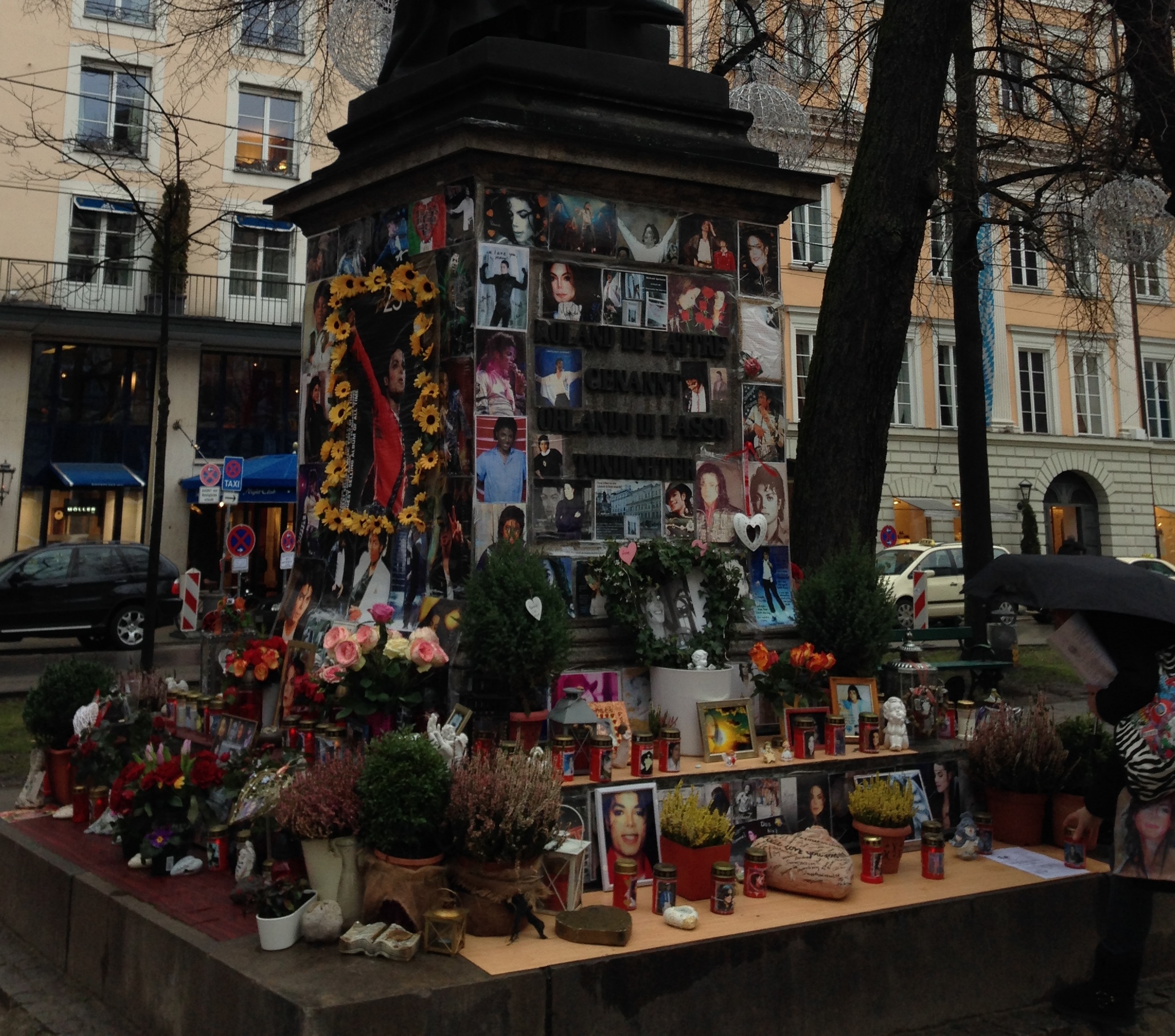
In Munich today, we found ourselves in front of this:

IMG_1051A perfectly respectable monument of the composer Orlando di Lasso (who died in Munich in 1594) has been re-purposed into a memorial to Michael Jackson, who did not die here, but who did stay in the hotel just beyond, the luxurious Hotel Bayerischer Hof.  No, it’s not the German hotel where he recklessly dangled a baby from the balcony; that happened at the more famous Hotel Adlon, in Berlin. 

Seven Views of Maria-Theresien-Strasse

(click on any image to see source in its URL, sorry, no direct links) This was originally titled “Eight View of Maria-Theresien-Strasse” but I found one of the images redundant and therefor it was pulled. Sorry for any confusion.

philographikon.comIn the beginning, street life looked somewhat chaotic. All of these images include the Annasäule (column) so they are all after 1704. However, the first expansion out of the original Altstadt, that is, the Neustadt (which later became Maria-Theresien-Strasse), began in 1281.

photographium.comThe street is still unpaved, but now that it’s cleaned up, it looks a little on the sterile side. It’s probably a Sunday, around the turn of the century.

akpool.de

An undated postcard. The streets are paved, the tram line is in. Dress lengths and the men’s suits suggest sometime after 1916 and before the Roaring Twenties.

yakohl.comThis is from 1939. Still horse carts but now we’ve got jazzy convertibles.

sagen.atThis is also apparently from 1939, although it looks like it may have been taken around Hitler’s first visit in April 1938. Nazi flags galore. Note the Hitler portrait over the door at far left, with the slogan “Ein Volk, ein Reich, ein Führer“. The woman at right, in the light-colored jacket with the bundle in her hand, gazing quietly across the street. What is she thinking?

curbsideclassic.comSame street, 1950s.  What a change. After the war, denazification certificates were referred to slangily as Persilschein, Persil being a brand of whitening laundry soap. Here it looks as if the entire street has been washed in Persil.

Priceline.comToday Maria-Theresien-Strasse is a thriving pedestrian shopping zone,  most recently even cycling through is not permitted at the northern end (the part you see here).

The Annasäule has been there since the early eighteenth century, even if its statues have been replaced over time. Despite its name, the figure at the top is actually the Virgin Mary. St. Anne stands below (facing the mountains), along with Sts. George, Cassian and Vigilian. The pillar was erected in commemoration of the expulsion of warring Bavarians on St. Anne’s Day in 1703hence the name.

Innsbruck, Dürer and “Ern Malley”

IMG_1031

Liebe Leserinnen und Leser, hier findet ihr Information über diese Geschichte.

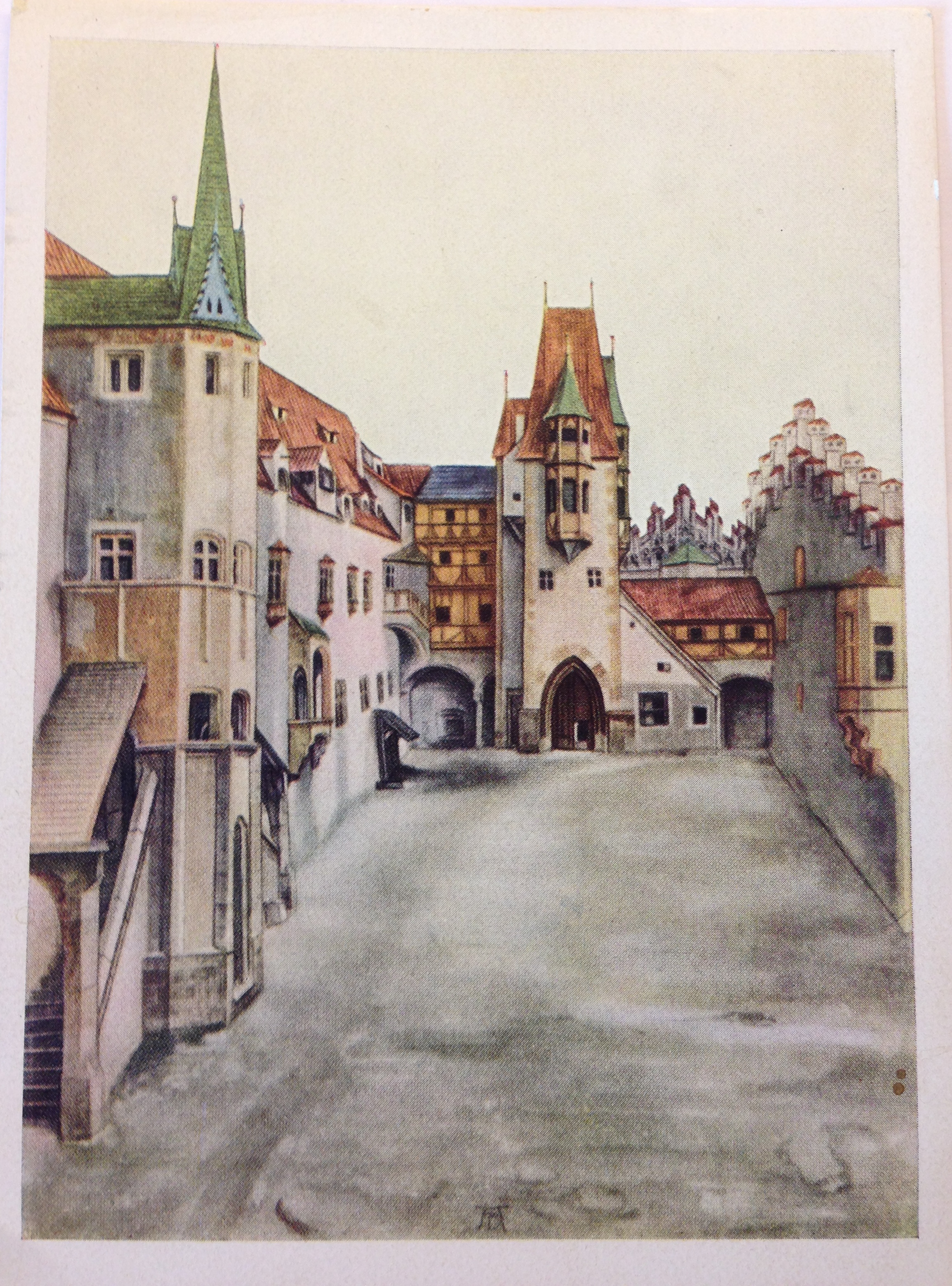
This is a postcard that was found in an old book, having been used as a bookmark by a previous reader. It’s Albrecht Dürer’s Hof der Burg zu Innsbruck (Innsbruck Castle Courtyard), and in the mild hopes of finding out exactly where this spot is and what it looks like now, I began by googling the words ‘Dürer’ and ‘Innsbruck’, which led me to this image —

durer-innsbruck

Innsbruck mit dem Blick auf den Patscherkofel (View of Innsbruck with Patscherkofel)

— as well as to a strange poem with an amusing story attached. It was part of a “collection” by one late, great unknown poet named Ern Malley – which was actually all a hoax cooked up by two Modernist poets in Australia serving in war duty in the 1940s, meant to trip up the very young editor and founder of a successful modernist poetry magazine. They threw together a parody of late modernist poems, invented a fictional author who died young and a sister who “found” the works, and submitted them to the magazine. The hoax was a success – the young editor received them excitement, sure that he had made a great discovery. Well.

The first poem, by the way, was called “Dürer: Innsbruck, 1495”:

I had often cowled in the slumbrous heavy air,
Closed my inanimate lids to find it real,
As I knew it would be, the colourful spires
And painted roofs, the high snows glimpsed at the back,
All reversed in the quiet reflecting waters –
Not knowing then that Durer perceived it too.
Now I find that once more I have shrunk
To an interloper, robber of dead men’s dream,
I had read in books that art is not easy
But no one warned that the mind repeats
In its ignorance the vision of others. I am still
The black swan of trespass on alien waters.

Das erste Gedicht wurde übrigens “Dürer: Innsbruck, 1495” genannt.
[Paschberg macht einen Versuch, das Gedicht zu übersetzten. Fast zu gut..!]

Oft umfing mich die schläfrig schwere Luft
Meine leblosen Lider schließend, wirklich zu finden
wie um die Erscheinung der farbigen Türme wusste
und dier bemalten Dächer vor dem Hintergrund das hohen Schnees
alles gestürzt in den stillen spiegelnden Wassern
damals nicht wissend, dass auch Dürer das wahrgenommen
Jetzt erkenne ich mich wieder, geschrumpft
zu einem Eindringling, einem Räuber, eines toten Mannes Traum
In Bücher hab ich gelesen, dass Kunst nicht einfach ist,
doch niemand warnte vor dem Wiederholen der Gedanken
in der Unwissenheit der Visionen . Ich bleibe
der schwarze Schwan des Friedensbruchs in fremden Gewässern

The authors claim they pulled words out of reference dictionaries at random and from what came to mind. This first poem, however, had come from an earlier serious attempt which was then edited to make it somehow more “late modernist”, a style the authors did not like at all. I’m guessing “I had read in books that art is not easy” is one of the “improvements”…Die Autoren behaupten, sie hätten die Wörter zufällig aus Wörterbüchern und in freier Assoziation genommen. Das erste Gedicht ist jedenfalls ein früherer ernsthafter Versuch, bearbeitet um es irgendwie Spätmodern klingen zu lassen, ein Stil, der den Autoren überhaupt nicht gefiel. Ich nehme an das „In Bücher hab ich gelesen, dass Kunst nicht einfach ist“ eine der „Verbesserungen“

Over the years, the fictional poet Ern Malley has taken on a kind of minor cult fame in Australia. He’s got his own website, and the story and poems have become the inspiration for other works over the years. Im Lauf der Jahre wurde der fiktive Dichter Ern Malley in Australien zu einer Art Kultobjekt. Er hat nun seine eigene Website und seine Geschichte und seine Gedichte wurden im Laufe der Zeit Inspiration für andere Arbeiten.

1st image from the author; 2nd image found here

Remembering the Pogrom 1938

Deutschsprachige Leser kann mehr hier lesen.

In light of reports like here and here, one might start to think that Europe is going under any day. Reading beyond the headlines, one learns

[t]he trend in Europe does not signal the return of fascist demons from the 1930s, except in Greece, where the neo-Nazi party Golden Dawn has promoted openly racist beliefs, and perhaps in Hungary, where the far-right Jobbik party backs a brand of ethnic nationalism suffused with anti-Semitism.

But the soaring fortunes of groups like the Danish People’s Party, which some popularity polls now rank ahead of the Social Democrats, point to a fundamental political shift toward nativist forces fed by a curious mix of right-wing identity politics and left-wing anxieties about the future of the welfare state.

Yes, the far-right groups are worrisome. No, we are not being taken over or sliding back into the 1930s.

That said, it is still supremely important to remember what happened, and today marks the 75th anniversary of the November pogroms in Germany, known as Kristallnacht. Efforts have been made in the last decades to stop using this latter name and call it what it was, a pogrom, and most formal reference to it uses Novemberpogrome. The old name is still around, though.
Innsbruck has a group of citizens dedicated to keeping the memory of the horrors in the Anschluss years from fading into obscurity. They have toiled for years publishing about many aspects of those years — the schools, the psychiatric system, the ethnic cleansing, the local resistance, and a lot more I can’t even think of right now — if you are looking for literature, this author has been especially prolific (I have read some of his books, and am impressed enough to recommend anything written by him.)
The commemorations this year include a concert featuring the work Concerto funebre by the late Innsbruck composer Bert Breit, dedicated to the Innsbruck victims of Kristallnacht; walking tours of the Altstadt with emphasis on its former Jewish residents; research projects for high school students at the City Archives; commemorative speeches at the entrance to the Jewish cemetery, followed by a silent march to the Pogromnacht memorial menorah near the State Govermnent Building (Landhaus), where a Kaddish will be recited.

I assume that other cities across Austria and Germany will be having similar events tonight.

Yesterday evening I attended a small reading and slide-show presentation of letters to one Erna Krieser, a young woman who left Innsbruck in the late 1930s to take a job with a rich family in Tuscany, from her immediate family. Her mother and twin sister write in ever increasing urgency about their situation — being forced to sell the family business, being told they must leave Innsbruck, eventually settling in the Jewish ghetto in Vienna, all the while hoping to find a way out and being too afraid to make any rash decisions — a reunion in South Tyrol becomes out of the question as the family learns they would not be able to return home. This is difficult for many younger listeners to understand, but without proper travel and residency papers, virtually nothing was possible, especially for a middle-aged couple and their daughter. On the other hand, if they had known what was in store for them (the parents perished in Auschwitz, Erna’s sister Käthe in the Lodz ghetto), would they have risked it? (A good novel on the kafkaesque labyrinth of bureaucracy one faced is “Transit”, by Anna Seghers). Their last letters, right up to the outbreak of the war, and the closing of all the borders, were filled with hoping against hope that someone would come through for them, and with enormous gratitude that their daughter Erna had got out (she was able to emigrate to Palestine.)

The readings were interspersed with selections from an old photo album, many “last photos” of Jewish Innsbruck families in their homes, on holiday, on the way out of Europe. The evening was titled Abschiedsbilder, farewell pictures, and presented by local author and filmmaker Niko Hofinger.

A Special Grave in the Jewish Cemetery

IMG_0811While I was at the Westfriedhof, scouting out an appropriate bench to photograph and include with the story below, I visited the grave of Yury Shklyar, which I do every once in a while. (I know, it’s weird. I like cemeteries.) Yury was a colleague in the theater for a few years. He had the most tremendous voice I had ever heard in that space, it was just so incredibly big. He sang beautifully, and he was a consummate actor as well. But he tended to distance himself from the ensemble and all their dramas, having been 1) a little older, 2) a lot more experienced, having sung in big theaters all over the world, 3) not a good German speaker, and 4) suffering from stomach cancer. This last item was surely the reason he was in Innsbruck at all, because he was way too good for us. We assume that our Intendantin knew full well that he was ill, and brought him here for the health care and so that his family would have some security in the West. He and his wife had two sons, Russia was sending troops to Chechnya, and the older one was nearing conscription age. What I mean to say is, he needed a secure, full-time engagement in a western European opera house, for the benefits and for his family’s sake.

Während ich im Westfriedhof war, eine geeignete Bank zum Photographieren suchte und mich mit der folgenden Geschichte befasste, besuchte ich das Grab von Yuri Shklyar, was ich immer wieder tue (Ich weiß es ist komisch. Ich mag Friedhöfe). Yuri war vor wenigen Jahren ein Kollege im Theater. Er hatte die gewaltigste Stimme, die ich je in diesem Raum erlebt habe, sie war einfach so unbeschreiblich groß. Er sang wunderschön und er war ein ebenso vollendeter Schauspieler. Aber er blieb auf Distanz zum Ensemble und seinen Geschichten, da er 1) etwas älter war, 2) wesentlich mehr Erfahrung hatte, da er weltweit in großen Theatern aufgetreten ist, 3) nicht gut deutsch sprach und 4) an Magenkrebs litt. Letzteres war sicher der Grund, warum er überhaupt in Innsbruck war, denn er war wohl etwas zu gut für uns. Wir nehmen an, das unsere Intendantin wohl wusste, dass er krank war und sie ihn hierher wegen der medizinischen Versorgung brachte und um seinen Familie in den sicheren Westen zu bringen. Er hatte seinen Frau und zwei Söhne, Russland entsandte gerade Truppen nach Tschetschenien und sein älterer Sohn war im Einziehungssalter. Was ich damit sagen möchte: Er brauchte ein sicheres Vollzeitengagement in einem westeuropäischen Opernhaus für das Wohl seiner Familie.

In his last months at work, before the illness kept him away, we shared the stage in a few roles. The very last roles I can remember him singing were Bartolo in Le nozze di Figaro, and Uncle Bonzo in Madama Butterfly, the latter of which I think he may have viewed as a waste of precious little time. He was even more withdrawn than usual that season. He may very well have known his fate. He used to sit backstage and say nothing between scenes. During one performance I approached his chair and told him how much I loved his acting, because to me it really was a treat to watch his face slide through different emotions and reactions, even when he was not singing. He scowled at this, and said “Acting” while practically rolling his eyes, which implied that acting didn’t mean nearly as much to him as singing did. I explained myself (maybe a little too forcefully) that, to me, the opera stage was full of decent singers who did not act, and that I appreciated much more a singer who did. He paused, sighed, and said “Thank you.”  I am sure, in hindsight, that he said that simply to get me to leave him alone.

In den letzten Monaten seiner Arbeit, bevor seine Krankheit ihn daran hinderte, standen wir in einigen wenigen Rollen gemeinsam auf der Bühne. Die letzten Rollen an die ich mich erinnere, waren, als er den Bartolo in „Figaros Hochzeit“ und Onkel Bonzo in Madama Butterfly sang, letztere, denke ich,  dürfte er als Verschwendung seiner wertvollen noch verbleibenden Zeit betrachtet haben. Er hatte sich in jener Saison noch mehr zurückgezogen. Ich glaube, er ahnte wohl sein Schicksal. Üblicherweise saß er zwischen den Szenen schweigsam hinter der Bühne. Während einer Aufführung ging ich zu seinem Stuhl, und sagte ihm, wie sehr ich sein Schauspiel liebte, da es ein Genuss war, seinen Gesichtsausdruck im Wechsel verschiedenster Emotionen und Reaktionen zu beobachten – auch wenn er nicht sang. Er verfinsterte sich, sagte, „Schauspielen“ und rollte dabei verächtlich mit den Augen, was sagte, dass Schauspiel ihm nicht annähernd soviel bedeutete, wie Gesang. Ich erklärte (möglicherweise etwas zu eindringlich), dass aus meiner Sicht die Opernbühne voll anständiger Sänger ist, die allerdings nicht Schauspielen und dass ich Sänger, die das auch können, bevorzuge. Er hielt inne, seufzte und sagte „Dankeschön“. Ich bin mir rückblickend sicher, er hat das nur gesagt, um wieder seine Ruhe zu haben.

But I’m glad I’d told him, because it was the last interaction to speak of that I had with him, and shortly thereafter he went on sick leave. Two or three months later, he was dead. The death announcement was the first time many of us heard that he was Jewish.

Aber ich bin froh, dass ich ihm das gesagt habe,  denn das war unsere letzte Begegnung bei der wir miteinander sprachen. Kurz darauf ging er in Krankenstand. Zwei oder drei Monate später war er tot. Viele von uns erfuhren erst durch die Todesnachricht, dass er Jude war.

Here is a taping of a full live performance of Rossini’s Il barbiere di Siviglia in the Mariinsky Theater, St. Petersburg, with a white-wigged Yury as Bartolo and a very young Anna Netrebko as Rosina. Skip ahead to 1:40:20, the end of Rosina’s “voice lesson” scene for a little of his comic genius.

Hier ist ein Mitschnitt einer vollständigen Aufführung von Rossinis „Der Barbier von Sevilla“ im Mariinsky Theater in St. Petersburg mit Yuri als Bartolo und der blutjungen Anna Netrebko als Rosina. Ab 1:40:20, das Ende von Rosinas “Gesangsstunde”, kann man Yuris komisches Talent sehen.

We were lucky to have him. May he rest in peace. Maybe he’s premiering Rossini’s latest opera in the Afterlife.

Wir waren froh, dass wir ihn hatten. Er ruhe in Frieden. Vielleicht singt er Rossinis neueste Oper im Jenseits.

You Have To Hear Yourself With The Ears Of Your Enemies.

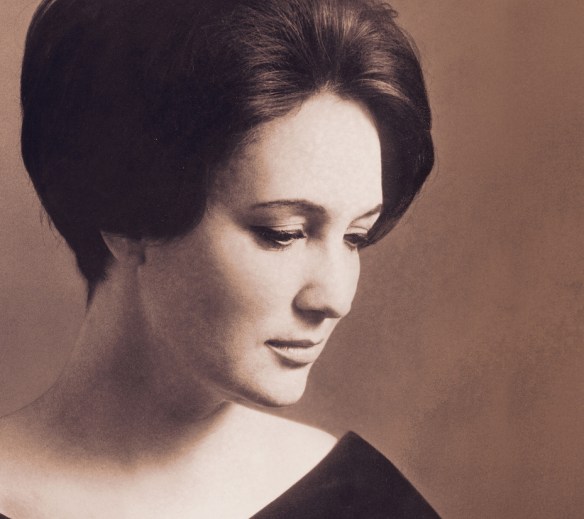
Moser1 ∏ Christian Steiner, EMI Classics(Photo from EddaMoser.com )

Even if you have never heard of the German soprano Edda Moser (and that’s OK;  I don’t really keep track of sopranos myself, and I’m in the business), if you are a singer you really should read this interview she gave to Lars von der Gönna recently for the Westdeutche Allgemeine Zeitung. I don’t know if I am allowed to post this in translation but I found it so good that it deserves to be read by English-speaking singers as well. So, for now, here it is. Pass it on as you see fit. Die deutsche sopranistin Edda Moser hat neulich ein Interview gegeben, die sehr informativ und lesenswert ist. Ich empfehle, daß jeder Sänger diesen Artikel lese. Deutschsprachige Leser können gleich zum WAZ Link für die Originalfassung.

———

This is a lovely garden.

EM: I think so too. We see deer down there in the morning, when I go out onto the balcony after my gymnastics.

You do gymnastics?

EM: Of course! Every morning. I can show you afterward.

Many of your records are currently being reissued. You’re very present in the media. That’s not a given these days.

EM: True. I think that I’m enjoying more attention than I did during my time on the stage.

Because you were not a diva?

EM: Well, I was never sick, I was married, I was never involved in any scandals. Some become legends because they cancel so many times. I went my own way, without making problems. By the way, that’s also the reason I left my husband. He said, “You have to be in the newspapers every day.” But I was only interested in the work. The grace, to be allowed to sing those wonderful roles.

Many of your performances are legendary — above all your Queen of the Night, which contained more than sparkle and coloratura.

EM: Coloratura? I opened my mouth and it was there. But a role like that is so much more. I always prepared myself physically for roles. One has to do that. It doesn’t even occur to most, unfortunately. If I say to my students, “You have to be able to touch your palms to the floor while standing”, they say “For God’s sake, I can’t even reach down to my knees!”. At some point I gave up. (offering candy) YOu have to try this, it’s absolutely sinful. From Italy!

Almond cookies? Terrific!

EM: Yes! Aren’t they marvelous?

You’ve said, “One has to remain at the bottom.” What does that mean?

EM: You have to ground yourself. We live here on Earth, I’ve always sung “grounded”. I try to pass that on to young singers, but it shocked them too much. They don’t understand that one first begins to learn this profession while standing on the stage. I’ve said to them, “Heed my warnings, at least a couple of them. Humility! Discipline! Keep quiet!” You can forget it, no one listens. Some, after they were miserably stranded, came to me later and said, “You were right.” Too late.

To keep quiet — for many years you only wrote what you wanted to say, avoided the telephone — all to keep your voice healthy.

EM: Yes, it was like that. When one sings as a profession, it demands a certain exclusivity. One gets lonely, and it stays that way. There isn’t anything else. On the other hand, I think: it should be that way for many things that one does seriously and dedication.

Did you make sacrifices willingly?

EM: Oh, sometimes I would have gladly participated. Laughing and gossiping. It was simply taboo to really celebrate. I never went to parties. Although I was pretty fetching, as a young singer I was good looking.

You speak directly about the dark side of the opera business.

EM: It could make you cry. Christmas is some hotel in America. Much acclaim at a New Years Eve performance in Vienna, a great pleasure, a lot of fun onstage. Then one minute in (Cafe) Sacher: a good-luck pig, a good-luck penny, a glass of water and then back to the hotel. Over. Done. But it only worked through this kind of discipline. I had some of the most beautiful experiences of my life through singing. For me, it really was a holy art.

So holy and serious, that you wanted to take your life, when a role was taken away from you.

EM: Fidelio in Salzburg! Gewandhausorchester, Kurt Masur. A dream. It was all planned. And then I happened to find out that I was out. Masur deceived me. It was awful. Only the thought of my mother kept me from killing myself.

When you ended your career with a grand “Salome” in Vienna, what was it like for you afterwards?

EM: First it was like death. You are simply gone. The telephone doesn’t ring anymore, no one calls. You are nobody. The sadness is indescribable. And then some idiots come along and say, “But now you’re a professor of singing.” They have nothing to do with one another. It’s the opposite. As a singer you have to be the most egotistic person, and not give a damn about anything but yourself. And when you’re the teacher, you stand completely in the background.

In your career, what did you see as a gift, and what did you see as work?

EM: The work was a gift! Sure, I had the talent. But 98% is work; genius is industry.Don’t think now that I consider myself a total genius. But when I look back, I think: there was genius to my fearlessness. My faith in God was there too.

Why are German singers underrepresented in the world’s opera houses?

EM: Much too much theory. They have to practice a lot more. Vocal training! Sometimes I miss this “I want!”. A singer needs that. When one shows up at the theater sloppily dressed, one doesn’t get past the doorman. I once sang for an agent who started reading his mail while I was singing. I stopped and said, “I’ll wait. Finish reading your mail, and then I’ll continue.” I thought, he damned well ought to listen to me. No one dares (speak up) today.

Is that your advice? : Have courage!

EM: Absolutely. But that only works when one sings well. You have to hear yourself with the ears of your enemies. And I want to give my enemies as little pleasure as possible.

Was there a perfect performance for you?


EM: Yes, there was. Beethoven “Missa Solemnis” with Giulini. Or the St. Matthew Passion with Karl Richter. One knew then, the sky’s the limit!

Was it on the stage that you felt the greatest feeling?

EM: For me, absolutely yes! My eroticism, my believe in true love, that all happened on the stage. We were all in love with each other onstage, Gedda, Pavarotti, Domingo. Oh, Domingo, what a voice, this dark gold! And how he comforted me, when I argued with stage directors. We dined together just recently, when he was here to sing at the Loreley [an open-air arena in Germany].

Speaking of food: you’ve cooked here at your house for Helmut Kohl.

EM: Yes, an underrated man, because he was a great subject for caricature. But what instinct! Very cultured, very humourous. Actually quite modest. Completely insecure with women.

The Queen of the Night, and a politician whose favorite singer was Hans Albers. How did that work?

EM: Kohl knew relatively little about music, he went gamely to festival concerts, found them very nice. But Brahms was a closed book for him, he didn’t even know Schubert’s “Erl King”. I played it for him — and he listened. He was always curious, that was one of his great strengths.

Why are tenors so much more admired than sopranos?

EM: At the Vienna State Opera, tenors are even addressed as “maestro”. It is, if you will, the most unnatural form of singing. Tenors get the highest salaries, I am alright with that. As their partner onstage, even I was intoxicated by these voices.

Anna Netrebko is celebrated all over the world as a soprano star. What’s your view on your colleague from St. Petersburg?

EM: A really wonderful voice. But she’s simply not a lady, that’s her failing. She lacks a certain distance to the public — she brings the art across but not the femininity. If she had this “grandezza”, she would be one of the greatest. This pop-star allure is simply a shame.

And opera stage direction these days?

EM: I can only condemn it. Above all Katharine Wagner. What possibilities she has in Bayreuth — and makes such filth! Meistersinger as  painters, I can only laugh at that. I get the impression that she has no fire in her, she is only mocking. She is arrogant. And the result is boring. Please write that!

Frau Moser, one last, rather indiscreet question; what does one sing, when one forgets the text?

EM: Lalala. Simple. No one notices — you just have to do it expressively!