Cambodunum – Kempten

IMG_1556

An artist’s rendition of the stone layers of an inside wall in the kleine Therme.


Kempten, in the Allgäu region, is one of Germany’s oldest cities. Earliest mention appears to be by the ancient Greek geographer Strabo, who called it Kambodunon and wrote that it was a town of the Celtic Estiones. When the Romans  invaded in 15 BCE, they built a classical Roman city on the plateau overlooking the current modern town. Cambodunum‘s buildings were initially made of wood, and after a fire destroyed the town in 69 CE, it was rebuilt in stone, and it is these remains which the visitor sees at the Cambodunum Archaeology Park (g).


IMG_1546

IMG_1552

Above, the remains of the Temple District (top). The population of Cambodunum consisted not only of Romans but of assimilated (“romanized”) locals and immigrants, and each group had their own set of gods to worship. In Cambodunum, the temples of local gods and Roman gods existed side by side. The low stone walls define the excavated walls and foundations, as for example the Forum in what is now a large lawn.

IMG_1557

The kleine Therme (“small bathhouse” — I was unable to figure out it there was a large one as well, possibly reburied for conservation purposes or lost to centuries of urban construction) is on display inside a protective building. It was built for the town’s chief magistrate, his staff and guests, and featured hot and cold baths, a steam room, and latrines. When Rome abandoned its transmontane colonies and eventually went down itself with the invading hordes, it unfortunately took its knowledge of its infrastructure maintenance with it. In a 2007 interview for Salon, historian Katherine Ashenburg explains why the following centuries of life in Europe were filthy ones.

IMG_1563

Random piles of building stones within the park. Not everything can by reconstructed.

Here And There In America: The Pine Forge

This post brings us to another kind of railroad: the Underground Railroad, neither a railroad nor underground, the unofficial “tracks” of which were laid in the early nineteenth century.

Dieser Beitrag bringt uns zu einer anderen Art von Eisenbahn: Der „Underground Railroad“, weder eine Eisenbahn noch U-Bahn, sondern geheime „Geleise“ (für die Flucht der Sklaven aus den Südstaaten) die im frühen neunzehnten Jahrhundert gelegt wurden.

Several routes passed through the Quaker and German farmlands of southeastern Pennsylvania. Thomas Rutter, an ironmaster who built the first ironworks in Pennsylvania in 1716, was a former Quaker and active opponent of slavery, and although he died in 1730 his heirs must have felt the same way, for the Rutter mansion is said to have been a safehouse for sheltering fugitive slaves on their way to Canada in the 19th century. Pennsylvania’s Quaker reputation for tolerance is not 100% deserved; nearby Boyertown is known to have been a Klan area in the 20th century, so my mother tells me.)


Mehrere Routen führten durch das Anbaugebiet von Quäkern und Deutschen des südöstlichen Pennsylvania. Thomas Rutter, ein Eisenfabrikant, der die ersten Eisenhütte in Pennsylvania im Jahre 1716 errichtete, war ein ehemaliger Quaker und aktiver Gegner der Sklaverei, und obwohl er im Jahr 1730 starb, waren seine Nachfolger der gleichen Meinung, da man sagte, dass das Herrenhaus der Familie Rutter im 19. Jahrhundert eine Unterkunft für flüchtige Sklaven auf ihrem Weg nach Kanada war. Der tolerante Ruf von Pennsylvanias Quäkern ist aber nicht 100% verdient; das nahe Boyertown ist dafür bekannt, im 20.Jhdt. ein (Ku-Klux-) Klan-Bezirk gewesen zu sein, wie mir meinen Mutter sagte.

IMG_1465The Pine Forge Institute (now Pine Forge Academy) was founded on the grounds in 1945 and is in continued use to this day as an African American boarding school, owned and run by the Seventh-day Adventist Church. The church has expressed interest in turning the Rutter mansion into a museum; at the moment it’s still closed up.

Das Pine Forge Institut (heute Pine Forge Akademie) wurde auf dem Gelände des Herrenhauses im Jahr 1945 gegründet und ist seither als afroamerikanisches Internat in Verwendung, im Besitz und unter Verwaltung der Siebenten-Tags-Adventisten. Die Kirche hat ihr Interesse daran erklärt, das Rutter Herrenhaus in ein Museum umzubauen; im Moment ist es aber immer noch nicht öffentlich zugänglich.

One of my Pennsylvania German ancestors, one Samuel Schaeffer, worked at the Pine Forge ironworks.

Einer meiner Pennsylvania-deutschen Vorfahren, ein Samuel Schaeffer, arbeitete in der Pine Forge Eisenhütte.

Interestingly, Pine Forge was once a stop on the old Colebrookdale Railroad, which serviced several iron forges and plating works (Thomas Rutter also built the Colebrook Dale Furnace). A re-opening of the line is planned for the autumn of 2014 as a tourist ride called the Secret Valley Line. My parents rode it a few years ago when the community was trying to raise funds for the restoration. I look forward to riding it myself on my next visit.

Interessanterweise war Pine Forge einmal ein Halt auf der alten Colebrookdale Eisenbahn, die mehrere Eisenwerke versorgte (Thomas Rutter baute auch die Colebrookdale Hochöfen). Eine Wiedereröffnung der Linie ist für Herbst 2014 als Touristenbahn, genannt Secret Valley Line, geplant. Meine Eltern fuhren sie vor ein paar Jahren, als die Gemeinde versuchte, Mittel für die Wiederherstellung zu lukrieren. Ich freue mich auf eine Fahrt bei meinem nächsten Besuch.

Here And There In America: Strasburg PA

IMG_BfI’m not actually a train buff in the traditional sense of the term. Then again, when I write that, it brings to mind Nick Hornby, in the Bob Dylan chapter in his book “31 Songs”

I’m not a big Dylan fan. I’ve got Blonde On Blonde and Highway 61 Revisited, obviously.
And Bringing It All Back Home and Blood On the Tracks… And I’m interested enough to have bought The Bootleg Series Volumes 1-3, and that live album we now know wasn’t recorded at the Royal Albert Hall…There are…around twenty separate Bob Dylan CDs on my shelf; in fact I own more recordings by Dylan than by any other artist. Some people – my mother, say, who may not own twenty CDs in total – would say that I am a Dylan fanatic, but I know Dylan fanatics, and they would not recognize me as one of them.

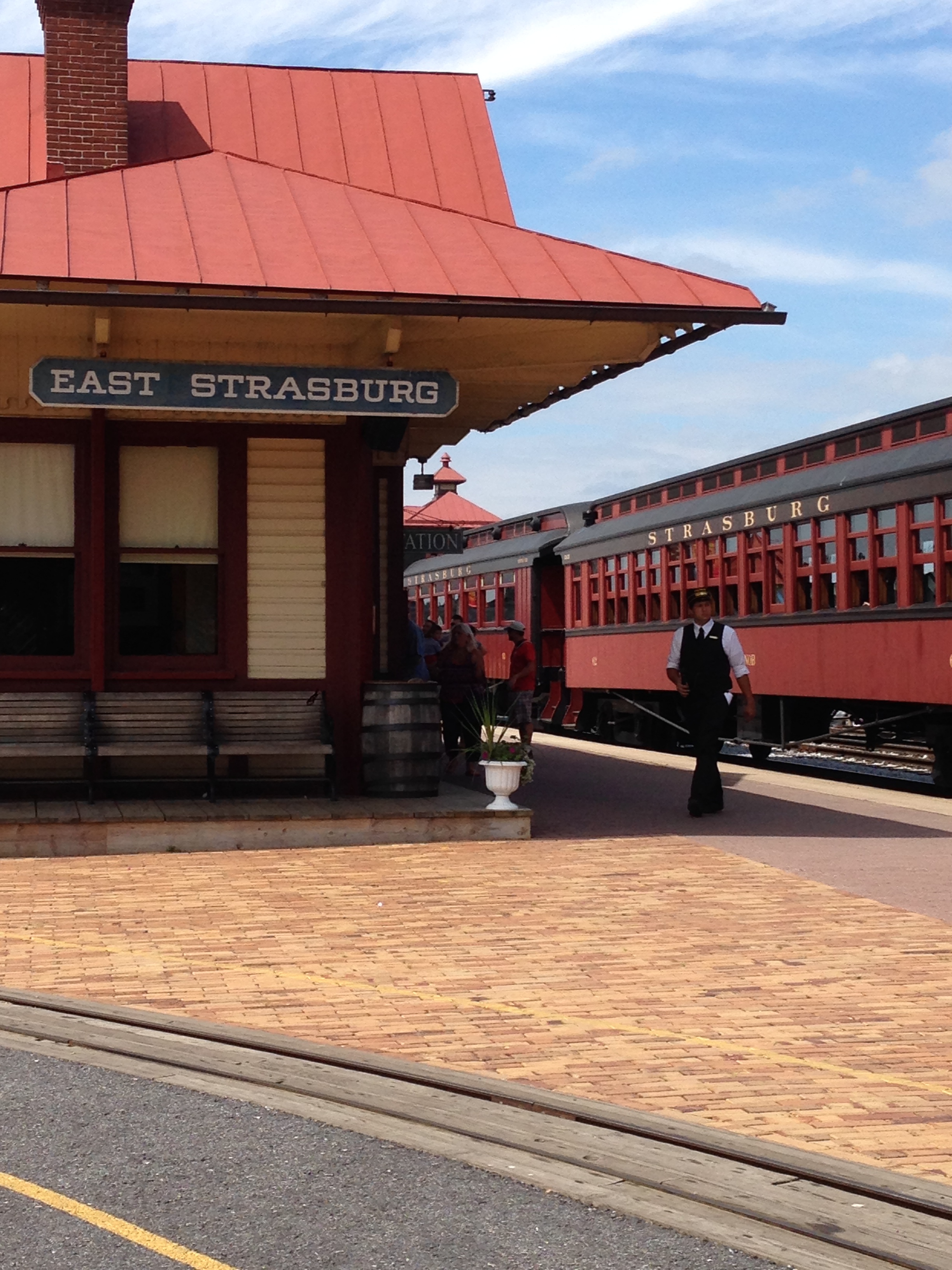
A recent trip to central Pennsylvania allowed me a chance to swing down to Strasburg, where there is a very popular Railroad Museum and the Strasburg Railroad, a stretch of track where historic engines and cars offer rides through the Pennsylvania Dutch countryside. It was a beautiful day and I was right there in the area, so why not?

Ich bin kein Eisenbahnfan im herkömmlichen Sinn. Während ich das schreibe fällt mir das Bob Dylan Kapitel in Nick Hornby´s Buch „31 Songs“ ein:


Ich bin kein großer Fan Dylan. Augenscheinlich habe ich „Blonde On Blonde“ und „Highway 61 Revisited“. Und „Bringing It All Back Home“ und „Blut Auf den Geleisen“ … Und ich bin interessiert genug, um die Alben zu haben wie, Raubkopien der Serie 3.1, und dieses Live-Album, das wie wir jetzt wissen, nicht in der Royal Albert Hall aufgezeichnet wurde … Es gibt … um zwanzig eigene Bob Dylan CDs in meinem Regal; tatsächlich besitze ich mehr Aufnahmen von Dylan als von jedem anderen Künstler. Einige Leute, z.B. meine Mutter, die insgesamt kaum mehr als zwanzig CDs besitzen dürften – würde sagen, dass ich ein Dylan-Fanatiker bin, aber ich kenne Dylan-Fanatiker, und sie würden mich nicht als einen von den ihren erkennen.


Eine kürzliche Reise ins Zentrum Pennsylvanias eröffneten die Chance eines Abstechers nach Straßburg, wo es eine sehr bekanntes Eisenbahnmuseum und die Strasburg Railroad gibt, eine Bahnstrecke, auf der historische Lokomotiven und Wagen Fahrten durch die holländische Landschaft Pennsylvanias. Es war ein schöner Tag und da ich genau dort in der Gegend war, warum nicht die Gelegenheit ergreifen?

IMG_1449
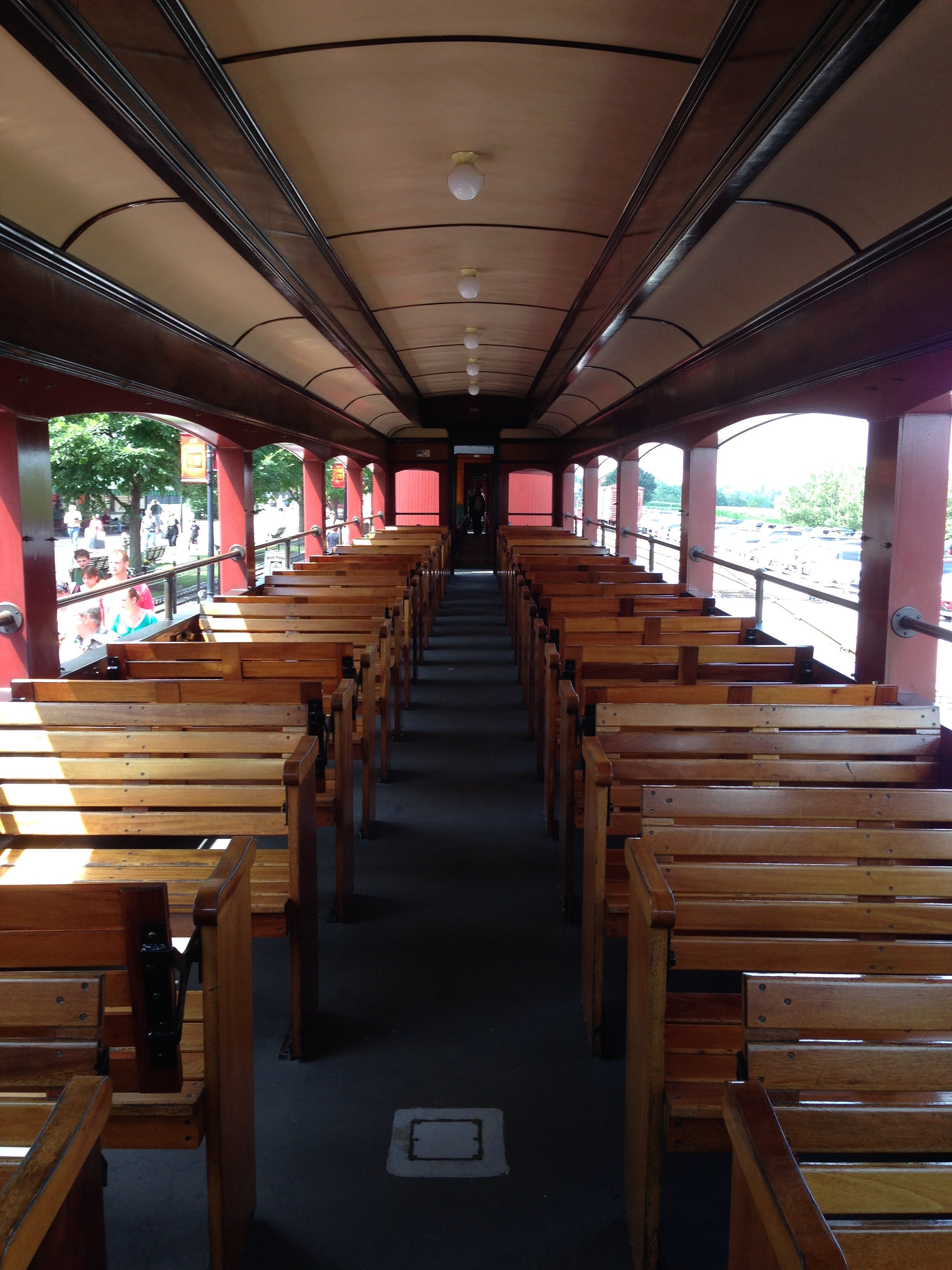
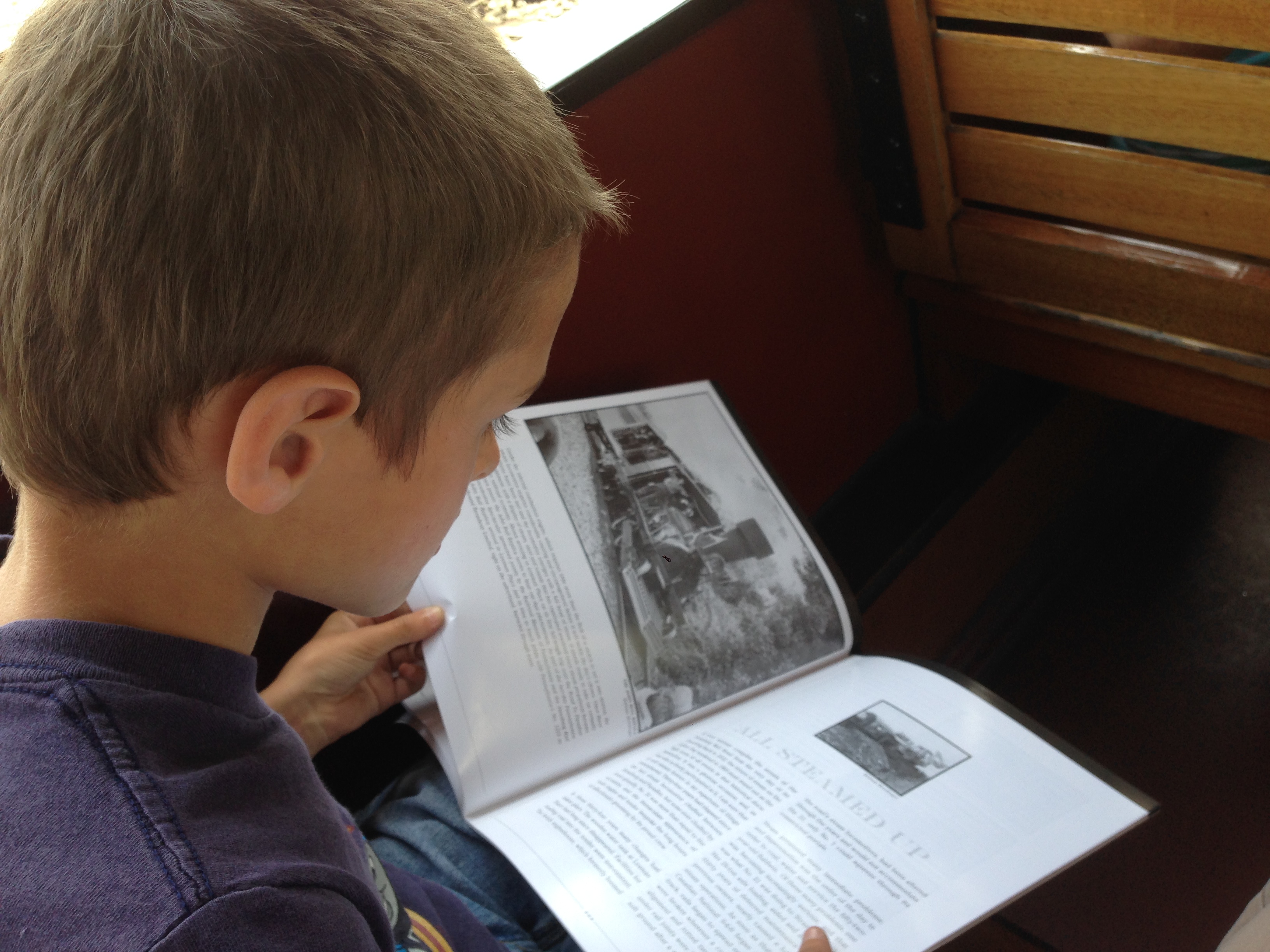
IMG_buchThis was the Open Air car, between rides. There was also the options of Coach (3rd class), First Class and the President’s Car, the last two with plush decor and air conditioning. I soon had found a new friend in B., a 6-year-old with a season pass, who was in the process of learning everything he could about this particular engine. His mother said they’ve been on this ride more times than she could count. Finding a new victim, he quickly took to me as his Favorite Aunt For This Ride, which also worked out for me as even the train fanatics with big cameras had friends or wives with them.
Das war der offene Wagen, zwischen zwei Fahrten. Es gab auch die Optionen Waggon (3. Klasse), 1. Klasse und Salonwagen, letzter zwei mit Plüsch-Dekor und Klimaanlage. Ich hatte bald einen neuen Freund in B. gefunden, einem 6-jährigen mit einer Saisonkarte, der gerade dabei war alles Erreichbare über eine bestimmte Lokomotive in Erfahrung zu bringen. Seine Mutter sagte, sie hätten diese Fahrt bereits unzählige Male gemacht. Nachdem er nun ein neue Opfer gefunden hatte, nahm er mich schnell als seine „Lieblings-Tante für diese Fahrt“, was mir auch gepasst hat, nachdem auch die Zug-Fanatiker mit großen Kameras von Freunden oder Ehefrauen begleitet wurden.

IMG_1446
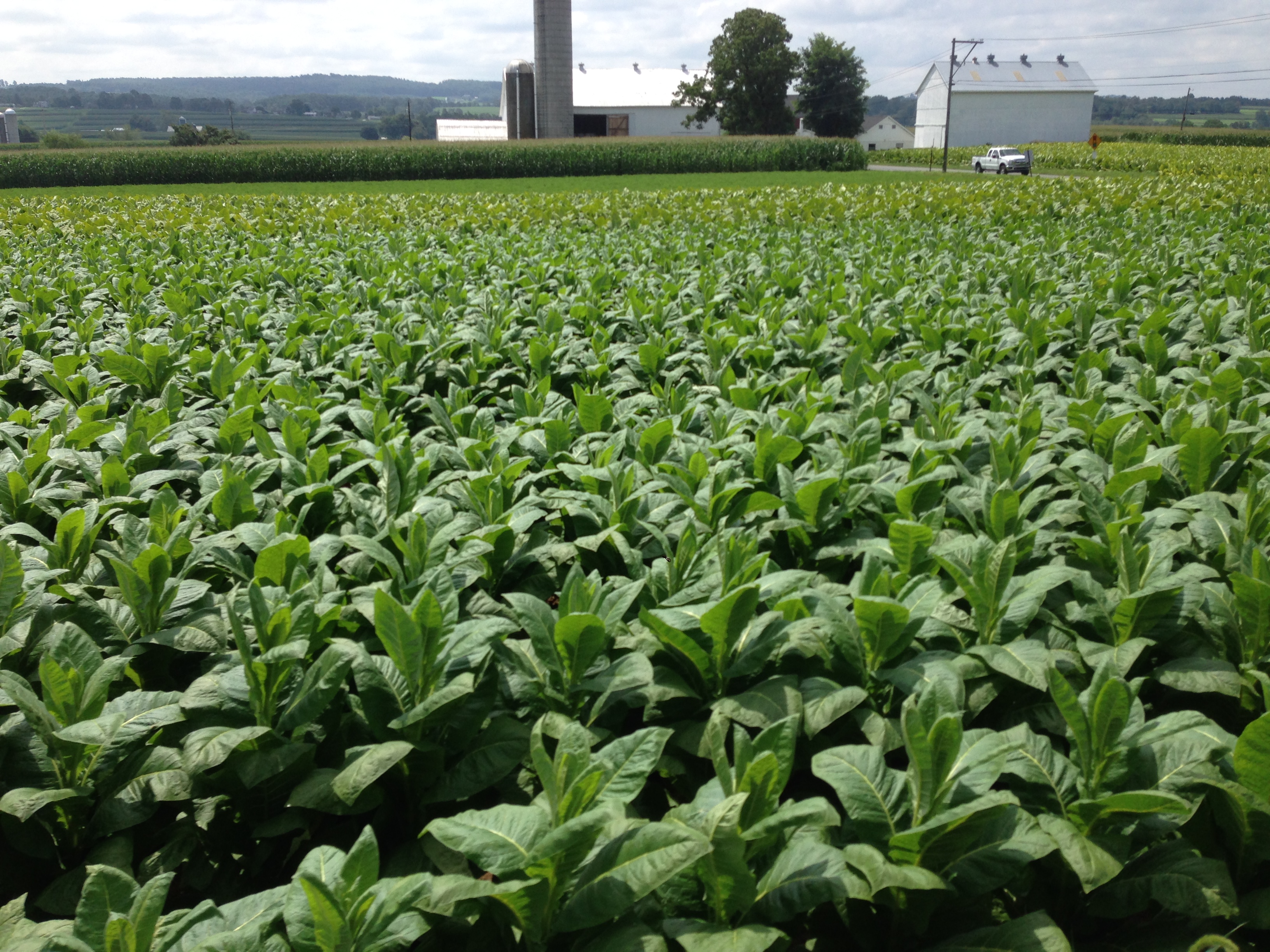
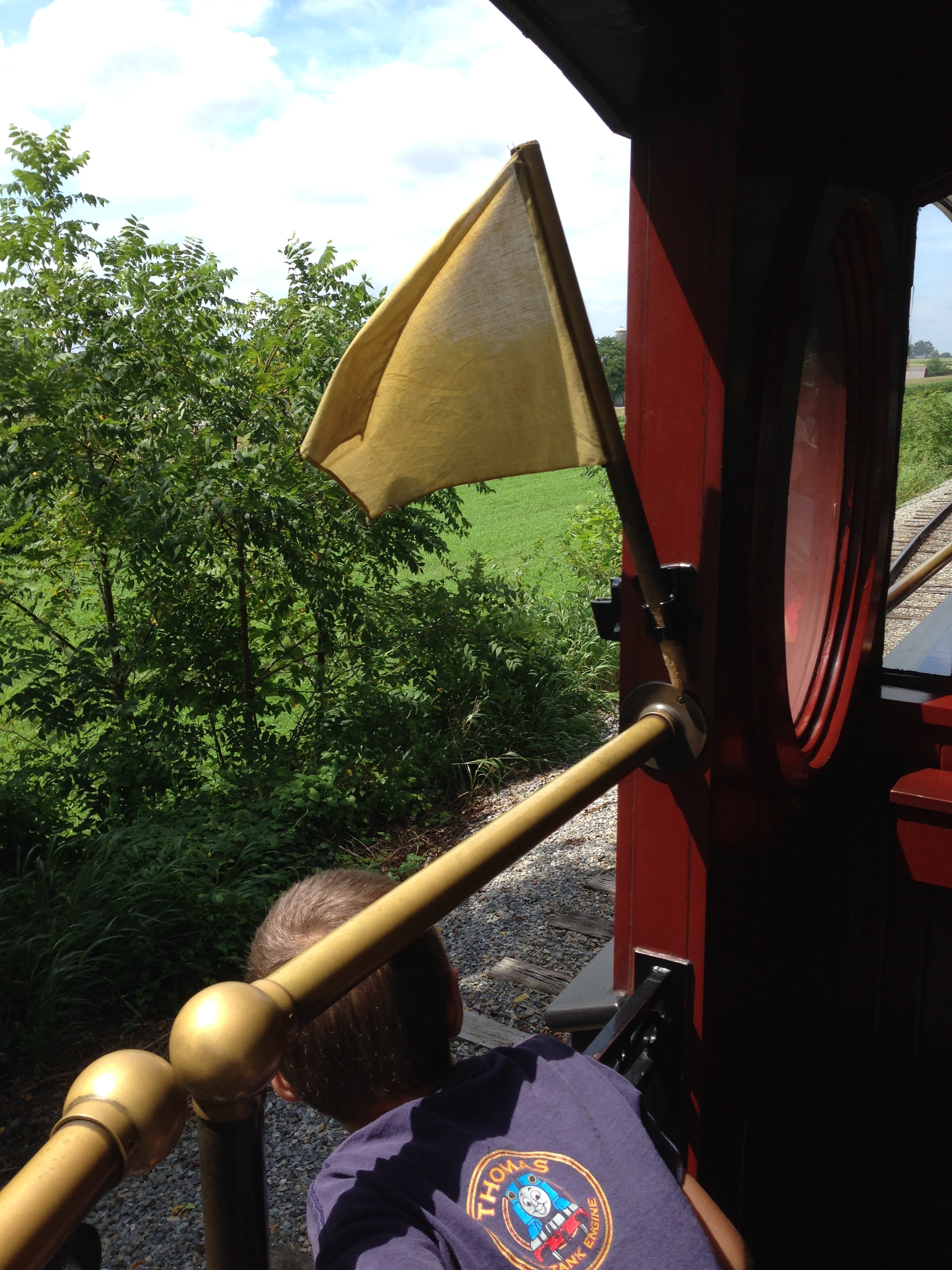
IMG_ausweicheWe rode through the fields and farmlands of Amish Country, through acres of corn and (above) tobacco.
There were several small highlights for the passengers, including a passing loop for the next scheduled ride. B. could barely contain himself, waiting for the next steam locomotive to pass.
Wir fuhren durch die Felder und Ackerland von Amish Country, hektarweise Mais und (oben) Tabak.
Es gab mehrere kleine Highlights für die Passagiere, darunter Zugkreuzung mit dem nächsten fahrplanmäßigen Zug. B. konnte die Vorbeifahrt der nächsteb Dampflokomotive kaum erwarten.

IMG_1447
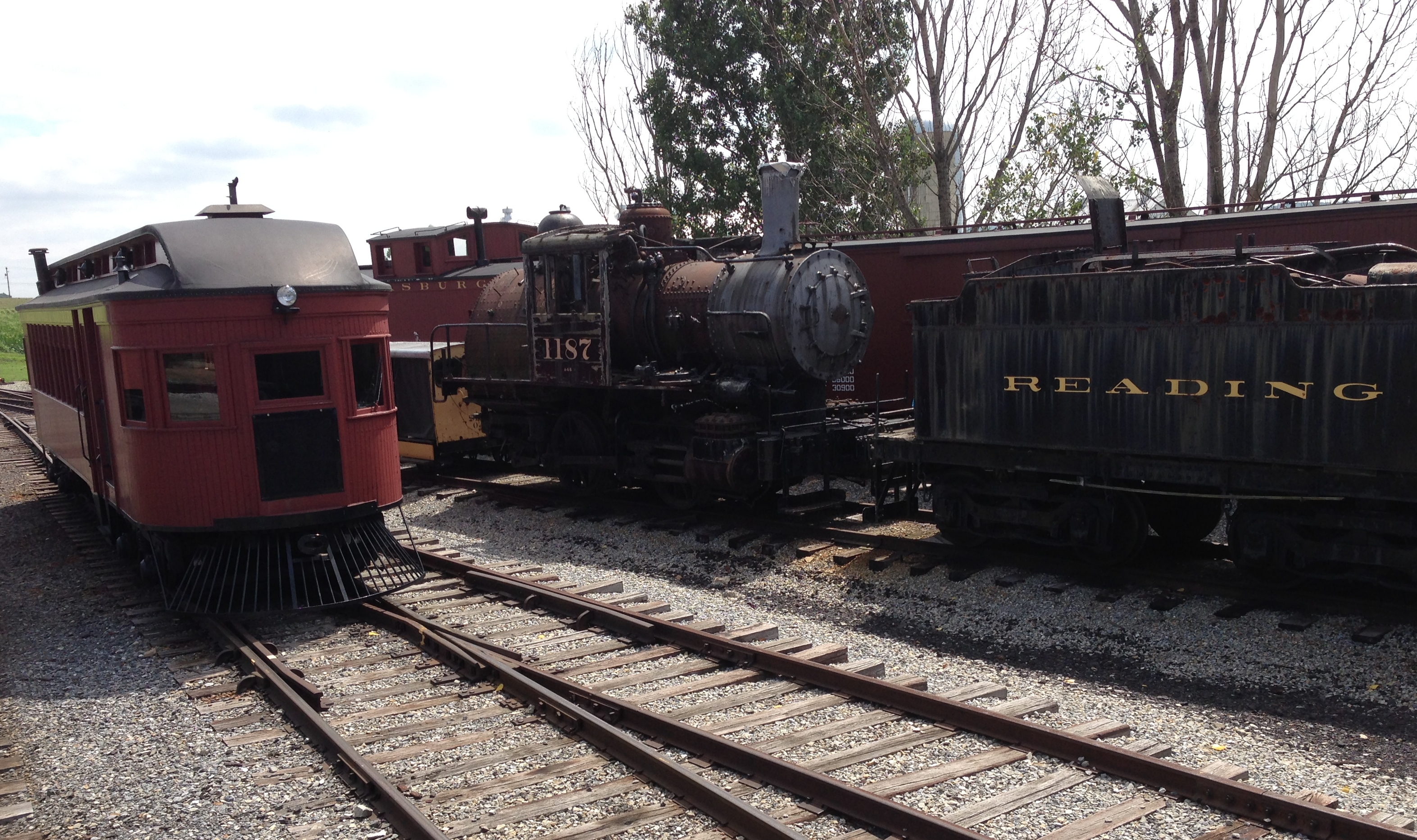
The rail yard near the station was populated with engines and cars of all shapes and sizes. These bear a strong resemblance to the old Lionel train set we kids used to set up in the living room.
Der Rangierbahnhof in der Nähe der Station ist mit Lokomotive und Wagen in allen Formen und Größen bevölkert. Diese haben eine starke Ähnlichkeit mit dem alten Lionel Zug, den wir als Kinder gerne im Wohnzimmer fahren ließen. (die US Firma Lionel war ein ähnlich altehrwürdiger Modellbahnproduzent, wie z.B. Märklin oder Trix.)

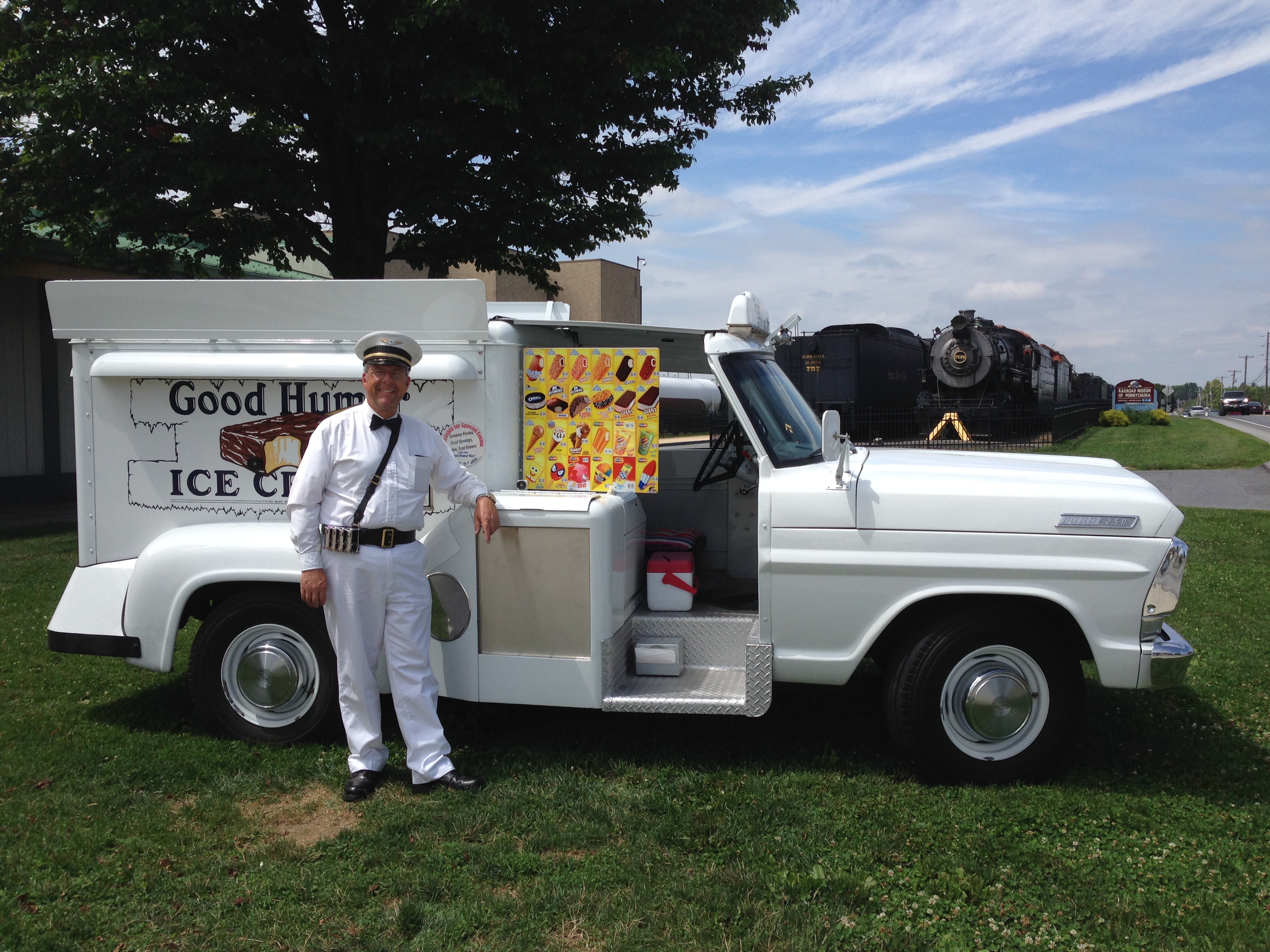
IMG_1451A Good Humor Man, in full retro garb and an old authentic truck near the museum entrance. Of course I bought an ice cream bar from him.
Ein Good Humor Man (ein Berühmtheit aus dem 60-er und 70-er Jahre) ähnlich zu einem Langnese Eisverkäufer), in voller Retro-Uniform vor einem alten authentischen LKW in der Nähe des Museumseingang. Natürlich kaufte ich mir einen Eisriegel von ihm.

IMG_1456
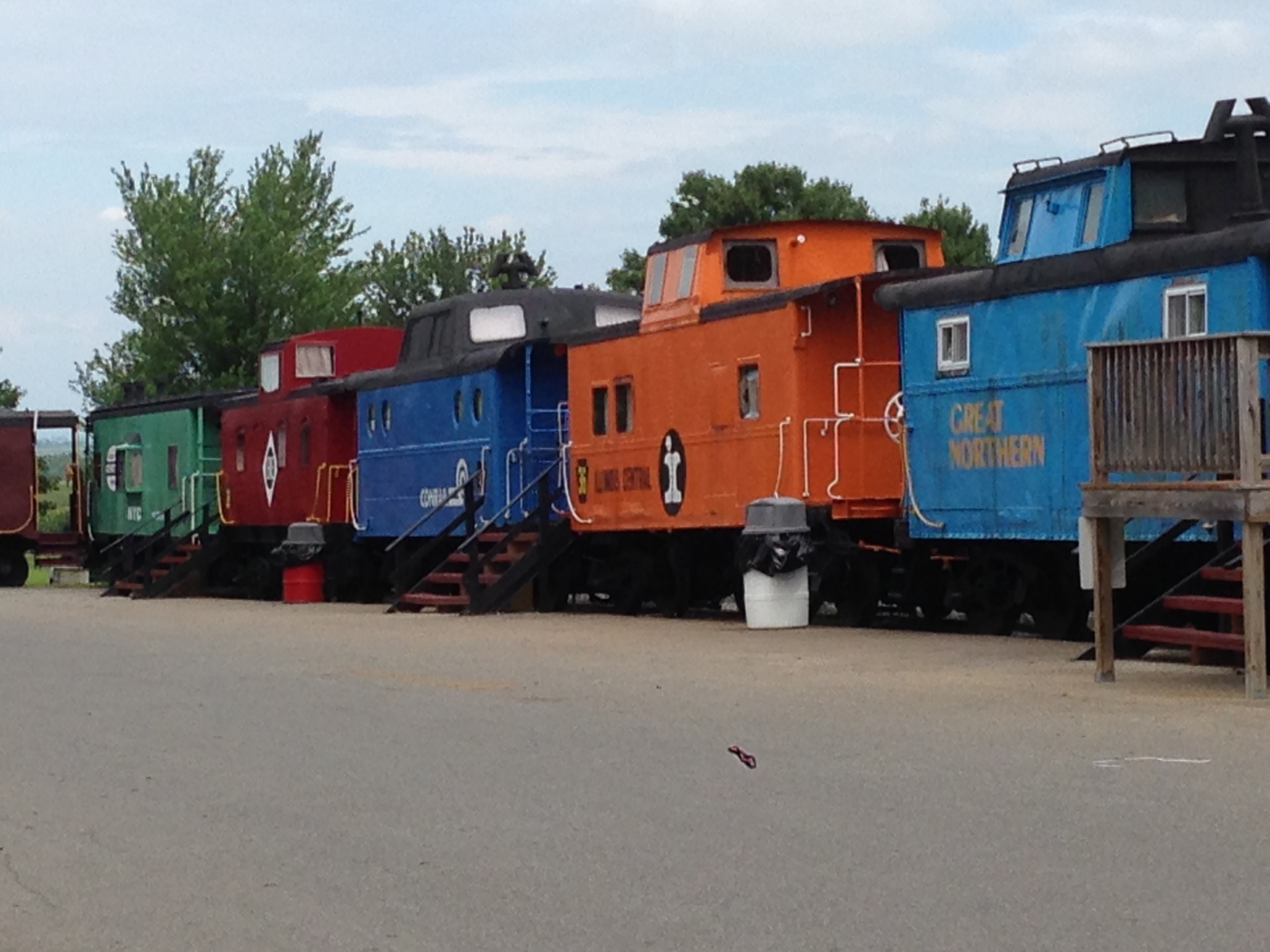
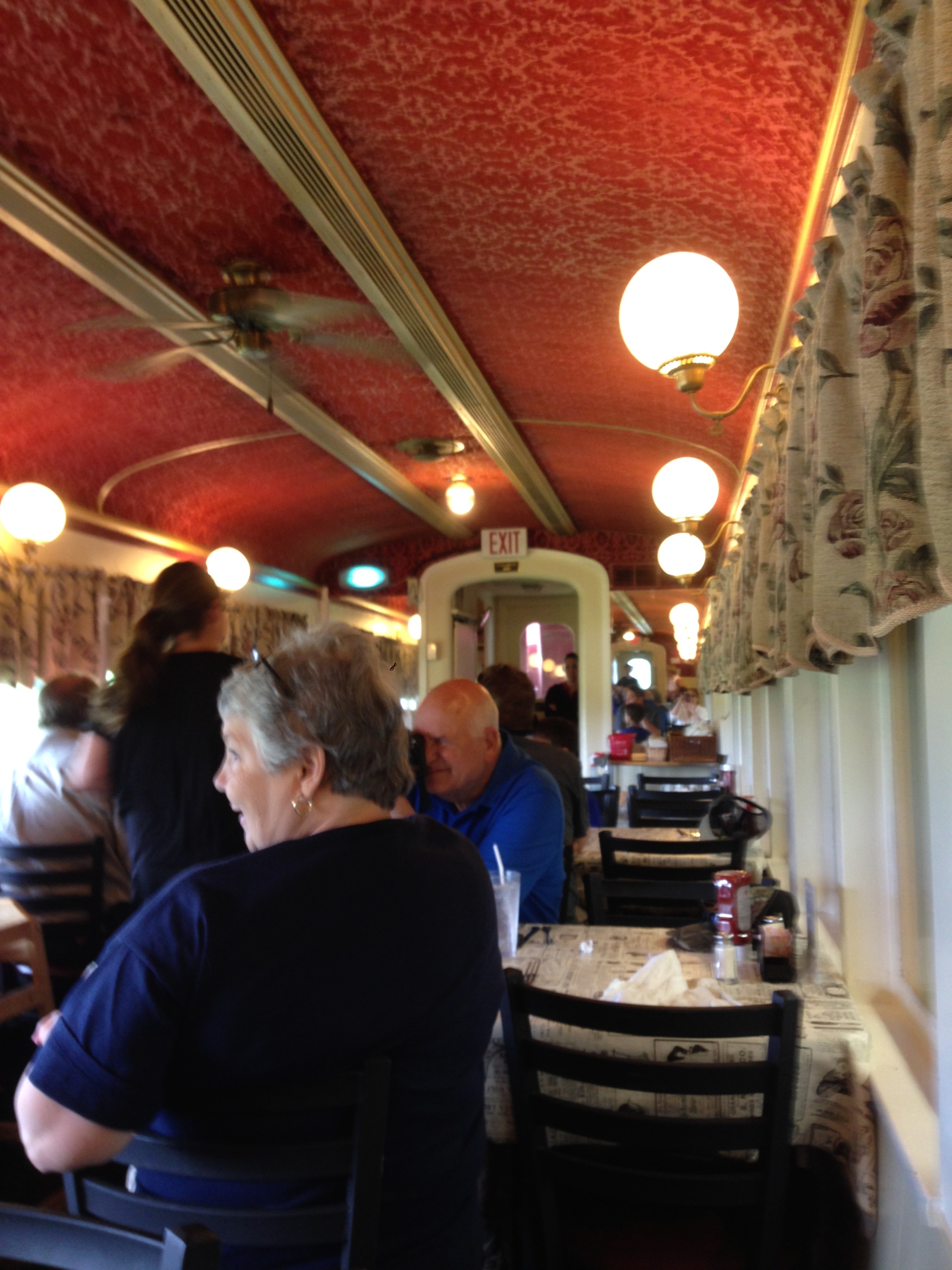
IMG_1460Nearby, the Red Caboose Motel in Ronks, PA. Instead of rooms, guests stay in individual, restored, air conditioned caboose cars. In their restaurant (in the dining car, natürlich), diners can watch the passing Strasburg Railroad trains from the windows.
In der Nähe befindet sich in Ronks, PA das Red Caboose Motel. Anstatt in Zimmern, wohnen die Gäste in individuellen restaurierten Güterzugbegleitwagen mit Klimaanlage. In ihrem Restaurant (im Speisewagen, natürlich), können die Gäste die Vorbeifahrenden Züge der Strasburg-Bahn beobachten.

Those Damn Socialist Roman Roads

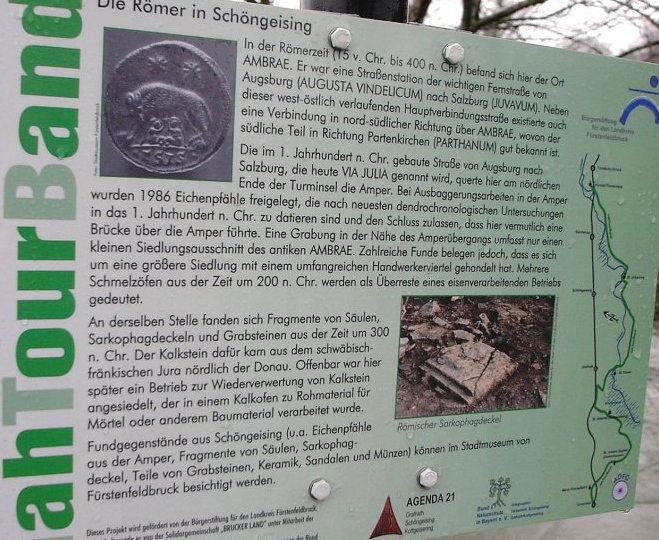
Tafel_2_SchoengeisingJust poking around the internet for information on the Via Raetia (the Roman Road from northern Italy to Augsburg) and exactly where it would have joined the Via Julia (the Roman Road from Salzburg to Augsburg). I found this, and normally would not repost an image if I could otherwise manage to go there myself and take my own photo. But … can you find the reason I posted this?

Tafel_2_Schoengeising - Version 2
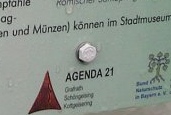
Agenda 21! The UN “plot to destroy private property rights and force upon us all a one-world government of ‘the elites’ through radical environmentalism“. Also, the plot to shut down all American golf courses. If you don’t understand me, be thankful you’ve been spared exposure to that nonsense.

Clearly Agenda 21 has plans to shut down the Autobahn and force us to ride bicycles to work on the Roman Roads. The horror.


Image found here.


It’s All Related

And here we tie the two previous posts together with a 15th-century ribbon:
Und hier fügen wir die beiden vorherigen Beiträge mit einem Band aus dem 15. Jahrhundert zusammen:

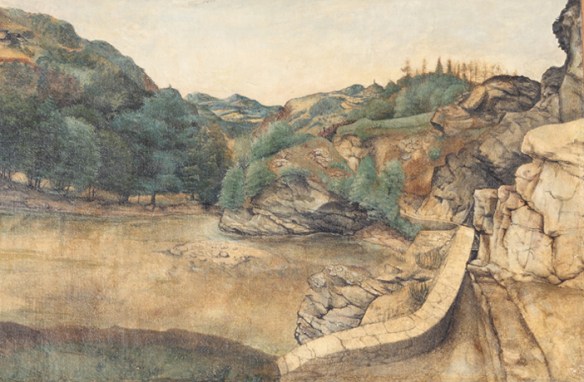
blog_Duerer_Brennerstrasse

Albrecht Dürer, Brenner Road in the Eisack Valley, 1495. Made, as with the Innsbruck paintings, from a journey to Italy. Note the wheel tracks in the road. This was the “Brenner Autobahn” during the Middle Ages and probably long before then as well.

Albrecht Dürer, Brennerstraße im Eisacktal, 1495. Gemacht, wie auch die Innsbruck Gemälde, auf einer Reise nach Italien. Beachten Sie die Spurrillen auf der Straße. Dies war der “Brenner Autobahn” im Mittelalter und wahrscheinlich auch lange davor.

Image found here

Five Views of Old Innsbruck 1496-1750

DürerIBKSouth
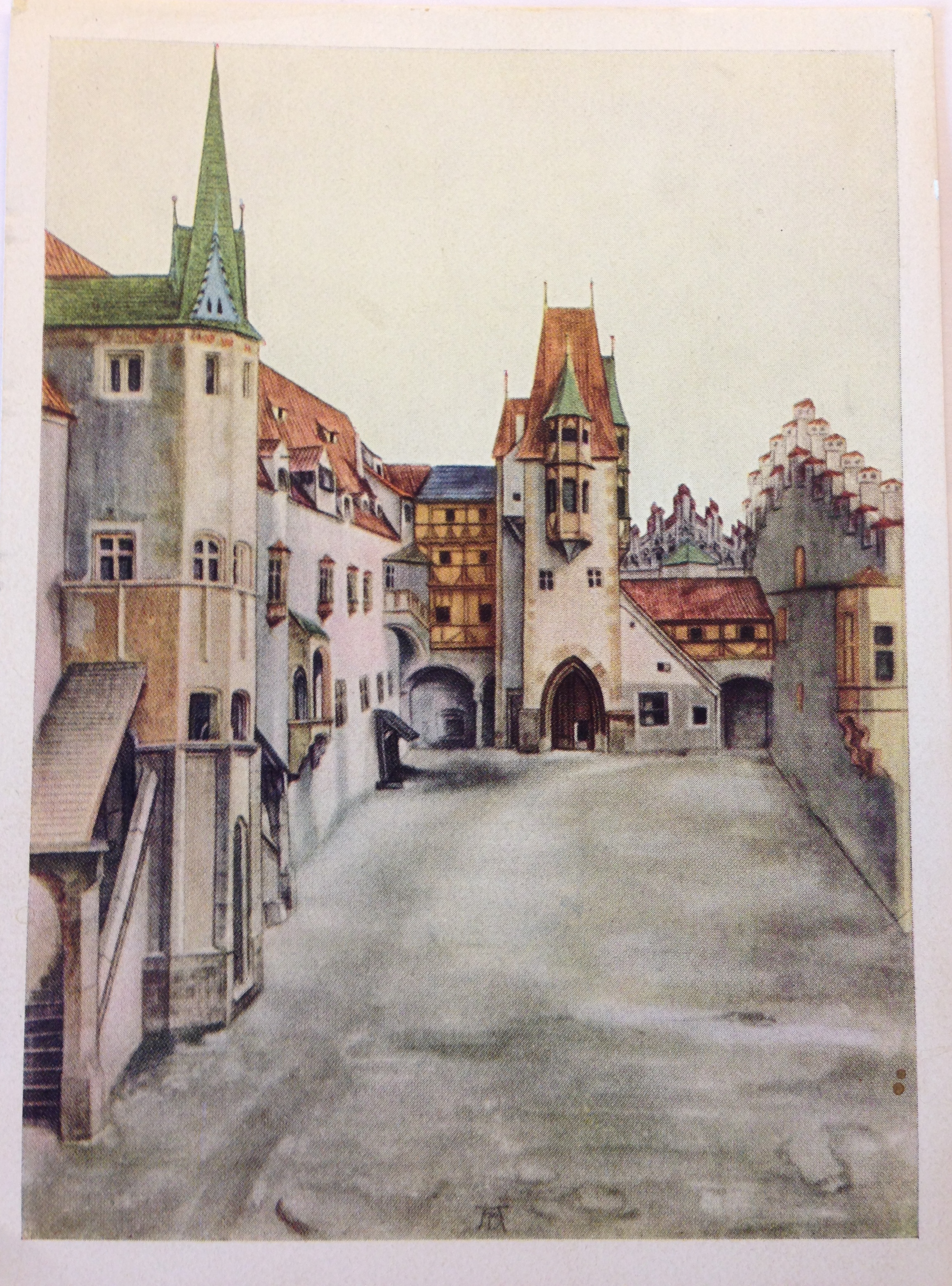
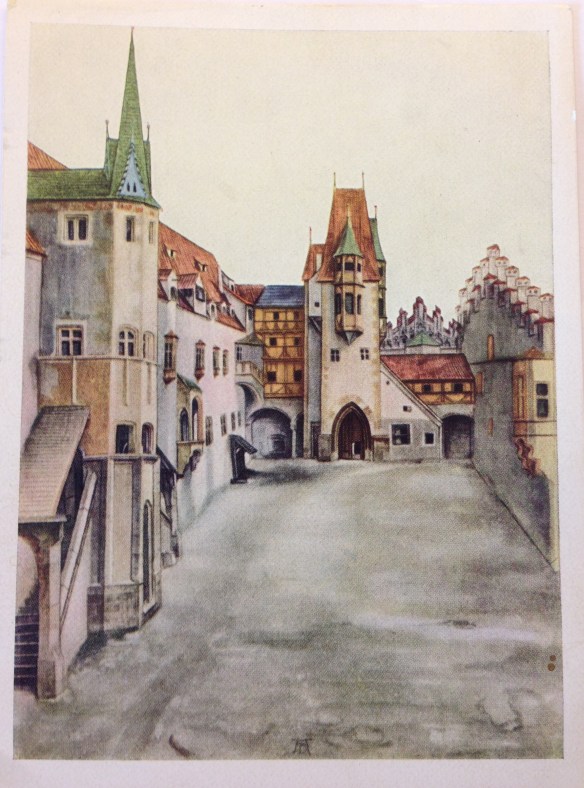
The Beau found a postcard in an old book, with this image of a painting by Albrecht Dürer. It shows the inner courtyard of the Hofburg in Innsbruck, or the “Hof der Burg”. I was immediately curious.
Because: you look at this and think, “Yeah, pretty, I guess. Long time ago.” I look at this and think, hang on, where was that crenellated wall? What’s there now? Can I stand in the same place? Will I recognize it when I see it?
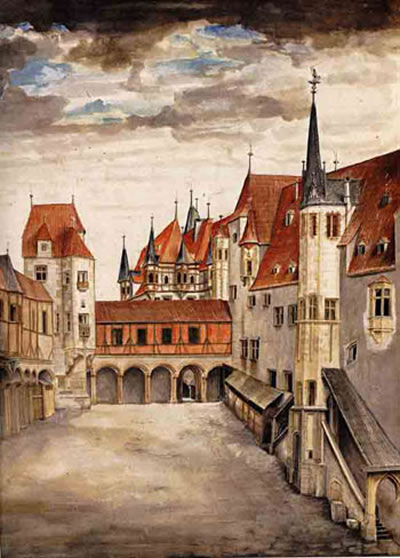
Some searching revealed that the painter (and viewer) are looking south, and that another Dürer painting of the same courtyard exists, this time facing north. Neither view even remotely resembles what one sees when one looks into the large courtyard of the Hofburg today.
Mein Freund fand eine Postkarte mit dem Gemälde von Albrecht Dürer in einem alten Buch. Es zeigt den Innenhof der Hofburg in Innsbruck, oder der ” Hof der Burg ” – und das machte mich neugierig.
Denn, als ich das sah dachte ich: ” Ja, das ist ziemlich, vermute ich, lange her” und „Moment mal, wo war das zinnenbewehrten Mauer? Was ist da heute noch vorhanden? Kann ich an der gleichen Stelle heute noch stehen? Kann ich es erkennen, wenn ich es sehe?“
Nachforschungen ergaben, dass Maler (und Betrachter) nach Süden schauen und dass ein anderes Dürergemälde des gleichen Hofs mit Blickrichtung nach Norden existiert.
Keine der beiden Ansichten ähnelt auch nur entfernt dem, was man heute im großen Innenhof der Hofburg sieht.
Hofburg Nord
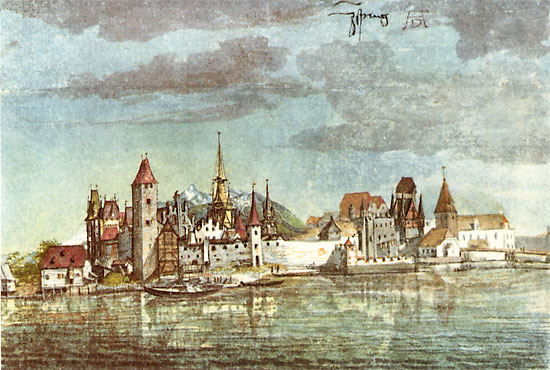
So, let’s take these two Dürer paintings and hold them up alongside his third Innsbruck painting, View of Innsbruck with Patscherkofel (mountain in the background), or, alternately, Innsbruck from the North. Also, nehmen wir diese beiden Dürer Gemälde und halten sie über sein drittes Innsbrucker Bild, der „Ansicht von Innsbruck mit Patscherkofel“ (Berg im Hintergrund), bzw. „Innsbruck aus dem Norden“.
durer-innsbruck

This watercolor painting, whatever its name, is pretty awesome, mainly because Dürer takes the Inn River and makes it into a lagoon, similar to Venice. In fact I think I see a gondola there on the water, no? Did Dürer forget where he was? Dieses Aquarell, wie auch immer es heißt, ist ziemlich genial, vor allem, weil Dürer den Inn zu einer Lagune macht, ähnlich wie Venedig. Tatsächlich meine ich eine Gondel auf dem Wasser zu erkennen, nicht wahr? Hat Dürer vergessen, wo er war?

But no, it’s Innsbruck. This site (g) maintains that one can recognise the fortress’s tower, under scaffolding (as it would have been in 1496). The mountains, too, are local features. At first I took the snowy peak between the towers to be the Serles, but on second thought he may have meant the pointy Glungezer, with the rounded-off Patscherkofel just to its right. The white wall with the notches may be the same wall  in the first image (seen from the back on the right).
Aber nein, es ist Innsbruck. Diese Website) ermöglicht den Festungsturm unter Gerüst zu erkennen, (wie es im Jahre 1496 gewesen sein ). Die Berge entsprechend ihrer Eigenheiten herausgearbeitet. Zuerst nahm ich and die schneebedeckten Gipfel zwischen den Türmen seien der Serles, aber tatsächlich ist das die dem Glungezer vor gelagerte Sonnenspitze, mit der abgerundeten Patscherkofel zur Rechten. Der weiße Wand mit den Schießscharten könnte die gleichen Wand wie im ersten Bild (von hinten rechts gesehen ) sein.
Statt_Inspruck_(Merian)
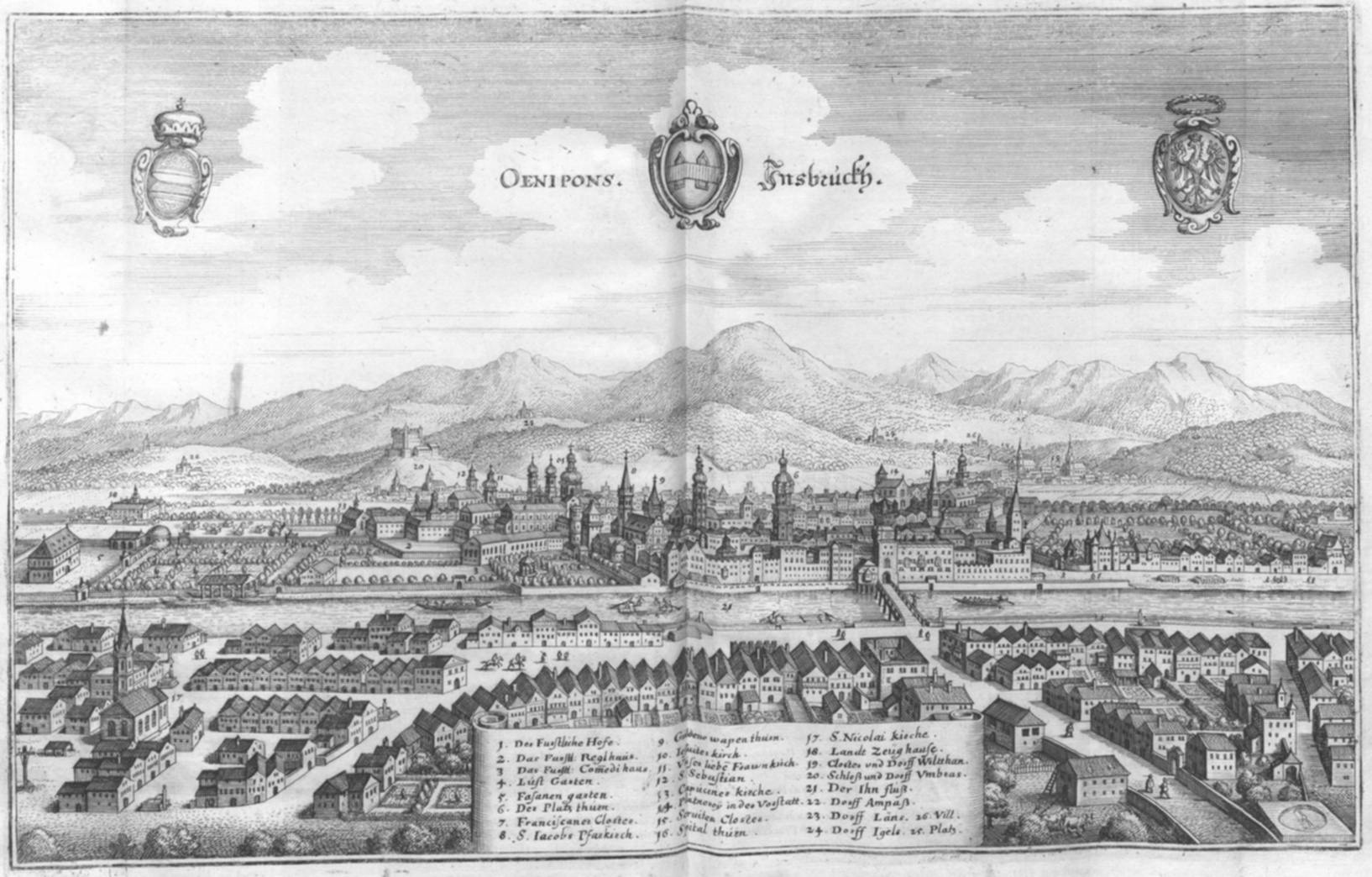
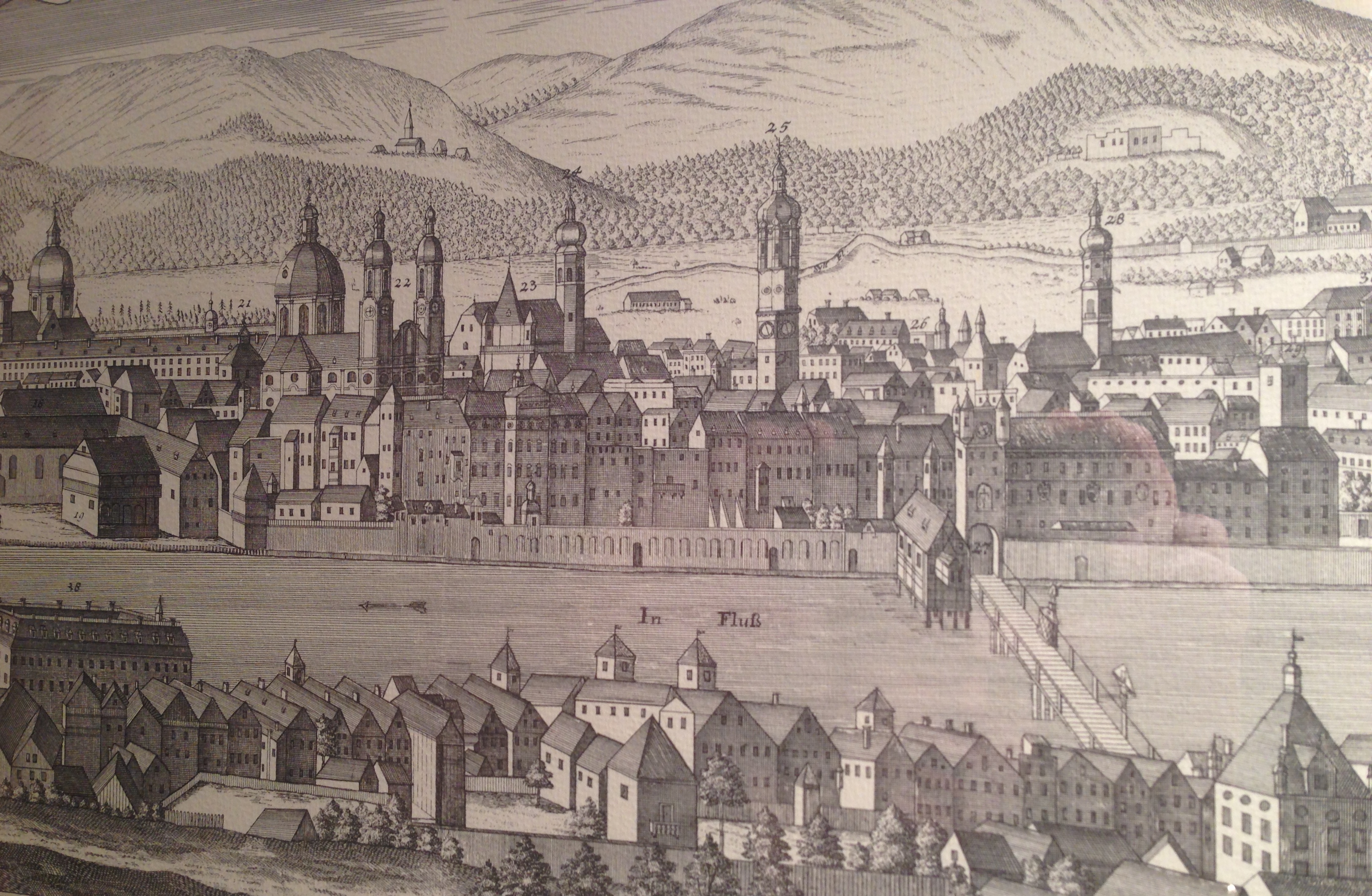
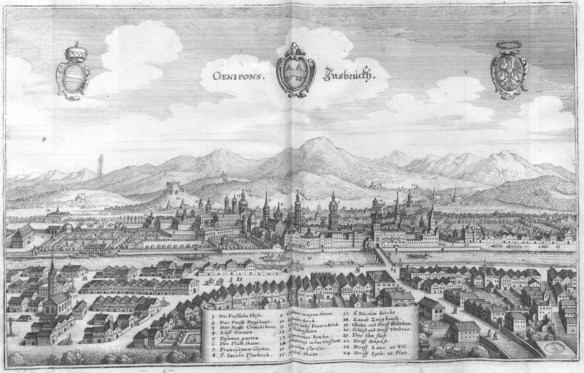
Here is a slightly later view (Matthäus Merian, Martin Zeiller: Topographia Provinciarum Austriacarum, 3. Ausgabe, Frankfurt am Main 1679) The Inn is depicted as considerably narrower, almost like a tubing ride at a waterpark, but I have to assume that the city itself has been portrayed more or less accurately. And now the Stadtturm is more prominent with its new “Zwiebelhelm mit Laterne” (onion-helmet with lantern, added in 1560).
Hier ist ein etwas später Ansicht (Matthäus Merian, Martin Zeiller, Topographia Provinciarum Austriacarum , 3 Ausgabe , Frankfurt am Main 1679 ) Der Inn ist deutlich schmaler dargestellt, fast wie ein Schlauchrutsche im Wasserpark, aber ich muss annehmen, dass die Stadt selbst mehr oder weniger genau dargestellt wurde. Zu diesem Zeitpunkt ist der Stadtturm mit seinem 1560 dazugebauten Zwiebelhelm mit Laterne etwas markanter.
IBKSketch
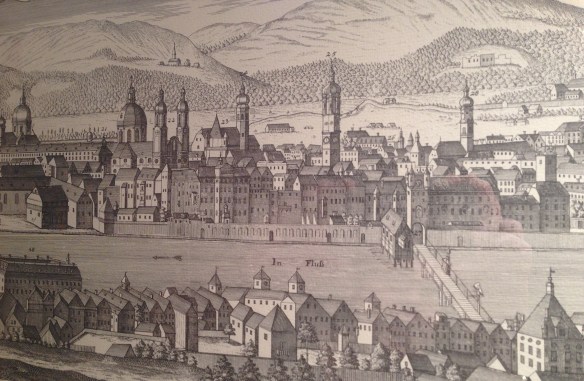
And here we have a copy of a sketch by one F.B. Werner, from 1750. (I photographed it off a friend’s wall, the reflection was unavoidable.) One sees that all the towers have been redone in the 250 years since Dürer painted here. My notched wall is gone, it seems. (Or maybe Dürer had taken artistic liberties?) The Wappenturm is still there, however, identifiable by it’s pyramid-shaped top above columns, just in front of the polar-bear-face facade of the Hofkirche. This tower stood (still stands) on the southeast corner of the Hofburg, with a portal which leads into Hofgasse. When the facade at Rennweg was completely renovated (1767-70), a second tower was built on the northeast corner, and both were made symmetrically round.
Und hier haben wir eine Kopie einer Skizze von einem F.B. Werner, von 1750. (Ich fotografierte sie an der Wand eines Freundes, die Reflexion war unvermeidlich.) Man sieht, dass alle Türme in den 250 Jahren, seit Dürer sie malte, erneuert worden sind. Meine Schießschartenwand (Stadtmauer — ed.) ist weg, es scheint. (Oder vielleicht hatte Dürer sich künstlerische Freiheiten genommen?) Der Wappenturm ist noch immer da, erkennbar durch seine pyramidenförmige Spitze auf Säulen (Eckerker — ed.), gerade vor der Fassade der Hofkirche mit dem Eisbärengesicht. Dieser Turm stand (und steht noch) an der südöstlichen Ecke der Hofburg, mit einem Portal, das in die Hofgasse führt. Bei der kompletten Renovierung der Fassade am Rennweg ( 1767 bis 1770 ) , wurde ein zweiter Turm an der nordöstlichen Ecke gebaut, und beide wurden symmetrisch rund gemacht.

We live in an old, medieval city, but in fact much has changed over time, even through the middle ages. Wir leben in einem alten, mittelalterlichen Stadt , aber in Wirklichkeit viel hat sich im Laufe der Zeit auch durch die Mittelalter verändert.
“gen de Kloas’n” / Klais*

IMG_1186

Teachers told us
The Romans built this place
They built a wall and a temple on the edge of the
Empire garrison town
They lived and they died
They prayed to their gods
But the stone gods did not make a sound
And their empire crumbled
Till all that was left
Were the stones the workmen found

— Sting, “All This Time”

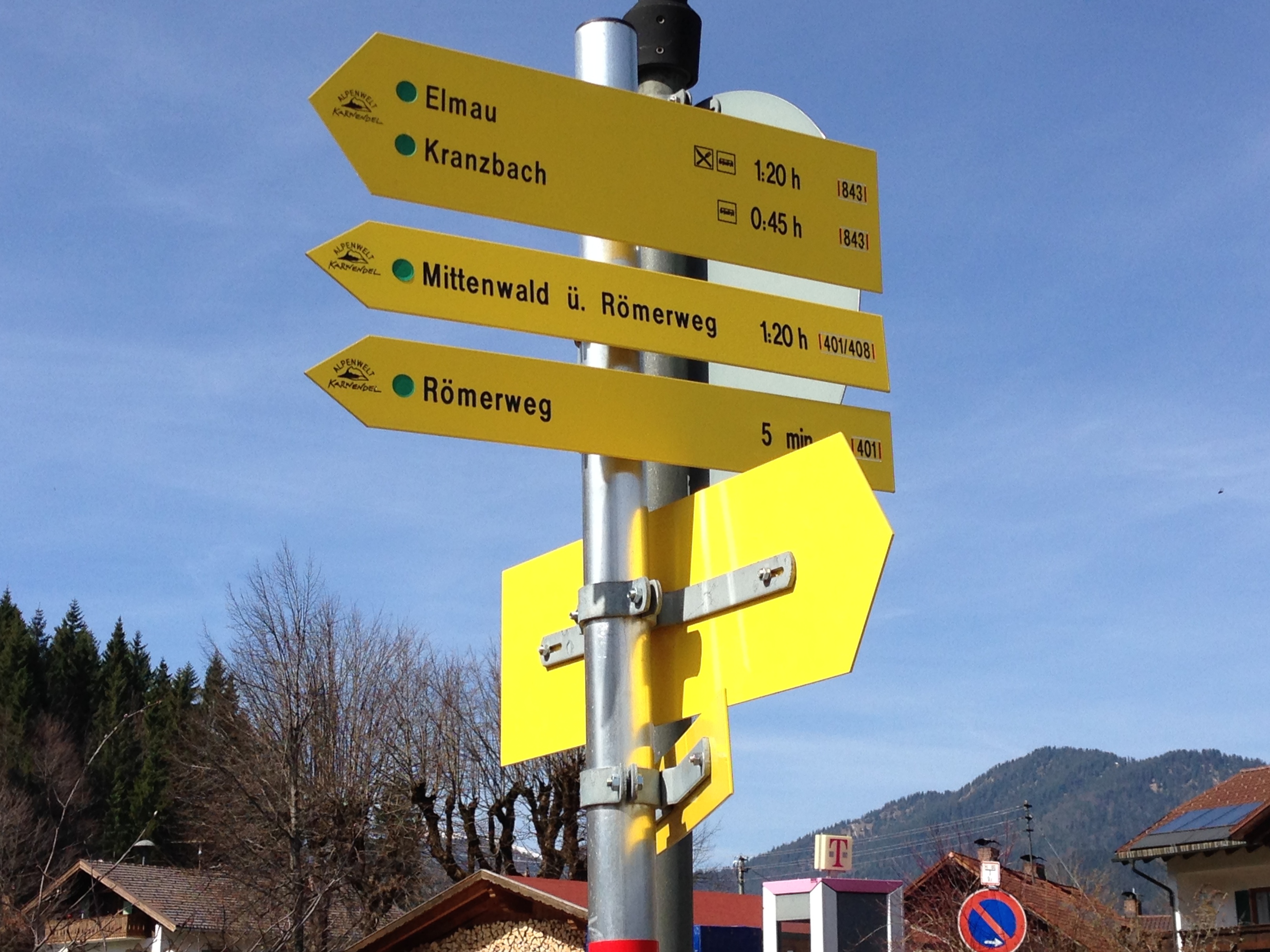
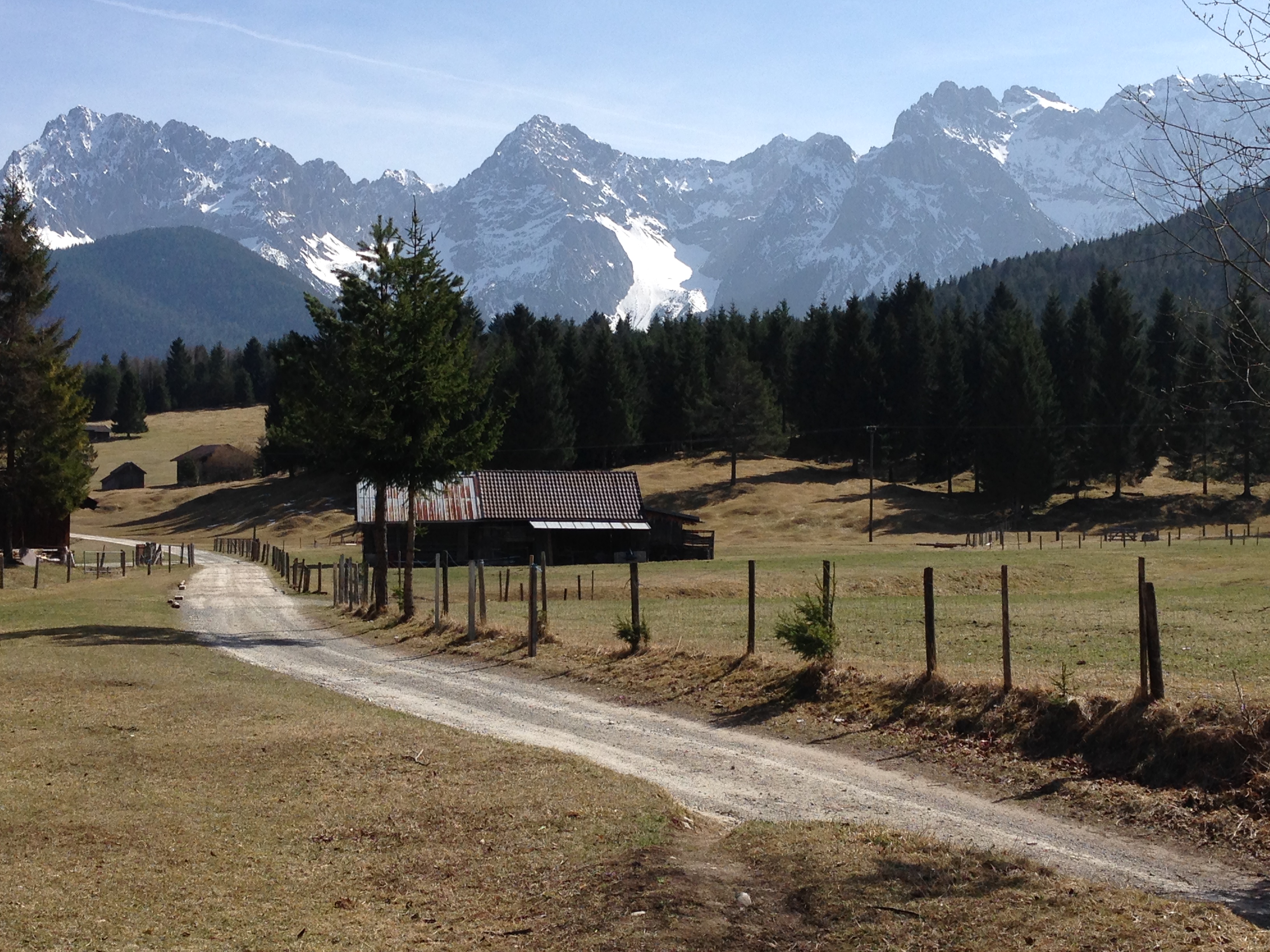
The train from Innsbruck to Munich over Mittenwald stops in Klais, an unassuming alpine village of small hotels (for the tourists who come to ski in the winter and hike in the summer) and locals who probably work in Mittenwald or Garmisch-Partenkirchen. Last week I unboarded there to take a look at some  local attractions, one in particular.

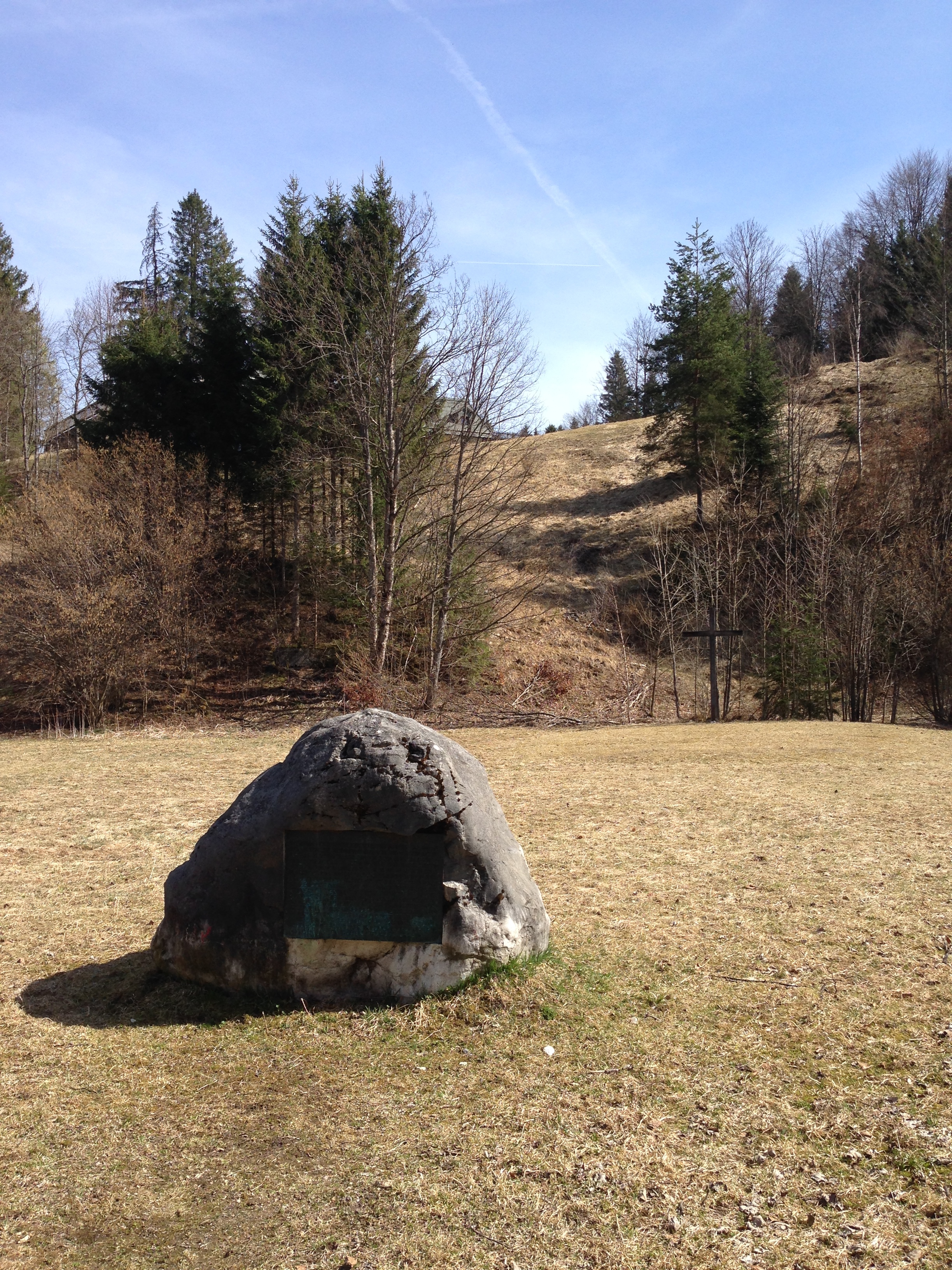
IMG_1190First, along the small path called Römerweg (more on that in a bit), one comes across the Kirchfeld (church field), in which a boulder rests. This is the site of the old original Scharnitz Abbey (g), founded in 763 and whose monks moved to another area in 772. Excavations in the late 20th century found a church foundation, traces of living quarters, and a small graveyard. Just a minute further along the path, however, one comes to this:

IMG_1199

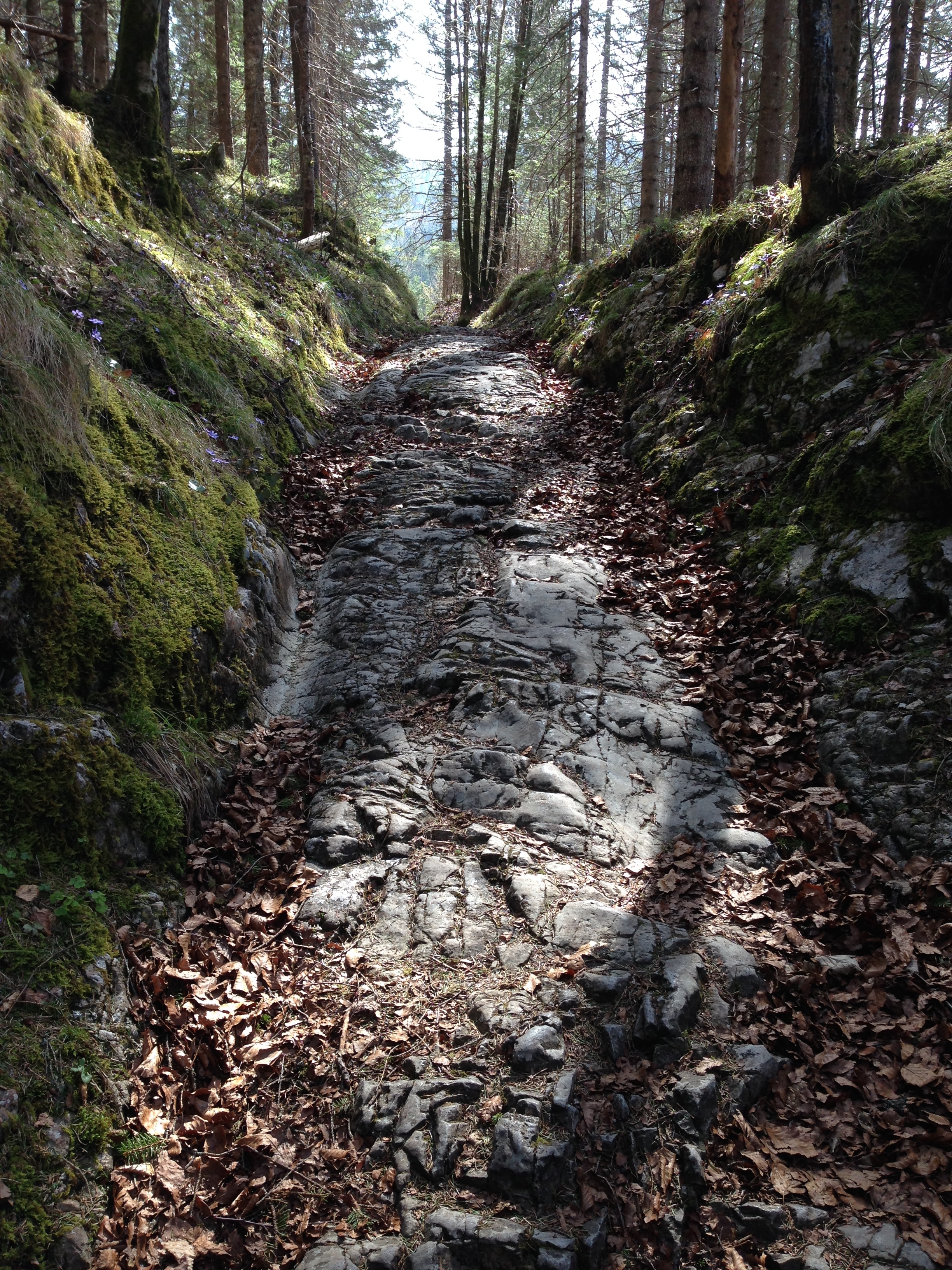
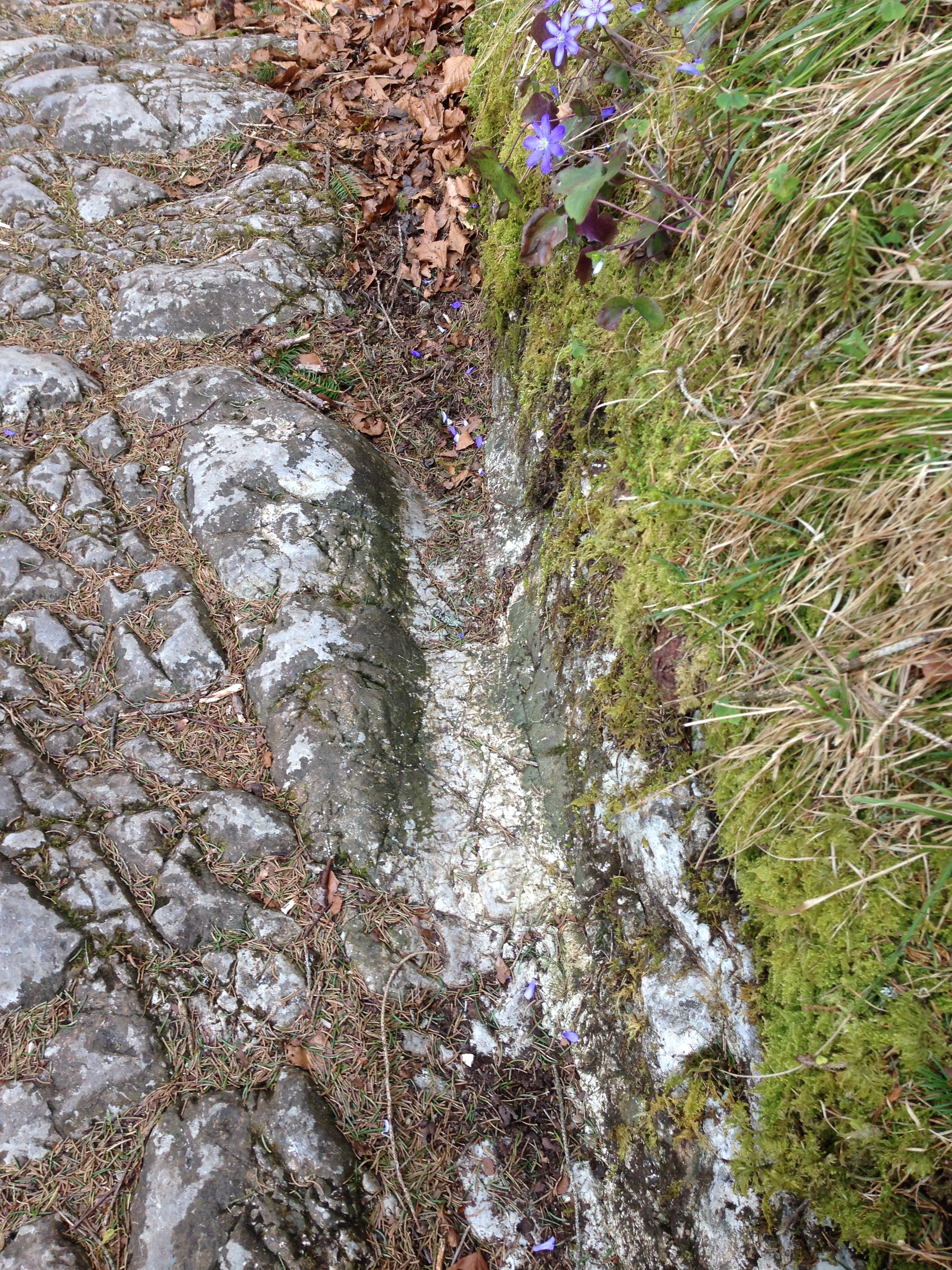
A path cut right out of the rock. This is what remains locally of the old Roman “Via Raetia”, which ran over the Alps via the Brenner Pass, Innsbruck, and then on to the Roman provincial capital Augusta Vindelicorum, now known as Augsburg.

IMG_1205
Above, a closer look at one of the grooves which helped determine, by the distance between them, that this road was used by Roman wagons and not wagons from the middle ages, when parts of this route were still very much in use.  (In researching this I stumbled upon a old tale which claimed that the US standard railroad gauge descends directly from the distance of the grooves left by “Roman chariots”. This story is false, for several reasons, but one of them being that the Roman army didn’t use chariots, which were so light that they wouldn’t have been leaving grooves anyway. The grooves come from plain old horse-drawn carts laden with goods, for army use or for trade.)

IMG_1200Römerweg ends here at this unpaved road, which leads to the main road back to Mittenwald. The Via Raetia probably does not lie beneath it, but rather somewhere hidden under pasture. Or maybe it does. One could cycle a bit of the general area of the road, although there is no fixed bike route as there is with parts of the Via Julia. The “Via Raetica Bike Path” is something else altogether, along the Danube near the Roman frontier. This online compendium of the Via Raetia would be useful in planning a route. Perhaps, with some deeper research and field work, I could publish my own someday…

*Ah yes, the title to this post.  A sign at the abbey site mentions, in the original documents pertaining to the dedication of the abbey, that the faithful of Mittenwald came to the church gen de Kloas’n [Geleisen], or “along the wheel tracks”. Although it has also been put forward that the village of Klais got it’s name from the Kloster, or even from the possibility of a clausura (military camp), the connection to the Geleisen seems to me the best answer.

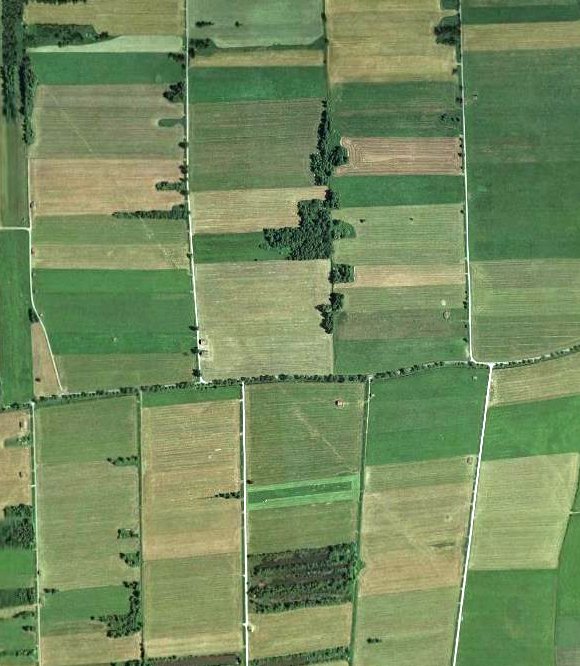
AND: why you can’t walk/cycle a Roman road in it’s entirety. Note the lines indicating the tracks. Image from here (g).
www.kaluwi.de:Esch_Ech.html

Frühjahr

The German word Frühjahr is, according to the online dictionaries, a synonym for Frühling, or “spring” (the season). However I sometimes have taken the word to mean “beginning of the year”, and so, with the proximity of the advent of spring for the ancient Irish Celts (February 1) and for ancient Rome (February 5), Frühjahr seems like just the right word for now.  Das deutsche Wort Frühjahr ist nach einen online Wörterbuch ein Synomym für die Jahreszeit Frühling. Allerdings habe ich gelegentlich den Begriff als „Beginn des Jahres“ verstanden, und so, kurz vor Ankunft des Frühlings (für die altertümlichen irischen Kelten der 1.Februar, für die Römer der 5. Februar), scheint mir Frühjahr  das richtige Worte für gerade diesen Zeit, jetzt,  zu sein.

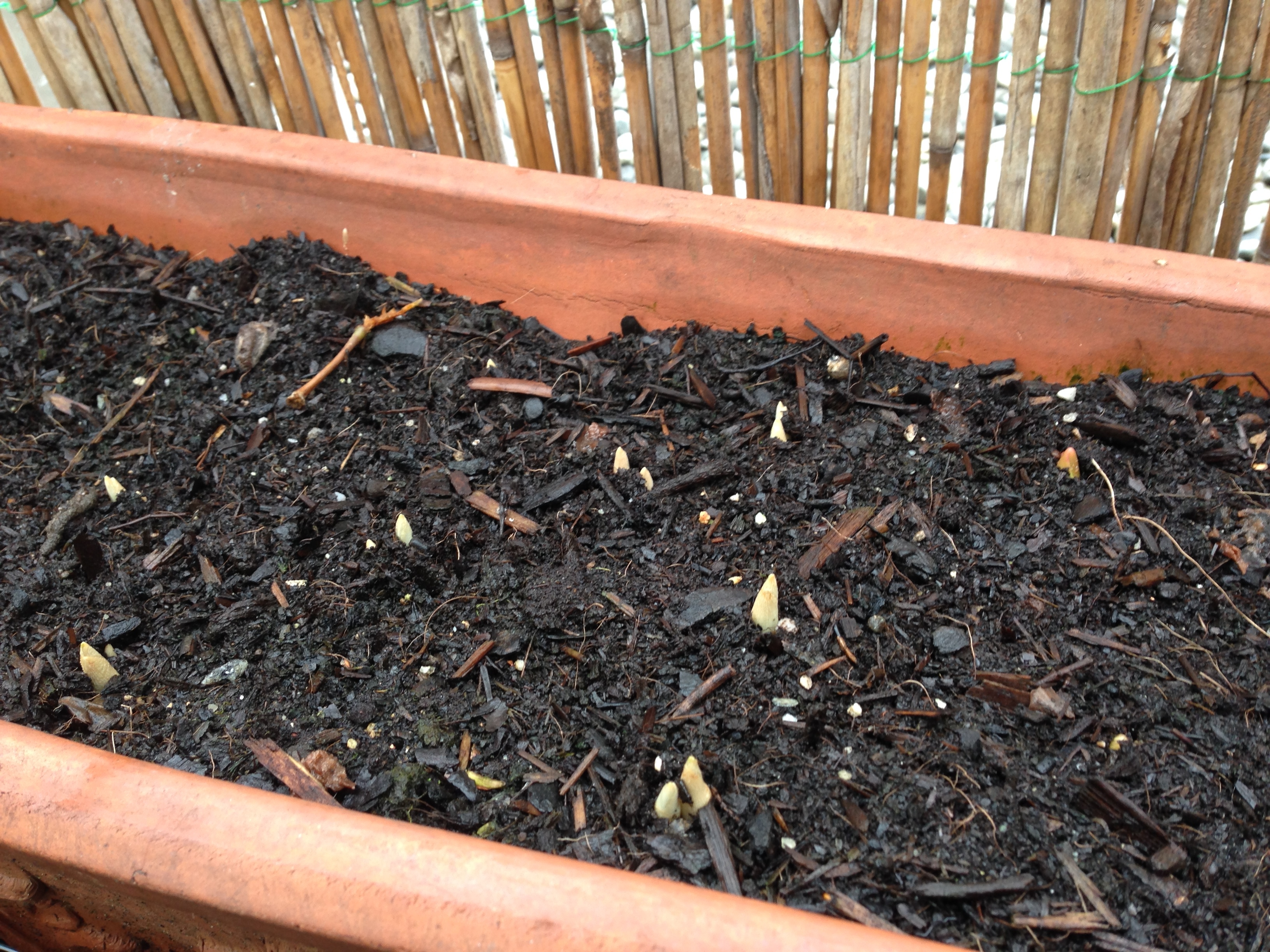
IMG_1075Flower bulbs are sprouting from the soil already. It still seems  a little early for this. Blumentriebe sprießen schon aus dem Boden. Es scheint noch immer etwas zu früh dafür.

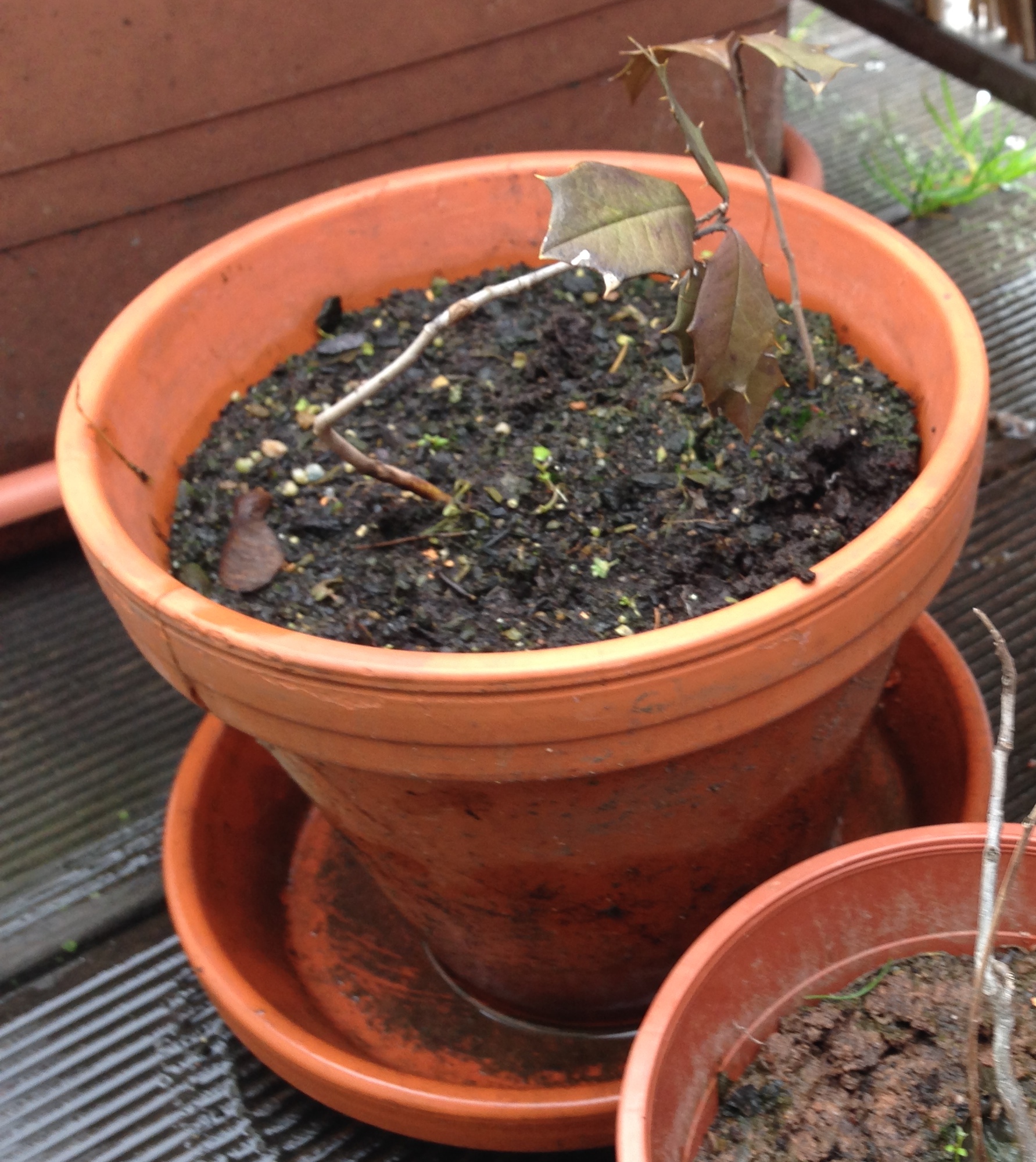
IMG_1076As an experiment, we took two small wild hollies or Ilex (Stechpalme) and transplanted them to pots on the terrace. One looked not to have survived the transplanting but we decided to wait and see if it rallies after the winter. (They are both from private ground with permission from the owner.)  Wir haben versuchweise zwei wilde Stechplamen in Töpfe auf der Terrasse umgesetzt. Einer sah so aus als hätte er das nicht überlebt, aber wir entschieden uns dafür den Winter abzuwarten um zu sehen, was sich noch zeigt. (die Pflanzen wurden mit Erlaubnis des Besitzers von einem  privaten Grundstück geholt).

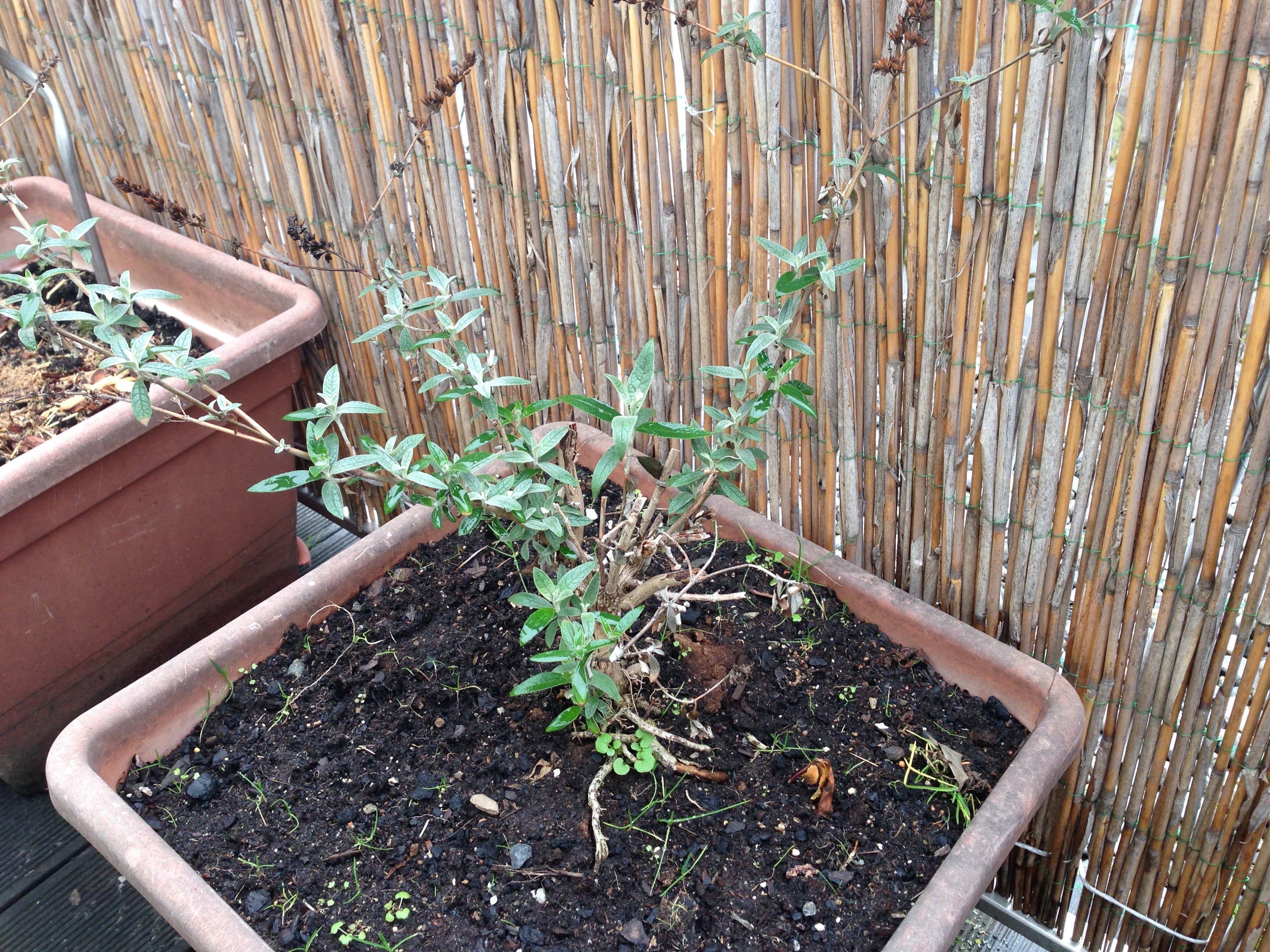
IMG_1077Another transplant was this butterfly bush, Buddleia (Schmetterlingsflieder). Bought at a garden center, it survived the trip and took to its new home right away. I learned later that Buddleia will grow almost anywhere, including vacant lots and abandoned railways. There are clusters of the plant growing in an old lot on Amraser Strasse behind the train station here in Innsbruck, and later I noticed more along my train ride to Bavaria, especially around the station at Murnau, where an abandoned track area is now a field of high grass and wildflowers. I shall cut it back in March to stimulate growth.      Außerdem haben wir einen Schmetterlingsflieder gesetzt. Gekauft in einem Gartencenter, hat er die Umsiedlung überlebt und fühlt sich schon wie zuhause. Später habe ich erfahren, dass der Schmetterlingsflieder praktisch überall wächst, unter anderem auf Brachen und aufgelassenen Eisenbahnen. Ansammlungen der Pflanze wachsen auf einem alten Grundstück an der Amraserstraße hinter dem Bahnhof Innsbruck, später habe ich ihn auch auf der Zugfahrt nach Bayern gesehen – besonders in der Umgebung des Bahnhofs Murnau  auf verlassenen Gleisanlagen die von hohem Gras und Wildblumen überwuchert sind. Ich werde ihn im Frühjahr zurückschneiden, um sein Wachstum anzuregen.