Singer Lore: Help For Swollen Vocal Cords

Inching my way out of this bad cold flu bronchitis, I turned to facebook to ask my professional singer friends for their personal last-ditch remedies when a gig is getting near and the vocal folds are still swollen (and therefor not, as we say in singing circles, “approximating”). I don’t mean full-out injury, but rather that recovery time when you’re almost, but not quite, there. This question generated a long and entertaining discussion about the pros and cons of certain medications and methods, which I have boiled down to its essence here for you:

Bromelain, a clear winner with the singers in Germany. It’s made from pineapples, is available without a prescription and reduces swelling. My Austrian pharmacy sold me a less-powerful version of it called Wobenzym, but said that they could order Bromelain.

Ibuprofen. There was a bit of an debate about this. Ibubrofen is an NSAID (non-steroidal anti-inflammatory drug) which works by thinning the blood, like aspirin, but which might lead to real damage if your cords are so raw that the capillaries are near the surface. Some people say “absolutely no ibuprofen”, others say it’s the only option short of steroids, which come with their own set of risk factors.

Some prescription-only suggestions: Serrapeptase (in Germany called Aniflazym),  dexibuprofen, and the once-in-a-decade last-ditch option of cortisone in the form of prednisone and its cousin prednisolone (I guess if you really can’t cancel without dire consequences. But you’ll be out of commission for a while afterward so it really is not often recommended.)

Non-prescription medications and home remedies: Inhaling sage tea with salt, steam, NO steam but cold mist, eating raw garlic, hot grape juice, Eibischwurzeltee (marsh mallow root tea) applied cold (onto the skin?), warm Dr. Pepper, GeloRevoice, diclofenac, lymphdiaral (homeopathic drops),  fresh ginger in water with honey (ginger is supposed to shrink swelling), guafenisin (in America it’s in Vicks 44, not available in Austria), warmed honey, chicken soup, and cancelling the gig.

gelorevoice_fullimage_df_03

Here is a professional singer who recommends rubbing Preparation H (hemorrhoid cream!) directly on your Adam’s apple , which sounds weird. But who am I to say.

Here’s what I normally do, beyond what my doctor prescribes me:

Ibuprofen, Bromelain, inhaling the steam from elderflower (Hollunder) tea (the kind from the pharmacy, not the supermarket), gargling with salt water, nasal irrigation with salt water (boil the water first and let it cool to a usable temperature! This procedure led to a few deaths in the U.S. from people unwittingly using contaminated water from the tap. Better safe than sorry!)

My prescription-only throat spray is Locabiosol, which I get when I am see-the-doctor sick (usually once a year at the most) and then use what remains of it during the rest of year for those borderline cases. A good over-the-counter substitute is Klosterfrau Islandisch Moos throat spray, a little bottle of which I keep at the theater all through the season. I am also a big fan of Golia lozenges, especially the little ones, which are small enough and soft enough for me to keep pressed onto a back molar while I am onstage. I was told that they were also Pavarotti’s favorite throat lozenges. I believe they are only available in Italy (I have generous friends who get bags of them for me when they go to Milan.)

perfetti_golia

If you’ve come here in search of a remedy for your own swollen cords, then best of luck and get well soon!

What are your methods?

“gen de Kloas’n” / Klais*

IMG_1186

Teachers told us
The Romans built this place
They built a wall and a temple on the edge of the
Empire garrison town
They lived and they died
They prayed to their gods
But the stone gods did not make a sound
And their empire crumbled
Till all that was left
Were the stones the workmen found

— Sting, “All This Time”

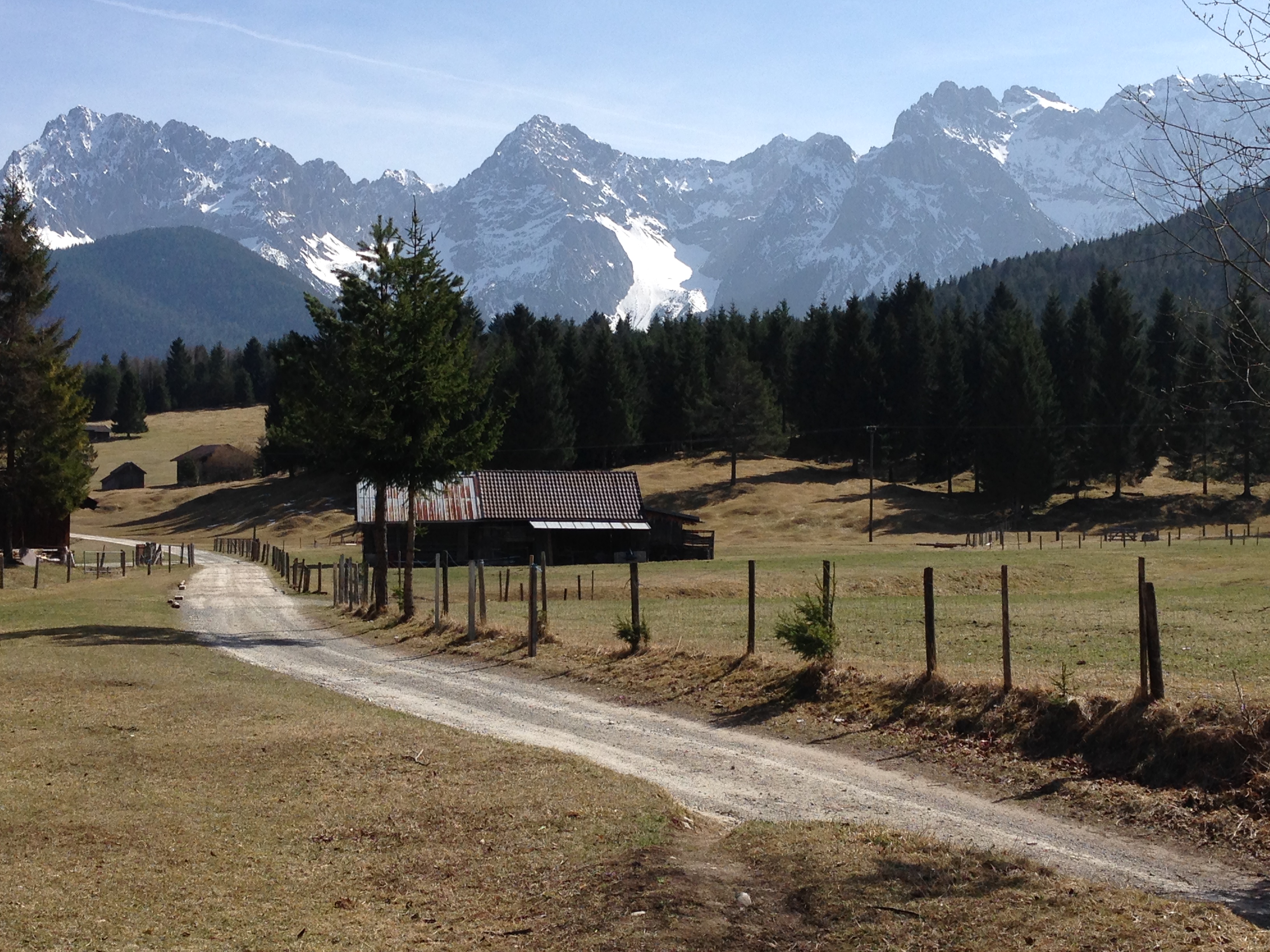
The train from Innsbruck to Munich over Mittenwald stops in Klais, an unassuming alpine village of small hotels (for the tourists who come to ski in the winter and hike in the summer) and locals who probably work in Mittenwald or Garmisch-Partenkirchen. Last week I unboarded there to take a look at some  local attractions, one in particular.

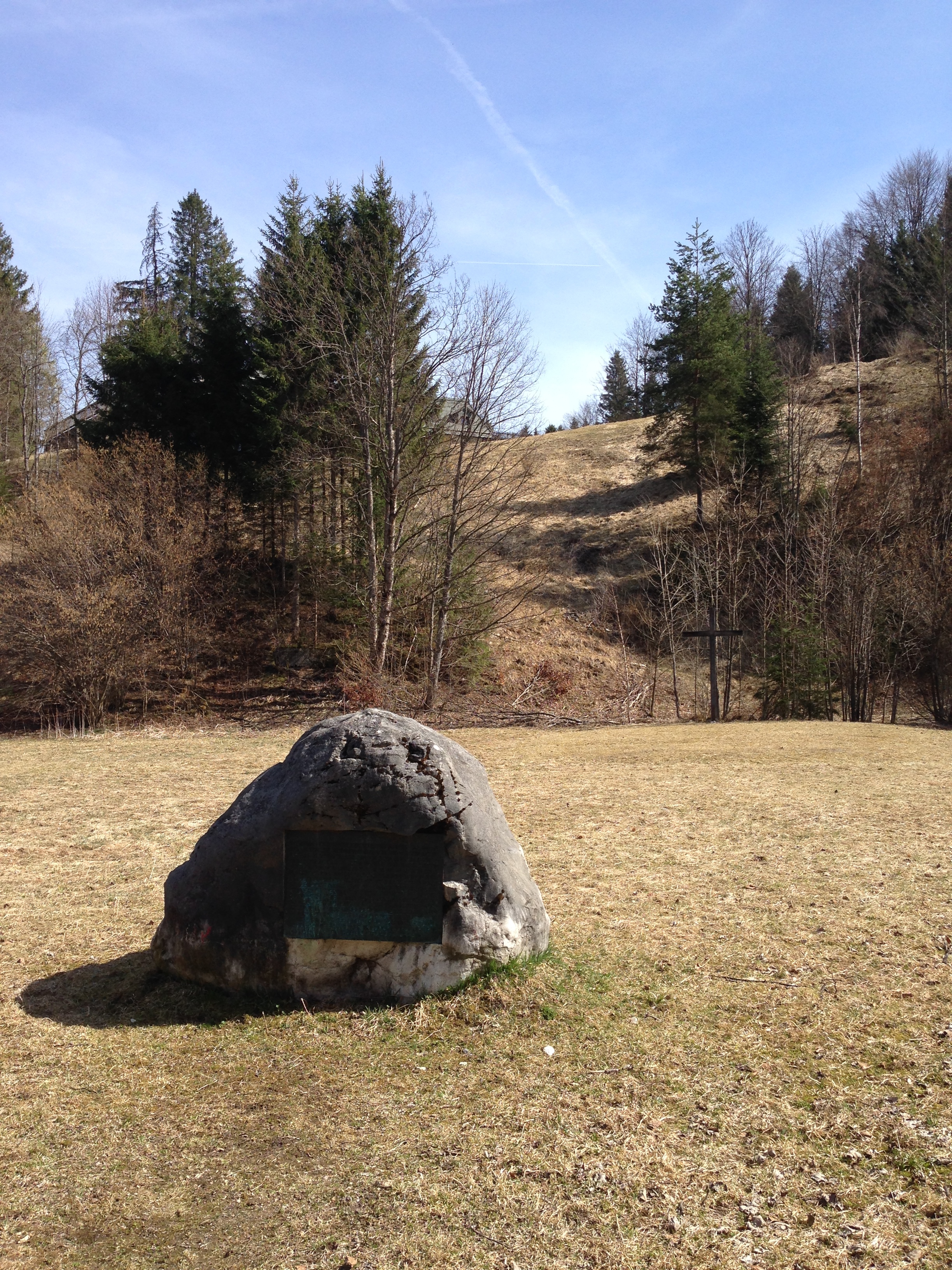
IMG_1190First, along the small path called Römerweg (more on that in a bit), one comes across the Kirchfeld (church field), in which a boulder rests. This is the site of the old original Scharnitz Abbey (g), founded in 763 and whose monks moved to another area in 772. Excavations in the late 20th century found a church foundation, traces of living quarters, and a small graveyard. Just a minute further along the path, however, one comes to this:

IMG_1199

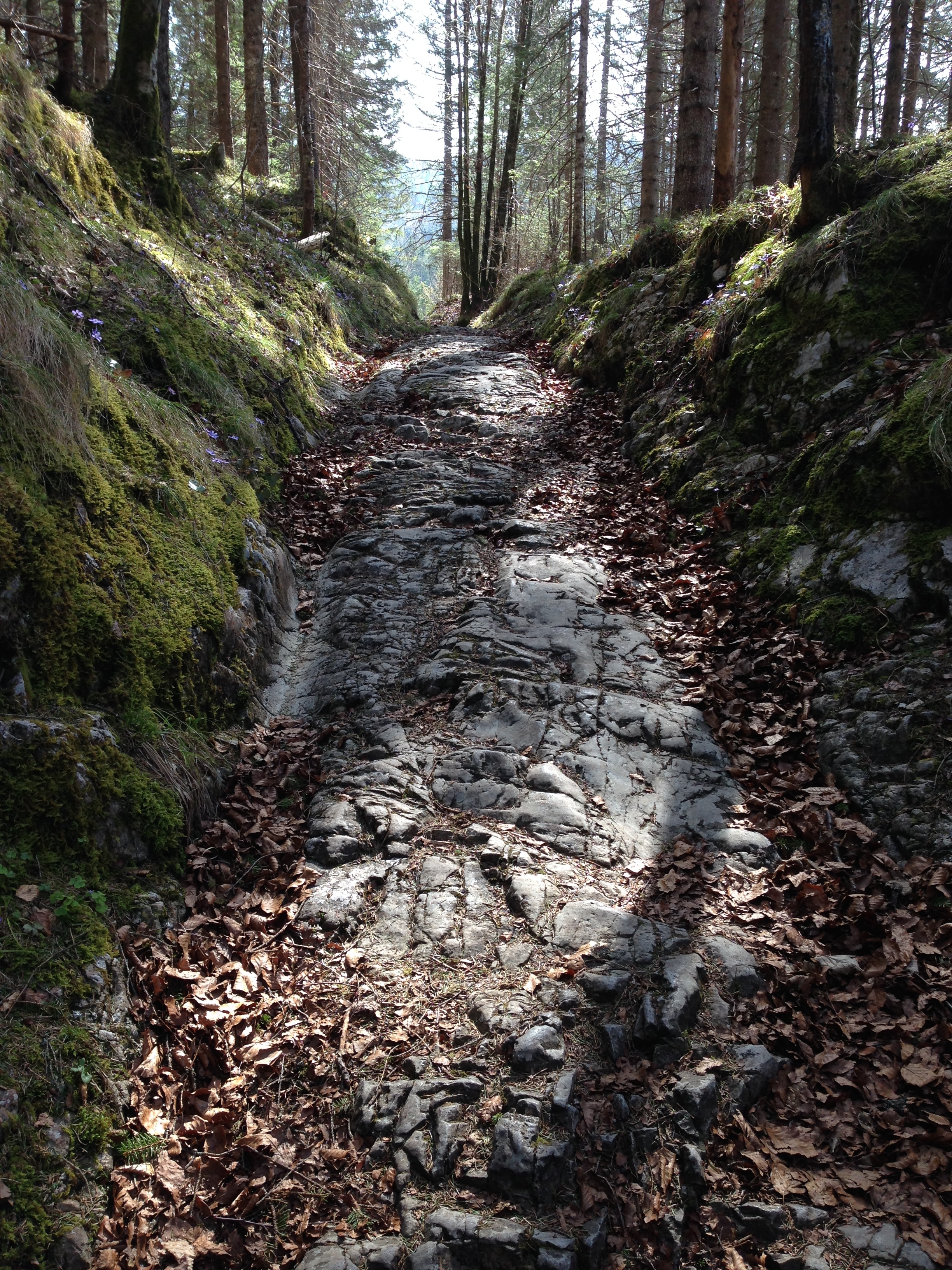
A path cut right out of the rock. This is what remains locally of the old Roman “Via Raetia”, which ran over the Alps via the Brenner Pass, Innsbruck, and then on to the Roman provincial capital Augusta Vindelicorum, now known as Augsburg.

IMG_1205
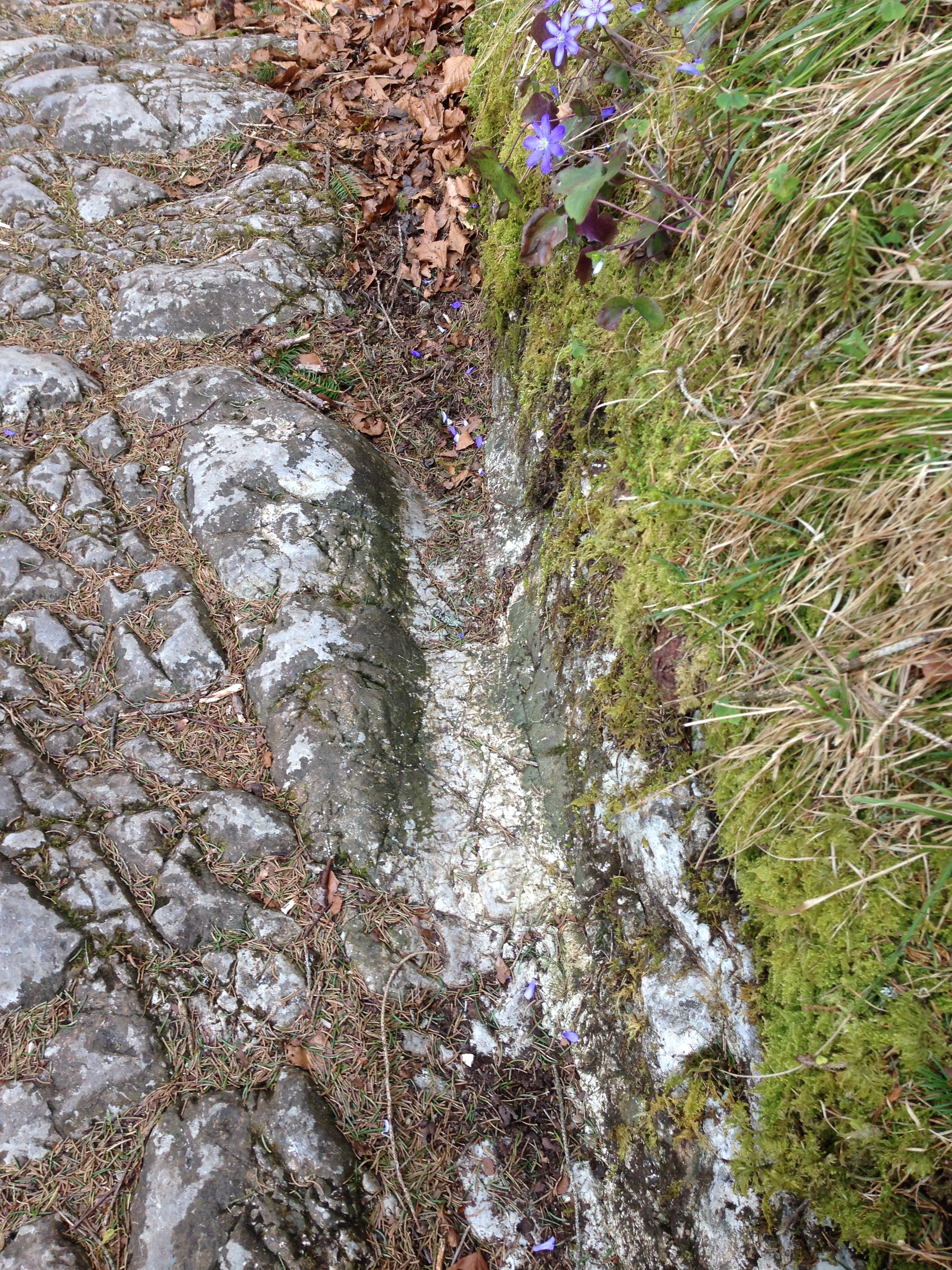
Above, a closer look at one of the grooves which helped determine, by the distance between them, that this road was used by Roman wagons and not wagons from the middle ages, when parts of this route were still very much in use.  (In researching this I stumbled upon a old tale which claimed that the US standard railroad gauge descends directly from the distance of the grooves left by “Roman chariots”. This story is false, for several reasons, but one of them being that the Roman army didn’t use chariots, which were so light that they wouldn’t have been leaving grooves anyway. The grooves come from plain old horse-drawn carts laden with goods, for army use or for trade.)

IMG_1200Römerweg ends here at this unpaved road, which leads to the main road back to Mittenwald. The Via Raetia probably does not lie beneath it, but rather somewhere hidden under pasture. Or maybe it does. One could cycle a bit of the general area of the road, although there is no fixed bike route as there is with parts of the Via Julia. The “Via Raetica Bike Path” is something else altogether, along the Danube near the Roman frontier. This online compendium of the Via Raetia would be useful in planning a route. Perhaps, with some deeper research and field work, I could publish my own someday…

*Ah yes, the title to this post.  A sign at the abbey site mentions, in the original documents pertaining to the dedication of the abbey, that the faithful of Mittenwald came to the church gen de Kloas’n [Geleisen], or “along the wheel tracks”. Although it has also been put forward that the village of Klais got it’s name from the Kloster, or even from the possibility of a clausura (military camp), the connection to the Geleisen seems to me the best answer.

AND: why you can’t walk/cycle a Roman road in it’s entirety. Note the lines indicating the tracks. Image from here (g).
www.kaluwi.de:Esch_Ech.html

Jackson Memorial

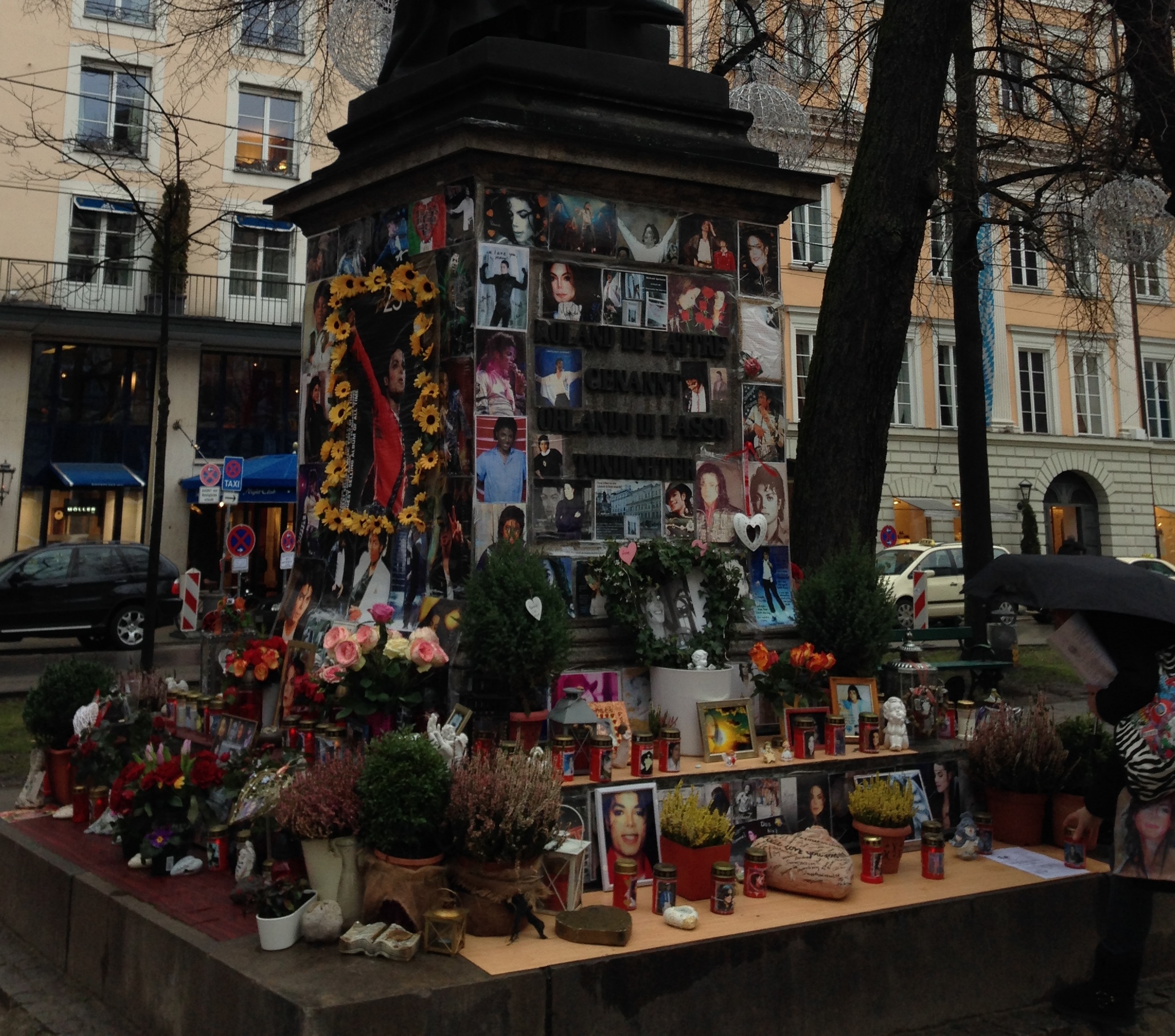
In Munich today, we found ourselves in front of this:

IMG_1051A perfectly respectable monument of the composer Orlando di Lasso (who died in Munich in 1594) has been re-purposed into a memorial to Michael Jackson, who did not die here, but who did stay in the hotel just beyond, the luxurious Hotel Bayerischer Hof.  No, it’s not the German hotel where he recklessly dangled a baby from the balcony; that happened at the more famous Hotel Adlon, in Berlin. 

Remembering the Pogrom 1938

Deutschsprachige Leser kann mehr hier lesen.

In light of reports like here and here, one might start to think that Europe is going under any day. Reading beyond the headlines, one learns

[t]he trend in Europe does not signal the return of fascist demons from the 1930s, except in Greece, where the neo-Nazi party Golden Dawn has promoted openly racist beliefs, and perhaps in Hungary, where the far-right Jobbik party backs a brand of ethnic nationalism suffused with anti-Semitism.

But the soaring fortunes of groups like the Danish People’s Party, which some popularity polls now rank ahead of the Social Democrats, point to a fundamental political shift toward nativist forces fed by a curious mix of right-wing identity politics and left-wing anxieties about the future of the welfare state.

Yes, the far-right groups are worrisome. No, we are not being taken over or sliding back into the 1930s.

That said, it is still supremely important to remember what happened, and today marks the 75th anniversary of the November pogroms in Germany, known as Kristallnacht. Efforts have been made in the last decades to stop using this latter name and call it what it was, a pogrom, and most formal reference to it uses Novemberpogrome. The old name is still around, though.
Innsbruck has a group of citizens dedicated to keeping the memory of the horrors in the Anschluss years from fading into obscurity. They have toiled for years publishing about many aspects of those years — the schools, the psychiatric system, the ethnic cleansing, the local resistance, and a lot more I can’t even think of right now — if you are looking for literature, this author has been especially prolific (I have read some of his books, and am impressed enough to recommend anything written by him.)
The commemorations this year include a concert featuring the work Concerto funebre by the late Innsbruck composer Bert Breit, dedicated to the Innsbruck victims of Kristallnacht; walking tours of the Altstadt with emphasis on its former Jewish residents; research projects for high school students at the City Archives; commemorative speeches at the entrance to the Jewish cemetery, followed by a silent march to the Pogromnacht memorial menorah near the State Govermnent Building (Landhaus), where a Kaddish will be recited.

I assume that other cities across Austria and Germany will be having similar events tonight.

Yesterday evening I attended a small reading and slide-show presentation of letters to one Erna Krieser, a young woman who left Innsbruck in the late 1930s to take a job with a rich family in Tuscany, from her immediate family. Her mother and twin sister write in ever increasing urgency about their situation — being forced to sell the family business, being told they must leave Innsbruck, eventually settling in the Jewish ghetto in Vienna, all the while hoping to find a way out and being too afraid to make any rash decisions — a reunion in South Tyrol becomes out of the question as the family learns they would not be able to return home. This is difficult for many younger listeners to understand, but without proper travel and residency papers, virtually nothing was possible, especially for a middle-aged couple and their daughter. On the other hand, if they had known what was in store for them (the parents perished in Auschwitz, Erna’s sister Käthe in the Lodz ghetto), would they have risked it? (A good novel on the kafkaesque labyrinth of bureaucracy one faced is “Transit”, by Anna Seghers). Their last letters, right up to the outbreak of the war, and the closing of all the borders, were filled with hoping against hope that someone would come through for them, and with enormous gratitude that their daughter Erna had got out (she was able to emigrate to Palestine.)

The readings were interspersed with selections from an old photo album, many “last photos” of Jewish Innsbruck families in their homes, on holiday, on the way out of Europe. The evening was titled Abschiedsbilder, farewell pictures, and presented by local author and filmmaker Niko Hofinger.

You Have To Hear Yourself With The Ears Of Your Enemies.

Moser1 ∏ Christian Steiner, EMI Classics(Photo from EddaMoser.com )

Even if you have never heard of the German soprano Edda Moser (and that’s OK;  I don’t really keep track of sopranos myself, and I’m in the business), if you are a singer you really should read this interview she gave to Lars von der Gönna recently for the Westdeutche Allgemeine Zeitung. I don’t know if I am allowed to post this in translation but I found it so good that it deserves to be read by English-speaking singers as well. So, for now, here it is. Pass it on as you see fit. Die deutsche sopranistin Edda Moser hat neulich ein Interview gegeben, die sehr informativ und lesenswert ist. Ich empfehle, daß jeder Sänger diesen Artikel lese. Deutschsprachige Leser können gleich zum WAZ Link für die Originalfassung.

———

This is a lovely garden.

EM: I think so too. We see deer down there in the morning, when I go out onto the balcony after my gymnastics.

You do gymnastics?

EM: Of course! Every morning. I can show you afterward.

Many of your records are currently being reissued. You’re very present in the media. That’s not a given these days.

EM: True. I think that I’m enjoying more attention than I did during my time on the stage.

Because you were not a diva?

EM: Well, I was never sick, I was married, I was never involved in any scandals. Some become legends because they cancel so many times. I went my own way, without making problems. By the way, that’s also the reason I left my husband. He said, “You have to be in the newspapers every day.” But I was only interested in the work. The grace, to be allowed to sing those wonderful roles.

Many of your performances are legendary — above all your Queen of the Night, which contained more than sparkle and coloratura.

EM: Coloratura? I opened my mouth and it was there. But a role like that is so much more. I always prepared myself physically for roles. One has to do that. It doesn’t even occur to most, unfortunately. If I say to my students, “You have to be able to touch your palms to the floor while standing”, they say “For God’s sake, I can’t even reach down to my knees!”. At some point I gave up. (offering candy) YOu have to try this, it’s absolutely sinful. From Italy!

Almond cookies? Terrific!

EM: Yes! Aren’t they marvelous?

You’ve said, “One has to remain at the bottom.” What does that mean?

EM: You have to ground yourself. We live here on Earth, I’ve always sung “grounded”. I try to pass that on to young singers, but it shocked them too much. They don’t understand that one first begins to learn this profession while standing on the stage. I’ve said to them, “Heed my warnings, at least a couple of them. Humility! Discipline! Keep quiet!” You can forget it, no one listens. Some, after they were miserably stranded, came to me later and said, “You were right.” Too late.

To keep quiet — for many years you only wrote what you wanted to say, avoided the telephone — all to keep your voice healthy.

EM: Yes, it was like that. When one sings as a profession, it demands a certain exclusivity. One gets lonely, and it stays that way. There isn’t anything else. On the other hand, I think: it should be that way for many things that one does seriously and dedication.

Did you make sacrifices willingly?

EM: Oh, sometimes I would have gladly participated. Laughing and gossiping. It was simply taboo to really celebrate. I never went to parties. Although I was pretty fetching, as a young singer I was good looking.

You speak directly about the dark side of the opera business.

EM: It could make you cry. Christmas is some hotel in America. Much acclaim at a New Years Eve performance in Vienna, a great pleasure, a lot of fun onstage. Then one minute in (Cafe) Sacher: a good-luck pig, a good-luck penny, a glass of water and then back to the hotel. Over. Done. But it only worked through this kind of discipline. I had some of the most beautiful experiences of my life through singing. For me, it really was a holy art.

So holy and serious, that you wanted to take your life, when a role was taken away from you.

EM: Fidelio in Salzburg! Gewandhausorchester, Kurt Masur. A dream. It was all planned. And then I happened to find out that I was out. Masur deceived me. It was awful. Only the thought of my mother kept me from killing myself.

When you ended your career with a grand “Salome” in Vienna, what was it like for you afterwards?

EM: First it was like death. You are simply gone. The telephone doesn’t ring anymore, no one calls. You are nobody. The sadness is indescribable. And then some idiots come along and say, “But now you’re a professor of singing.” They have nothing to do with one another. It’s the opposite. As a singer you have to be the most egotistic person, and not give a damn about anything but yourself. And when you’re the teacher, you stand completely in the background.

In your career, what did you see as a gift, and what did you see as work?

EM: The work was a gift! Sure, I had the talent. But 98% is work; genius is industry.Don’t think now that I consider myself a total genius. But when I look back, I think: there was genius to my fearlessness. My faith in God was there too.

Why are German singers underrepresented in the world’s opera houses?

EM: Much too much theory. They have to practice a lot more. Vocal training! Sometimes I miss this “I want!”. A singer needs that. When one shows up at the theater sloppily dressed, one doesn’t get past the doorman. I once sang for an agent who started reading his mail while I was singing. I stopped and said, “I’ll wait. Finish reading your mail, and then I’ll continue.” I thought, he damned well ought to listen to me. No one dares (speak up) today.

Is that your advice? : Have courage!

EM: Absolutely. But that only works when one sings well. You have to hear yourself with the ears of your enemies. And I want to give my enemies as little pleasure as possible.

Was there a perfect performance for you?


EM: Yes, there was. Beethoven “Missa Solemnis” with Giulini. Or the St. Matthew Passion with Karl Richter. One knew then, the sky’s the limit!

Was it on the stage that you felt the greatest feeling?

EM: For me, absolutely yes! My eroticism, my believe in true love, that all happened on the stage. We were all in love with each other onstage, Gedda, Pavarotti, Domingo. Oh, Domingo, what a voice, this dark gold! And how he comforted me, when I argued with stage directors. We dined together just recently, when he was here to sing at the Loreley [an open-air arena in Germany].

Speaking of food: you’ve cooked here at your house for Helmut Kohl.

EM: Yes, an underrated man, because he was a great subject for caricature. But what instinct! Very cultured, very humourous. Actually quite modest. Completely insecure with women.

The Queen of the Night, and a politician whose favorite singer was Hans Albers. How did that work?

EM: Kohl knew relatively little about music, he went gamely to festival concerts, found them very nice. But Brahms was a closed book for him, he didn’t even know Schubert’s “Erl King”. I played it for him — and he listened. He was always curious, that was one of his great strengths.

Why are tenors so much more admired than sopranos?

EM: At the Vienna State Opera, tenors are even addressed as “maestro”. It is, if you will, the most unnatural form of singing. Tenors get the highest salaries, I am alright with that. As their partner onstage, even I was intoxicated by these voices.

Anna Netrebko is celebrated all over the world as a soprano star. What’s your view on your colleague from St. Petersburg?

EM: A really wonderful voice. But she’s simply not a lady, that’s her failing. She lacks a certain distance to the public — she brings the art across but not the femininity. If she had this “grandezza”, she would be one of the greatest. This pop-star allure is simply a shame.

And opera stage direction these days?

EM: I can only condemn it. Above all Katharine Wagner. What possibilities she has in Bayreuth — and makes such filth! Meistersinger as  painters, I can only laugh at that. I get the impression that she has no fire in her, she is only mocking. She is arrogant. And the result is boring. Please write that!

Frau Moser, one last, rather indiscreet question; what does one sing, when one forgets the text?

EM: Lalala. Simple. No one notices — you just have to do it expressively!
Kulturblogging: Hildegard Knef

When you spend more than a couple of years in another country, you may begin to realize how much the people around you, while possibly being very much like you, grew up on different pop culture. The American entertainment industry being what it is, they are sure to know many of our well-known pop singers, film actors, athletes and the like, but underneath that they have a whole trove of memories of other famous and successful figures, may of which we Americans have either never heard of, or have forgotten, or whom we did not notice because they worked on the peripheries in the international scene (such as Susanne Lothar). We may not call them minor, because they were not. They just didn’t have a large American following. (Many might leap to the conclusion that, if you’re not big in the USA, you haven’t “made it”, to which I say, open your eyes.)

Knef

So it is with Hildegard Knef. I knew that she had done some work in Hollywood (as “Hildegard Neff”) but did not know that her handprints are there in the concrete, with those of many other stars, in front of Grauman’s Chinese Theater.

She started out by being discovered at 18, while training to be an animation artist for the UFA film studio in Berlin, by the head of that studio. A year later she was having an affair with the Reich’s Chief Dramaturg, Ewald von Demandowsky (this would be 1944). She was gorgeous, extremely photogenic, highly intelligent, and one assumes that powerful men were falling over themselves to advance her career.

In a nutshell, her career was tempestuous. In 1948 she signed a 7-year contract with David O. Selznick, wherein she was paid lucratively for English lessons and screen tests, but was cast in no roles. In 1950 (now with American citizenship), she returned to Germany to appear in the film Die Sünderin. With its taboo themes of prostitution and suicide, not to mention a brief nude scene, the film scandalized the country: protests, counter-protests, banning in many cinemas. The Roman Catholic Church in Germany protested primarily that the gist of the film resembled the infamous Nazi euthanasia propaganda film Ich klage an. Twenty five years later in America, a mercy killing could be shown in a film like One Flew Over The Cuckoo’s Nest, but coming right out of the Nazi years in Germany, it was apparently  too soon.

She began a genuine singing career with the release of her first album in 1951. Her voice is clear (if unusually low, probably from all the cigarettes) and her singing style is confident and breezy, in that speaking/singing mix that was so popular in the day, but lets out a sort of dignified containment of emotion, a way of revealing pain without the least bit wallowing in it. Ella Fitzgerald later called her “the best singer without a voice”.

Here a song in English, “Too Bad” from 1969. The person who uploaded this put together an amusing collage of internet images to accompany the song.

Ostracized in Germany from the fallout from Die Sünderin, Knef returned to Hollywood and finally got to appear in a row of films, some good, some forgettable. She was the first (perhaps still the only) German to appear in a leading role on Broadway, in Cole Porter’s Silk Stockings. On the success of her international singing career, she returned to Berlin, enjoyed the spotlight on German television appearances, had a child, battled breast cancer, wrote a few memoirs, and generally made for constant headlines in the tabloids.

Here Knef singing “Aber schön war es doch”, from a television broadcast in 1963. The song lyrics tell of bittersweet memories of a last meeting, (“but it was beautiful”), and every detail — with bench, the trees in bloom, the words he’d spoken — is lovingly remembered.


“Written off” in Germany, she fled back to Hollywood where she did some film work but never really got her foot back in the door. In the 80s she played Fräulein Schneider in the musical Cabaret at the Theater des Westens in Berlin, and in 1989 moved back to German for good, heavily in debt. In her 60s, she began to be seen as one of those living legends (as so often happens to people who manage to still be around after the dust has settled), was awarded lifetime achievement prizes, appeared on talk shows, put out a (very successful) album of songs. In 2001 she got her German citizenship back. In 2003, she died of pneumonia, at the age of 76, just two weeks after her last televised interview. Working — and being in demand — until the end.

Image found here.

Susanne Lothar

daslebenderanderen_article

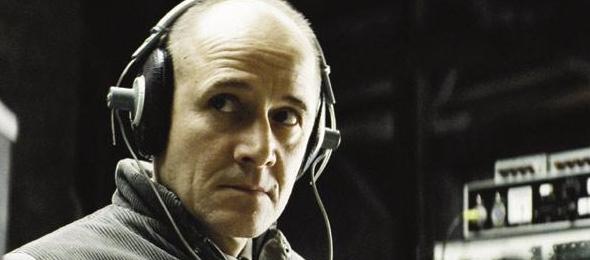
Have you seen the 2006 German film “The Lives of Others”? (Original title: Das Leben der Anderen) You may recall the wonderful actor Ulrich Mühe, who played the conflicted Stasi agent, and who died of cancer in 2007, just after the film’s release.

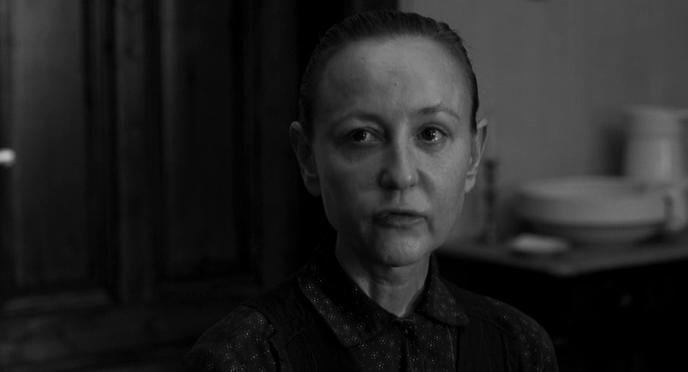
I tell you this as background to a rather sad but touching story. Last night I finally watched the whole of Michael Hanecke’s Das weisse Band (English title: “The White Ribbon”). It’s a difficult film to sit through, I found, but worth the discomfort. It’s beautifully made, and the performances are incredibly riveting.

pic_903330

I found myself looking up the cast list the next morning, as I had recognized only two or three of the actors. One whom I hadn’t known (or at least hadn’t recognized) but who had made a considerable impression on me was Susanne Lothar, who played the midwife. A little online research brought her more clearly into focus, and brought back something I had half-heard mentioned last summer. Susanne Lothar was married to Ulrich Mühe. They had met in 1990 as Mühe’s second marriage was ending (he had just come out of East Germany, and after the Wall fell all sorts of unpleasant things started coming to light, such as the fact that Mühe’s second wife had supplied information about her husband — unwittingly, she claimed — to the Stasi. When later asked how he had prepared for his role as a Stasi agent in “The Lives of Others”, he answered, “I remembered.”)

Mühe did a lot of film and TV work, but Lothar was a stage actress, the unsettling kind which one finds in the best German theaters. She had a special talent for portraying the fragile, the damaged, the soul in pain.
When Mühe became ill, they kept it to themselves. Shortly after his appearance at the 2007 Academy Awards, he underwent surgery for stomach cancer. He died on July 22 of that year.

8555571-Leute-News_Ul_1061a

On July 21 2012, just one day short of the fifth anniversary of Mühe’s passing, Lothar died. The cause of her death, to my knowledge, has never been made public. It is assumed that she took her own life. She was 51. One can imagine that she believed that five years without him had been enough.

Images found here, here, and here.

The Viereckschanze in Utting

UttingSchanze1

I previously blogged about the village of Utting am Ammersee in connection with the small, hidden cemetery for nearby concentration camp victims there. Today I have another unusual place to show you — the rectangular earthwork (Viereckschanze) in the fields just west of the village.

Uttingschanze3

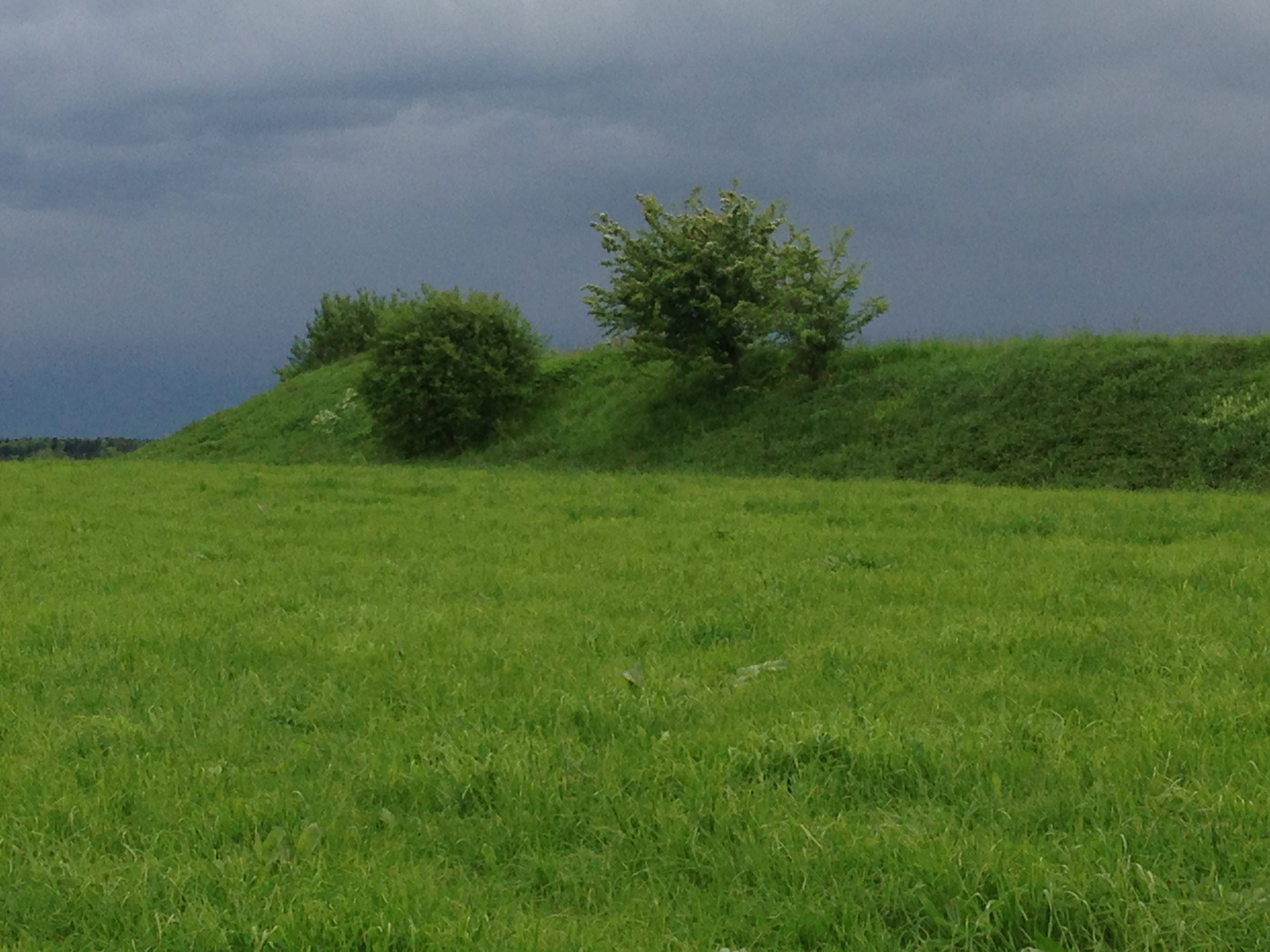
This earthwork was built around 200-100 B.C., in the late Iron Age, by the people we call Celts. According to local sources the Roman Via Raetia (laid down after 15 A.D.) passed right by here, possibly within a few meters of the earthwork.

UttingSchanze2

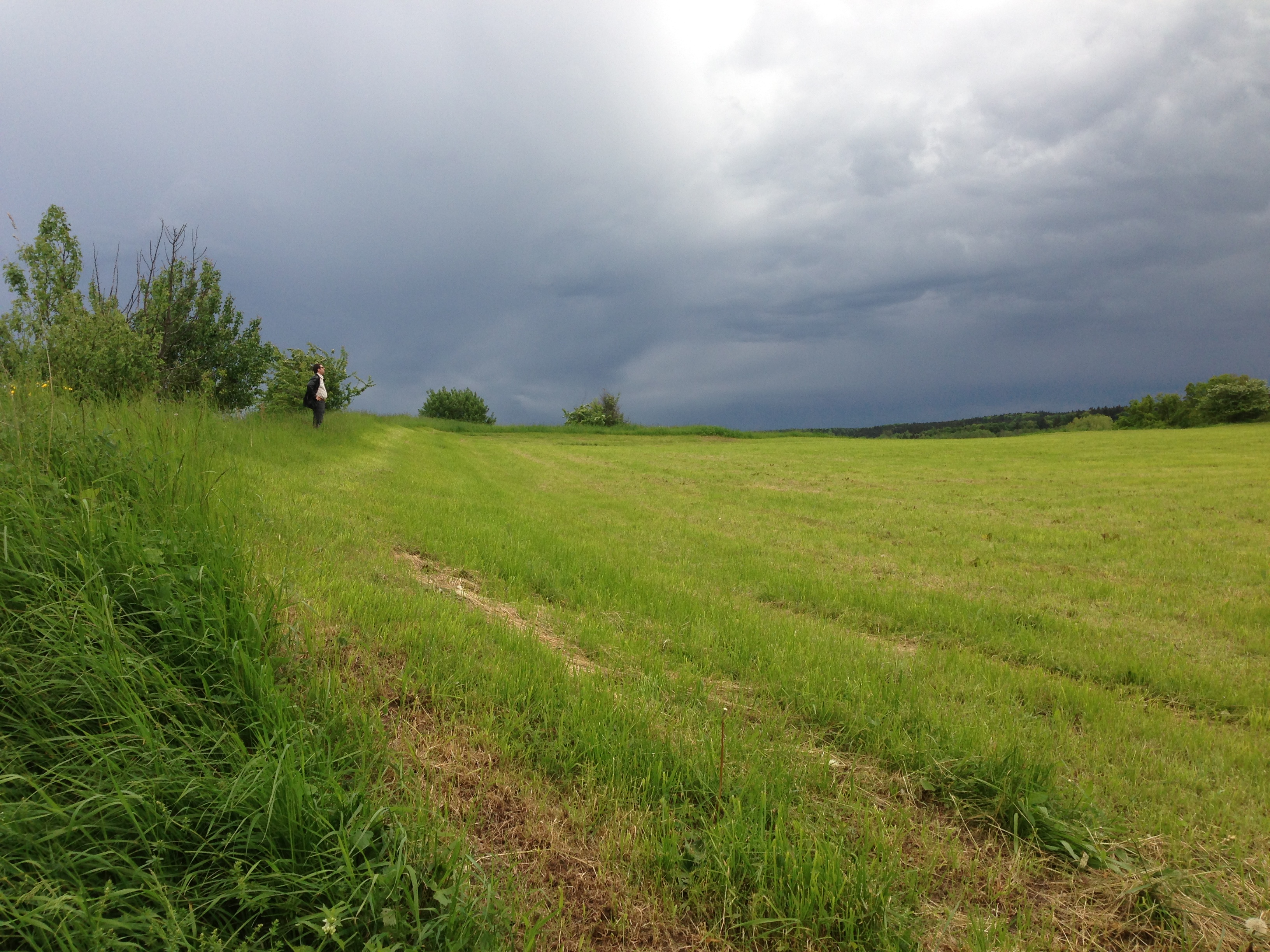
There are approximately 150 such earthworks of this kind (not including grave mounds and other types) surviving in whole or in part today in Bavaria alone. The one in Utting is one of five in the county, and an unusually large one with an inside area of 12,000 square meters.

Uttingschanze4

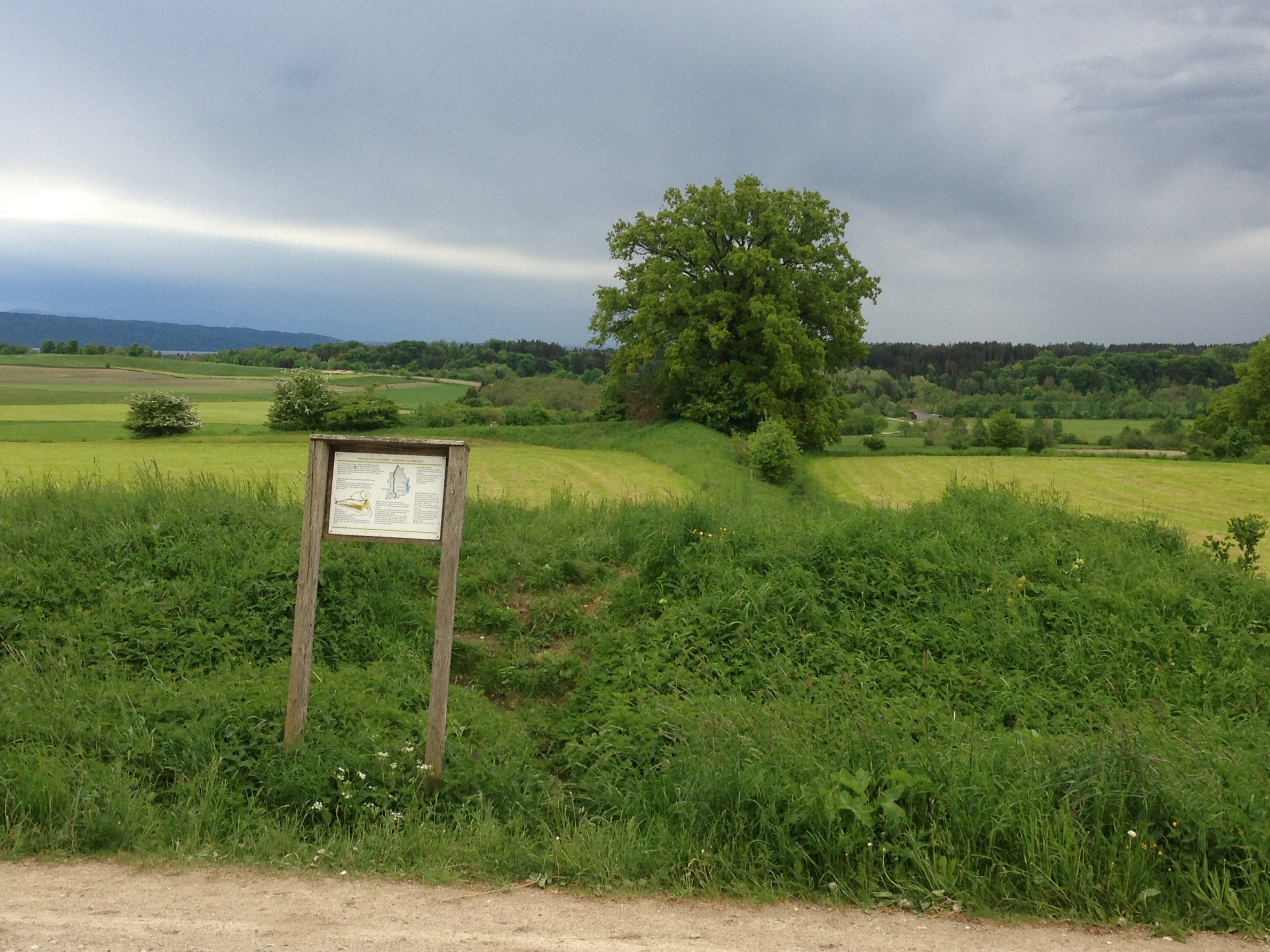
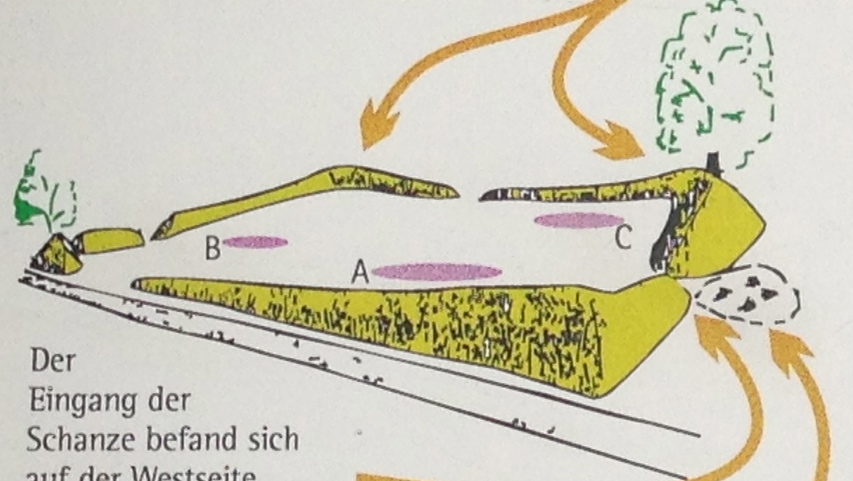
According to information given on-site, research of some kind (a divining rod is mentioned) has revealed evidence inside the enclosure of the existence of A) small buildings, B) a sacrificial site, C) a hole with wooden support walls.

I have to add here that the western side of the Ammersee, we are learning, is some kind of hotspot for the esoterically-minded, and evidently has been for quite some time, as least as early as the 1920s. The sign at this earthwork clearly reflects this, with breezy assertations that the small buildings were temples, the hole was for divining energies, that the whole thing was primarily used for “cult-religious purposes and activities, teaching and passing on of traditions, adjudication, observance of nature and the heavens.” It goes on to say that

the Celts lived in close harmony with the laws of nature. They sensed unseen active entities, forces and energies. They built their ritual sites on places with particular characteristics. These phenomena can evoke internal visions, colors, sounds or moods even today in people who are especially attuned to listening to them.

(translation mine)

Now, there may be something to the idea that people of all eras feel a certain affinity to certain places. I have come across some theories that medieval churches were built on pagan sites not just to wipe out the old gods but to capitalize on the good vibes attributed to the particular place. That’s plausible. Certainly the Celts were more in tune with the laws of nature, as were all people living at the time. But the idea that these earlier people had time to spend tuning into the universe, observing nature and digging the force fields is, to me, a bunch of hooey. Sure, this Schanze may well have included some religious purpose, in the sense that one might feel the need to pray to one’s gods while barricaded inside. These earthworks offered protection, possibly against invaders, or animals (bears, wolves, wild boars). They offered a good surveillance view of the surrounding lands. They offered safe places to keep foodstuffs and materials (leather, bone, wood) awaiting processing. Sure, the Mayans and the Egyptians built pyramids (or, better said, their kings and pharoahs made them do it.) I cannot believe  that the Celts were not too busy, just from trying to get through the winter, to expend time and energy on this sort of thing for the express purpose of being One With The Universe. Perhaps they had one Shaman who did that, and it was built for him (or her.) But then, we are back to today’s system, with a village of farmers and one parish priest. Perhaps the most powerful families maintained these enclosures, like an Iron-Age version of the Kennedy Compound. Many large farms around here have their own little chapels on their grounds (in fact you can have one built these days — we watched one go up in Eching, passing that farm regularly.) Since we are walking around today with basically the same faculties as our ancestors had 50,000 years ago, I see no reason to believe that the people who built the Schanzen were any more enlightened than today’s modern Bauer.

Still, it’s quite something to be on an earthen structure which has survived over 2000 years.

If you go: you can find the earthwork very easily on Google Maps (WNW of Utting, no coordinates needed:just  look for the word “Keltenschanze”). There is parking just off the ST2347 (Landsberger Strasse) and then it’s a few minutes walk on well-maintained gravel roads.

“At The Roman Stone”

IMG_0493

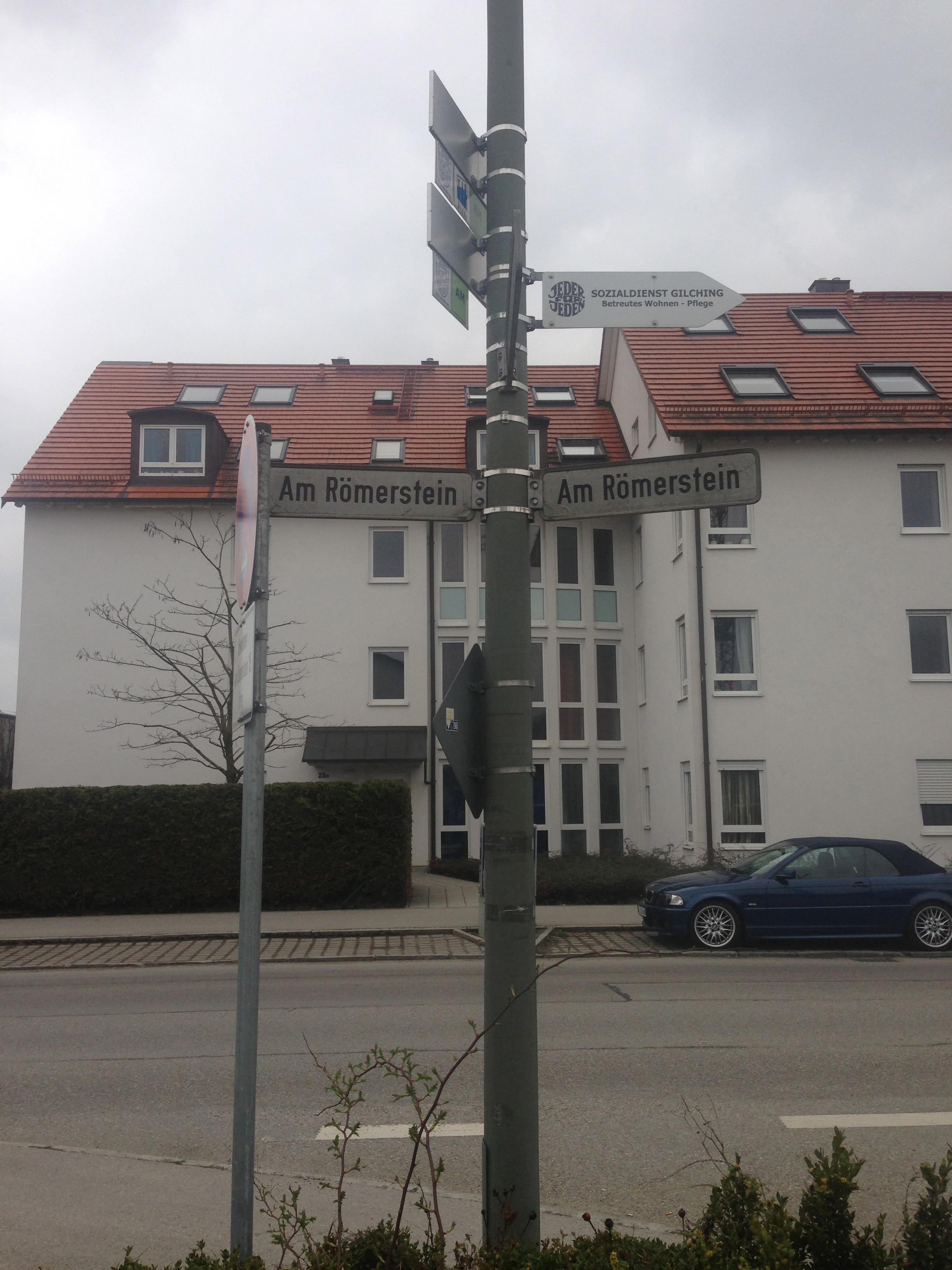
This post’s title is the translation of Am Römerstein, a street in the Bavarian town of Gilching. It’s a road the Beau takes regularly for business. The name always intrigued me — where is, or was, this Roman stone, anyway?

Gilching

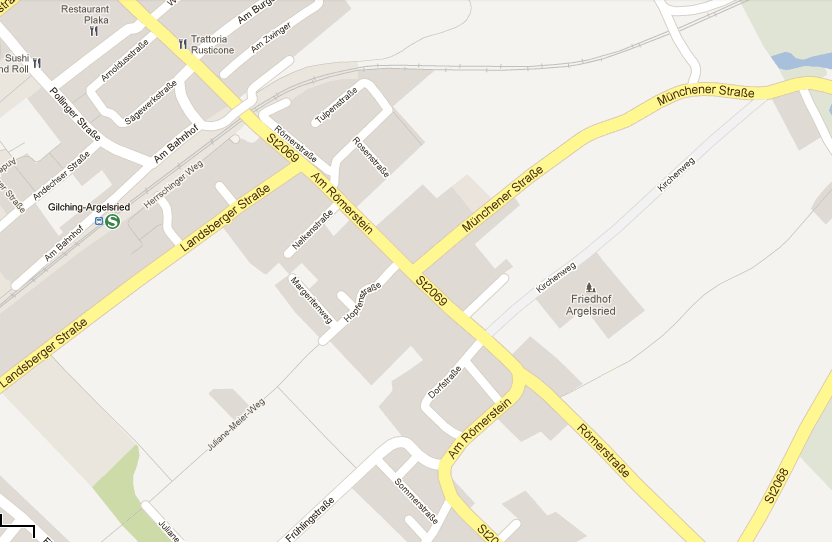
A look at a map of Gilching shows that Am Römerstein intersects (and for a short stretch follows) the old Roman road Via Julia from Salzburg to Augsburg (through Gilching it is named, appropriately, Römerstrasse. Click on the link above to see a simple map of the entire road. Gilching is on the red line just above the area between those two lakes.) So the street got it’s name from being at or near a milestone on the Roman road. Salzburg, not yet the summer destination of the Euro-chic, was important for it’s salt mines, salt in earlier times being a very valuable commodity. (Worth another blog post at a later time. The names of many places in Germany and Austria come from their importance in the salt trade.) Augsburg was Augusta Vindelicorum, the capital city of Roman province Raetia and all the Roman roads in and around the Alps lead not to Rome, but to there.

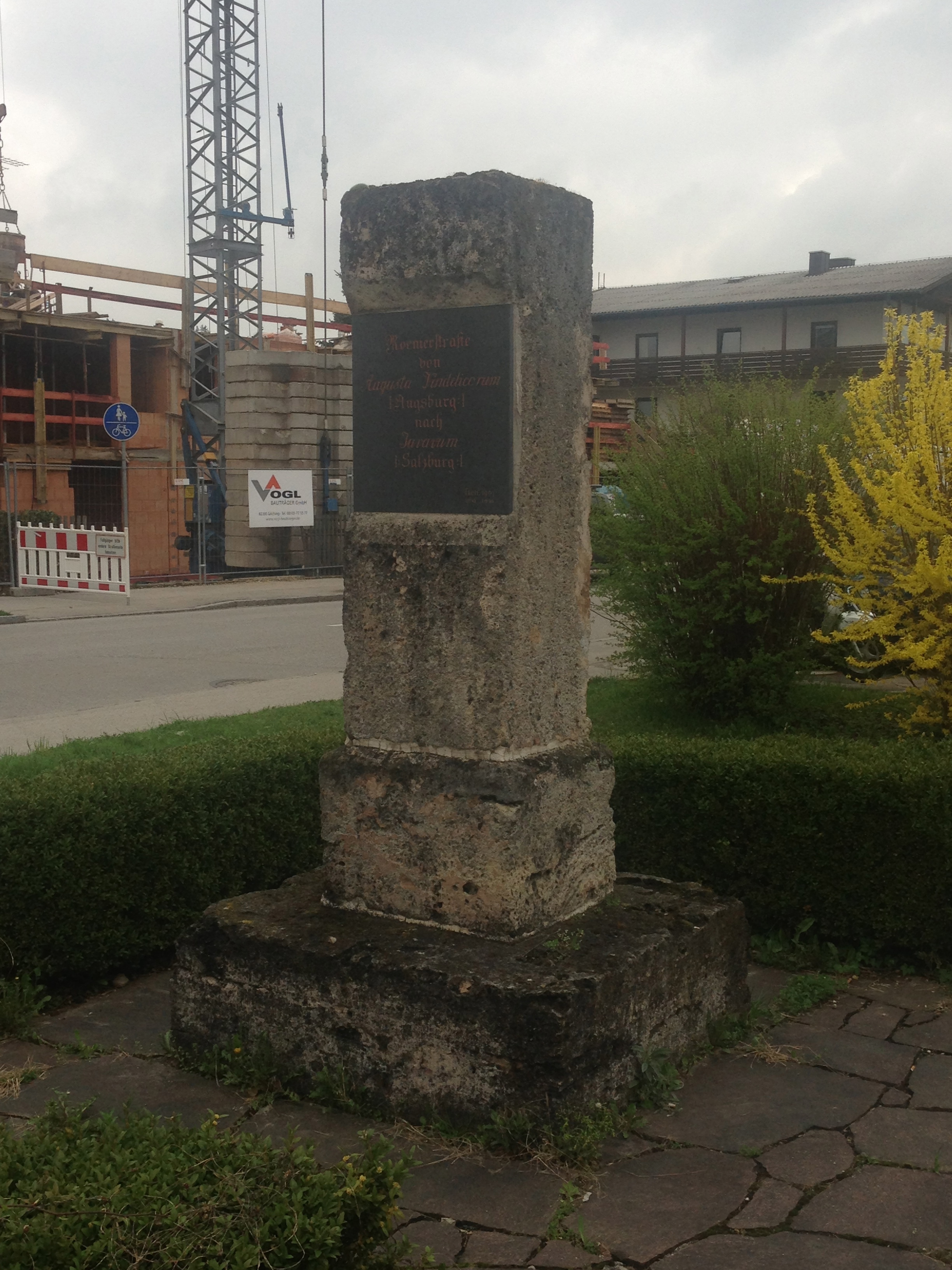
Back to my milestone. With the help of Zeitspringer (who blogs chiefly about archaeological outings in Bavaria and Baden-Württemberg, and who is a great source of information on the subject, his blog is well worth perusing if you read German), I learned that a stone erected in the 1860s and dedicated to the Roman Road is included in a list of monuments on Gilching, including it’s location. A trip over there brought us to Number 15 Am Römerstein, where we found this monument,

IMG_0491

Roman Road
from
Augusta Vindelicorum
(Augsburg)
to
Juvavum
(Salzburg)

This, by the way, is definitely not the same stone mentioned (and shown) in Gilching’s Wikipedia entry (g), a small tube-shaped stone with engraved Latin text, a copy made more recently than the monument at 15 Am Römerstein. So where is the milestone photographed and shown in the Wikipedia entry? Turns out, it’s just a bit further down the road (g), in the center of town.

I assume that the street Am Römerstein, therefor, is named after the 19th-century monument to the Roman road, and not for the site of the Roman milestone (although it’s also entirely possible that the former was erected on the actual site of the original, and the later copy was placed somewhere more convenient and available.) A sign erected near the copy stone gives a very interesting account of the original’s fate. Milestones have been hauled off and used as building stones since the Late Antiquity. This particular stone was taken to Hattenhofen (there are four communities in the area with that name, most likely they mean the one in Fürstenfeldbrück County) in the 16th century, and then used as a cornerstone in Günzlhofen Castle. After the castle fell to ruin it came it Munich, first in the Royal “Antiquarium” and later as part of the Bavarian national collection of prehistoric artifacts, and exhibited with it. Here is where it met it’s ultimate fate, on a date with an Allied bomb in 1944.