Fliess!

I dragged a (quite willing) friend along with me on a day excursion to Fliess (around here written Fließ), a village up on a mountainside overlooking the Upper Inn Valley. The main reason was to visit the Archaeological Museum, home of an impressive number of Roman and pre-Roman objects found in the area. While we enjoyed the Museum immensely, the journey there offered a surprising number of delights.

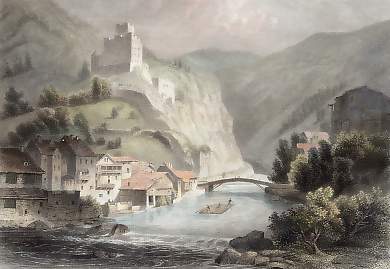
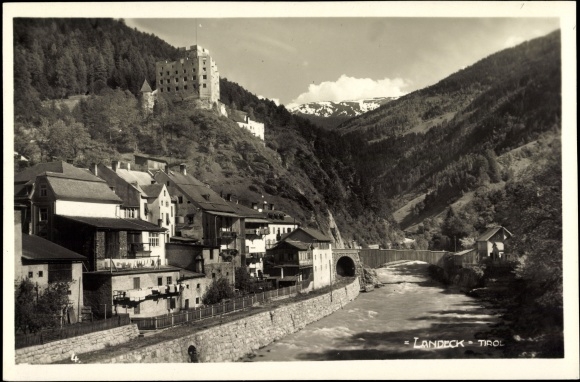
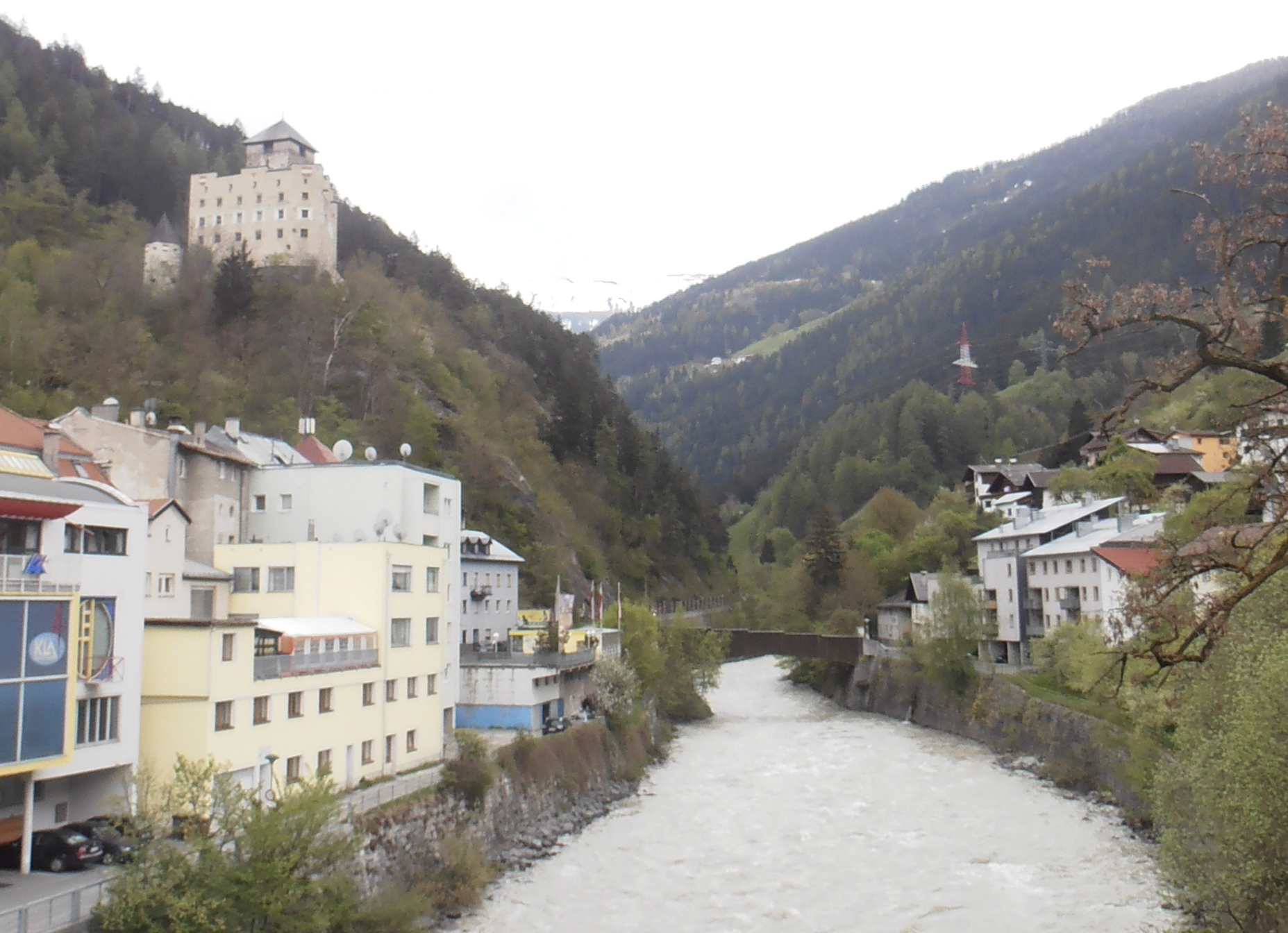
We had planned to take a Postbus from Landeck, but were given some misleading information (we had not realized that we were to take the bus that passes in the valley below, and walk up from there) and so we decided to walk rather than wait, and to take the trail over Landeck Castle. Without planning to, we found ourselves on the old road bed of the Via Claudia Augusta, the Roman road which ran along a portion of the Inn River on its way to Augsburg. The “Claudia” part is for Emperor Claudius, who had it built. His father Drusus, adopted son of Caesar Augustus, was responsible for the Roman march over the Alps and into northern lands.

Heumanderl, or hay racks, in a field. My friend told me a legend about our local hero Andreas Hofer using these “hay men” to make Napoleon’s troops think he had a larger army than he had.
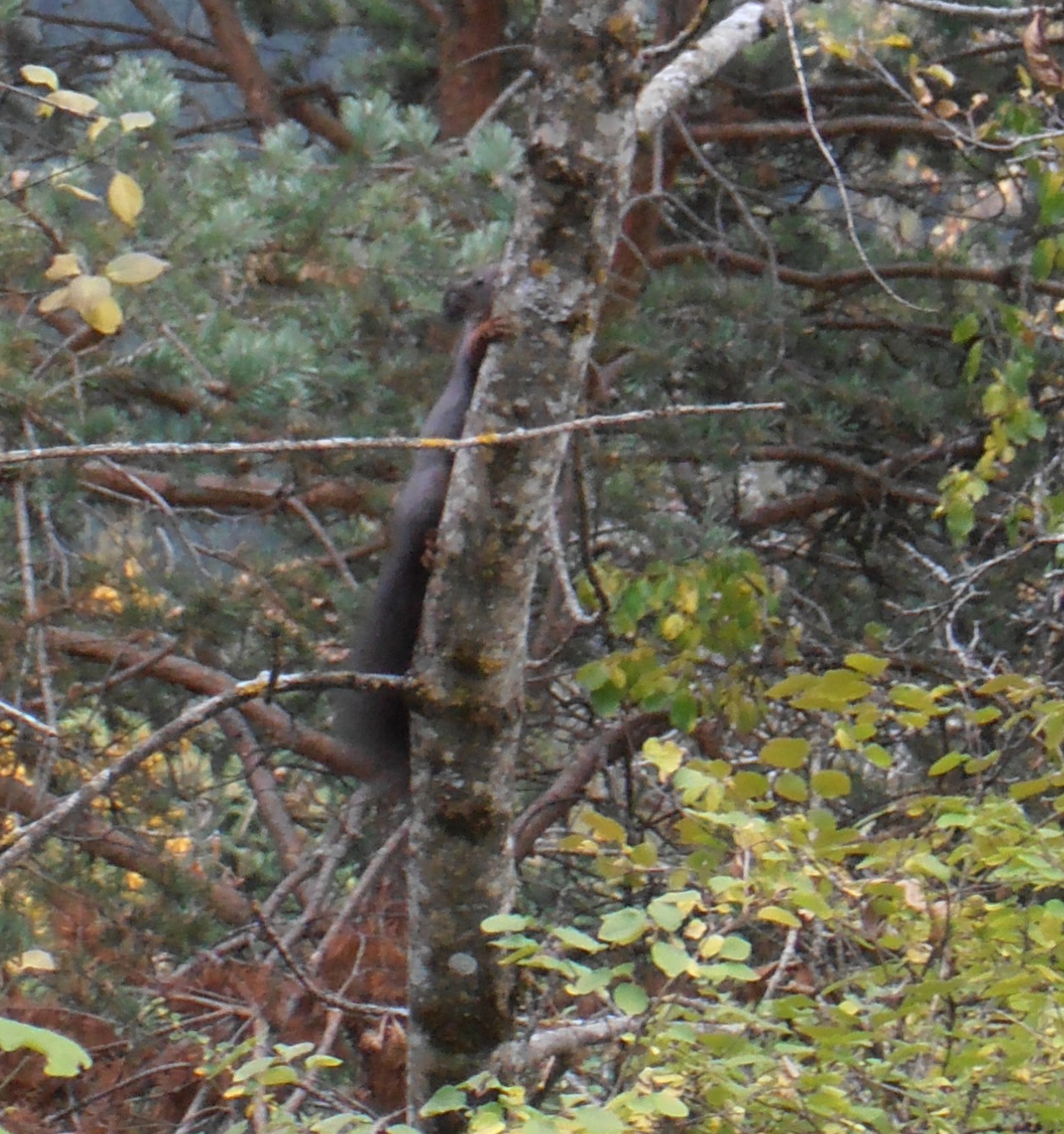
Dramatic Squirrel has an Alpine cousin — and he’s black.
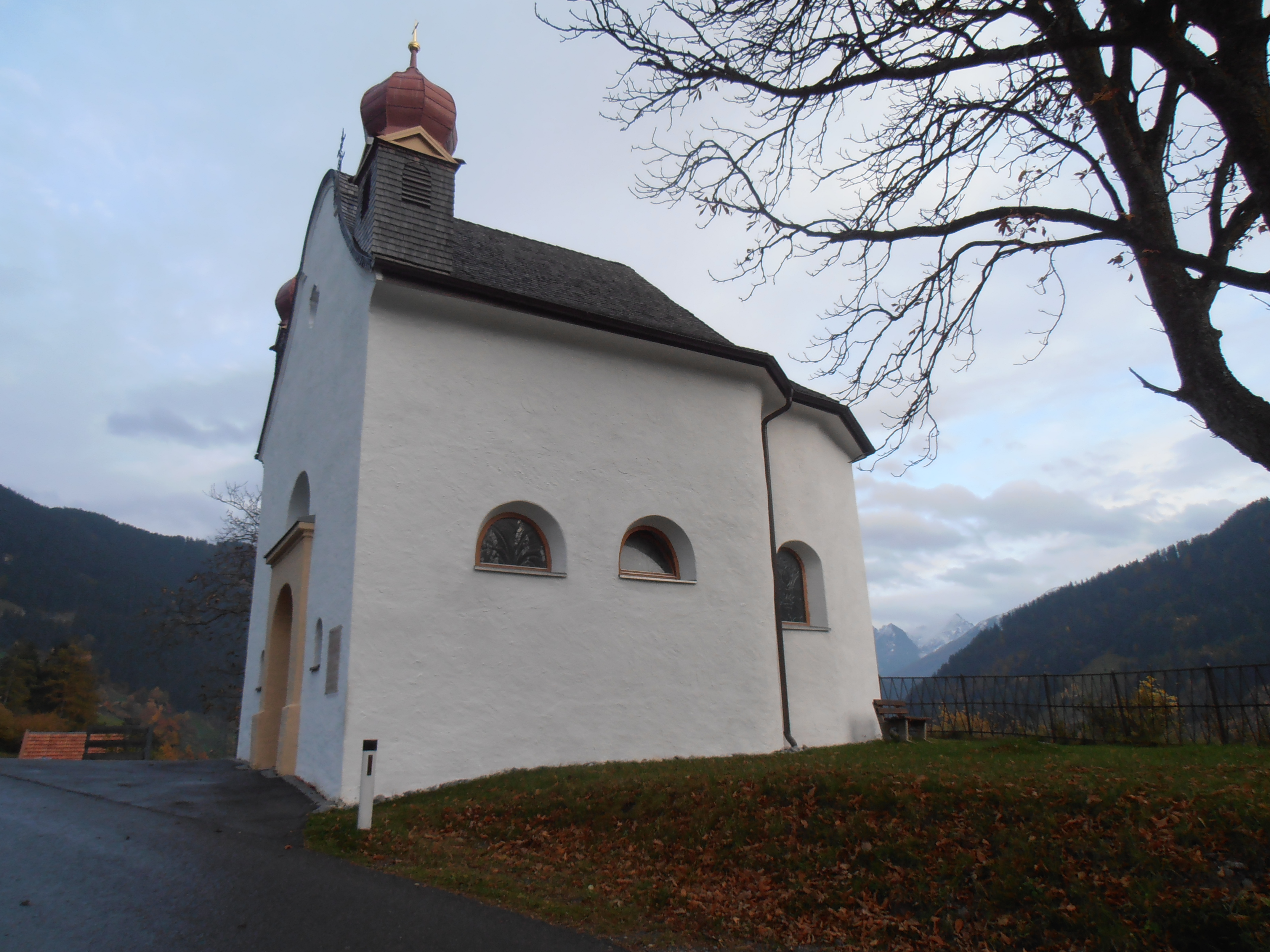
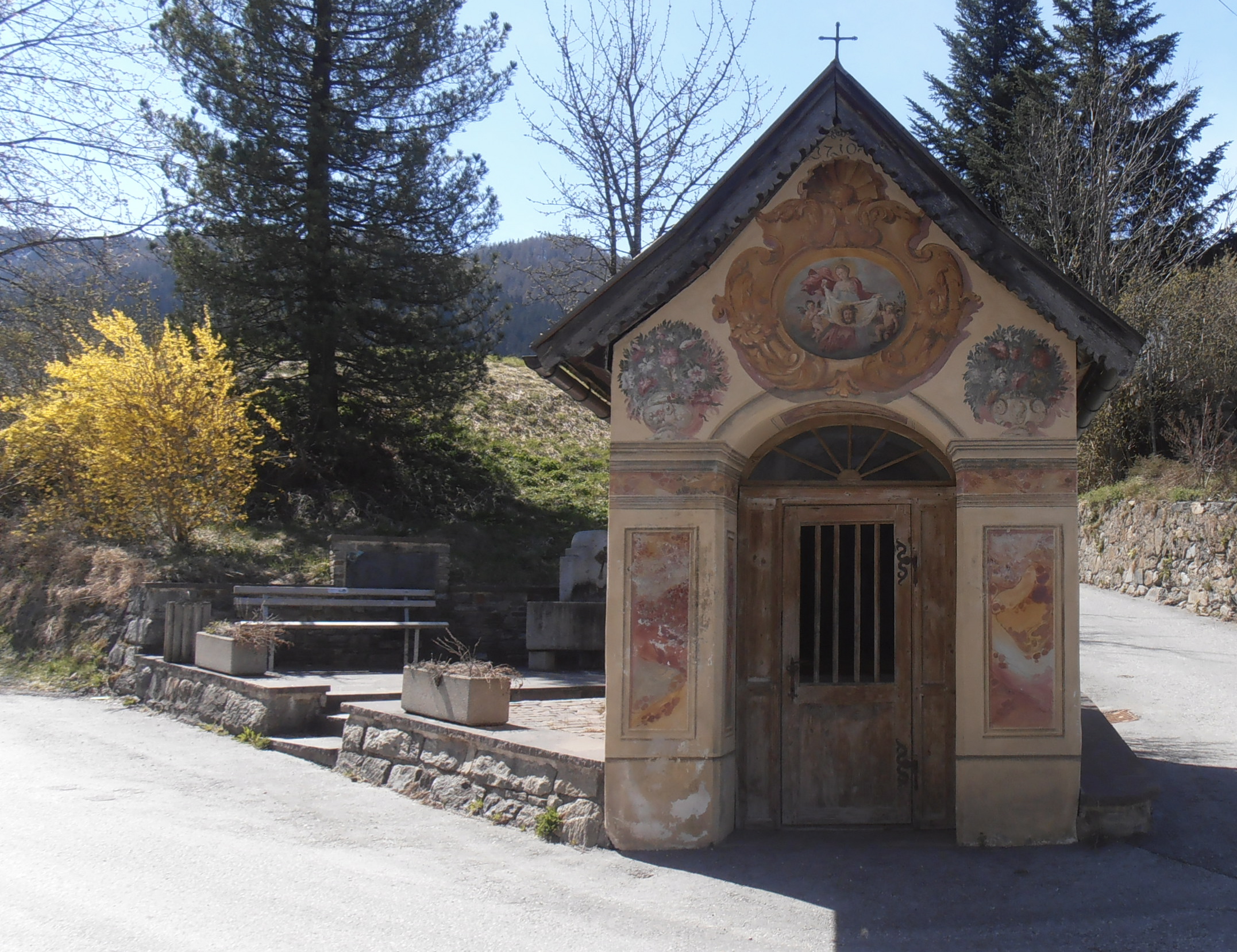
Another reason to come to Fliess was to see the Schalenstein at the Philomena Chapel, just outside the village.

The chapel was built in or around 1749. Inside, directly behind the altar hangs a painting (with reliquary) of the virgin martyr Philomena, “lying in her grave in the catacomb”, according to the information plaque on site, although she appears to be quite comfortably settled in a chaise longue. Philomena is one of those quasi-saints who were not only never canonized, but who was purged from the liturgical calendars in 1961. Her golden pendant is a reliquary for something so tiny that we could not make out what it was — possibly a bone sliver?

Ah, and here, finally, behind the church, the Neolithic Schalenstein with 70-90 markings, one of the most prominent of its kind.

A post on the Archaeological Museum to follow shortly.
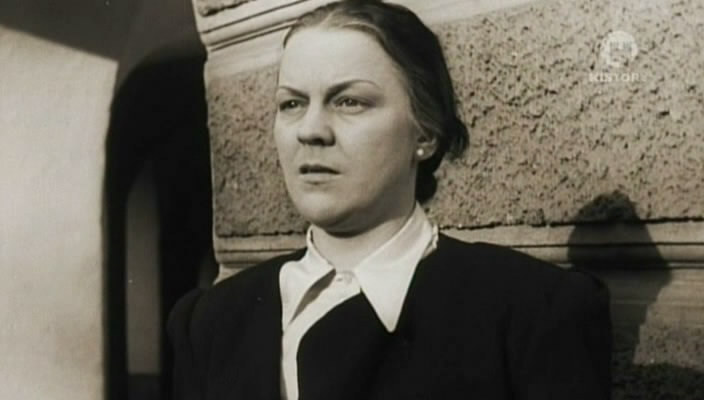
Anna Letenská

Anna Letenská was a celebrated Czech stage and film actress, best known for her comedy roles in the 1930s and 40s. Her second husband, architect Vladislav Čaloun, had ties to the Czech resistance movement. In 1942, when Nazi local boss Reinhard Heydrich’s car was grenaded in Prague, one of his assassins turned to another in the group for help. This other man was arrested for his assistance, and his wife was caught at the train station in Prague, attempting to flee. Under interrogation she confessed that she had spent the night before at the home of Letenská and Čaloun. They were then promptly arrested as well.

At the time of her arrest, Anna Letenská was in the middle of filming for a comedy film titled Přijdu hned (loosely translated, “I’ll Be Right There”). One of the producers at the film studio was Miloš Havel (uncle of the former Czech President Václav Havel), who pulled some strings with the Nazis in order to get Letenská released — at least, just long enough to allow for the film to be completed.

This clip is from the 1938 film Milování zakázáno. Appropriate to this blog, it involves singing. It’s charming.

Wikipedia: Letenská remained under Gestapo surveillance while filming continued. According to Otakar Vávra, the film’s director, “throughout this time Anna Letenská would sit with her head held between her hands although she appeared as cheerful as could be in front of the camera. We understood that she was preparing herself to die”.

There is a 2009 documentary film about her story, Anna Letenská: The Comedienne and the Nazis”, which was aired last night on the German television station RBB. There are several clips from Přijdu hned showing Letenská, and in them she looks tired. Knowing what was to come must have been absolutely draining. Meanwhile she was sending packages to her husband in prison, and caring for her son at home.

Immediately after the filming ended, Letenská was arrested and sent to Theresienstadt, then deported to Mauthausen concentration camp in Austria along with a transport of female relatives of the assassination organizers. Shortly after her arrival, she was killed by a bullet to the head, in October 1942.

Two months later, the film Přijdu hned had its premiere. It was probably not yet known to anyone there that Letenská had already been murdered. A man who had been part of the film work, interviewed for the documentary, was asked if anything had been said regarding Letenská at the premiere. Not a thing, he replied. “As if nothing had happened.

Some months after that, her son was called to Gestapo offices, and given official notification of his mother’s death.

Another post about the reprisals for Heydrich’s assassination here.

Defixiones

The things that draw me to archaeology are not the battles nor the Roman legions, nor any of the political aspects, although of course they are all important to understanding the events of the times. What interests me are the little, daily things. How did people live? Why did they live here and not down there? How did the wave of that new cutting-edge thing called “farming” reach them, and what did they do about it?

So, while the arrowheads and swords and grave artifacts in our local museum are interesting in their own way, there are other things I find fascinating — like the tiny little curse tablet found at the excavations of Veldidena (Wilten, an Innsbruck neighborhood and a former Roman settlement).

These are little messages to the Gods about some personal matter. Before the internet, before I Love You I Hate You, before sticking notes in the wailing wall, there were curse tablets. These were popular enough to have been manufactured in advance in some cases, just fill in the details as needed.

The text scratched onto the metal reads, in translation (mine, from the German translation displayed in the Museum):

Secundina curses the unknown thief and consigns his persecution to the Gods Mercury and Moltinus.

The mention of this tablet in the book “Curse Tablets and Binding Spells from the Ancient World” (John G. Gager, Oxford University Press) offers up a longer text version, with some discussion about earlier translations — such as the word draucus which could be connected with the Greek word for necklace; another argument suggests it is an old Celtic “loanword” for cow. That Moltinus is the name of a Celtic God might lend authority to that idea.

Secundina! Number-two daughter, pissed off at the theft of a piece of jewelry, or devastated by the theft of her livelihood? In any event, in her demand for retribution she invokes both a Roman and a Celtic God, just to be on the safe side (maybe Moltinus has more power up here in his home turf than Mercury, far away from Rome). What was life like for a Roman woman in such a place as this? Did she hate the Föhn? Were the natives threatening? Had the early Christians arrived? (Probably not yet.) The God Moltinus (or Moldinus) is known by only one other inscription, and that is from Gaul. Did she have a Raetian or Gallic heritage? There’s probably a novel waiting to be written just about this one woman, and all because she got ripped off one day, and did what people did when that happened.

Mountain Blogging: Schönberg

Confession — when I began blogging about 4.5 years ago, I quite honestly thought I might be out of material in 6 months’ time. In fact, the opposite has happened — the ‘to do’ list just keeps getting longer. Recent discoveries (for me) have included a lot of points south of here, in the Wipp and Stubai Valleys. Above, the length of the Stubaital, ending at the Stubai Glacier (yet another thing I need to see, especially before it melts for good.)

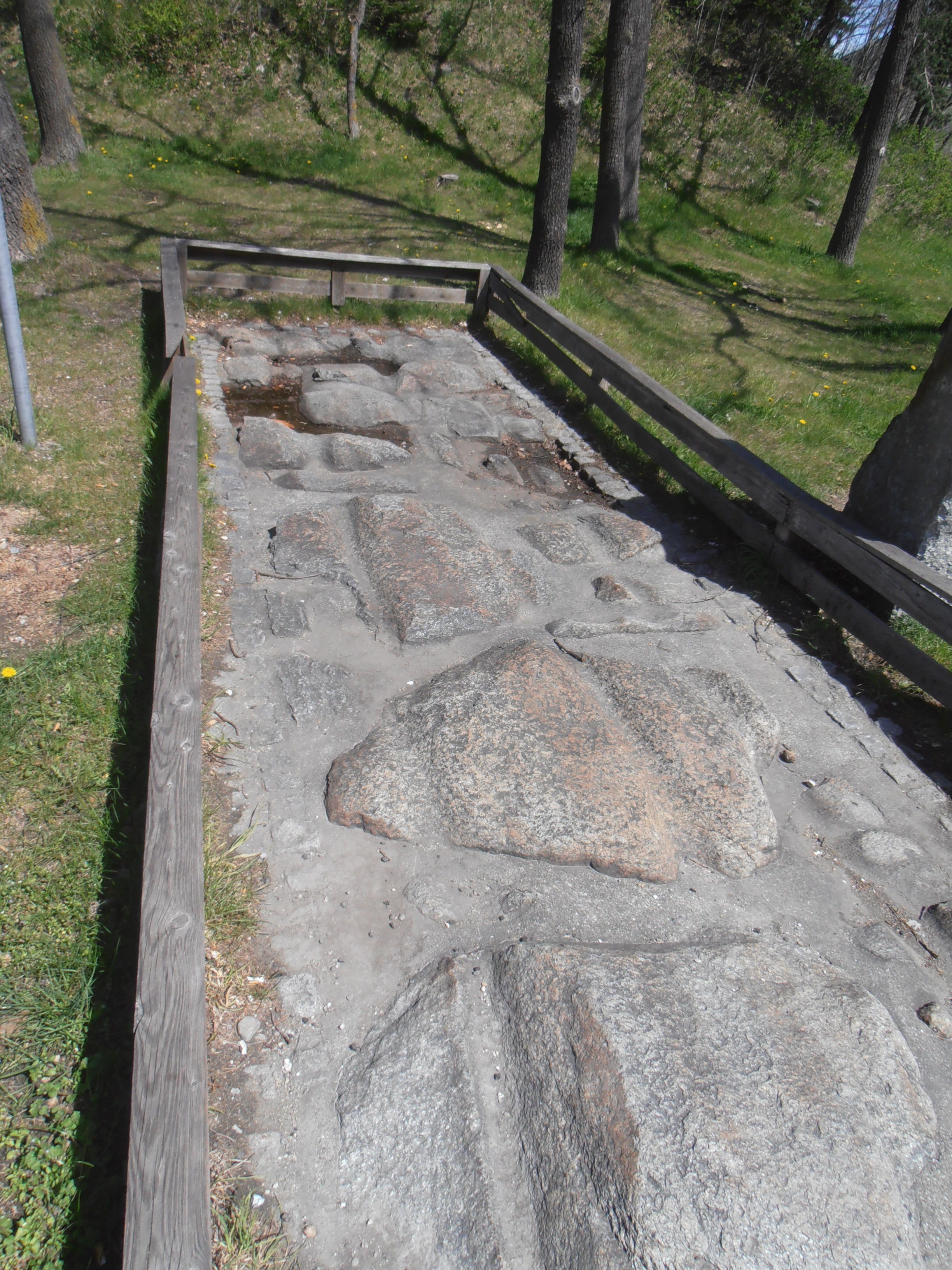
Today I went to Schönberg on a couple of leads, and learned more there than I had expected to. In all honesty, I didn’t know a thing about this small town, as it’s not on the rail line and doesn’t seem to have any tourist industry — perhaps it’s really an insider thing. Anyway, I had read that there is a segment of the old Roman Road (Via Raetia) on display in Schönberg, and here it is.

Note the grooves left in the stones by centuries of wagon wheels.

The Via Raetia ran from Italy over the Brenner Pass to Augsburg. The primary Roman road, known as the Via Claudia Augusta, went west over the Reschen Pass (near Graun, home of the sunken village belltower), along the Inn and then over the Fern Pass.
In any event, although the road did indeed pass right through these parts, it was not right here in this exact spot — these stones were dug up and laid out here — next to a large Autobahn rest stop, of all places. And that has a certain logic, the old next to the new.

Two things about Schönberg called to mind George Washington. The first was that Goethe was here, and fortunately the small town of Schönberg has a quote to prove it. (“Goethe visited here” is the German parallel to “Washington slept here.”) On his travels to Italy in 1786 (“The Italian Journey”), the great writer penned, Up on the Brenner I saw the first larch trees, at Schönberg the first Swiss pine. This little chapel is on a spot called Goetheruhe (Goethe’s Rest) and there is indeed a Swiss pine tree on the site. The road that runs by it is called Römerstrasse, and is very likely the old road. This route through Raetia had its own alternative “bypass” route, which branched off near here and followed the upper plateau on the eastern side of the valley (and there is a “Römerstrasse” up there today too.)

The second reason that Washington comes to mind is Schönberg’s relationship to Andreas Hofer, who had friends here and used a local hotel as headquarters during the fighting — which makes it a bit like the 1809 Tirolean Valley Forge.

Schönberg, like much of the higher plateau lands above the rivers, has offered up archaeological evidence pointing to pre-historic settlement. Armed with GPS coordinates from the internet and a google map print-out (yeah, I need a smartphone), I went to search for this area which has been designated as a protected historic monument — and only found this flat-topped hill on private, apparently inaccessible ground, so I can’t say. Then again, the high ground is absolutely lousy with archaeological finds all up and down the valley, so we might as well assume that every hill and dale were inhabited since the end of the last ice age.

To see the Via Raetia road segment without a car: ST Bus from Innsbruck Train Station to Schönberg Ortsmitte. Follow “Römerstrasse” signs to the Autobahn underpass. It’s at the far end of the rest stop, which includes a McDonalds with the best views I have ever seen.

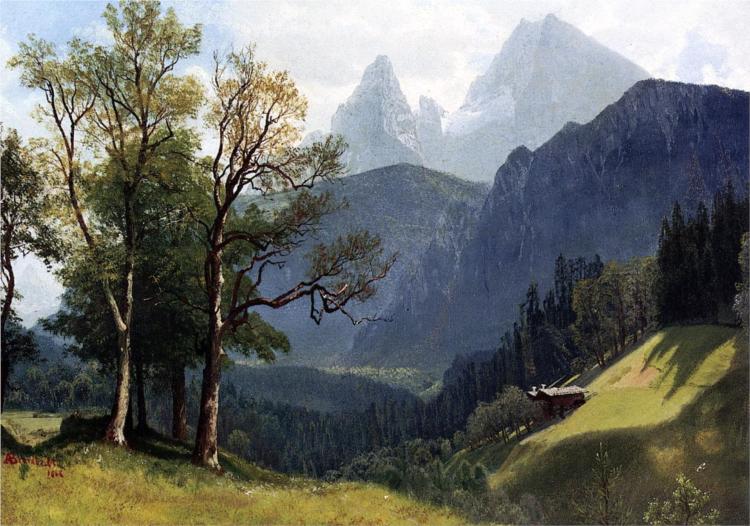
“Tyrolean Landscape” — Or Is It?

This is by Albert Bierstadt, the 19th-century painter who’s best known for his landscapes of the American West. It’s from 1868 and titled “Tyrolean Landscape“, but I am not so sure. There may very well be a duet of jagged mountain peaks in Tirol that look just like this…

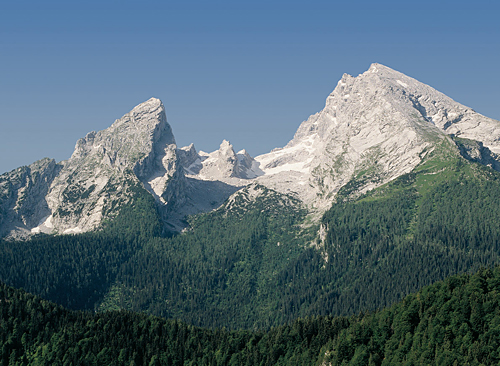
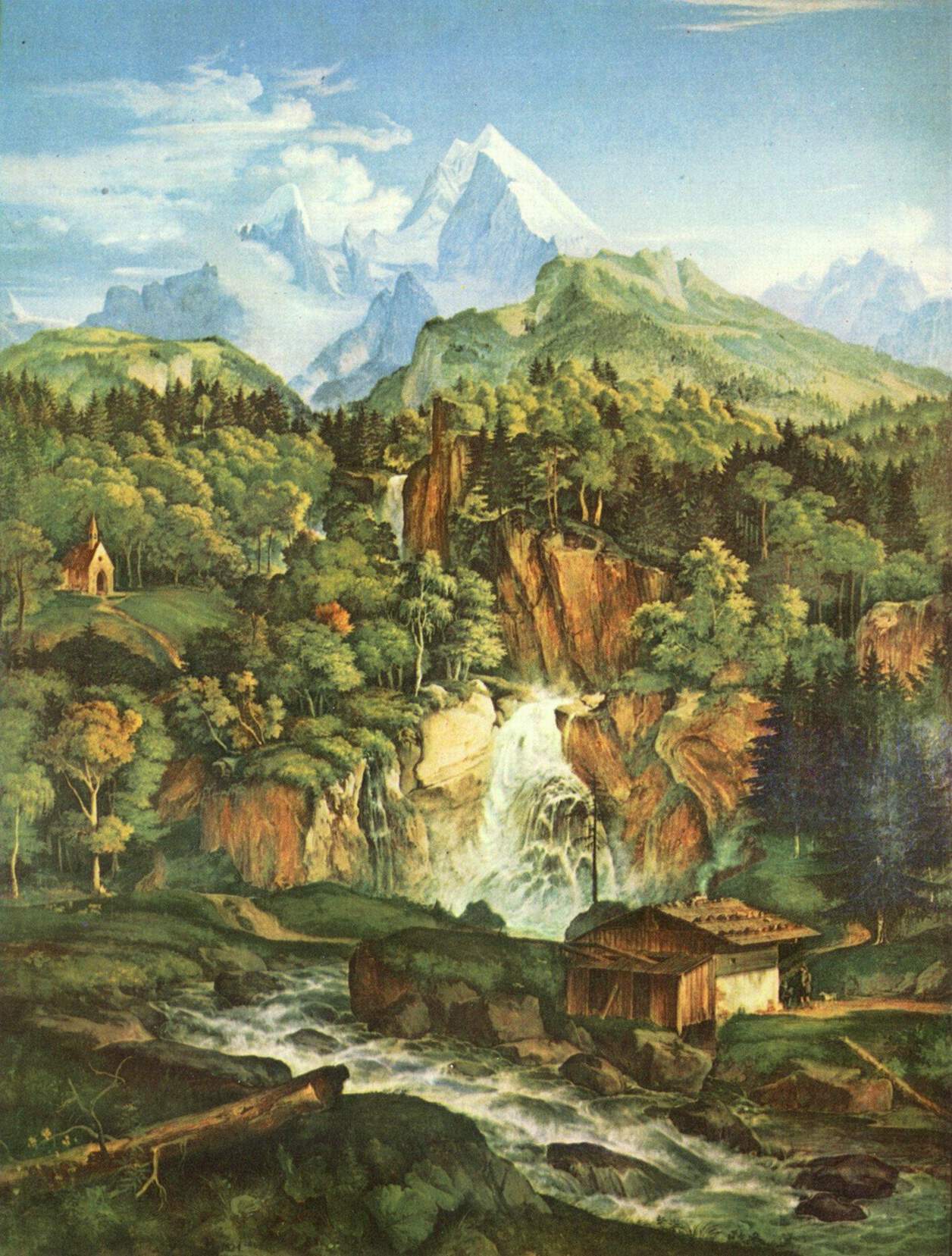
…but it bears an uncanny resemblance to the Watzmann, which is in Berchtesgaden.(Image found here.

Yes, I can sense you shrugging your shoulders and rolling your eyes all the way from here — does it matter, you ask? Why yes, it does. Try calling a Tiroler German someday, see where that gets you. 🙂

And since Berchtesgaden belongs to a little dangling peninsula that’s surrounded by Austria, I looked on a map to see if it were possible that one could paint the Watzmann this large while actually standing in Tirol — nope, it’s Salzburg Land all around for kilometers. Was he (1) misinformed about his location, (2) is this indeed another mountain group, or (3) am I missing some important border realignment from the First World War?

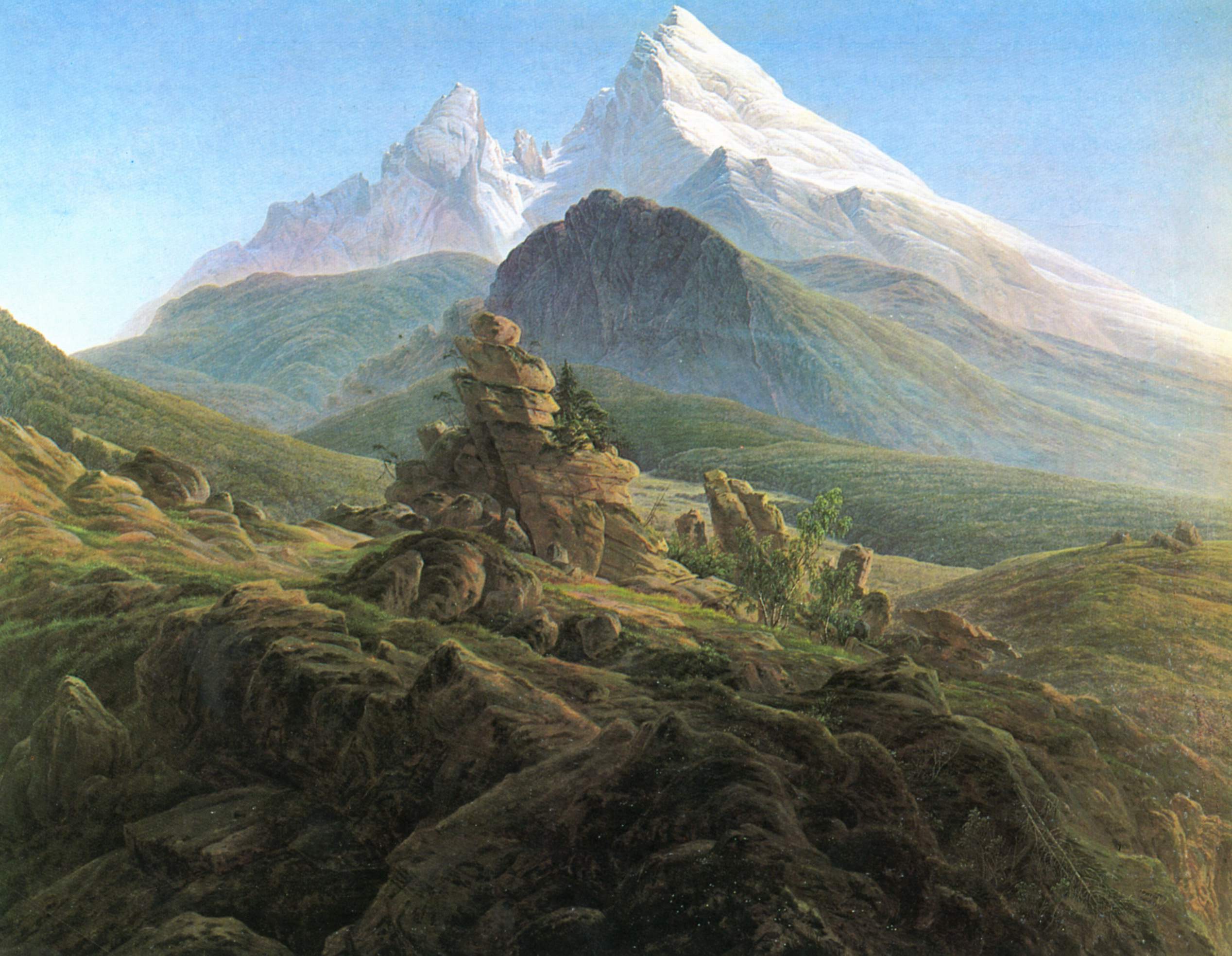
But as long as we’re discussing the Watzmann, here is one by Caspar David Friedrich, who had never actually seen the Watzmann with his own eyes and only knew the mountain from others’ works (come to think of it, we’ll call that (4) and it may be the best answer to the above question.)

and one by Adrian Ludwig Richter, which I happen to like the most. It reminds me little of landscapes by the Tirolean artist Rudolf Lehnert.

Friedrich and Richter images found here.

Pagans In Tirol: Seefeld’s Stonehenge

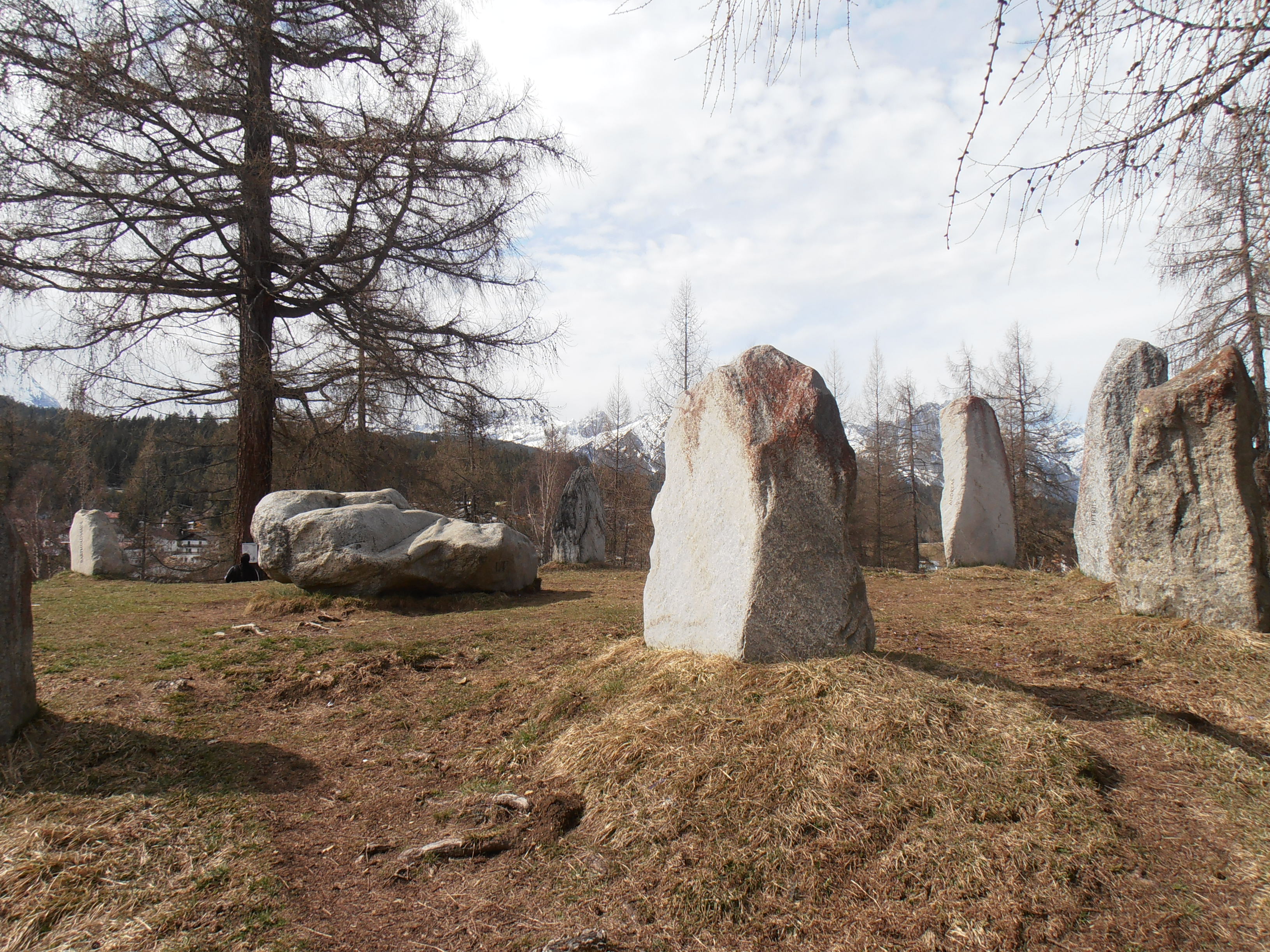
This is the Pfarrerbichl, or “pastor’s hill”, in Seefeld in Tirol. It is behind the St. Oswald parish church.

An architect from the area was given the green light to erect a stone circle on the hill, with the idea to create a peaceful meditation and meeting place for all religions of the World. The stones are local erratic boulders, dropped off by the glaciers as they retreated at the end of the last ice age. On the architect’s website (he seems a bit of a geomancer with a thing for Pagan fantasy, from the images) he writes that while this is, in his opinion, “one of the most mystical places in Tirol”, and that he believes it had once been a sacrificial burning site, there have not been any archaeological excavations on the hill — and here this reader winced, hoping the “planting” of the boulders did not destroy anything waiting to be found…

The church then got in on the act, and raised money locally to create a Way of the Cross leading to the stone circle, also using glacial erratic rocks, so the entire thing is Christian in character. Although the church’s information plaque was cheerful enough, I can’t help but wonder if there hadn’t been some pressure to “christianize” the circle after it had been erected. Which would be entirely within their right, it being their hill and all. (And of course it wouldn’t be the first thing the Catholic Church borrowed from the Heathens.)

h/t to Kraftorte.

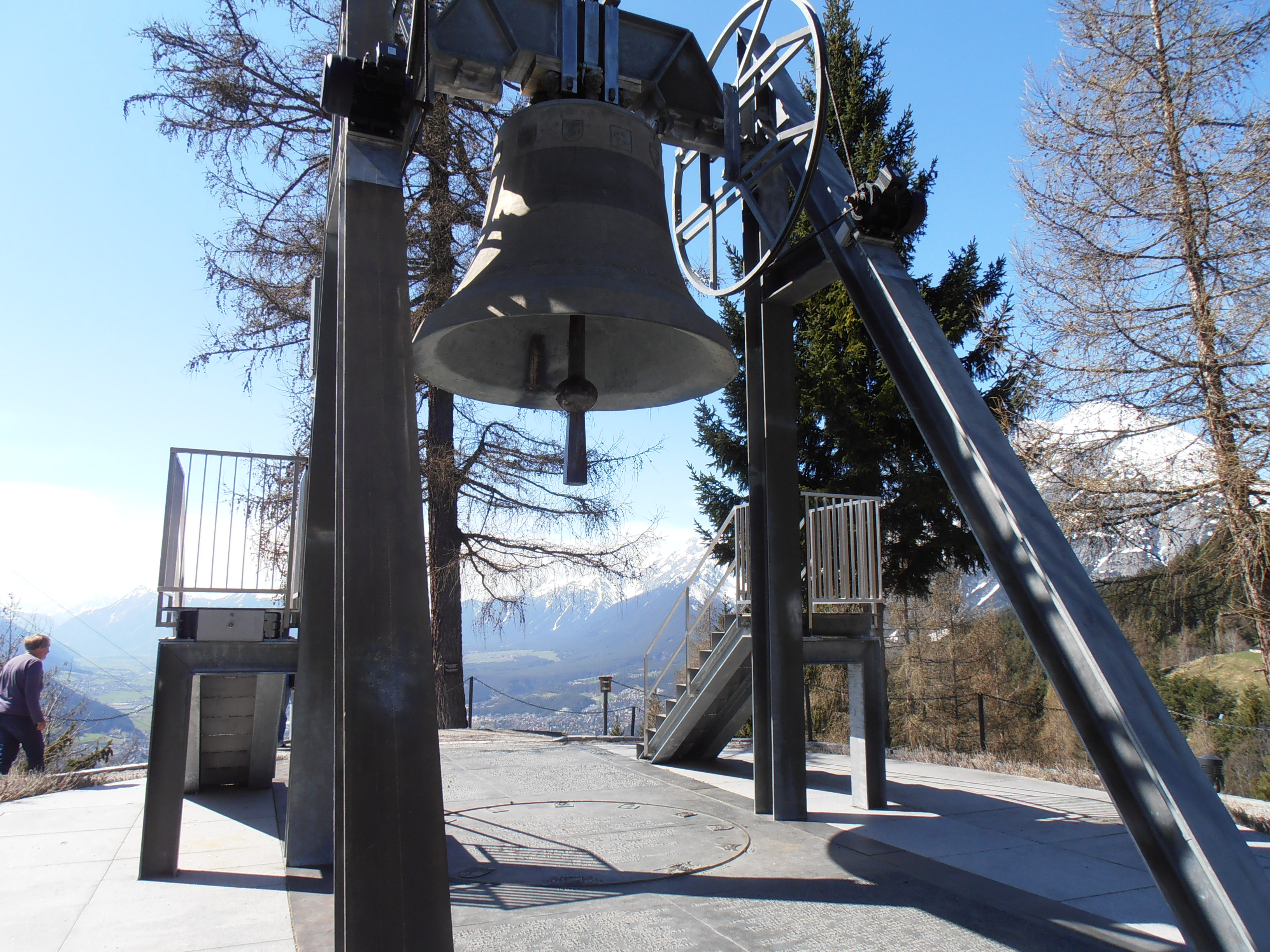
Mösern, the village with the “Albrecht-Dürer-View”, is also where one will find the Friedensglocke (Peace Bell), the largest bell in Tirol, brought to this perch by ARGE ALP, an international association of alpine provinces. The Peace Bell also has its own sort of Way of the Cross called the Friedensglocke Wanderweg (Peace Bell Hiking Trail). The stations of this trail call for such mantras as “Peace needs a path and effort“, and “Peace is living vibration“. Yeah, whatever — this all seems a little New Age-y for me. But anything which promotes peace is a good thing.

These two sights were visited on the same hike, which began in Hatting and ended in Seefeld. Although it was a pleasant enough walk, I would recommend starting in Seefeld and looping back, and including the Möserer See. The trails from Hatting were simply logging roads with no special scenery.

The Albrecht-Dürer-View, in Mösern

Do you remember the local theory that Pieter Breugel sketched out his “Hunters In The Snow” while sitting on the shady banks below Schloss Ambras, at Innsbruck? This is Albrecht Dürer’s Self-portrait at 26, which is hanging in the Museo del Prado in Madrid.

Dürer traveled from Nuremberg to Italy in 1494, and like Breugel he was impressed by the alpine landscape and made sketches which he would use in later works. The village of Mösern, near Seefeld in Tirol, claims that the landscape visible from the window is clearly of the Inn Valley as viewed from Mösern, and has named this particular vista the “Albrecht-Dürer-View”.

I’d say this is a pretty good match, especially for a painting made from a sketch, itself made years before on a journey.

Above photo by Veronika Freh found here. Image of Dürer’s self-portrait from Wikipedia.

Weekend Mountain Blogging: Stubaital

Pagans In Tirol: This cave, when rediscovered in 1976, held pottery from the La Tene era, the pottery being more specifically from 500-300 BC. This cave is presumed to have been a holy spring (Quellheiligtum) for the local residents. Whether they also kept their local brew at a desirable temperature here, no one can say…

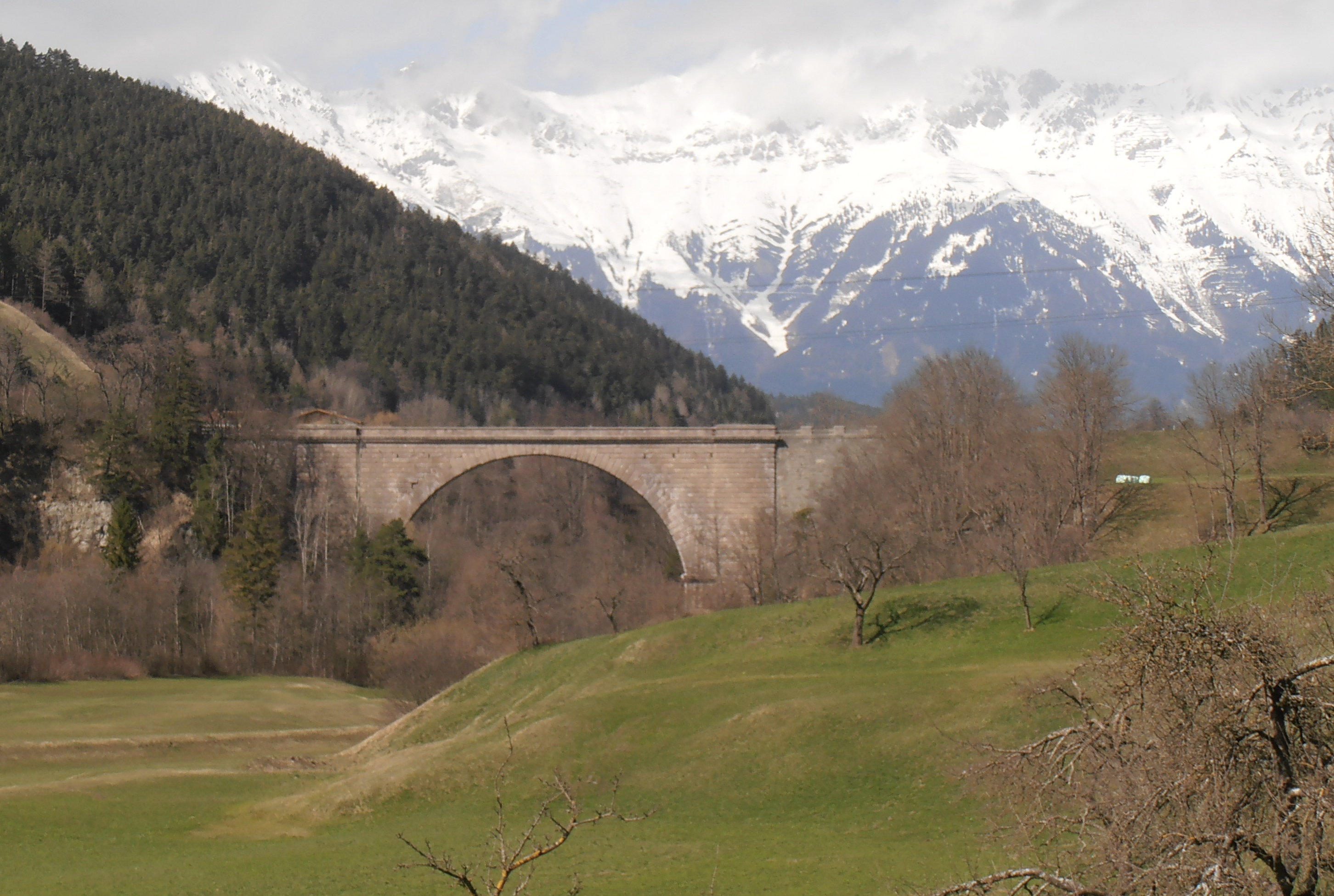
The Stephansbrücke was a very big deal when it was erected in 1843, and Archduke Stefan Franz Viktor himself came to the ceremony to lay the foundation stone, at the tender age of 26. The bridge was part of continuous improvements on the Brenner Road, which stretches from Innsbruck over the Brenner Pass into Italy. The history of this highway is long — the Romans made the Via Raetia, and that road (and its later incarnations) remained the most direct way to all points south for a long time. Occasionally one might see an old Austrian or Bavarian film from the 50s or early 60s, where a journey to Italy by car leads over these very roads, some not yet even paved. Then the Brenner Autobahn came and changed everything.

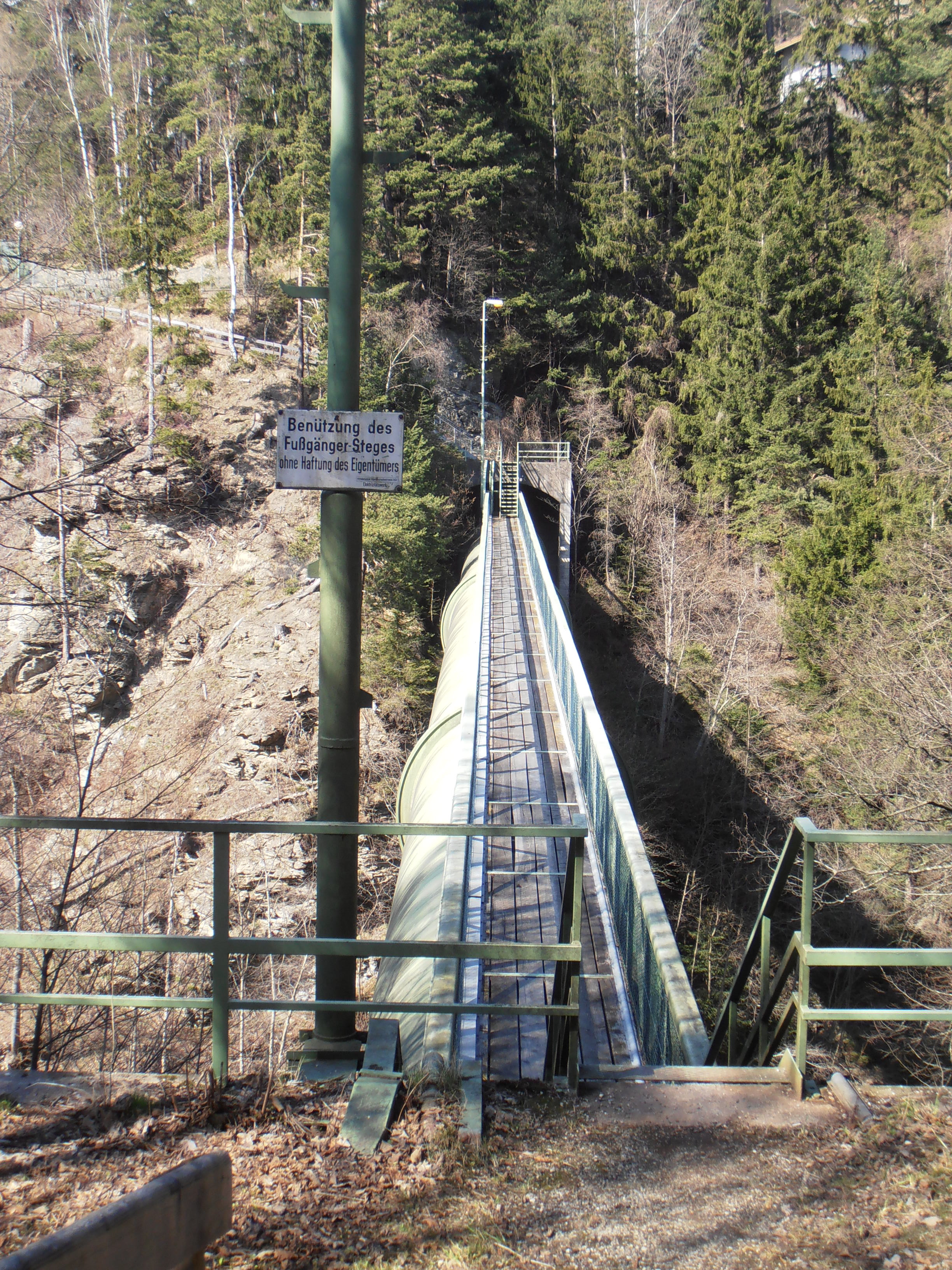
I did not cross the Stephansbrücke, but I did cross this. The woods and valleys looks just as they should in early spring — crocuses are blooming, and other wildflowers along the forest trails. The songbirds are back, and I saw plenty of butterflies and bumble bees — which brought relief, since one hears so much lately of these critters becoming scarce.

This long hike began in the Stubai Valley (via tram) and continued north, toward the Northern Range and the Patscherkofel, following the Ruetz and then the Sill River (mostly a creek, especially this far upstream) The Bergisel ski jump tower, like a beacon, signals that home is finally near.