Forgotten Innsbruck: The Irrwurzel

Fellow-blogger Paschberg has posted the following 1966 article from Innsbruck’s local newspaper, about a mysterious root found in certain places  which, should you step on it, will send you wandering through the mountains, completely disoriented. Here is an English translation by me, because I find weird legends like this kind of cool.

MYSTERIOUS “IRRWURZEL” OF MARIA LARCH

from the Tiroler Tageszeitung, Innsbruck, 25 October, 1966, Nr. 247, S.6

“Was terrestrial radiation to blame for the mental state of Johann König from Gnadenwald?

In response to Dr. Dietmar Assmann’s article “300 Years of Pilgrimages to Maria Larch near Terfens” in the October 8 issue of “TT”, I would like to tell a story which is interesting on ethnological, scientific, psychiatric and mountaineering levels.

The history of Maria Larch the legend is exhaustively discussed in the article. In conclusion the author writes, “like many other cultural sites of this kind, we see close ties of nature with the desire for protection from its violence.”

The saga tells of such violence. According to it, a mythical root grows in the Larch valley. The Tyrolean ethnologist Johann N. from Alpenburg wrote over 100 years ago, “in the forests and meadows, on mountain and valley grows a root which possesses such powers, that whoever steps upon it will meander aimlessly for days, just as the witches and masters of the dark arts understand how to distract a person and lead him astray.” Such persons would wander the entire night and came to only by the morning call to prayers. Such instances are said to have been frequent in the Larch Valley, although no one knew anything for certain.

Dr. Guido Hradil, Adjunct Professor at the University of Innsbruck, described such occurrences as terrestrial radiation which, like that which has been measured in the Gastein Valley, may also be observed in Gnadenwald.

On January 4th, 1912, innkeeper Josef Heiss, whose inn stood at the edge of the Larch valley and who also owned a timber business, was busy with his men and horses pulling logs on sleds from the forest near Maria Larch to Gnadenwald on sleds. They had been delayed by the shying of the horses and it was getting dark.  Hansel, a boy from a nearby farm, rode by on his sled as they were bustling about to go. The woodsmen called out, “Hey, where are you off to, so late?”, but he gave no answer. The company left the unfriendly boy alone and hurried home, as night was already upon them.

The next day word got out that the boy hadn’t come home. His family, the workers, the neighbors and soon the whole village was searching for him, along with the police. Soon enough they found tracks of the boy’s sled. The tracks led from Maria Larch, through the so-called Sau Valley through the woods, crossed the Umlberg road, went straight up nearly vertically on the steep and icy slope of the Walder Pass, cut through the meadow there to the summit and descended the north side into a gap, where with a sleepwalking instinct he had made his way between the cliffs down to the stream. Here his sled broke. His body was found frozen by the stream. He had pulled off his shoes and stockings.

The discovery caused an uproar in the region. Why did the boy leave the marked road in the Larch valley and sled through the fields? Even if he’d become snow-blind, how did he cross the road without noticing it? Why had he not noticed the village lights, clearly visible on the way up the mountain? How did he find his way through the pathless gorge in the dark? There were no answers, and no one wished to mention the Irrwurzel out loud.

In the Gnadenwald church’s chronicle the priest had written: “Johann König, single, farmer’s son, in the night of January 4th-5th, 1912, strayed in confusion, found frozen in the Vomp Gap and brought home.” In the city one spoke of an epileptic fit or schizophrenia, perhaps brought on by an unknown force of nature. — I.M. Metzler”

Also included in the post is an article written by the blog author’s father and found among his papers, and in English at that. Here with permission:

THE “IRRWURZEL”

TRADITIONAL FOLKLORISTIC INTERPRETATION OF A POSSIBLE

UNKNOWN GEOPHYSICAL PHENOMENON?

By Alois Schönherr

In the Tyrolean, Austrian and German folklore, there is the tradition of the so called “Irrwurzel”, a mythical root, which, if stepped on, allegedly distorts the orientation of the wanderer to such an extent that he or she will become unable to find one’s way even in a perfectly familiar environment. 1)

Alpenburg writing in 1857 relates that according to tradition the Irrwurzel is very frequent in the pastures below the Tratzberg castle, between Schwaz and Jenbach (30 kms east of Innsbruck), “where everybody is careful, not to walk through with bare feet” , but just how it looks – nobody knows. He also writes that “today the Irrwurzel is no longer known” (i.e. the term is not associated with a certain botanically known plant or root) because in 1803 a dying oil-trader from the Ziller-valley burnt the last specimen by order of a priest. 2) It seems that similar to the personifactions of natural forces like wind or ligthtning as gods, the Irrwurzel constitutes a sort of botanic rationalization for certain mysterious effects.

At least in the Tyrol, stories about the Irrwurzel aren’t always located in a vague, hazy, undated past or associated only with unknown persons and places. The following tale, also related by Alpenburg, can be considered as typical:

One day in 1832 at three o’clock in the morning the porter Jakob Tunner from Alpbach departed from the Kupal alp in the Hinterriss with a load of 100 pounds of butter for Jenbach. After a quarter of an hour, fog fell in but the porter proceeded as he knew the way very well, having used it a “thousand times” in both directions before. He walked for hours, but he never reached the pass leading to the Inn-valley. At noon he rested and prayed, then he went on again. Finally, late in the night, he perceived a hut in the distance. It was the Kupal alp, from where he had started twenty hours before. He was so confused that he asked after the name of the alp. The herdsmen there said he must have stepped upon an Irrwurzel. 3)

NOTES AND REFERENCES

1) In Germany the term “Irrfleck” is more popular, which means a definite spot, a sort of haunted place so to say, where orientation is distorted.

2) Alpenburg, Johann Nepomuk Ritter von, Mythen und Sagen Tirols, Verlag von Meyer und Zeller, Zürich 1857, p. 409.

3) Ibid. p. 410

below the Tratzberg castle, between Schwaz and Jenbach (30 kms east of Innsbruck)”

Here And There In America: The Pine Forge

This post brings us to another kind of railroad: the Underground Railroad, neither a railroad nor underground, the unofficial “tracks” of which were laid in the early nineteenth century.

Dieser Beitrag bringt uns zu einer anderen Art von Eisenbahn: Der „Underground Railroad“, weder eine Eisenbahn noch U-Bahn, sondern geheime „Geleise“ (für die Flucht der Sklaven aus den Südstaaten) die im frühen neunzehnten Jahrhundert gelegt wurden.

Several routes passed through the Quaker and German farmlands of southeastern Pennsylvania. Thomas Rutter, an ironmaster who built the first ironworks in Pennsylvania in 1716, was a former Quaker and active opponent of slavery, and although he died in 1730 his heirs must have felt the same way, for the Rutter mansion is said to have been a safehouse for sheltering fugitive slaves on their way to Canada in the 19th century. Pennsylvania’s Quaker reputation for tolerance is not 100% deserved; nearby Boyertown is known to have been a Klan area in the 20th century, so my mother tells me.)


Mehrere Routen führten durch das Anbaugebiet von Quäkern und Deutschen des südöstlichen Pennsylvania. Thomas Rutter, ein Eisenfabrikant, der die ersten Eisenhütte in Pennsylvania im Jahre 1716 errichtete, war ein ehemaliger Quaker und aktiver Gegner der Sklaverei, und obwohl er im Jahr 1730 starb, waren seine Nachfolger der gleichen Meinung, da man sagte, dass das Herrenhaus der Familie Rutter im 19. Jahrhundert eine Unterkunft für flüchtige Sklaven auf ihrem Weg nach Kanada war. Der tolerante Ruf von Pennsylvanias Quäkern ist aber nicht 100% verdient; das nahe Boyertown ist dafür bekannt, im 20.Jhdt. ein (Ku-Klux-) Klan-Bezirk gewesen zu sein, wie mir meinen Mutter sagte.

IMG_1465The Pine Forge Institute (now Pine Forge Academy) was founded on the grounds in 1945 and is in continued use to this day as an African American boarding school, owned and run by the Seventh-day Adventist Church. The church has expressed interest in turning the Rutter mansion into a museum; at the moment it’s still closed up.

Das Pine Forge Institut (heute Pine Forge Akademie) wurde auf dem Gelände des Herrenhauses im Jahr 1945 gegründet und ist seither als afroamerikanisches Internat in Verwendung, im Besitz und unter Verwaltung der Siebenten-Tags-Adventisten. Die Kirche hat ihr Interesse daran erklärt, das Rutter Herrenhaus in ein Museum umzubauen; im Moment ist es aber immer noch nicht öffentlich zugänglich.

One of my Pennsylvania German ancestors, one Samuel Schaeffer, worked at the Pine Forge ironworks.

Einer meiner Pennsylvania-deutschen Vorfahren, ein Samuel Schaeffer, arbeitete in der Pine Forge Eisenhütte.

Interestingly, Pine Forge was once a stop on the old Colebrookdale Railroad, which serviced several iron forges and plating works (Thomas Rutter also built the Colebrook Dale Furnace). A re-opening of the line is planned for the autumn of 2014 as a tourist ride called the Secret Valley Line. My parents rode it a few years ago when the community was trying to raise funds for the restoration. I look forward to riding it myself on my next visit.

Interessanterweise war Pine Forge einmal ein Halt auf der alten Colebrookdale Eisenbahn, die mehrere Eisenwerke versorgte (Thomas Rutter baute auch die Colebrookdale Hochöfen). Eine Wiedereröffnung der Linie ist für Herbst 2014 als Touristenbahn, genannt Secret Valley Line, geplant. Meine Eltern fuhren sie vor ein paar Jahren, als die Gemeinde versuchte, Mittel für die Wiederherstellung zu lukrieren. Ich freue mich auf eine Fahrt bei meinem nächsten Besuch.

Here And There In America: Strasburg PA

IMG_BfI’m not actually a train buff in the traditional sense of the term. Then again, when I write that, it brings to mind Nick Hornby, in the Bob Dylan chapter in his book “31 Songs”

I’m not a big Dylan fan. I’ve got Blonde On Blonde and Highway 61 Revisited, obviously.
And Bringing It All Back Home and Blood On the Tracks… And I’m interested enough to have bought The Bootleg Series Volumes 1-3, and that live album we now know wasn’t recorded at the Royal Albert Hall…There are…around twenty separate Bob Dylan CDs on my shelf; in fact I own more recordings by Dylan than by any other artist. Some people – my mother, say, who may not own twenty CDs in total – would say that I am a Dylan fanatic, but I know Dylan fanatics, and they would not recognize me as one of them.

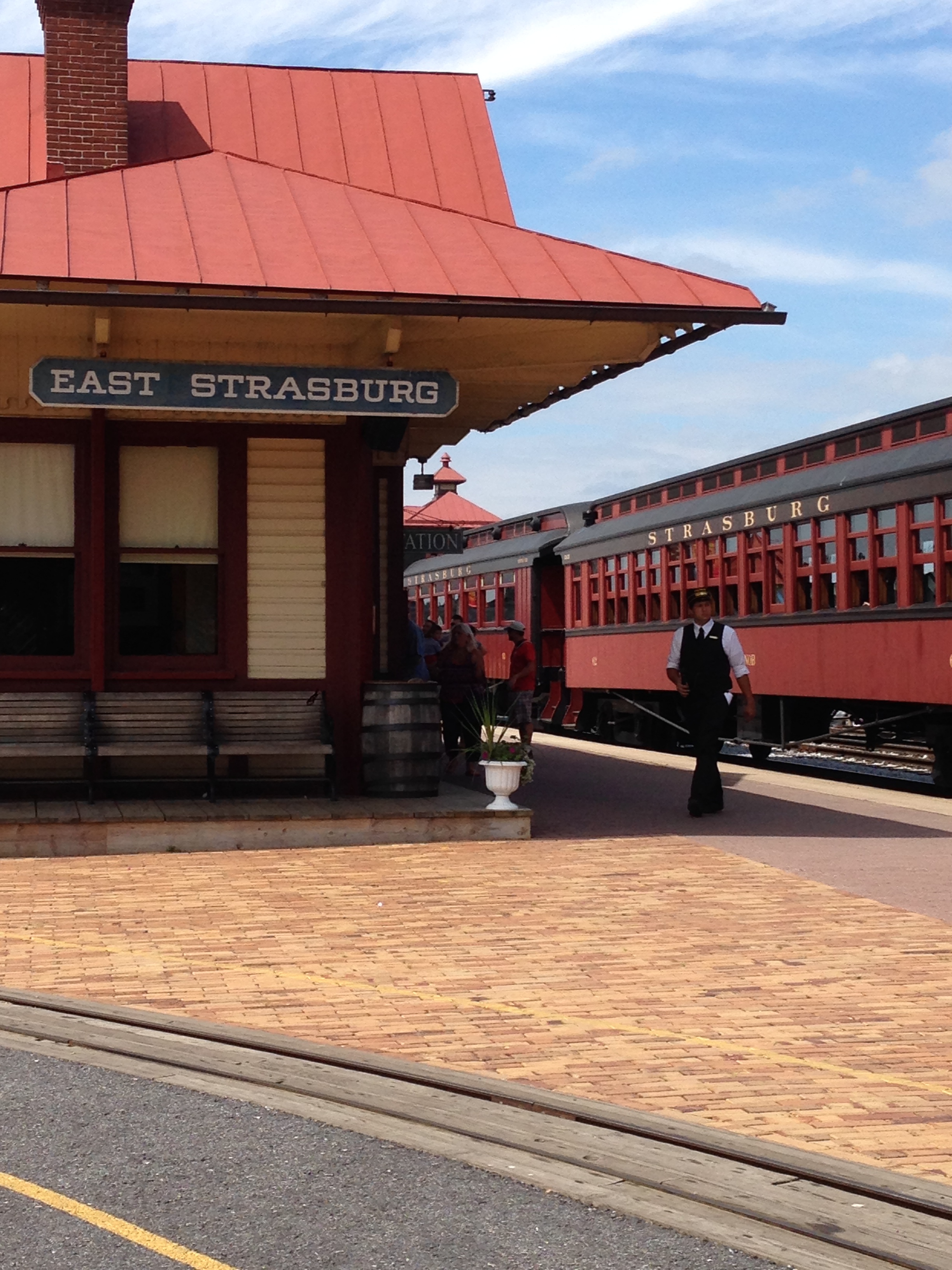
A recent trip to central Pennsylvania allowed me a chance to swing down to Strasburg, where there is a very popular Railroad Museum and the Strasburg Railroad, a stretch of track where historic engines and cars offer rides through the Pennsylvania Dutch countryside. It was a beautiful day and I was right there in the area, so why not?

Ich bin kein Eisenbahnfan im herkömmlichen Sinn. Während ich das schreibe fällt mir das Bob Dylan Kapitel in Nick Hornby´s Buch „31 Songs“ ein:


Ich bin kein großer Fan Dylan. Augenscheinlich habe ich „Blonde On Blonde“ und „Highway 61 Revisited“. Und „Bringing It All Back Home“ und „Blut Auf den Geleisen“ … Und ich bin interessiert genug, um die Alben zu haben wie, Raubkopien der Serie 3.1, und dieses Live-Album, das wie wir jetzt wissen, nicht in der Royal Albert Hall aufgezeichnet wurde … Es gibt … um zwanzig eigene Bob Dylan CDs in meinem Regal; tatsächlich besitze ich mehr Aufnahmen von Dylan als von jedem anderen Künstler. Einige Leute, z.B. meine Mutter, die insgesamt kaum mehr als zwanzig CDs besitzen dürften – würde sagen, dass ich ein Dylan-Fanatiker bin, aber ich kenne Dylan-Fanatiker, und sie würden mich nicht als einen von den ihren erkennen.


Eine kürzliche Reise ins Zentrum Pennsylvanias eröffneten die Chance eines Abstechers nach Straßburg, wo es eine sehr bekanntes Eisenbahnmuseum und die Strasburg Railroad gibt, eine Bahnstrecke, auf der historische Lokomotiven und Wagen Fahrten durch die holländische Landschaft Pennsylvanias. Es war ein schöner Tag und da ich genau dort in der Gegend war, warum nicht die Gelegenheit ergreifen?

IMG_1449
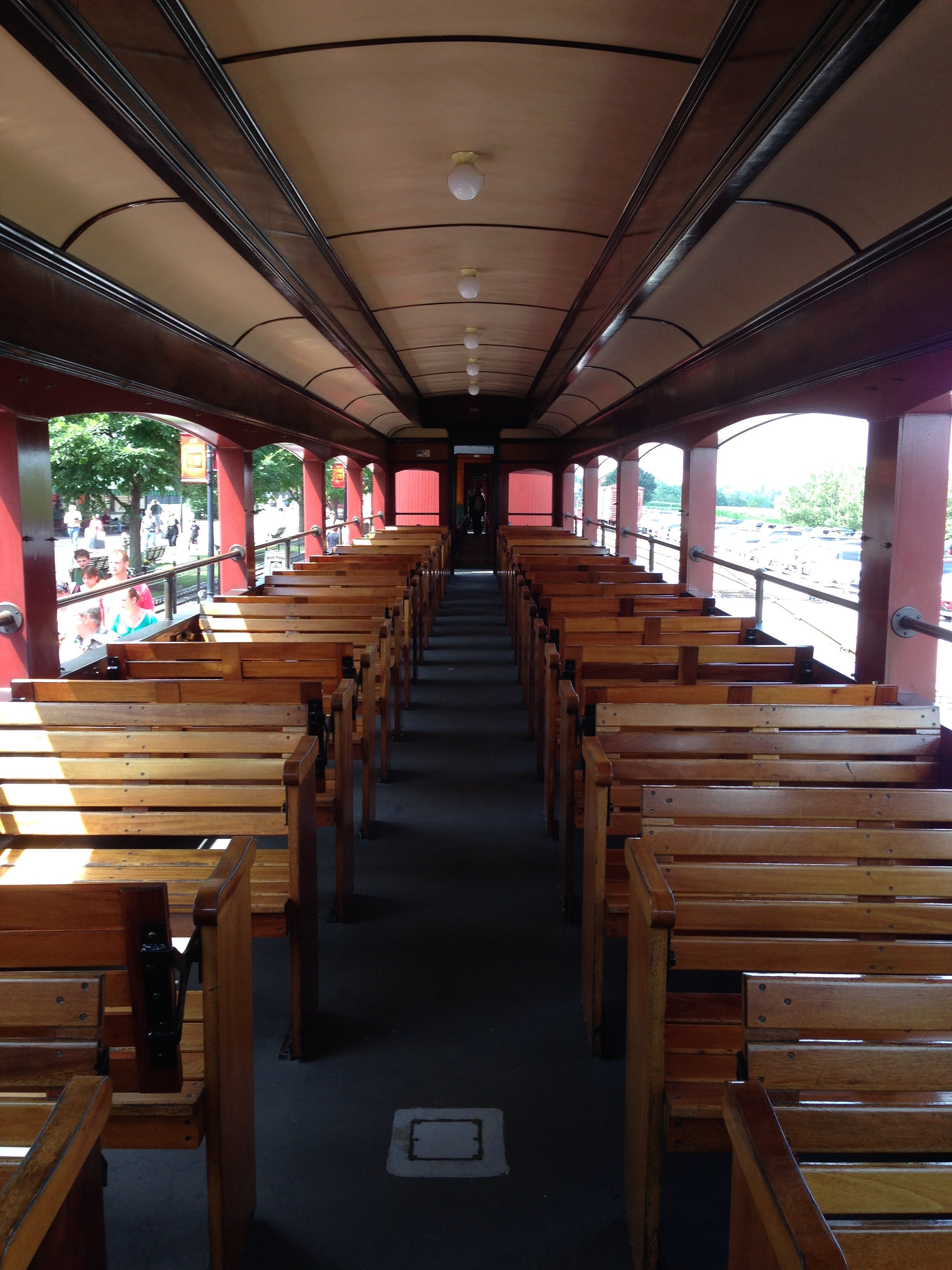
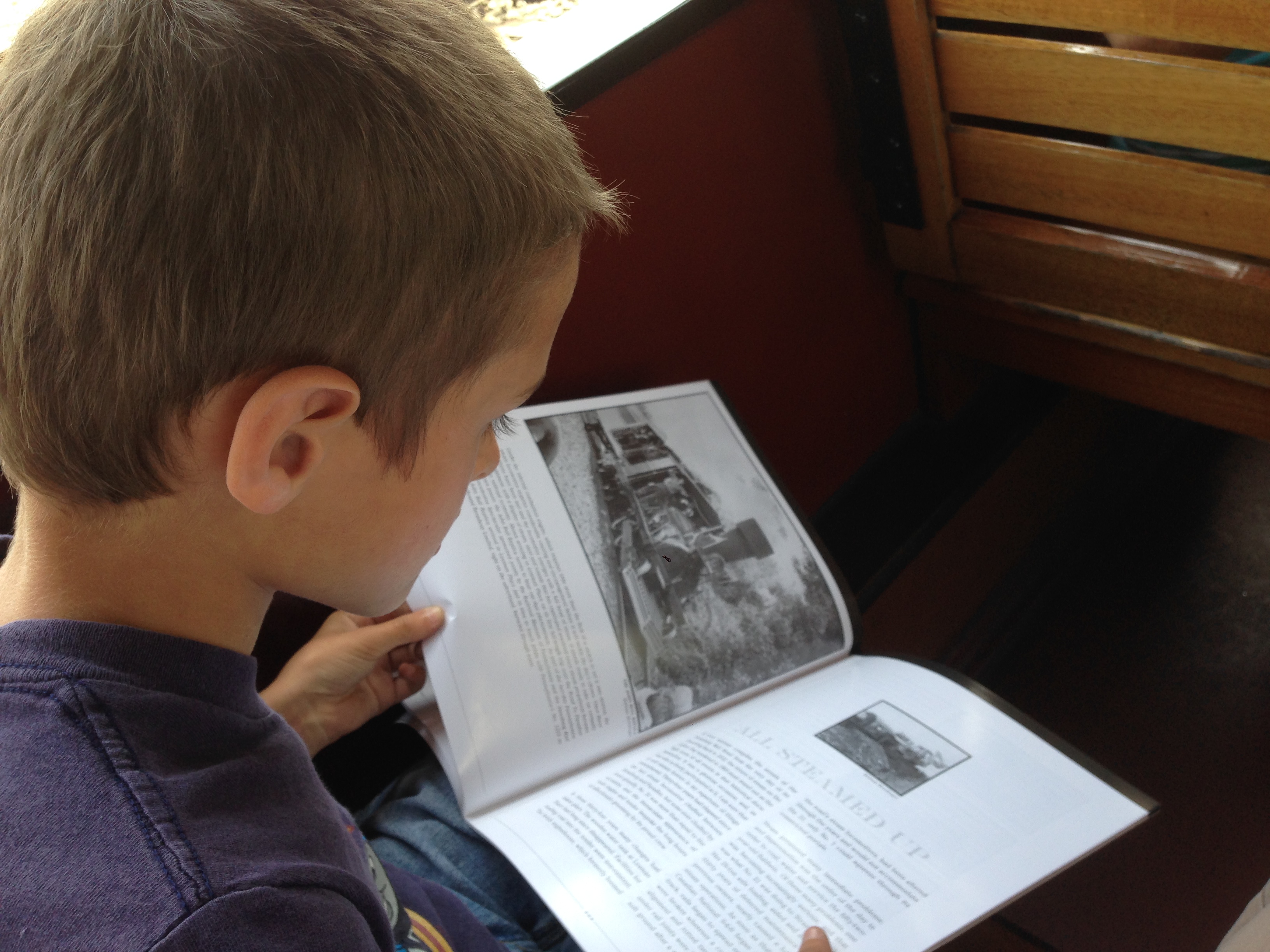
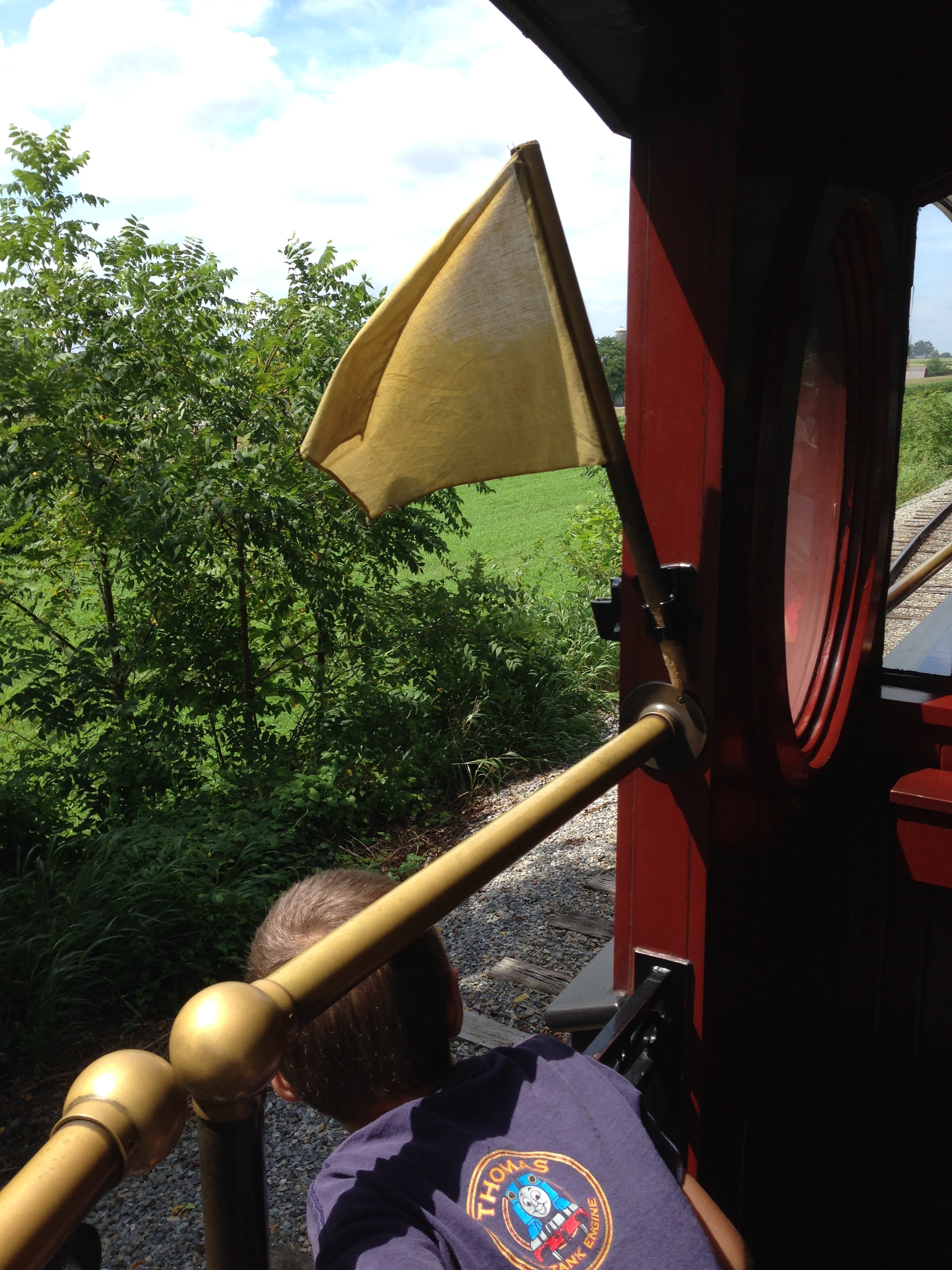
IMG_buchThis was the Open Air car, between rides. There was also the options of Coach (3rd class), First Class and the President’s Car, the last two with plush decor and air conditioning. I soon had found a new friend in B., a 6-year-old with a season pass, who was in the process of learning everything he could about this particular engine. His mother said they’ve been on this ride more times than she could count. Finding a new victim, he quickly took to me as his Favorite Aunt For This Ride, which also worked out for me as even the train fanatics with big cameras had friends or wives with them.
Das war der offene Wagen, zwischen zwei Fahrten. Es gab auch die Optionen Waggon (3. Klasse), 1. Klasse und Salonwagen, letzter zwei mit Plüsch-Dekor und Klimaanlage. Ich hatte bald einen neuen Freund in B. gefunden, einem 6-jährigen mit einer Saisonkarte, der gerade dabei war alles Erreichbare über eine bestimmte Lokomotive in Erfahrung zu bringen. Seine Mutter sagte, sie hätten diese Fahrt bereits unzählige Male gemacht. Nachdem er nun ein neue Opfer gefunden hatte, nahm er mich schnell als seine „Lieblings-Tante für diese Fahrt“, was mir auch gepasst hat, nachdem auch die Zug-Fanatiker mit großen Kameras von Freunden oder Ehefrauen begleitet wurden.

IMG_1446
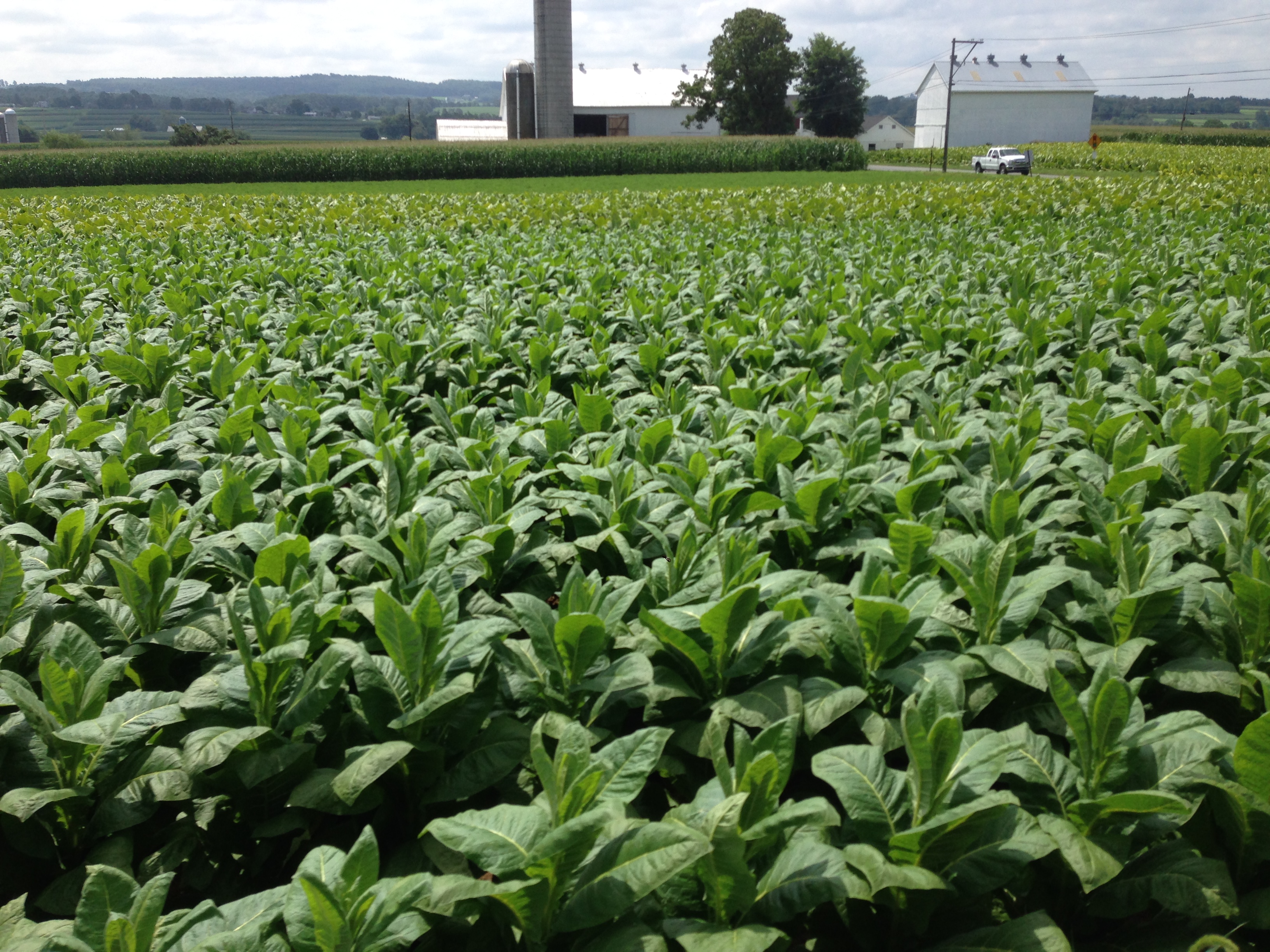
IMG_ausweicheWe rode through the fields and farmlands of Amish Country, through acres of corn and (above) tobacco.
There were several small highlights for the passengers, including a passing loop for the next scheduled ride. B. could barely contain himself, waiting for the next steam locomotive to pass.
Wir fuhren durch die Felder und Ackerland von Amish Country, hektarweise Mais und (oben) Tabak.
Es gab mehrere kleine Highlights für die Passagiere, darunter Zugkreuzung mit dem nächsten fahrplanmäßigen Zug. B. konnte die Vorbeifahrt der nächsteb Dampflokomotive kaum erwarten.

IMG_1447
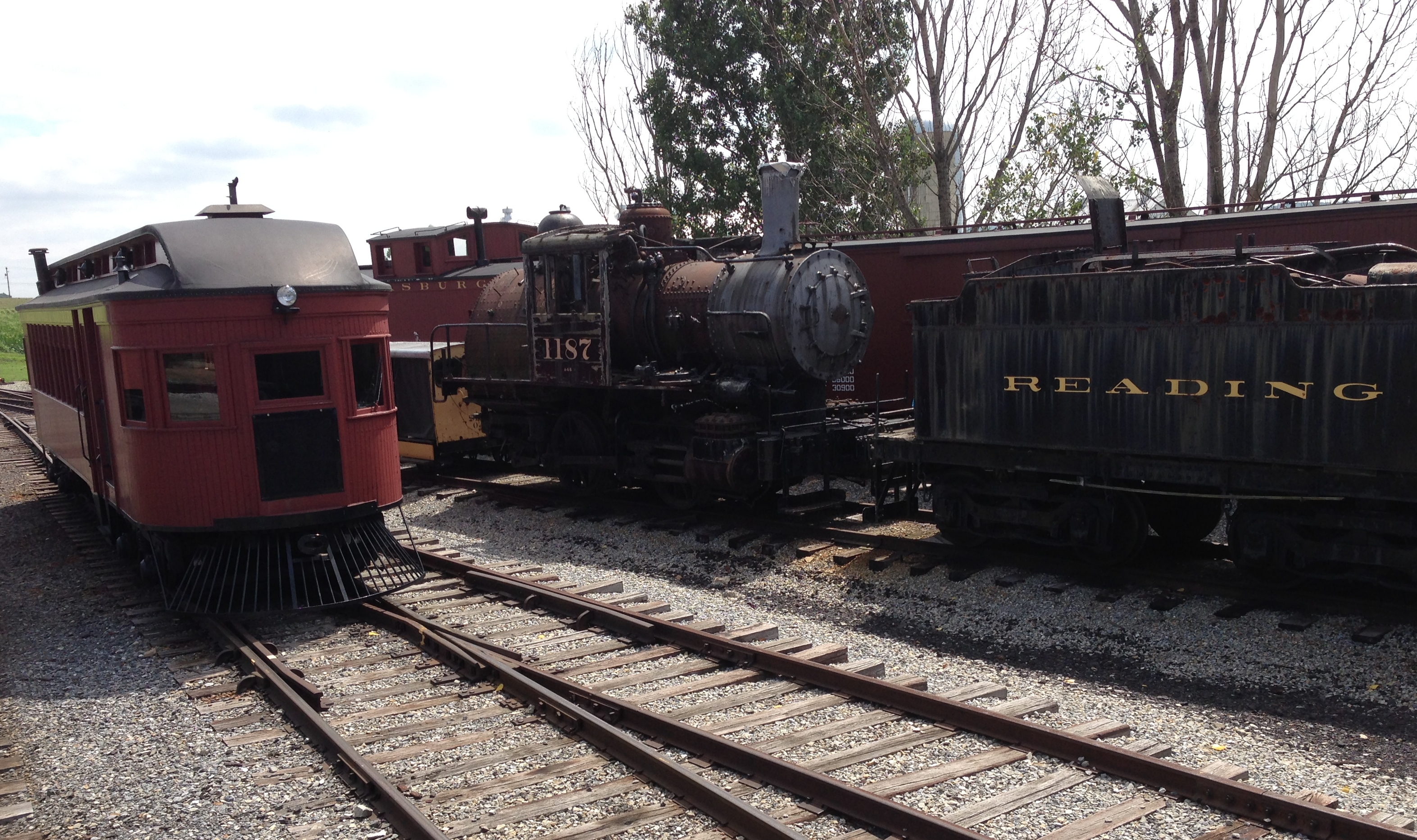
The rail yard near the station was populated with engines and cars of all shapes and sizes. These bear a strong resemblance to the old Lionel train set we kids used to set up in the living room.
Der Rangierbahnhof in der Nähe der Station ist mit Lokomotive und Wagen in allen Formen und Größen bevölkert. Diese haben eine starke Ähnlichkeit mit dem alten Lionel Zug, den wir als Kinder gerne im Wohnzimmer fahren ließen. (die US Firma Lionel war ein ähnlich altehrwürdiger Modellbahnproduzent, wie z.B. Märklin oder Trix.)

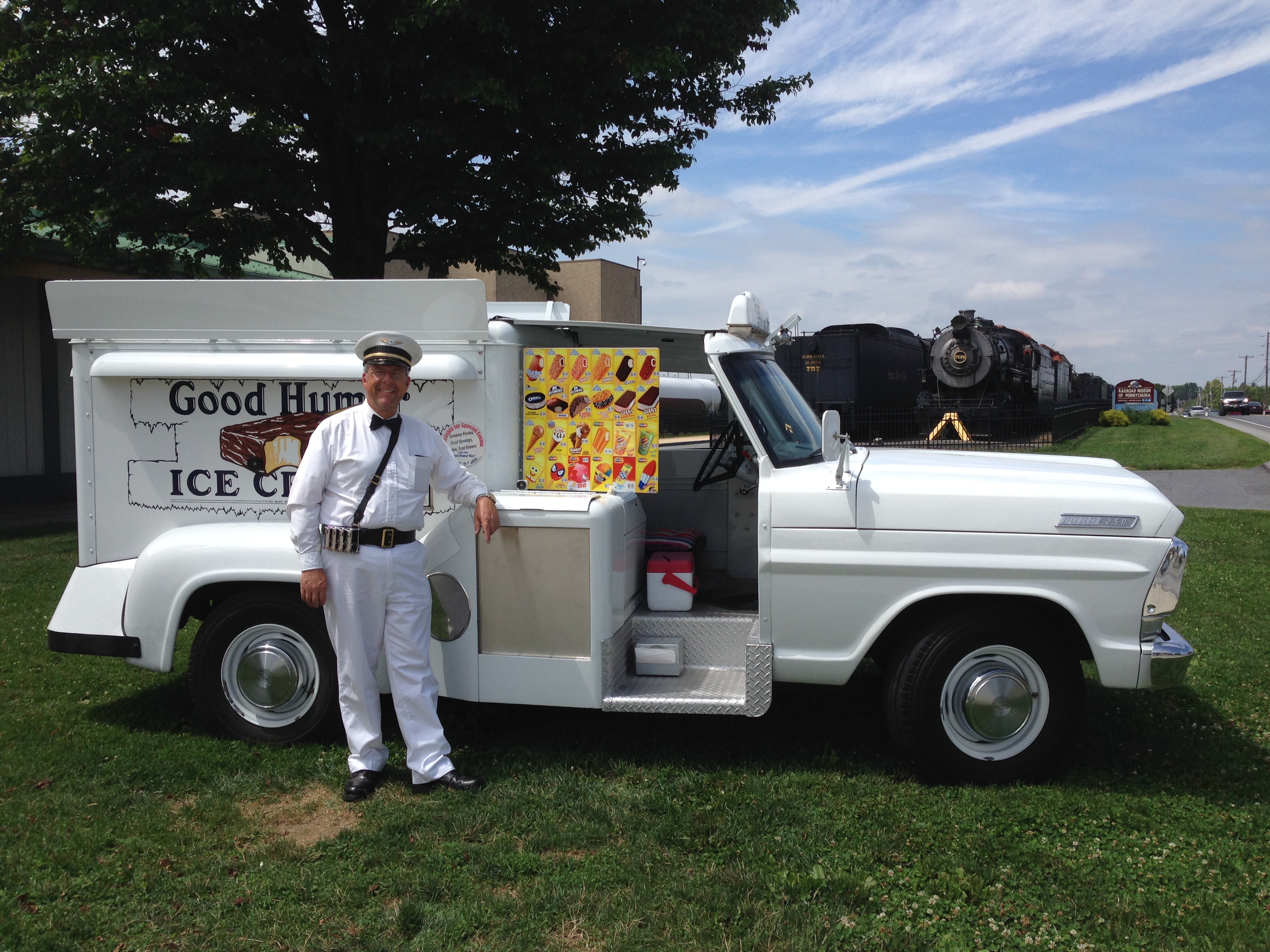
IMG_1451A Good Humor Man, in full retro garb and an old authentic truck near the museum entrance. Of course I bought an ice cream bar from him.
Ein Good Humor Man (ein Berühmtheit aus dem 60-er und 70-er Jahre) ähnlich zu einem Langnese Eisverkäufer), in voller Retro-Uniform vor einem alten authentischen LKW in der Nähe des Museumseingang. Natürlich kaufte ich mir einen Eisriegel von ihm.

IMG_1456
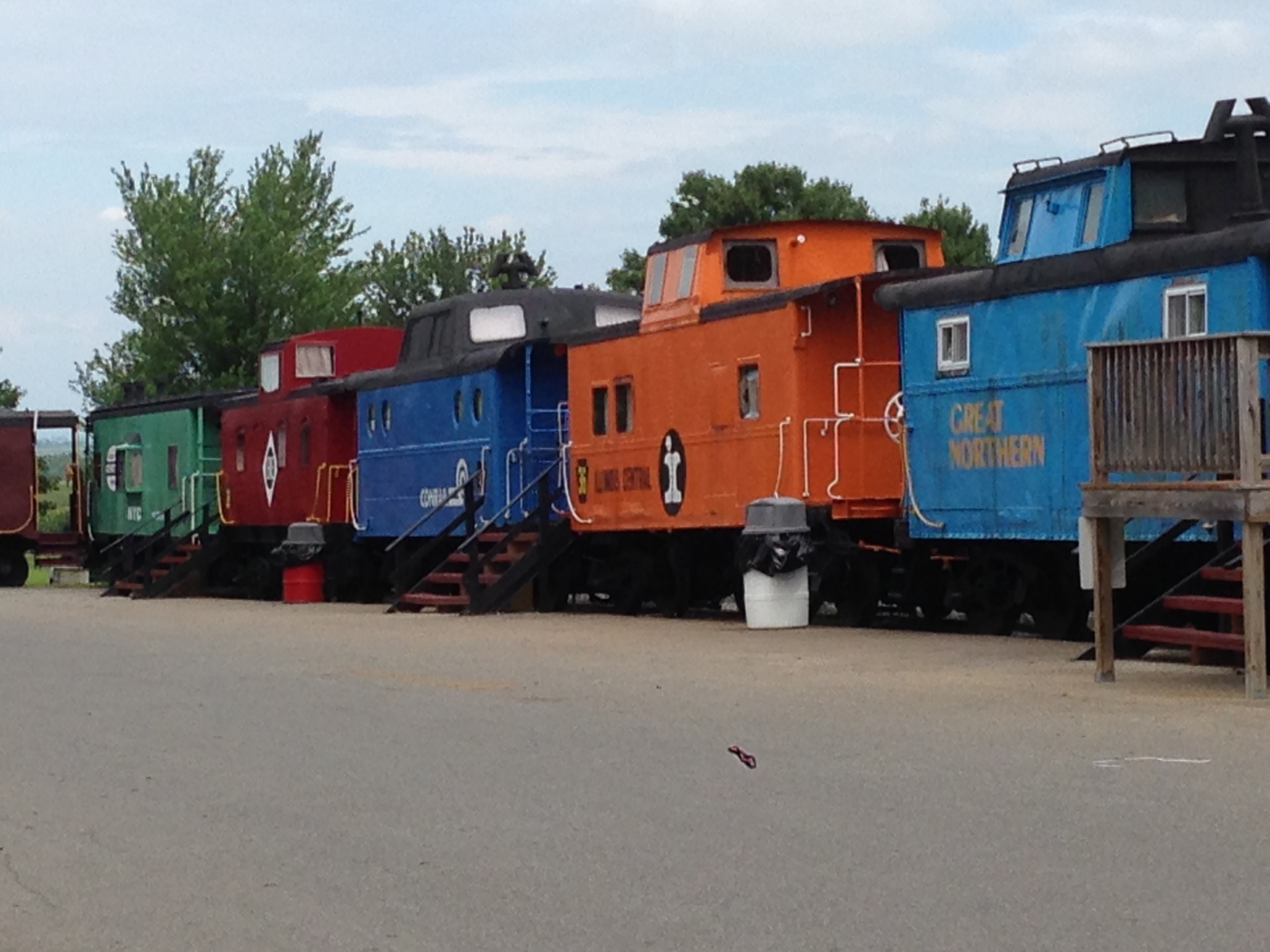
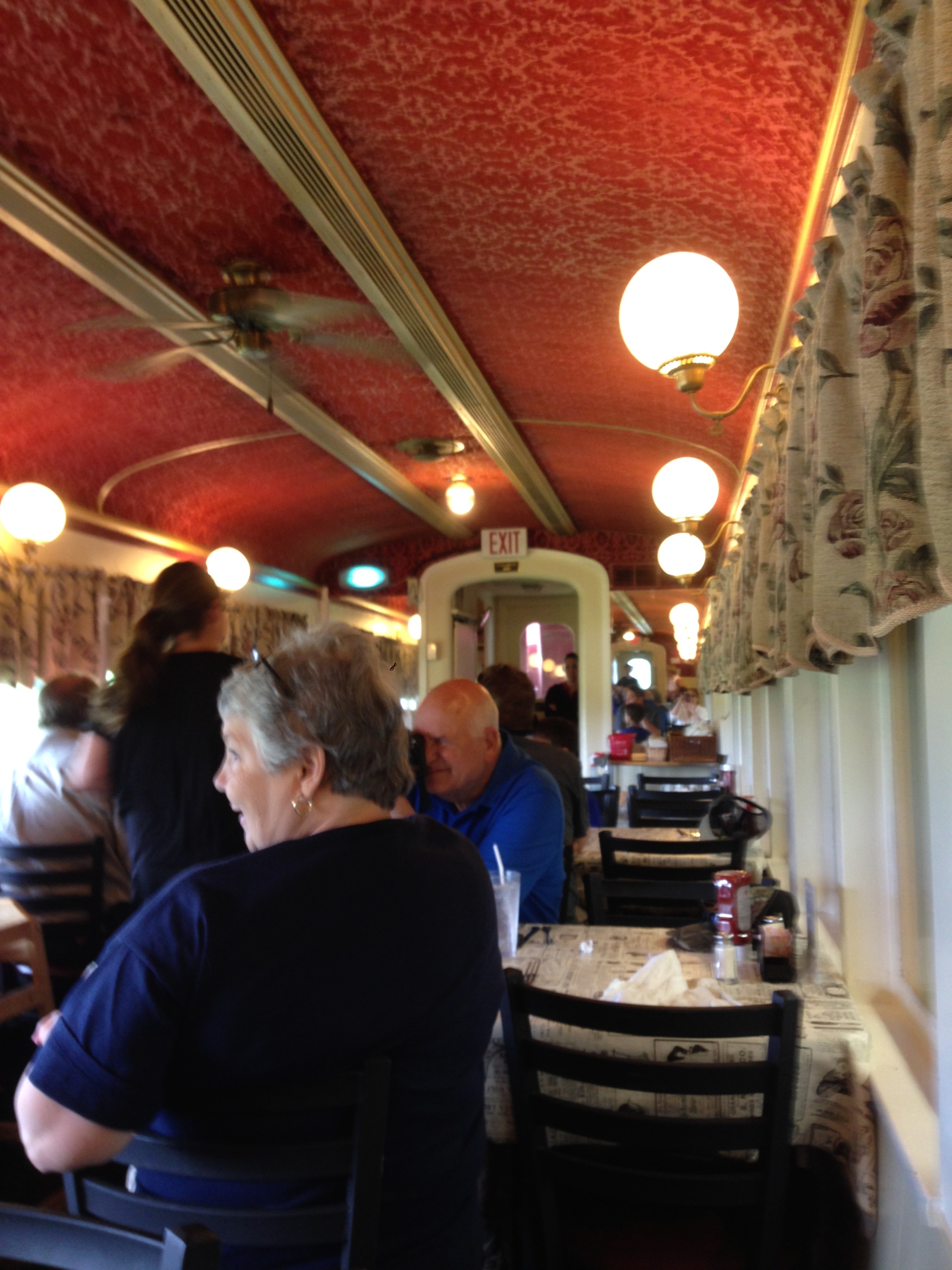
IMG_1460Nearby, the Red Caboose Motel in Ronks, PA. Instead of rooms, guests stay in individual, restored, air conditioned caboose cars. In their restaurant (in the dining car, natürlich), diners can watch the passing Strasburg Railroad trains from the windows.
In der Nähe befindet sich in Ronks, PA das Red Caboose Motel. Anstatt in Zimmern, wohnen die Gäste in individuellen restaurierten Güterzugbegleitwagen mit Klimaanlage. In ihrem Restaurant (im Speisewagen, natürlich), können die Gäste die Vorbeifahrenden Züge der Strasburg-Bahn beobachten.

Those Damn Socialist Roman Roads

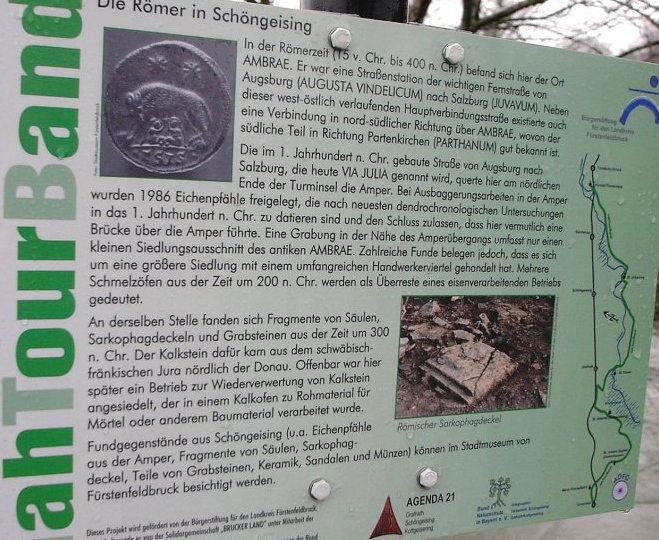
Tafel_2_SchoengeisingJust poking around the internet for information on the Via Raetia (the Roman Road from northern Italy to Augsburg) and exactly where it would have joined the Via Julia (the Roman Road from Salzburg to Augsburg). I found this, and normally would not repost an image if I could otherwise manage to go there myself and take my own photo. But … can you find the reason I posted this?

Tafel_2_Schoengeising - Version 2
Agenda 21! The UN “plot to destroy private property rights and force upon us all a one-world government of ‘the elites’ through radical environmentalism“. Also, the plot to shut down all American golf courses. If you don’t understand me, be thankful you’ve been spared exposure to that nonsense.

Clearly Agenda 21 has plans to shut down the Autobahn and force us to ride bicycles to work on the Roman Roads. The horror.


Image found here.


Two Roads in Utting

IMG_1301

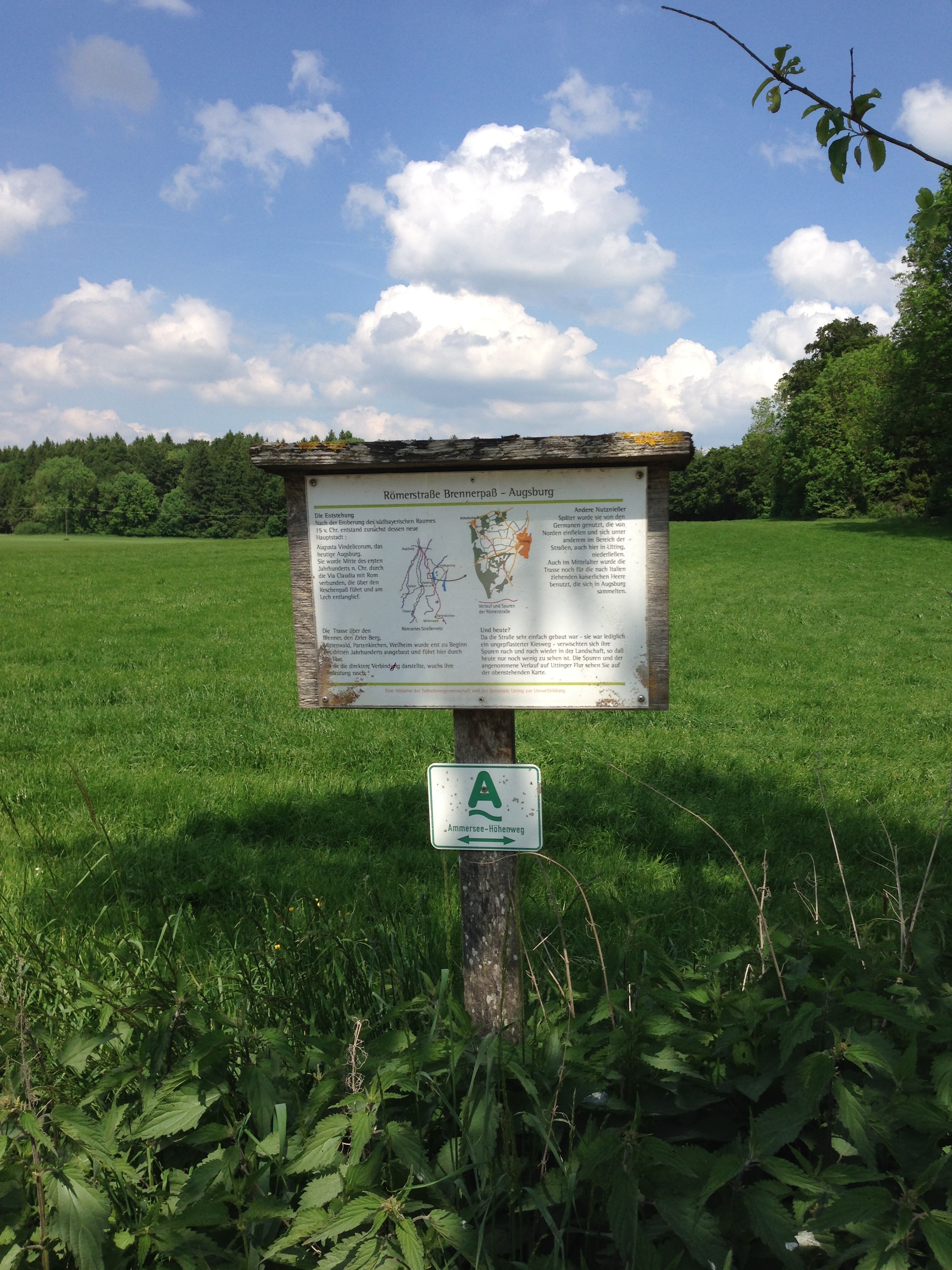
On a small, wooden sign posted along a dirt road outside of Utting am Ammersee, not far from the Celtic Schanze in Achselschwang:

Nach der Eroberung des südbayerischen Raumes 15 v. Chr. enstand zunächst dessen neue Hauptstadt: Augusta Vindelicorum, das heutige Augsburg. Sie wurde Mitte des ersten Jahrhunderts n. Chr. durch die Via Claudia mit Rom verbunden, die über den Reschenpaß führt und am Lech entlanglief.
Die Trasse über den Brenner, den Zirler Berg, Mittenwald, Partenkirchen, Weilheim wurde erst zu Beginn des dritten Jahrhunderts ausgebaut und führt hier durch (den) Flur.
Da sie direktere Verbindung darstellte, wuchs ihre Bedeutung rasch.
Später wurde sie von den Germanen genutzt, die von Norden einfielen und sich unter anderem im Bereich der Straßen, auch hier in Utting, niederließen. Auch im Mittelalter wirde die Trasse noch für die nach Italien ziehenden kaiserlichen Heere benutzt, die sich in Augsburg sammelten.

It tells of the Roman Roads from Italy to Augsburg, and that second of the two (the Via Raetia) passed by here. After the fall of the empire it was used by the Germanic tribes who came down from the north to settle here, and then by imperial armies traveling to Italy in the Middle Ages.

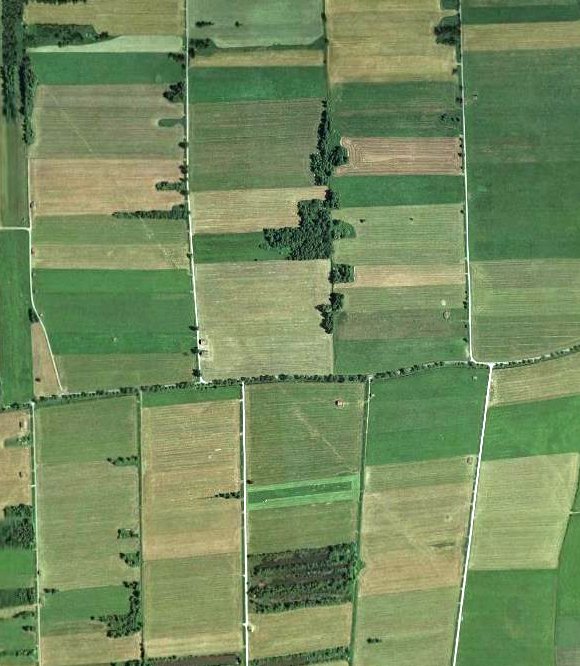
IMG_1302Da die Straße sehr einfach gebaut war — sie war lediglich ein ungepflasterer Kiesweg — verwischten sich ihre Spuren nach und nach wieder in der Landschaft, so daß heute nur noch wenig zu sehen ist. Die Spuren und der angenommene Verlauf auf Uttinger Flur sehen Sie auf der obenstehenden Karte.

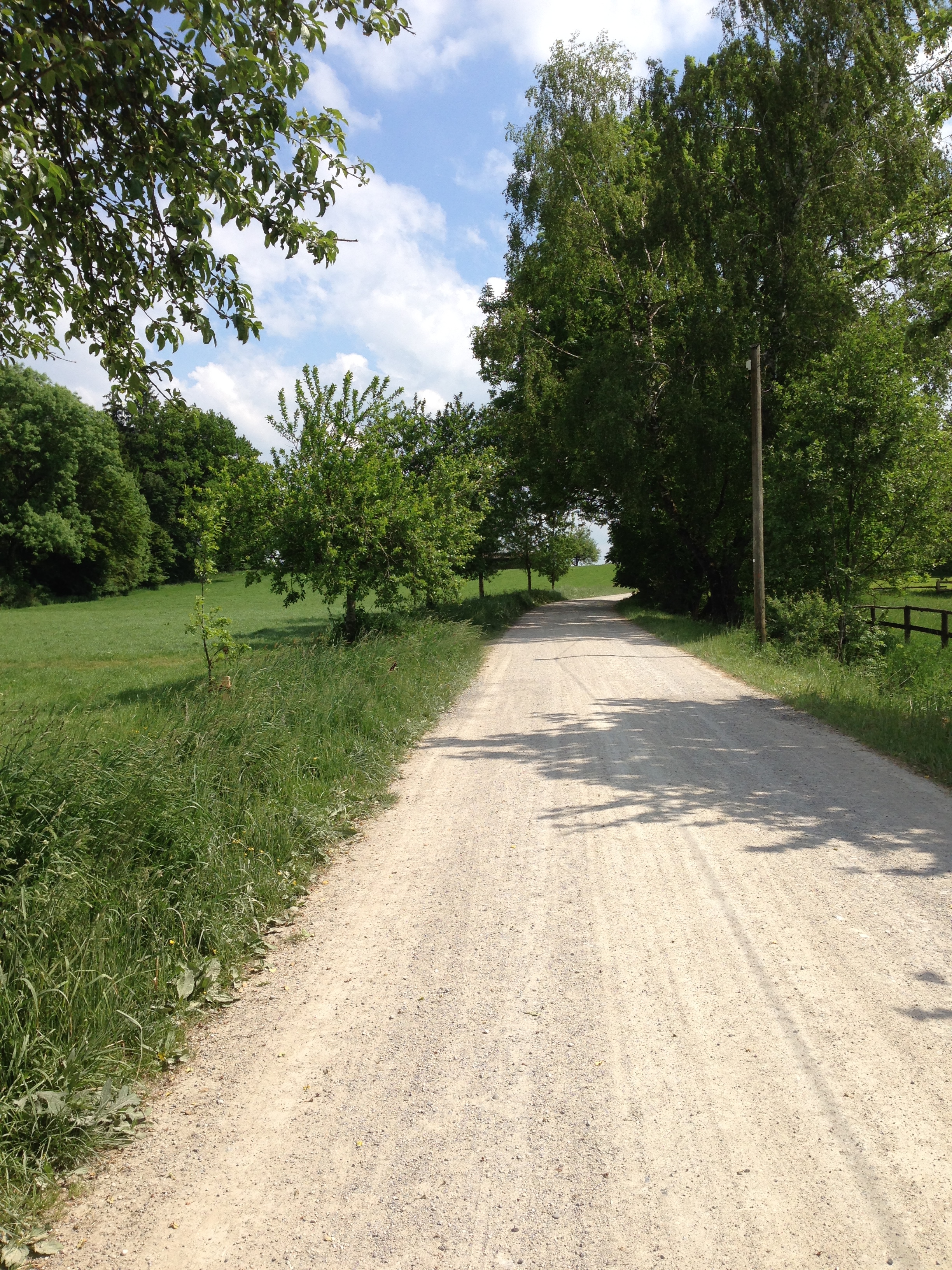
Well, the Romans put a lot of engineering and resources into their roads, but perhaps not so much here, probably because the landscape didn’t require it. Here they’d made a gravel road and left it at that, apparently. The sign is not clear as to whether the road did come through right here, or whether it’s assumed to have come through here.

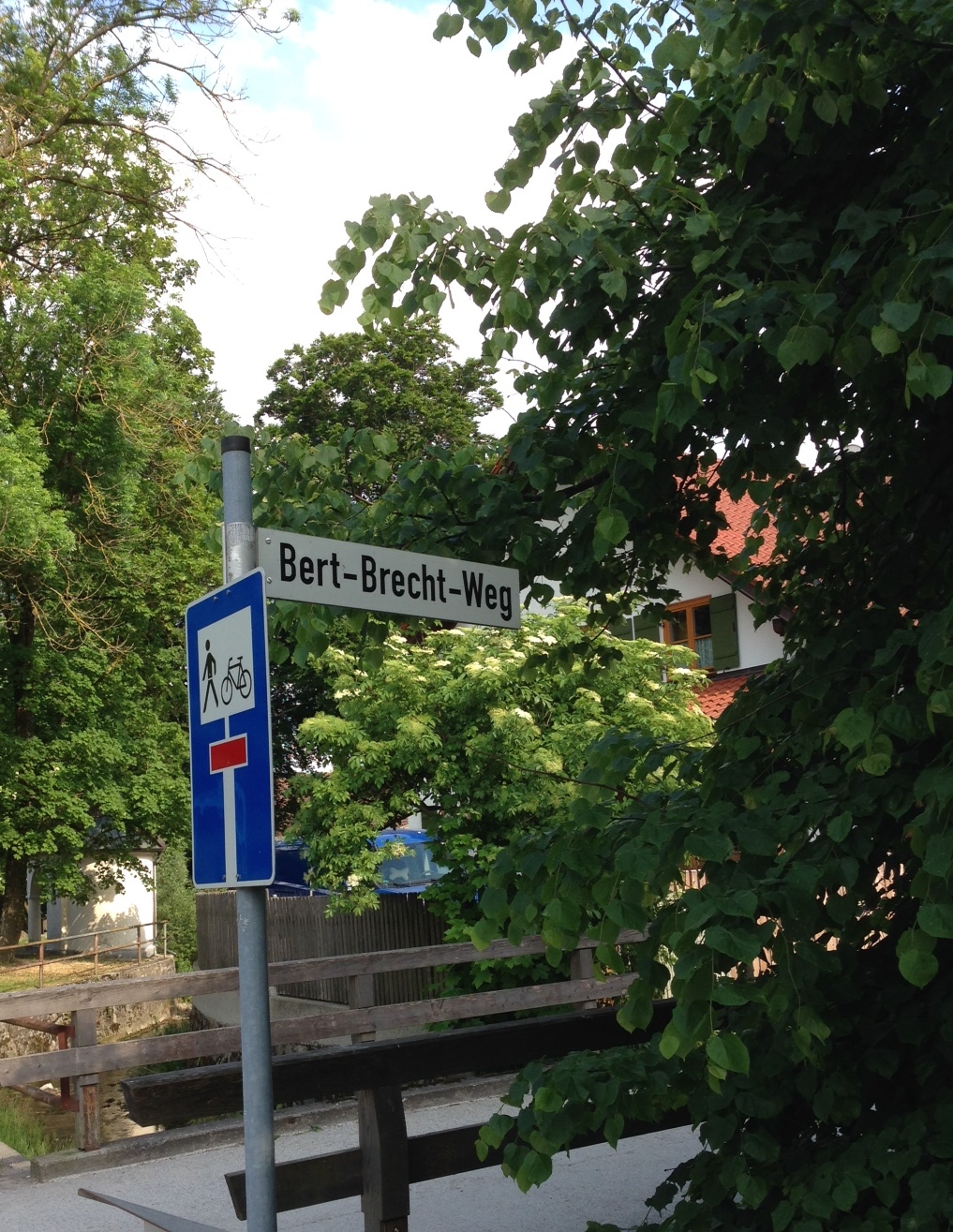
photo 2The second road is not really much of a road at all, but rather a short paved way that connects two other streets over a stream. This, as the sign reads, is Bert Brecht Way, and it is so named because Brecht once lived, briefly,  around the corner.

Sieben Wochen meines Lebens war ich reich.
Vom Ertrag eines Stückes erwarb ich
Ein Haus in einem großen Garten. Ich hatte es
Mehr Wochen betrachtet, als ich es bewohnte. Zu
verschiedenen Tageszeiten
Und auch des Nachts ging ich erst vorbei, zu sehen
Wie die alten Bäume über den Wiesen stünden in der
Frühdämmerung
Oder der Teich mit den moosigen Karpfen lag, vormittags,
bei Regen
Die Hecken zu sehen in der vollen Sonne des Mittags
Die weißen Rhododendrenbüsche am Abend, nach dem
Vesperläuten.

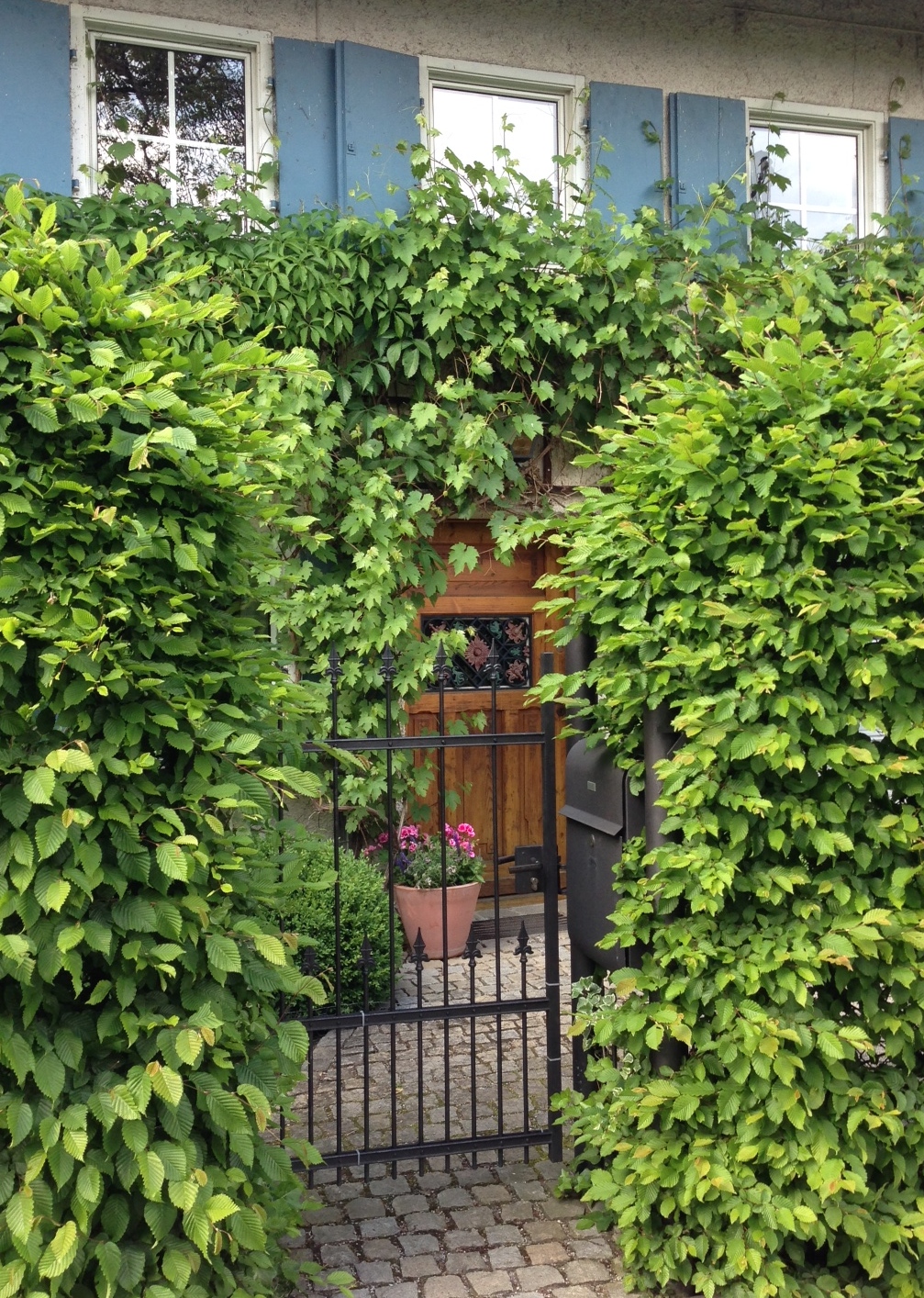
photoBrecht wrote that for seven weeks of his life he was a rich man. He’d bought a house with a large garden, not far from the banks of the Ammersee. He’d observed the house for far longer than he’d actually lived there, passing by to gaze upon the house, the pond, the trees, the rhododendrons. In late 1932 he moved in, but by the following February he was forced to flee Nazi Germany. The house remained in the family until 1953.

Singer Lore: Help For Swollen Vocal Cords

Inching my way out of this bad cold flu bronchitis, I turned to facebook to ask my professional singer friends for their personal last-ditch remedies when a gig is getting near and the vocal folds are still swollen (and therefor not, as we say in singing circles, “approximating”). I don’t mean full-out injury, but rather that recovery time when you’re almost, but not quite, there. This question generated a long and entertaining discussion about the pros and cons of certain medications and methods, which I have boiled down to its essence here for you:

Bromelain, a clear winner with the singers in Germany. It’s made from pineapples, is available without a prescription and reduces swelling. My Austrian pharmacy sold me a less-powerful version of it called Wobenzym, but said that they could order Bromelain.

Ibuprofen. There was a bit of an debate about this. Ibubrofen is an NSAID (non-steroidal anti-inflammatory drug) which works by thinning the blood, like aspirin, but which might lead to real damage if your cords are so raw that the capillaries are near the surface. Some people say “absolutely no ibuprofen”, others say it’s the only option short of steroids, which come with their own set of risk factors.

Some prescription-only suggestions: Serrapeptase (in Germany called Aniflazym),  dexibuprofen, and the once-in-a-decade last-ditch option of cortisone in the form of prednisone and its cousin prednisolone (I guess if you really can’t cancel without dire consequences. But you’ll be out of commission for a while afterward so it really is not often recommended.)

Non-prescription medications and home remedies: Inhaling sage tea with salt, steam, NO steam but cold mist, eating raw garlic, hot grape juice, Eibischwurzeltee (marsh mallow root tea) applied cold (onto the skin?), warm Dr. Pepper, GeloRevoice, diclofenac, lymphdiaral (homeopathic drops),  fresh ginger in water with honey (ginger is supposed to shrink swelling), guafenisin (in America it’s in Vicks 44, not available in Austria), warmed honey, chicken soup, and cancelling the gig.

gelorevoice_fullimage_df_03

Here is a professional singer who recommends rubbing Preparation H (hemorrhoid cream!) directly on your Adam’s apple , which sounds weird. But who am I to say.

Here’s what I normally do, beyond what my doctor prescribes me:

Ibuprofen, Bromelain, inhaling the steam from elderflower (Hollunder) tea (the kind from the pharmacy, not the supermarket), gargling with salt water, nasal irrigation with salt water (boil the water first and let it cool to a usable temperature! This procedure led to a few deaths in the U.S. from people unwittingly using contaminated water from the tap. Better safe than sorry!)

My prescription-only throat spray is Locabiosol, which I get when I am see-the-doctor sick (usually once a year at the most) and then use what remains of it during the rest of year for those borderline cases. A good over-the-counter substitute is Klosterfrau Islandisch Moos throat spray, a little bottle of which I keep at the theater all through the season. I am also a big fan of Golia lozenges, especially the little ones, which are small enough and soft enough for me to keep pressed onto a back molar while I am onstage. I was told that they were also Pavarotti’s favorite throat lozenges. I believe they are only available in Italy (I have generous friends who get bags of them for me when they go to Milan.)

perfetti_golia

If you’ve come here in search of a remedy for your own swollen cords, then best of luck and get well soon!

What are your methods?

And While We’re In The 15th Century…

…it’s only a short jump ahead to the time of Emperor Ferdinand II and Philippine Welser, both of whom figure in the local story of the Roßsprung (“horse jump”). Paschberg has a post up about the story and the now-urban stone markers which commemorate it, in German along with my English translation.

Und weil wir gerade im 15. Jahrhundert sind…
… Es ist nur ein kurzer Sprung weiter zu der Zeit des Kaisers Ferdinand II. und Philippine Welser, die beide in der lokalen Überlieferung der Roßsprung (“Pferd springen”) vorkommen. Paschberg hat einen Post über die Geschichte und den heutigen Steinmarkierungen im Stadtgebiet, die daran erinnern.

It’s All Related

And here we tie the two previous posts together with a 15th-century ribbon:
Und hier fügen wir die beiden vorherigen Beiträge mit einem Band aus dem 15. Jahrhundert zusammen:

blog_Duerer_Brennerstrasse

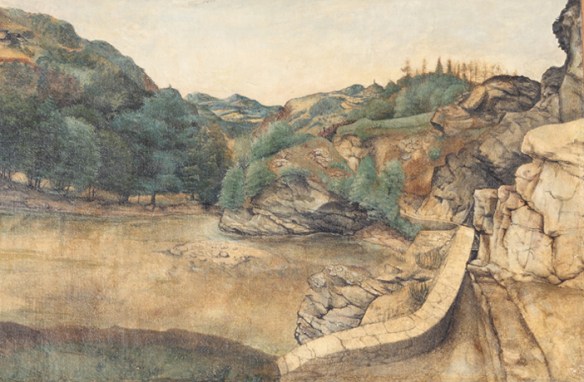
Albrecht Dürer, Brenner Road in the Eisack Valley, 1495. Made, as with the Innsbruck paintings, from a journey to Italy. Note the wheel tracks in the road. This was the “Brenner Autobahn” during the Middle Ages and probably long before then as well.

Albrecht Dürer, Brennerstraße im Eisacktal, 1495. Gemacht, wie auch die Innsbruck Gemälde, auf einer Reise nach Italien. Beachten Sie die Spurrillen auf der Straße. Dies war der “Brenner Autobahn” im Mittelalter und wahrscheinlich auch lange davor.

Image found here