Bergisel Jump (virtually) Revisited

Edited English-language intro: as the course for which I wrote this post is being offered once again, I have begun to remove references to it out of concern that someone will find this post via keywords and then just cut and paste. I would like for that not to happen.

2011 schrieb ich über einen Besuch bei den archäologischen Grabungen  an der Hinterseite des Bergisel. Ich habe diesen Beitrag nun hervorgeholt, um ihn bei meinem Archäologiekurs zu verwenden – um einen Fall über die Bewahrung von Funden zu beschreiben und zu zeigen, ob die Anstrengungen von Erfolg gekrönt waren oder nicht. Die Übung, diesen Beitrag nun in einem anderen Lichte zu schreiben, brachte mich dazu meinen bisherigen Ansichten zum Fundort und den Arbeitsschritten zu überdenken. Der Kulthügel am Bergisel ist eigentlich sowohl eine Rettungsgrabung alsauch ein Vermächtnis. Im Geiste der Teilhabe veröffentliche ich daher diese neue und verbesserte Version des damaligen Beitrags.
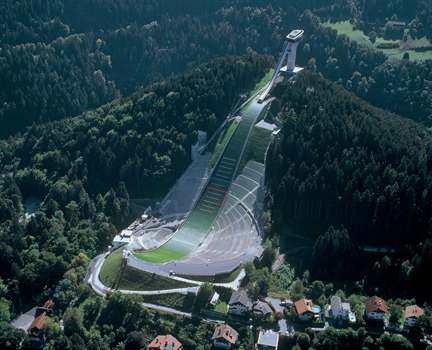
KoneSchanze

(Photo from  kone.com )

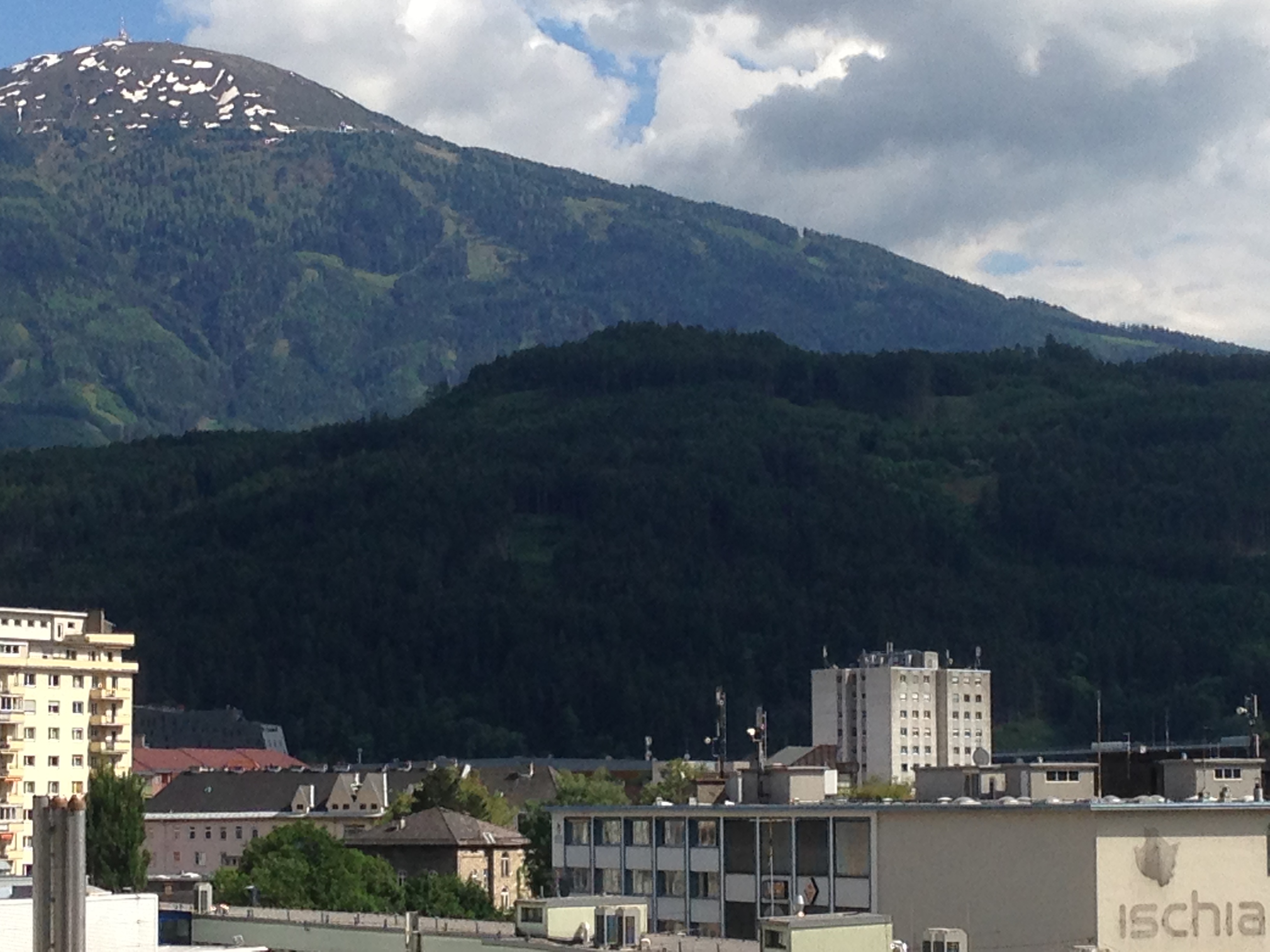
Bergisel is known today as the site of one of the “Four Hills” ski jumps (and a very nice one at that).  You may have seen the ski jumping competitions held here on television. The area is also used for concerts, New Year’s Eve fireworks displays, World Cup soccer match broadcasts on large screens, the annual “Air&Style” Freestyle Snowboard Festival, and is the location of the new Tirol Panorama Museum. There is also a pretty trail along the Sill Gorge, on the back side of the hill. It has, therefor, somewhat heavy human traffic at certain times during the year.
 Bergisel was also known to be a significant archaeological site since the 1840s, when a small military museum was built on a lower slope —the partial collection of a large treasure find is housed in the Tirol State Museum Ferdinandeum, the other part having been “carried off by the wagonful and sold by weight to bellmakers”.

Der Bergisel ist heutzutage bekannt als eine (besonders schöne) Station der Vierschanzentournee. Vielen wird der Bergisel von Fernsehübertragungen der Schisprungveranstaltungen bekannt sein. Das Gelände wird auch für Konzerte, Neujahrsfeuerwerke, Fußballübertragungen auf Großleinwand und dem jährlichen Air&Style Snowboard Festival genutzt. Zudem ist es der Standort des neuen Tirol Panoramas. Es gibt auch einen reizenden Steig durch die Sillschlucht, an der Rückseite des Bergisel. Der Platz ist somit im Jahreslauf zeitweise von Besuchern stark frequentiert.

Der Bergisel ist als herausragendes archäologisches Fundgebiet seit den 1840ér Jahren bekannt, da man damals ein kleines Militärmuseum am unteren Hangteil errichtete. Ein Teil der damaligen funde sind im Tiroler Landesmuseum ausgestellt, während eine anderer Teile als „Wagenladung weggeschafft und  nach Gewicht an Glockengießer verkauft wurde“.
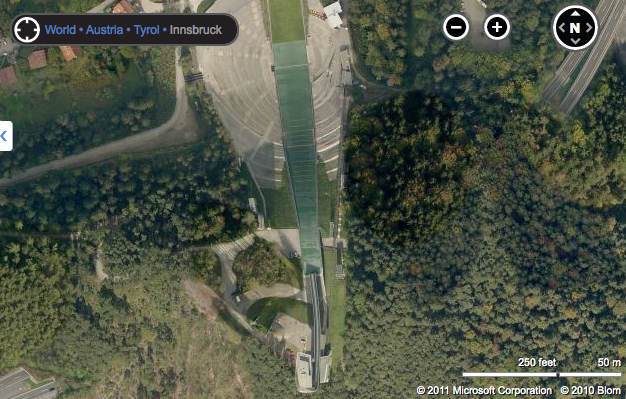
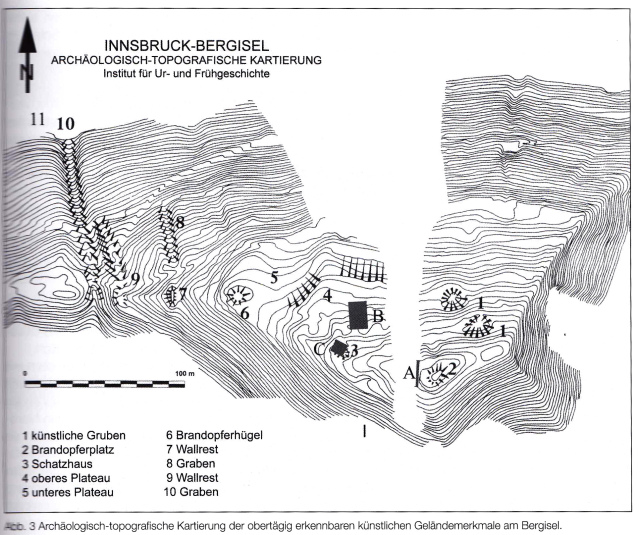
Schanze BingAerialsketch

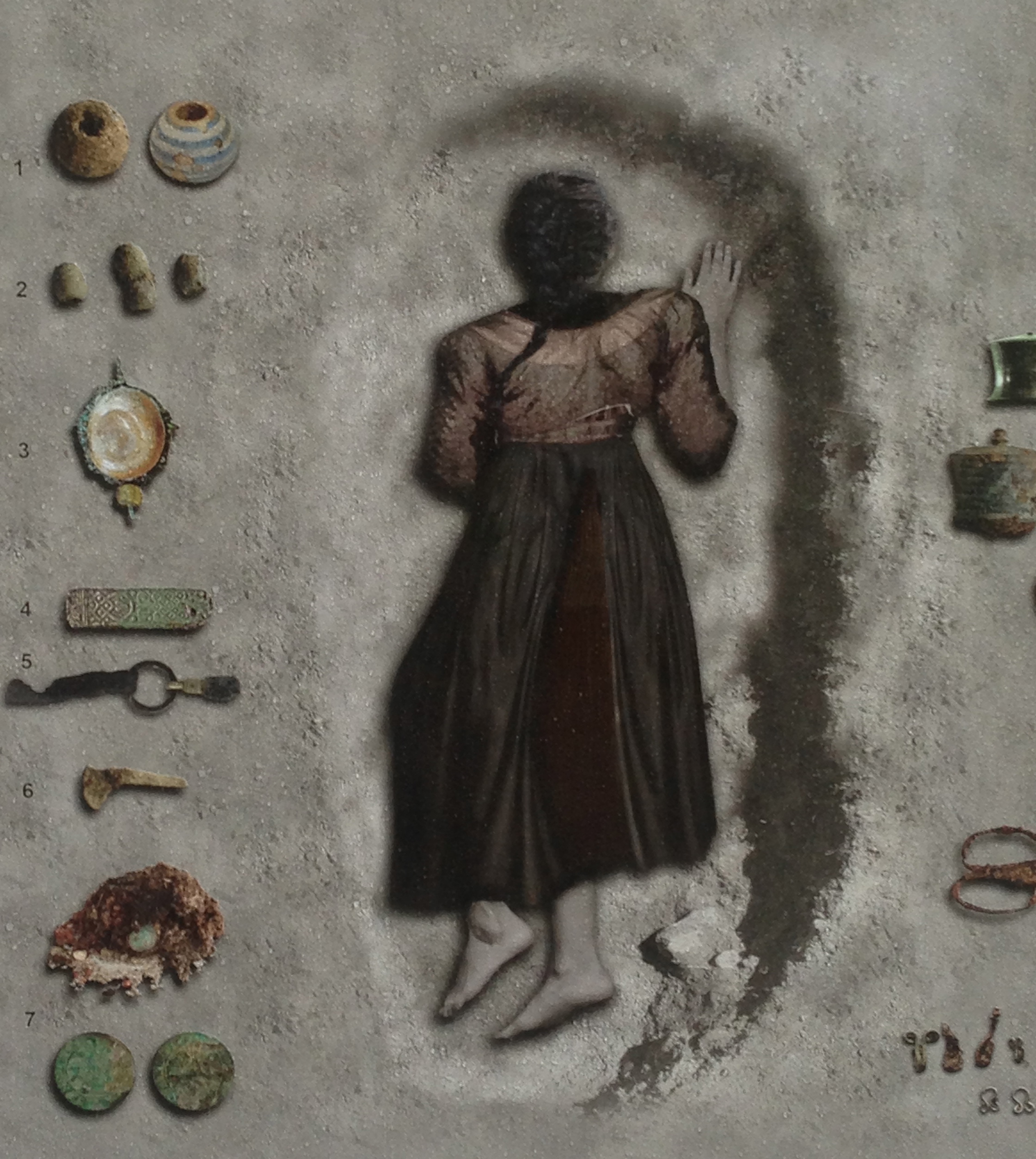
Top image is a screenshot from Bing Maps. Bottom image is from “Ur- and Frühgeschichte von Innsbruck” (“Prehistoric and Protohistoric Archaeology of Innsbruck”) catalog accompanying the 2007 exhibit at the Tiroler Landesmuseum Ferdinandeum, Innsbruck. In German.

When the old jump was built for the 1964 Winter Olympic Games, a large swath of earth had been removed, and a great deal of archaeological evidence unfortunately went with it. This jump was demolished in 2001 to make room for a better, modern one planned by the well-known architect Zaha Hadid, and in between local archaeologists from the University of Innsbruck were able to come in for a limited time and do excavations.
These excavations have uncovered a site for burnt offerings near the highest point of the hill, just a few meters east of the ski jump tower. Animal bones were found which had been burnt at a temperature of over 600°C.  These artifacts have been dates to ranging from 650 BCE to 15 BCE, when the Romans arrived, and would have been taken to the Ferdinandeum.

Als die alte Schisprungschanze  für die olympischen Spiele 1964 gebaute wurde, wurde eine mächtige Erdschicht und zugleich eine große Menge archäologischer Beweisstücke entfernt. Diese Schanze wurde 2001 abgetragen und durch einen besserer und modernere von der bekannte Architektin Zaha Hadid geplante ersetzt. Ein begrenzte Zeit konnten Archäologen der UNI Innsbruck Ausgrabungen durchführen.

Bei diesen Ausgrabungen wurden verbrannte Opfergaben nahe der Spitze des Berges, wenige Meter östliche des Schanzenturms entdeckt. Bei 600°C verbrannte Tierknochen wurden gefunden. Diese Fundstücke wurden Zeitraum zwischen 600 und 15 v.Chr., vor Ankunft der Römer, datiert und ins Ferdinandeum gebracht.

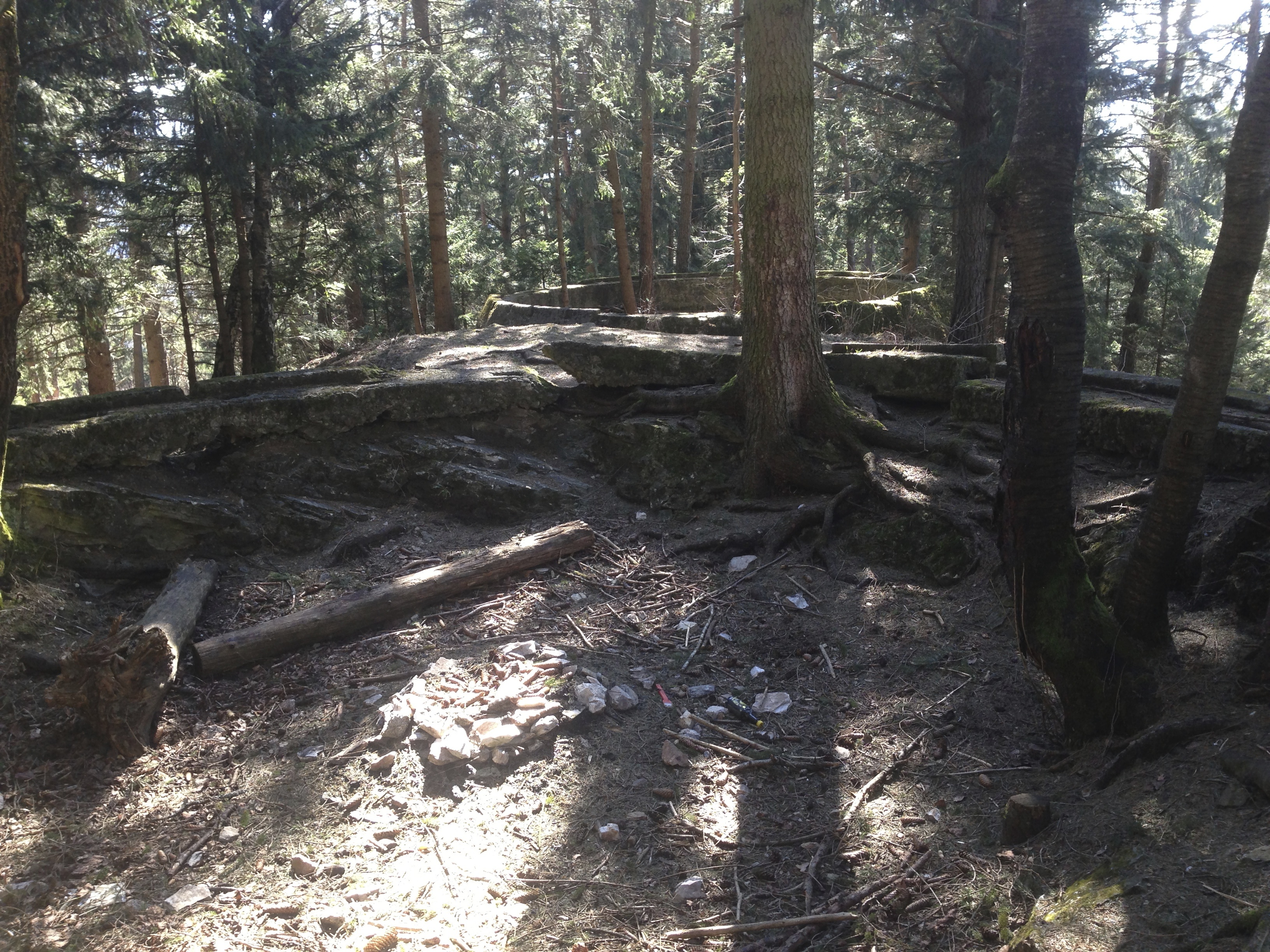
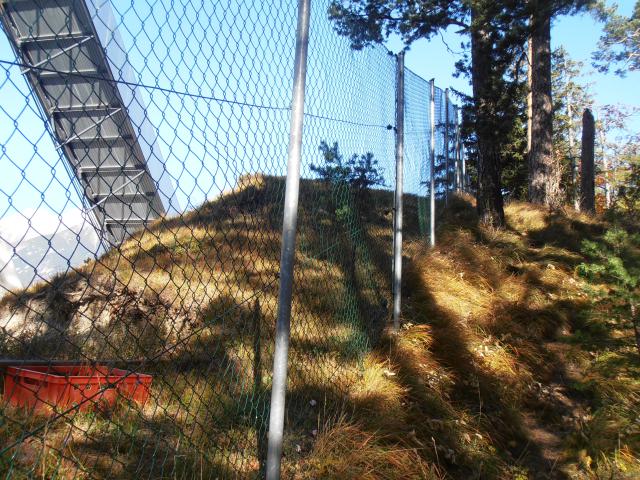
The features, that is, the larger artifacts, were then back-filled with earth and left alone.  There was absolutely NO information found (in 2012) at the site itself, which is on the outside of the fenced-in ski jump area, so one can’t just take the incline to visit it. There are barely trails — animal paths really — up the very steep grades on the back end of the hill. There are no signs forbidding access but it is difficult to get up there. ( I only made it up  —and down — by grabbing onto tree roots and watching very carefully where I stepped. Dead leaves, pine needles and pine cones added a certain hair-raising slipperiness to the adventure. )

Die Bodenmerkmale, also die größeren Fundstücke, wurden dann wieder mit Erde verfüllt und sich selbst überlassen. Es wurde absolut kein Hinweis auf den Fundort außerhalb des umzäunten Geländes der Sprungschanze hinterlassen, sodass man nicht die Möglichkeit hat, den Ort mit der Standseilbahn zu besuchen. Es gibt kaum Pfade den steilen abhängen der Hinterseite des Berges hinauf; die vorhandenen sind tatsächlich Trittspuren von Tieren. Es gibt keine Schilder, die den Zutritt verwehren, aber es ist auch nicht leicht dorthin zu kommen. (Ich selbst kam nur rauf –und runter – in dem ich mich an Baumwurzeln hochhantelte und genau achtete wohin ich trat. Alte Blätter, Nadeln und Tschurtschen (Föhrenzapfen) erweitern das Abenteuer um haarsträubenden Rutschigkeit)
OLYMPUS DIGITAL CAMERA

Photograph by the author.

The altar mound as seen today, on the highest point of the hill. The fence around the sport area runs right through the mound, which seems a little unfortunate. I do not know the impact of the fence on the re-buried site but hope that it is minimal.
My take on this site is that despite the great loss of artifacts from earlier landscaping and construction,  archaeologists have done their best to secure it and keep it removed from human disturbance as best they can.  They had been extremely pressed for time before construction on the new tower began. Today nearly all visitors experience the Bergisel at the lower end, where the Panorama Museum is located, or take the incline ride to the cafe  inside the ski jump tower (or walk up on the concrete steps) and have no interest in wandering over to the unidentified excavation site. This makes the conservation efforts  a success. A prognosis is more difficult, as I do not know what plans the property owners have for the area. As long as it remains as it is, the site is secure.[submitted summer 2013]

Der Kulthügel, wie man ihn heute sieht, liegt am höchsten Punkt des Berges. Der Zaun der Sportarena läuft direkt durch den Hügel, was etwas unglücklich erscheint. Ich weiß nicht, welche Auswirkungen das Zaunfundament auf die darunter vergrabene Fundstätte hat, hoffe aber, dass diese gering bleiben. Meinen Meinung über diesen Fundort ist, dass die Archäologen trotz der großen Verluste an Fundstücken durch frühere Geländeveränderungen und Bauarbeiten ihr Bestes getan haben, um das verbleibenden zu sicheren und vor menschlichem Zugriff zu bewahren. Sie handelten während des Baues der Sprungschanze unter großem Zeitdruck .

Heute erleben die Besucher den Bergisel vor allem am unteren Ende, wo das Panorama-Museum steht, oder fahren mit der Standseilbahn zum Cafe im Schanzenturm (oder gehen über die Stufen der Tribünen), haben jedoch kein Interesse über die unbekannte Ausgrabungsstätte zu wandern. Die sicherungsmaßnahmen der Archäologen sind somit erfolgreich. Eine Prognose ist hingegen schwierig, da ich die Pläne der Grundstückseigentümer nicht kenne. Solange es so bleibt ist der Fundort sicher.

Additional source link: http://www.uibk.ac.at/urgeschichte/projekte_forschung/archiv/archivprojekte-tomedi/03_02.html (in German)
Forgotten Innsbruck: The Lake on the Hungerburg

There were so many excursions I wanted to take once the snows melted, and almost none of them were possible in the end for a variety of reasons. But before I leave for summer vacation I wanted to do this one last thing: I had heard years ago that there had once been a small lake on the Hungerburg, but it’s location eluded me until a recent issue of “Tip” came out, with a feature on the Seehof.

So viele Ausflüge wollte ich im Frühling machen, und aus vielen Gründen war fast keiner davon möglich. Aber hier ein letzter Eintrag über Tirol vor der Sommerpause. Vor ein paar Jahren erfuhr ich von einem kleinen Badesee auf der Hungerburg, aber genau wo wusste ich nicht, bis zur diesmonatigen Ausgabe von “Tip”.

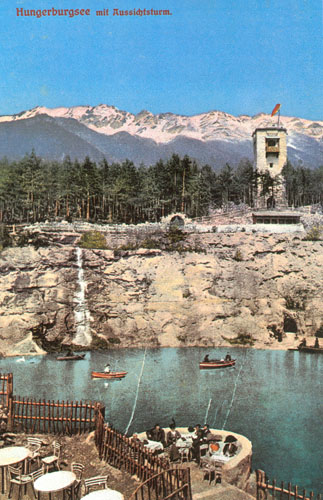
hungerburgseeIn 1912 a hotel was built up on the Hungerburg (a high plateau above Innsbruck), at the site of an old quarry. The quarry was flooded with water from the mountain spring, an observation tower was erected above the lake, and the whole thing was planned to be used as a little mountain resort, called the Seehof.

After the First World War and the fall of the Monarchy,  the Seehof fell into the hands of the Social Democratic Workers Party, who used it as a summer school for children from working-class families. Hundreds of local children learned to swim here during those years.  In 1934 the Social Democratic Workers Party was outlawed, and the Seehof came to be owned by another party, the Väterländische Front. Later it was used as housing for Hitler Youth and in 1940 it was sold to the NSDAP. But the lake had disappeared by then — its supply was shut off when water became scarce in the 1930s and had to be rerouted to residential areas.

1912 wurde ein Hotel auf der Hungerburg (ein Hochplateau  am Fuß der Nordkette, über Innsbruck) eröffnet, im ehemaligen Steinbruch. Der Steinbruch wurde geflutet, ein Aussichtsturm errichtet, und das ganze Areal wurde als Kurort geplant, Seehof genannt.
Nach dem ersten Weltkrieg kam der Seehof zur Sozialdemokratischen Arbeiterpartei, und kurz danach wurde er als freie Schule für Kinder aus Arbeiterfamilien verwendet. Laut “Tip” haben im Badesee zu dieser Zeit hunderte Innsbrucker Kinder das Schwimmen gelernt.
In 1934 wurde die SDAP verboten, der Seehof wurde der Väterländischen Front zur Verfügung gestellt. Später war er eine Herberge für die Hitlerjugend, 1940 an die NSDAP verkauft. Der See verschwand aber 1937, da Wasserknappheit herrschte und der Zufluss unterbunden wurde.

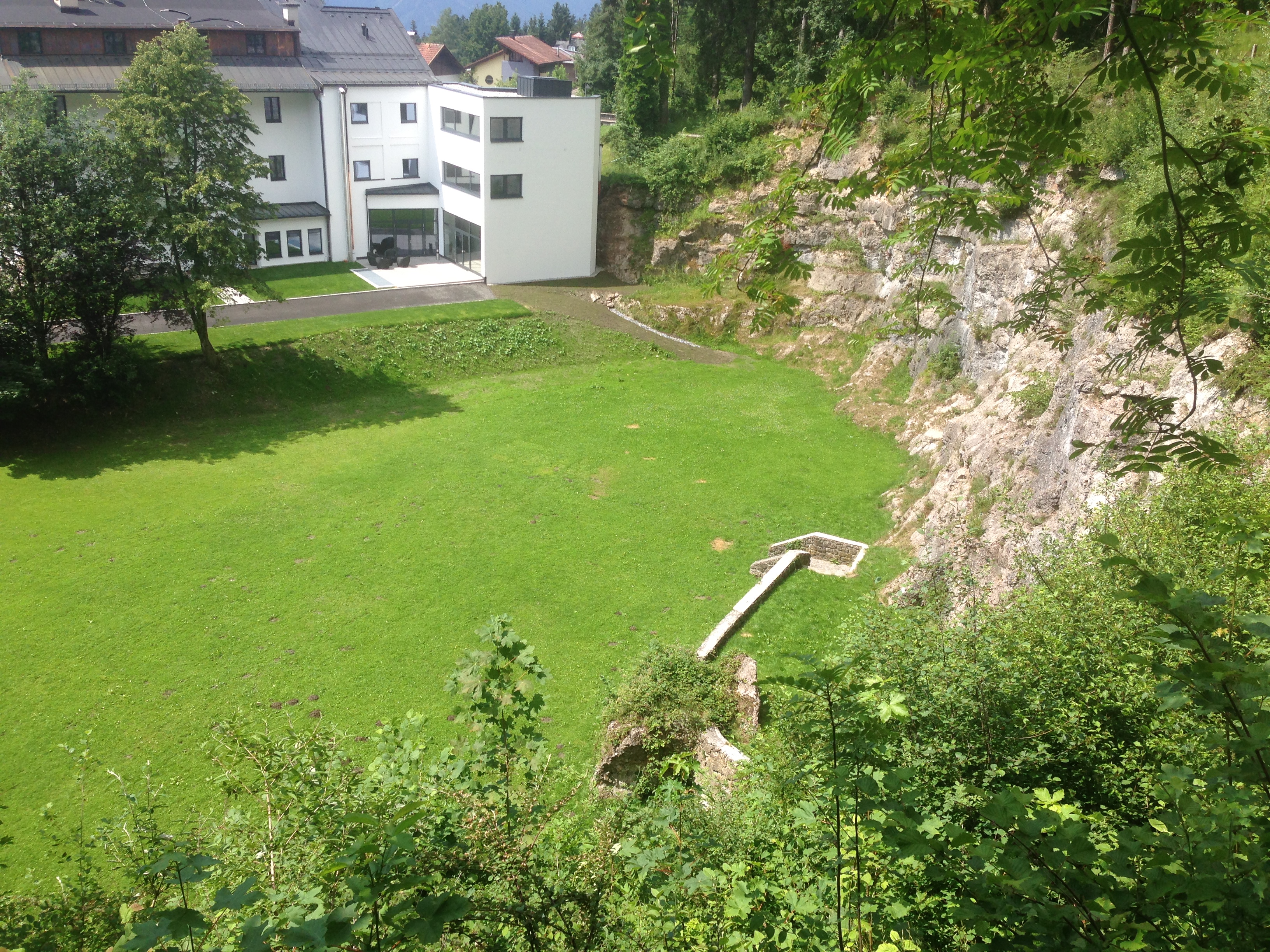
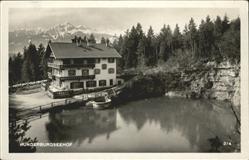
SeehofIMG_0646Then and now: from almost the same vantage point. Below: the observation tower is still standing, but of course the area is private property and fenced off from random visitors. One can walk right up to the back of the tower, however.

Damals und heute, vom fast selber Aussichtspunkt. Der Turm steht noch, ist aber abgezäunt.

IMG_0639Since 1951 the property has belonged to the Arbeiterkammer (Austrian Chamber of Labour) and after a few renovations the building is now a thoroughly modern training center with conference rooms and the like. But sadly it seems the lake is gone forever.

Seit 1951 befindet sich das Grundstück in der Hand der Arbeiterkammer, und nach einige Renovierungen ist es jetzt eine ganz moderne Schulungsstätte. Leider ist der See für immer verschwunden.

Upper images found here

Pagans In Tirol: The Medicine Woman from the Gurgl Valley

IMG_0632

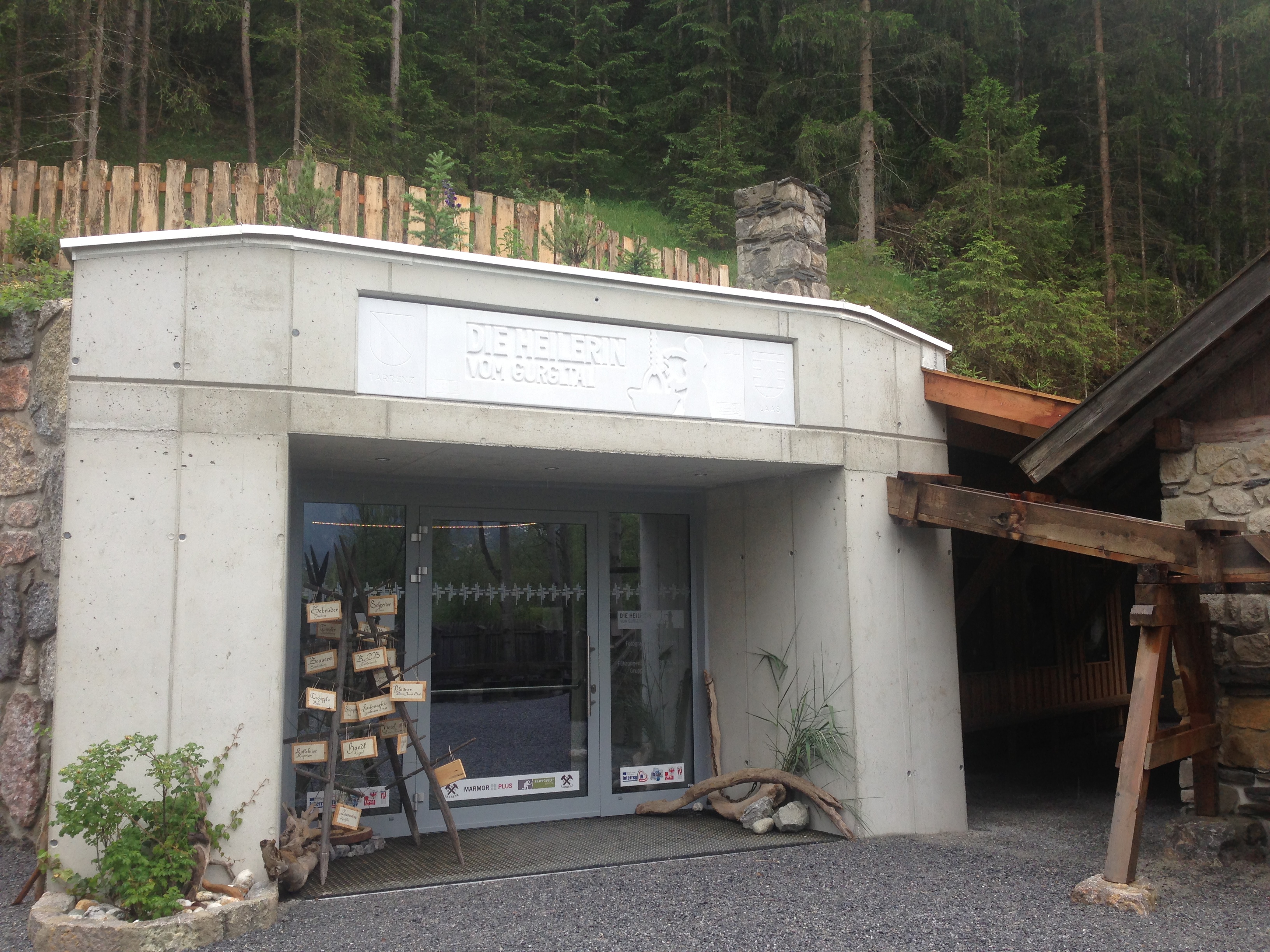
I persuaded a good friend to drive me to the village of Tarrenz (in the Gurgltal, north of Imst) to visit the brand-new museum built to house a fascinating archaeological discovery there — die Heilerin von Gurgltal, which more of less translates as the “Medicine Woman” from the Gurgl Valley. Alternately she’s referenced as being from the Strader Wald, or from the forest in nearby Strad. The story in a nutshell:

Tarrenz lies along the Via Claudia Augusta, one of the old Roman roads over the Alps. Hobby archaeologists are attracted to this area because of the artifacts that can be found along old roads. Some such treasure-hunters were combing the woods with a metal detector, and came across the first signs of something very interesting and ultimately very mysterious.

Eine Freundin fuhr mit mir neulich nach Tarrenz (im Gurgltal, bei Imst), um das nagelneue Museum der Heilerin vom Gurgltal zu besuchen. (Alternativ ist sie die Heilerin vom Strader Wald gennant.) Tarrenz liegt entlang der historische Via Claudia Augusta, ein Ziel für Hobbyarchäologen, wegen der Menge von Artifakten, die man neben alten Strasse finden kann. Ein paar solche Schatzsucher waren vor einige Jahren mit einem Metalldetektor im Strader Wald; dort stießen sie auf einen interessanten und mysteriösen Fund:

IMG_0628

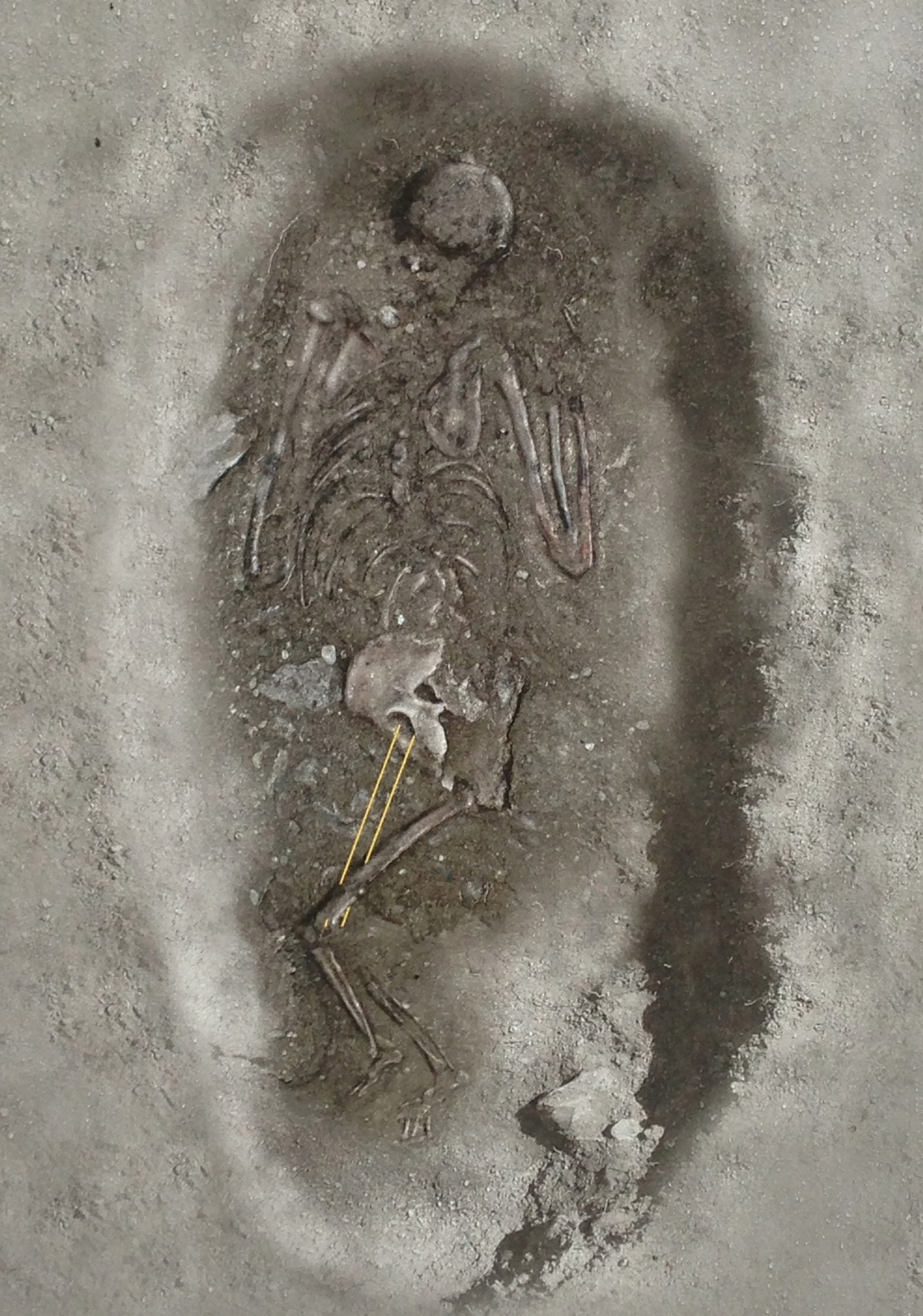
It was the grave of a woman, found lying face-down, along with a bounty of small and valuable objects — metal instruments such as scissors and keys, coins, pearls and crystals, a thimble, and — the headline-grabber —a set of metal cups used for cupping therapy. Dating places her having lived during the time of the 30 Years War, in the first half of the 17th century.

Das Grab einer Frau, in Bauchlage beerdigt, zusammen mit einer Menge kleine wertvolle Gegenstände — ihre Habseligkeiten. Eine Schere, eiserne Schlüssel, Münzen, Perlen, Kristallen, ein Fingerhut, und — meist interessant — ein Set Schröpfköpfe aus Metall. Hier der archäologische Befund. Die Frau lebte während der Zeit des Dreißigjahrigen Krieges.

IMG_0629

The circumstances don’t fit together in the usual way. She was buried quite far from the cemetery. A foreigner? A suicide? Possible Jenische*? She had, much like Ötzi did, her whole “professional kit” with her. Added to her grave as a kind of honor? Or thrown into it in a hasty burial? Then there’s the “face down” business, which normally is found to have been the custom for criminals. But she clearly hadn’t been executed as a witch, not with all those valuables in the grave with her, even though witch trials were very much in at the time.

Die Sachen passen nicht zusammen wie erwartet. Die Frau wurde ziehmlich weit weg vom nächsten Friedhof begraben. Eine Fremde? Ein Selbstmord? War sie Jenisch? Wie Ötzi, sie hatte ihre professionelle Werkzeuge dabei — wurden sie mit ihr mitbegraben, als ein Ehrenzeichen? Oder schnell hineingeworfen in Eile? Aber sie wurde gegraben mit Gesicht nach unten, wie man Kriminelle bestattete. Offensichtlich wurde sie nicht hingerichtet, sonst hätte man keine Grabbeigaben gefunden, obwohl die Hexenprozesse damals ganz in Mode war.

The museum tries to bring you in with carefully portioned experiences. First you hear  of the arts of healing as practiced in these parts, and how knowledge was handed down through generations. Then you learn about some actual cases from Tirol which involved persecutions due to superstition and fear. The antisemitic source — and consequences — of Anderl of Rinn is an example used.

Das Museum führt den Besucher vorsichtig in kleinen Etappen ein, vermutlich für die sehr junge Besucher. Man lernt von Heilkunde und wie das Wissen von Generation zu Generation übergeben wurde. Dann wird man gelehrt über wahre Öpfer von Aberglaube und Angst in Tirol, zum Beispiel die antisemitische Ursprung — und Folgen — der “Anderl von Rinn” Geschichte.

You are then ushered into to larger room to watch a short film combining the facts of the find (given by the head of the archaeology department at the University of Innsbruck, Professor Harald Stadler) with a dramatized version of what might have happened, using locals as actors. Their version involves a heathen midwife, banned from the community and the church (same thing back then) but nevertheless needed and called whenever someone got sick. A stillbirth is enough to have the villagers accuse her of witchcraft, and then tempers get hot, someone (guess who) gets killed, and a hasty, fearful burial is carried out in the forest. Entirely plausible — although often the truth is a lot more boring (she died of illness, her outsider travelling companion(s) buried her as best they could, and moved on?)
After the film ends, you finally get to see the skeleton and the artifacts, laid out under glass with plenty of information about their provenance and uses. The tour guides — a husband-and-wife team — are very much involved in the project and were able to answer questions in depth.

Man kommt dann in einer Halle und ein Kurzfilm läuft. Archäologische Details (von u.a. Universitätsprofessor Harald Stadler) alternieren mit einer Dramatisation von der Geschichte — also, was hätten passieren könnte — mit einheimische Mitwirkenden. In ihrer Fassung, ist die Frau eine Außenseiterin, eine heidnische Hebamme und Heilerin, aus der Gemeinde verbannt, dennoch in Krankenfälle immer wieder gerufen. Ein Totgeburt führt zur Vorwürfe von Hexerei, die Frau getötet und in Angst und Eile im Wald begraben. Alles schon möglich — obwohl die Wahrheit ist oft weniger interessant.
Dannach darf man den Skelett samt Artifakten (in Vitrinen) -endlich- sehen. Die Führer — ein Ehepaar — sind im Projekt involviert und konnte viele Fragen reichlich antworten.

If you go: the Museum der Heilerin von Gurgltal; is located within another, outdoor museum called Knappenwelt, which is a recreation of a small mountain mining industry from the olden days. You can buy a ticket for either, or in combination. Drive to Imst and then north on the 189 toward Fernpass. It’s trickier if you don’t have a car, but apparently this tourist shuttle will get you there from “downtown” Imst to the Knappenwelt. You’ll still have to walk from the Imst station, which is a bit removed from town.

Anfahrt: das Museum befindet sich in der “Knappenwelt”, ein Freilicht Museum. Von Imst kommt man mit dem Strasse Nr. 189 richtung Fernpass nach Tarrenz. Ohne Auto wird’s schwieriger, aber wenn man in Imst von Bahnhof ins Zentrum geht, findet man den Bummelzug “Bummelbär”, der macht einen Tour von Imst nach Strad mit Zwischenstops.

*Jenische is a name used for a certain nomadic people in Europe. They are not related to the Roma or Sinti — in fact they may not be an ethnic group at all but fall under the generic category “gypsy”.  Wikipedia likens their language to Cockney.

Lanser Kopf

The Lanser Kopf (“Lans Peak”)

 is  a rocky outcropping atop a wooded hill called the Paschberg, situated between Innsbruck, Austria, and the village of Lans. It sits just under 300 meters above the city, and a hike to the top can be done in about an hour.  It is one of the few lower hilltops which has not, to my knowledge,  been previously excavated.

Übernommen aus einem kürzlich verfassten Beitrag für einen Archäologie Online Kurs an dem ich teilnehme.
Der Lanser Kopf liegt auf dem Paschberg, zwischen Innsbruck und der Dorfgemeinde Lans, knapp 300 Meter über der Stadt, wovon man in ca. eine Stunde eine gemütliche Wanderung machen kann. Er ist eine der wenigen Mittelgebirgsebenen in der Gegend auf der man, so weit ich weiß, keine archäologischen Ausgrabungen durchgeführt wurden.

970259-51b733d484b3e5.86591292Innsbruck, Paschberg/Lanser Kopf, Patscherkofel (2246 m)

One of the most interesting things about the Lanser Kopf is that there are multiple of evidences of use over time. Schalensteine (rocks with cup markings) can be found on the lower slopes. Unfortunately it is impossible to date them. It is suspected that there may also be markings in the rocks at the peak, but these are partially covered with trees, earth and concrete. The concrete, poured in the middle of the last century, holds park benches and a marble table, and also makes up two WW2 Two flak circles. The circles were abandoned at the end of the war, and now have trees growing inside them.

Eine Besonderheit des Lanser Kopfs liegt in seine vielseitige Nutzung im Laufe der Zeit. Auf dem niedrigeren Hang findet man Schalensteine, die leider nicht datierbar sind.  Man vermutet, dass man oben an der Spitze auch Schälchen finden könnte, wenn die Steine nicht mit Erde, Bäumen und Beton verdeckt worden wären.  Der Beton wurde in der Mitte des vorigen Jahrhunderts am Kopf gebracht, um Parkbänke und eine runden Marmortafel zu befestigen, und wurde auch im zweiten Welzkrieg für die Herstellung von zwei Plattformen für Fliegerabwehrkanonen (FLAK-Kreise) verwendet. Bäume wachsen jetzt in den leer stehenden Kreisen.

970259-51b73492ce0f95.32446165Two WW2- era flak circles at the Lanser Kopf.

The earliest humans artifacts found in this region date back to about 30,000 BCE . Evidence of Bronze Age and Iron Age settlements have been discovered on other nearby hilltops, including stone residential terraces (Hohe Birga, Himmelreich), and sacrificial burning sites (Goldbichl, Bergisel.)

Die älteste prähistorische Artefakte aus dieser Gegend datieren auf 30,000 v. Chr.  Neolithische Siedlungen hat man an naheliegenden Hügeln entdeckt, Steinterrassensiedlungen (Hohe Birga, Himmelrich) und auf Brandopferplätze (Goldbichl, Bergisel).

As far as I know, the Lanser Kopf was not used for anything in the Modern Era — with the exception of the wartime use — other than as a place to rest while hiking. There is no obvious evidence of it having been used for farming or settlement. However, it’s use in the last century as a strategic point for sighting enemy planes and firing missiles at them certainly would have roughed up the area somewhat, since it can been assumed that military jeeps or trucks would have been driven at least to the plateau just below the flak circles, and the construction of the circles themselves would have affected any older formation processes.

So weit ich weiß hatte der Lanser Kopf in der jüngeren Geschichte, außer während der Kriegszeit, nie eine besondere Funktion. Es gibt dort keine offensichtlichen Anzeichen von Siedlung oder Landwirtschaft. Er diente als Rastplatz für Wanderer.  In den Kriegsjahren war die Gegend mutmaßlich von LKWs und Jeeps überrollt, und die Herstellung der FLAK -Kreise hätte ältere Spuren zerstört.

This, however, brings forward another question — which kinds of artifacts does one wish to find? There may well be modern(ish) war artifacts in the vicinity, from either the Second World War or from the battles against Napoleon’s troops in 1809. There may be man-made objects just below the surfaces. 
But could be there also be older signs of human settlement below the flak circles? One would unfortunately have to destroy them in order to see what lies below. And while the concrete flak circles may not be of much interest to people today, I find it important that they remain, as an historical testament to Innsbruck’s war involvement in the 1940s. I find that it would not be worth it to remove them in the search for earlier artifacts. The earth-covered level area just below them, however, would be a worthy site for excavation, indeed if such work hasn’t been done already.

Das alles wirft eine Frage auf:  Welche Artefakte erwartet man zu finden? Es gibt wahrscheinlich schon genug Kriegsartefakte aus dem zweiten Weltkrieg oder, weiter zurück, vom Tiroler Volksaufstand in 1809.  Könnten prähistorische Funde direkt unter den FLAK-Fundamenten liegen? Man müsste diese aber zerstören, wenn man dort richtig graben will. Obwohl sie heutzutage wenige Leute interessieren,  würde ich lieber sehen, dass sie intakt bleiben, als historische Zeitzeugnisse der Kriegsjahre Innsbrucks. Hingegen läge auf der kleinen Ebene etwas unterhalb der kreisförmigen Fundamente eine angemessen Stelle für eine Ausgrabung, wenn nicht solche schon durchgeführt wurden.

From evidence gathered by archaeologists, pre-Roman-era settlers in Tirol greatly preferred the high plateaus and hilltops between the Inn (swampy floodplain) and the mountains (rocky, barren). This middle ground was probably ideal for hunting as well as providing safety. Since the arrival of the Christian missionaries in the Middle Ages, many of those hilltops have been adorned with chapels. It has been speculated  that these  chapels might be sitting atop the remains of pre-christian structures, and often successful excavation work has been done in their immediate vicinity.  If such an excavation were done on the Lanser Kopf, one might look for pre-historic arrowheads, ceramics, stone objects, weapon depots and offerings (of which there are many in the Alps) or sacrificial burning sites, all of which have been found elsewhere in the region.

Aus archäologischen Befunden in der Region wissen wir, dass viele vorrömische Siedlungen in den Mittelgebirgen eingerichtet wurden, wo die Ureinwohner mehr Sicherheit und bessere Lebensqualität vorfanden. Seit der Ankunft christlicher Missionare im Frühmittelalter, sind viele dieser einigermaßen höheren Stelle mit Kapellen geschmückt.  Man könnte vermuten, dass manche dieser Kapellen möglicherweise auf Resten von früheren, vorchristlichen Bauwerke stehen, und tatsächlich hat man neben solchen Kapellen erfolgreiche Ausgrabungen durchgeführt. Wenn man so eine Ausgrabung auf dem Lanser Kopf unternähme, fände man möglicherweise Artefakten wie Pfeilspitze, Keramik, Steinfiguren, Waffendepots oder Brandopferstätte, welche anderswo in der Region, auf höheren Stellen, bereits gefunden wurden.


St. John’s Day,

or Johannistag as it’s called here — the day reserved to celebrate the feast day/ birthday of St. John the Baptist — falls on June 24th. In many European countries (Austria among them) this Catholic holiday (like so many others) shares a close connection to the old Germanic Midsummer celebrations. The heathen bonfires have been adjusted to be symbols of John’s words about “fire and the spirit”, but according to Wikipedia the “old” (actually 20th-century) traditional “witch burnings” still take place as well. (In the remoter parts of Tirol these happen in February, as I wrote at the time.)

This day is also the reason that the plant Hypericum perforatum is known colloquially as Johanniskraut, or St. John’s Wort, as the plant blooms and is harvested around this day. The herb is very popular in German-speaking countries as an over-the-counter treatment for mild depression.

For farmers, vegetable gardeners and gourmets,  Johannistag means the official end of the asparagus season, although unusual spring weather can alter it. The reason for the early end is that the plants need a rejuvenation period.

I missed the bonfires completely this year.

Johannistag wird er hier genannt – der Feiertag / Geburtstag Johannes des Täufers fällt auf den 24. Juni. In vielen europäischen Ländern (darunter Österreich) hat dieser katholische Feiertag (wie so viele andere) eine enge Verbindung mit der alten germanischen Sommersonnenwende. Die heidnischen Lagerfeuer wurden von den Symbolen des heiligen Johanns (Feuer und Geist) in gewisser Weise vereinnahmt, aber laut Wikipedia werden die „alten“ (tatsächlich erst im 20 Jahrhundert gebräuchlichen) traditionellen „Hexenverbennungen“ ebenfalls noch in dieser Zeit veranstaltet. (In abgelegenen Teilen Tirols findet dieser Brauch hingegen im Februar statt, wie ich vor einiger Zeit berichtet habe)

Dieser Tag ist auch der Grund dafür, dass Hypericum perforatum gemeinhin bekannt als Johanniskraut ist, blüht die Pflanze doch in dieser Zeit. Das Kraut ist im deutschen Sprachraum sehr beliebt als Hausmittel gegen schwache Depressionen (und Menstruationbeschwerden; Anm. des Übersetzers)

Für Bauern, Gemüsegärtner und Gourmets markiert der Johannistag das offizielle Ende der Spargelsaison, obwohl unübliche Frühlingswetter das tatsächliche Datum beeinflusst. Das frühe Ende der Spargelsaison ist notwendig, um den Pflanzen eine Pause zur Verjüngung zu geben.

Kulturblogging: Die Hofkirche

IMG_0580

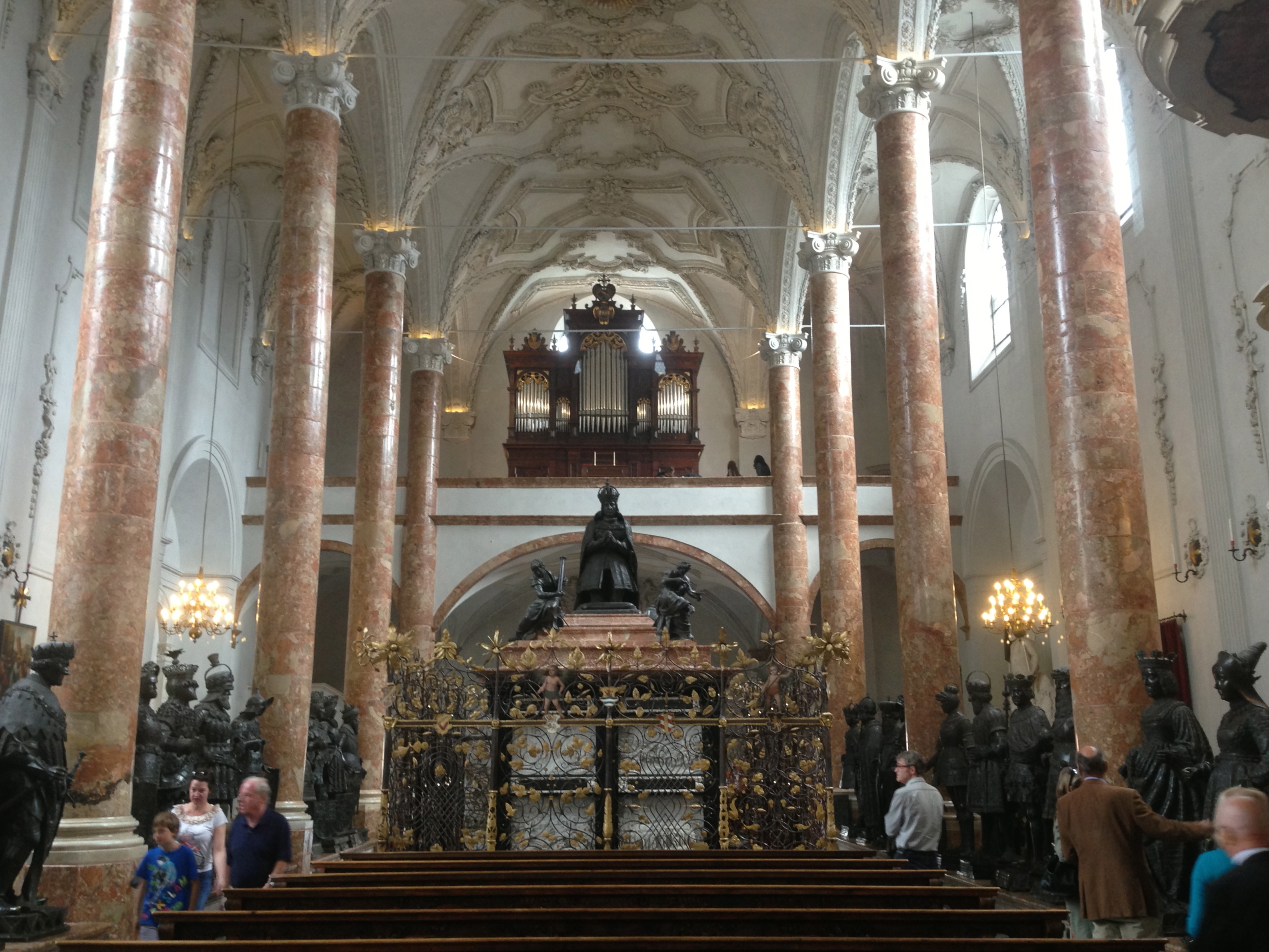
One of Innsbruck’s main attractions for the historically-minded is the Hofkirche, or Imperial Church (but no one calls it that, it’s just always the Hofkirche). As a tourist sight, the plain white exterior is deceiving (I heard it once remarked that the front facade resembles the face of a polar bear, and this pretty much pops into my mind every time I see it.) The interior, however, is impressive.

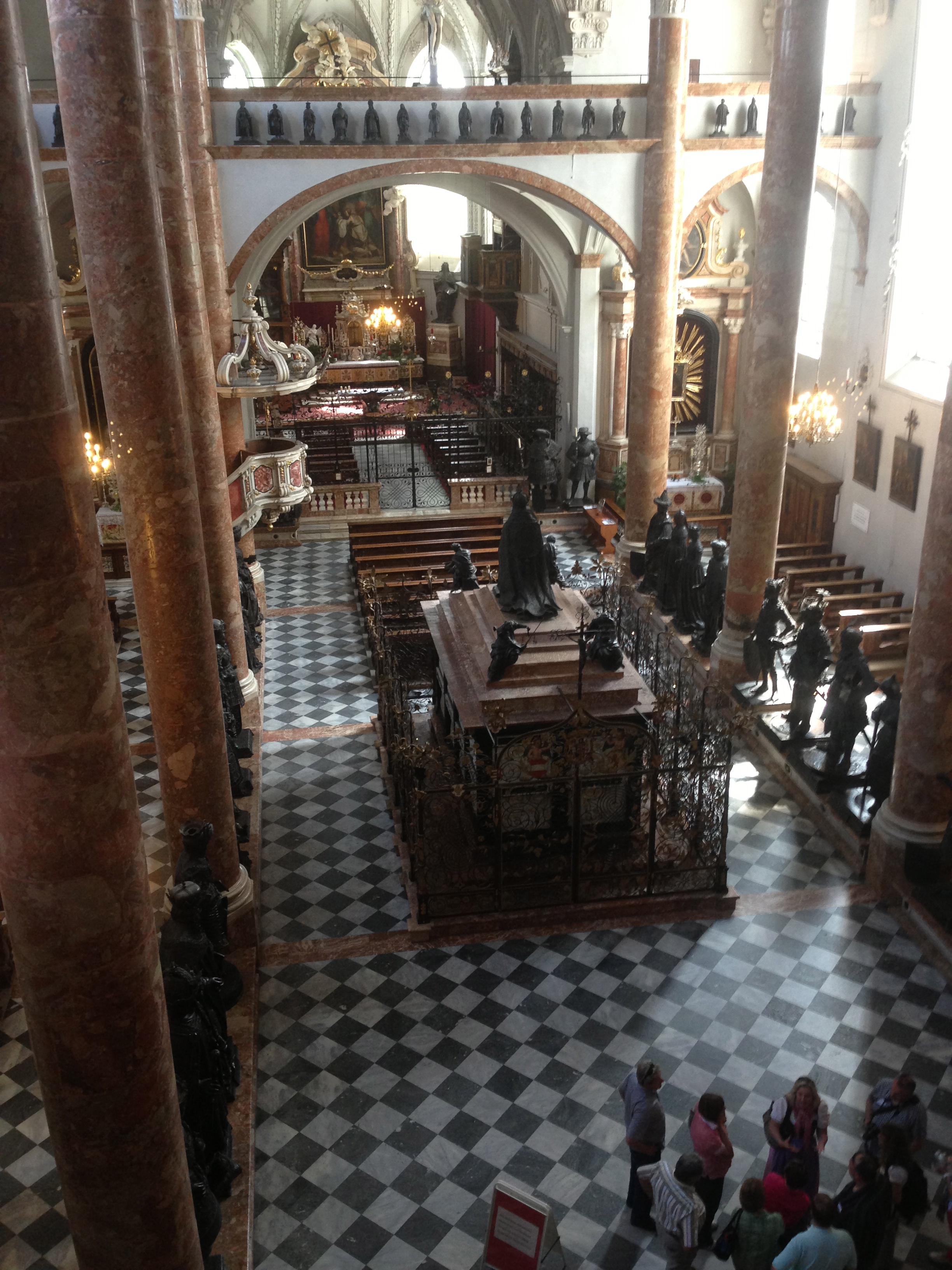
The Hofkirche was part of Holy Roman Emperor Maximillian’s last will and testament — and a beautiful sarcophagus was made for him there, although actually his remains ended up in the castle that was his childhood home, in Wiener Neustadt.

IMG_0587

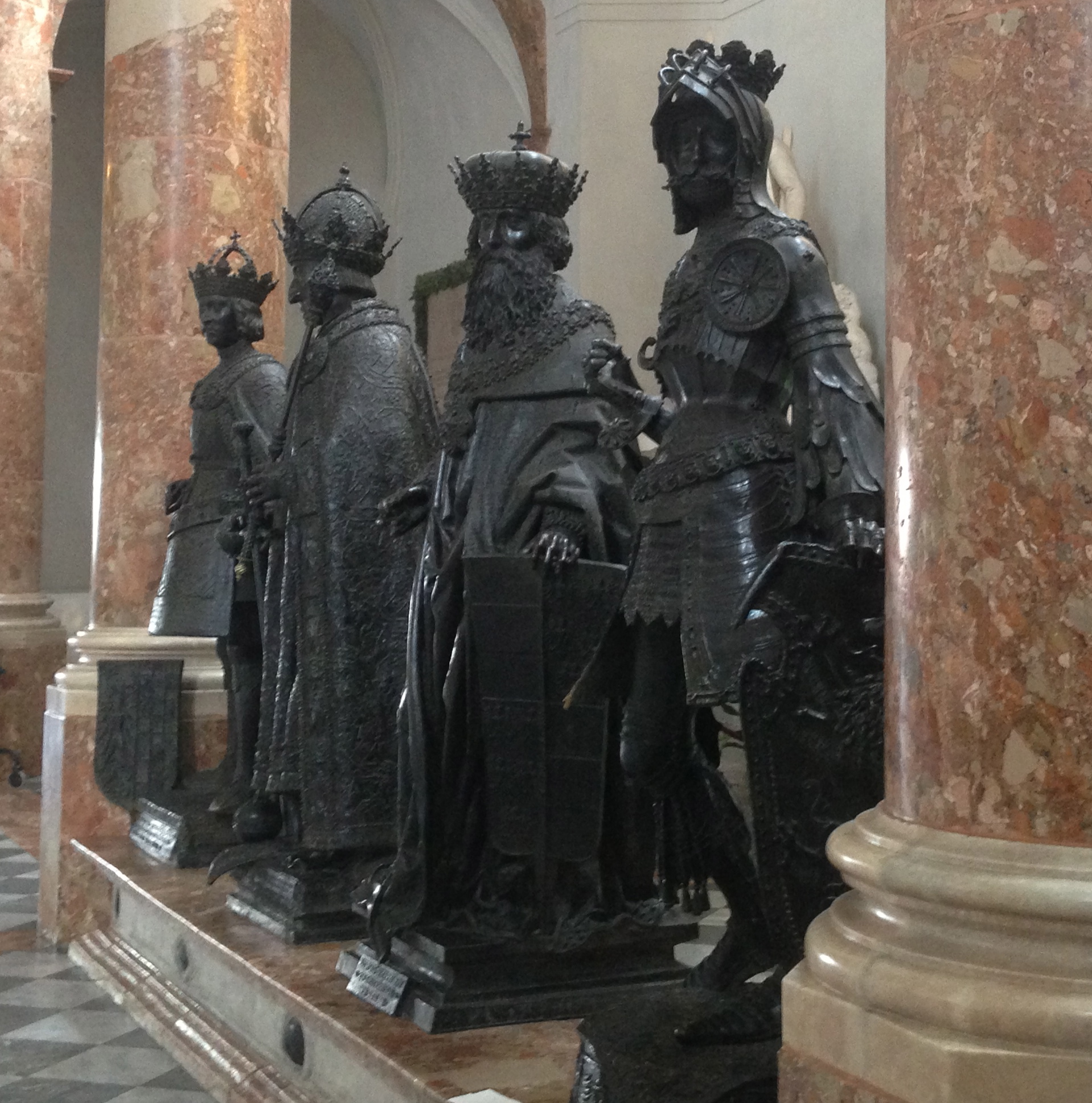
Keeping watch over this empty sarcophagus (which makes it a cenotaph) are two lines of life-size bronze statues commonly referred to locally as die schwarzen Mander (“the black men”), although they are neither all males nor even black, but more of a beautiful, deep dark chocolate brown.

IMG_0589

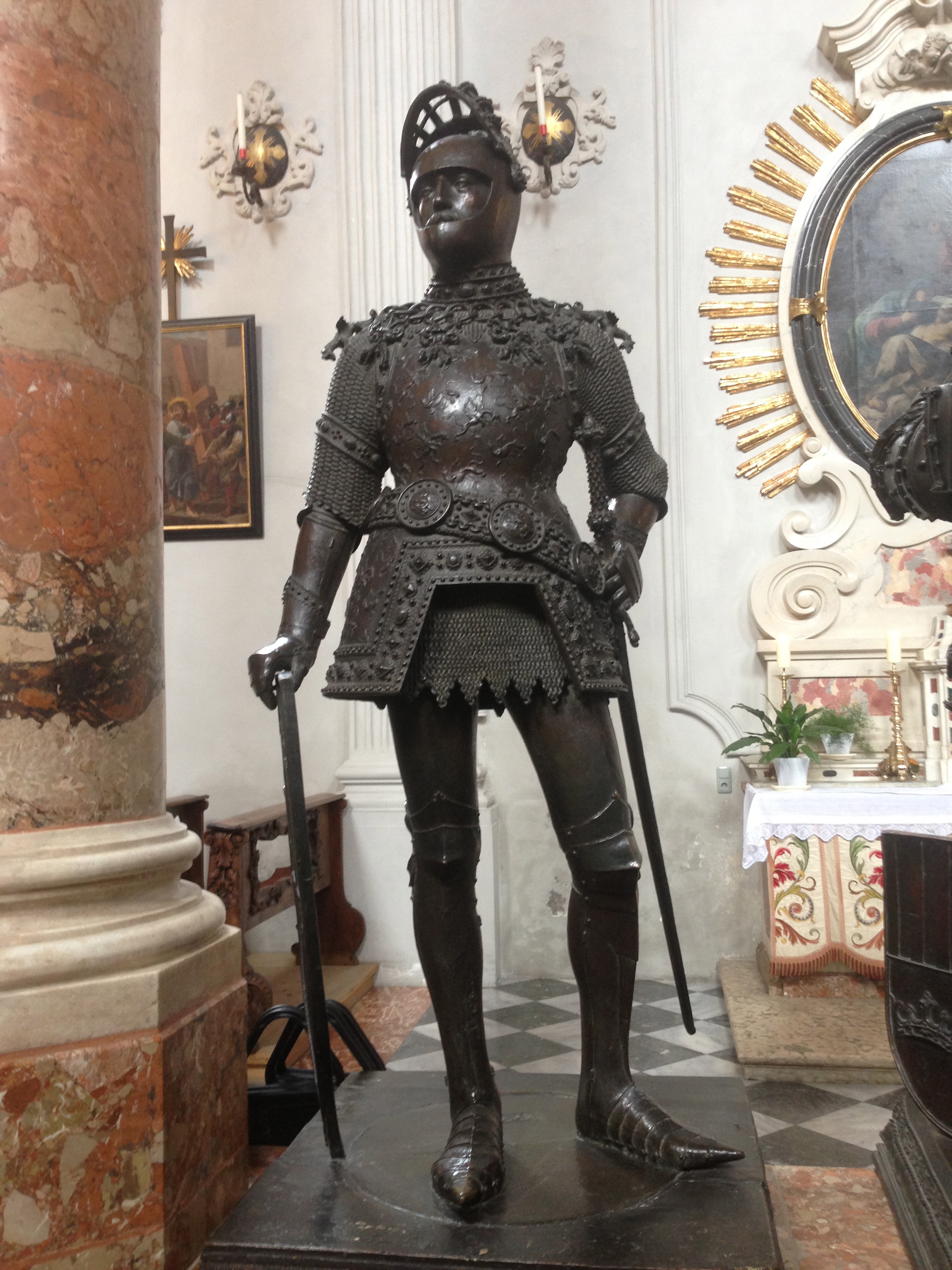
The English Wikipedia entry for the Hofkirche describes these figures as being of “ancestors, relatives and heroes”, which is the best way of putting it. They are all titled, some go way back into the early Middle Ages (Clovis I, Theodoric), and the existence of one is now questionable (King Arthur, although he was surely assumed to have been an genuine person in Maximilian’s time.)

IMG_0583King Arthur’s statue in the Hofkirche


IMG_0585

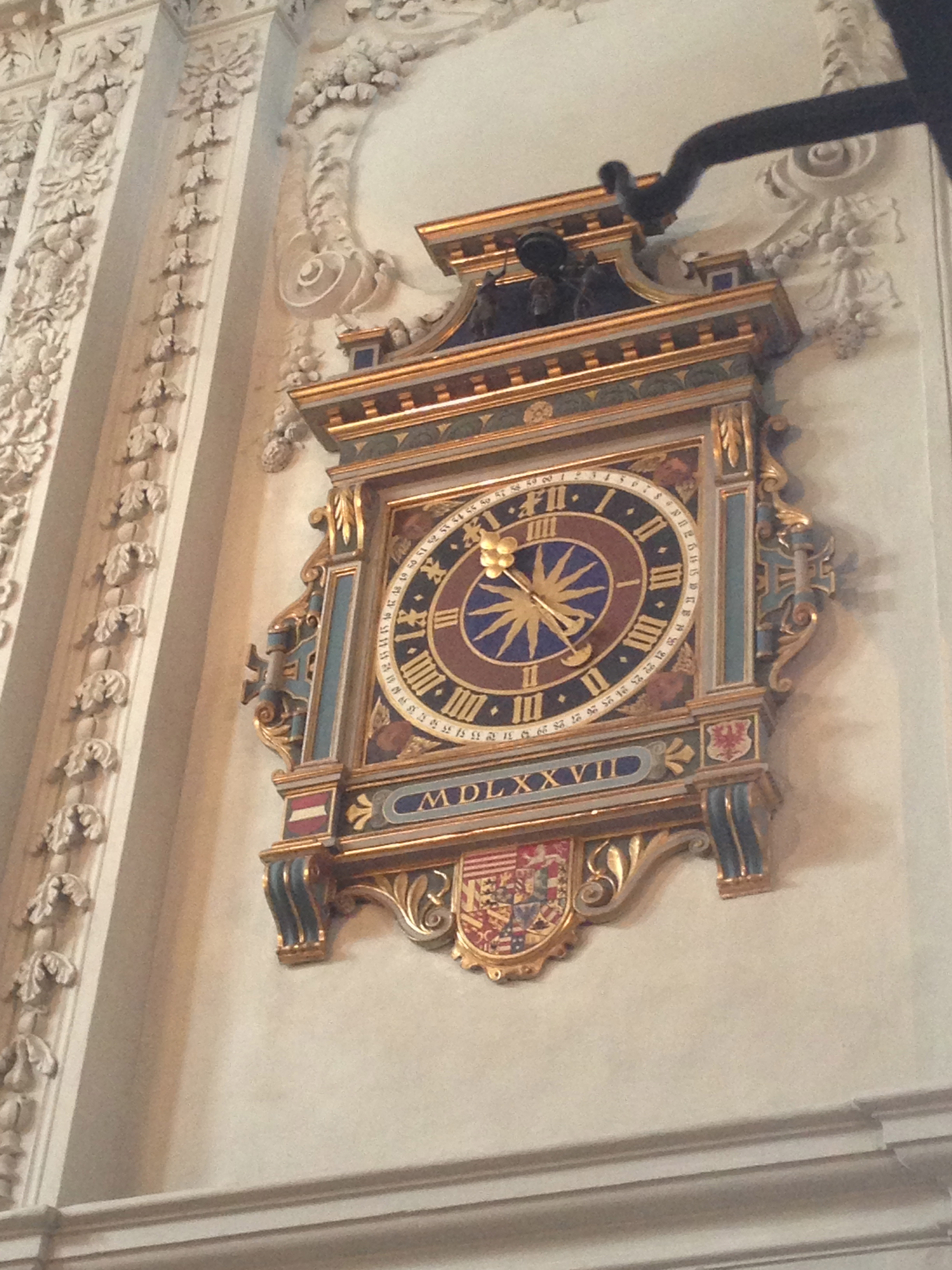
I always found the large old clock high above the altar in Innsbruck’s St. James Cathedral a nice touch if a little unusual (do you really want your flock to be checking the time during the mass?) but the Hofkirche goes one better with a charming little clock which chimes the hour, as well as each fifteen-minute interval. This morning I had the honor of participating in a special Sacred Heart Sunday mass, which has special meaning in Tirol — in the time of the battles with Napoleon’s troops (see Andreas Hofer), promises were made that, in return for divine intervention on the battlefield, official masses would be celebrated in the province each year. During today’s service, the little clocked chimed throughout, even making the priests stop mid-prayer to wait until the hour was rung.

IMG_0590

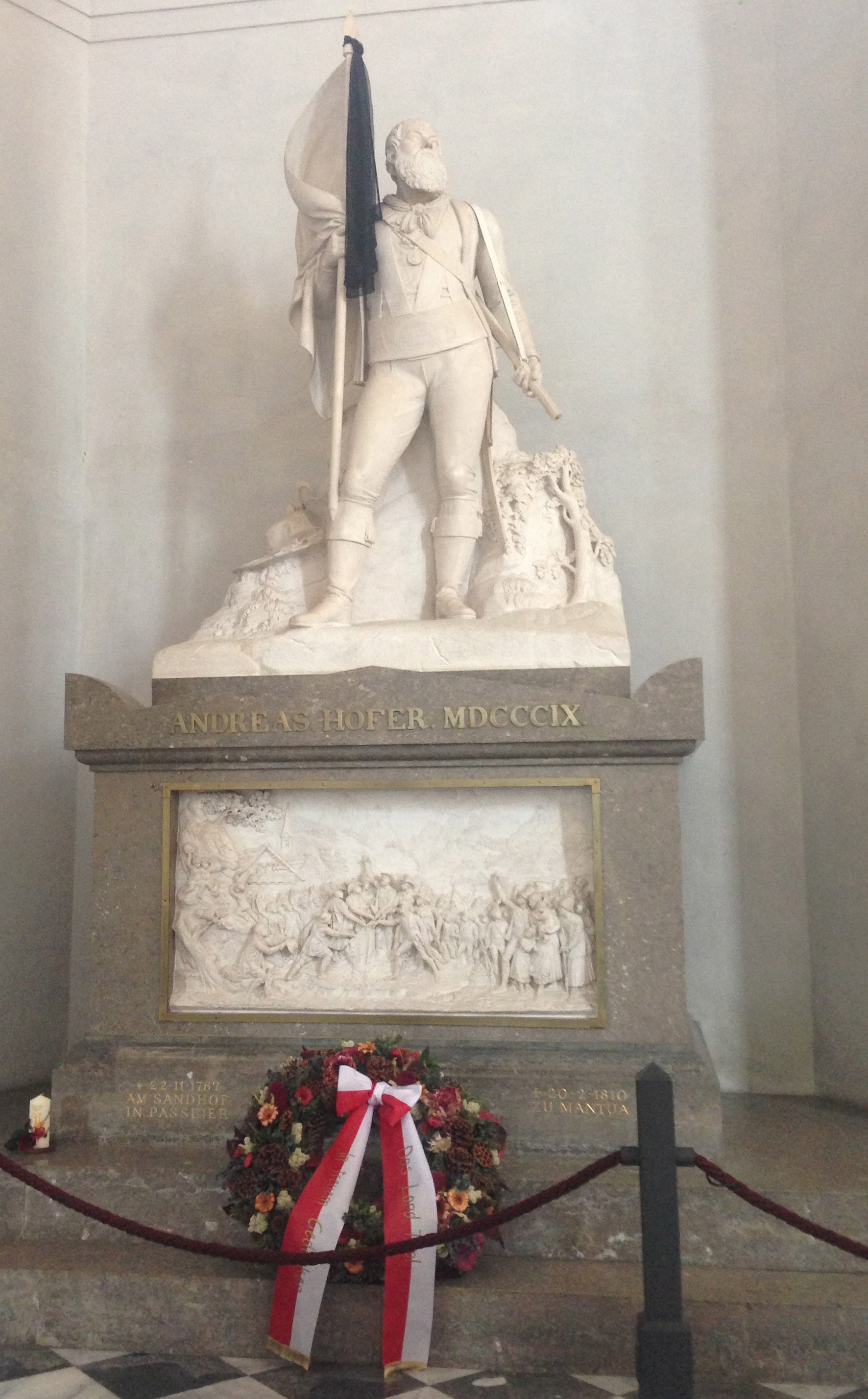
And speaking of Andreas Hofer, he’s here too. Thirteen years after his execution in Mantua in 1810, his body was brought to Innsbruck and laid to rest in the Hofkirche, where his statue guards the entrance.

Kulturblogging: Hildegard Knef

When you spend more than a couple of years in another country, you may begin to realize how much the people around you, while possibly being very much like you, grew up on different pop culture. The American entertainment industry being what it is, they are sure to know many of our well-known pop singers, film actors, athletes and the like, but underneath that they have a whole trove of memories of other famous and successful figures, may of which we Americans have either never heard of, or have forgotten, or whom we did not notice because they worked on the peripheries in the international scene (such as Susanne Lothar). We may not call them minor, because they were not. They just didn’t have a large American following. (Many might leap to the conclusion that, if you’re not big in the USA, you haven’t “made it”, to which I say, open your eyes.)

Knef

So it is with Hildegard Knef. I knew that she had done some work in Hollywood (as “Hildegard Neff”) but did not know that her handprints are there in the concrete, with those of many other stars, in front of Grauman’s Chinese Theater.

She started out by being discovered at 18, while training to be an animation artist for the UFA film studio in Berlin, by the head of that studio. A year later she was having an affair with the Reich’s Chief Dramaturg, Ewald von Demandowsky (this would be 1944). She was gorgeous, extremely photogenic, highly intelligent, and one assumes that powerful men were falling over themselves to advance her career.

In a nutshell, her career was tempestuous. In 1948 she signed a 7-year contract with David O. Selznick, wherein she was paid lucratively for English lessons and screen tests, but was cast in no roles. In 1950 (now with American citizenship), she returned to Germany to appear in the film Die Sünderin. With its taboo themes of prostitution and suicide, not to mention a brief nude scene, the film scandalized the country: protests, counter-protests, banning in many cinemas. The Roman Catholic Church in Germany protested primarily that the gist of the film resembled the infamous Nazi euthanasia propaganda film Ich klage an. Twenty five years later in America, a mercy killing could be shown in a film like One Flew Over The Cuckoo’s Nest, but coming right out of the Nazi years in Germany, it was apparently  too soon.

She began a genuine singing career with the release of her first album in 1951. Her voice is clear (if unusually low, probably from all the cigarettes) and her singing style is confident and breezy, in that speaking/singing mix that was so popular in the day, but lets out a sort of dignified containment of emotion, a way of revealing pain without the least bit wallowing in it. Ella Fitzgerald later called her “the best singer without a voice”.

Here a song in English, “Too Bad” from 1969. The person who uploaded this put together an amusing collage of internet images to accompany the song.

Ostracized in Germany from the fallout from Die Sünderin, Knef returned to Hollywood and finally got to appear in a row of films, some good, some forgettable. She was the first (perhaps still the only) German to appear in a leading role on Broadway, in Cole Porter’s Silk Stockings. On the success of her international singing career, she returned to Berlin, enjoyed the spotlight on German television appearances, had a child, battled breast cancer, wrote a few memoirs, and generally made for constant headlines in the tabloids.

Here Knef singing “Aber schön war es doch”, from a television broadcast in 1963. The song lyrics tell of bittersweet memories of a last meeting, (“but it was beautiful”), and every detail — with bench, the trees in bloom, the words he’d spoken — is lovingly remembered.


“Written off” in Germany, she fled back to Hollywood where she did some film work but never really got her foot back in the door. In the 80s she played Fräulein Schneider in the musical Cabaret at the Theater des Westens in Berlin, and in 1989 moved back to German for good, heavily in debt. In her 60s, she began to be seen as one of those living legends (as so often happens to people who manage to still be around after the dust has settled), was awarded lifetime achievement prizes, appeared on talk shows, put out a (very successful) album of songs. In 2001 she got her German citizenship back. In 2003, she died of pneumonia, at the age of 76, just two weeks after her last televised interview. Working — and being in demand — until the end.

Image found here.

A Belated Memorial Day Posting

I realized too late that I had this photograph in my computer, and that it would fit nicely for Memorial Day.

IMG_0350

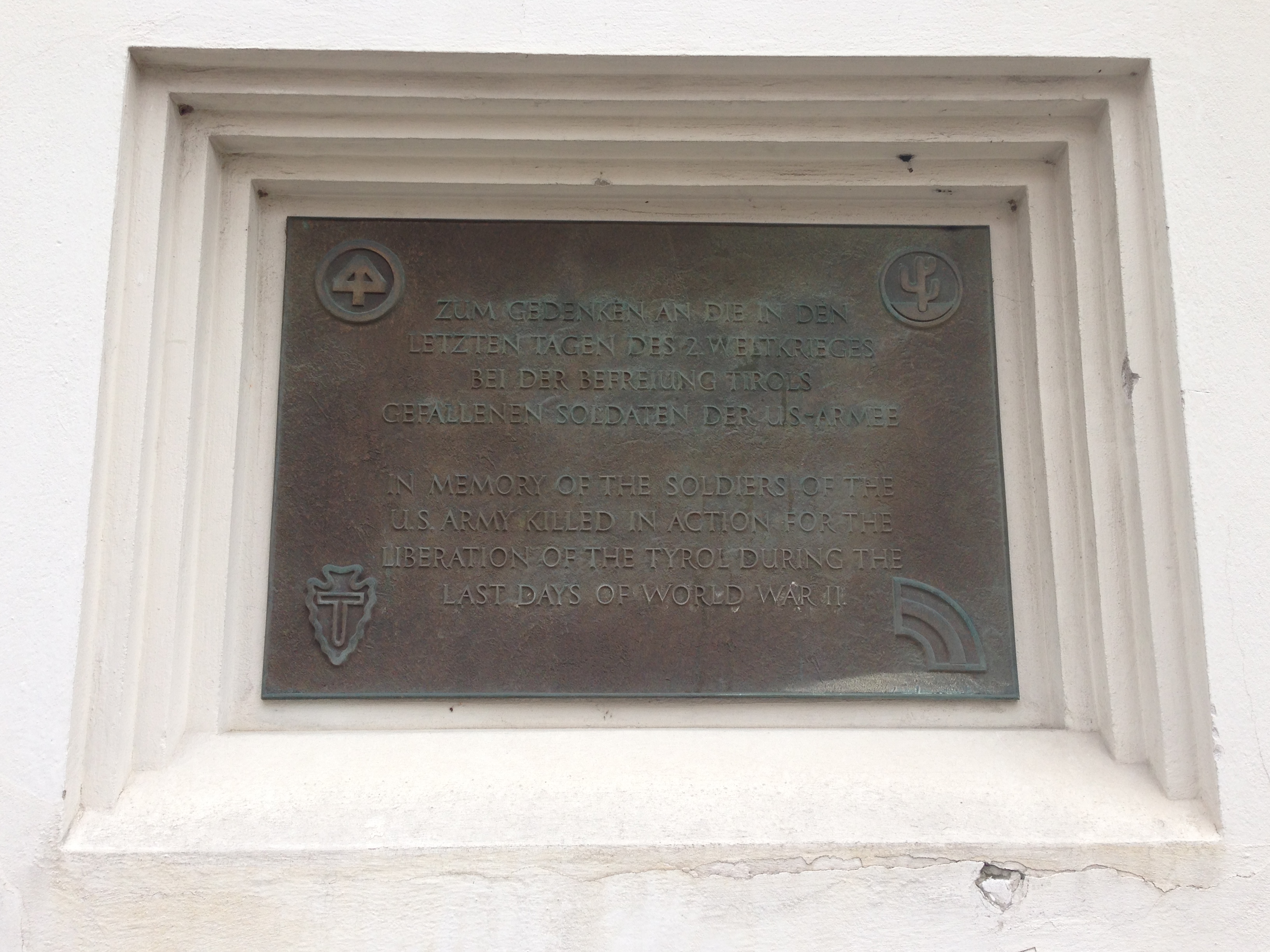
This plaque is recessed into the wall between Franziskanerplatz and the courtyard behind the Hofkirche. In my 13 years’ residence in Innsbruck, I had never noticed it, until one day I did. If you’re having trouble reading the text, it says:

Zum Gedenken an die in den letzten Tagen des 2. Weltkrieges bei der Befreiung Tirols gefallenen Soldaten der U.S.-Armee.

In memory of the soldiers of the U.S. Army killed in action for the liberation of the Tyrol during the last days of World War II.

(I don’t know what the symbols represent, I assume the service organizations who sponsored the plaque. The cactus is particularly charming.)

UPDATE: I found them! The symbols are division insignia of the US Army. Top left, 44th Infantry (a mirrored “four”). Bottom left, 36th Infantry “Arrowhead”. Bottom right, 42nd Infantry, “Rainbow”. Top right, 103rd Infantry, “Cactus”.

Susanne Lothar

daslebenderanderen_article

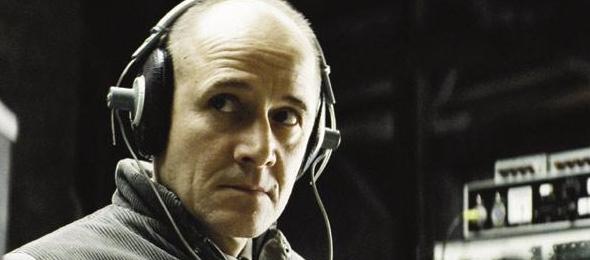
Have you seen the 2006 German film “The Lives of Others”? (Original title: Das Leben der Anderen) You may recall the wonderful actor Ulrich Mühe, who played the conflicted Stasi agent, and who died of cancer in 2007, just after the film’s release.

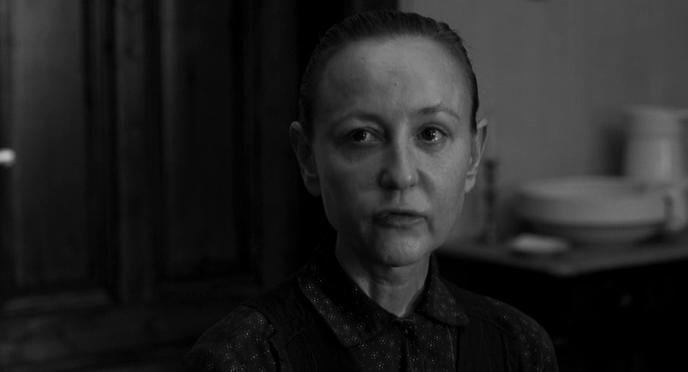
I tell you this as background to a rather sad but touching story. Last night I finally watched the whole of Michael Hanecke’s Das weisse Band (English title: “The White Ribbon”). It’s a difficult film to sit through, I found, but worth the discomfort. It’s beautifully made, and the performances are incredibly riveting.

pic_903330

I found myself looking up the cast list the next morning, as I had recognized only two or three of the actors. One whom I hadn’t known (or at least hadn’t recognized) but who had made a considerable impression on me was Susanne Lothar, who played the midwife. A little online research brought her more clearly into focus, and brought back something I had half-heard mentioned last summer. Susanne Lothar was married to Ulrich Mühe. They had met in 1990 as Mühe’s second marriage was ending (he had just come out of East Germany, and after the Wall fell all sorts of unpleasant things started coming to light, such as the fact that Mühe’s second wife had supplied information about her husband — unwittingly, she claimed — to the Stasi. When later asked how he had prepared for his role as a Stasi agent in “The Lives of Others”, he answered, “I remembered.”)

Mühe did a lot of film and TV work, but Lothar was a stage actress, the unsettling kind which one finds in the best German theaters. She had a special talent for portraying the fragile, the damaged, the soul in pain.
When Mühe became ill, they kept it to themselves. Shortly after his appearance at the 2007 Academy Awards, he underwent surgery for stomach cancer. He died on July 22 of that year.

8555571-Leute-News_Ul_1061a

On July 21 2012, just one day short of the fifth anniversary of Mühe’s passing, Lothar died. The cause of her death, to my knowledge, has never been made public. It is assumed that she took her own life. She was 51. One can imagine that she believed that five years without him had been enough.

Images found here, here, and here.

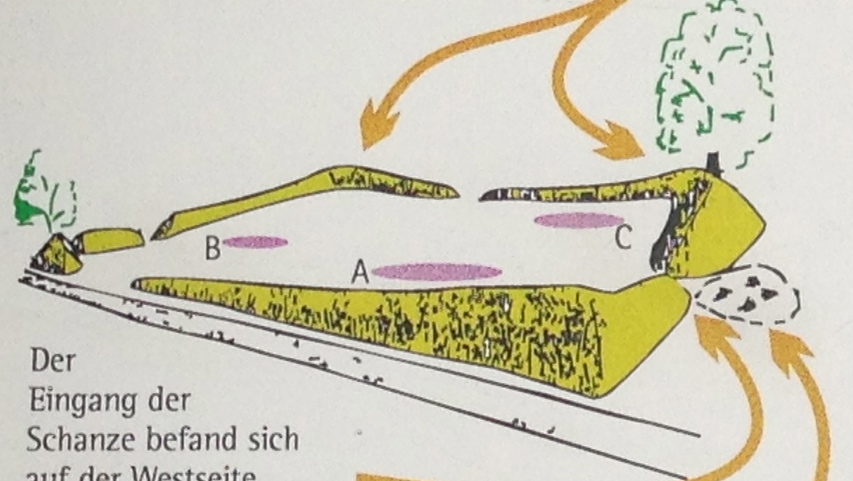
The Viereckschanze in Utting

UttingSchanze1

I previously blogged about the village of Utting am Ammersee in connection with the small, hidden cemetery for nearby concentration camp victims there. Today I have another unusual place to show you — the rectangular earthwork (Viereckschanze) in the fields just west of the village.

Uttingschanze3

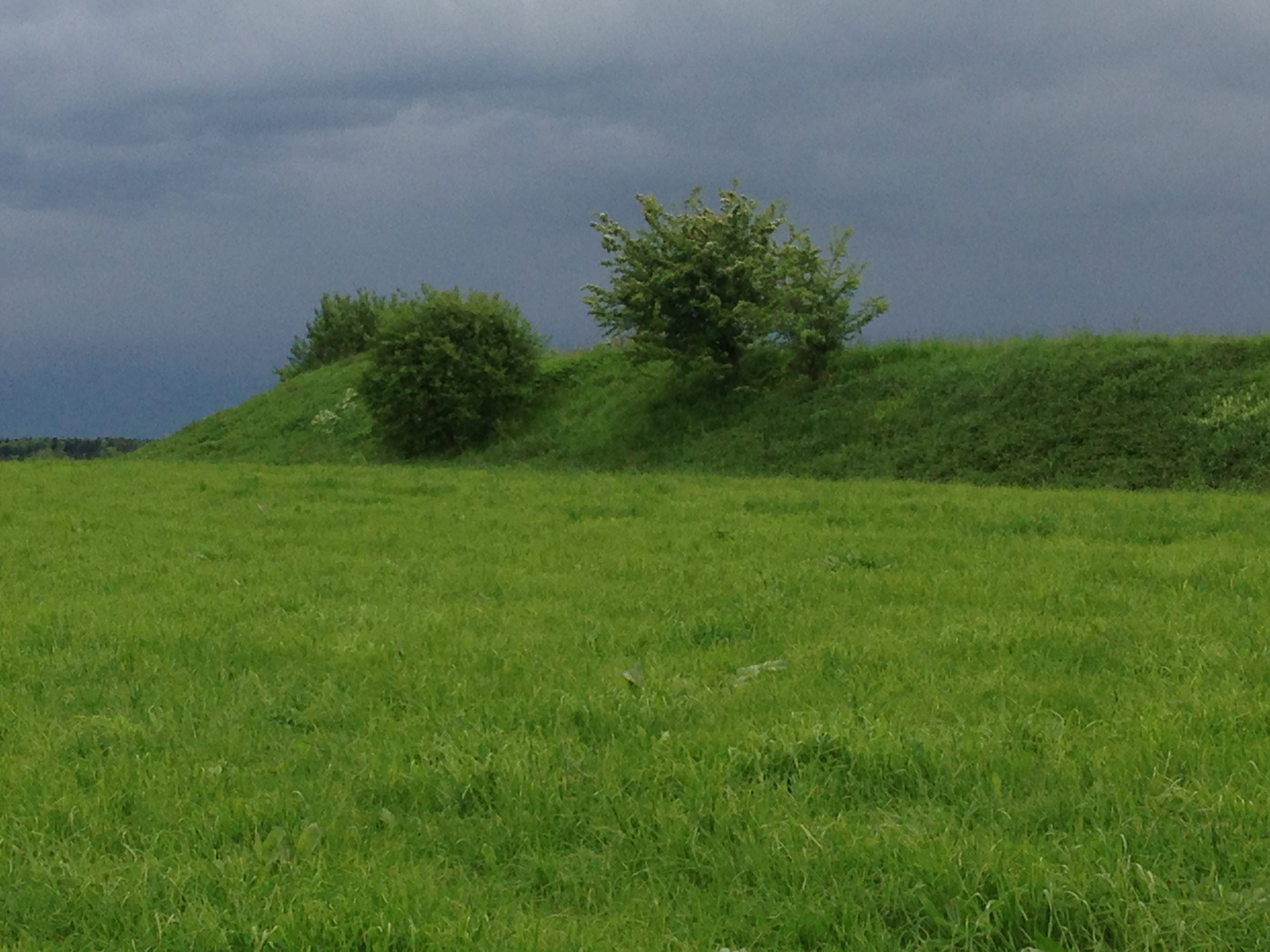
This earthwork was built around 200-100 B.C., in the late Iron Age, by the people we call Celts. According to local sources the Roman Via Raetia (laid down after 15 A.D.) passed right by here, possibly within a few meters of the earthwork.

UttingSchanze2

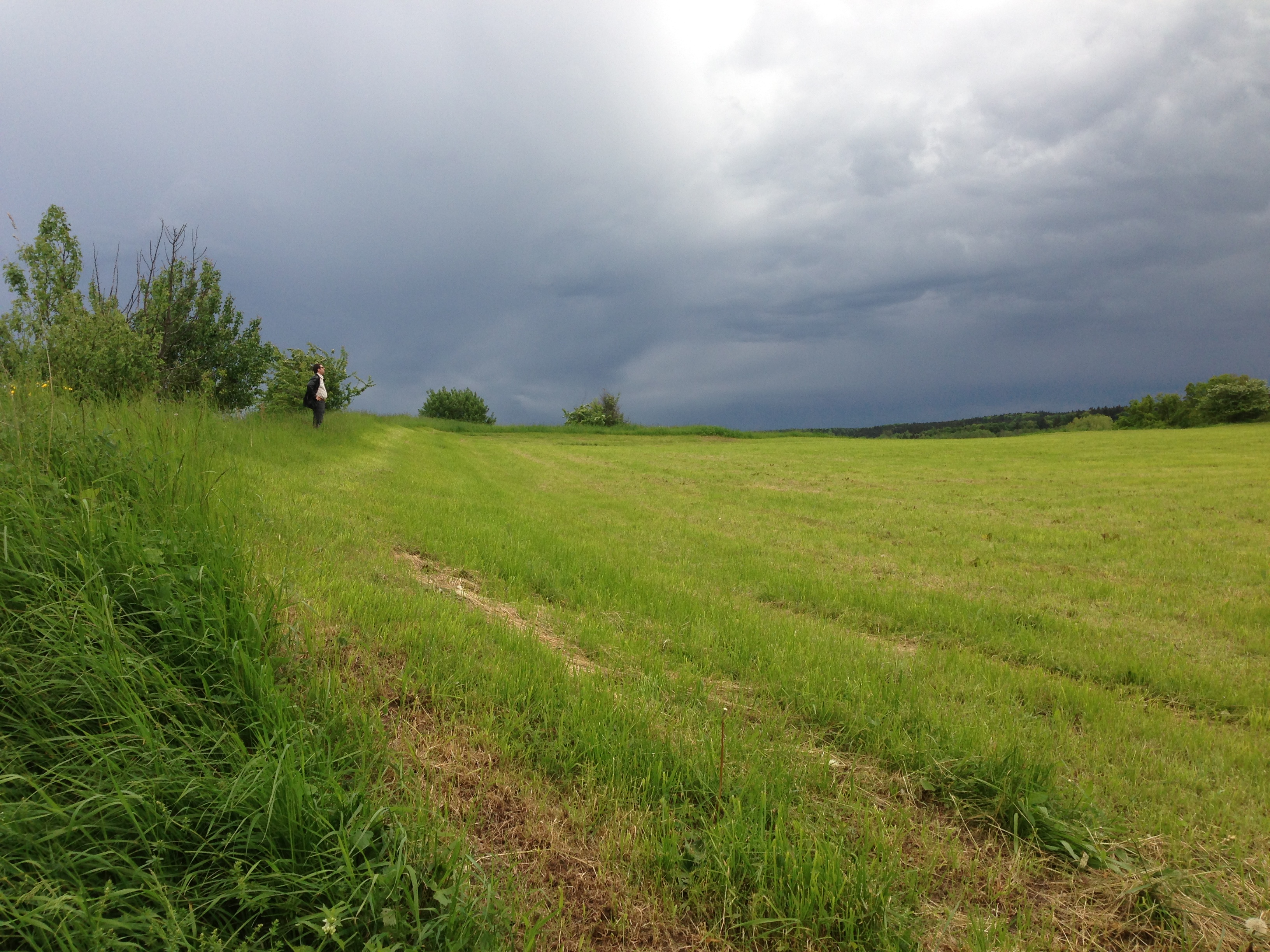
There are approximately 150 such earthworks of this kind (not including grave mounds and other types) surviving in whole or in part today in Bavaria alone. The one in Utting is one of five in the county, and an unusually large one with an inside area of 12,000 square meters.

Uttingschanze4

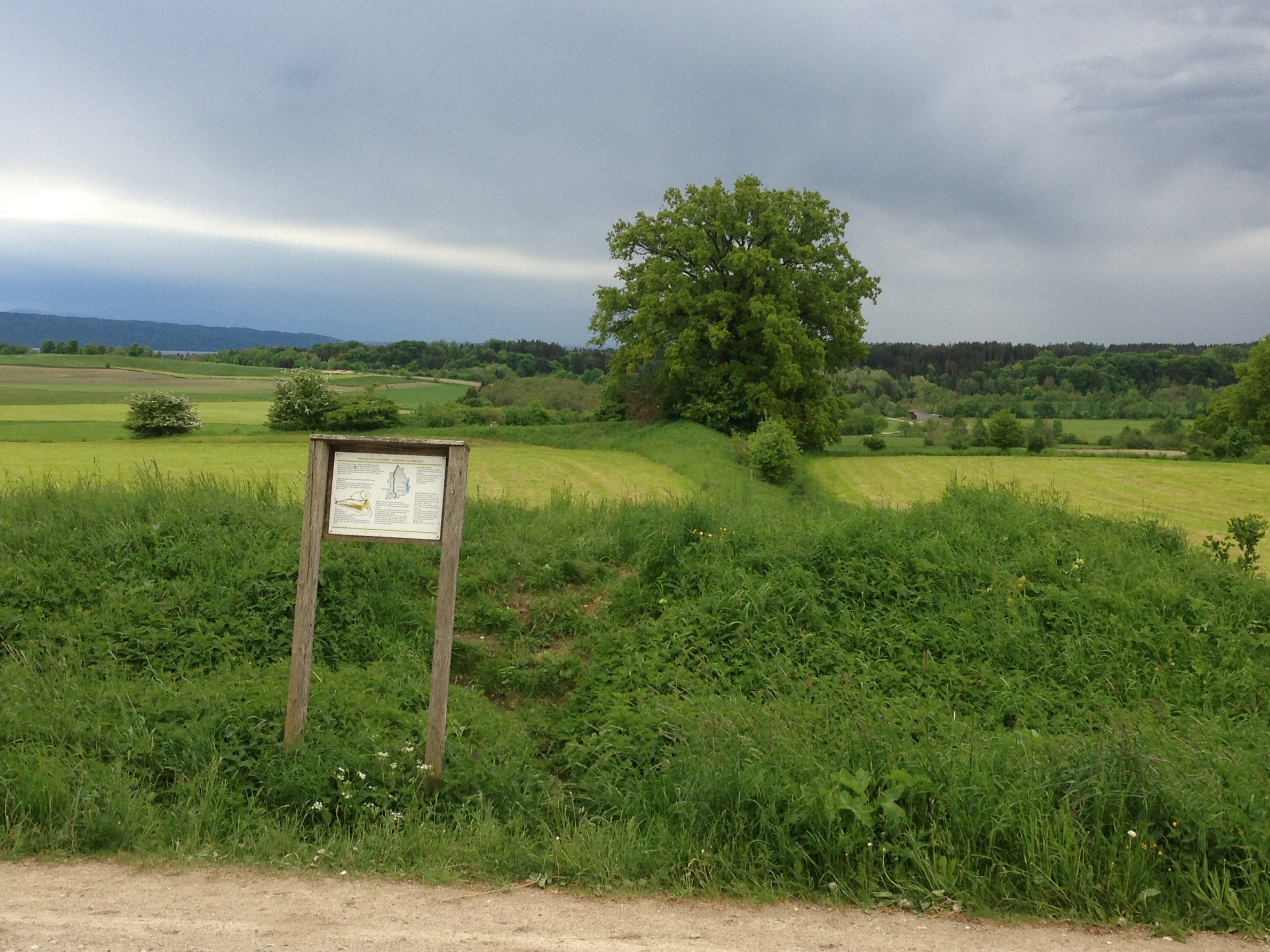
According to information given on-site, research of some kind (a divining rod is mentioned) has revealed evidence inside the enclosure of the existence of A) small buildings, B) a sacrificial site, C) a hole with wooden support walls.

I have to add here that the western side of the Ammersee, we are learning, is some kind of hotspot for the esoterically-minded, and evidently has been for quite some time, as least as early as the 1920s. The sign at this earthwork clearly reflects this, with breezy assertations that the small buildings were temples, the hole was for divining energies, that the whole thing was primarily used for “cult-religious purposes and activities, teaching and passing on of traditions, adjudication, observance of nature and the heavens.” It goes on to say that

the Celts lived in close harmony with the laws of nature. They sensed unseen active entities, forces and energies. They built their ritual sites on places with particular characteristics. These phenomena can evoke internal visions, colors, sounds or moods even today in people who are especially attuned to listening to them.

(translation mine)

Now, there may be something to the idea that people of all eras feel a certain affinity to certain places. I have come across some theories that medieval churches were built on pagan sites not just to wipe out the old gods but to capitalize on the good vibes attributed to the particular place. That’s plausible. Certainly the Celts were more in tune with the laws of nature, as were all people living at the time. But the idea that these earlier people had time to spend tuning into the universe, observing nature and digging the force fields is, to me, a bunch of hooey. Sure, this Schanze may well have included some religious purpose, in the sense that one might feel the need to pray to one’s gods while barricaded inside. These earthworks offered protection, possibly against invaders, or animals (bears, wolves, wild boars). They offered a good surveillance view of the surrounding lands. They offered safe places to keep foodstuffs and materials (leather, bone, wood) awaiting processing. Sure, the Mayans and the Egyptians built pyramids (or, better said, their kings and pharoahs made them do it.) I cannot believe  that the Celts were not too busy, just from trying to get through the winter, to expend time and energy on this sort of thing for the express purpose of being One With The Universe. Perhaps they had one Shaman who did that, and it was built for him (or her.) But then, we are back to today’s system, with a village of farmers and one parish priest. Perhaps the most powerful families maintained these enclosures, like an Iron-Age version of the Kennedy Compound. Many large farms around here have their own little chapels on their grounds (in fact you can have one built these days — we watched one go up in Eching, passing that farm regularly.) Since we are walking around today with basically the same faculties as our ancestors had 50,000 years ago, I see no reason to believe that the people who built the Schanzen were any more enlightened than today’s modern Bauer.

Still, it’s quite something to be on an earthen structure which has survived over 2000 years.

If you go: you can find the earthwork very easily on Google Maps (WNW of Utting, no coordinates needed:just  look for the word “Keltenschanze”). There is parking just off the ST2347 (Landsberger Strasse) and then it’s a few minutes walk on well-maintained gravel roads.