Pagans In Tirol: Seefeld’s Stonehenge

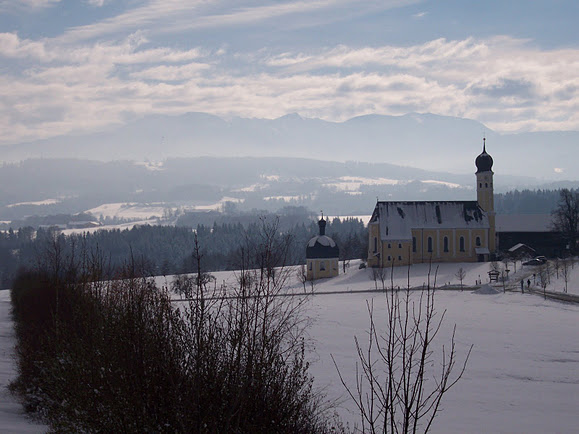
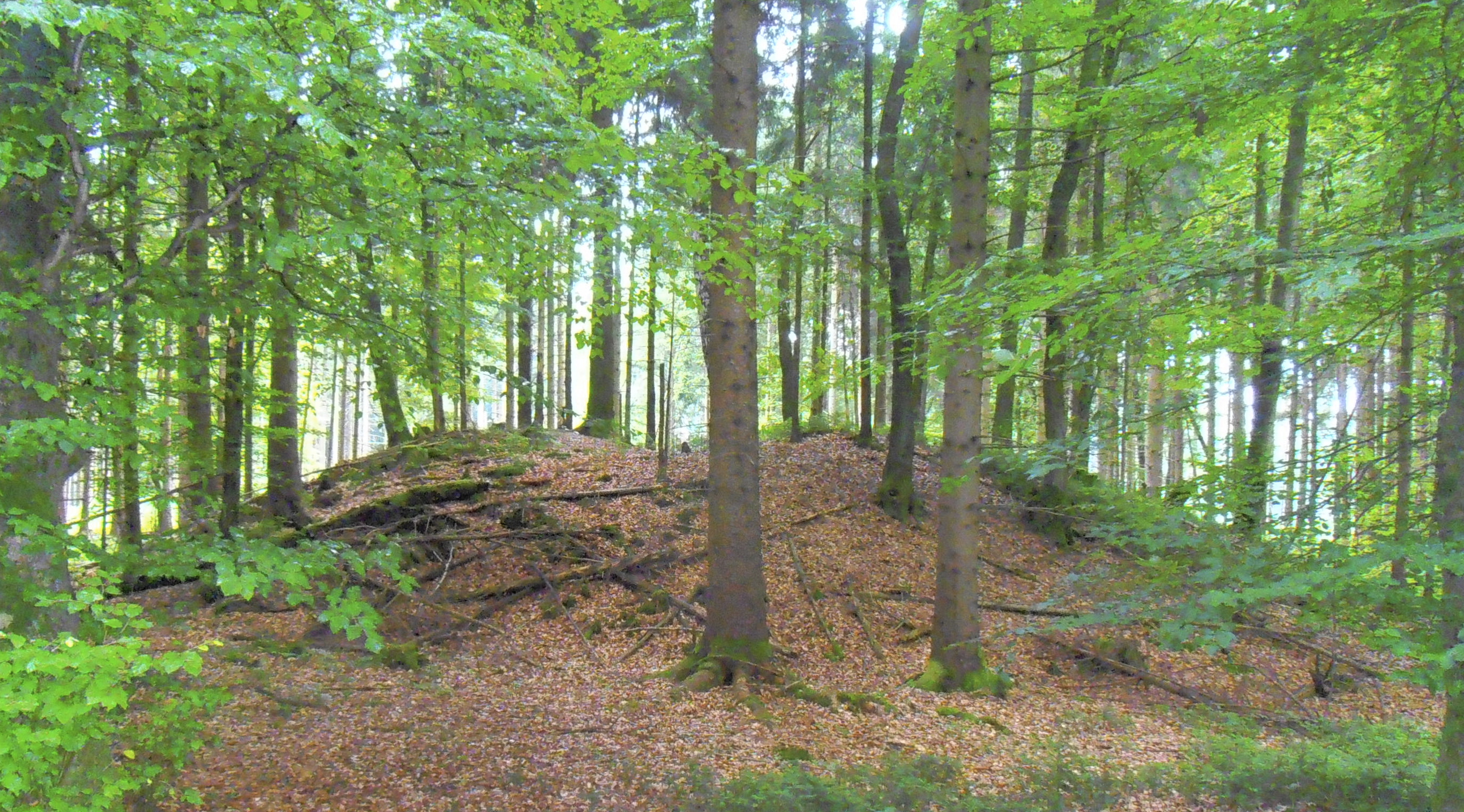
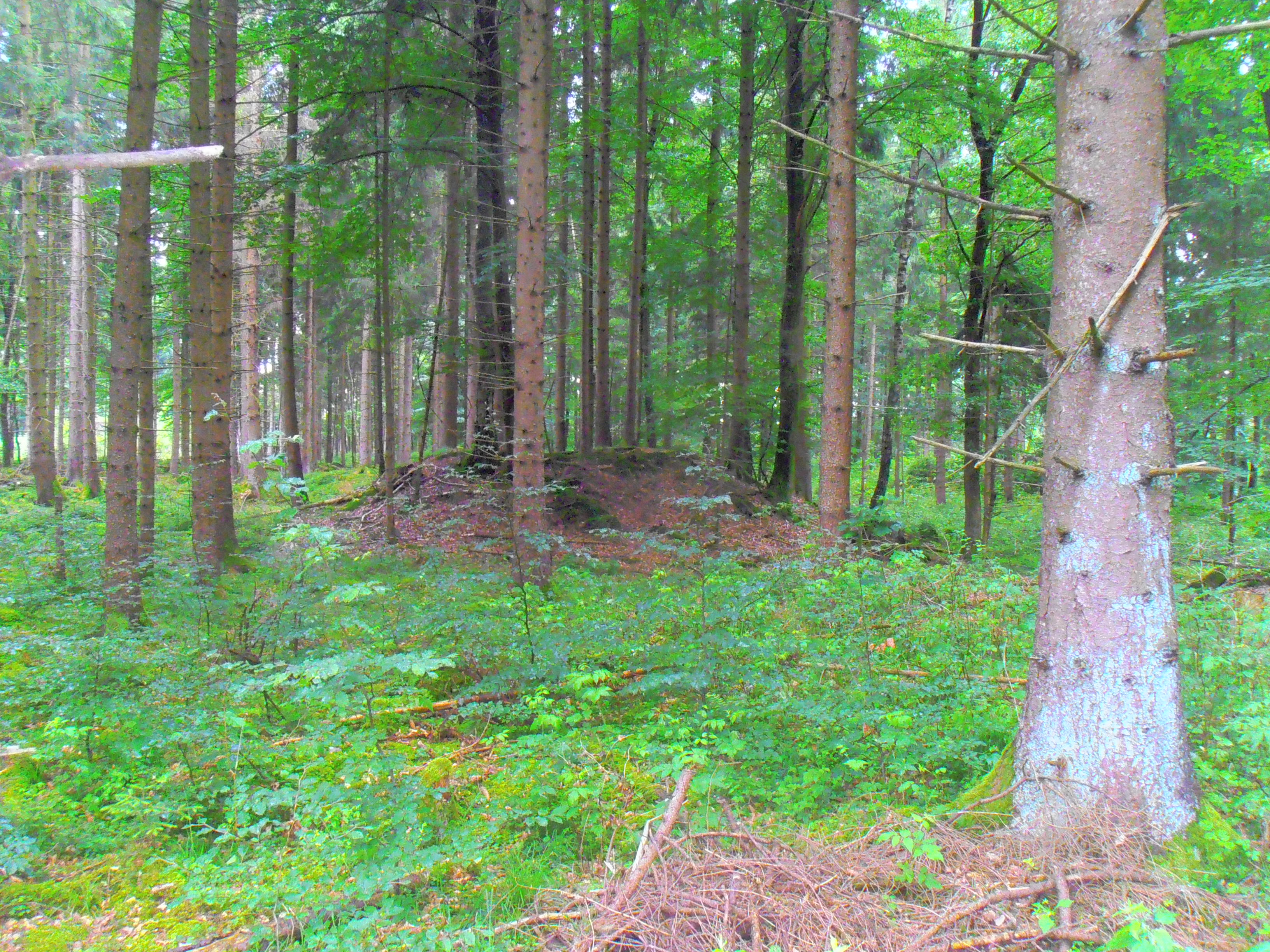
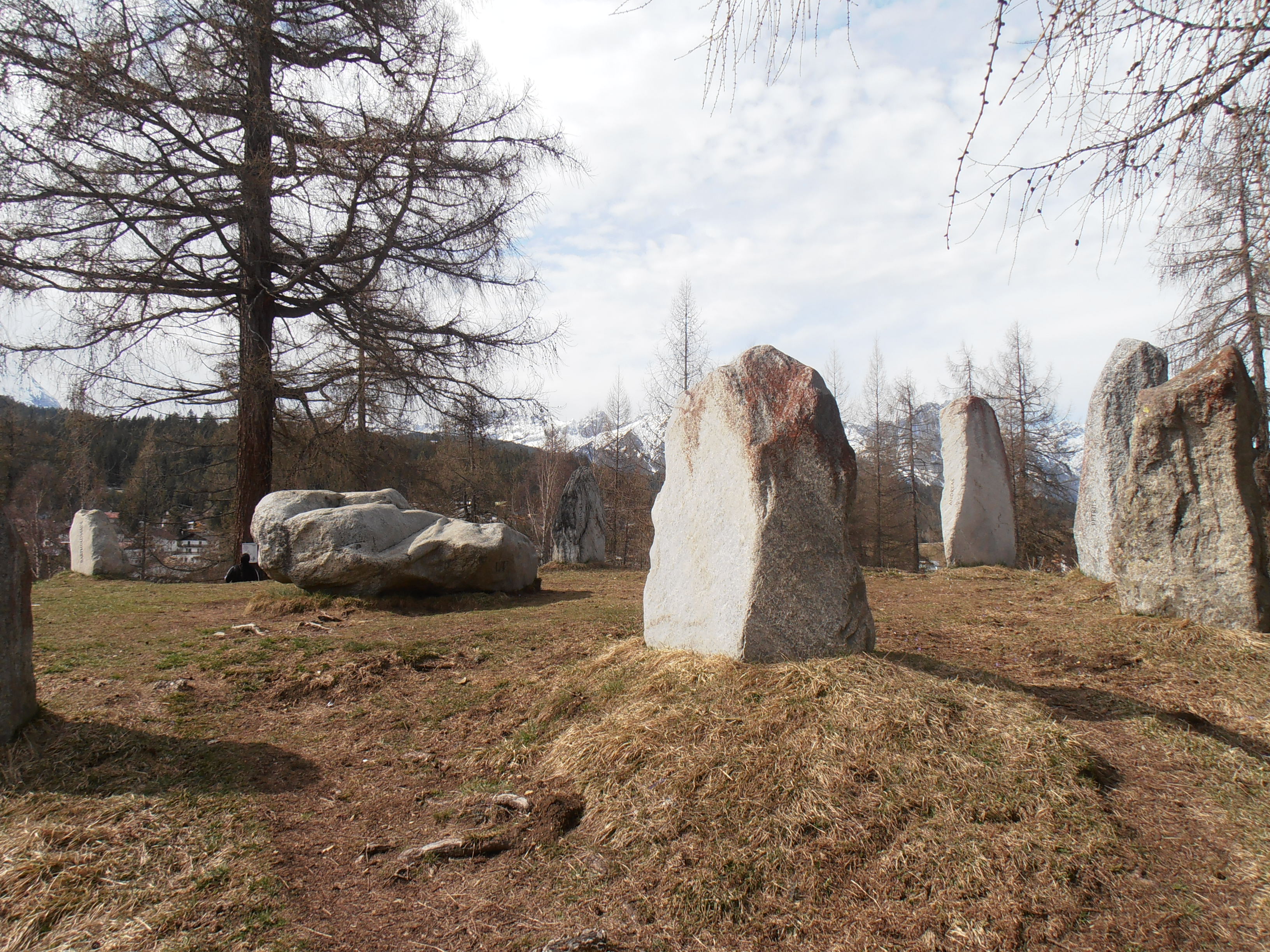
This is the Pfarrerbichl, or “pastor’s hill”, in Seefeld in Tirol. It is behind the St. Oswald parish church.

An architect from the area was given the green light to erect a stone circle on the hill, with the idea to create a peaceful meditation and meeting place for all religions of the World. The stones are local erratic boulders, dropped off by the glaciers as they retreated at the end of the last ice age. On the architect’s website (he seems a bit of a geomancer with a thing for Pagan fantasy, from the images) he writes that while this is, in his opinion, “one of the most mystical places in Tirol”, and that he believes it had once been a sacrificial burning site, there have not been any archaeological excavations on the hill — and here this reader winced, hoping the “planting” of the boulders did not destroy anything waiting to be found…

The church then got in on the act, and raised money locally to create a Way of the Cross leading to the stone circle, also using glacial erratic rocks, so the entire thing is Christian in character. Although the church’s information plaque was cheerful enough, I can’t help but wonder if there hadn’t been some pressure to “christianize” the circle after it had been erected. Which would be entirely within their right, it being their hill and all. (And of course it wouldn’t be the first thing the Catholic Church borrowed from the Heathens.)

h/t to Kraftorte.
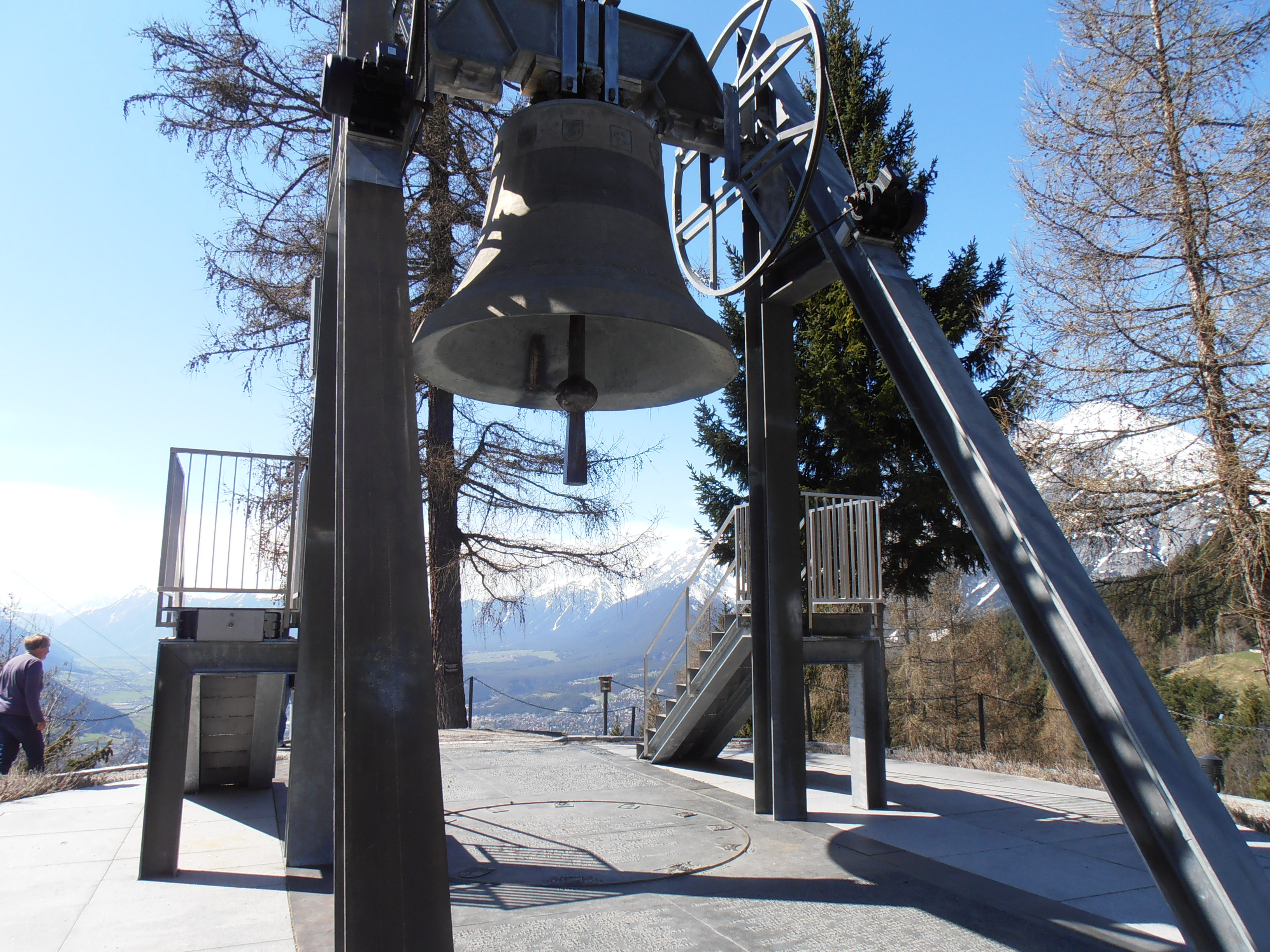
Mösern, the village with the “Albrecht-Dürer-View”, is also where one will find the Friedensglocke (Peace Bell), the largest bell in Tirol, brought to this perch by ARGE ALP, an international association of alpine provinces. The Peace Bell also has its own sort of Way of the Cross called the Friedensglocke Wanderweg (Peace Bell Hiking Trail). The stations of this trail call for such mantras as “Peace needs a path and effort“, and “Peace is living vibration“. Yeah, whatever — this all seems a little New Age-y for me. But anything which promotes peace is a good thing.

These two sights were visited on the same hike, which began in Hatting and ended in Seefeld. Although it was a pleasant enough walk, I would recommend starting in Seefeld and looping back, and including the Möserer See. The trails from Hatting were simply logging roads with no special scenery.
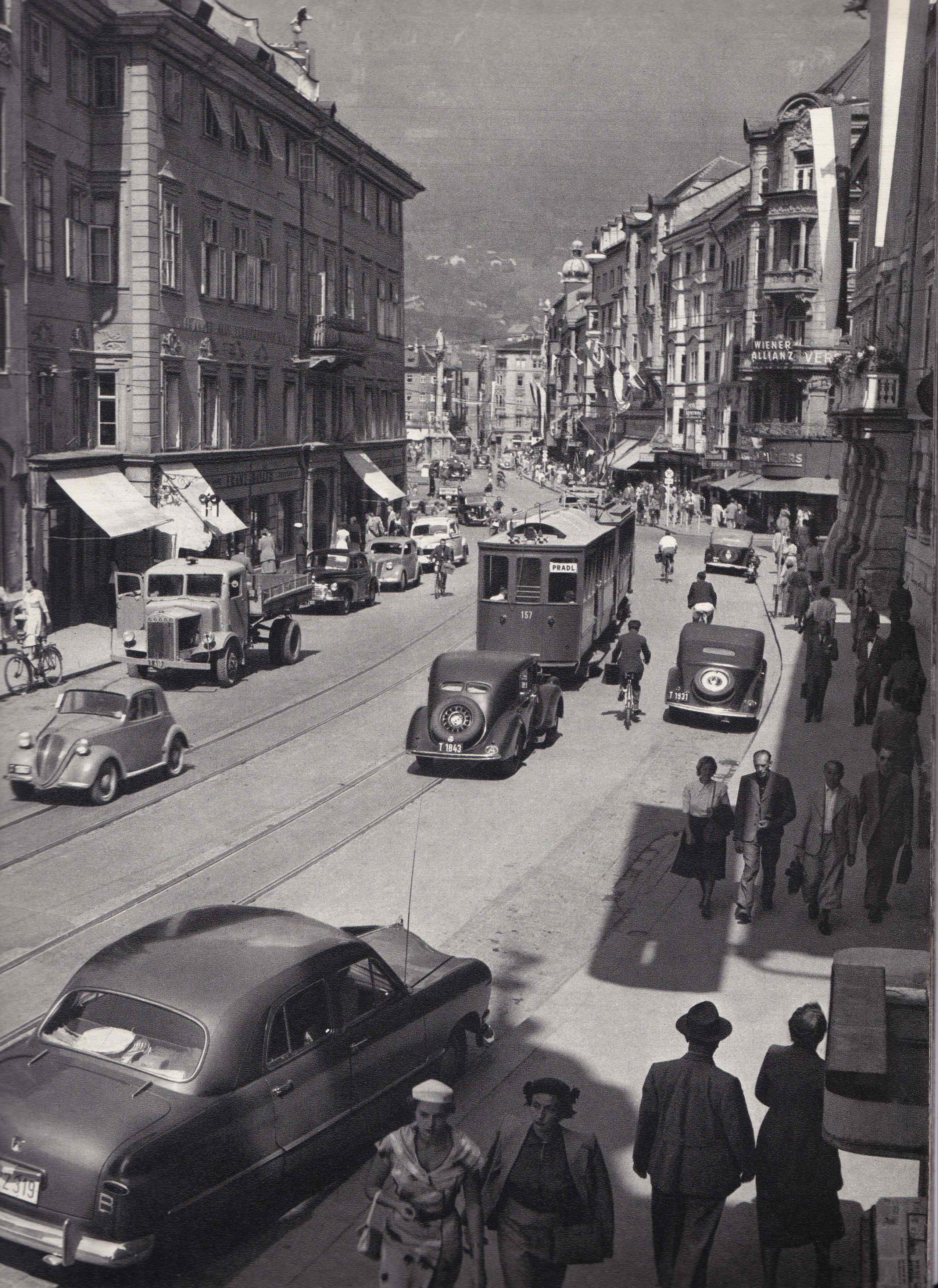
Forgotten Innsbruck: Post-War Tourism

Rehearsals, rehearsals, rehearsals. Some of them for the opera which opens next weekend, some for later productions, some for various outside projects including one of my own.

These images were scanned from a photo-book called, simply, “Innsbruck Tyrol” (Inn-Verlag Innsbruck, early 1950s) with photographs by Adolf Sickert. Texts are in German, English, French and Italian, so it was clearly a souvenir book for foreign tourists.
Above, traffic of all stripes on the Maria-Theresien-Strasse. I like that the cars, the cyclists and the public transportation all seem to nicely co-exist on the same pavement.

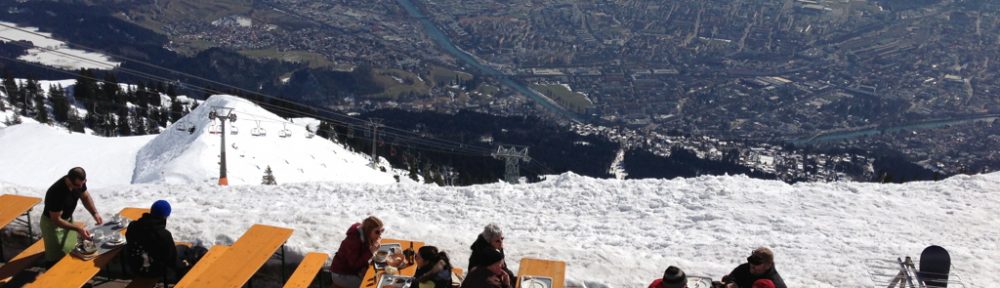
The sun terrace at the Seegrube, on the Northern Ridge. Innsbruck, in the valley below, is still somewhat small. No ski jump, no Autobahn, no shopping malls.

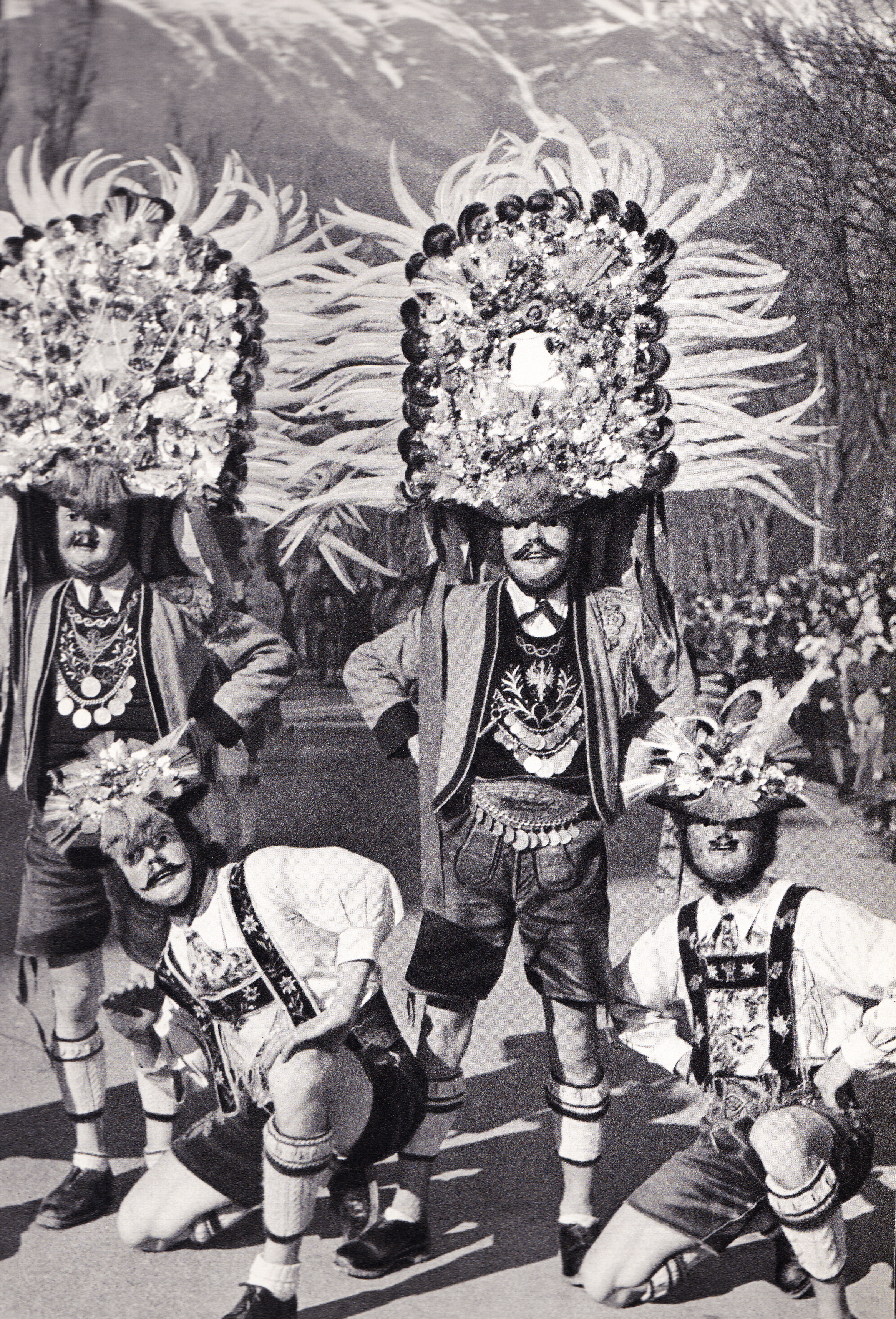
Traditional costumes and masks (a Fasching parade, I’m guessing) from the Ötz Valley. With those mustaches, they remind me of the Guy Fawkes masks sported by Anonymous and some Occupy participants.

Weekend Mountain Blogging: How The Irschenberg Got Its Name


(Above: the pilgrimage church in Wilparting, alleged home of the bones of Marin and Anian, although the monastery at Rott am Inn maintains that they have the real relics. Image found here.)

Well, Wikipedia will tell you that it comes from the Latin Ursus with the old German Perg, to mean “Bear Mountain” (there is a written reference to “Ursenperig” from 1315).

However, both Wikipedia and the book Unbekanntes Bayern (Unknown Bavaria), volume 4, refer to the legend of the Irish monks Marin and Anian who had settled there in the 7th century, bringing Christianity to the local inhabitants. Marin was martyred by marauding Vandals, and Anian, the story goes, died simultaneously of natural causes. They are referred to as Scotch-Irish, or Iroschotten. “Iroschotten” > “Irschen”.

Just something to think about next time you drive over the Irschenberg on the A8.

Added bonus trivia: the 2001 film Die Scheinheiligen takes place in Irschenberg, the plot revolving around construction plans for a fast-food reststop for the nearby Autobahn. (There is in fact a McDonald’s there now. The modern version of marauding Vandals.) The word scheinheilig refers to someone who is sanctimonious, hypocritical, holier-than-thou-but-faking-it.

Pagans In Tirol: Schalenstein

My best blogposts lately have been inspired (stolen) from others’ efforts, and this one will be no exception. Earlier this month fellow blogger Paschberg went exploring on the newer trails carved out by the mountainbikers, and came across a rock cliff with cup markings carved into the top. This would be the second set found, after the boulder near Tantegert. Naturally, I needed to go find this for myself, and so, equipped with a marked google earth map graciously sent to me, I set out to find the Schalenstein.

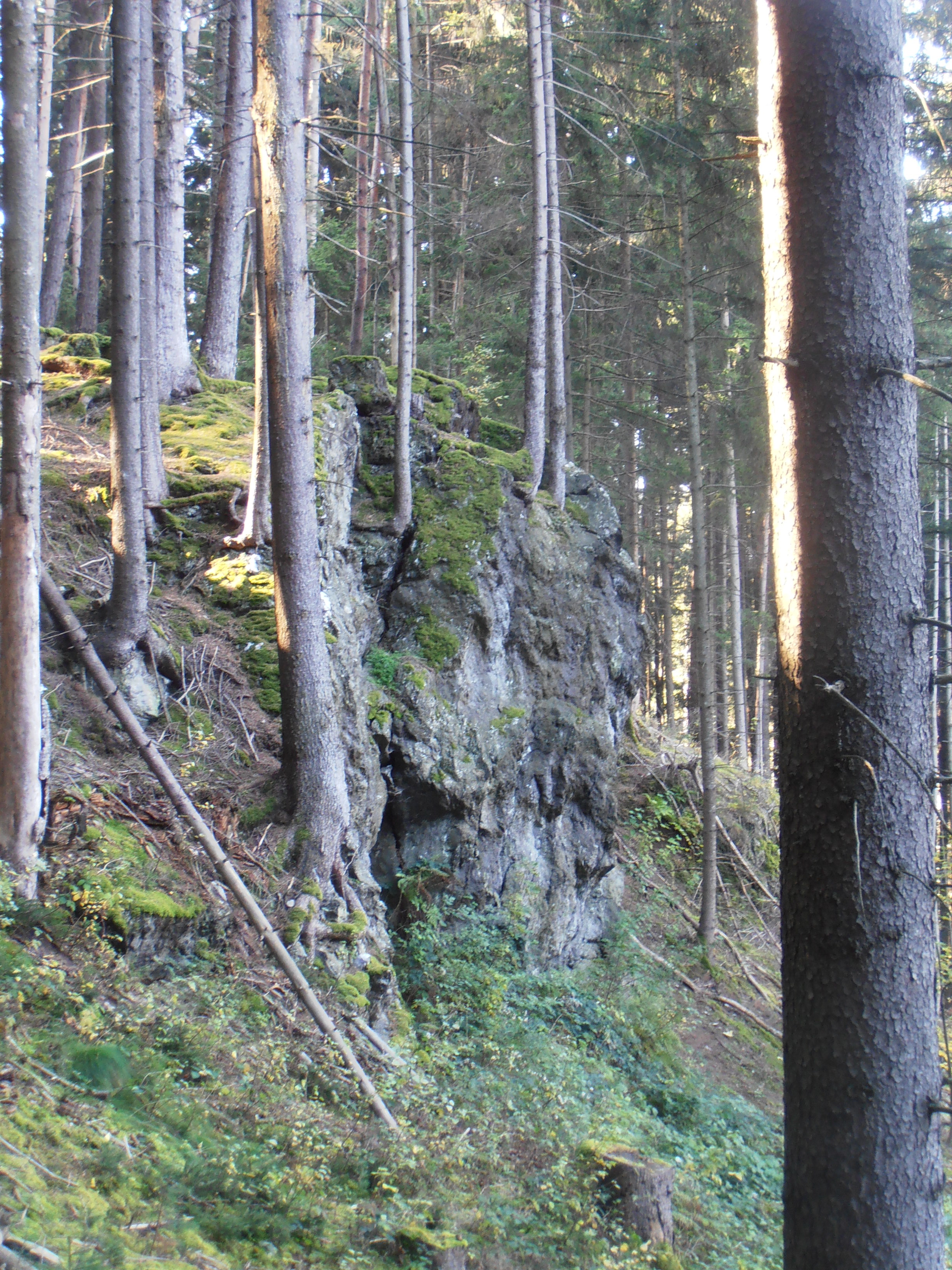
After wandering around the general area (there are all sorts of named and unnamed tracks criss-crossing around over there), I circled back and came across this rock face, part of a longer ridge that cuts through the woods.

And sure enough, at the top was a flat, square-shaped boulder, with three cup markings bored into the surface. I was delighted to find it, and at the same time wanted to kick myself for passing so close to this area regularly for nearly two years, and never looking around over this way. This Schalenstein was practically in front of my nose, or better said, over my head.

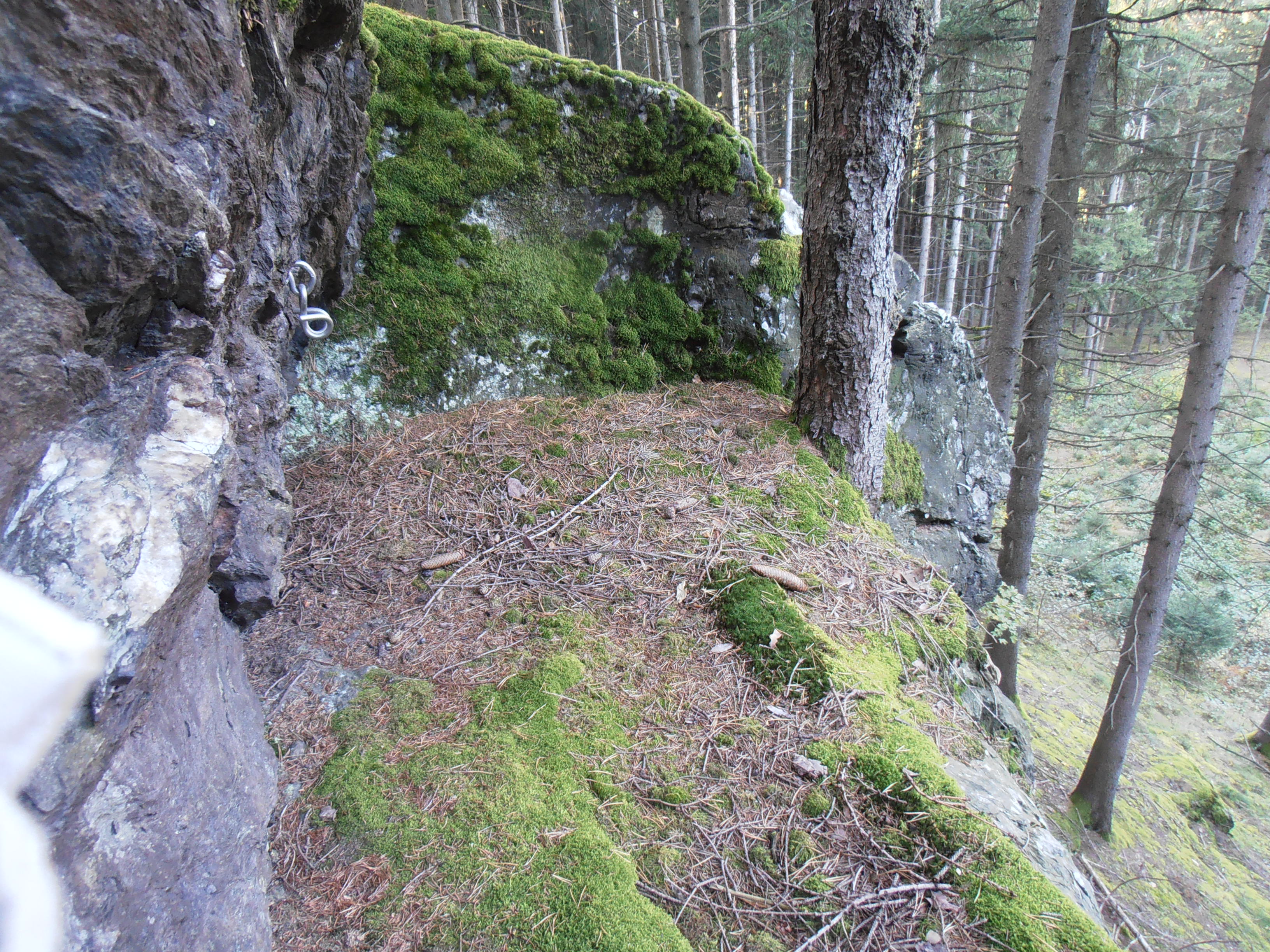
Behind the rock is a kind of partly enclosed ledge, big enough to sit on. That’s where I noticed the bolt anchors — there are several of them driven into the rock at different heights. Clearly, this cliff is being used for rock climbing practice.

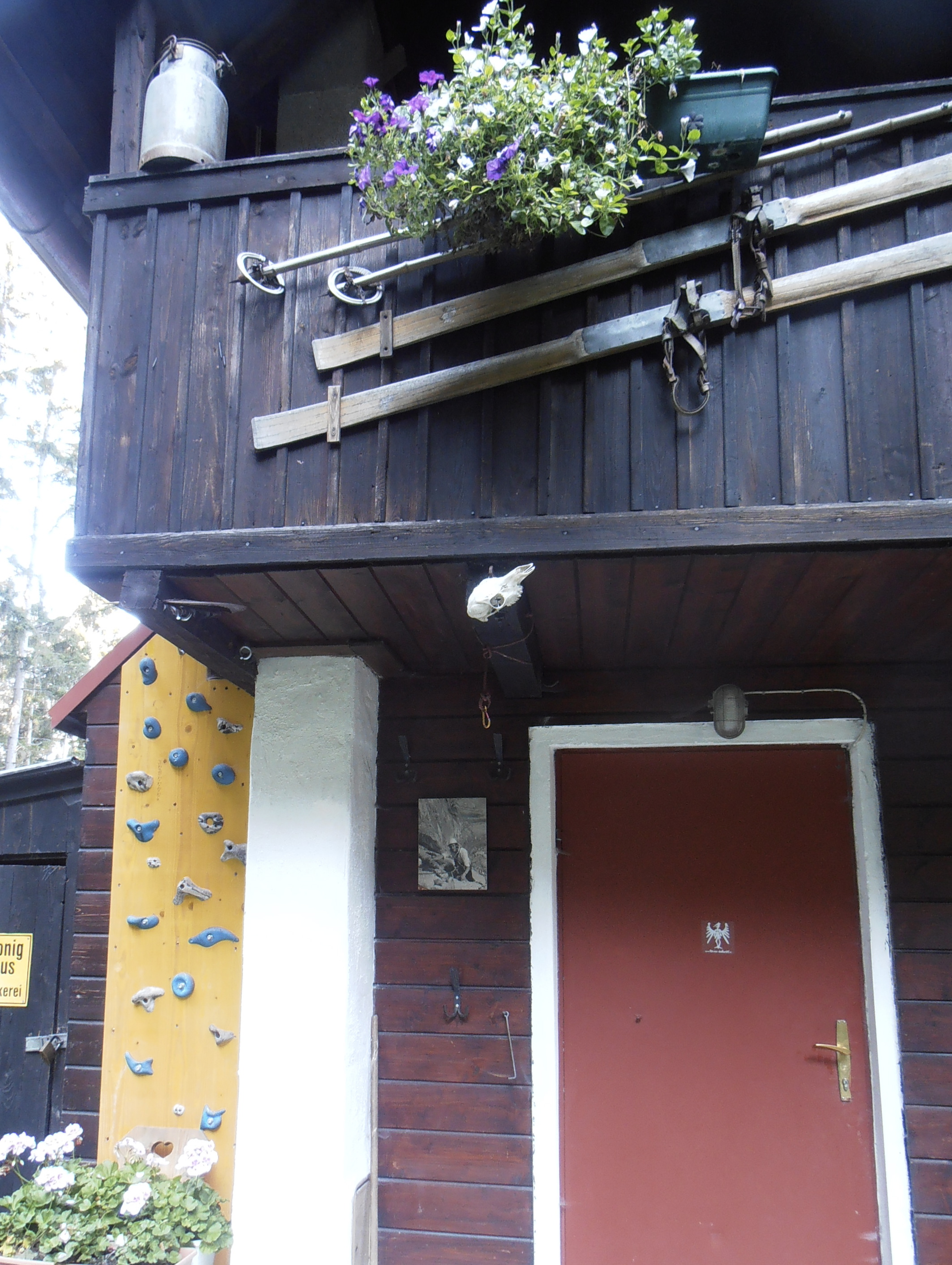
And at the so-called “witch’s cottage”, just a minute or two down the path, it became a little clearer that the climbing practice has some connection to whoever uses the cottage now. Note the climbing holds decorating the wall, and the photograph next to the door.

I walked further uphill along the ridge to inspect more boulders, but they are all covered with thick moss and tree roots. There’s just no telling what’s underneath them. The Schalenstein was the only rock that was somewhat free of moss — which leads me to believe that it’s being somehow, anonymously, maintained.
I once asked an archaeology-minded friend about the cup markings in the rocks here, and she responded with cynicism. There are fakes, there’s no proving their antiquity. She has a point, and the rocks don’t seem to be of interest to anyone official (Not that I can see. Maybe I’m wrong about that.) But they are there. The sacrificial altar sites at Goldbichl and Bergisel are not all that far away, nor is the possibly-Pagan “Judenstein”. It is said there are other marked stones in the area, hidden away in the woods, waiting to be visited.

Pagans In Bavaria: Leutstetten

The church of St. Alto, in Leutstetten, north of Lake Starnberg. This church has a curiosity in its sanctuary.

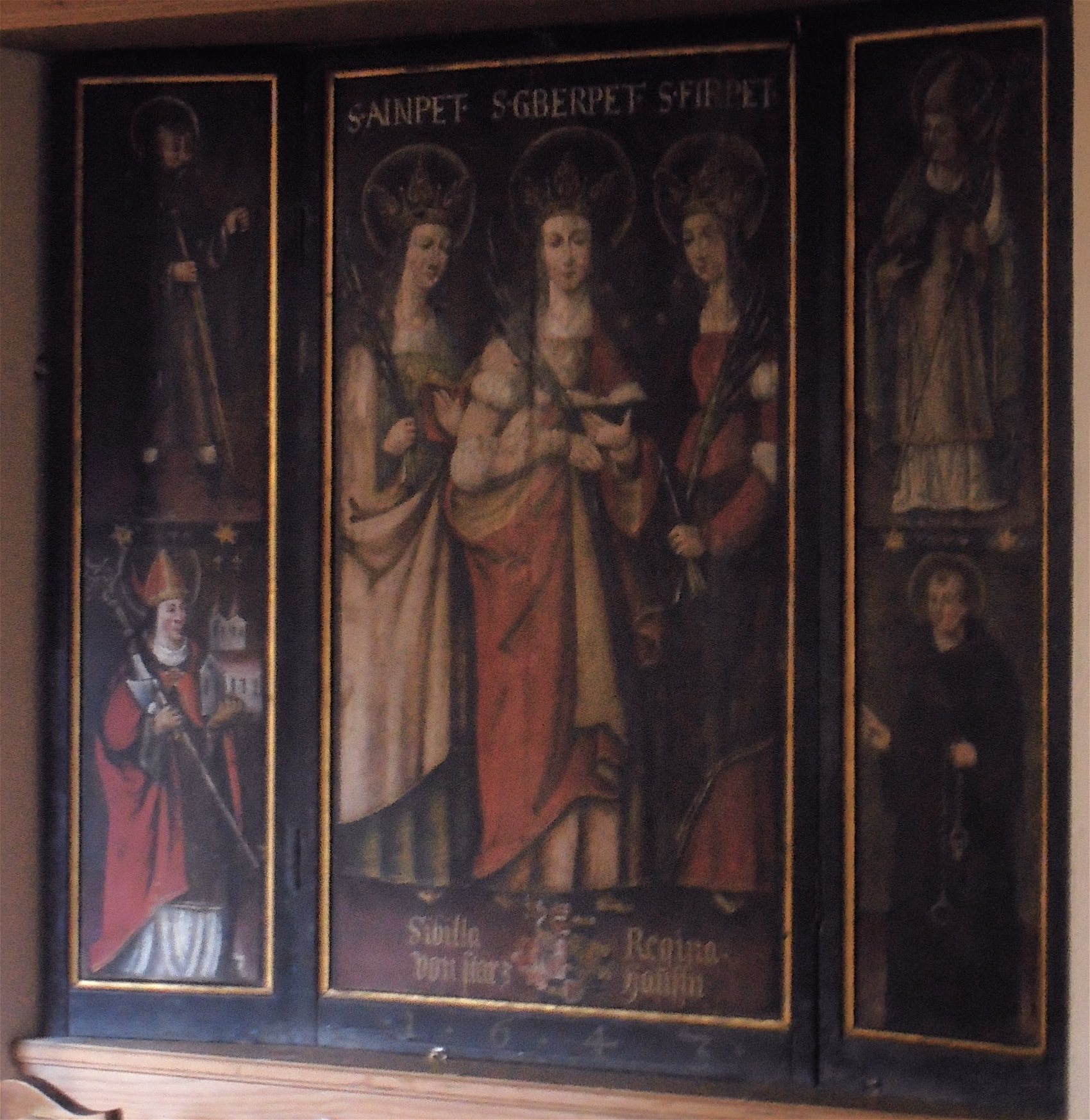
This 1643 oil on wood painting features three unusual saints: Ainpet, Gberpet and Firpet. These are local, alpine-regional deities, so to speak. They’re not on the official register of Roman Catholic saints, and it has been postulated that they are pre-Christian, reformed into good Catholics simply by putting new stories on them and calling them the Three Virgins. Other paintings of them are found in scattered churches, and one is (was?) in the church of St. Vigilius, in Obsaurs, Tyrol. I have not been there and can only refer to it. This painting here was not always at St. Alto — it originally hung in the chapel in the village of Einbettl (Ainpet, Einbettl) which was torn down in the 19th century.

Here the chapel at Petersbrunnen, or St. Peter’s fountain; however, the name may well stem from “Betenbrunnen”. In any case the water was long considered to have healing properties, and in the 16th century Duke Wilhelm IV had the chapel built, alongside facilities for cure-seekers (to keep the riffraff separate from the paying guests). The baths are gone, the chapel is still there. In his book “Romerstraßen und Kultplätze” (Roman Roads and Ritual Sites), Martin Bernstein sees an irony in the fact that the chapel, built over a possible heathen holy site, has to be renovated frequently due to problems with moisture. The revenge of the Beten, perhaps.

The Villa Rustica (country villa and farm), built in 150 AD, excavated in 2002. The glass structure covers the part of the house which had heated floors (Hypocaustum) and a bath. Nearby Gauting (then Bratananium) was where the Roman road crossed the river Würm (Starnberger See was once the Würmsee. It began its name change in the 1800s and made it official in 1962.) Evidence of crops and livestock raising were found. Romans were good at adapting to what grew here already (spelt, emmer-wheat) and introduced wheat and rye. From other Roman farm excavations it is certain there were also animal stalls, silos, barns, and lodging for the farm workers. A millstone was found near this site, indicating a flour mill.
The method used to heat the floors allowed smoke to escape from behind the walls, thereby also heating the rooms to a comfortable temperature. To realize that, even over a thousand years later, kings were living in cold drafty castles, drives home the meaning of the term Dark Ages.

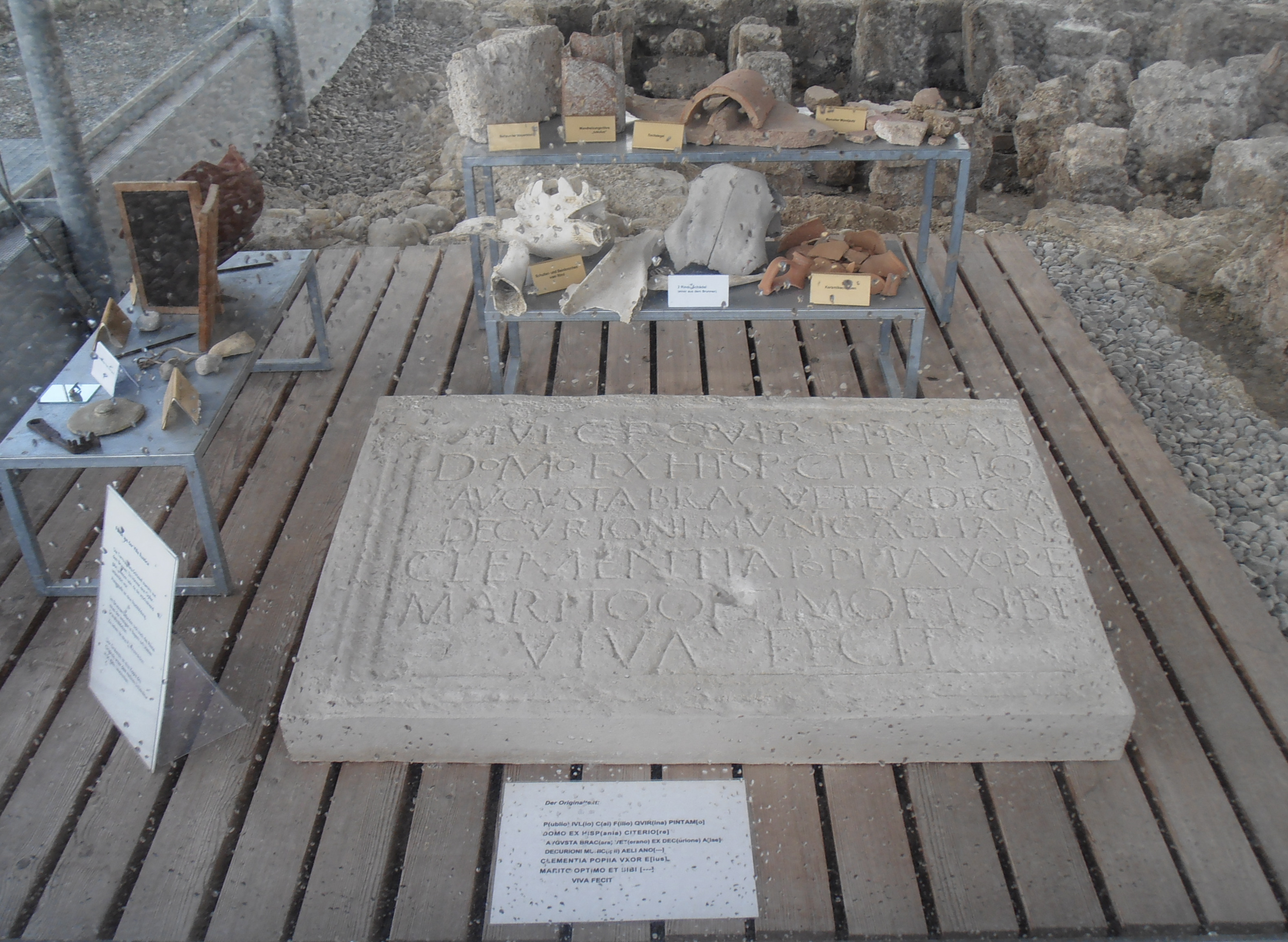
Finds from the nearby spring, most likely offerings, all copies for display here: two house keys, pottery, a slate writing tablet. The large stone is a copy of a Roman gravestone which is believed to belong to the owner of this villa. It is written that he came from Braga (northern Portugal), had a long military career, and that his loving wife erected this stone for him. The original stone was discovered to have been built into the side altar in the above-mentioned St. Alto church (where it remains today), presumably hauled off from one of two Roman urn graves nearby. Whether the stone, the graves and the villa all deal with the same 2 people is speculative, but highly probable. This spring, incidentally, provided the means of determining the date that the farm was in use — the farmer had had a wooden, box-shaped well built on it, which was nicely preserved upon discovery. The wood fragments of the well itself — plus other pieces which had been used to fill it when the farm was abandoned — were then dendochronologically dated.
The Villa Rustica is not directly accessible by car, but one can walk there along the bike path — from the above-mentioned village of Einbettl. And with that, the circle is complete.

Pagans In Bavaria: Viereckschanzen in Holzhausen

Along with the Sunderburg and the pre-Christian grave mounds hidden here and there, the area immediately north of the Ammersee also contains two fairly well-preserved Celtic Viereckschanzen, rectangular earthen enclosures, called Holzhausen 1 and 2. Their function is disputed among archaeologists as to whether they held sacred groves or were built for more practical purposes as forerunners to medieval city walls. They were certainly large enough for whole clans to live in them, being roughly 100 meters long and 75 meters wide, which would make for an unusually wide football field.

Holzhausen 1 has an entrance gate, or at least a higher break in the wall where a gate would have been built. A nearby sign suggests how one would have looked.

A path now leads along the top of the wall, bringing the visitor all the way around and back to the gate.

Inside the wall is meadow, and, interestingly, a small copse of young trees about right in the middle. Much older trees had stood here but had been cut down. We didn’t count the rings in their stumps but there were many. Possibly someone is maintaining their own sacred grove.

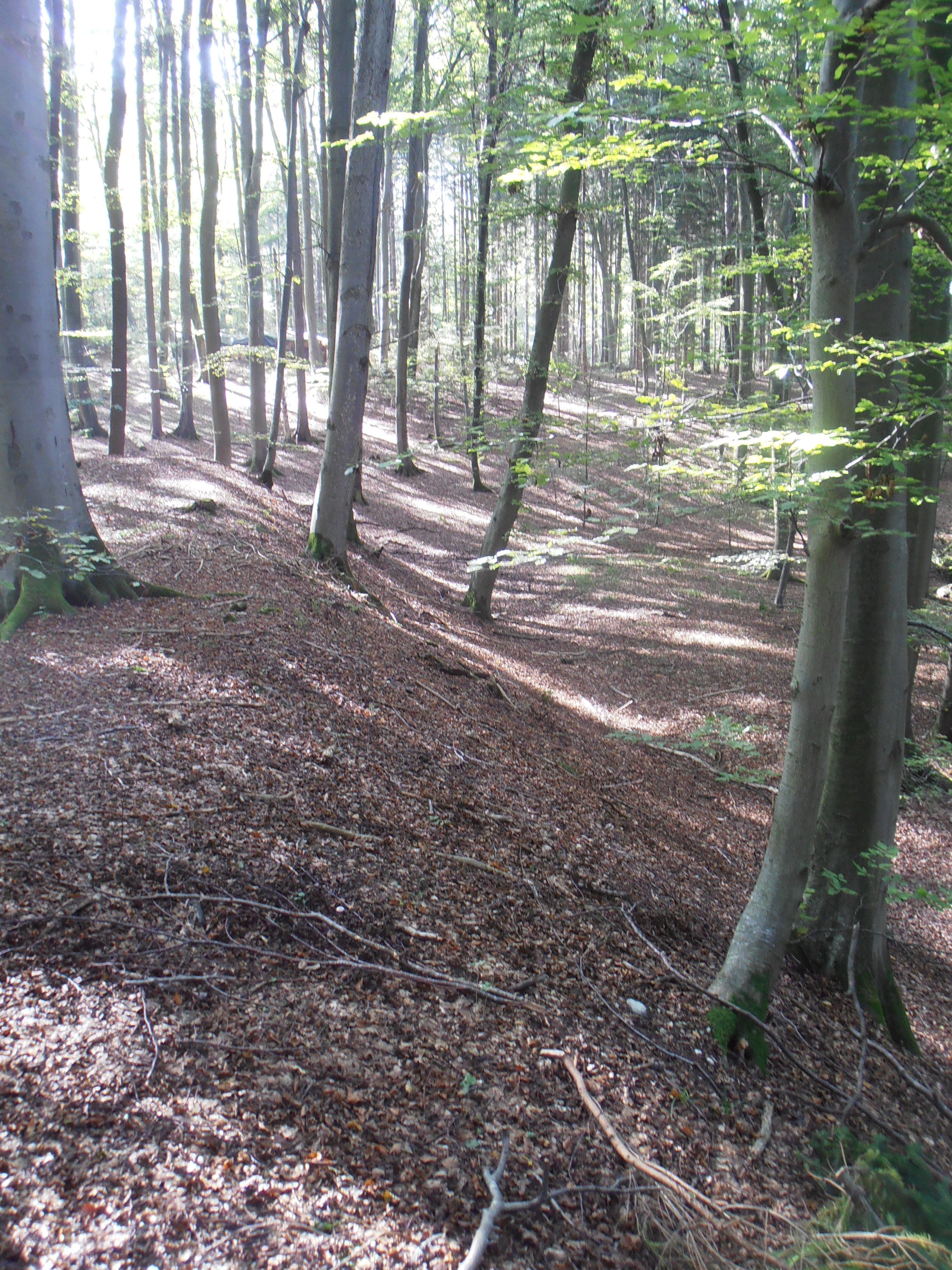
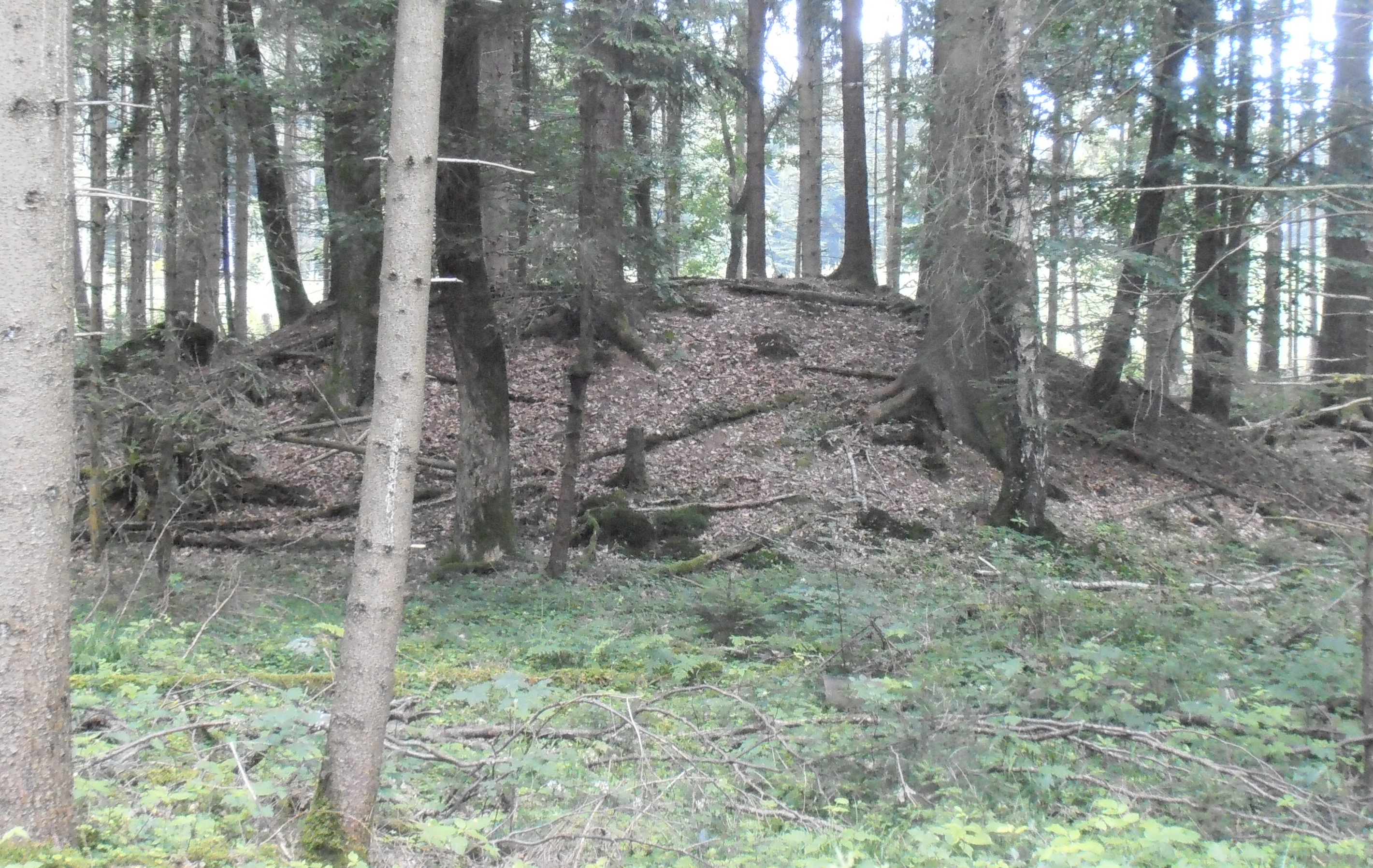
At Holzhausen 2, the forest has taken over. The ground inside the wall has filled in over time so that the earthwork is now more of a plateau. Here is the edge, from above on the wall.

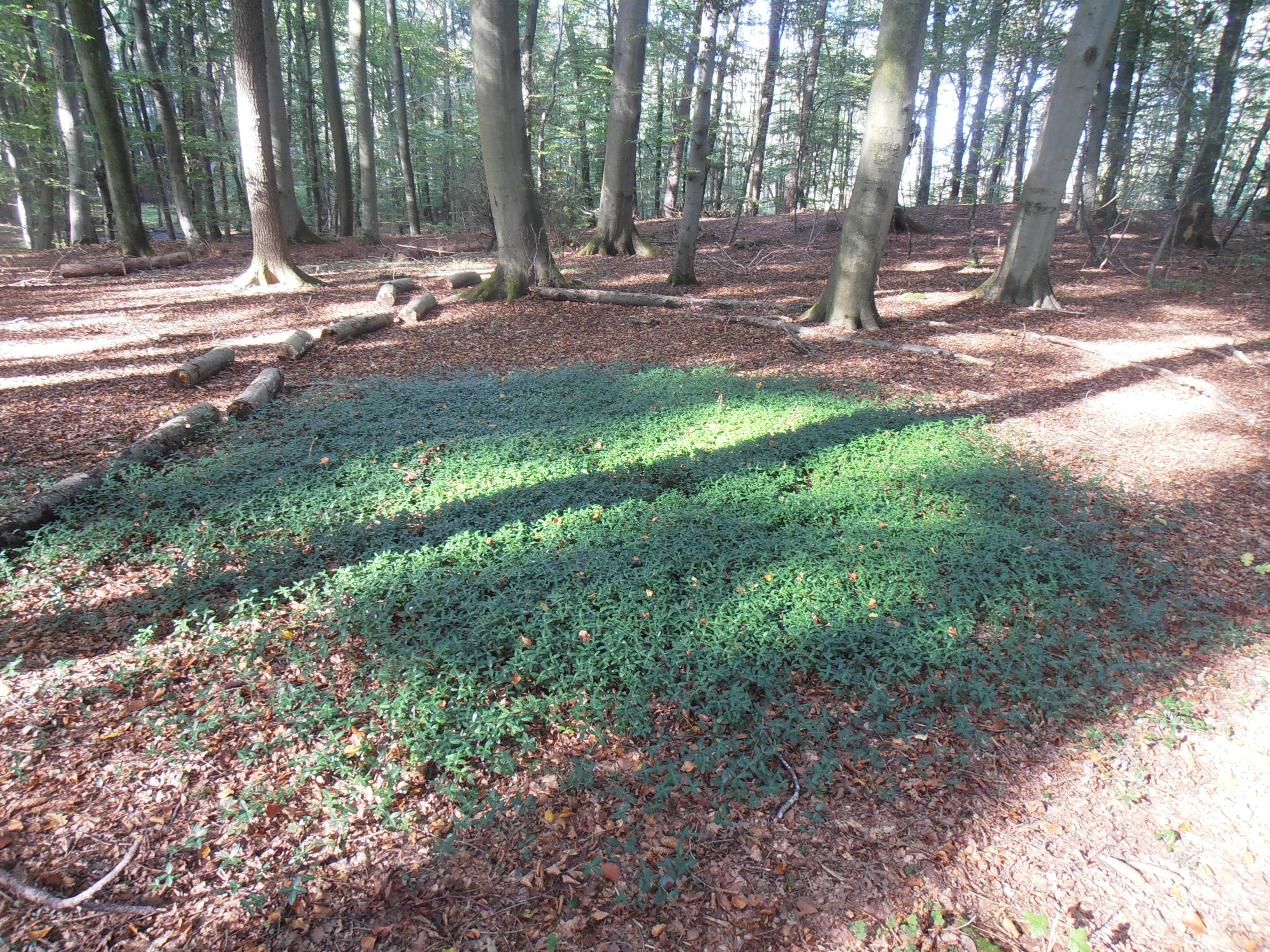
Here again, just about in the middle of the Schanze, an unusual circle of plant life. I’m going to assume that fires were made here in the recent past, and the wood ash left the earth especially fertile for this plant. I’m not very romantic about the past — I tend to think people had way too much to do trying to stay alive and healthy and keep what they had, than to put all this work into a little sacred circle. But hey, that’s me. It’s clearly someone’s sacred circle now, and it’s nice to know that these someones are caring for this speck of land.

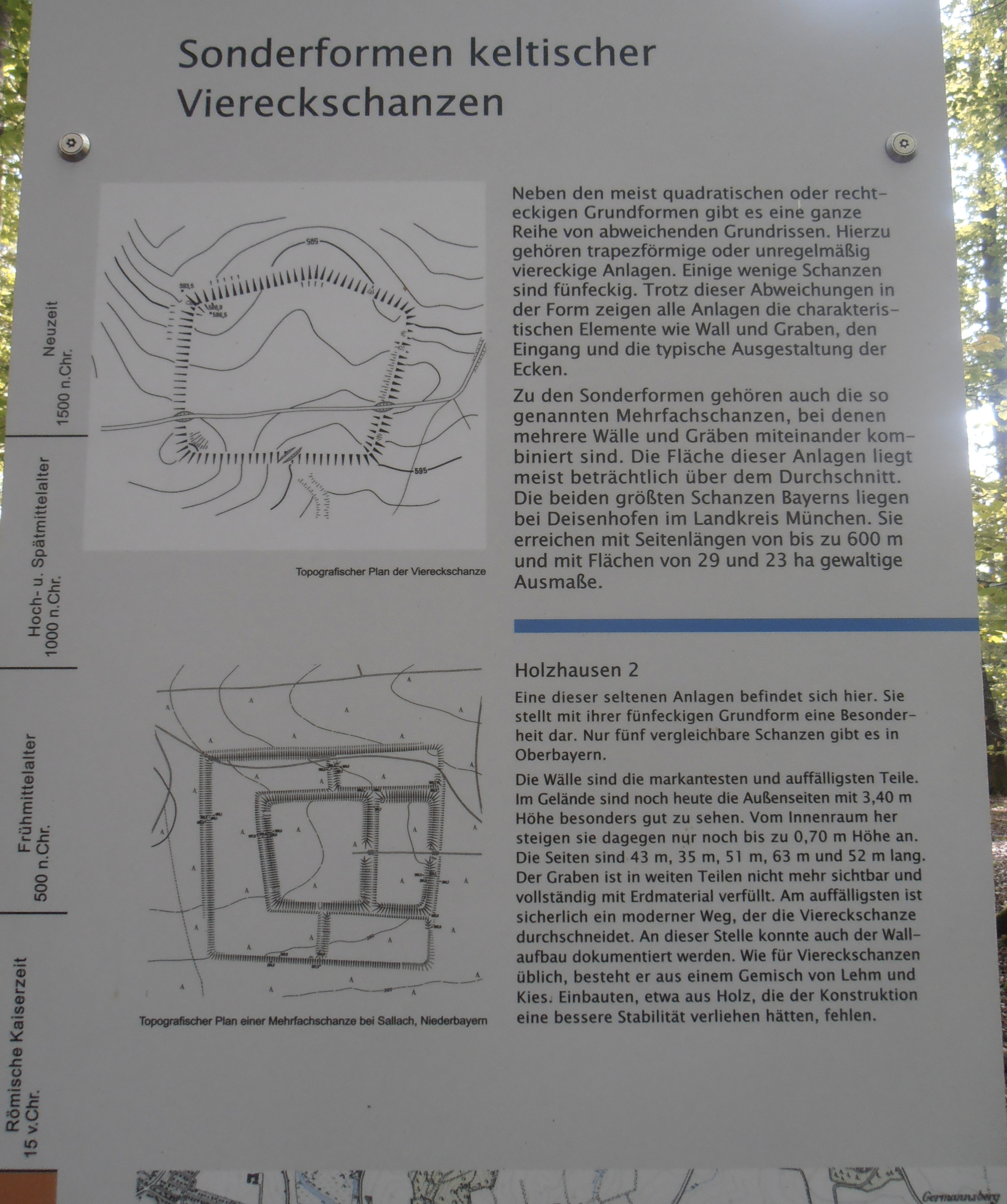
By each Schanze is a small sign explaining the site, and nothing more. Better that way — it’s not easy to find, not easy to reach (we took our mountain bikes), and less liable to be wrecked. Holzhausen is just south of Fürstenfeldbruck, near Schöngeising, 40 kilometers west of Munich.

Grave Mounds near Grafrath


In the northern part of the ground moraine flatlands near the villages of Grafrath and Mauern, south of Fürstenfeldbruck, stretches one of the largest pre-historic grave mound necropoleis in Bavaria. Systematic surveillance has revealed at least 124 mounds. It is possible that more grave mounds existed outside the forested area, but were worn away over centuries of farming and building.


Research into this grave mound area began in the late 18th century, through the efforts of a local minister who made an early map of the mounds. Some excavations occurred in 1839 and 1870.  Later, in 1893, the Munich historical painter Julius Naue dug out 93 of the graves. Part of the finds are in the Archäological National Collection in Munich.
In the customs of the times, the dead were buried in their traditional clothing along with fine jewelry and vessels containing provisions. Some of  the men were buried with weapons. Some cultures buried cremated remains. The oldest burials are from the middle Bronze Age (1600 B.C.) Later burials occurred in the “Urnfield” culture in the late Bronze Age (1200-800 B.C.) and especially in the early Celtic “Hallstatt” culture (800-500 BC). The most recent, from the Celtic “Latène” era (500-100 BC,) consist of burials in existing mounds.

Thanks to the Fürstenfeldbruck Civic Trust for putting up this information on their nahTourBand walking trail.

Also special thanks to the guy who manages the Kraftvolle Orte website, which lovingly details what appears to be every single Pagan sacred place in Bavaria, including directions and GPS coordinates.. Gotta love those Germans.

Update on the Grave Mounds

OK, I did a little more searching on the internet, and found that there is more to be found under “Grabhügel” than there is under “Hügelgräber” (which is the word used on the Schondorf municipal website.) A lot more. Between the Ammersee and the Lech river alone there are 167 mounds. In Grafrath, just a ways up the road, there are 250 mounds, old stone-age fortress remains, and a sacrificial stone complete with cup markings. In other words, the place is teeming with pre-historic geological archeological finds. So little time!

Das Tirol Panorama

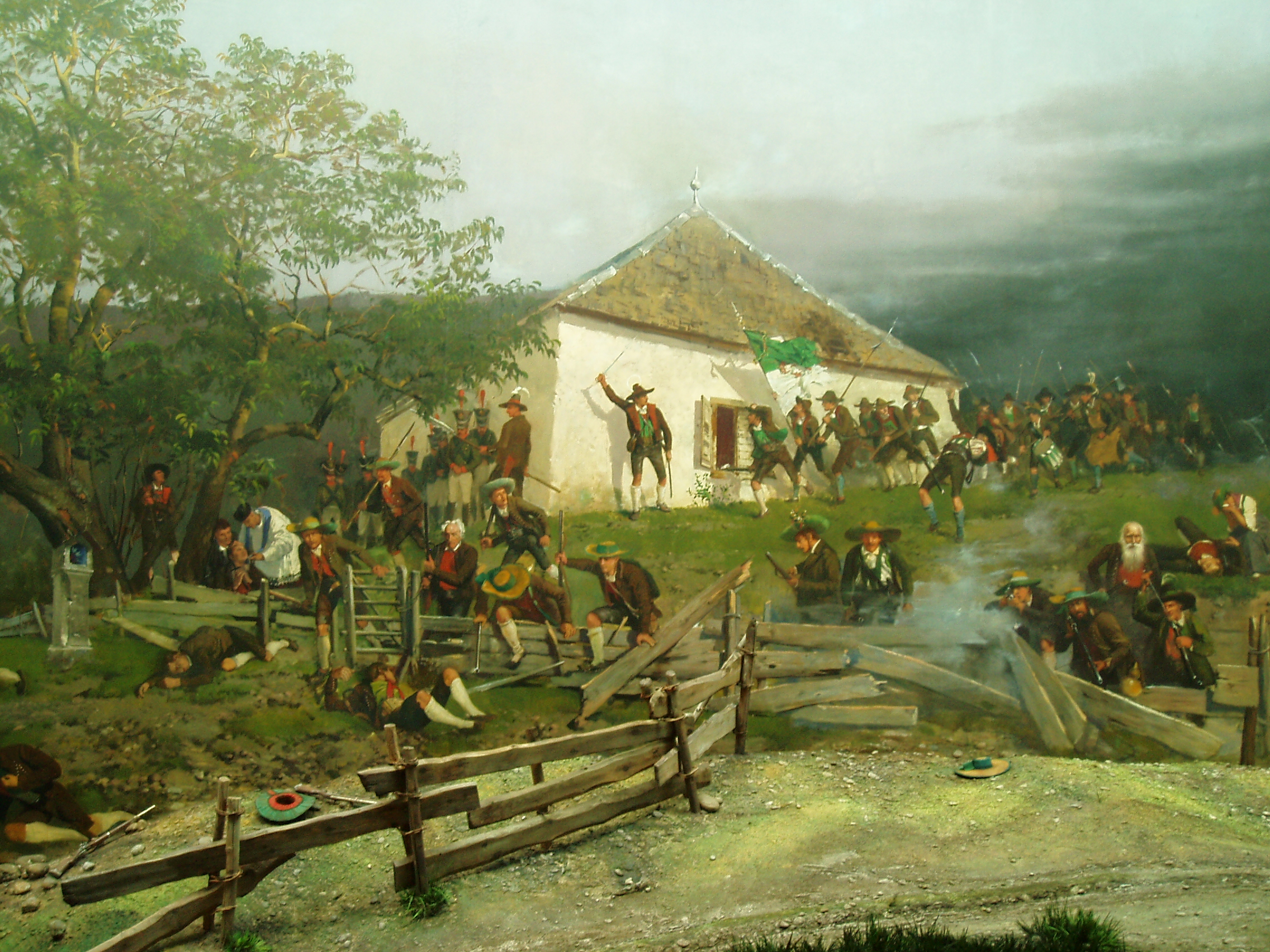
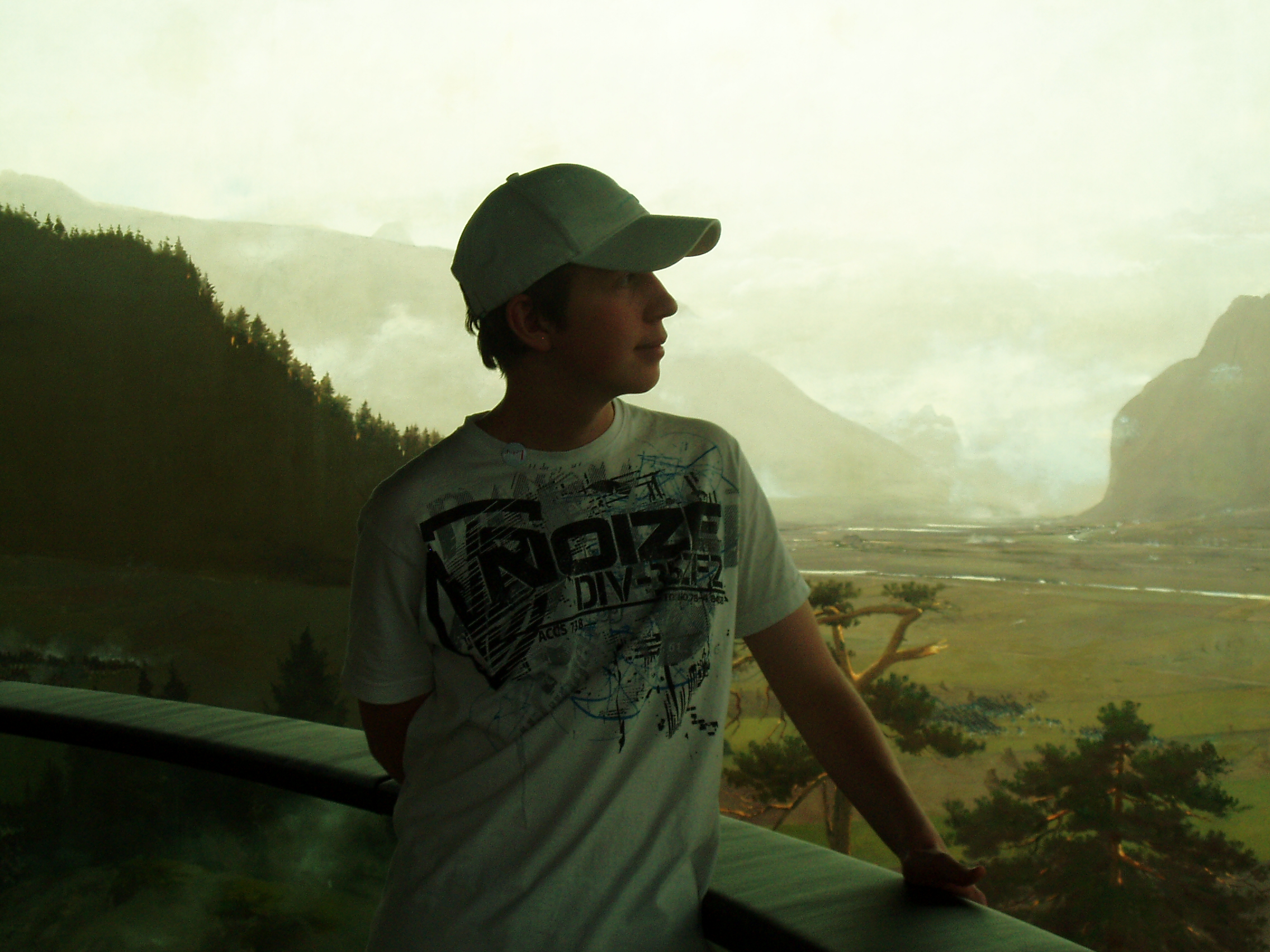
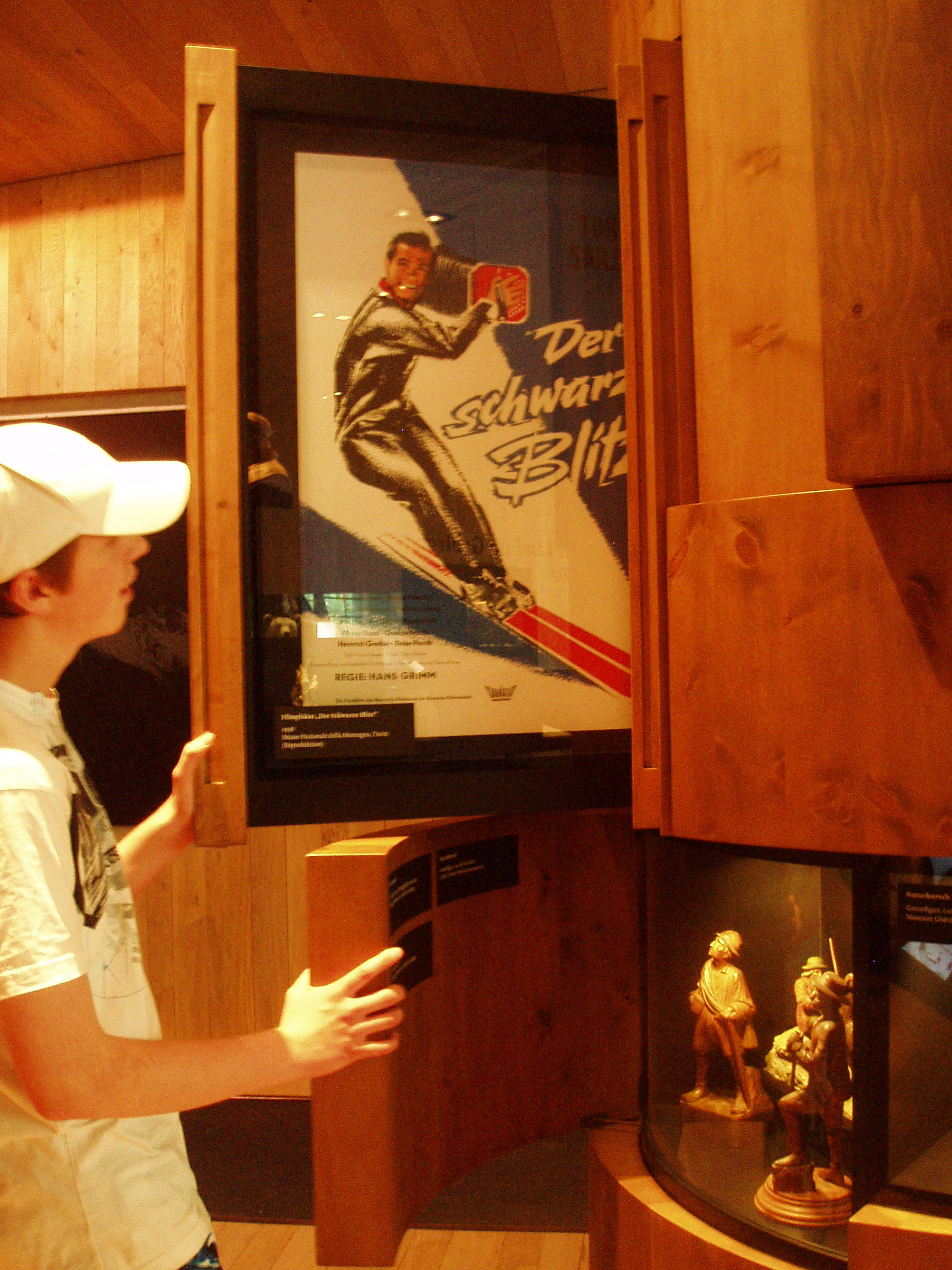
There was finally time for a visit to the Panorama Museum, home of Innsbruck’s historic Riesenrundgemälde, previously displayed in the Rotunde in town. The interior is all modern glass and concrete, but they’ve done nice work with the presentation of the old-timey panorama painting, which still has its charms. One particularly strong impression is one of the very first — you have to descend an escalator to a lower level and then walk up a set of stairs to get “into” the panorama, and from the bottom of the stairs you see the Northern Range, and for a second you really aren’t sure if it’s not the real thing you’re looking at. Later in the connected Kaiserjägermuseum you find yourself looking up another set of stairs, at the top of which is a large picture window which does look out on the real Northern Range, and then you realize what the architect was up to.

Back downstairs, one proceeds into a large space with a lot of “tiroliana”, some of it hidden in secret compartments within wooden pillars, which looked popular with children. In the center of the room is a lot of political remnants (such as the horse’s head from a Mussolini statue from South Tirol, blown up by activists in 1961).

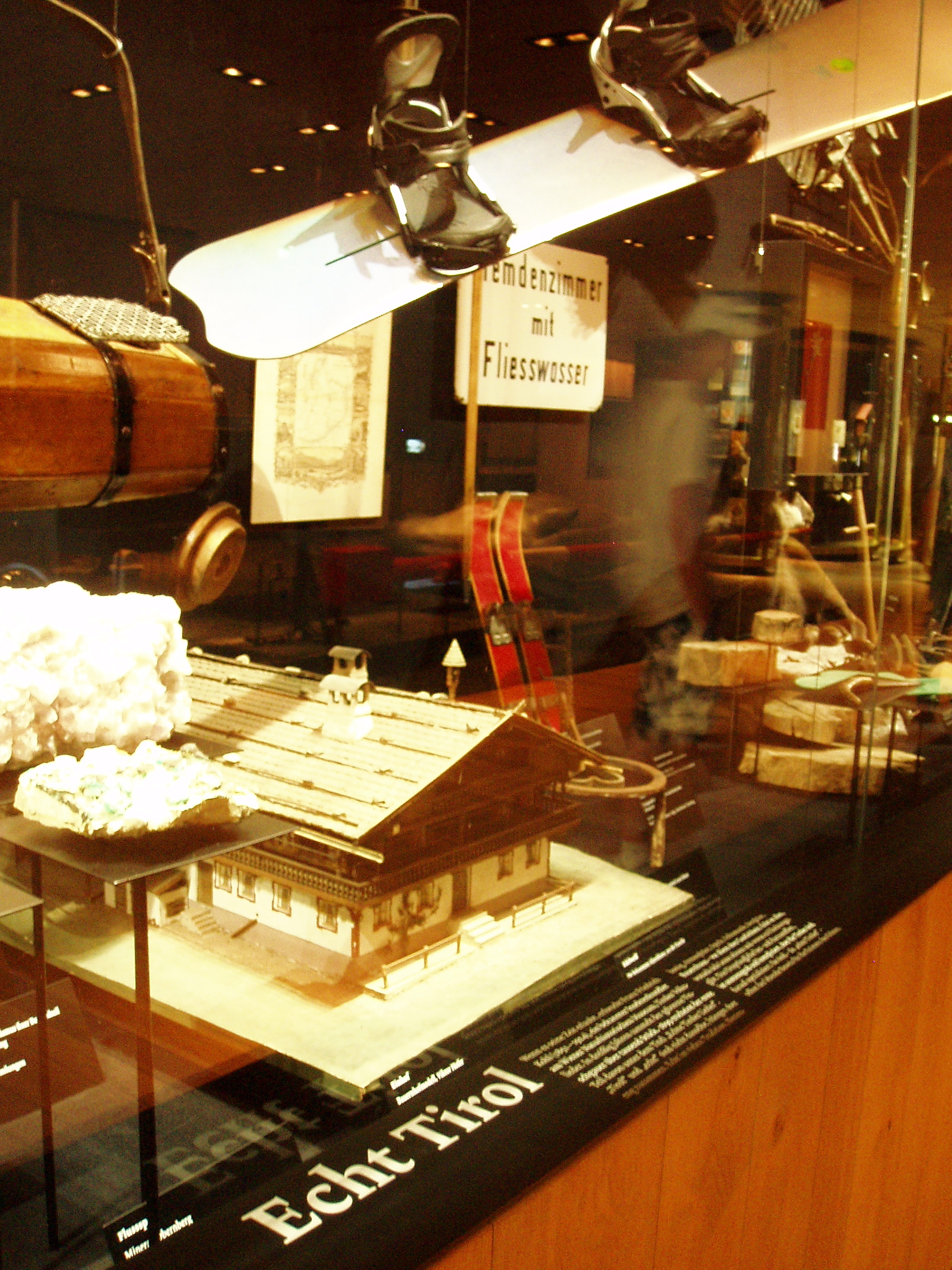
On the other side, a showcase of all manner of local “stuff”, past and almost-present. We didn’t quite get this part; it was as if the museum had to find a way to tie all these objects together and decided to display it almost randomly, with the archaeological finds right next to  20th-century mountain-climbing gear, insect display cases next to old crèches. Sometimes the explanatory signs were not easy to find. We decided that the snowboard must have been Andreas Hofer’s.

If you are visiting Innsbruck and want to see the Museum, I recommend taking the Nr. 1 streetcar to Bergisel (the last stop), then walking up the hill to the museum. There is also a restaurant with outdoor seating, and a gazebo from which to enjoy the view. Just across the park is the entrance to the ski jump arena, which also houses a cafe perched atop the jump, and more impressive views. This museum seems to be more for the locals than for visitors, but if you are interested in getting a sense of Tirolean history and culture without having to do much reading or traveling around, this could do it. The museum offers free headsets with audio tracks which explain what you are seeing. We did not take them, so I can’t tell you how they are.

A Surprise In The Kaiserjägermuseum

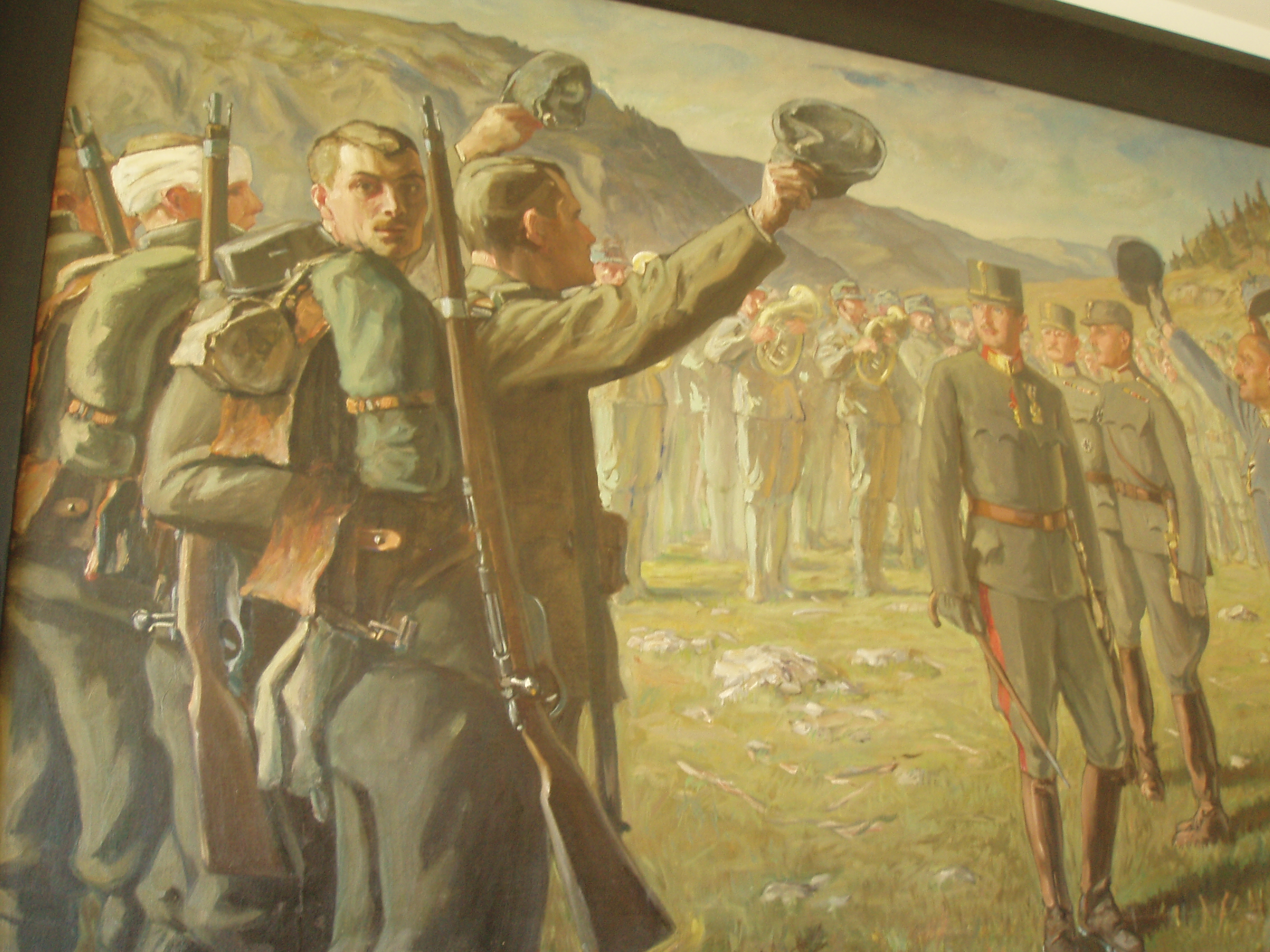
So, I finally made good on my promise and took my young friend to the still-new Tirol Panorama Museum on Bergisel. It’s connected to the Kaiserjäger Museum, which is dedicated to the Empire’s local militia regiments from the 19th century, so we wandered through that too, just looking at the paintings and the weapons with mild interest.

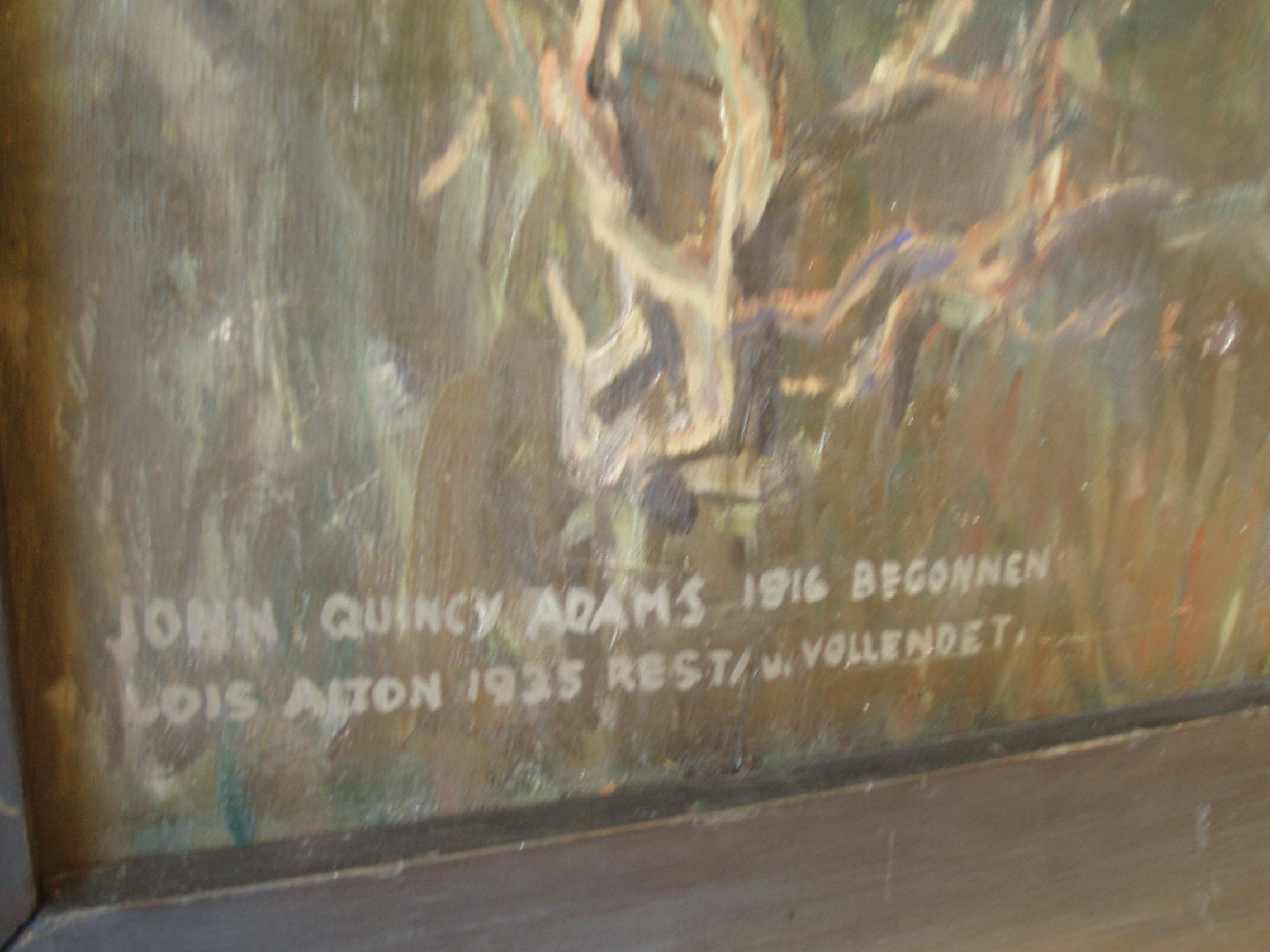
In one room my eyes rested on a large painting of soldiers greeting Kaiser Karl, the last Emperor of Austria. I found interesting the one soldier turning to look directly at the painter, and so my eyes dropped down to read the artist’s signature.

Say what? “John Quincy Adams, began in 1916. Lois Alton rest[ored?] and finished in 1935.”

Not the U.S. President, but a descendant, 1874-1933. Interesting what Wikipedia (the German site) tells me — his father, Carl Adams, was a Heldentenor at the Vienna Court Opera for ten years, then brought his family back to America when John Quincy was four years old. At age twenty-six he enrolled in the Vienna Academy of Fine Arts, and went on to have a pretty successful career on both continents. He’s even got a grave of honor in Vienna’s central cemetery.

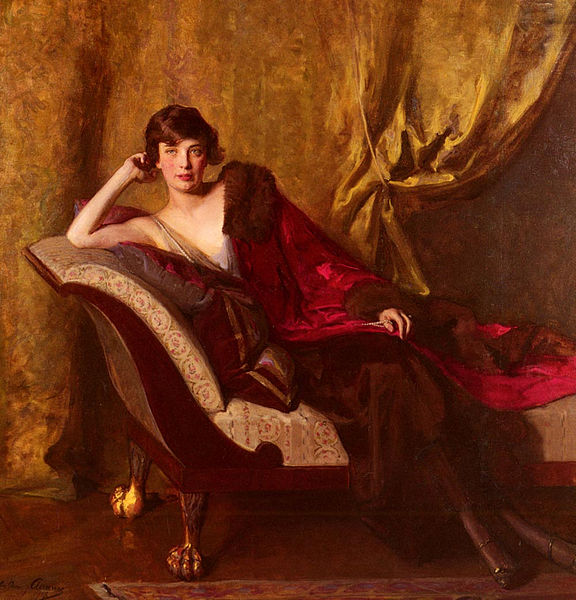
Here is another work, to show that it wasn’t all war paintings for him. Of Countess Michael Karolyi, from 1918. Very nice.

The restorer Lois, or Luis (short for Alois) Alton was a local artist of landscapes and portraits.