Forgotten Innsbruck: Post-War Tourism

Rehearsals, rehearsals, rehearsals. Some of them for the opera which opens next weekend, some for later productions, some for various outside projects including one of my own.

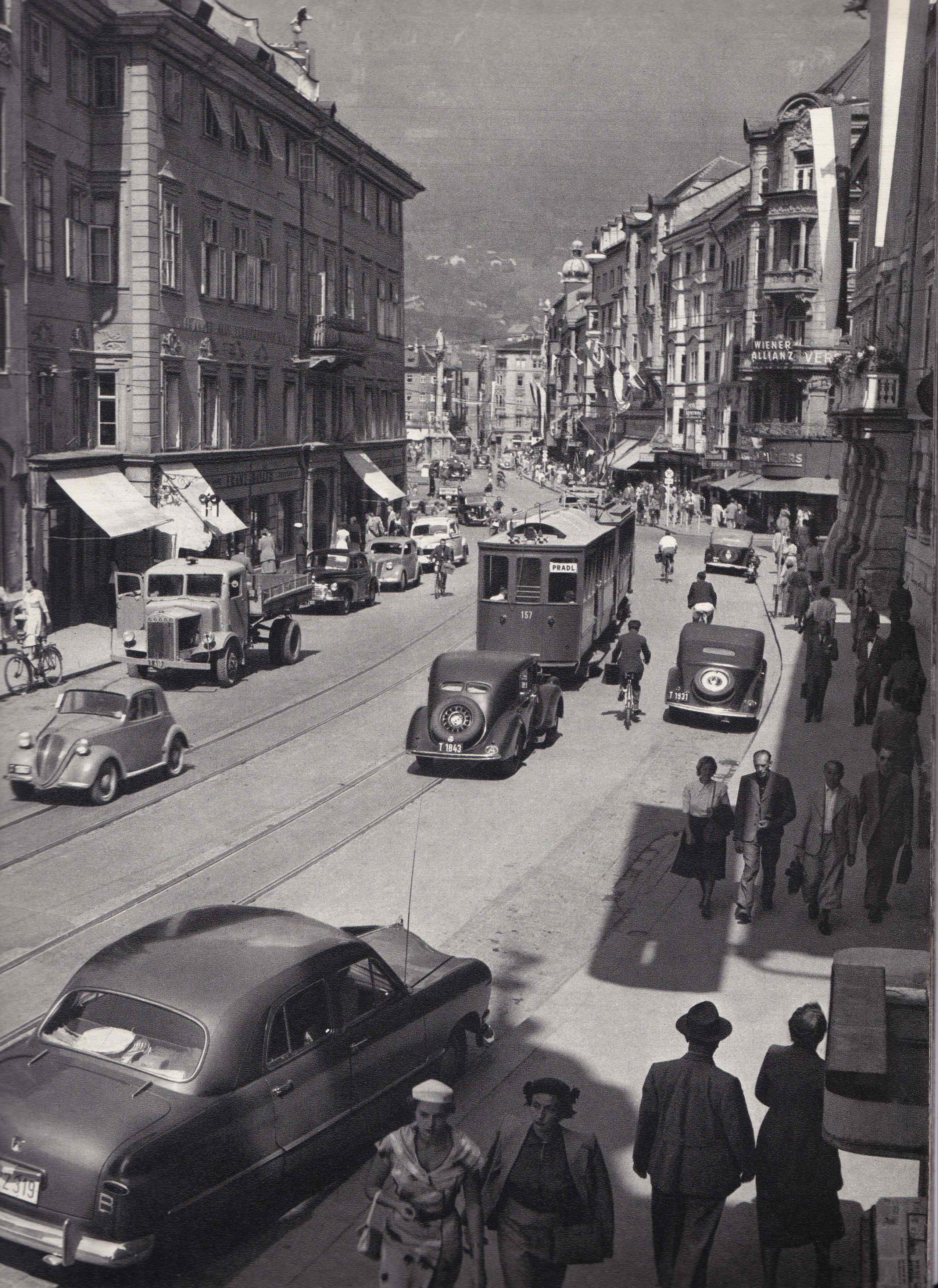
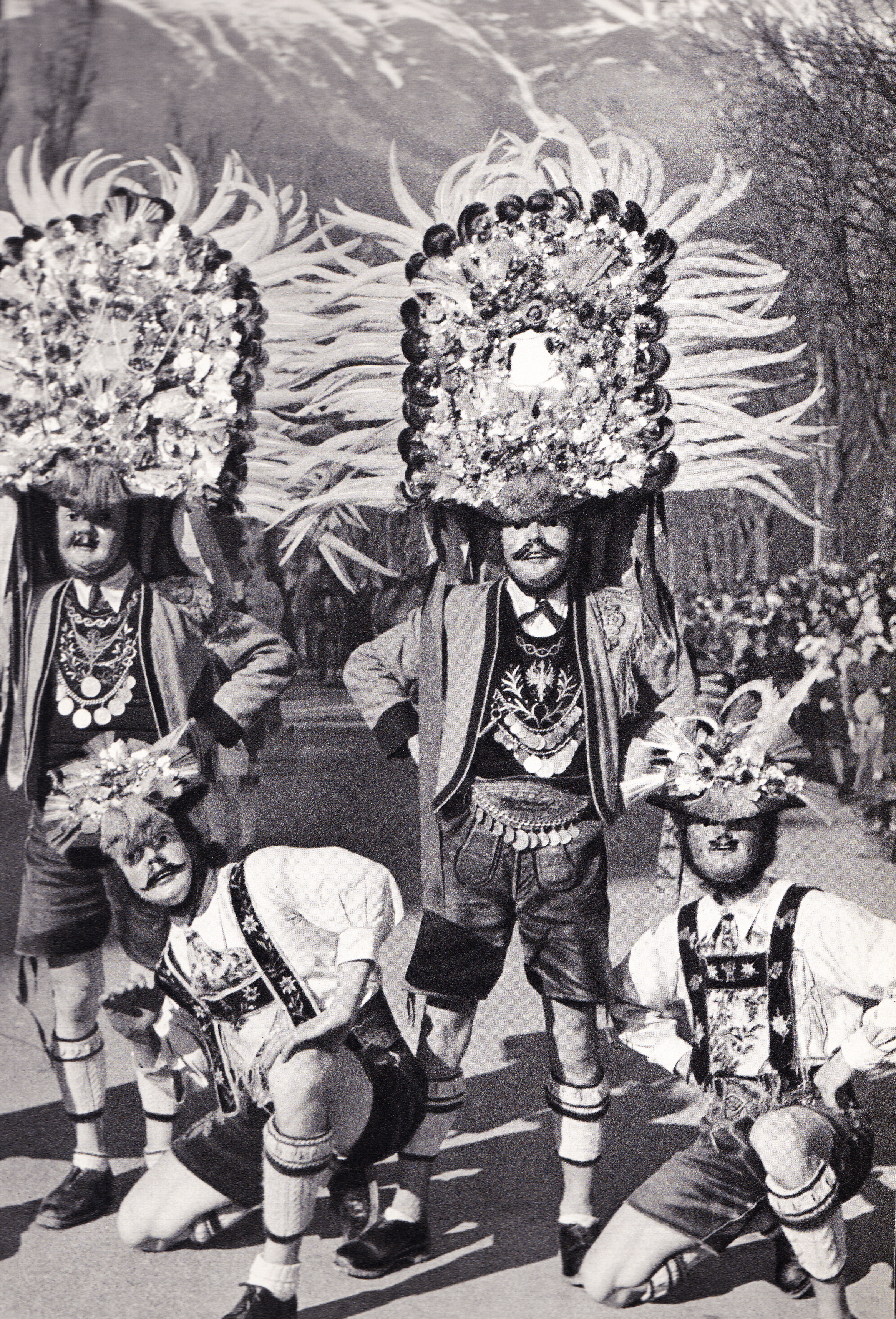
These images were scanned from a photo-book called, simply, “Innsbruck Tyrol” (Inn-Verlag Innsbruck, early 1950s) with photographs by Adolf Sickert. Texts are in German, English, French and Italian, so it was clearly a souvenir book for foreign tourists.
Above, traffic of all stripes on the Maria-Theresien-Strasse. I like that the cars, the cyclists and the public transportation all seem to nicely co-exist on the same pavement.

The sun terrace at the Seegrube, on the Northern Ridge. Innsbruck, in the valley below, is still somewhat small. No ski jump, no Autobahn, no shopping malls.

Traditional costumes and masks (a Fasching parade, I’m guessing) from the Ötz Valley. With those mustaches, they remind me of the Guy Fawkes masks sported by Anonymous and some Occupy participants.

Bruegel’s “Hunters In The Snow” in the film “Melancholia”

Much has already been written on the artworks featured in Lars von Trier’s new film “Melancholia”. One of them, in fact the first painting you’ll see in the film’s prologue, has a possible local connection and, if so, an interesting feature.
Viel wurde schon geschrieben über die Kunststücke in den Film “Melancholia”. Eines davon, das erste Gemälde das man im Film sieht, hat eine unbewiesene aber sehr interessante Verbindung mit Innsbruck.

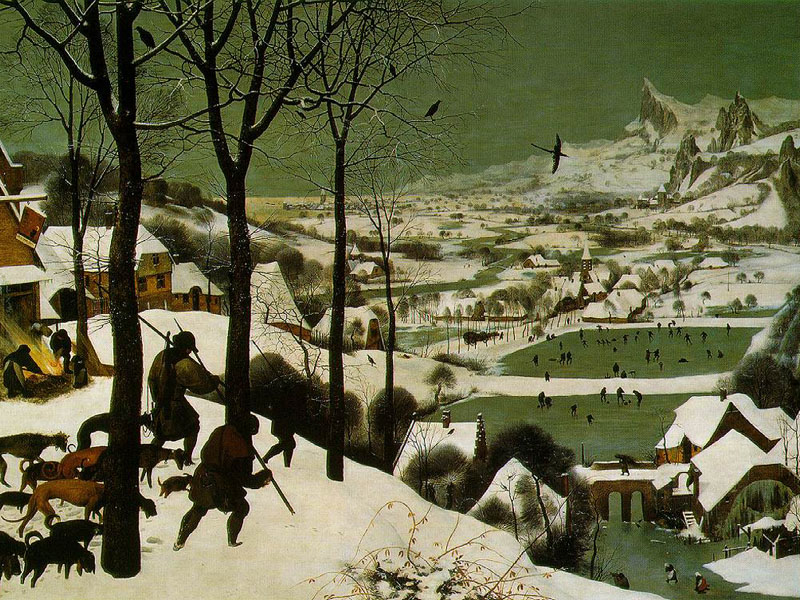
“Hunters in the Snow”, Peter Bruegel (or Brueghel) the Elder, 1565.
Image from Wikipedia.de

One Professor Wilhelm Fischer of Innsbruck wrote an academic treatise a while back, maintaining that Bruegel, on his return trip from Italy, must have come through Innsbruck and made sketches of the landscape. In his opinion this is clearly the village of Amras, the Sill River, and the Inn Valley beyond (with some artistic changes taken into account. The valley is a tad too narrow so the other settlements are not exactly in the right place, for example. And our mountains are not that pointy.)

Der Innsbrucker Professor Wilhelm Fischer behauptet, daß Bruegel auf seiner Rückreise aus Italien in Innbruck weilte, und machte Skizzen von der Landschaft. Laut Fischer ist das Dorf im Bild offensichtlich Amras, mit der Sill und dem Inntal im Hintergrund (man muß aber dann manche künstlerische Freiheiten einkalkulieren — das Tal ist zu eng, die andere Siedlungen sind nicht genau, wo sie hingehören sollen. Und die umringenden Berge sind nicht so spitz.

If this is so, then that skating pond may well be the lost and forgotten Amraser See — remember the Amraser See? It vanished some decades ago and now the DEZ shopping mall stands in its place. What an apt subject for the film.
I doubt Lars von Trier had even heard of this, perhaps he used the painting among others to show melancholy (the dejected hunters and even their sorry-looking hounds) being confronted by both gaiety (villagers out and about)  and disaster (according to this blogger the farmhouse on the river has just had an explosion. In any event, it is burning.) Like Justine’s arrival at her wedding reception, you might say. We could continue into the theme of Death As Bridegroom but that’s beyond the scope of my knowledge.

Wenn dieses Gemälde das Dorf Amras zeigt, dann ist der Teich im Bild der verschwundene, vergessene Amraser See, wo jetzt der Einkaufzentrum “DEZ” steht. Herr von Trier weiß davon sicher nichts; vielleicht stellt das Bild für ihn eine richtige Melancholie dar,  (die niedergeschlagene Jäger sogar ihre Hünde),  die mit Fröhlichkeit (die Dorfleute) und Pech (ein brennendes Haus) konfrontiert wird. Man vergleicht ihr Ankommen mit Justine’s Ankommen an das Hochzeitsfest (im Film).

Considering the film’s theme of everything going under, the inclusion of a painting which itself shows something already lost and forgotten is interesting (to probably nobody but me, but hey, it’s my blog and I get to write what I want.) A lost world inside a lost world.

Ein Bild von einem verschwundenen Ort, in einer Geschichte über das kommende Verschwinden unserer Welt. Eine verlorene Welt in einer verlorenen Welt.

More about the artworks featured in the film here (English) and hier (deutsch.)

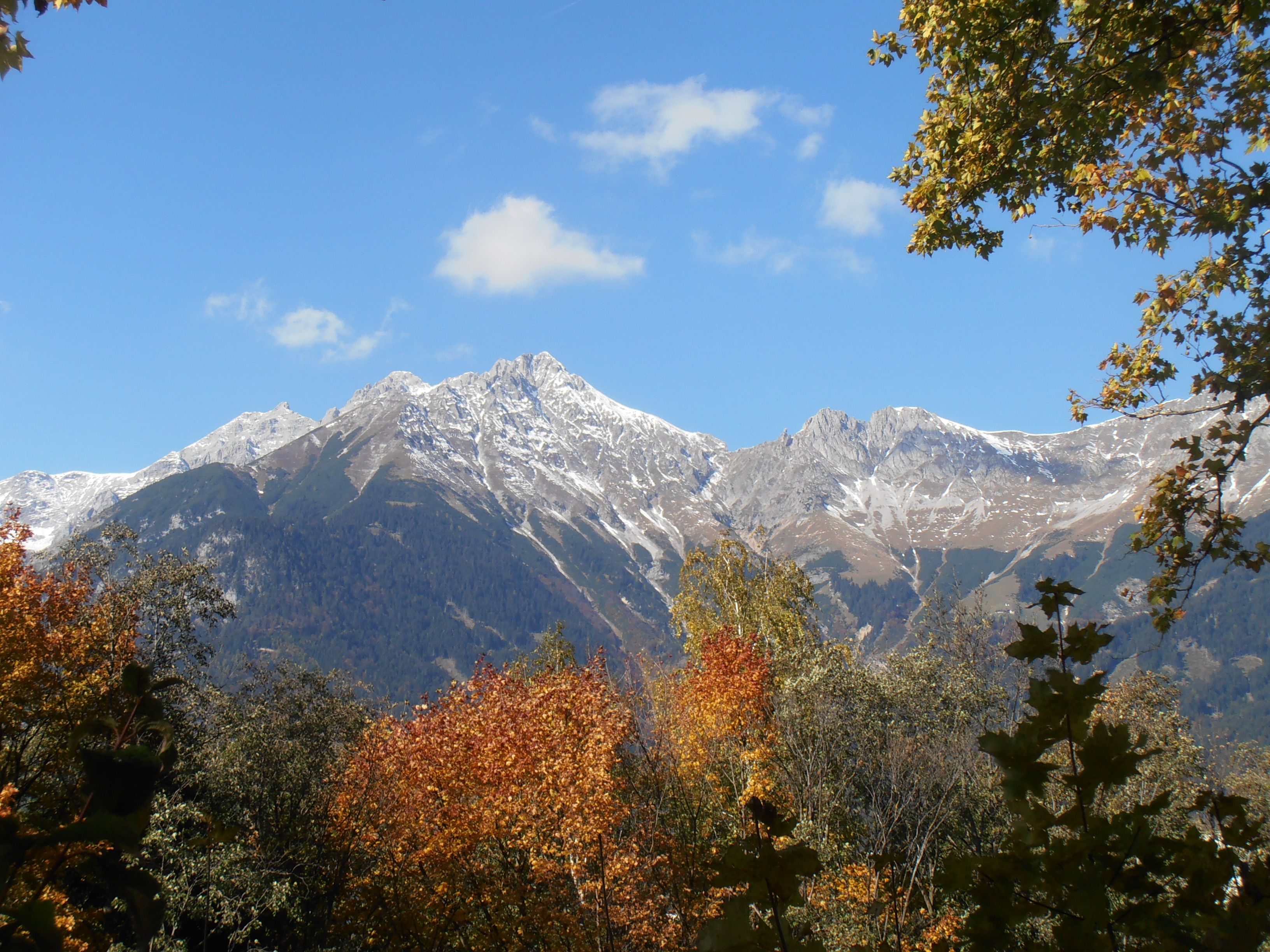
Weekend Mountain Blogging: To The Gletschermühle


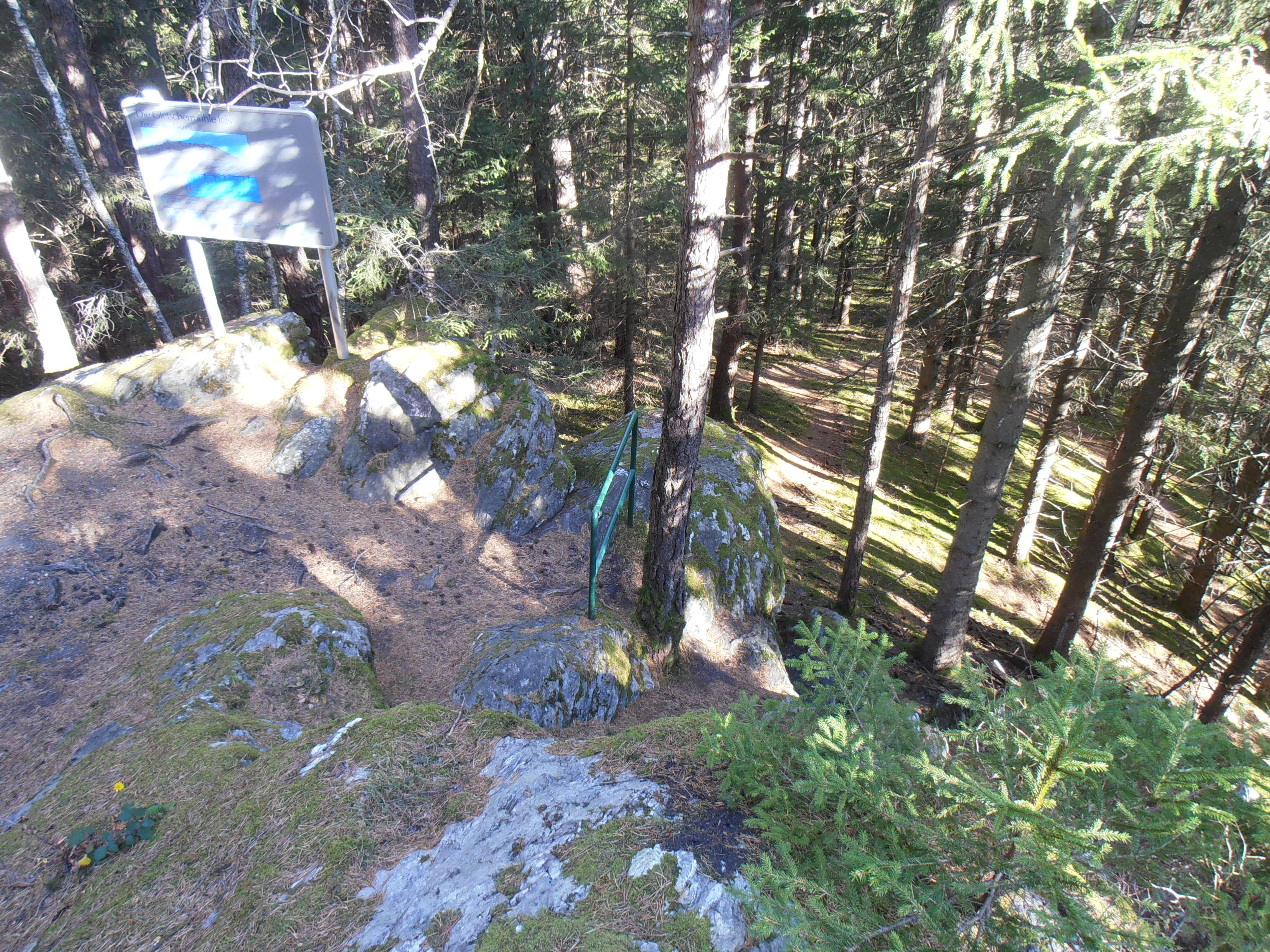
A walk through the quiet and somewhat mysterious Ullwald, in the shadow of the Patscherkofel, earlier this week.


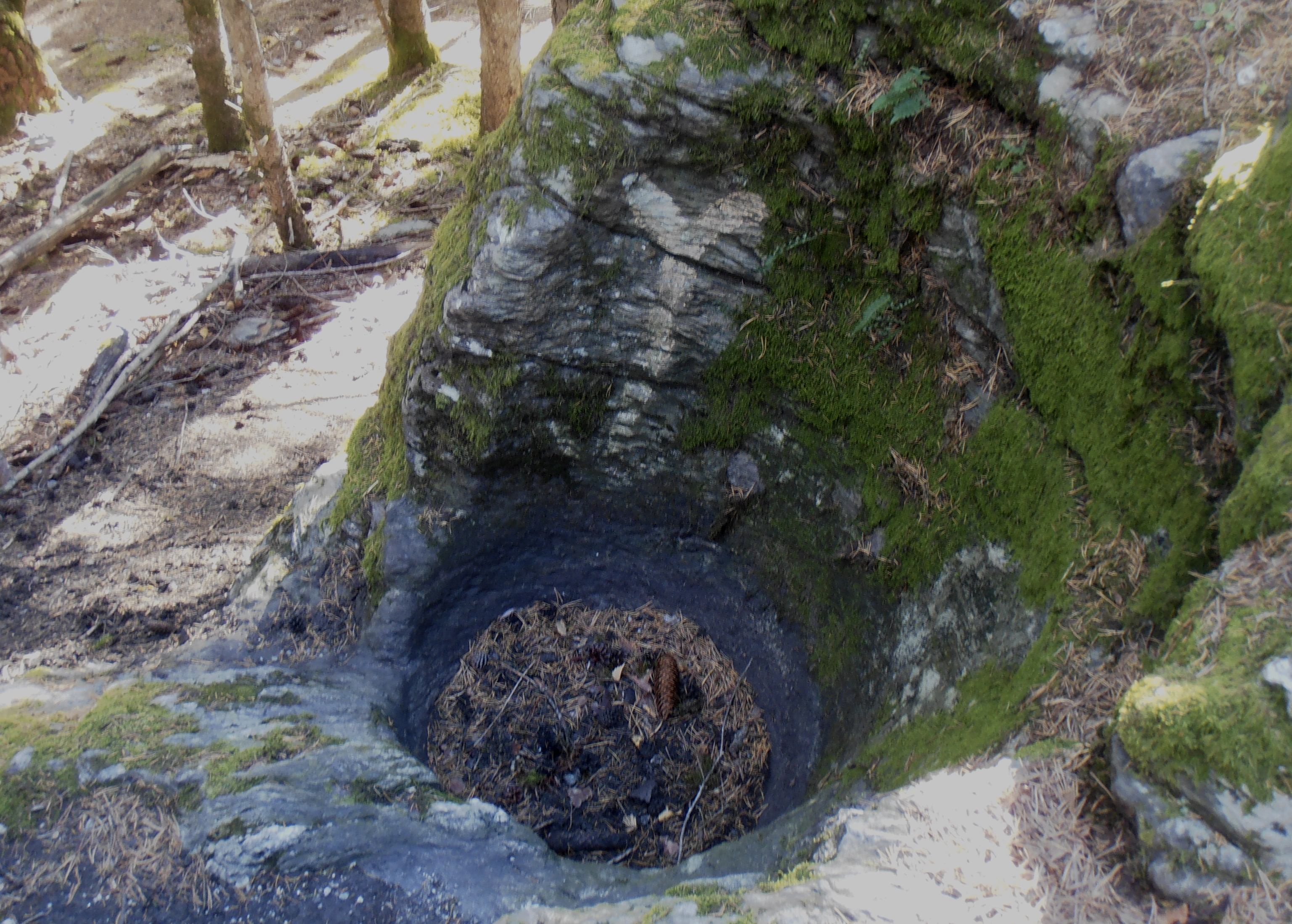
The local sights include the Gletschermühle, a small “glacial mill” carved into the stone by thousands of years of ice age melt.


As water poured off the melting glacier, the churning water, mixed with stones, hollowed out a “kettle” in the rock below.


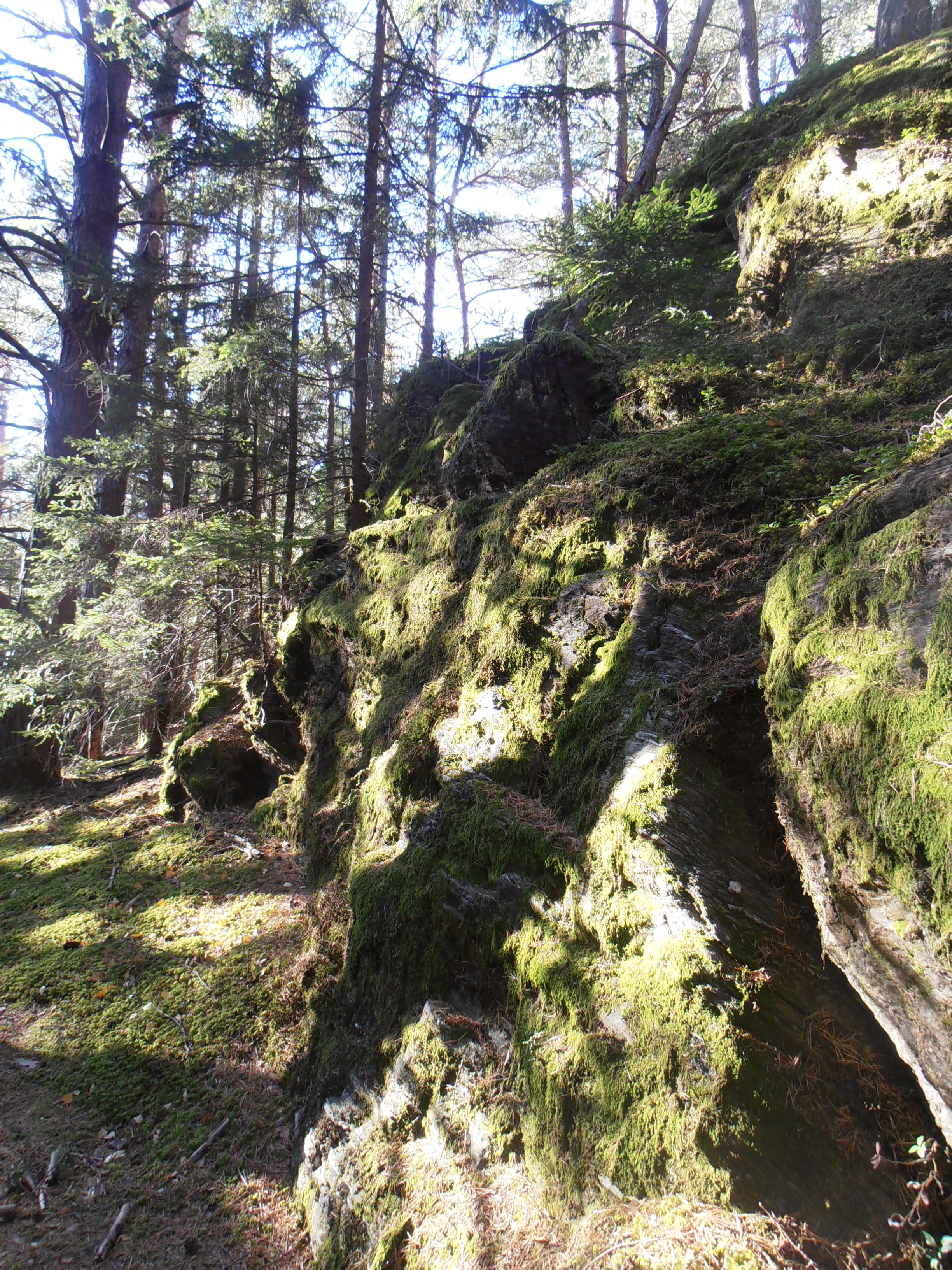
When I scrambled over the rocks to the other, lower side, an idea struck me. Although this “carving” is a natural formation, it must have been important to earlier inhabitants due to its rarity. And if 4000 B.C. Man was really no less genetically primitive than 2000 A.D. Man, he would have to have been impressed with this rock face in a majorly theatrical way, as backdrop for ritual. Perhaps the massive cathedral high altar of today is a descendants of the mass of rocks behind the priestess/priest. My camera couldn’t do it justice, unfortunately.

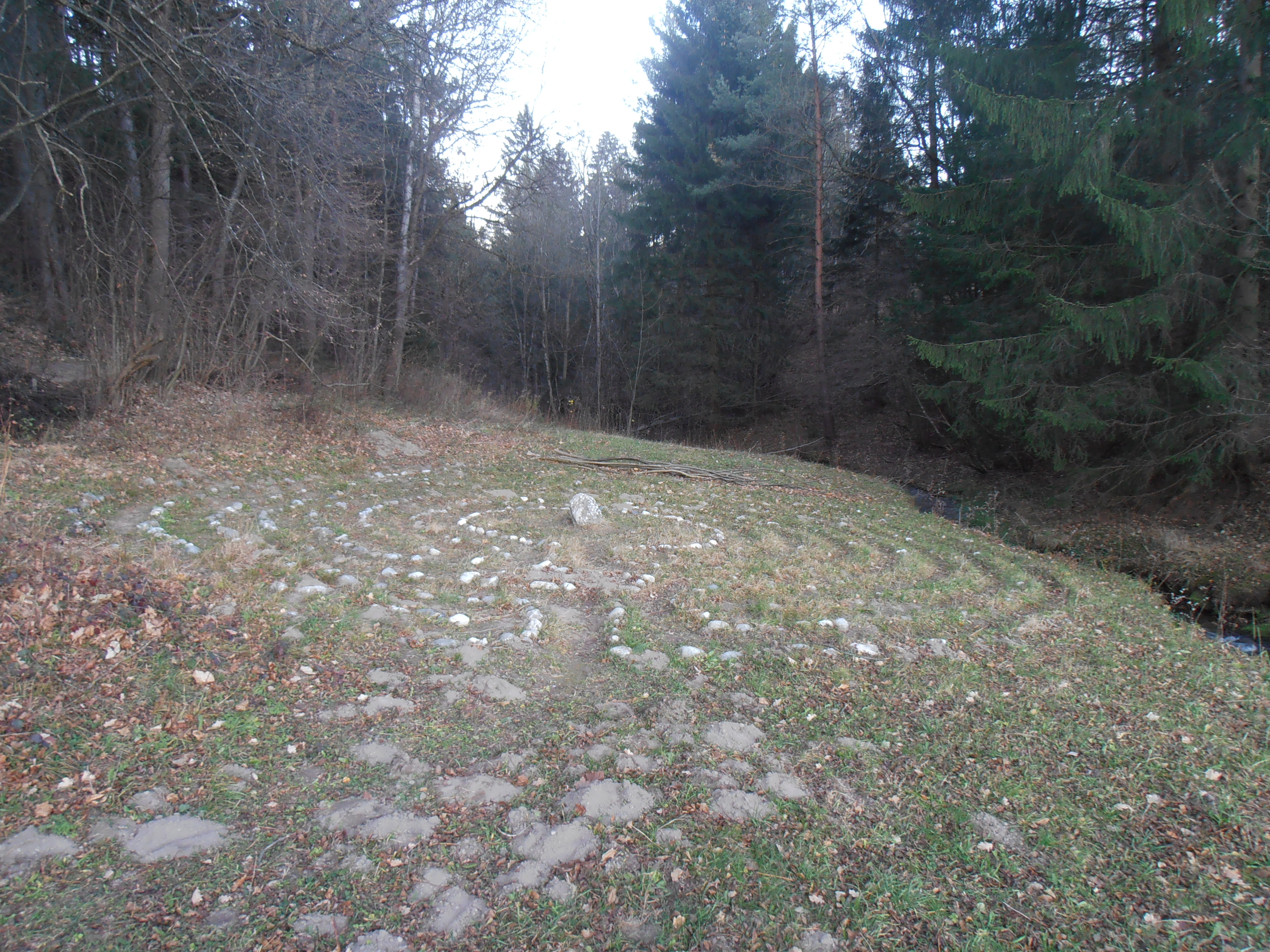
Not far away, what 2000 AD Man has been up to: A stone labyrinth, close to the Mühlsee tram station.

Pagans In Tirol: Schalenstein

My best blogposts lately have been inspired (stolen) from others’ efforts, and this one will be no exception. Earlier this month fellow blogger Paschberg went exploring on the newer trails carved out by the mountainbikers, and came across a rock cliff with cup markings carved into the top. This would be the second set found, after the boulder near Tantegert. Naturally, I needed to go find this for myself, and so, equipped with a marked google earth map graciously sent to me, I set out to find the Schalenstein.

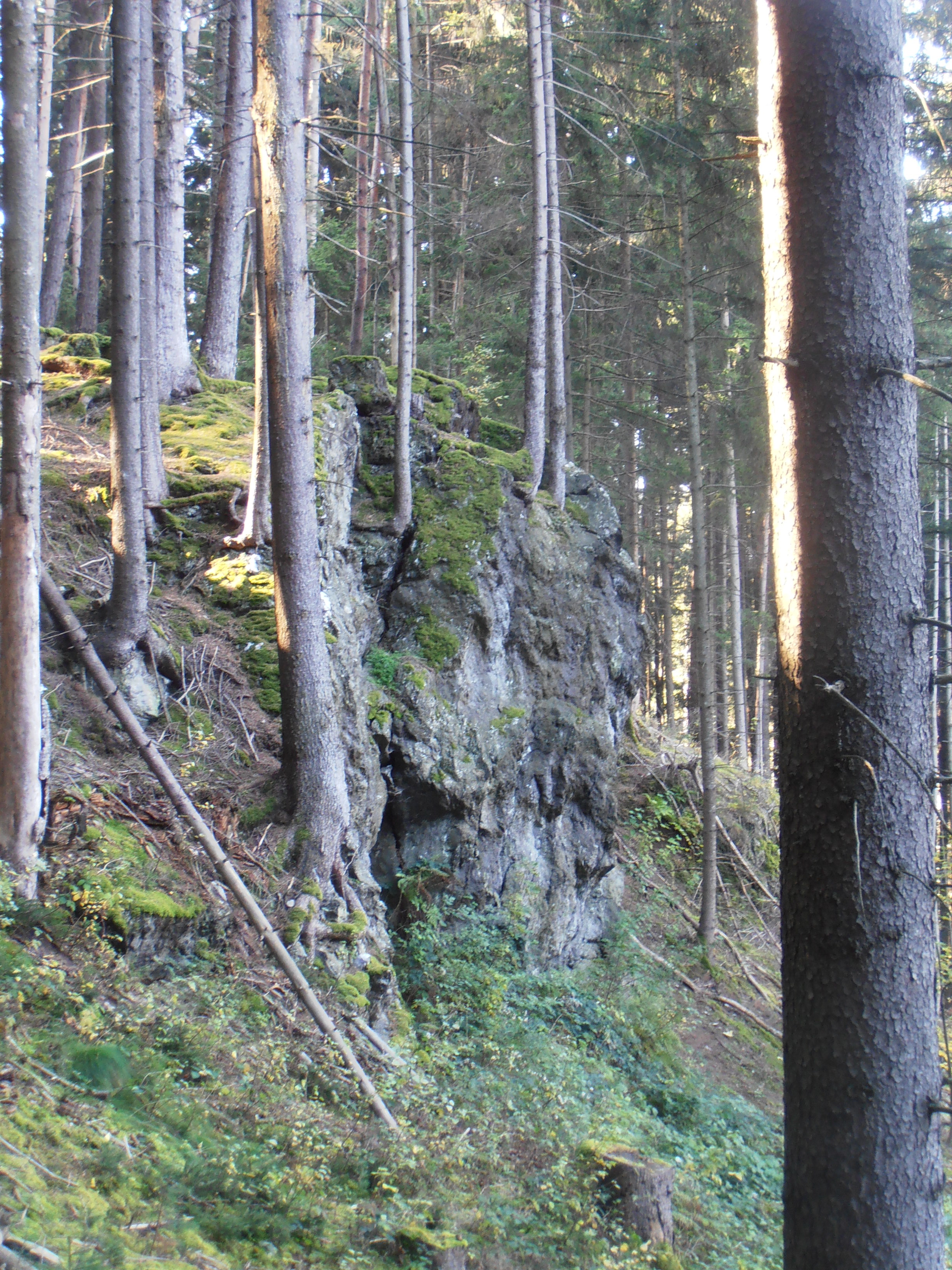
After wandering around the general area (there are all sorts of named and unnamed tracks criss-crossing around over there), I circled back and came across this rock face, part of a longer ridge that cuts through the woods.

And sure enough, at the top was a flat, square-shaped boulder, with three cup markings bored into the surface. I was delighted to find it, and at the same time wanted to kick myself for passing so close to this area regularly for nearly two years, and never looking around over this way. This Schalenstein was practically in front of my nose, or better said, over my head.

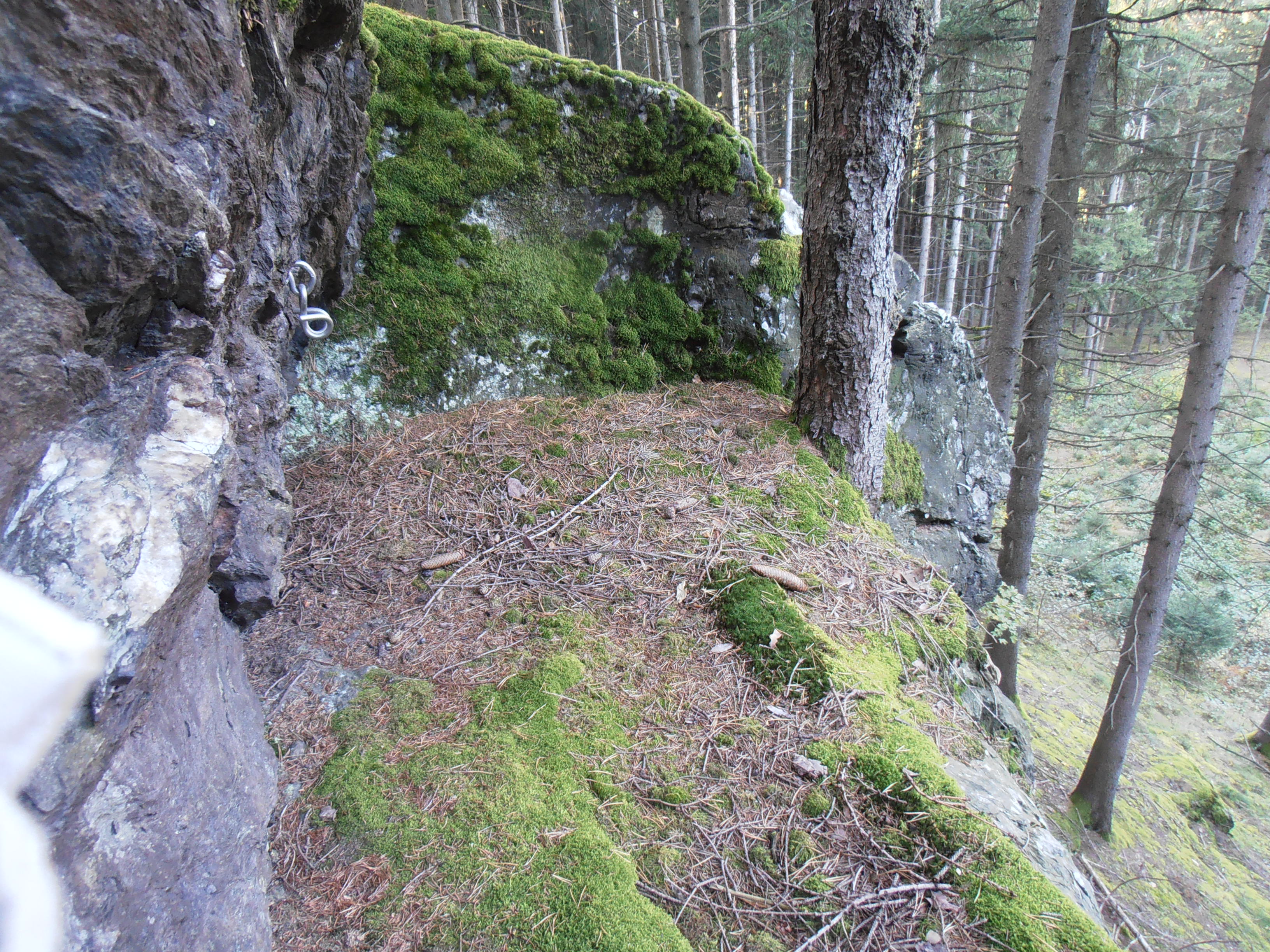
Behind the rock is a kind of partly enclosed ledge, big enough to sit on. That’s where I noticed the bolt anchors — there are several of them driven into the rock at different heights. Clearly, this cliff is being used for rock climbing practice.

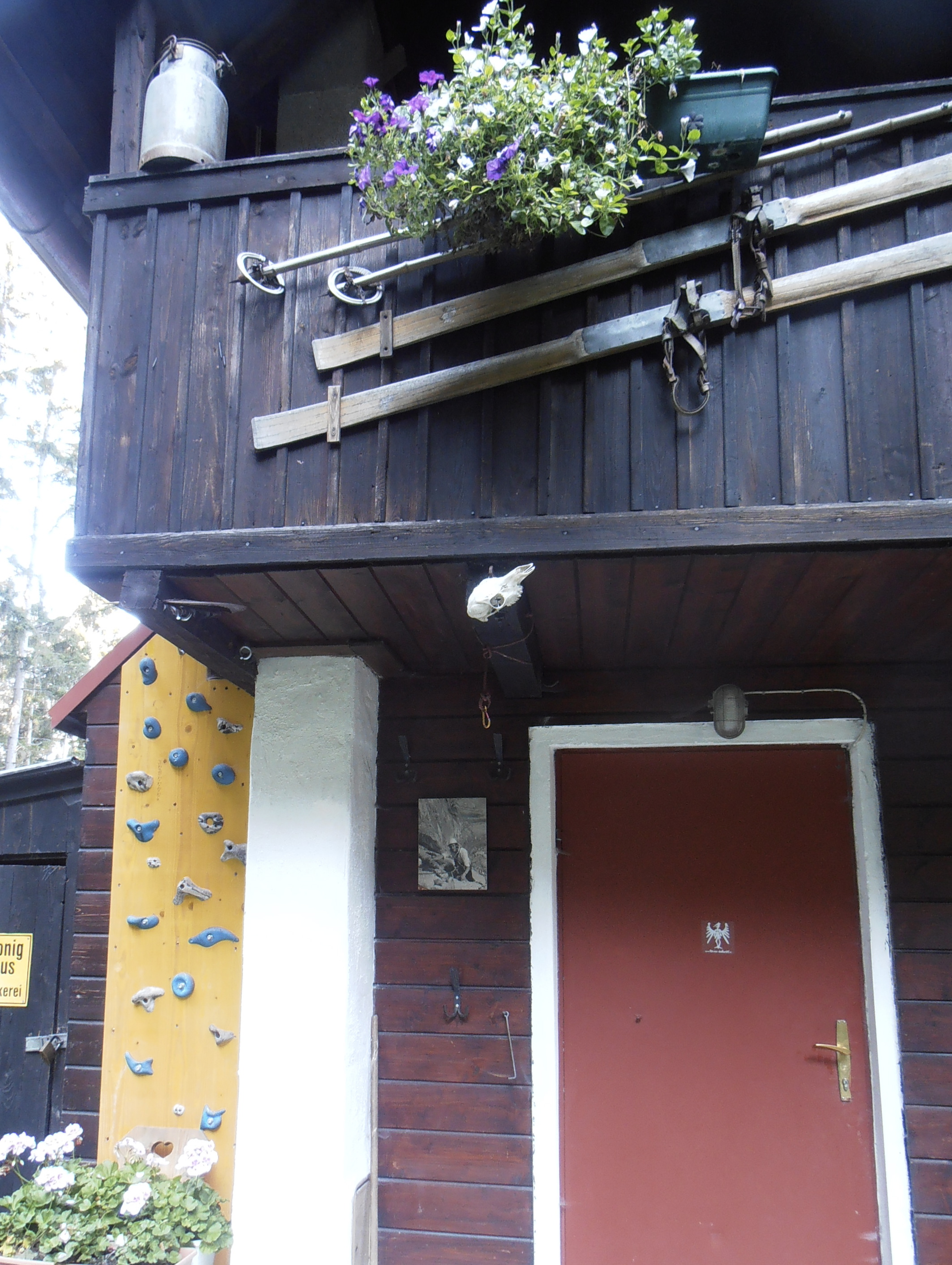
And at the so-called “witch’s cottage”, just a minute or two down the path, it became a little clearer that the climbing practice has some connection to whoever uses the cottage now. Note the climbing holds decorating the wall, and the photograph next to the door.

I walked further uphill along the ridge to inspect more boulders, but they are all covered with thick moss and tree roots. There’s just no telling what’s underneath them. The Schalenstein was the only rock that was somewhat free of moss — which leads me to believe that it’s being somehow, anonymously, maintained.
I once asked an archaeology-minded friend about the cup markings in the rocks here, and she responded with cynicism. There are fakes, there’s no proving their antiquity. She has a point, and the rocks don’t seem to be of interest to anyone official (Not that I can see. Maybe I’m wrong about that.) But they are there. The sacrificial altar sites at Goldbichl and Bergisel are not all that far away, nor is the possibly-Pagan “Judenstein”. It is said there are other marked stones in the area, hidden away in the woods, waiting to be visited.

Forgotten Innsbruck: A Photo Book

Recently an old, tattered copy of a photo book on Innsbruck by one Adolf Sickert (Innsbruck: Ein Farbbildwerk, published by Meinhold Verlagsgesellschaft, Dresden 1943) fell into my hands, and some of the photographs I found interesting enough to scan and post here. For example this view of the Serles over the snow-covered rooftops of the old town, with its swastika-draped facades.

This town square still looks pretty much the same — the fountain is still there, and the grass, and even that nice big tree. The old ladies are gone, replaced by young homeless men and their dogs. The name of the square, too — at the time it was Adolf-Hitler-Platz, but it went (back?) to Theaterplatz after all that business ended.

The old Hungerburgbahn — would this be one of the original cars? — had open windows from which one could lean out. This track is no longer used since the new line was built, but the bridge is still there.

The arch, where Maria-Theresien-Strasse meets Maximilienstrasse. The gun shop is now a bakery/lunch counter. The “oldtimer” trams, like the one shown here, are pulled out and run every so often.

Das Tirol Panorama

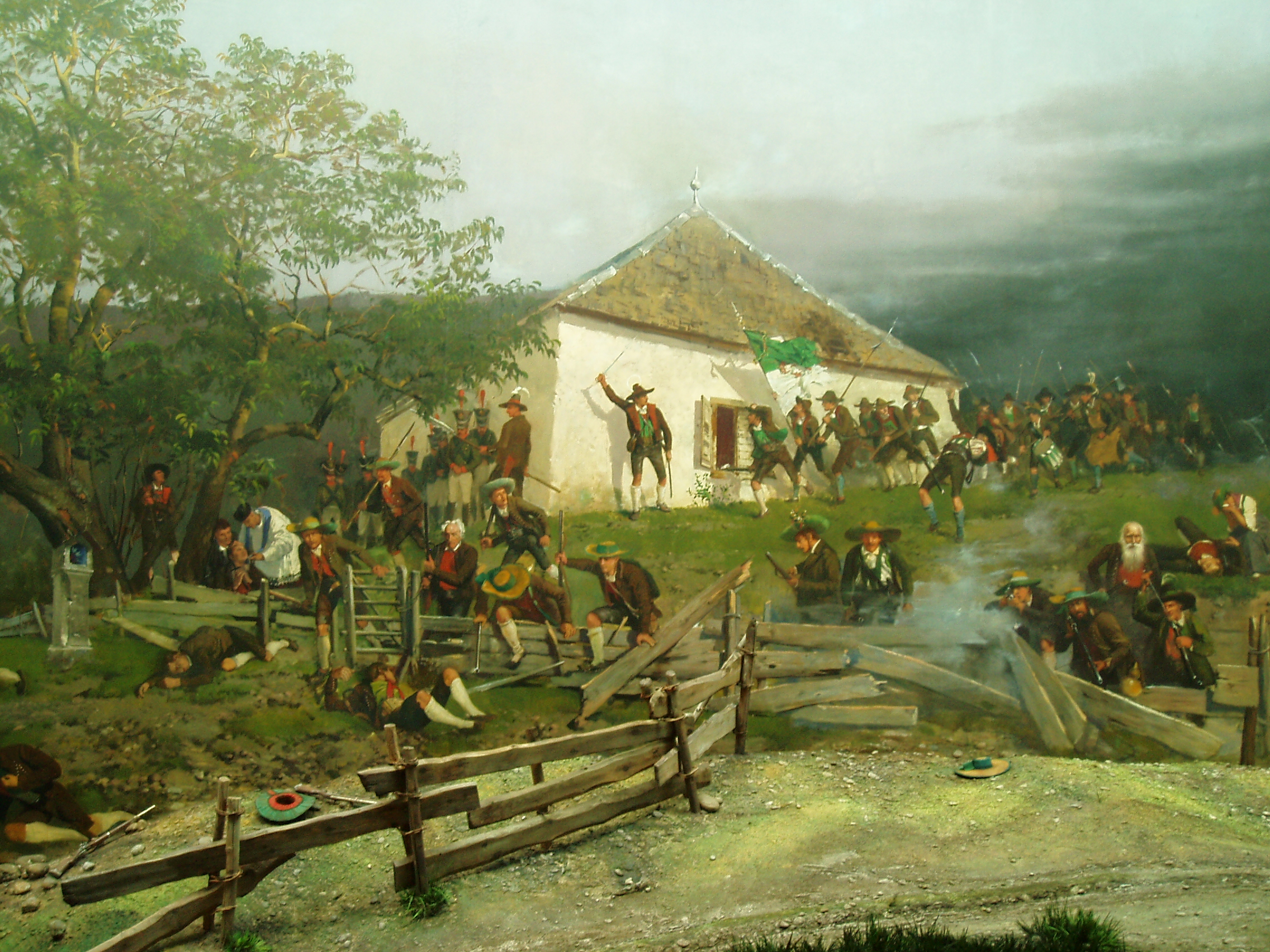
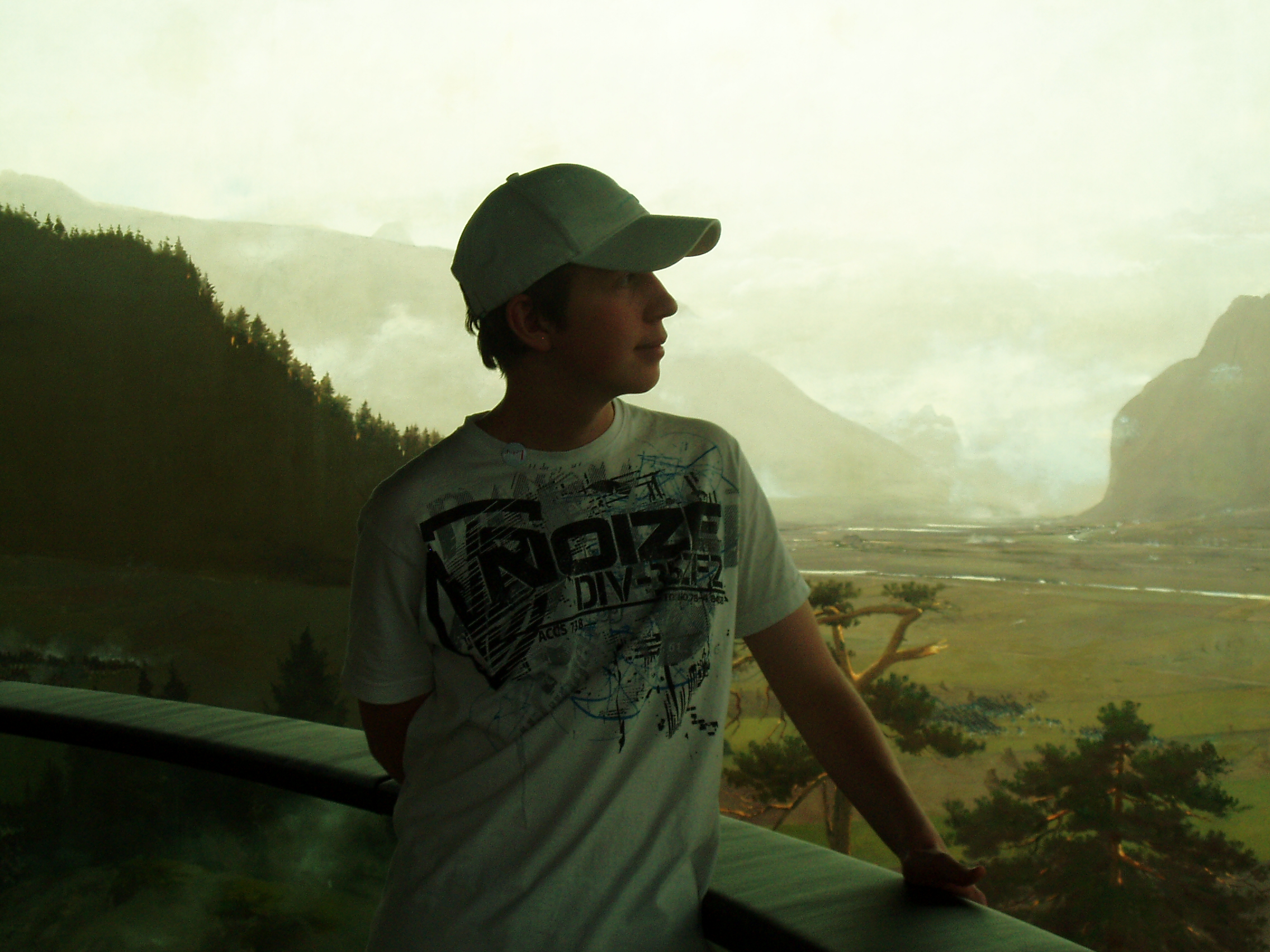
There was finally time for a visit to the Panorama Museum, home of Innsbruck’s historic Riesenrundgemälde, previously displayed in the Rotunde in town. The interior is all modern glass and concrete, but they’ve done nice work with the presentation of the old-timey panorama painting, which still has its charms. One particularly strong impression is one of the very first — you have to descend an escalator to a lower level and then walk up a set of stairs to get “into” the panorama, and from the bottom of the stairs you see the Northern Range, and for a second you really aren’t sure if it’s not the real thing you’re looking at. Later in the connected Kaiserjägermuseum you find yourself looking up another set of stairs, at the top of which is a large picture window which does look out on the real Northern Range, and then you realize what the architect was up to.

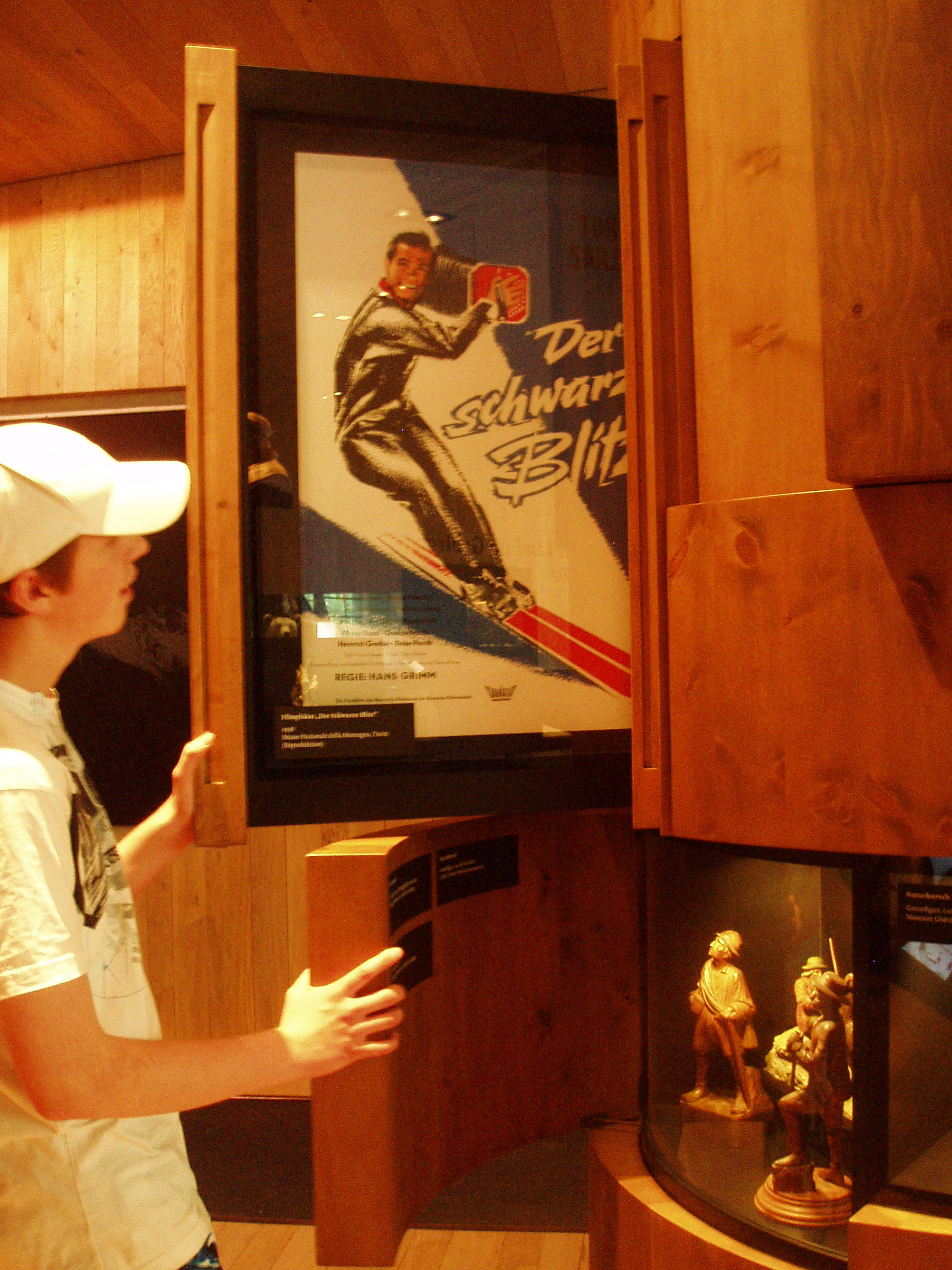
Back downstairs, one proceeds into a large space with a lot of “tiroliana”, some of it hidden in secret compartments within wooden pillars, which looked popular with children. In the center of the room is a lot of political remnants (such as the horse’s head from a Mussolini statue from South Tirol, blown up by activists in 1961).

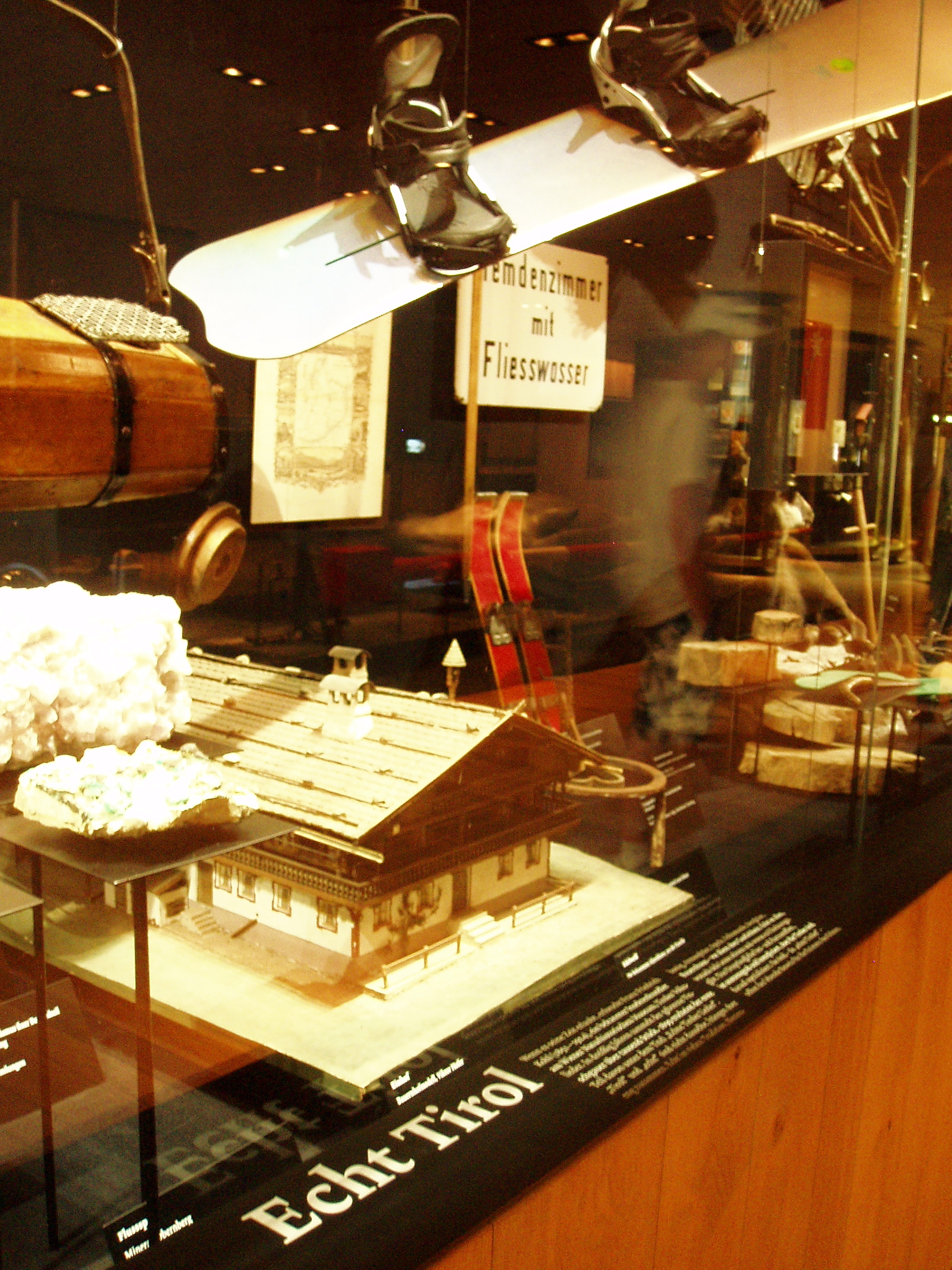
On the other side, a showcase of all manner of local “stuff”, past and almost-present. We didn’t quite get this part; it was as if the museum had to find a way to tie all these objects together and decided to display it almost randomly, with the archaeological finds right next to  20th-century mountain-climbing gear, insect display cases next to old crèches. Sometimes the explanatory signs were not easy to find. We decided that the snowboard must have been Andreas Hofer’s.

If you are visiting Innsbruck and want to see the Museum, I recommend taking the Nr. 1 streetcar to Bergisel (the last stop), then walking up the hill to the museum. There is also a restaurant with outdoor seating, and a gazebo from which to enjoy the view. Just across the park is the entrance to the ski jump arena, which also houses a cafe perched atop the jump, and more impressive views. This museum seems to be more for the locals than for visitors, but if you are interested in getting a sense of Tirolean history and culture without having to do much reading or traveling around, this could do it. The museum offers free headsets with audio tracks which explain what you are seeing. We did not take them, so I can’t tell you how they are.

A Surprise In The Kaiserjägermuseum

So, I finally made good on my promise and took my young friend to the still-new Tirol Panorama Museum on Bergisel. It’s connected to the Kaiserjäger Museum, which is dedicated to the Empire’s local militia regiments from the 19th century, so we wandered through that too, just looking at the paintings and the weapons with mild interest.

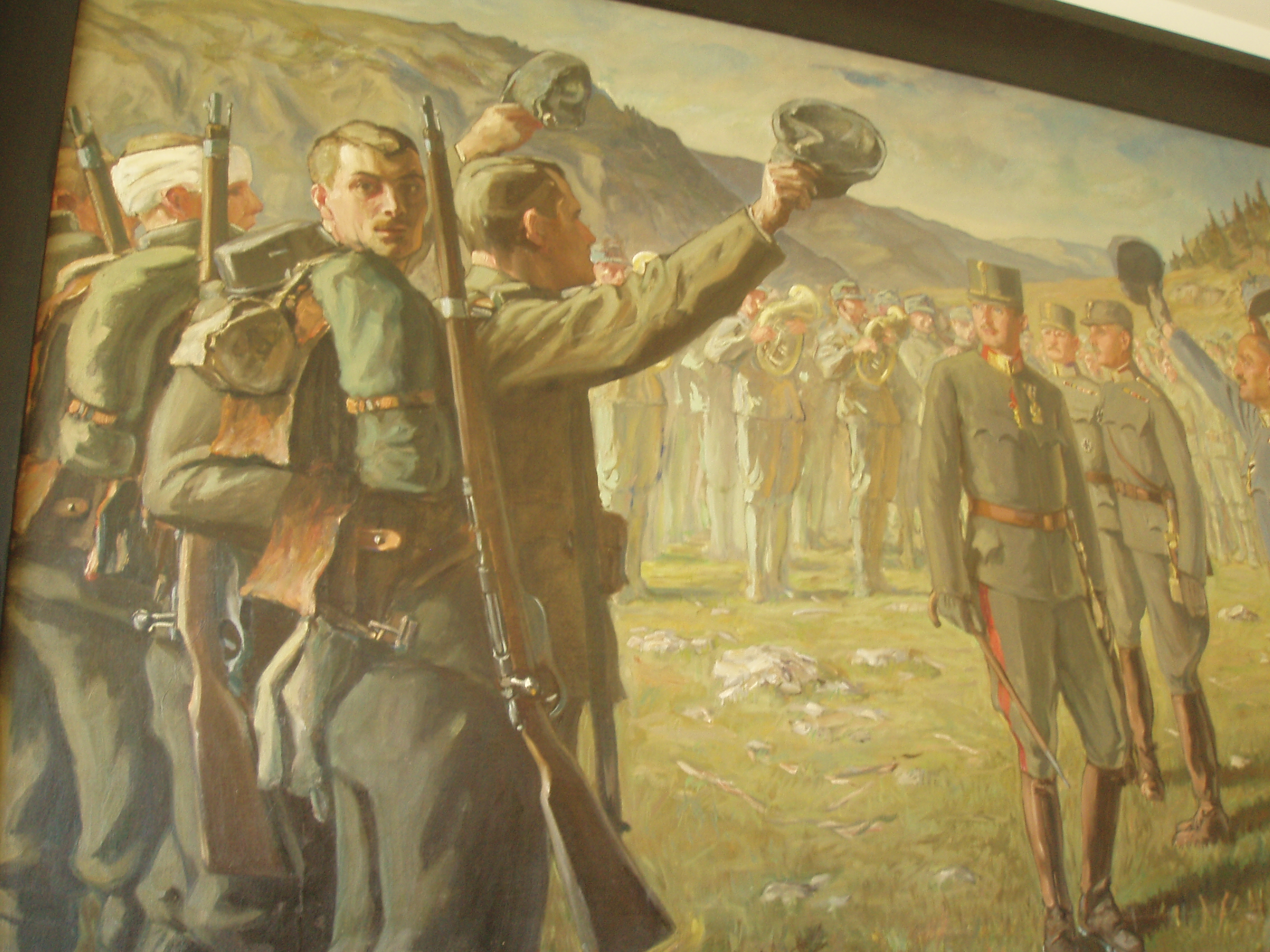
In one room my eyes rested on a large painting of soldiers greeting Kaiser Karl, the last Emperor of Austria. I found interesting the one soldier turning to look directly at the painter, and so my eyes dropped down to read the artist’s signature.

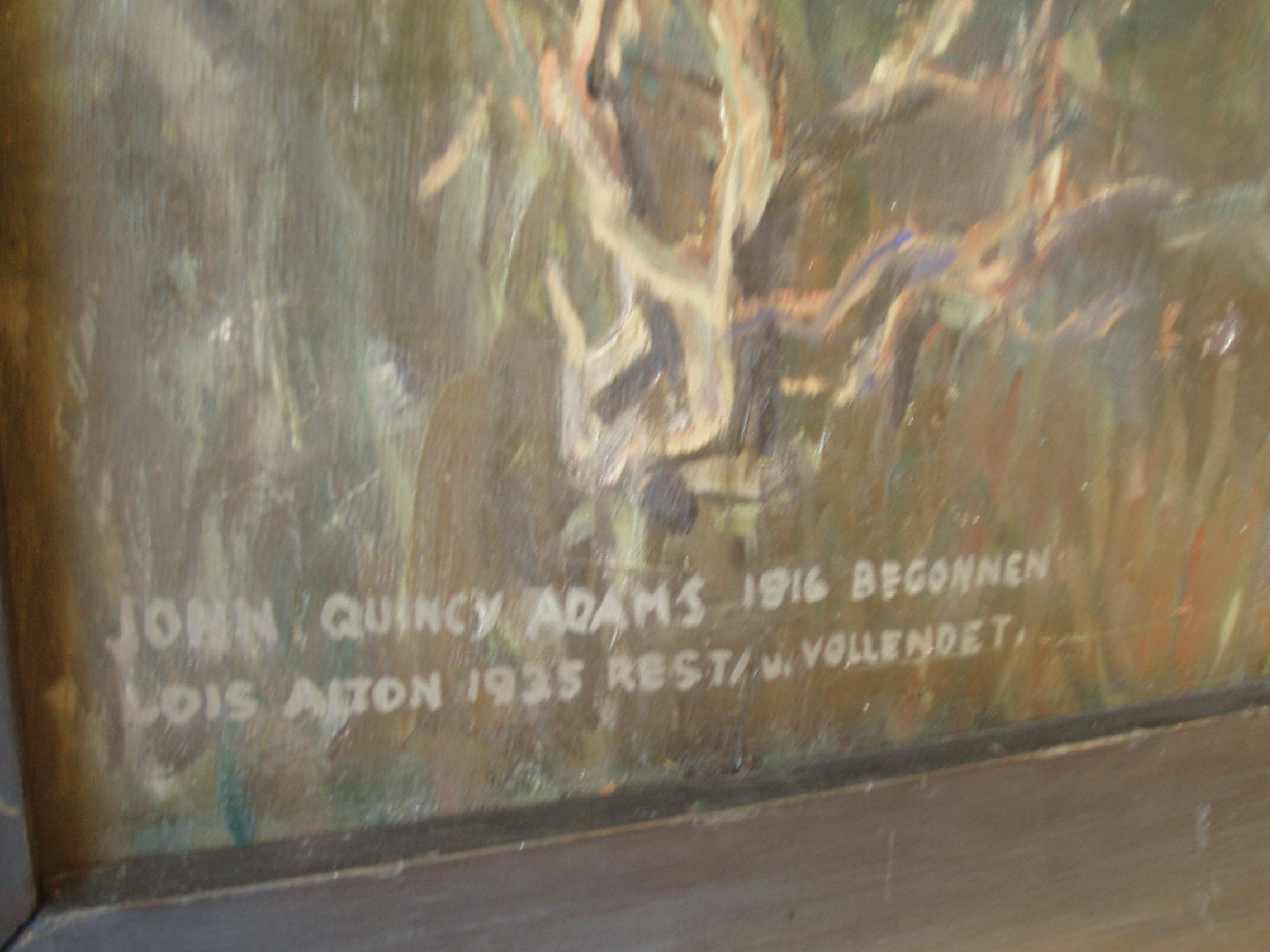
Say what? “John Quincy Adams, began in 1916. Lois Alton rest[ored?] and finished in 1935.”

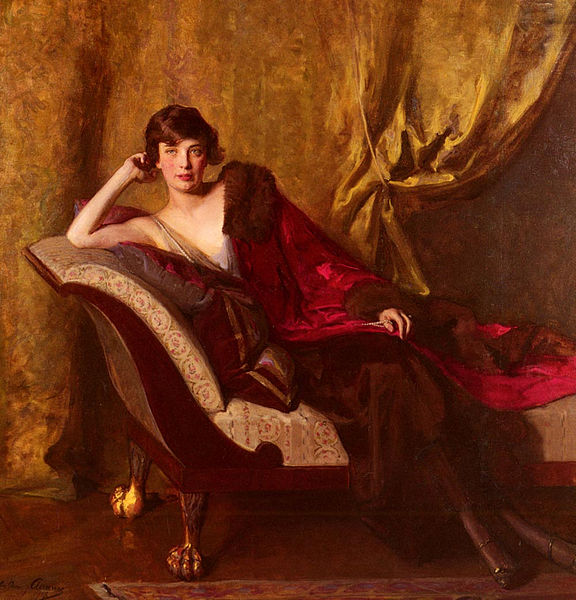
Not the U.S. President, but a descendant, 1874-1933. Interesting what Wikipedia (the German site) tells me — his father, Carl Adams, was a Heldentenor at the Vienna Court Opera for ten years, then brought his family back to America when John Quincy was four years old. At age twenty-six he enrolled in the Vienna Academy of Fine Arts, and went on to have a pretty successful career on both continents. He’s even got a grave of honor in Vienna’s central cemetery.

Here is another work, to show that it wasn’t all war paintings for him. Of Countess Michael Karolyi, from 1918. Very nice.

The restorer Lois, or Luis (short for Alois) Alton was a local artist of landscapes and portraits.

>Forgotten Innsbruck: “Kropferte Liesl”

>

Austrian Empress Maria Theresia gave birth to 16 children, ten of which survived into adulthood (pregnancy seems to have given her extra spurts of energy which she then used to accomplish such things like reorganizing the army or conducting wars.) Her eldest son Joseph succeeded her as monarch, and her most famous child is probably Maria Antonia (better known by the French version of her name.) These two and all the others are subject of the book which I am currently reading, “Maria Theresias Kinder: 16 Schicksale zwischen Glanz und Elend” (Maria Theresia’s Children: 16 Fates Between Glory and Misery), Hanne Egghardt, 2010.

After the unexpected death of her husband, Franz I Stephan, during a trip to Innsbruck, Maria Theresia founded a Damenstift for noble ladies there. A Damenstift (or Frauenstift) is a sort of monastery for women, but differs from a convent in that, unlike nuns, the residents were not bound by holy orders. They were required to participate in prayer and masses, but enjoyed many more personal freedoms as well as the option to leave if they so wished. The Stift founded by Maria Theresia was set up so that prayers would be said around the clock for the soul of the deceased Emperor (I assume carried out in shifts.) As most of the noblewomen were under quite young, it may well have resembled a sort of Catholic girls’ boarding school, without classes or teachers. 

When Maria Theresia died, Joseph made sweeping changes in Austrian government as well as to his own household, moving out the two “spinster” sisters still living in the palace (‘Weiberwirtschaft‘.) Maria Anna (“Marianne”) had always been in poor health and was never married off; she went by her own choice to a monastery in Klagenfurt. Maria Elisabeth had been a lovely, unserious young woman consumed with her beauty, fashion and society until a debilitating case of the pox laid her low. She survived but was literally scarred for life. All her marriage prospects dried up at once, and she stayed well out of the public eye for three years. Elisabeth, it was decided, was to go to the Damenstift in Innsbruck, and it was a turning point in her life.

After a childhood and youth in which her looks were everything, and the depressing years following her illness, Elisabeth began to find her self-confidence. She gained a high position in the community, received the Pope during his visit to Innsbruck. She never lost her sharp wit, nor her sharp tongue — she called Emperor Franz II “the boor”, Archduke Ludwig “the sneak”, the Archbishop of Oelmitz the “little nest-shitter”. Freed from all pressure to be attractive for marriage, she gained quite a bit of weight and became known for her triple chin, which she even showed off on occasion by pulling aside her veil and “letting them swing like billiard balls”.

When troops neared town (first Revolutionaries, then Napoleon’s) the ladies of the Damenstift were forced to flee, and in 1806 they ended up in Linz. Elisabeth died there in 1808 and was laid to rest in the cathedral.

>Weekend Mountain Blogging: Höttinger Alm

>

The Höttinger Alm, 1487 meters above sea level,  opened for the season on Saturday.

“Frau Hitt”, looking like a finger pointed in the air. Probably the closest I’ll ever get to it, not being much of an experienced climber. (Makes a nice desktop screen shot, too.)

It was a relief to get back down to the warmer valley, and back into spring. On the way down I noticed a shrine of stones to a recent (2010) avalanche victim named Thomas Charry. It looked new-ish and more than the usual little plaque, so I looked up the name later: he was a ski photographer and blogger (link to blog, in French). His blog is being maintained by family, and they have been putting up Charry’s photos (both of him and by him) regularly. Which prompts me to remind all bloggers to have your passwords and account information stored where a trusted someone can access/delete/memorialize your pages, should you die suddenly. There are thousands of frozen, inaccessible sites out there, the bloggers having died and taken their account information with them to the grave. Write it down and stash it somewhere safe (but not impossible to find!)

>Pagans In Tirol: Der Judenbühel

>

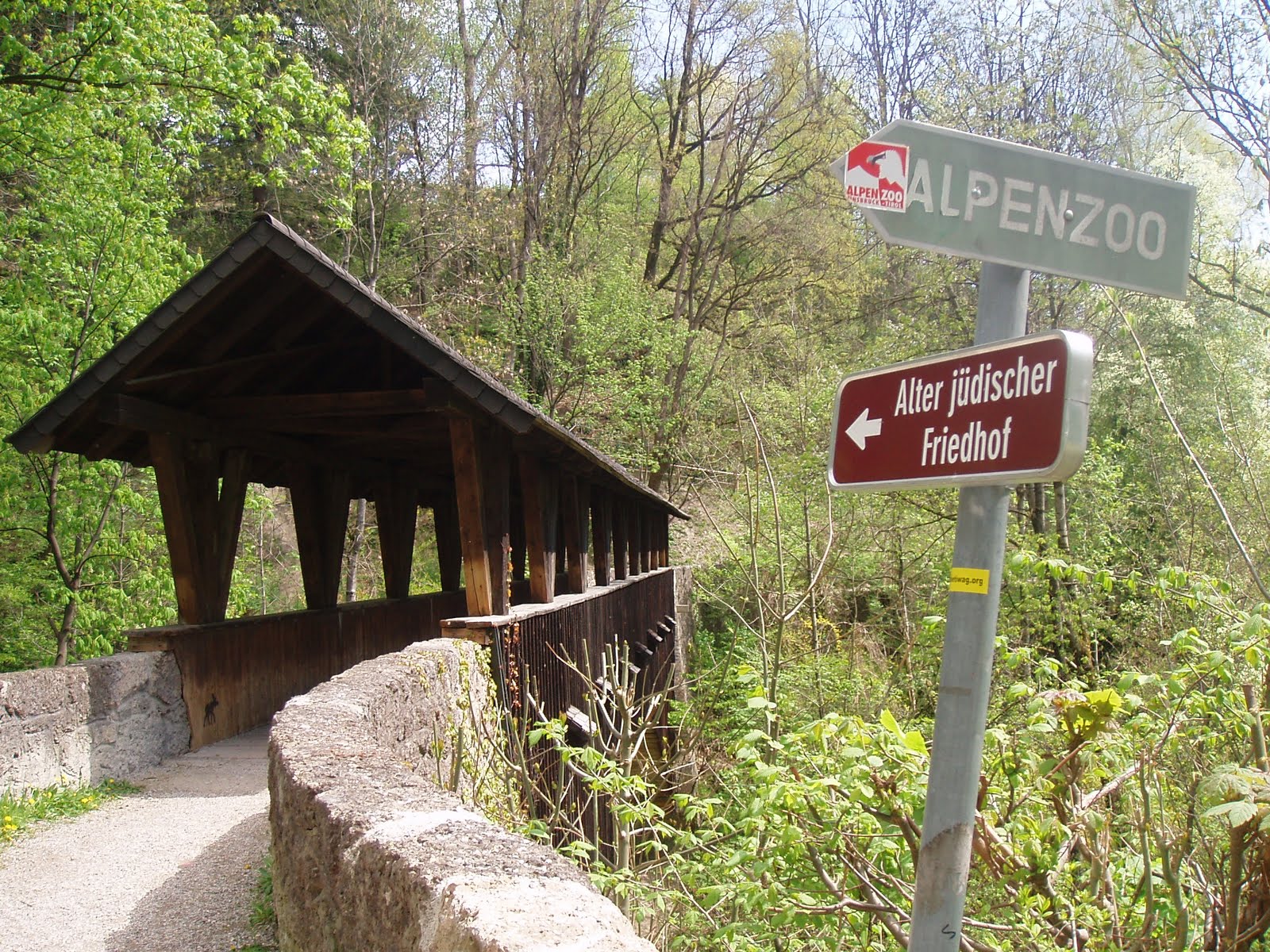
 Below the Alpenzoo, close to the Hungerburgbahn, is a bridge to a hill called the Judenbühel, or literally, Jews’ Hill. From a cursory online search I found that the first written reference to it is from 1598, when a Jewish local man got permission from court to establish a family plot there, “where the old Jewish graves were”. 

  
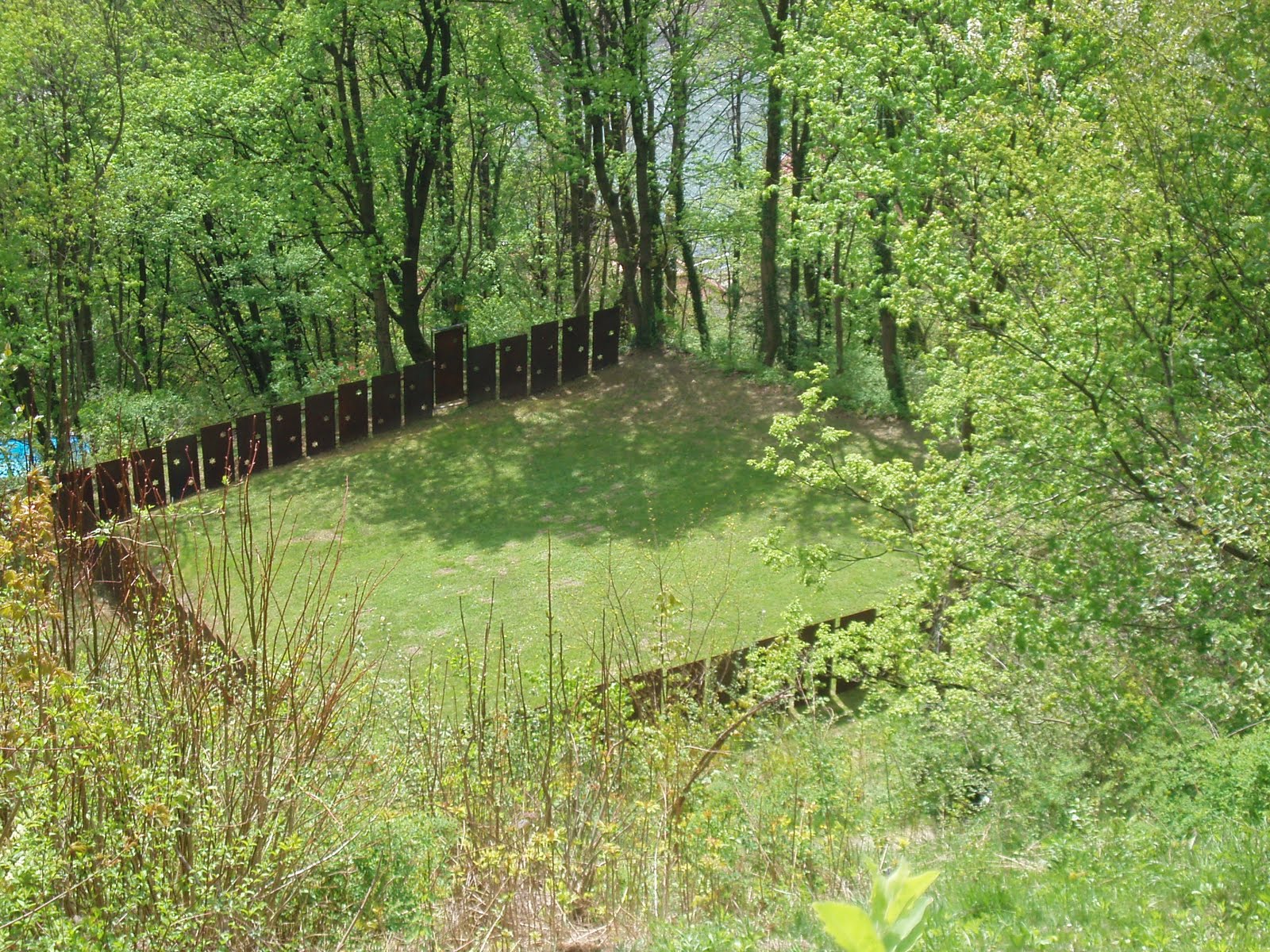
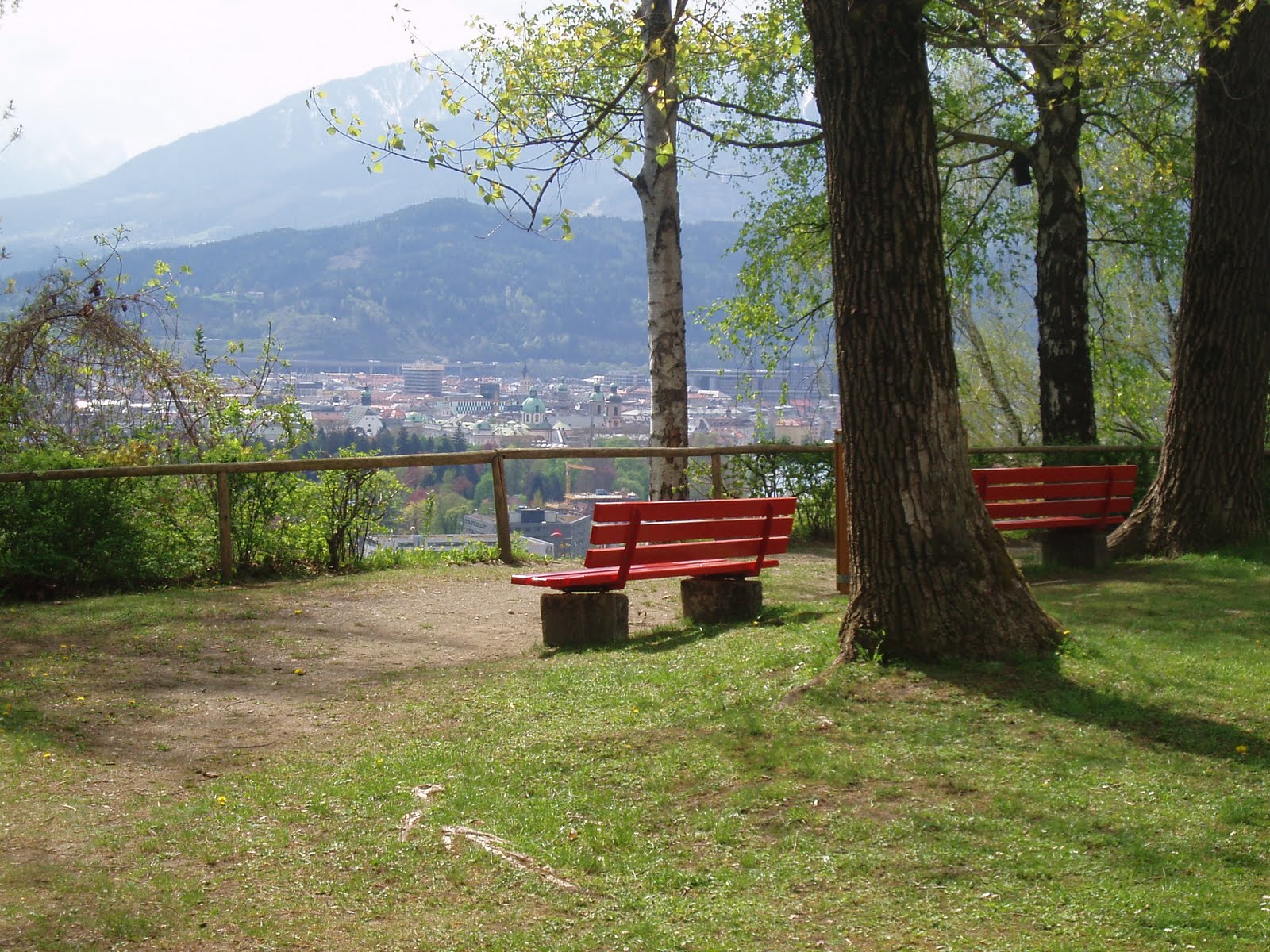
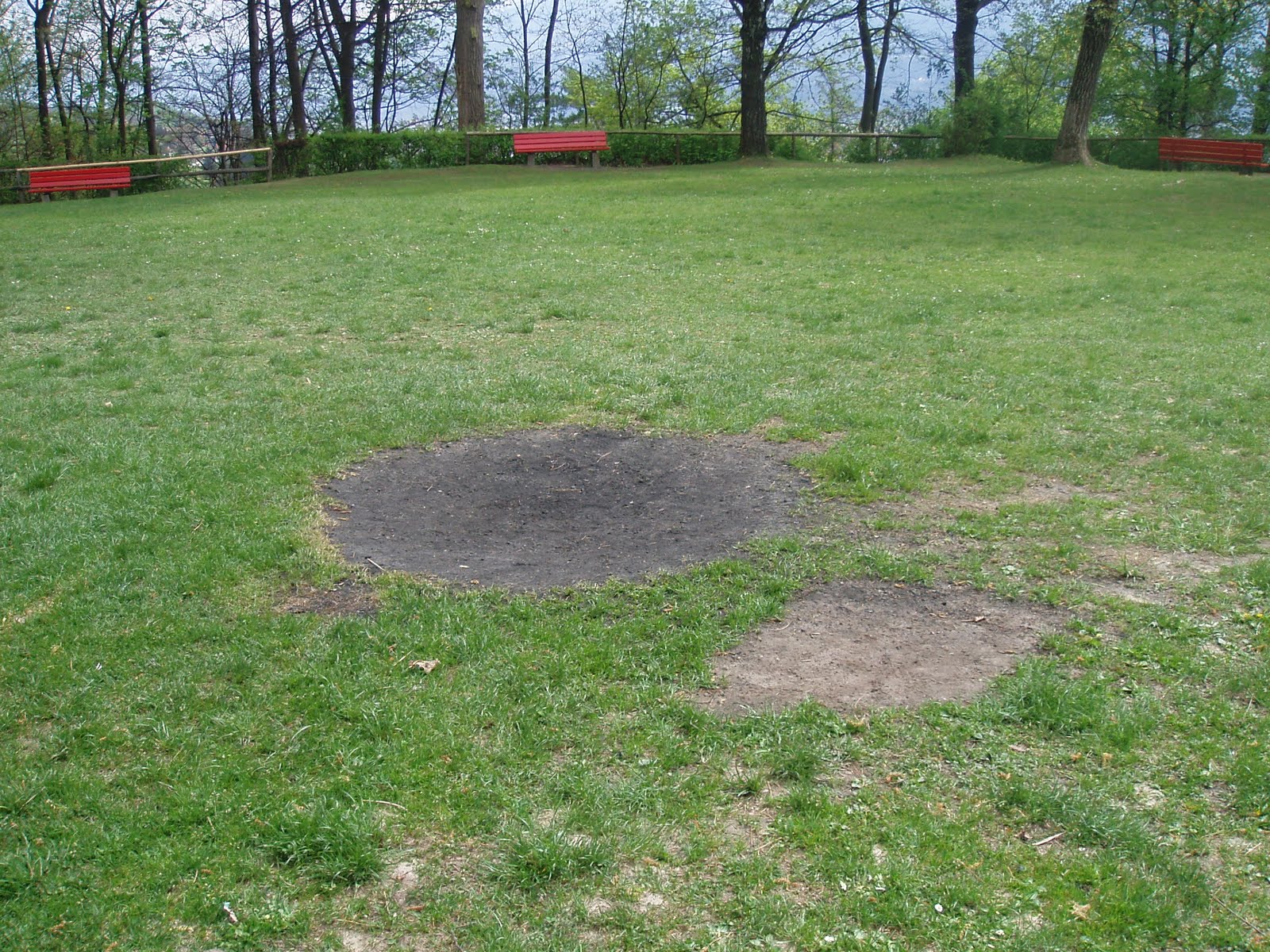
The old Jewish cemetery (rediscovered and now an historical site — the actual cemetery moved to the Westfriedhof in the 19th century) is found on a southern slope, not at the top. The top of the Judelbühel is as flat as a pancake, as wide as a parking lot, and circular. It currently holds a grassy park with a playground.

 The sides of the hill are covered with moss and trees, but there are places where the ground is eroding. And here you can see that there are no stones in this ground at all, it’s all just earth and tree roots. Which I find unusual, since this whole region full of rocks and boulders of all sizes. Was it landscaped in the last 100 years, or did it slowly grow, like the altar mound atop the Goldbichl?

 There may be perfectly modern answers about the flat-topped Judelbühel (maybe the top was landscaped for the playground in the last century or two?), but I haven’t found them yet. In the meantime I am left with comparisons to the Hexelbodele near Birgitz, and Schlern, and Bergisl and the Kalvarienberg, and other flat-topped hills which have histories as places of pre-historic communion. 
Which brings me back to Norbert Mantl and a few things he speculated about, in his book about pre-christian relics in the Inn Valley. One was that a few place-names beginning with “Jud-” are morphed from “Haid-” or some medieval version of it, which means “heathen”, which makes sense if you remember that to the early Christians (and in some places today too), Jews were just another kind of heathen. Mantl writes:

‘[The Judenbühel] is supposed to have gotten its name from the old Jewish cemetery which had been here… however it always questionable to view such cases as chapters of Jewish history. The Judenbühel is a “heathen” hill and for this reason only did the Jewish cemetery end up here, because Jews, as arch-heathens, could only be buried where other heathens were buried. One would never have allowed [in the Middle Ages] a Jewish cemetery to be built in such a beautiful place, if the Judenbühel and its neighbor the Ruch* had not already been home to the oldest and most evil form of heathendom. [Here I think he is referring to the Three Bethen.] Stone-age finds were made on the hill, therefor there was a very old settlement here and one can assume with some certainty that the hill was a holy place**, from which it got its name in early Christian times, independent from  later Jewish settlement in Innsbruck.’
 Smack in the middle, traces of a regular campfire. Who makes these fires? Just squatters? An uneasy thought — I don’t know any local Pagans whom I can ask ( if maybe the fires are ceremonial), but there are elements of the neo-nazi scene which goes in for the Pagan, the mythological, the old ur-Germanic. The idea that they might be “keeping the fires lit” on these ancient meeting grounds does give one pause. Then again, what do I know, it might be the Scouts.
*I don’t know what the “Ruch” is.

** Why? Mantl does this all the time, assumes that because it was used, it was a holy place.