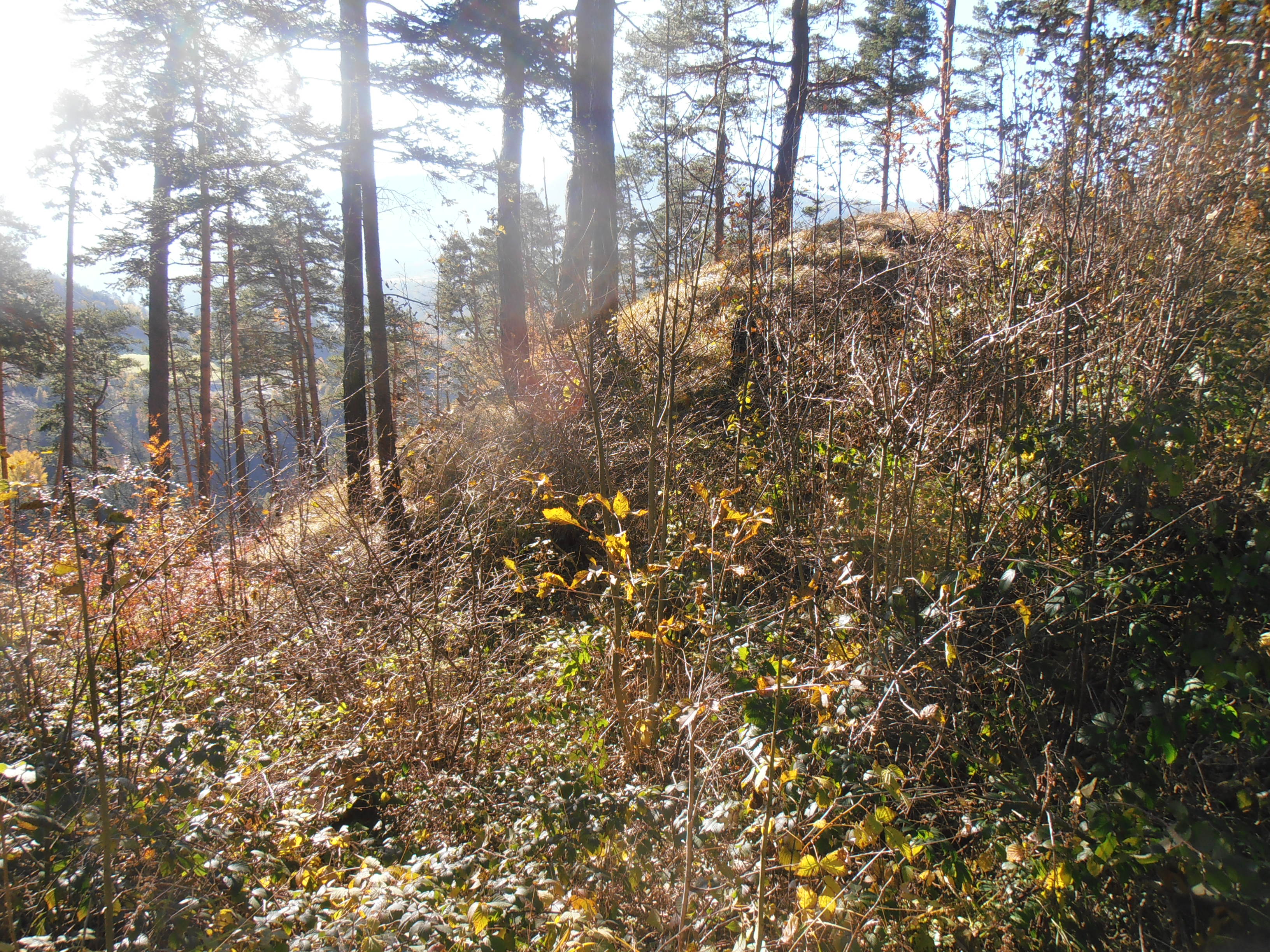
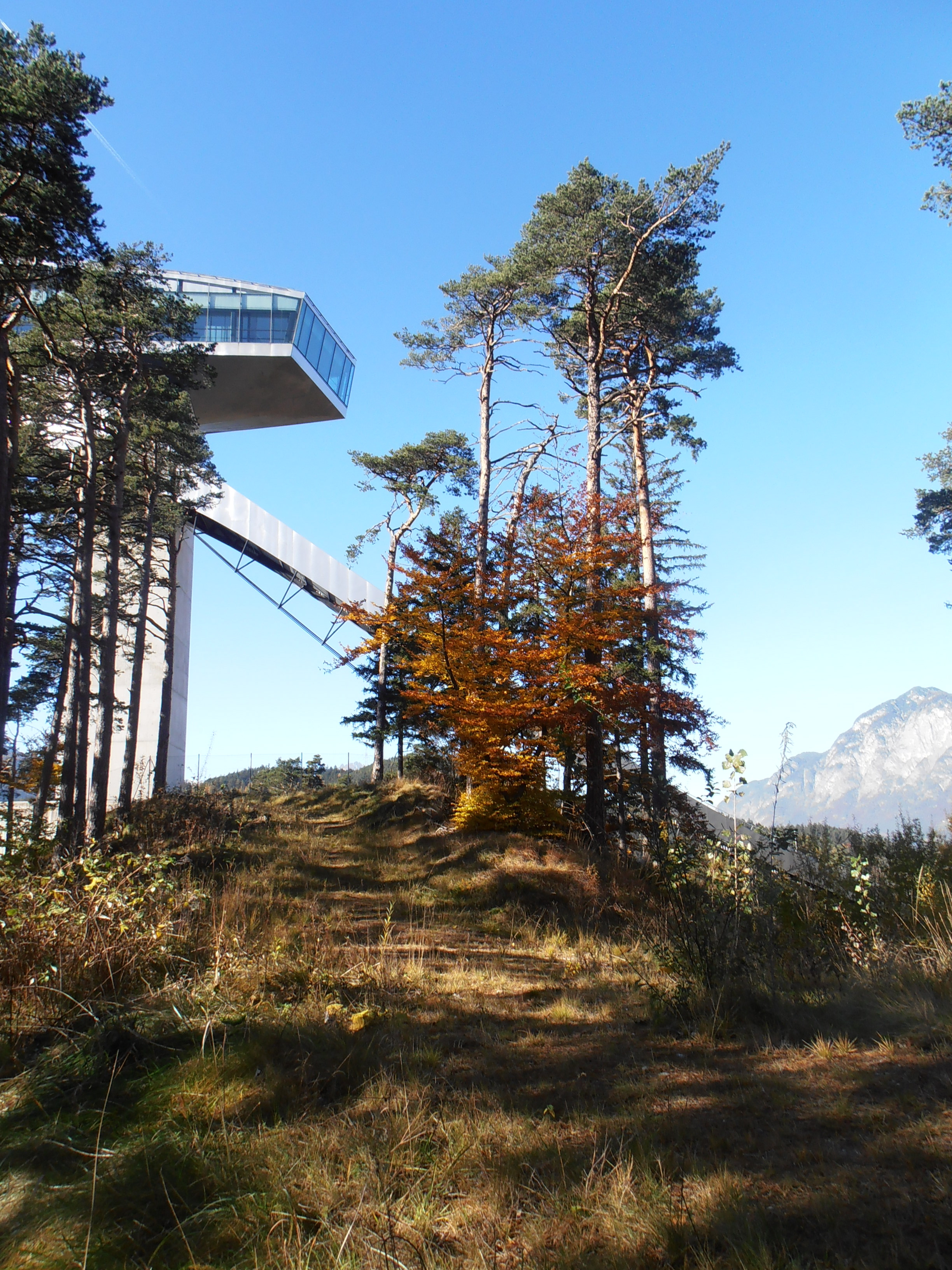
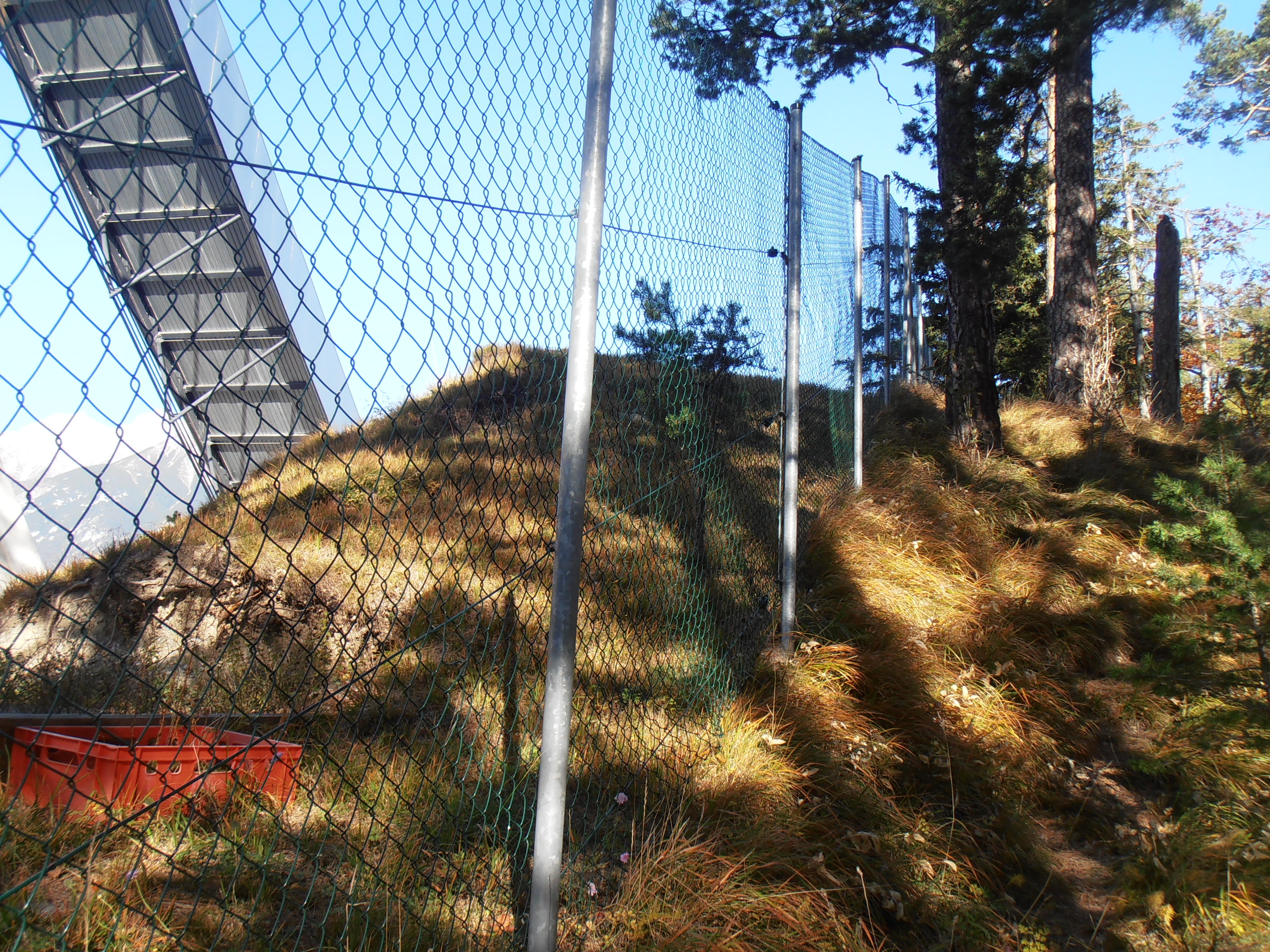
In Via: The Keltenschanze near Utting

Having read Zeitspringer’s recent post (in German) about the earthworks in Holzhausen near Fürstenfeldbruck, I felt inspired to tell him (and you) about a patch of farm country that has become one of our regular walking routes. It’s got beautiful scenery, crosses through fields and woods, often has lots of horses (from the stables at Achselschwang) and – to my enduring delight – features two  ancient landmarks: a section of the Roman road to Augsburg and a pre-Roman earthwork, known as a Keltenschanze or Viereckschanze (the red line and the red square in the image shown below, in a screenshot from the always interesting Bayerische Denkmal-Atlas).

Screen Shot 2019-05-07 at 7.18.51 PM 2

I won’t suggest a specific circuit because the route we usually take starts at the parking area off of Landsberger Strasse, and may not be the best for visitors coming on foot or by bicycle. Those unfamiliar with the area using a combination of public transportation and their own two wheels might consider alighting at Geltendorf and riding through St. Ottilien, continuing south to Utting. One can also catch the Ammerseebahn at Geltendorf and take that train directly to Utting (but be aware that it’s a long uphill climb to the main road. Alighting in Schondorf and taking the cycle path along the main road will be easier on the legs, and probably no longer.) If you really want an adventure you could take the S8 regional rail line from Munich to Herrsching, cross the lake by padde steamer to Holzhausen or Utting, and then pedal from there.

There is a sign with information about the Roman road posted just south of Achselschwang, and one in front of the Keltenschanze.

Afterwards, pedal down to the water’s edge in Utting, where you’ll find a nice restaurant (visitors) near the boot landing as well as a lakeside beer garden (locals). From there it’s only about 100 meters uphill to the Utting rail station (or a boat ride back to Herrsching).

The PDF found here (in German) contains a good introductory description of the Roman road as it passes west of Utting.

Older posts on the Via Raetia and the Keltenschanze:

In Via: Raisting

Two Roads in Utting

The Antiquarian Life: Frau K

It is time to write about Frau König. (Kindly note that all names and places have been changed)

Several years ago my husband, a bookseller, got a telephone call from an elderly woman who lived in a nearby town. She was looking for someone to buy her small private library of books, and he had been recommended to her. This, in itself, is fairly normal in his line of work. In fact, the people who call him with such requests are 90% elderly women from the area. They are moving — often their husbands recently passed away, and they are downsizing to an apartment in the city or a senior residence, and it’s finally time to get rid of all those old books, but of course no one can bear the thought of throwing them out. This is where my husband comes in — in a profession that calls for him to be part antiques dealer, part funeral home director, he has an assuring and knowledgeable manner from which they infer that their old books will be respected and will “go to a good home”. Most everybody understands that it’s Don’t Ask Don’t Tell, because no one wants to hear explicitly that their beloved, worn-out 1980s bestseller paperback with the parts underlined in red pen is going straight into the Altpapier container.

But back to our story. Frau König was planning to sell her apartment and move into a posh senior home on the other side of the lake. On the phone, she emphasized to my husband that she had some rather valuable books, and invited him to come to her house so that he could make an appraisal. When he got there, she sat him down in a chair and presented him with… three somewhat underwhelming and altogether worthless old books from the 1950s. He didn’t lie to her, but neither did he jump up and leave, and maybe she was just testing his reaction. She hinted at more treasures in her office downstairs. Frau König didn’t have a date set for the move, nor a buyer for the apartment, but she must have felt that she had someone lined up to take her books. And so began a somewhat weird business relationship, where she would make lists of the books she was ready to part with, and my husband would drive over and pick them up, sometimes in little paper gift bags she’d had lying around. Virtually none of them had any worth to speak of, but somehow we felt that it wouldn’t be right to wave her off now. At some point, after a couple of years of this, I began to tag along, and she would make us mediocre coffee and chat about politics.

Unlike the other widows who were unloading their deceased husbands’ collections, Frau König had never married. She’d had what sounded like a pretty interesting career working for German embassies, though, which had her traveling to places like Russia and Ethiopia. She’d had connections with Africa and some mildly interesting art on the walls, and a lovely old grandfather clock (probably inherited). Her taste in books ran to travel literature and romance novels. She seemed lonely, although we couldn’t say for sure, as we weren’t that close. Our visits to Frau König were often preceded by a good measure of reluctance and eye-rolling, but often we’d both agree, in the car afterward, that we felt happy to have done a good deed, and that maybe we’d done ourselves a good deed in turn as well. It’s hard to explain.

When she finally had a moving date and the sale of her apartment taken care of, Frau König summoned us over to settle accounts regarding the price of the books. My husband had struggled for several months with a bad feeling about this, because he didn’t think she was going to be happy with his price, especially after that first “presentation” of her treasures. It turned out surprisingly well. She was taking a heavy old bookcase with her to the senior home, and the books that she wanted to keep with her were placed “just so” inside it. But she didn’t have anyone who could note their current order and put them back that way after the move. “That’s no problem” said my husband, while I whipped out my smartphone to photograph each shelf. In the end, she offered to settle our accounts that way – instead of payment of the books we had taken off her hands, we’d come to her new place and put her bookcases back in order. Thinking back on this, I am fairly sure she could have done this by herself. But we were happy to oblige (and relieved not to have to break the news to her about the low market value of her library).

I left for a visit to America just after that, and thought it would be nice to send a postcard congratulating Frau König on her new home. I include this just to show that we had started to become a bit fond of her, like an elderly neighbor who doesn’t get out that much any more. Plus she had moved to our side of the lake, so visiting was an actual option now and then.

My husband had arranged to see Frau König a few days after the big move (which happened while I was away). He found her in the lobby, asleep in an upholstered chair, so he quietly took a seat and waited for her to wake up. When she did, she didn’t recognize him. “And who are you?” she asked. But then her senses returned and she suggested a coffee in the residence’s cafe. She was distraught at the chaos in her apartment, she said; “everything is a mess!” He offered to help, but when they went to her apartment he was surprised to see everything in perfect order. She had even had her pictures hung on the walls. After chatting a little while longer, they agreed that we could come back when I returned from America, so that we would get her bookcase in order and maybe invite her out for a coffee. A week later my husband was at her old apartment, picking up a small sofa bed she had offered us. For some reason we had agreed, thinking it could serve as a day bed in the office. Honestly, I don’t know what we were thinking. Anyway, when he got there the new owners were already fully underway with renovation, and just wanted that pile of her stuff gone.

Three weeks later, after my return, there was no answer when he called her new telephone number. But we were busy, and just thought we’d try again later. You already know where this is heading.

The news arrived through an email from her nephew, Herr König, from up north in Bremen. Frau König had passed away in her sleep at the senior residence, just three days after my husband’s visit. She’d been in her new home for a mere nine days.

Our initial shock and genuine sadness were cut short by our encounter with the nephew, who had contacted us because he thought we might like to take those remaining books and the bookcase as well, as the apartment had to be cleared out in two weeks. Herr König, the executor to her estate, turned out to be a decent model for a Sackville-Baggins. We met him in his aunt’s nearly empty apartment, where he immediately starting complaining about the trouble and the timing of both her move and her demise, and then he complained pointedly about his aunt, despite our having just having shared warm and friendly stories of having gotten to know her. He suggested we could pick out what books we like, because “the recycling container is right at the end of the hall” and the rest could be carted there. My husband set aside a small pile of books, which seemed to irritate the nephew. In short, he expected money, and the fewer books we were taking, the less money he could expect. He also requested an offer for the bookcase, and when I gave him one (quite low, as we had not understood his intentions earlier, and had thought we were doing him a favor by helping to empty the apartment), he suppressed a laugh and replied that he’d just as soon have it taken to the dump. “Then you should do that”, my husband tersely interjected, and then he took the high road (and I love him for doing this) and explained to Herr König the value the various items he had set aside (“this may be something, in any event, don’t throw it out”) after which we wished him luck and departed – empty handed but utterly relieved. Back outside, we looked at each other and exhaled. “No wonder she seldom mentioned her relatives.”

Rest in peace, Frau K. I am sorry you couldn’t enjoy more of your new life, but I’m glad we had a small part in it.

Discovering Curt Bois

We happened to be surfing around TV stations this evening and stumbled over a 1980s comedy series called Kir Royale, which had been filmed in Munich. Tonight’s episode was “Adieu Claire”, about a fictitious famous composer named Friedrich Danziger, very old and near death. Something about him looked familiar, and it wasn’t until about three-quarters of the way through that it dawned on me.

Curt Bois, a successful German Jewish character actor, left Germany in the 1930s, eventually came to the USA, and appeared in supporting roles in many Hollywood films through the 40s. He returned to Germany in 1950 and resumed regular work there in film and on the stage. Perhaps you remember the old man in “Wings of Desire” (1987), looking for Potsdamer Platz, reading in the library. Bois lived to see reunification, but he would probably not recognize Potsdamer Platz today, (nor would he probably like it, but who am I to say).

You’ve probably seen him in at least a dozen films, if you like the old stuff. His most famous film, however, might be Casablanca. Who did he play? The charming pickpocket.

From the Translation Desk*: Sütterlin

Version 2

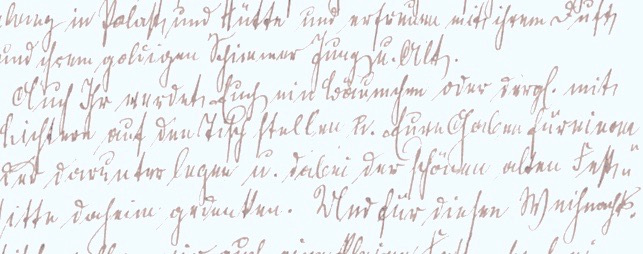
There are many subjects I avoid if I can. Most technical texts, for example, or medical ones. There are also certain types of formats I avoid, like excel files (they just don’t come up right on my little Mac screen). But one thing I can do, with some help from the Beau**, is old handwriting like the sample image above. This is called Sütterlin script and it’s indecipherable to most people today. When I first look at a text written with Sütterlin, it makes about much sense as Georgian, or Tolkien runes. Nothing but squiggly lines. But as one sits and studies the characters, their meanings begin to emerge.
Es gibt viele Themen, die ich wenn möglich meide. Zum Beispiel die meisten technischen oder medizinischen Texte. Es gibt auch bestimmte Arten von Formaten, denen ich aus dem Weg gehe, wie Excel-Dateien (sie werden auf meinem kleinen Mac-Bildschirm nicht richtig dargestellt). Aber eine Sache, mit der ich, mit etwas Hilfe vom Beau **, umgehen kann, ist alte Handschrift, wie im Beispielbild oben. Diese nennt sich Sütterlin-Schrift und ist für die meisten Menschen heute nicht mehr zu entziffern. Wenn ich einen Text in Sütterlin betrachte, erscheint er mir zuerst, wie Georgisch oder wie die Runen Tolkiens. Lediglich verschnörkelten Linien. Aber wenn man sich damit länger auseinandersetzt und die Zeichen analysiert, erkennt man ihre Bedeutungen.

*I actually work from the couch, as my desk and surroundings have been subsumed into service for the Antiquariat. Ich arbeite eigentlich auf der der Couch, da mein Schreibtisch das Drumherum für die Arbeit des Antiquariats verwendet wurden.
** He and a friend taught themselves this writing in school, in order to pass notes in class. Er und ein Freund haben sich diese Schrift in der Schule beigebracht, um Nachrichten in während des Unterrichts in der Klasse zu übermitteln.

Götzens, Pfarrkirche Hl. Peter und Paul

IMG_1639
A few years ago I came across a booklet with brief biographies of four local priests who had resisted the Nazis and were killed for it. While planning my recent visit to Axams, I realized that I would be very close to the Church of Ss. Peter and Paul, in Götzens, where the ashes of Father Otto Neururer are kept. He had come there as parish priest in 1932, got on the wrong side of the Gauleiter after the annexation of Austria in 1938, was arrested and eventually sent to Buchenwald concentration camp. He continued to spread the word of Christianity and minister to other inmates, for which he was hanged naked by the feet until he died, a painful 34 hours later. A fellow inmate who witnessed Neururer’s hanging said that he never cried out, but only prayed softly until he lost consciousness. // Vor ein paar Jahren stieß ich auf ein Büchlein mit Kurzbiografien von vier lokalen Priestern, die in Opposition zu den Nazis standen und dafür ermordet wurden. Während der Planung meines Besuchs neulich in Axams merkte ich, dass ich sehr nahe an der Kirche von St. Peter und Paul in Götzens, wo die Asche von Pater Otto Neururer vorbeikommen werde.
Er hatte dorthin als Pfarrer im Jahr 1932 gekommen, fiel nach der Annexion von Österreich im Jahre 1938 beim Gauleiter in Ungnade, wurde verhaftet und schließlich nach Buchenwald ins Konzentrationslager geschickt. Er fuhr dort fort, das Wort des Christentums unter den anderen Häftlingen zu predigen, wurde dafür an den Füßen nackt auf gehängt bis er starb, schmerzhafte 34 Stunden später. Ein Mithäftling , der Neururer hängen sah, bezeugte, dass er nie geweint hat, sondern nur leise betete, bis er das Bewusstsein verlor.

IMG_1634
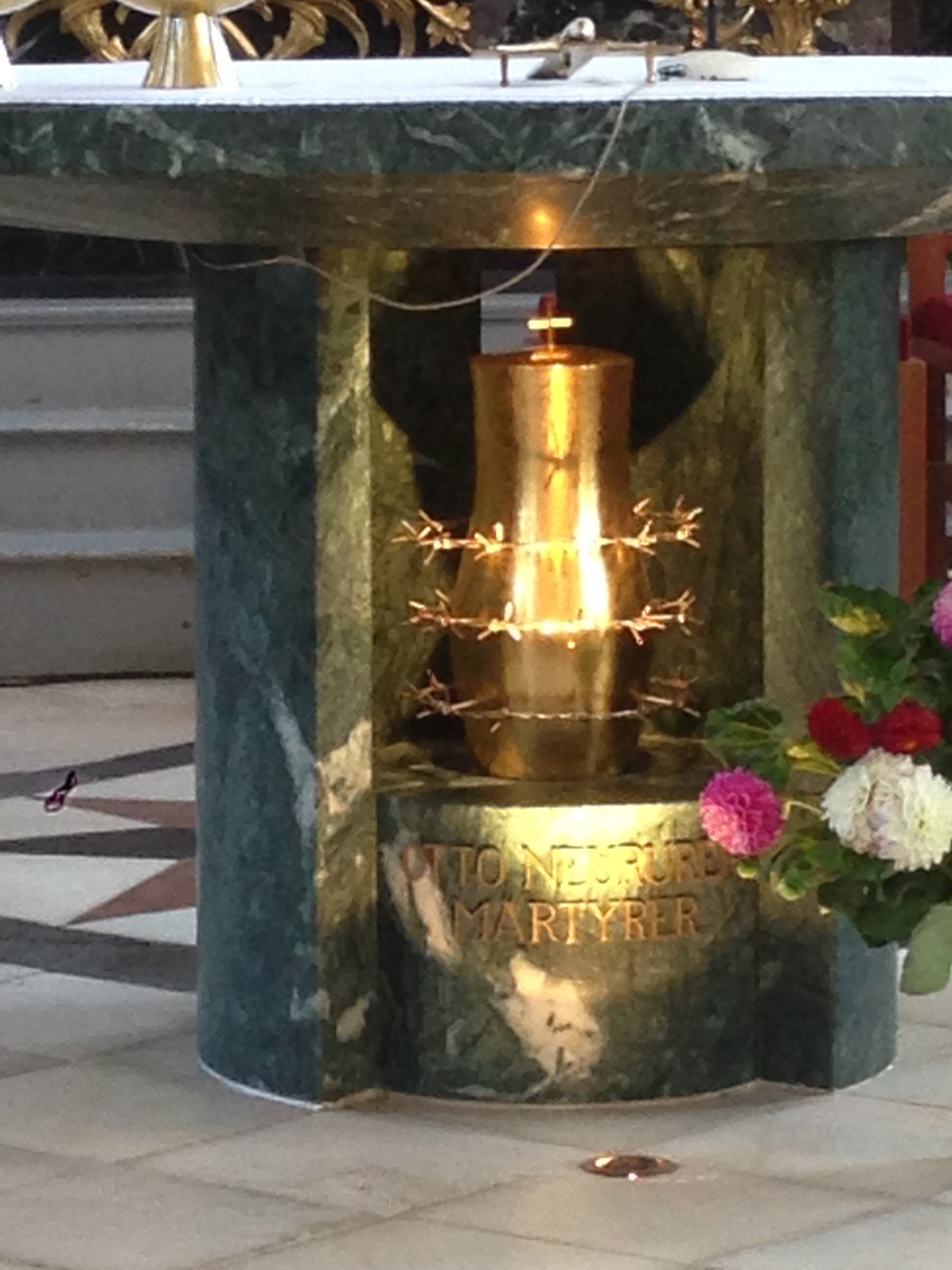
Father Neururer’s ashes were returned to Götzens, and the church has them in a golden urn, ringed with Dornenkronen, displayed prominently underneath the altar. // Pater Neururers Asche wurde nach Götzens gebracht, und die Kirche hat sie in einer goldenen Urne mit Dornenkronen herum, prominent unter dem Altar präsentiert.
IMG_1635
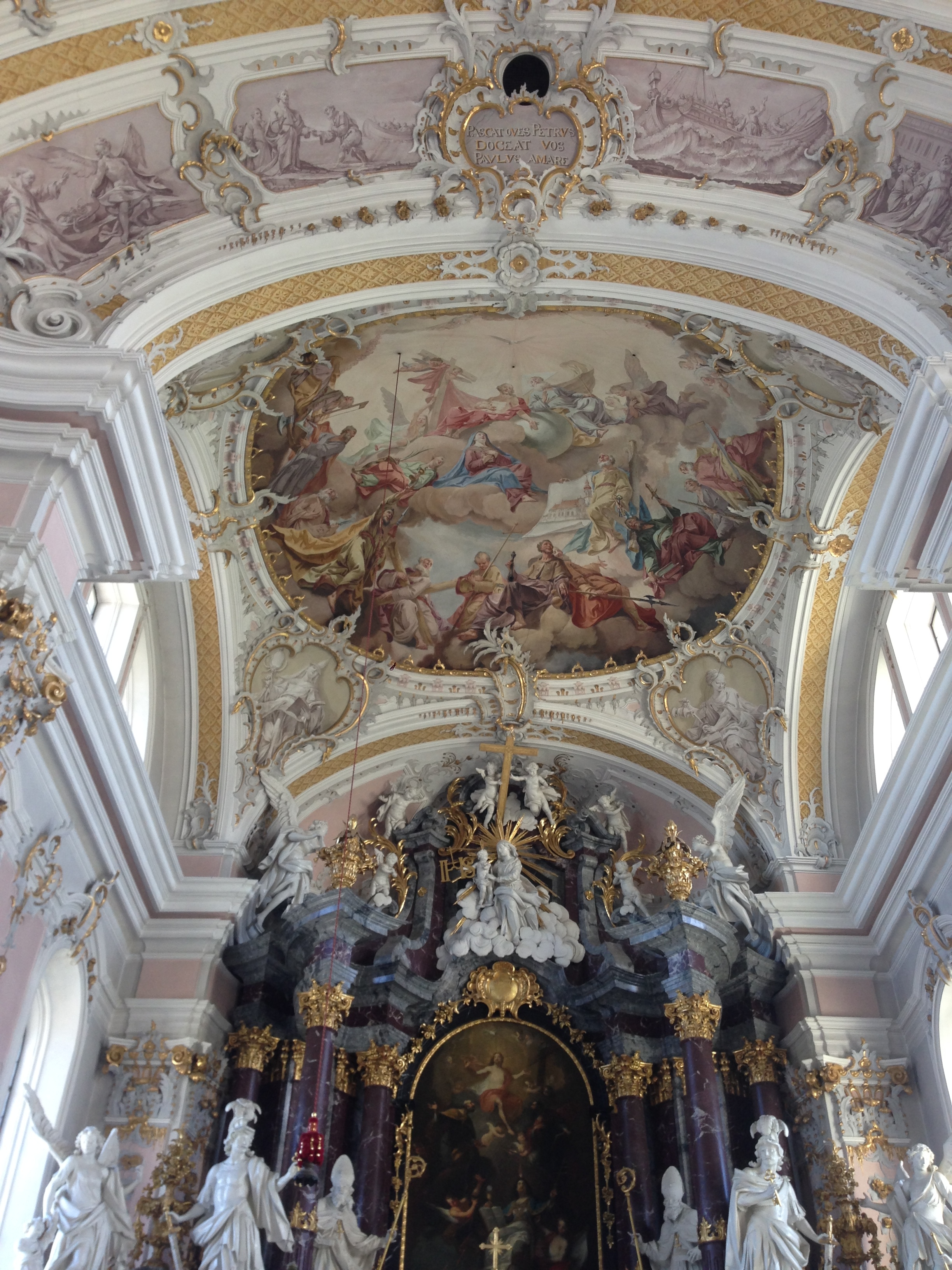
The church’s interior bears a very strong resemblance to that of the Innsbruck Cathedral, with that cake-icing-and-beeswax style and color scheme; although they are both 18th century works, as far as I can tell they are by completely different artists. // Der Innenraum der Kirche hat große Ähnlichkeit mit der Innsbrucker Dom, mit diesem Zuckerbäcker-und Bienenwachs-Stil entsprechende Farbgebung; obwohl sie beide Werke aus dem 18. Jahrhundert sind, gehe ich davon aus, dass sie von ganz verschiedenen Künstler gestaltet wurden.
IMG_1638
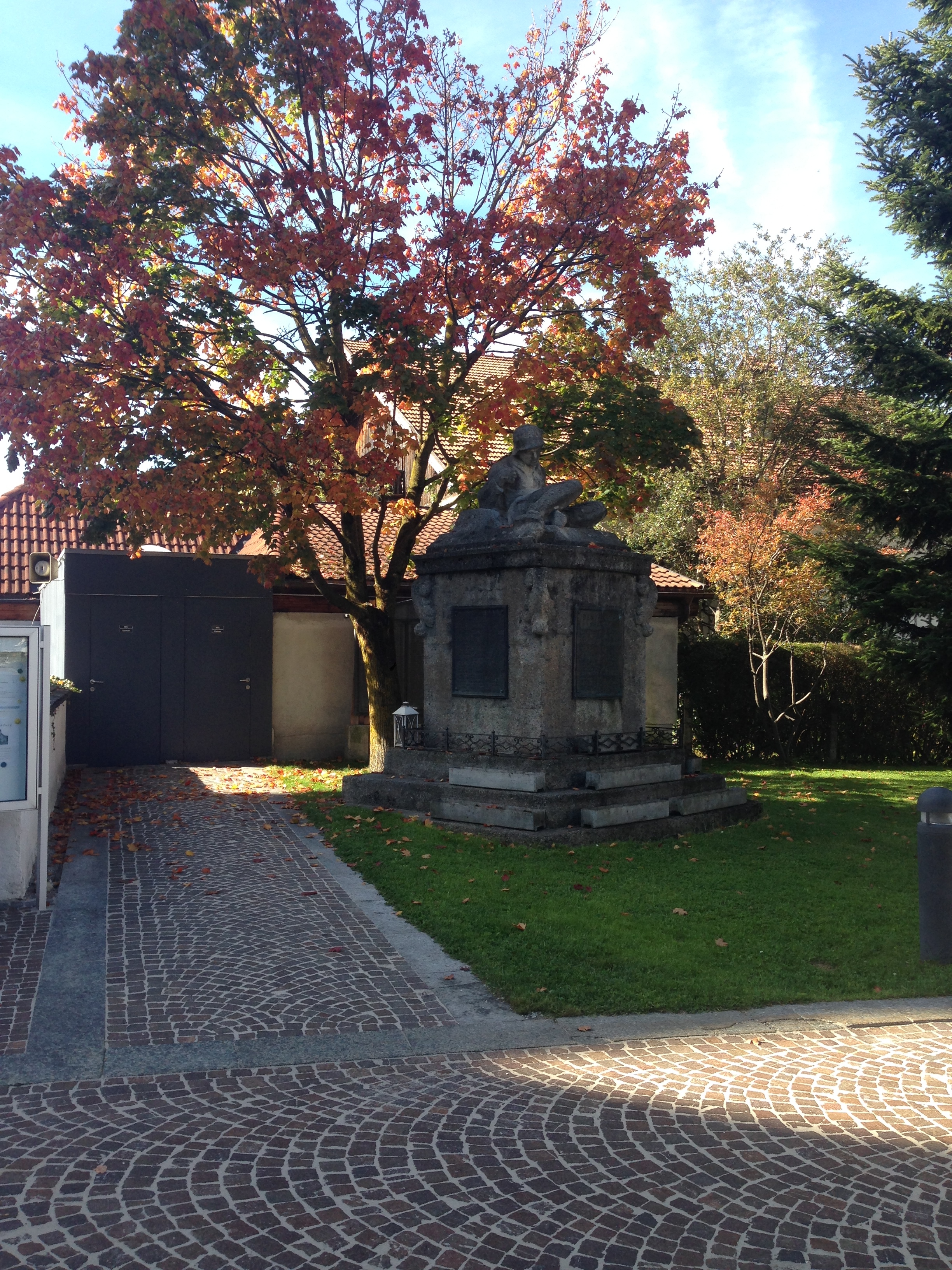
In front of the church but discreetly outside the churchyard wall, the village war memorial to its fallen soldiers. Just as discreetly, the most visible side honors the fallen from 1914-1918. The centenary of the Great War years must come as somewhat of a relief to many communities in Austria, accustomed to (but by now weary) of the relentless Third Reich anniversaries. // Vor der Kirche, aber unauffällig außerhalb der Friedhofsmauer, hat das Dorf ein Kriegerdenkmal für seine gefallenen Soldaten. Ebenso diskret, daß die am besten sichtbare Seite die 1914-1918 Gefallenen ehrt. Die Hundertjahrfeier des 1. Weltkrieges muss als etwas von einer Erleichterung für viele Gemeinden in Österreich sein, daran gewöhnt, (aber jetzt müde) unerbittlich mit Jubiläen zum Dritten Reich konfrontiert zu werden..

Forgotten Innsbruck: The Irrwurzel

Fellow-blogger Paschberg has posted the following 1966 article from Innsbruck’s local newspaper, about a mysterious root found in certain places  which, should you step on it, will send you wandering through the mountains, completely disoriented. Here is an English translation by me, because I find weird legends like this kind of cool.

MYSTERIOUS “IRRWURZEL” OF MARIA LARCH

from the Tiroler Tageszeitung, Innsbruck, 25 October, 1966, Nr. 247, S.6

“Was terrestrial radiation to blame for the mental state of Johann König from Gnadenwald?

In response to Dr. Dietmar Assmann’s article “300 Years of Pilgrimages to Maria Larch near Terfens” in the October 8 issue of “TT”, I would like to tell a story which is interesting on ethnological, scientific, psychiatric and mountaineering levels.

The history of Maria Larch the legend is exhaustively discussed in the article. In conclusion the author writes, “like many other cultural sites of this kind, we see close ties of nature with the desire for protection from its violence.”

The saga tells of such violence. According to it, a mythical root grows in the Larch valley. The Tyrolean ethnologist Johann N. from Alpenburg wrote over 100 years ago, “in the forests and meadows, on mountain and valley grows a root which possesses such powers, that whoever steps upon it will meander aimlessly for days, just as the witches and masters of the dark arts understand how to distract a person and lead him astray.” Such persons would wander the entire night and came to only by the morning call to prayers. Such instances are said to have been frequent in the Larch Valley, although no one knew anything for certain.

Dr. Guido Hradil, Adjunct Professor at the University of Innsbruck, described such occurrences as terrestrial radiation which, like that which has been measured in the Gastein Valley, may also be observed in Gnadenwald.

On January 4th, 1912, innkeeper Josef Heiss, whose inn stood at the edge of the Larch valley and who also owned a timber business, was busy with his men and horses pulling logs on sleds from the forest near Maria Larch to Gnadenwald on sleds. They had been delayed by the shying of the horses and it was getting dark.  Hansel, a boy from a nearby farm, rode by on his sled as they were bustling about to go. The woodsmen called out, “Hey, where are you off to, so late?”, but he gave no answer. The company left the unfriendly boy alone and hurried home, as night was already upon them.

The next day word got out that the boy hadn’t come home. His family, the workers, the neighbors and soon the whole village was searching for him, along with the police. Soon enough they found tracks of the boy’s sled. The tracks led from Maria Larch, through the so-called Sau Valley through the woods, crossed the Umlberg road, went straight up nearly vertically on the steep and icy slope of the Walder Pass, cut through the meadow there to the summit and descended the north side into a gap, where with a sleepwalking instinct he had made his way between the cliffs down to the stream. Here his sled broke. His body was found frozen by the stream. He had pulled off his shoes and stockings.

The discovery caused an uproar in the region. Why did the boy leave the marked road in the Larch valley and sled through the fields? Even if he’d become snow-blind, how did he cross the road without noticing it? Why had he not noticed the village lights, clearly visible on the way up the mountain? How did he find his way through the pathless gorge in the dark? There were no answers, and no one wished to mention the Irrwurzel out loud.

In the Gnadenwald church’s chronicle the priest had written: “Johann König, single, farmer’s son, in the night of January 4th-5th, 1912, strayed in confusion, found frozen in the Vomp Gap and brought home.” In the city one spoke of an epileptic fit or schizophrenia, perhaps brought on by an unknown force of nature. — I.M. Metzler”

Also included in the post is an article written by the blog author’s father and found among his papers, and in English at that. Here with permission:

THE “IRRWURZEL”

TRADITIONAL FOLKLORISTIC INTERPRETATION OF A POSSIBLE

UNKNOWN GEOPHYSICAL PHENOMENON?

By Alois Schönherr

In the Tyrolean, Austrian and German folklore, there is the tradition of the so called “Irrwurzel”, a mythical root, which, if stepped on, allegedly distorts the orientation of the wanderer to such an extent that he or she will become unable to find one’s way even in a perfectly familiar environment. 1)

Alpenburg writing in 1857 relates that according to tradition the Irrwurzel is very frequent in the pastures below the Tratzberg castle, between Schwaz and Jenbach (30 kms east of Innsbruck), “where everybody is careful, not to walk through with bare feet” , but just how it looks – nobody knows. He also writes that “today the Irrwurzel is no longer known” (i.e. the term is not associated with a certain botanically known plant or root) because in 1803 a dying oil-trader from the Ziller-valley burnt the last specimen by order of a priest. 2) It seems that similar to the personifactions of natural forces like wind or ligthtning as gods, the Irrwurzel constitutes a sort of botanic rationalization for certain mysterious effects.

At least in the Tyrol, stories about the Irrwurzel aren’t always located in a vague, hazy, undated past or associated only with unknown persons and places. The following tale, also related by Alpenburg, can be considered as typical:

One day in 1832 at three o’clock in the morning the porter Jakob Tunner from Alpbach departed from the Kupal alp in the Hinterriss with a load of 100 pounds of butter for Jenbach. After a quarter of an hour, fog fell in but the porter proceeded as he knew the way very well, having used it a “thousand times” in both directions before. He walked for hours, but he never reached the pass leading to the Inn-valley. At noon he rested and prayed, then he went on again. Finally, late in the night, he perceived a hut in the distance. It was the Kupal alp, from where he had started twenty hours before. He was so confused that he asked after the name of the alp. The herdsmen there said he must have stepped upon an Irrwurzel. 3)

NOTES AND REFERENCES

1) In Germany the term “Irrfleck” is more popular, which means a definite spot, a sort of haunted place so to say, where orientation is distorted.

2) Alpenburg, Johann Nepomuk Ritter von, Mythen und Sagen Tirols, Verlag von Meyer und Zeller, Zürich 1857, p. 409.

3) Ibid. p. 410

below the Tratzberg castle, between Schwaz and Jenbach (30 kms east of Innsbruck)”

Forgotten Innsbruck: The Lake on the Hungerburg

There were so many excursions I wanted to take once the snows melted, and almost none of them were possible in the end for a variety of reasons. But before I leave for summer vacation I wanted to do this one last thing: I had heard years ago that there had once been a small lake on the Hungerburg, but it’s location eluded me until a recent issue of “Tip” came out, with a feature on the Seehof.

So viele Ausflüge wollte ich im Frühling machen, und aus vielen Gründen war fast keiner davon möglich. Aber hier ein letzter Eintrag über Tirol vor der Sommerpause. Vor ein paar Jahren erfuhr ich von einem kleinen Badesee auf der Hungerburg, aber genau wo wusste ich nicht, bis zur diesmonatigen Ausgabe von “Tip”.

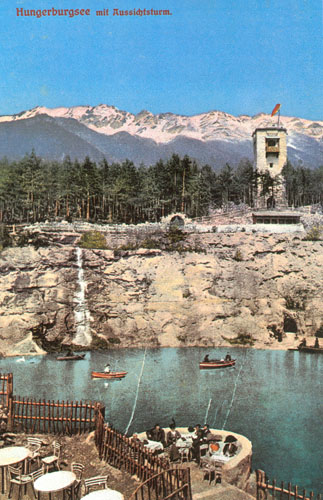
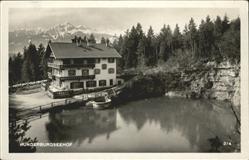
hungerburgseeIn 1912 a hotel was built up on the Hungerburg (a high plateau above Innsbruck), at the site of an old quarry. The quarry was flooded with water from the mountain spring, an observation tower was erected above the lake, and the whole thing was planned to be used as a little mountain resort, called the Seehof.

After the First World War and the fall of the Monarchy,  the Seehof fell into the hands of the Social Democratic Workers Party, who used it as a summer school for children from working-class families. Hundreds of local children learned to swim here during those years.  In 1934 the Social Democratic Workers Party was outlawed, and the Seehof came to be owned by another party, the Väterländische Front. Later it was used as housing for Hitler Youth and in 1940 it was sold to the NSDAP. But the lake had disappeared by then — its supply was shut off when water became scarce in the 1930s and had to be rerouted to residential areas.

1912 wurde ein Hotel auf der Hungerburg (ein Hochplateau  am Fuß der Nordkette, über Innsbruck) eröffnet, im ehemaligen Steinbruch. Der Steinbruch wurde geflutet, ein Aussichtsturm errichtet, und das ganze Areal wurde als Kurort geplant, Seehof genannt.
Nach dem ersten Weltkrieg kam der Seehof zur Sozialdemokratischen Arbeiterpartei, und kurz danach wurde er als freie Schule für Kinder aus Arbeiterfamilien verwendet. Laut “Tip” haben im Badesee zu dieser Zeit hunderte Innsbrucker Kinder das Schwimmen gelernt.
In 1934 wurde die SDAP verboten, der Seehof wurde der Väterländischen Front zur Verfügung gestellt. Später war er eine Herberge für die Hitlerjugend, 1940 an die NSDAP verkauft. Der See verschwand aber 1937, da Wasserknappheit herrschte und der Zufluss unterbunden wurde.

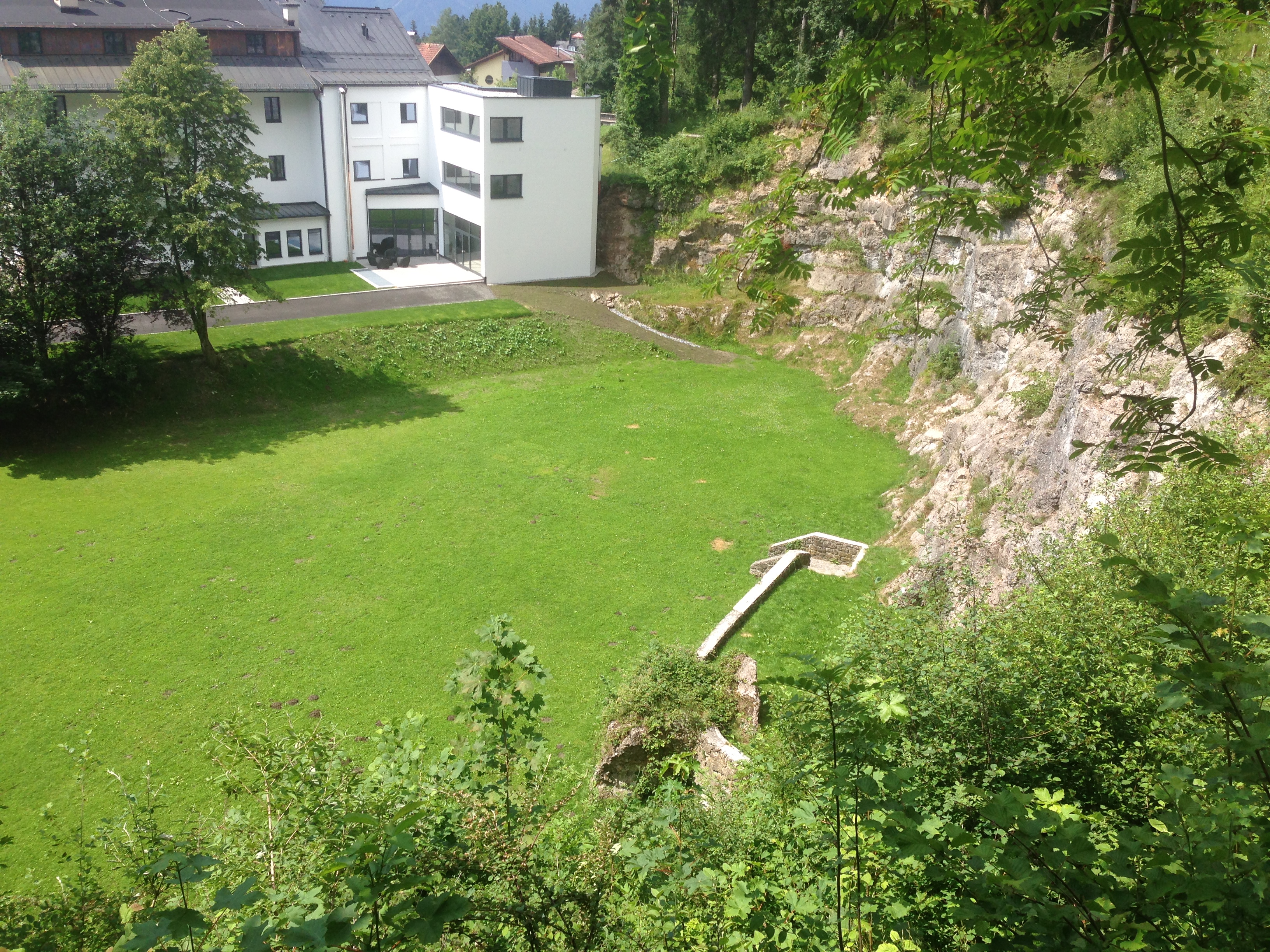
SeehofIMG_0646Then and now: from almost the same vantage point. Below: the observation tower is still standing, but of course the area is private property and fenced off from random visitors. One can walk right up to the back of the tower, however.

Damals und heute, vom fast selber Aussichtspunkt. Der Turm steht noch, ist aber abgezäunt.

IMG_0639Since 1951 the property has belonged to the Arbeiterkammer (Austrian Chamber of Labour) and after a few renovations the building is now a thoroughly modern training center with conference rooms and the like. But sadly it seems the lake is gone forever.

Seit 1951 befindet sich das Grundstück in der Hand der Arbeiterkammer, und nach einige Renovierungen ist es jetzt eine ganz moderne Schulungsstätte. Leider ist der See für immer verschwunden.

Upper images found here

St. John’s Day,

or Johannistag as it’s called here — the day reserved to celebrate the feast day/ birthday of St. John the Baptist — falls on June 24th. In many European countries (Austria among them) this Catholic holiday (like so many others) shares a close connection to the old Germanic Midsummer celebrations. The heathen bonfires have been adjusted to be symbols of John’s words about “fire and the spirit”, but according to Wikipedia the “old” (actually 20th-century) traditional “witch burnings” still take place as well. (In the remoter parts of Tirol these happen in February, as I wrote at the time.)

This day is also the reason that the plant Hypericum perforatum is known colloquially as Johanniskraut, or St. John’s Wort, as the plant blooms and is harvested around this day. The herb is very popular in German-speaking countries as an over-the-counter treatment for mild depression.

For farmers, vegetable gardeners and gourmets,  Johannistag means the official end of the asparagus season, although unusual spring weather can alter it. The reason for the early end is that the plants need a rejuvenation period.

I missed the bonfires completely this year.

Johannistag wird er hier genannt – der Feiertag / Geburtstag Johannes des Täufers fällt auf den 24. Juni. In vielen europäischen Ländern (darunter Österreich) hat dieser katholische Feiertag (wie so viele andere) eine enge Verbindung mit der alten germanischen Sommersonnenwende. Die heidnischen Lagerfeuer wurden von den Symbolen des heiligen Johanns (Feuer und Geist) in gewisser Weise vereinnahmt, aber laut Wikipedia werden die „alten“ (tatsächlich erst im 20 Jahrhundert gebräuchlichen) traditionellen „Hexenverbennungen“ ebenfalls noch in dieser Zeit veranstaltet. (In abgelegenen Teilen Tirols findet dieser Brauch hingegen im Februar statt, wie ich vor einiger Zeit berichtet habe)

Dieser Tag ist auch der Grund dafür, dass Hypericum perforatum gemeinhin bekannt als Johanniskraut ist, blüht die Pflanze doch in dieser Zeit. Das Kraut ist im deutschen Sprachraum sehr beliebt als Hausmittel gegen schwache Depressionen (und Menstruationbeschwerden; Anm. des Übersetzers)

Für Bauern, Gemüsegärtner und Gourmets markiert der Johannistag das offizielle Ende der Spargelsaison, obwohl unübliche Frühlingswetter das tatsächliche Datum beeinflusst. Das frühe Ende der Spargelsaison ist notwendig, um den Pflanzen eine Pause zur Verjüngung zu geben.

Pagans In Tirol: Bergisel


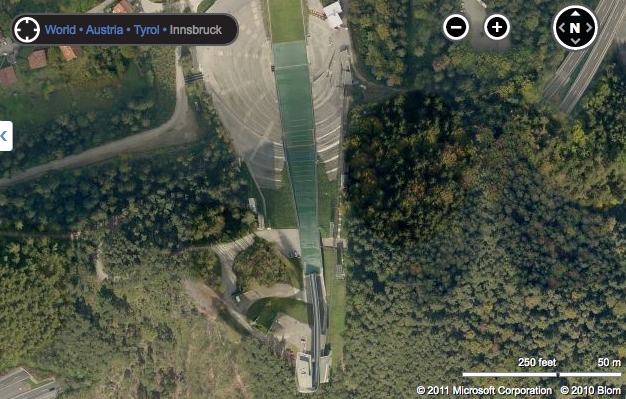
(Source: Bing Maps)

Fellow blogger Zeitspringer recently bemoaned the fact that the sacrificial burning site in Gauting, Bavaria, has little information about it posted in the Web, and nothing at the site itself, and contrasts that lack of information with the excellent resources about the Goldbichl here in Tirol. While he is right to wish for more in Bavaria, I offer up here a similar site which has been all but forgotten, on the large hill here known as Bergisel.

Bergisel is known today as the site of one of the “Four Hills” ski jumps (and a very nice one at that). Historically, it’s connected with Andreas Hofer and the battles fought there in the early 1800s, and as the location of the new Tirol Panorama Museum. There is also a pretty trail along the Sill Gorge, on the back side of the hill. But there are other interesting things about it.
Bergisel was in fact known to be a significant archaeological site, if at first only the northern spur, since at least the 1840s. The partial collection of a large treasure find is housed in the Tirol State Museum Ferdinandeum, the other part having been “carried off by the wagonful and sold by weight to bellmakers.” The exact location of the discovery was not given, however the most likely place is the current site of the Kaiserjäger Museum, as that was the only area where extensive digging and construction had been conducted at the time.

Deposits of ritual offerings have been found in other parts of the Alps, for example in nearby Fliess, west of Innsbruck. These offerings were destroyed, smashed, bent or cut into pieces, but are rarely found with burn marks. In Ancient Greece, cult images were draped with fabrics which had to be replaced periodically. Holy apparel and it’s trimmings, such as metal clasps, could not simply be thrown out, and so chambers were dug into the earth on or near sacred ground, where these items could be deposited. A tour around the early history exhibits in the basement of the Ferdinandeum will show a large number of these clasps having been found all over Tirol, which points to a similar practice. Also — in prehistoric graves found north of the Alps, the dead were outfitted in their finest, including metal objects such as clasps and armbands. The inhabitants of Tirol did not do this, which leads to the idea that their belongings were then offered to their deities for the common good.


(Source: “Ur- und Frühgeschichte von Innsbruck”, Katalog zur Ausstellung im Tiroler Landesmuseum Ferdinandeum 2007.)

More recent excavations (between the demolition of the old ski jump in 2001, and the construction of the new one) have uncovered a site for burnt offerings near the highest point of the hill, just a few meters east of the ski jump tower. Animal bones were found which had been burnt at a temperature of over 600°C. Of course when the old jump was built in the 1960s, a large swath of earth had been removed, and a great deal of archaeological evidence went with it. But the eastern side seems to be relatively intact, and awaiting additional future, as-of-yet unplanned excavations. The articles found have been dated to as early as 650 BC to as late as 15 BC, when the Romans arrived.

This information is all public, either via the internet or from Ferdinandeum publications such as the one named above. However, there is absolutely NO information at the site itself. There are barely trails — practically dog paths — up the steep grades. I only made it up (and down) by grabbing onto tree roots and watching very carefully where I stepped. Autumn’s leaves, needles and pine cones added a certain slipperiness to the adventure. (The sites, such as they are, are on the outside of the fenced-in ski jump area, so you can’t just take the incline.)

The altar mound as seen today, on the highest point of the hill.

The fence around the sport area runs through the mound, which seems a little unfortunate. Below: the man-made terraces on the north side of the hill, found above the old shooting range. Evidence of housing (from different eras) was unearthed on them, possibly for whomever tended to the holy sites.

In the museum book, it is noted in summary that no other area of excavation in central Europe has revealed so much sacred activity — the Raetians, from the evidence found, seemed to have devoted more of their time to religious rites than any other tribe, and for over 600 years.

“Singers have become more interchangeable”

Singing legend, teacher and artistic director Brigitte Fassbaender was recently interviewed by Markus Thiel for the Munich newspaper Merkur. It’s honest and interesting, and there is a lot in it which explains how things are going for singers in European opera houses today, and so I present it here in translation (mine, and although it was done on the fly and therefor imperfect, I tried to capture the essence and tone of the interview as best I could.)

Brigitte Fassbaender is gearing up for some big changes. She will be leaving her post as Intendantin of the Tiroler Landestheater next season, after 13 years. Her successor will be Johannes Reitmeier. However, this legendary singer will remain active as head of the Richard Strauss Festival in Garmisch-Partenkirchen, which kicks off its summer season this weekend. She won’t be departing from the opera world just yet — this year Ms. Fassbaender celebrates 50 years of work on and for the stage.

Merkur: How difficult will it be for you to let go of your “child”, the Landestheater?

BF: I thought it would be harder. The house is functioning beautifully, everyone is highly motivated. But it has to happen. Theaters always need a breath of fresh air after a while. 13 years was enough — and I would also like to have a breathe of fresh air myself.

What did you have to learn when you first took on the position as Intendant?

It was an enormous learning process in every respect. I had to learn how to deal with so many people, with so many different personalities, temperaments, vanities, with workaholism, laziness, and also self-overestimation. But I found everyone to be highly motivated [to work with me]. One also feels a wave of affection from the side of the audience. As far as choosing works and the aesthetics of stage direction, I had hoped for more openness for other, less traditional ways. But that appears no longer to be possible anywhere. And so at some point I understood that I was working for the audience, not for the Feuilleton [the arts section of a newspaper, where theater reviews appear].

Is the intendant with artistic background an endangered species?

Yes. Those who really understand something about singing are dying out. Most of them only see a singer “as is” and cannot hear the potential for further development [in a voice].

Why is that?

I don’t know. Maybe because singers have become more interchangeable. There had always been only a handful of one-of-a-kind voices out there. But now it seems to me that everyone resembles everyone else. They all look alike as well! I look at a photo, I think it’s Elina Garanca, and it turns out to be a model for cosmetics… Singers are trying to copy this high-gloss effect. I find that unfortunate. The only one in my opinion who has been able to endure this unscathed is Anna Netrebko. She is a top artist with a healthy portion of humor about her. We had this danger in our day too. But back then one said “no” more often. I find it better to keep oneself scarce.

Are you happy to have made your career during the time in which you did?

It was very different then, there was much less stress and competition. There wasn’t this extreme casting by type. Female singers with more robust figures still had a chance. And we had more opportunities to sing for recordings and to take more risks in our work. For that I am happy.

 How do you feel, looking back [on your career]?

Gratitude, but also amazement. For all the wonderful, strenuous, many-sided, nerve-wracking things that I was allowed to experience. Two-thirds of my professional life flew by me like a dream. I haven’t had time yet to get nostalgic. I consider myself a modern individual. When one doesn’t try to fit the current trend, one stays timeless — I have always tried to live by this motto.

Can you listen to your own voice?

In the meantime, yes, earlier, I was afraid of the possible disappointment. But now I think, “I like that voice. I would hire that young mezzo.” (laughing)

Were there ever times when you wished you hadn’t been a singer?

I have always suffered from terrible stage fright. Before every performance, before every recital, I would think, “No, I’d rather be raising chickens.” But surmounting those fears always led to great satisfaction. And one becomes more secure. I also suffered when I first had to make announcements before the curtain onstage in Innsbruck.

And have you gotten comfortable with your situation in Garmisch-Partenkirchen?

Very much! I am a self-confessed Straussian. Naturally I would like for it to be as top quality as possible — even if it is financially difficult to do so. I am dependent on my singers agreeing to be paid less that they normally would be, out of friendship. But then it is easier for them to cancel… it’s too bad that the state of Bavaria doesn’t think it necessary to give [the Strauss Festival] more support. We are constantly walking a tightrope, between top artistry and variety.

Richard Strauss has not only bright aspects to him. Has it been difficult, the work of rehabilitating the composer’s dark side?

BF: The Strauss family has given no obstacle whatsoever. They have been very open regarding his role in the National-Socialist years. Although I don’t know what they should do. His music was never overshadowed by his person. I don’t hear any anti-Semitism in it. Certainly there are works which are duty-bound to the attitude of that time — productions of them would naturally not be suitable. But what does a “Rosenkavalier” have to do with that? Strauss was simply business-minded and an opportunist. He thought himself and his family to be the center of the universe. It is a moral question — can or should one take artistic geniuses seriously for their politics? Hardly, I think.

Original article (Merkur-Online, in German.)