Cozens in Brixen*

I had already been toying with the idea of a series of alpine paintings accompanied by photos of the mountains which inspired them, when Paschberg sent me the link to this watercolor by the 18th century British artist John Robert Cozens, with the somewhat clunky but informative title The Valley of the Eisak Near Brixen in the Tyrol, 1783/84. It currently belongs to the Art Institute of Chicago.
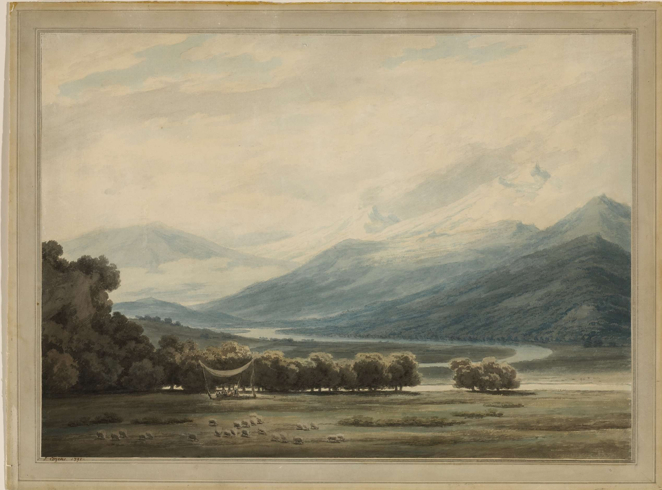
Looking around online for more information, I found a “2.0” version; In the Tyrol, the Valley of the Eisack, near Brixen, 1791 The painting, like the name, is similar but not identical — the view looks to be from further down on the floodplain, closer to the winding river. This version belongs to the National Gallery of Canada.
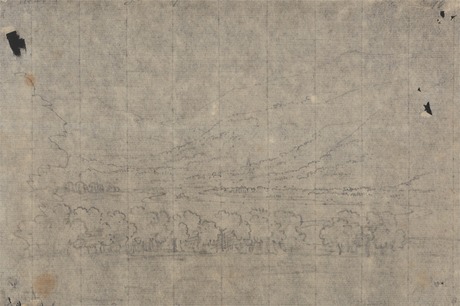
Near Brixen, June 7 appears to be the original sketch for both paintings. The Yale Center for British Art, Paul Mellon Collection owns it…
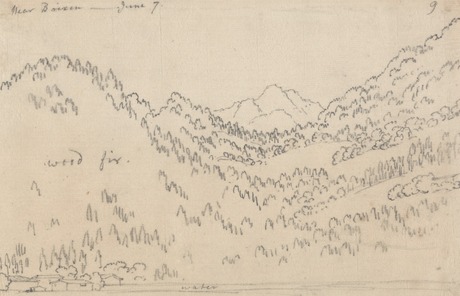
…as well as this sketch with the same name. Since they are both dated June 7, one can assume the two scenes are not far away from each other. Perhaps all Cozens did was turn around, and sketch the view in the opposite direction.

There are tentative plans for a trip into that area next month. I can’t spend days hunting down this particular place but I’m going to keep my eyes open for it. The river may have changed since Cozen’s trip (dredged, straightened) but the mountains will still be there.

*Brixen is a town in the German-speaking, northernmost region of Italy. The Italian name, which may be all you find in an American atlas, is Bressanone.
Pagans In Tirol: Seefeld’s Stonehenge

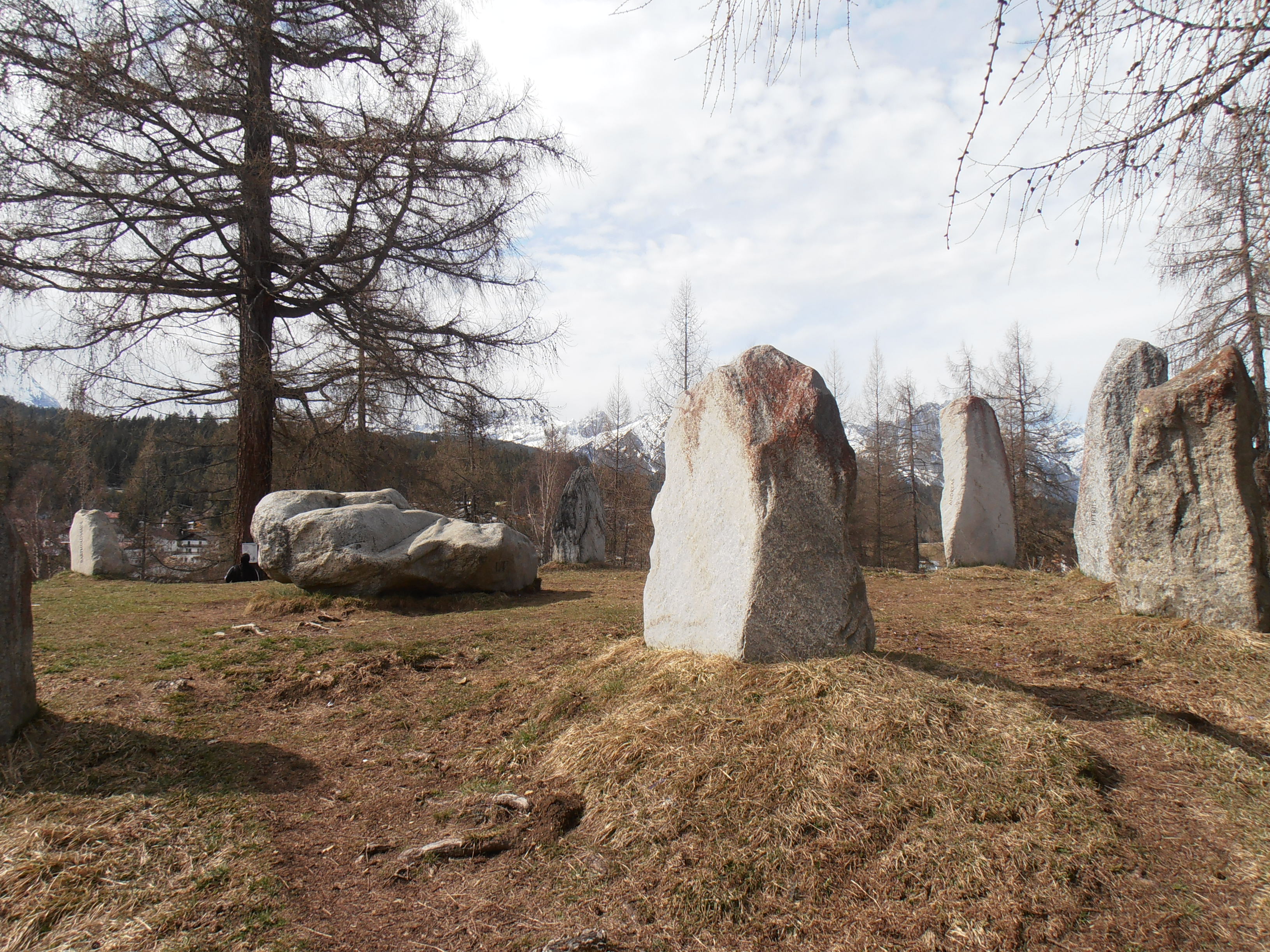
This is the Pfarrerbichl, or “pastor’s hill”, in Seefeld in Tirol. It is behind the St. Oswald parish church.

An architect from the area was given the green light to erect a stone circle on the hill, with the idea to create a peaceful meditation and meeting place for all religions of the World. The stones are local erratic boulders, dropped off by the glaciers as they retreated at the end of the last ice age. On the architect’s website (he seems a bit of a geomancer with a thing for Pagan fantasy, from the images) he writes that while this is, in his opinion, “one of the most mystical places in Tirol”, and that he believes it had once been a sacrificial burning site, there have not been any archaeological excavations on the hill — and here this reader winced, hoping the “planting” of the boulders did not destroy anything waiting to be found…

The church then got in on the act, and raised money locally to create a Way of the Cross leading to the stone circle, also using glacial erratic rocks, so the entire thing is Christian in character. Although the church’s information plaque was cheerful enough, I can’t help but wonder if there hadn’t been some pressure to “christianize” the circle after it had been erected. Which would be entirely within their right, it being their hill and all. (And of course it wouldn’t be the first thing the Catholic Church borrowed from the Heathens.)

h/t to Kraftorte.

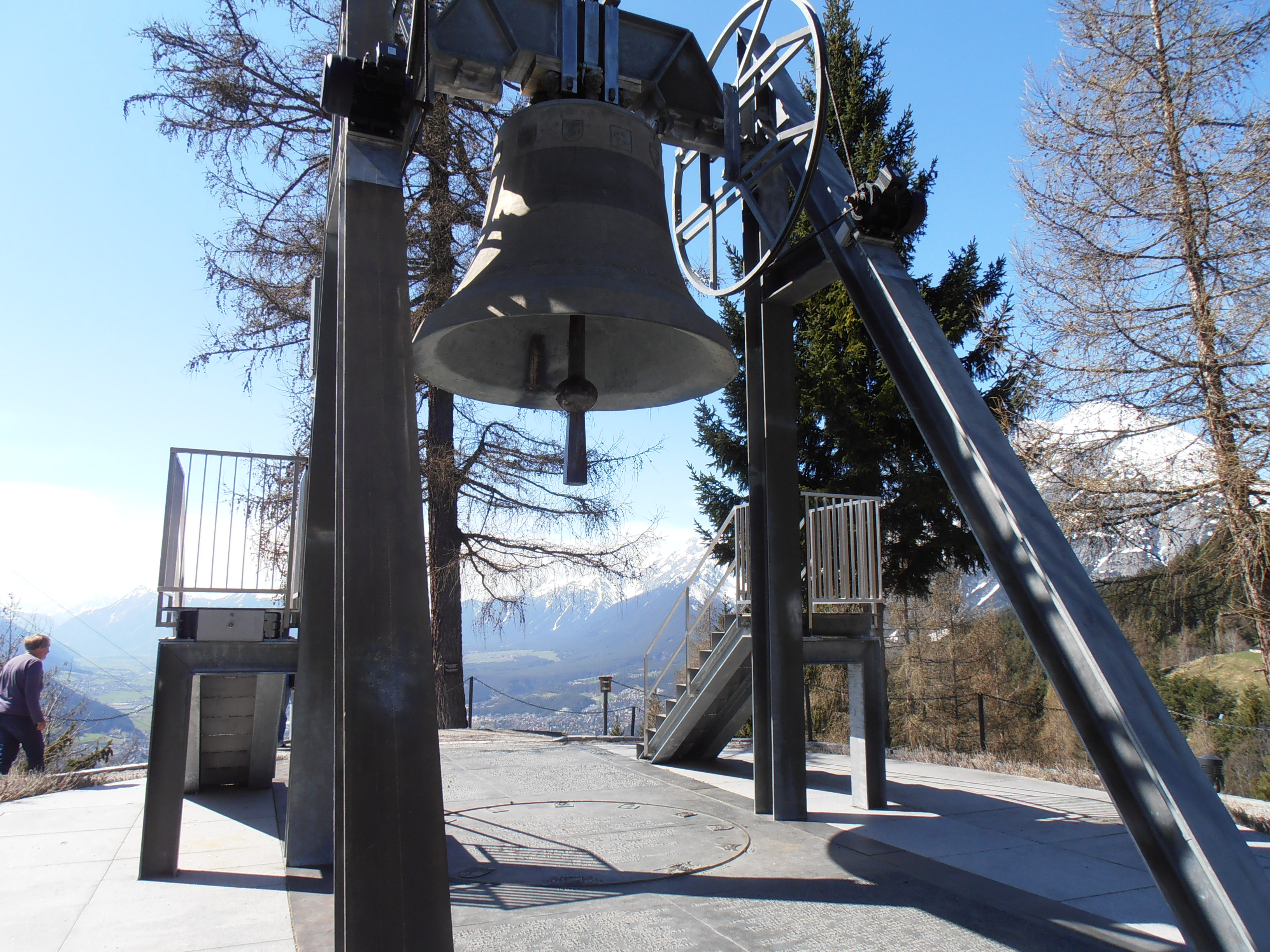
Mösern, the village with the “Albrecht-Dürer-View”, is also where one will find the Friedensglocke (Peace Bell), the largest bell in Tirol, brought to this perch by ARGE ALP, an international association of alpine provinces. The Peace Bell also has its own sort of Way of the Cross called the Friedensglocke Wanderweg (Peace Bell Hiking Trail). The stations of this trail call for such mantras as “Peace needs a path and effort“, and “Peace is living vibration“. Yeah, whatever — this all seems a little New Age-y for me. But anything which promotes peace is a good thing.

These two sights were visited on the same hike, which began in Hatting and ended in Seefeld. Although it was a pleasant enough walk, I would recommend starting in Seefeld and looping back, and including the Möserer See. The trails from Hatting were simply logging roads with no special scenery.

The Albrecht-Dürer-View, in Mösern

Do you remember the local theory that Pieter Breugel sketched out his “Hunters In The Snow” while sitting on the shady banks below Schloss Ambras, at Innsbruck? This is Albrecht Dürer’s Self-portrait at 26, which is hanging in the Museo del Prado in Madrid.

Dürer traveled from Nuremberg to Italy in 1494, and like Breugel he was impressed by the alpine landscape and made sketches which he would use in later works. The village of Mösern, near Seefeld in Tirol, claims that the landscape visible from the window is clearly of the Inn Valley as viewed from Mösern, and has named this particular vista the “Albrecht-Dürer-View”.

I’d say this is a pretty good match, especially for a painting made from a sketch, itself made years before on a journey.

Above photo by Veronika Freh found here. Image of Dürer’s self-portrait from Wikipedia.

Weekend Mountain Blogging: Stubaital

Pagans In Tirol: This cave, when rediscovered in 1976, held pottery from the La Tene era, the pottery being more specifically from 500-300 BC. This cave is presumed to have been a holy spring (Quellheiligtum) for the local residents. Whether they also kept their local brew at a desirable temperature here, no one can say…

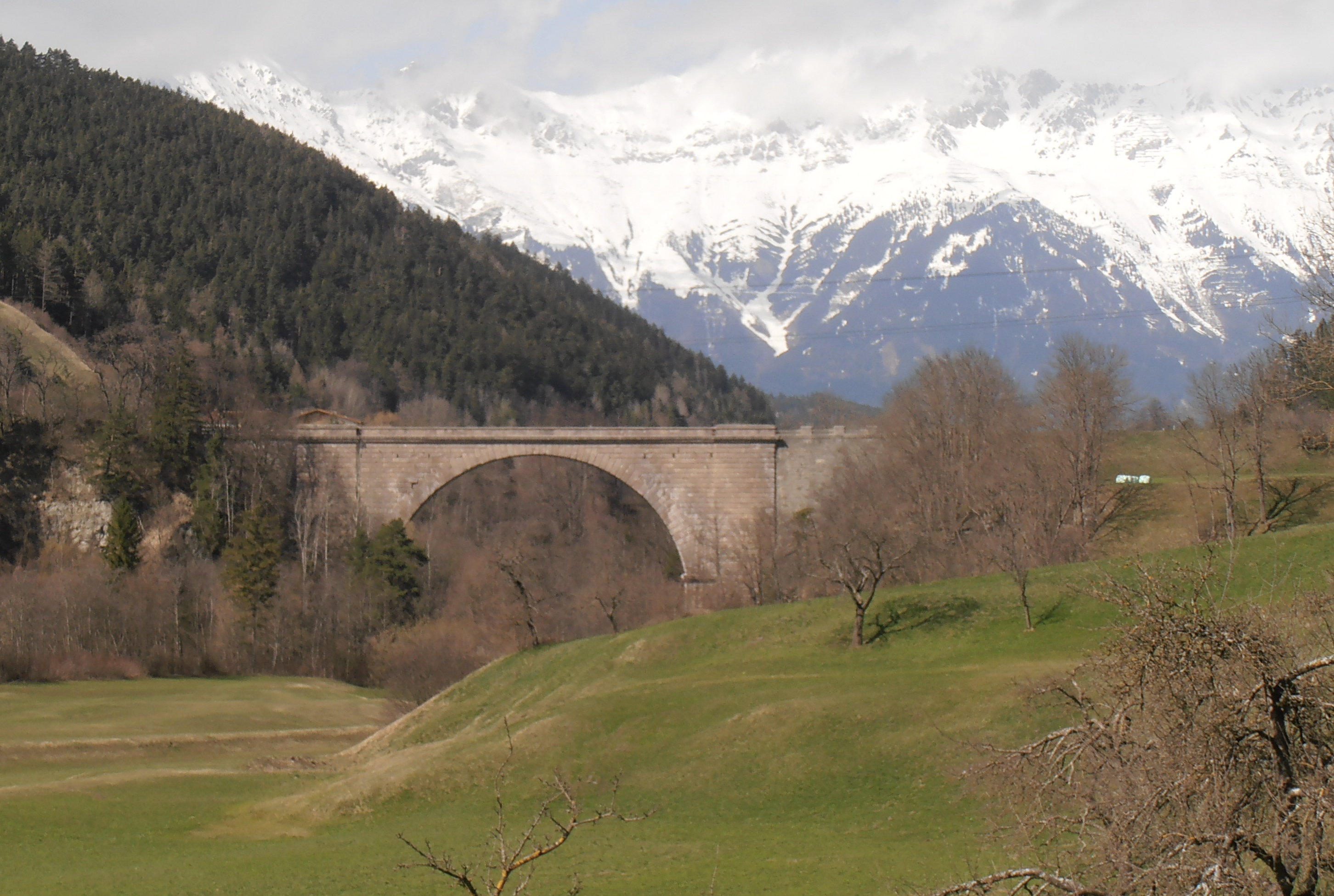
The Stephansbrücke was a very big deal when it was erected in 1843, and Archduke Stefan Franz Viktor himself came to the ceremony to lay the foundation stone, at the tender age of 26. The bridge was part of continuous improvements on the Brenner Road, which stretches from Innsbruck over the Brenner Pass into Italy. The history of this highway is long — the Romans made the Via Raetia, and that road (and its later incarnations) remained the most direct way to all points south for a long time. Occasionally one might see an old Austrian or Bavarian film from the 50s or early 60s, where a journey to Italy by car leads over these very roads, some not yet even paved. Then the Brenner Autobahn came and changed everything.

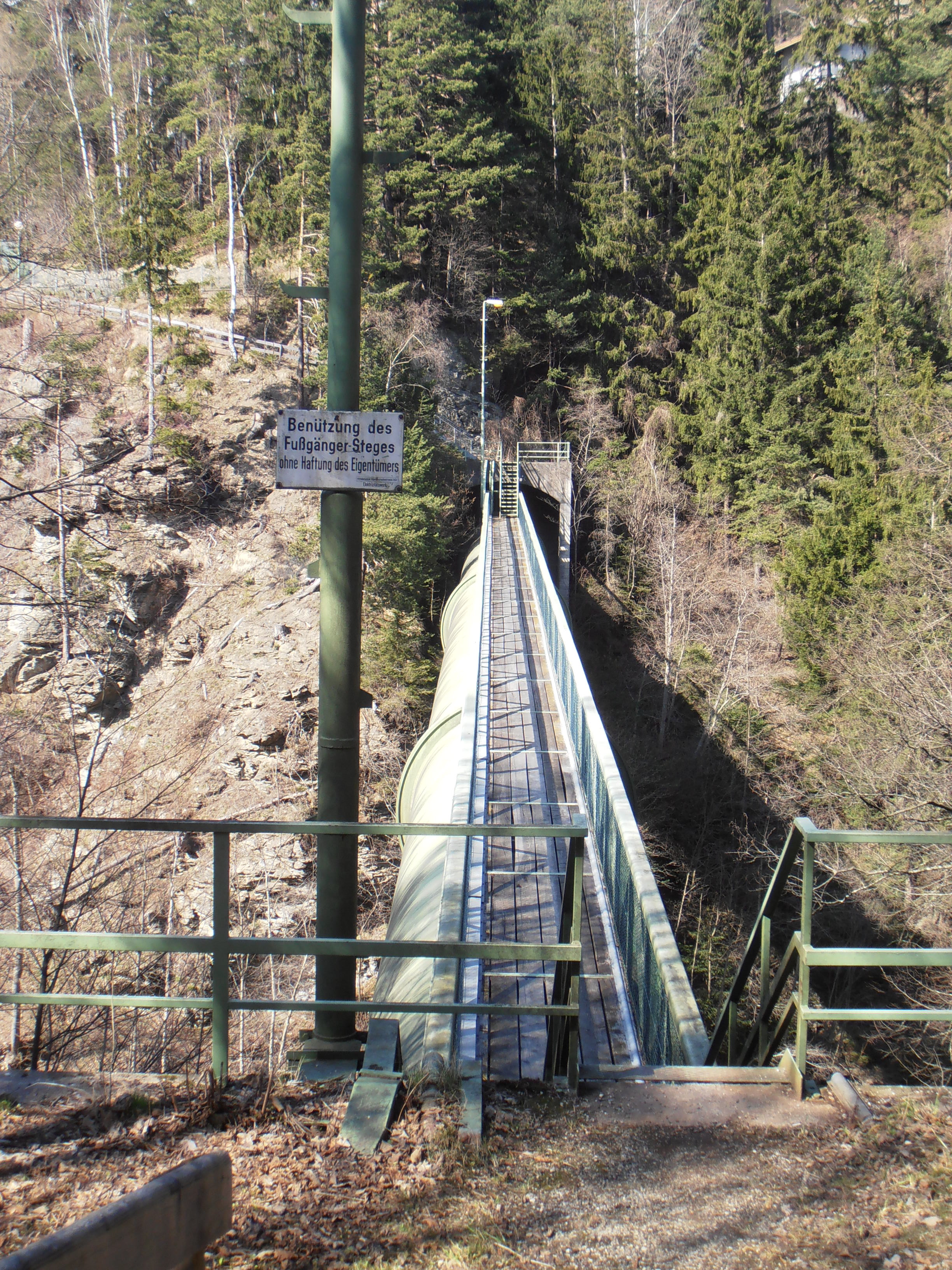
I did not cross the Stephansbrücke, but I did cross this. The woods and valleys looks just as they should in early spring — crocuses are blooming, and other wildflowers along the forest trails. The songbirds are back, and I saw plenty of butterflies and bumble bees — which brought relief, since one hears so much lately of these critters becoming scarce.

This long hike began in the Stubai Valley (via tram) and continued north, toward the Northern Range and the Patscherkofel, following the Ruetz and then the Sill River (mostly a creek, especially this far upstream) The Bergisel ski jump tower, like a beacon, signals that home is finally near.

Forgotten Innsbruck: Post-War Tourism

Rehearsals, rehearsals, rehearsals. Some of them for the opera which opens next weekend, some for later productions, some for various outside projects including one of my own.

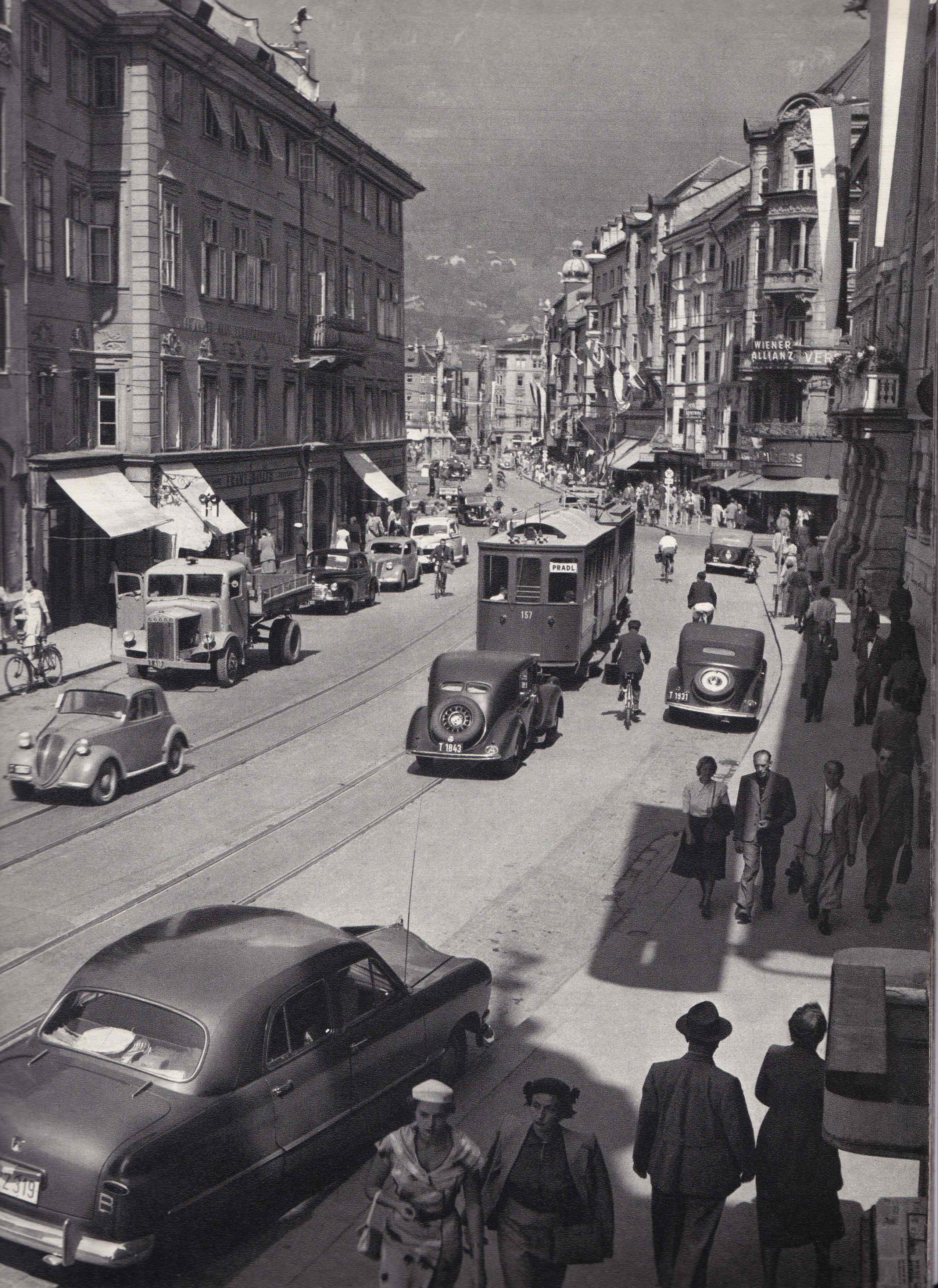
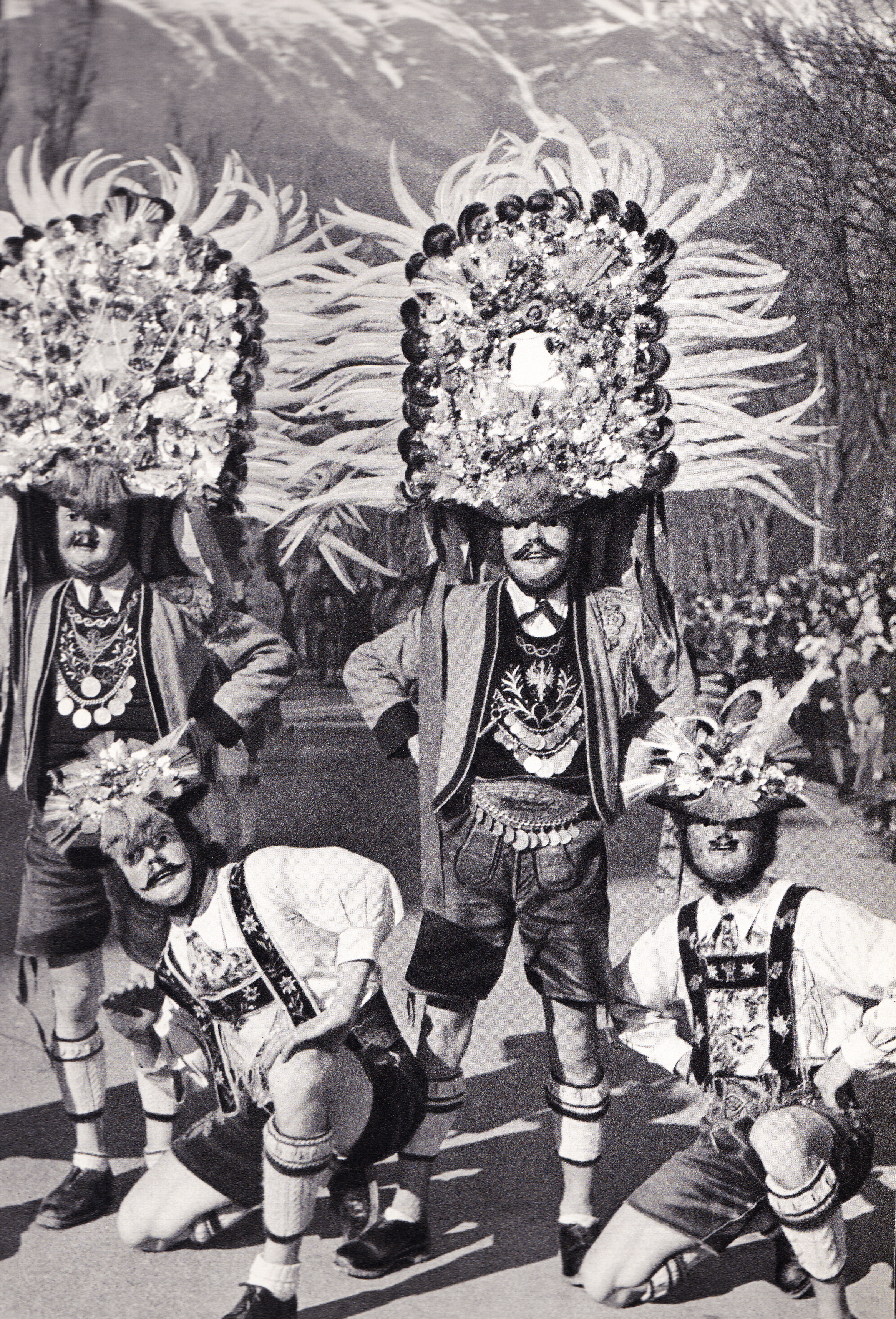
These images were scanned from a photo-book called, simply, “Innsbruck Tyrol” (Inn-Verlag Innsbruck, early 1950s) with photographs by Adolf Sickert. Texts are in German, English, French and Italian, so it was clearly a souvenir book for foreign tourists.
Above, traffic of all stripes on the Maria-Theresien-Strasse. I like that the cars, the cyclists and the public transportation all seem to nicely co-exist on the same pavement.

The sun terrace at the Seegrube, on the Northern Ridge. Innsbruck, in the valley below, is still somewhat small. No ski jump, no Autobahn, no shopping malls.

Traditional costumes and masks (a Fasching parade, I’m guessing) from the Ötz Valley. With those mustaches, they remind me of the Guy Fawkes masks sported by Anonymous and some Occupy participants.

Weekend Mountain Blogging: How The Irschenberg Got Its Name


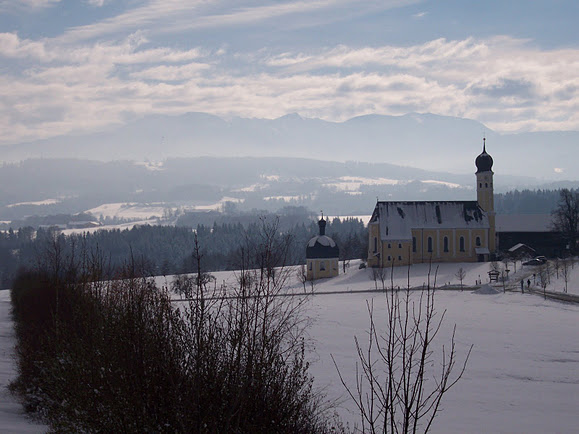
(Above: the pilgrimage church in Wilparting, alleged home of the bones of Marin and Anian, although the monastery at Rott am Inn maintains that they have the real relics. Image found here.)

Well, Wikipedia will tell you that it comes from the Latin Ursus with the old German Perg, to mean “Bear Mountain” (there is a written reference to “Ursenperig” from 1315).

However, both Wikipedia and the book Unbekanntes Bayern (Unknown Bavaria), volume 4, refer to the legend of the Irish monks Marin and Anian who had settled there in the 7th century, bringing Christianity to the local inhabitants. Marin was martyred by marauding Vandals, and Anian, the story goes, died simultaneously of natural causes. They are referred to as Scotch-Irish, or Iroschotten. “Iroschotten” > “Irschen”.

Just something to think about next time you drive over the Irschenberg on the A8.

Added bonus trivia: the 2001 film Die Scheinheiligen takes place in Irschenberg, the plot revolving around construction plans for a fast-food reststop for the nearby Autobahn. (There is in fact a McDonald’s there now. The modern version of marauding Vandals.) The word scheinheilig refers to someone who is sanctimonious, hypocritical, holier-than-thou-but-faking-it.

Update on the Grave Mounds

OK, I did a little more searching on the internet, and found that there is more to be found under “Grabhügel” than there is under “Hügelgräber” (which is the word used on the Schondorf municipal website.) A lot more. Between the Ammersee and the Lech river alone there are 167 mounds. In Grafrath, just a ways up the road, there are 250 mounds, old stone-age fortress remains, and a sacrificial stone complete with cup markings. In other words, the place is teeming with pre-historic geological archeological finds. So little time!

Pagans in Bavaria: Celtic Grave Mounds

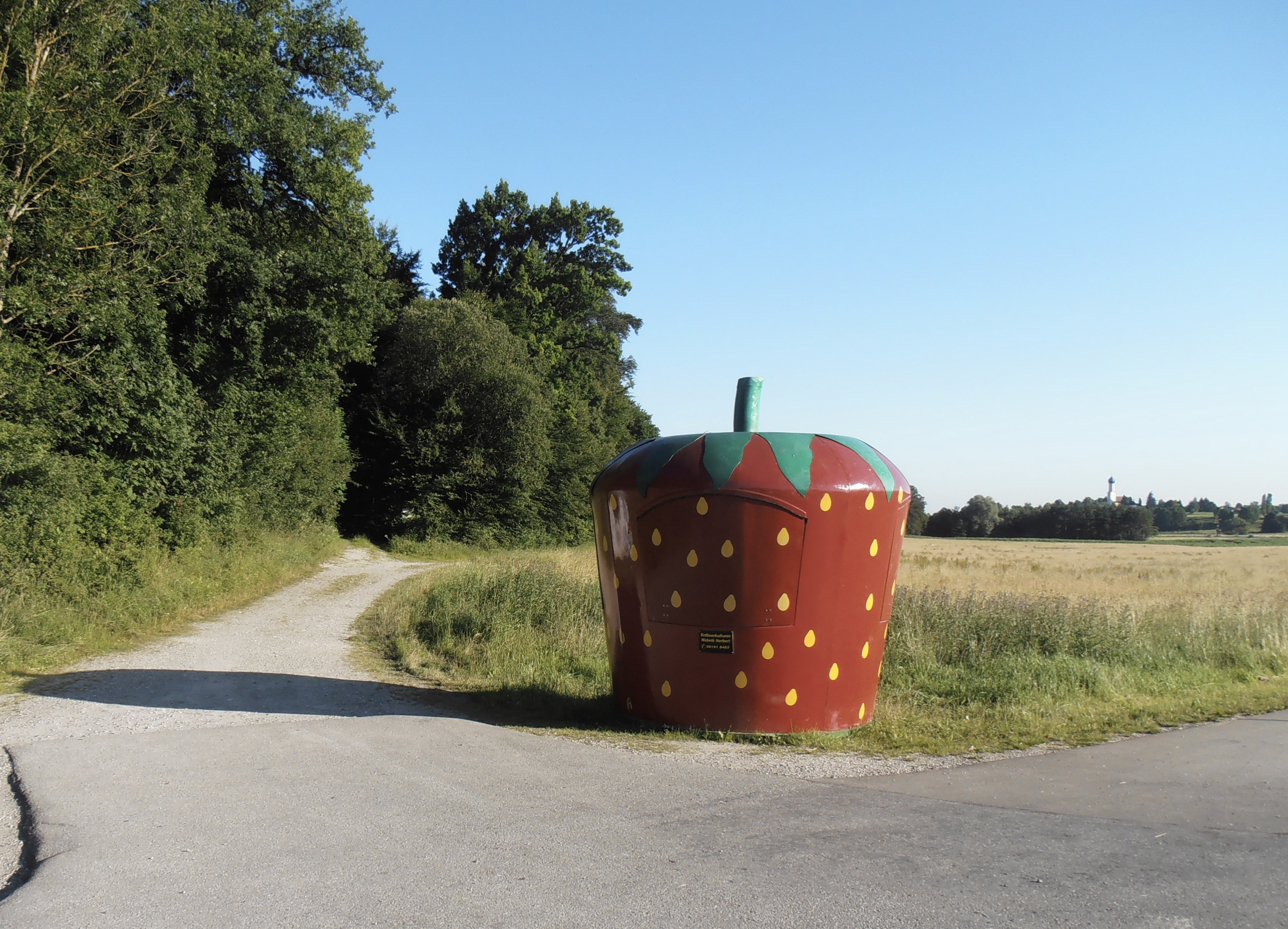
On my hiking map of the Ammersee region, I found two red stars placed on a wooded area north of Schondorf. The map’s key uses this symbol for grave mounds or ringwalls, a number of which are to be found in Bavaria. Surprised to find some just down the road, we set off to look for them. Going mainly by instinct, we turned off the road at the big strawberry between the Aldi and Schondorf and parked there, then headed into the woods on foot.
This was not the ideal entrance point, but we couldn’t find a better one. Trying to walk toward the place indicated by the stars, we veered off the path pretty early. On the other side of some swampy grassland surrounded by forest, I could make out something that looked higher than the rest of the forest floor.

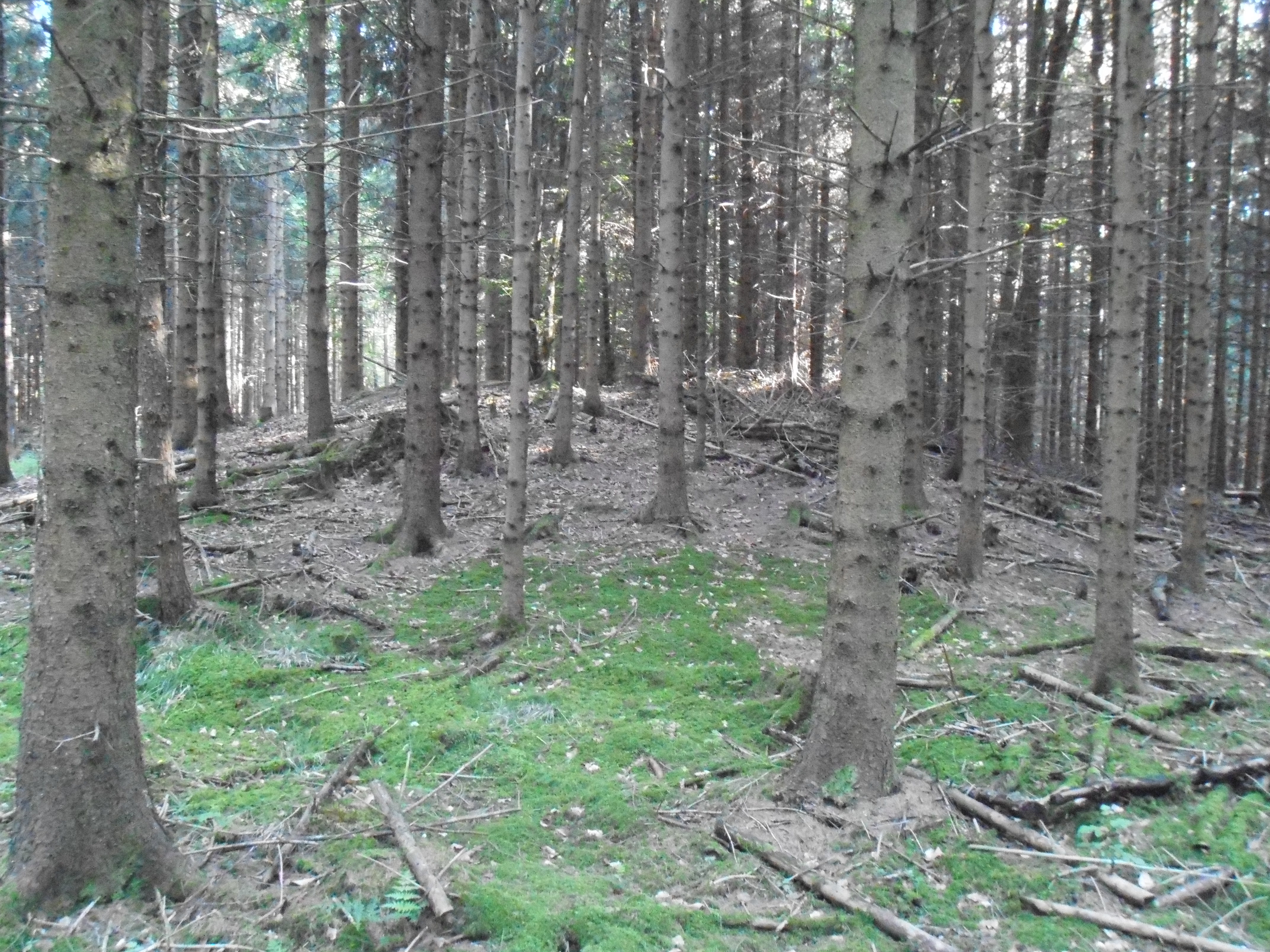
I think this is a mound. The Beau was not entirely convinced. No signs, no path, just strange little hills covered with trees and moss, and a hell of a lot of biting insects (I was wearing shorts — “typisch amerikanisch”, said the Beau — a mistake I won’t make again.)

Here appear to be three. It’s not easy to tell in the photos, but they really were different from the surrounding landscape. (Of course, it’s impossible to tell just by looking — hills like this could have nearly anything underneath them, from old war debris to landfill. ) Local websites mention that there are fourteen such Celtic grave mounds in the area, but nothing more about them. We’ll keep looking.

R.I.P. Patrick Leigh Fermor

I first came across the name Patrick Leigh Fermor in a biography about Bruce Chatwin; he and Robert Byron were his predecessors and influences in travel literature, and they were so neatly described that I immediately ordered old, out-of-print copies of Fermor’s “A Time Of Gifts” and Byron’s “The Road To Oxiana”. These books marked the beginning of a long and happy interest in the writings of people who have grabbed a rucksack and gone off to find adventures in a changing world.

It took me years, however, to get around to ordering the second installment in the planned trilogy, and the third book has yet to come out (although I was happy to read in Fermor’s obituary that a final draft may indeed have been completed, and may actually get published, in my lifetime I would hope…) I can’t be too saddened to hear of his death, at age 96. He lived a long, full and happy life, and cheered many, many people along the way with his delightful stories.

>An Outing To Inning

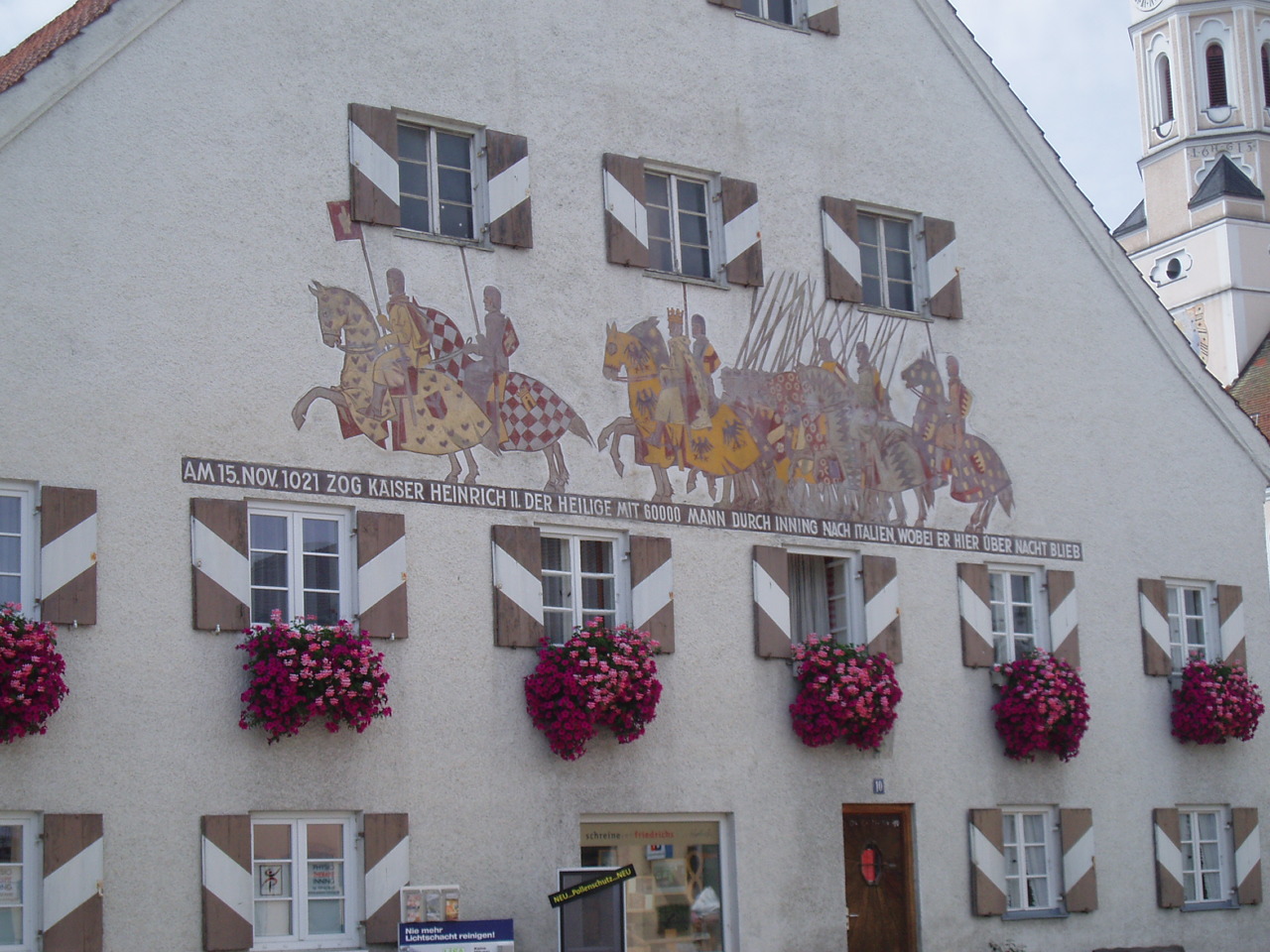
>A day trip to Inning am Ammersee. Which is very pretty indeed. Above, Inning’s historical claim to fame, I guess. “On November 15th, 1021, Emperor Henry II passed through Inning with 60,000 men, on the way to Italy, and he spent the night here.” Take that, George Washington.
Inning’s other claim to fame, if can be seen as that, is that TV personality Thomas Gottshalk used to live here. His brother still does, we were told.
But for us, the nicest thing about Inning was it’s proximity (minutes away) from Lake Ammer. The boat landing area has some nice Biergartens and the like, but doesn’t look as built-up and chic-touristy as, say, Starnberg.

We then hopped back in the car and drove over to the next lake over, the Wörthsee. This lake is smaller, and has much less lakeside development, no ferry service, and the clearest water I have ever seen (see photo above.) This lake and it’s smaller neighbor, the Pilsensee, belong to some local aristocrat who decided not allow recreational diving in his lakes — so that’s out, leider.