Forgotten Innsbruck: The Lake on the Hungerburg

There were so many excursions I wanted to take once the snows melted, and almost none of them were possible in the end for a variety of reasons. But before I leave for summer vacation I wanted to do this one last thing: I had heard years ago that there had once been a small lake on the Hungerburg, but it’s location eluded me until a recent issue of “Tip” came out, with a feature on the Seehof.

So viele Ausflüge wollte ich im Frühling machen, und aus vielen Gründen war fast keiner davon möglich. Aber hier ein letzter Eintrag über Tirol vor der Sommerpause. Vor ein paar Jahren erfuhr ich von einem kleinen Badesee auf der Hungerburg, aber genau wo wusste ich nicht, bis zur diesmonatigen Ausgabe von “Tip”.

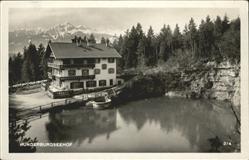
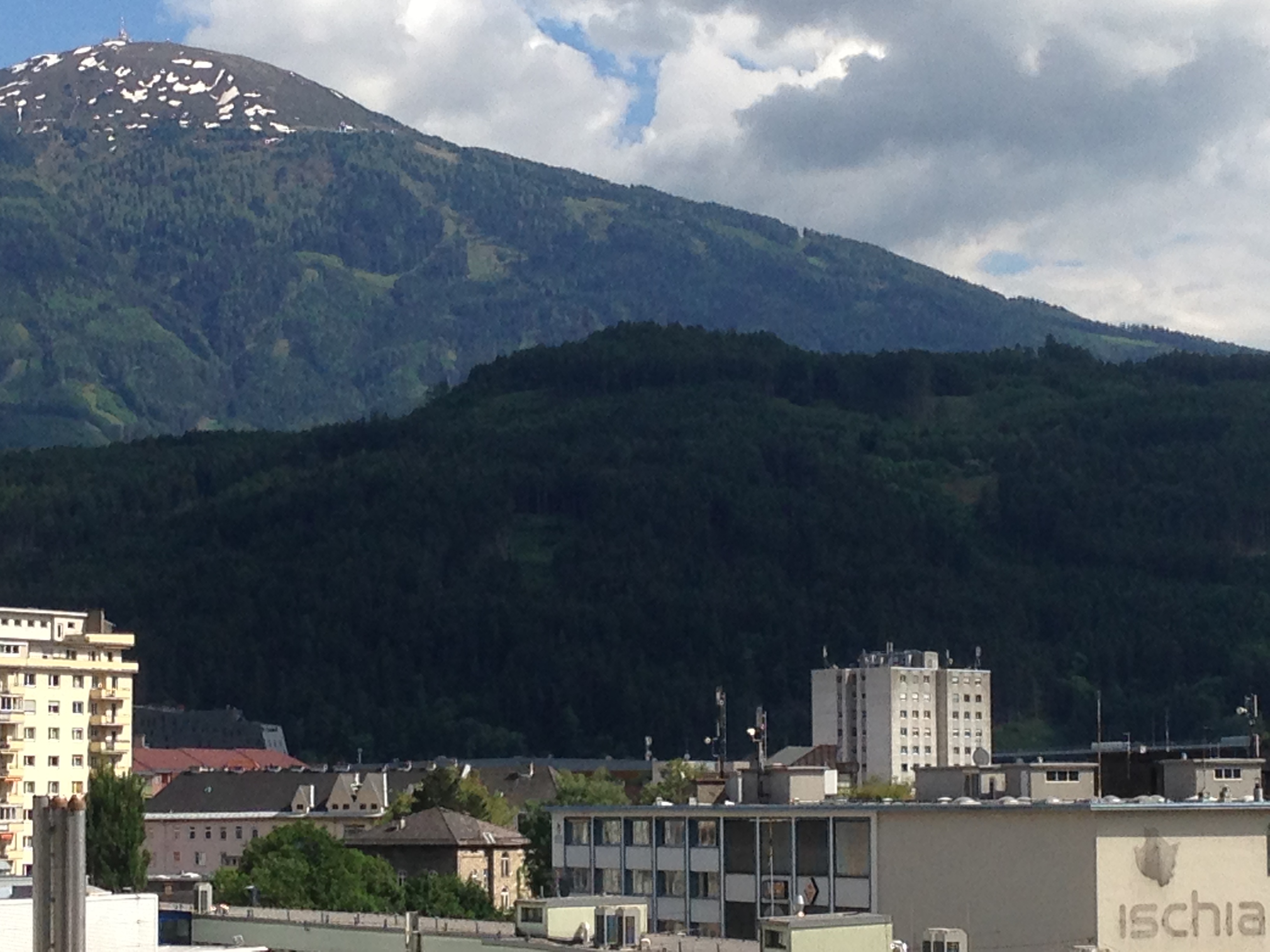
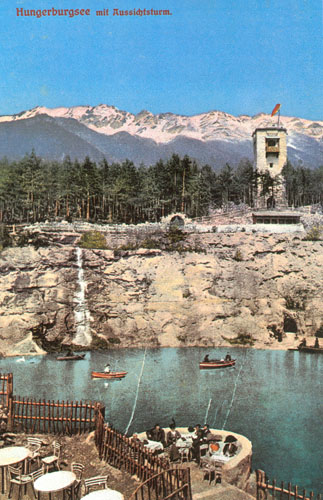
hungerburgseeIn 1912 a hotel was built up on the Hungerburg (a high plateau above Innsbruck), at the site of an old quarry. The quarry was flooded with water from the mountain spring, an observation tower was erected above the lake, and the whole thing was planned to be used as a little mountain resort, called the Seehof.

After the First World War and the fall of the Monarchy,  the Seehof fell into the hands of the Social Democratic Workers Party, who used it as a summer school for children from working-class families. Hundreds of local children learned to swim here during those years.  In 1934 the Social Democratic Workers Party was outlawed, and the Seehof came to be owned by another party, the Väterländische Front. Later it was used as housing for Hitler Youth and in 1940 it was sold to the NSDAP. But the lake had disappeared by then — its supply was shut off when water became scarce in the 1930s and had to be rerouted to residential areas.

1912 wurde ein Hotel auf der Hungerburg (ein Hochplateau  am Fuß der Nordkette, über Innsbruck) eröffnet, im ehemaligen Steinbruch. Der Steinbruch wurde geflutet, ein Aussichtsturm errichtet, und das ganze Areal wurde als Kurort geplant, Seehof genannt.
Nach dem ersten Weltkrieg kam der Seehof zur Sozialdemokratischen Arbeiterpartei, und kurz danach wurde er als freie Schule für Kinder aus Arbeiterfamilien verwendet. Laut “Tip” haben im Badesee zu dieser Zeit hunderte Innsbrucker Kinder das Schwimmen gelernt.
In 1934 wurde die SDAP verboten, der Seehof wurde der Väterländischen Front zur Verfügung gestellt. Später war er eine Herberge für die Hitlerjugend, 1940 an die NSDAP verkauft. Der See verschwand aber 1937, da Wasserknappheit herrschte und der Zufluss unterbunden wurde.

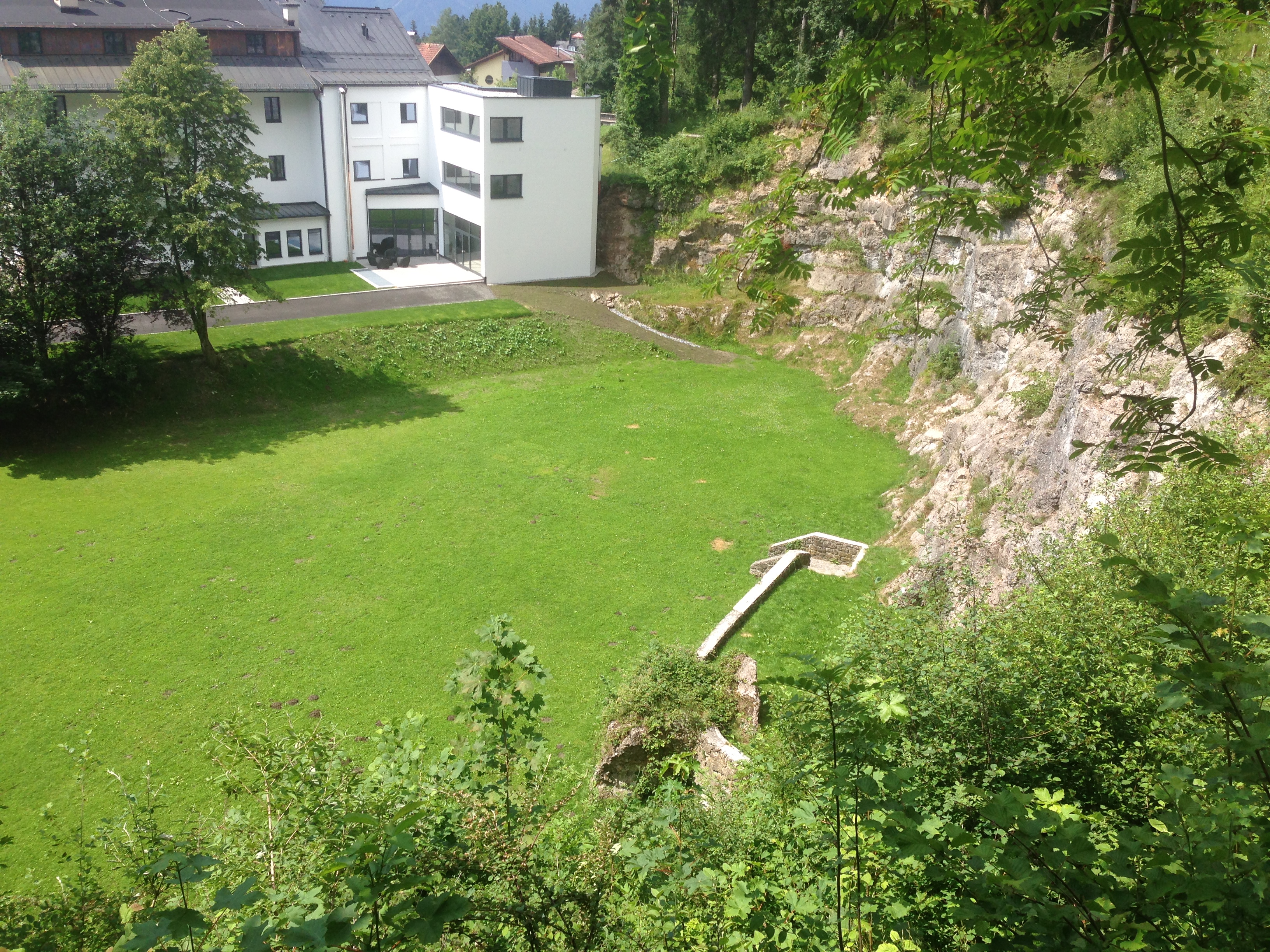
SeehofIMG_0646Then and now: from almost the same vantage point. Below: the observation tower is still standing, but of course the area is private property and fenced off from random visitors. One can walk right up to the back of the tower, however.

Damals und heute, vom fast selber Aussichtspunkt. Der Turm steht noch, ist aber abgezäunt.

IMG_0639Since 1951 the property has belonged to the Arbeiterkammer (Austrian Chamber of Labour) and after a few renovations the building is now a thoroughly modern training center with conference rooms and the like. But sadly it seems the lake is gone forever.

Seit 1951 befindet sich das Grundstück in der Hand der Arbeiterkammer, und nach einige Renovierungen ist es jetzt eine ganz moderne Schulungsstätte. Leider ist der See für immer verschwunden.

Upper images found here

Pagans In Tirol: The Medicine Woman from the Gurgl Valley

IMG_0632

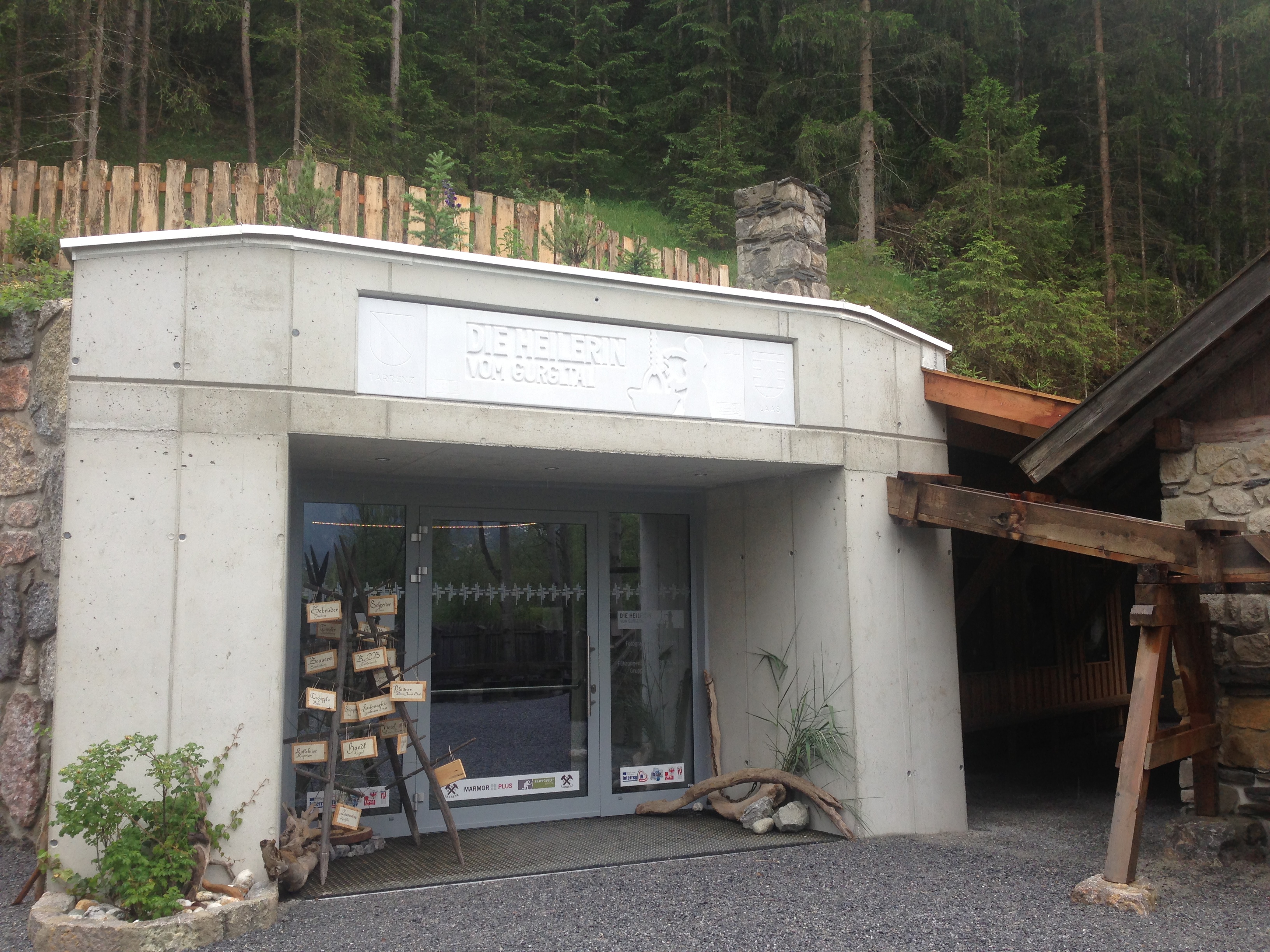
I persuaded a good friend to drive me to the village of Tarrenz (in the Gurgltal, north of Imst) to visit the brand-new museum built to house a fascinating archaeological discovery there — die Heilerin von Gurgltal, which more of less translates as the “Medicine Woman” from the Gurgl Valley. Alternately she’s referenced as being from the Strader Wald, or from the forest in nearby Strad. The story in a nutshell:

Tarrenz lies along the Via Claudia Augusta, one of the old Roman roads over the Alps. Hobby archaeologists are attracted to this area because of the artifacts that can be found along old roads. Some such treasure-hunters were combing the woods with a metal detector, and came across the first signs of something very interesting and ultimately very mysterious.

Eine Freundin fuhr mit mir neulich nach Tarrenz (im Gurgltal, bei Imst), um das nagelneue Museum der Heilerin vom Gurgltal zu besuchen. (Alternativ ist sie die Heilerin vom Strader Wald gennant.) Tarrenz liegt entlang der historische Via Claudia Augusta, ein Ziel für Hobbyarchäologen, wegen der Menge von Artifakten, die man neben alten Strasse finden kann. Ein paar solche Schatzsucher waren vor einige Jahren mit einem Metalldetektor im Strader Wald; dort stießen sie auf einen interessanten und mysteriösen Fund:

IMG_0628

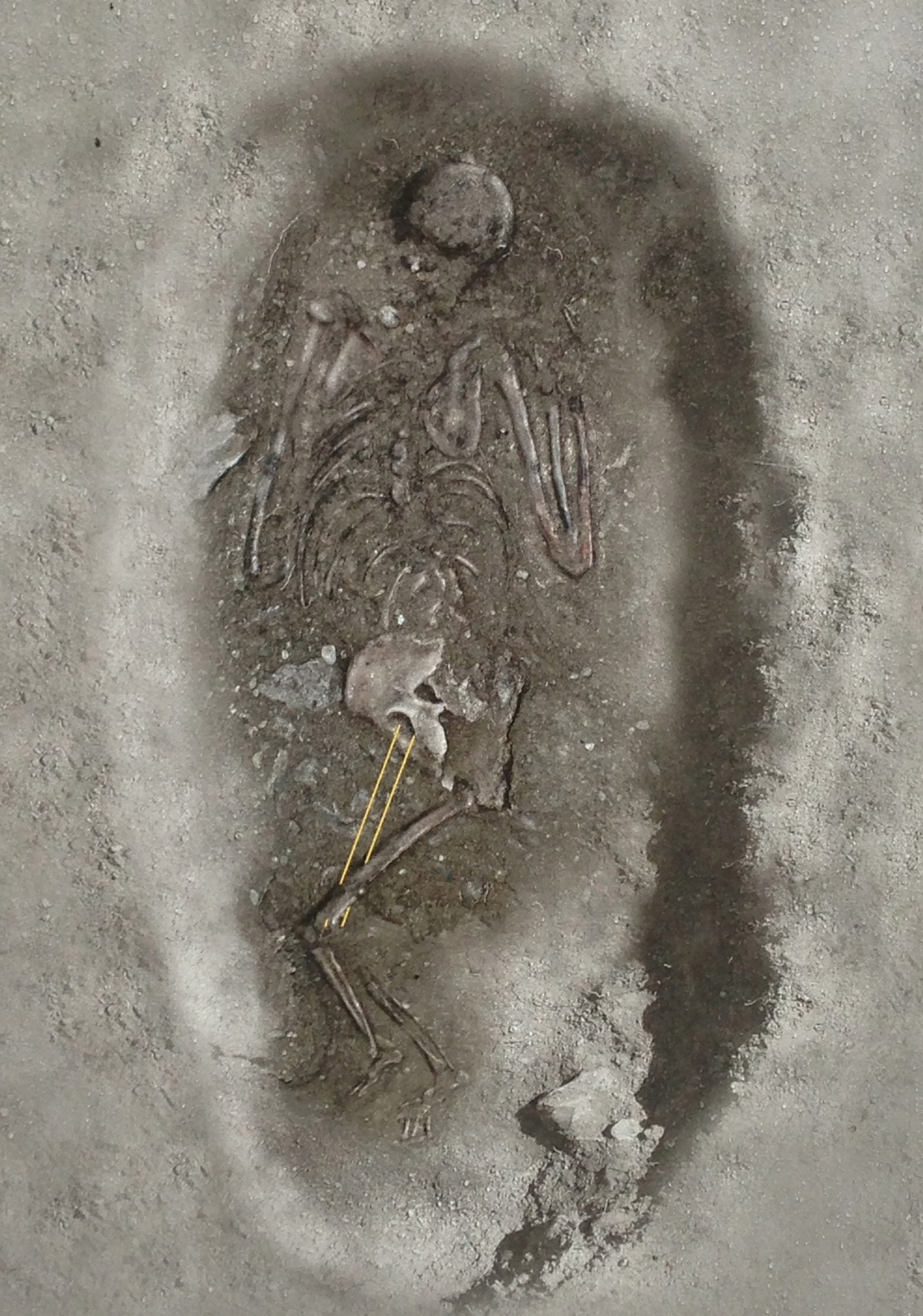
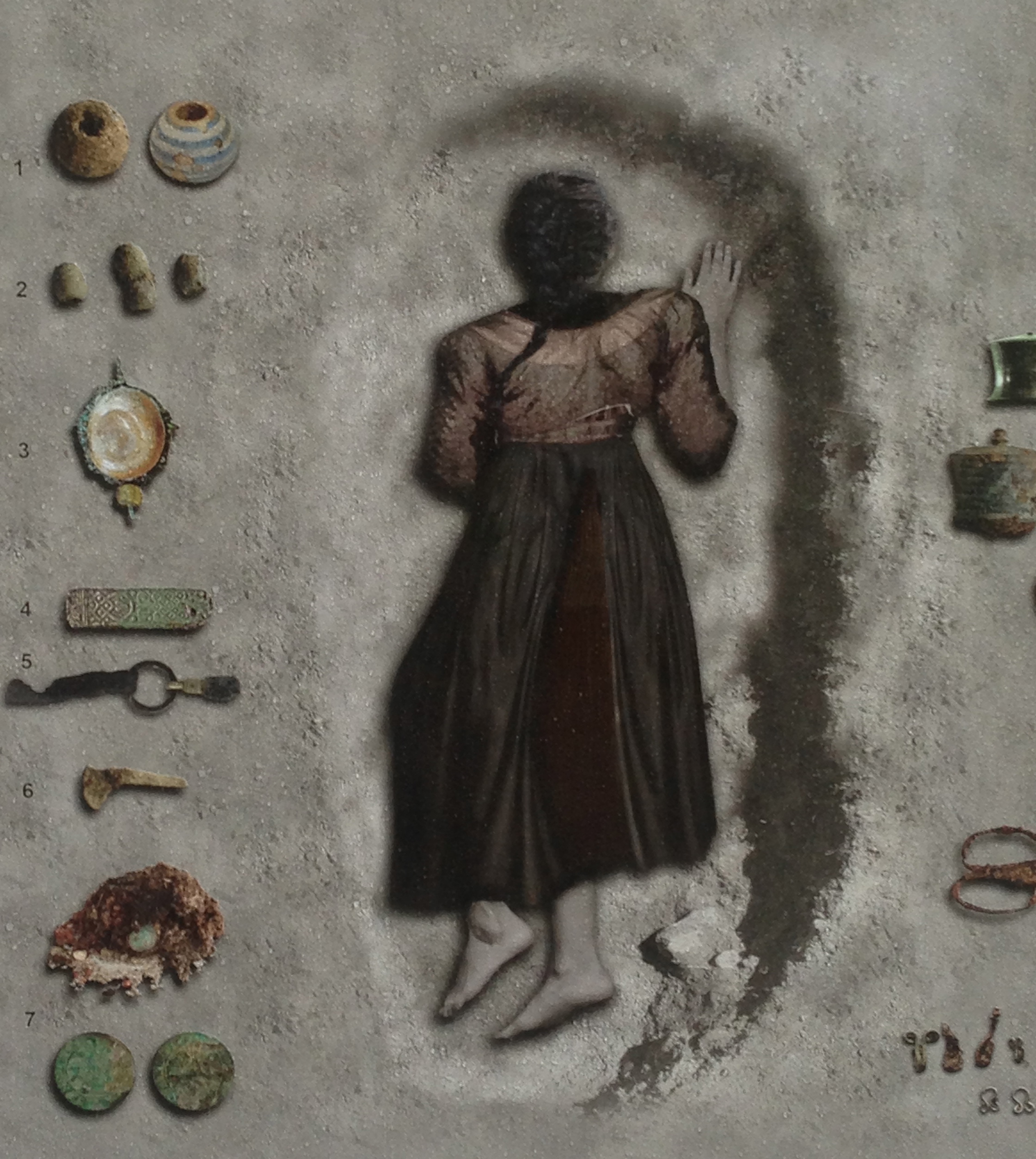
It was the grave of a woman, found lying face-down, along with a bounty of small and valuable objects — metal instruments such as scissors and keys, coins, pearls and crystals, a thimble, and — the headline-grabber —a set of metal cups used for cupping therapy. Dating places her having lived during the time of the 30 Years War, in the first half of the 17th century.

Das Grab einer Frau, in Bauchlage beerdigt, zusammen mit einer Menge kleine wertvolle Gegenstände — ihre Habseligkeiten. Eine Schere, eiserne Schlüssel, Münzen, Perlen, Kristallen, ein Fingerhut, und — meist interessant — ein Set Schröpfköpfe aus Metall. Hier der archäologische Befund. Die Frau lebte während der Zeit des Dreißigjahrigen Krieges.

IMG_0629

The circumstances don’t fit together in the usual way. She was buried quite far from the cemetery. A foreigner? A suicide? Possible Jenische*? She had, much like Ötzi did, her whole “professional kit” with her. Added to her grave as a kind of honor? Or thrown into it in a hasty burial? Then there’s the “face down” business, which normally is found to have been the custom for criminals. But she clearly hadn’t been executed as a witch, not with all those valuables in the grave with her, even though witch trials were very much in at the time.

Die Sachen passen nicht zusammen wie erwartet. Die Frau wurde ziehmlich weit weg vom nächsten Friedhof begraben. Eine Fremde? Ein Selbstmord? War sie Jenisch? Wie Ötzi, sie hatte ihre professionelle Werkzeuge dabei — wurden sie mit ihr mitbegraben, als ein Ehrenzeichen? Oder schnell hineingeworfen in Eile? Aber sie wurde gegraben mit Gesicht nach unten, wie man Kriminelle bestattete. Offensichtlich wurde sie nicht hingerichtet, sonst hätte man keine Grabbeigaben gefunden, obwohl die Hexenprozesse damals ganz in Mode war.

The museum tries to bring you in with carefully portioned experiences. First you hear  of the arts of healing as practiced in these parts, and how knowledge was handed down through generations. Then you learn about some actual cases from Tirol which involved persecutions due to superstition and fear. The antisemitic source — and consequences — of Anderl of Rinn is an example used.

Das Museum führt den Besucher vorsichtig in kleinen Etappen ein, vermutlich für die sehr junge Besucher. Man lernt von Heilkunde und wie das Wissen von Generation zu Generation übergeben wurde. Dann wird man gelehrt über wahre Öpfer von Aberglaube und Angst in Tirol, zum Beispiel die antisemitische Ursprung — und Folgen — der “Anderl von Rinn” Geschichte.

You are then ushered into to larger room to watch a short film combining the facts of the find (given by the head of the archaeology department at the University of Innsbruck, Professor Harald Stadler) with a dramatized version of what might have happened, using locals as actors. Their version involves a heathen midwife, banned from the community and the church (same thing back then) but nevertheless needed and called whenever someone got sick. A stillbirth is enough to have the villagers accuse her of witchcraft, and then tempers get hot, someone (guess who) gets killed, and a hasty, fearful burial is carried out in the forest. Entirely plausible — although often the truth is a lot more boring (she died of illness, her outsider travelling companion(s) buried her as best they could, and moved on?)
After the film ends, you finally get to see the skeleton and the artifacts, laid out under glass with plenty of information about their provenance and uses. The tour guides — a husband-and-wife team — are very much involved in the project and were able to answer questions in depth.

Man kommt dann in einer Halle und ein Kurzfilm läuft. Archäologische Details (von u.a. Universitätsprofessor Harald Stadler) alternieren mit einer Dramatisation von der Geschichte — also, was hätten passieren könnte — mit einheimische Mitwirkenden. In ihrer Fassung, ist die Frau eine Außenseiterin, eine heidnische Hebamme und Heilerin, aus der Gemeinde verbannt, dennoch in Krankenfälle immer wieder gerufen. Ein Totgeburt führt zur Vorwürfe von Hexerei, die Frau getötet und in Angst und Eile im Wald begraben. Alles schon möglich — obwohl die Wahrheit ist oft weniger interessant.
Dannach darf man den Skelett samt Artifakten (in Vitrinen) -endlich- sehen. Die Führer — ein Ehepaar — sind im Projekt involviert und konnte viele Fragen reichlich antworten.

If you go: the Museum der Heilerin von Gurgltal; is located within another, outdoor museum called Knappenwelt, which is a recreation of a small mountain mining industry from the olden days. You can buy a ticket for either, or in combination. Drive to Imst and then north on the 189 toward Fernpass. It’s trickier if you don’t have a car, but apparently this tourist shuttle will get you there from “downtown” Imst to the Knappenwelt. You’ll still have to walk from the Imst station, which is a bit removed from town.

Anfahrt: das Museum befindet sich in der “Knappenwelt”, ein Freilicht Museum. Von Imst kommt man mit dem Strasse Nr. 189 richtung Fernpass nach Tarrenz. Ohne Auto wird’s schwieriger, aber wenn man in Imst von Bahnhof ins Zentrum geht, findet man den Bummelzug “Bummelbär”, der macht einen Tour von Imst nach Strad mit Zwischenstops.

*Jenische is a name used for a certain nomadic people in Europe. They are not related to the Roma or Sinti — in fact they may not be an ethnic group at all but fall under the generic category “gypsy”.  Wikipedia likens their language to Cockney.

Lanser Kopf

The Lanser Kopf (“Lans Peak”)

 is  a rocky outcropping atop a wooded hill called the Paschberg, situated between Innsbruck, Austria, and the village of Lans. It sits just under 300 meters above the city, and a hike to the top can be done in about an hour.  It is one of the few lower hilltops which has not, to my knowledge,  been previously excavated.

Übernommen aus einem kürzlich verfassten Beitrag für einen Archäologie Online Kurs an dem ich teilnehme.
Der Lanser Kopf liegt auf dem Paschberg, zwischen Innsbruck und der Dorfgemeinde Lans, knapp 300 Meter über der Stadt, wovon man in ca. eine Stunde eine gemütliche Wanderung machen kann. Er ist eine der wenigen Mittelgebirgsebenen in der Gegend auf der man, so weit ich weiß, keine archäologischen Ausgrabungen durchgeführt wurden.
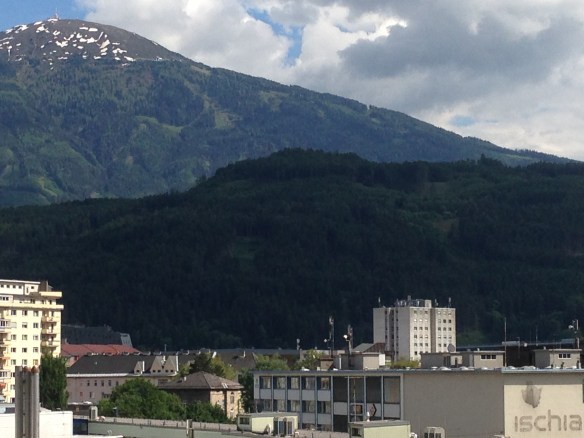
970259-51b733d484b3e5.86591292Innsbruck, Paschberg/Lanser Kopf, Patscherkofel (2246 m)

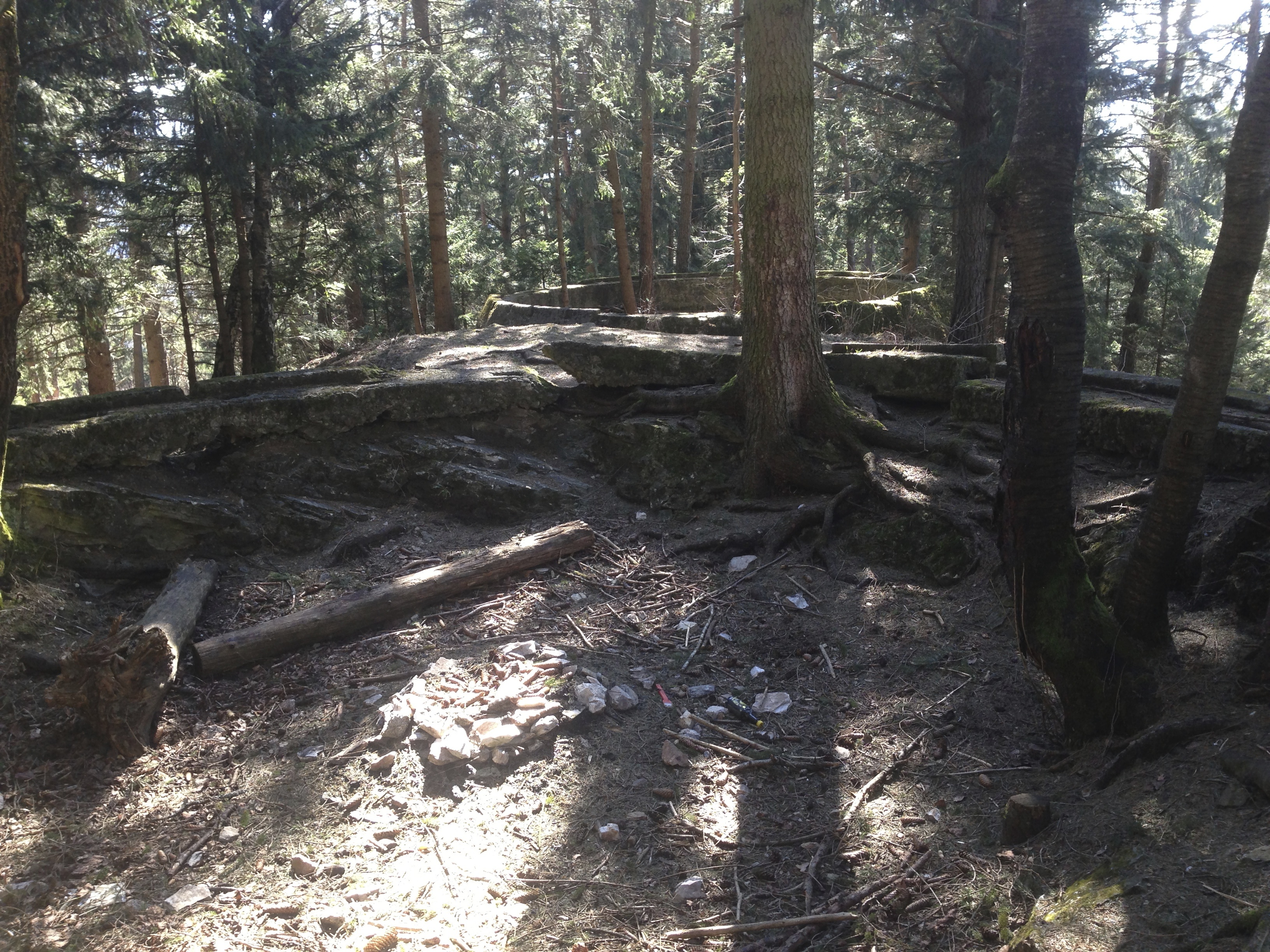
One of the most interesting things about the Lanser Kopf is that there are multiple of evidences of use over time. Schalensteine (rocks with cup markings) can be found on the lower slopes. Unfortunately it is impossible to date them. It is suspected that there may also be markings in the rocks at the peak, but these are partially covered with trees, earth and concrete. The concrete, poured in the middle of the last century, holds park benches and a marble table, and also makes up two WW2 Two flak circles. The circles were abandoned at the end of the war, and now have trees growing inside them.

Eine Besonderheit des Lanser Kopfs liegt in seine vielseitige Nutzung im Laufe der Zeit. Auf dem niedrigeren Hang findet man Schalensteine, die leider nicht datierbar sind.  Man vermutet, dass man oben an der Spitze auch Schälchen finden könnte, wenn die Steine nicht mit Erde, Bäumen und Beton verdeckt worden wären.  Der Beton wurde in der Mitte des vorigen Jahrhunderts am Kopf gebracht, um Parkbänke und eine runden Marmortafel zu befestigen, und wurde auch im zweiten Welzkrieg für die Herstellung von zwei Plattformen für Fliegerabwehrkanonen (FLAK-Kreise) verwendet. Bäume wachsen jetzt in den leer stehenden Kreisen.
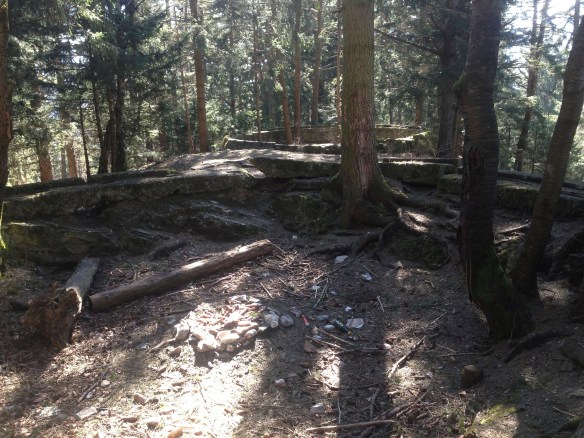
970259-51b73492ce0f95.32446165Two WW2- era flak circles at the Lanser Kopf.

The earliest humans artifacts found in this region date back to about 30,000 BCE . Evidence of Bronze Age and Iron Age settlements have been discovered on other nearby hilltops, including stone residential terraces (Hohe Birga, Himmelreich), and sacrificial burning sites (Goldbichl, Bergisel.)

Die älteste prähistorische Artefakte aus dieser Gegend datieren auf 30,000 v. Chr.  Neolithische Siedlungen hat man an naheliegenden Hügeln entdeckt, Steinterrassensiedlungen (Hohe Birga, Himmelrich) und auf Brandopferplätze (Goldbichl, Bergisel).

As far as I know, the Lanser Kopf was not used for anything in the Modern Era — with the exception of the wartime use — other than as a place to rest while hiking. There is no obvious evidence of it having been used for farming or settlement. However, it’s use in the last century as a strategic point for sighting enemy planes and firing missiles at them certainly would have roughed up the area somewhat, since it can been assumed that military jeeps or trucks would have been driven at least to the plateau just below the flak circles, and the construction of the circles themselves would have affected any older formation processes.

So weit ich weiß hatte der Lanser Kopf in der jüngeren Geschichte, außer während der Kriegszeit, nie eine besondere Funktion. Es gibt dort keine offensichtlichen Anzeichen von Siedlung oder Landwirtschaft. Er diente als Rastplatz für Wanderer.  In den Kriegsjahren war die Gegend mutmaßlich von LKWs und Jeeps überrollt, und die Herstellung der FLAK -Kreise hätte ältere Spuren zerstört.

This, however, brings forward another question — which kinds of artifacts does one wish to find? There may well be modern(ish) war artifacts in the vicinity, from either the Second World War or from the battles against Napoleon’s troops in 1809. There may be man-made objects just below the surfaces. 
But could be there also be older signs of human settlement below the flak circles? One would unfortunately have to destroy them in order to see what lies below. And while the concrete flak circles may not be of much interest to people today, I find it important that they remain, as an historical testament to Innsbruck’s war involvement in the 1940s. I find that it would not be worth it to remove them in the search for earlier artifacts. The earth-covered level area just below them, however, would be a worthy site for excavation, indeed if such work hasn’t been done already.

Das alles wirft eine Frage auf:  Welche Artefakte erwartet man zu finden? Es gibt wahrscheinlich schon genug Kriegsartefakte aus dem zweiten Weltkrieg oder, weiter zurück, vom Tiroler Volksaufstand in 1809.  Könnten prähistorische Funde direkt unter den FLAK-Fundamenten liegen? Man müsste diese aber zerstören, wenn man dort richtig graben will. Obwohl sie heutzutage wenige Leute interessieren,  würde ich lieber sehen, dass sie intakt bleiben, als historische Zeitzeugnisse der Kriegsjahre Innsbrucks. Hingegen läge auf der kleinen Ebene etwas unterhalb der kreisförmigen Fundamente eine angemessen Stelle für eine Ausgrabung, wenn nicht solche schon durchgeführt wurden.

From evidence gathered by archaeologists, pre-Roman-era settlers in Tirol greatly preferred the high plateaus and hilltops between the Inn (swampy floodplain) and the mountains (rocky, barren). This middle ground was probably ideal for hunting as well as providing safety. Since the arrival of the Christian missionaries in the Middle Ages, many of those hilltops have been adorned with chapels. It has been speculated  that these  chapels might be sitting atop the remains of pre-christian structures, and often successful excavation work has been done in their immediate vicinity.  If such an excavation were done on the Lanser Kopf, one might look for pre-historic arrowheads, ceramics, stone objects, weapon depots and offerings (of which there are many in the Alps) or sacrificial burning sites, all of which have been found elsewhere in the region.

Aus archäologischen Befunden in der Region wissen wir, dass viele vorrömische Siedlungen in den Mittelgebirgen eingerichtet wurden, wo die Ureinwohner mehr Sicherheit und bessere Lebensqualität vorfanden. Seit der Ankunft christlicher Missionare im Frühmittelalter, sind viele dieser einigermaßen höheren Stelle mit Kapellen geschmückt.  Man könnte vermuten, dass manche dieser Kapellen möglicherweise auf Resten von früheren, vorchristlichen Bauwerke stehen, und tatsächlich hat man neben solchen Kapellen erfolgreiche Ausgrabungen durchgeführt. Wenn man so eine Ausgrabung auf dem Lanser Kopf unternähme, fände man möglicherweise Artefakten wie Pfeilspitze, Keramik, Steinfiguren, Waffendepots oder Brandopferstätte, welche anderswo in der Region, auf höheren Stellen, bereits gefunden wurden.
 

Kulturblogging: Die Hofkirche

IMG_0580

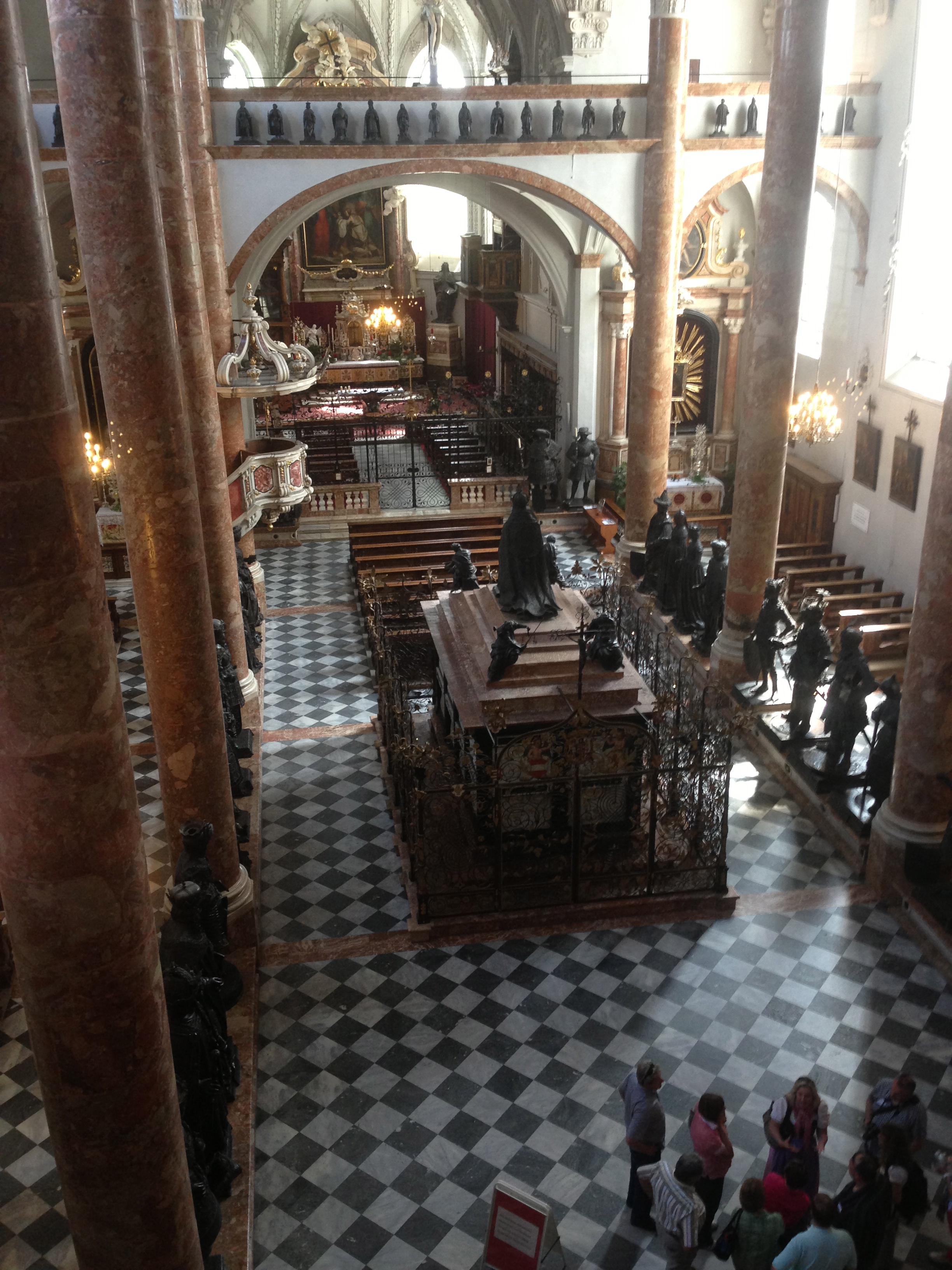
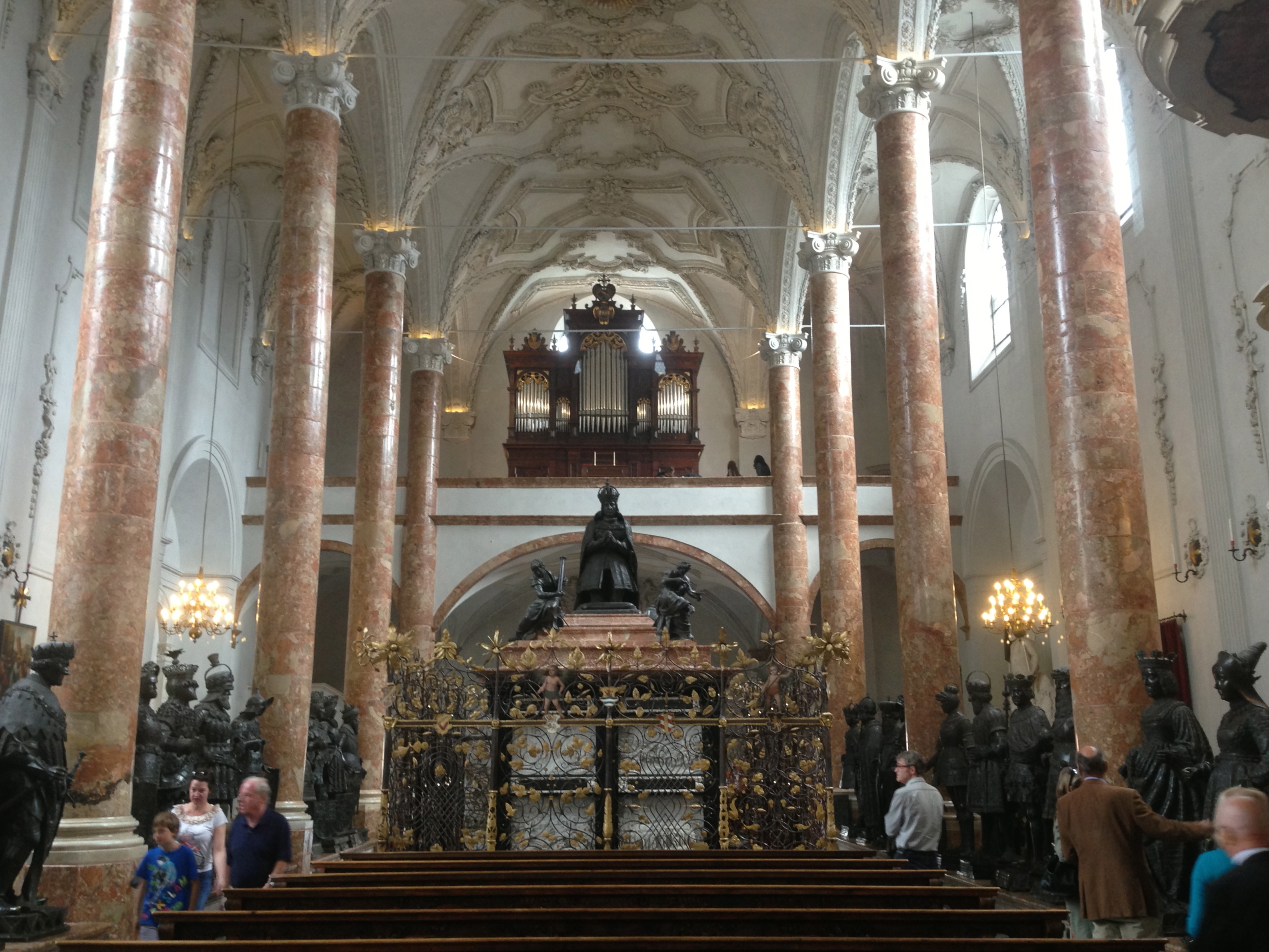
One of Innsbruck’s main attractions for the historically-minded is the Hofkirche, or Imperial Church (but no one calls it that, it’s just always the Hofkirche). As a tourist sight, the plain white exterior is deceiving (I heard it once remarked that the front facade resembles the face of a polar bear, and this pretty much pops into my mind every time I see it.) The interior, however, is impressive.

The Hofkirche was part of Holy Roman Emperor Maximillian’s last will and testament — and a beautiful sarcophagus was made for him there, although actually his remains ended up in the castle that was his childhood home, in Wiener Neustadt.

IMG_0587

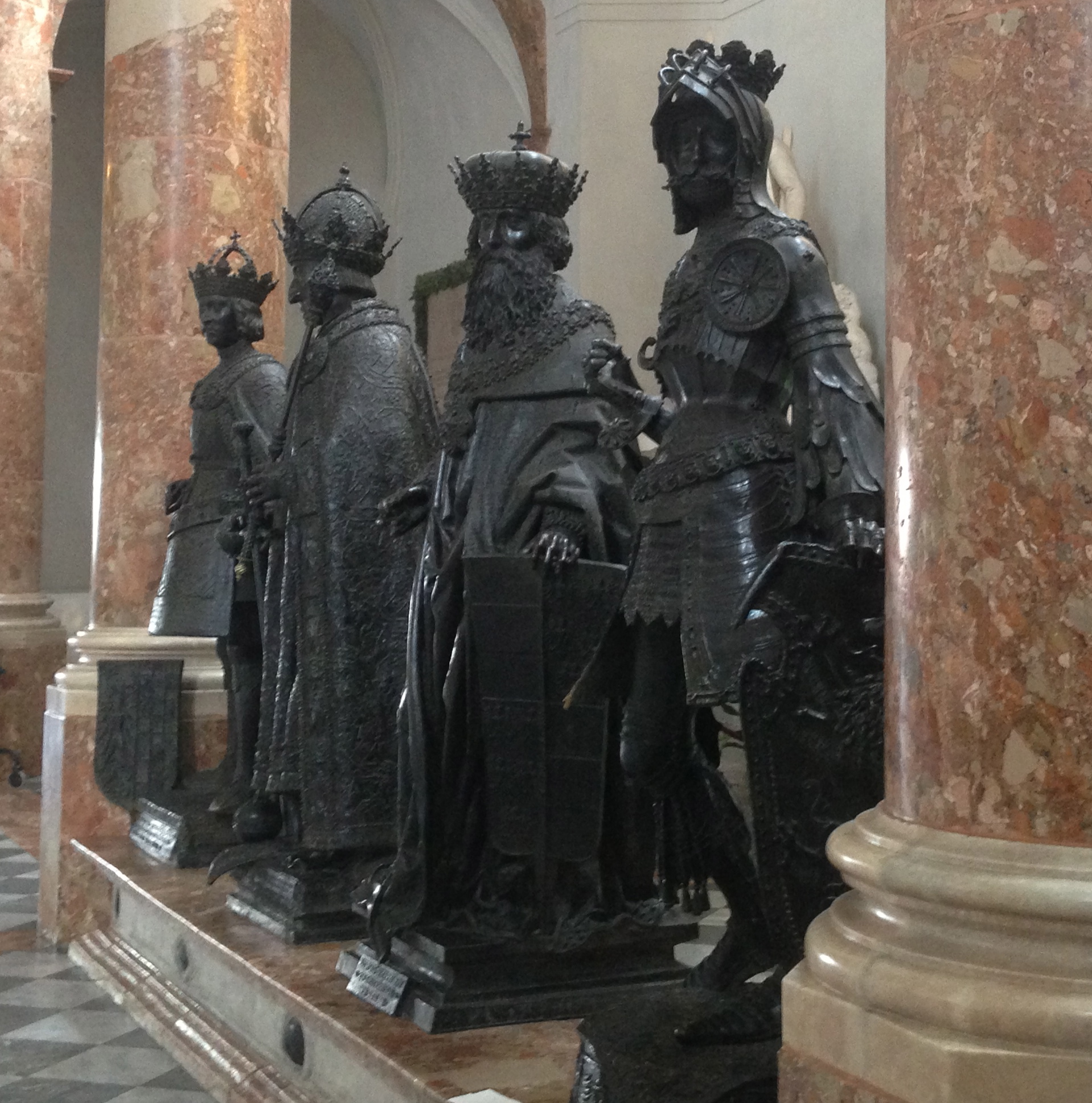
Keeping watch over this empty sarcophagus (which makes it a cenotaph) are two lines of life-size bronze statues commonly referred to locally as die schwarzen Mander (“the black men”), although they are neither all males nor even black, but more of a beautiful, deep dark chocolate brown.

IMG_0589

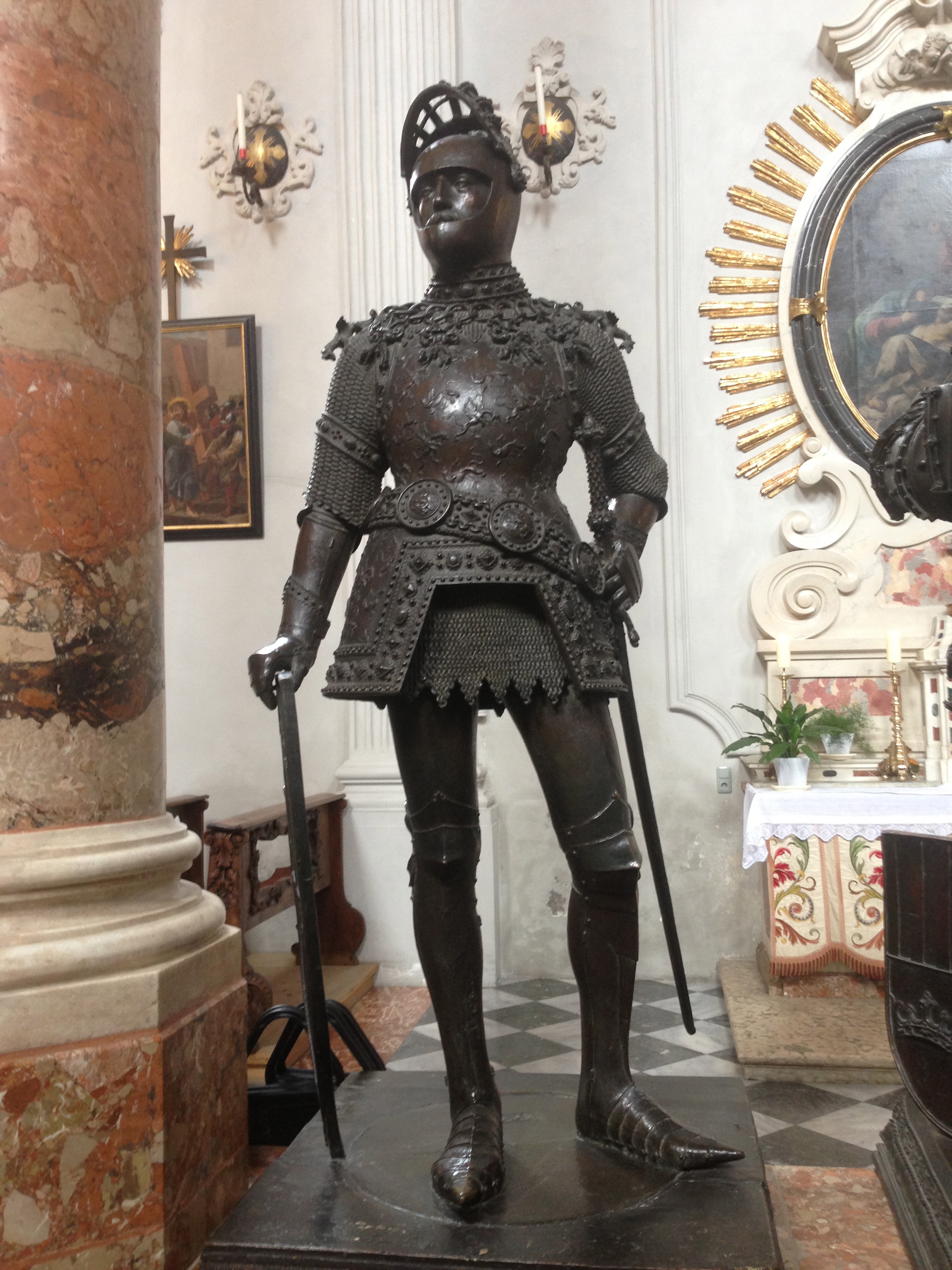
The English Wikipedia entry for the Hofkirche describes these figures as being of “ancestors, relatives and heroes”, which is the best way of putting it. They are all titled, some go way back into the early Middle Ages (Clovis I, Theodoric), and the existence of one is now questionable (King Arthur, although he was surely assumed to have been an genuine person in Maximilian’s time.)

IMG_0583King Arthur’s statue in the Hofkirche


IMG_0585

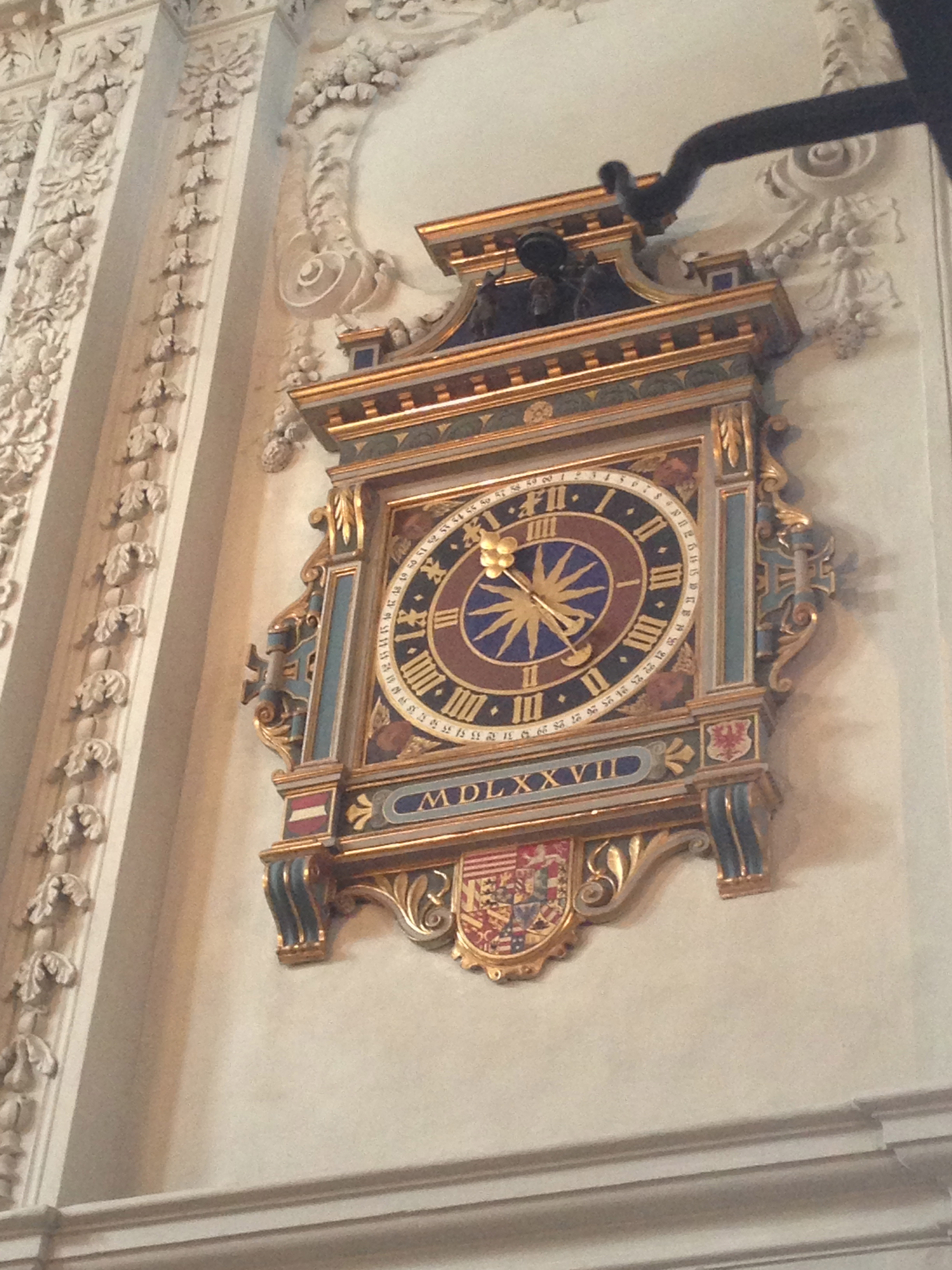
I always found the large old clock high above the altar in Innsbruck’s St. James Cathedral a nice touch if a little unusual (do you really want your flock to be checking the time during the mass?) but the Hofkirche goes one better with a charming little clock which chimes the hour, as well as each fifteen-minute interval. This morning I had the honor of participating in a special Sacred Heart Sunday mass, which has special meaning in Tirol — in the time of the battles with Napoleon’s troops (see Andreas Hofer), promises were made that, in return for divine intervention on the battlefield, official masses would be celebrated in the province each year. During today’s service, the little clocked chimed throughout, even making the priests stop mid-prayer to wait until the hour was rung.

IMG_0590

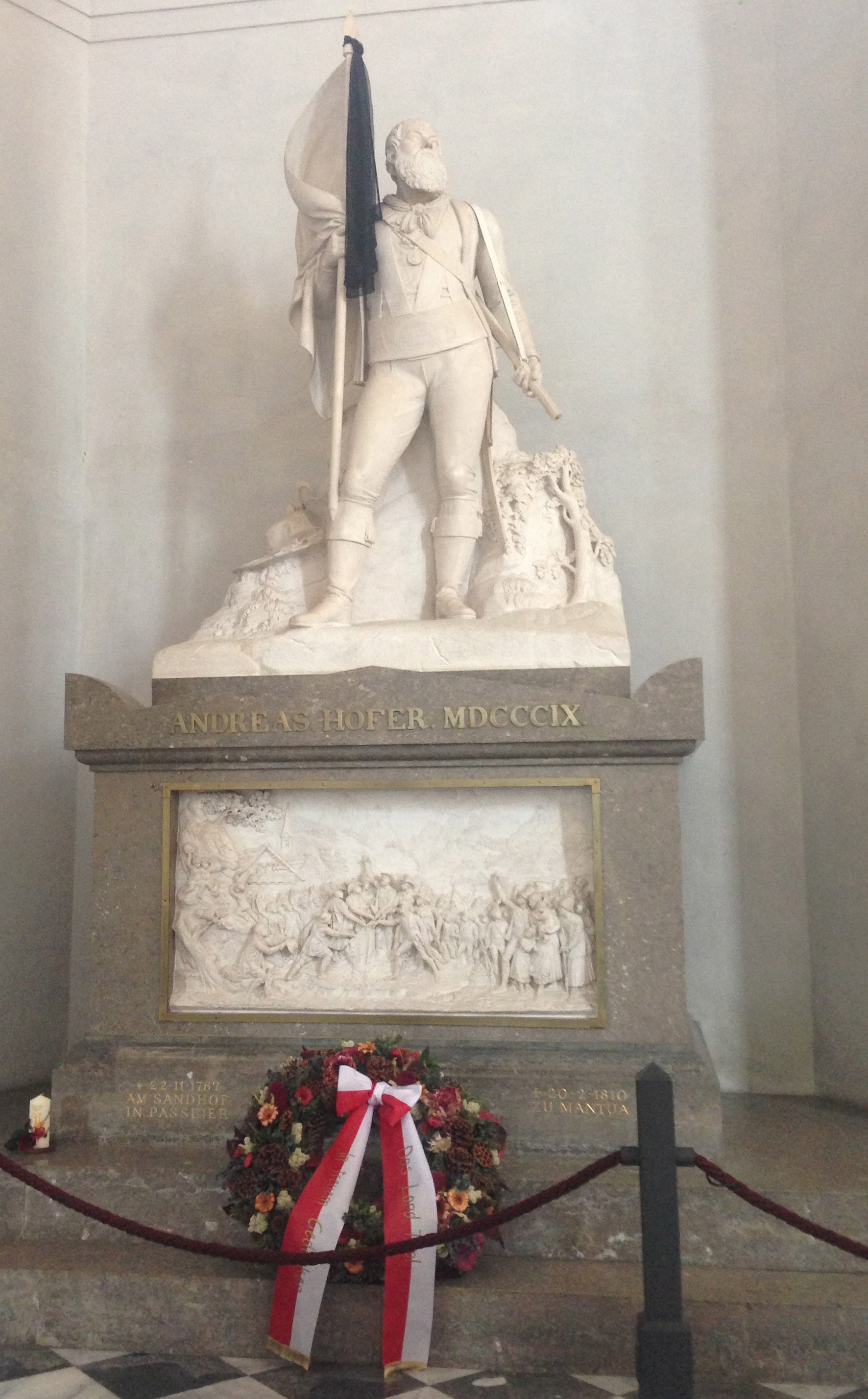
And speaking of Andreas Hofer, he’s here too. Thirteen years after his execution in Mantua in 1810, his body was brought to Innsbruck and laid to rest in the Hofkirche, where his statue guards the entrance.

A Belated Memorial Day Posting

I realized too late that I had this photograph in my computer, and that it would fit nicely for Memorial Day.

IMG_0350

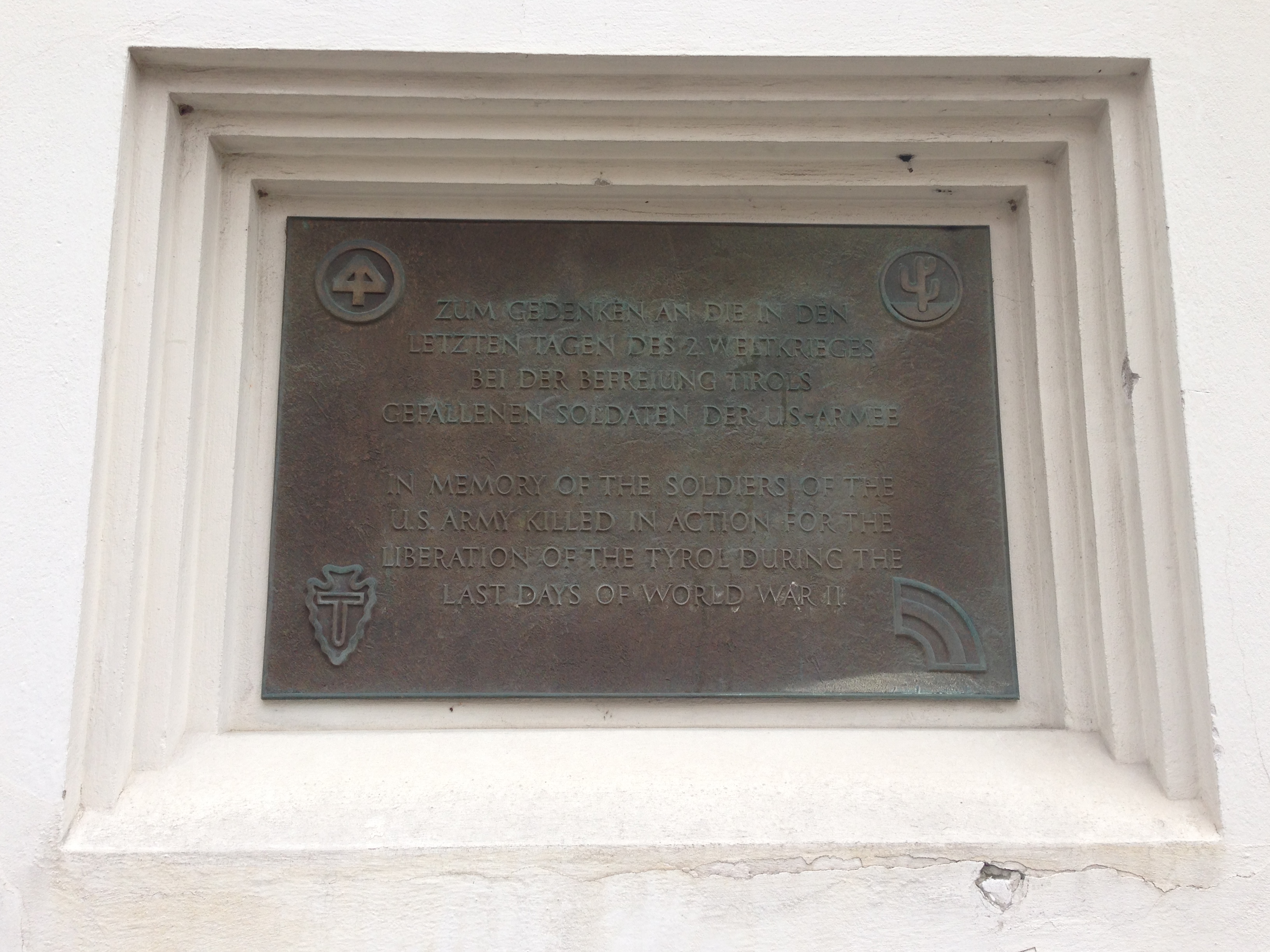
This plaque is recessed into the wall between Franziskanerplatz and the courtyard behind the Hofkirche. In my 13 years’ residence in Innsbruck, I had never noticed it, until one day I did. If you’re having trouble reading the text, it says:

Zum Gedenken an die in den letzten Tagen des 2. Weltkrieges bei der Befreiung Tirols gefallenen Soldaten der U.S.-Armee.

In memory of the soldiers of the U.S. Army killed in action for the liberation of the Tyrol during the last days of World War II.

(I don’t know what the symbols represent, I assume the service organizations who sponsored the plaque. The cactus is particularly charming.)

UPDATE: I found them! The symbols are division insignia of the US Army. Top left, 44th Infantry (a mirrored “four”). Bottom left, 36th Infantry “Arrowhead”. Bottom right, 42nd Infantry, “Rainbow”. Top right, 103rd Infantry, “Cactus”.

The Viereckschanze in Utting

UttingSchanze1

I previously blogged about the village of Utting am Ammersee in connection with the small, hidden cemetery for nearby concentration camp victims there. Today I have another unusual place to show you — the rectangular earthwork (Viereckschanze) in the fields just west of the village.

Uttingschanze3

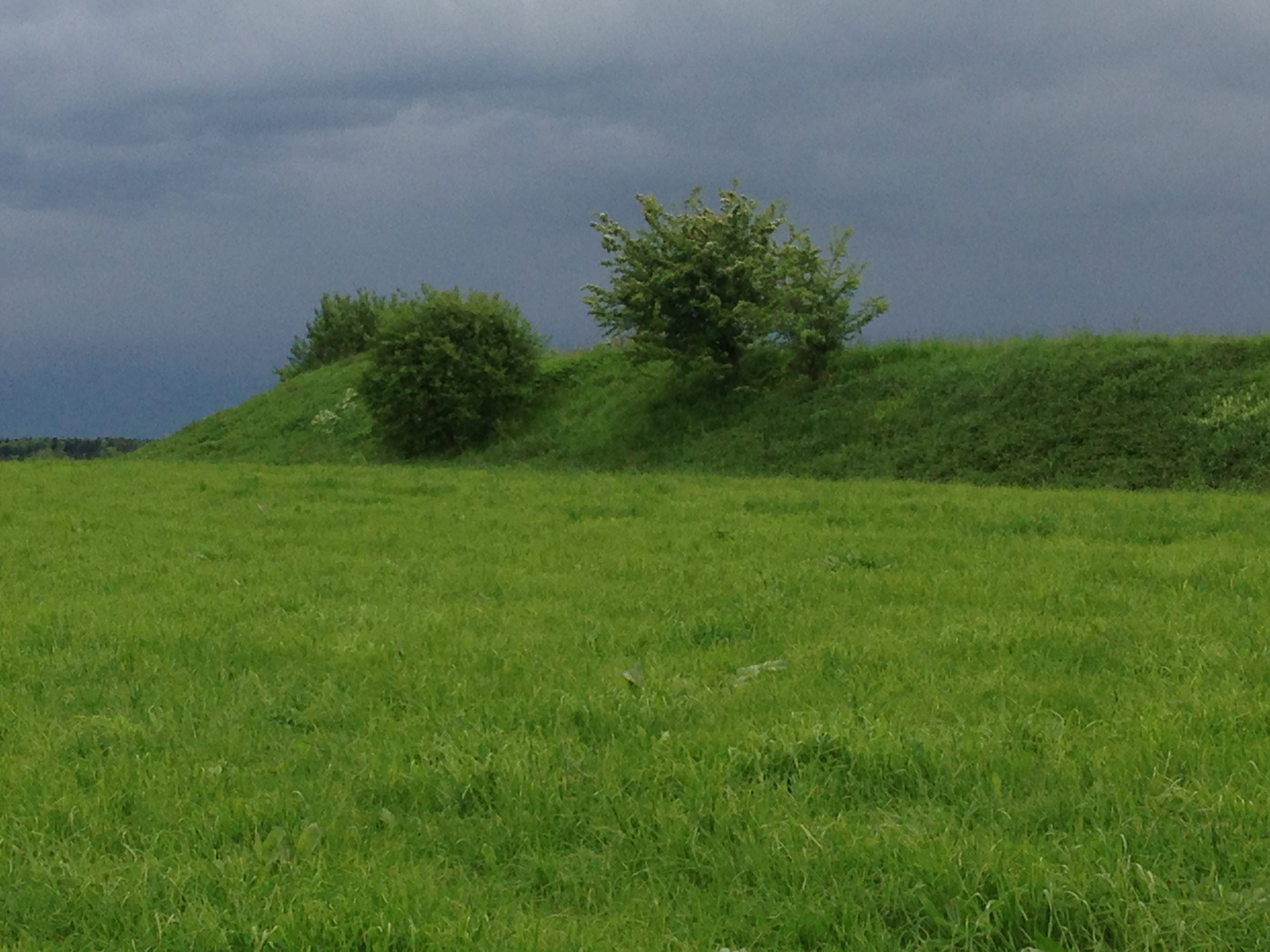
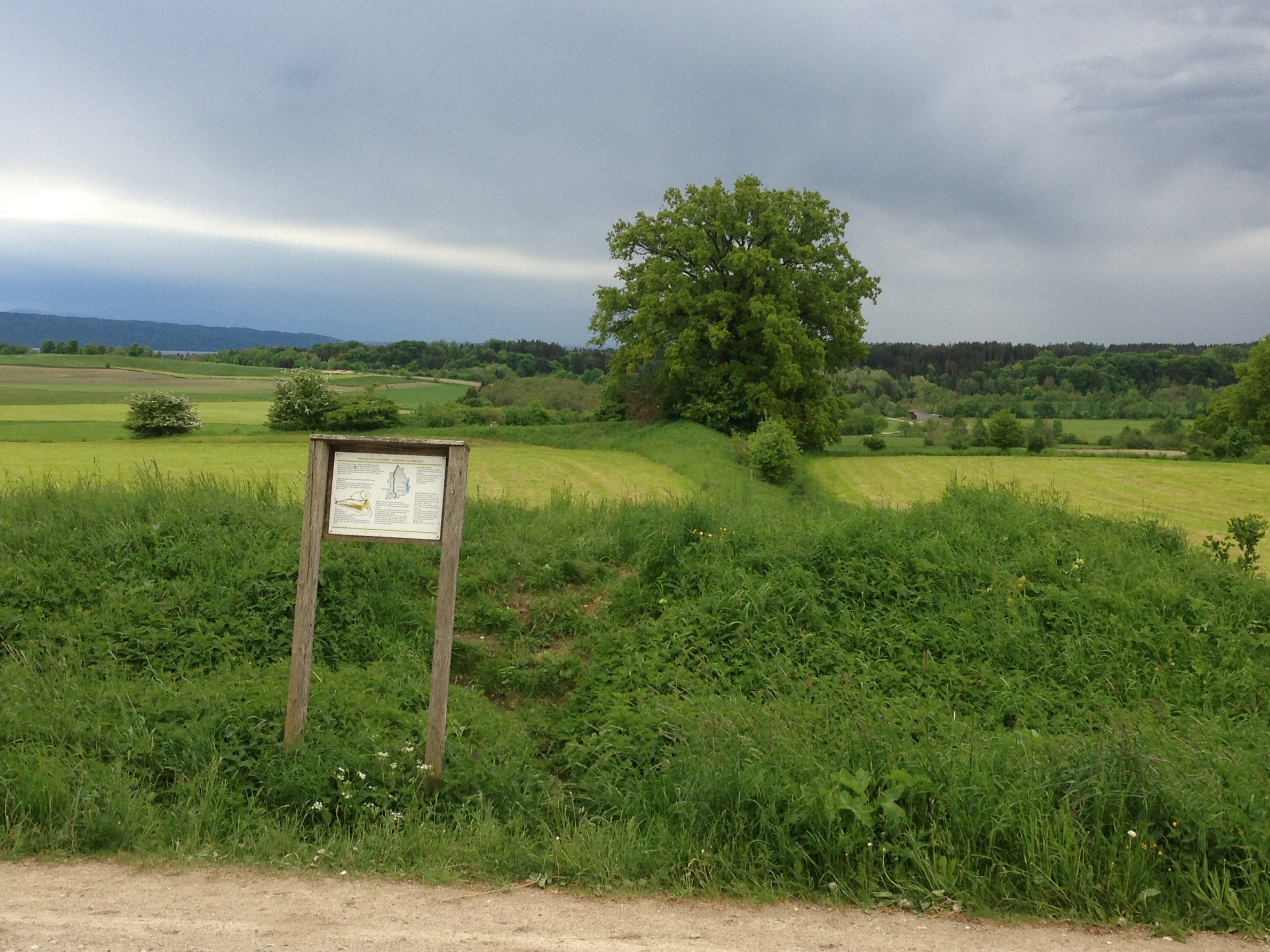
This earthwork was built around 200-100 B.C., in the late Iron Age, by the people we call Celts. According to local sources the Roman Via Raetia (laid down after 15 A.D.) passed right by here, possibly within a few meters of the earthwork.

UttingSchanze2

There are approximately 150 such earthworks of this kind (not including grave mounds and other types) surviving in whole or in part today in Bavaria alone. The one in Utting is one of five in the county, and an unusually large one with an inside area of 12,000 square meters.

Uttingschanze4

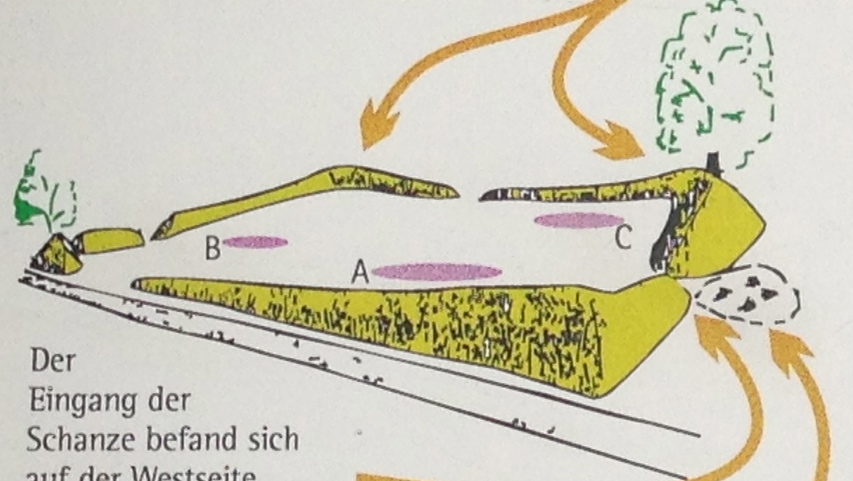
According to information given on-site, research of some kind (a divining rod is mentioned) has revealed evidence inside the enclosure of the existence of A) small buildings, B) a sacrificial site, C) a hole with wooden support walls.

I have to add here that the western side of the Ammersee, we are learning, is some kind of hotspot for the esoterically-minded, and evidently has been for quite some time, as least as early as the 1920s. The sign at this earthwork clearly reflects this, with breezy assertations that the small buildings were temples, the hole was for divining energies, that the whole thing was primarily used for “cult-religious purposes and activities, teaching and passing on of traditions, adjudication, observance of nature and the heavens.” It goes on to say that

the Celts lived in close harmony with the laws of nature. They sensed unseen active entities, forces and energies. They built their ritual sites on places with particular characteristics. These phenomena can evoke internal visions, colors, sounds or moods even today in people who are especially attuned to listening to them.

(translation mine)

Now, there may be something to the idea that people of all eras feel a certain affinity to certain places. I have come across some theories that medieval churches were built on pagan sites not just to wipe out the old gods but to capitalize on the good vibes attributed to the particular place. That’s plausible. Certainly the Celts were more in tune with the laws of nature, as were all people living at the time. But the idea that these earlier people had time to spend tuning into the universe, observing nature and digging the force fields is, to me, a bunch of hooey. Sure, this Schanze may well have included some religious purpose, in the sense that one might feel the need to pray to one’s gods while barricaded inside. These earthworks offered protection, possibly against invaders, or animals (bears, wolves, wild boars). They offered a good surveillance view of the surrounding lands. They offered safe places to keep foodstuffs and materials (leather, bone, wood) awaiting processing. Sure, the Mayans and the Egyptians built pyramids (or, better said, their kings and pharoahs made them do it.) I cannot believe  that the Celts were not too busy, just from trying to get through the winter, to expend time and energy on this sort of thing for the express purpose of being One With The Universe. Perhaps they had one Shaman who did that, and it was built for him (or her.) But then, we are back to today’s system, with a village of farmers and one parish priest. Perhaps the most powerful families maintained these enclosures, like an Iron-Age version of the Kennedy Compound. Many large farms around here have their own little chapels on their grounds (in fact you can have one built these days — we watched one go up in Eching, passing that farm regularly.) Since we are walking around today with basically the same faculties as our ancestors had 50,000 years ago, I see no reason to believe that the people who built the Schanzen were any more enlightened than today’s modern Bauer.

Still, it’s quite something to be on an earthen structure which has survived over 2000 years.

If you go: you can find the earthwork very easily on Google Maps (WNW of Utting, no coordinates needed:just  look for the word “Keltenschanze”). There is parking just off the ST2347 (Landsberger Strasse) and then it’s a few minutes walk on well-maintained gravel roads.

“At The Roman Stone”

IMG_0493

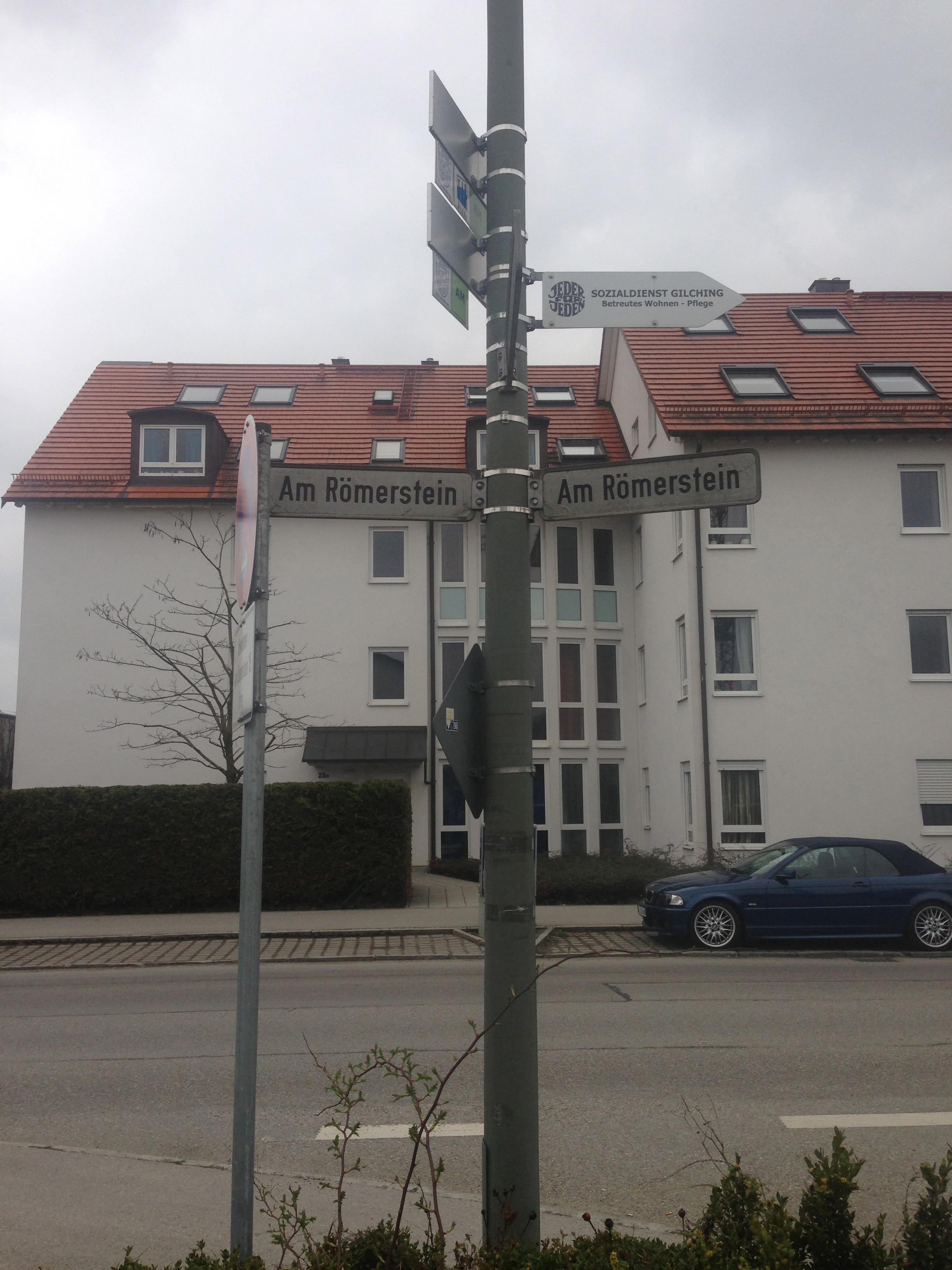
This post’s title is the translation of Am Römerstein, a street in the Bavarian town of Gilching. It’s a road the Beau takes regularly for business. The name always intrigued me — where is, or was, this Roman stone, anyway?

Gilching

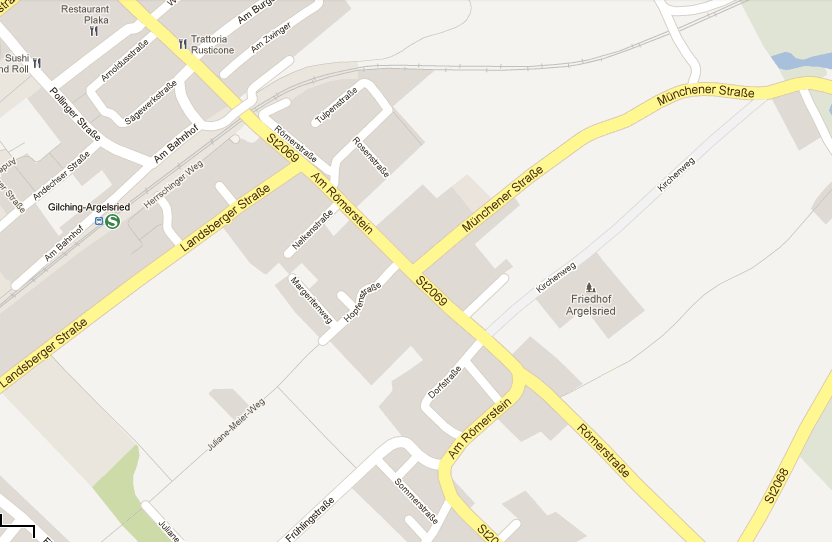
A look at a map of Gilching shows that Am Römerstein intersects (and for a short stretch follows) the old Roman road Via Julia from Salzburg to Augsburg (through Gilching it is named, appropriately, Römerstrasse. Click on the link above to see a simple map of the entire road. Gilching is on the red line just above the area between those two lakes.) So the street got it’s name from being at or near a milestone on the Roman road. Salzburg, not yet the summer destination of the Euro-chic, was important for it’s salt mines, salt in earlier times being a very valuable commodity. (Worth another blog post at a later time. The names of many places in Germany and Austria come from their importance in the salt trade.) Augsburg was Augusta Vindelicorum, the capital city of Roman province Raetia and all the Roman roads in and around the Alps lead not to Rome, but to there.

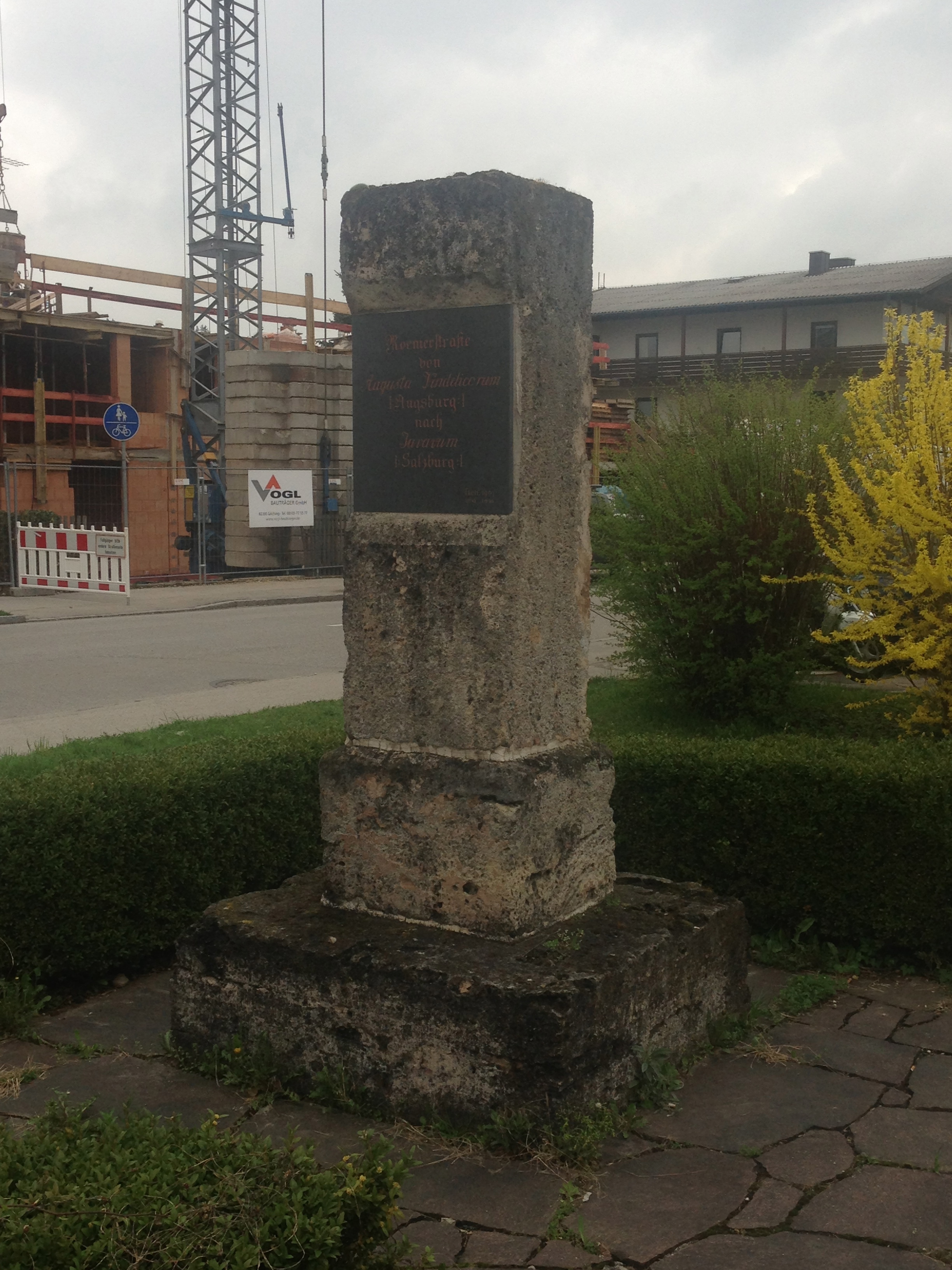
Back to my milestone. With the help of Zeitspringer (who blogs chiefly about archaeological outings in Bavaria and Baden-Württemberg, and who is a great source of information on the subject, his blog is well worth perusing if you read German), I learned that a stone erected in the 1860s and dedicated to the Roman Road is included in a list of monuments on Gilching, including it’s location. A trip over there brought us to Number 15 Am Römerstein, where we found this monument,

IMG_0491

Roman Road
from
Augusta Vindelicorum
(Augsburg)
to
Juvavum
(Salzburg)

This, by the way, is definitely not the same stone mentioned (and shown) in Gilching’s Wikipedia entry (g), a small tube-shaped stone with engraved Latin text, a copy made more recently than the monument at 15 Am Römerstein. So where is the milestone photographed and shown in the Wikipedia entry? Turns out, it’s just a bit further down the road (g), in the center of town.

I assume that the street Am Römerstein, therefor, is named after the 19th-century monument to the Roman road, and not for the site of the Roman milestone (although it’s also entirely possible that the former was erected on the actual site of the original, and the later copy was placed somewhere more convenient and available.) A sign erected near the copy stone gives a very interesting account of the original’s fate. Milestones have been hauled off and used as building stones since the Late Antiquity. This particular stone was taken to Hattenhofen (there are four communities in the area with that name, most likely they mean the one in Fürstenfeldbrück County) in the 16th century, and then used as a cornerstone in Günzlhofen Castle. After the castle fell to ruin it came it Munich, first in the Royal “Antiquarium” and later as part of the Bavarian national collection of prehistoric artifacts, and exhibited with it. Here is where it met it’s ultimate fate, on a date with an Allied bomb in 1944.

“It’ll Be A Hot Day Today”

IMG_0352

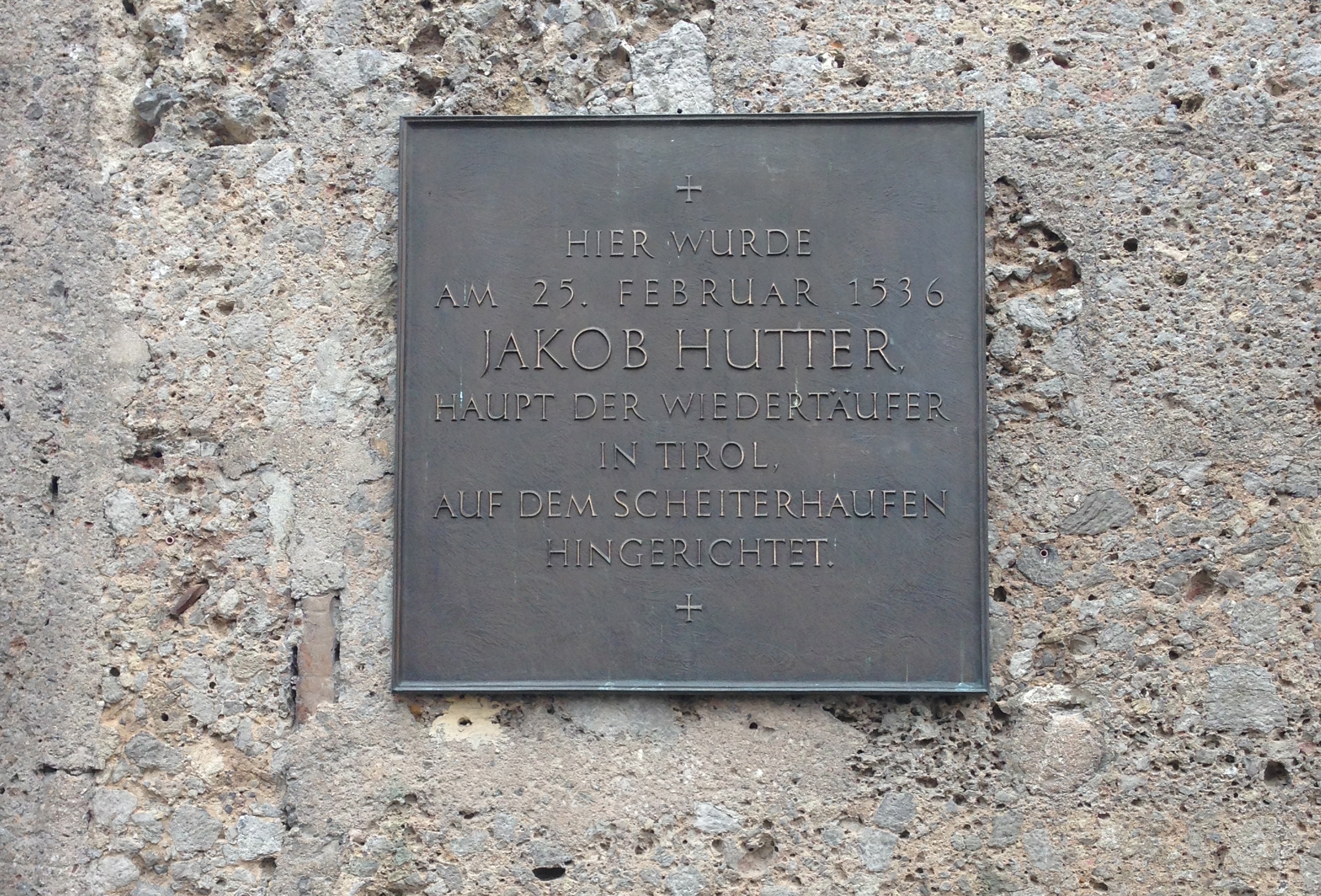
This plaque, found on the stone wall underneath the Golden Roof in Innsbruck’s old town, says: Here, on 25 February 1536, Jakob Hutter, head of the Anabaptists in Tirol, was burned at the stake.

Jakob Hutter was born in what is now South Tirol, in northern Italy. After he joined the Anabaptists, he began to preach and form small congregations in the region. Tirol was persecuting Anabaptists, so Hutter eventually followed many of his fellow believers to Moravia (part of what is now Czech Republic), where conditions were a little better for them. (The Moravian Church, not related not directly related but a possible antecedent to Hutter’s Anabaptists, got their name for this same reason — they had left Saxony for Moravia to escape religious persecution, and the name stuck when they moved elsewhere. Their founder, Jan Hus, was also burned at the stake.)

Good times in Moravia only lasted so long, however, and in 1535 the Hutterites were expelled. Jakob Hutter returned to Tirol, was soon afterward arrested, tortured, pressured to recant and inform on his fellow church members. He resisted, and was sentenced to burn. His wife was able to flee, was however later caught and executed at Schöneck Fortress in South Tirol. Online sources in German indicate that men were burned or beheaded, women drowned, and that 360 Anabaptists were executed in Tirol.

Yet another Tirolean burned at the stake was Mathias Perger, known as der Lauterfresser (g), which translates roughly to the Soup Eater. Perger was what one might call today a free spirit, occasionally working, learned in reading, writing, and astrology. In other words, someone the church considered dangerous. He was arrested on charges of witchcraft and “weather-making”, confessed under torture to such medieval horrors as “desecrating the Host”, and executed in 1645 in Mühlbach (near Brixen/Bressanone).

While Hutter was clearly pious (just the “wrong” religion), the Lauterfresser was odd enough (and perhaps heathen enough) for legends about him to crop up over time. He plays tricks on fellow inn patrons. He makes chickens fly over to the next field and lay their eggs for their owner’s neighbor. He changes at will into a bear and, for sport, chats with the hunting party trying to track it down. The legends make him a sympathetic, clever figure, a sort of alpine combination of Till Eulenspiegel and Fred and George Weasley, if you will. The quote in this title are his alleged words — “Das wird ein heißer Tag heute” — as he was fetched to be taken to the pyre.

BONUS LINK: And speaking of legends, a 1,200-year-old Coptic Egyptian text, recently translated, is found to tell the story of a shape-shifting Jesus who dined with a well-intentioned Pilate before his death. I suppose that it shows, like the stories of the Lauterfresser, that we humans want to hear these stories and be amazed.

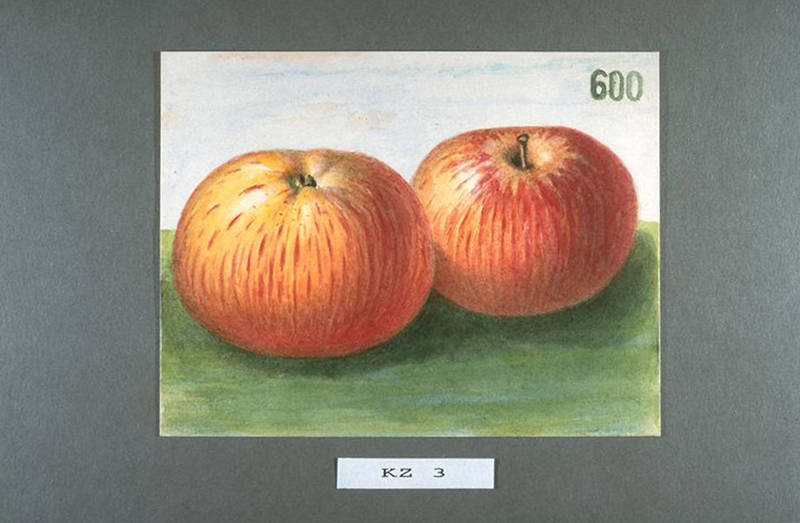
KZ 3 Apples

f016e97114

It was 80 years ago today that Hitler assumed power in Germany, and there are war documentaries all over the television airwaves. Actually one can almost always find a war documentary somewhere on tv, but they tend to cluster more thickly around the anniversaries. Anyway, I was watching an interesting one about the death marches from Dachau southward along the Starnberger See (they got as far as Seeshaupt, where they met American troops and the guards took off in a hurry). In one part of it, two sweet older women were talking about the decision to have a monument. One explained that she was looking for something other than a plaque or a stone, and remembered that there was a type of apple tree which had been bred in the Dachau Konzentrationslager (KZ), called KZ 3 (g). The man who had planted them, Korbinian Aigner, was a Bavarian priest who had been interned there, and who had been on those very forced marches and survived (the fruit is now officially named the Korbiniansapfel). A living memorial tree, the woman realized, would be a perfect kind of memorial to life.

Apparently they are very robust fruit trees. I wonder if they would take well to a large container. If so I may try to grow one myself.

Above, water color by Korbinian Aigner, around 1955. Image found here (g).