KZ 3 Apples

f016e97114

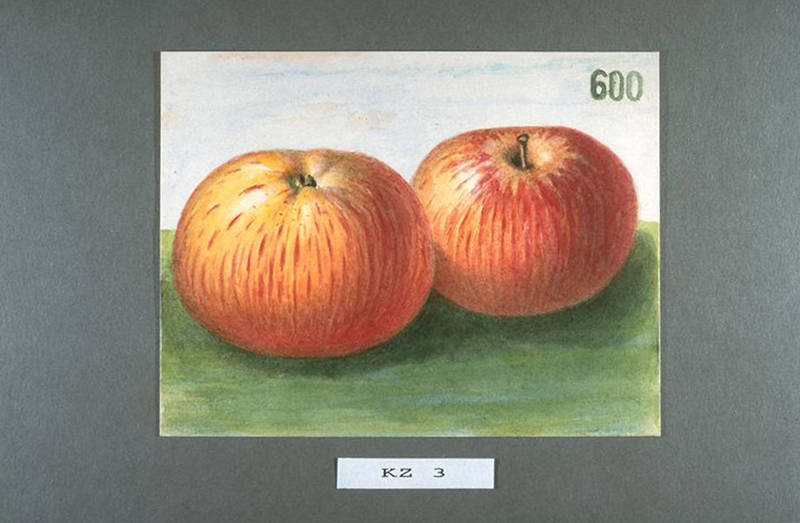
It was 80 years ago today that Hitler assumed power in Germany, and there are war documentaries all over the television airwaves. Actually one can almost always find a war documentary somewhere on tv, but they tend to cluster more thickly around the anniversaries. Anyway, I was watching an interesting one about the death marches from Dachau southward along the Starnberger See (they got as far as Seeshaupt, where they met American troops and the guards took off in a hurry). In one part of it, two sweet older women were talking about the decision to have a monument. One explained that she was looking for something other than a plaque or a stone, and remembered that there was a type of apple tree which had been bred in the Dachau Konzentrationslager (KZ), called KZ 3 (g). The man who had planted them, Korbinian Aigner, was a Bavarian priest who had been interned there, and who had been on those very forced marches and survived (the fruit is now officially named the Korbiniansapfel). A living memorial tree, the woman realized, would be a perfect kind of memorial to life.

Apparently they are very robust fruit trees. I wonder if they would take well to a large container. If so I may try to grow one myself.

Above, water color by Korbinian Aigner, around 1955. Image found here (g).

KZ Reichenau Revisited

The event began with an audio recording of of a man named Klaus W., from Hippach (deep in the Ziller Valley), recounting the day the recruiters came to family’s home in the 1940s and said, “one (of you) must go” into labor service. He was chosen, to spare his parents and his sister. A simple story to give light to how these things had been done.

On a recent evening in January, the Wagnersche Bookstore (now owned by Thalia) hosted a presentation by Matthias Breit about Innsbruck’s concentration camp, in a part of the city called Reichenau. The main part of the evening included audio recordings of the recollections of Walter Winterberg, an Austrian man who had been interned there. What follows is a general summary of what we learned and heard on that evening. If I have made any egregious errors, please blame it on the bad head cold I’d brought along (and feel free to correct me.)

Reichenau Aerial

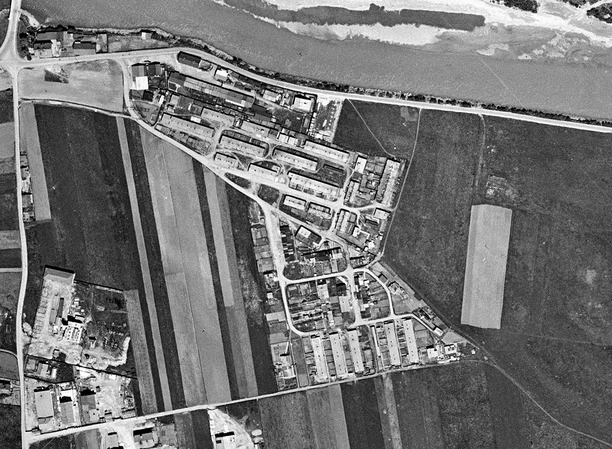
Reichenau was planned and built as a work camp for Italian (mostly) forced laborers who — for whatever reason — were labeled as in breach of their work duties (arbeitsvertagsbrüchig, how’s that word for you?) and in need of a little re-education. Many had probably tried to escape from the farms or factories to which they had been sent. Winterberg came from a Viennese family with some Jewish ancestry. Being a “Mischling“, he was ordered to report for a labor in the Reich’s air defence service. He went, then at some point decided to flee over the Swiss border and into France, in order to aid the French Resistance. (Little did he know that there were Swiss Nazi sympathizers at the borders then.) He was caught while still in Austria and sent to KZ Reichenau for several months before being sent on to Buchenwald.

Winterberg tells of a boy who had been brought from some eastern country, possibly Ukraine, who had suffered a bad work accident and, receiving no treatment, could no longer walk properly. He was then simply written off as unwilling to work, and sent to Reichenau. Another boy from the east, forced to work in southern Bavaria, had been accused of mishandling a child and sent off. This boy underwent the infamous punishment of being forced to strip naked in midwinter and being doused repeatedly with ice cold water until he died. These boys, and many others, were referred to within the camp as piccoli, “the little ones”, all around 12 to 16 years old. There were about 40 of them, and they mostly did maid’s duties: washing up, preparing food, etc.

He tells of Ukrainian inmates, young men, being sent out to clear debris after Innsbruck was repeatedly bombed in 1943. There were strict orders against any kind of looting, but a woman in town came up to one of the inmates and gave him a jar of marmalade. She probably thought she was helping him, and I hope for her sake that, when she died, she still believed that. In fact, when the jar was discovered by the guards, he was hanged.

Others came and went quickly enough to make acquaintance difficult. The average stay was 3 months. Many of the inmates arrived with no idea where they were, little if any idea where they would land next, and did not speak German. On the audiotape, Winterberg wonders aloud what happened to them all after the capitulation.

After the war’s end, the KZ Reichenau became a camp for displaced persons and later on some kind of public housing. It was torn down in the 1970s, to make way for the city’s recycling yard. A stone monument can be found nearby, at the side of the road.

The presentation was followed by an invitation to discussion, and this is where things got a little interesting and awkward. The first to speak, a man who looked to be in his 70s but who must have been older than that, said that he had been in the Wehrmacht and in a POW camp, and that upon returning, found no one interested in what he had gone through, since everyone believed that “all Wehrmacht were criminals”. He tried the “both sides did it” attack, an argument I have heard before, but found no sympathy among the other listeners. A second man said that one cannot look at history this way; this is an chronicle of what happened here in this place. We hear of Mauthausen and Dachau but this is a local story which needs to be heard.

A third man stood to say that he found Winterberg had “prettified” the situation in the camp by not stressing that it was in fact “ein durchgangsstation ins KZ” (“a way station to the concentration camp”, as if it were something not quite so nasty as a concentration camp itself). Breit reiterated several of the points made by Winterberg that the man seemed to have missed, that people were constantly being shipped in and out with little knowledge as to what would happen to them.

At this point my concentration skills were fading, I had a rather bad cold and my head was completely stopped up, but words were spoken to the effect that Winterberg didn’t have anything to complain about, he got through it well enough, he doesn’t mention anything terrible happening to him. Breit reminded the speaker that Winterberg states he was 49 kilos lighter by war’s end (108 pounds lighter ) This is where a woman spoke up and said: these are terrible things. When they are not dramatic enough, when this story, or this story, is not bad enough to make one find it terrible, then…

Breit wrapped things up: If too little horror appears in the reports of Reichenau, think then of the millions who passed through here, headed to their fates. This tale presented here is an historic reconstruction, not a tale of horrors. (This got me thinking of the recent need to make Holocaust stories ever more shocking. Simply being imprisoned and treated badly isn’t enough, the public wants some new godawfulness that they’d never heard of before. I thought until now that this was an American thing, but now I am not so sure.)

As we made to leave, two more listeners chimed in, not with opinions but with requests for their own projects. One man was researching another camp (I did not hear which), the other must have been Herr Muigg, who is gathering information about the Wehrmacht execution site on the Paschberg (de). I have seen his flyers posted there.

Update: thanks to information supplied by, believe it or not, a spammer , I have found that there was apparently another work camp called Reichenau, in the Czech Republic (Rychnov).

Anna Letenská

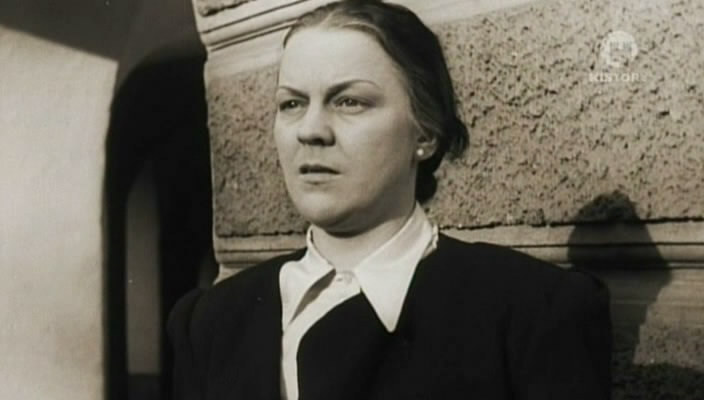
Anna Letenská was a celebrated Czech stage and film actress, best known for her comedy roles in the 1930s and 40s. Her second husband, architect Vladislav Čaloun, had ties to the Czech resistance movement. In 1942, when Nazi local boss Reinhard Heydrich’s car was grenaded in Prague, one of his assassins turned to another in the group for help. This other man was arrested for his assistance, and his wife was caught at the train station in Prague, attempting to flee. Under interrogation she confessed that she had spent the night before at the home of Letenská and Čaloun. They were then promptly arrested as well.

At the time of her arrest, Anna Letenská was in the middle of filming for a comedy film titled Přijdu hned (loosely translated, “I’ll Be Right There”). One of the producers at the film studio was Miloš Havel (uncle of the former Czech President Václav Havel), who pulled some strings with the Nazis in order to get Letenská released — at least, just long enough to allow for the film to be completed.

This clip is from the 1938 film Milování zakázáno. Appropriate to this blog, it involves singing. It’s charming.

Wikipedia: Letenská remained under Gestapo surveillance while filming continued. According to Otakar Vávra, the film’s director, “throughout this time Anna Letenská would sit with her head held between her hands although she appeared as cheerful as could be in front of the camera. We understood that she was preparing herself to die”.

There is a 2009 documentary film about her story, Anna Letenská: The Comedienne and the Nazis”, which was aired last night on the German television station RBB. There are several clips from Přijdu hned showing Letenská, and in them she looks tired. Knowing what was to come must have been absolutely draining. Meanwhile she was sending packages to her husband in prison, and caring for her son at home.

Immediately after the filming ended, Letenská was arrested and sent to Theresienstadt, then deported to Mauthausen concentration camp in Austria along with a transport of female relatives of the assassination organizers. Shortly after her arrival, she was killed by a bullet to the head, in October 1942.

Two months later, the film Přijdu hned had its premiere. It was probably not yet known to anyone there that Letenská had already been murdered. A man who had been part of the film work, interviewed for the documentary, was asked if anything had been said regarding Letenská at the premiere. Not a thing, he replied. “As if nothing had happened.

Some months after that, her son was called to Gestapo offices, and given official notification of his mother’s death.

Another post about the reprisals for Heydrich’s assassination here.

More Ilse Weber

I was going to move on to another topic, or not blog at all today, but then the New Yorker came.

James Wood’s review of a book titled “HHhH” in this recent issue (“Broken Record”, May 21, international delivery takes a week) recently caught my eye, particularly the mention of the assassination of Reinhard Heydrich, Himmler’s right-hand thug, and the brutal reprisal that followed — the annihilation of the Czech village of Lidice (or Liditz, in German); the men were executed, the women taken to concentration camps, the children shuffled around briefly before they were all, aside from a few who were taken for “Germanization”, gassed at Chelmno.

Ilse Weber, in Theresienstadt, heard of the massacre. She heard this news because it arrived with the herd of sheep from the demolished village, rounded up and brought there, to Theresienstadt.

One of her poems is titled Die Schafe von Liditz, The Sheep of Lidice. (Scroll down for an translation into English.)


Flockige, gelbweiße Schafe trotten die Straße entlang.
Zwei Hirtinnen folgen der Herde, durch die Dämmerung tönt ihr Gesang.
Es ist ein Bild voller Frieden und doch bleibst du, Eilender, stehn,
als fühltest du Hauch allen Todes grausig vorübergehn.
Flockige, gelbweiße Schafe, sie sind der Heimat so fern,
verbrannt sind ihre Ställe, getötet sind ihre Herrn.

Ach, alle Männer des Dorfes, sie starben den gleichen Tod.
Ein kleines Dorf in Böhmen, und soviel Unglück und Not.
Verschleppt die fleißige Frauen, die sorgsam die Herde betreut,
verschollen die fröhlichen Kinder, die sich an den Lämmern gefreut,
zerstört die kleinen Häuser, in denen der Friede gewohnt,
ein ganzes Dorf vernichtet, das Vieh nur gnädig verschont.

Das sind die Schafe von Liditz und trefflich am Platze hier,
in der Stadt der Heimatlosen das heimatlose Getier.
Umschlossen von einer Mauer, durch grausamen Zufall gesellt,
das gequälteste Volk der Erde und die traurigste Herde der Welt.
Die Sonne ist untergegangen, der letzte Strahl versinkt,
und irgendwo bei den Kasernen ein jüdisches Lied erklingt.

Fluffy, yellow-white sheep trot along the road.
Two shepherdesses follow the herd, their song carried in the twilight.
It is a picture of peace, and yet you, hurrying one, stop,
as if you felt the breath of Death pass over you.
Fluffy, yellow-white sheep, so far from their home,
their stalls burned down, their owners killed.

Ah, all the village men died the same death.
A little village in Bohemia, and so much calamity and distress.
Deported, the industrious women who cared for the herd,
Missing, the happy children who found joy in the lambs,
Destroyed, the little houses in which peace reigned,
an entire village demolished, only the animals spared.

Those are the sheep of Lidice, brought here to this place,
homeless animals in the city of the homeless.
Penned inside the wall, brought here by barbarous events,
the most afflicted people on Earth, and the saddest herd in the world.
The sun has gone down, its last rays sink away,
and somewhere in the Barracks a Jewish song sounds.

Poetry Blogging: Ilse Weber

“After Auschwitz, writing poetry is no longer possible.” — Theodor Adorno

“The truth is, Adorno couldn’t write poetry before Auschwitz either.” — journalist and publicist Johannes Gross.

I am paraphrasing the Adorno quote somewhat for clarity. In fact, the word-for-word quote most often seen is “To write a poem after Auschwitz is barbaric”, although there is a larger context to be found in the paragraphs around it, about the impossibility of the very existence of culture after the Holocaust.

In the nineties, I was invited along to a few family events ( birthday parties, Christmas Eve, that kind of thing) and learned quickly that the composition and recitation of a poem — written in the guest’s honor — was Pflicht in certain German families. The poems were kind, maybe a little humorous but always done with warm feelings and in the simplest of rhyme scheme and iambic tetrameter (well-known example: “I think that I shall never see / A poem as lovely as a tree”)

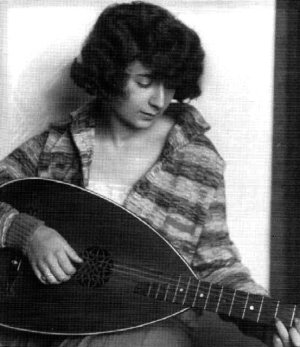
I bring this up because I have just read Ilse Weber, Wann wohl das Leid ein Ende hat: Briefe und Gedichte aus Theresienstadt.

The letters begin much earlier, in 1933 — Weber corresponded with her good friend Lilian Löwenadler, daughter to a Swedish diplomat and living in England. For five years, these letters are filled with normal banter between two highly intelligent women, involving family, children, Weber’s radio engagements, Löwenadler’s new romance. In 1938 the letters take on a much more urgent tone, as Weber and her husband Willi contemplate the risk of sending her oldest boy Hanusch, age 8, to England with the Kindertransports. Hanusch is indeed sent to Lilian and her new husband, then on to Lilian’s mother in Stockholm.
Ilse Weber is moved with her husband and younger son, Tommy, into the Prague Ghetto, and from there to Theresienstadt. Her letters, once pages long, are reduced to a few lines of allowed information, including the probably mandatory “We are healthy.” At this point, no longer allowed to pour her emotions into her letters, she instead turns to poetry for her small charges (she works as the night nurse in the hospital’s children’s ward), unable to spend more than fleeting moments with her husband and her younger son. She writes about all of this in a simple, naive rhyming style that Adorno might not have known what to make of. Her poems, while in an old-fashioned framework, tell honestly and bluntly of the events surrounding her, her fellow inmates, and the above all the children. Her poems tell of little boys sent by their mothers to return stolen coal, of abandoned suitcases, of homesickness, of death.
Where the poems end, an Afterword takes up the narrative. Willi was deported to Poland with 5000 other men and lost contact with his wife. Just before he left Theresienstadt he gathered up all of his wife’s poems, songs and other papers and buried them beneath the floor of a tool shed. Not long afterward, all the patients in the children’s ward were deported as well. Ilse, not wanting them to make the journey untended, took Tommy and traveled with the children — to Auschwitz. She was last seen with her younger son and about fifteen small children, in the line leading to the gas chambers. An acquaintance from Theresienstadt worked there, and risked his neck to approach her. She asked if they were to take showers, and he told her the truth. He also offered some advice — sit the children down on the chamber floor and sing songs with them. The gas will work more quickly that way. Years later he confessed this chance meeting to her son Hanusch, who after the war was reunited with his father. Willi Weber was able to retrieve Ilse’s hidden papers, and much later Lilian’s husband (she died during the war) found the letters in an attic in England.


Brief an mein Kind
(Scroll down for an English translation)

Mein lieber Junge, heute vor drei Jahren
bist ganz allein du in die Welt gefahren.
Noch seh ich dich am Bahnhof dort in Prag,
wie du aus dem Abteil verweint und zag
den braunen Lockenkopf neigst hin zu mir
und wie du bettelst: lass mich doch bei dir!
Dass wir dich ziehen ließen, schien dir zu hart-
Acht Jahre warst du erst und klein und zart.
Und als wir ohne dich nach Hause gingen,
da meinte ich, das Herz müsst mir zerspringen
und trotzdem bin ich froh, du bist nicht hier.
Die fremde Frau, die sich deiner angenommen,
die wird einst sicher in den Himmel kommen.
Ich segne sie mit jedem Atemzug-
wie du sie liebst ist doch nie genug.
Es ist so trüb geworden um uns her,
man nahm uns alles fort, nichts blieb uns mehr.
Das Haus, die Heimat, nicht ein Winkel blieb,
und nicht ein Stückchen, das uns wert und lieb.
Sogar die Spielzeugbahn, die dir gehört
Und deines Bruders kleines Schaukelpferd…
Nicht mal den Namen hat man uns gelassen:
Wie Vieh gezeichnet gehen wir durch die Gassen:
mit Nummern um den Hals. Das macht’ nichts aus,
wär ich mit Vater nur im gleichen Haus!
Und auch der Kleine darf nicht bei mir sein…
Im Leben war noch nie ich so allein.
Du bist noch klein, und drum verstehst du’s kaum…
So viele sind gedrängt in einem Raum.
Leib liegt an Leib, du trägst des anderen Leid
und fühlst voll Schmerz die eigene Einsamkeit.
Mein Bub, bist du gesund und lernst du brav?
Jetzt singt dich niemand wohl mehr in den Schlaf.
Manchmal des Nachts, da will es scheinen mir,
als fühlte ich dich neben mir.
Denk nur, wenn wir uns einmal wiedersehen
Dann werden wir einander nicht verstehen.
Du hast dein Deutsch schon längst verlernt in Schweden
und ich, ich kann doch gar nicht schwedisch reden.
Wird das nicht komisch sein? Ach wär’s doch schon,
dann hab ich plötzlich einen großen Sohn…
Spielst du mit Blechsoldaten noch so gerne?
Ich wohn’ in einer richtigen Kaserne,
mit dunklen Mauern und mit düst’ren Räumen
von Sonne ahnt man nichts, von Laub und Bäumen.
Ich bin hier Krankenschwester bei den Kindern
Und es ist schön, zu helfen und zu lindern.
Nachts wache ich bei ihnen manches Mal,
die kleine Lampe hellt nur schwach den Saal.
Ich sitze da und hüte ihre Ruh,
und jedes Kind ist mir ein Stückchen „du“.
Mancher Gedanke fliegt dann hin zu dir
Und trotzdem bin ich froh, du bist nicht hier.
Und gerne litt’ ich tausendfache Qualen,
könnt ich ein Kinderglück damit bezahlen…
Jetzt ist es spät und ich will schlafen gehen.
Könnt ich dich einen Augenblick nur sehn!
So aber kann ich nichts als Briefe schreiben,
die voller Sehnsucht sind- und liegen bleiben…

Letter To My Son

My dear boy, three years ago today
You were sent into the world alone.
I still see you, at the station in Prague,
how you cry from the compartment, and hesitate.
You lean your brown head against me
and how you beg; let me stay with you!
That we let you go, seemed hard for you —
You were just eight, and small and delicate.
And as we left for home without you,
I felt, my heart would explode
and nevertheless I am happy that you’re not here.
The stranger who is taking you in
will surely go to Heaven.
I bless her with every breath I take —
Your love for her will not be enough.
It has become so murky around us here,
Everything has been taken away from us.
House, home, not even a corner of it left,
Not a piece of what we loved and prized.
Even the toy train which belonged to you
And your brother’s little rocking horse…
They did not even let us keep our names:
We walk through the streets marked like cattle:
With numbers around our necks. That would not be so bad,
If I were with your father in the same house!
Not even the little one may stay with me…
I was never so alone in my life.
You are still small, and you hardly can understand…
So many are pressed together in one room.
Body against body, you carry the suffering of the other,
And feel the full pain of your own loneliness.
My boy, are you healthy and learning your studies?
No one sings you to sleep now.
Sometimes in the night it seems
That I feel you next to me.
Just think, when we see each other again
We will not understand each other.
You’ve long ago forgotten your German in Sweden,
and I, I can’t speak Swedish at all.
Won’t that be strange? If only it already were,
then I’d suddenly have a grown son…
Do you still play with tin soldiers?
I am living in a real Barrack,
With dark walls and dreary rooms
There’s no sun, nor leaves and trees.
I’m a nurse here for the children
And it’s nice, to help and comfort them.
Sometimes I stay awake with them at night,
the little lamp doesn’t give much light,
I sit and guard their rest,
And to me every child is a little piece of “you”.
My thoughts then fly to you
and nevertheless, I am happy that you are not here.
And I would gladly suffer a thousand torments,
If I could pay for your childhood happiness that way…
It is late now and I want to sleep.
If I could only see you for a moment!
But I can do nothing except write letters,
Full of longing, never to be sent.

“Letter To My Child” existed in copy — a woman who had been imprisoned in Ravensbrück gave a copy of the poem to the Swedish author Amelie Posse, who was visiting camps with the Swedish Red Cross. Posse had the poem translated into Swedish and published in the newspaper in 1945 (the poem’s autobiographical elements revealed a child living in Sweden). So in this way Ilse’s letter did reach her son, three years after it had been written.

Wiegenlied vom Polentransport

Schlaf, kleiner Freund, du bist ja so müd,
es singt der Zug sein eintönig Lied,
die Nacht kommt auf leisen Sohlen.
Du bist noch klein und findest noch Ruh,
mach deine lieben Augen zu,
es geht jetzt fort nach Polen.

Schlaf, Kindchen, wir sind schon so weit,
Ach, längst versank in der Dunkelheit
die Heimat, die man uns gestohlen.
Wir hatten sie lieb, man nahm sie uns fort,
nun sitzen wir schweigend und findet kein Wort
und fahren weit — nach Polen.

Schlaf, kleiner Freund, ich sehe dir zu,
ich will aus deiner süßen Ruh
mir Trost und Stärkung holen.
Die Sterne leuchten hell und rein,
ich will nicht länger traurig sein,
Gott gibt es auch in Polen.

Lullabye of a Transport to Poland

Sleep, little friend, you are so tired,
The train is singing its monotonous song,
The night creeps softly in.
You are still small, and still find rest,
Let your dear eyes close,
We’re going now to Poland.

Sleep, little child, we’re already so far,
Ah, long sunken in darkness
our home, stolen from us.
We held it dear, it was taken away,
Now we sit here silently, and find no words
and travel far — to Poland.

Sleep, little friend, I’ll watch over you,
From your sweet rest I wish
to find comfort and strength for myself.
The stars are shining bright and pure,
I no longer want to be sad,
God is in Poland too.

Image found here.
Weekend Mountain Blogging/Pagans In Bavaria: Der Petersberg

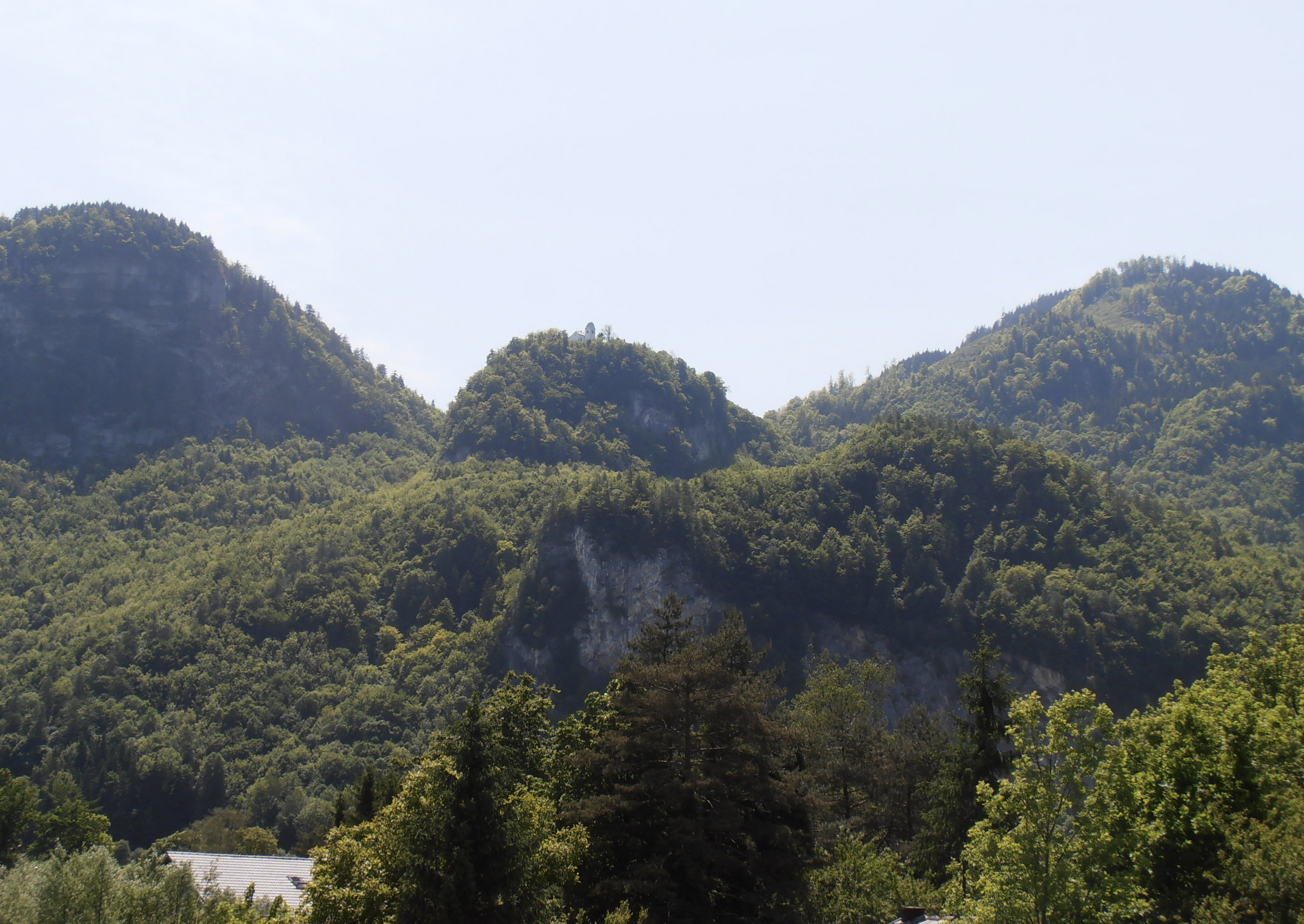
In the center of the image, a mountain called the “Kleiner Madron”, just over the border in Bavaria. According to the official trail sign (which saves me from making unsupported hypotheses), it is recognized that this name suggests a Celtic ritual site (presumably with a connection to the word matrone, and possibly the viewing of these three mountains as the tres matrones.) Bronze-Age and Roman artifacts have been found at the bottom of the sheer cliffs below.

And the icing on the cake, so to speak: the church that sits atop this mountain is named for St. Peter, and the mountain is now oft referred to as the Petersberg. Which might have something linguistically to do with the Beten — which in turn has much to do with the matrones. But I’m just riffing…

The church probably built in or around the 12th century. Monks lived next to the church, and pilgrims arrived from the Inn Valley. Today the church belongs to the nearby village of Flintsbach, and the main destination for pilgrims is the restaurant with a pretty view. If you go, proceed to the sunny terrace around the back to escape the pop music.

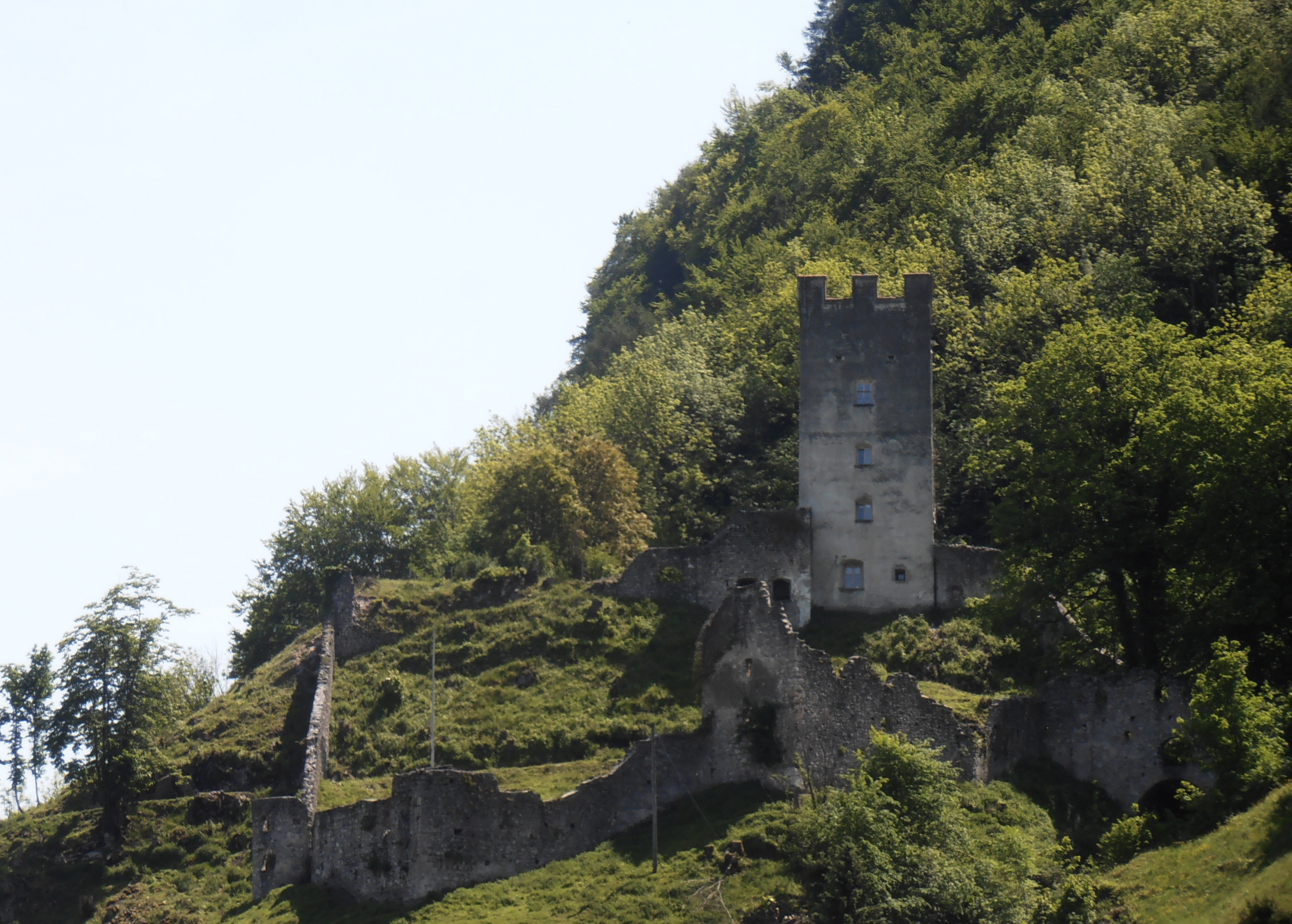
On the lower slopes, the ruins of the “new” Falkenstein Castle. The old (12th century) Falkenstein Castle also lies in ruin, but is deeper in the forest. Only a wall remains, and so it is referred to on Wikipedia as the Troja des Inntales — Troy of the Inn valley (and while this is what drew me there in the first place, I never found that wall.) The Falkensteins ruled over much of this corner of Bavaria and the surrounding regions during the 11th and 12 centuries.

“Tyrolean Landscape” — Or Is It?

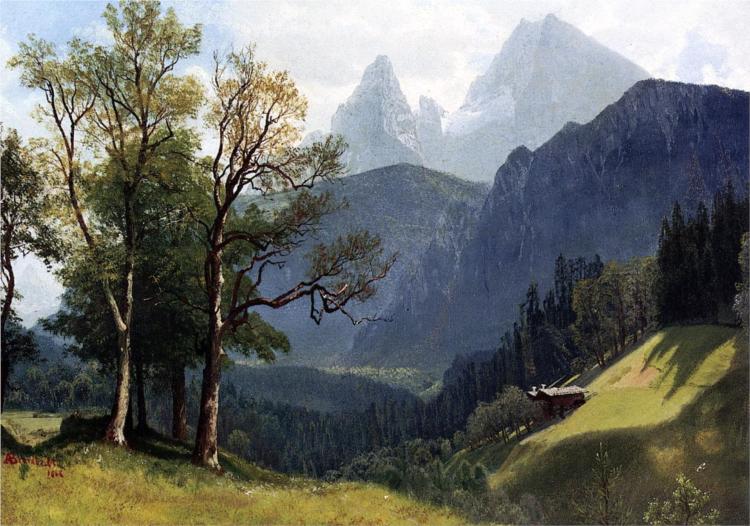
This is by Albert Bierstadt, the 19th-century painter who’s best known for his landscapes of the American West. It’s from 1868 and titled “Tyrolean Landscape“, but I am not so sure. There may very well be a duet of jagged mountain peaks in Tirol that look just like this…

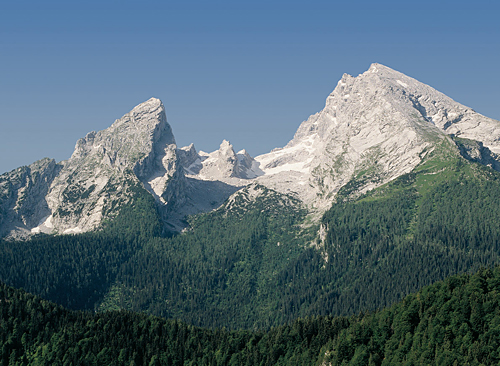
…but it bears an uncanny resemblance to the Watzmann, which is in Berchtesgaden.(Image found here.
Yes, I can sense you shrugging your shoulders and rolling your eyes all the way from here — does it matter, you ask? Why yes, it does. Try calling a Tiroler German someday, see where that gets you. 🙂

And since Berchtesgaden belongs to a little dangling peninsula that’s surrounded by Austria, I looked on a map to see if it were possible that one could paint the Watzmann this large while actually standing in Tirol — nope, it’s Salzburg Land all around for kilometers. Was he (1) misinformed about his location, (2) is this indeed another mountain group, or (3) am I missing some important border realignment from the First World War?

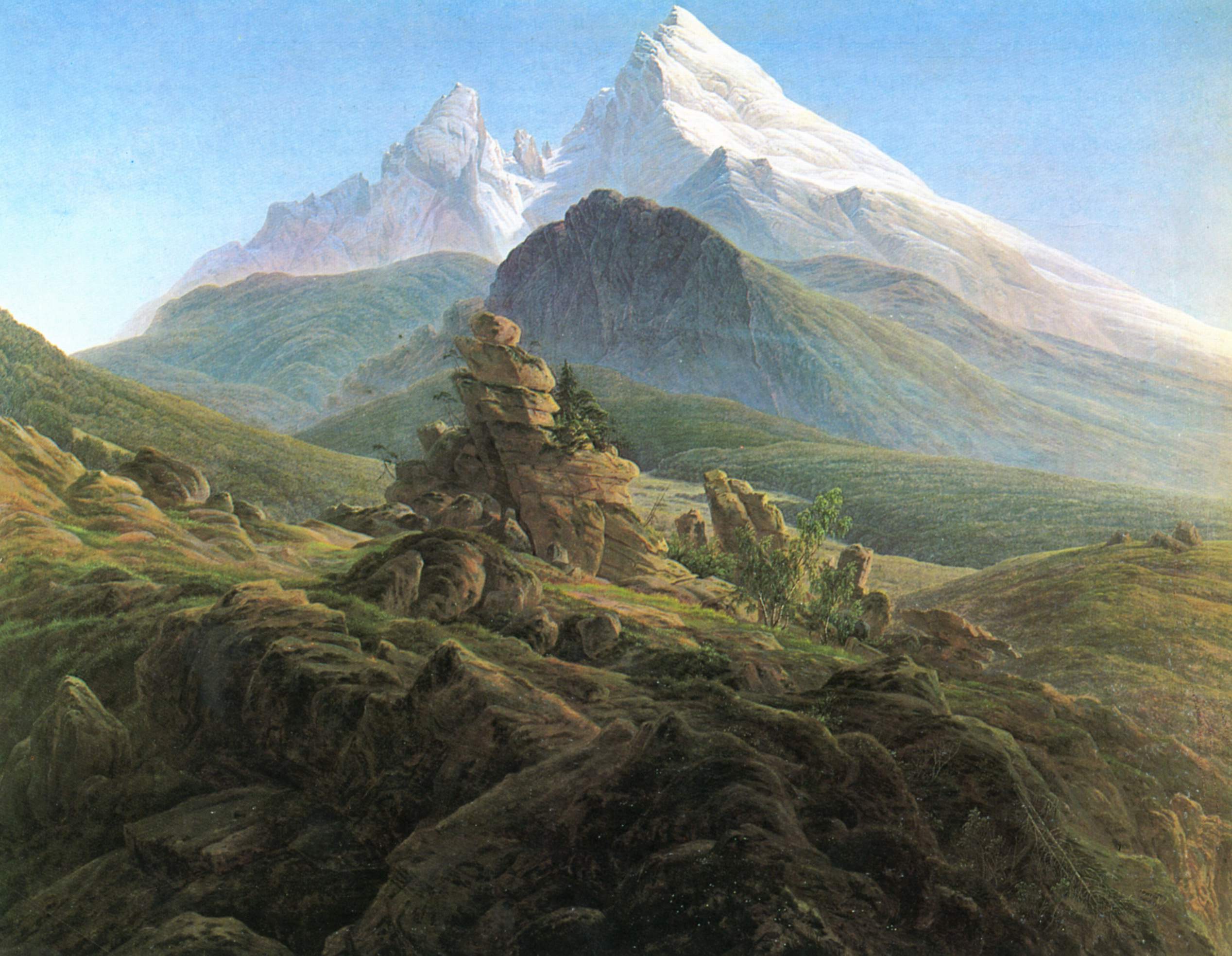
But as long as we’re discussing the Watzmann, here is one by Caspar David Friedrich, who had never actually seen the Watzmann with his own eyes and only knew the mountain from others’ works (come to think of it, we’ll call that (4) and it may be the best answer to the above question.)

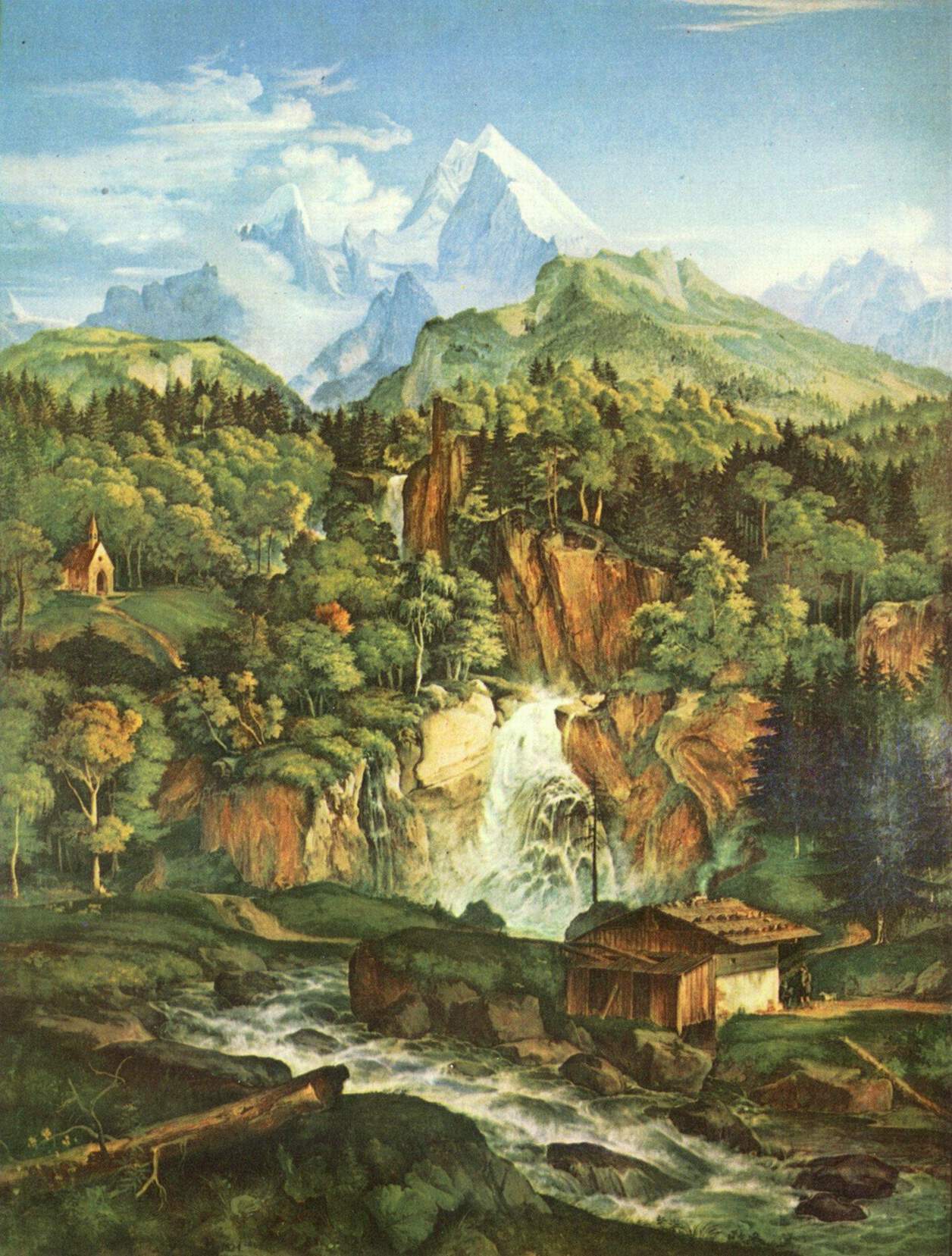
and one by Adrian Ludwig Richter, which I happen to like the most. It reminds me little of landscapes by the Tirolean artist Rudolf Lehnert.

Friedrich and Richter images found here.

Weekend Mountain Blogging: How The Irschenberg Got Its Name


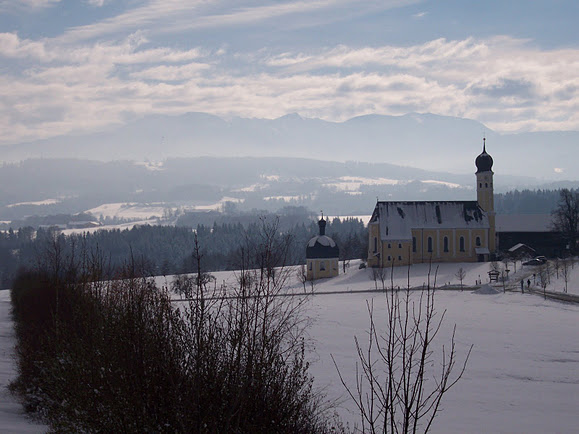
(Above: the pilgrimage church in Wilparting, alleged home of the bones of Marin and Anian, although the monastery at Rott am Inn maintains that they have the real relics. Image found here.)

Well, Wikipedia will tell you that it comes from the Latin Ursus with the old German Perg, to mean “Bear Mountain” (there is a written reference to “Ursenperig” from 1315).

However, both Wikipedia and the book Unbekanntes Bayern (Unknown Bavaria), volume 4, refer to the legend of the Irish monks Marin and Anian who had settled there in the 7th century, bringing Christianity to the local inhabitants. Marin was martyred by marauding Vandals, and Anian, the story goes, died simultaneously of natural causes. They are referred to as Scotch-Irish, or Iroschotten. “Iroschotten” > “Irschen”.

Just something to think about next time you drive over the Irschenberg on the A8.

Added bonus trivia: the 2001 film Die Scheinheiligen takes place in Irschenberg, the plot revolving around construction plans for a fast-food reststop for the nearby Autobahn. (There is in fact a McDonald’s there now. The modern version of marauding Vandals.) The word scheinheilig refers to someone who is sanctimonious, hypocritical, holier-than-thou-but-faking-it.

Pagans In Bavaria: Leutstetten

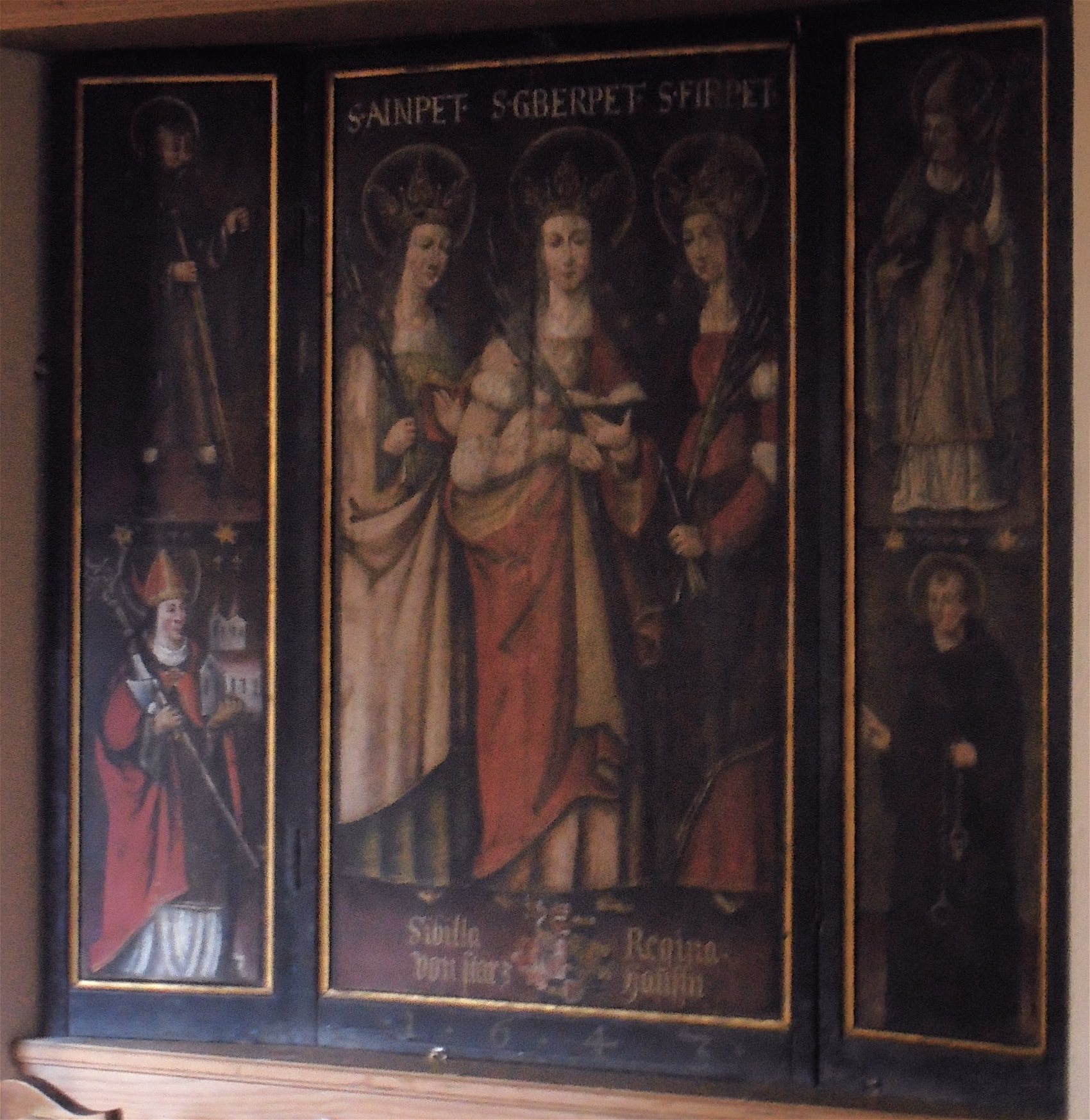
The church of St. Alto, in Leutstetten, north of Lake Starnberg. This church has a curiosity in its sanctuary.

This 1643 oil on wood painting features three unusual saints: Ainpet, Gberpet and Firpet. These are local, alpine-regional deities, so to speak. They’re not on the official register of Roman Catholic saints, and it has been postulated that they are pre-Christian, reformed into good Catholics simply by putting new stories on them and calling them the Three Virgins. Other paintings of them are found in scattered churches, and one is (was?) in the church of St. Vigilius, in Obsaurs, Tyrol. I have not been there and can only refer to it. This painting here was not always at St. Alto — it originally hung in the chapel in the village of Einbettl (Ainpet, Einbettl) which was torn down in the 19th century.

Here the chapel at Petersbrunnen, or St. Peter’s fountain; however, the name may well stem from “Betenbrunnen”. In any case the water was long considered to have healing properties, and in the 16th century Duke Wilhelm IV had the chapel built, alongside facilities for cure-seekers (to keep the riffraff separate from the paying guests). The baths are gone, the chapel is still there. In his book “Romerstraßen und Kultplätze” (Roman Roads and Ritual Sites), Martin Bernstein sees an irony in the fact that the chapel, built over a possible heathen holy site, has to be renovated frequently due to problems with moisture. The revenge of the Beten, perhaps.

The Villa Rustica (country villa and farm), built in 150 AD, excavated in 2002. The glass structure covers the part of the house which had heated floors (Hypocaustum) and a bath. Nearby Gauting (then Bratananium) was where the Roman road crossed the river Würm (Starnberger See was once the Würmsee. It began its name change in the 1800s and made it official in 1962.) Evidence of crops and livestock raising were found. Romans were good at adapting to what grew here already (spelt, emmer-wheat) and introduced wheat and rye. From other Roman farm excavations it is certain there were also animal stalls, silos, barns, and lodging for the farm workers. A millstone was found near this site, indicating a flour mill.
The method used to heat the floors allowed smoke to escape from behind the walls, thereby also heating the rooms to a comfortable temperature. To realize that, even over a thousand years later, kings were living in cold drafty castles, drives home the meaning of the term Dark Ages.

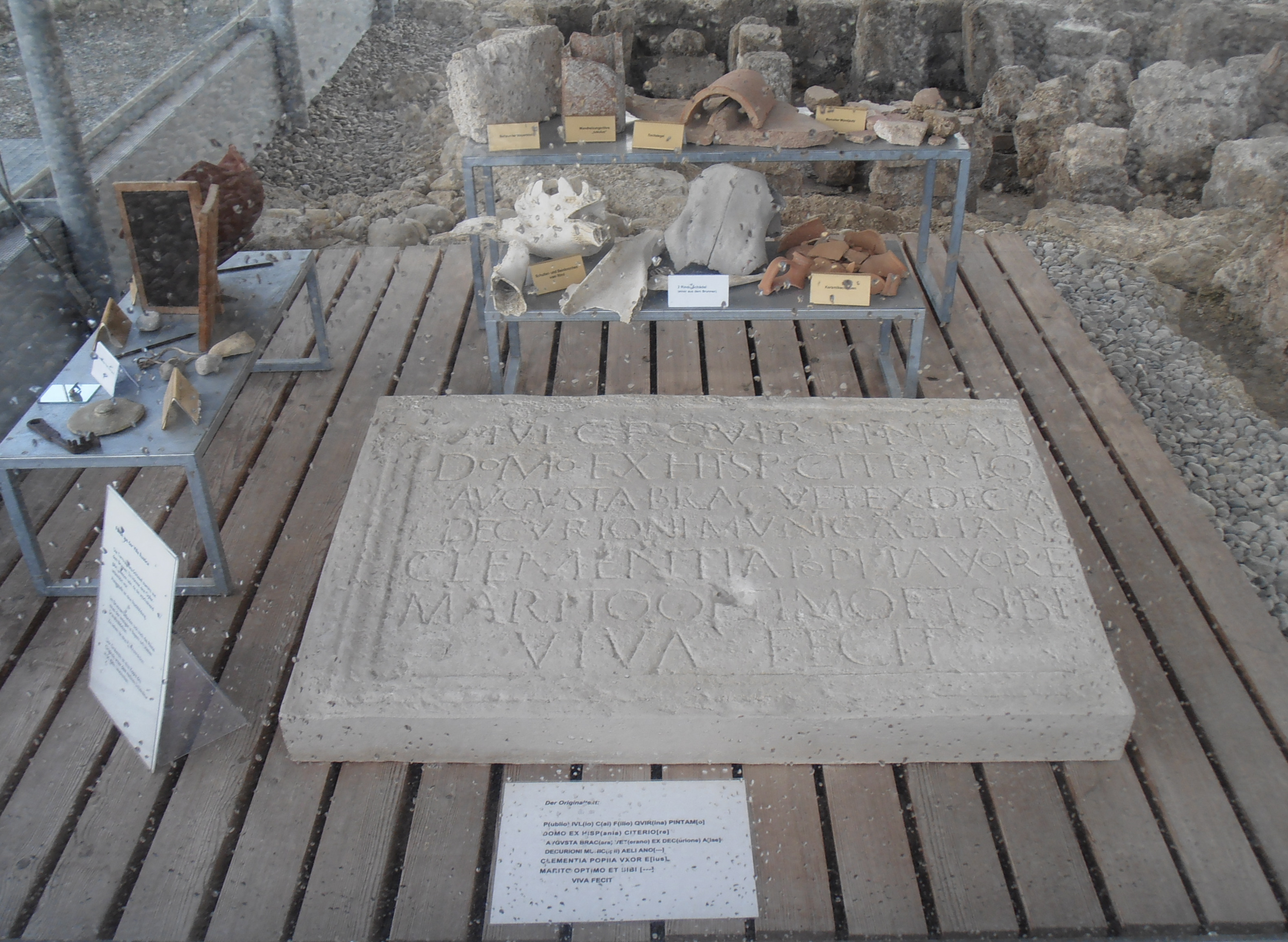
Finds from the nearby spring, most likely offerings, all copies for display here: two house keys, pottery, a slate writing tablet. The large stone is a copy of a Roman gravestone which is believed to belong to the owner of this villa. It is written that he came from Braga (northern Portugal), had a long military career, and that his loving wife erected this stone for him. The original stone was discovered to have been built into the side altar in the above-mentioned St. Alto church (where it remains today), presumably hauled off from one of two Roman urn graves nearby. Whether the stone, the graves and the villa all deal with the same 2 people is speculative, but highly probable. This spring, incidentally, provided the means of determining the date that the farm was in use — the farmer had had a wooden, box-shaped well built on it, which was nicely preserved upon discovery. The wood fragments of the well itself — plus other pieces which had been used to fill it when the farm was abandoned — were then dendochronologically dated.
The Villa Rustica is not directly accessible by car, but one can walk there along the bike path — from the above-mentioned village of Einbettl. And with that, the circle is complete.

Pagans In Bavaria: Viereckschanzen in Holzhausen

Along with the Sunderburg and the pre-Christian grave mounds hidden here and there, the area immediately north of the Ammersee also contains two fairly well-preserved Celtic Viereckschanzen, rectangular earthen enclosures, called Holzhausen 1 and 2. Their function is disputed among archaeologists as to whether they held sacred groves or were built for more practical purposes as forerunners to medieval city walls. They were certainly large enough for whole clans to live in them, being roughly 100 meters long and 75 meters wide, which would make for an unusually wide football field.

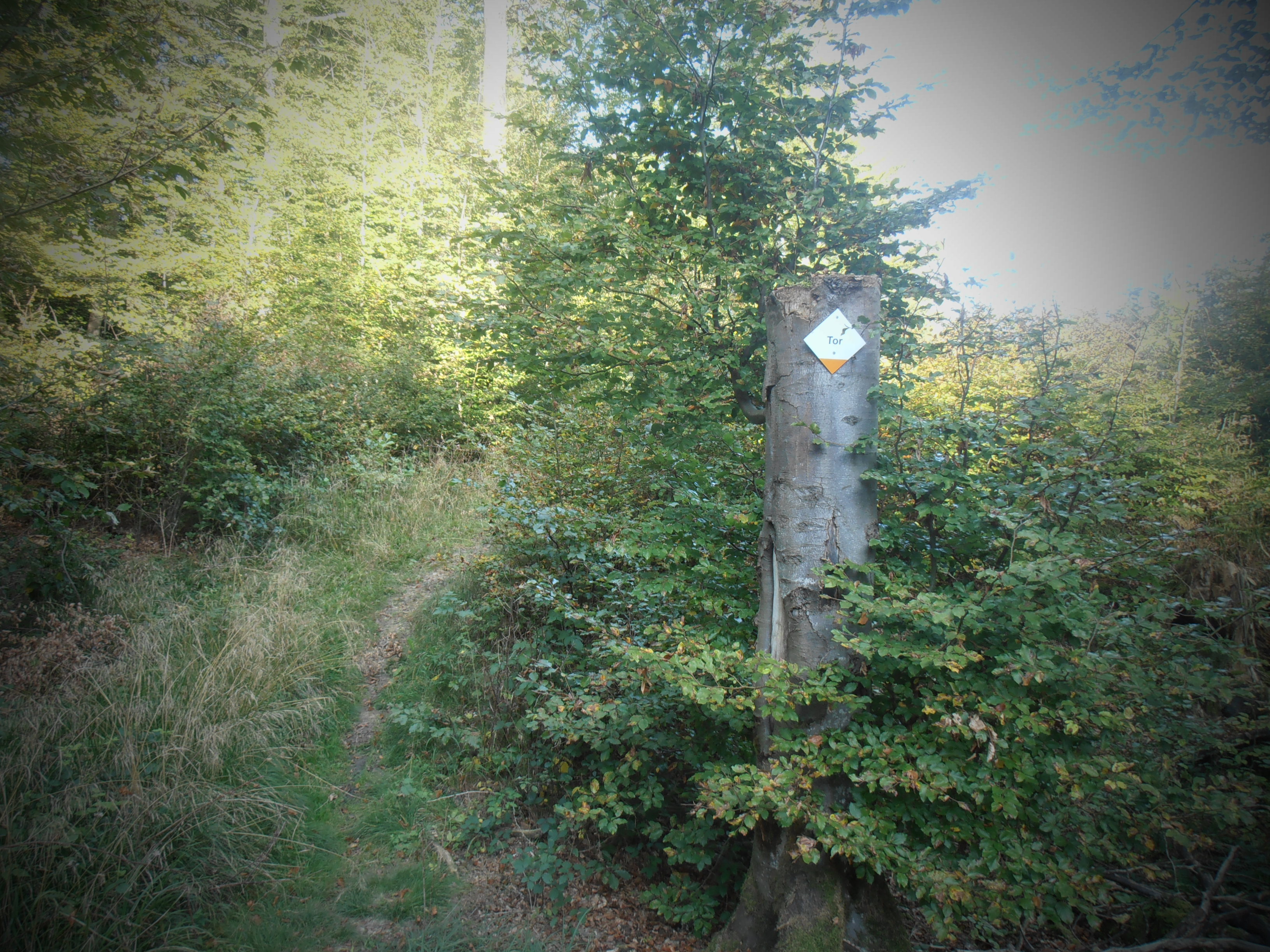
Holzhausen 1 has an entrance gate, or at least a higher break in the wall where a gate would have been built. A nearby sign suggests how one would have looked.

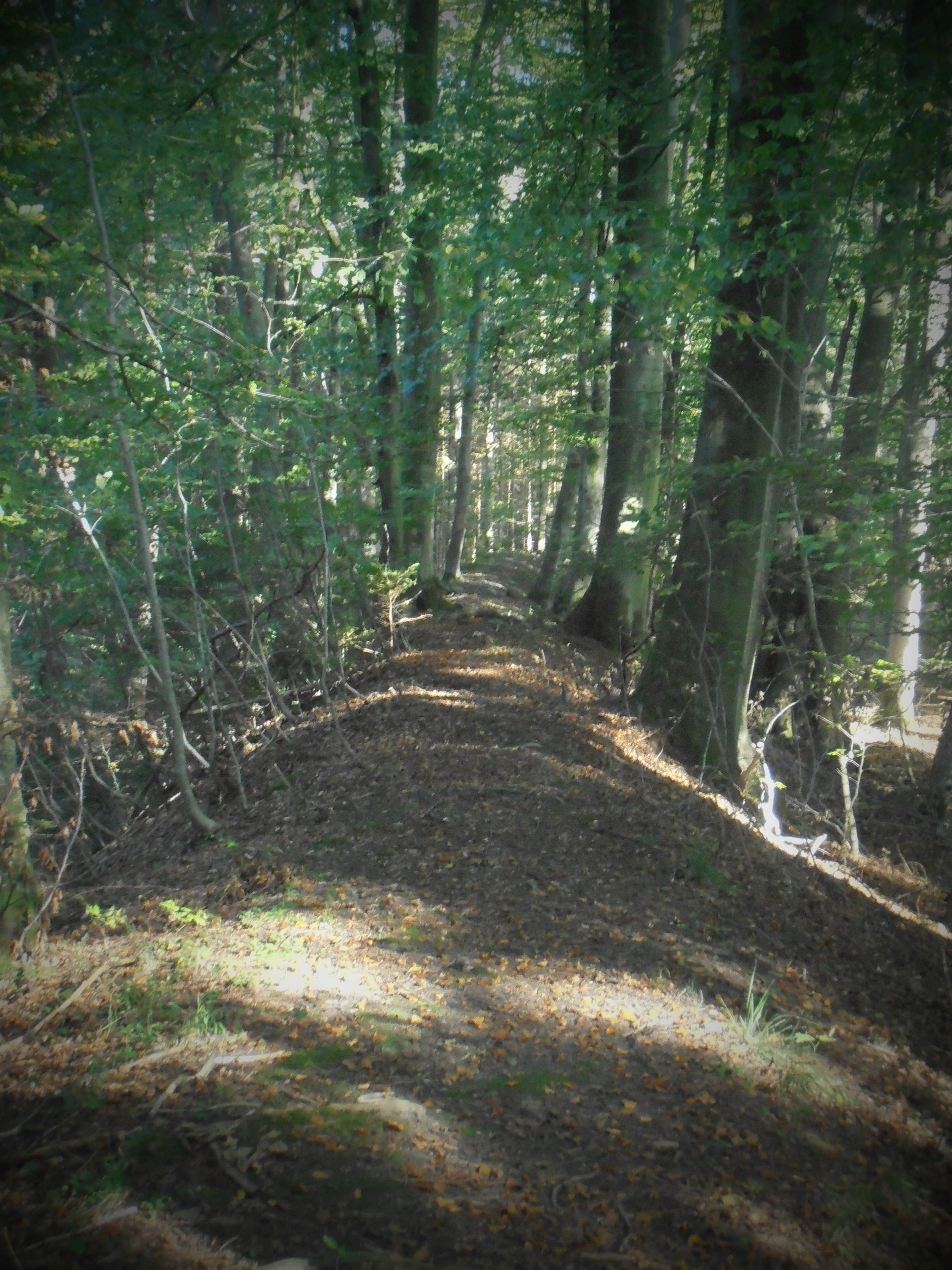
A path now leads along the top of the wall, bringing the visitor all the way around and back to the gate.

Inside the wall is meadow, and, interestingly, a small copse of young trees about right in the middle. Much older trees had stood here but had been cut down. We didn’t count the rings in their stumps but there were many. Possibly someone is maintaining their own sacred grove.

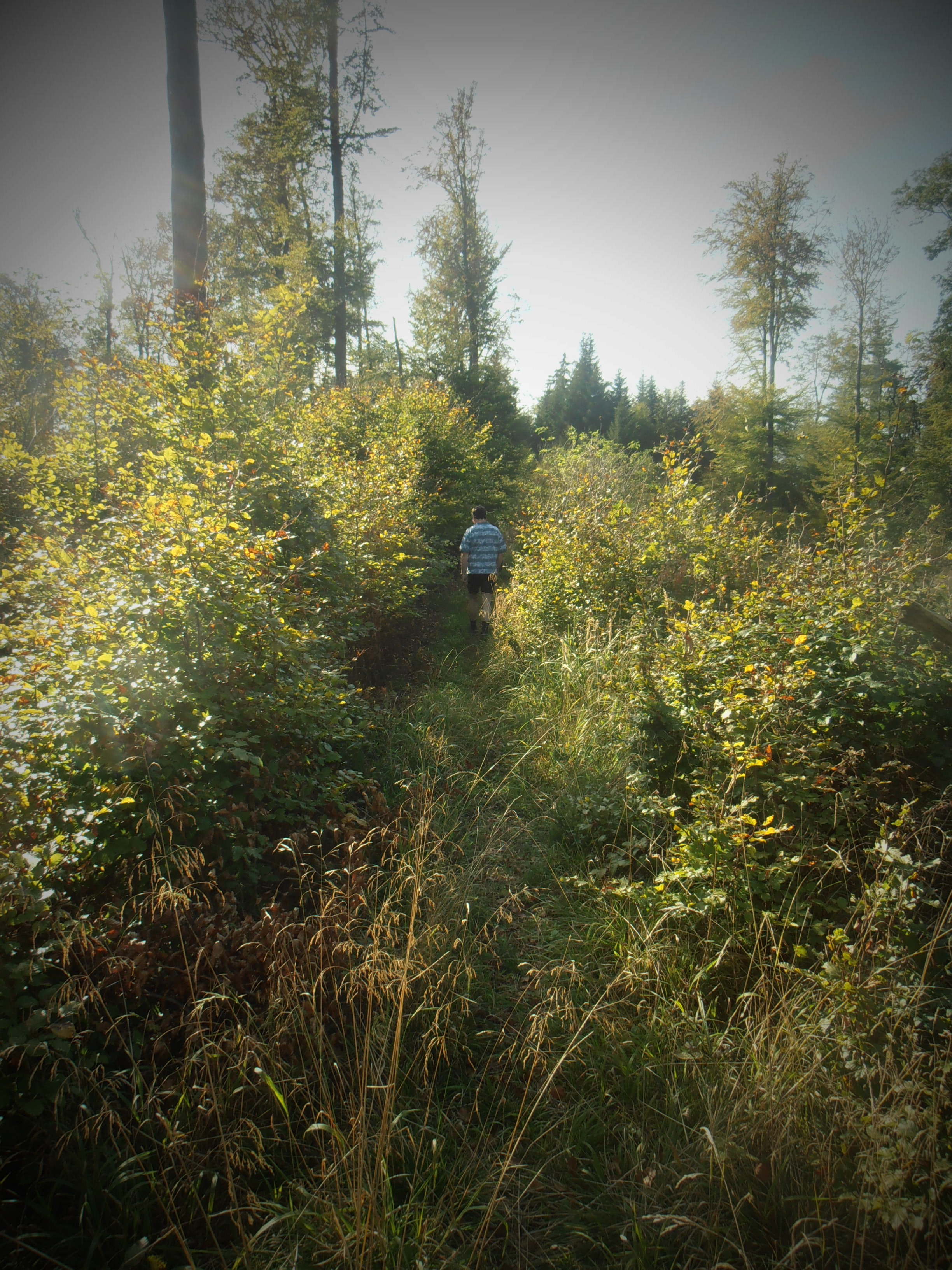
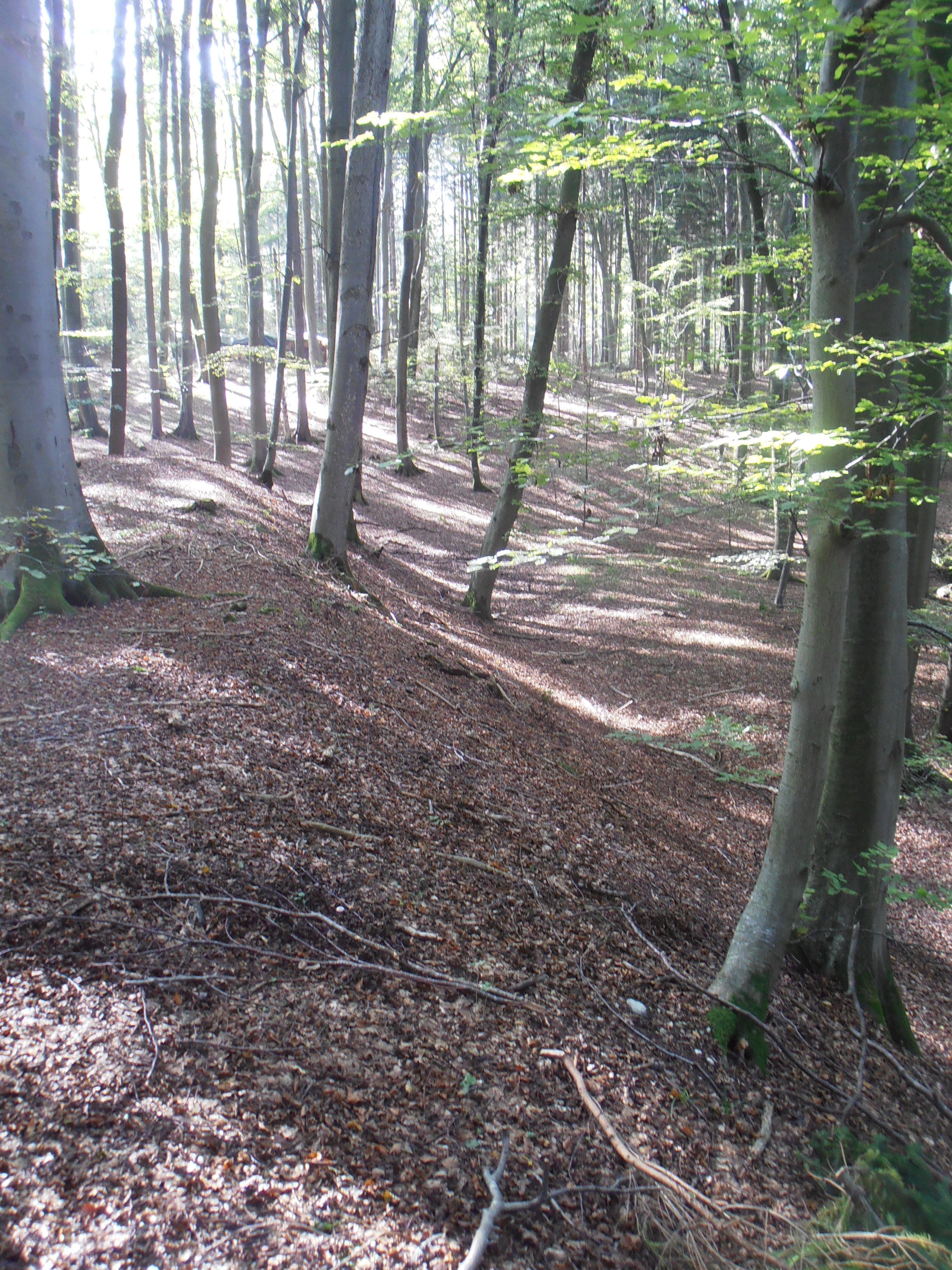
At Holzhausen 2, the forest has taken over. The ground inside the wall has filled in over time so that the earthwork is now more of a plateau. Here is the edge, from above on the wall.

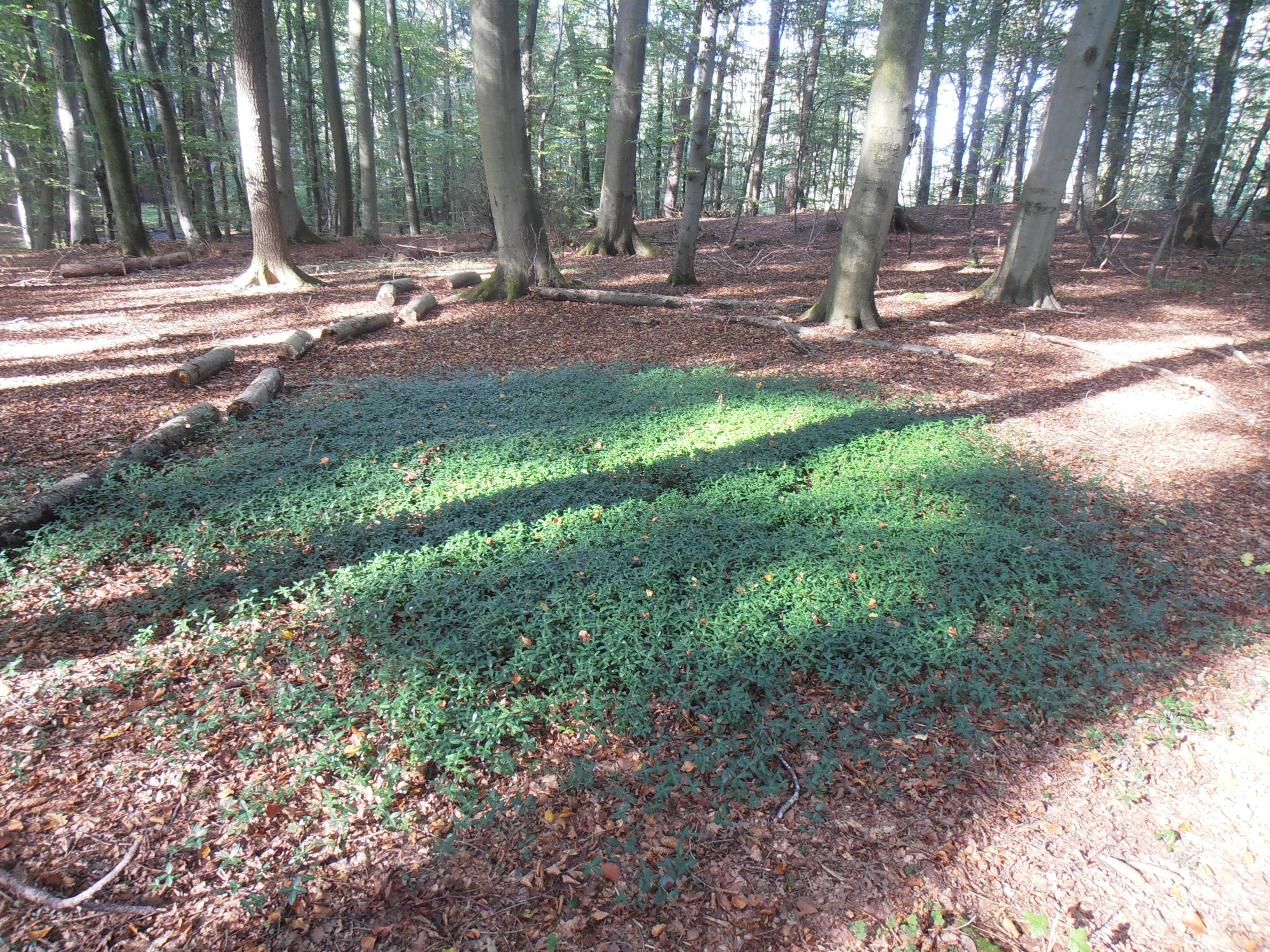
Here again, just about in the middle of the Schanze, an unusual circle of plant life. I’m going to assume that fires were made here in the recent past, and the wood ash left the earth especially fertile for this plant. I’m not very romantic about the past — I tend to think people had way too much to do trying to stay alive and healthy and keep what they had, than to put all this work into a little sacred circle. But hey, that’s me. It’s clearly someone’s sacred circle now, and it’s nice to know that these someones are caring for this speck of land.

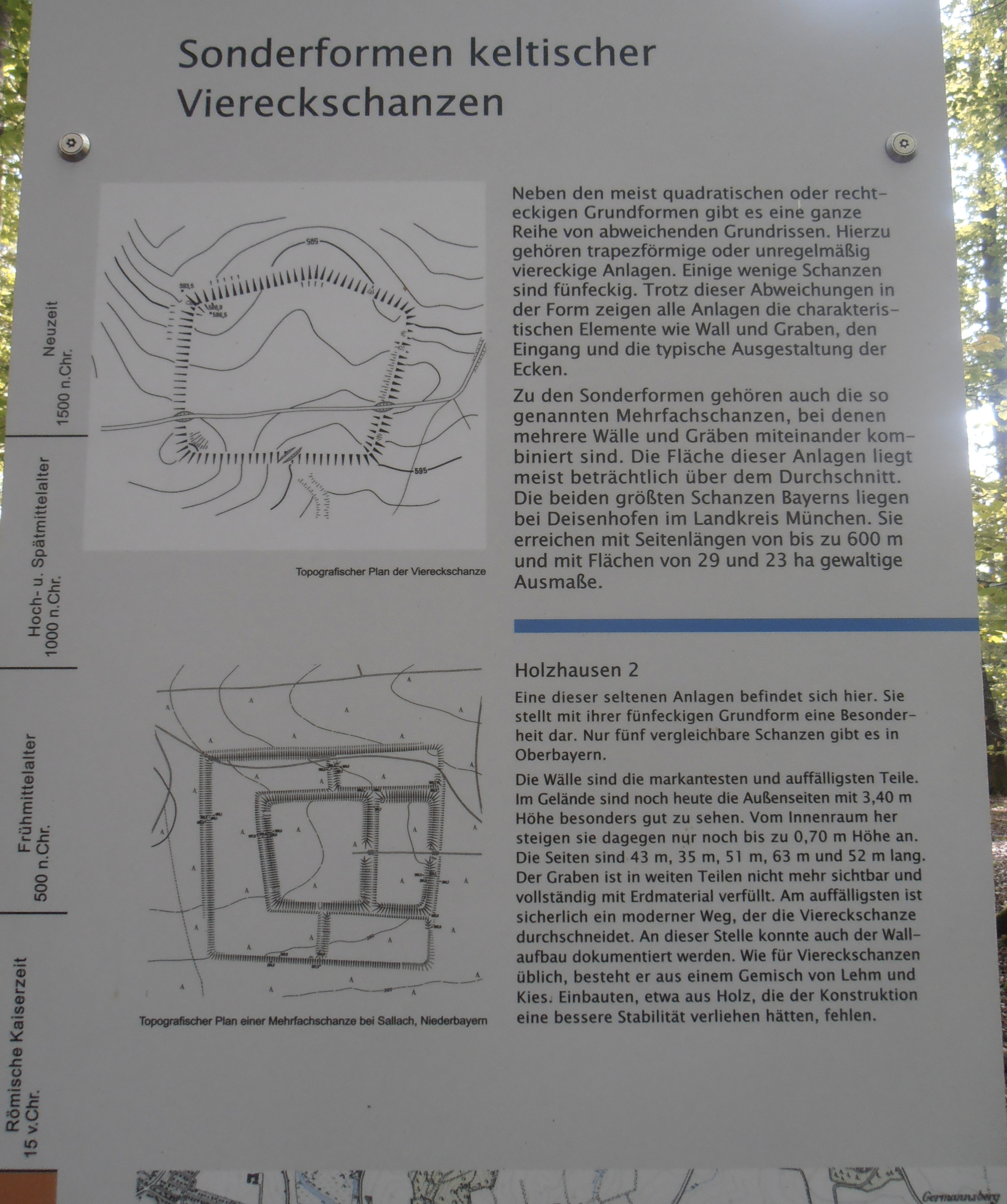
By each Schanze is a small sign explaining the site, and nothing more. Better that way — it’s not easy to find, not easy to reach (we took our mountain bikes), and less liable to be wrecked. Holzhausen is just south of Fürstenfeldbruck, near Schöngeising, 40 kilometers west of Munich.