Pagans In Tirol: The Medicine Woman from the Gurgl Valley

IMG_0632

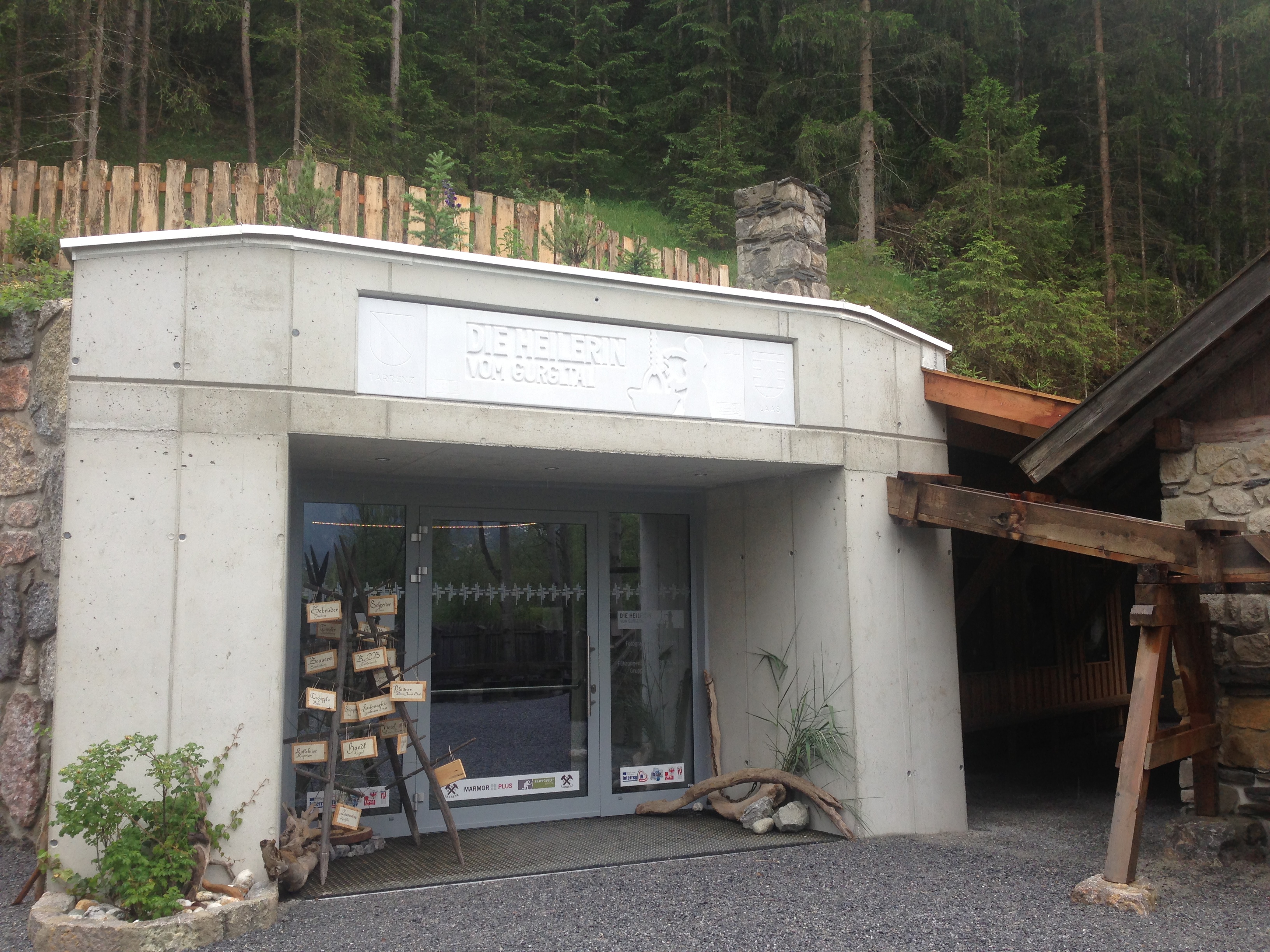
I persuaded a good friend to drive me to the village of Tarrenz (in the Gurgltal, north of Imst) to visit the brand-new museum built to house a fascinating archaeological discovery there — die Heilerin von Gurgltal, which more of less translates as the “Medicine Woman” from the Gurgl Valley. Alternately she’s referenced as being from the Strader Wald, or from the forest in nearby Strad. The story in a nutshell:

Tarrenz lies along the Via Claudia Augusta, one of the old Roman roads over the Alps. Hobby archaeologists are attracted to this area because of the artifacts that can be found along old roads. Some such treasure-hunters were combing the woods with a metal detector, and came across the first signs of something very interesting and ultimately very mysterious.

Eine Freundin fuhr mit mir neulich nach Tarrenz (im Gurgltal, bei Imst), um das nagelneue Museum der Heilerin vom Gurgltal zu besuchen. (Alternativ ist sie die Heilerin vom Strader Wald gennant.) Tarrenz liegt entlang der historische Via Claudia Augusta, ein Ziel für Hobbyarchäologen, wegen der Menge von Artifakten, die man neben alten Strasse finden kann. Ein paar solche Schatzsucher waren vor einige Jahren mit einem Metalldetektor im Strader Wald; dort stießen sie auf einen interessanten und mysteriösen Fund:
IMG_0628

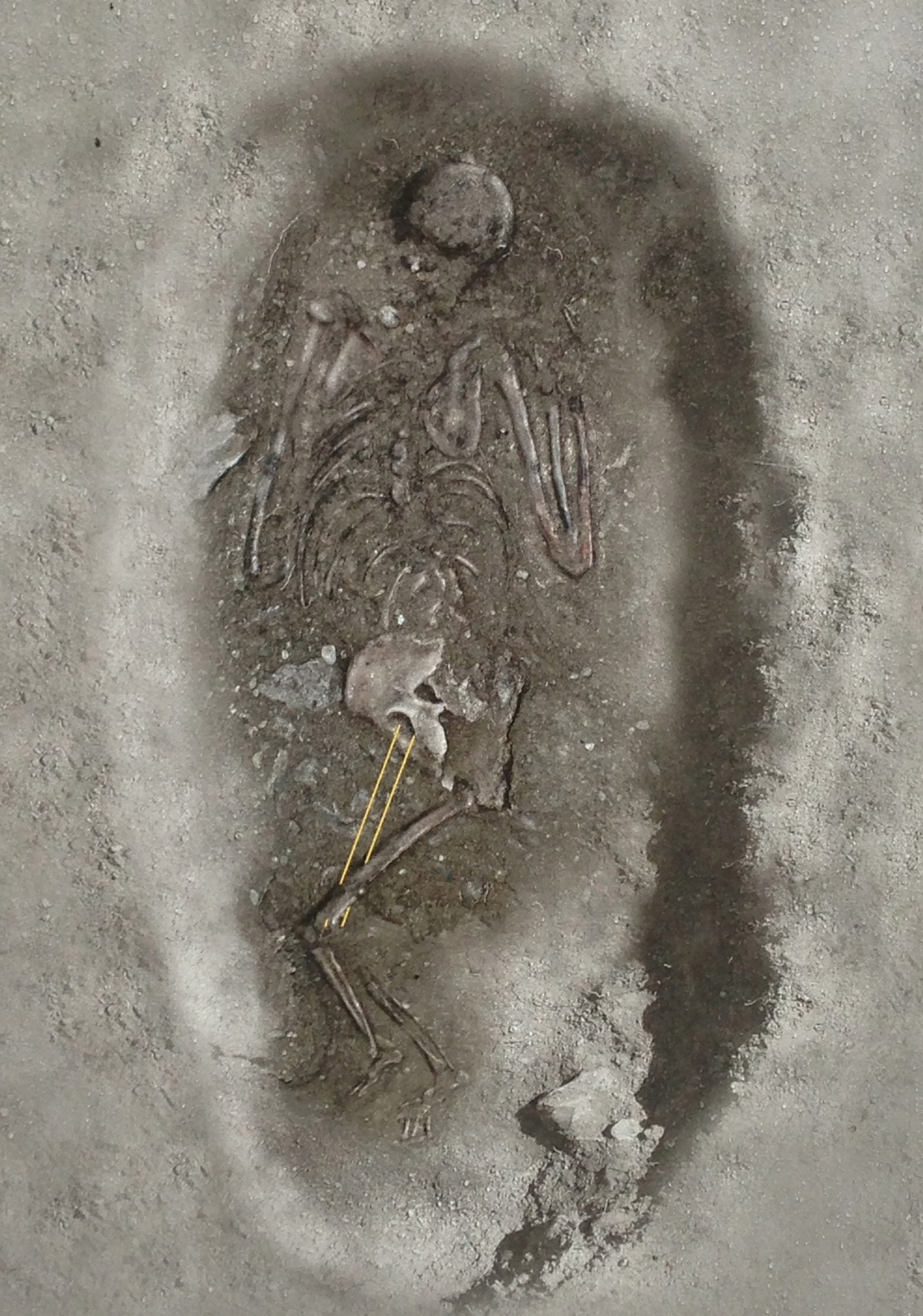
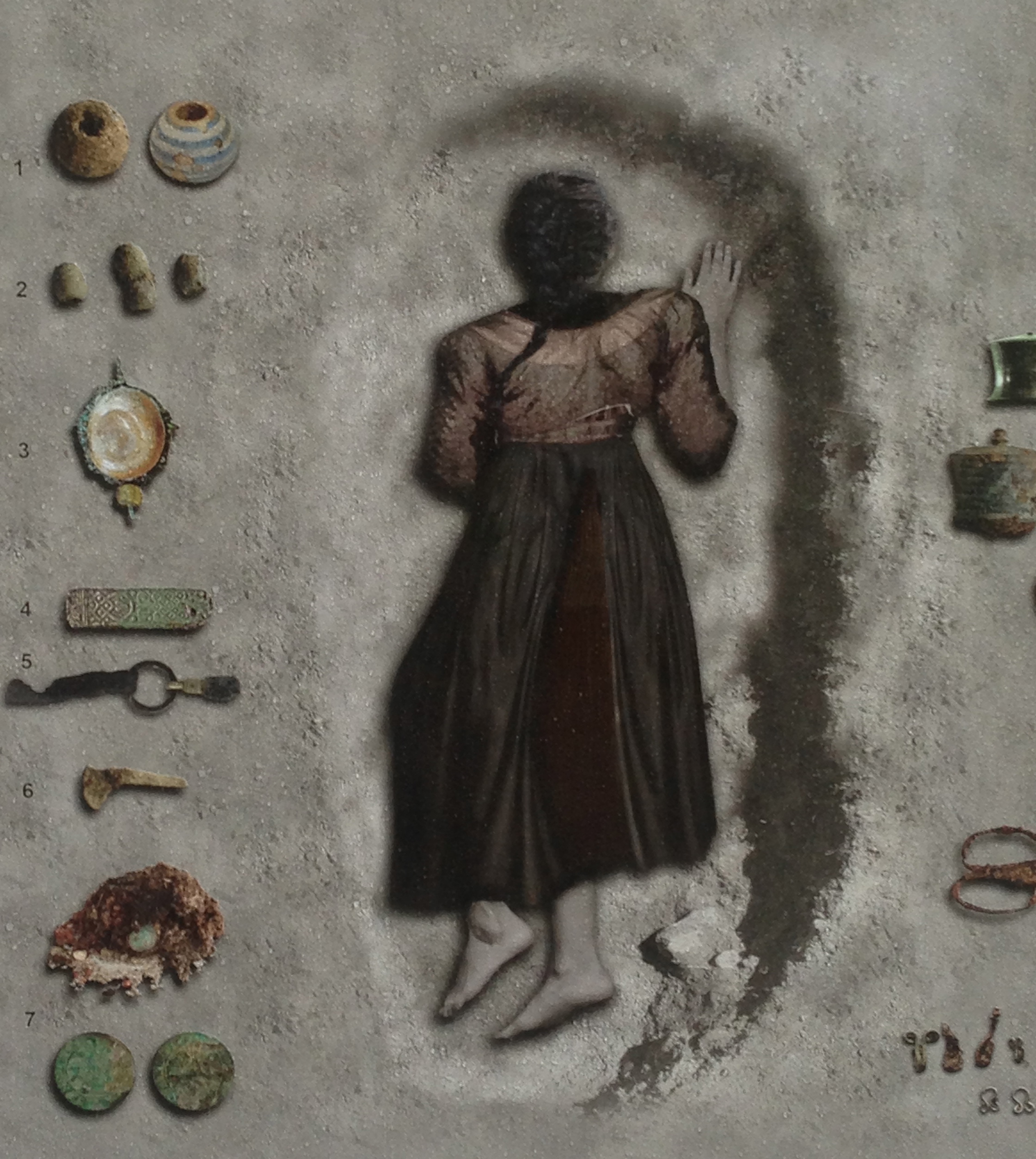
It was the grave of a woman, found lying face-down, along with a bounty of small and valuable objects — metal instruments such as scissors and keys, coins, pearls and crystals, a thimble, and — the headline-grabber —a set of metal cups used for cupping therapy. Dating places her having lived during the time of the 30 Years War, in the first half of the 17th century.

Das Grab einer Frau, in Bauchlage beerdigt, zusammen mit einer Menge kleine wertvolle Gegenstände — ihre Habseligkeiten. Eine Schere, eiserne Schlüssel, Münzen, Perlen, Kristallen, ein Fingerhut, und — meist interessant — ein Set Schröpfköpfe aus Metall. Hier der archäologische Befund. Die Frau lebte während der Zeit des Dreißigjahrigen Krieges.
IMG_0629

The circumstances don’t fit together in the usual way. She was buried quite far from the cemetery. A foreigner? A suicide? Possible Jenische*? She had, much like Ötzi did, her whole “professional kit” with her. Added to her grave as a kind of honor? Or thrown into it in a hasty burial? Then there’s the “face down” business, which normally is found to have been the custom for criminals. But she clearly hadn’t been executed as a witch, not with all those valuables in the grave with her, even though witch trials were very much in at the time.

Die Sachen passen nicht zusammen wie erwartet. Die Frau wurde ziehmlich weit weg vom nächsten Friedhof begraben. Eine Fremde? Ein Selbstmord? War sie Jenisch? Wie Ötzi, sie hatte ihre professionelle Werkzeuge dabei — wurden sie mit ihr mitbegraben, als ein Ehrenzeichen? Oder schnell hineingeworfen in Eile? Aber sie wurde gegraben mit Gesicht nach unten, wie man Kriminelle bestattete. Offensichtlich wurde sie nicht hingerichtet, sonst hätte man keine Grabbeigaben gefunden, obwohl die Hexenprozesse damals ganz in Mode war.

The museum tries to bring you in with carefully portioned experiences. First you hear  of the arts of healing as practiced in these parts, and how knowledge was handed down through generations. Then you learn about some actual cases from Tirol which involved persecutions due to superstition and fear. The antisemitic source — and consequences — of Anderl of Rinn is an example used.

Das Museum führt den Besucher vorsichtig in kleinen Etappen ein, vermutlich für die sehr junge Besucher. Man lernt von Heilkunde und wie das Wissen von Generation zu Generation übergeben wurde. Dann wird man gelehrt über wahre Öpfer von Aberglaube und Angst in Tirol, zum Beispiel die antisemitische Ursprung — und Folgen — der “Anderl von Rinn” Geschichte.

You are then ushered into to larger room to watch a short film combining the facts of the find (given by the head of the archaeology department at the University of Innsbruck, Professor Harald Stadler) with a dramatized version of what might have happened, using locals as actors. Their version involves a heathen midwife, banned from the community and the church (same thing back then) but nevertheless needed and called whenever someone got sick. A stillbirth is enough to have the villagers accuse her of witchcraft, and then tempers get hot, someone (guess who) gets killed, and a hasty, fearful burial is carried out in the forest. Entirely plausible — although often the truth is a lot more boring (she died of illness, her outsider travelling companion(s) buried her as best they could, and moved on?)
After the film ends, you finally get to see the skeleton and the artifacts, laid out under glass with plenty of information about their provenance and uses. The tour guides — a husband-and-wife team — are very much involved in the project and were able to answer questions in depth.

Man kommt dann in einer Halle und ein Kurzfilm läuft. Archäologische Details (von u.a. Universitätsprofessor Harald Stadler) alternieren mit einer Dramatisation von der Geschichte — also, was hätten passieren könnte — mit einheimische Mitwirkenden. In ihrer Fassung, ist die Frau eine Außenseiterin, eine heidnische Hebamme und Heilerin, aus der Gemeinde verbannt, dennoch in Krankenfälle immer wieder gerufen. Ein Totgeburt führt zur Vorwürfe von Hexerei, die Frau getötet und in Angst und Eile im Wald begraben. Alles schon möglich — obwohl die Wahrheit ist oft weniger interessant.
Dannach darf man den Skelett samt Artifakten (in Vitrinen) -endlich- sehen. Die Führer — ein Ehepaar — sind im Projekt involviert und konnte viele Fragen reichlich antworten.

If you go: the Museum der Heilerin von Gurgltal; is located within another, outdoor museum called Knappenwelt, which is a recreation of a small mountain mining industry from the olden days. You can buy a ticket for either, or in combination. Drive to Imst and then north on the 189 toward Fernpass. It’s trickier if you don’t have a car, but apparently this tourist shuttle will get you there from “downtown” Imst to the Knappenwelt. You’ll still have to walk from the Imst station, which is a bit removed from town.

Anfahrt: das Museum befindet sich in der “Knappenwelt”, ein Freilicht Museum. Von Imst kommt man mit dem Strasse Nr. 189 richtung Fernpass nach Tarrenz. Ohne Auto wird’s schwieriger, aber wenn man in Imst von Bahnhof ins Zentrum geht, findet man den Bummelzug “Bummelbär”, der macht einen Tour von Imst nach Strad mit Zwischenstops.

*Jenische is a name used for a certain nomadic people in Europe. They are not related to the Roma or Sinti — in fact they may not be an ethnic group at all but fall under the generic category “gypsy”.  Wikipedia likens their language to Cockney.
Kulturblogging: Die Hofkirche

IMG_0580

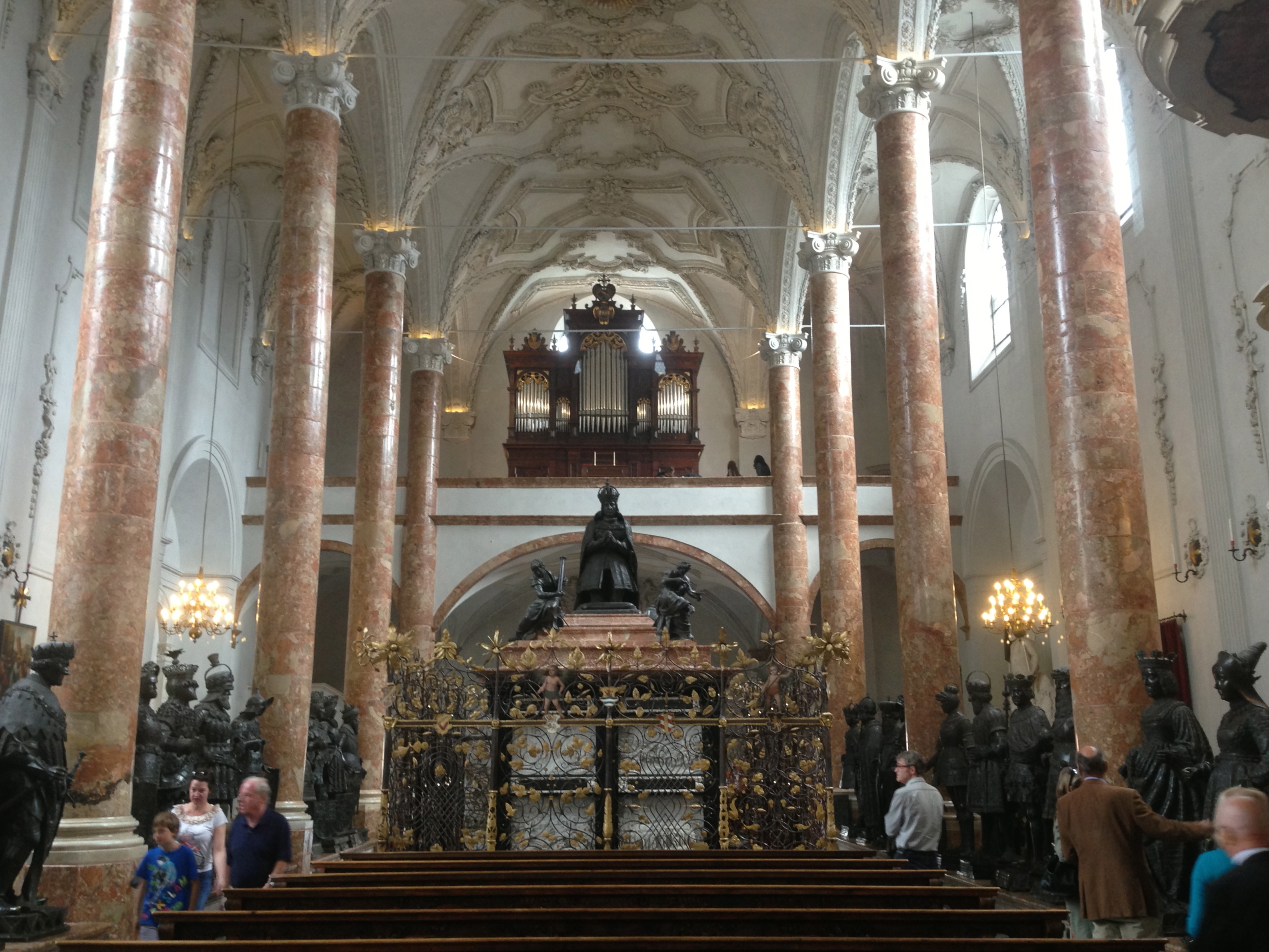
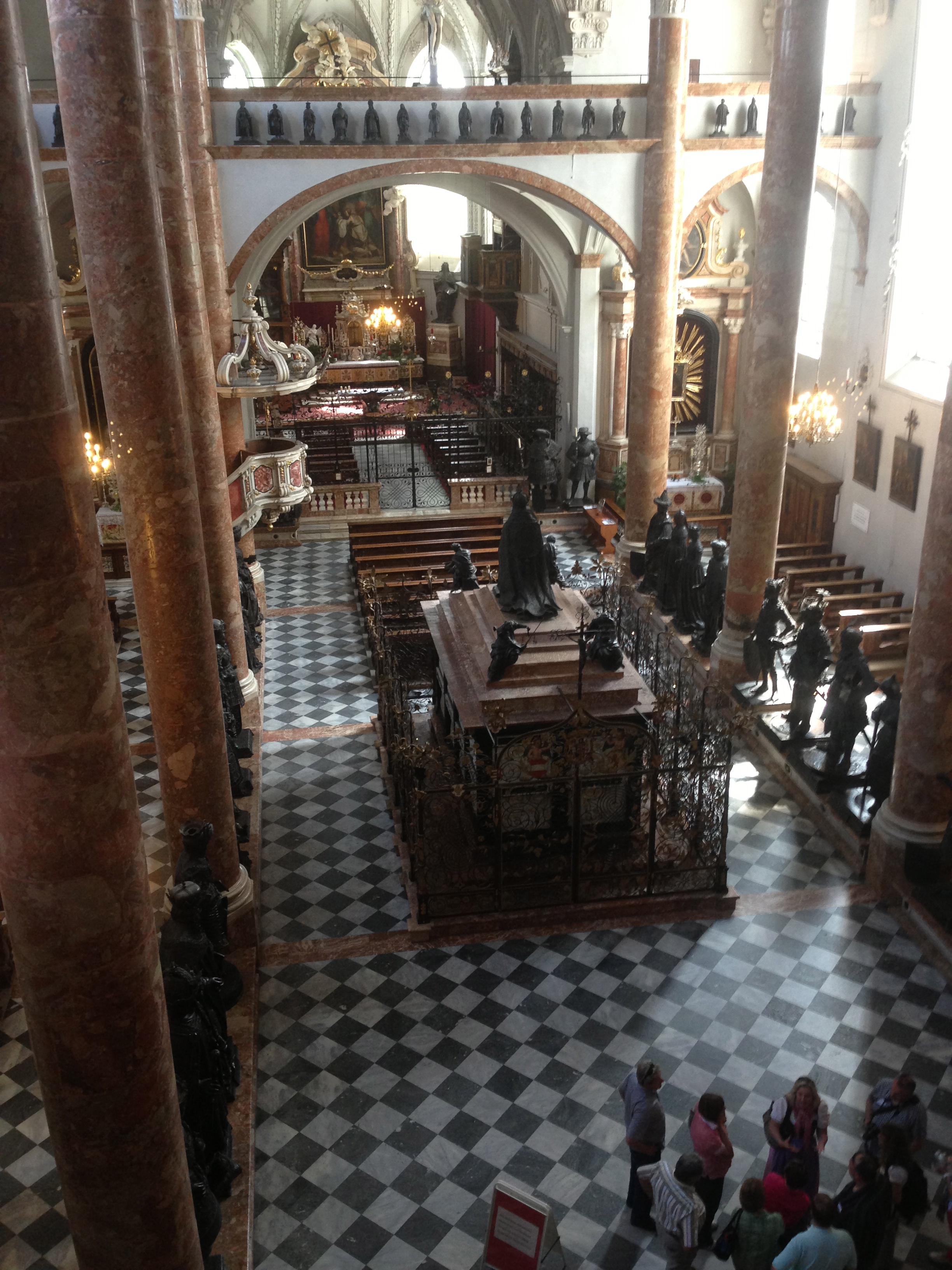
One of Innsbruck’s main attractions for the historically-minded is the Hofkirche, or Imperial Church (but no one calls it that, it’s just always the Hofkirche). As a tourist sight, the plain white exterior is deceiving (I heard it once remarked that the front facade resembles the face of a polar bear, and this pretty much pops into my mind every time I see it.) The interior, however, is impressive.

The Hofkirche was part of Holy Roman Emperor Maximillian’s last will and testament — and a beautiful sarcophagus was made for him there, although actually his remains ended up in the castle that was his childhood home, in Wiener Neustadt.

IMG_0587

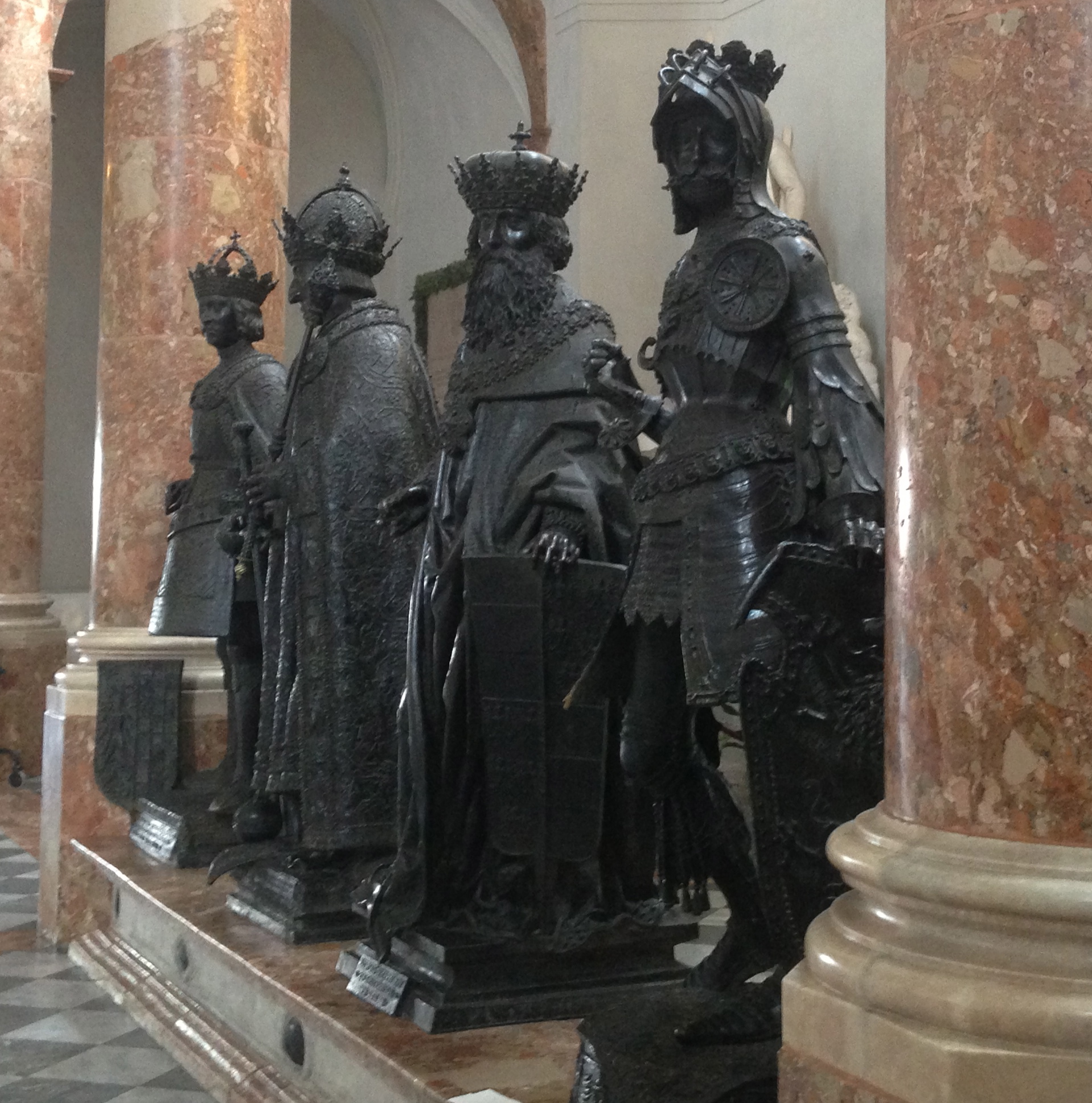
Keeping watch over this empty sarcophagus (which makes it a cenotaph) are two lines of life-size bronze statues commonly referred to locally as die schwarzen Mander (“the black men”), although they are neither all males nor even black, but more of a beautiful, deep dark chocolate brown.

IMG_0589

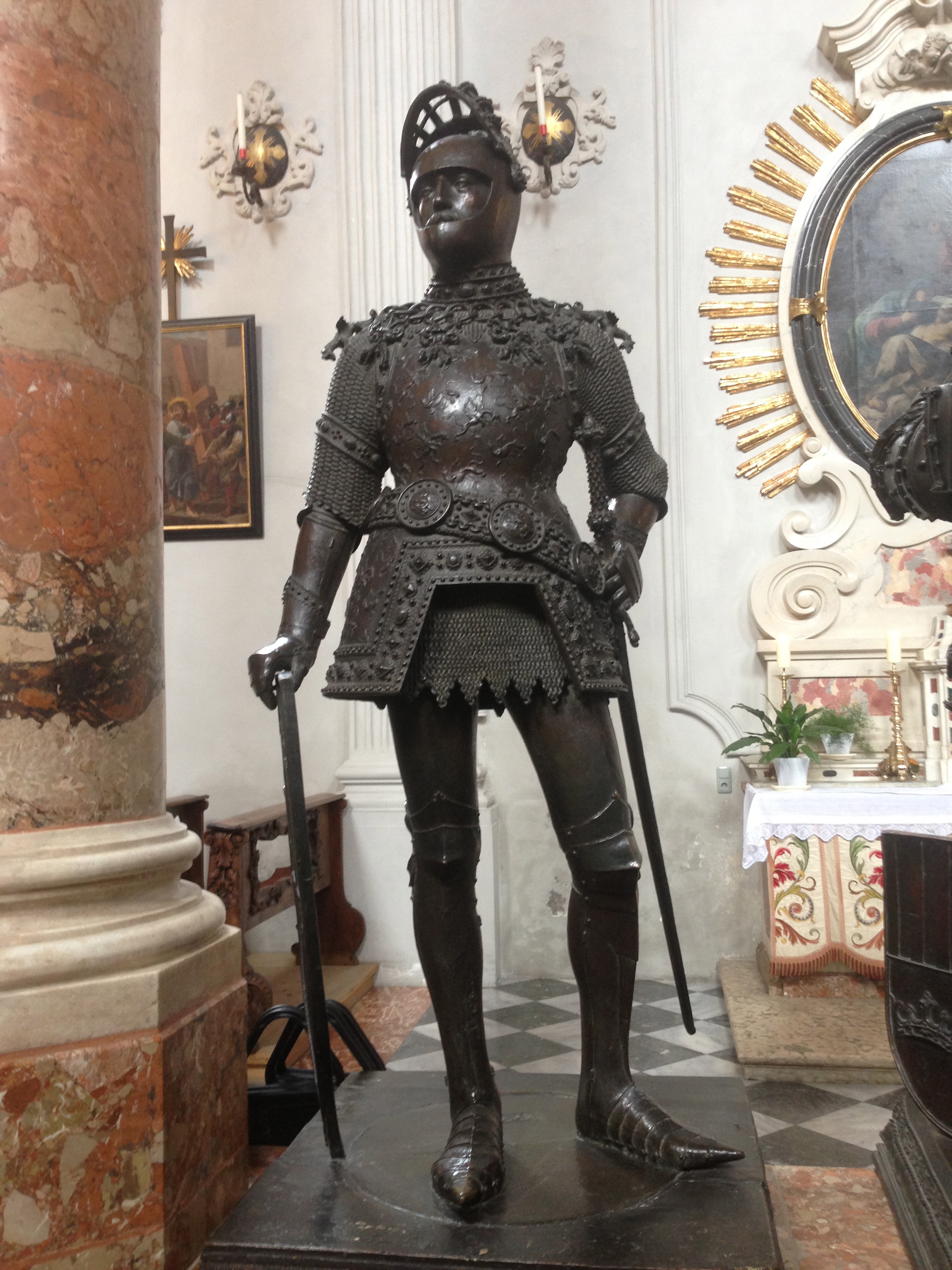
The English Wikipedia entry for the Hofkirche describes these figures as being of “ancestors, relatives and heroes”, which is the best way of putting it. They are all titled, some go way back into the early Middle Ages (Clovis I, Theodoric), and the existence of one is now questionable (King Arthur, although he was surely assumed to have been an genuine person in Maximilian’s time.)

IMG_0583King Arthur’s statue in the Hofkirche


IMG_0585

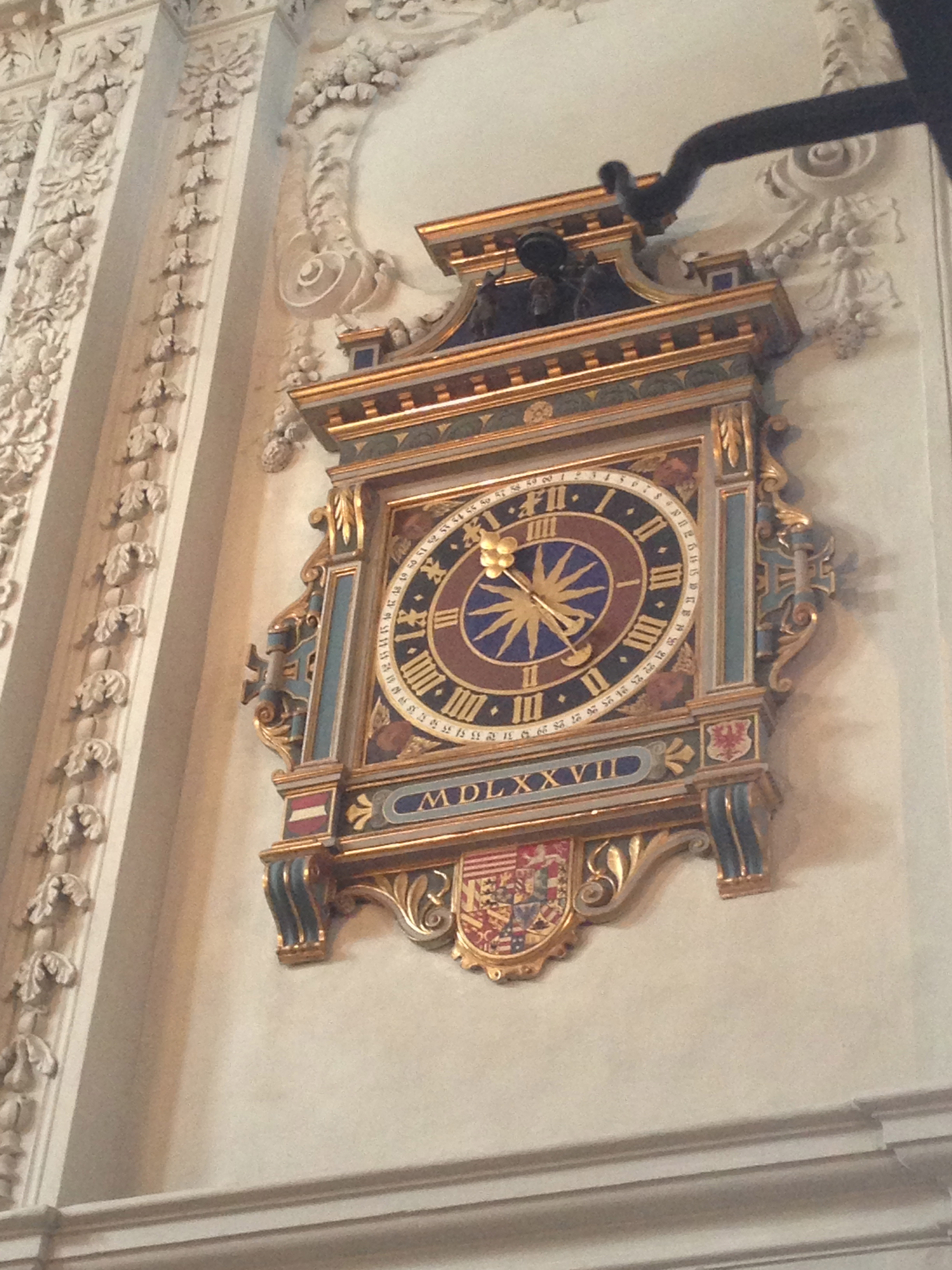
I always found the large old clock high above the altar in Innsbruck’s St. James Cathedral a nice touch if a little unusual (do you really want your flock to be checking the time during the mass?) but the Hofkirche goes one better with a charming little clock which chimes the hour, as well as each fifteen-minute interval. This morning I had the honor of participating in a special Sacred Heart Sunday mass, which has special meaning in Tirol — in the time of the battles with Napoleon’s troops (see Andreas Hofer), promises were made that, in return for divine intervention on the battlefield, official masses would be celebrated in the province each year. During today’s service, the little clocked chimed throughout, even making the priests stop mid-prayer to wait until the hour was rung.

IMG_0590

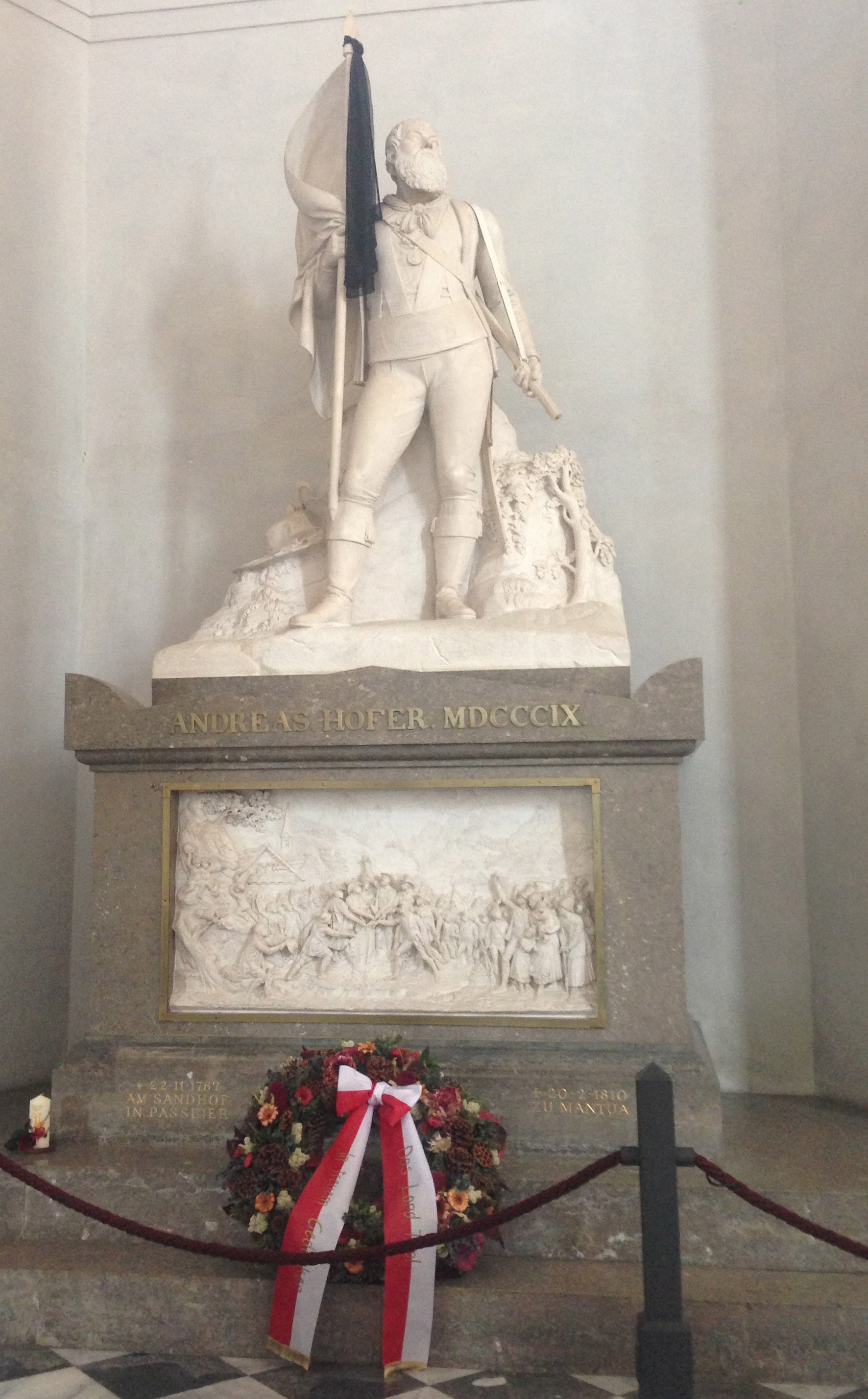
And speaking of Andreas Hofer, he’s here too. Thirteen years after his execution in Mantua in 1810, his body was brought to Innsbruck and laid to rest in the Hofkirche, where his statue guards the entrance.

Kulturblogging: Hildegard Knef

When you spend more than a couple of years in another country, you may begin to realize how much the people around you, while possibly being very much like you, grew up on different pop culture. The American entertainment industry being what it is, they are sure to know many of our well-known pop singers, film actors, athletes and the like, but underneath that they have a whole trove of memories of other famous and successful figures, may of which we Americans have either never heard of, or have forgotten, or whom we did not notice because they worked on the peripheries in the international scene (such as Susanne Lothar). We may not call them minor, because they were not. They just didn’t have a large American following. (Many might leap to the conclusion that, if you’re not big in the USA, you haven’t “made it”, to which I say, open your eyes.)

Knef

So it is with Hildegard Knef. I knew that she had done some work in Hollywood (as “Hildegard Neff”) but did not know that her handprints are there in the concrete, with those of many other stars, in front of Grauman’s Chinese Theater.

She started out by being discovered at 18, while training to be an animation artist for the UFA film studio in Berlin, by the head of that studio. A year later she was having an affair with the Reich’s Chief Dramaturg, Ewald von Demandowsky (this would be 1944). She was gorgeous, extremely photogenic, highly intelligent, and one assumes that powerful men were falling over themselves to advance her career.

In a nutshell, her career was tempestuous. In 1948 she signed a 7-year contract with David O. Selznick, wherein she was paid lucratively for English lessons and screen tests, but was cast in no roles. In 1950 (now with American citizenship), she returned to Germany to appear in the film Die Sünderin. With its taboo themes of prostitution and suicide, not to mention a brief nude scene, the film scandalized the country: protests, counter-protests, banning in many cinemas. The Roman Catholic Church in Germany protested primarily that the gist of the film resembled the infamous Nazi euthanasia propaganda film Ich klage an. Twenty five years later in America, a mercy killing could be shown in a film like One Flew Over The Cuckoo’s Nest, but coming right out of the Nazi years in Germany, it was apparently  too soon.

She began a genuine singing career with the release of her first album in 1951. Her voice is clear (if unusually low, probably from all the cigarettes) and her singing style is confident and breezy, in that speaking/singing mix that was so popular in the day, but lets out a sort of dignified containment of emotion, a way of revealing pain without the least bit wallowing in it. Ella Fitzgerald later called her “the best singer without a voice”.

Here a song in English, “Too Bad” from 1969. The person who uploaded this put together an amusing collage of internet images to accompany the song.

Ostracized in Germany from the fallout from Die Sünderin, Knef returned to Hollywood and finally got to appear in a row of films, some good, some forgettable. She was the first (perhaps still the only) German to appear in a leading role on Broadway, in Cole Porter’s Silk Stockings. On the success of her international singing career, she returned to Berlin, enjoyed the spotlight on German television appearances, had a child, battled breast cancer, wrote a few memoirs, and generally made for constant headlines in the tabloids.

Here Knef singing “Aber schön war es doch”, from a television broadcast in 1963. The song lyrics tell of bittersweet memories of a last meeting, (“but it was beautiful”), and every detail — with bench, the trees in bloom, the words he’d spoken — is lovingly remembered.


“Written off” in Germany, she fled back to Hollywood where she did some film work but never really got her foot back in the door. In the 80s she played Fräulein Schneider in the musical Cabaret at the Theater des Westens in Berlin, and in 1989 moved back to German for good, heavily in debt. In her 60s, she began to be seen as one of those living legends (as so often happens to people who manage to still be around after the dust has settled), was awarded lifetime achievement prizes, appeared on talk shows, put out a (very successful) album of songs. In 2001 she got her German citizenship back. In 2003, she died of pneumonia, at the age of 76, just two weeks after her last televised interview. Working — and being in demand — until the end.

Image found here.

The Viereckschanze in Utting

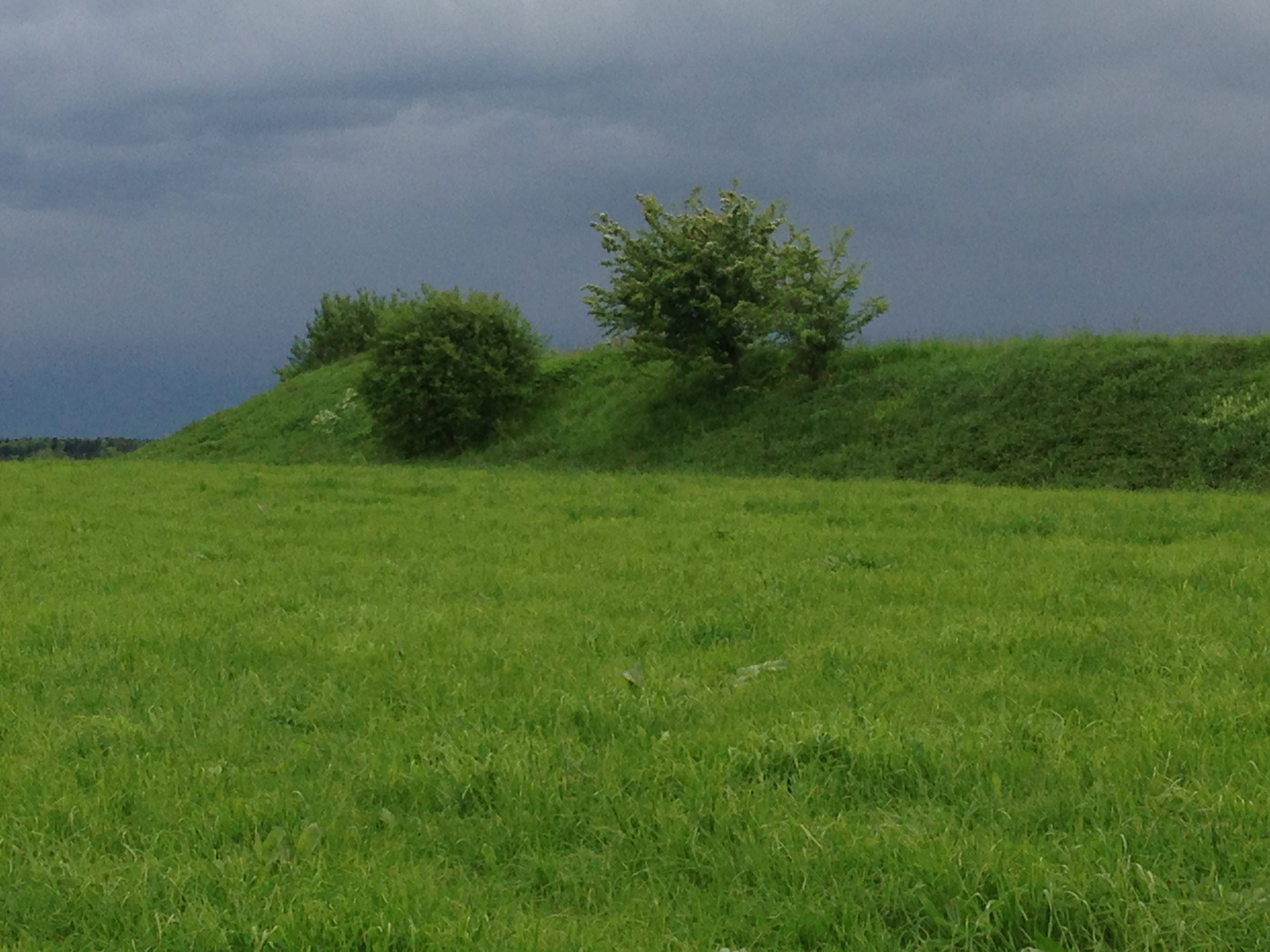
UttingSchanze1

I previously blogged about the village of Utting am Ammersee in connection with the small, hidden cemetery for nearby concentration camp victims there. Today I have another unusual place to show you — the rectangular earthwork (Viereckschanze) in the fields just west of the village.

Uttingschanze3

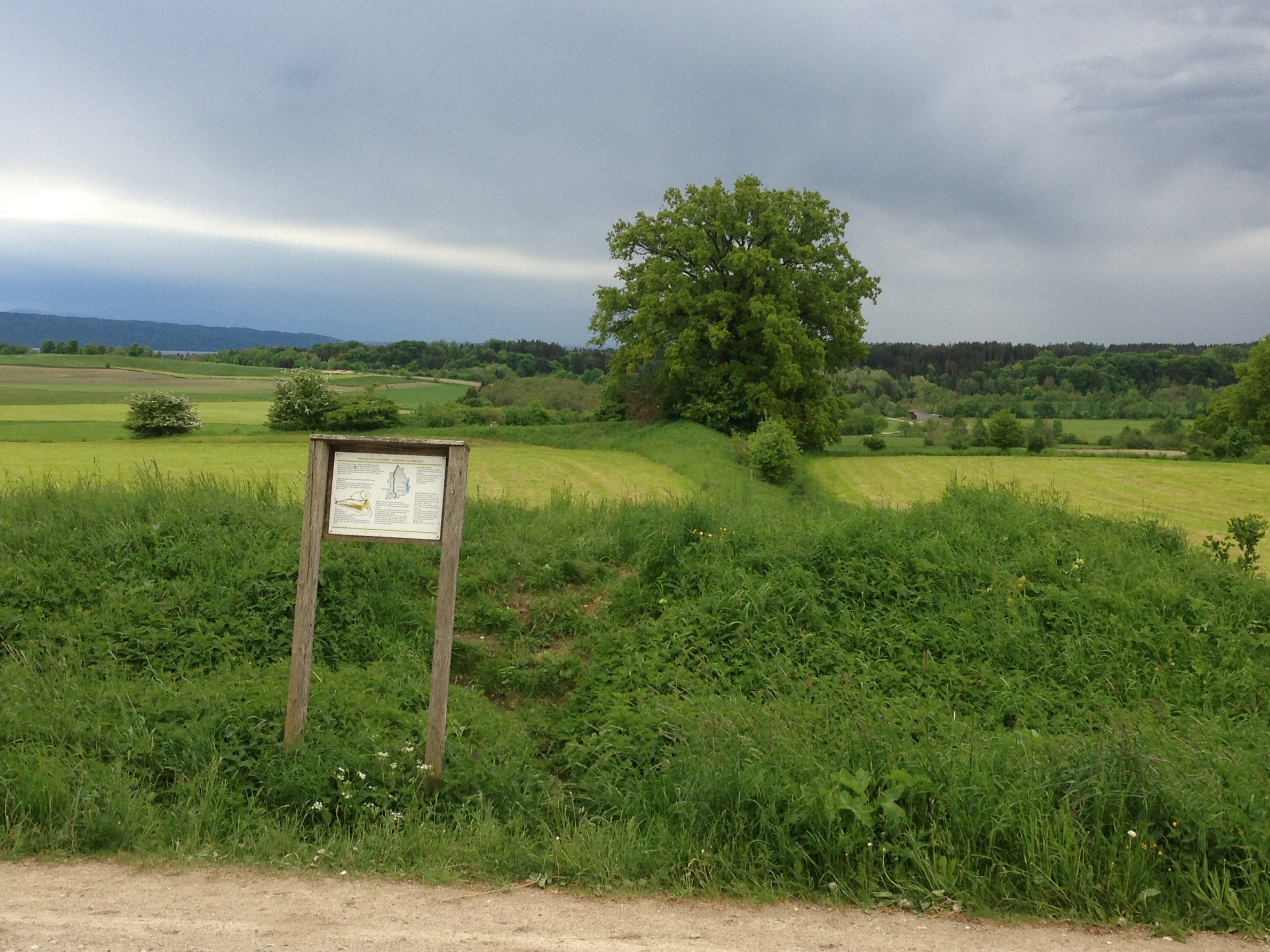
This earthwork was built around 200-100 B.C., in the late Iron Age, by the people we call Celts. According to local sources the Roman Via Raetia (laid down after 15 A.D.) passed right by here, possibly within a few meters of the earthwork.

UttingSchanze2

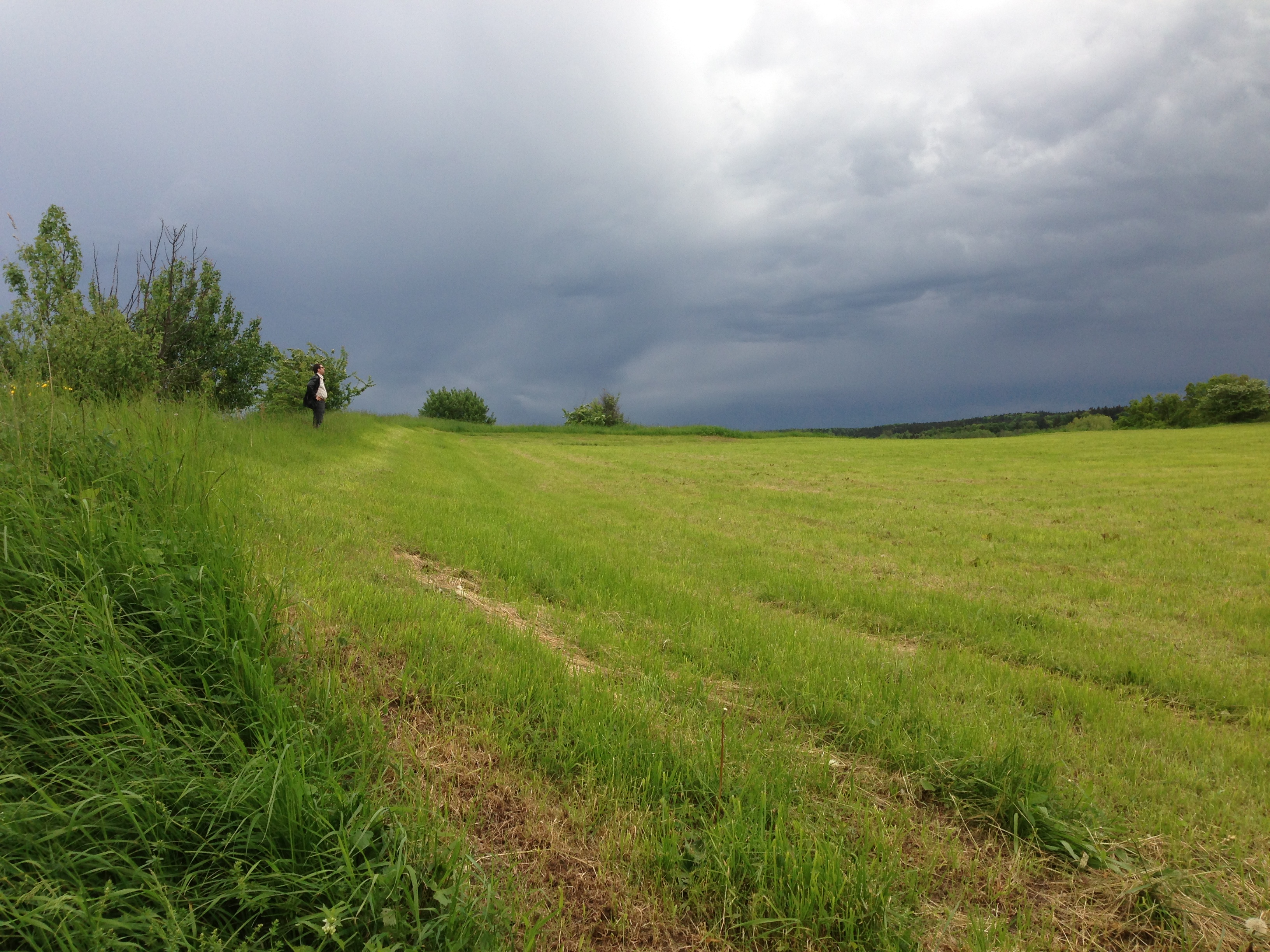
There are approximately 150 such earthworks of this kind (not including grave mounds and other types) surviving in whole or in part today in Bavaria alone. The one in Utting is one of five in the county, and an unusually large one with an inside area of 12,000 square meters.

Uttingschanze4

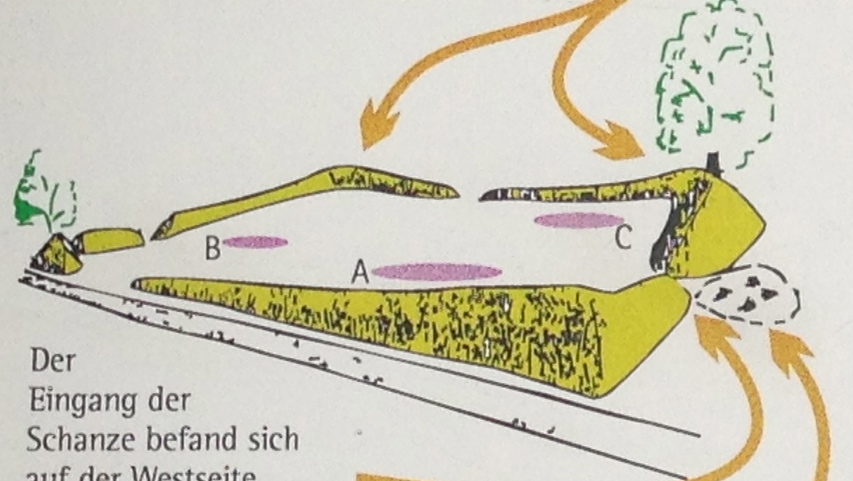
According to information given on-site, research of some kind (a divining rod is mentioned) has revealed evidence inside the enclosure of the existence of A) small buildings, B) a sacrificial site, C) a hole with wooden support walls.

I have to add here that the western side of the Ammersee, we are learning, is some kind of hotspot for the esoterically-minded, and evidently has been for quite some time, as least as early as the 1920s. The sign at this earthwork clearly reflects this, with breezy assertations that the small buildings were temples, the hole was for divining energies, that the whole thing was primarily used for “cult-religious purposes and activities, teaching and passing on of traditions, adjudication, observance of nature and the heavens.” It goes on to say that

the Celts lived in close harmony with the laws of nature. They sensed unseen active entities, forces and energies. They built their ritual sites on places with particular characteristics. These phenomena can evoke internal visions, colors, sounds or moods even today in people who are especially attuned to listening to them.

(translation mine)

Now, there may be something to the idea that people of all eras feel a certain affinity to certain places. I have come across some theories that medieval churches were built on pagan sites not just to wipe out the old gods but to capitalize on the good vibes attributed to the particular place. That’s plausible. Certainly the Celts were more in tune with the laws of nature, as were all people living at the time. But the idea that these earlier people had time to spend tuning into the universe, observing nature and digging the force fields is, to me, a bunch of hooey. Sure, this Schanze may well have included some religious purpose, in the sense that one might feel the need to pray to one’s gods while barricaded inside. These earthworks offered protection, possibly against invaders, or animals (bears, wolves, wild boars). They offered a good surveillance view of the surrounding lands. They offered safe places to keep foodstuffs and materials (leather, bone, wood) awaiting processing. Sure, the Mayans and the Egyptians built pyramids (or, better said, their kings and pharoahs made them do it.) I cannot believe  that the Celts were not too busy, just from trying to get through the winter, to expend time and energy on this sort of thing for the express purpose of being One With The Universe. Perhaps they had one Shaman who did that, and it was built for him (or her.) But then, we are back to today’s system, with a village of farmers and one parish priest. Perhaps the most powerful families maintained these enclosures, like an Iron-Age version of the Kennedy Compound. Many large farms around here have their own little chapels on their grounds (in fact you can have one built these days — we watched one go up in Eching, passing that farm regularly.) Since we are walking around today with basically the same faculties as our ancestors had 50,000 years ago, I see no reason to believe that the people who built the Schanzen were any more enlightened than today’s modern Bauer.

Still, it’s quite something to be on an earthen structure which has survived over 2000 years.

If you go: you can find the earthwork very easily on Google Maps (WNW of Utting, no coordinates needed:just  look for the word “Keltenschanze”). There is parking just off the ST2347 (Landsberger Strasse) and then it’s a few minutes walk on well-maintained gravel roads.

“At The Roman Stone”

IMG_0493

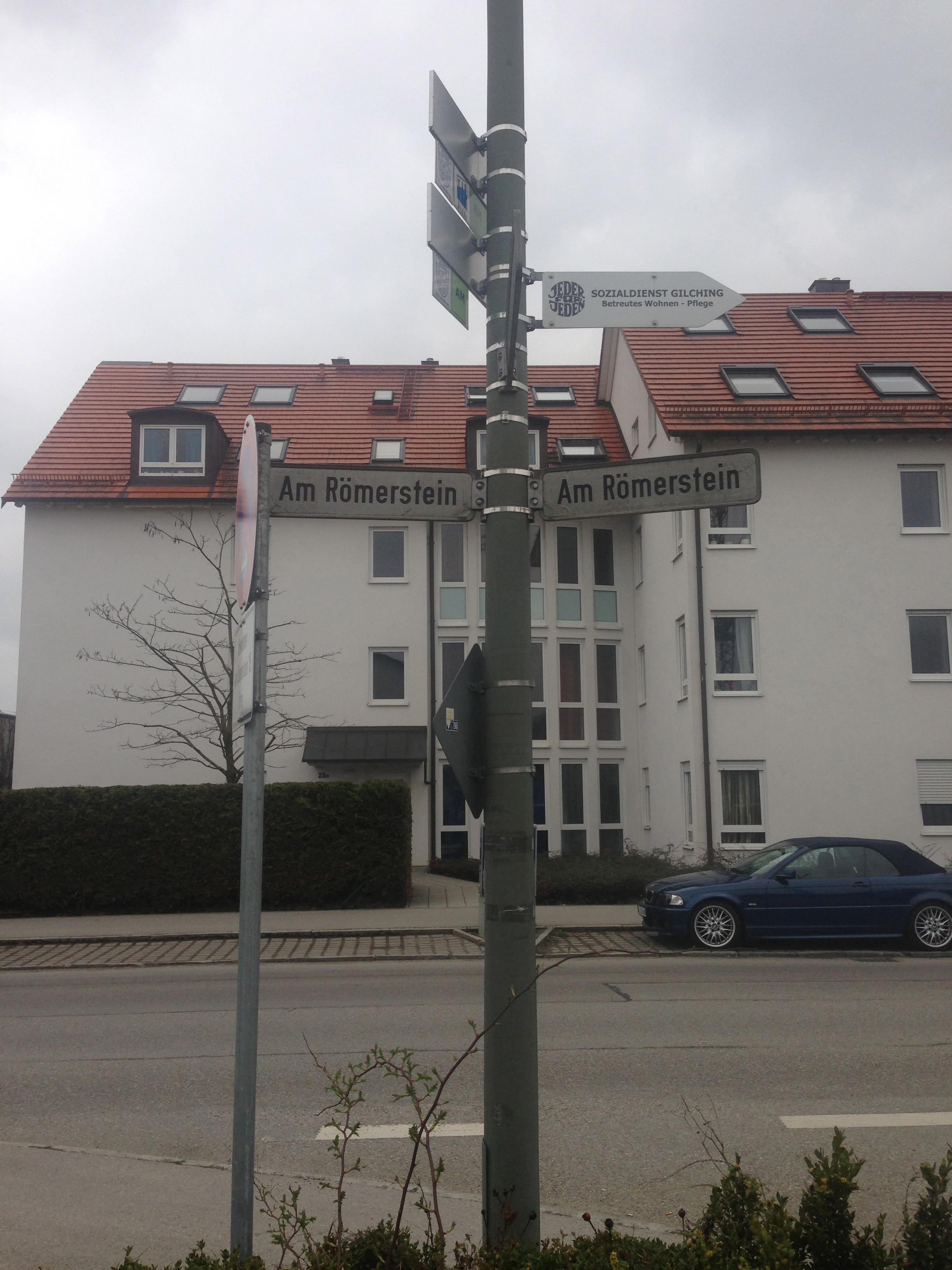
This post’s title is the translation of Am Römerstein, a street in the Bavarian town of Gilching. It’s a road the Beau takes regularly for business. The name always intrigued me — where is, or was, this Roman stone, anyway?

Gilching

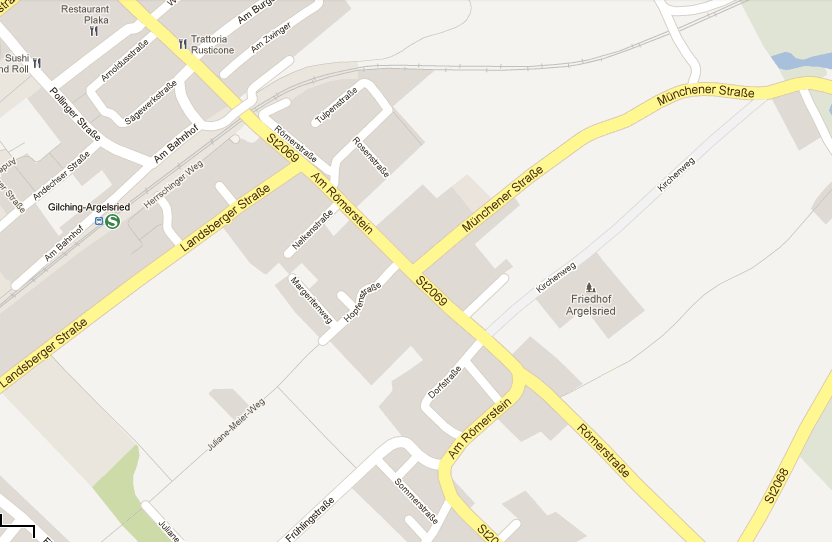
A look at a map of Gilching shows that Am Römerstein intersects (and for a short stretch follows) the old Roman road Via Julia from Salzburg to Augsburg (through Gilching it is named, appropriately, Römerstrasse. Click on the link above to see a simple map of the entire road. Gilching is on the red line just above the area between those two lakes.) So the street got it’s name from being at or near a milestone on the Roman road. Salzburg, not yet the summer destination of the Euro-chic, was important for it’s salt mines, salt in earlier times being a very valuable commodity. (Worth another blog post at a later time. The names of many places in Germany and Austria come from their importance in the salt trade.) Augsburg was Augusta Vindelicorum, the capital city of Roman province Raetia and all the Roman roads in and around the Alps lead not to Rome, but to there.

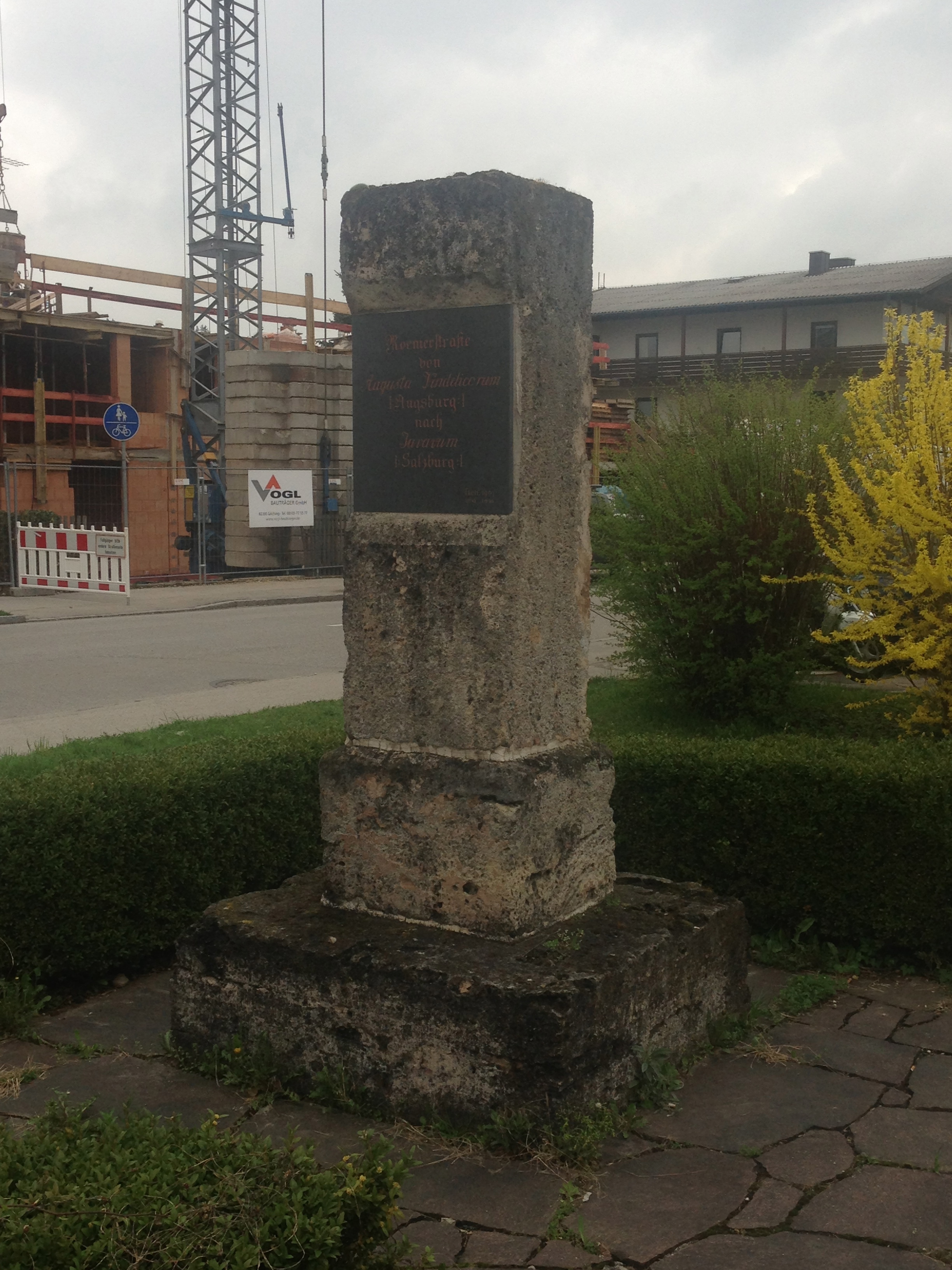
Back to my milestone. With the help of Zeitspringer (who blogs chiefly about archaeological outings in Bavaria and Baden-Württemberg, and who is a great source of information on the subject, his blog is well worth perusing if you read German), I learned that a stone erected in the 1860s and dedicated to the Roman Road is included in a list of monuments on Gilching, including it’s location. A trip over there brought us to Number 15 Am Römerstein, where we found this monument,

IMG_0491

Roman Road
from
Augusta Vindelicorum
(Augsburg)
to
Juvavum
(Salzburg)

This, by the way, is definitely not the same stone mentioned (and shown) in Gilching’s Wikipedia entry (g), a small tube-shaped stone with engraved Latin text, a copy made more recently than the monument at 15 Am Römerstein. So where is the milestone photographed and shown in the Wikipedia entry? Turns out, it’s just a bit further down the road (g), in the center of town.

I assume that the street Am Römerstein, therefor, is named after the 19th-century monument to the Roman road, and not for the site of the Roman milestone (although it’s also entirely possible that the former was erected on the actual site of the original, and the later copy was placed somewhere more convenient and available.) A sign erected near the copy stone gives a very interesting account of the original’s fate. Milestones have been hauled off and used as building stones since the Late Antiquity. This particular stone was taken to Hattenhofen (there are four communities in the area with that name, most likely they mean the one in Fürstenfeldbrück County) in the 16th century, and then used as a cornerstone in Günzlhofen Castle. After the castle fell to ruin it came it Munich, first in the Royal “Antiquarium” and later as part of the Bavarian national collection of prehistoric artifacts, and exhibited with it. Here is where it met it’s ultimate fate, on a date with an Allied bomb in 1944.

“Witch Burning”

My local newspaper reports (g) on an upcoming event called the Hexenverbrennung, or Witch Burning, an old traditional custom in the somewhat remote region of Tirol called Ausserfern. I translate directly from the article, somewhat loosely for comprehension:

On the first Sunday after Ash Wednesday, to cries of “Vivat hoch, die Hex hat Durst — sie will auch eine lange Wurst!” (“Hurrah, the Witch is thirsty, and she wants a long sausage!”*) the communities of Jungholz, Musau, Pinswang and Weißenbach bring back an old heathen custom, driving the winter away with bonfires and Witch Burning.
In earlier times, boys went on “rag Thursday” from house to house, collecting rags “for the Witch”. The Witch — an effigy of hay and straw — would be made, dressed in a gown created from the colorful rags, and hoisted up on a long pole over the pyre. The fire is lit at nightfall. The custom symbolizes the driving out of Winter and is in no way connected to the witch burnings of the Middle Ages.
This old custom from Celtic times has become a popular event with the both the local population and tourists. Above all the social part, the party which lasts late into the night.
The fire is made to drive the evil Winter spirits from the fields and epitomizes the people’s yearning for warmth.

I assumed that this custom must be an old pagan one (bonfire) with some Medieval, early Christian stuff that had attached itself to it over time (the witch), until I remembered the Wicker Man. Roman sources alledge that the Druids made burning human sacrifices to Taranis, the god of thunder. Taranis’ influence apparently covered Gaul, the British Isles, and the Rhineland and Danube regions.
One difference is that the Druids, it is written, burned men.

Supporting sources at Sagen.at (g).

*I’m sorry, but does this sound like gang rape to you?

Weapons For The Gods

The Ferdinandeum (our provincial museum) is hosting an exhibit of early sacrificial offerings found in and around the Alps for military purposes (g*).

This is evidently something that people did over millennia — gave up offerings of weaponry and other war accessories for battles won, enemies routed or eliminated. The museum stresses that one not only can learn about the conquerors but also about the conquered by the qualities of their weapons.
The exhibit includes many artifacts recovered from Fliess, depots of bronze helmets, shields, swords and daggers, stone axes, Roman figurines. There are also some items on loan from the National Museum of Slovenia, recovered by this man, whose mission in the last several years has been to save the Ljubljanica River’s tens of thousands of treasure from diving treasure hunters and rich collectors. Moreover, that sword in his hand (or one very much like it) might be in the exhibit.
The time frame spans from early pre-historic stone items through the Celtic ages and into the Roman occupation, as the Romans did this as well.

* If you click on this link and then download the pdf “Rahmenprogramm” at the bottom, there is some additional information available in English and Italian.

Archäologisches Museum Fliess

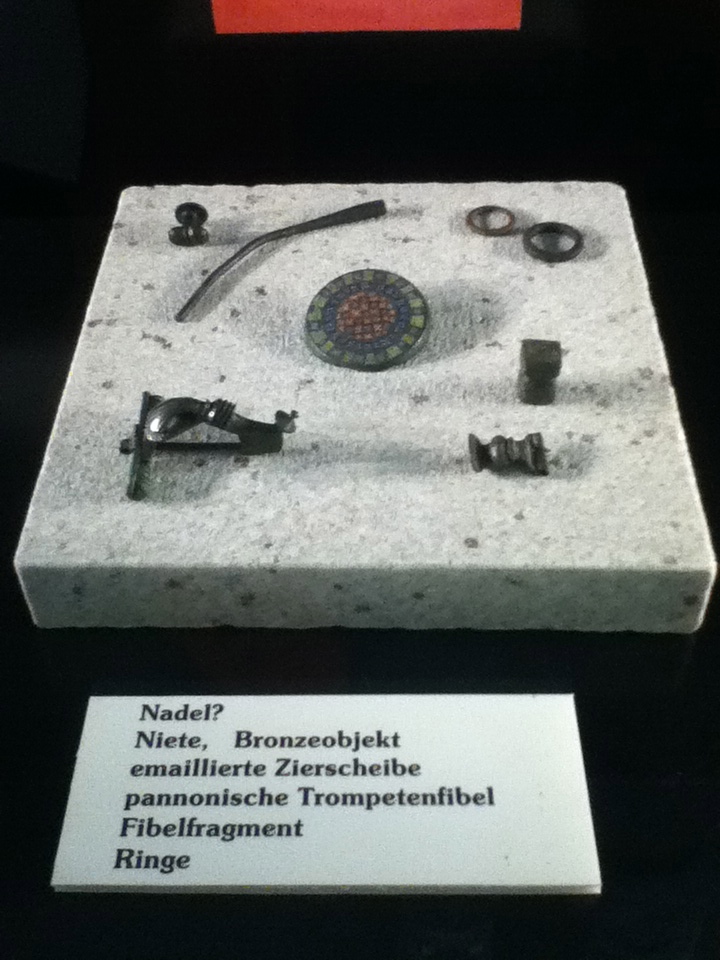
Impressions from a recent visit to the Archaeological Museum in Fliess. It is actually two museums: one part displays the archaeological finds associated with the pre-historical sacrificial burning sites (1500 BC – 200 AD) and treasure hoards found in the surrounding mountains, the other displays artifacts connected to the Roman Via Claudia Augusta which runs right through the area.

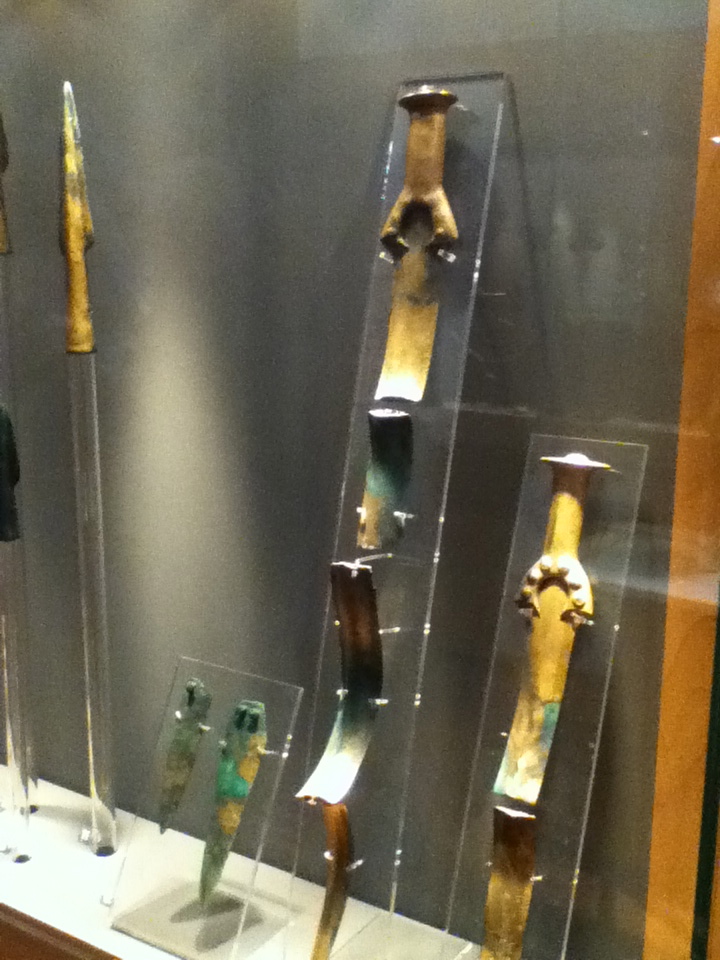
The finds at a Bronze-Age sacrificial altar site include many metal swords and tools, prepared for the spirit world by rendering them useless. Above, swords which had been chopped into segments in order for their “essence” to be sent up to whichever god they was meant for.

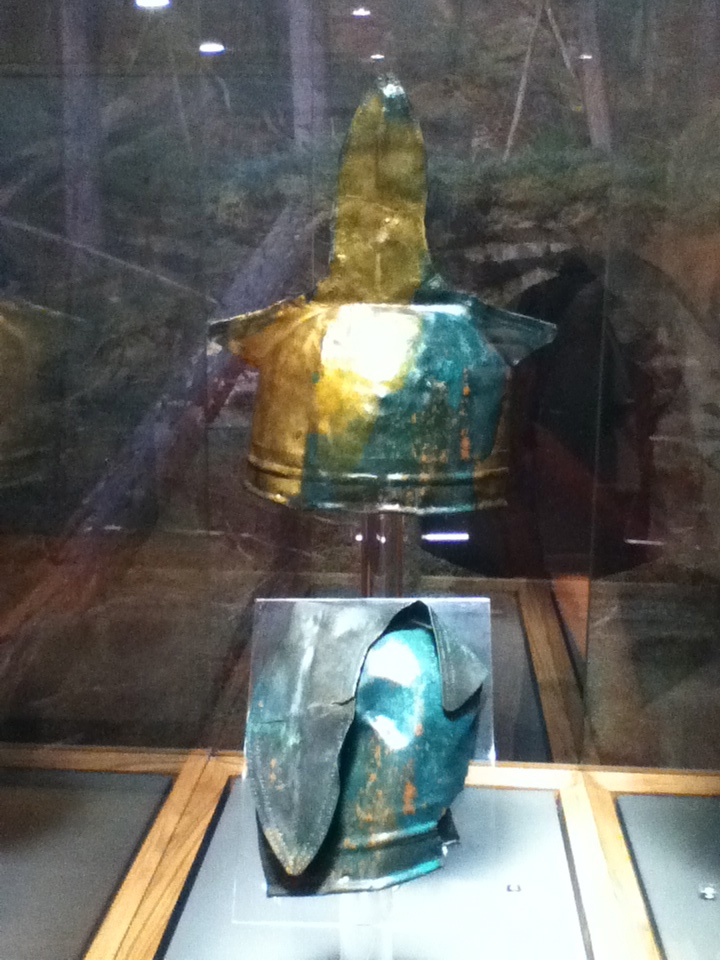
One of the oldest metal helmets ever found in Europe — it’s native, Hallstadt Culture, not Roman. It too had been cut apart and bent, one assumes in preparation for sacrifice. The three double blades on the top would have held horse hair a plume.

The level of detail and aesthetic beauty is impressive.

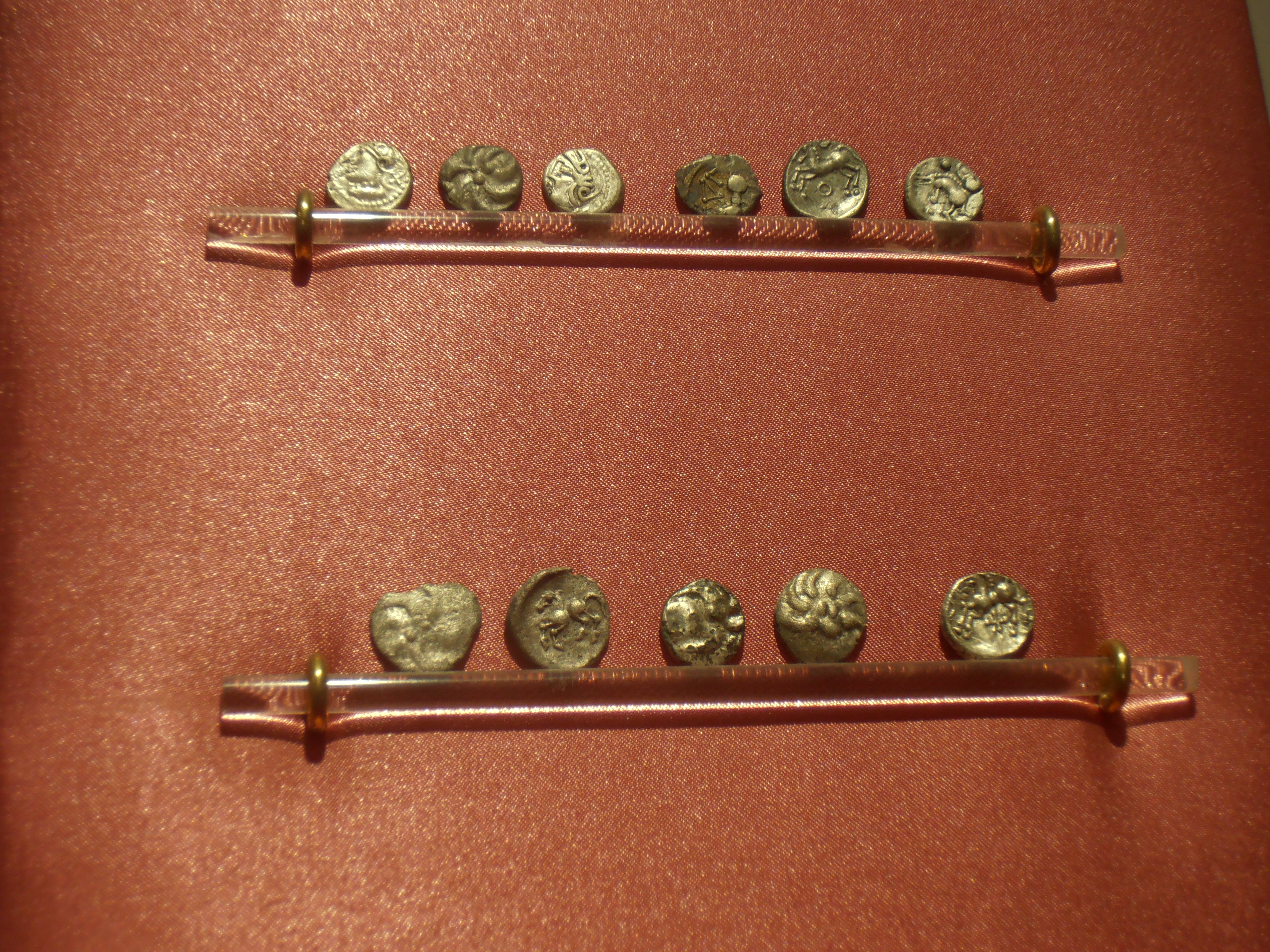
Celtic coins, minted sometime between 150 BC and 200 AD, and probably somewhere between southern Germany and Burgundy. At least two of them (top row, second from left and bottom row, second from right) are Büschel or “tuft” coins; instead of an entire head in profile which is found on many Roman, Greek and Gallic coins, these seem to zoom in on a few locks of hair. The discovery of a cache of old coins can bring one’s thoughts right into the time when they were hidden. Unlike a collection of offerings which may have grown over time, they were probably buried all at once, possibly in a dangerous time and certainly with the hope of retrieval. Something went wrong, and they were forgotten, until found thousands of years later.

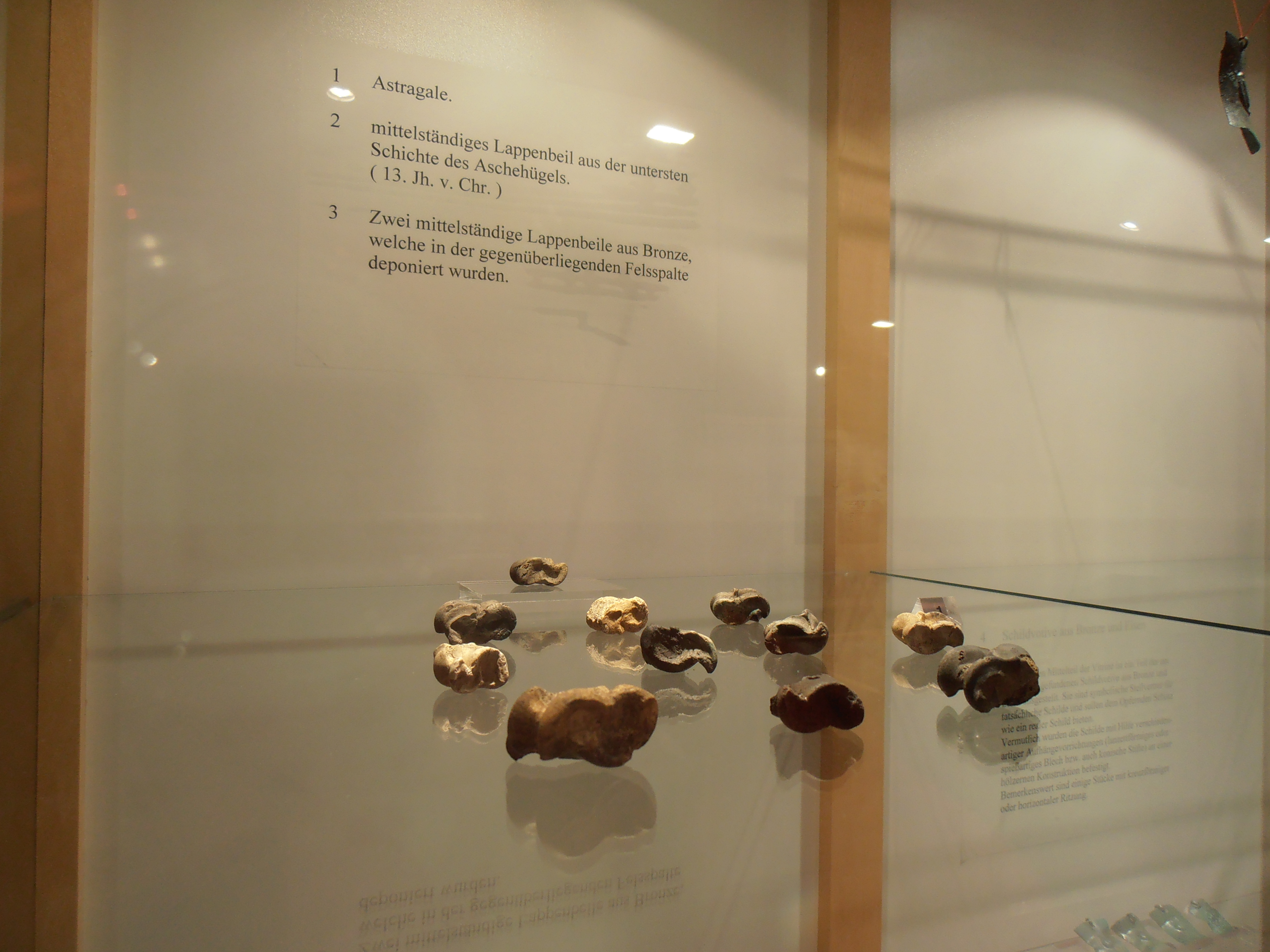
The game we call “jacks” is also known as “knucklebones”, and is a very old game indeed. The ancient Greeks played it, and it had certainly been around for a long time already by then. The bones used as game pieces are actually astragalus or talus bones from the ankle.

The Archaeological Museum in Fliess is open from May through October. We were fortunate to have an informed and helpful guide who stayed past closing time in order to give us enough time to see everything and to answer our questions. The museum also runs a small press for the publication of literature on the archaeological finds from the area.

Fliess!

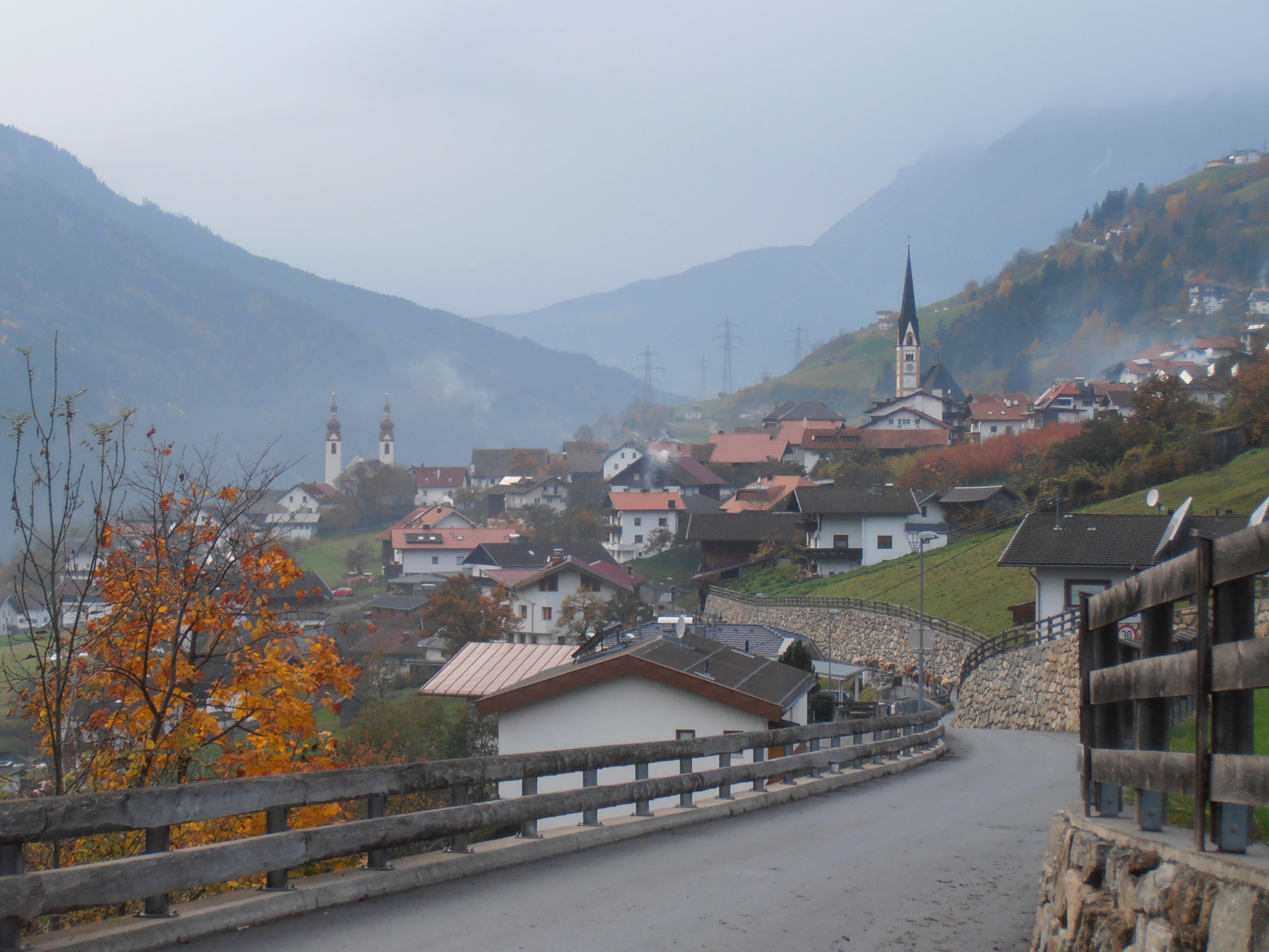
I dragged a (quite willing) friend along with me on a day excursion to Fliess (around here written Fließ), a village up on a mountainside overlooking the Upper Inn Valley. The main reason was to visit the Archaeological Museum, home of an impressive number of Roman and pre-Roman objects found in the area. While we enjoyed the Museum immensely, the journey there offered a surprising number of delights.

We had planned to take a Postbus from Landeck, but were given some misleading information (we had not realized that we were to take the bus that passes in the valley below, and walk up from there) and so we decided to walk rather than wait, and to take the trail over Landeck Castle. Without planning to, we found ourselves on the old road bed of the Via Claudia Augusta, the Roman road which ran along a portion of the Inn River on its way to Augsburg. The “Claudia” part is for Emperor Claudius, who had it built. His father Drusus, adopted son of Caesar Augustus, was responsible for the Roman march over the Alps and into northern lands.

Heumanderl, or hay racks, in a field. My friend told me a legend about our local hero Andreas Hofer using these “hay men” to make Napoleon’s troops think he had a larger army than he had.

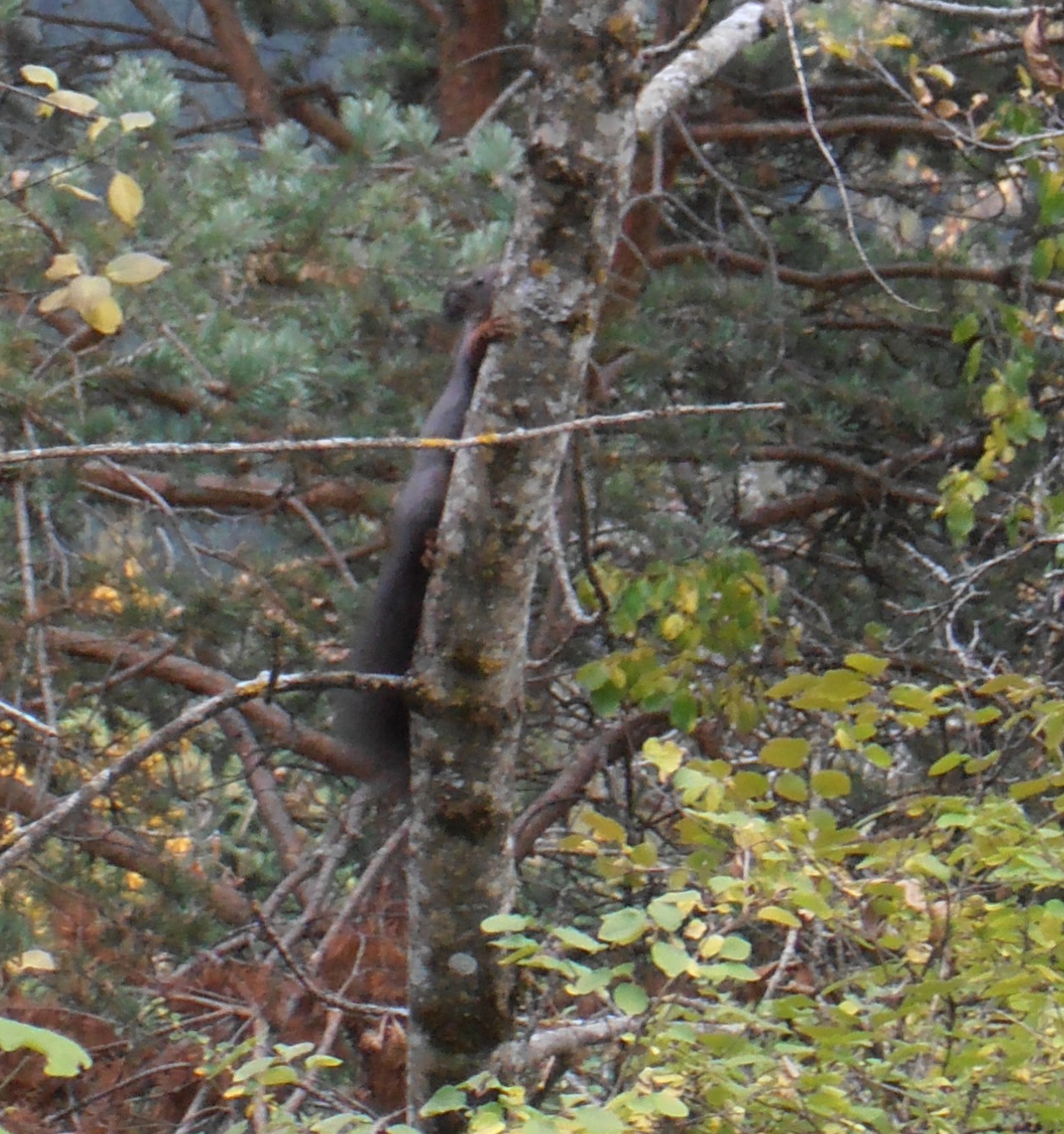
Dramatic Squirrel has an Alpine cousin — and he’s black.

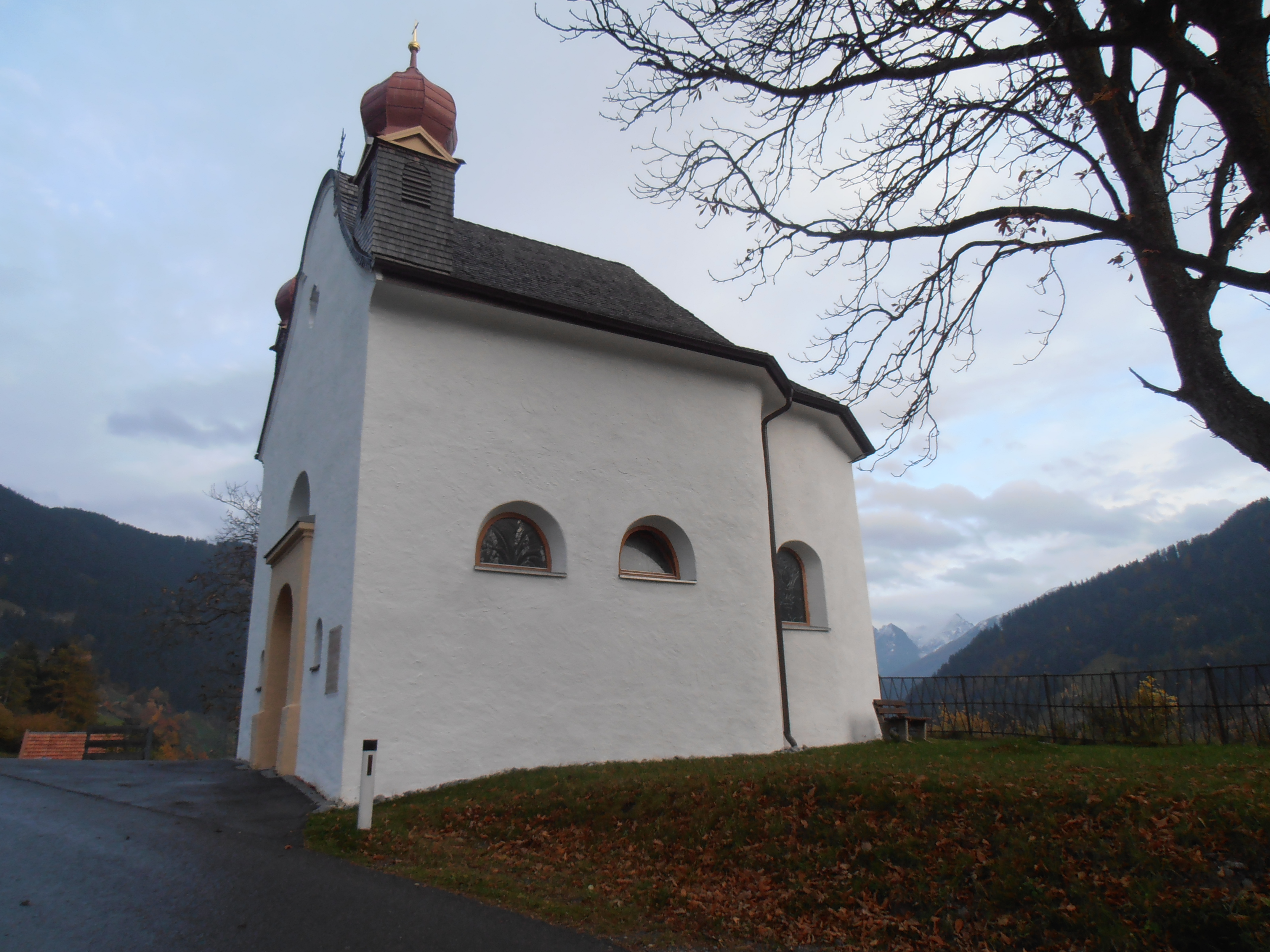
Another reason to come to Fliess was to see the Schalenstein at the Philomena Chapel, just outside the village.

The chapel was built in or around 1749. Inside, directly behind the altar hangs a painting (with reliquary) of the virgin martyr Philomena, “lying in her grave in the catacomb”, according to the information plaque on site, although she appears to be quite comfortably settled in a chaise longue. Philomena is one of those quasi-saints who were not only never canonized, but who was purged from the liturgical calendars in 1961. Her golden pendant is a reliquary for something so tiny that we could not make out what it was — possibly a bone sliver?

Ah, and here, finally, behind the church, the Neolithic Schalenstein with 70-90 markings, one of the most prominent of its kind.

A post on the Archaeological Museum to follow shortly.

Defixiones

The things that draw me to archaeology are not the battles nor the Roman legions, nor any of the political aspects, although of course they are all important to understanding the events of the times. What interests me are the little, daily things. How did people live? Why did they live here and not down there? How did the wave of that new cutting-edge thing called “farming” reach them, and what did they do about it?

So, while the arrowheads and swords and grave artifacts in our local museum are interesting in their own way, there are other things I find fascinating — like the tiny little curse tablet found at the excavations of Veldidena (Wilten, an Innsbruck neighborhood and a former Roman settlement).

These are little messages to the Gods about some personal matter. Before the internet, before I Love You I Hate You, before sticking notes in the wailing wall, there were curse tablets. These were popular enough to have been manufactured in advance in some cases, just fill in the details as needed.

The text scratched onto the metal reads, in translation (mine, from the German translation displayed in the Museum):

Secundina curses the unknown thief and consigns his persecution to the Gods Mercury and Moltinus.

The mention of this tablet in the book “Curse Tablets and Binding Spells from the Ancient World” (John G. Gager, Oxford University Press) offers up a longer text version, with some discussion about earlier translations — such as the word draucus which could be connected with the Greek word for necklace; another argument suggests it is an old Celtic “loanword” for cow. That Moltinus is the name of a Celtic God might lend authority to that idea.

Secundina! Number-two daughter, pissed off at the theft of a piece of jewelry, or devastated by the theft of her livelihood? In any event, in her demand for retribution she invokes both a Roman and a Celtic God, just to be on the safe side (maybe Moltinus has more power up here in his home turf than Mercury, far away from Rome). What was life like for a Roman woman in such a place as this? Did she hate the Föhn? Were the natives threatening? Had the early Christians arrived? (Probably not yet.) The God Moltinus (or Moldinus) is known by only one other inscription, and that is from Gaul. Did she have a Raetian or Gallic heritage? There’s probably a novel waiting to be written just about this one woman, and all because she got ripped off one day, and did what people did when that happened.