>Beer You Won’t See Stateside

>The Beer That Dare Not Speak Its Name — at least, if it ever gets imported to the US.

This news is from a month ago, but I’d missed it. A couple of German marketing executives have won the right to use the name “Fucking Hell” for a not-yet-existent beer — referring to the Austrian town of Fucking (yes, there is one) and to the German word for light ale, “Hell”. (Hell is an adjective meaning light or bright. The German word for Hell, the place, is Die Hölle.)
There are some issues — there is no brewery in the town of Fucking, and the mayor is not altogether pleased (people keep stealing his town’s signs for souvenirs.) A complaint was filed that the phrase is “upsetting, accusatory and derogatory”, but the EU Trademark office rejected the complaint, saying that

Fucking Hell” was an “an interjection used to express a deprecation, but it does not indicate against whom the deprecation is directed,” the Office added. “Nor can it be considered as reprehensible to use existing place names in a targeted manner (as a reference to the place), merely because this may have an ambiguous meaning in other languages.

According to the article in Der Spiegel, the brand should be on the shelves by the end of the summer. I’ll keep my eyes open for it.

>Up In The Border Guard Tower

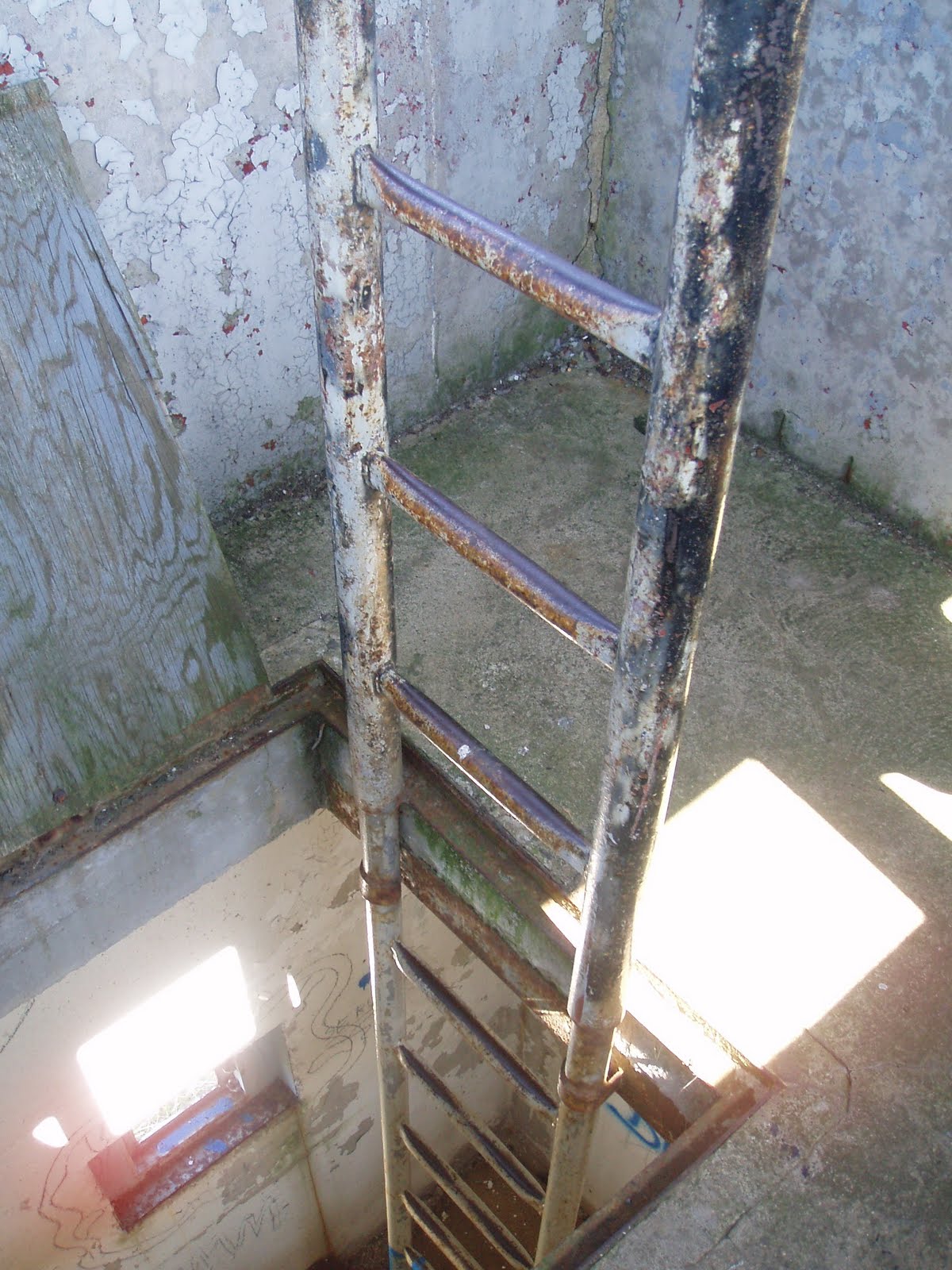
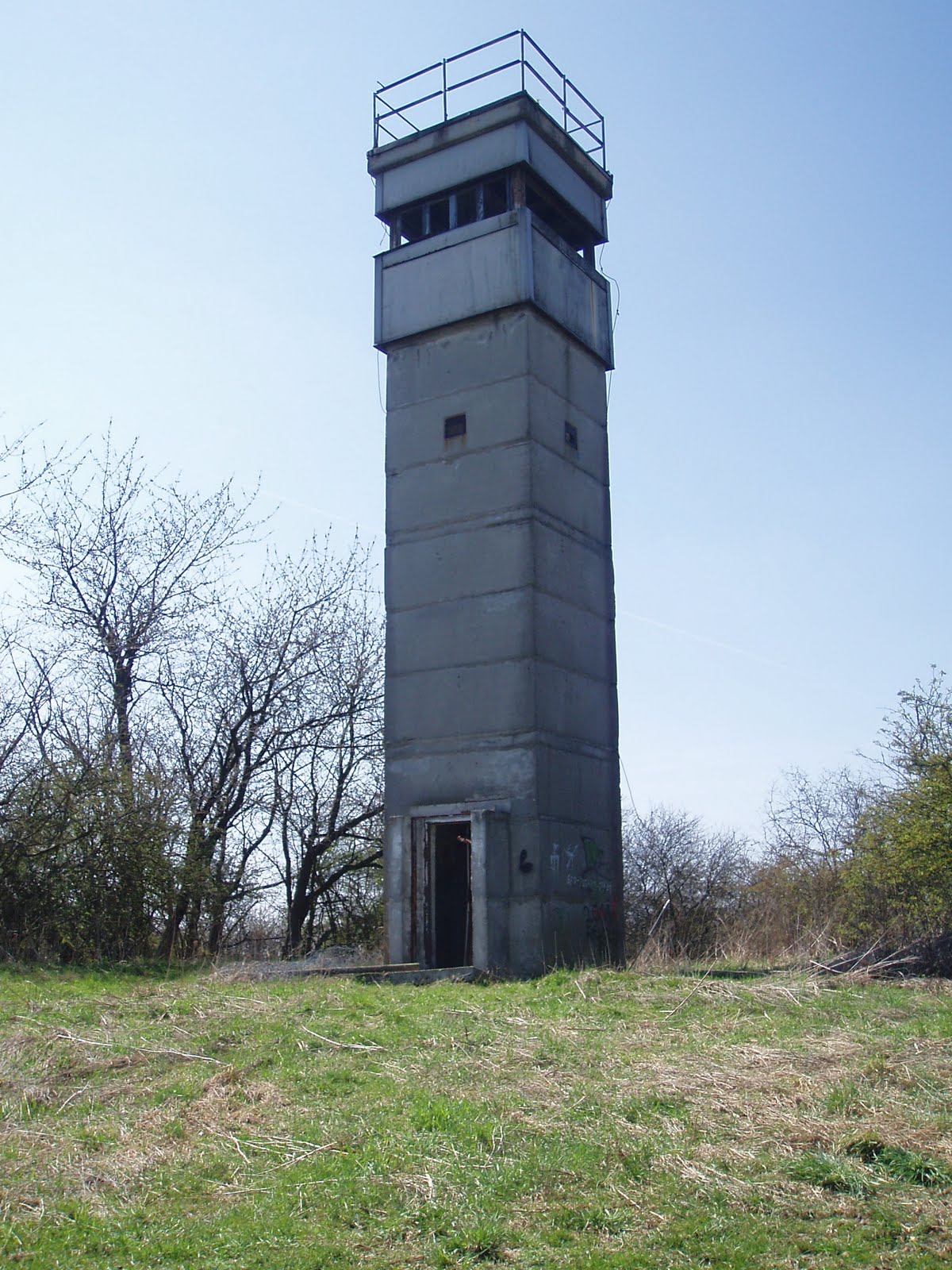
>On the way back from Freiberg, we took a detour off the Autobahn and went hunting for the old East-West border, which is now just a state line again. We knew there were still guard towers standing, we could see them in the distance from the highway. After a few miles of country roads and a a farm path or two, we found them.
Twenty one years of neglect had taken its toll on the towers, but it was clear that we weren’t the only ones to have come up here. Probably the local kids use it as a secret hangout. We were delighted to find them open and climbed up to the top floor.
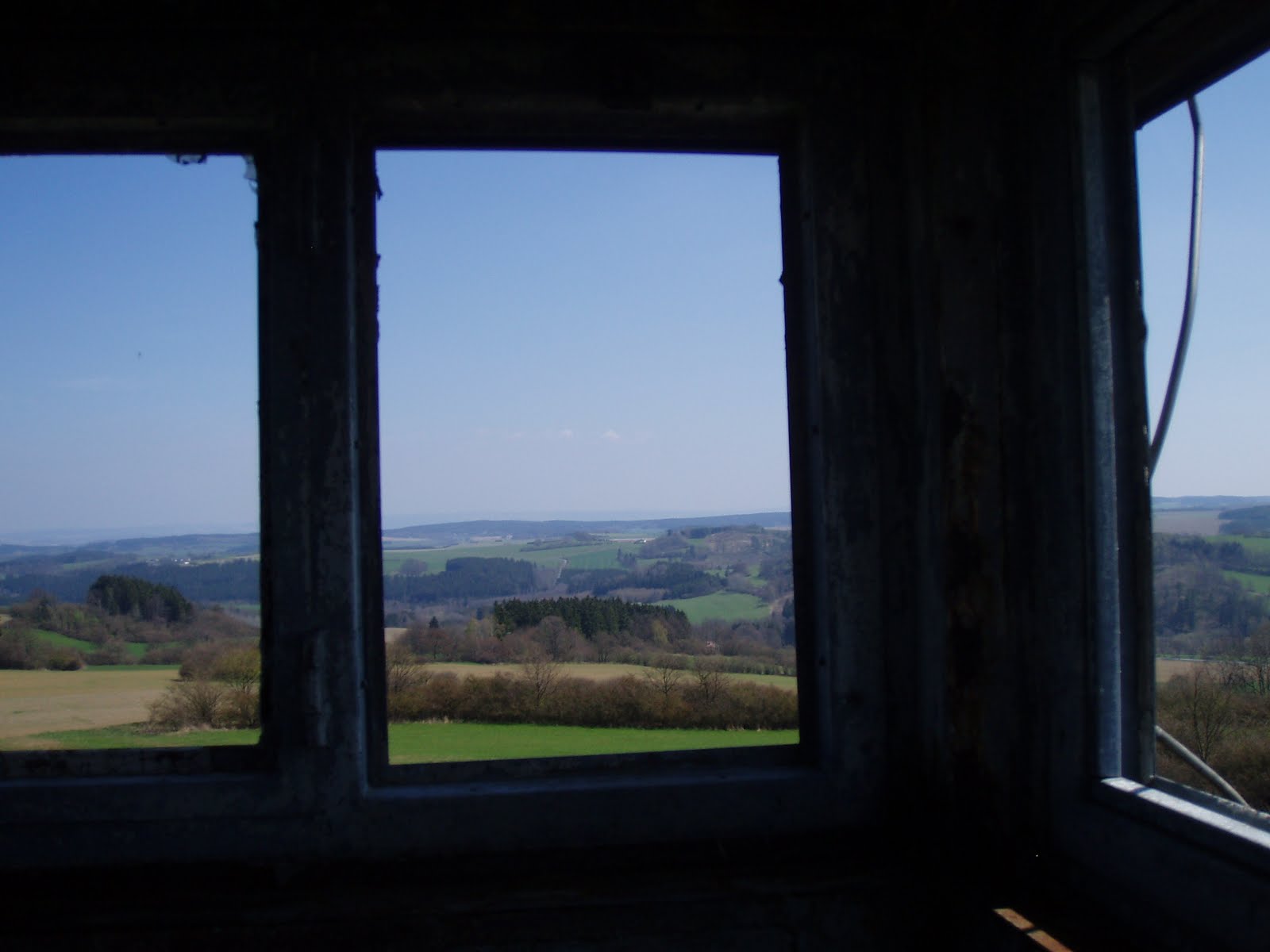
Nice view up here. I keep telling the beau that this area reminds me of Pennsylvania.
In the photo above, you can see the next tower, center right on the horizon. (It has a satellite dish erected on the roof.) So the space between this tower and that one would have been part of the border, complete with barbed wire and death strip. Not a trace of it is left except for the towers, which are probably too much trouble to dismantle.

>”A Massacre… Would Have Been More Humane”

>ARD, Germany’s “first” national television station, aired an extraordinary documentary last night about the Armenian Genocide. It mixed rare photos and film footage with “clips” of “interviews” — using well-known German actors portraying contemporary witnesses, their lines from those witnesses’ actual reports. The figures included American diplomats and journalists abroad as well as Germans, Swiss, and other Europeans working in Turkey at the time. The actors, all delivering respectfully understated performances, give you the impression that you’re watching actually memories coming to the fore.
The details of the atrocities, culled from collections of reports in the German Archives, are overwhelming in their multitude. The western foreign representatives don’t come off very well either, the implication being that looking away in disapproval was no less than complicity (which is an old story, and probably a very human one, as these things — the crimes and the looking on — are still going on today, aren’t they?)
The documentary makes clear that the Nazis picked up a few things about extermination from the Turk’s actions, like putting deportees into cattle cars (and making them pay for their fares), inventing conspiracy plots in order to brand an entire people “traitors”, executing their own soldiers who did not show enough “mercilessness”, and sending their victims off to some unknown fate with vague words of “resettlement” (death marches into the Syrian steppes), making government seizure of “abandoned property” legal. Hitler’s own word’s, “Who speaks today of the Armenian extermination?”, makes it clear how easy they thought they’d have it, treating their own “undesirables” in the same way (and, later, much worse, when they realized that they could.)
The documentary also discusses how the German government assisted in the flight of the leaders responsible for the genocide, with Grand Vizier Mehmed Talat (Talat Pasha) ending up living comfortably in Berlin until his assassination in 1921. Buried in Berlin, his body was exhumed in 1943 and transferred, with full pomp and ceremony, to Istanbul.
Interestingly, the Turkish courts-martial of 1919-1920 brought death sentences (in absentia) for those responsible, specifically mentioning the Armenian deportations. The new question is why, today, so many Turks experience rage and indignation at the mere mention of the word “genocide”. It’s not universal, of course. After the murder of Turkish-Armenian journalist Hrant Dink by a Turkish nationalist, over a hundred thousand people marched on Istanbul, carrying signs that read “We Are All Armenian”. Dink’s murderer was following the nationalist line, that even speaking of what happened then is an insult to Turkishness. It would be interesting to know how they got that far away from being able to look at things objectively.

>Filmschau: About Gretel Bergmann and Dora Ratjen

>I just saw a new German film the other day, “Berlin 36”. While the film itself was only so-so as far as how it was made (although acted and shot very well), the true story on which it’s based is actually more interesting that the cinematic version.
Gretel Bergmann was a young promising German track and field athlete when the Nazis came to power. Being Jewish, she was expelled from her athletic club in 1933, but was able to move to the UK and participate in the British Championships, winning in the high jump.
As the 1936 Berlin Summer Olympics approached, Germany made some attempts at making themselves appear tolerant, and one such attempt was to blackmail Gretel (with threats made to the family) into coming back to join the German team as their Token Jew. She returned and trained, and even tied the German record at a regional meet right before the games. However, her score was deleted from the books and she failed to qualify for the Olympic team due to “underperformance”.
Now, this is where the story gets (even more) interesting: her replacement on the team, a young woman with whom she’d trained, was Dora Ratjen, who was actually male. Although the story is often portrayed as a Nazi scheme of putting a guy in a dress and sending him out to beat Gretel, the truth is more complicated and, as always, more tragic. Ratjen had been raised a girl but apparently was intersex of some form or another*, and her male characteristics began to show in puberty. She placed fourth at the Berlin Olympics and won the 1938 European Championships. However, in 1938 she was riding in a train when someone reported having seen a man in a dress to the police.
Ratjen came through the ordeal in the clear, but she gave up her athletic career and in 1939 was able to get reclassified as a male, and changed his name to Heinrich. (I cannot imagine this would have been easy to do in Nazi Germany, with their obsession with identity cards and all that. But he managed it.) He returned to Bremen, took over the family bar and never spoke to anyone ever again publicly about his past.
He died in 2008. Gretel Bergmann is 95 and living in New York.

* If you look up “intersexuality” on Wikipedia you can learn of the many different ways the human x and y chromosomes can get out of wack. It’s amazing that so many of us turn out normal.

>Death Of A Tormann

>Robert Enke, goalie for Hannover 96 and for the German national team, took his life Monday evening by throwing himself in front of a train. He was 32.

Enke, it was revealed, had suffered from depression for years. He had first sought help in 2003, then in 2006 his 2-year-old daughter Lara died from a heart condition. Those who knew him well thought that he was doing OK. But as he sank further into despair and anxiety, he kept his suffering hidden, even from his wife.

Germany’s football players and fans are in shock, and grieving. The national team’s upcoming game with Chile has been cancelled, a memorial gathering in Hannover drew 35,000 fans.

Memorial services will be held in Hannover on Sunday, and in Jena, Enke’s hometown.

>Have You Heard Of Herta Müller?

>Neither had I. She has been awarded the 2009 Nobel Prize for Literature.
More significantly, neither had the beau, who is knows a lot about European literature. Wikipedia, in its entry on Müller, says that prior to the award, Müller was little-known outside Germany and even there was known only among a minority of intellectuals and literary critics.
Her writings look like they would fit right in with the other books on my shelves, many of which deal with people trying to remain alive and human under communism, nazism, or any other repressive regime. I plan to pick up a copy of Atemschaukel (the English title, when it comes out, will be Everything I Possess I Carry With Me) pretty soon.
It’s also a welcome story within a larger topic which gets a lot of criticism just for being a topic — the post-war deportation of ethnic Germans from eastern European lands, force-marched either westward into Germany (those that made it alive were the lucky ones) or to Soviet gulags, as was the case with Müller’s own mother.
I am reminded of Gregor Himmelfarb, whose book about his post-war experiences shares similarities with Müller’s latest protagonist, Leo Auberg. Himmelfarb was born in the state of Mecklenburg, Germany, and grew up in the ethnic-German region Siebenbürgen, in Romania. When Germans in Romania were required to obtain Aryan identity cards, Himmelfarb learned for the first time that his Russian father was Jewish. Managing to survive the war, he then faced new difficulties for being the son of a factory-owning “exploitative capitalist”, and above all for being “German”. The Israeli immigration services weren’t much help, as they considered him “not Jewish” (he was finally able to emigrate in 1952.)
Every group of people is made up of individuals, all with their own stories. And, as Herta Müller shows, there are so many unheard stories out there worth learning.

>The Swan King’s Watery Monument

>“Alas, he is so handsome and wise, soulful and lovely, that I fear that his life must melt away in this vulgar world like a fleeting dream of the gods.”

“The King was not mad; he was just an eccentric living in a world of dreams. They might have treated him more gently, and thus perhaps spared him so terrible an end.”

Michael Jackson? No, King Ludwig II of Bavaria, from composer Richard Wagner and Empress Elisabeth (Sissi) of Austria, both close friends of his. But perhaps MJ was actually the King Ludwig of his day, pathologically shy, eccentric and flamboyant. Although the official line is that he took his own life (at age 40) in the waters of Lake Starnberg the day after he was deposed for being “mentally ill”, he was most likely murdered. He was also probably just gay, or so many think. A broken engagement to a perfectly good princess, among other things, seems to support that, but all evidence is of course circumstantial.
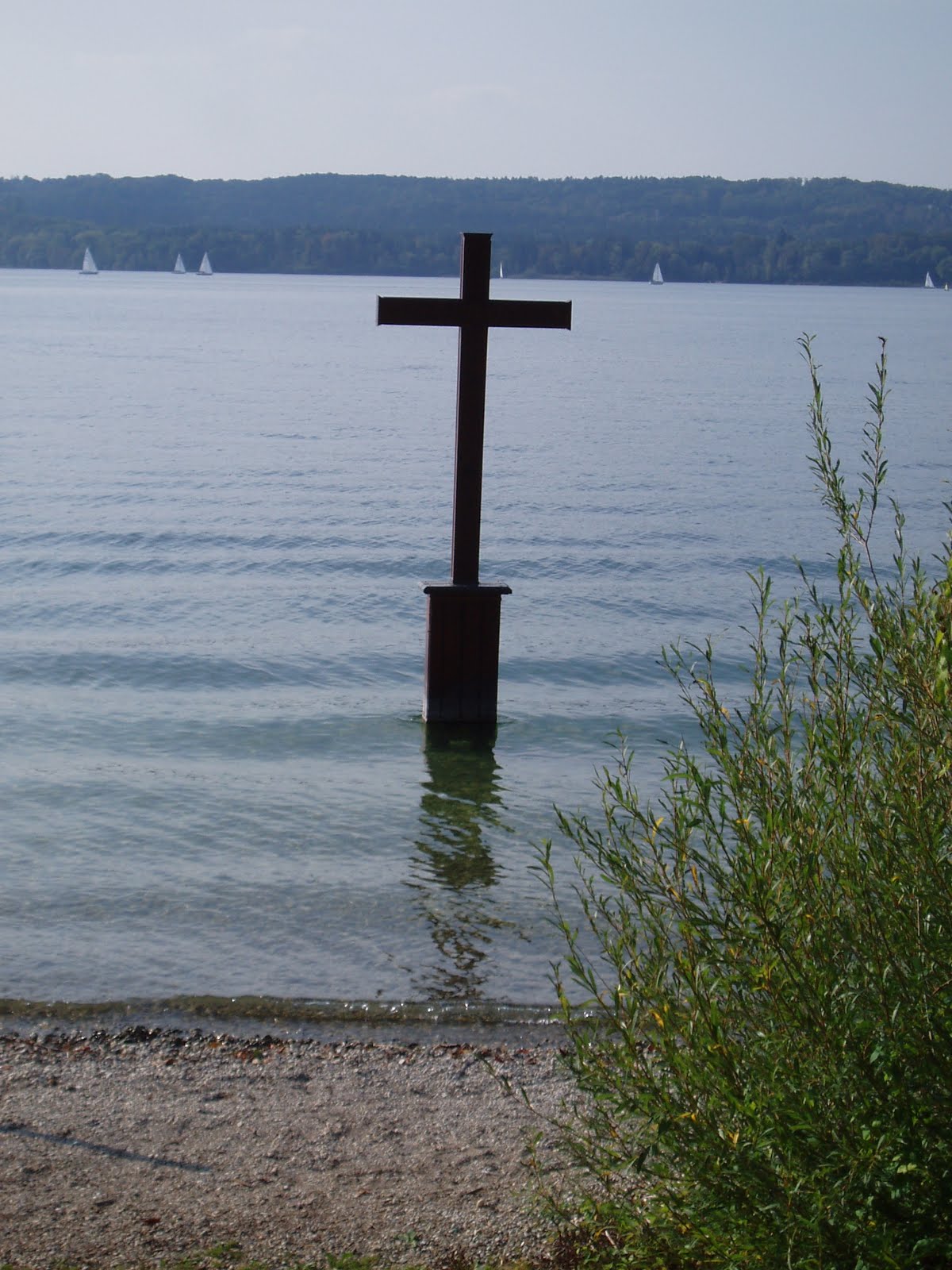
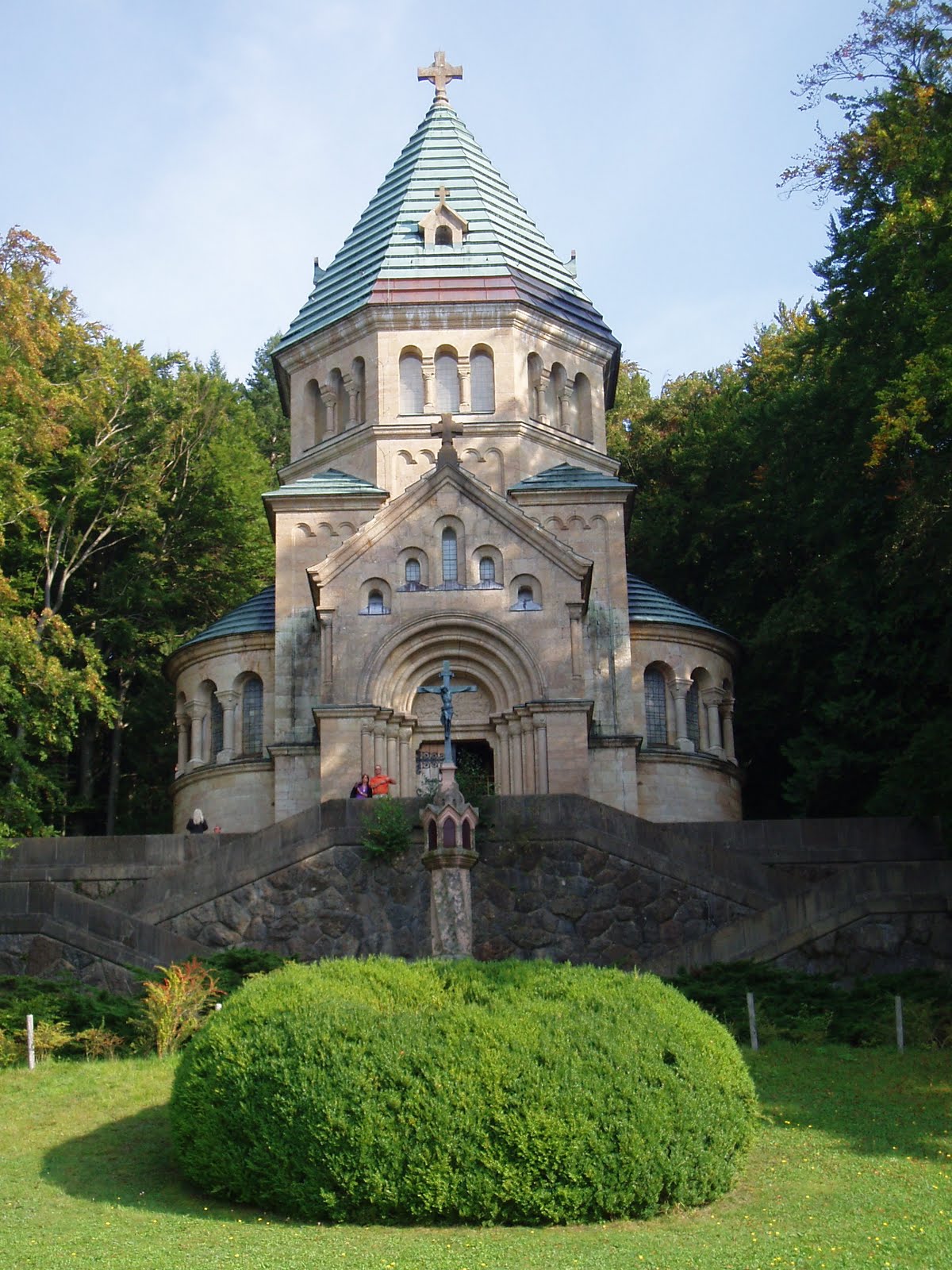
The cross marks the site where the King’s body was found, and the chapel is just up the hill from there. The surrounding area is all woodland, with trails for mountain bikers and joggers. We had seen this chapel from the other side of the lake (5 kilometers away), but had mistaken it for the Bismarckturm (another pile of rocks in the area.) Tourists still come to read the plaque on the chapel wall and photograph the cross, nearly 125 years after Ludwig’s death. Many more tour his castles in the Bavarian Alps. Will people be listening to Michael Jackson recordings in 125 years’ time? I have no idea.

>A Visit To The Brandhorst Museum

>

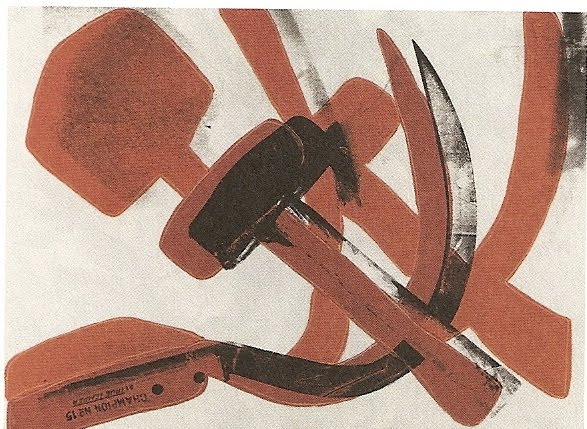
Andy Warhol, Hammer and Sickle

The newly-opened Brandhorst Museum, over in the Schwabing area of Munich, houses the collection of a pair of modern art lovers who must have had quite a bit of wall space for their stuff. There are Warhols, enormous rooms full of Cy Twombly paintings, and the works of about a dozen other well-known artists. The building itself is interesting to look at — like an industrial size, see-through box of crayons standing upright on the Türkenstrasse.

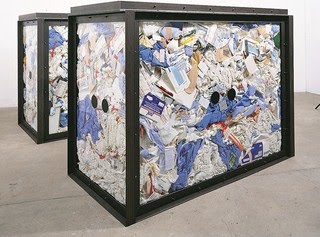
Damien Hurst, Waste (Twice)

The Hurst pieces are glass containers filled entirely with hospital trash — packaging, needles, hospital gowns, etc. Across the room, half a wall was covered with dark mirror glass, and ribbons of glass shelves with thousands of pills arranged on the them, in different sizes and colors. I cannot remember who’s work that was, however, nor its title.

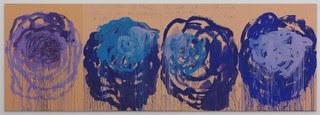
Cy Twombly, Untitled (Roses)

Now, I have to add here that Cy Twombly is not my favorite artist. Say what you will, I just don’t get him. He had stuff hanging in the Philadelphia Museum of Art and I didn’t get that stuff either. But somebody thinks he’s a master, so, hey, whatever. The paintings in the Brandhorst are, at least, not annoying. They are, typically, huge.

Christopher Wool, Kidnapped

Jannis Kounellis, Untitled (Rimbaud)

I give Kounellis credit for one thing: description of his work includes the contents as such: “Paint pot, painted parrot, brush, books”. Not “paper, aluminum, wood, feathers”. Straight and to the point, this, he says, consists of a paint can on books, with a brush in it and a bird on top.
Lest I come off sounding like a real philistine, I did enjoy the Warhols, the John Chamberlain metal sculptures and a very interesting video installation that dealt with the topic of immigration with images from Lampedusa — (dancers simulating) Africans drowning, families at the beach, boat junkyards, etc. — on five separate screens in one room. Lampedusa, if you don’t know, is a tiny island south of Sicily, and often the first stop for the stream of African refugees trying to get to mainland Europe. They or their boats are often not strong enough for the trip, and Italian fishermen have been warned not to help them. Many drown.

If you find yourself in Munich and want to go, be aware that on Sundays admission is only €1. Treat yourself to the unusual gelateria across the street. The Milch+Mint is out of this world.

>Geisterschiff

>

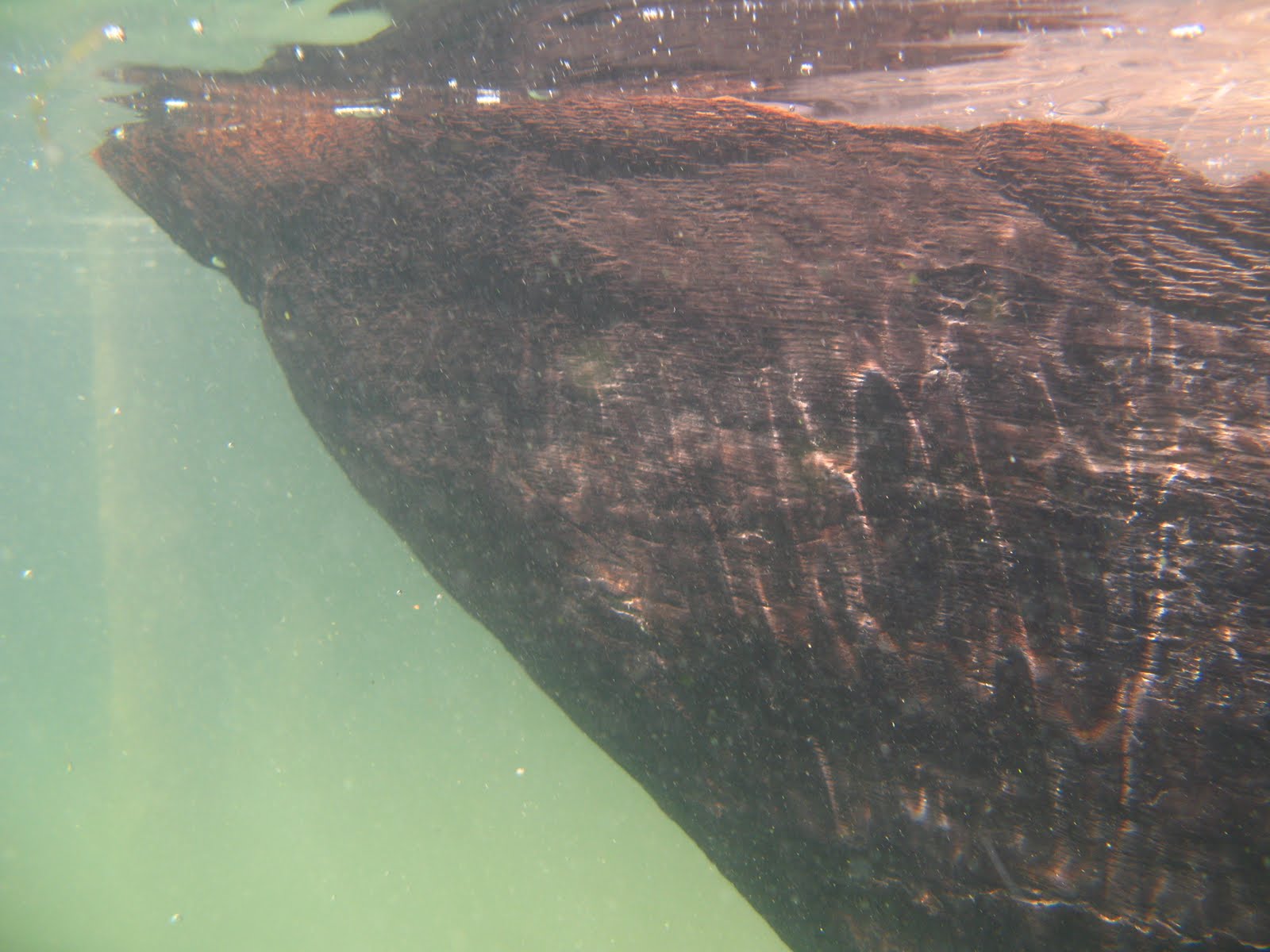
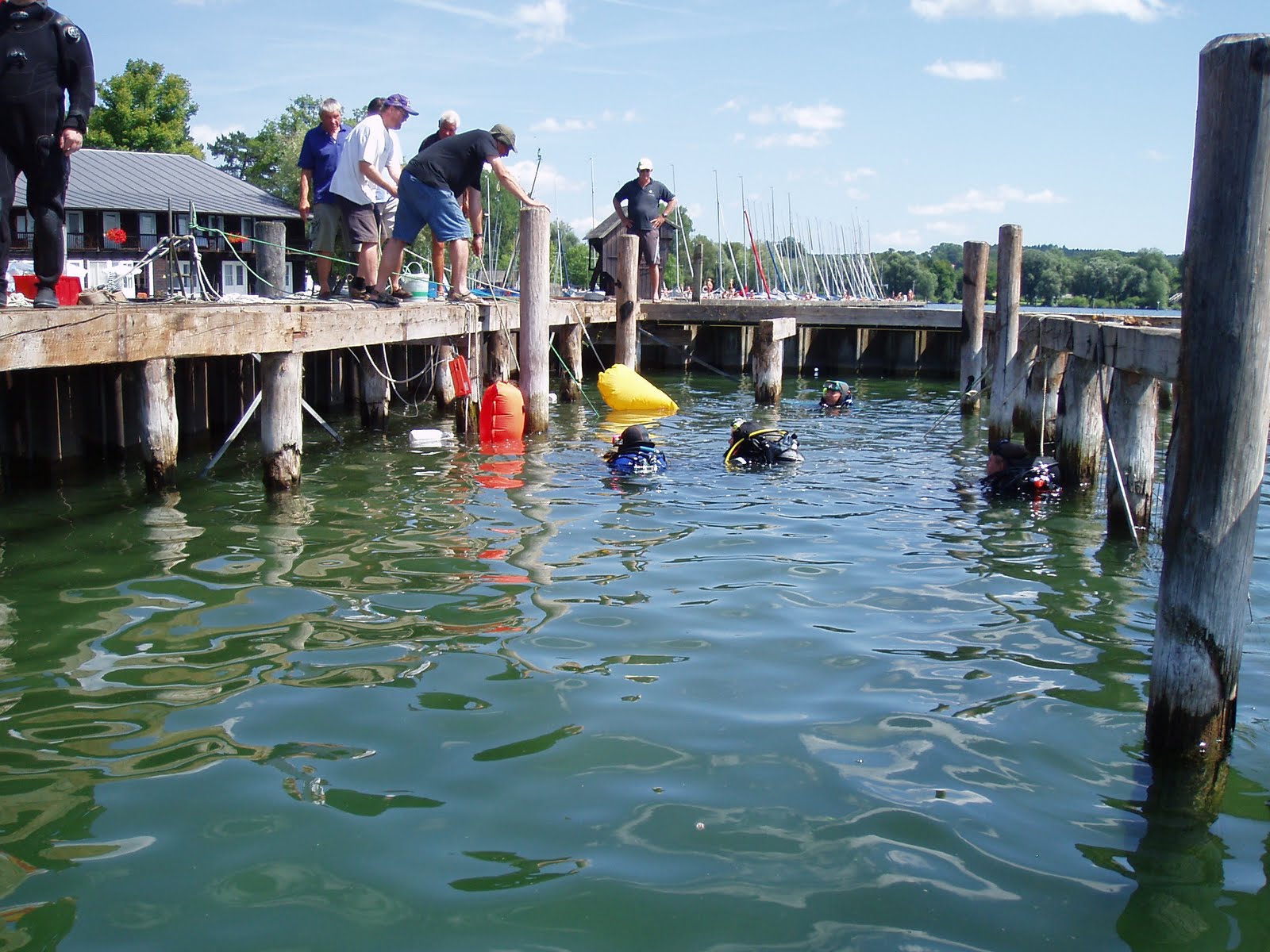
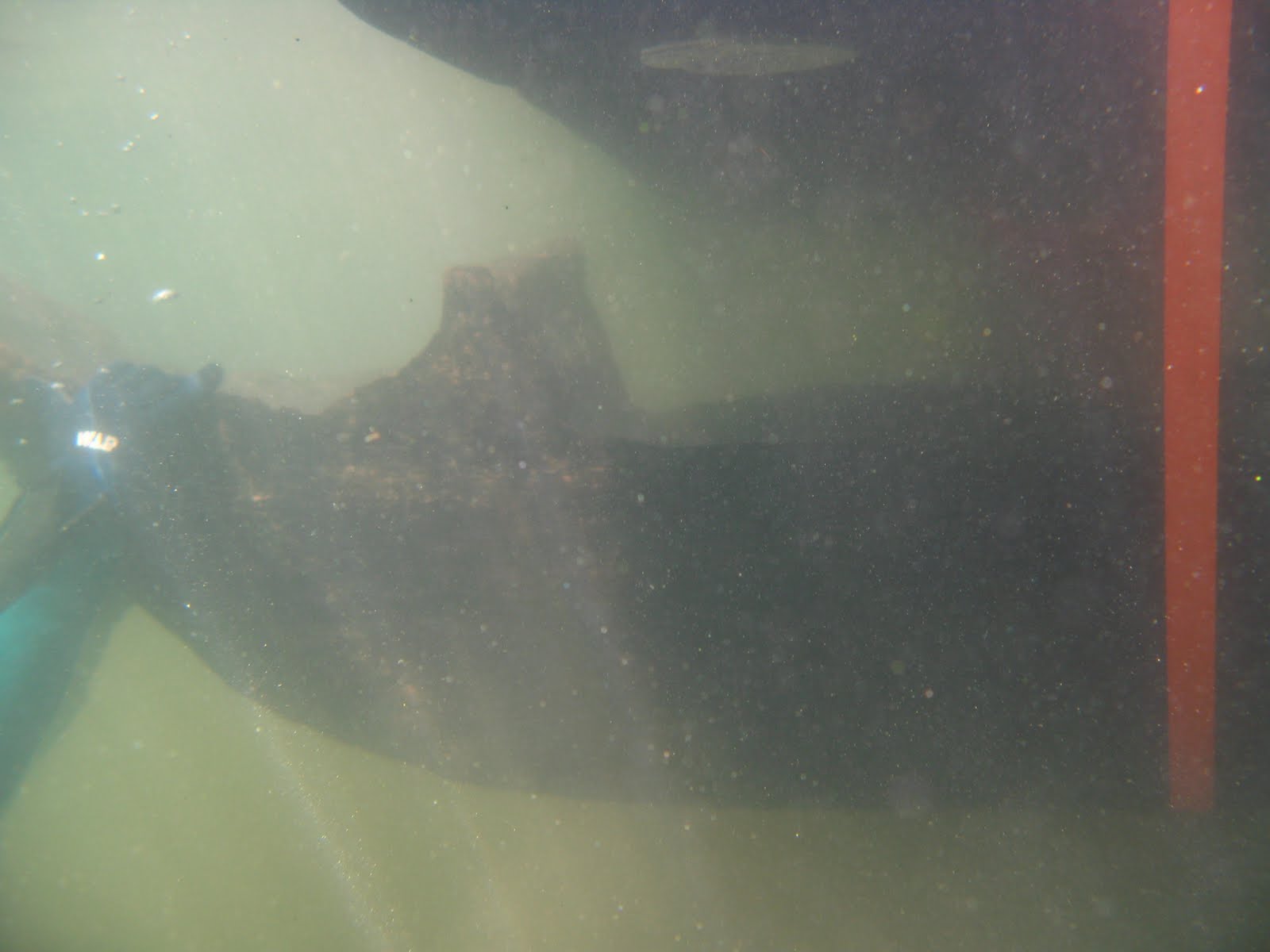
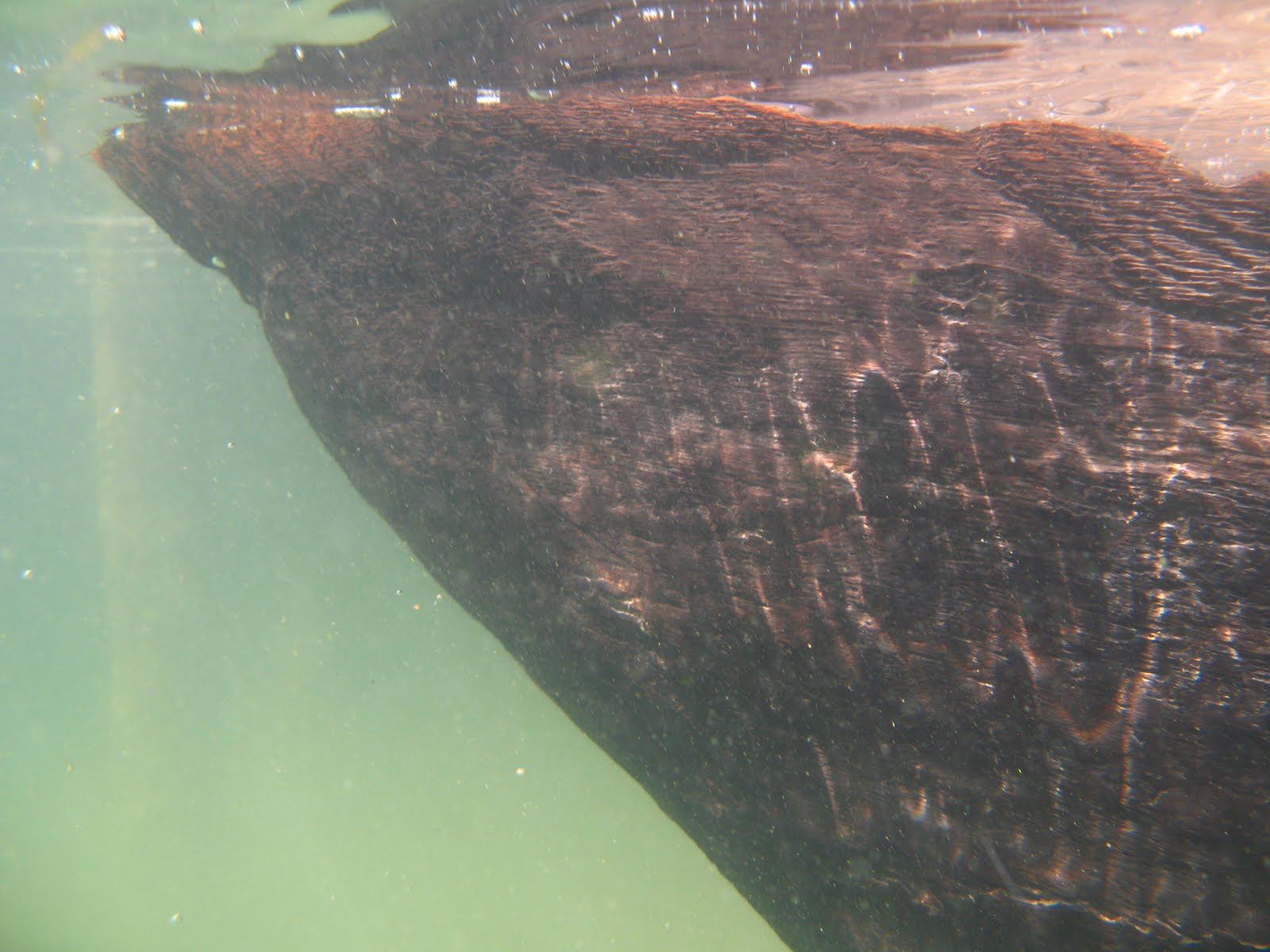
A few weekends ago I was given the opportunity to hang around a group of divers from the Bavarian Society for Underwater Archaeology as they “unearthed” an Iron Age logboat from the lake bed of Starnberger See. The boat had been discovered by divers a few years ago and had been transported over to a municipal boathouse, where it was left untouched until recent construction plans forced it to be taken elsewhere. Below is a photo of the boat as it was found this month, filled with sediment and trash brought in on the waves. Only the prow of the nine-foot-long logboat is visible.

The first thing the divers had to do was set up a gas-powered water pump, with which they spent hours (until dusk on Saturday) vacuuming out the sediment from inside and around the boat, so that it could be moved.
The next morning, more divers showed up, and the heavy lifting commenced (literally; the logboat, underwater for over a thousand years, weighed like a rock now.)

>Geisterschiff Pt.2

>The divers were pretty laid back about my presence there, and didn’t even mind when I donned snorkel gear and went into the water to get some better pictures (one of them even asked that I take some more!) I was careful to stay out of their way as they were working.

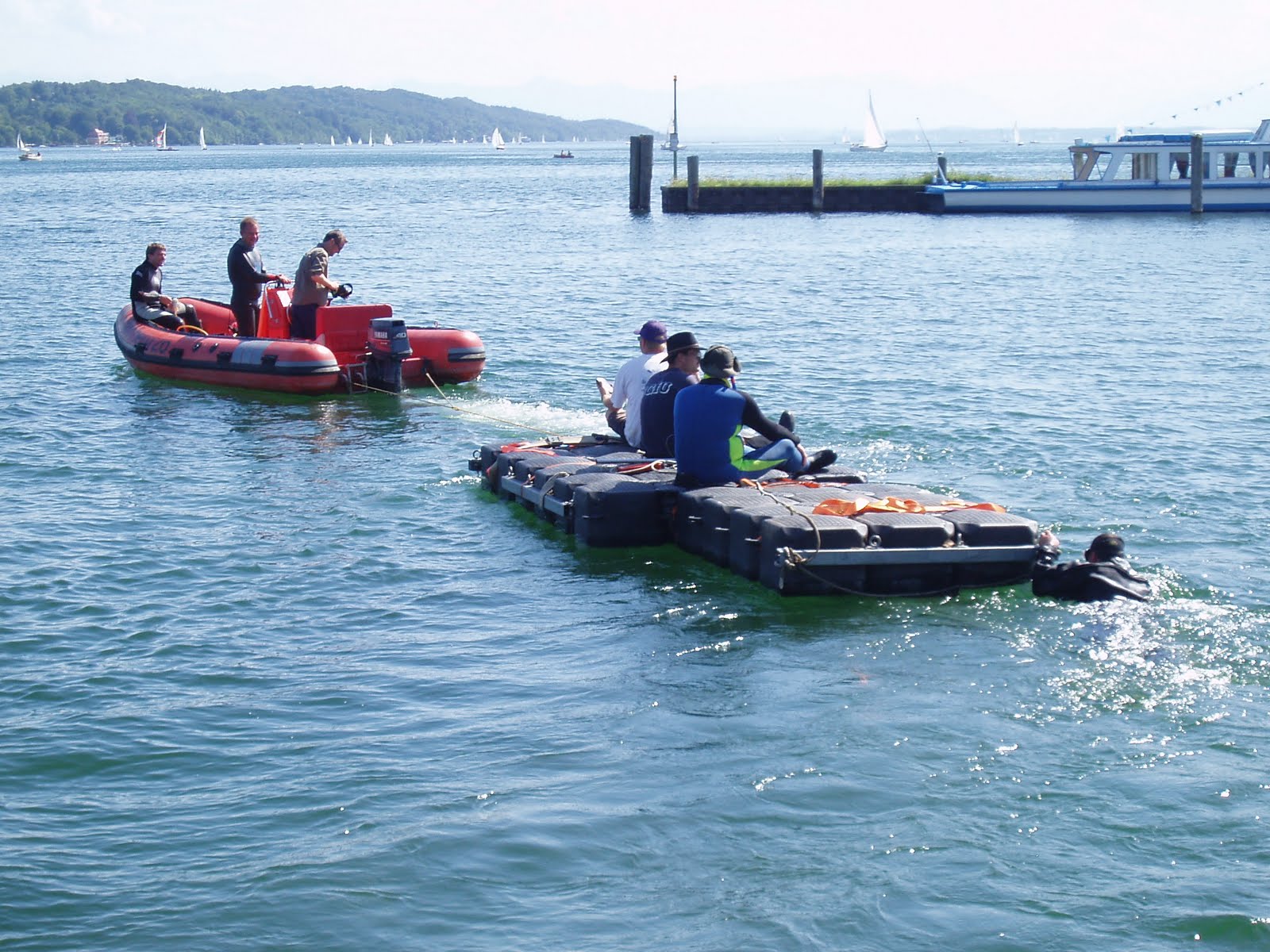
Below, the logboat has been pulled up out of the lake bed and fastened to a pontoon raft.It is important that it stay in the water, since with exposure to the air it would begin to decay.

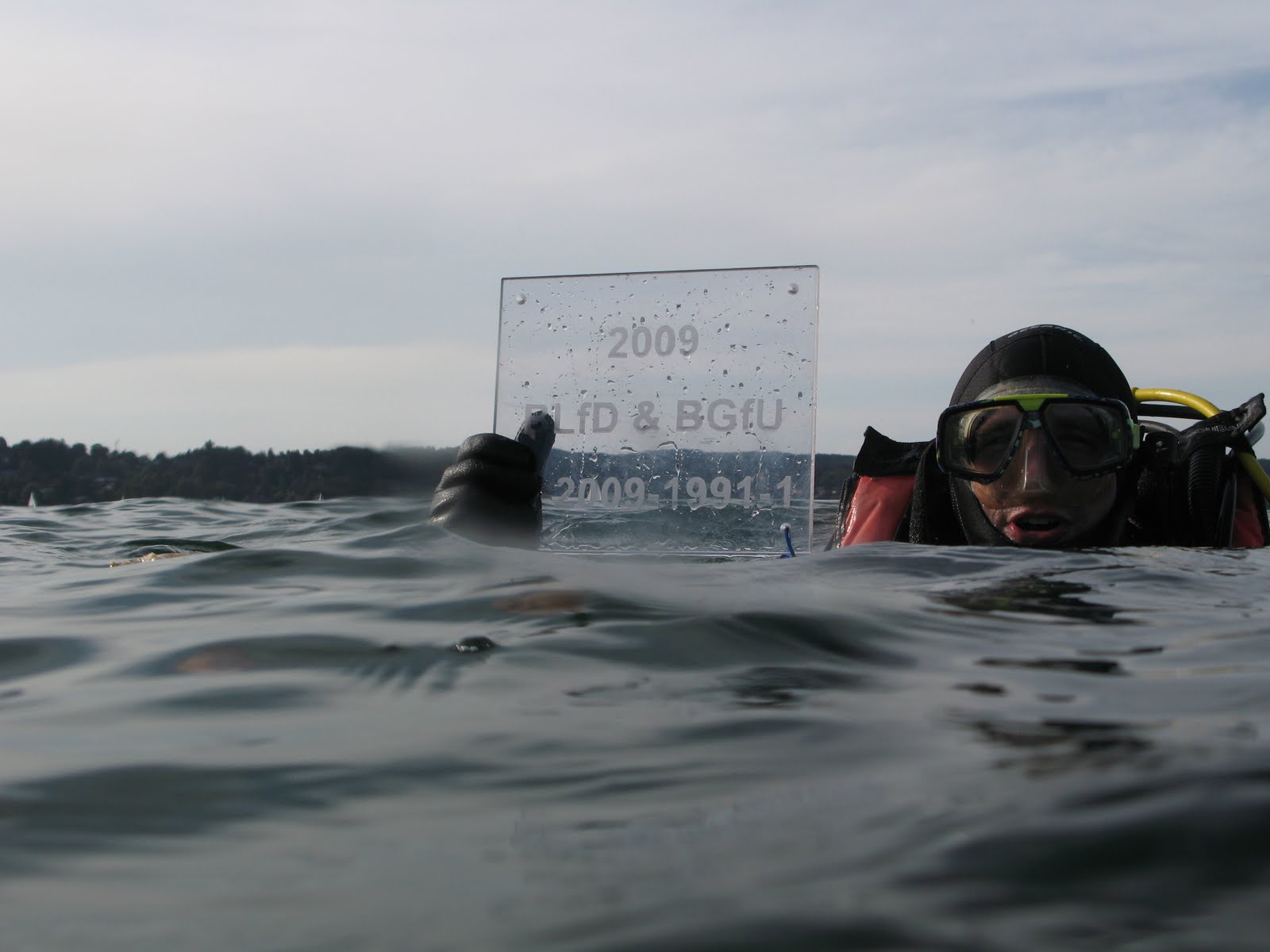
The logboat, securely attached to the pontoon, was hauled away at a slow, careful speed to an archaeological site across the lake, near Kempfenhausen. There, in protected waters, it was lowered onto the lake bed and wrapped in a protective tarp, like a body in a burial shroud. A plexiglass plaque was attached to it, and it’s location fixed with GPS for future research.

What an honor to have been allowed to observe this project! Many thanks for that to Marcus, the team leader, and to the beau for the use of his underwater camera (and for use of his photos at the protected site.)