>Pagans In Tirol: Der Judenbühel

>

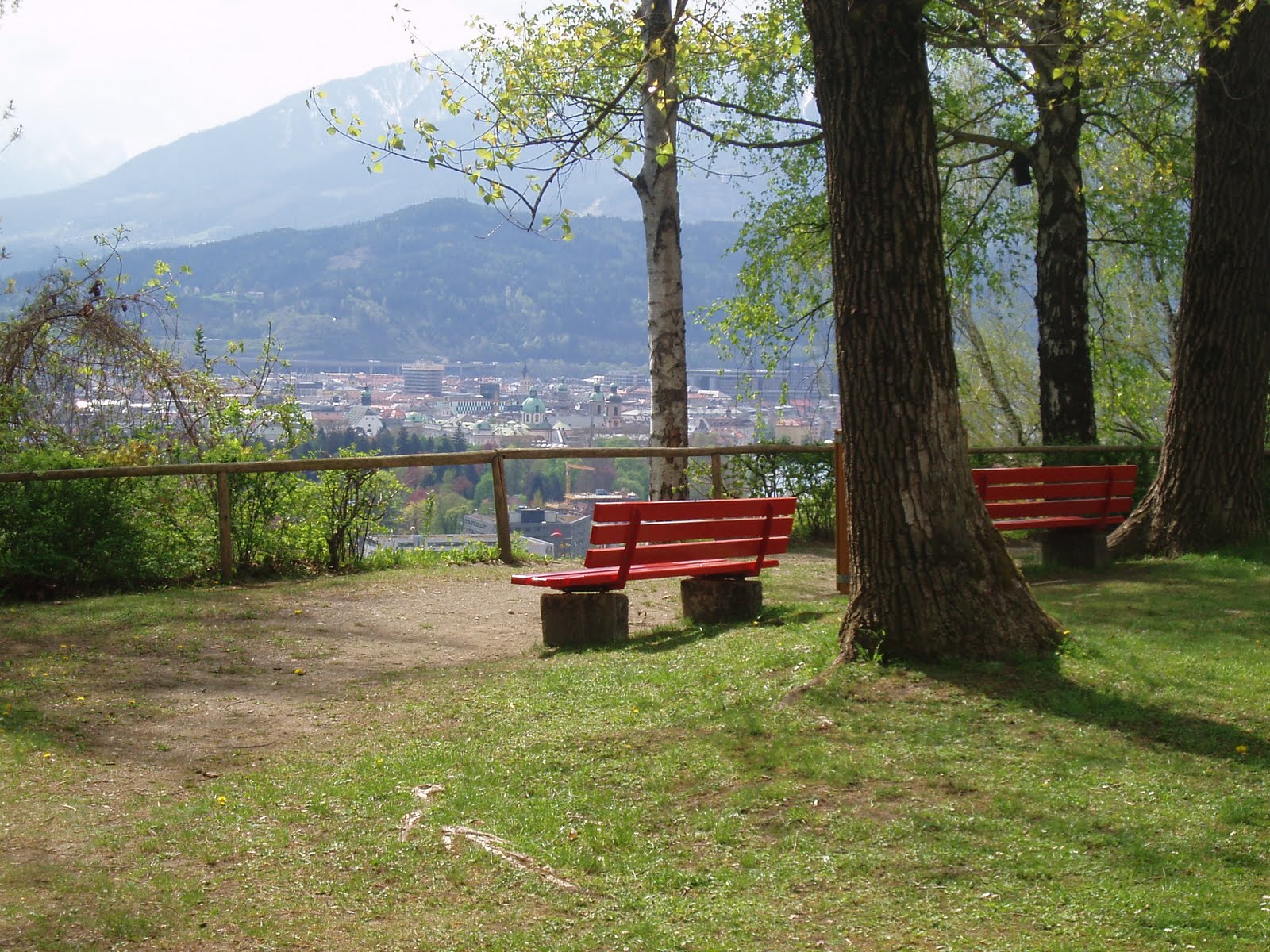
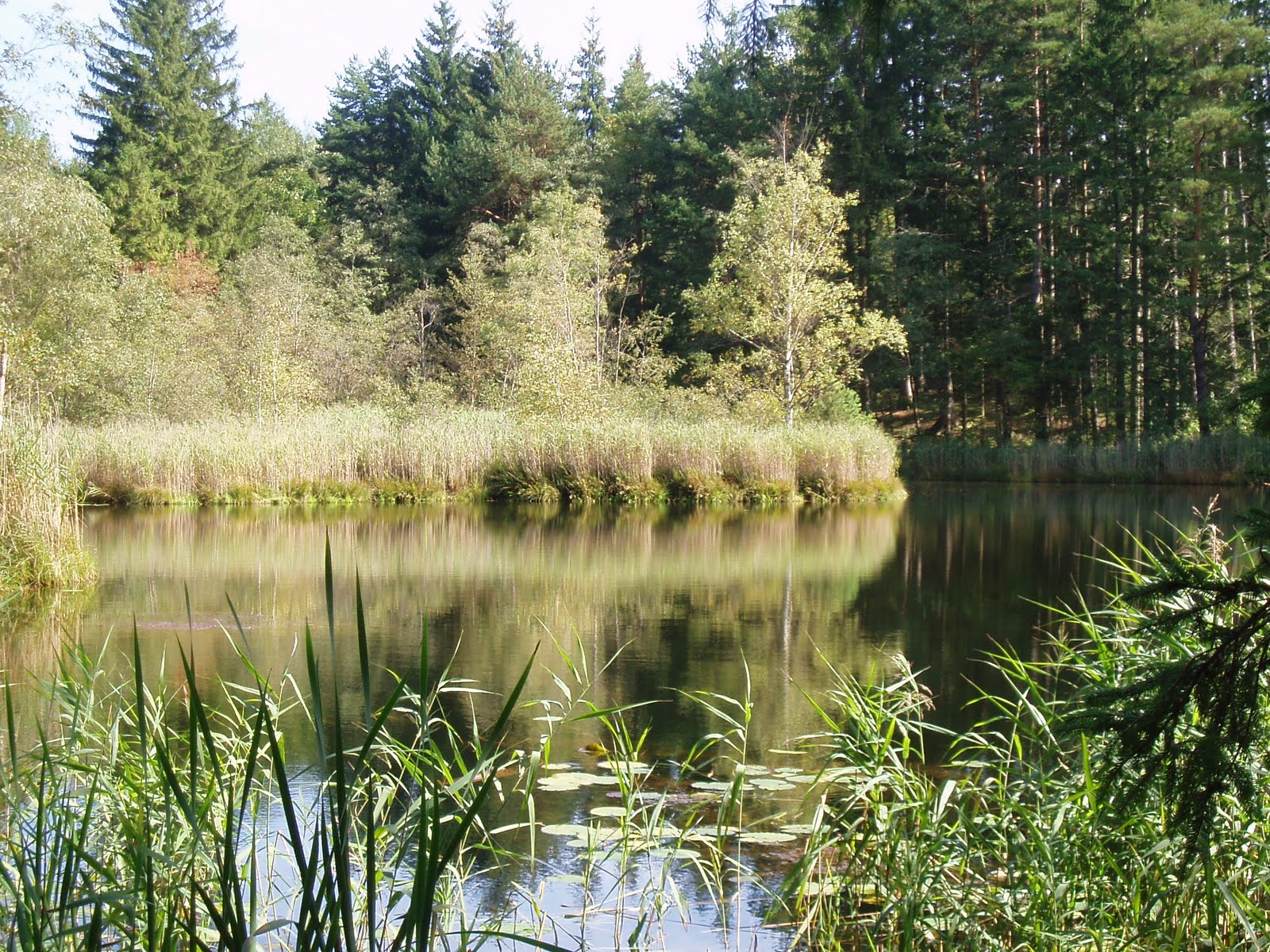
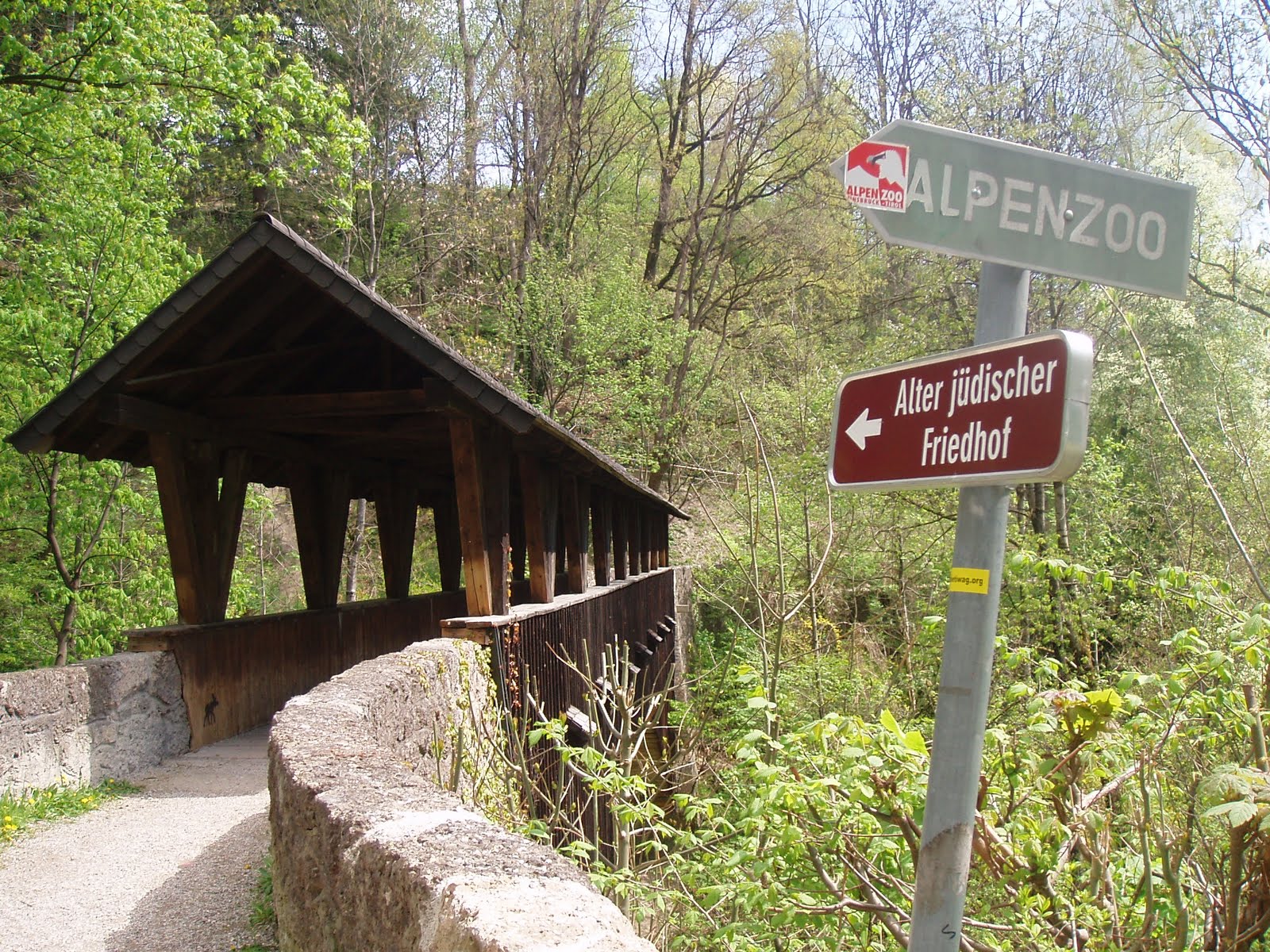
 Below the Alpenzoo, close to the Hungerburgbahn, is a bridge to a hill called the Judenbühel, or literally, Jews’ Hill. From a cursory online search I found that the first written reference to it is from 1598, when a Jewish local man got permission from court to establish a family plot there, “where the old Jewish graves were”. 

  
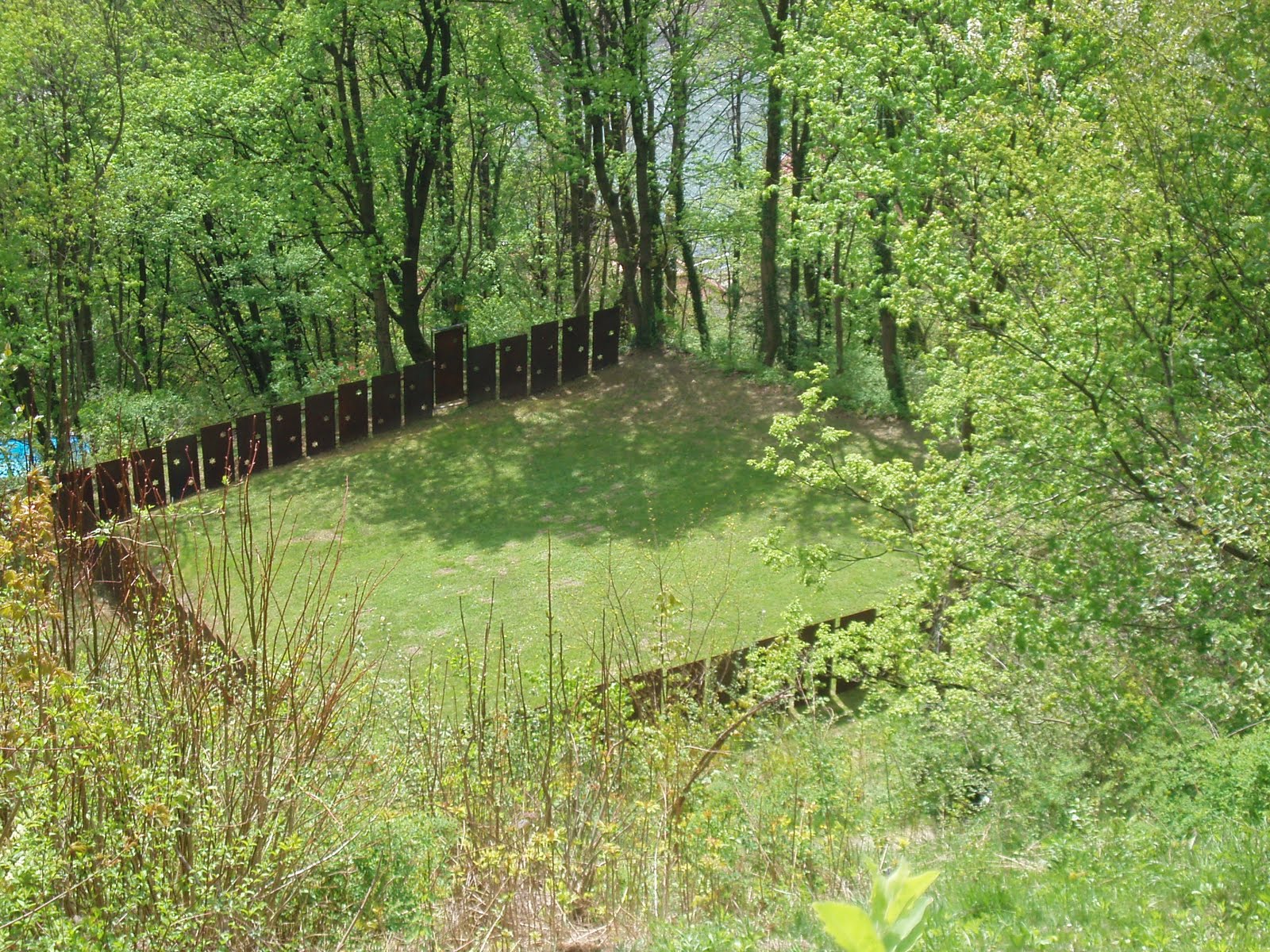
The old Jewish cemetery (rediscovered and now an historical site — the actual cemetery moved to the Westfriedhof in the 19th century) is found on a southern slope, not at the top. The top of the Judelbühel is as flat as a pancake, as wide as a parking lot, and circular. It currently holds a grassy park with a playground.

 The sides of the hill are covered with moss and trees, but there are places where the ground is eroding. And here you can see that there are no stones in this ground at all, it’s all just earth and tree roots. Which I find unusual, since this whole region full of rocks and boulders of all sizes. Was it landscaped in the last 100 years, or did it slowly grow, like the altar mound atop the Goldbichl?

 There may be perfectly modern answers about the flat-topped Judelbühel (maybe the top was landscaped for the playground in the last century or two?), but I haven’t found them yet. In the meantime I am left with comparisons to the Hexelbodele near Birgitz, and Schlern, and Bergisl and the Kalvarienberg, and other flat-topped hills which have histories as places of pre-historic communion. 
Which brings me back to Norbert Mantl and a few things he speculated about, in his book about pre-christian relics in the Inn Valley. One was that a few place-names beginning with “Jud-” are morphed from “Haid-” or some medieval version of it, which means “heathen”, which makes sense if you remember that to the early Christians (and in some places today too), Jews were just another kind of heathen. Mantl writes:

‘[The Judenbühel] is supposed to have gotten its name from the old Jewish cemetery which had been here… however it always questionable to view such cases as chapters of Jewish history. The Judenbühel is a “heathen” hill and for this reason only did the Jewish cemetery end up here, because Jews, as arch-heathens, could only be buried where other heathens were buried. One would never have allowed [in the Middle Ages] a Jewish cemetery to be built in such a beautiful place, if the Judenbühel and its neighbor the Ruch* had not already been home to the oldest and most evil form of heathendom. [Here I think he is referring to the Three Bethen.] Stone-age finds were made on the hill, therefor there was a very old settlement here and one can assume with some certainty that the hill was a holy place**, from which it got its name in early Christian times, independent from  later Jewish settlement in Innsbruck.’

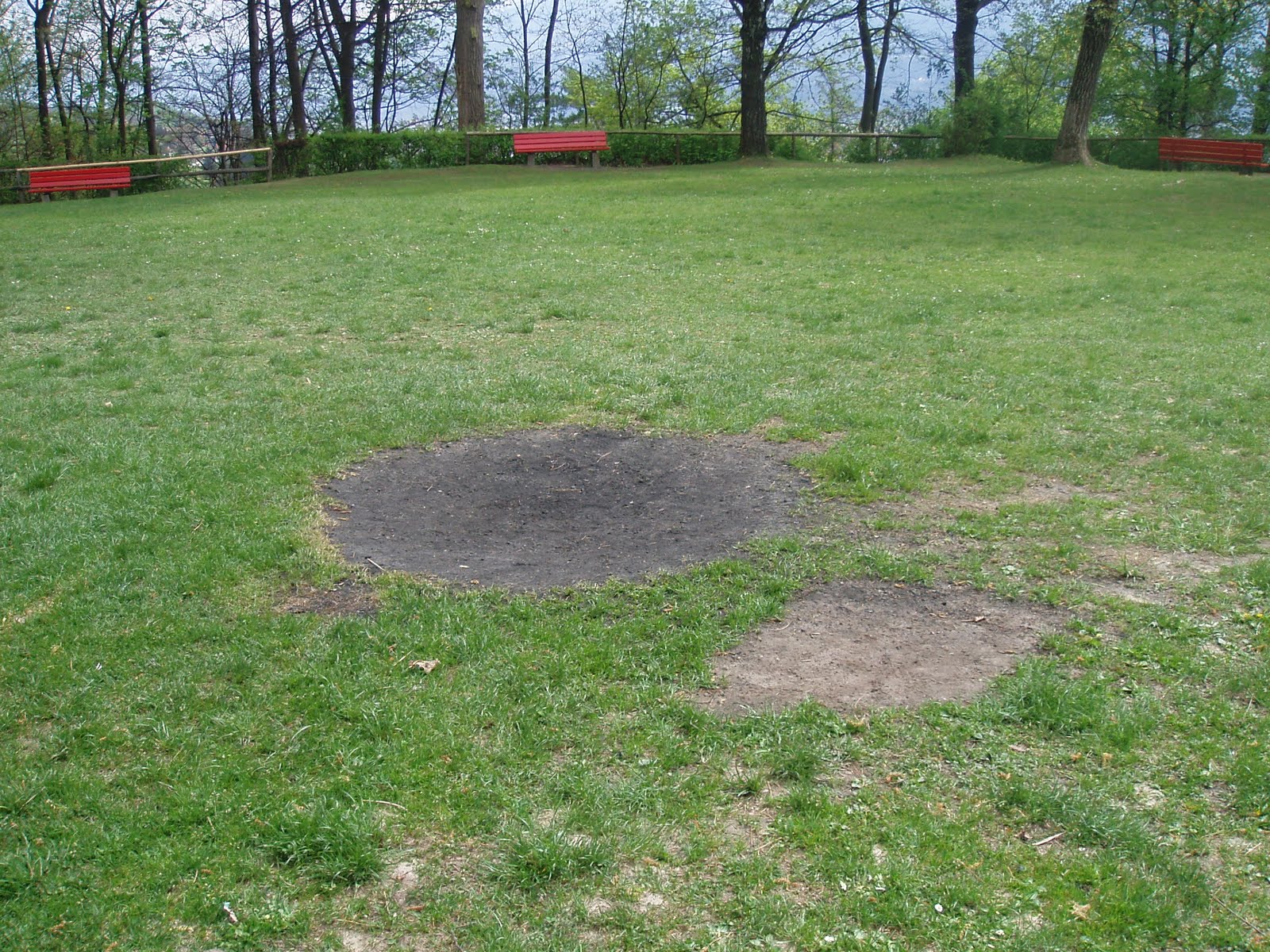
 Smack in the middle, traces of a regular campfire. Who makes these fires? Just squatters? An uneasy thought — I don’t know any local Pagans whom I can ask ( if maybe the fires are ceremonial), but there are elements of the neo-nazi scene which goes in for the Pagan, the mythological, the old ur-Germanic. The idea that they might be “keeping the fires lit” on these ancient meeting grounds does give one pause. Then again, what do I know, it might be the Scouts.
*I don’t know what the “Ruch” is.

** Why? Mantl does this all the time, assumes that because it was used, it was a holy place.

>Ruins

>There’s a blog called After The Final Curtain, by photographer Matt Lambros, dedicated to the documentation of old abandoned movie theaters and news of restorations. The photographs are awesome.

Closer to home: in Phoenixville, Pennsylvania, a group of private citizens fought hard to take over and restore the Colonial Theater, which had been sitting in disrepair for years. The Colonial is now a major draw to the town, showing slightly-off-beat films, old silent movies, and live concerts. “The Blob”, a 1950s horror movie filmed nearby, was the inspiration for the incredibly popular annual “Blobfest” (highlight: the Running Out re-enactment, where lucky volunteer crowds are filmed as they run out of the theater, screaming.)

h/t to Benedikt

>Pagans In Tirol: The Beten And Other Mysteries

>

OK, they’re Norns; but, as we say in rural Pennsylvania, same difference.

The book in my hands in the photo in the previous post is “Vorchristliche Kultrelikte im oberen Inntal” (Pre-christian cult relics in the Upper Inn Valley), Norbert Mantl, Schlern Publishing, 1967. I bought it full of hopes that I’d learn a lot of forgotten lore about the region. And, well, I did indeed learn a lot, although some of it just might be greatly exaggerated, and some of it hooey.

I’ll start with the premises I might be willing to accept, which are in fact quite interesting: the indigenous people of the Inn Valley, as others in the alpine regions, saw their gods and spirits in the sun and moon, in the mountain peaks, caves and springs, and erected stone altars on hilltops to give up offerings and prayers. There seems to have existed, maybe only in a spiritual sense, a trinity of women — the three Beten*. Their given names, Ambet, Borbet, Wilbet — are possibly still with us in the names of mountains, caves, springs and other old places (Bettelwurf, Bötlerkuche, Barwies, Wildermieming, Bötlerbrunnele, etc), the meanings of which have been lost or attached to later, revised tales about beggars (Bettlern). The legend of Frau Hitt, Mantl maintains, is very old, not about a beggar’s curse and not originally connected to the protruding rock we call that name, but with the namesake of the Heiterwand and Hötting, a mountain deity named alte Hattle.

Mantl makes some interesting leaps in connecting names with old words and meanings, assuming that the pre-indo-germanic mountain folk spoke a language of which parts have survived, in the local dialects, over the millennia. His argument is that these peoples were pushed out of the Inn Valley by a string of newcomers, including (but not limited to) the Romans, the Franks, the Baiuwarii. They headed for the hills, which kept them isolated from each other and insular in their customs, languages, (hence particular dialects) and legends.

(The idea about dialects hadn’t occurred to me before: that it’s the “old” language of the original inhabitants showing through the “new” language. As an American I had assumed that the language came first and then the regional differences, but it could be the other way around. )

This argument strikes me as plausible, although there might be a bit of wishful thinking about the good old days in there. (His chapter on architecture confused me, and the one on bells and music just had me shaking my head. I am not qualified to comment on the chapter on Fasnacht costumes and traditions.) If one is to believe that so many place names signify holy ground, the entire Inn Valley would be lousy with pre-Christian holy sites and nothing else. Mantl also covers the pre-Roman history of Bergisel, Veldidena, the Romedius legend, and the giants Haymon and Thyrsus, but curiously says not a word about either of the two known Raetian settlements, near Wattens and Birgitz (the latter, at least, was known well before the book was written) nor about the sacrificial altar at Goldbichl.
I found dangerously high levels of jumping to conclusions, which makes me want to put Mantl in the same drawer as the English blokes who insist Ötzi was killed by a meteor blast, and Hans Haid. Nevertheless he has collected a ton of very localized myths and tales here (and in other books), and has a lot of information about local culture which started disappearing by the first world war. Naturally a lot of it is concentrated on the upper Inn valley, as the title suggests; places pretty much unknown to me  —Nassereith, Dormitz, Imst, the Pitztal. I should probably get up there someday. There is an local archaeology museum in Fliess…

But what would indeed be fascinating, even if not completely provable, is a connective line from three Germanic goddesses of fate to the Celtic/Roman Matrones, and the Norns, then to the three saints/three virgins, later Faith-Hope-and-Charity and, in our time,  to the three ladies with strange and wondrous powers who visit Sleeping Beauty’s cradle!

*A very generous Druid in Bavaria wrote and uploaded a comprehensive piece about the Beten and their later incarnations throughout Germanic history. You can read it here.

UPDATE: that link seems to be broken. Try here. And see also here, a later post about the Beten found in Leutstetten, Bavaria
>Hilde Zach 1942-2011

>

The former mayor of Innsbruck was a special kind of politician. First, she loved Innsbruck (it was said that the city was her “only child”). In her eight years in office, I never heard a single bad word said about her.  Second — and here I speak from first-hand experience — she supported the performing arts like no other. She was in the audience, sometimes in the front row, at countless theater and concert performances. You looked out over the stage lights and saw that hairdo, and you knew the mayor was in the house.

A story I heard years ago about her commitment to the city’s cultural life, from those who were there:

The orchestra was about to perform a Bruckner symphony  for a special season-opening concert in the cathedral. The seats were all taken,  and security were either not permitted or not in the mood to let any more people in. Frau Zach arrived at the last minute, as usual, and asked a group of musicians why they were standing outside. When they explained that they were not allowed to enter, the mayor disappeared into the cathedral, and reappeared a few minutes later, saying “Da ist Platz genug drinnen, alle eini!” (There’s room enough, everybody in!) She simply went right over the security personnel’s heads and pushed us all inside!

Frau Zach battled cancer for years, and last March, when the future no longer looked manageable, she stepped down and handed the reins to her deputy mayor.
Her funeral will be held on Friday afternoon. She picked out her requiem music in advance, requesting the Haydn Mass In Time Of War, and a beautiful choral arrangement of Mahler’s Ich bin der Welt abhanden gekommen the Reinberger Abendlied which she’d heard a few years before at a chamber choir concert (in which I took part.) I will be there on Friday, deeply honored to be able to sing for her again, one last time.

h/t to Günther Hajostek, who remembers that Bruckner concert.

>Fun With The Language

>New York Times op-ed columnist Frank Rich writes about Sarah Palin this week, and in doing so has coined the perfect word to describe her new reality show, and in turn the perfect word to describe the image she presents to the world:

Palin fires a couple of Annie Oakley-style shots before we’re even out of the opening credits. The whole package is a calculated paean to her down-home, self-reliant frontiersiness — an extravagant high-def remake of Bush’s photo ops clearing brush at his “ranch” in Crawford, which in turn were an homage to Ronald Reagan’s old horseback photo ops in his lush cowpoke digs in Santa Barbara.

She’s not really a frontier woman, she’s “frontier-sy”, and as you can see from her political predecessors, it definitely has its appeal in America. Palin, like Bush II and Reagan, works the masses with her image as one of the “just plain folks” (which she most certainly is not) who don’t care too much for that high-fallutin’ fancy-pants higher education.

There’s been lots written over the years about the “dumbing down of America”; I haven’t read too much on the subject* but suspect it springs from a mistrust of “educated folks” that started perhaps in the beginning of the last century already. It’s something that I don’t see much here in Europe, not in this quantity, not as part of the fabric of the popular culture. There is no fitting translation of the English words “nerd” or “geek”; I hear “Eierkopf” — egghead — once in a while but there doesn’t seem to be any massive stigma in being an intellectual (not that I’d know for sure, not being able to call myself one**.) This might be because European intellectuals suffered their own actual pogroms in the past, as they never did in America. There is also the term “Fachidiot” which is, I’m guessing, someone who knows all about one subject and nothing else.

* Charles Pierce’s “Idiot America” is good, but doesn’t get down to why it’s been like this for so long in America, and not so in other countries (in my unlearned opinion.)

** And anyway I feel that for the most part I am treated well here, but any treatment, either preferential or discriminatory, that one receives would have to be viewed through several lenses — gender, age, foreignness, looks, German proficiency perhaps above all — before intellect was even considered. I think.

>More Pagans In Tirol

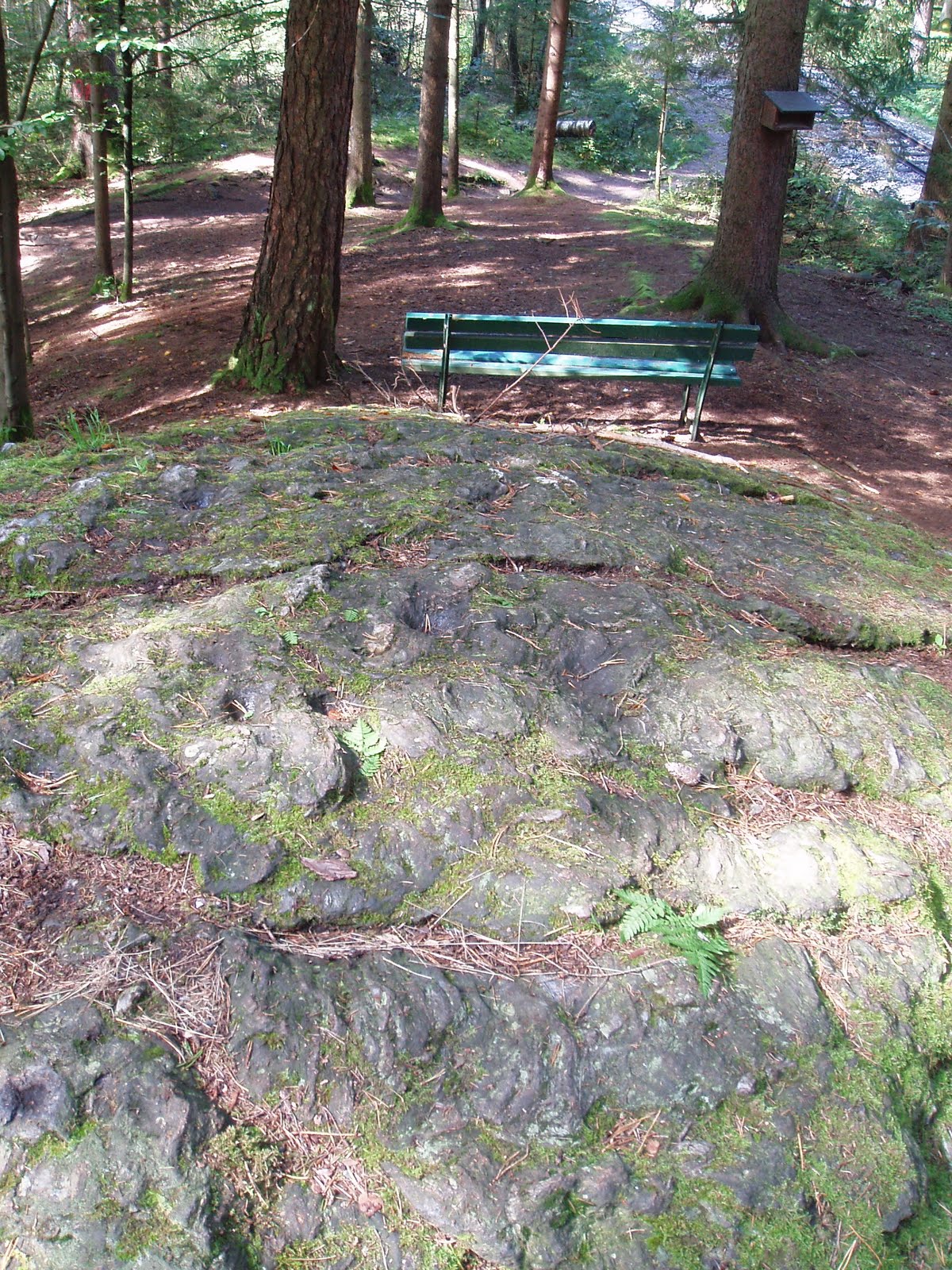
>Yes, I know it look like a face in this photo, with a mouth full of pine needles, but that’s a trick of the shadows. There are at least a dozen cup marks in this stone, and they most certainly date back to the Bronze Age. There are various theories floating around as to what purpose these cup marks had. Maybe for ritual offerings, maybe for astronomical purposes or as pre-historic sign posts. Everyone has a theory, no one really knows. There is supposedly another stone nearby, one hill over from the altar mound at Goldbichl. For me it’s fascinating to think that these markings are from modern humans, with just as much intelligence potential as we have today, who lived here in these hills 6000 years ago, probably right where villages still exist today. And that this practice had spread all over Europe, from Merano to Northumberland. What was going on?
Further up the hill, the Lanser Moor, or Lans Marsh, a nature reserve.
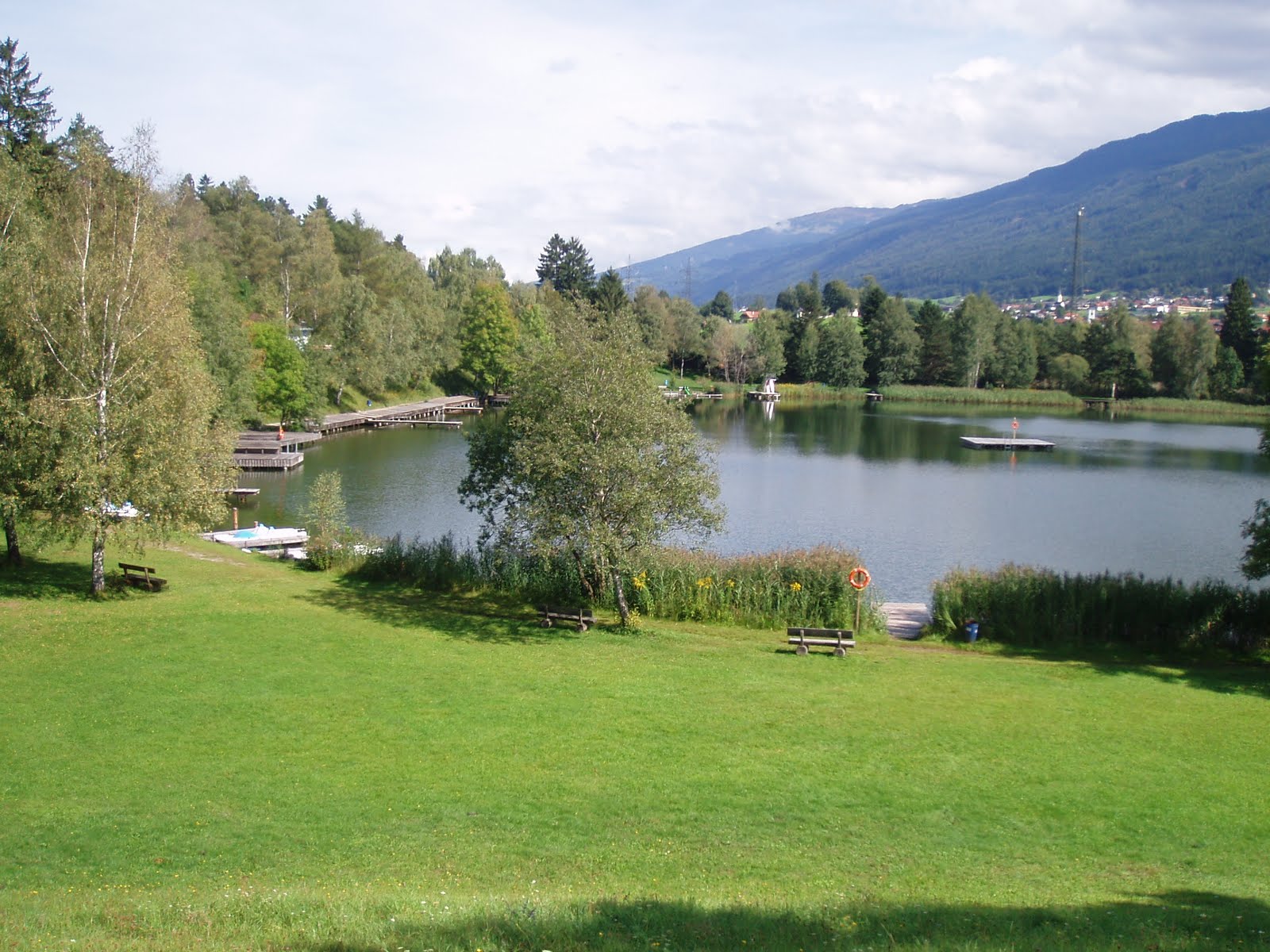
Nearby, the Lanser See, a popular swimming hole, deserted already. There’s a chill in the air now, even on sunny days, and swimming season is vorbei. A legend tells of a rich man who envied a farmer’s grove of trees, and took him to court to obtain it. The judge was unfair and the farmer lost his land, but not before he cursed it to sink under water. Which it did, and now we have the Lanser See to swim in.

>Long Before It Was Tirol, It Was Raetia

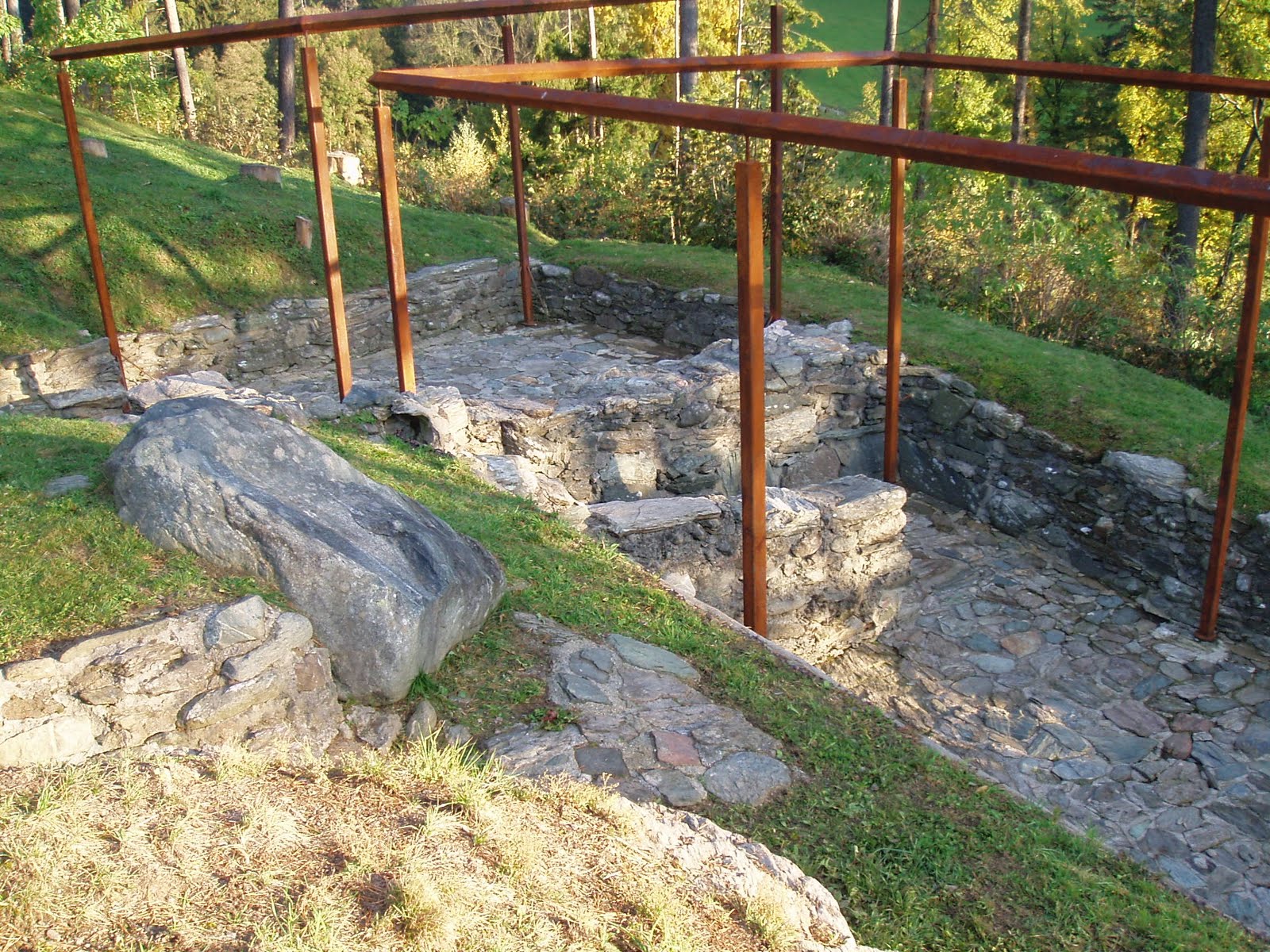
>This unassuming, wooded hill hides the remains of a group of Raetian houses from around 400 B.C.
The Raetians were a people who moved into the lands between Lake Garda and the Karwendel Mountains by the 6th century B.C. They are somehow associated with the Etruscans (their exact relationship is disputed, but there are similarities in their alphabets and a possible genetic link has come to light); Pliny the Elder wrote that they were an Etruscan clan driven out of the Po Valley by other tribes.
A technically and spiritually advanced society, they had a high level of technical, architectural and artisanal skills. Raetian wine from the area around Verona was Caesar Augustus’ preferred drink. They raised crops and farm animals such as cattle, sheep, goats and pigs. They kept dogs and horses. They handled in raisins, tree resin, lumber, wax, honey and cheese. They made their own artistically distinct ceramics.
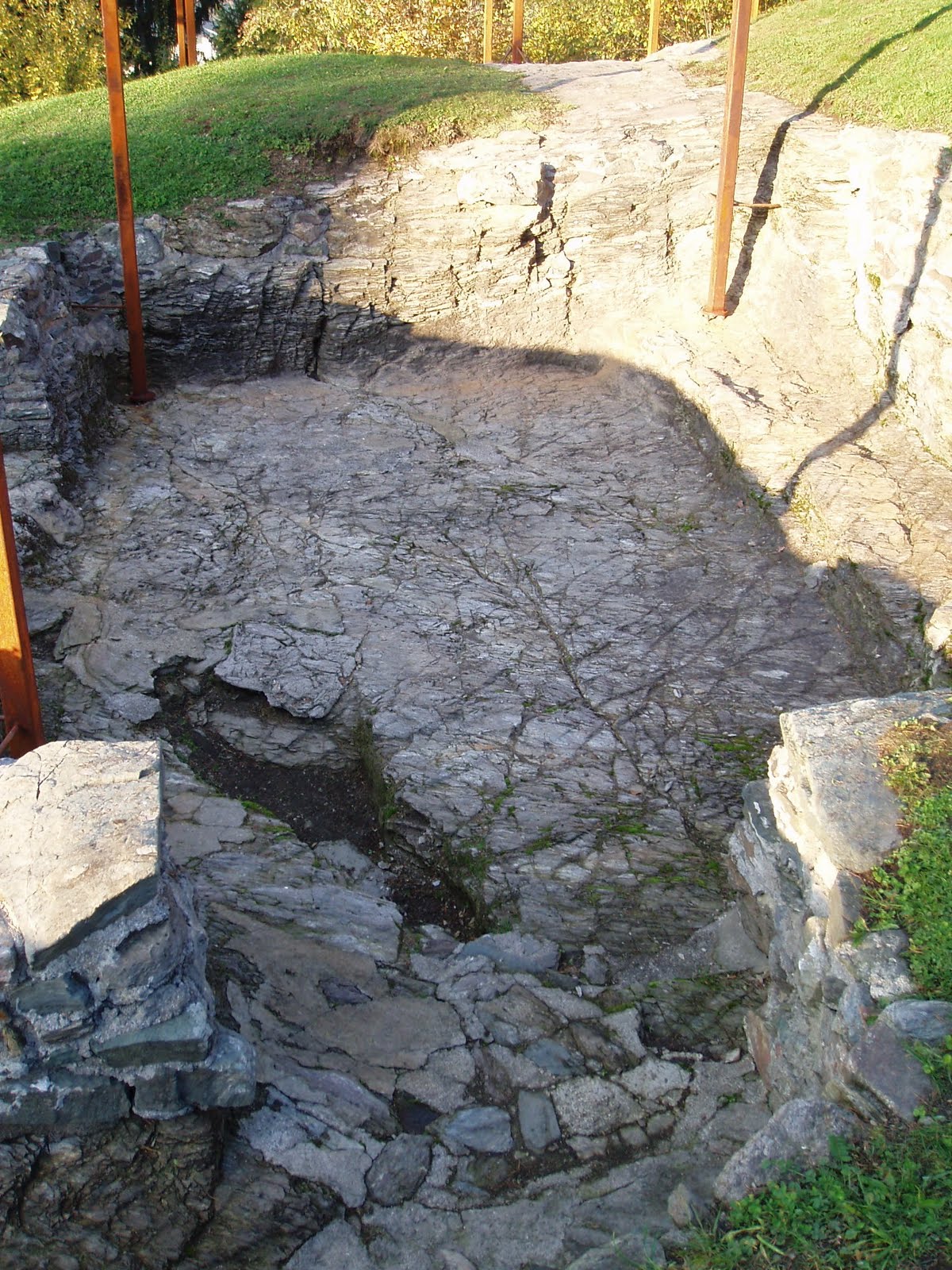
What’s left of their houses are these stone cellars with narrow stair corridors. The entire group was in encircled by a sort of fort wall of sharpened logs, about one meter high (more picket fence than fortress)
Archaeologists have found much metalwork: chisels, axes, blades, iron rings, keys, door and chest handles, hooks. They families that lived here apparently did so in relative comfort, security and prosperity, able to make, trade for, or buy anything they needed.
And, all around, they had quite a view to enjoy —
Also found nearby (but no longer existent) was a temple area with sacrificial altars. In better times the Raetians sacrificed animals and crops to their god(s), and used the fire altars to sanctify bronze jewelry and weapons.
In 15 B.C. the Romans decided to push northward, subjugating the Raetians and burning their villages. The survivors took to sacrificing coins, as everything else was too valuable to burn. And once the Romans forced their culture and language on everybody else, traces of the Raetians dried up.
The cellars are now preserved as a free open-air museum with signs posted giving information about the Raetians and about the archaeological finds, now on permanent exhibit at the Tiroler Landesmuseum in Innsbruck.

>Have You Heard Of Herta Müller?

>Neither had I. She has been awarded the 2009 Nobel Prize for Literature.
More significantly, neither had the beau, who is knows a lot about European literature. Wikipedia, in its entry on Müller, says that prior to the award, Müller was little-known outside Germany and even there was known only among a minority of intellectuals and literary critics.
Her writings look like they would fit right in with the other books on my shelves, many of which deal with people trying to remain alive and human under communism, nazism, or any other repressive regime. I plan to pick up a copy of Atemschaukel (the English title, when it comes out, will be Everything I Possess I Carry With Me) pretty soon.
It’s also a welcome story within a larger topic which gets a lot of criticism just for being a topic — the post-war deportation of ethnic Germans from eastern European lands, force-marched either westward into Germany (those that made it alive were the lucky ones) or to Soviet gulags, as was the case with Müller’s own mother.
I am reminded of Gregor Himmelfarb, whose book about his post-war experiences shares similarities with Müller’s latest protagonist, Leo Auberg. Himmelfarb was born in the state of Mecklenburg, Germany, and grew up in the ethnic-German region Siebenbürgen, in Romania. When Germans in Romania were required to obtain Aryan identity cards, Himmelfarb learned for the first time that his Russian father was Jewish. Managing to survive the war, he then faced new difficulties for being the son of a factory-owning “exploitative capitalist”, and above all for being “German”. The Israeli immigration services weren’t much help, as they considered him “not Jewish” (he was finally able to emigrate in 1952.)
Every group of people is made up of individuals, all with their own stories. And, as Herta Müller shows, there are so many unheard stories out there worth learning.

>The Swan King’s Watery Monument

>“Alas, he is so handsome and wise, soulful and lovely, that I fear that his life must melt away in this vulgar world like a fleeting dream of the gods.”

“The King was not mad; he was just an eccentric living in a world of dreams. They might have treated him more gently, and thus perhaps spared him so terrible an end.”

Michael Jackson? No, King Ludwig II of Bavaria, from composer Richard Wagner and Empress Elisabeth (Sissi) of Austria, both close friends of his. But perhaps MJ was actually the King Ludwig of his day, pathologically shy, eccentric and flamboyant. Although the official line is that he took his own life (at age 40) in the waters of Lake Starnberg the day after he was deposed for being “mentally ill”, he was most likely murdered. He was also probably just gay, or so many think. A broken engagement to a perfectly good princess, among other things, seems to support that, but all evidence is of course circumstantial.
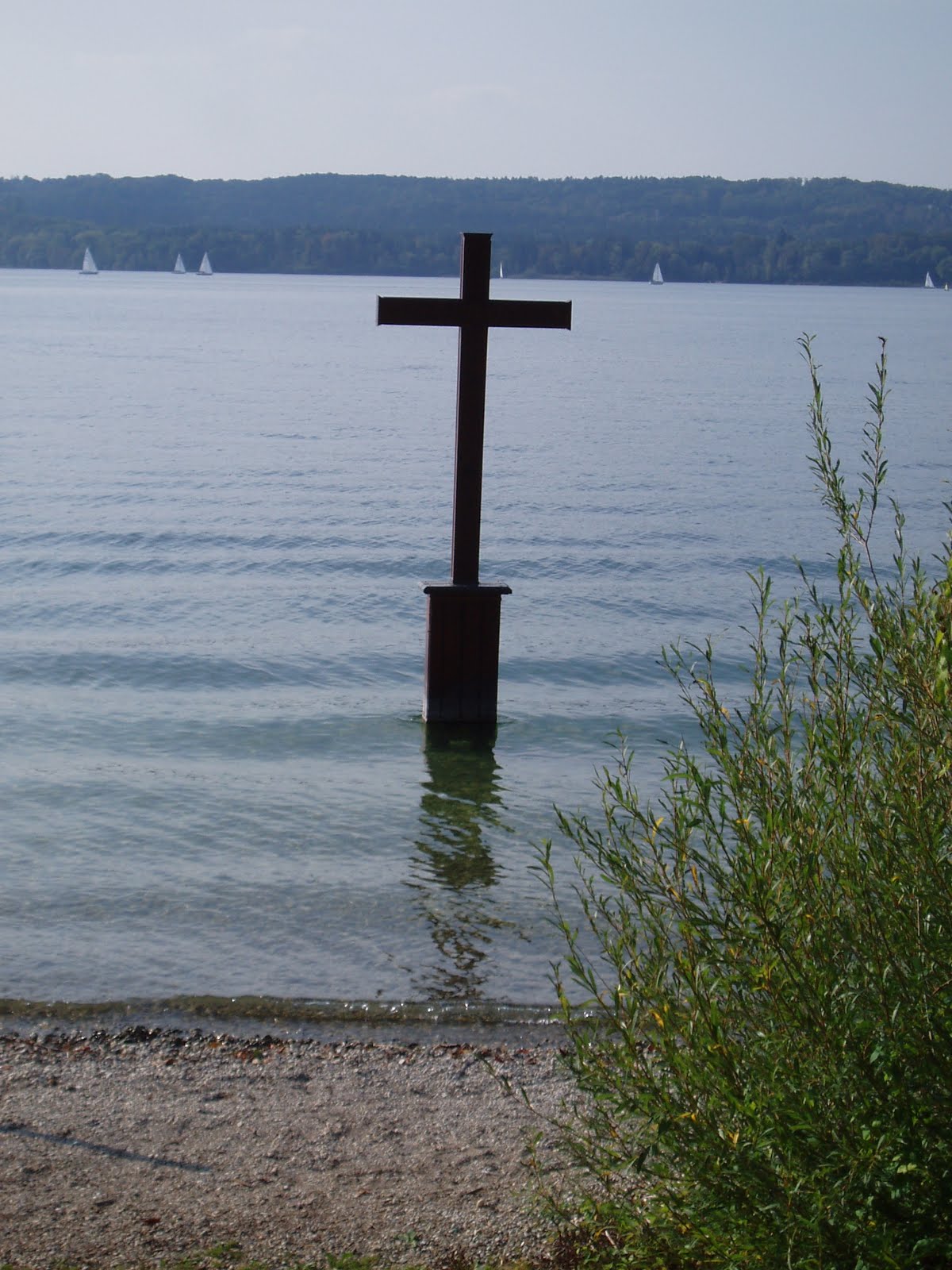
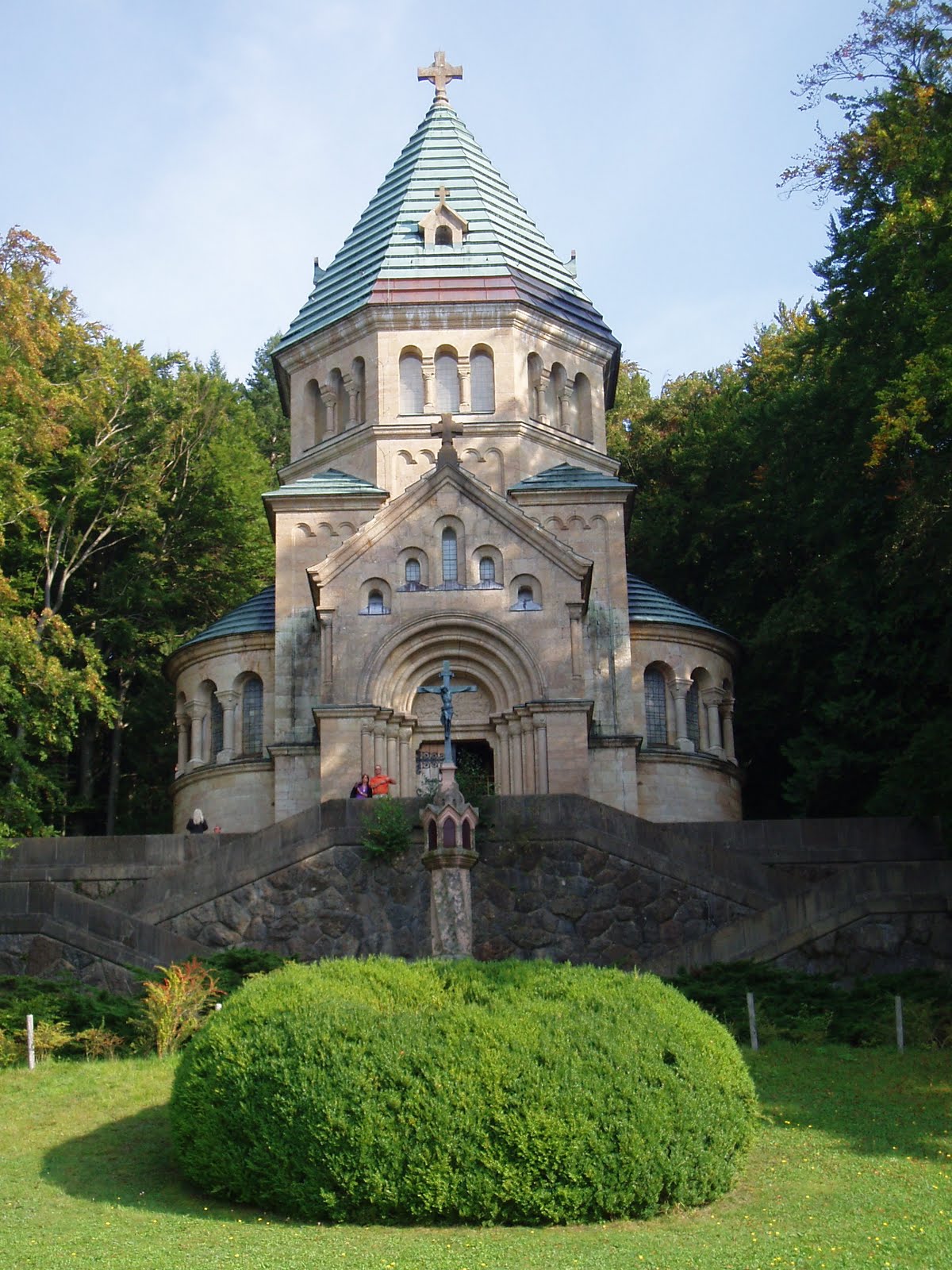
The cross marks the site where the King’s body was found, and the chapel is just up the hill from there. The surrounding area is all woodland, with trails for mountain bikers and joggers. We had seen this chapel from the other side of the lake (5 kilometers away), but had mistaken it for the Bismarckturm (another pile of rocks in the area.) Tourists still come to read the plaque on the chapel wall and photograph the cross, nearly 125 years after Ludwig’s death. Many more tour his castles in the Bavarian Alps. Will people be listening to Michael Jackson recordings in 125 years’ time? I have no idea.

>A Visit To The Brandhorst Museum

>

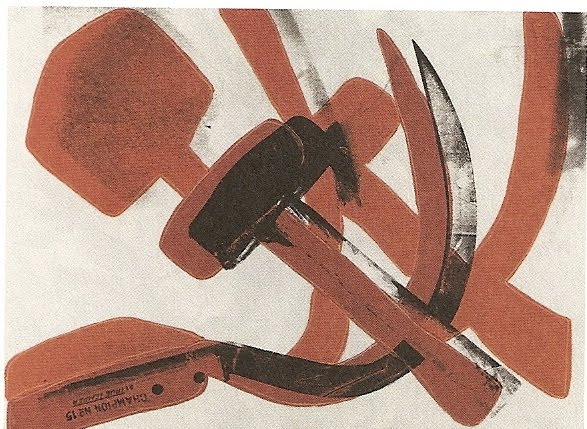
Andy Warhol, Hammer and Sickle

The newly-opened Brandhorst Museum, over in the Schwabing area of Munich, houses the collection of a pair of modern art lovers who must have had quite a bit of wall space for their stuff. There are Warhols, enormous rooms full of Cy Twombly paintings, and the works of about a dozen other well-known artists. The building itself is interesting to look at — like an industrial size, see-through box of crayons standing upright on the Türkenstrasse.

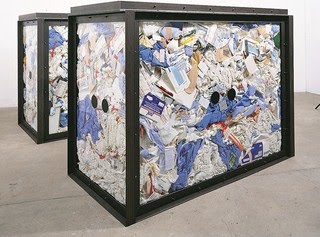
Damien Hurst, Waste (Twice)

The Hurst pieces are glass containers filled entirely with hospital trash — packaging, needles, hospital gowns, etc. Across the room, half a wall was covered with dark mirror glass, and ribbons of glass shelves with thousands of pills arranged on the them, in different sizes and colors. I cannot remember who’s work that was, however, nor its title.

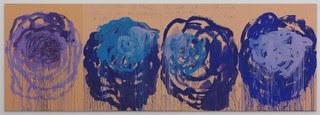
Cy Twombly, Untitled (Roses)

Now, I have to add here that Cy Twombly is not my favorite artist. Say what you will, I just don’t get him. He had stuff hanging in the Philadelphia Museum of Art and I didn’t get that stuff either. But somebody thinks he’s a master, so, hey, whatever. The paintings in the Brandhorst are, at least, not annoying. They are, typically, huge.

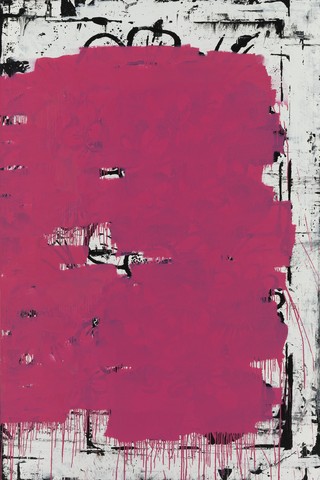
Christopher Wool, Kidnapped

Jannis Kounellis, Untitled (Rimbaud)

I give Kounellis credit for one thing: description of his work includes the contents as such: “Paint pot, painted parrot, brush, books”. Not “paper, aluminum, wood, feathers”. Straight and to the point, this, he says, consists of a paint can on books, with a brush in it and a bird on top.
Lest I come off sounding like a real philistine, I did enjoy the Warhols, the John Chamberlain metal sculptures and a very interesting video installation that dealt with the topic of immigration with images from Lampedusa — (dancers simulating) Africans drowning, families at the beach, boat junkyards, etc. — on five separate screens in one room. Lampedusa, if you don’t know, is a tiny island south of Sicily, and often the first stop for the stream of African refugees trying to get to mainland Europe. They or their boats are often not strong enough for the trip, and Italian fishermen have been warned not to help them. Many drown.

If you find yourself in Munich and want to go, be aware that on Sundays admission is only €1. Treat yourself to the unusual gelateria across the street. The Milch+Mint is out of this world.