>Forgotten Innsbruck: “Kropferte Liesl”

>

Austrian Empress Maria Theresia gave birth to 16 children, ten of which survived into adulthood (pregnancy seems to have given her extra spurts of energy which she then used to accomplish such things like reorganizing the army or conducting wars.) Her eldest son Joseph succeeded her as monarch, and her most famous child is probably Maria Antonia (better known by the French version of her name.) These two and all the others are subject of the book which I am currently reading, “Maria Theresias Kinder: 16 Schicksale zwischen Glanz und Elend” (Maria Theresia’s Children: 16 Fates Between Glory and Misery), Hanne Egghardt, 2010.

After the unexpected death of her husband, Franz I Stephan, during a trip to Innsbruck, Maria Theresia founded a Damenstift for noble ladies there. A Damenstift (or Frauenstift) is a sort of monastery for women, but differs from a convent in that, unlike nuns, the residents were not bound by holy orders. They were required to participate in prayer and masses, but enjoyed many more personal freedoms as well as the option to leave if they so wished. The Stift founded by Maria Theresia was set up so that prayers would be said around the clock for the soul of the deceased Emperor (I assume carried out in shifts.) As most of the noblewomen were under quite young, it may well have resembled a sort of Catholic girls’ boarding school, without classes or teachers. 

When Maria Theresia died, Joseph made sweeping changes in Austrian government as well as to his own household, moving out the two “spinster” sisters still living in the palace (‘Weiberwirtschaft‘.) Maria Anna (“Marianne”) had always been in poor health and was never married off; she went by her own choice to a monastery in Klagenfurt. Maria Elisabeth had been a lovely, unserious young woman consumed with her beauty, fashion and society until a debilitating case of the pox laid her low. She survived but was literally scarred for life. All her marriage prospects dried up at once, and she stayed well out of the public eye for three years. Elisabeth, it was decided, was to go to the Damenstift in Innsbruck, and it was a turning point in her life.

After a childhood and youth in which her looks were everything, and the depressing years following her illness, Elisabeth began to find her self-confidence. She gained a high position in the community, received the Pope during his visit to Innsbruck. She never lost her sharp wit, nor her sharp tongue — she called Emperor Franz II “the boor”, Archduke Ludwig “the sneak”, the Archbishop of Oelmitz the “little nest-shitter”. Freed from all pressure to be attractive for marriage, she gained quite a bit of weight and became known for her triple chin, which she even showed off on occasion by pulling aside her veil and “letting them swing like billiard balls”.

When troops neared town (first Revolutionaries, then Napoleon’s) the ladies of the Damenstift were forced to flee, and in 1806 they ended up in Linz. Elisabeth died there in 1808 and was laid to rest in the cathedral.

>Weekend Mountain Blogging: Höttinger Alm

>

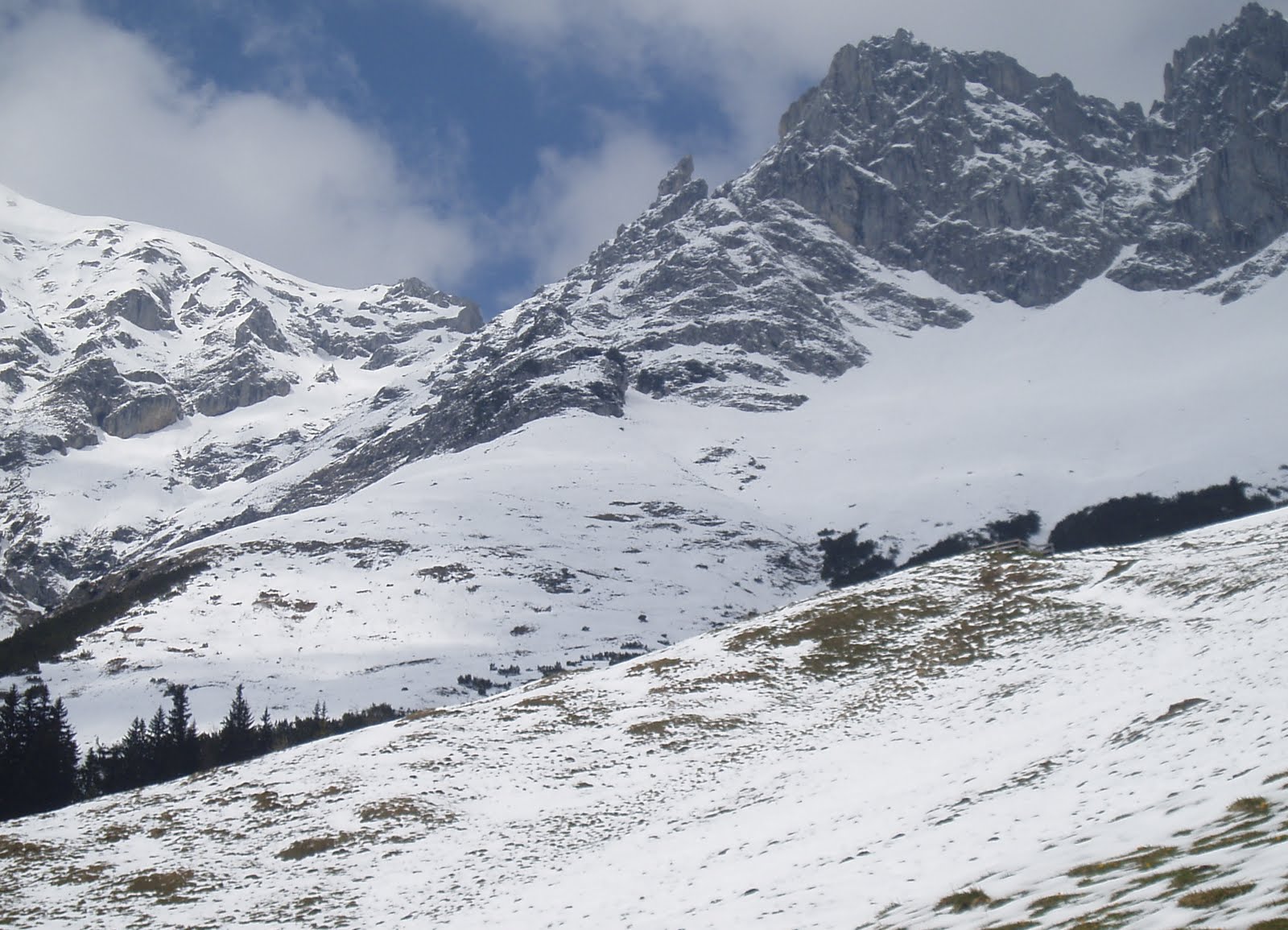
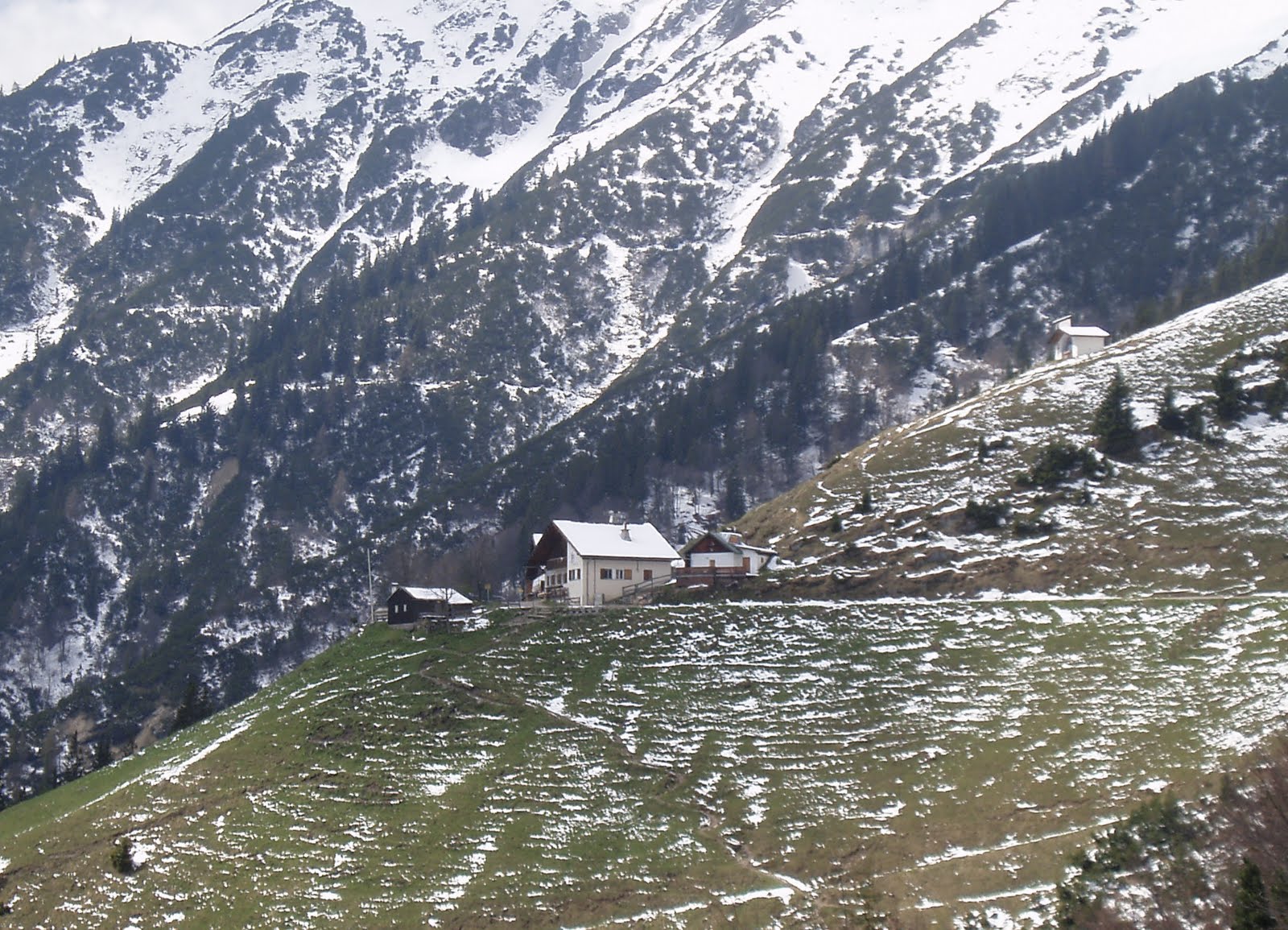
The Höttinger Alm, 1487 meters above sea level,  opened for the season on Saturday.

“Frau Hitt”, looking like a finger pointed in the air. Probably the closest I’ll ever get to it, not being much of an experienced climber. (Makes a nice desktop screen shot, too.)

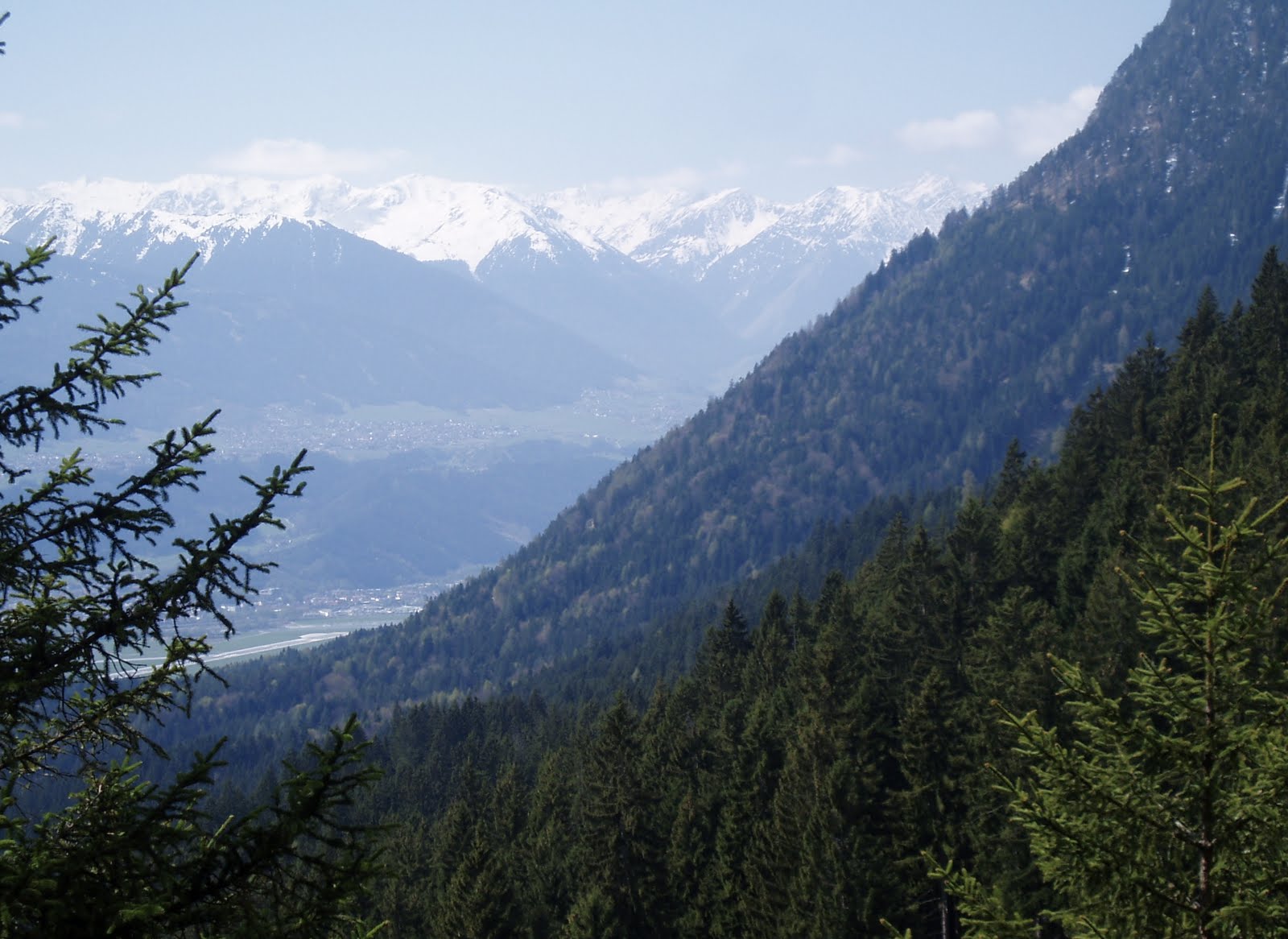
It was a relief to get back down to the warmer valley, and back into spring. On the way down I noticed a shrine of stones to a recent (2010) avalanche victim named Thomas Charry. It looked new-ish and more than the usual little plaque, so I looked up the name later: he was a ski photographer and blogger (link to blog, in French). His blog is being maintained by family, and they have been putting up Charry’s photos (both of him and by him) regularly. Which prompts me to remind all bloggers to have your passwords and account information stored where a trusted someone can access/delete/memorialize your pages, should you die suddenly. There are thousands of frozen, inaccessible sites out there, the bloggers having died and taken their account information with them to the grave. Write it down and stash it somewhere safe (but not impossible to find!)

>Pagans In Tirol: Der Judenbühel

>

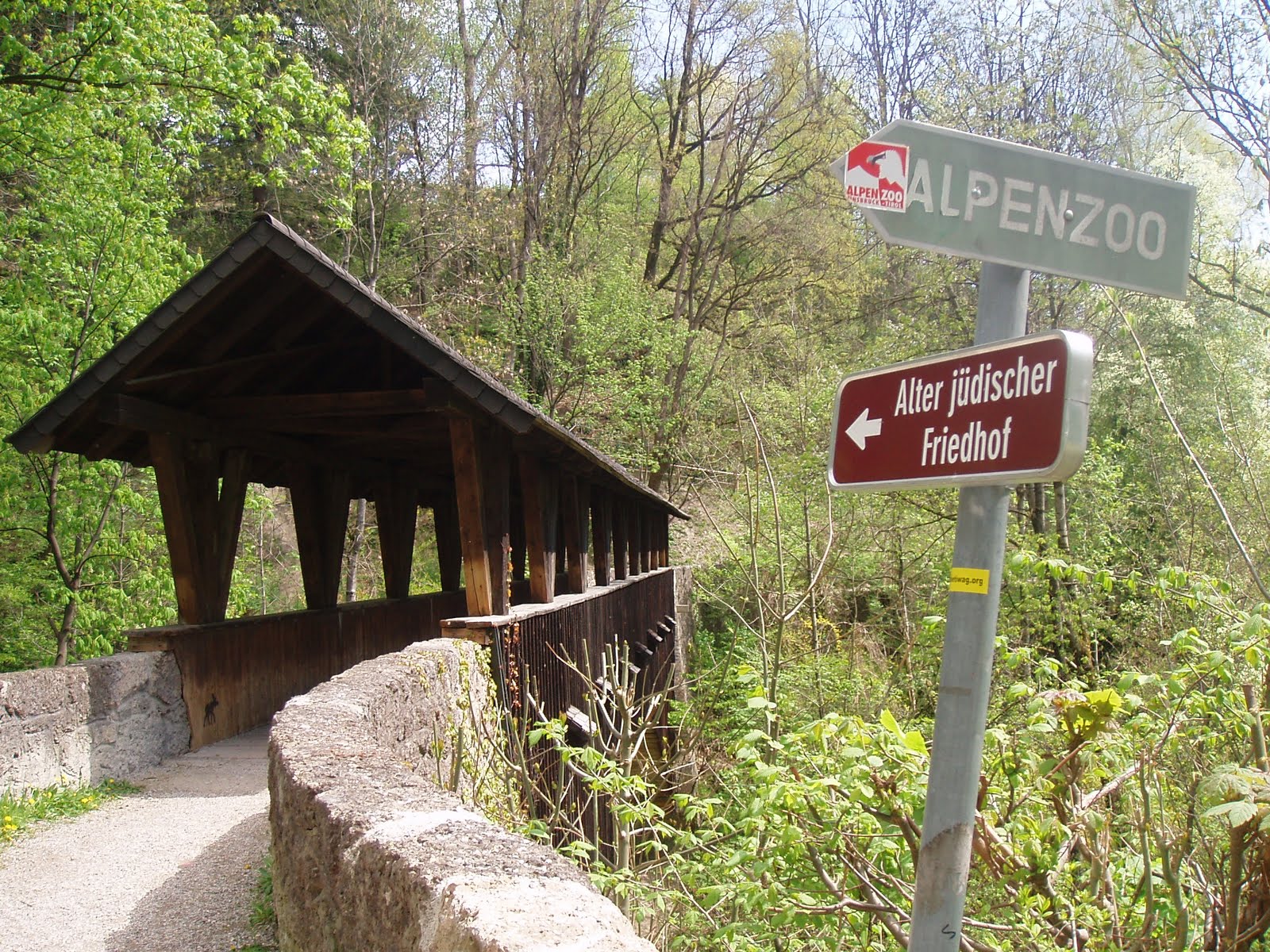
 Below the Alpenzoo, close to the Hungerburgbahn, is a bridge to a hill called the Judenbühel, or literally, Jews’ Hill. From a cursory online search I found that the first written reference to it is from 1598, when a Jewish local man got permission from court to establish a family plot there, “where the old Jewish graves were”. 

  
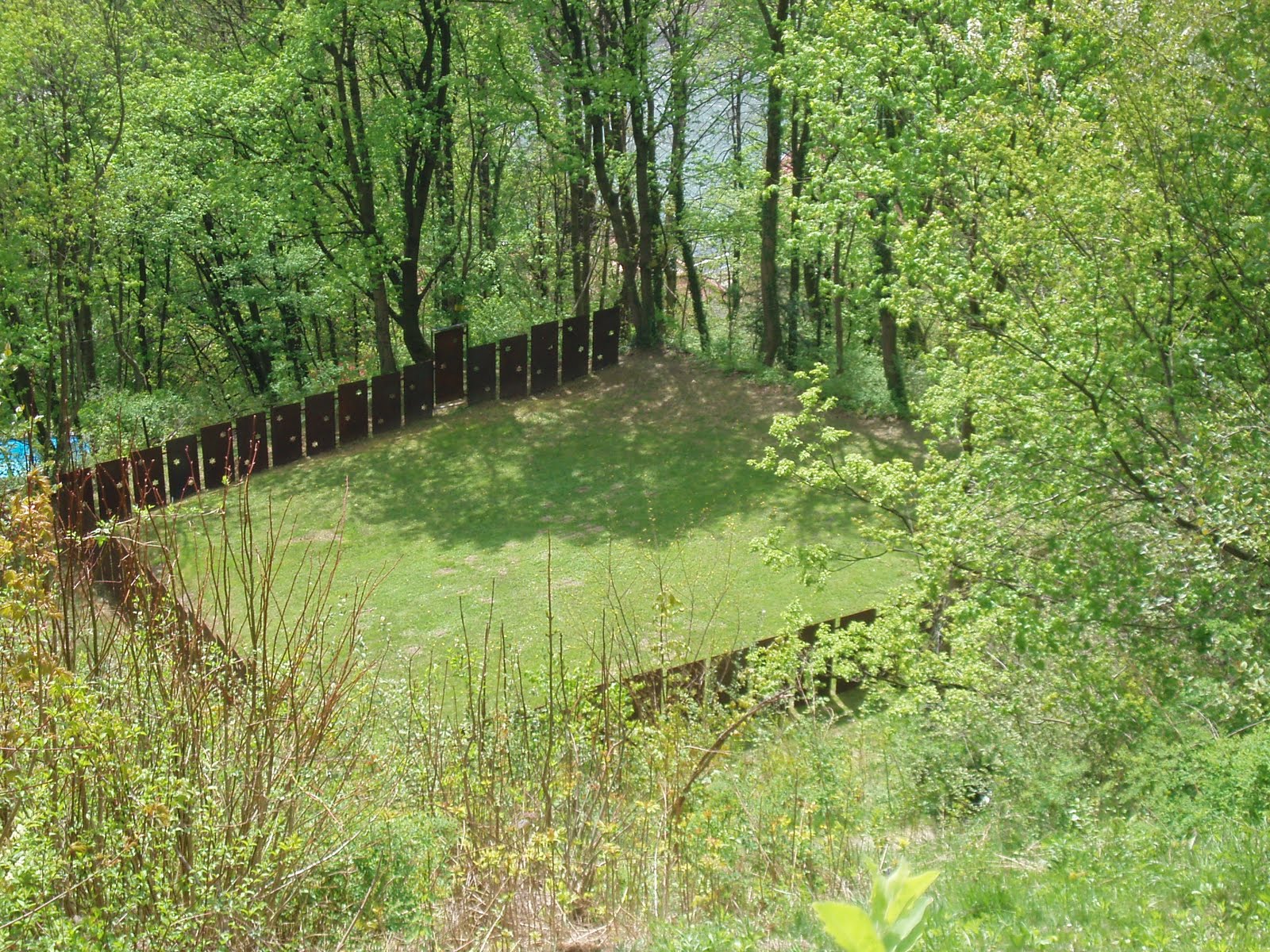
The old Jewish cemetery (rediscovered and now an historical site — the actual cemetery moved to the Westfriedhof in the 19th century) is found on a southern slope, not at the top. The top of the Judelbühel is as flat as a pancake, as wide as a parking lot, and circular. It currently holds a grassy park with a playground.

 The sides of the hill are covered with moss and trees, but there are places where the ground is eroding. And here you can see that there are no stones in this ground at all, it’s all just earth and tree roots. Which I find unusual, since this whole region full of rocks and boulders of all sizes. Was it landscaped in the last 100 years, or did it slowly grow, like the altar mound atop the Goldbichl?

 There may be perfectly modern answers about the flat-topped Judelbühel (maybe the top was landscaped for the playground in the last century or two?), but I haven’t found them yet. In the meantime I am left with comparisons to the Hexelbodele near Birgitz, and Schlern, and Bergisl and the Kalvarienberg, and other flat-topped hills which have histories as places of pre-historic communion. 
Which brings me back to Norbert Mantl and a few things he speculated about, in his book about pre-christian relics in the Inn Valley. One was that a few place-names beginning with “Jud-” are morphed from “Haid-” or some medieval version of it, which means “heathen”, which makes sense if you remember that to the early Christians (and in some places today too), Jews were just another kind of heathen. Mantl writes:

‘[The Judenbühel] is supposed to have gotten its name from the old Jewish cemetery which had been here… however it always questionable to view such cases as chapters of Jewish history. The Judenbühel is a “heathen” hill and for this reason only did the Jewish cemetery end up here, because Jews, as arch-heathens, could only be buried where other heathens were buried. One would never have allowed [in the Middle Ages] a Jewish cemetery to be built in such a beautiful place, if the Judenbühel and its neighbor the Ruch* had not already been home to the oldest and most evil form of heathendom. [Here I think he is referring to the Three Bethen.] Stone-age finds were made on the hill, therefor there was a very old settlement here and one can assume with some certainty that the hill was a holy place**, from which it got its name in early Christian times, independent from  later Jewish settlement in Innsbruck.’

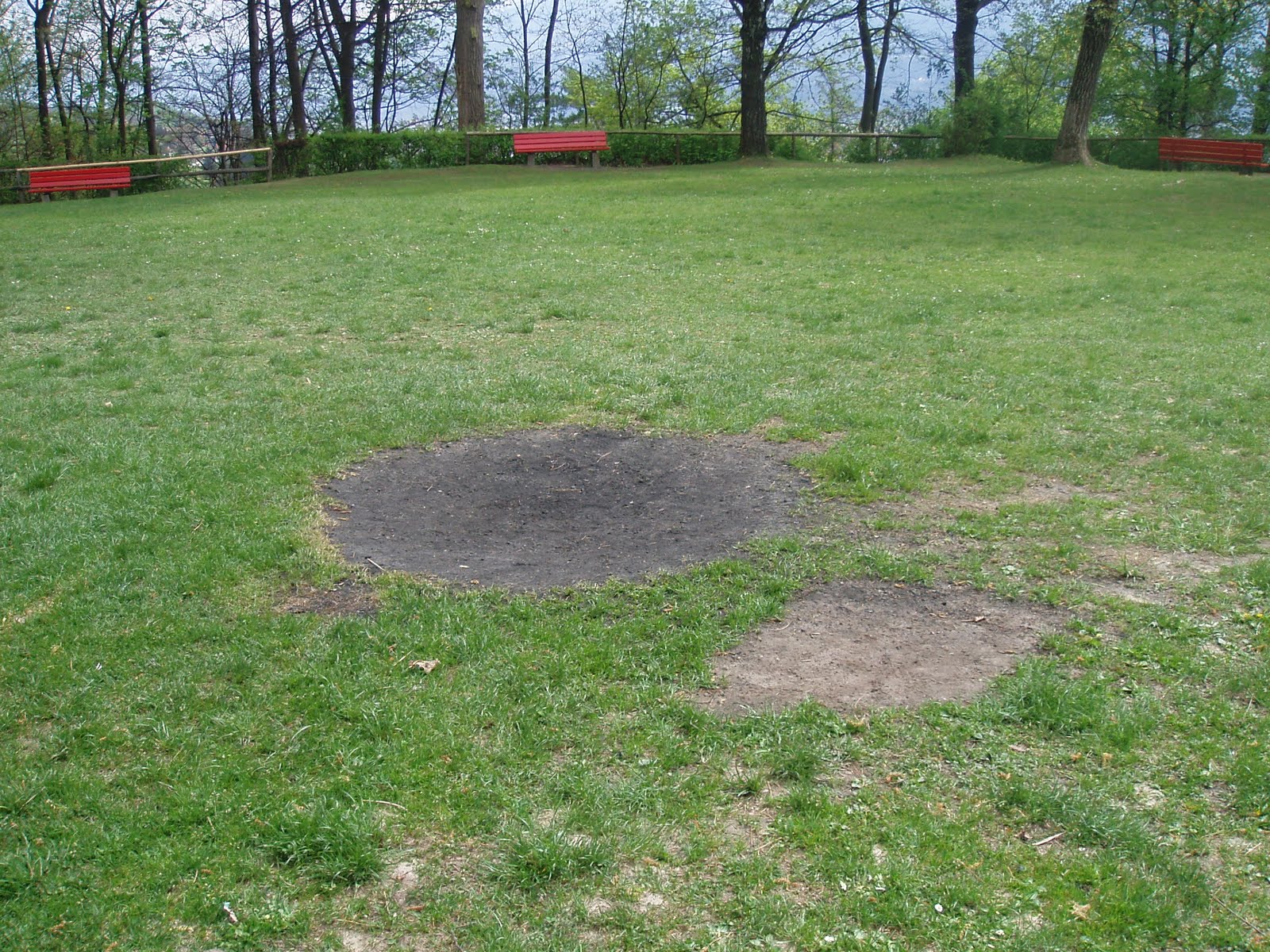
 Smack in the middle, traces of a regular campfire. Who makes these fires? Just squatters? An uneasy thought — I don’t know any local Pagans whom I can ask ( if maybe the fires are ceremonial), but there are elements of the neo-nazi scene which goes in for the Pagan, the mythological, the old ur-Germanic. The idea that they might be “keeping the fires lit” on these ancient meeting grounds does give one pause. Then again, what do I know, it might be the Scouts.
*I don’t know what the “Ruch” is.

** Why? Mantl does this all the time, assumes that because it was used, it was a holy place.

>Forgotten Innsbruck: Osterfeld

>Last week the City Museum hosted a talk on a rather obscure but interesting little corner of Innsbruck, specifically a field at the edge of town called Osterfeld, in Amras. This little piece of land was farmland for a long time, and for the past few decades it’s held community garden plots. But for a couple of years it was the resting place (not so final, it turned out) for the hundreds of victims of the Allied bombing raids on Innsbruck. Plans were underway to make the Osterfeld into a new, central cemetery in Tirol, not only for the air strike victims but for the newcomers from South Tirol, who had no family plots up here. According to an article in ORF, the landowner initially refused to give over his property, so the authorities simply had him reconscripted into the war. He survived, and returned after the war’s end to demand that the bodies be exhumed from his land. They were then transferred into a memorial plot in the cemetery in Pradl.

What seems like something that everyone would remember, ended up being another part of the general amnesia concerning events from that time. Eventually the community garden plots were parceled out, and all was forgotten until 1979, when a woman came upon two small cross pendants in the earth. And then a piece of bone, which upon further inspection was determined to be human. Which means that not everyone made it in one piece into the new cemetery.

I asked Paschberg, an Amras resident, for his take on this story, and he in turn asked his mother if she could remember the field’s use as a wartime cemetery. She remembered a convoy of trucks bearing coffins as it passed her family home, and this must have been even more keenly remembered due to the fact that one of her cousins, a young woman barely 18, lay in one of the coffins. (15.04.11. This I misread; her cousin was indeed killed in that air raid but was buried later in the regular Amras cemetery, not in Osterfeld and so would not have been among the dead transported there.)
She also noted that one did not ask questions at the time, nor speak too pointedly about anything with the neighbors, lest it all be turned around somehow and used against you. It must have been somewhat frustrating for my informant, quite the train enthusiast, to find that another victim of that collective amnesia had been a railway by-pass, not 100 meters from the family home, built to circumvent the (bombed out) train station, and promptly and completely forgotten after the war. As he tells it, describing what the older generation remembered of the line, “[i]t just appeared. One didn’t ask questions, nor did one make trouble to find out when – or even if – trains ran, and afterward it was just another thing to forget as quickly as possible. All in all, a time of deliberate looking away.”

>Ruins

>There’s a blog called After The Final Curtain, by photographer Matt Lambros, dedicated to the documentation of old abandoned movie theaters and news of restorations. The photographs are awesome.

Closer to home: in Phoenixville, Pennsylvania, a group of private citizens fought hard to take over and restore the Colonial Theater, which had been sitting in disrepair for years. The Colonial is now a major draw to the town, showing slightly-off-beat films, old silent movies, and live concerts. “The Blob”, a 1950s horror movie filmed nearby, was the inspiration for the incredibly popular annual “Blobfest” (highlight: the Running Out re-enactment, where lucky volunteer crowds are filmed as they run out of the theater, screaming.)

h/t to Benedikt

>Pagans In Tirol: The Beten And Other Mysteries

>

OK, they’re Norns; but, as we say in rural Pennsylvania, same difference.

The book in my hands in the photo in the previous post is “Vorchristliche Kultrelikte im oberen Inntal” (Pre-christian cult relics in the Upper Inn Valley), Norbert Mantl, Schlern Publishing, 1967. I bought it full of hopes that I’d learn a lot of forgotten lore about the region. And, well, I did indeed learn a lot, although some of it just might be greatly exaggerated, and some of it hooey.

I’ll start with the premises I might be willing to accept, which are in fact quite interesting: the indigenous people of the Inn Valley, as others in the alpine regions, saw their gods and spirits in the sun and moon, in the mountain peaks, caves and springs, and erected stone altars on hilltops to give up offerings and prayers. There seems to have existed, maybe only in a spiritual sense, a trinity of women — the three Beten*. Their given names, Ambet, Borbet, Wilbet — are possibly still with us in the names of mountains, caves, springs and other old places (Bettelwurf, Bötlerkuche, Barwies, Wildermieming, Bötlerbrunnele, etc), the meanings of which have been lost or attached to later, revised tales about beggars (Bettlern). The legend of Frau Hitt, Mantl maintains, is very old, not about a beggar’s curse and not originally connected to the protruding rock we call that name, but with the namesake of the Heiterwand and Hötting, a mountain deity named alte Hattle.

Mantl makes some interesting leaps in connecting names with old words and meanings, assuming that the pre-indo-germanic mountain folk spoke a language of which parts have survived, in the local dialects, over the millennia. His argument is that these peoples were pushed out of the Inn Valley by a string of newcomers, including (but not limited to) the Romans, the Franks, the Baiuwarii. They headed for the hills, which kept them isolated from each other and insular in their customs, languages, (hence particular dialects) and legends.

(The idea about dialects hadn’t occurred to me before: that it’s the “old” language of the original inhabitants showing through the “new” language. As an American I had assumed that the language came first and then the regional differences, but it could be the other way around. )

This argument strikes me as plausible, although there might be a bit of wishful thinking about the good old days in there. (His chapter on architecture confused me, and the one on bells and music just had me shaking my head. I am not qualified to comment on the chapter on Fasnacht costumes and traditions.) If one is to believe that so many place names signify holy ground, the entire Inn Valley would be lousy with pre-Christian holy sites and nothing else. Mantl also covers the pre-Roman history of Bergisel, Veldidena, the Romedius legend, and the giants Haymon and Thyrsus, but curiously says not a word about either of the two known Raetian settlements, near Wattens and Birgitz (the latter, at least, was known well before the book was written) nor about the sacrificial altar at Goldbichl.
I found dangerously high levels of jumping to conclusions, which makes me want to put Mantl in the same drawer as the English blokes who insist Ötzi was killed by a meteor blast, and Hans Haid. Nevertheless he has collected a ton of very localized myths and tales here (and in other books), and has a lot of information about local culture which started disappearing by the first world war. Naturally a lot of it is concentrated on the upper Inn valley, as the title suggests; places pretty much unknown to me  —Nassereith, Dormitz, Imst, the Pitztal. I should probably get up there someday. There is an local archaeology museum in Fliess…

But what would indeed be fascinating, even if not completely provable, is a connective line from three Germanic goddesses of fate to the Celtic/Roman Matrones, and the Norns, then to the three saints/three virgins, later Faith-Hope-and-Charity and, in our time,  to the three ladies with strange and wondrous powers who visit Sleeping Beauty’s cradle!

*A very generous Druid in Bavaria wrote and uploaded a comprehensive piece about the Beten and their later incarnations throughout Germanic history. You can read it here.

UPDATE: that link seems to be broken. Try here. And see also here, a later post about the Beten found in Leutstetten, Bavaria

>The Face Of Ötzi

>

Anybody need a new avatar?*
A new special exhibit opens today at the South Tirol Museum of Archaeology, in Bolzano (Italy), in honor of Ötzi’s reemergence out of the ice, 20 years ago. One of the highlights is supposed to be a new facial reconstruction of the ice man, using the very latest forensic techniques.

Information here

*He’s already got a Facebook page, natürlich.

>Overheard At A Bus Stop

>American tourist, to bus driver: “Can you tell us how to get to the Imperial Gardens?”
Austrian bus driver: “Wos?”
American tourist: “The Imperial Gardens?”
Austrian bus driver: pauses a second, shrugs, “Nah.”
American tourist: “OK thank you.”

Dear  U.S. guide book writers: please don’t  translate the names of sights in ways that nobody will understand, not even the American resident who happens to be on the bus. The door had shut and we’d pulled away before it finally dawned on me, what he was looking for.
Well, I hope he and his party at least discovered some things on the way, maybe a nice pub to talk about back home,  if they never did find the Hofgarten.

>Something Interesting About The Judenstein

>Two years ago I wrote a post about the local tale of Judenstein, or the “Jews’ Stone”, a tale which had been picked up by the Brothers Grimm and made known the world over. Last month I read a very interesting book about pre-Christian finds in Austria (cult stones, altars, that kind of thing) and came across this, which I also have posted as an update to my original post (translated here by me):

The “Judenstein” was without a doubt once an altar, where people had been once ritually sacrificed… According to the legend, after the murder, the Jews hung the boy from a birch tree. “That is a purely heathen story, nothing Christian nor Jewish in it”, writes Norbert Mantl in his 1967 book about pre-Christian cult relics in the Upper Inn Valley.  “The saga deals with the memory of a ages-old fertility sacrifice, whose ritual is still recognizable. Blood was spilled over the stone and the birch, representing the all plant life necessary to humans, received the corpse as an offering. It had to do with fertility and a good harvest, but also for the welfare and prosperity of humans and their animals.”

If true, it fits in well with the general idea that the church sometimes twisted older stories to their advantage (just think of all those saints and martyrs!) and may even have felt in necessary as a war tactic at the time, refitting the story around the more current “enemy”, having dealt sufficiently with the heathens centuries earlier.

>Weekend Mountain Blogging: Hexenbödele

>

10 minutes’ drive west of town is a wooded hill called the Hohe Birga, at which excavations have uncovered a Raetian settlement and objects dating from the Iron Age. Like the stone terraces at Himmelreich and the sacrifical altar site at Goldbichl, this settlement ended shortly after the Romans pushed through and burned it all down.  

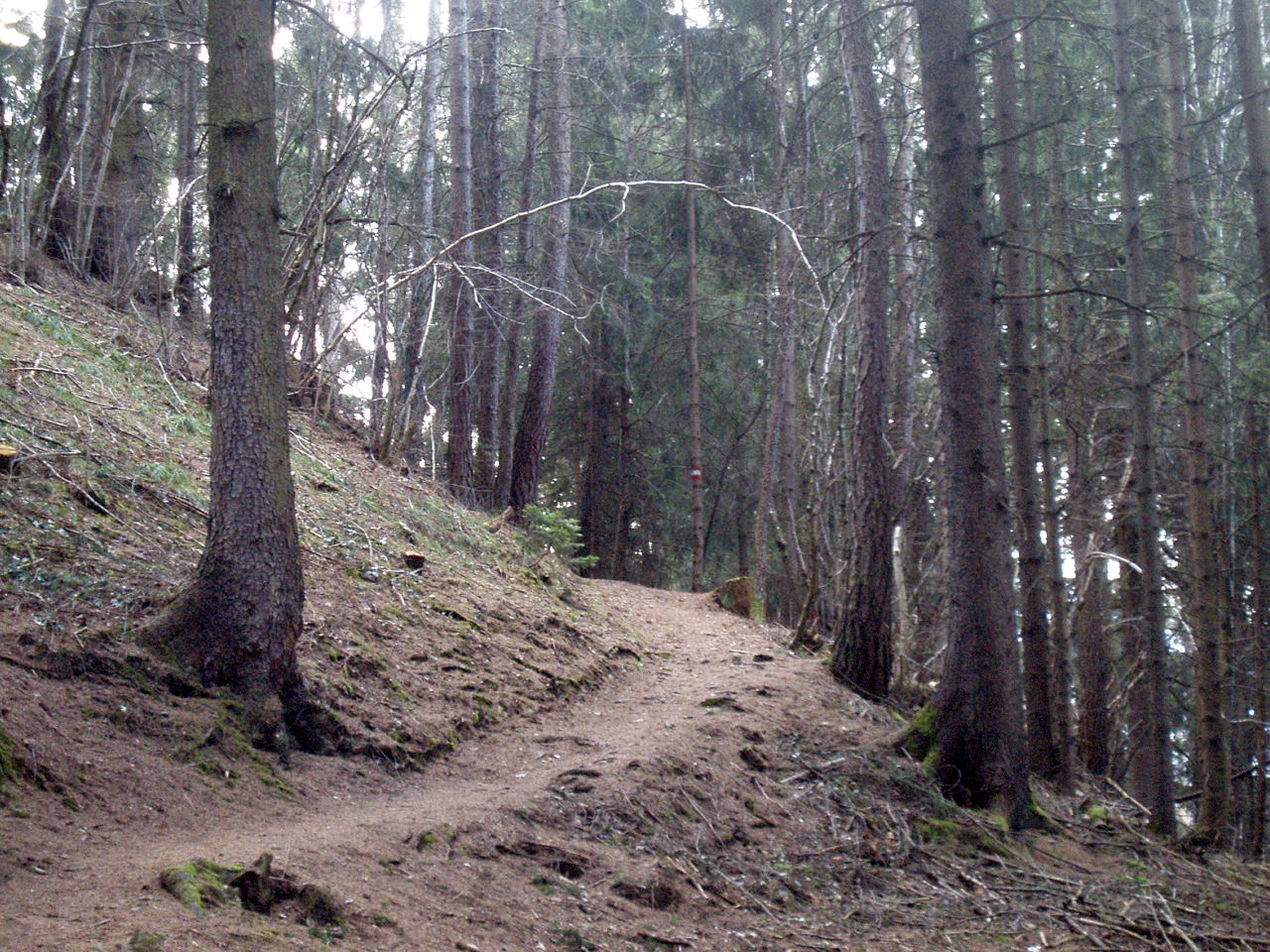
The paths were narrow and windy, and sometimes rather steep. I began to feel like a hobbit on the road to Mirkwood.

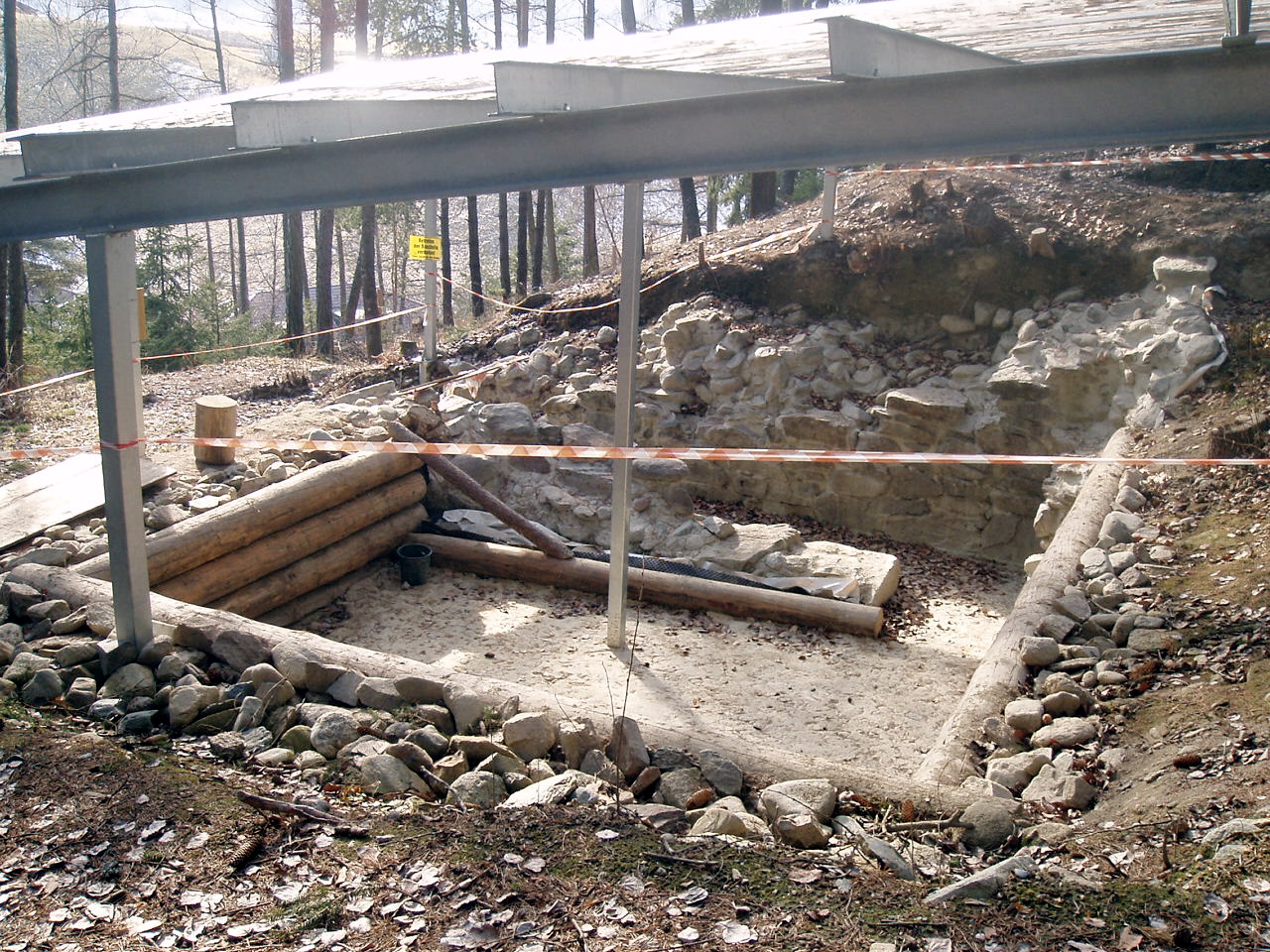
 The excavation of a Raetian house, part stone and part log (reconstructed here.) There are plans to display the objects found here in a new Rätisches Museum in nearby Birgitz, although I don’t know when it will open. (It wasn’t today.)

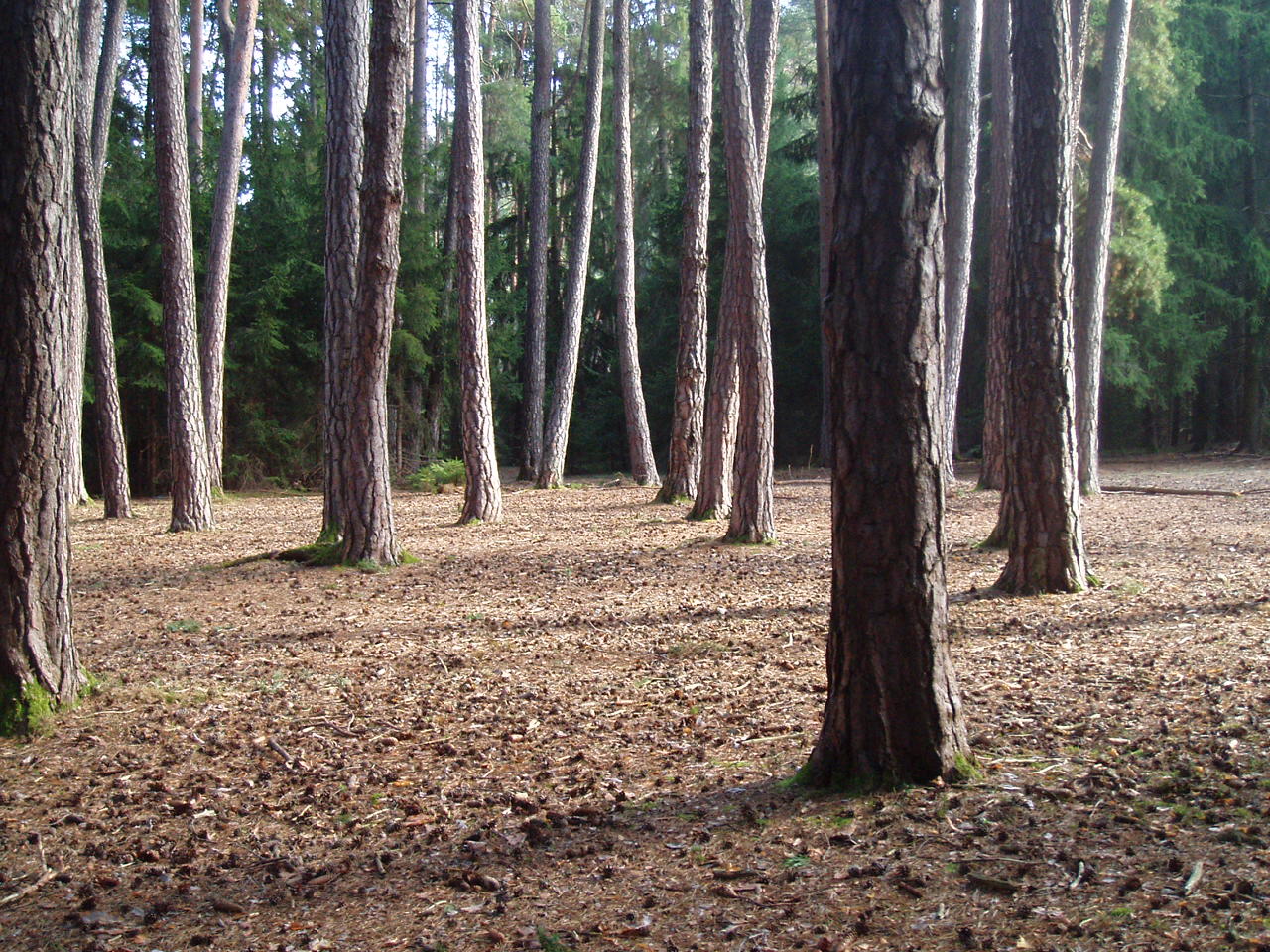
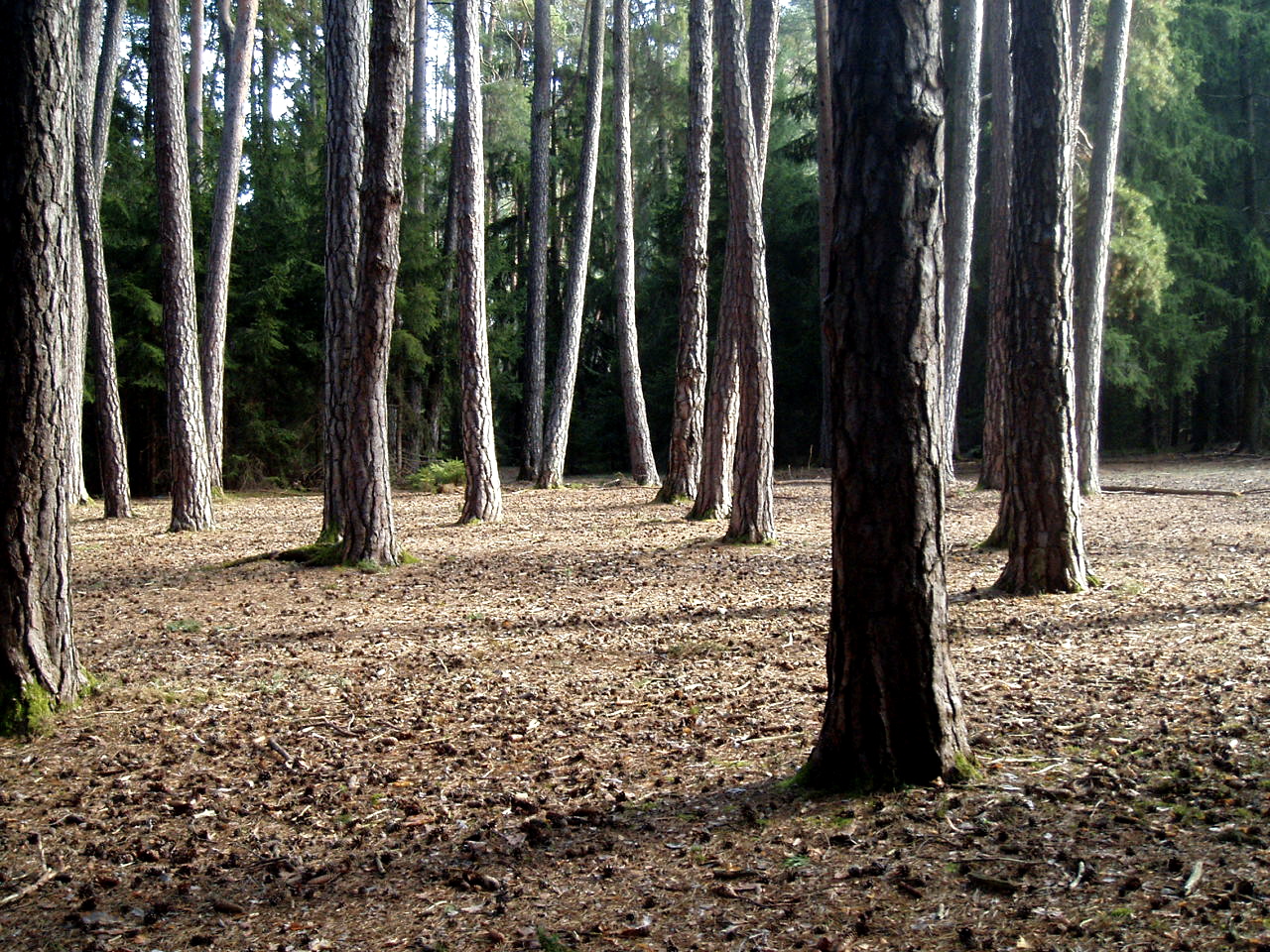
My hiking map was not completely clear on this, but I took this very flat area on the hill to be the Hexenbödele, the place where the witches dance. It is said that many flat-topped hills in Europe are known as “witches’ meeting places” or Hexentanzplätze  — often these places have turned out to have significance to pre-Christian societies. (There is a large, high plateau in northern Italy with this legend, and sacrificial objects from pre-Roman and Roman times have been found at the site.)