Pagans In Bavaria: Viereckschanzen in Holzhausen

Along with the Sunderburg and the pre-Christian grave mounds hidden here and there, the area immediately north of the Ammersee also contains two fairly well-preserved Celtic Viereckschanzen, rectangular earthen enclosures, called Holzhausen 1 and 2. Their function is disputed among archaeologists as to whether they held sacred groves or were built for more practical purposes as forerunners to medieval city walls. They were certainly large enough for whole clans to live in them, being roughly 100 meters long and 75 meters wide, which would make for an unusually wide football field.
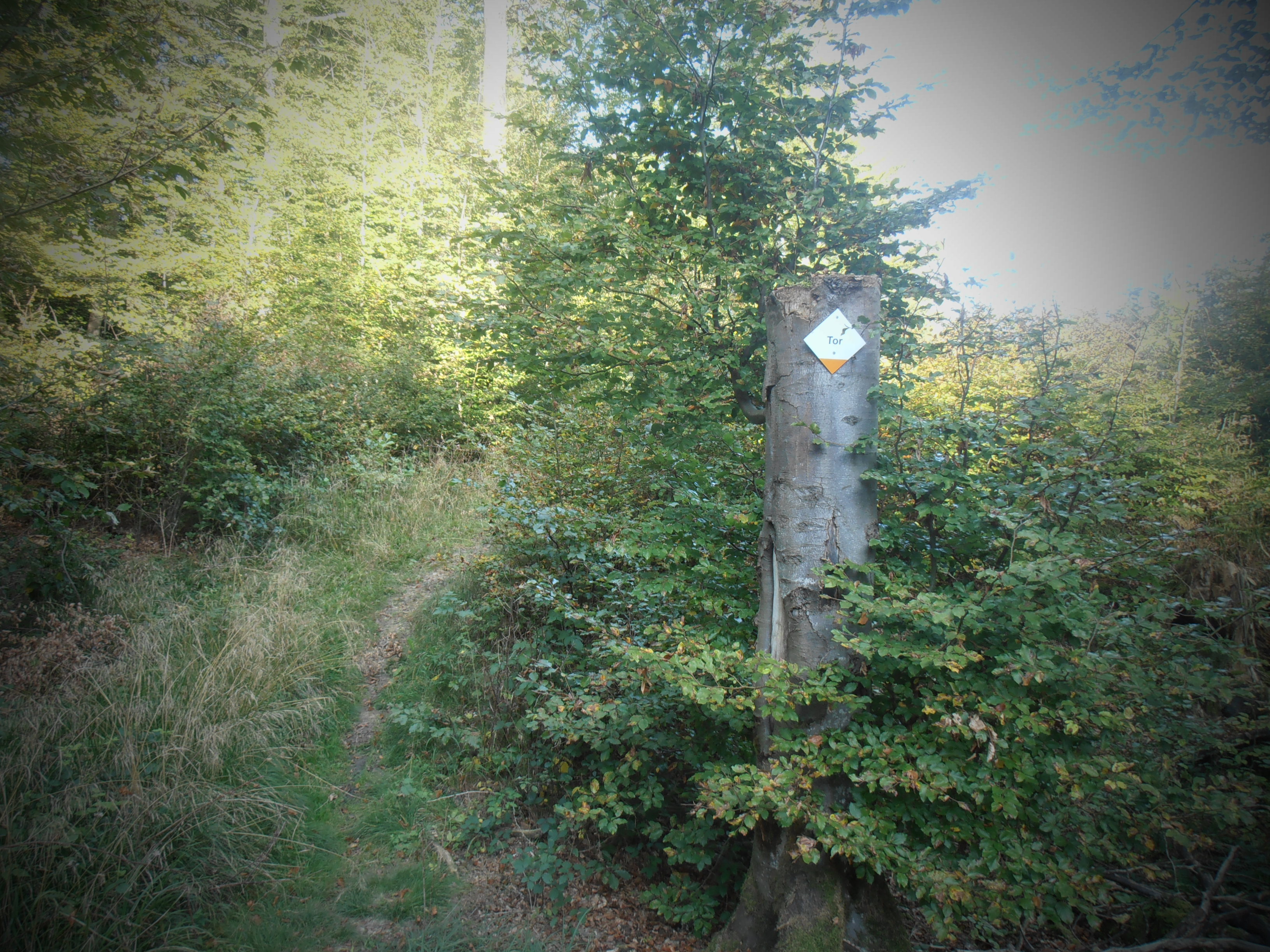
Holzhausen 1 has an entrance gate, or at least a higher break in the wall where a gate would have been built. A nearby sign suggests how one would have looked.

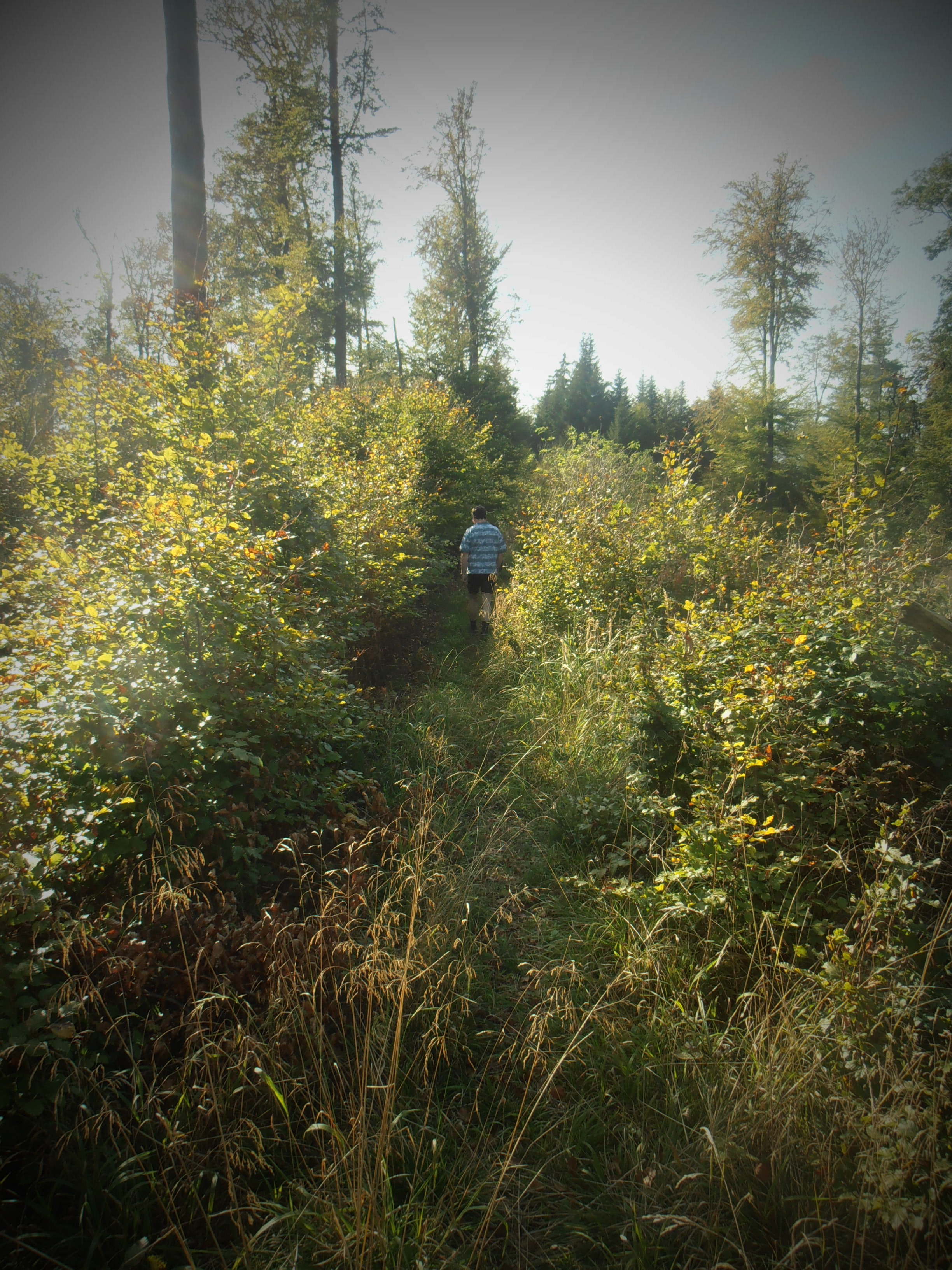
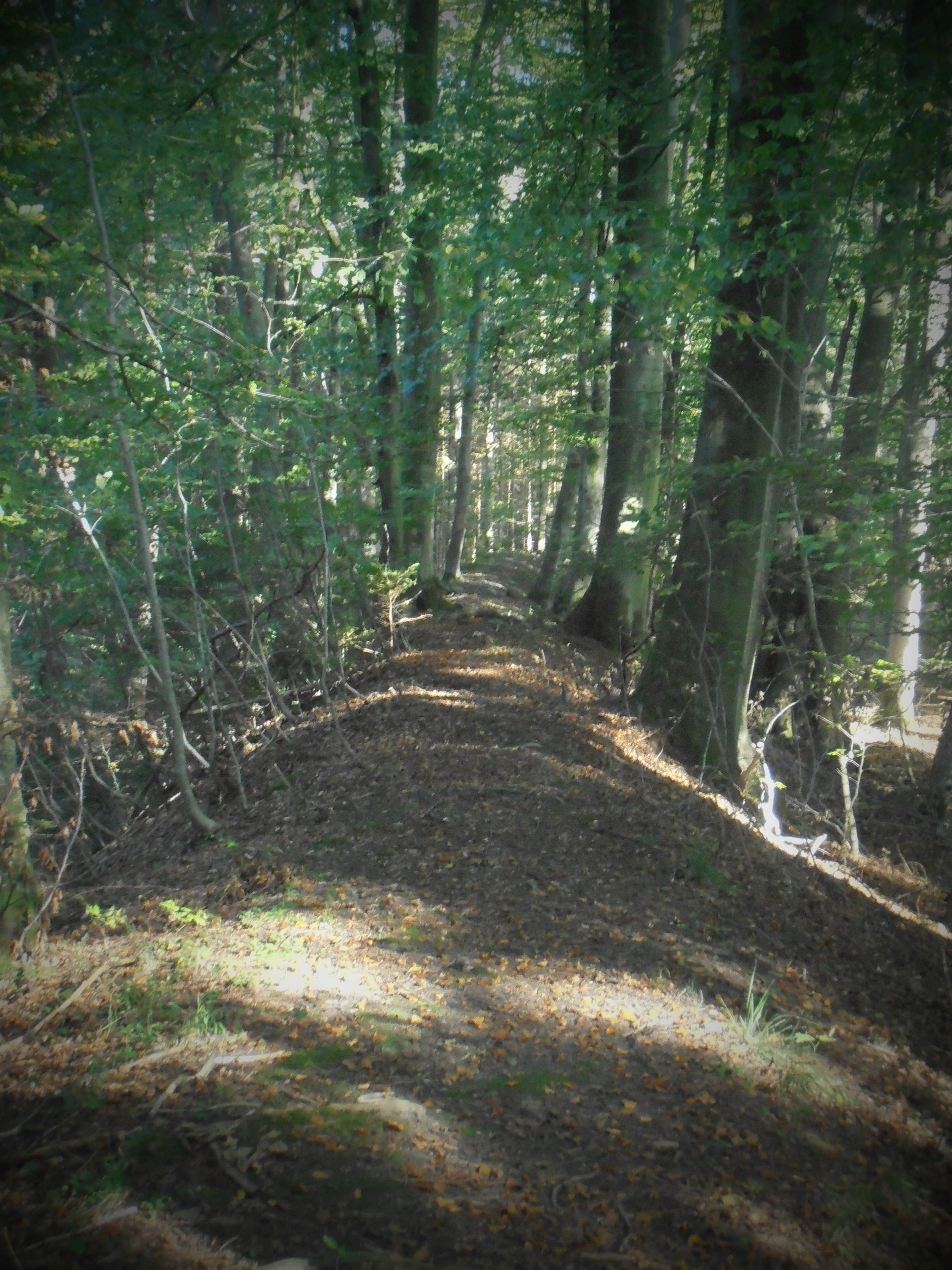
A path now leads along the top of the wall, bringing the visitor all the way around and back to the gate.
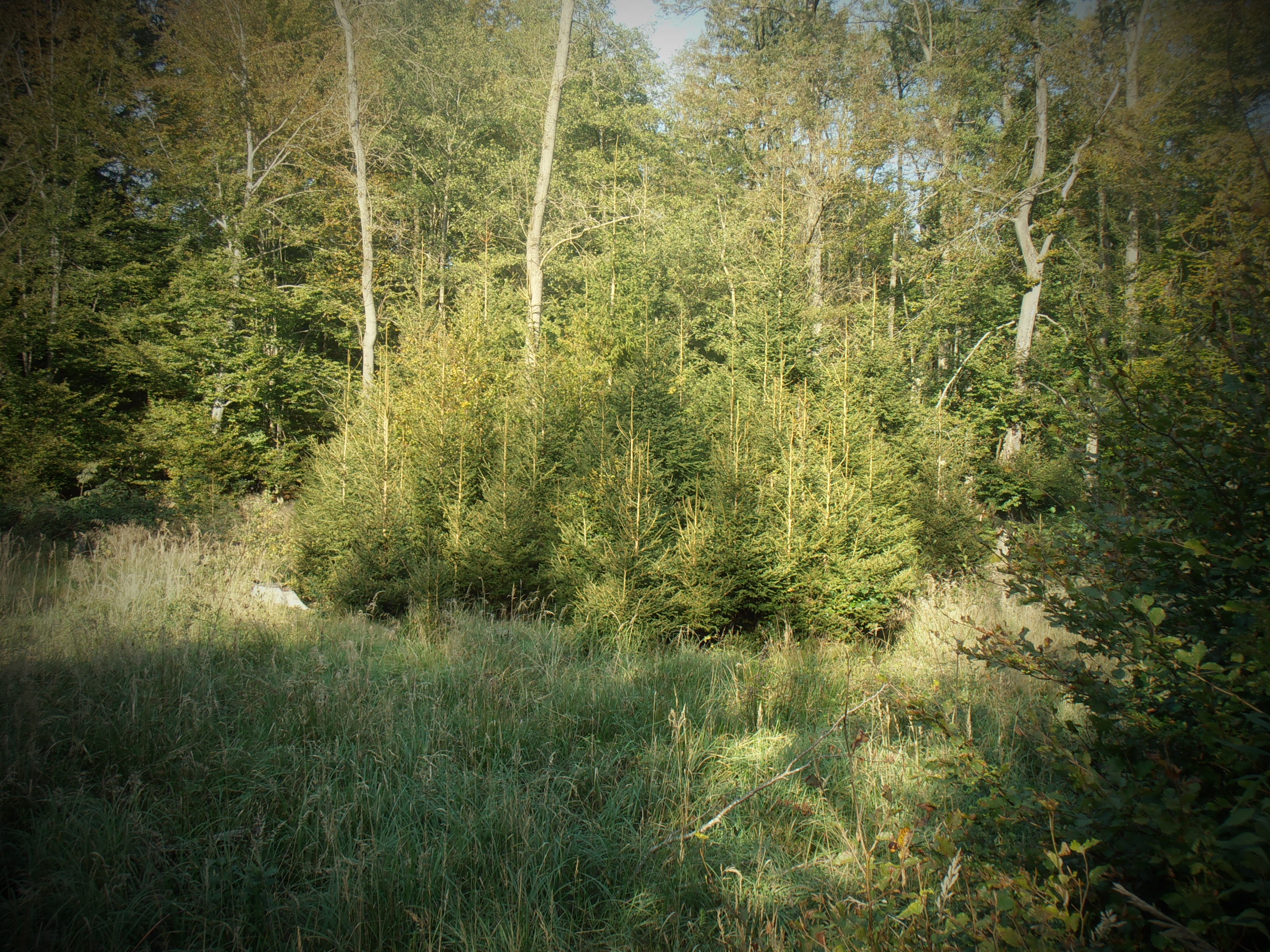
Inside the wall is meadow, and, interestingly, a small copse of young trees about right in the middle. Much older trees had stood here but had been cut down. We didn’t count the rings in their stumps but there were many. Possibly someone is maintaining their own sacred grove.
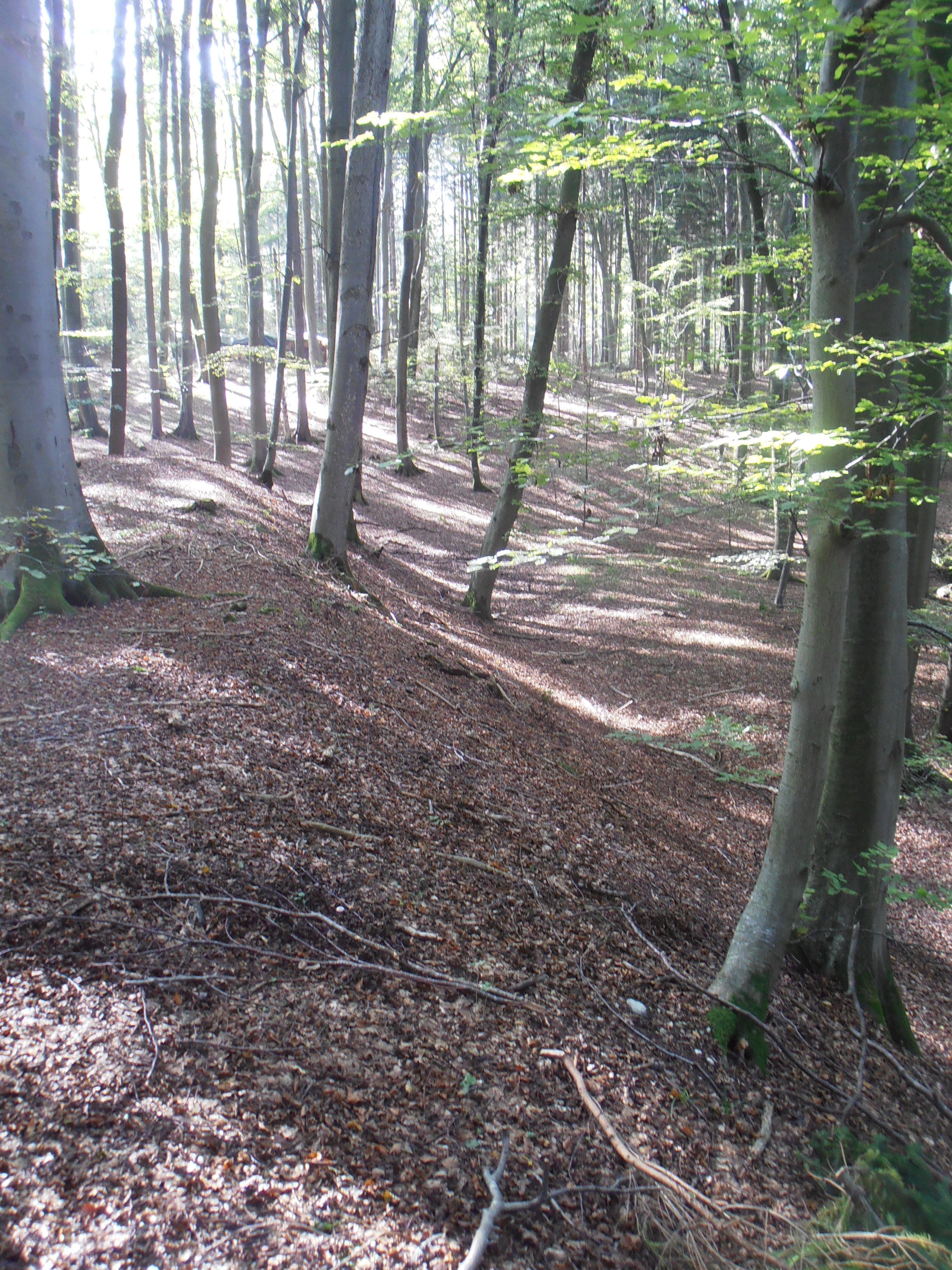
At Holzhausen 2, the forest has taken over. The ground inside the wall has filled in over time so that the earthwork is now more of a plateau. Here is the edge, from above on the wall.
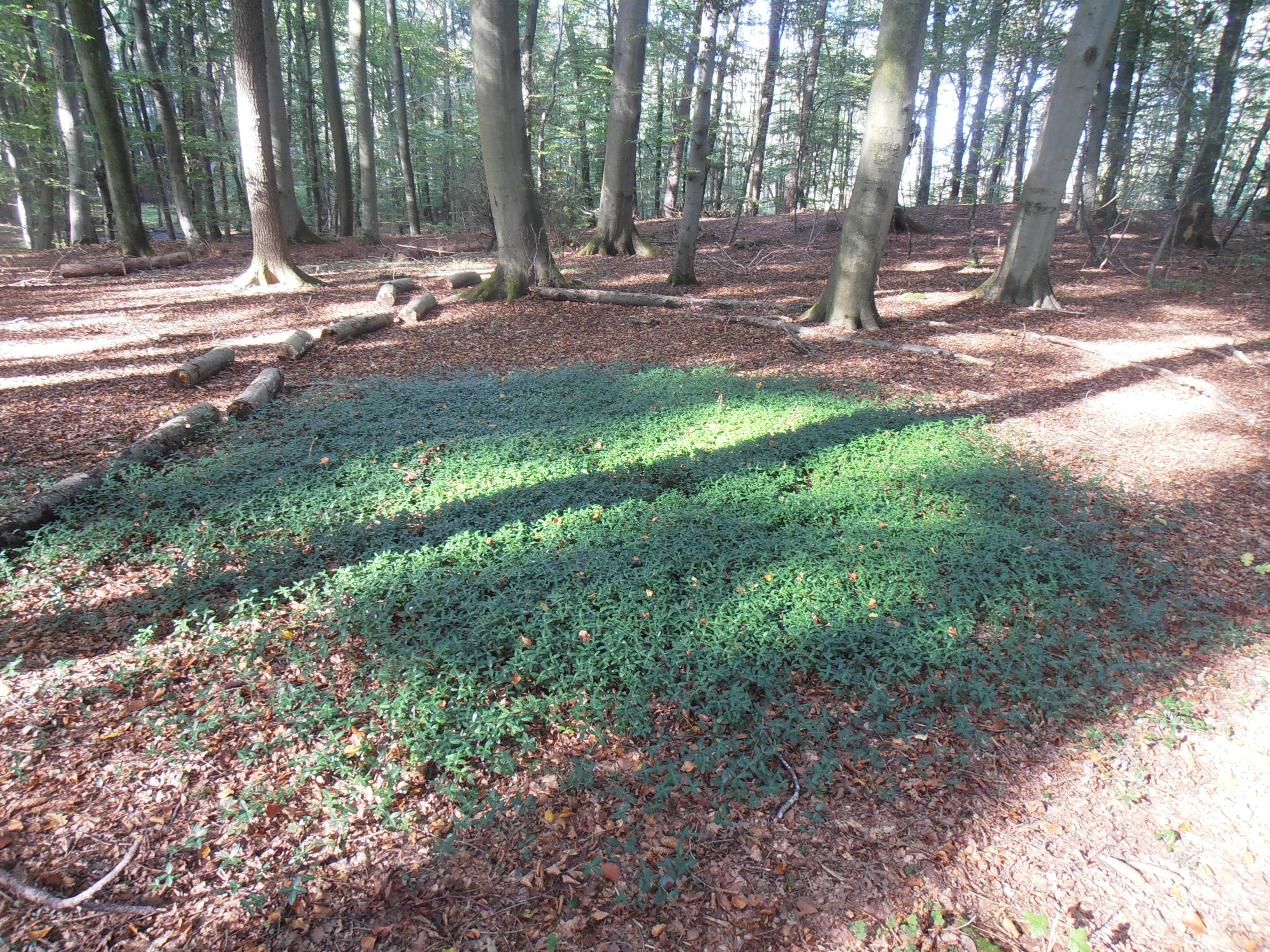
Here again, just about in the middle of the Schanze, an unusual circle of plant life. I’m going to assume that fires were made here in the recent past, and the wood ash left the earth especially fertile for this plant. I’m not very romantic about the past — I tend to think people had way too much to do trying to stay alive and healthy and keep what they had, than to put all this work into a little sacred circle. But hey, that’s me. It’s clearly someone’s sacred circle now, and it’s nice to know that these someones are caring for this speck of land.
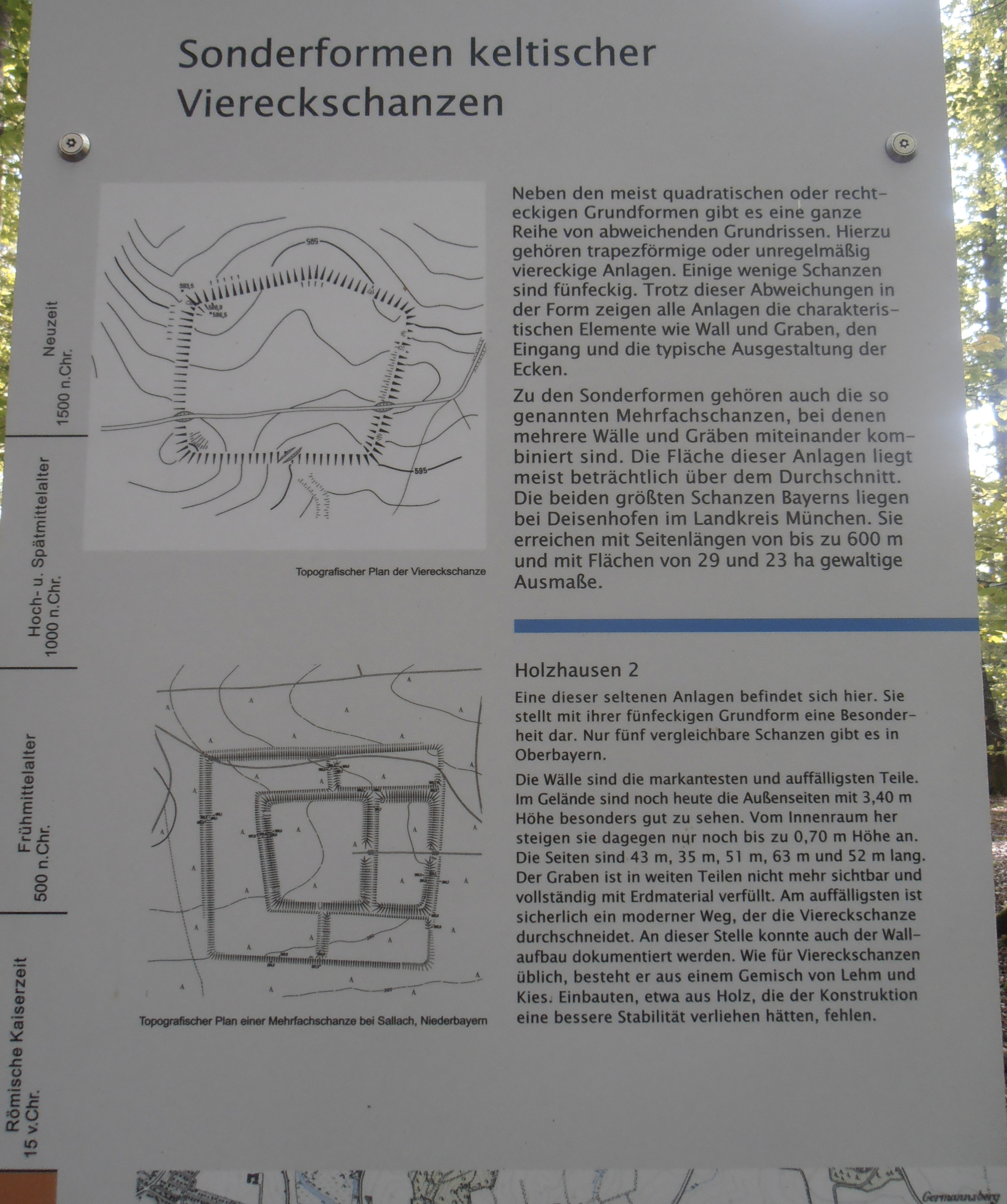
By each Schanze is a small sign explaining the site, and nothing more. Better that way — it’s not easy to find, not easy to reach (we took our mountain bikes), and less liable to be wrecked. Holzhausen is just south of Fürstenfeldbruck, near Schöngeising, 40 kilometers west of Munich.
The Hidden Jewish Cemetery in Utting

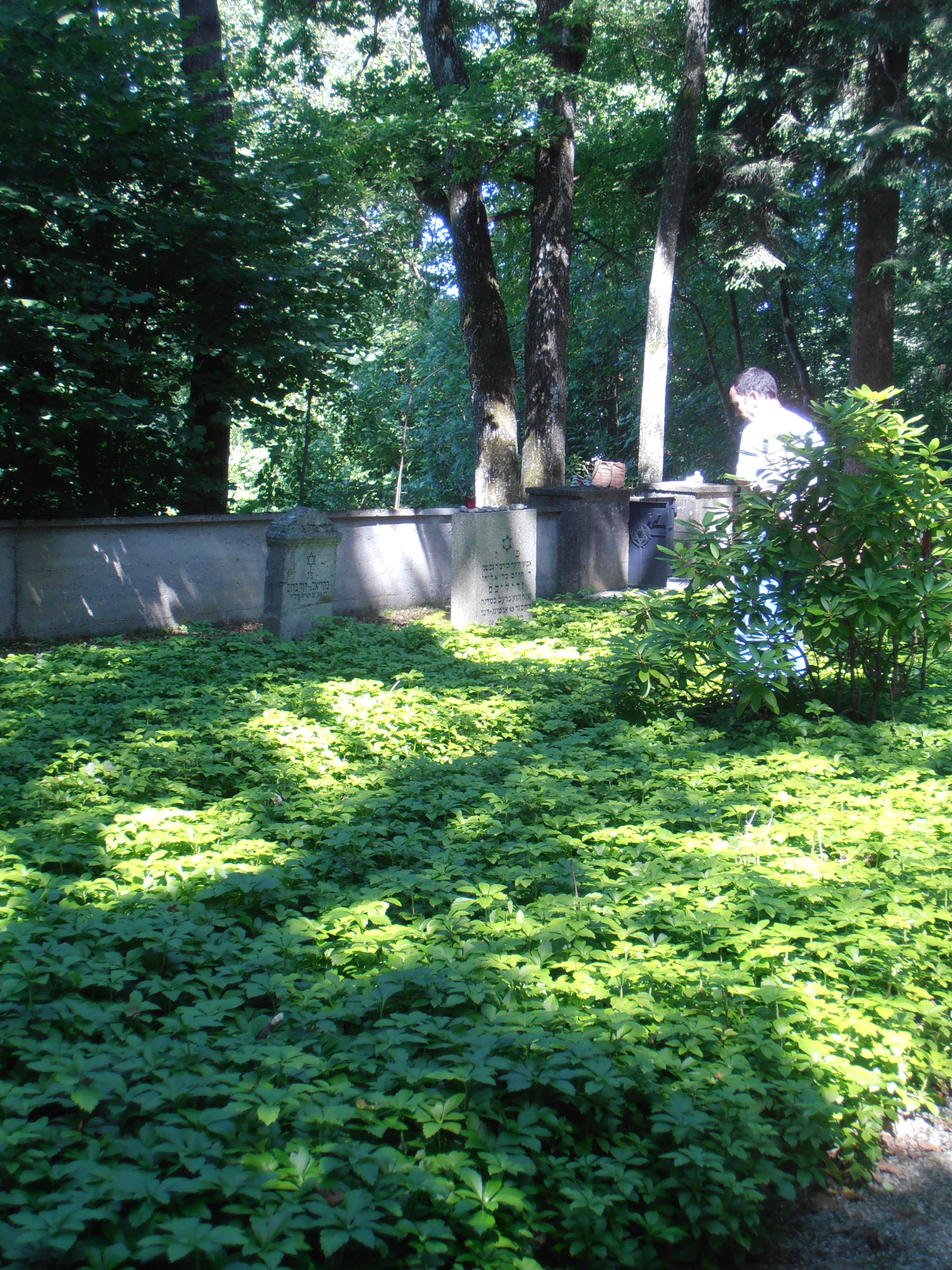
Looking for other archaeology sites on the local map, one stumbles across other, less expected things. For example, a KZ (concentration camp) cemetery outside of the small lakeside town of Utting, where there had been a tannery which made use of forced laborers from Dachau — there were satellite camps all around, this was Camp 5 (Lager V).

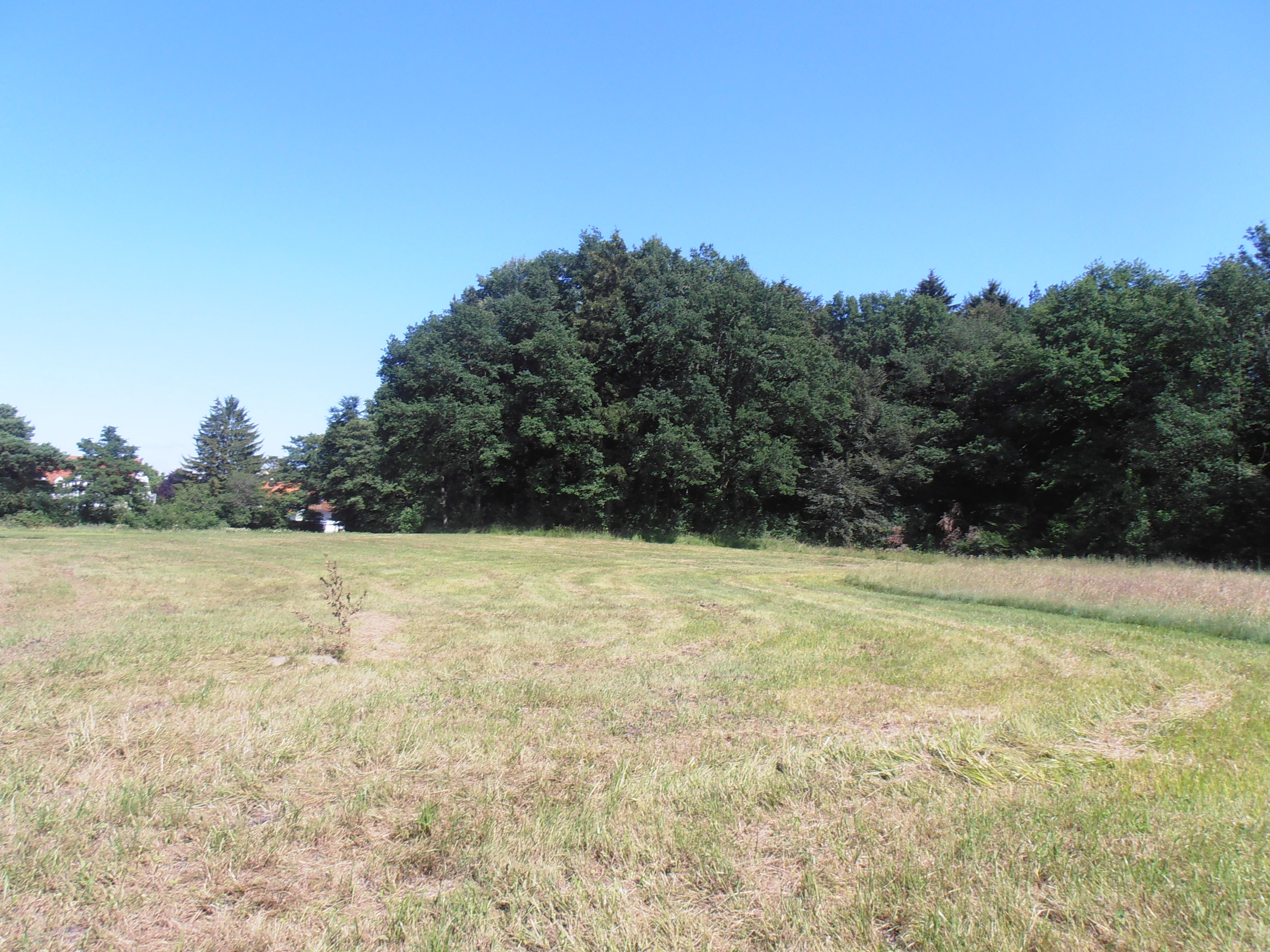
We almost didn’t find it. In fact we had come to a dead end in a field and started to turn back, when a local came by on his bicycle. When he heard what we were looking for, he generously walked us there (we never would have found it on our own, once we saw where we were headed — through a patch of forest,  someone’s back lawn and  a wooded archery range — but we had come in from the wrong road, it seemed.

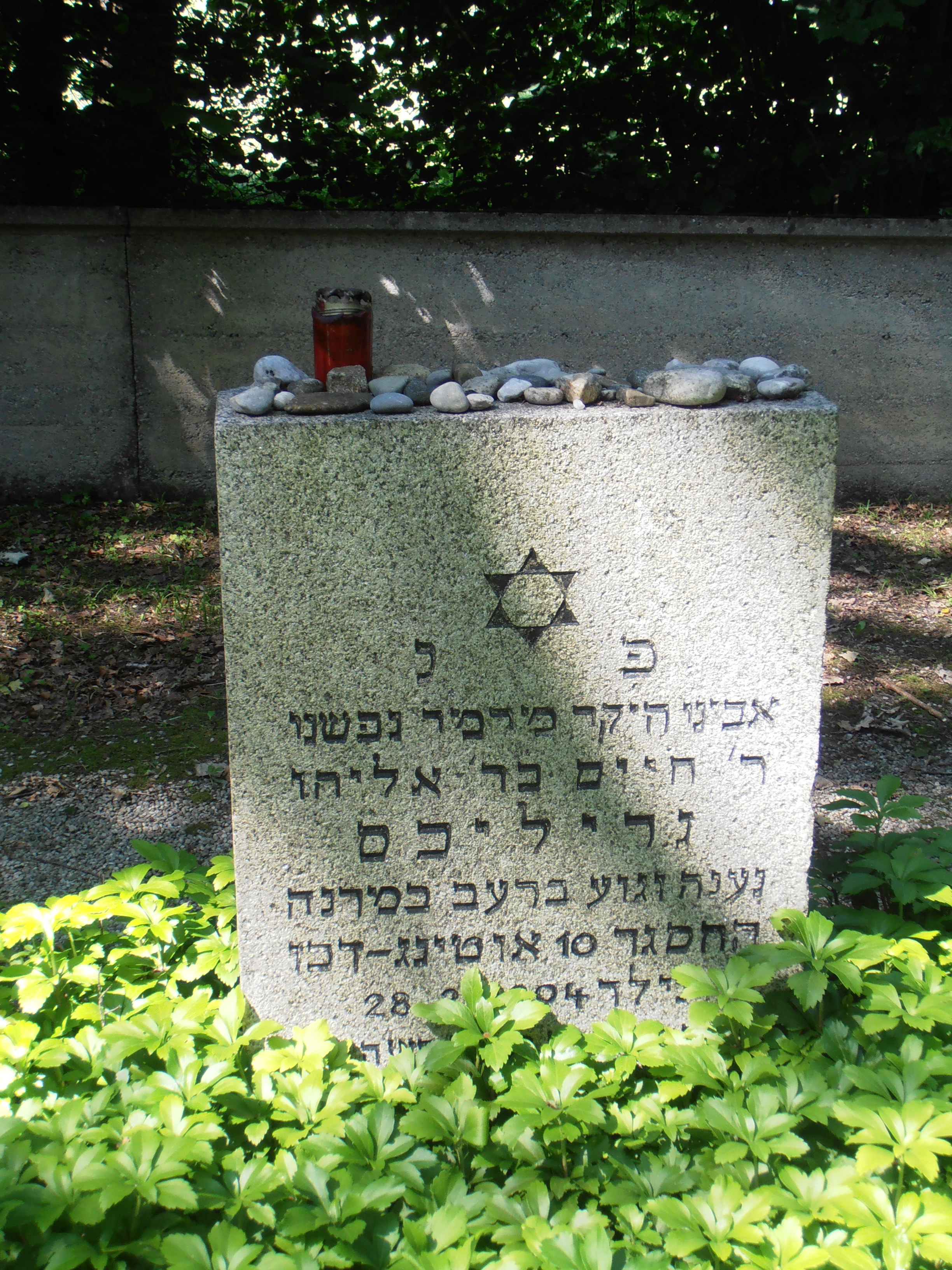
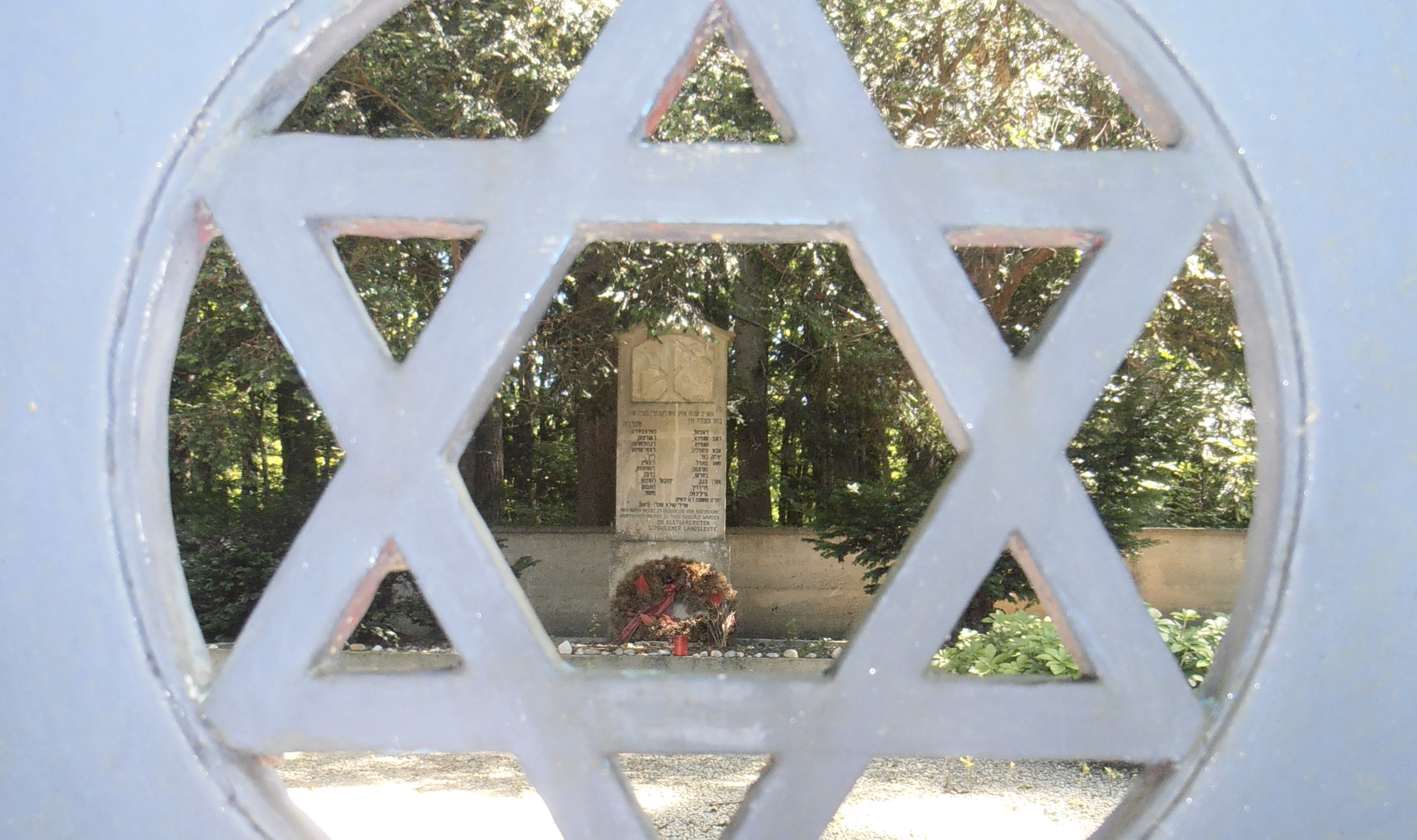
About 500 male prisoners worked here from August 1944 until April 1945. This cemetery is for the 27 who died from the brutal treatment.

A large stone inside the cemetery wall commemorates the 27 victims, from “the rescued compatriots of Schaulen” (Šiauliai, in Northern Lithuania, was an important leatherworking town. Which explains why its sons were brought to the tannery).

In my research I came across this poem by Yehuda Amichai, translated into English by Chana Bloch and Chana Kronfeld. The description could fit just about any of these little memorial graveyards, including this one.

“A Jewish Cemetery In Germany”

On a little hill amid fertile fields lies a small cemetery,
a Jewish cemetery behind a rusty gate, hidden by shrubs,
abandoned and forgotten. Neither the sound of prayer
nor the voice of lamentation is heard there
for the dead praise not the Lord.
Only the voices of our children ring out, seeking graves
and cheering
each time they find one–like mushrooms in the forest, like
wild strawberries.
Here’s another grave! There’s the name of my mother’s
mothers, and a name from the last century. And here’s a name,
and there! And as I was about to brush the moss from the name–
Look! an open hand engraved on the tombstone, the grave
of a kohen,
his fingers splayed in a spasm of holiness and blessing,
and here’s a grave concealed by a thicket of berries
that has to be brushed aside like a shock of hair
from the face of a beautiful beloved woman.

Historical information on the cemetery found here. This is the work of one Othmar Frühauf, who has photo-documented Jewish cemeteries in Germany for Alemannia Judaica (Both links are in German). My hat goes off to him.

Poem found here

>Forgotten Innsbruck: Osterfeld

>Last week the City Museum hosted a talk on a rather obscure but interesting little corner of Innsbruck, specifically a field at the edge of town called Osterfeld, in Amras. This little piece of land was farmland for a long time, and for the past few decades it’s held community garden plots. But for a couple of years it was the resting place (not so final, it turned out) for the hundreds of victims of the Allied bombing raids on Innsbruck. Plans were underway to make the Osterfeld into a new, central cemetery in Tirol, not only for the air strike victims but for the newcomers from South Tirol, who had no family plots up here. According to an article in ORF, the landowner initially refused to give over his property, so the authorities simply had him reconscripted into the war. He survived, and returned after the war’s end to demand that the bodies be exhumed from his land. They were then transferred into a memorial plot in the cemetery in Pradl.

What seems like something that everyone would remember, ended up being another part of the general amnesia concerning events from that time. Eventually the community garden plots were parceled out, and all was forgotten until 1979, when a woman came upon two small cross pendants in the earth. And then a piece of bone, which upon further inspection was determined to be human. Which means that not everyone made it in one piece into the new cemetery.

I asked Paschberg, an Amras resident, for his take on this story, and he in turn asked his mother if she could remember the field’s use as a wartime cemetery. She remembered a convoy of trucks bearing coffins as it passed her family home, and this must have been even more keenly remembered due to the fact that one of her cousins, a young woman barely 18, lay in one of the coffins. (15.04.11. This I misread; her cousin was indeed killed in that air raid but was buried later in the regular Amras cemetery, not in Osterfeld and so would not have been among the dead transported there.)
She also noted that one did not ask questions at the time, nor speak too pointedly about anything with the neighbors, lest it all be turned around somehow and used against you. It must have been somewhat frustrating for my informant, quite the train enthusiast, to find that another victim of that collective amnesia had been a railway by-pass, not 100 meters from the family home, built to circumvent the (bombed out) train station, and promptly and completely forgotten after the war. As he tells it, describing what the older generation remembered of the line, “[i]t just appeared. One didn’t ask questions, nor did one make trouble to find out when – or even if – trains ran, and afterward it was just another thing to forget as quickly as possible. All in all, a time of deliberate looking away.”

>More Traces Of The Anschluss

>Creepy news from the region. A field of graves containing the remains of approximately 220 people was discovered in the course of a construction project at the hospital in Hall in Tirol. It is suspected that at least some of the dead were victims of the NS euthanasia policy. It has been determined that the bodies were interred between 1942 and 1945.

Construction plans were immediately halted and plans made to exhume and try to identify the bodies. According to local historian Horst Schreiber (an excellent author of many in-depth books about the region during the Nazi era), plans had been submitted for a euthanasia program involving lethal injection, but was rejected by the Nazi authorities (for whatever reason). It has been long suspected, however, that hundreds of patients were simply starved to death in Hall.

In the Anschluss years, at least 3000 people from Tirol and Vorarlberg were reported as carrying hereditary diseases — by doctors and other caregivers, who were legally bound to report them. At least 400 were forcibly sterilized; over 700 from Tirol, including children, were deported to Schloss Hartheim near Linz, a main area of euthanasia activity where thousands of people were gassed. Records were kept top-secret and death certificated were falsified, the families of the deceased given false information about the fate of their loved ones.

Exhumation of the graves will begin in March.

Wikipedia entry on “T4”
Article in Der Standard (de)

>Die Ahnen

>On the left is my maternal great-grandmother, who died of illness when my grandmother was still a young girl. Next to her is her own mother, and her father is in the back, sitting against the wall. The parents were both Carpatho-Russian immigrants from eastern Slovakia, who met in America. I’ve heard it said that my great-great-grandmother had “second sight”, which is intriguing, although I have no examples to relate.
My Sicilian great-grandparents with six of their seven children (the youngest hadn’t been born yet.) I am fairly certain that the boy sitting closest to my great-grandfather is my own grandfather, from his face and his expression. I can only remember meeting my great-grandparents a couple of times, even though we all lived in the same town. A family reunion or two, and then a funeral (hers.) By all accounts they were kind and lovely people. He was a professional barber with an interest in show business — he staged operas and plays in town. I never saw any of this love of the stage passed down in the family It may indeed have been there, only dormant, or there and gone before I came into the world. But somehow my great-grandfather’s operatic tendencies and the music-and-art-gene in my mother’s family combined to make an opera singer.

>The Other September 11th.

>I caught this poem in a film clip at the end of Patrizio Guzman’s documentary “Salvador Allende”, read aloud by its author, Gonzalo Millán. I couldn’t find an English translation of it online, so you’ll just have to accept mine. As this poem deals with another September 11 anniversary, it would be interesting to me if someone wrote about 9/11 like this.

The City

The river flows against the current.
The water cascades upwards.
People begin to move in reverse.
The horses run backwards. The soldiers unmarch the parade.
The bullets leave the flesh.
The bullets enter the gun barrels.
The officers put their pistols in their sheaths.
The electricity flows back into the cable.
The electricity flows back into the plug.
The tortured stop writhing.
The tortured close their mouths.
The concentration camps empty.
The disappeared reappear.
The dead leave their graves.
The airplanes fly backwards.
The missiles rise into the airplanes.
Allende fires.
The flames go out.
He takes off his helmet.
The Moneda is rebuilt like new.
His skull reassembles itself.
He walks back out onto the balcony.
Allende backs up to Tomás Moro.
The arrested leave the stadium, backs first.
September 11th.
Airplanes return with refugees.
Chile is a democratic country.
The armed forces respect the constitution.
The soldiers return to their barracks.
Neruda is reborn.
He returns to Negra Island in an ambulance.
His prostate hurts, He writes.
Victor Jara plays guitar. He sings.
The speeches go back into the speakers’ mouths.
The tyrant embraces Prat.
He disappears. Prat returns to life.
The suspended parts are put back into the treaty.
The workers march by, singing.
We shall overcome!

>Munich History: Hans and Sophie Scholl, Kurt Eisner

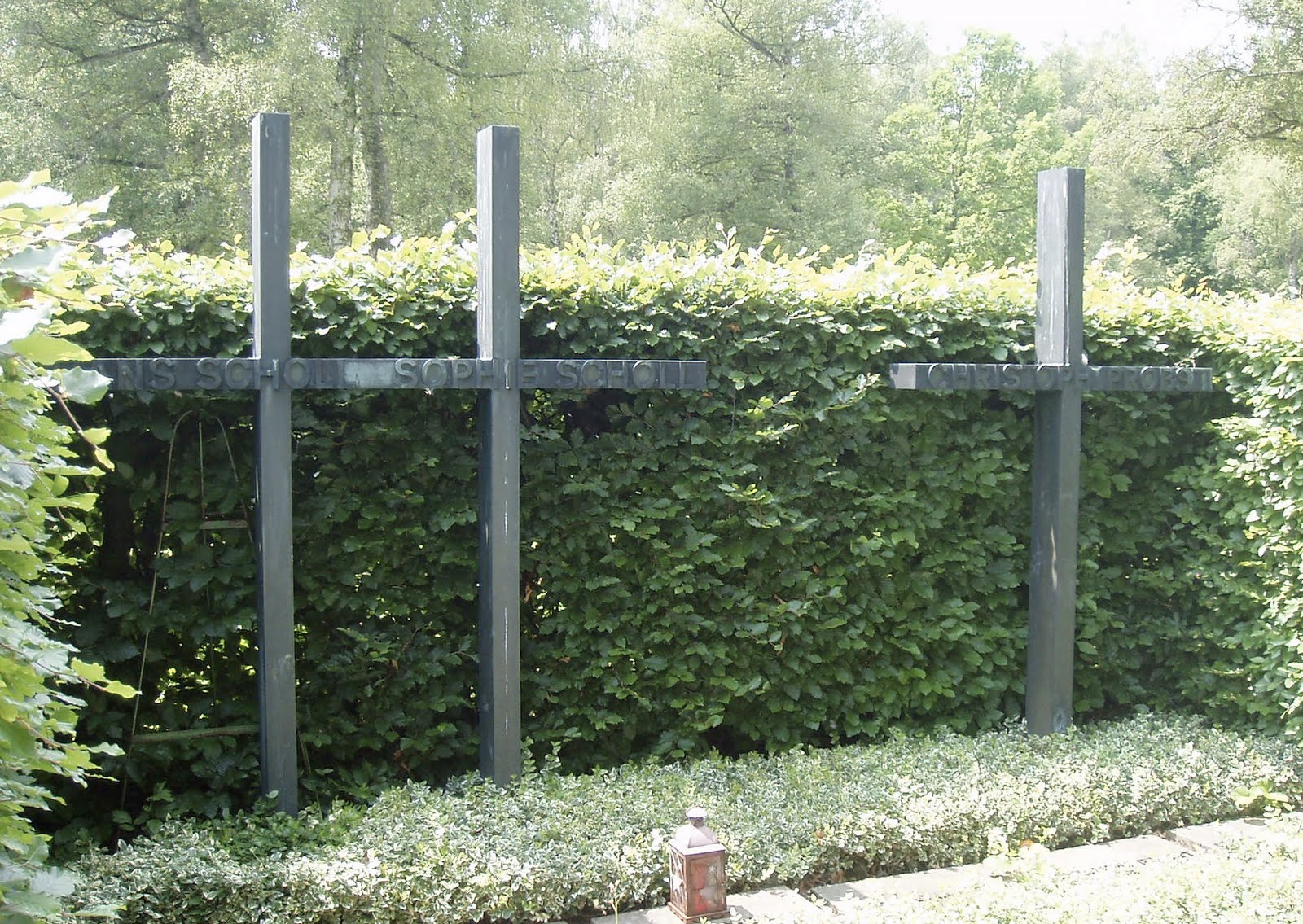
>If you don’t know the brief, sad yet courageous story of the Scholl siblings, Sophie and Hans, then go directly to the Sophie Scholl entry in wikipedia before you continue. In all honesty, it’s not clear to me why she gets most of the attention, and her brother less, but perhaps society doesn’t expect a 21 year old woman to be brave, and give up her life for her friends. This one did.

Right beyond those trees in the background, unseen, is the Stadelheim Prison where the Scholls and Christoph Probst were executed by guillotine. As unfeeling as it may sound, they were lucky. The July 20th conspirators, (the non-military individuals, who didn’t get the honor of a bullet to the head), suffered gruesome, drawn-out, painful deaths by hanging with piano wire, after having been given heart boosting meds to keep them going as long as possible. And, of course, being gassed was much worse as well.

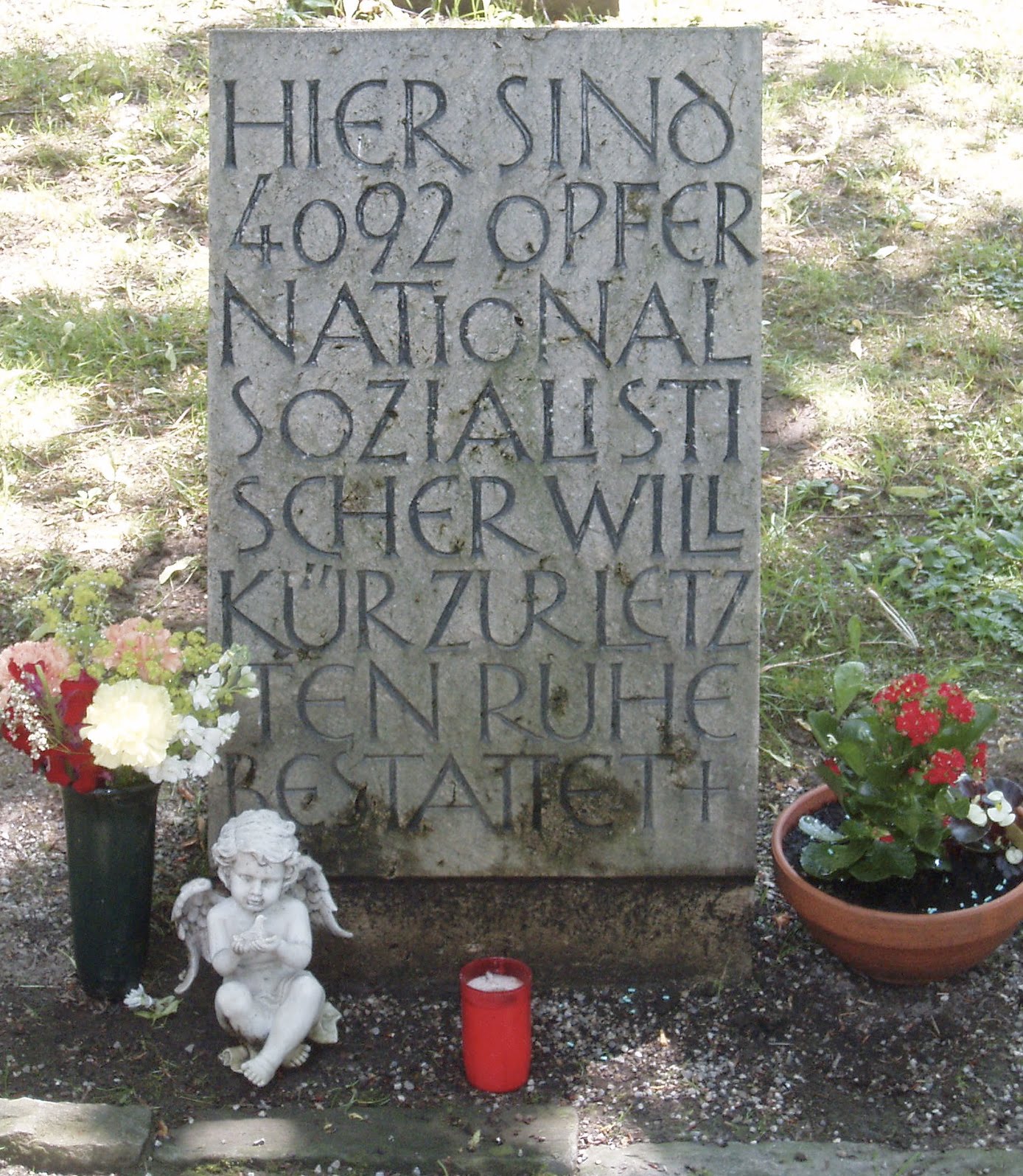
“Here lie in their last resting place 4092 victims of National Socialist caprice.” No names, no reasons for their deaths. I think they, too, may have come here through the back door of the prison.
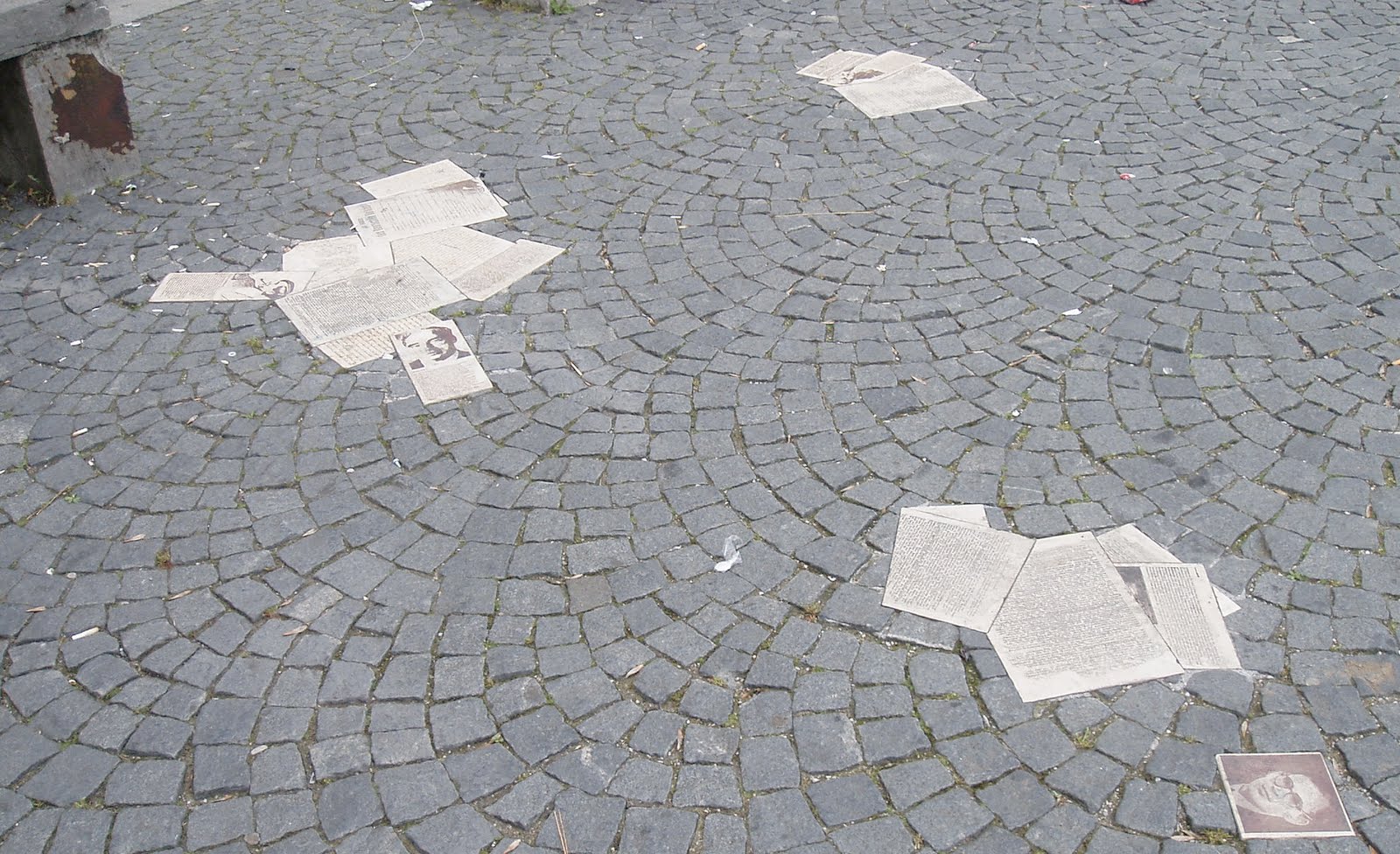
What looks like papers lying on the sidewalk is actually part of a monument to the Scholls and to The White Rose resistance group, one of their methods having been to leave anti-nazi leaflets lying around where there were crowds of students.
The work here combines images and biographical information about the members, as well as examples of their writing. It’s at the front of the Ludwig Maximilian University, Leopoldstrasse, Munich.
Walking back into the city center I literally walked over this before I realized that it too was a memorial embedded into the sidewalk. The figure is meant to remind one of a police body outline. The words above it read, in German, “Kurt Eisner, who on 8 November 1918 proclaimed the Bavarian Republic, later Prime Minister of the State of Bavaria, was murdered on this spot on 21 February 1919.” Eisner has been all but forgotten amid all the turmoil of the 20th century in Germany, but he was instrumental in pulling Bavaria out from under the monarchy by getting Ludwig III to sort of just leave without even officially abdicating. Depending on who you believe, Eisner’s murderer was either acting as a monarchist (being from an aristocratic family) or an anti-semite, himself Jewish but wishing to prove his nationalist loyalties. (He had been shut out of a pre-nazi group because of his mother’s ancestry.)
There is so much history just staring right at you, all over the city.

>Anyone Up For a Walk Through Northumberland?

>The internet is, for all its faults, an amazing thing.

When I was around 12 years old I read a few books involving English Gypsies, and became fascinated by them and by England at the same time. One book in particular stayed with me, because of a long, descriptive passage of a walk from the Scottish border to Hadrian’s Wall. But that was pretty much all I could remember about this book. Title, author, character names were all lost to me.
Then recently I discovered that certain bookseller websites have forums where you can ask just this sort of thing. I wrote a post with the above information, and the dim memory of one brief bit about a gold coin offered and rejected. Within 24 hours I had a response and within the week I had the name of my book. There was no pressure to buy it anywhere, either, and I ended up ordering it somewhere else, but I am eternally grateful to the volunteer Book Sleuths who helped me out!
The book? It was Winifred Cawley’s “Feast Of The Serpent”, and after re-reading it I saw immediately why I was so fascinated. The protagonist, Adonell, is a teenager, half Gypsy, and when her father is killed her mother takes her (on foot, it’s 1649) from their Northumbrian village to reunite with her Romany family further south. On the way the reader is introduced to reading Gypsy signs, Neolithic cup-and-ring stones, the ruins of the Castle of Seven Shields (or Sewingshields), Hadrian’s Wall (Cawley calls it “the Picts’ Wall”), and the marginalized communities living within its fortification ruins. A bit of internet research convinced me that she was writing about what is now called Housesteads, near Barcombe Hill (from the Roman Vercovicium? which is called only Barcom in the book), and Vindolanda. The lake with the “steep crag beyond it” is surely Crag Lough, one of three lakes in the region which form a sort of triangle of land in between, which, Cawley writes, is sacred land to the Rom.
Of course, now all I want to do is fly to Newcastle and go on my own “Feast Of The Serpent” walkabout! I want to see these things! And again, the internet, with all its images, blogs and helpful websites, is an amazing thing.

Northumberland National Park
Housesteads Museum and Fort
Hadrian’s Wall Blog

>Forgotten Innsbruck: Amraser See

>

(Thanks to the writer of the Paschberg Blog for the photo above, which I have brazenly purloined. If you read German, his blog is an excellent source of local history and current affairs. I hope my advert for it makes up for my theft!)

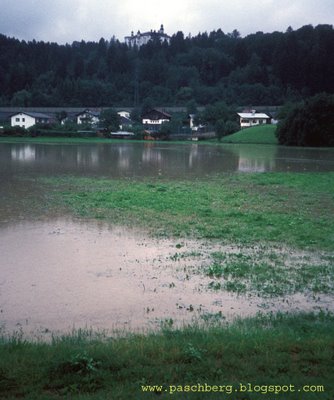
I was walking through the southeast side of town the other week and noticed an unusual street sign — “Amraser See Strasse”. Amras Lake? Where the hell is that? Amras is a neighborhood on the edge of town, once a quiet outpost, now the business district. If you walk around beyond the shopping centers and superstores, you find corners of the old village tucked away in hidden places. But a lake? This was a new one for me.
A little internet research brought me closer — the Amraser See was a shallow lake fed by groundwater, the Aldranser Bach and a canal from the nearby Sill River (which joins the Inn a bit further on.) It was maintained for the royal fisheries when Innsbruck was a royal seat of power.

(Photo from Amraser Bote, June 2008 Issue)

An inn was first built near the lake in 1648, and stayed in business until about 20 years ago. The whole area was redeveloped in the early 90s, and apartment buildings stand there now, near the entrance to the autobahn. The “island” on the middle of the lake now holds a shopping center (DEZ.) Until all this construction, the lake had been slowly drying up over the years, but reemerged after exceptionally heavy rains. I believe the top photo was taken in 1985, when several parts of town had flooded.

>Bergisel

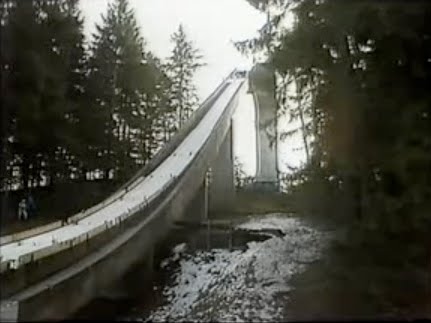
>This is the old ski jump on Bergisel, functional and boring, which was built for the 1964 Winter Olympics. Oddly, I was unable to find a photo of it online anywhere — this is a screen grab of video, posted on Youtube. I remember when it was demolished one Sunday at exactly noon. From my terrace a few kilometers away, I watched the tower silently implode, and the boom arrived a second or two later.
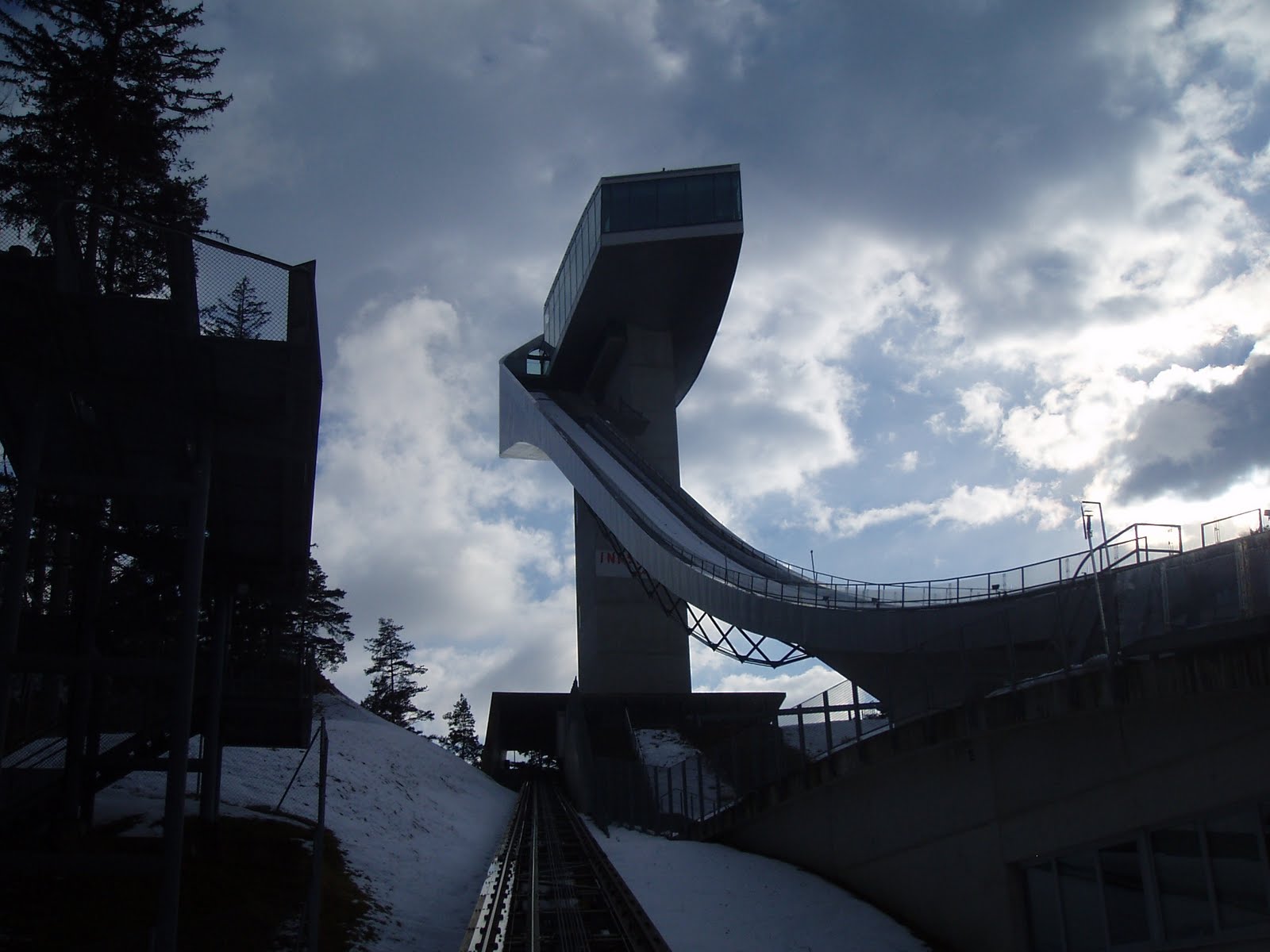
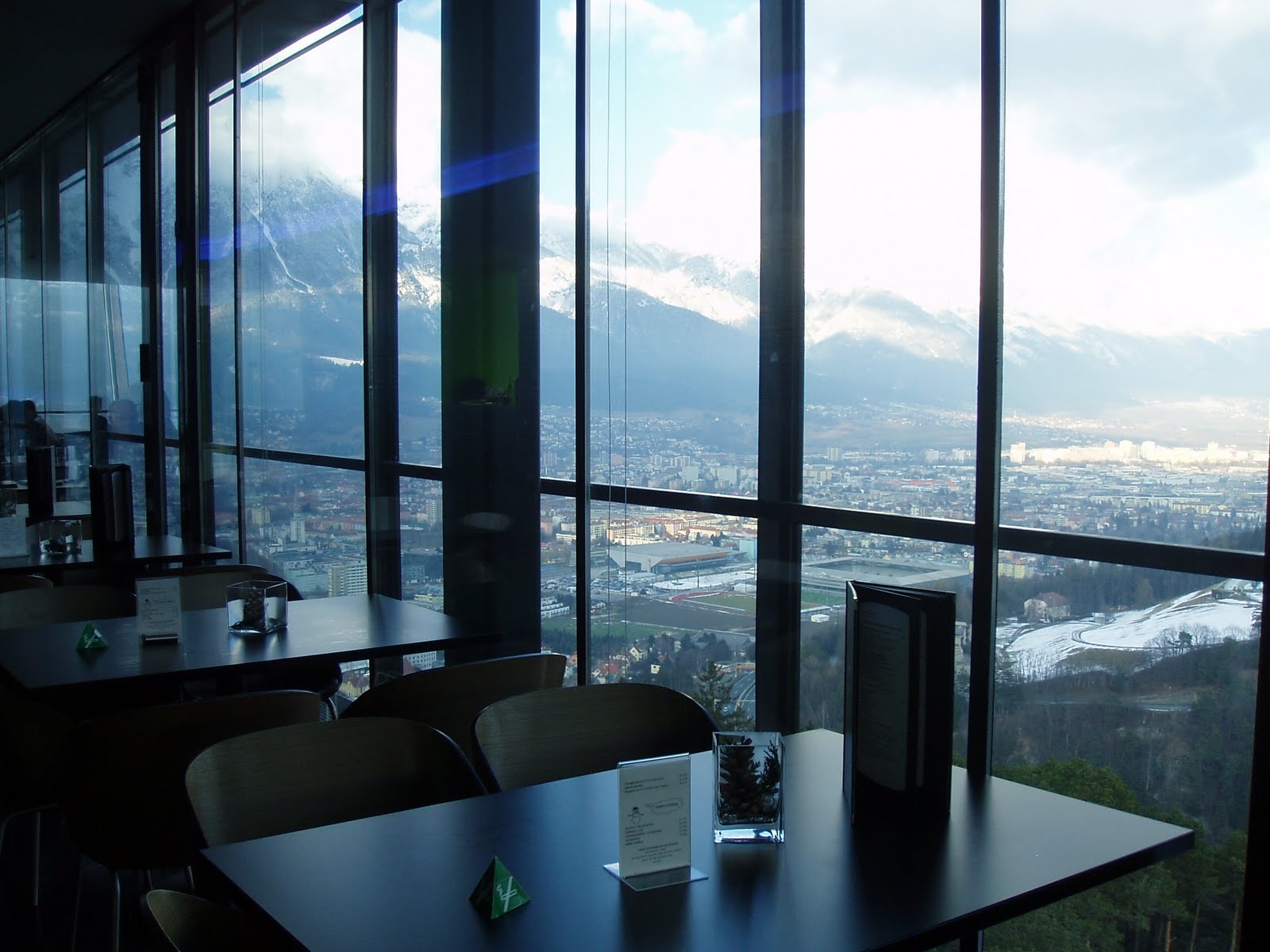
The other day we revisited the new one. Its design and the cafe at the top make it a popular sight for tourists, but I have also been up there with locals, for an afternoon birthday gathering for example. The views on all sides are spectacular and so it’s worth doing at least once.

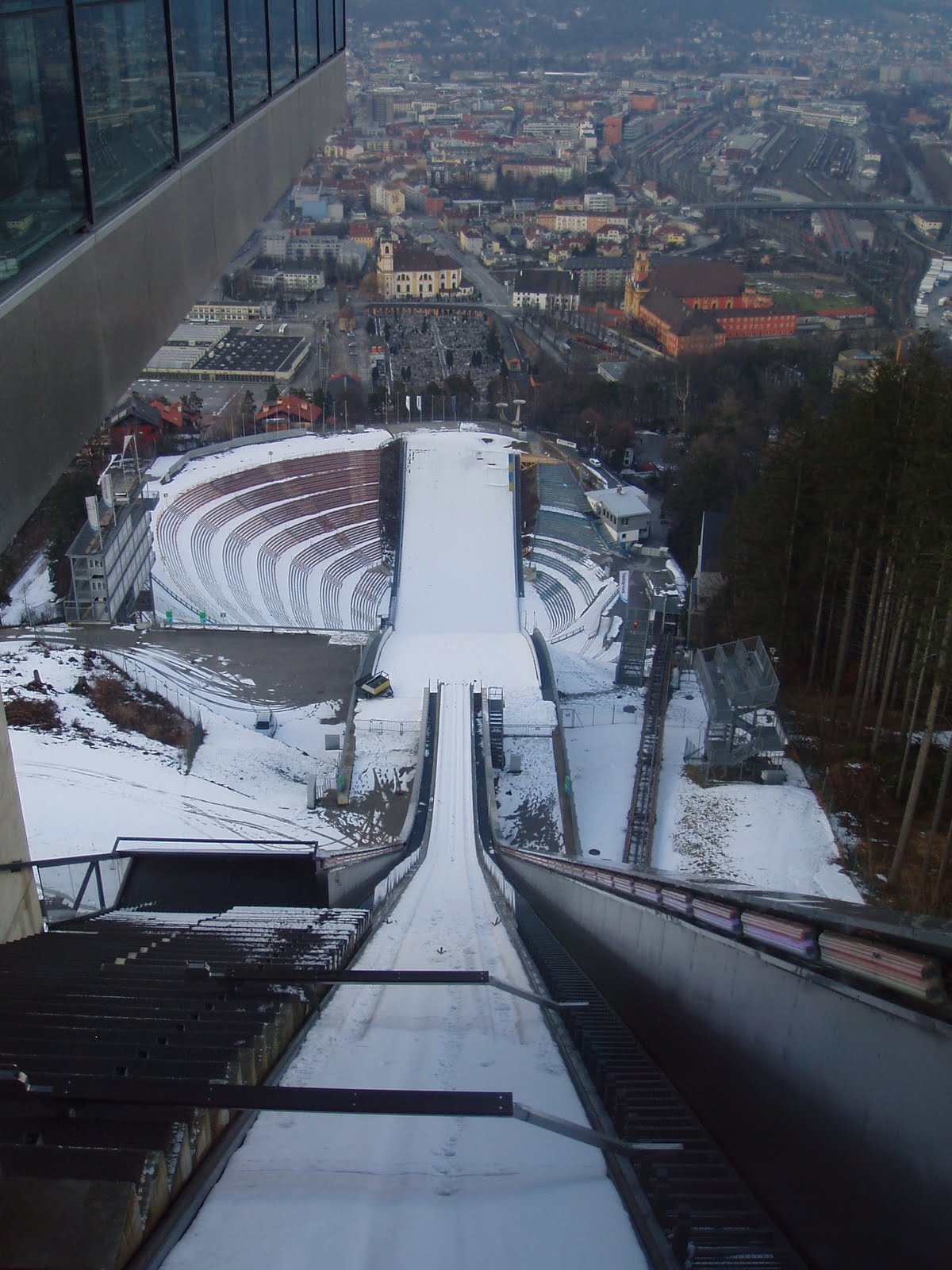
Hey, I can see my house from here. (Really.)
The old guidebooks will tell you that when you stand above the ski jump and look down, you see the cemetery directly beyond the landing strip. It’s true, that’s the Wiltener Friedhof down there. One can’t make it out in this photo but they had just turned the lights on — that row of colored tubes along the right side of the inrun. The effect is of slowing changing color through the evening.