>Filmschau: About Gretel Bergmann and Dora Ratjen

>I just saw a new German film the other day, “Berlin 36”. While the film itself was only so-so as far as how it was made (although acted and shot very well), the true story on which it’s based is actually more interesting that the cinematic version.
Gretel Bergmann was a young promising German track and field athlete when the Nazis came to power. Being Jewish, she was expelled from her athletic club in 1933, but was able to move to the UK and participate in the British Championships, winning in the high jump.
As the 1936 Berlin Summer Olympics approached, Germany made some attempts at making themselves appear tolerant, and one such attempt was to blackmail Gretel (with threats made to the family) into coming back to join the German team as their Token Jew. She returned and trained, and even tied the German record at a regional meet right before the games. However, her score was deleted from the books and she failed to qualify for the Olympic team due to “underperformance”.
Now, this is where the story gets (even more) interesting: her replacement on the team, a young woman with whom she’d trained, was Dora Ratjen, who was actually male. Although the story is often portrayed as a Nazi scheme of putting a guy in a dress and sending him out to beat Gretel, the truth is more complicated and, as always, more tragic. Ratjen had been raised a girl but apparently was intersex of some form or another*, and her male characteristics began to show in puberty. She placed fourth at the Berlin Olympics and won the 1938 European Championships. However, in 1938 she was riding in a train when someone reported having seen a man in a dress to the police.
Ratjen came through the ordeal in the clear, but she gave up her athletic career and in 1939 was able to get reclassified as a male, and changed his name to Heinrich. (I cannot imagine this would have been easy to do in Nazi Germany, with their obsession with identity cards and all that. But he managed it.) He returned to Bremen, took over the family bar and never spoke to anyone ever again publicly about his past.
He died in 2008. Gretel Bergmann is 95 and living in New York.

* If you look up “intersexuality” on Wikipedia you can learn of the many different ways the human x and y chromosomes can get out of wack. It’s amazing that so many of us turn out normal.

>Long Before It Was Tirol, It Was Raetia

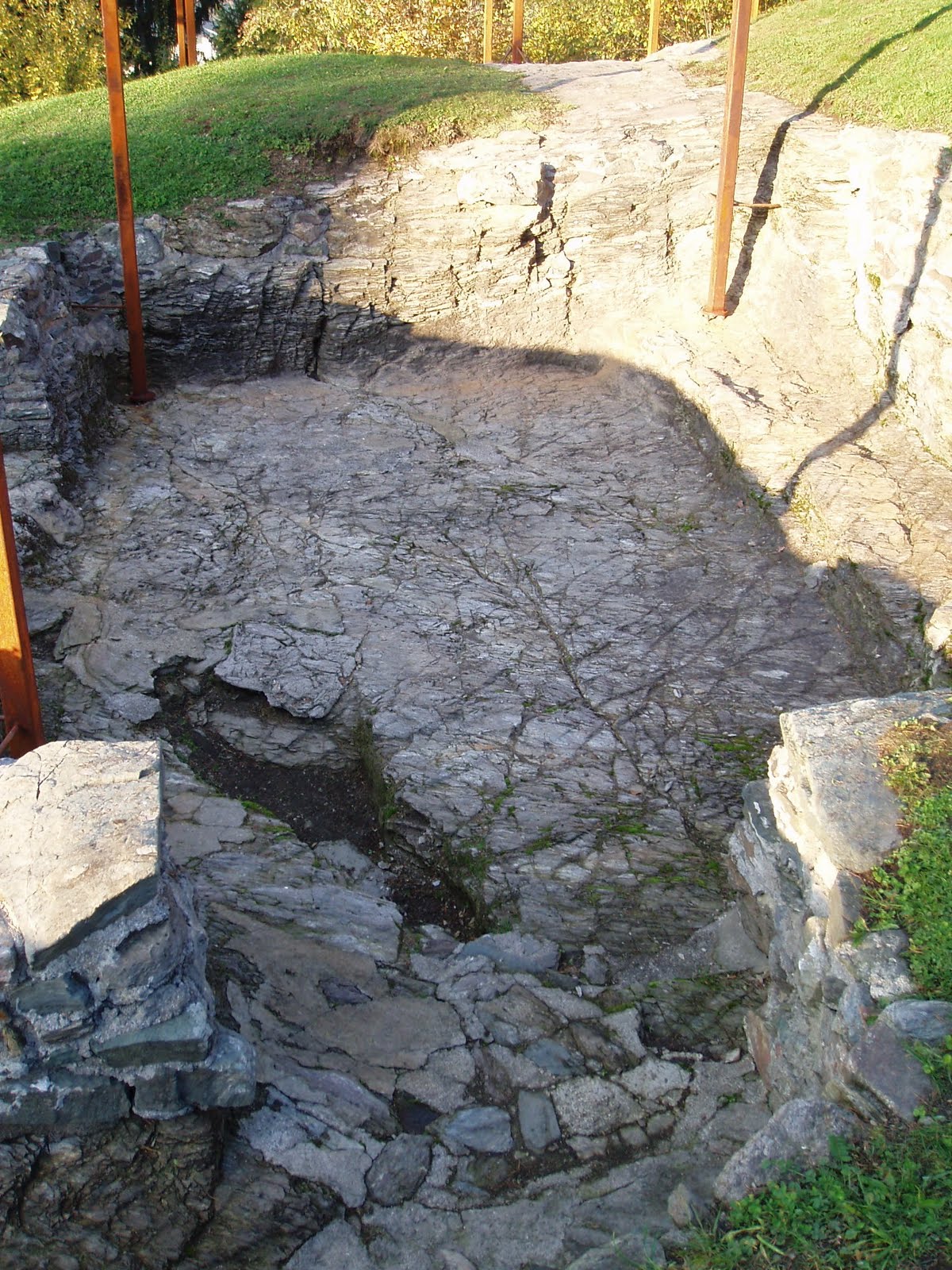
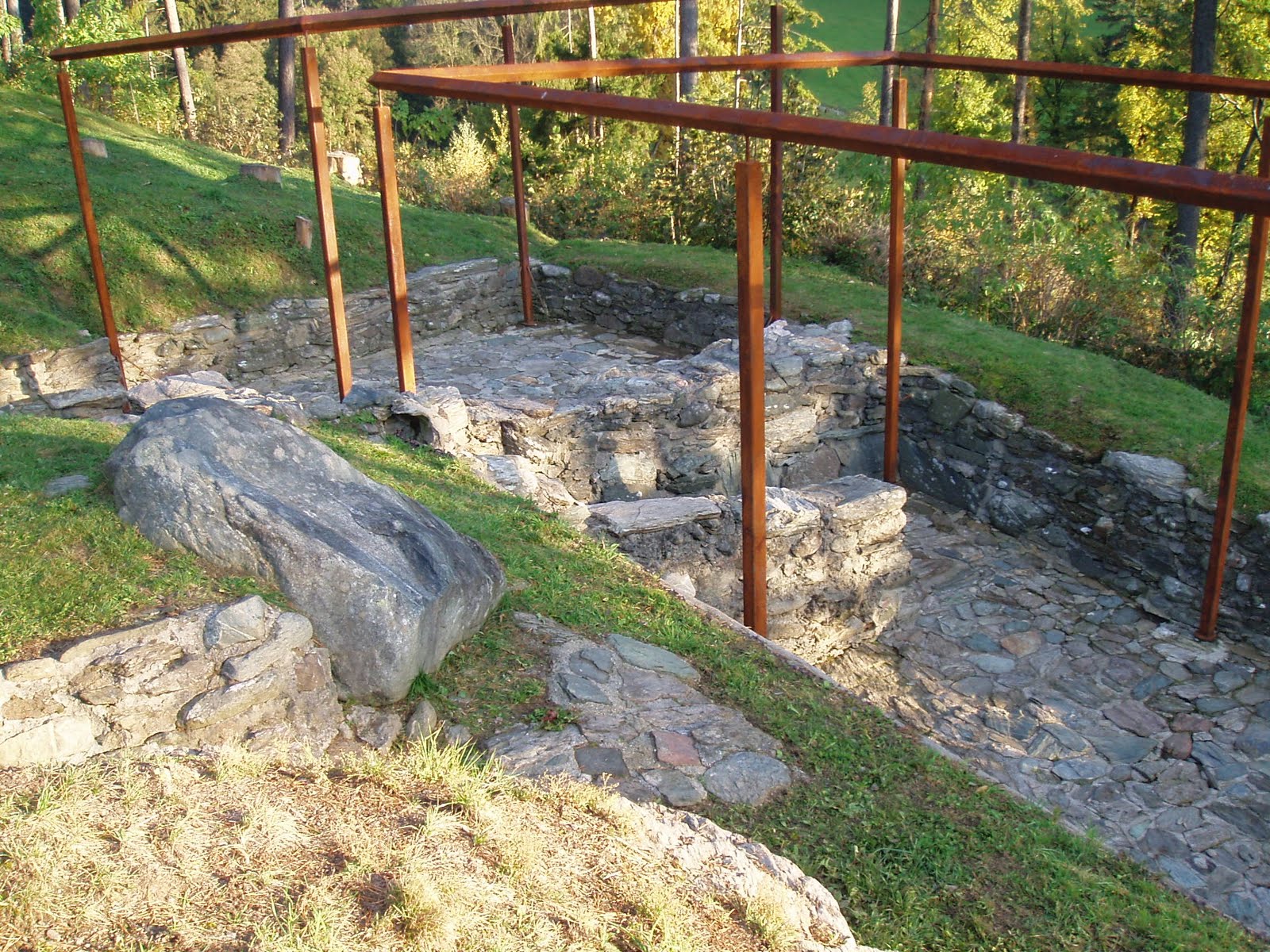
>This unassuming, wooded hill hides the remains of a group of Raetian houses from around 400 B.C.
The Raetians were a people who moved into the lands between Lake Garda and the Karwendel Mountains by the 6th century B.C. They are somehow associated with the Etruscans (their exact relationship is disputed, but there are similarities in their alphabets and a possible genetic link has come to light); Pliny the Elder wrote that they were an Etruscan clan driven out of the Po Valley by other tribes.
A technically and spiritually advanced society, they had a high level of technical, architectural and artisanal skills. Raetian wine from the area around Verona was Caesar Augustus’ preferred drink. They raised crops and farm animals such as cattle, sheep, goats and pigs. They kept dogs and horses. They handled in raisins, tree resin, lumber, wax, honey and cheese. They made their own artistically distinct ceramics.
What’s left of their houses are these stone cellars with narrow stair corridors. The entire group was in encircled by a sort of fort wall of sharpened logs, about one meter high (more picket fence than fortress)
Archaeologists have found much metalwork: chisels, axes, blades, iron rings, keys, door and chest handles, hooks. They families that lived here apparently did so in relative comfort, security and prosperity, able to make, trade for, or buy anything they needed.
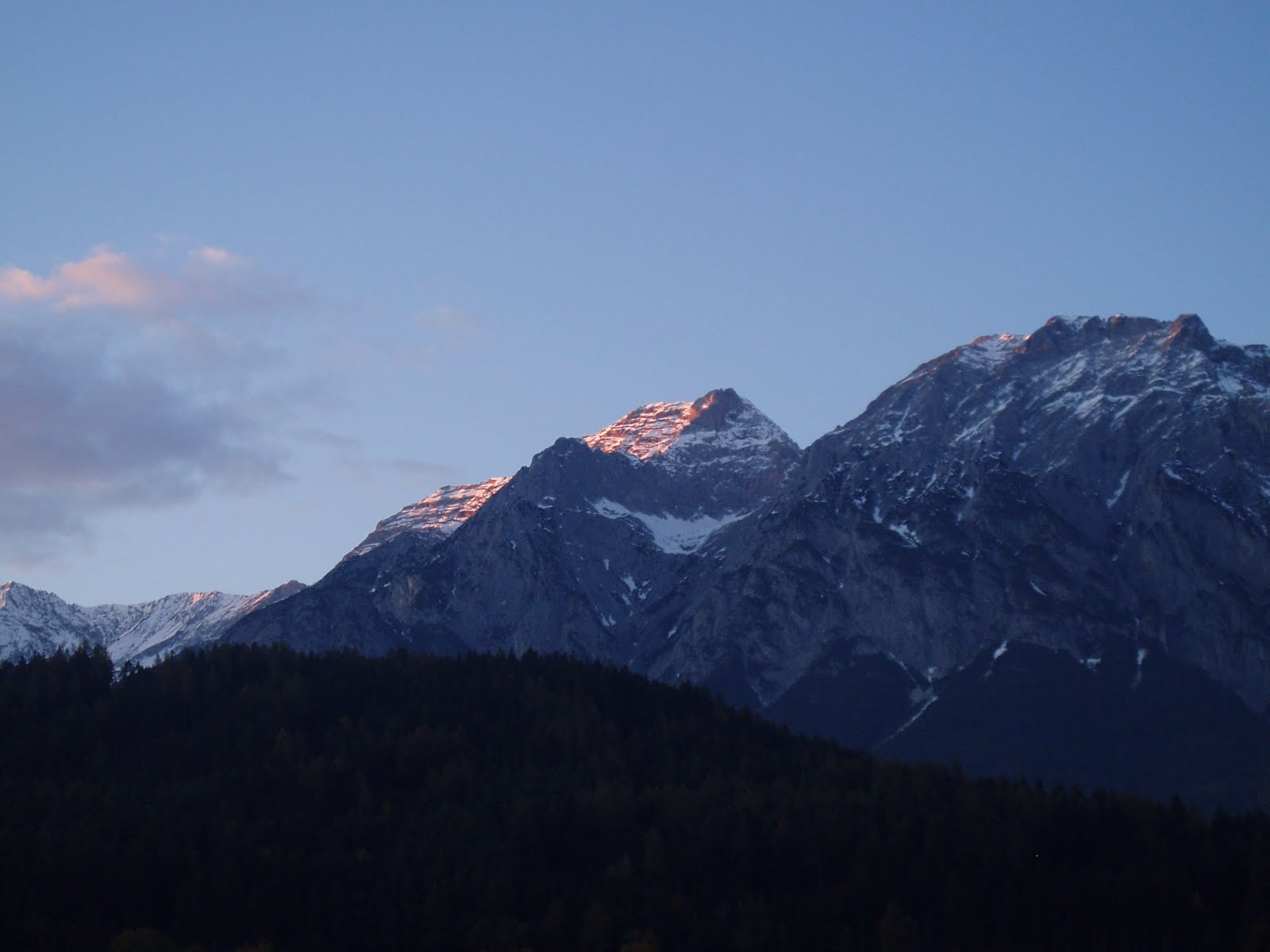
And, all around, they had quite a view to enjoy —
Also found nearby (but no longer existent) was a temple area with sacrificial altars. In better times the Raetians sacrificed animals and crops to their god(s), and used the fire altars to sanctify bronze jewelry and weapons.
In 15 B.C. the Romans decided to push northward, subjugating the Raetians and burning their villages. The survivors took to sacrificing coins, as everything else was too valuable to burn. And once the Romans forced their culture and language on everybody else, traces of the Raetians dried up.
The cellars are now preserved as a free open-air museum with signs posted giving information about the Raetians and about the archaeological finds, now on permanent exhibit at the Tiroler Landesmuseum in Innsbruck.

>A hike to the Lanser Kopf Flakstellungen

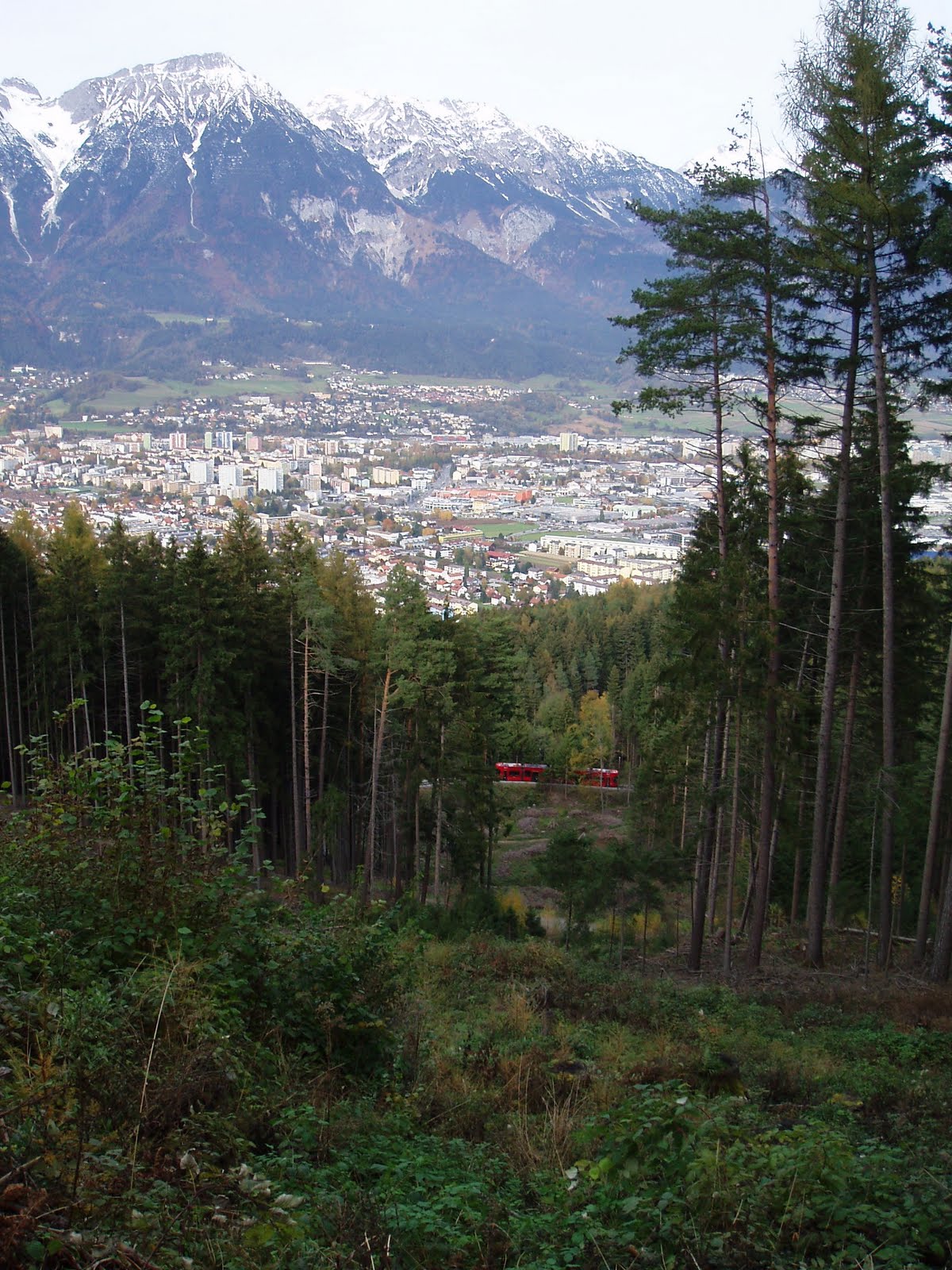
>A hike around the Paschberg, at the southern end Innsbruck. Looking back towards town, the Igler Bahn streetcar winds it way up through the forest to the villages on the plateau on the other side of the hill.
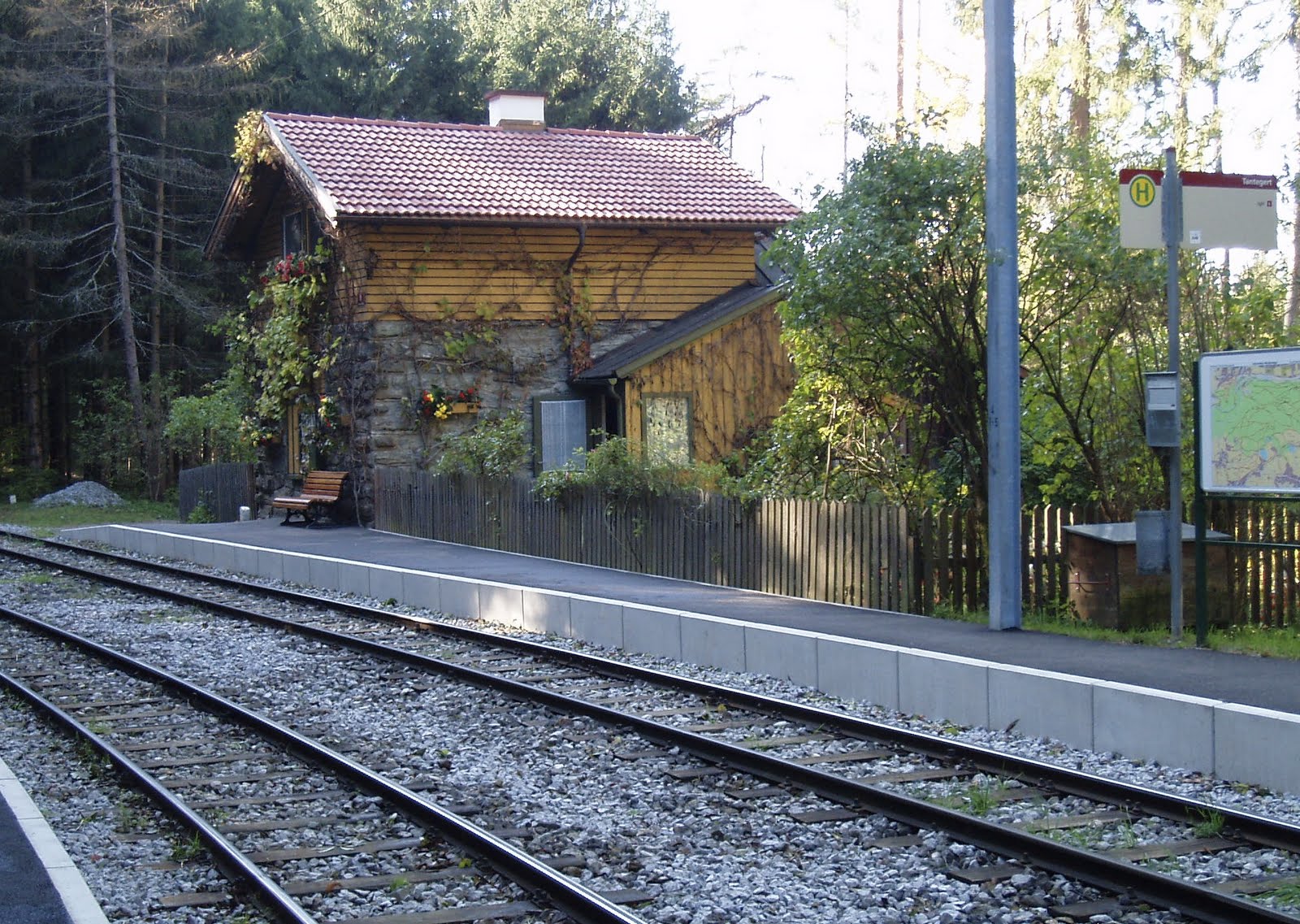
One of the cutest houses around, the Tantegert stop. It’s a little fairy tale cottage along the tram line, and (I believe) inhabited by someone who works for the railroad. It’s nestled in the woods but not very private, with several hiking trails crossing right behind it.
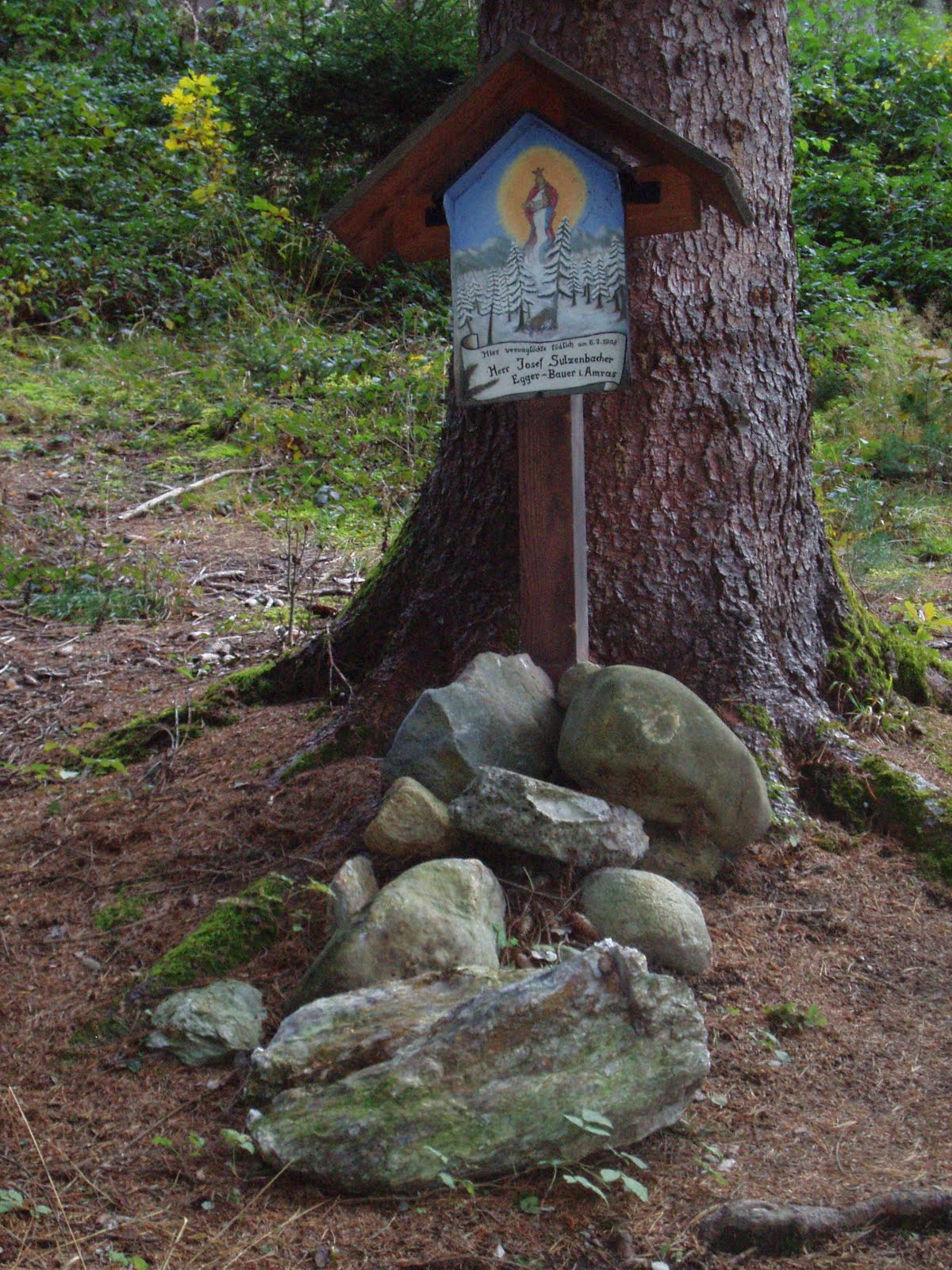
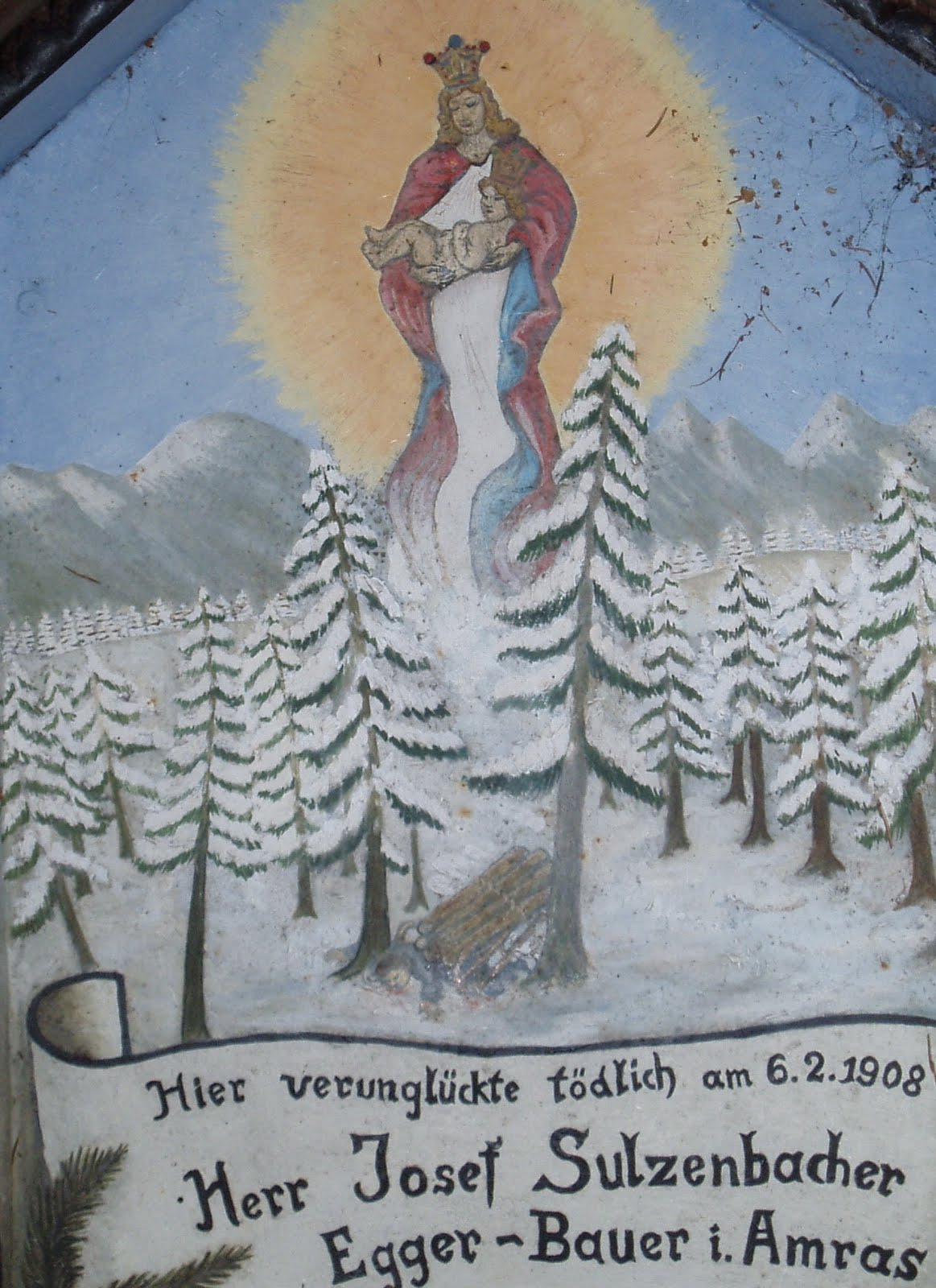
Not a grave, but a little shrine to someone who died at this spot on the hill. You see crosses and plaques like this, as well as tiny chapels, often in the mountains. What makes this one especially interesting is the painting which depicts the manner of the man’s death — it seems he fell, and his sled filled with firewood fell on top of him. I guess. Here’s a close up:

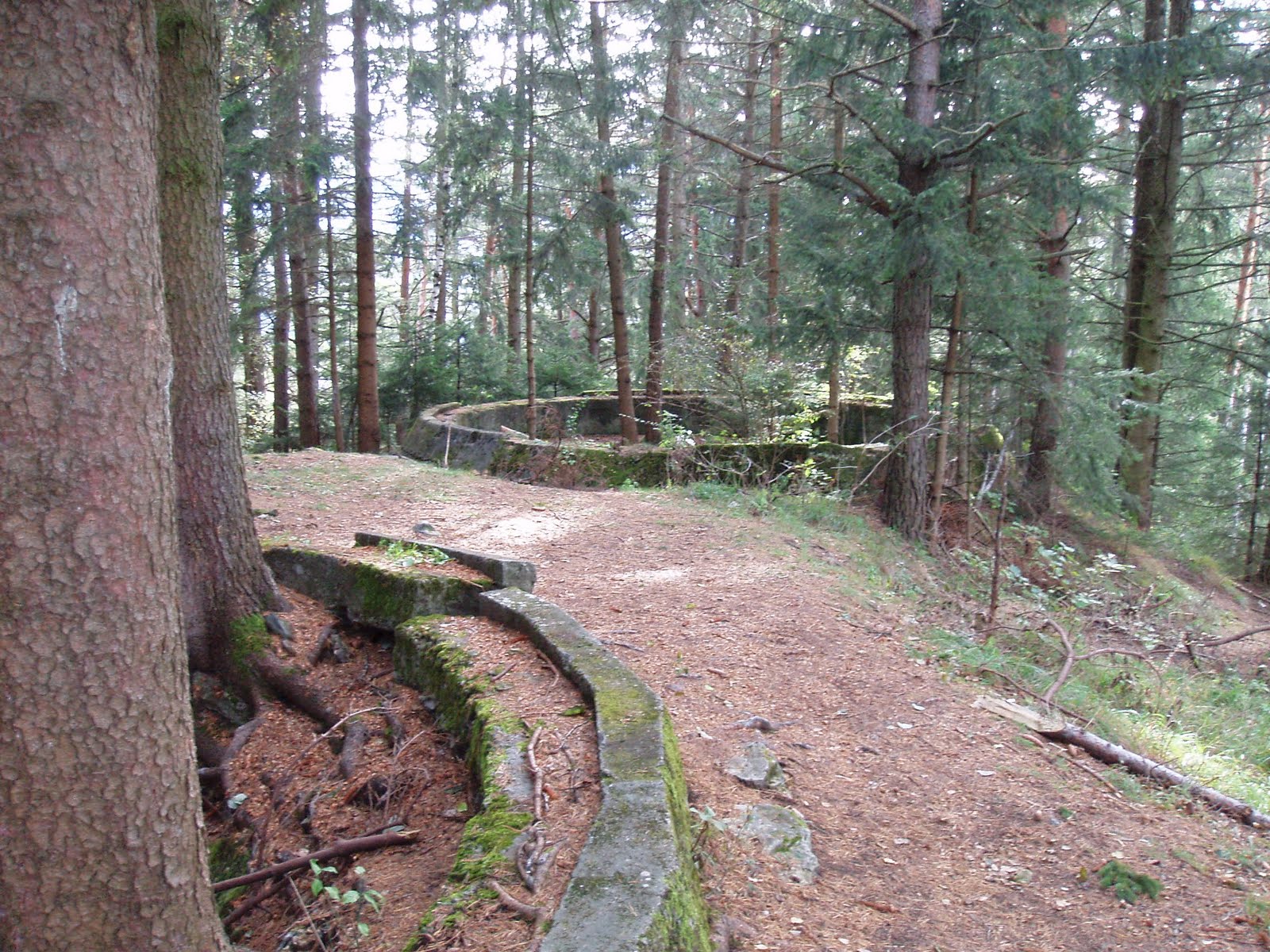
These concrete circles are at the very top of the Lanser Kopf, a rocky outcropping and the highest point on the hill. Remains from the Second World War, they were spots for anti-aircraft guns, or Flak. Did you know “Flak” stands for Fliegerabwehrkanone? As a child of peacetime, I never realized that talking about “getting flak for something” was of military origin, and German at that.

>Have You Heard Of Herta Müller?

>Neither had I. She has been awarded the 2009 Nobel Prize for Literature.
More significantly, neither had the beau, who is knows a lot about European literature. Wikipedia, in its entry on Müller, says that prior to the award, Müller was little-known outside Germany and even there was known only among a minority of intellectuals and literary critics.
Her writings look like they would fit right in with the other books on my shelves, many of which deal with people trying to remain alive and human under communism, nazism, or any other repressive regime. I plan to pick up a copy of Atemschaukel (the English title, when it comes out, will be Everything I Possess I Carry With Me) pretty soon.
It’s also a welcome story within a larger topic which gets a lot of criticism just for being a topic — the post-war deportation of ethnic Germans from eastern European lands, force-marched either westward into Germany (those that made it alive were the lucky ones) or to Soviet gulags, as was the case with Müller’s own mother.
I am reminded of Gregor Himmelfarb, whose book about his post-war experiences shares similarities with Müller’s latest protagonist, Leo Auberg. Himmelfarb was born in the state of Mecklenburg, Germany, and grew up in the ethnic-German region Siebenbürgen, in Romania. When Germans in Romania were required to obtain Aryan identity cards, Himmelfarb learned for the first time that his Russian father was Jewish. Managing to survive the war, he then faced new difficulties for being the son of a factory-owning “exploitative capitalist”, and above all for being “German”. The Israeli immigration services weren’t much help, as they considered him “not Jewish” (he was finally able to emigrate in 1952.)
Every group of people is made up of individuals, all with their own stories. And, as Herta Müller shows, there are so many unheard stories out there worth learning.

>The Swan King’s Watery Monument

>“Alas, he is so handsome and wise, soulful and lovely, that I fear that his life must melt away in this vulgar world like a fleeting dream of the gods.”

“The King was not mad; he was just an eccentric living in a world of dreams. They might have treated him more gently, and thus perhaps spared him so terrible an end.”

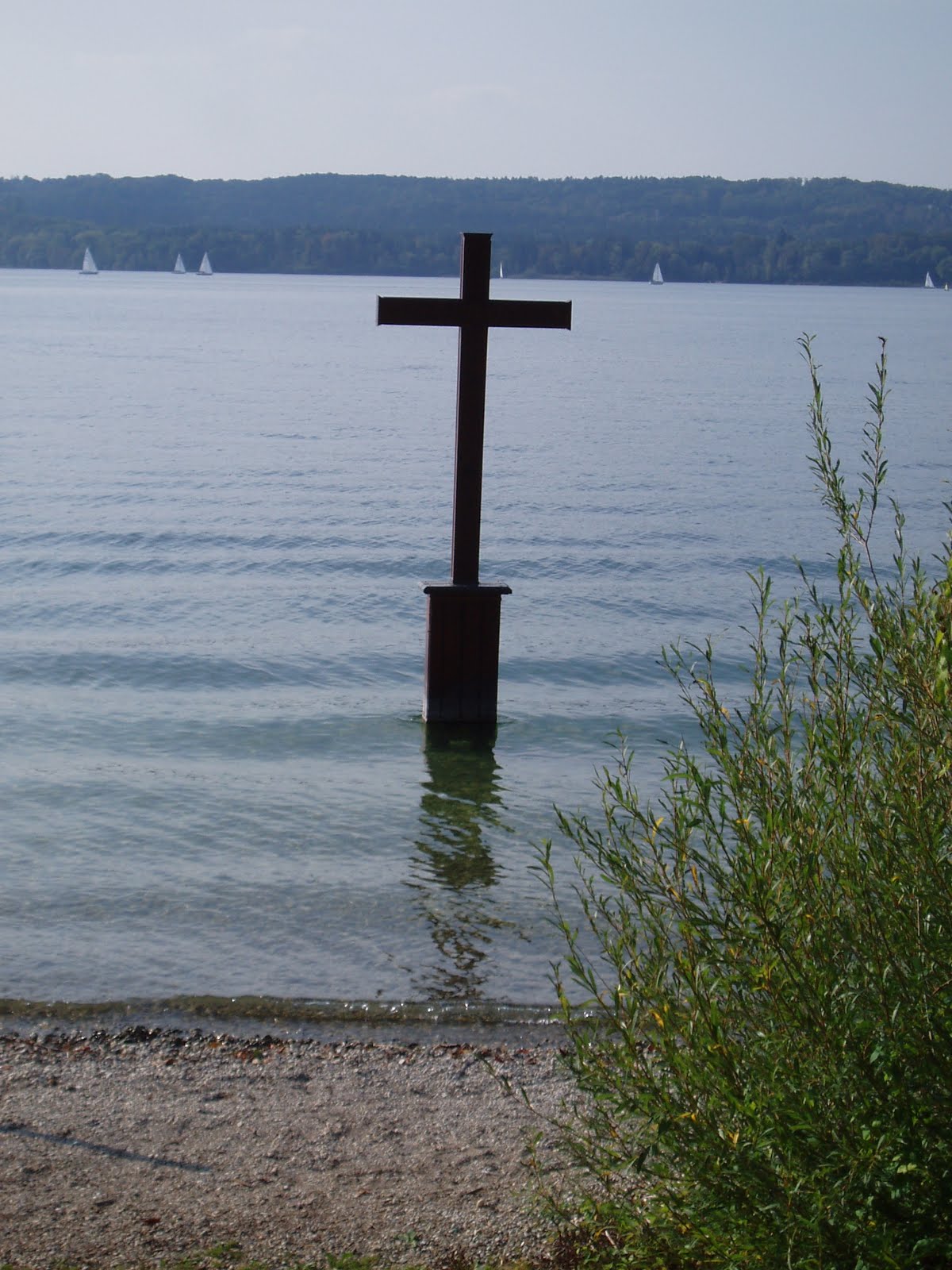
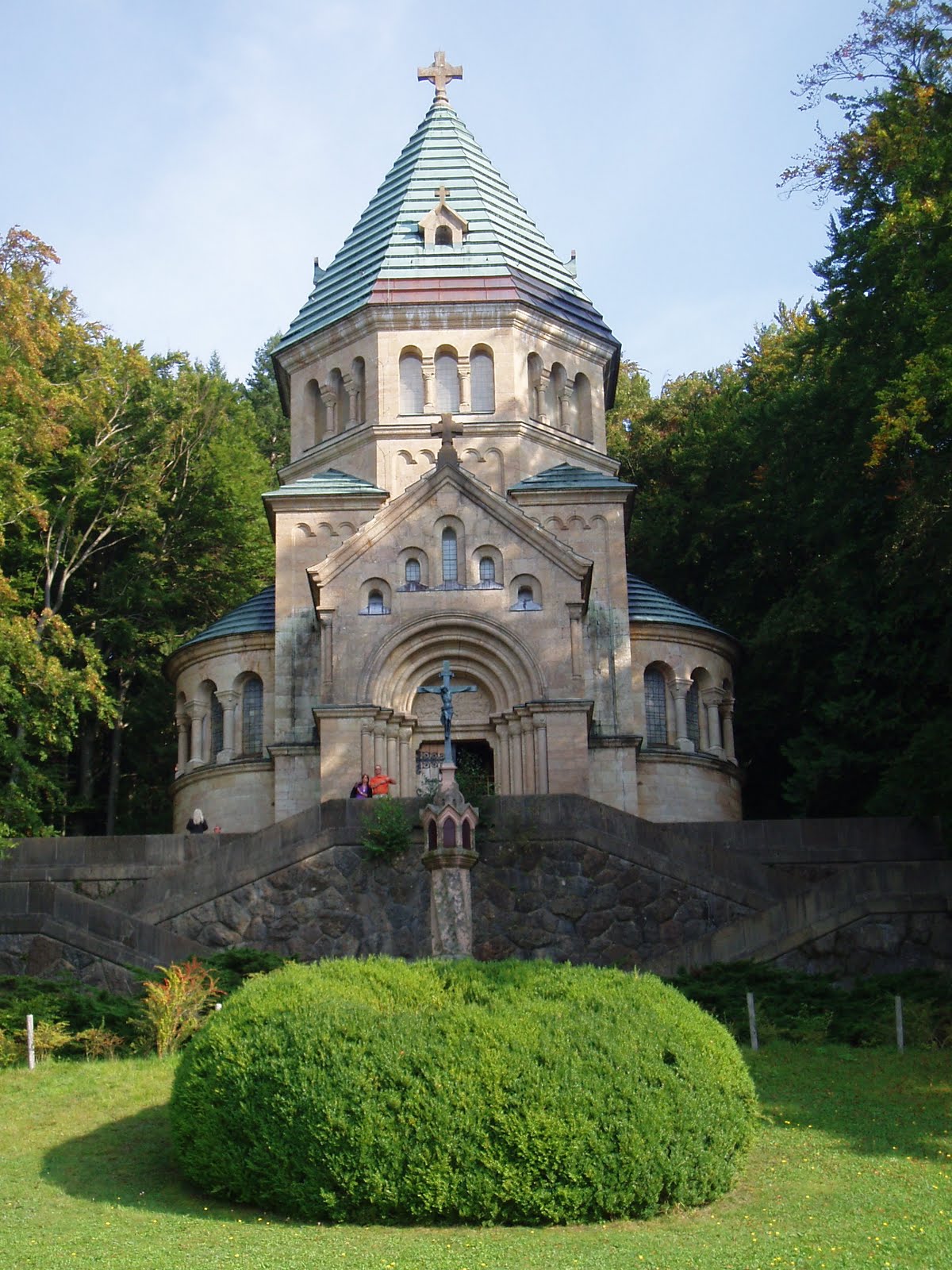
Michael Jackson? No, King Ludwig II of Bavaria, from composer Richard Wagner and Empress Elisabeth (Sissi) of Austria, both close friends of his. But perhaps MJ was actually the King Ludwig of his day, pathologically shy, eccentric and flamboyant. Although the official line is that he took his own life (at age 40) in the waters of Lake Starnberg the day after he was deposed for being “mentally ill”, he was most likely murdered. He was also probably just gay, or so many think. A broken engagement to a perfectly good princess, among other things, seems to support that, but all evidence is of course circumstantial.
The cross marks the site where the King’s body was found, and the chapel is just up the hill from there. The surrounding area is all woodland, with trails for mountain bikers and joggers. We had seen this chapel from the other side of the lake (5 kilometers away), but had mistaken it for the Bismarckturm (another pile of rocks in the area.) Tourists still come to read the plaque on the chapel wall and photograph the cross, nearly 125 years after Ludwig’s death. Many more tour his castles in the Bavarian Alps. Will people be listening to Michael Jackson recordings in 125 years’ time? I have no idea.

>Alte jüdische Friedhof

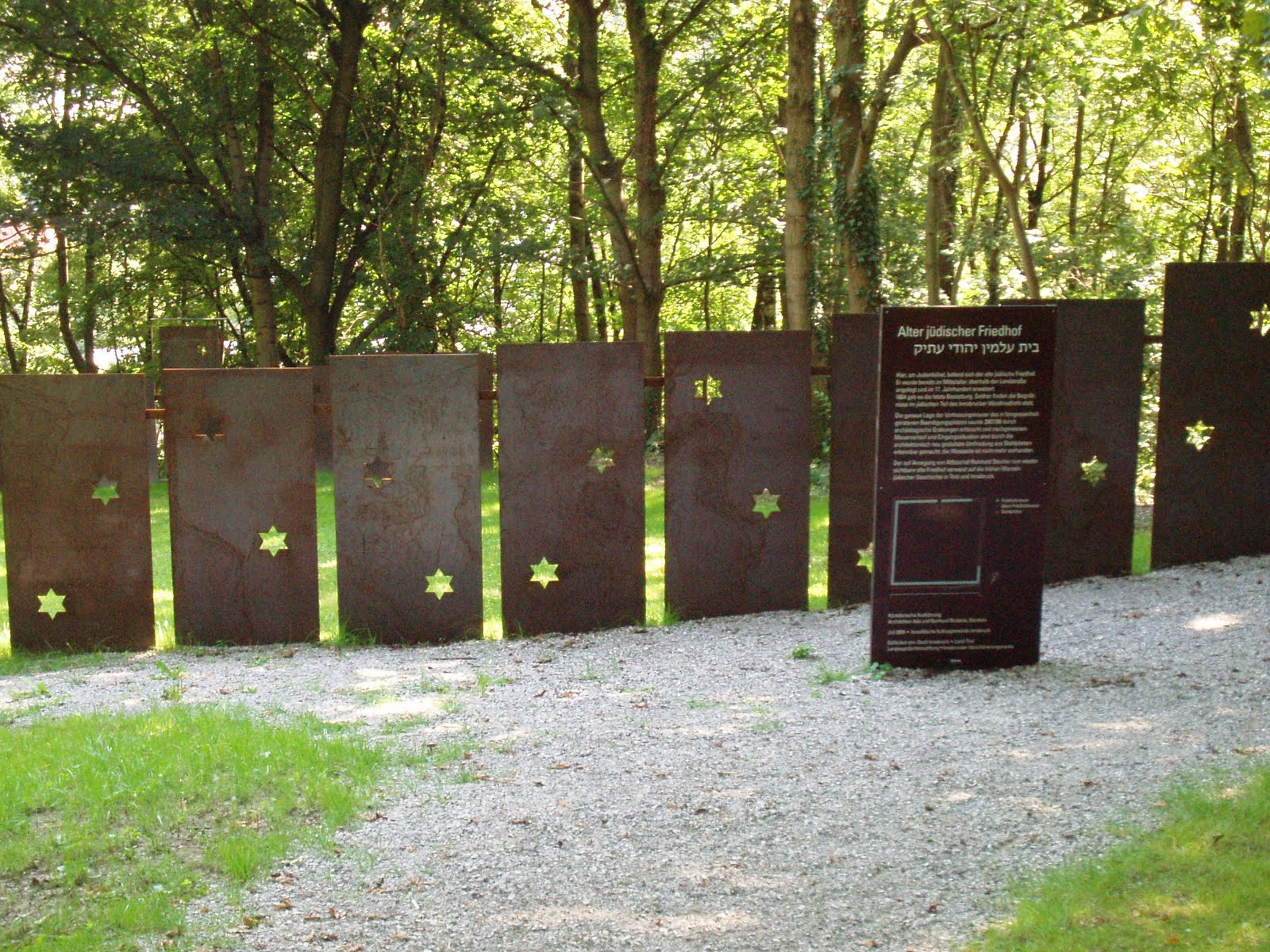
>Years ago, walking through the hills along the Inn river, I came across a sign pointing to the “Judenbühel“. It was a half-grassy, half-wooded slope steeply uphill from the river, and aside from a flat hilltop with a playground on it, there was nothing else to help me figure out what the Judenbühel was, exactly. Thanks to the wonders of the Internet, I later learned that it was the site of the old Jewish cemetery, dating back to at least the early 16th century. By the 1860s some problems arose — the new river road made access to the cemetery difficult; in winter it was a steep icy climb to get up there. The lack of access also seemed to have made it easier for vandals to rip out the stones when nobody was around. In 1873 the Jewish community got a corner of the downtown Westfriedhof, the bodies were transferred over, the wall knocked down, and the field left to return to nature.

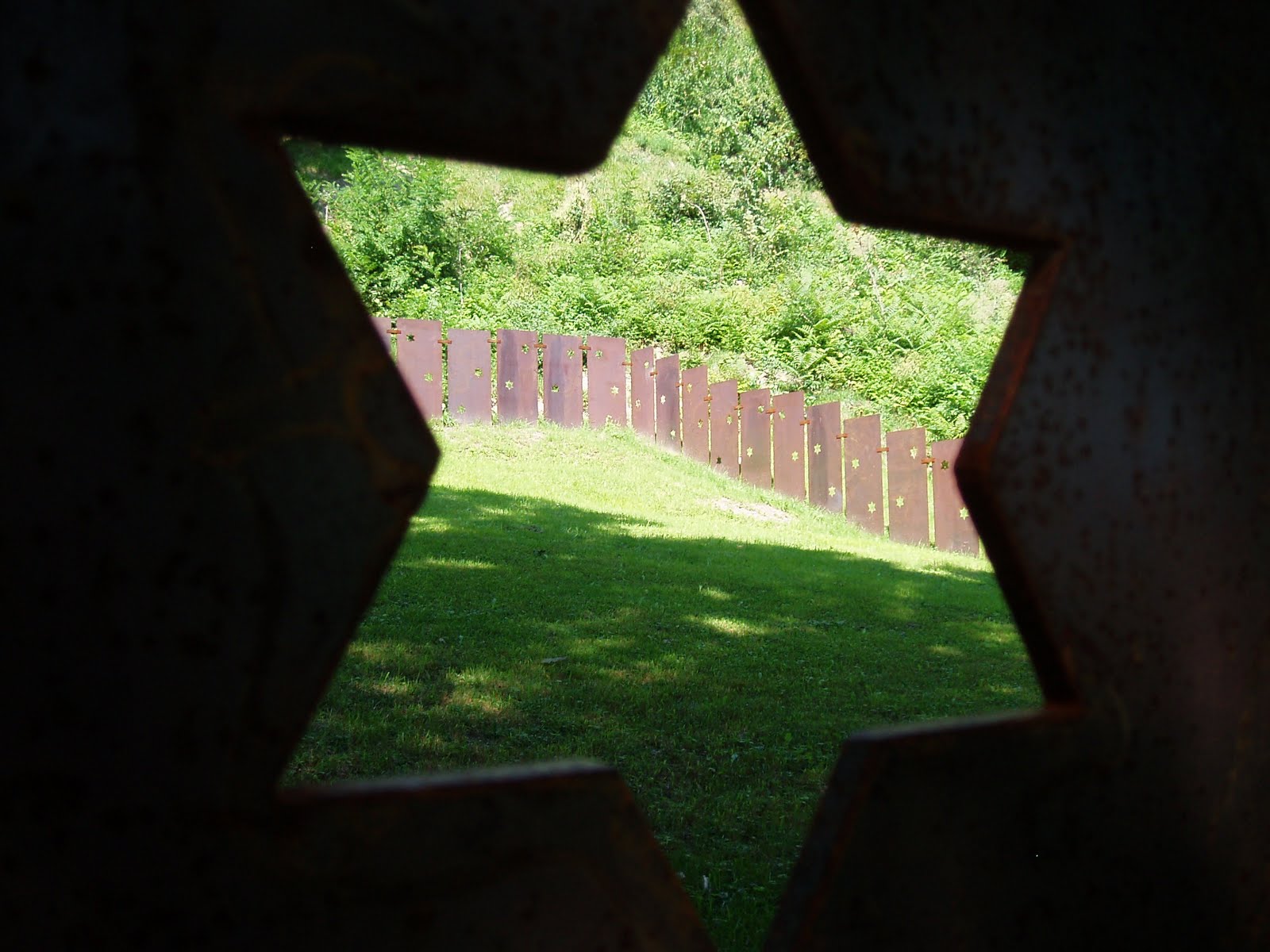
Today I went walking that way again, and found something new: archaeologists found the placement of the old wall, and the city put up metal plates around the perimeter, with stars of David cut out of the metal. A sign explaining the site includes all the parties involved in the project, including the man who got it going: Innsbruck’s Retired Bishop Reinhold Stecher. There was an official ceremony in July, with speeches made and music performed.(Video here) I’m sorry that I missed the cemerony, but happy to see that the old cemetery grounds finally got a little love from the community.

>Geisterschiff

>

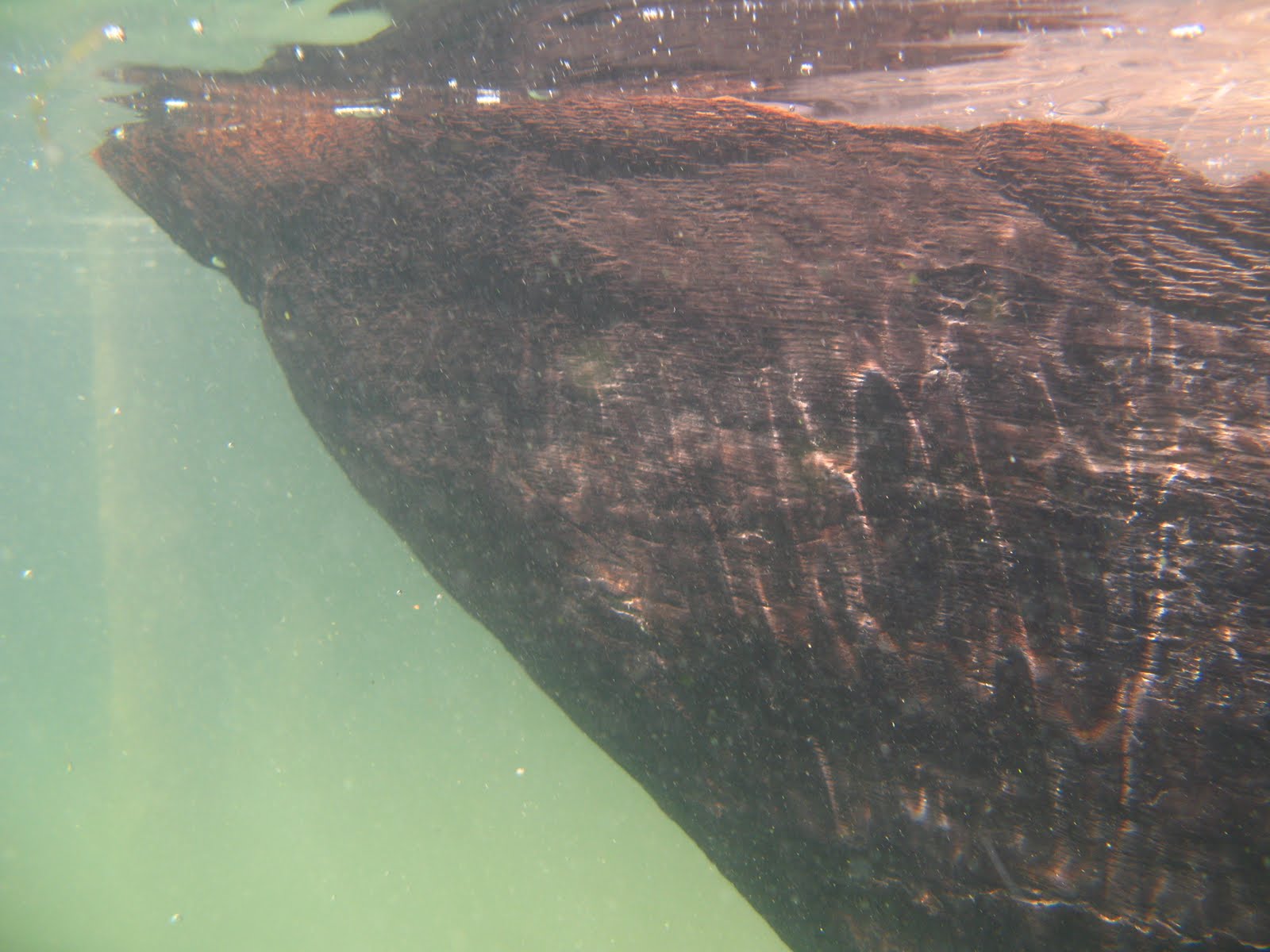
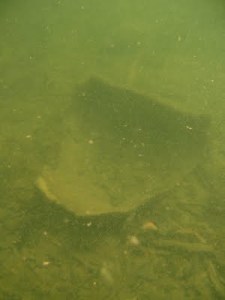
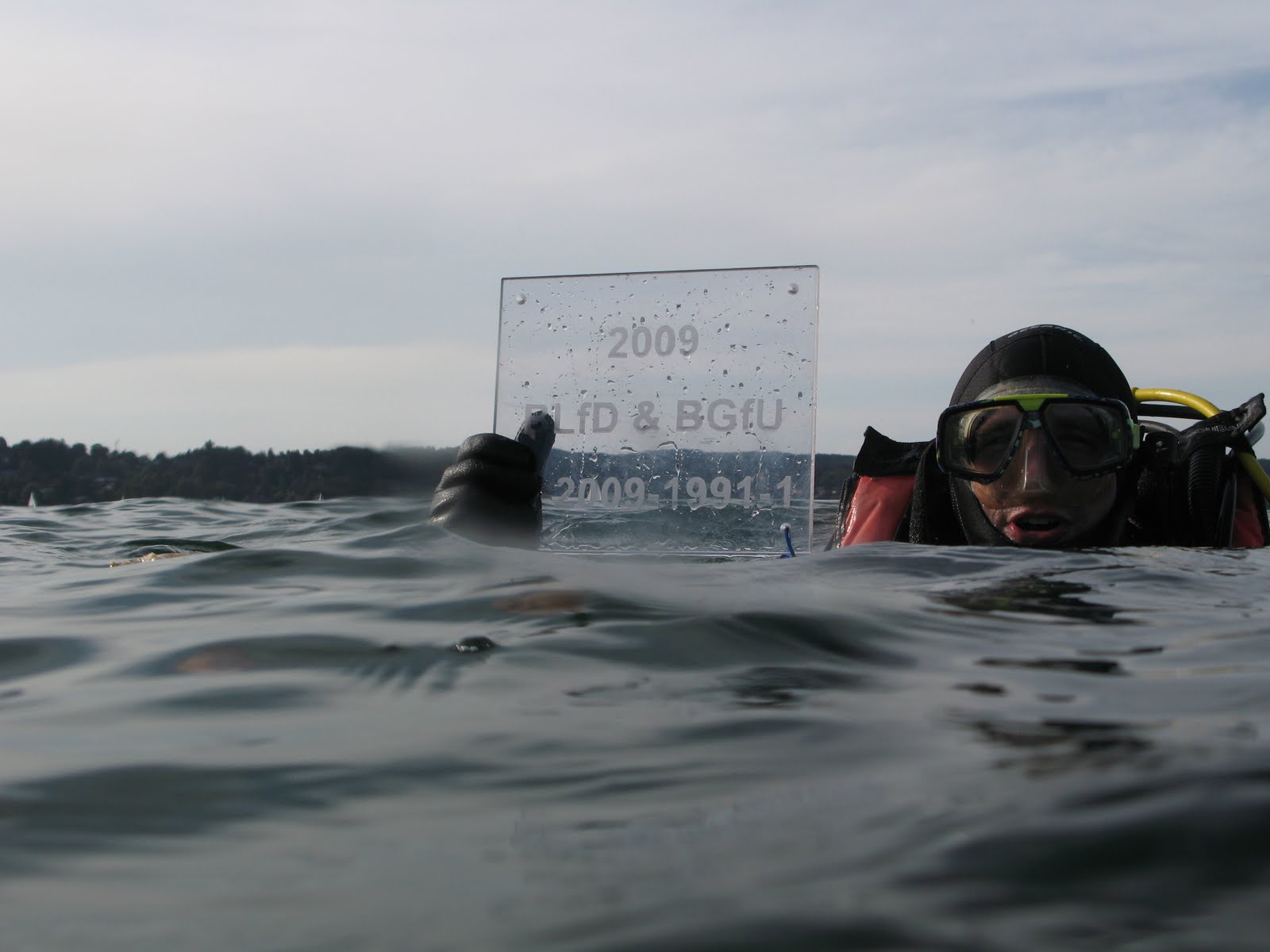
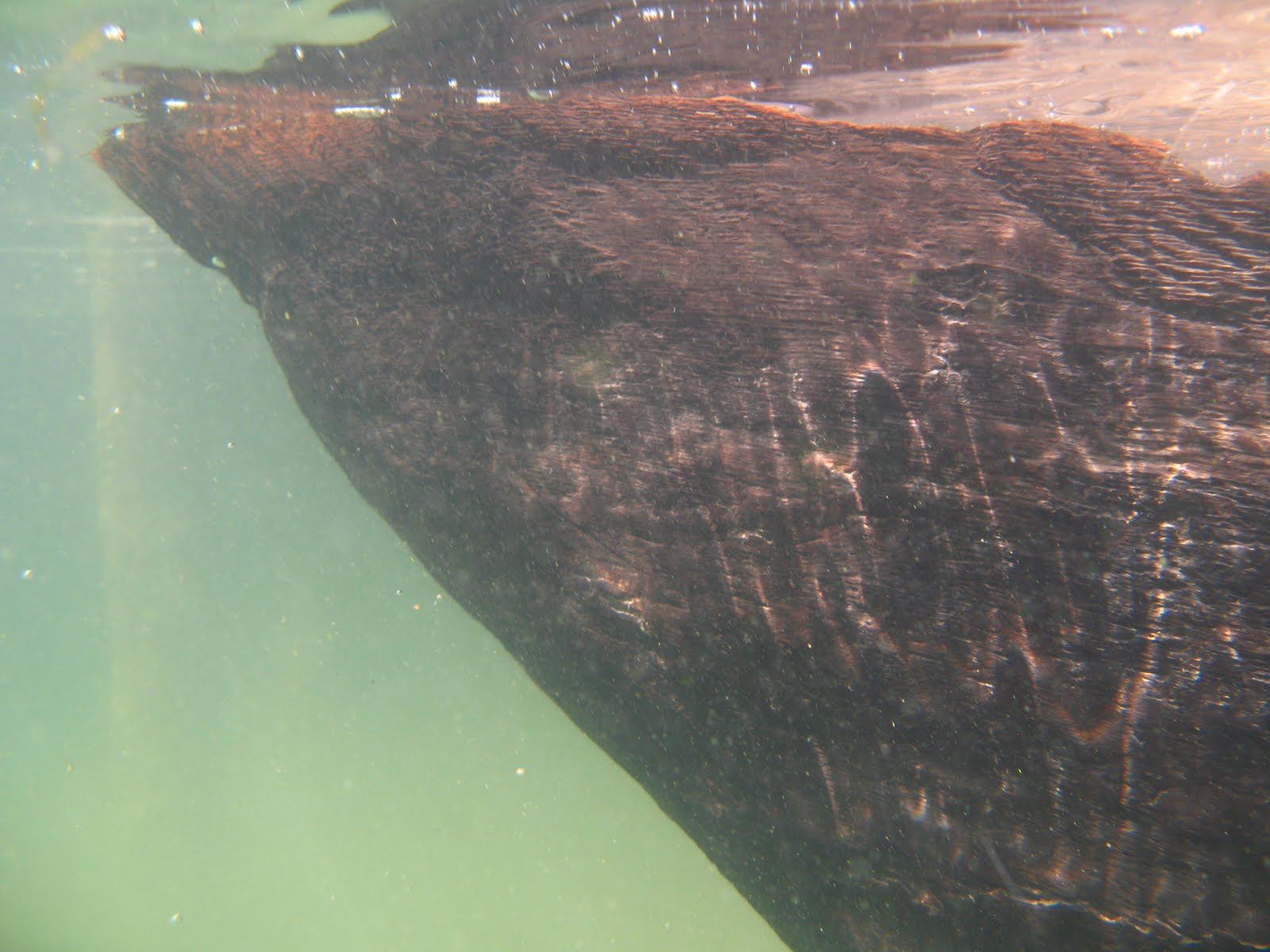
A few weekends ago I was given the opportunity to hang around a group of divers from the Bavarian Society for Underwater Archaeology as they “unearthed” an Iron Age logboat from the lake bed of Starnberger See. The boat had been discovered by divers a few years ago and had been transported over to a municipal boathouse, where it was left untouched until recent construction plans forced it to be taken elsewhere. Below is a photo of the boat as it was found this month, filled with sediment and trash brought in on the waves. Only the prow of the nine-foot-long logboat is visible.

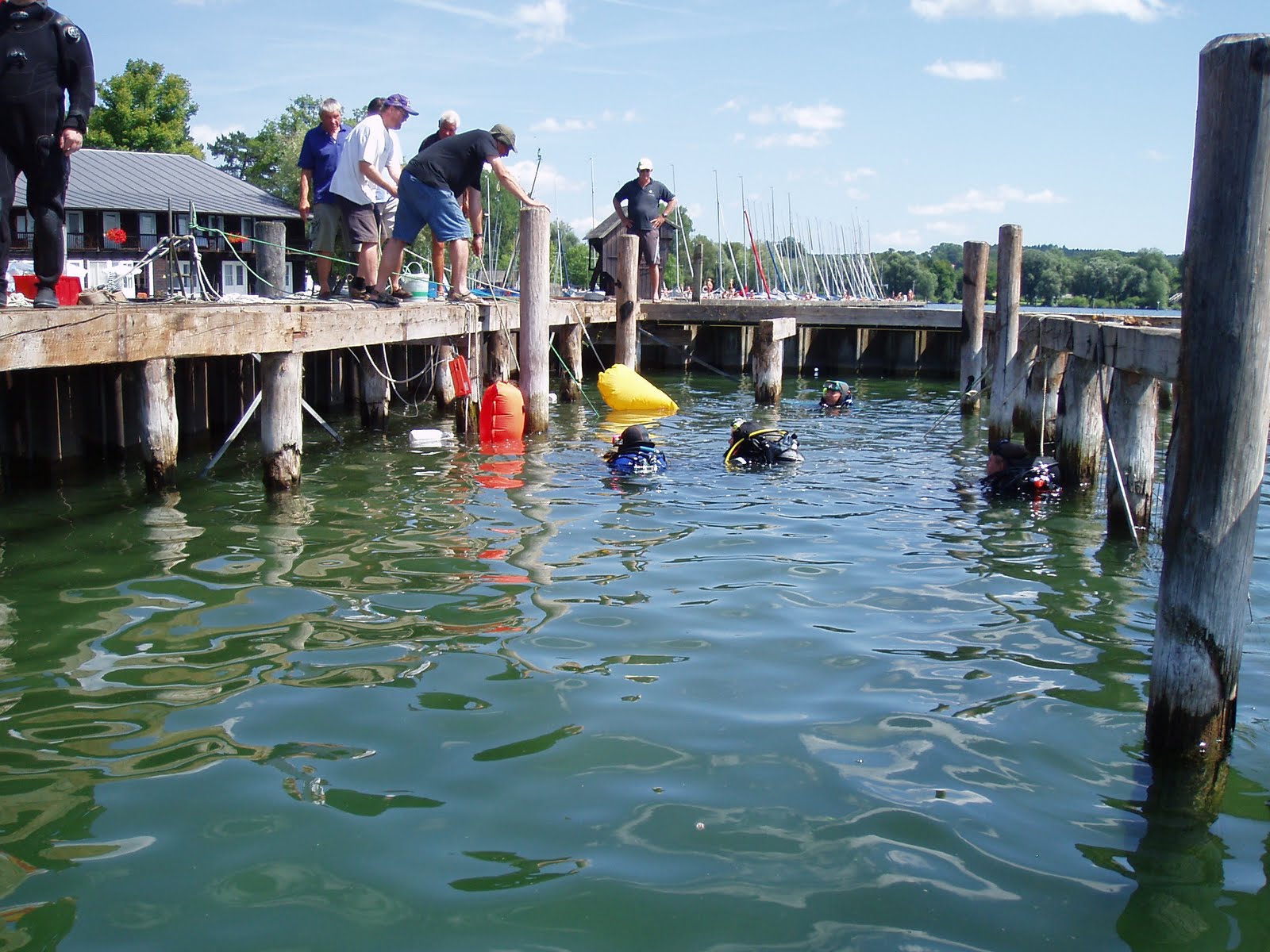
The first thing the divers had to do was set up a gas-powered water pump, with which they spent hours (until dusk on Saturday) vacuuming out the sediment from inside and around the boat, so that it could be moved.
The next morning, more divers showed up, and the heavy lifting commenced (literally; the logboat, underwater for over a thousand years, weighed like a rock now.)

>Geisterschiff Pt.2

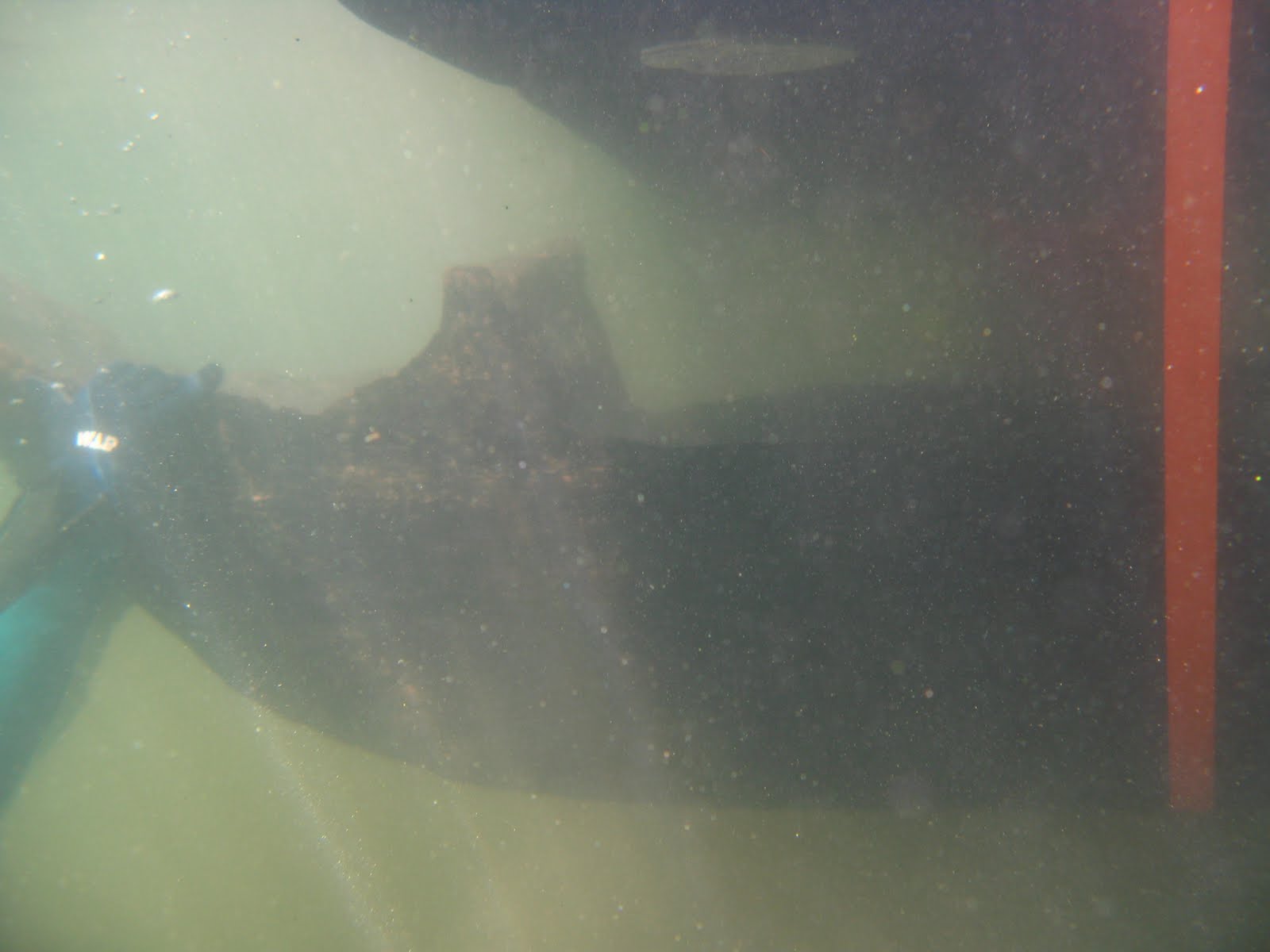
>The divers were pretty laid back about my presence there, and didn’t even mind when I donned snorkel gear and went into the water to get some better pictures (one of them even asked that I take some more!) I was careful to stay out of their way as they were working.

Below, the logboat has been pulled up out of the lake bed and fastened to a pontoon raft.It is important that it stay in the water, since with exposure to the air it would begin to decay.

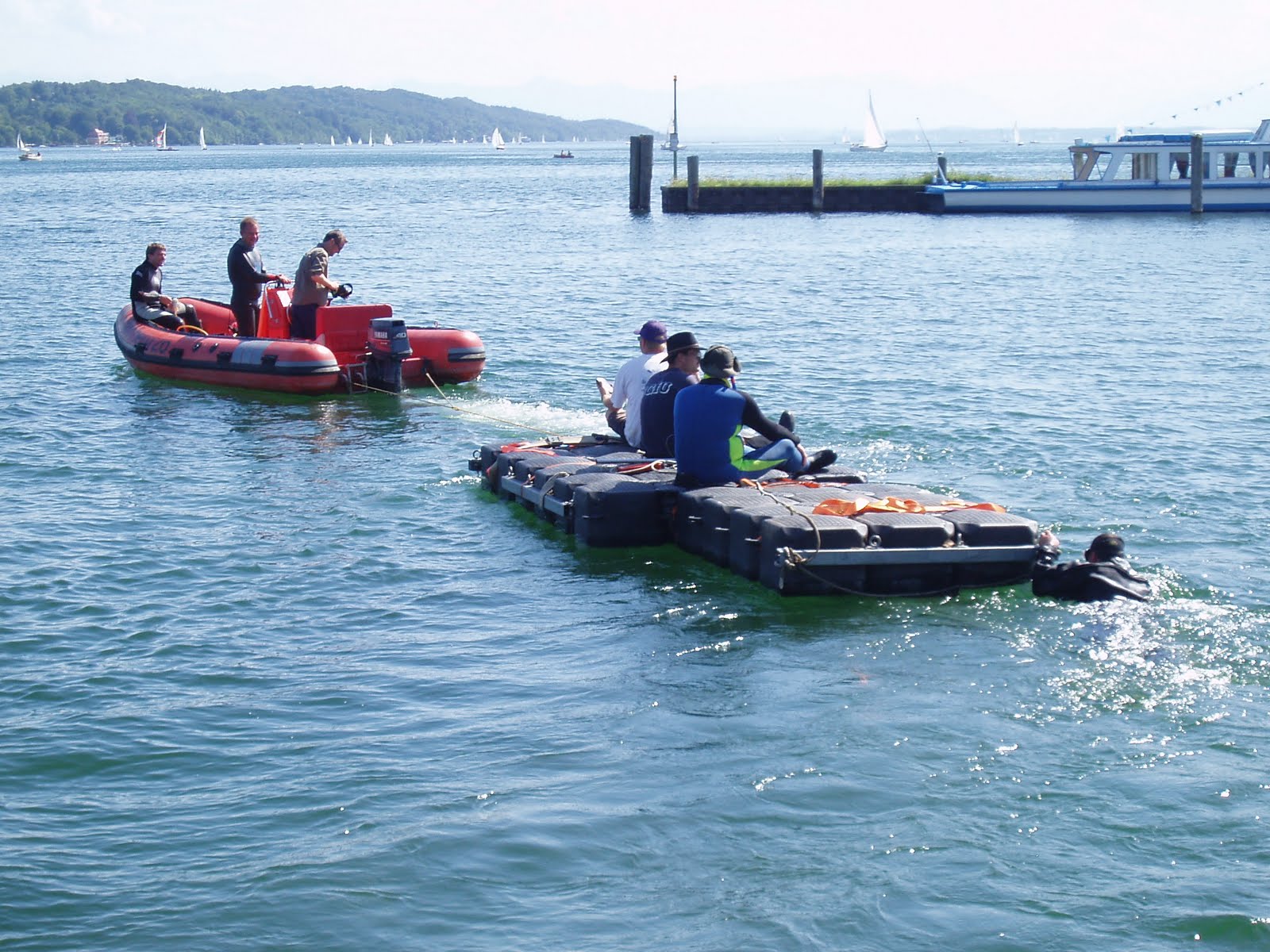
The logboat, securely attached to the pontoon, was hauled away at a slow, careful speed to an archaeological site across the lake, near Kempfenhausen. There, in protected waters, it was lowered onto the lake bed and wrapped in a protective tarp, like a body in a burial shroud. A plexiglass plaque was attached to it, and it’s location fixed with GPS for future research.

What an honor to have been allowed to observe this project! Many thanks for that to Marcus, the team leader, and to the beau for the use of his underwater camera (and for use of his photos at the protected site.)

>Militärfriedhof

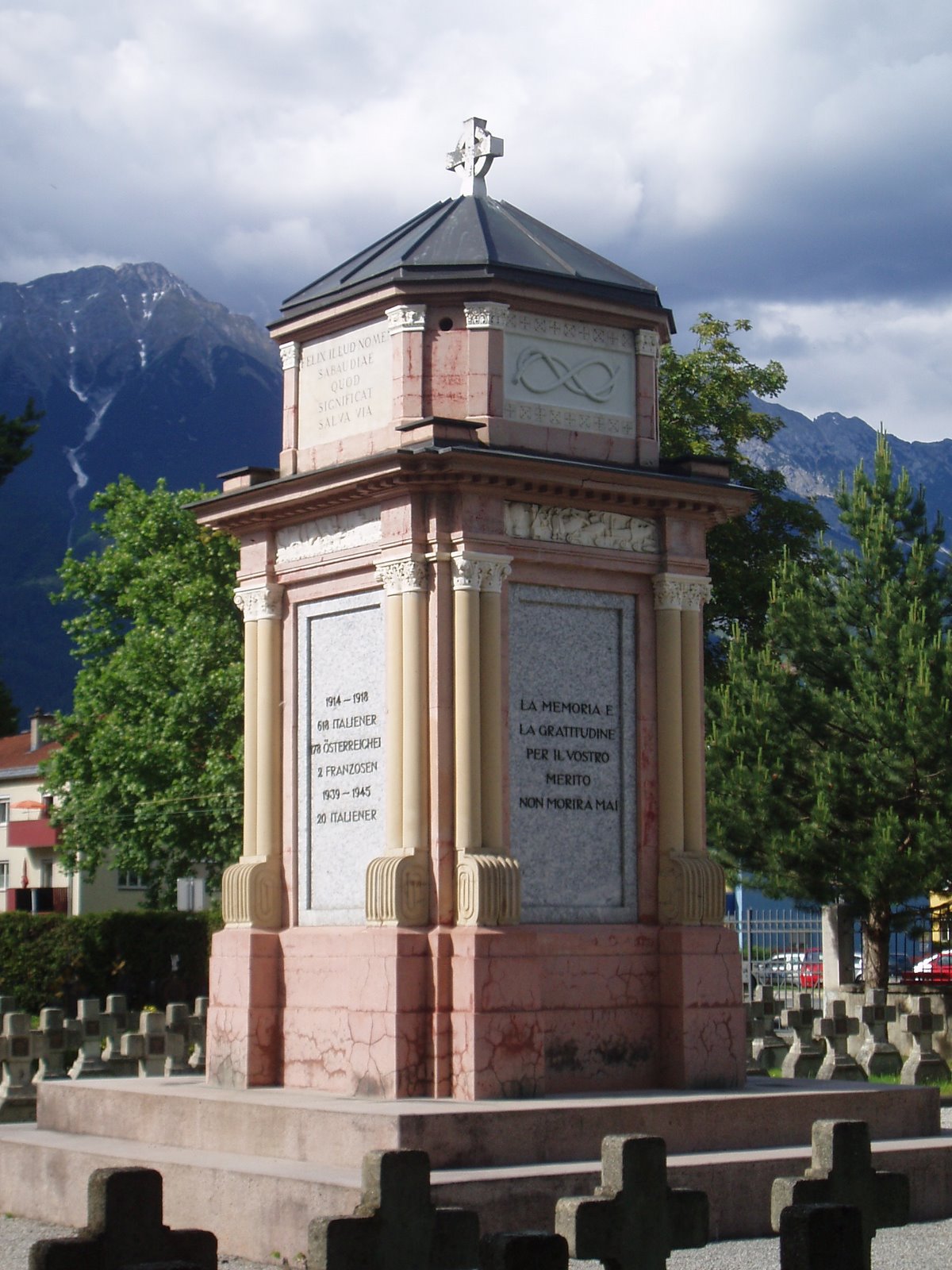
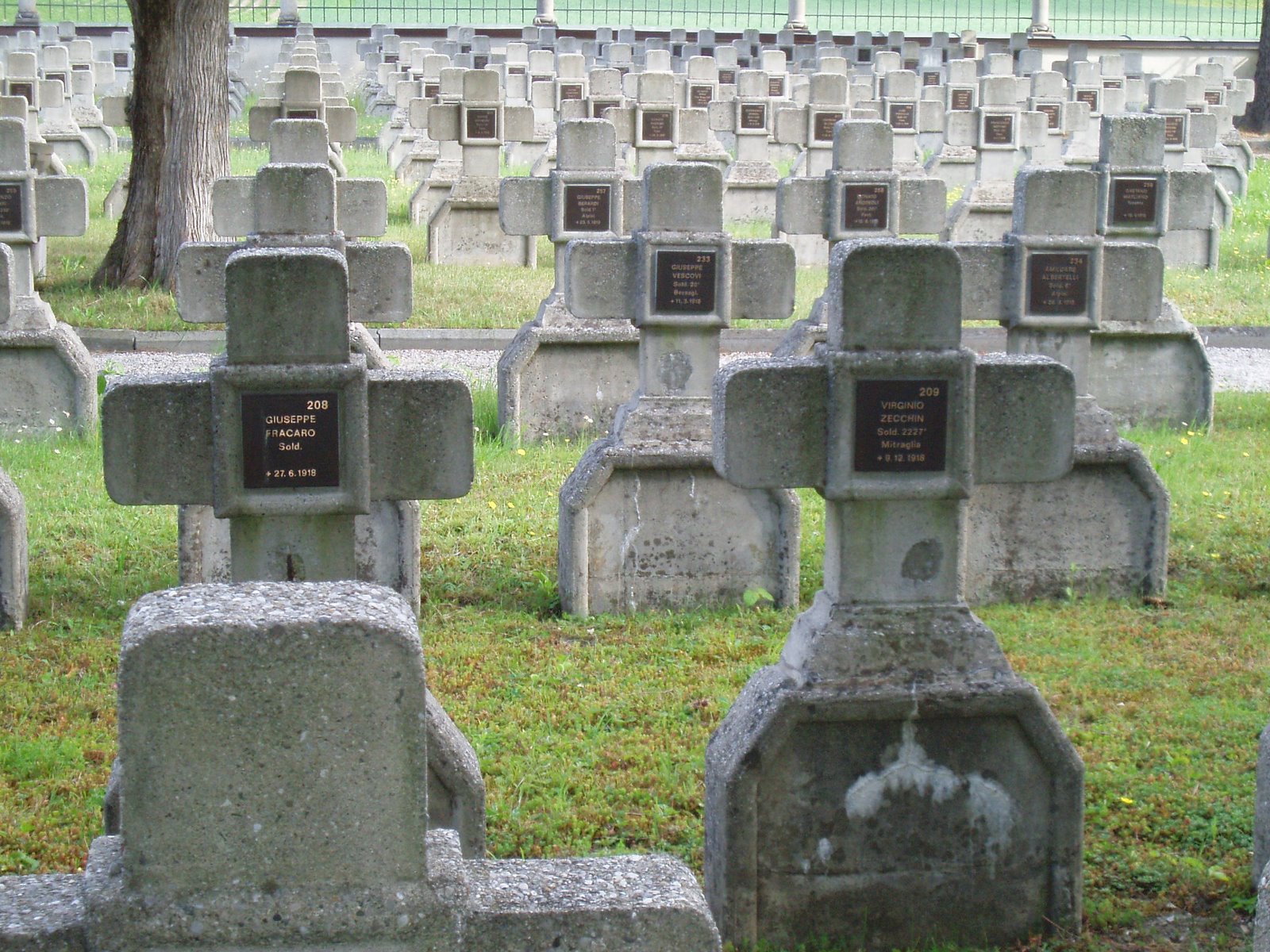
>I admit it, I find some cemeteries interesting. On a recent outing we passed by the Pradl Cemetery, the southeast corner of which holds a military section. Above is a monument erected by Italy in memory of the Italian soldiers who died in Tirolean military hospitals. Below, their graves.

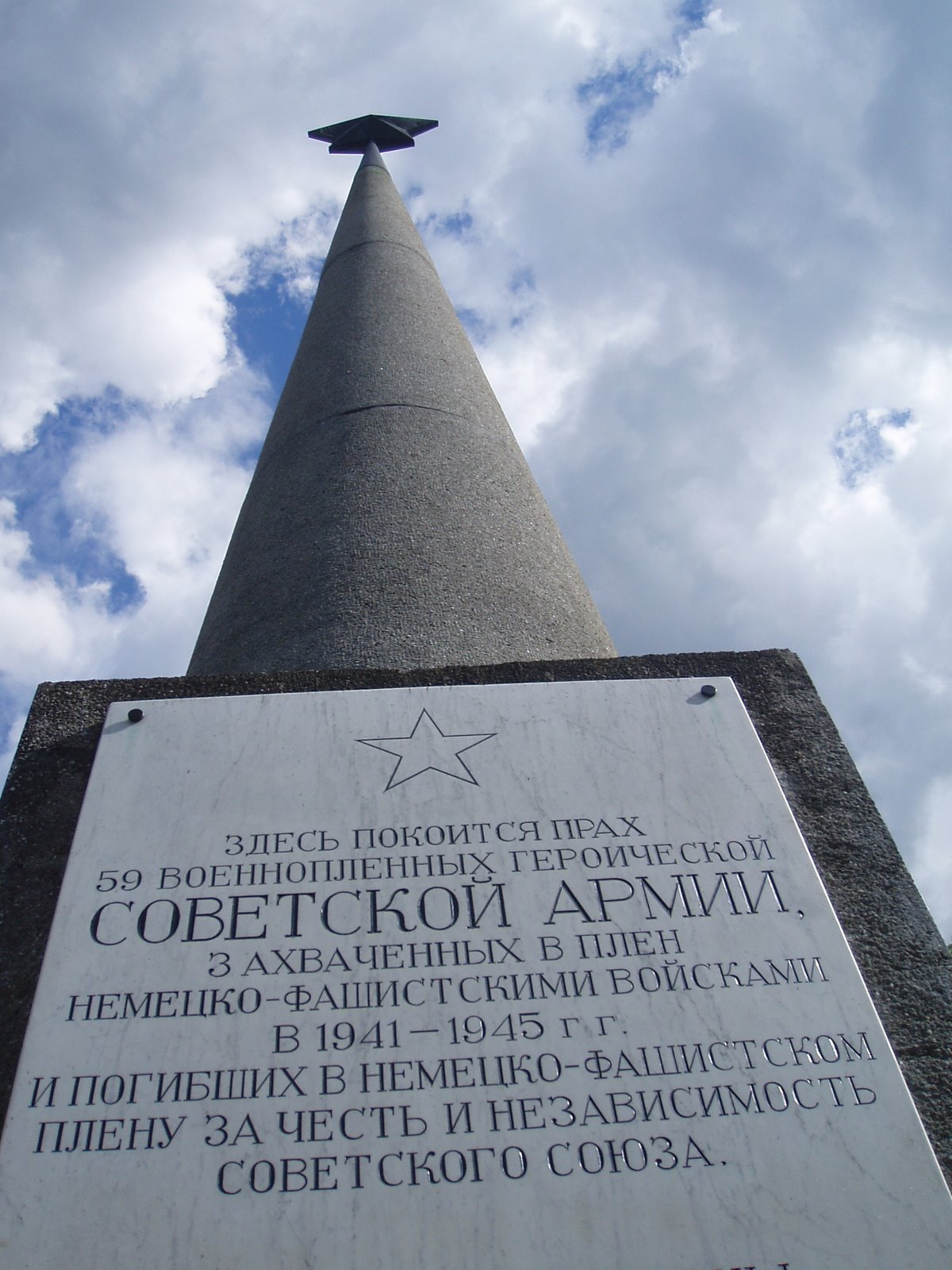
A monument erected by the Soviets to honor their fallen victims of the “German Fascists” (Nazis).
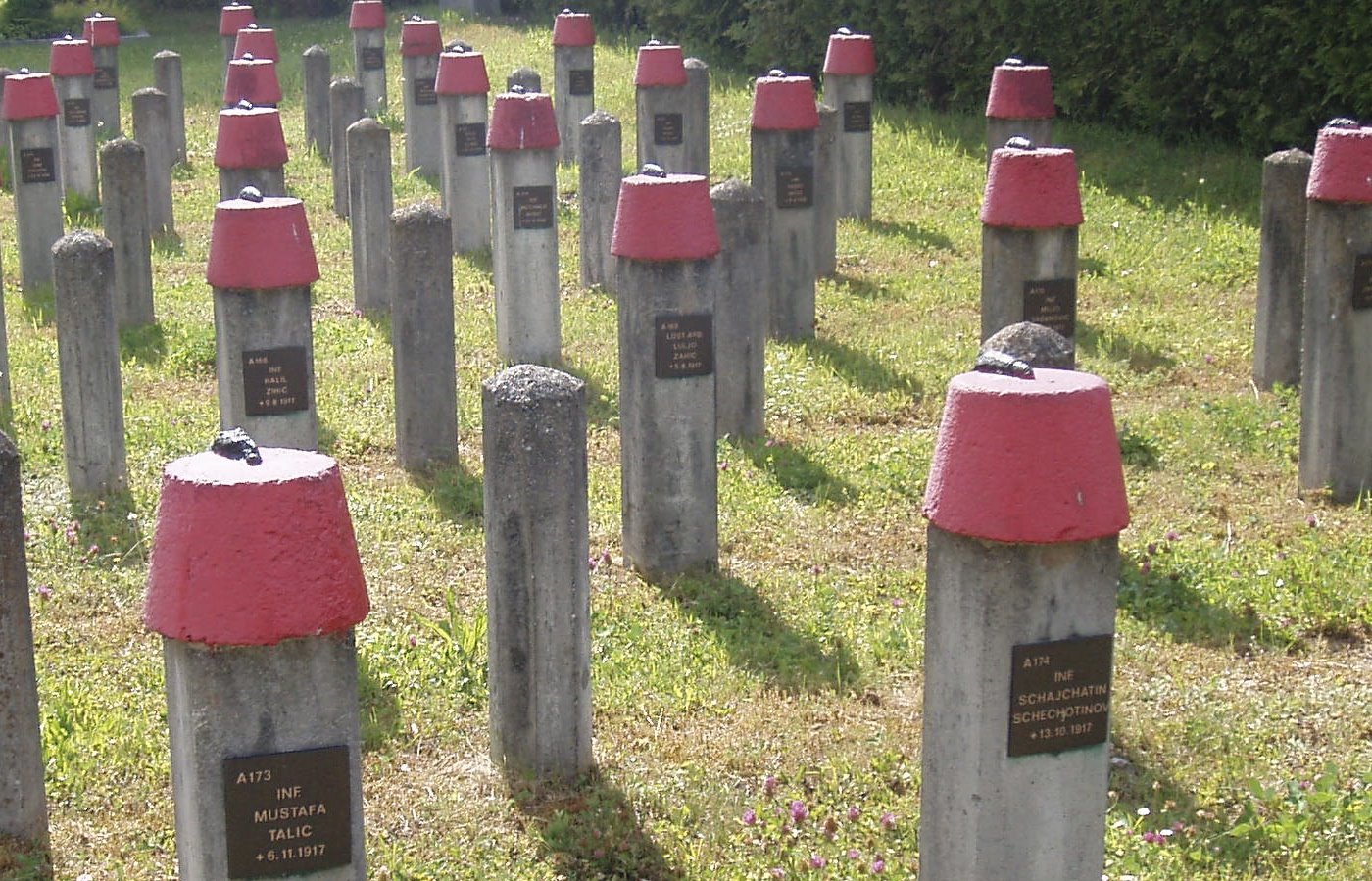
The markers below were not immediately recognizable to us from a distance, but their import became clearer when we recognized that each is capped with a red fez. They are the graves of Bosnian Muslims who’d fought for the Austrian Empire in World War I. Their graves face east.

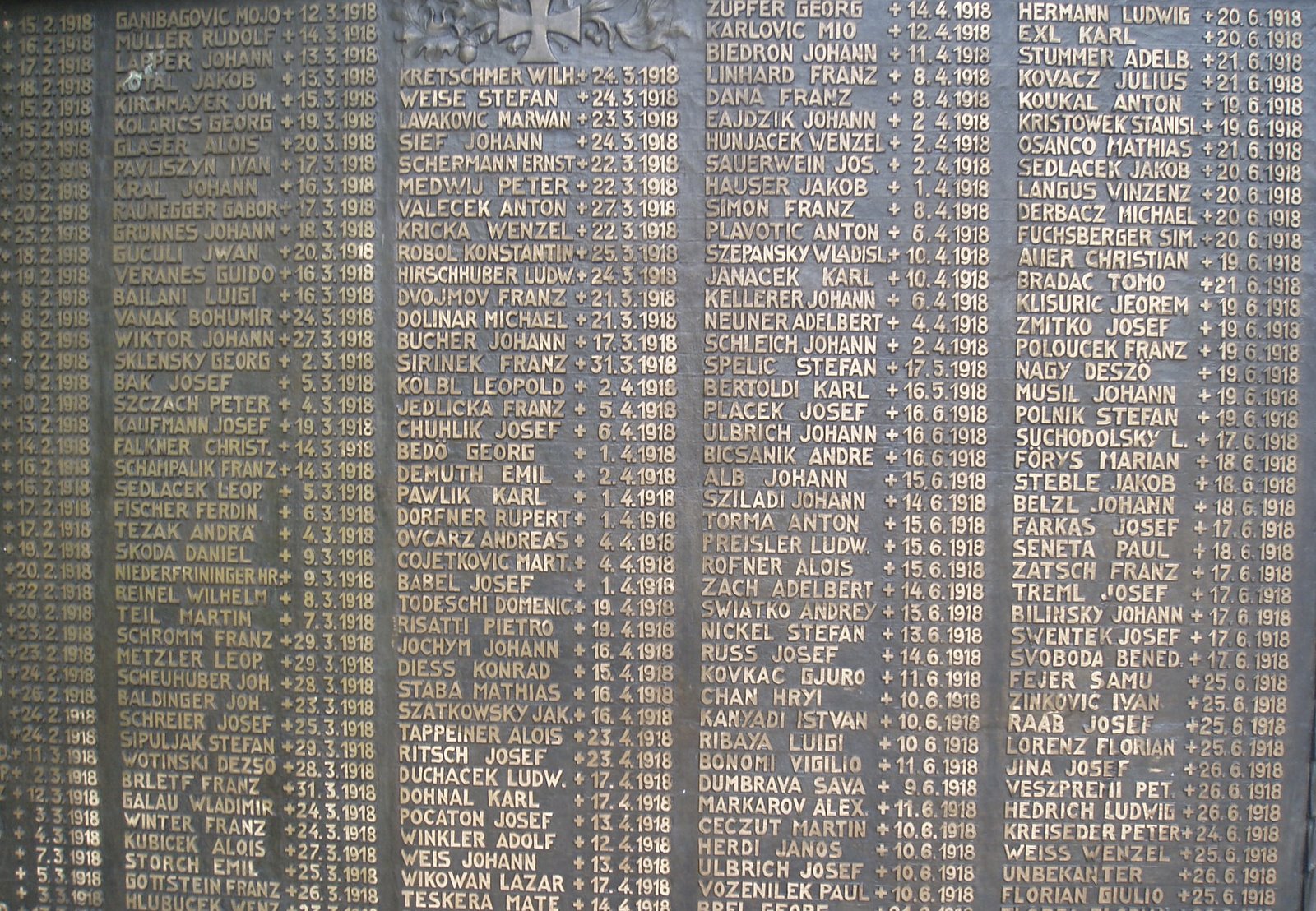
One of several plaques of names of the fallen. Names upon names upon names. Nearby are graves of POWs, victims of the nearby concentration camp (in Reichenau), forced laborers from Poland. It looks to me as if it was first planned that each group have its own separate area, but that as the dead began to add up, they were put here wherever there was room for them — leading to an interesting mish-mash in some corners of soldiers and civilians, equal and side by side in death.
This part of the cemetery, while maintained and spotless, looks as if very few people come here. And why should they — these graves are very old, and their occupants are from far away lands.

>Four Catholic priests from Tirol and Vorarlberg

>From a booklet* I came across while visiting a village church. I’m not much into organized religion but since organized religion isn’t forcing me to live their way, I don’t hold anything against it.
That said, as all personal (and especially local) stories out of the time of the Third Reich interest me, I am passing these along. Four individuals is not much of a resistance in the time of Cardinal Innitzer, who, despite having said publicly that “There is only one Führer: Jesus Christ”, seemed to bend over backward to make the Nazis feel at home in Vienna. One assumes there were many others who simply kept their heads low, and others who used the political situation to their own benefit. Probably there were many who started out in vocal opposition, but then got a stiff warning (such as a few years at Buchenwald or Dachau) and stayed quiet for the duration of the Reich. These four priests did not quiet down, even under intense pressure to do so. For that, they paid with their lives.

Otto Neururer

Born, raised and ordained as a priest in Tirol, Neururer was working in the village of Götzens near Innsbruck when Hitler took over Austria. Probably watched carefully due to his activities with the Christian Social Movement, but brought in for “slander to the detriment of German marriage” when he advised a Tirolean woman against marrying a divorced man (who happened to be a Nazi and a friend of the Gauleiter.) Sent to Dachau, then Buchenwald. At Buchenwald in 1940 he baptized a fellow inmate, and was found out. He was hanged upside down from chains until he died, 34 hours later.

Jakob Gapp

From Tirol, ordained in Fribourg, Switzerland. Worked in Graz until the Anschluss, when his superiors sent him home to Tirol, hoping to avoid problems. He continued however, to speak out against Hitler, was banned from teaching, and urged to leave the country. The Gestapo followed him to Spain, and two agents posing as exiled Jews seeking catholic instruction befriended him and managed to get him over the border into Nazi-occupied France, where he was promptly arrested. He was brought to Berlin, and was tried and beheaded in 1943.

Carl Lampert
From Vorarlberg, ordained and active in Tirol. Remained an outspoken protester of National Socialist church policy despite several arrests, and time at Dachau and Sachenhausen concentration camps. Released in 1941 and moved to northern Germany, he was brought in again on charges of treason, spying, disrupting the war effort, consorting with the enemy and listening to foreign radio broadcasts (this last charge alone was punishable by death.) He was sentenced to death and beheaded in 1944.

Franz Reinisch (link in German)
Also from Vorlarberg, Reinisch was able to steer clear of the Nazis during his young career (he spent time studying law and then theology into the 30s), but was banned from speaking publicly by the Gestapo in 1940. He continued work in the church as a translator, in 1941 called up to the Wehrmacht, which includes a mandatory oath of allegiance to Hitler. This he refused to do, knowing it meant certain death. In 1942 he was arrested, tried, convicted and beheaded.

* Bischöfliches Priesterseminar Innsbruck-Feldkirch Heft 101 — Sommersemester 2008