Forgotten Bavaria: Sunderburg

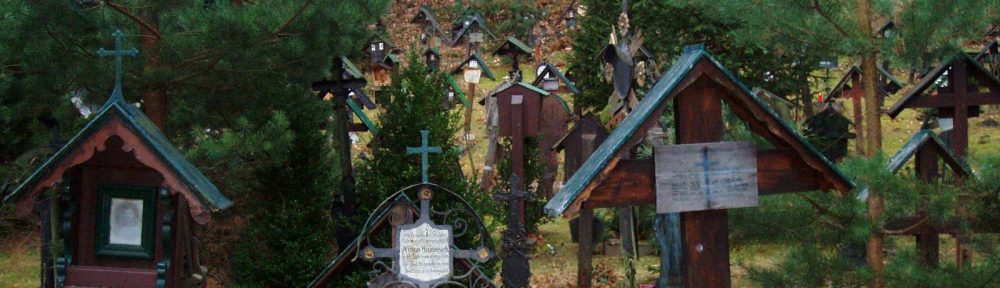
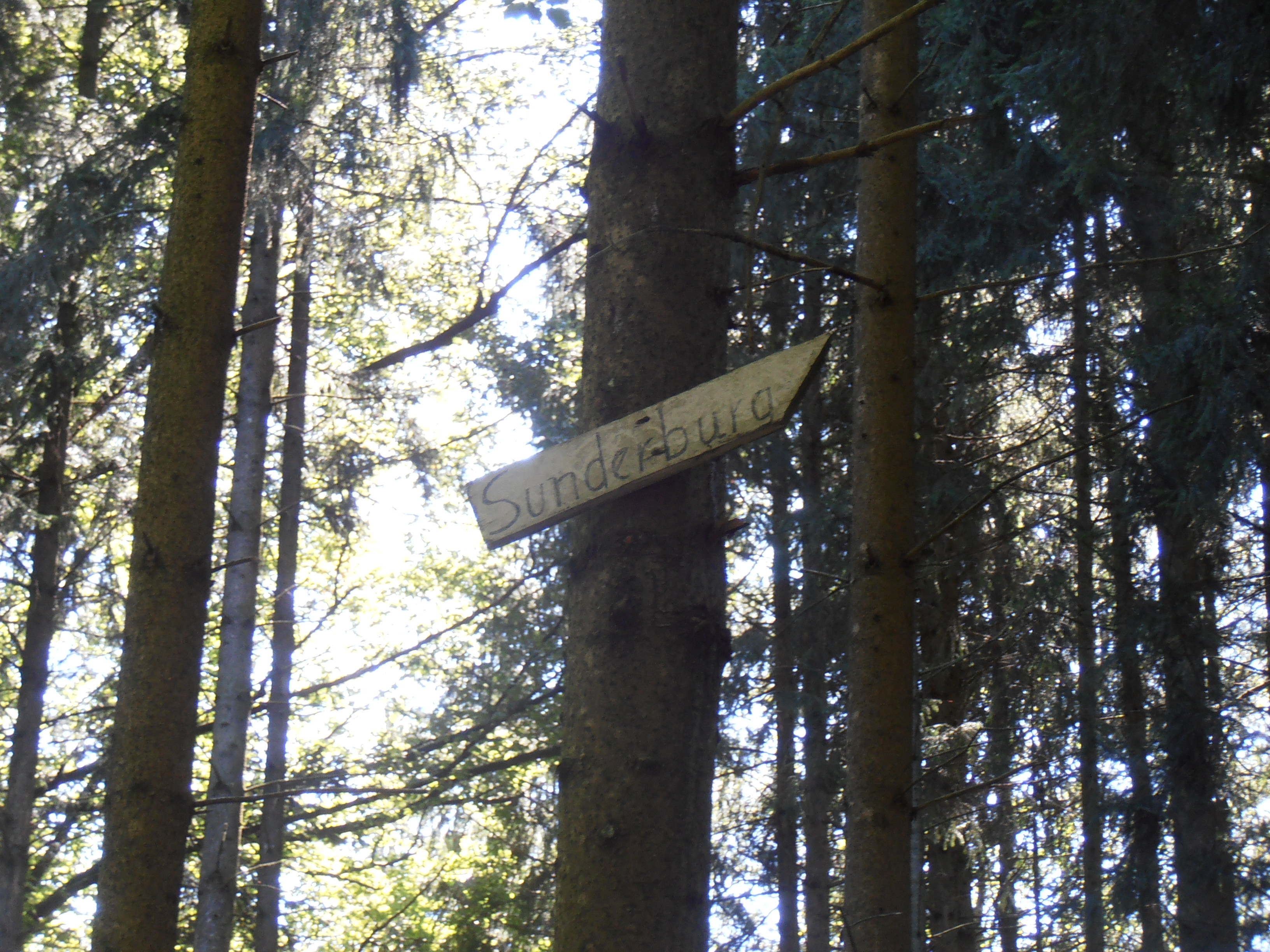
High above the Amper River lies a mountain spur known as the Schlossberg (Castle Hill) or the Sunderburg, where evidence has been found of settlements from different eras. Excavations have shown that people lived here as early as the early Bronze Age (app. 1700-1600 BC). and there have been finds belonging to the Urnfield Culture (app. 1200-800 BC, and there are indeed grave mounds nearby.) In the Hallstadt Culture years the settlement was apparently abandoned. I have no knowledge as to whether the Romans used the hill for any strategic purpose, although it is rather close to the Via Julia, the roman salt road which ran from Salzburg to the Donau at Günzburg.
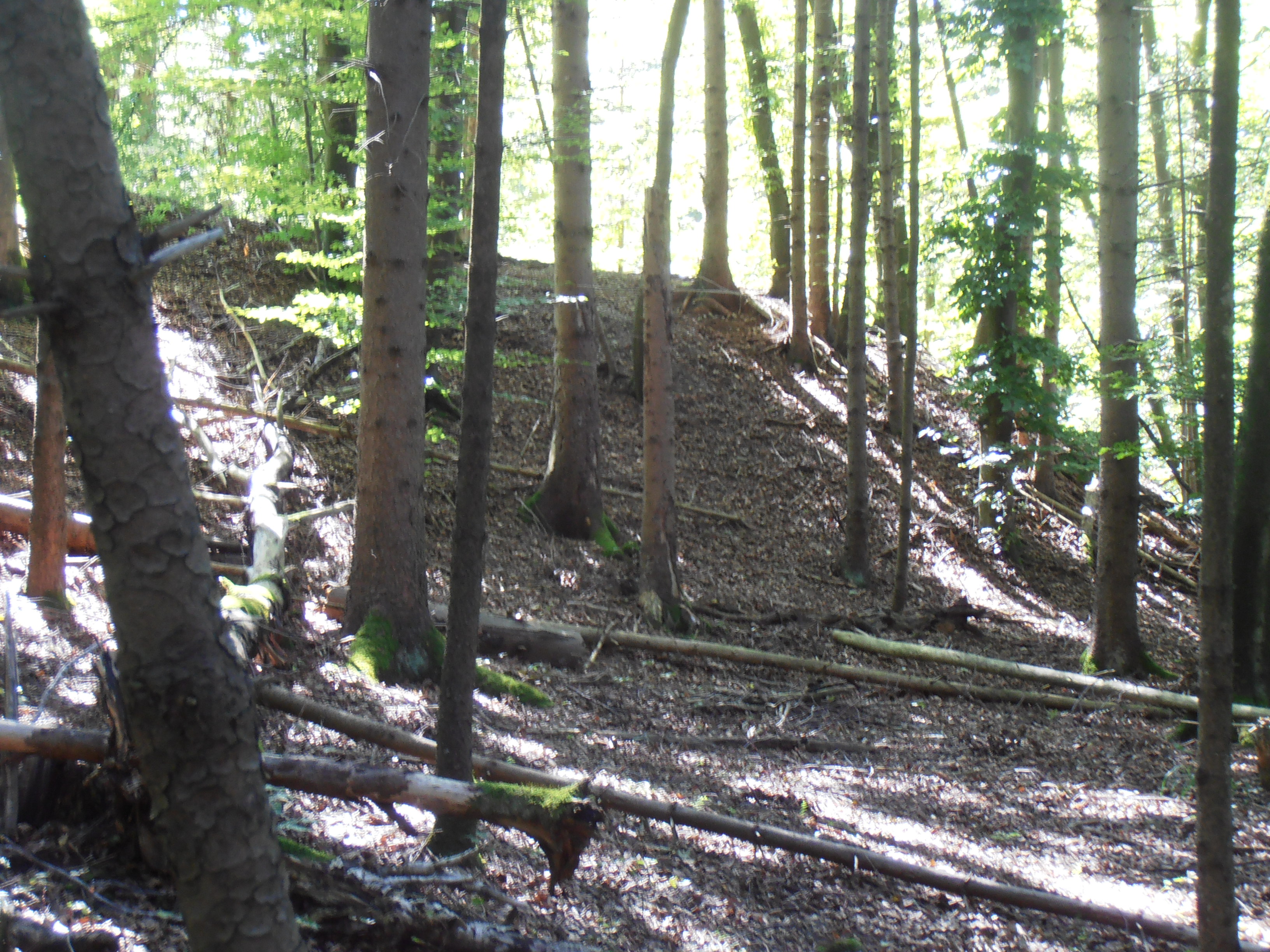
In the 11th century a fortress was allegedly erected on the hill by Count Friedrich of Diessen-Andechs, and Middle Age archaeological finds confirm this. The name Sunderburg was first mentioned in records in 1447. The House of Wittelsbach built a hunting lodge there in the 16th century.
On the steep slope to the river one finds mixed forest an, below that, rare flora in the wetland meadows downriver.
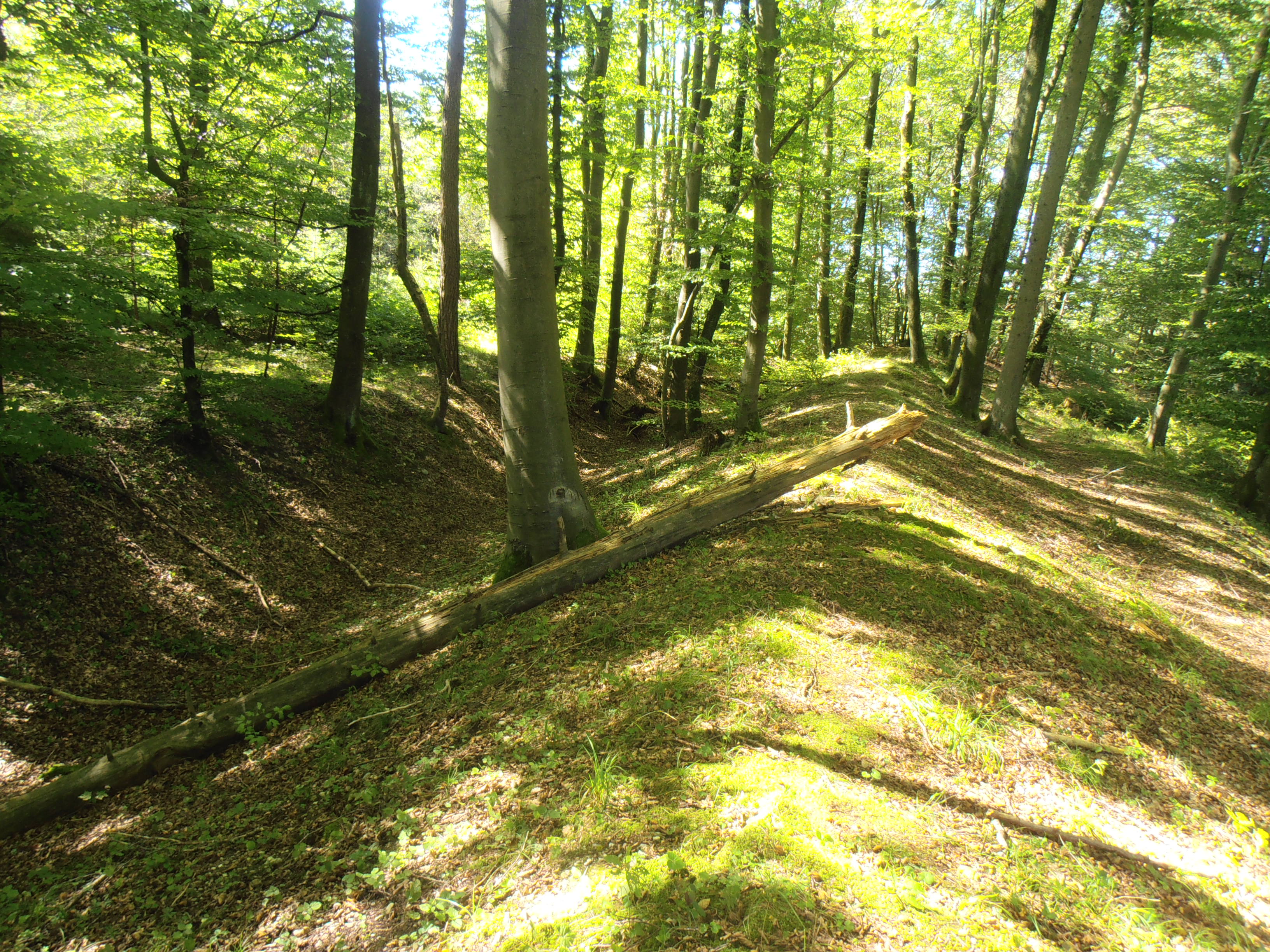
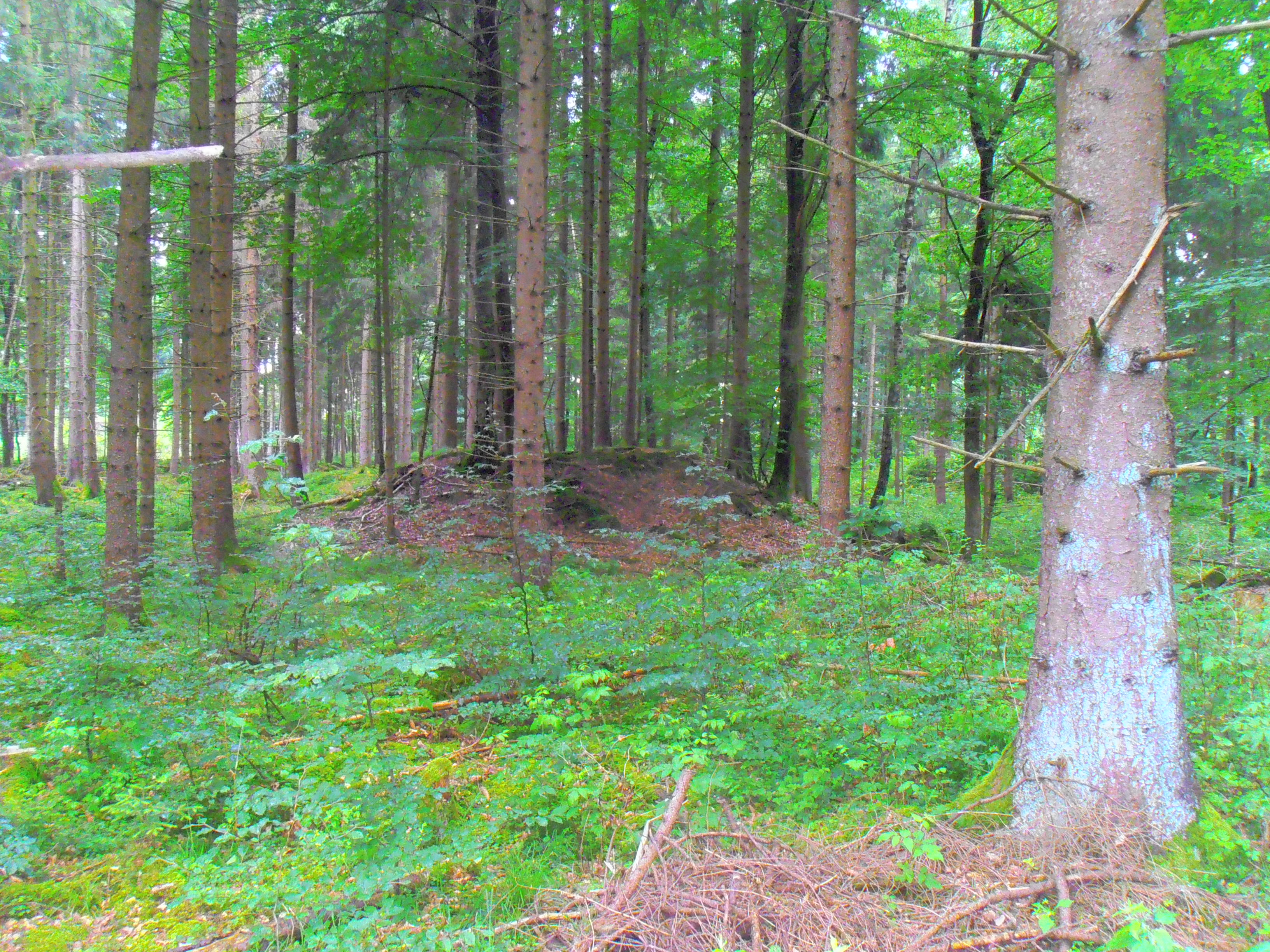
There is no information on hand about the earthwalls an the plateau, they could have been constructed in any of the periods where people used the hill.
An old local tale about the Sunderburg tells of it going under with all its inhabitants and treasures. A peasant, finding glass shards on the ground, took one home to find it had turned to gold. When he returned for more shards, they had all vanished. Another story tells of two pails of gold deep in the castle well, guarded by spirits which cannot be banished, which sinks further into the mountain every year. Similar stories of ancient gold in ancient fortresses can be found in Tirol, and probably wherever old, pre-christian settlements are known to have been. The locals may have known nothing of those prehistoric people, but the myths and legends often contain something of them.
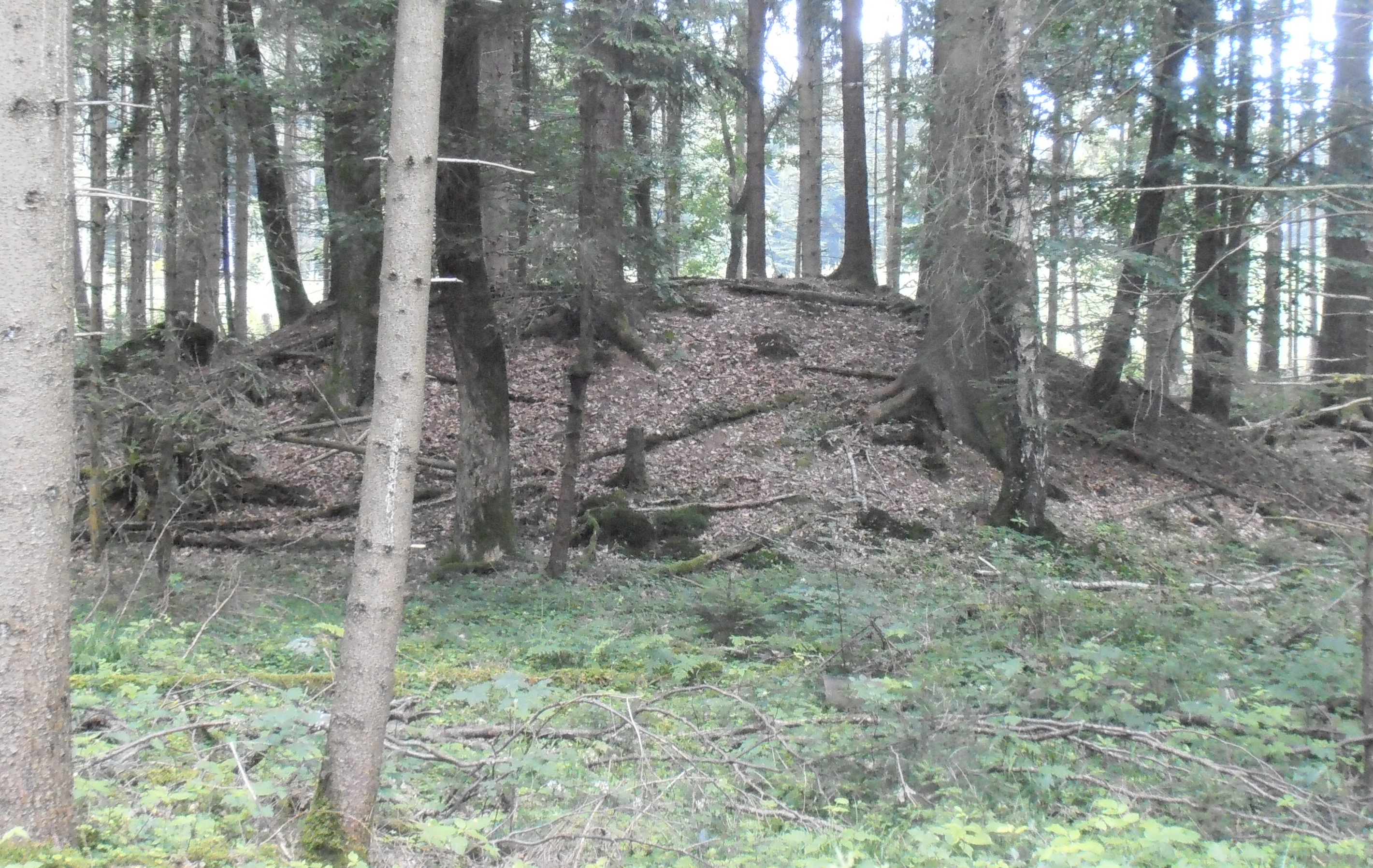
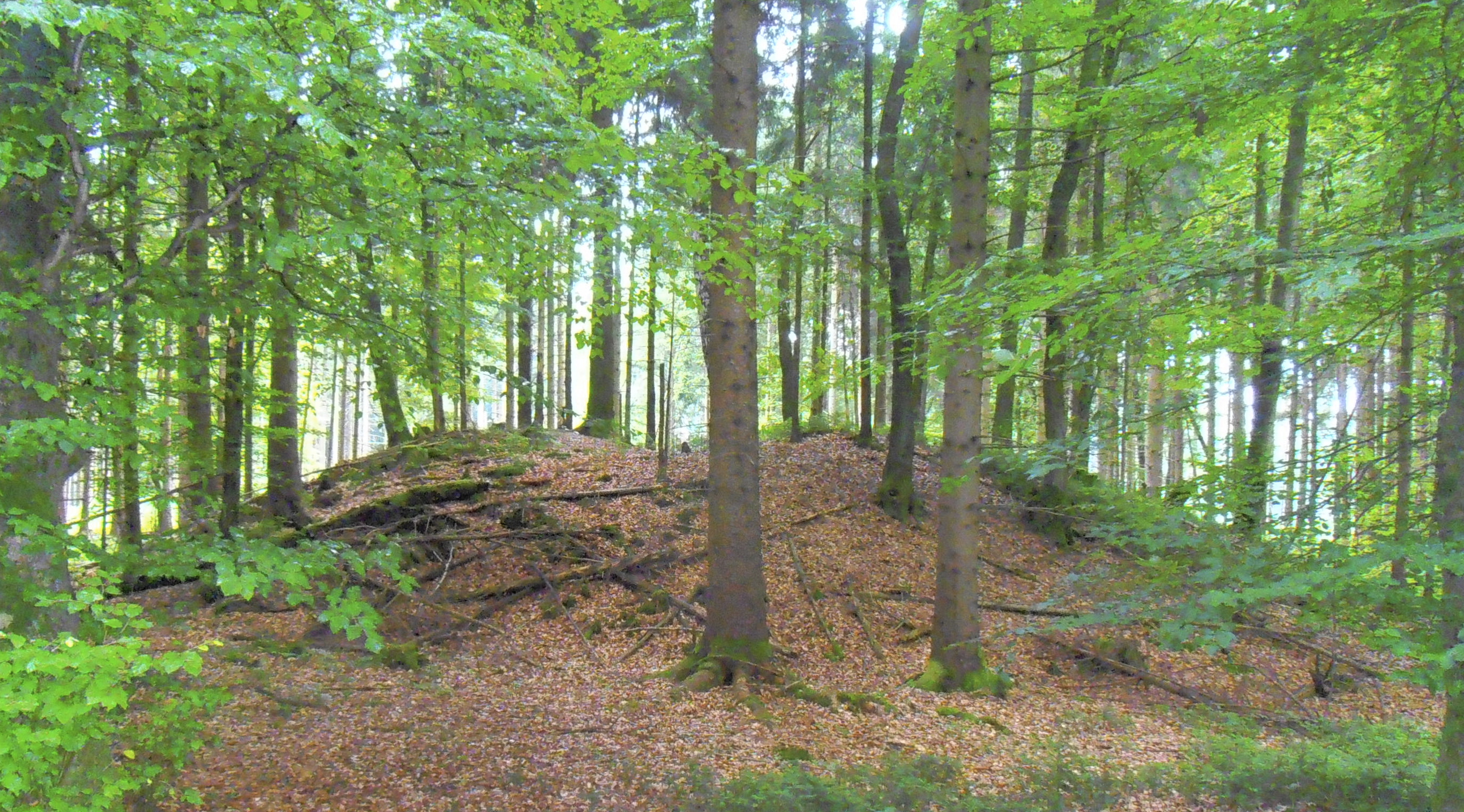
Grave Mounds near Grafrath


In the northern part of the ground moraine flatlands near the villages of Grafrath and Mauern, south of Fürstenfeldbruck, stretches one of the largest pre-historic grave mound necropoleis in Bavaria. Systematic surveillance has revealed at least 124 mounds. It is possible that more grave mounds existed outside the forested area, but were worn away over centuries of farming and building.


Research into this grave mound area began in the late 18th century, through the efforts of a local minister who made an early map of the mounds. Some excavations occurred in 1839 and 1870.  Later, in 1893, the Munich historical painter Julius Naue dug out 93 of the graves. Part of the finds are in the Archäological National Collection in Munich.
In the customs of the times, the dead were buried in their traditional clothing along with fine jewelry and vessels containing provisions. Some of  the men were buried with weapons. Some cultures buried cremated remains. The oldest burials are from the middle Bronze Age (1600 B.C.) Later burials occurred in the “Urnfield” culture in the late Bronze Age (1200-800 B.C.) and especially in the early Celtic “Hallstatt” culture (800-500 BC). The most recent, from the Celtic “Latène” era (500-100 BC,) consist of burials in existing mounds.

Thanks to the Fürstenfeldbruck Civic Trust for putting up this information on their nahTourBand walking trail.

Also special thanks to the guy who manages the Kraftvolle Orte website, which lovingly details what appears to be every single Pagan sacred place in Bavaria, including directions and GPS coordinates.. Gotta love those Germans.

The Hidden Jewish Cemetery in Utting

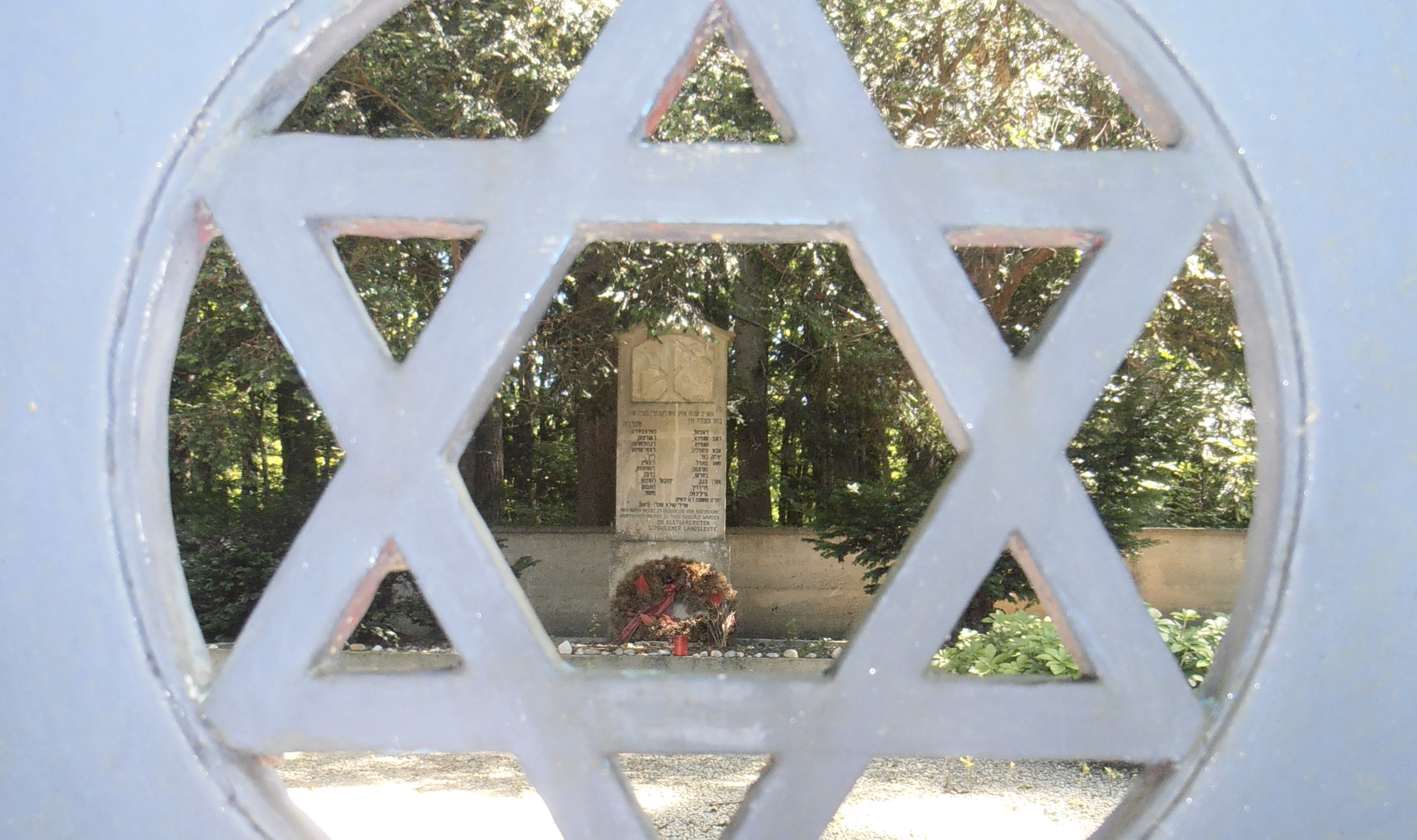
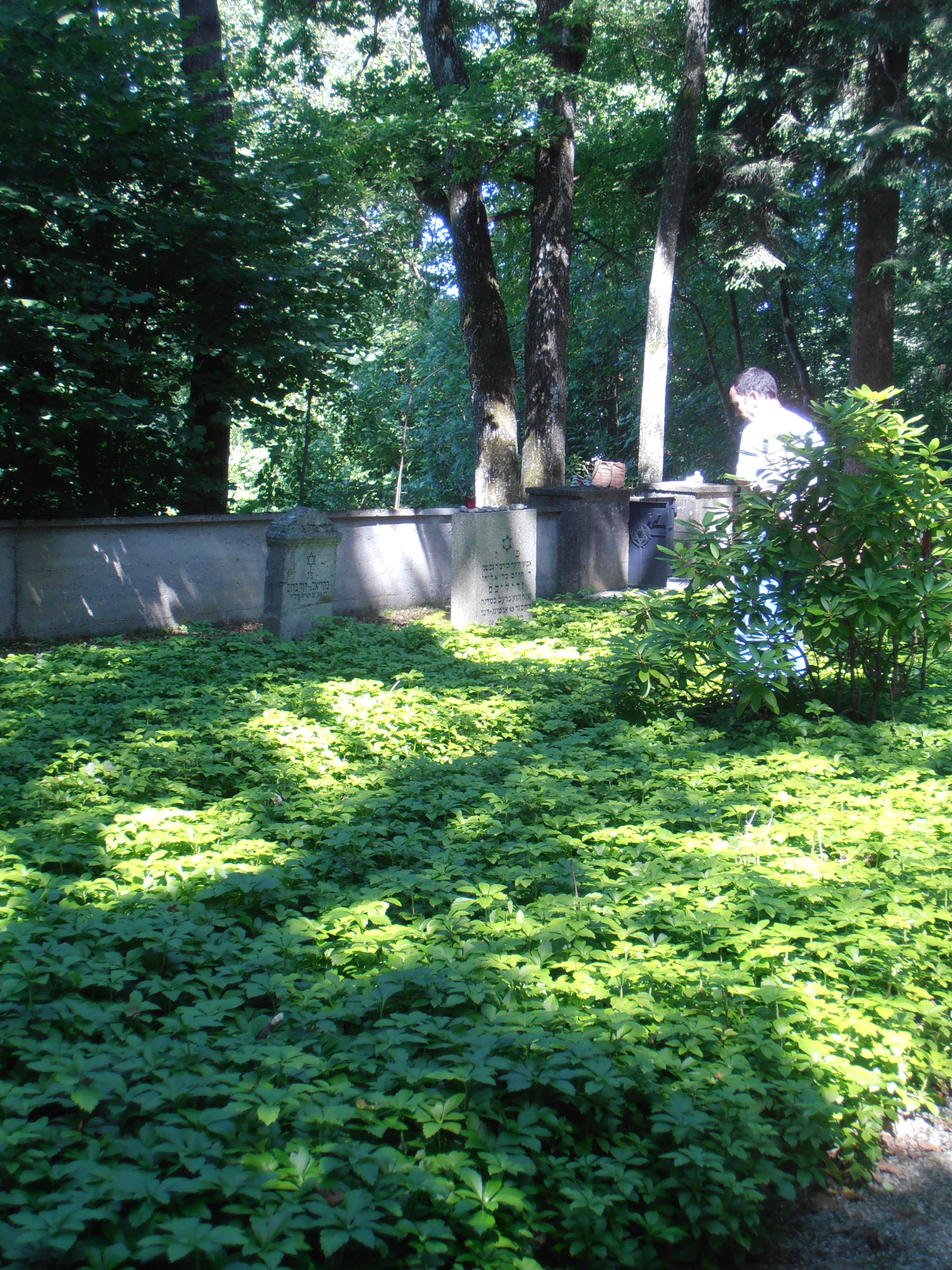
Looking for other archaeology sites on the local map, one stumbles across other, less expected things. For example, a KZ (concentration camp) cemetery outside of the small lakeside town of Utting, where there had been a tannery which made use of forced laborers from Dachau — there were satellite camps all around, this was Camp 5 (Lager V).

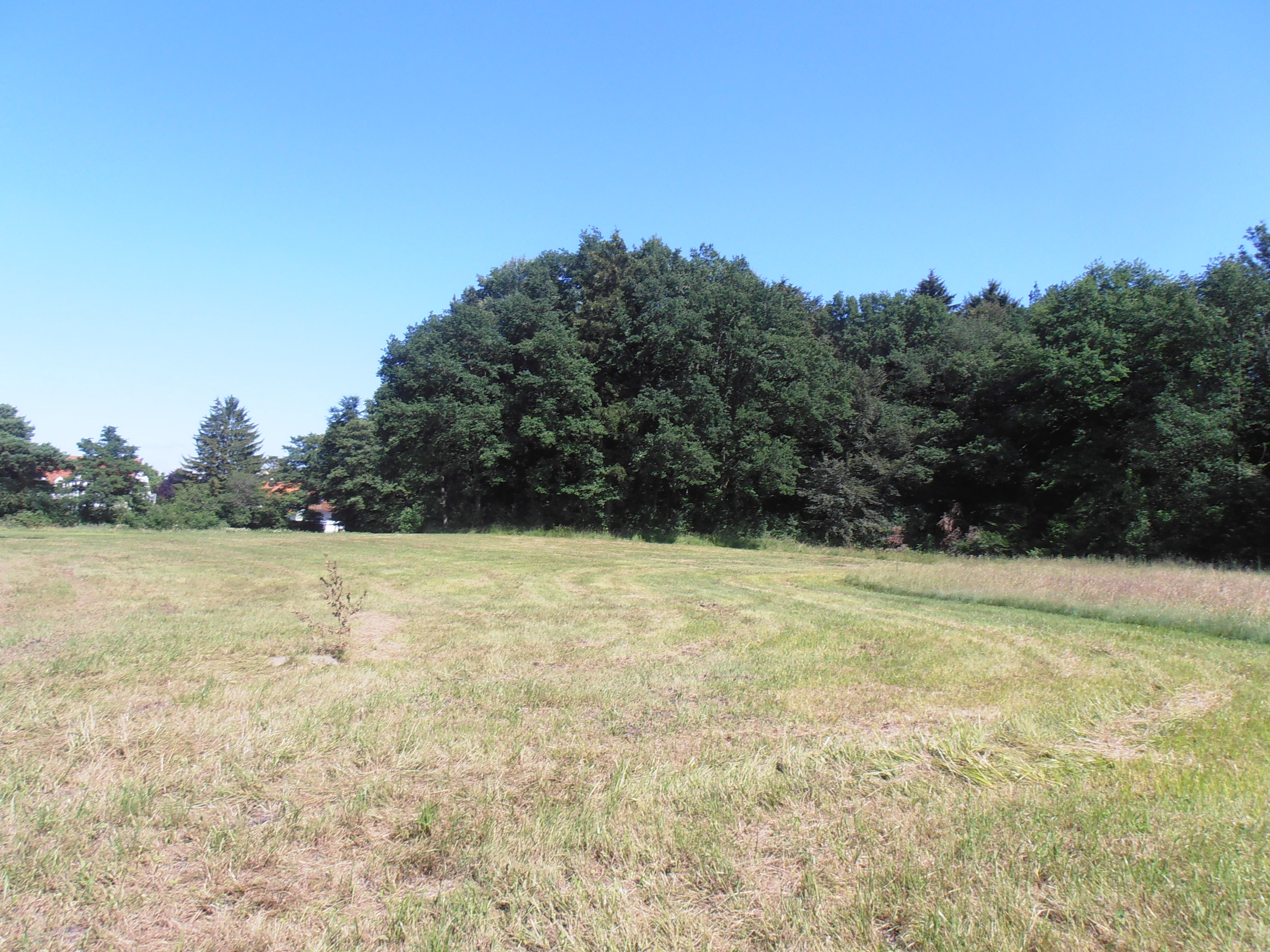
We almost didn’t find it. In fact we had come to a dead end in a field and started to turn back, when a local came by on his bicycle. When he heard what we were looking for, he generously walked us there (we never would have found it on our own, once we saw where we were headed — through a patch of forest,  someone’s back lawn and  a wooded archery range — but we had come in from the wrong road, it seemed.

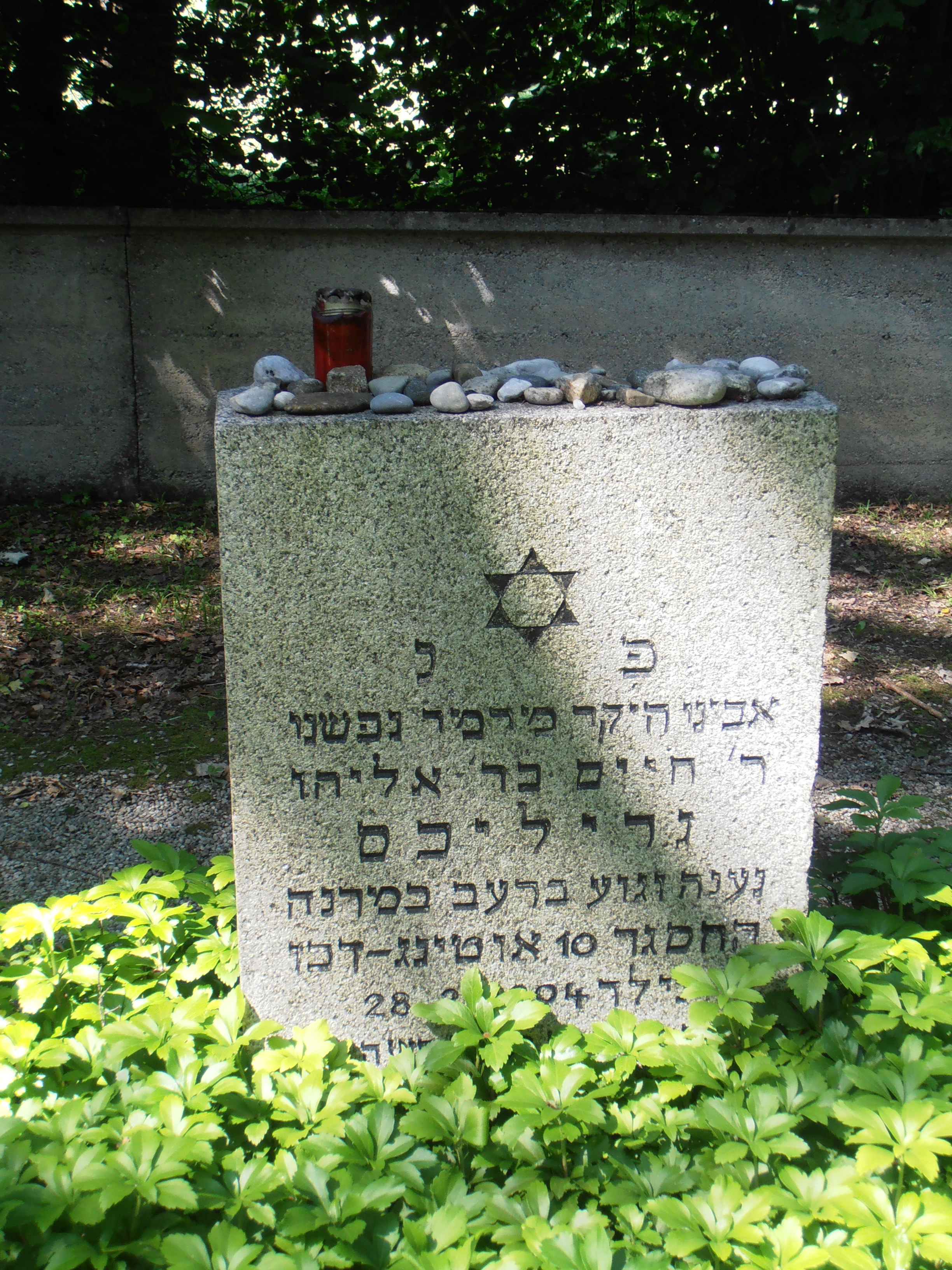
About 500 male prisoners worked here from August 1944 until April 1945. This cemetery is for the 27 who died from the brutal treatment.

A large stone inside the cemetery wall commemorates the 27 victims, from “the rescued compatriots of Schaulen” (Šiauliai, in Northern Lithuania, was an important leatherworking town. Which explains why its sons were brought to the tannery).

In my research I came across this poem by Yehuda Amichai, translated into English by Chana Bloch and Chana Kronfeld. The description could fit just about any of these little memorial graveyards, including this one.

“A Jewish Cemetery In Germany”

On a little hill amid fertile fields lies a small cemetery,
a Jewish cemetery behind a rusty gate, hidden by shrubs,
abandoned and forgotten. Neither the sound of prayer
nor the voice of lamentation is heard there
for the dead praise not the Lord.
Only the voices of our children ring out, seeking graves
and cheering
each time they find one–like mushrooms in the forest, like
wild strawberries.
Here’s another grave! There’s the name of my mother’s
mothers, and a name from the last century. And here’s a name,
and there! And as I was about to brush the moss from the name–
Look! an open hand engraved on the tombstone, the grave
of a kohen,
his fingers splayed in a spasm of holiness and blessing,
and here’s a grave concealed by a thicket of berries
that has to be brushed aside like a shock of hair
from the face of a beautiful beloved woman.

Historical information on the cemetery found here. This is the work of one Othmar Frühauf, who has photo-documented Jewish cemeteries in Germany for Alemannia Judaica (Both links are in German). My hat goes off to him.

Poem found here

Update on the Grave Mounds

OK, I did a little more searching on the internet, and found that there is more to be found under “Grabhügel” than there is under “Hügelgräber” (which is the word used on the Schondorf municipal website.) A lot more. Between the Ammersee and the Lech river alone there are 167 mounds. In Grafrath, just a ways up the road, there are 250 mounds, old stone-age fortress remains, and a sacrificial stone complete with cup markings. In other words, the place is teeming with pre-historic geological archeological finds. So little time!

Pagans in Bavaria: Celtic Grave Mounds

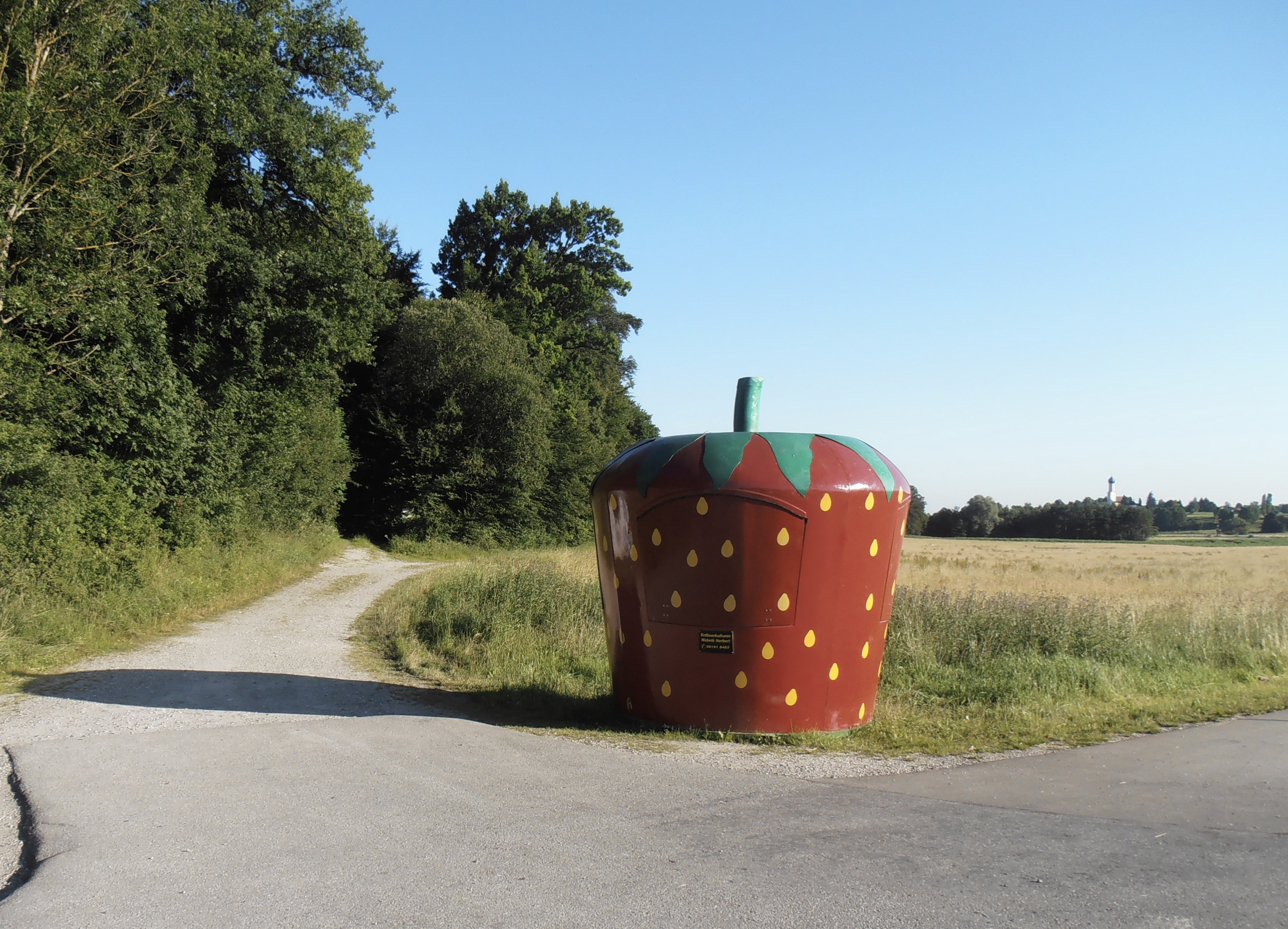
On my hiking map of the Ammersee region, I found two red stars placed on a wooded area north of Schondorf. The map’s key uses this symbol for grave mounds or ringwalls, a number of which are to be found in Bavaria. Surprised to find some just down the road, we set off to look for them. Going mainly by instinct, we turned off the road at the big strawberry between the Aldi and Schondorf and parked there, then headed into the woods on foot.
This was not the ideal entrance point, but we couldn’t find a better one. Trying to walk toward the place indicated by the stars, we veered off the path pretty early. On the other side of some swampy grassland surrounded by forest, I could make out something that looked higher than the rest of the forest floor.

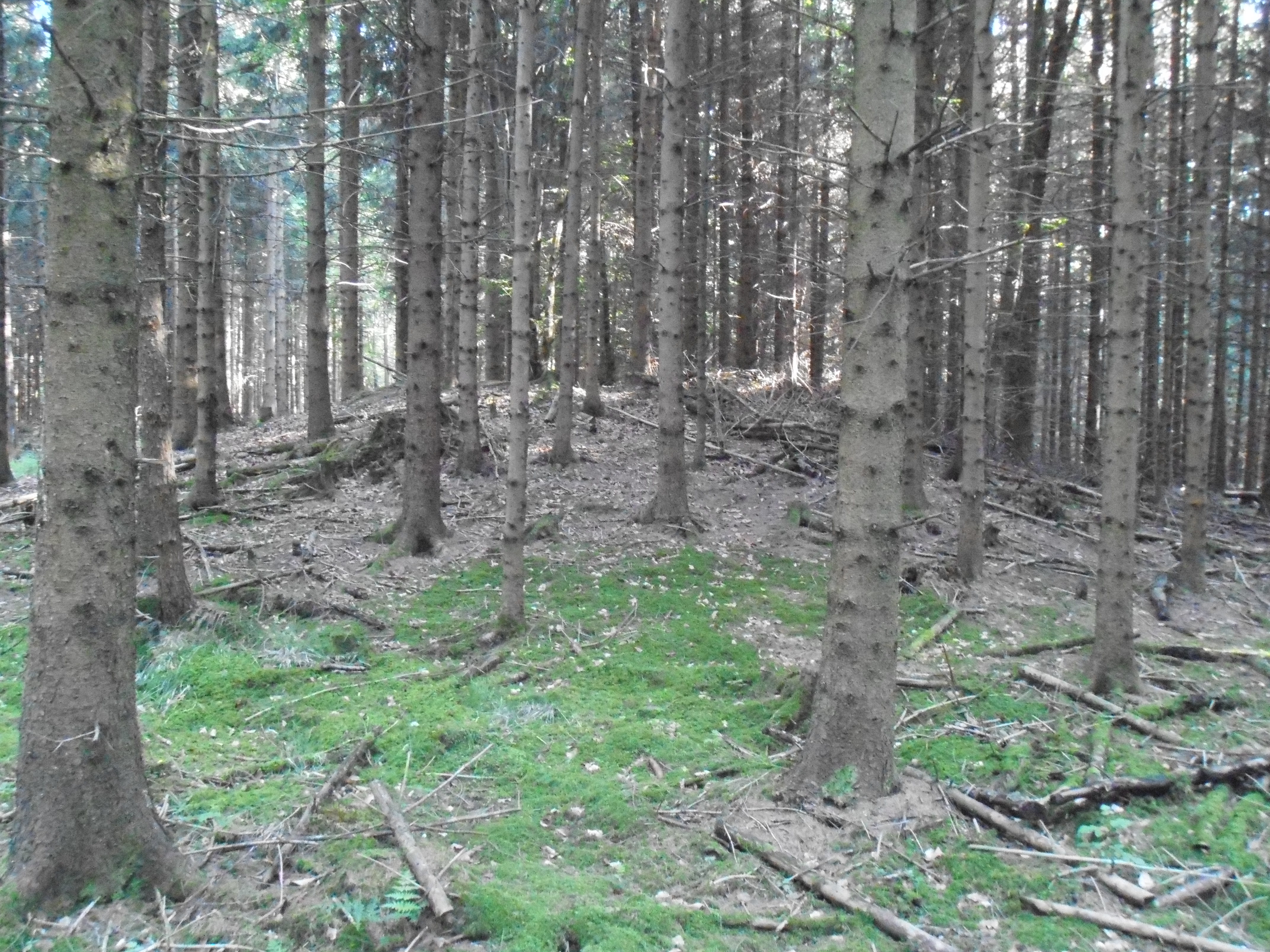
I think this is a mound. The Beau was not entirely convinced. No signs, no path, just strange little hills covered with trees and moss, and a hell of a lot of biting insects (I was wearing shorts — “typisch amerikanisch”, said the Beau — a mistake I won’t make again.)

Here appear to be three. It’s not easy to tell in the photos, but they really were different from the surrounding landscape. (Of course, it’s impossible to tell just by looking — hills like this could have nearly anything underneath them, from old war debris to landfill. ) Local websites mention that there are fourteen such Celtic grave mounds in the area, but nothing more about them. We’ll keep looking.

>Renft

>

A recent blogpost elswhere about “Krautrock” (classic rock music from Germany) got me thinking about a post I had wanted a certain music critic friend to write. He never got around to it so I guess I’ll have to write it myself.
Because: there was a genre of rock music coming out of German-speaking lands which was far superior to the Schlager tripe being fed to television audiences in the BRD (West Germany), and had more heart and soul than the Elektropop that groups like Kraftwerk were playing.  And that was Ostrock, the stuff being generated behind the Berlin Wall. Of special interest is the story of the band Renft, which enjoyed a few short years of real success within the country, before inevitably getting in trouble with the government. The following is from “Stasiland: Stories From Behind The Berlin Wall” by Anna Funder.

Renft may have started off with borrowed western rock songs, but there were so many lies that singing the truth guaranteed them both hero and criminal status. By the end of the mid-seventies the band embodied a lethal combination of rock, anti-establishment message and mass adoration. They were shaggy men with bellbottoms and attitude, they were hot, they were rich by GDR standards, and they were way too explosive for the regime.

Performers needed a license to work. In September 1975 Renft were called to play for the Ministry of Culture in Leipzig to have theirs renewed.

‘I had some western money,’ [ Renft said] ‘so before the licensing hearing I bought a small cassette recorder from an Intershop.’ … While they were setting up to play he turned the cassette recorder on and hid it (behind) his guitar…

But they didn’t get to play. [Ruth Oelschlägel, committee chairperson] asked them to approach the desk. She said the committee would not be listening to ‘musical version of what you have seen fit to put to us in writing because ‘the lyrics have absolutely nothing to do with our socialist reality…the working class is insulted and the state and defense organizations are defamed.”

…”And then she said to us, ‘We are here to inform you today, that you don’t exist anymore.'”
There was silence. One of the band members signaled to a roadie to stop setting up. [Lead singer Christian Kunert] asked, “Does that mean we’re banned?”
“We didn’t say you were banned”, Comrade Oelschlägel said. “We said you don’t exist.”
…[Klaus Renft:] Then I said, ‘But…we’re…still…here.” She looked at me straight in the face. “As a combo,” she said, “You no longer exist.”


Renft records disappeared from the shops overnight. The band ceased to be written about or played on the radio. The recording company AMIGA reprinted its entire catalogue so it could leave them out. “In the end it was as they had said: we simply did not exist anymore” [Renft] said, “just like in Orwell.”

Rumors were put out by the state that the band had split up, that it was in diffulties. It was: it couldn’t play. Some members wanted to stay in the GDR, others knew they had to leave. [Lyricist Gerulf] Pannach and Kunert were arrested and imprisoned until August 1977 where they were bought free by the west.

The band members managed to reconvene and enjoy a few more years of retro-success after the wall fell, although without their poet Pannach, who died in 1999. One by one the original members, their lives shortened by a lifetime of political suppression, alcohol and cigarettes (and possibly the effects of radiation used by the Stasi on political inmates at the Hohenschönhausen prison), died off until there is now only one or two left. Klaus Renft himself passed away in 2006, but the band, now with almost all new members, still plays now and then in venues throughout the “former east”.
Here is one of the last songs they wrote (lyrics by Pannach) before the hammer came down back then.

>Prussian

>Do you know that the name Prussia goes much further back than the northern German kingdom with which we mostly associate the name? Prussia was a group of tribes in the Baltics, and the Prussian language (now dead) was related to Lithuanian. After sweeps and conversion attempts by sundry dukes and bishops from further south, then the Northern Crusades (the Teutonic Knights, who worked for the Holy Roman Empire), the Germans finally moved in for good and took over, and the Old Prussian language died out by around the 17th or 18th century.

As someone I knew once put it, referring to Germans from the area as “Prussians” (which they themselves sometimes do) is like speaking of “Manhattanites” ; yes, certainly correct, but with a forgotten back-story of the people who used to go by that name, long ago.

I mention this because I was reading up on the Amber Road on Wikipedia, and saw that someone was angry about using the term Prussia to refer to the Baltic end of the route. Because to that writer, Prussia only meant German military might and all that. And yet, the writer could have easily looked up the name and learned something.

>An Outing To Inning

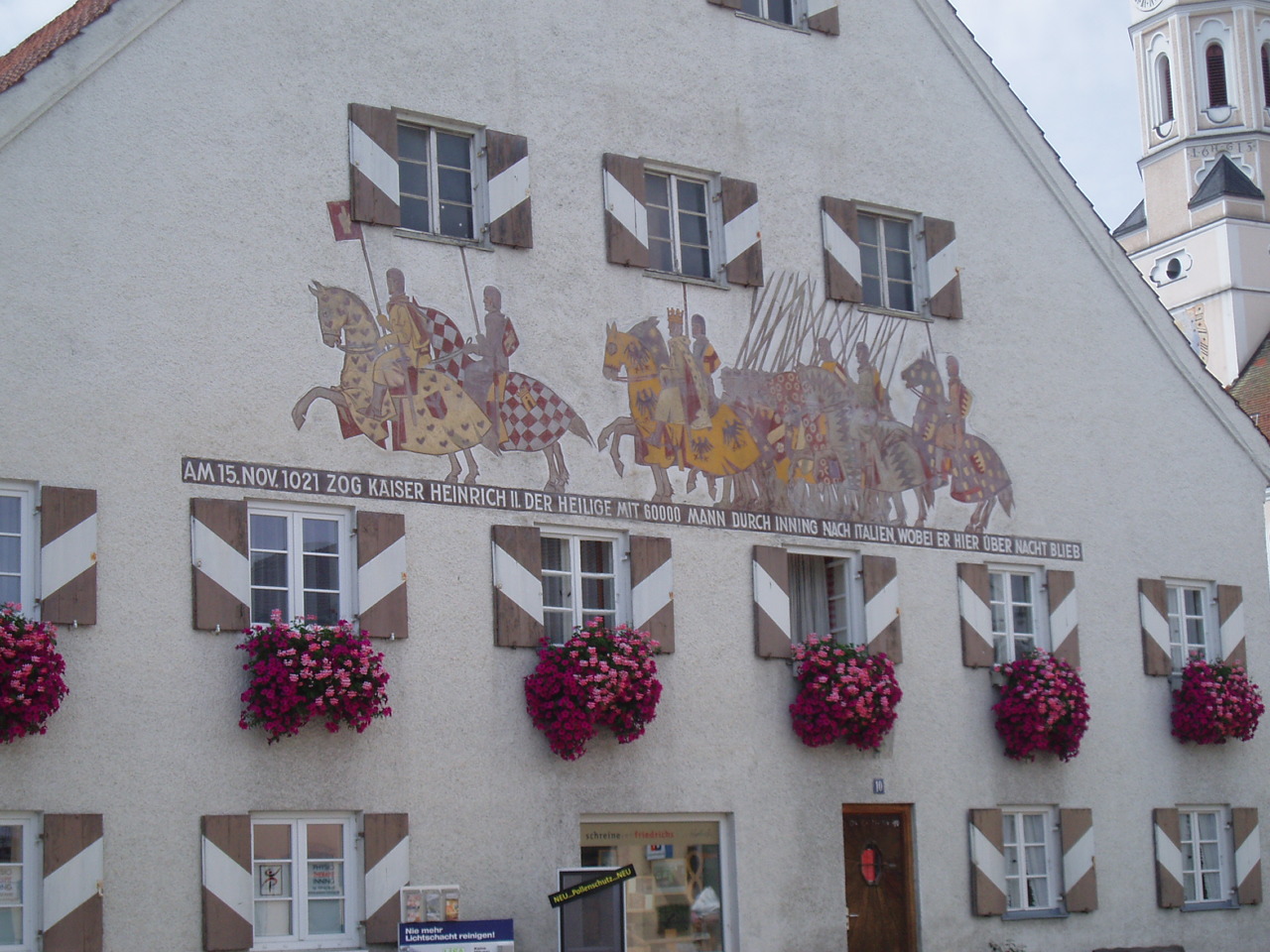
>A day trip to Inning am Ammersee. Which is very pretty indeed. Above, Inning’s historical claim to fame, I guess. “On November 15th, 1021, Emperor Henry II passed through Inning with 60,000 men, on the way to Italy, and he spent the night here.” Take that, George Washington.
Inning’s other claim to fame, if can be seen as that, is that TV personality Thomas Gottshalk used to live here. His brother still does, we were told.
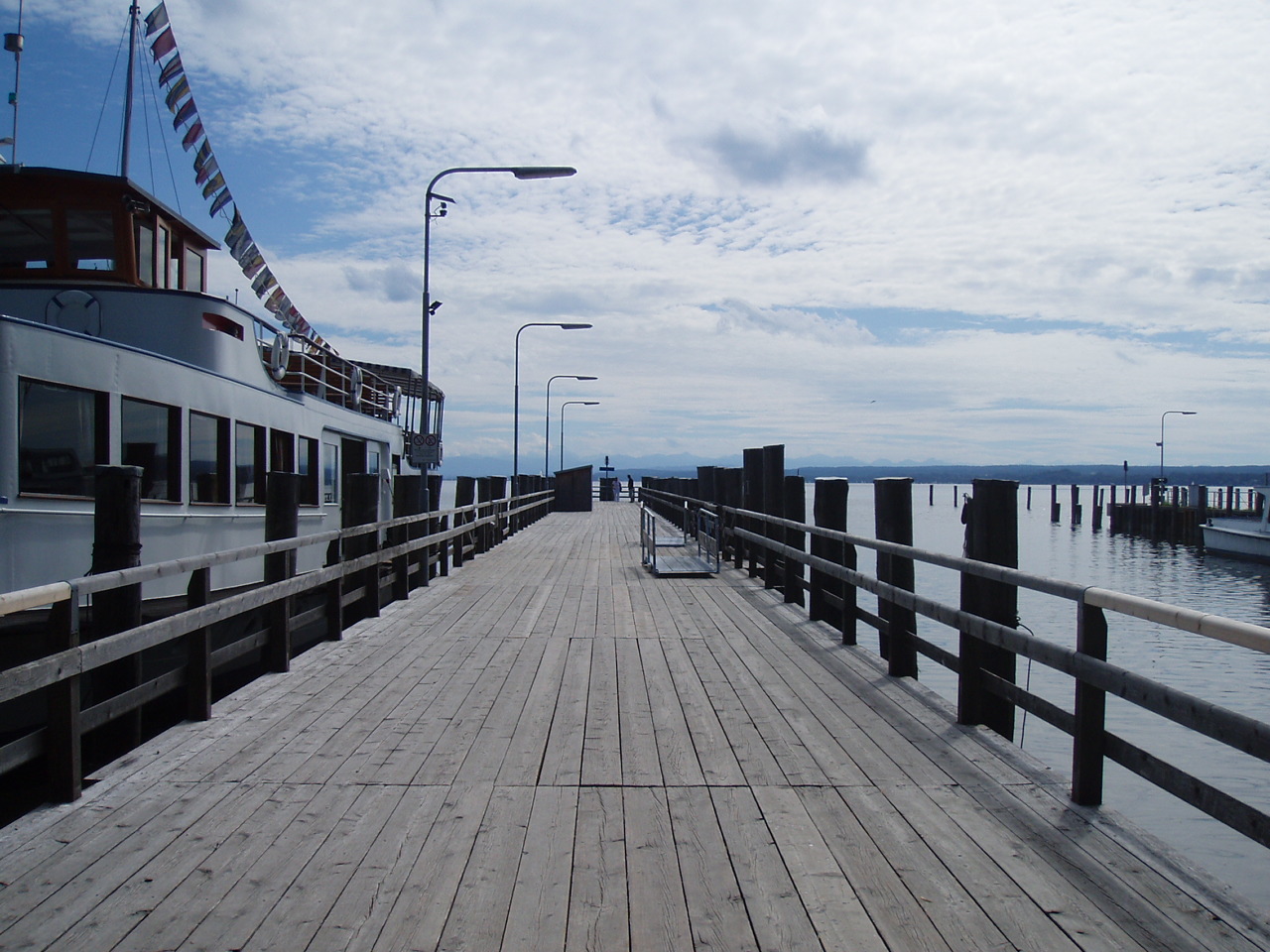
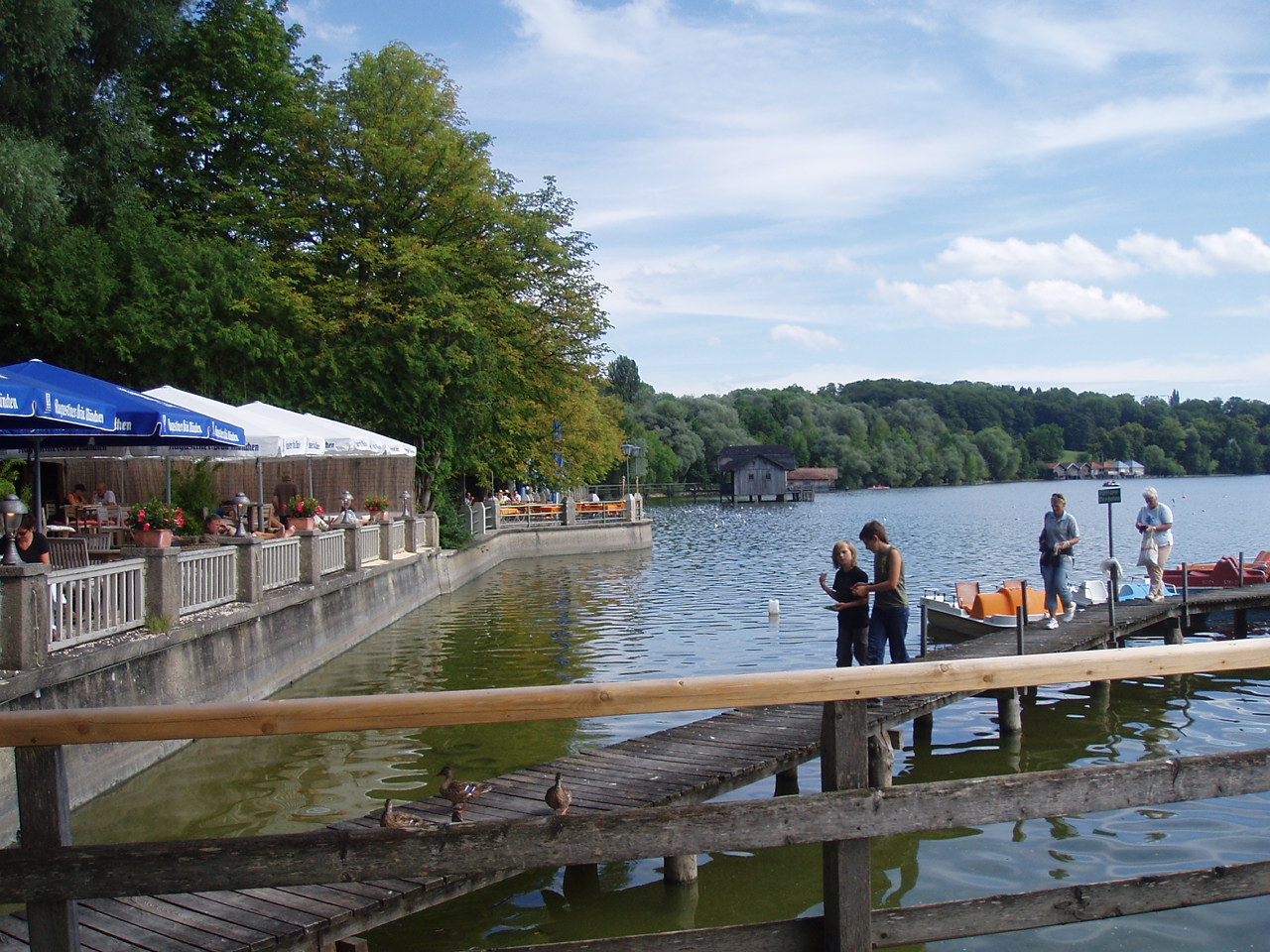
But for us, the nicest thing about Inning was it’s proximity (minutes away) from Lake Ammer. The boat landing area has some nice Biergartens and the like, but doesn’t look as built-up and chic-touristy as, say, Starnberg.

We then hopped back in the car and drove over to the next lake over, the Wörthsee. This lake is smaller, and has much less lakeside development, no ferry service, and the clearest water I have ever seen (see photo above.) This lake and it’s smaller neighbor, the Pilsensee, belong to some local aristocrat who decided not allow recreational diving in his lakes — so that’s out, leider.

>Munich History: Hans and Sophie Scholl, Kurt Eisner

>If you don’t know the brief, sad yet courageous story of the Scholl siblings, Sophie and Hans, then go directly to the Sophie Scholl entry in wikipedia before you continue. In all honesty, it’s not clear to me why she gets most of the attention, and her brother less, but perhaps society doesn’t expect a 21 year old woman to be brave, and give up her life for her friends. This one did.

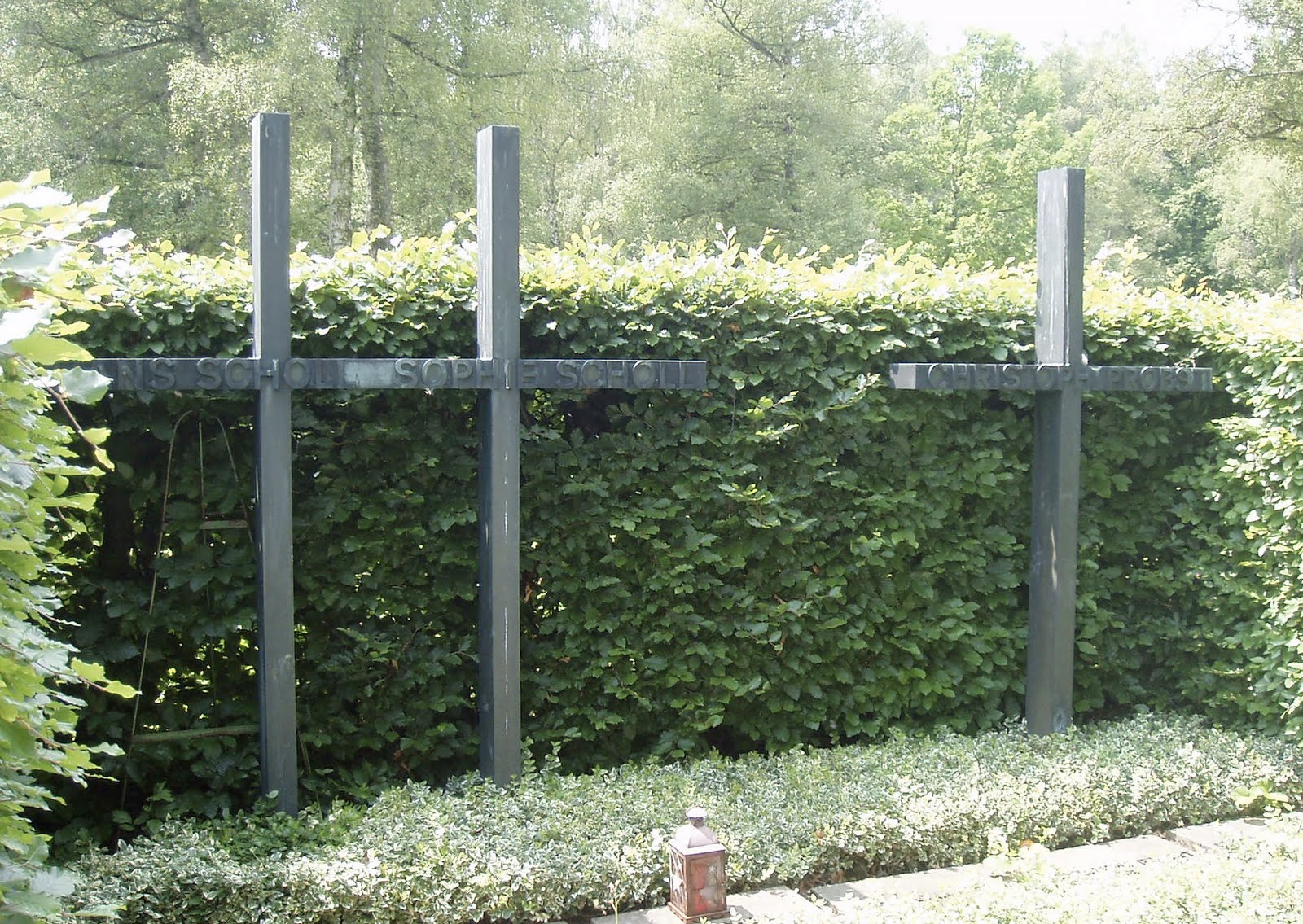
Right beyond those trees in the background, unseen, is the Stadelheim Prison where the Scholls and Christoph Probst were executed by guillotine. As unfeeling as it may sound, they were lucky. The July 20th conspirators, (the non-military individuals, who didn’t get the honor of a bullet to the head), suffered gruesome, drawn-out, painful deaths by hanging with piano wire, after having been given heart boosting meds to keep them going as long as possible. And, of course, being gassed was much worse as well.

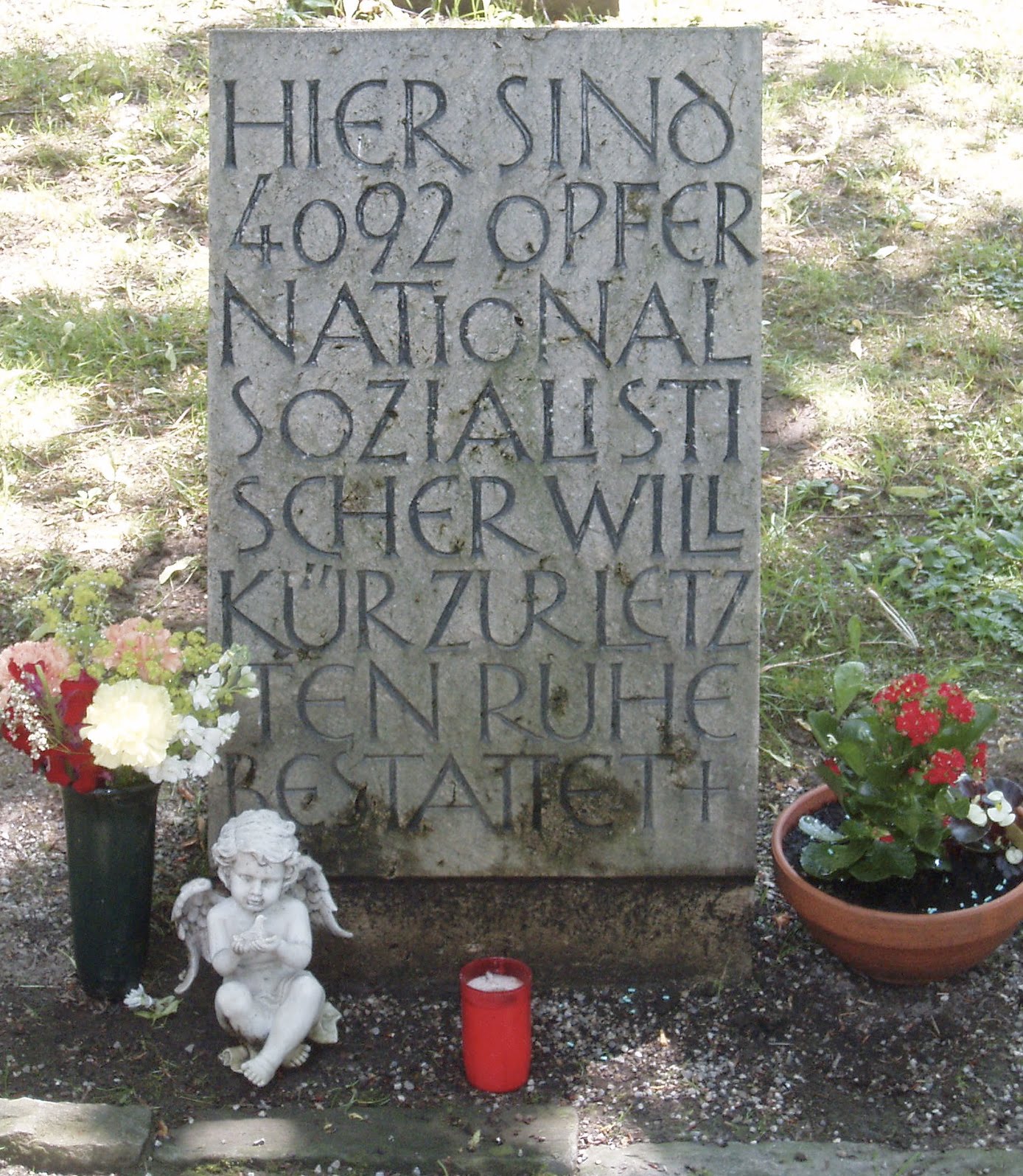
“Here lie in their last resting place 4092 victims of National Socialist caprice.” No names, no reasons for their deaths. I think they, too, may have come here through the back door of the prison.
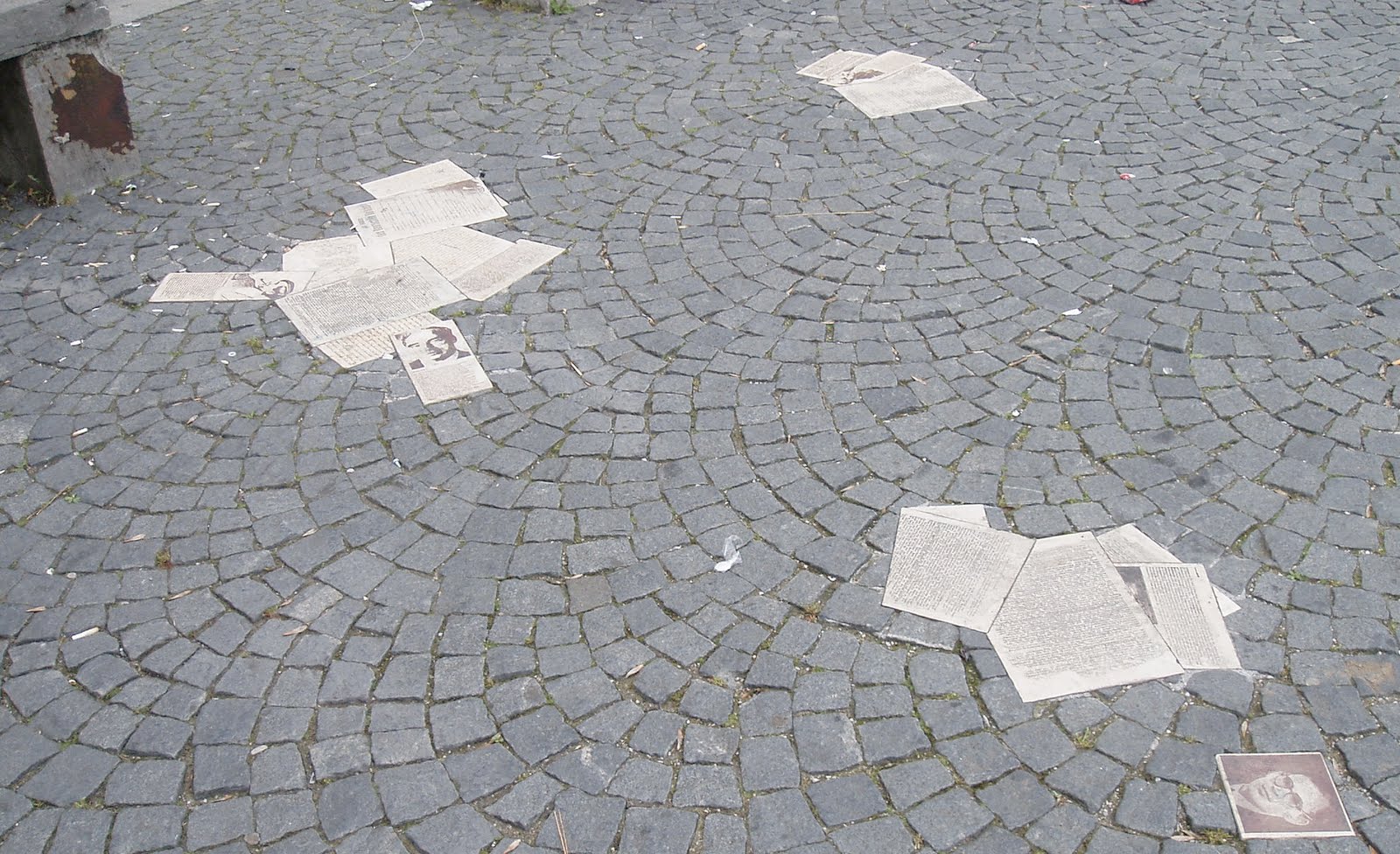
What looks like papers lying on the sidewalk is actually part of a monument to the Scholls and to The White Rose resistance group, one of their methods having been to leave anti-nazi leaflets lying around where there were crowds of students.
The work here combines images and biographical information about the members, as well as examples of their writing. It’s at the front of the Ludwig Maximilian University, Leopoldstrasse, Munich.
Walking back into the city center I literally walked over this before I realized that it too was a memorial embedded into the sidewalk. The figure is meant to remind one of a police body outline. The words above it read, in German, “Kurt Eisner, who on 8 November 1918 proclaimed the Bavarian Republic, later Prime Minister of the State of Bavaria, was murdered on this spot on 21 February 1919.” Eisner has been all but forgotten amid all the turmoil of the 20th century in Germany, but he was instrumental in pulling Bavaria out from under the monarchy by getting Ludwig III to sort of just leave without even officially abdicating. Depending on who you believe, Eisner’s murderer was either acting as a monarchist (being from an aristocratic family) or an anti-semite, himself Jewish but wishing to prove his nationalist loyalties. (He had been shut out of a pre-nazi group because of his mother’s ancestry.)
There is so much history just staring right at you, all over the city.