>The Swan King’s Watery Monument

>“Alas, he is so handsome and wise, soulful and lovely, that I fear that his life must melt away in this vulgar world like a fleeting dream of the gods.”

“The King was not mad; he was just an eccentric living in a world of dreams. They might have treated him more gently, and thus perhaps spared him so terrible an end.”

Michael Jackson? No, King Ludwig II of Bavaria, from composer Richard Wagner and Empress Elisabeth (Sissi) of Austria, both close friends of his. But perhaps MJ was actually the King Ludwig of his day, pathologically shy, eccentric and flamboyant. Although the official line is that he took his own life (at age 40) in the waters of Lake Starnberg the day after he was deposed for being “mentally ill”, he was most likely murdered. He was also probably just gay, or so many think. A broken engagement to a perfectly good princess, among other things, seems to support that, but all evidence is of course circumstantial.
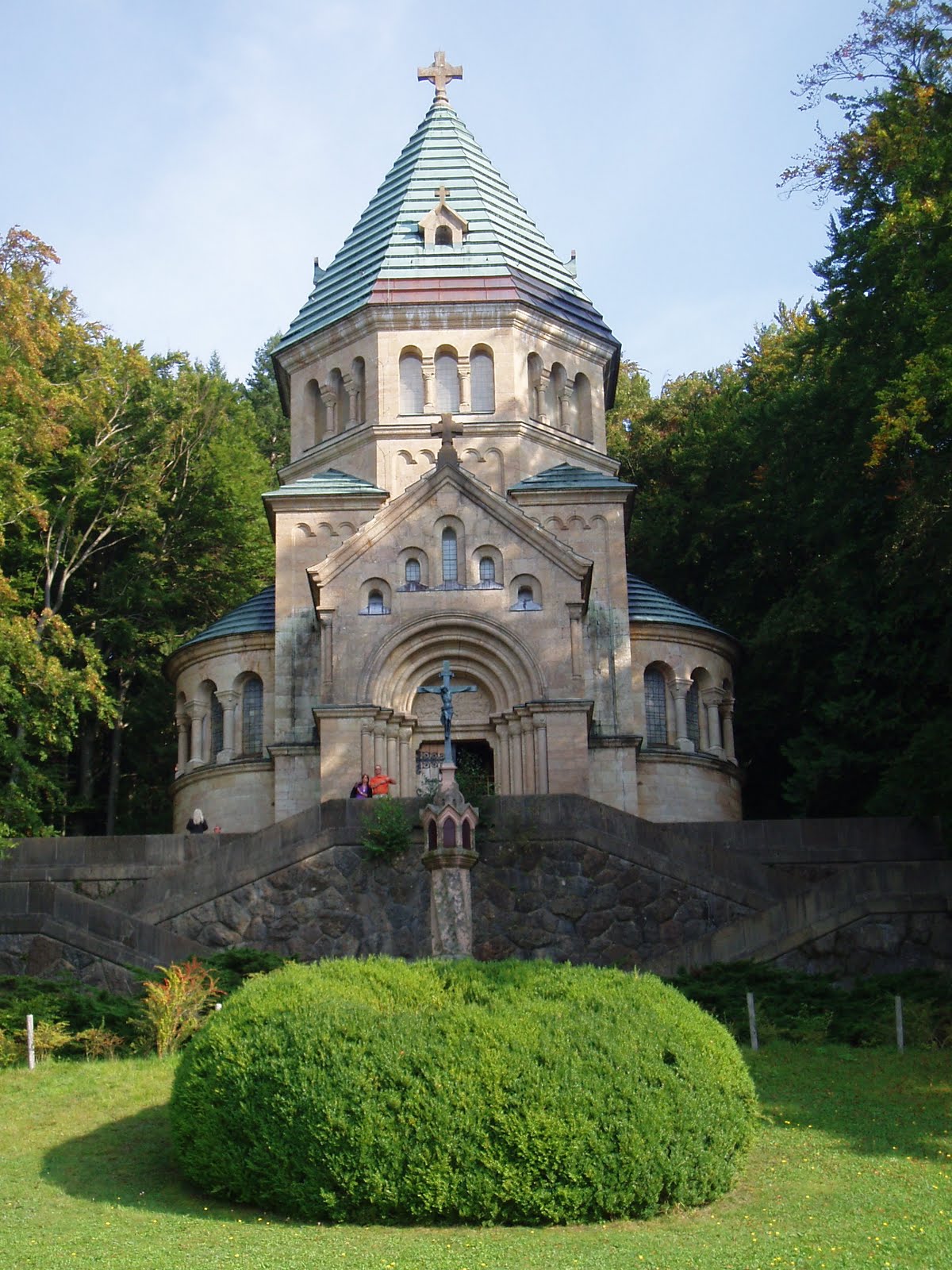
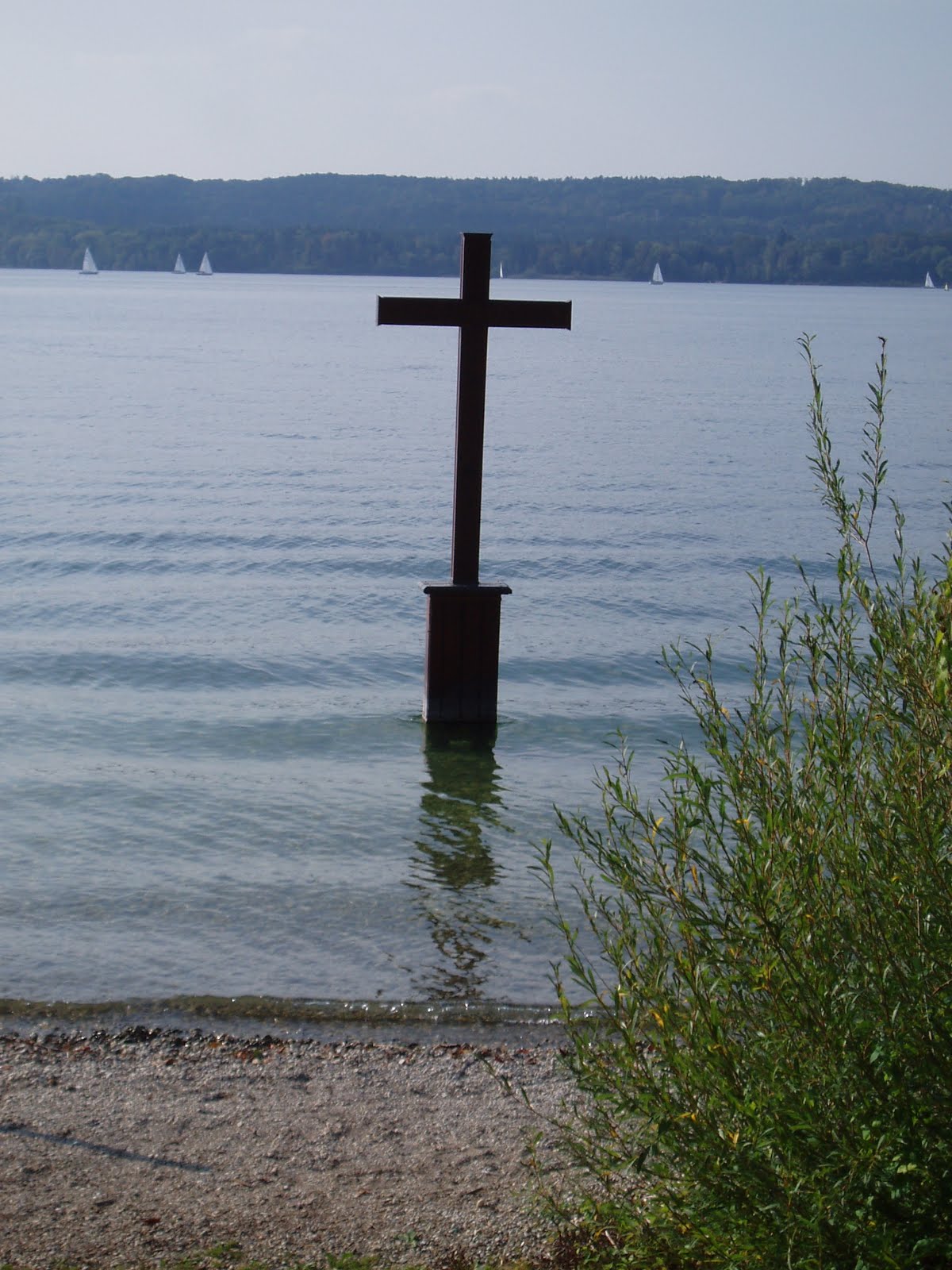
The cross marks the site where the King’s body was found, and the chapel is just up the hill from there. The surrounding area is all woodland, with trails for mountain bikers and joggers. We had seen this chapel from the other side of the lake (5 kilometers away), but had mistaken it for the Bismarckturm (another pile of rocks in the area.) Tourists still come to read the plaque on the chapel wall and photograph the cross, nearly 125 years after Ludwig’s death. Many more tour his castles in the Bavarian Alps. Will people be listening to Michael Jackson recordings in 125 years’ time? I have no idea.

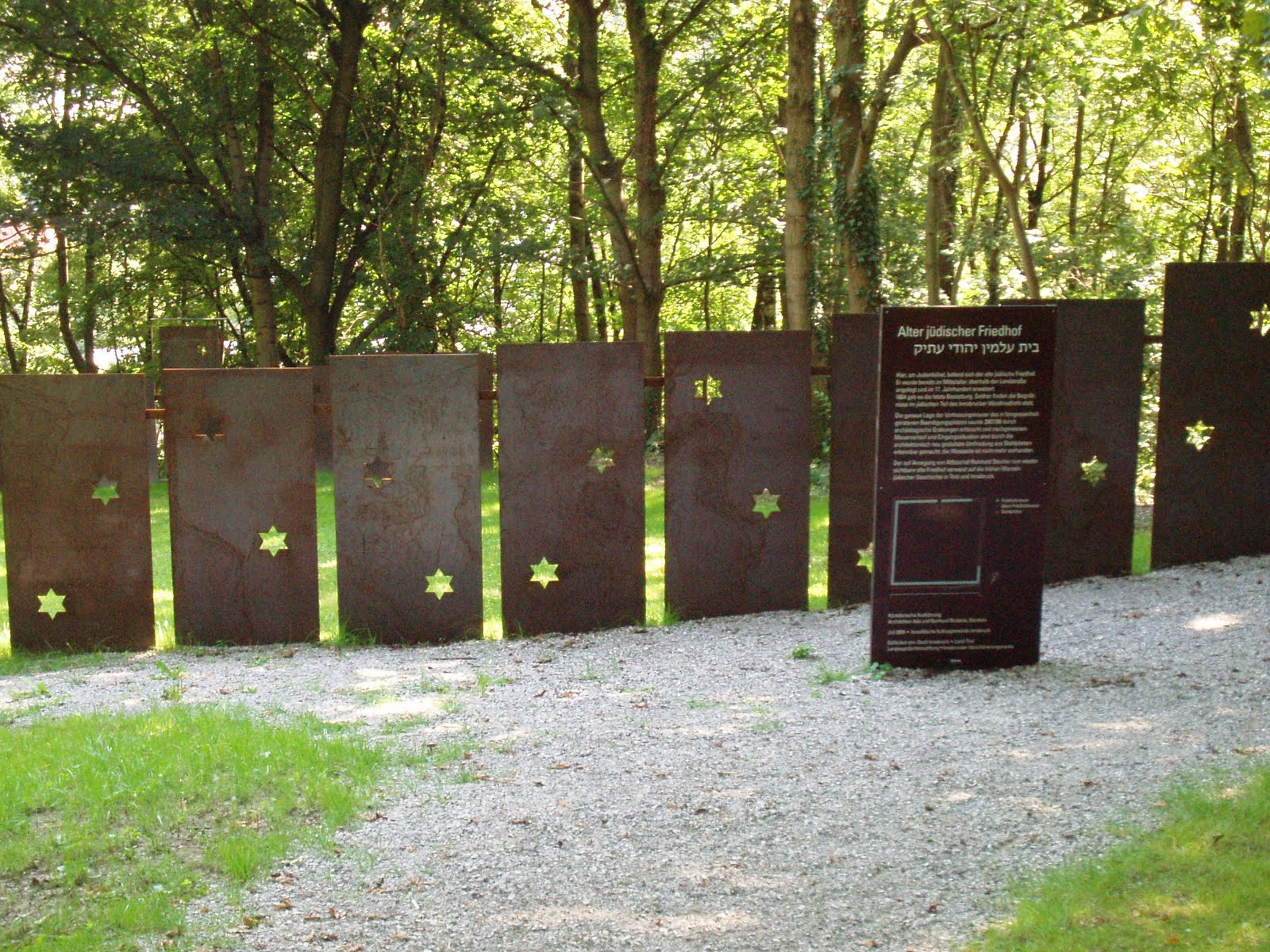
>Alte jüdische Friedhof

>Years ago, walking through the hills along the Inn river, I came across a sign pointing to the “Judenbühel“. It was a half-grassy, half-wooded slope steeply uphill from the river, and aside from a flat hilltop with a playground on it, there was nothing else to help me figure out what the Judenbühel was, exactly. Thanks to the wonders of the Internet, I later learned that it was the site of the old Jewish cemetery, dating back to at least the early 16th century. By the 1860s some problems arose — the new river road made access to the cemetery difficult; in winter it was a steep icy climb to get up there. The lack of access also seemed to have made it easier for vandals to rip out the stones when nobody was around. In 1873 the Jewish community got a corner of the downtown Westfriedhof, the bodies were transferred over, the wall knocked down, and the field left to return to nature.

Today I went walking that way again, and found something new: archaeologists found the placement of the old wall, and the city put up metal plates around the perimeter, with stars of David cut out of the metal. A sign explaining the site includes all the parties involved in the project, including the man who got it going: Innsbruck’s Retired Bishop Reinhold Stecher. There was an official ceremony in July, with speeches made and music performed.(Video here) I’m sorry that I missed the cemerony, but happy to see that the old cemetery grounds finally got a little love from the community.

>A Visit To The Brandhorst Museum

>

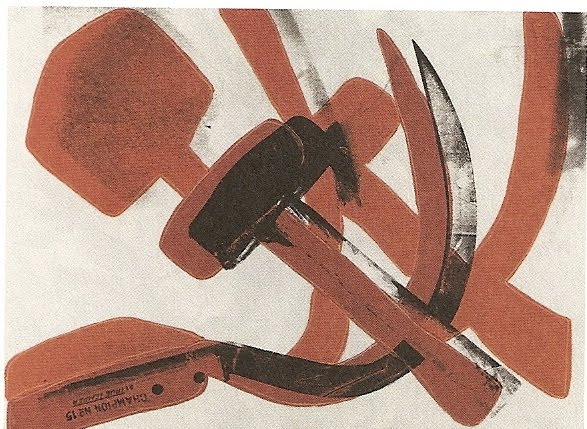
Andy Warhol, Hammer and Sickle

The newly-opened Brandhorst Museum, over in the Schwabing area of Munich, houses the collection of a pair of modern art lovers who must have had quite a bit of wall space for their stuff. There are Warhols, enormous rooms full of Cy Twombly paintings, and the works of about a dozen other well-known artists. The building itself is interesting to look at — like an industrial size, see-through box of crayons standing upright on the Türkenstrasse.

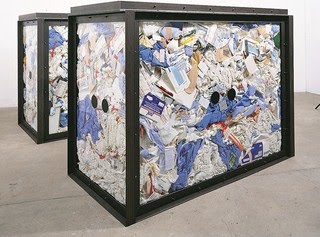
Damien Hurst, Waste (Twice)

The Hurst pieces are glass containers filled entirely with hospital trash — packaging, needles, hospital gowns, etc. Across the room, half a wall was covered with dark mirror glass, and ribbons of glass shelves with thousands of pills arranged on the them, in different sizes and colors. I cannot remember who’s work that was, however, nor its title.

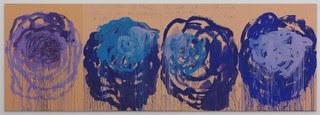
Cy Twombly, Untitled (Roses)

Now, I have to add here that Cy Twombly is not my favorite artist. Say what you will, I just don’t get him. He had stuff hanging in the Philadelphia Museum of Art and I didn’t get that stuff either. But somebody thinks he’s a master, so, hey, whatever. The paintings in the Brandhorst are, at least, not annoying. They are, typically, huge.

Christopher Wool, Kidnapped

Jannis Kounellis, Untitled (Rimbaud)

I give Kounellis credit for one thing: description of his work includes the contents as such: “Paint pot, painted parrot, brush, books”. Not “paper, aluminum, wood, feathers”. Straight and to the point, this, he says, consists of a paint can on books, with a brush in it and a bird on top.
Lest I come off sounding like a real philistine, I did enjoy the Warhols, the John Chamberlain metal sculptures and a very interesting video installation that dealt with the topic of immigration with images from Lampedusa — (dancers simulating) Africans drowning, families at the beach, boat junkyards, etc. — on five separate screens in one room. Lampedusa, if you don’t know, is a tiny island south of Sicily, and often the first stop for the stream of African refugees trying to get to mainland Europe. They or their boats are often not strong enough for the trip, and Italian fishermen have been warned not to help them. Many drown.

If you find yourself in Munich and want to go, be aware that on Sundays admission is only €1. Treat yourself to the unusual gelateria across the street. The Milch+Mint is out of this world.

>Geisterschiff

>

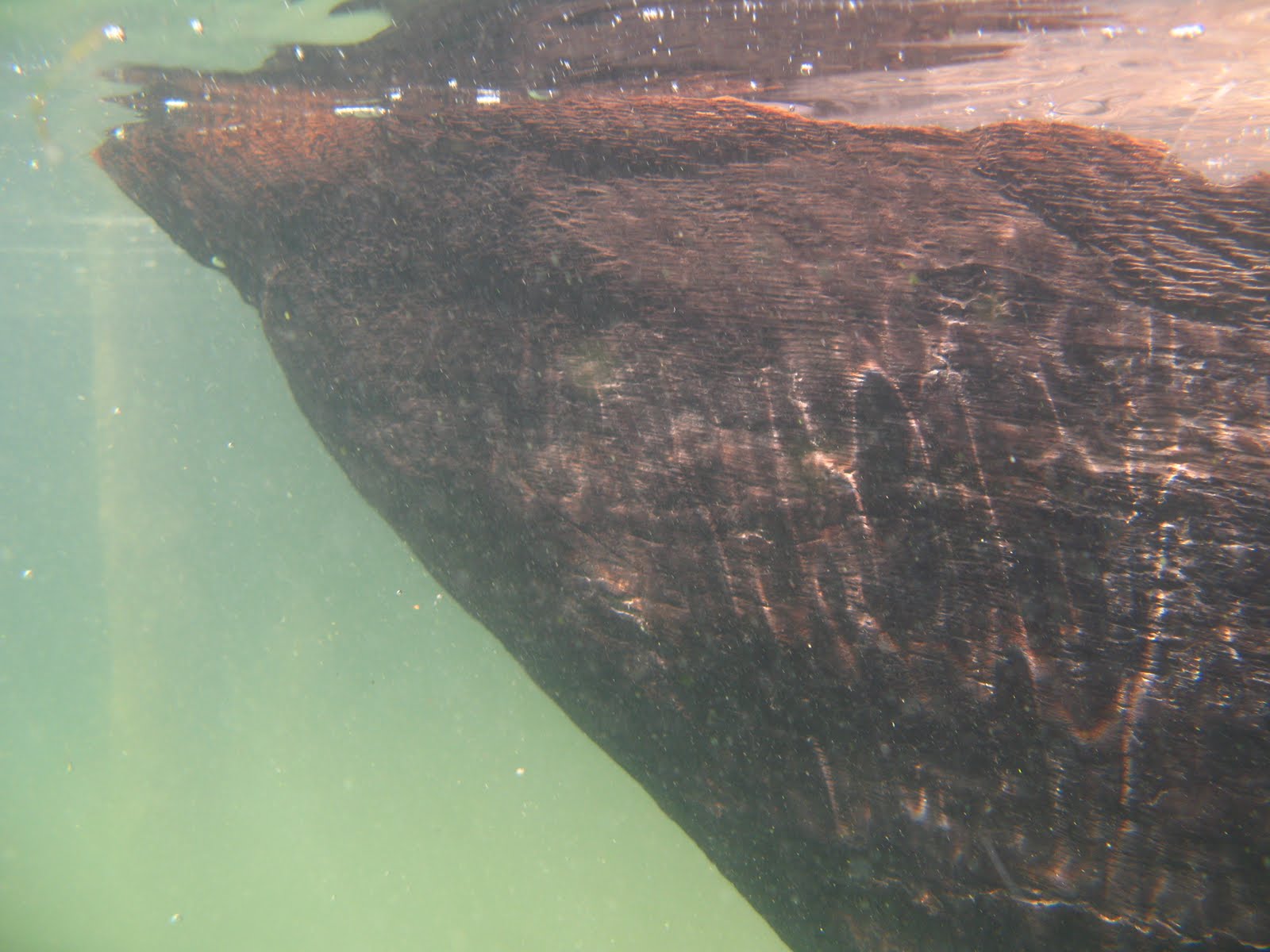
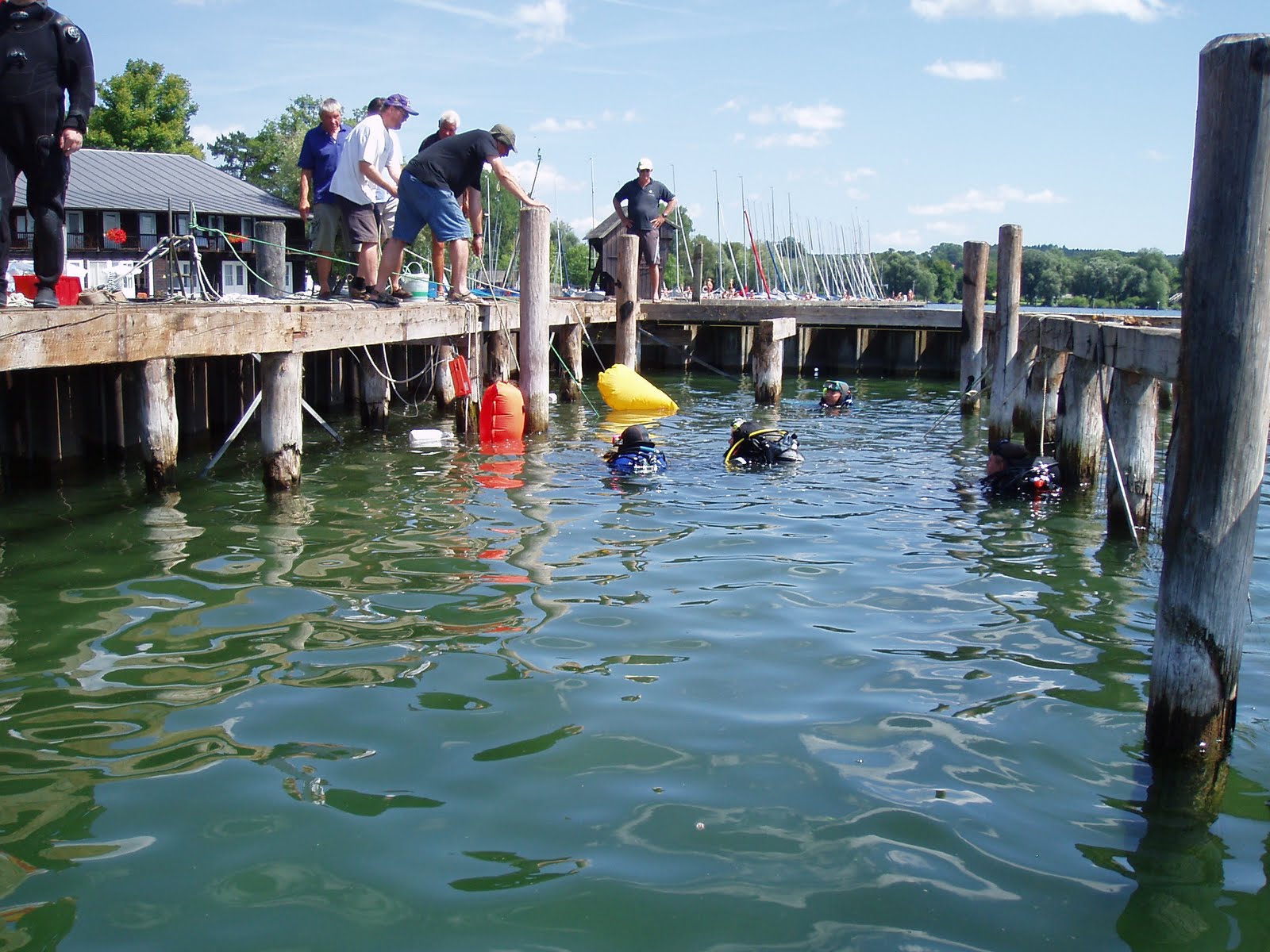
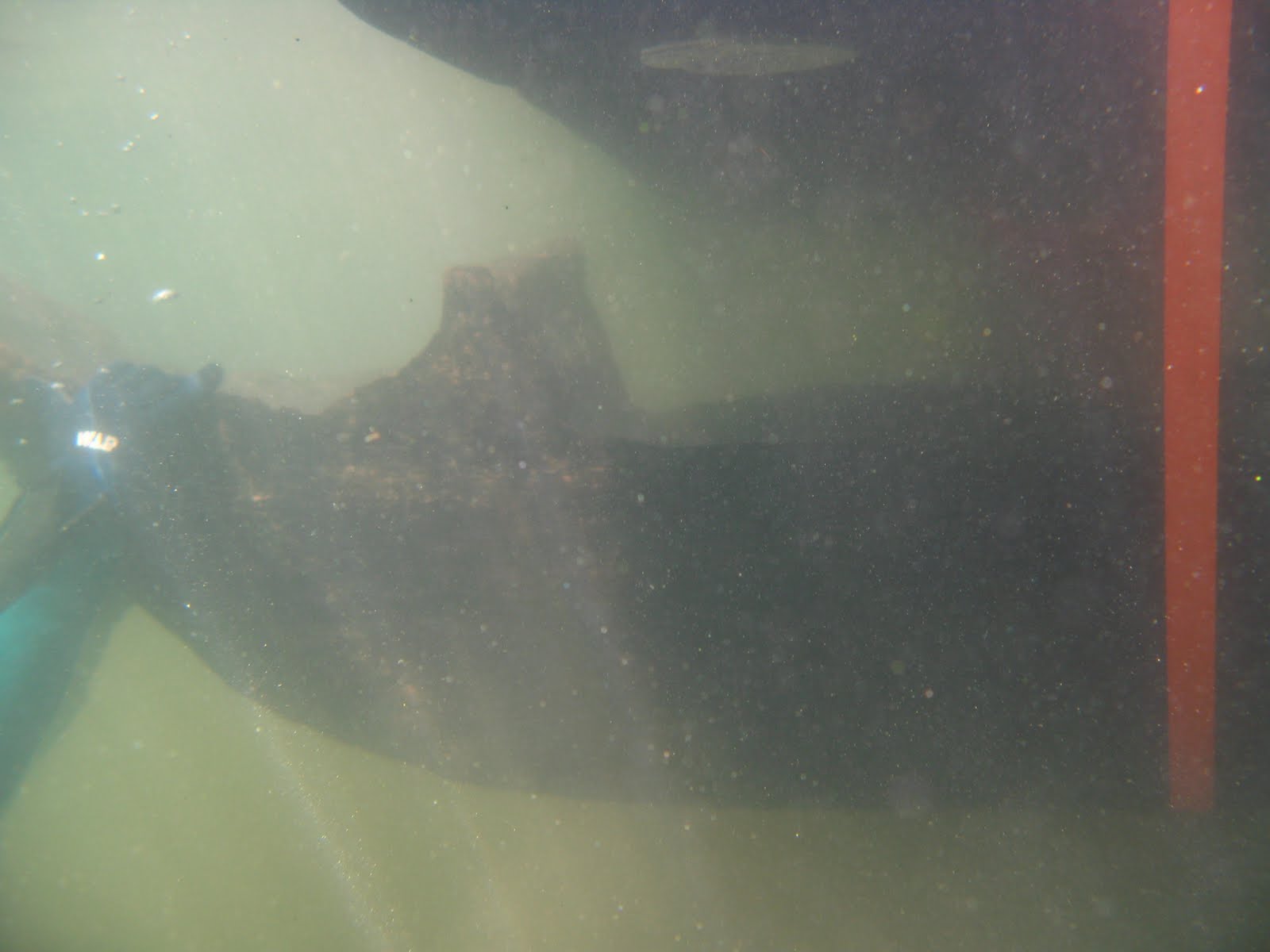
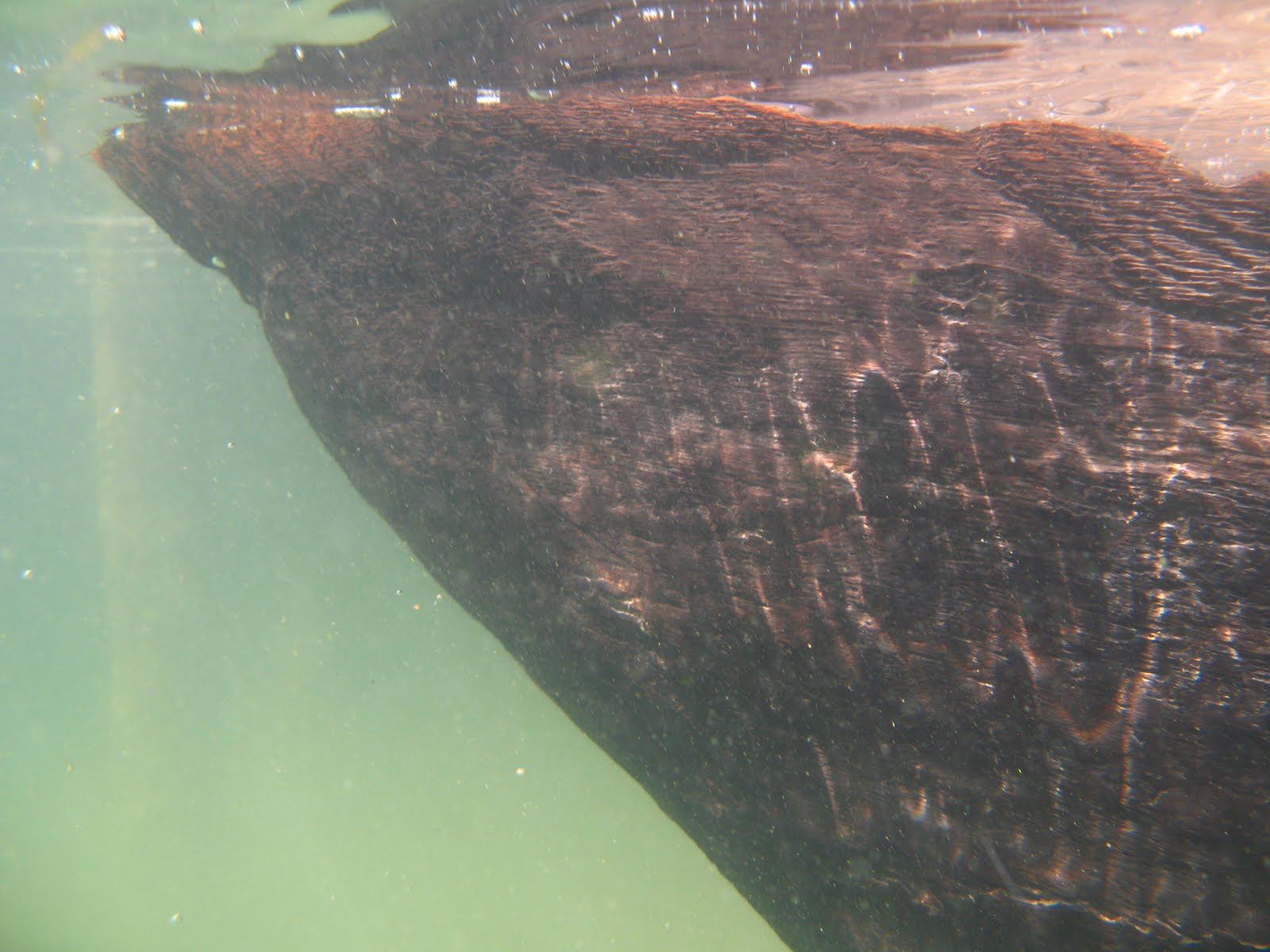
A few weekends ago I was given the opportunity to hang around a group of divers from the Bavarian Society for Underwater Archaeology as they “unearthed” an Iron Age logboat from the lake bed of Starnberger See. The boat had been discovered by divers a few years ago and had been transported over to a municipal boathouse, where it was left untouched until recent construction plans forced it to be taken elsewhere. Below is a photo of the boat as it was found this month, filled with sediment and trash brought in on the waves. Only the prow of the nine-foot-long logboat is visible.

The first thing the divers had to do was set up a gas-powered water pump, with which they spent hours (until dusk on Saturday) vacuuming out the sediment from inside and around the boat, so that it could be moved.
The next morning, more divers showed up, and the heavy lifting commenced (literally; the logboat, underwater for over a thousand years, weighed like a rock now.)

>Geisterschiff Pt.2

>The divers were pretty laid back about my presence there, and didn’t even mind when I donned snorkel gear and went into the water to get some better pictures (one of them even asked that I take some more!) I was careful to stay out of their way as they were working.

Below, the logboat has been pulled up out of the lake bed and fastened to a pontoon raft.It is important that it stay in the water, since with exposure to the air it would begin to decay.

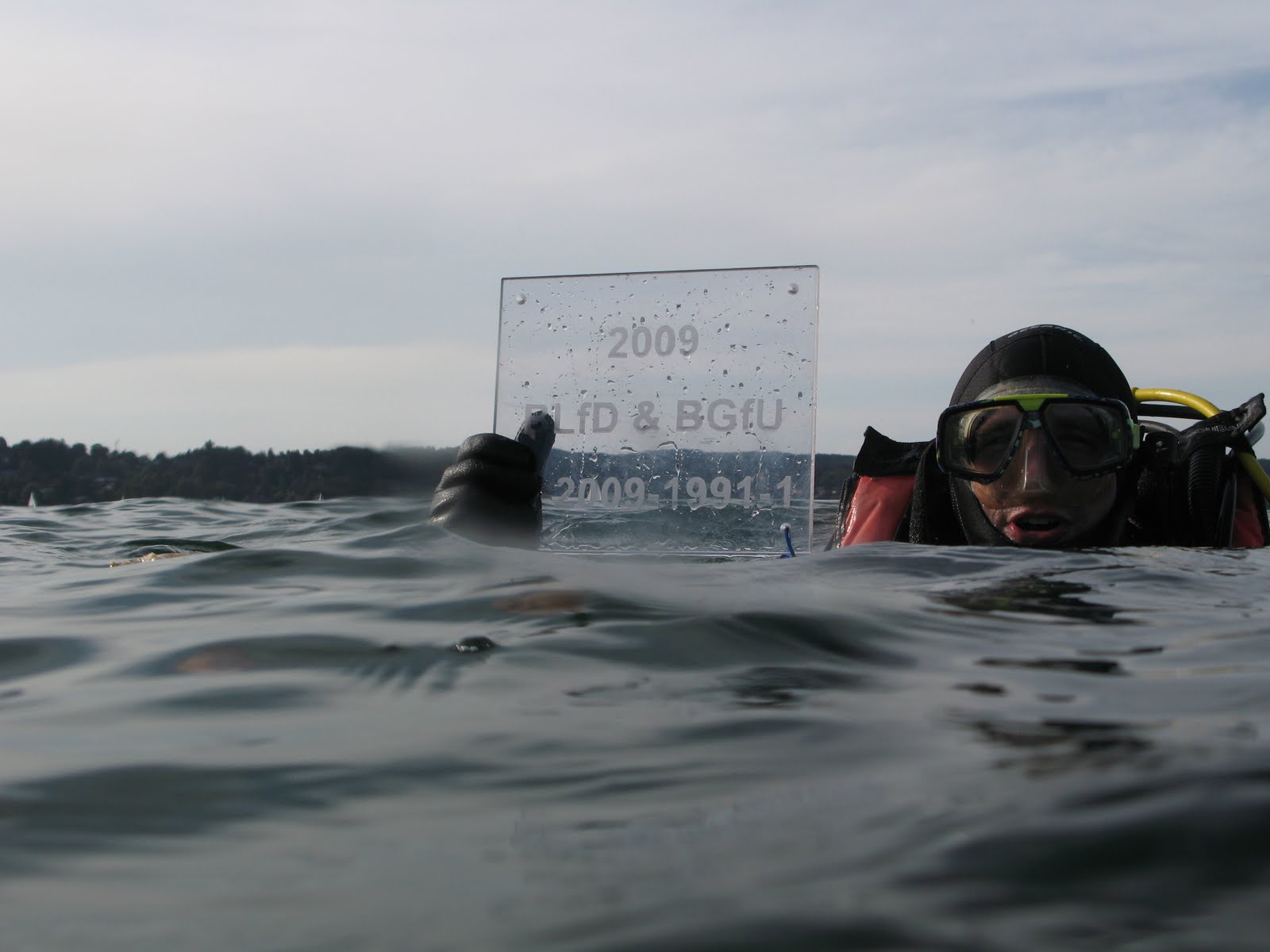
The logboat, securely attached to the pontoon, was hauled away at a slow, careful speed to an archaeological site across the lake, near Kempfenhausen. There, in protected waters, it was lowered onto the lake bed and wrapped in a protective tarp, like a body in a burial shroud. A plexiglass plaque was attached to it, and it’s location fixed with GPS for future research.

What an honor to have been allowed to observe this project! Many thanks for that to Marcus, the team leader, and to the beau for the use of his underwater camera (and for use of his photos at the protected site.)

>FKK Jesus

>Weird local news of the week: This article turned up in the headlines at the U.S. version of Google News. Assuming that there must be a local discussion going on, I searched the German-language google sites as well as the local papers but found very little. Funny how it ended up over on the U.S. site, then. Do you think there are people who trawl the nets looking for anything that might remotely resemble a sex scandal?

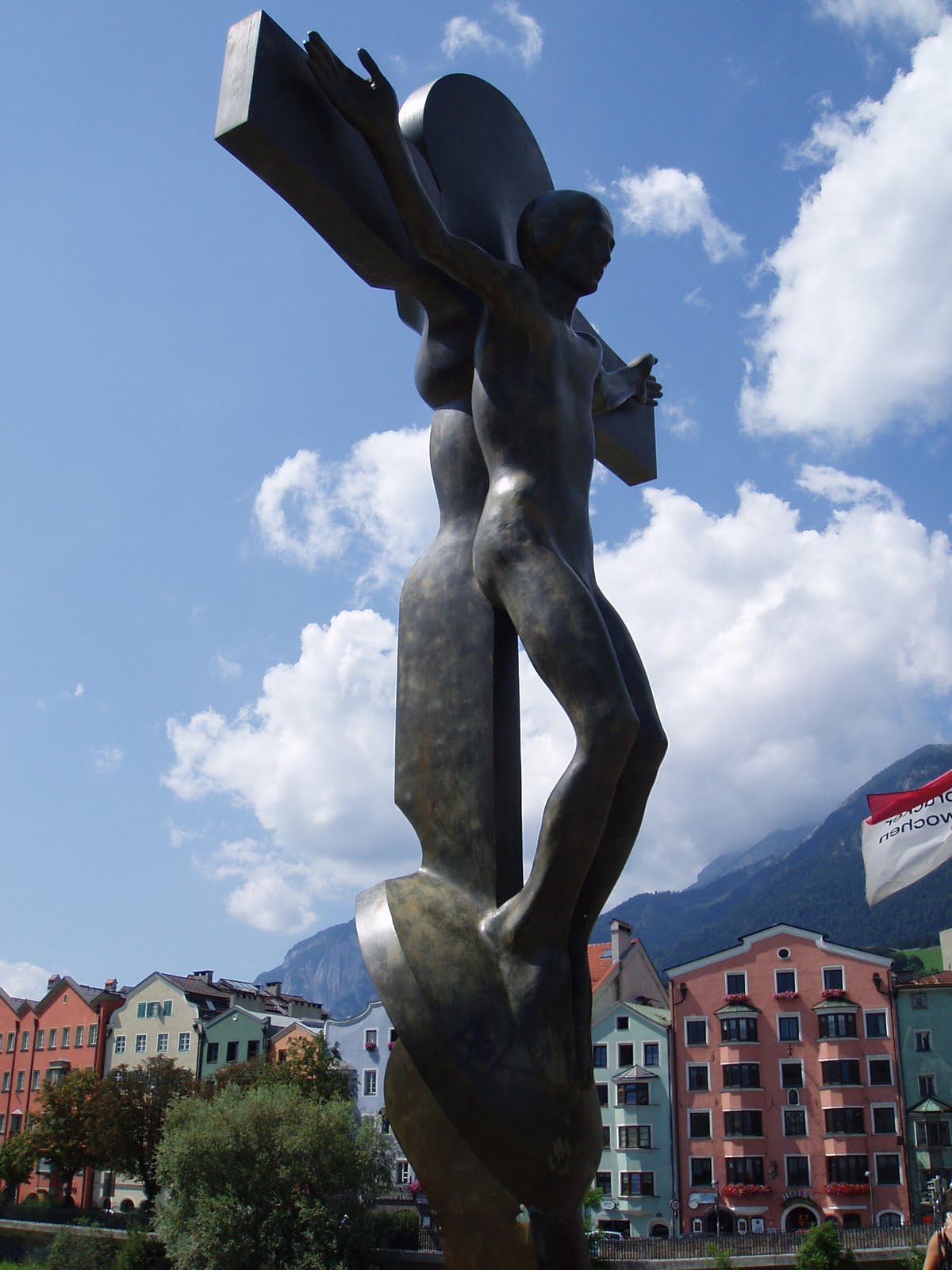
INNSBRUCK, Austria (AP) – An anti-pornography activist wants officials in the Alpine city of Innsbruck to take down a large crucifix bearing a sculpture of a naked Jesus Christ.

Martin Humer, who gained notoriety last year after he painted part of a statue of a nude Mozart and stuck feathers on it, is pressuring authorities to remove the crucifix from a public square where it has been displayed for 20 years, public broadcaster ORF reported Thursday.

Humer, an 82-year-old former photographer, said he and about 100 supporters were organizing a protest for Friday.

Mayor Hilde Zach dismissed the fuss and said she would refuse to remove the crucifix, insisting it is a work of art and is in no way pornographic.

Here’s a photo of the crucifix so you can see it for yourself. Not only is this Jesus naked, he’s appears to be completely sexless as well.
I like Frau Zach. She’s not only a big supporter of the arts, she actually comes to concerts and theater performances on a regular basis. Local musician friends have told me that several of them were waiting outside a classical concert venue, ticketless, when the Mayor arrived. Learning that they had no tickets and that the concert was sold out, she went in and arranged standing room for them. She’s OK in my book.

>The Show Must Go On, Even When the Performers Get Arrested In The First Act.

>I was out of town and missed all this. On the weekend, a Burschenschaft convention was held in Innsbruck. The dictionary translation of Burschenschaft is a fraternity or student league but they are not so similar to American fraternities, in that there a more pronounced ideological and political element to them. In Germany these student leagues are said to be diverse in their political views; in Austria they lean very strongly to the extreme right.
So it was probably inevitable that a Burschenshaft gathering in Austria would be met with demonstrations against rightwing extremism and neo-nazism, and a few thousand lefties did hold a parade through the city, ending with a speech by Rosi Hirschecker (a member of the resistance in Tirol during the Nazi occupation) at the sight of the former Gestapo housing — and interestly close to the convention center. There were, as far as I have heard, no outbreaks of violence between any of the groups, although their local watering holes are uncomfortably close to each other and there are regular fistfights. The Burschenschaftler had their meetings and their flag and sword ceremonies (or whatever it is that they do) up on the Tummelplatz ( a war cemetery up on the hill), met for a picnic on the mountain the next day and dispersed. Police presence in the city was very high.
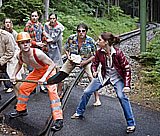
On that Saturday night, the theater had a performance of an unusual open-air piece which involves the audience taking the Number 6 streetcar, known as the Iglerbahn, to various stops at which there would be scenes in the performance. At one stop (which happens to be a 10 minute hike through the woods from the Burschenschaftler ceremonies), the audience boarded the streetcar and rode to the next stop, and as the performers prepared to board their minibus to get to their next “entrance”, the police arrived, unaware of the theater performance.

What they found: 9 people, all of them foreigners, including 1 man dressed as Snow White (the Drama Head at the theater!) and 7 dancers dressed as dwarves, with some kind of props resembling bombs if you looked at them the right way, and of course no one had any papers on them. Suspicious of the lengths at which political extremists might go in order to carry out an illegal violent act, the police arrested them all.

One hour and several telephone calls later, the artists were released and allowed to move on to their next destination up the hill. Other performers had jumped in for them in the meantime, and a very long intermission evened everything out. The boys in blue even got some nice photos posing with their detainees, some of them female and quite attractive.

>Culture Blogging: Gerhard Aba, Lisa Bufano

>Happened to catch a story on Austrian Television about Gerhard Aba, a photographer who has compiled a series of photographs using amputees as models. While the amputations are what first catches your eye, it is amazing how he draws out real photogenic expression in the models, most* of them non-professionals. You can see some of his works over at his blog.

*One of the women who worked with Aba is Lisa Bufano, and American dancer and performance artist who, at age 21, lost her lower legs and her fingers from a life-threatening infection. In the video linked below, she is on stilts which make her look about 8 feet tall and almost computer-generated. I find that after a few seconds I’m no longer looking at her lack of feet and fingers, but at her face. She’s a captivating artist and you want to know what she’s thinking as she allows people to stare.

Video: Four Legs Good – Lisa Bufano von FreyaFoto – MySpace Video

Shared via AddThis

>Militärfriedhof

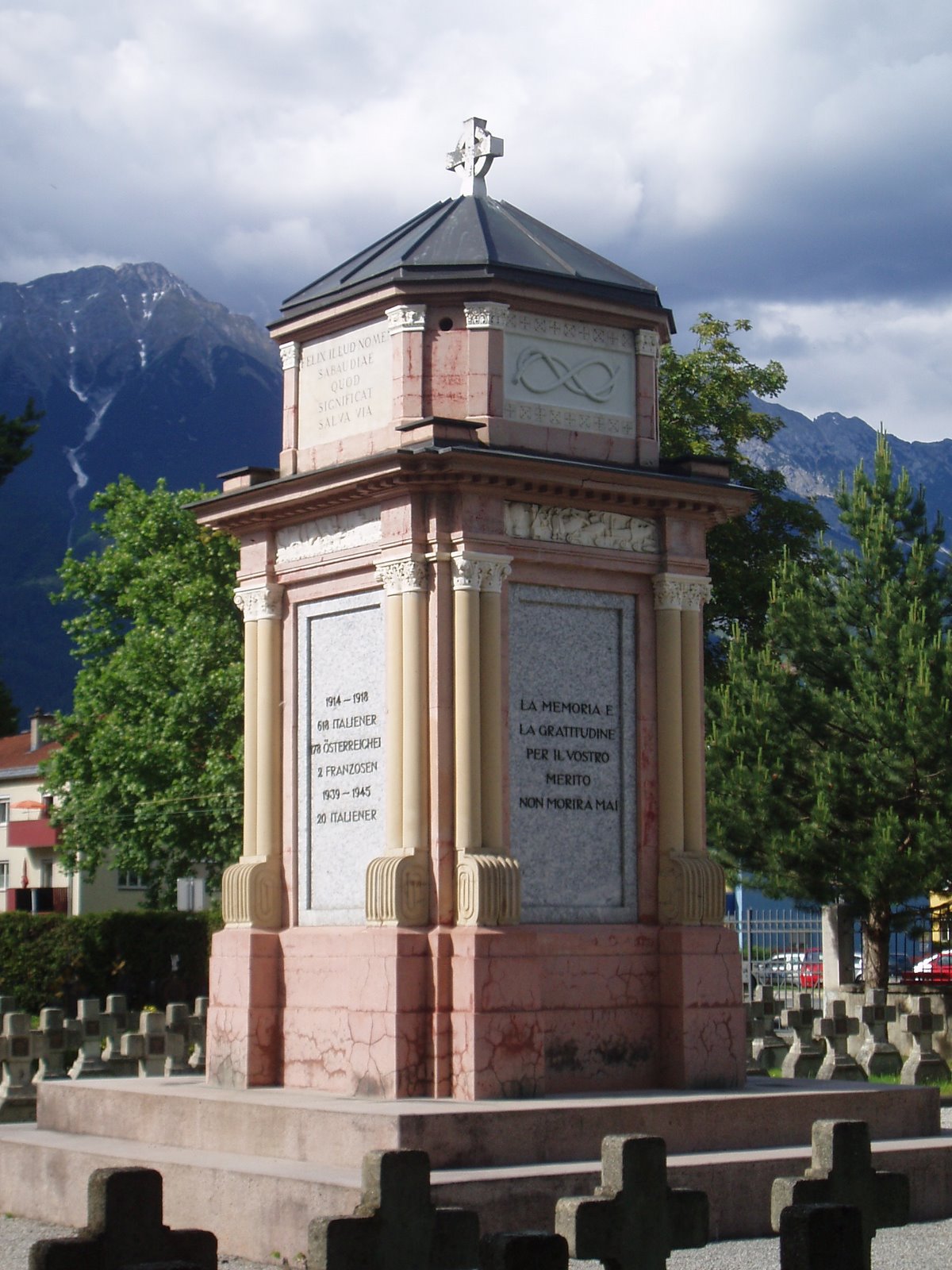
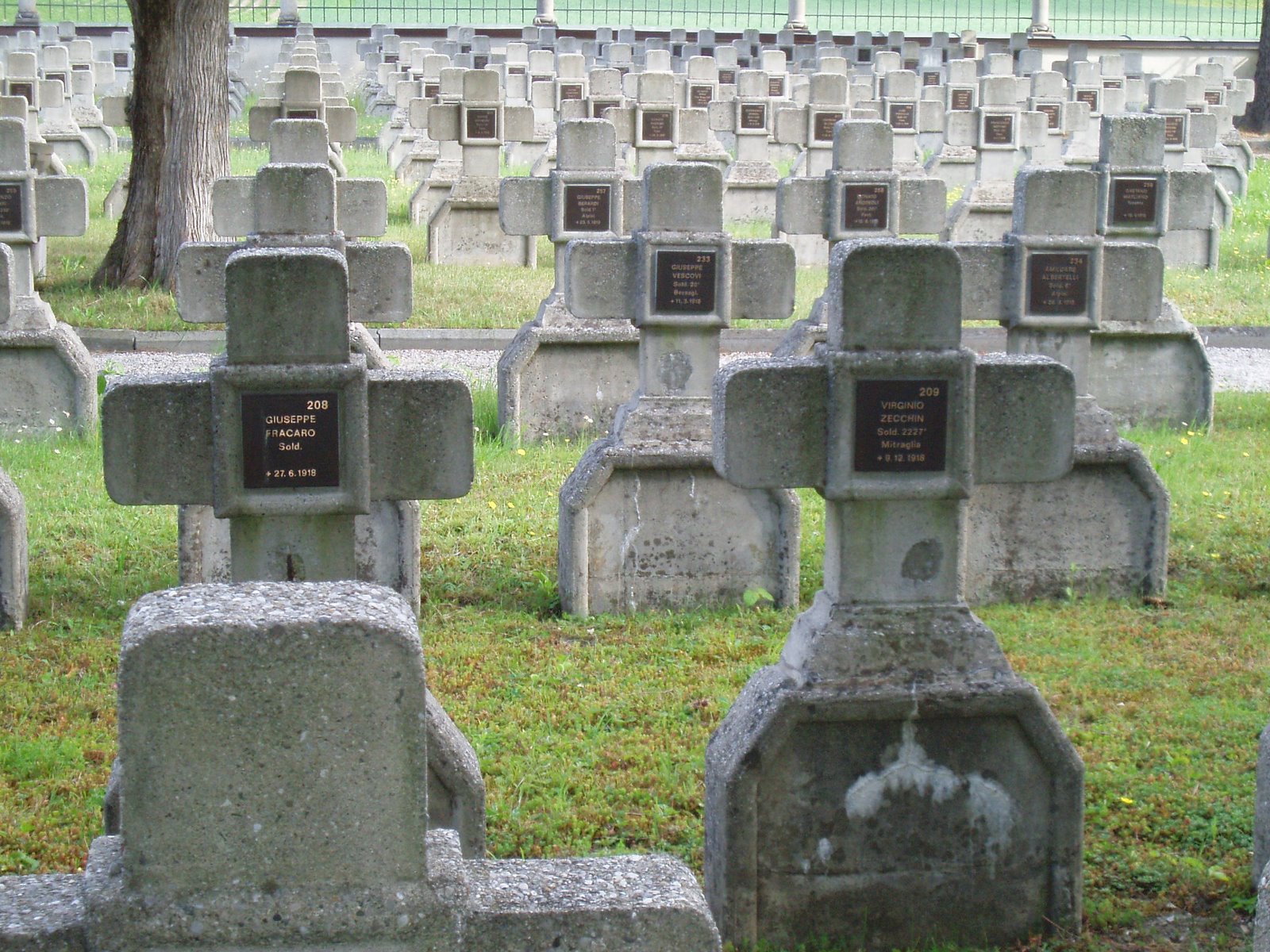
>I admit it, I find some cemeteries interesting. On a recent outing we passed by the Pradl Cemetery, the southeast corner of which holds a military section. Above is a monument erected by Italy in memory of the Italian soldiers who died in Tirolean military hospitals. Below, their graves.

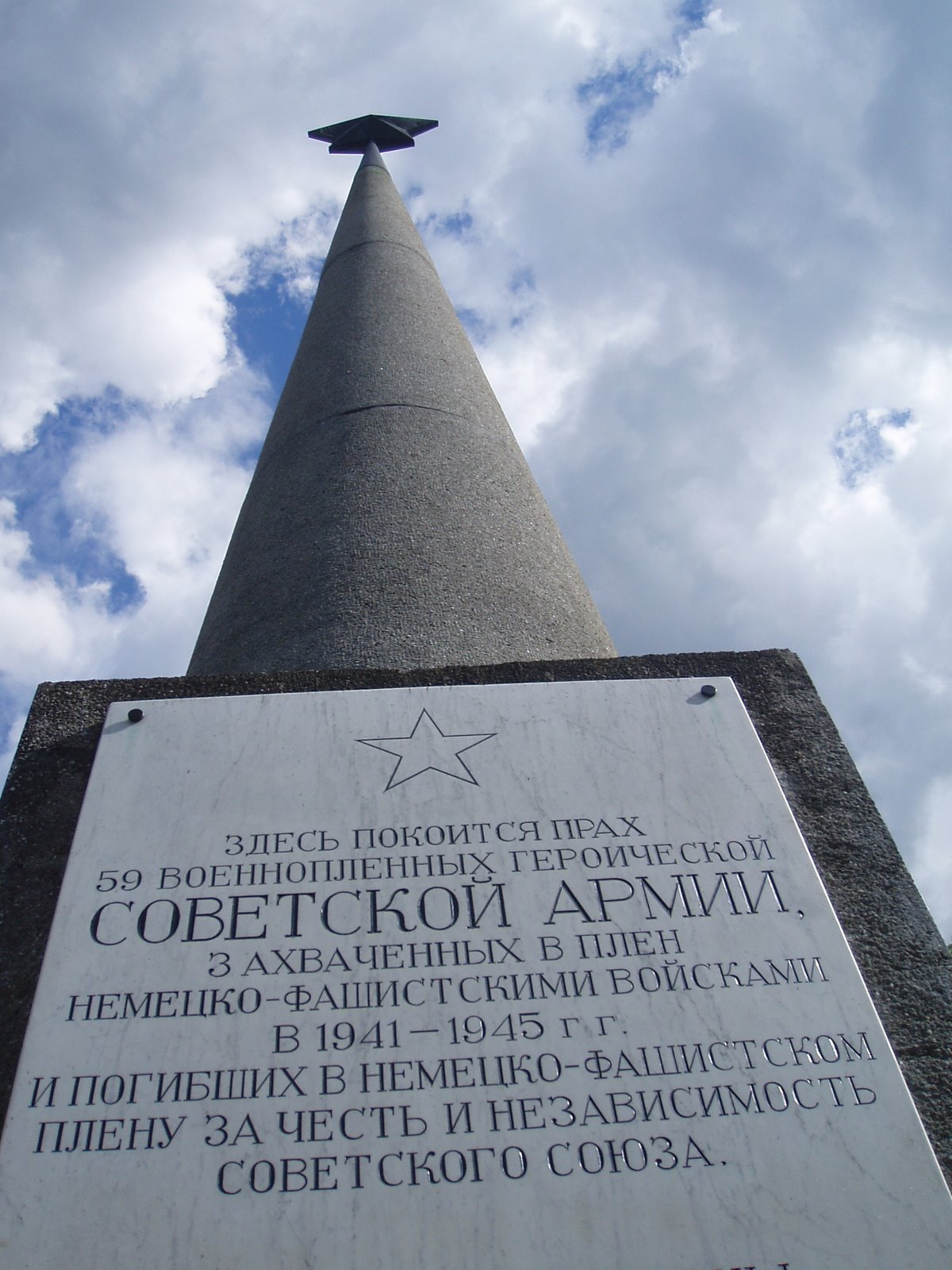
A monument erected by the Soviets to honor their fallen victims of the “German Fascists” (Nazis).
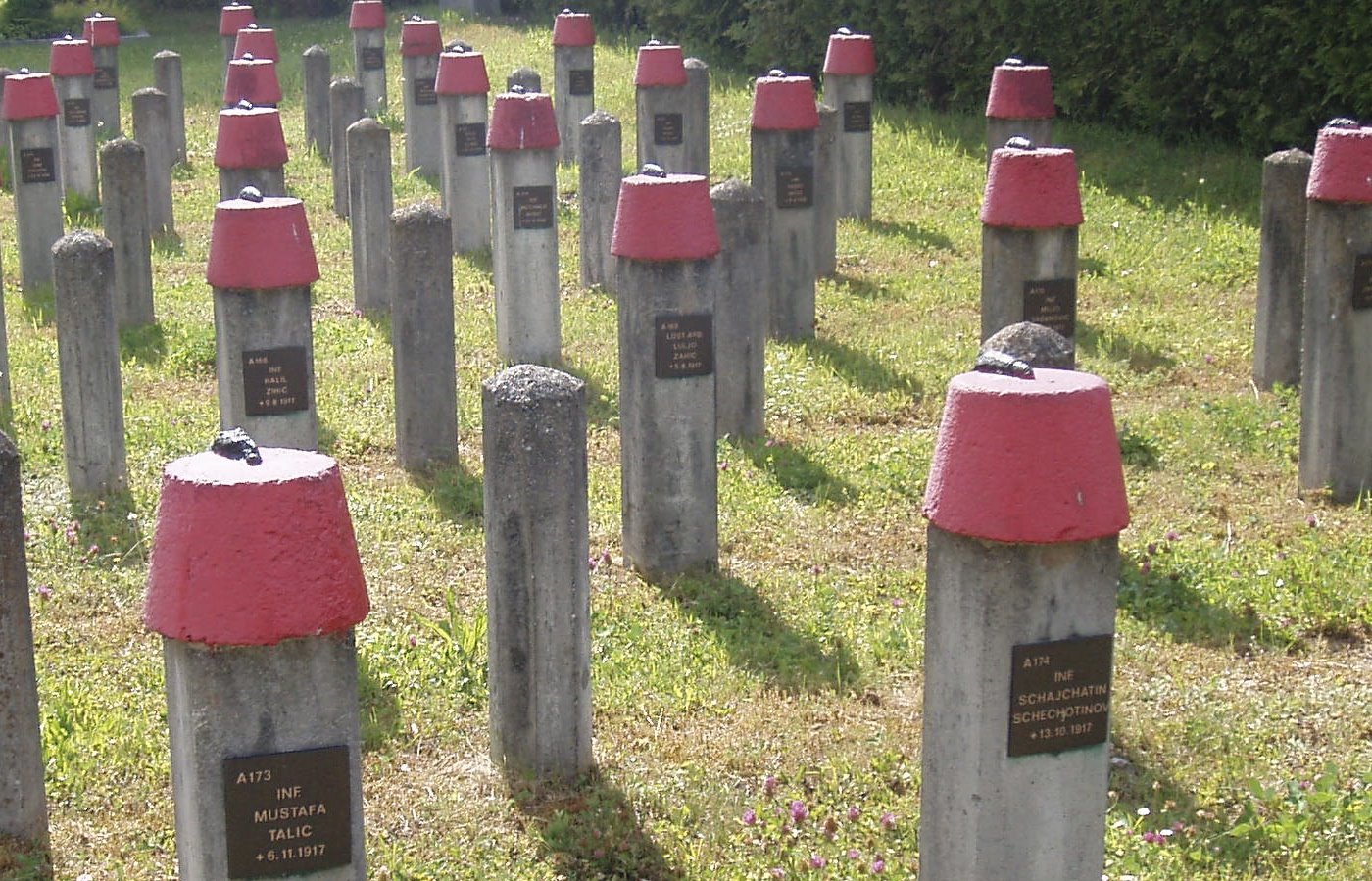
The markers below were not immediately recognizable to us from a distance, but their import became clearer when we recognized that each is capped with a red fez. They are the graves of Bosnian Muslims who’d fought for the Austrian Empire in World War I. Their graves face east.

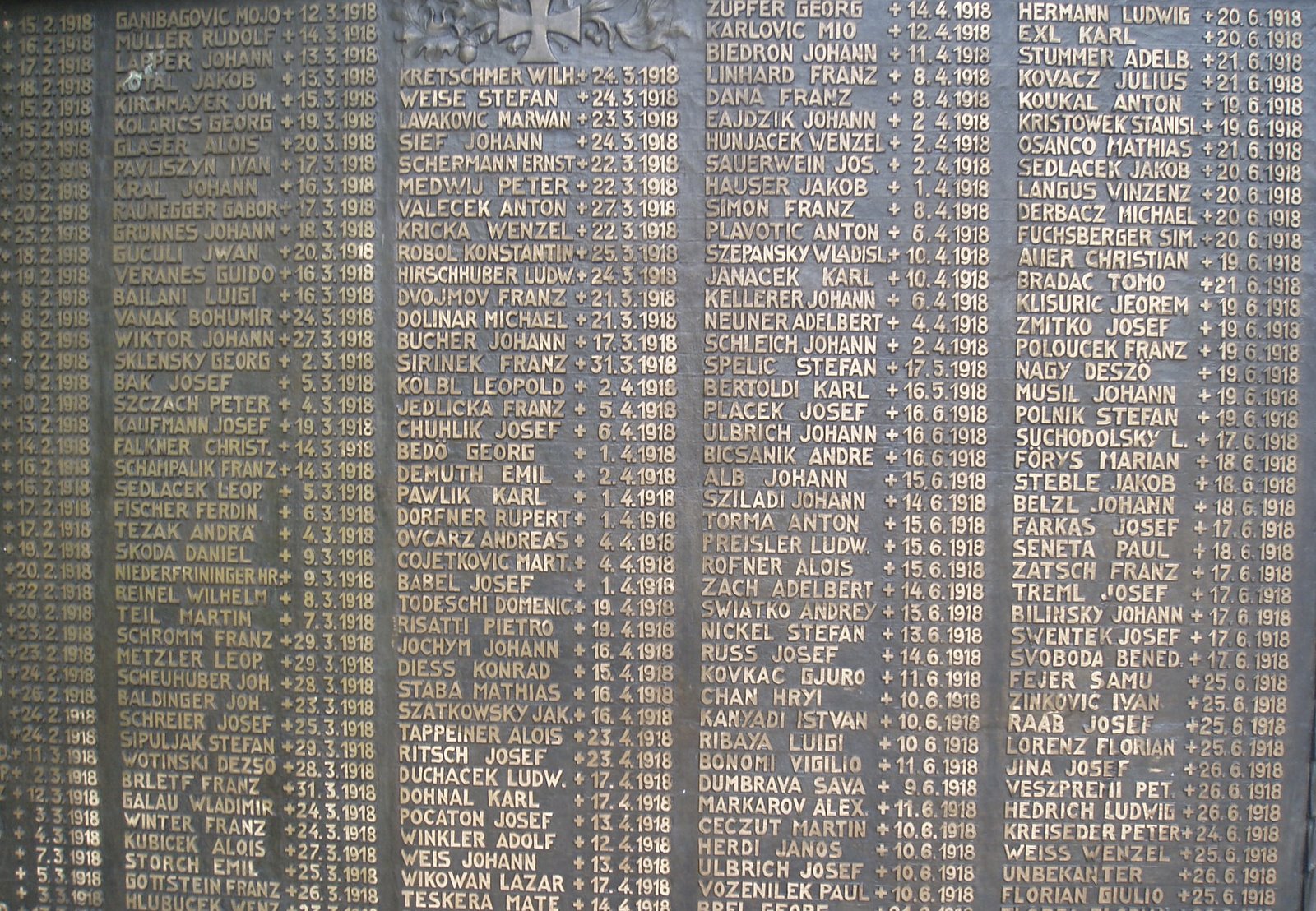
One of several plaques of names of the fallen. Names upon names upon names. Nearby are graves of POWs, victims of the nearby concentration camp (in Reichenau), forced laborers from Poland. It looks to me as if it was first planned that each group have its own separate area, but that as the dead began to add up, they were put here wherever there was room for them — leading to an interesting mish-mash in some corners of soldiers and civilians, equal and side by side in death.
This part of the cemetery, while maintained and spotless, looks as if very few people come here. And why should they — these graves are very old, and their occupants are from far away lands.

>Beate Uhse: Pioneer of Aviation AND Sex Ed.

>
When you move to a new country as an adult, there are many things from that country’s history that you are expected to know, somehow. For me it was stuff like Sissi (Empress Elisabeth), the partition of Tirol, and Andreas Hofer. But 15 years in, you never stop discovering new things, if you keep looking, I guess.

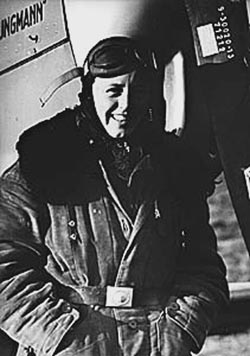
Recently a book fell into my hands, a pretty little memoir by the actress Luise Ullrich about her time in South America in the 1940s. Knowing nothing about her, we looked her up on Wikipedia, which led us to Elly Beinhorn (Ullrich’s mother-in-law, and an aviation pioneer in Germany — you could call her the German Amelia Earhart, maybe) and from there to other female pilots in the Luftwaffe, including Melitta, Countess of Stauffenberg (sister-in-law of Claus, of “Valkyrie” fame) and Beate Uhse.
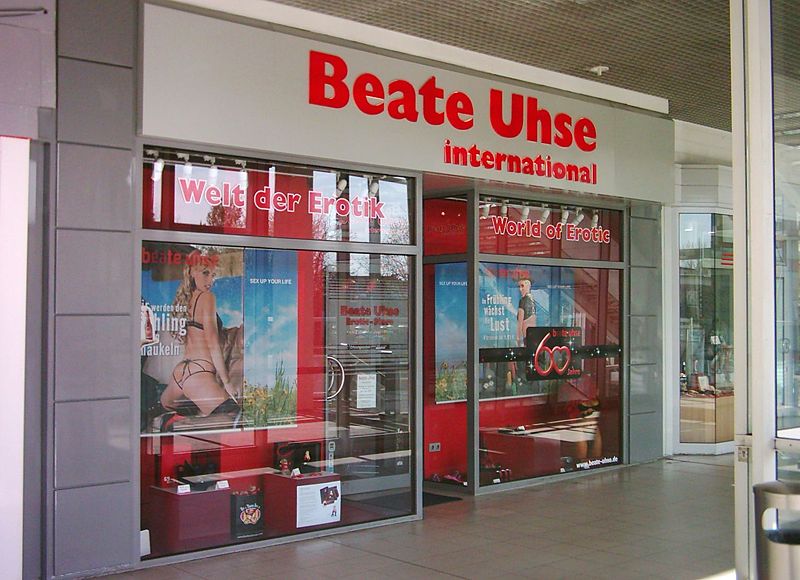
Beate Uhse?? That’s the name of a chain of sex shops all over Germany and Austria. Well, it turns out she was also a stunt pilot for UFA, the German film studio, and flew in transport squadrons with the Luftwaffe.
Barred from flying after the war, Uhse, by now a widow and single mother, started her second career with a mail-order business dealing with contraception and sex education. From Wikipedia:

She was selling products door-to-door and met many housewives and learned of their problems: the men returning from the front were impregnating their wives, not caring that there was “no apartment, no income and no future” for the kids. Many of the women went to untrained abortionists to “get rid” of their children. Beate Uhse remembered lectures her mother (who had died during the war) had given her on sexuality, sexual hygiene and contraception. She searched for information on the Knaus-Ogino method of contraception (rhythm method), and put together a brochure which explained to the women how to identify their fertile and infertile days.


Her first “specialty store for marital hygiene” opened in 1962, not without problems from the local law enforcement, but over the years her business grew in such bounds that the name Beate Uhse is now a widely respected brand name. Five years before her death, she fulfilled a long-held dream with the opening of the Beate Uhse Erotic Museum in Berlin.

I will never giggle nervously in front of her store again.