>Prussian

>Do you know that the name Prussia goes much further back than the northern German kingdom with which we mostly associate the name? Prussia was a group of tribes in the Baltics, and the Prussian language (now dead) was related to Lithuanian. After sweeps and conversion attempts by sundry dukes and bishops from further south, then the Northern Crusades (the Teutonic Knights, who worked for the Holy Roman Empire), the Germans finally moved in for good and took over, and the Old Prussian language died out by around the 17th or 18th century.

As someone I knew once put it, referring to Germans from the area as “Prussians” (which they themselves sometimes do) is like speaking of “Manhattanites” ; yes, certainly correct, but with a forgotten back-story of the people who used to go by that name, long ago.

I mention this because I was reading up on the Amber Road on Wikipedia, and saw that someone was angry about using the term Prussia to refer to the Baltic end of the route. Because to that writer, Prussia only meant German military might and all that. And yet, the writer could have easily looked up the name and learned something.

>Innsbruck’s Passive Houses

>The Lodenareal, a new neighborhood of apartment blocks in Innsbruck, is featured in an article lauding their low-energy, high-quality Passivhäuser, or “passive houses”; the premise behind these buildings is that they are so well insulated that the heat generated from lights and electrical appliances is enough to warm the rooms, and at the same time having enough fresh air coming in to avoid unwanted moisture. This way, you keep cool in the summer and warm in the winter, and your heating bill is basically zero.
An acquaintance of mine lives in one of the apartments, and she loves it. I hope more of these get built.

http://www.worldchanging.com/archives/011549.html

>An Outing To Inning

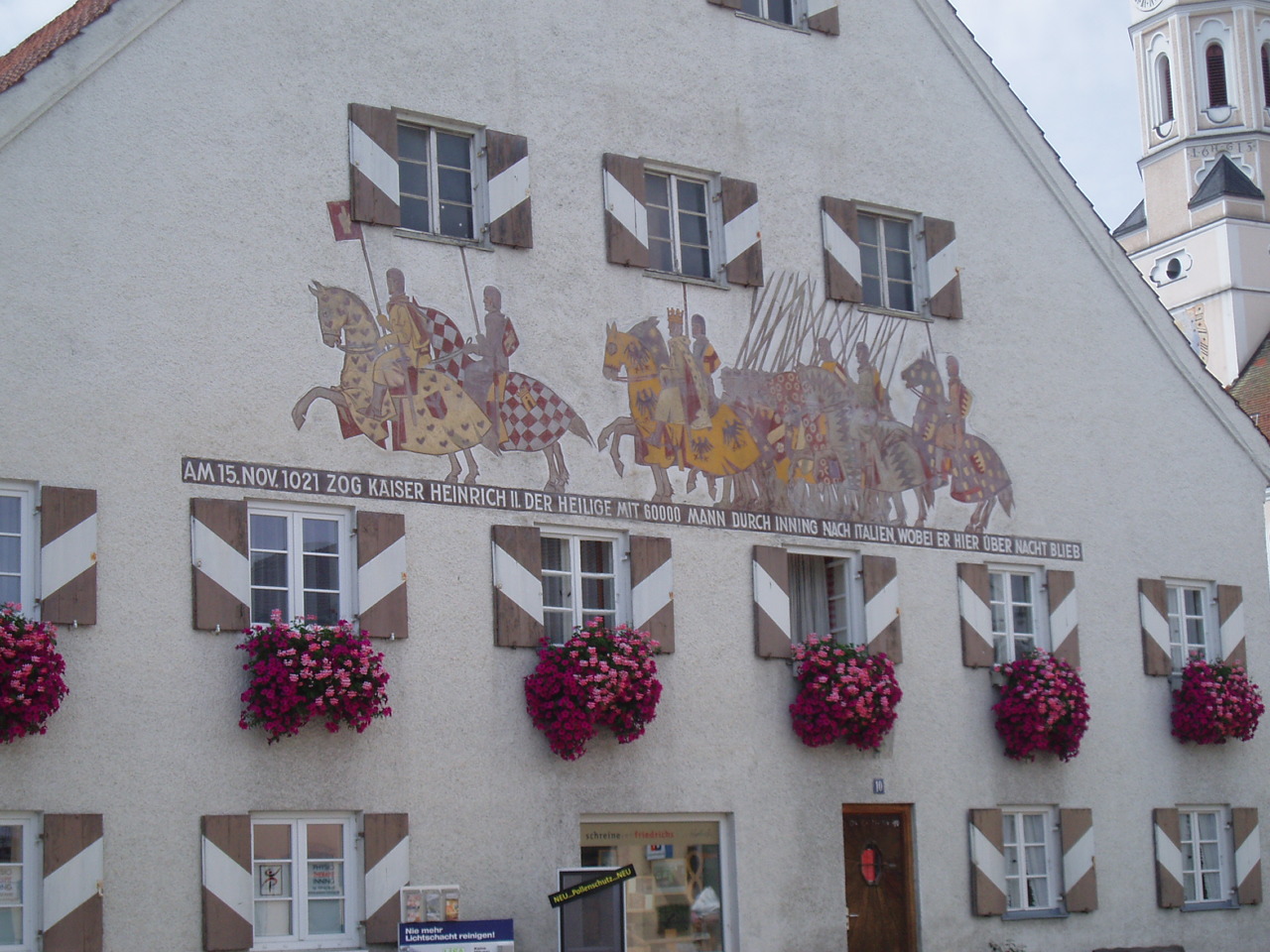
>A day trip to Inning am Ammersee. Which is very pretty indeed. Above, Inning’s historical claim to fame, I guess. “On November 15th, 1021, Emperor Henry II passed through Inning with 60,000 men, on the way to Italy, and he spent the night here.” Take that, George Washington.
Inning’s other claim to fame, if can be seen as that, is that TV personality Thomas Gottshalk used to live here. His brother still does, we were told.
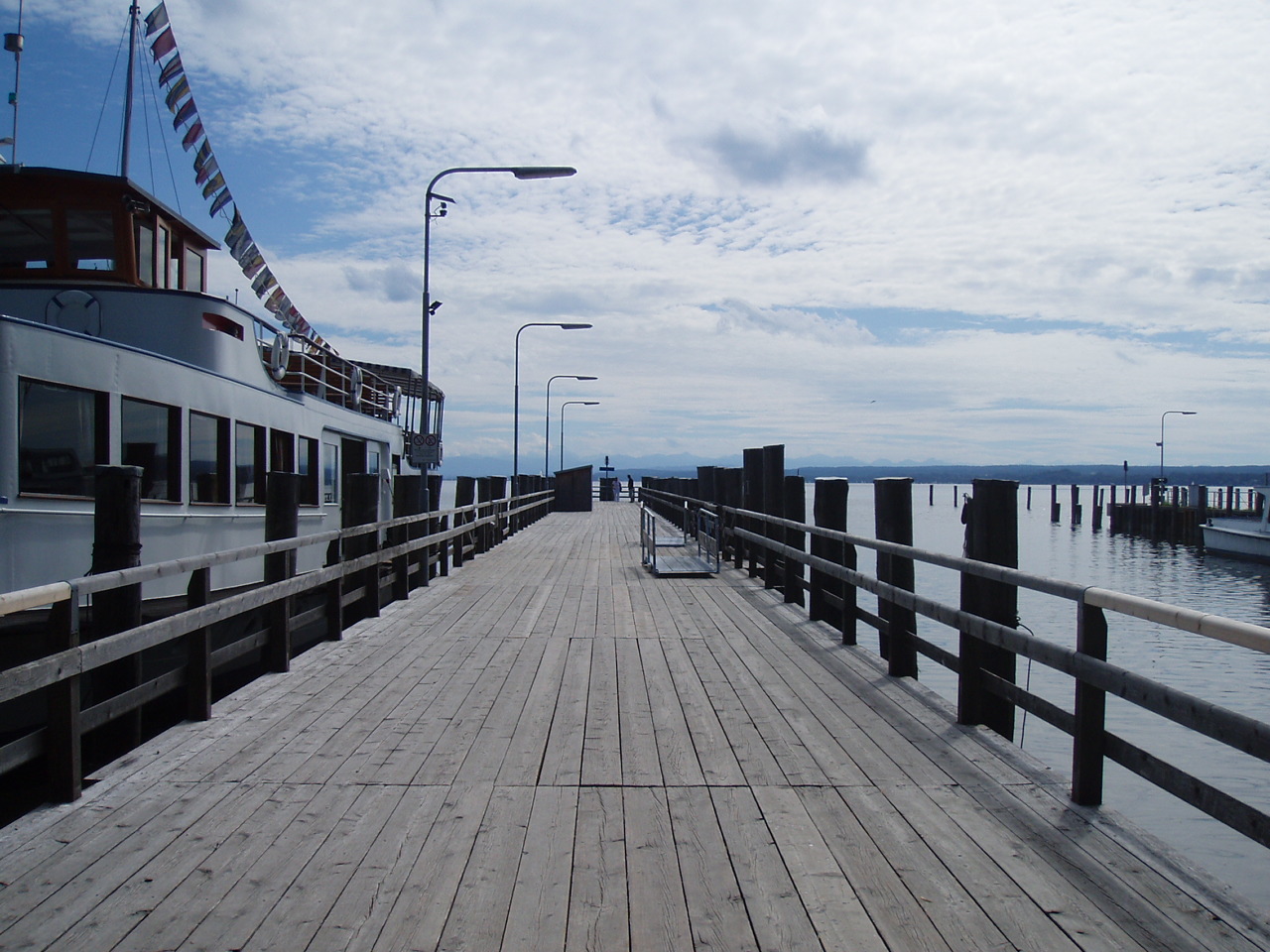
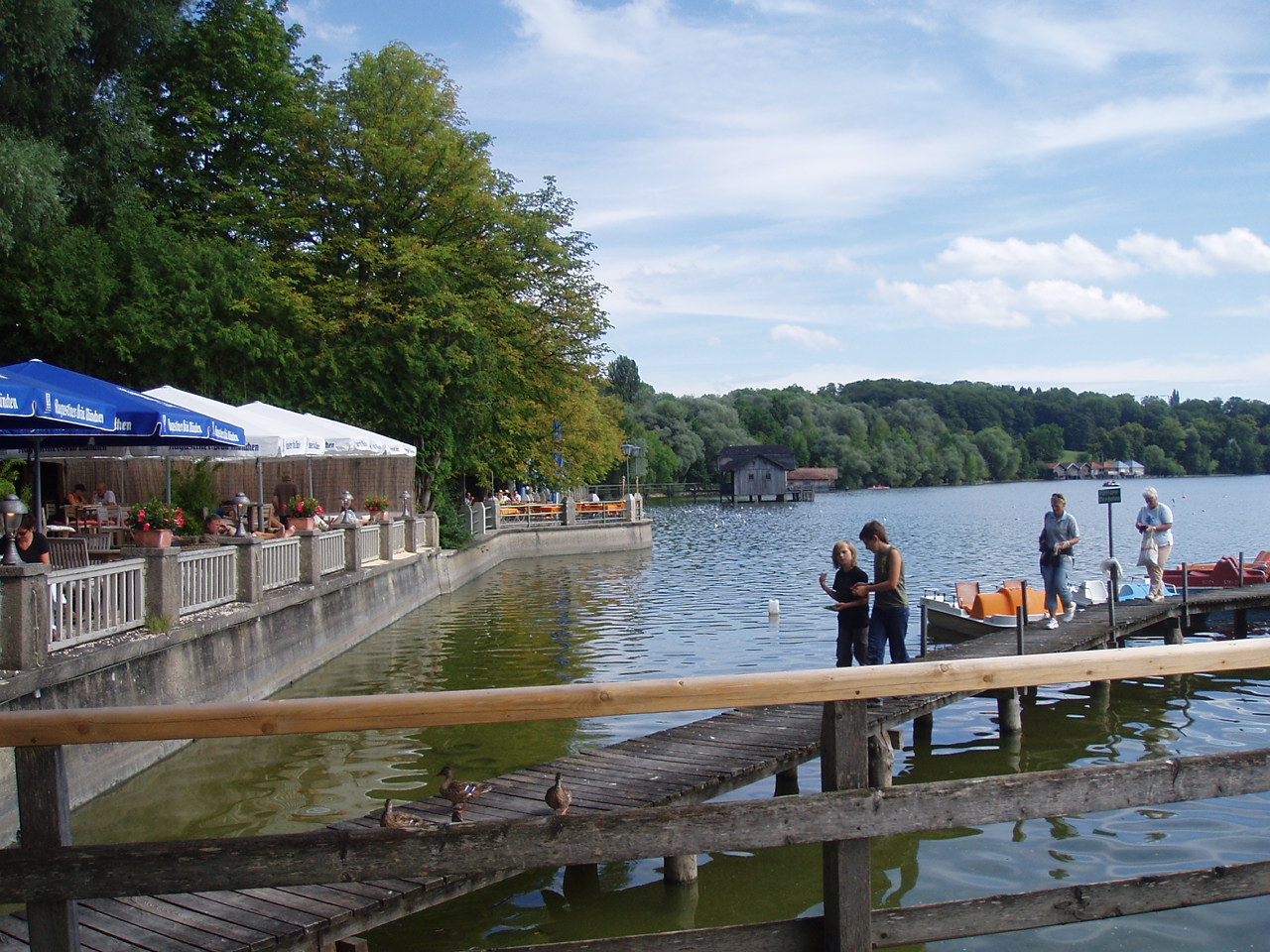
But for us, the nicest thing about Inning was it’s proximity (minutes away) from Lake Ammer. The boat landing area has some nice Biergartens and the like, but doesn’t look as built-up and chic-touristy as, say, Starnberg.

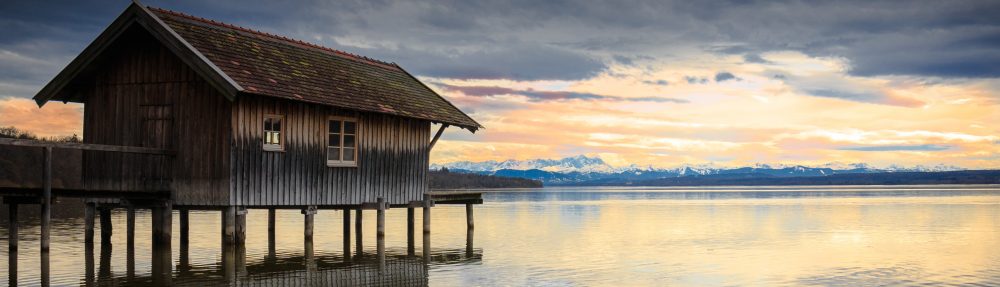
We then hopped back in the car and drove over to the next lake over, the Wörthsee. This lake is smaller, and has much less lakeside development, no ferry service, and the clearest water I have ever seen (see photo above.) This lake and it’s smaller neighbor, the Pilsensee, belong to some local aristocrat who decided not allow recreational diving in his lakes — so that’s out, leider.

>Mountain Blogging: Achensee

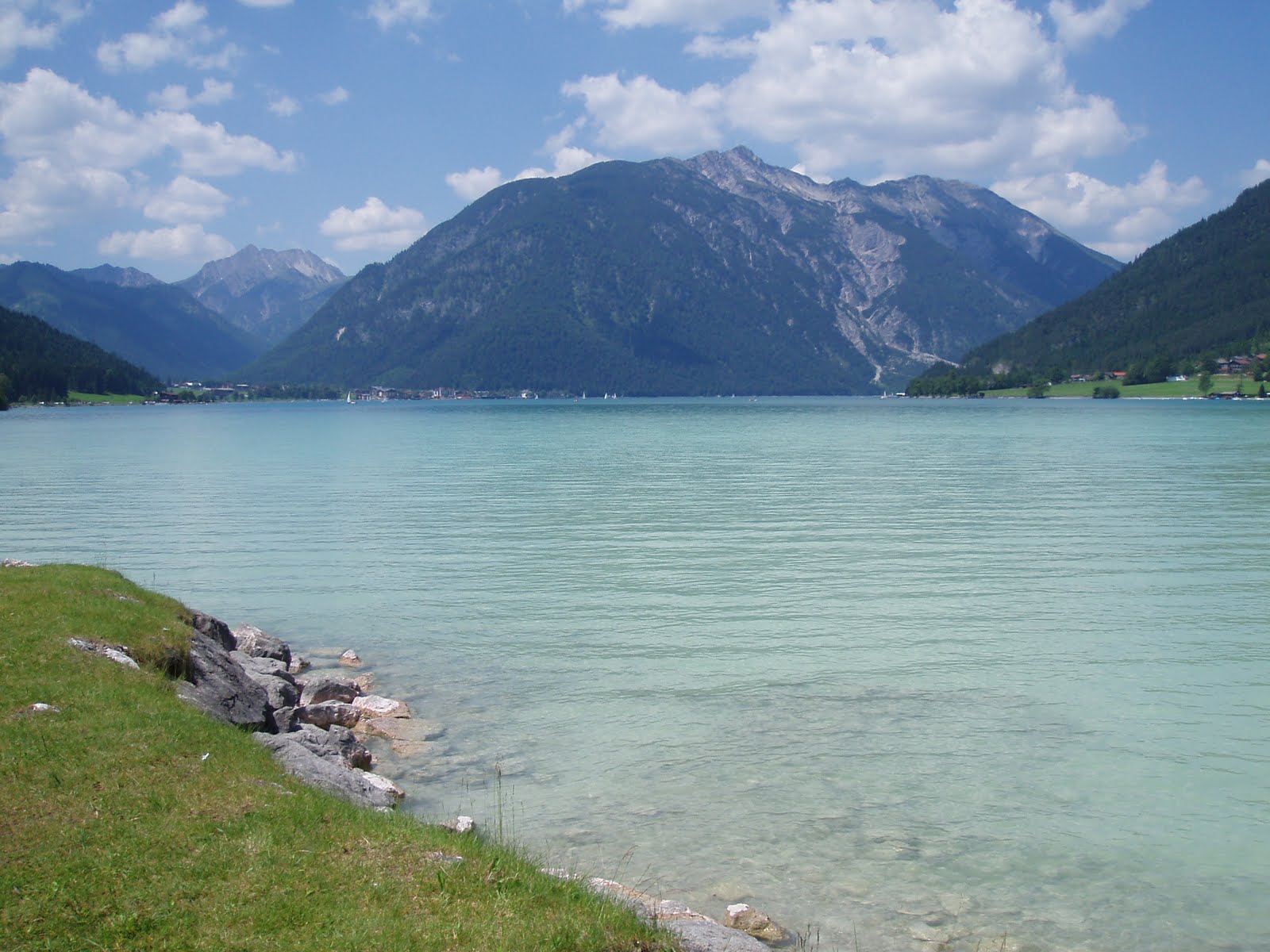
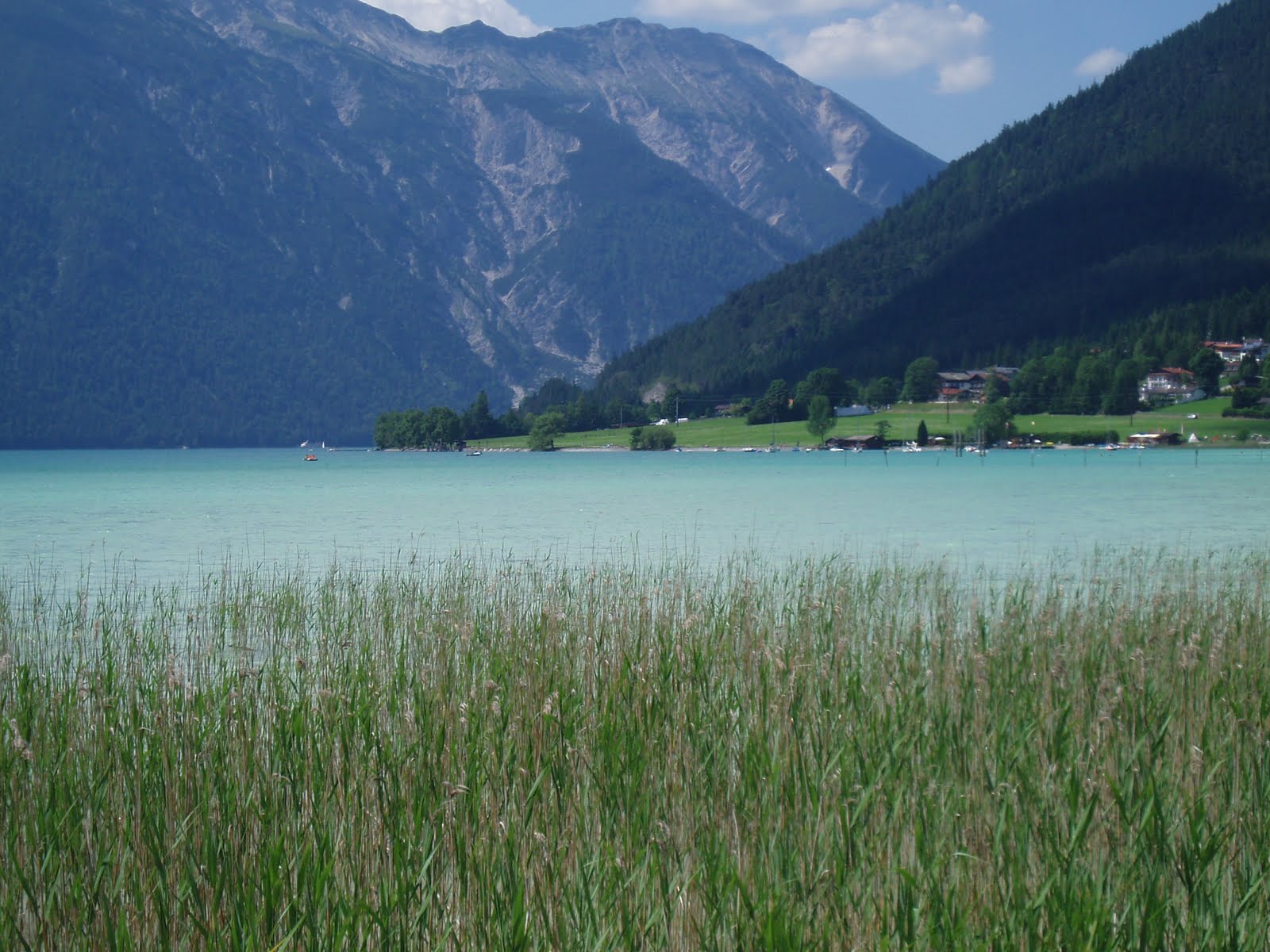
>A day trip to the Achensee, a gorgeous lake in Tirol. It’s long and deep (133 meters) but the southern end is shallow and pale, a milky blue-green from the minerals (I think) in the sediment. The water is very clean, but milky to the point where you can’t see your feet when you stand knee-deep in it.
Beyond that point across the water, the lake turns northward, narrows and deepens significantly. There are several diving access points further north, and other villages. There is no road access to the west shore, but there are trails, and ferry service operates from May through October.
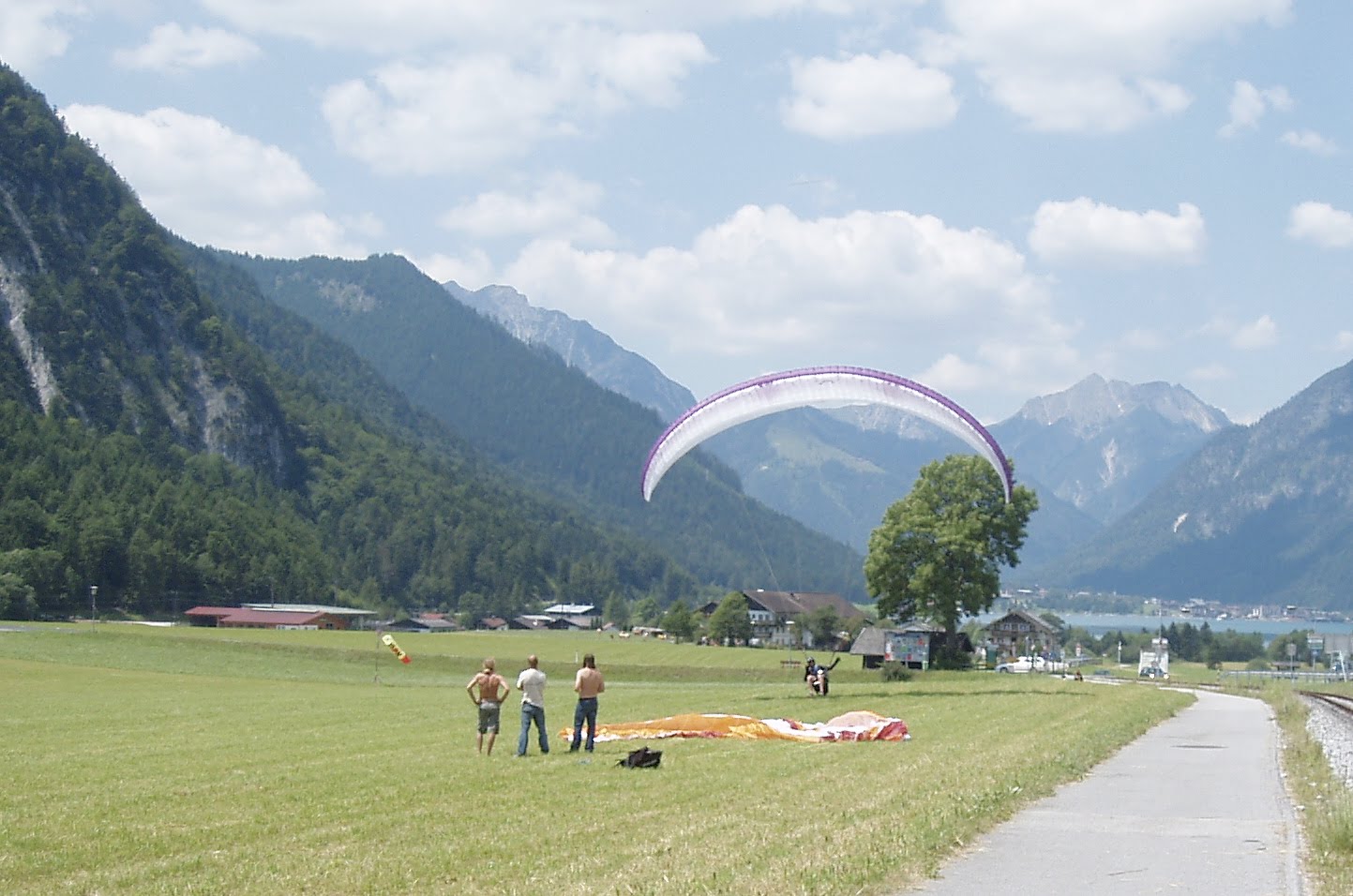
Seems it was perfect weather for paragliding, as there were dozens of them in the air, swooping around over the mountains, catching the currents. One landed practically at my feet as I approached the lake.
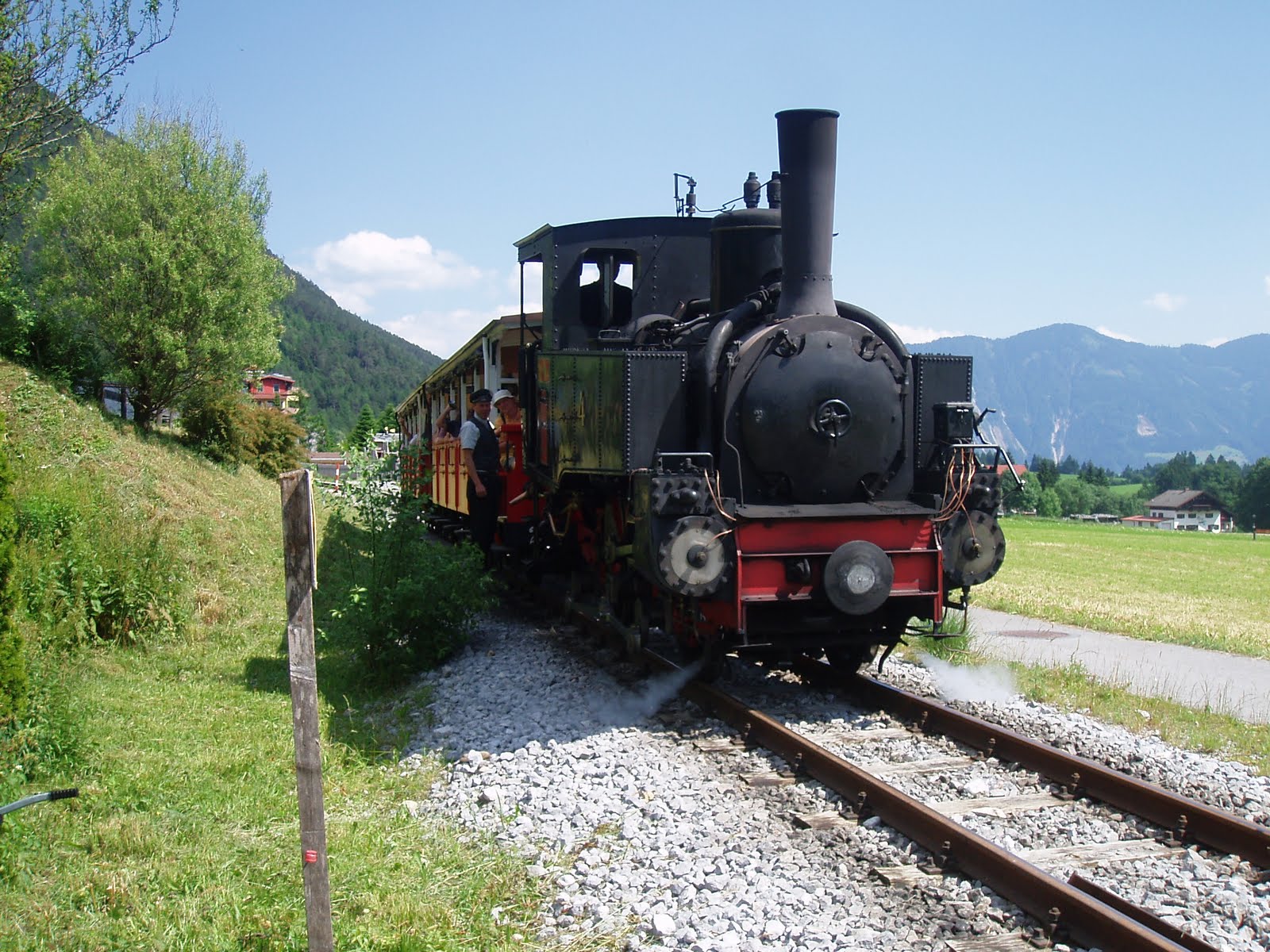
The Achenseebahn, a steep cog rail line which runs from Jenbach to the southernmost boat landing on the lake, was built in 1889 and still uses steam trains, unlike the chic and modern electrified Hungerburgbahn. I’ve ridden it once, it’s kind of fun, but it costs an arm and a leg (€22 one way!) I walked both ways (a good hour each way on the mountain biker’s forest road Via Bavarica Tyrolensis — don’t hog the road, give the bikers room to get past you, it’s their trail.)
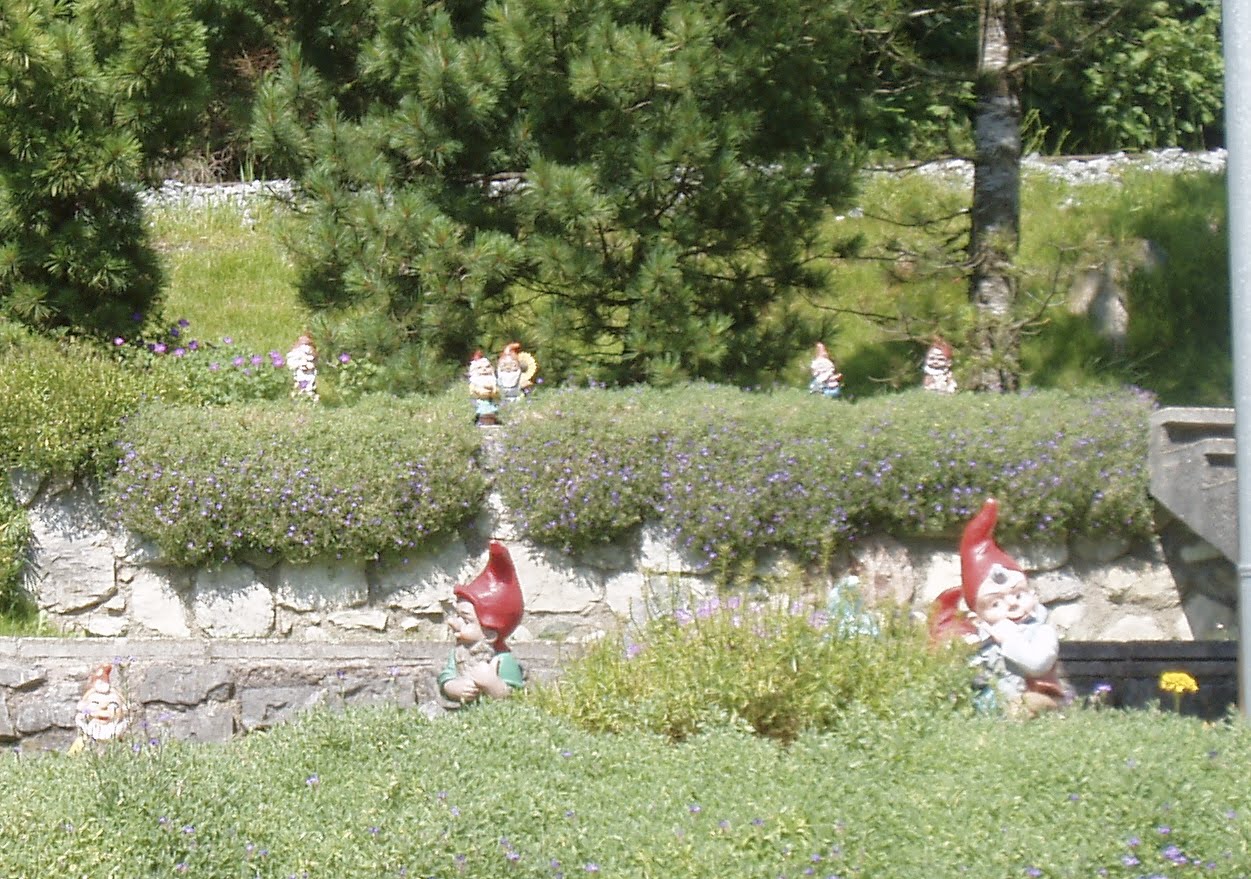
The villages around the Achensee are all about tourism now, and although they’ve kept it relatively tasteful, the area lacks the wild alpine feeling of other mountain lake regions. Here a bit of kitch near the walking path.

>Munich History: Hans and Sophie Scholl, Kurt Eisner

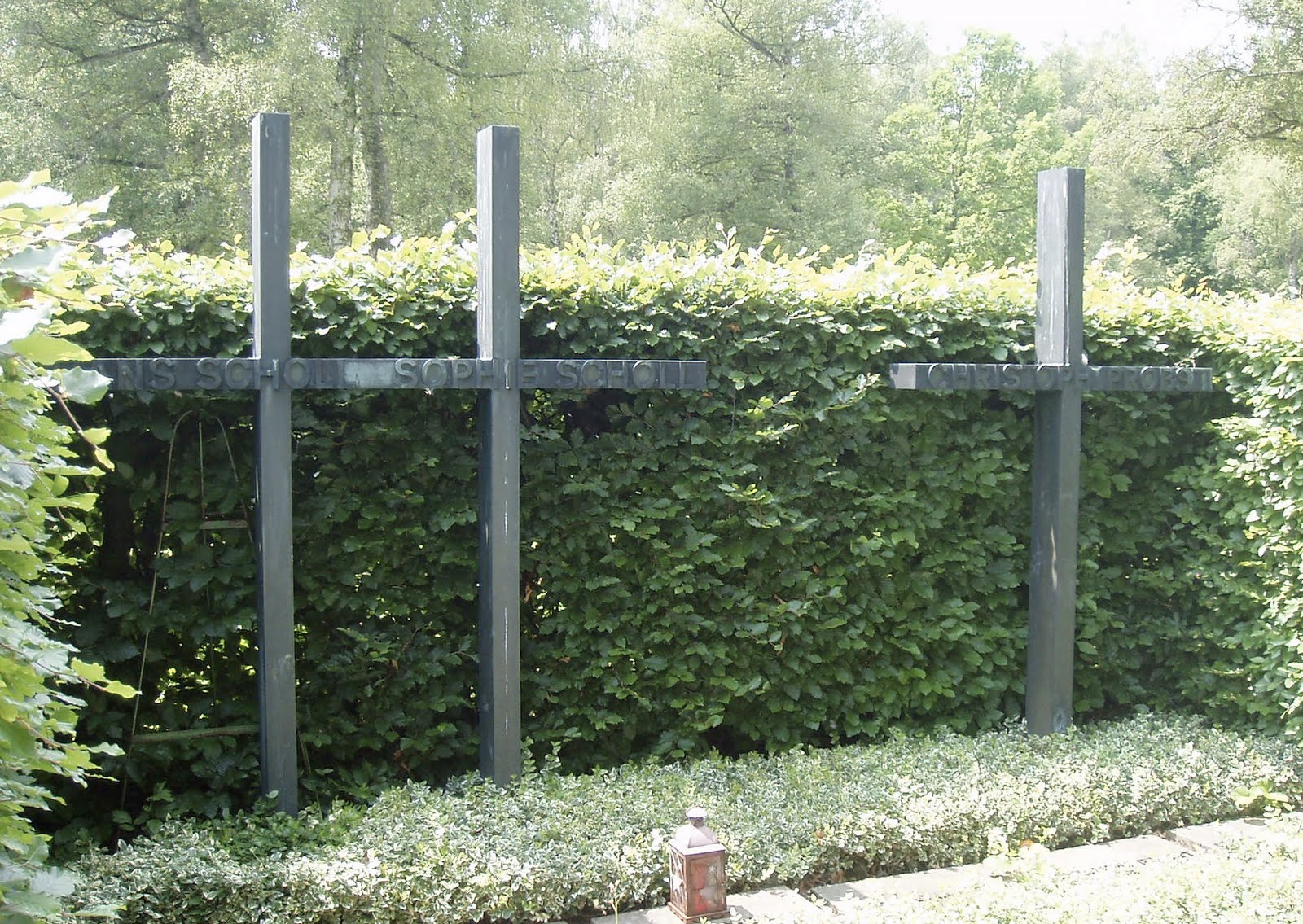
>If you don’t know the brief, sad yet courageous story of the Scholl siblings, Sophie and Hans, then go directly to the Sophie Scholl entry in wikipedia before you continue. In all honesty, it’s not clear to me why she gets most of the attention, and her brother less, but perhaps society doesn’t expect a 21 year old woman to be brave, and give up her life for her friends. This one did.

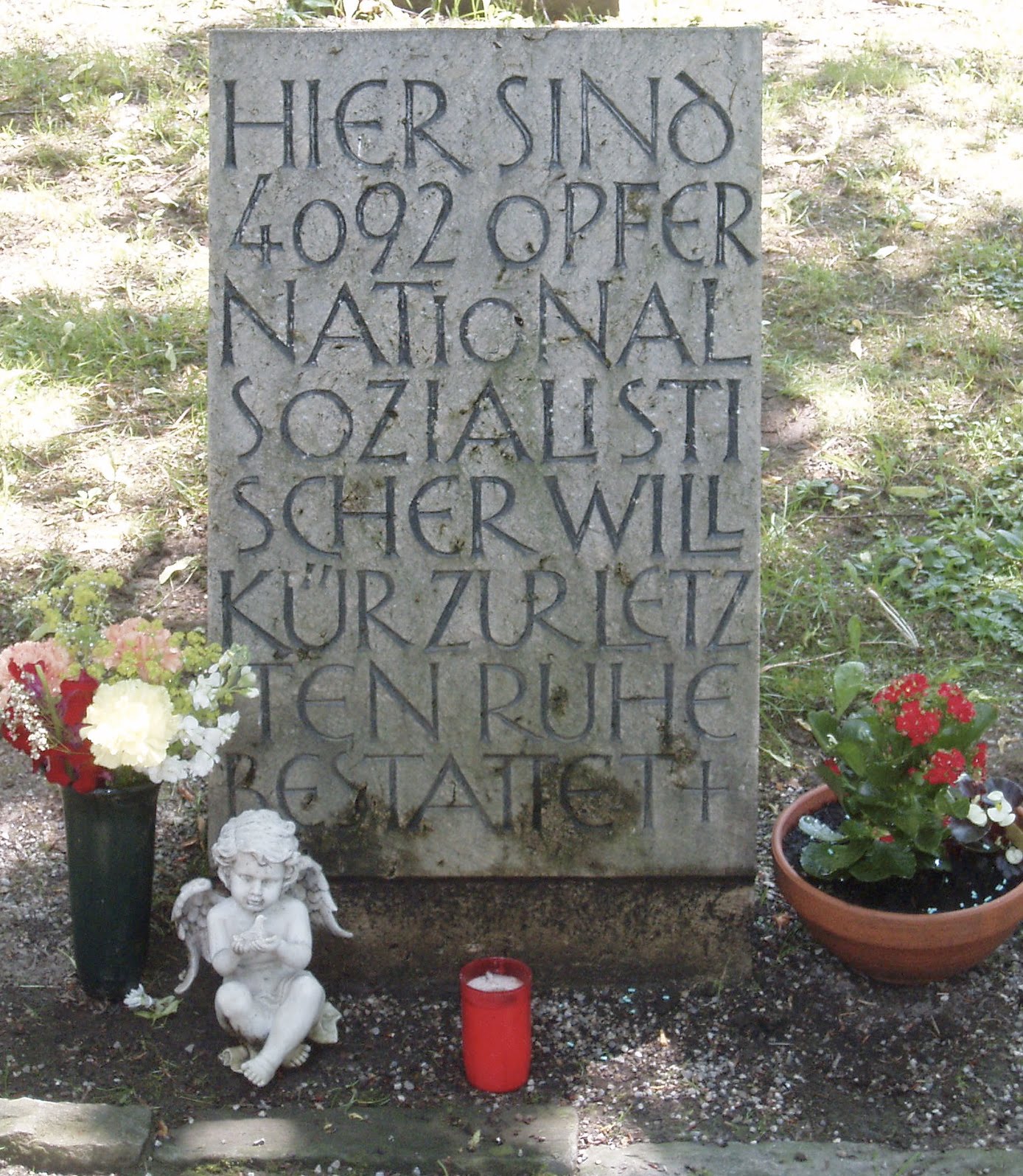
Right beyond those trees in the background, unseen, is the Stadelheim Prison where the Scholls and Christoph Probst were executed by guillotine. As unfeeling as it may sound, they were lucky. The July 20th conspirators, (the non-military individuals, who didn’t get the honor of a bullet to the head), suffered gruesome, drawn-out, painful deaths by hanging with piano wire, after having been given heart boosting meds to keep them going as long as possible. And, of course, being gassed was much worse as well.

“Here lie in their last resting place 4092 victims of National Socialist caprice.” No names, no reasons for their deaths. I think they, too, may have come here through the back door of the prison.
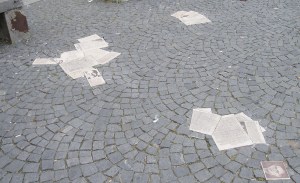
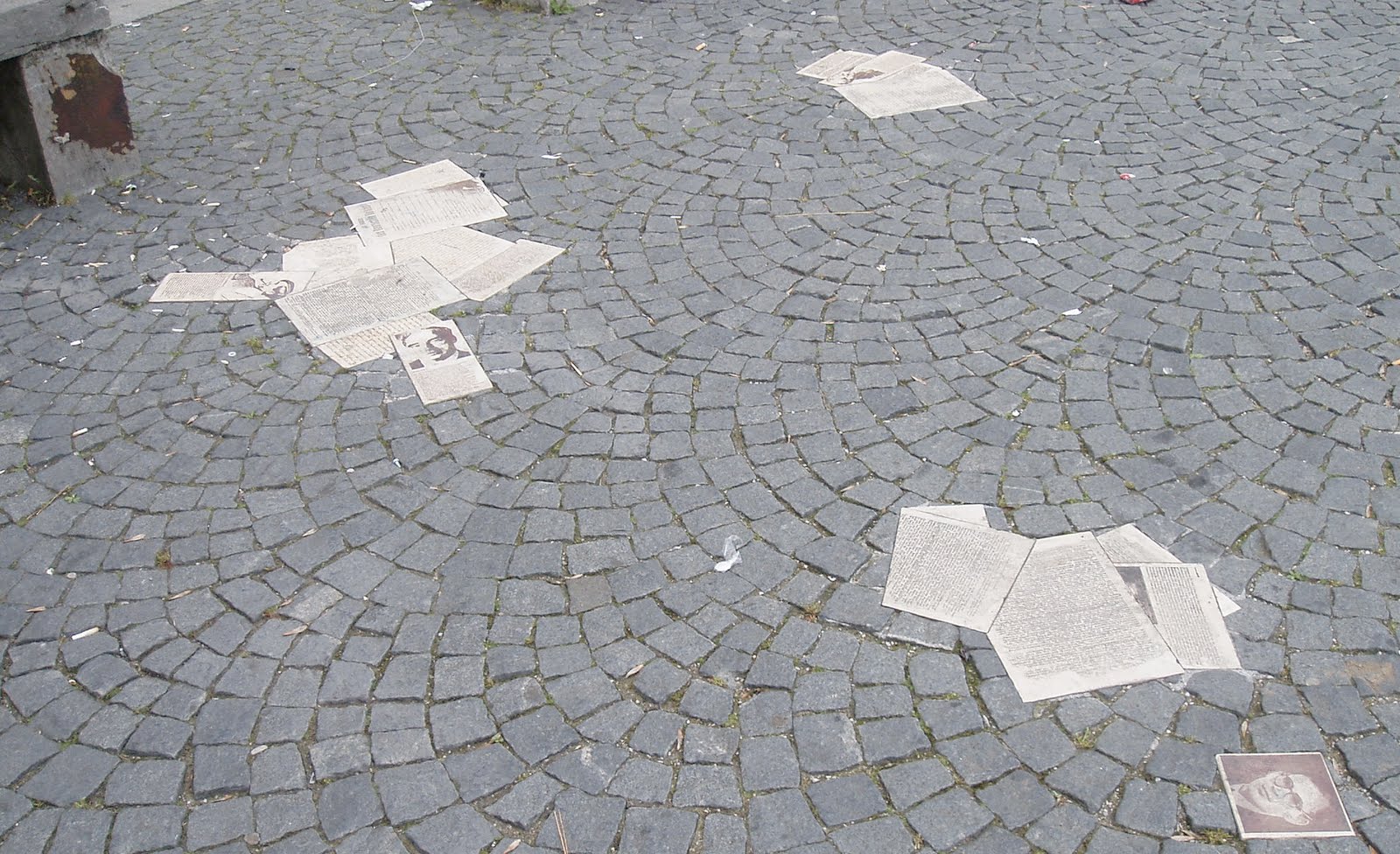
What looks like papers lying on the sidewalk is actually part of a monument to the Scholls and to The White Rose resistance group, one of their methods having been to leave anti-nazi leaflets lying around where there were crowds of students.
The work here combines images and biographical information about the members, as well as examples of their writing. It’s at the front of the Ludwig Maximilian University, Leopoldstrasse, Munich.
Walking back into the city center I literally walked over this before I realized that it too was a memorial embedded into the sidewalk. The figure is meant to remind one of a police body outline. The words above it read, in German, “Kurt Eisner, who on 8 November 1918 proclaimed the Bavarian Republic, later Prime Minister of the State of Bavaria, was murdered on this spot on 21 February 1919.” Eisner has been all but forgotten amid all the turmoil of the 20th century in Germany, but he was instrumental in pulling Bavaria out from under the monarchy by getting Ludwig III to sort of just leave without even officially abdicating. Depending on who you believe, Eisner’s murderer was either acting as a monarchist (being from an aristocratic family) or an anti-semite, himself Jewish but wishing to prove his nationalist loyalties. (He had been shut out of a pre-nazi group because of his mother’s ancestry.)
There is so much history just staring right at you, all over the city.
>Beer You Won’t See Stateside

>The Beer That Dare Not Speak Its Name — at least, if it ever gets imported to the US.

This news is from a month ago, but I’d missed it. A couple of German marketing executives have won the right to use the name “Fucking Hell” for a not-yet-existent beer — referring to the Austrian town of Fucking (yes, there is one) and to the German word for light ale, “Hell”. (Hell is an adjective meaning light or bright. The German word for Hell, the place, is Die Hölle.)
There are some issues — there is no brewery in the town of Fucking, and the mayor is not altogether pleased (people keep stealing his town’s signs for souvenirs.) A complaint was filed that the phrase is “upsetting, accusatory and derogatory”, but the EU Trademark office rejected the complaint, saying that

Fucking Hell” was an “an interjection used to express a deprecation, but it does not indicate against whom the deprecation is directed,” the Office added. “Nor can it be considered as reprehensible to use existing place names in a targeted manner (as a reference to the place), merely because this may have an ambiguous meaning in other languages.

According to the article in Der Spiegel, the brand should be on the shelves by the end of the summer. I’ll keep my eyes open for it.

>Up In The Border Guard Tower

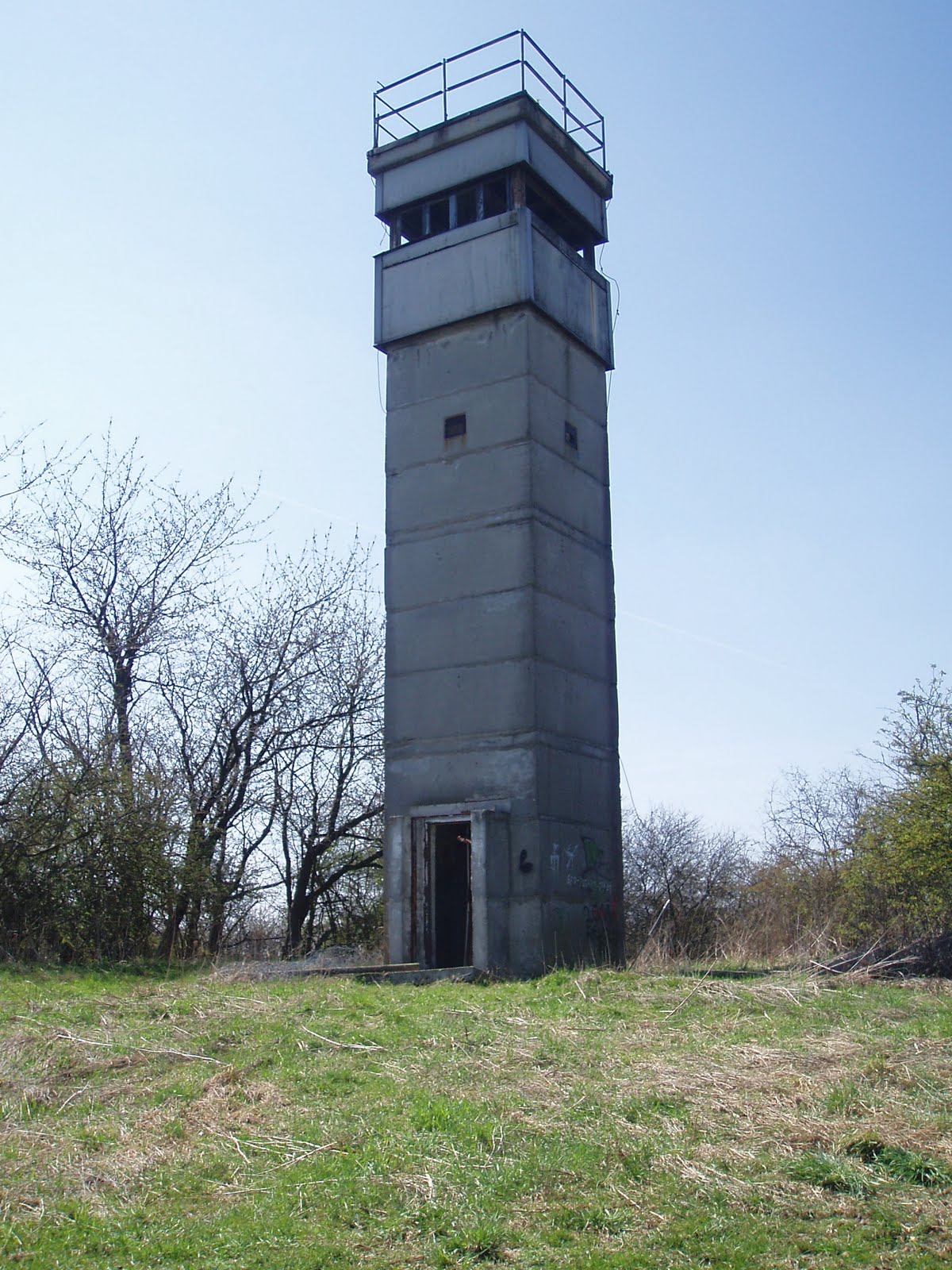
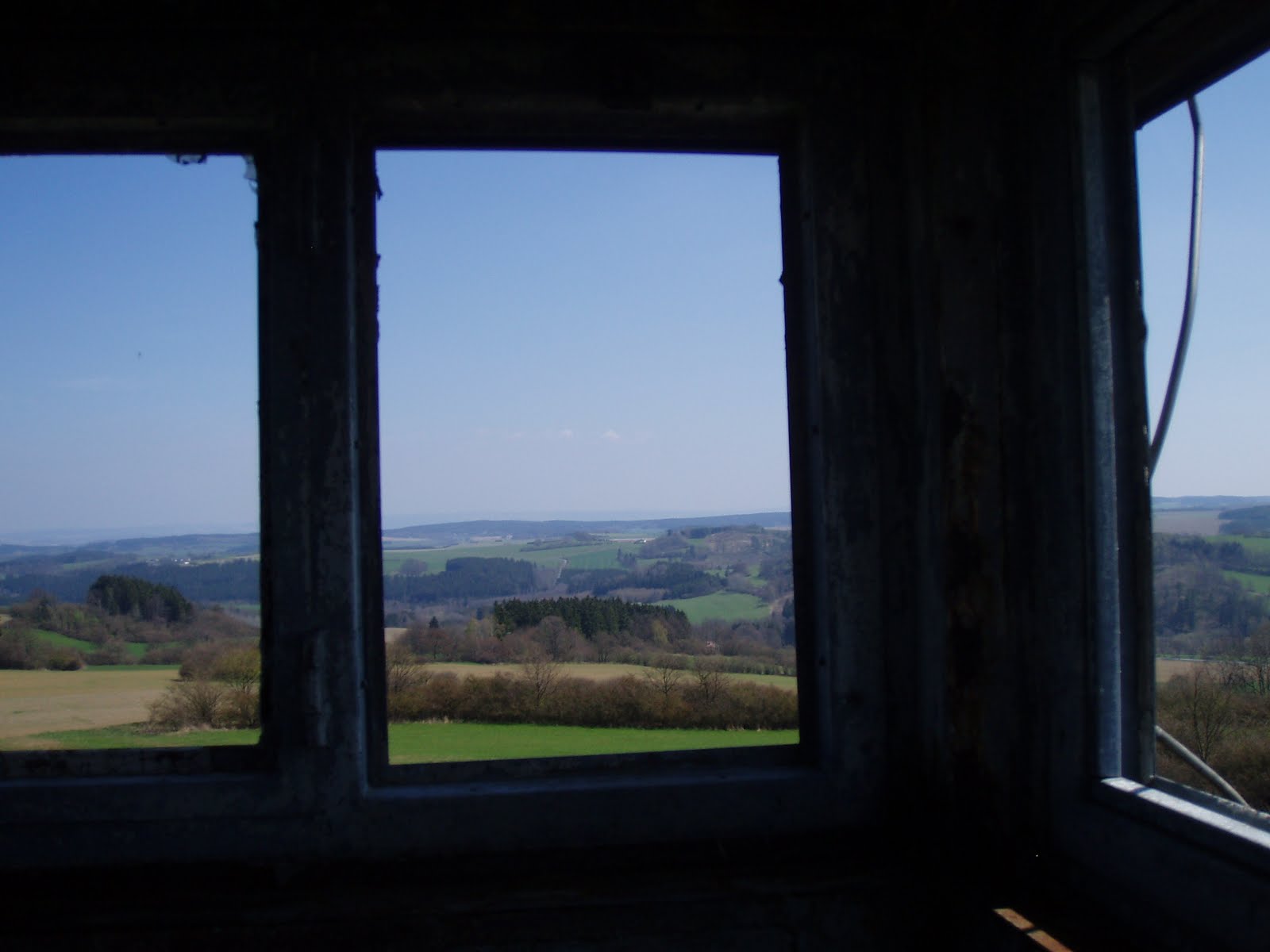
>On the way back from Freiberg, we took a detour off the Autobahn and went hunting for the old East-West border, which is now just a state line again. We knew there were still guard towers standing, we could see them in the distance from the highway. After a few miles of country roads and a a farm path or two, we found them.
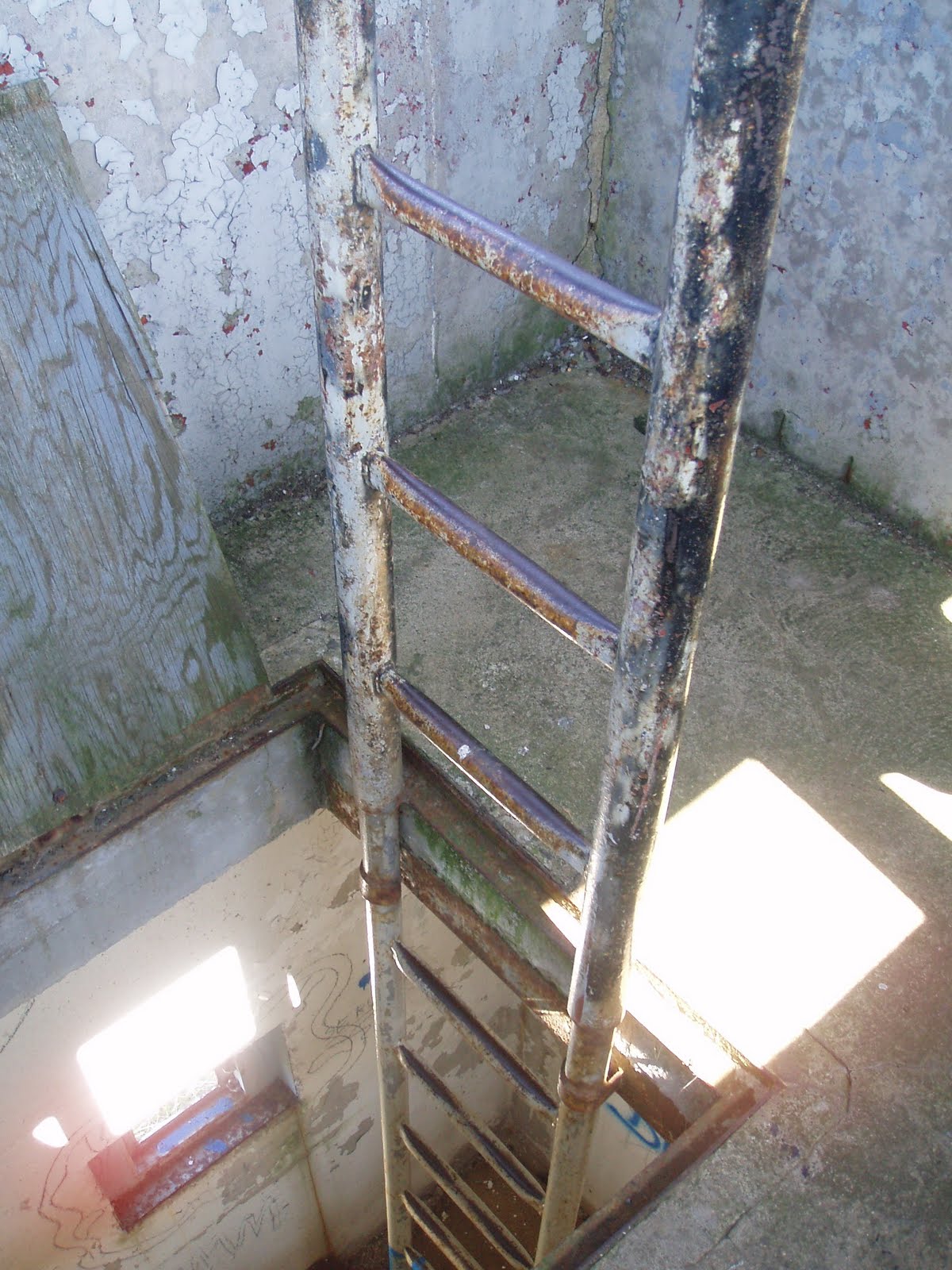
Twenty one years of neglect had taken its toll on the towers, but it was clear that we weren’t the only ones to have come up here. Probably the local kids use it as a secret hangout. We were delighted to find them open and climbed up to the top floor.
Nice view up here. I keep telling the beau that this area reminds me of Pennsylvania.
In the photo above, you can see the next tower, center right on the horizon. (It has a satellite dish erected on the roof.) So the space between this tower and that one would have been part of the border, complete with barbed wire and death strip. Not a trace of it is left except for the towers, which are probably too much trouble to dismantle.

>”A Massacre… Would Have Been More Humane”

>ARD, Germany’s “first” national television station, aired an extraordinary documentary last night about the Armenian Genocide. It mixed rare photos and film footage with “clips” of “interviews” — using well-known German actors portraying contemporary witnesses, their lines from those witnesses’ actual reports. The figures included American diplomats and journalists abroad as well as Germans, Swiss, and other Europeans working in Turkey at the time. The actors, all delivering respectfully understated performances, give you the impression that you’re watching actually memories coming to the fore.
The details of the atrocities, culled from collections of reports in the German Archives, are overwhelming in their multitude. The western foreign representatives don’t come off very well either, the implication being that looking away in disapproval was no less than complicity (which is an old story, and probably a very human one, as these things — the crimes and the looking on — are still going on today, aren’t they?)
The documentary makes clear that the Nazis picked up a few things about extermination from the Turk’s actions, like putting deportees into cattle cars (and making them pay for their fares), inventing conspiracy plots in order to brand an entire people “traitors”, executing their own soldiers who did not show enough “mercilessness”, and sending their victims off to some unknown fate with vague words of “resettlement” (death marches into the Syrian steppes), making government seizure of “abandoned property” legal. Hitler’s own word’s, “Who speaks today of the Armenian extermination?”, makes it clear how easy they thought they’d have it, treating their own “undesirables” in the same way (and, later, much worse, when they realized that they could.)
The documentary also discusses how the German government assisted in the flight of the leaders responsible for the genocide, with Grand Vizier Mehmed Talat (Talat Pasha) ending up living comfortably in Berlin until his assassination in 1921. Buried in Berlin, his body was exhumed in 1943 and transferred, with full pomp and ceremony, to Istanbul.
Interestingly, the Turkish courts-martial of 1919-1920 brought death sentences (in absentia) for those responsible, specifically mentioning the Armenian deportations. The new question is why, today, so many Turks experience rage and indignation at the mere mention of the word “genocide”. It’s not universal, of course. After the murder of Turkish-Armenian journalist Hrant Dink by a Turkish nationalist, over a hundred thousand people marched on Istanbul, carrying signs that read “We Are All Armenian”. Dink’s murderer was following the nationalist line, that even speaking of what happened then is an insult to Turkishness. It would be interesting to know how they got that far away from being able to look at things objectively.

>Weekend Mountain Blogging: Wildblümchen

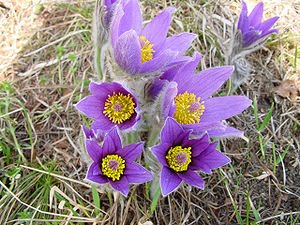
>I went out to look for an endangered flower called the Innsbrucker Küchenschellen, or Innsbruck Pasque Flower (Pulsatilla oenipontana,) for which there are areas set aside on the sunny slopes north of the town. This unusual flower only grows around here, being a hybrid from two other types of Pasque Flower, which happened to have a Tirolean rendez-vous. Being so particular about where it will and won’t grow, it’s facing extinction. The reserved areas above the villages of Arzl, Rum and Thaur and the tireless work of reasearchers is helping to keep that from happening.
Unfortunately, my timing was off, or they just bloomed early, because there was nothing but grass. It may also be so well hidden that I did not find the right spot. But here is a photo from the web:
Being up there, and having a sunny, free afternoon before me, I climbed up into the woods and followed the trails back toward Innsbruck via the Hungerburg. On the way I learned about a few more woodland wildflowers.
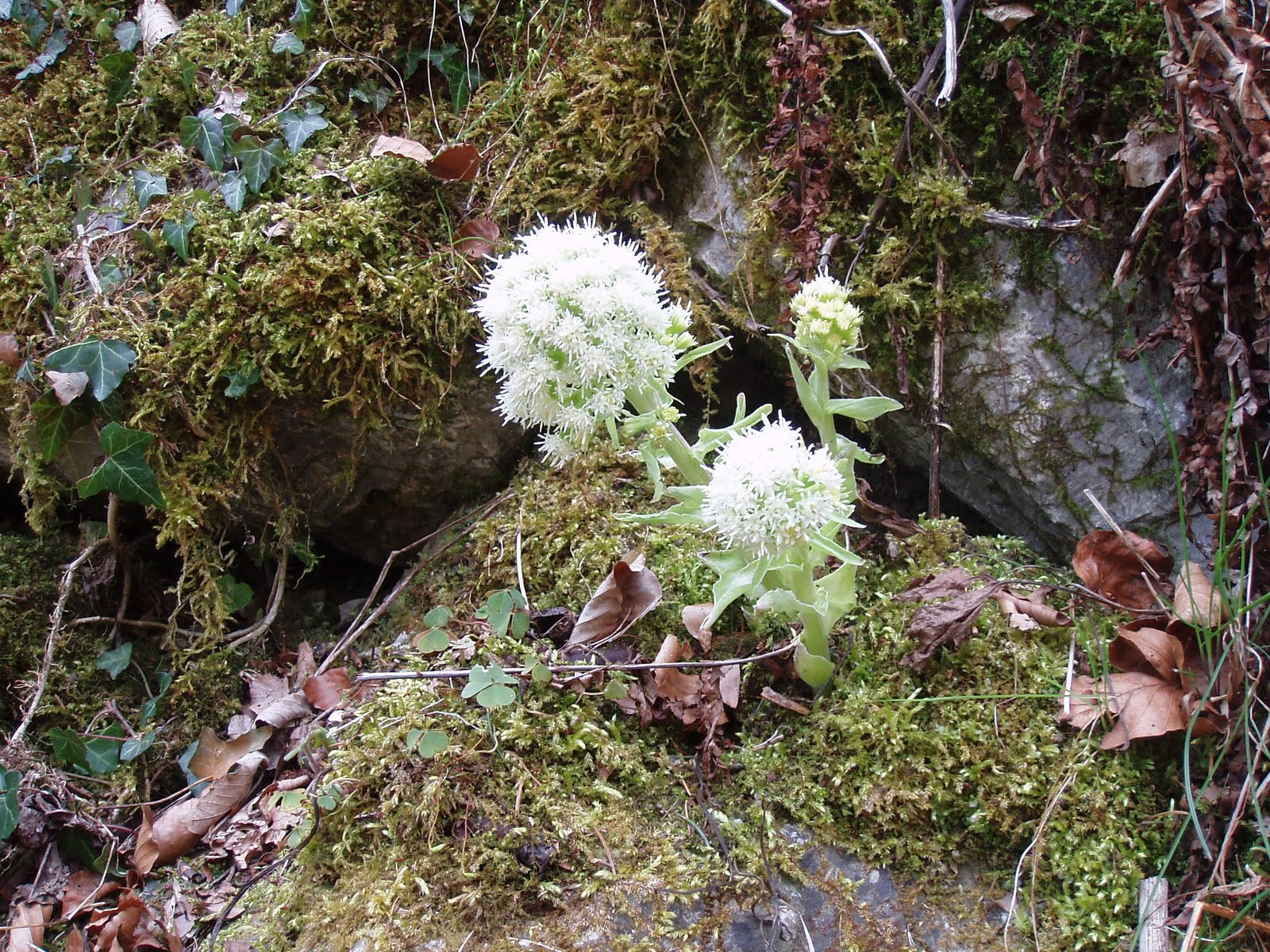
Weisse Pestwurz, or Butterbur (Petasites albus), was growing right along the trail in shaded areas.
A close relative of Butterbur is Huflattich, or Coltsfoot (Tussilago farfara), which, like Butterbur, has medicinal properties and is used to make cough suppressant.
One flower that’s certainly not about to die out is the Wood Anemone, which at this time of year covers a great deal of the forest floor. I found mostly violet colored flowers, but there were also many whites and a few dark pinks.

A good place to find information on European wildflowers (in German):
http://waldwiesenblumen.gabathuler.org/index.php?alle=alle

>Weekend Mountain Blogging: Schloss Thaur

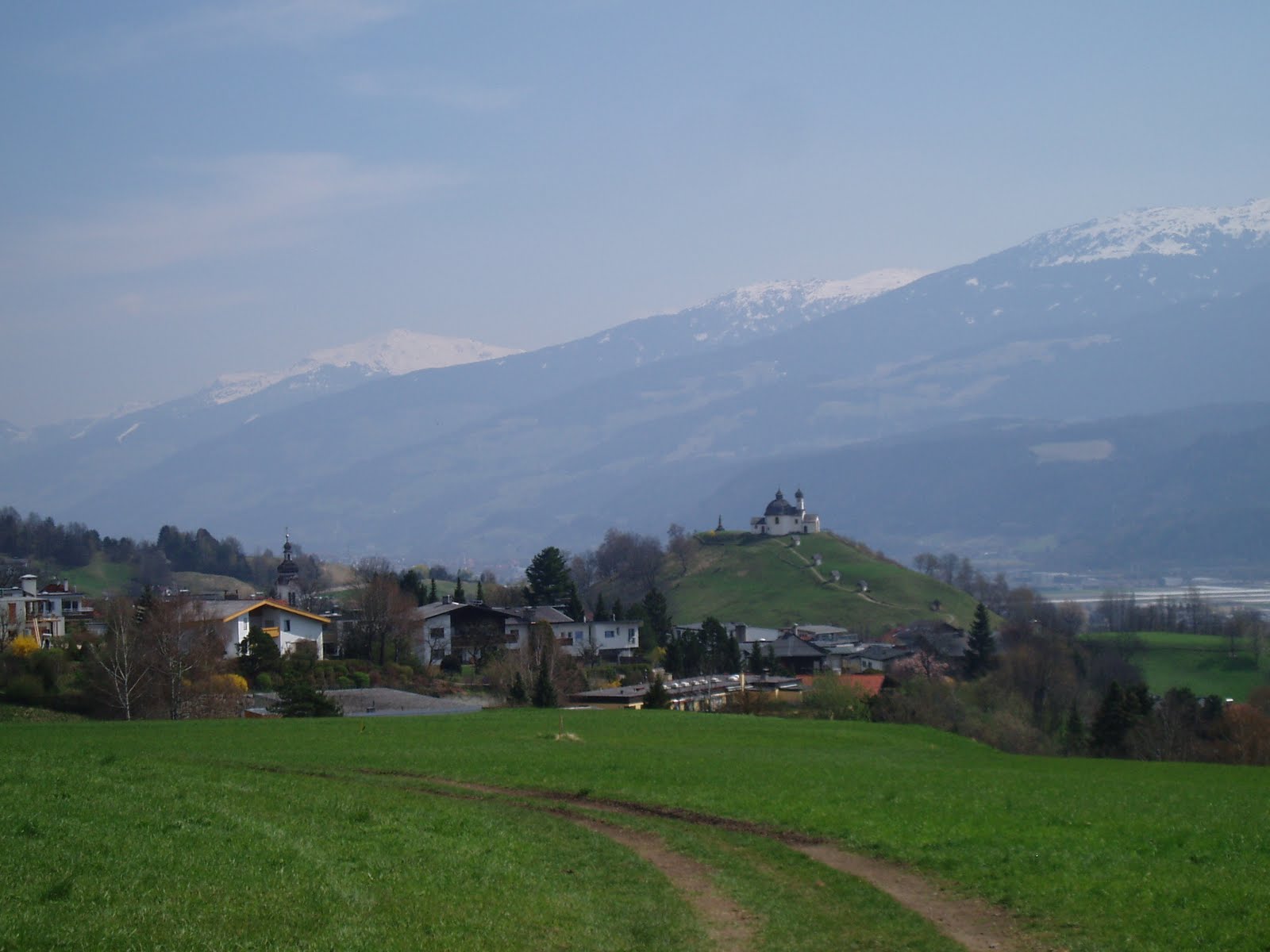
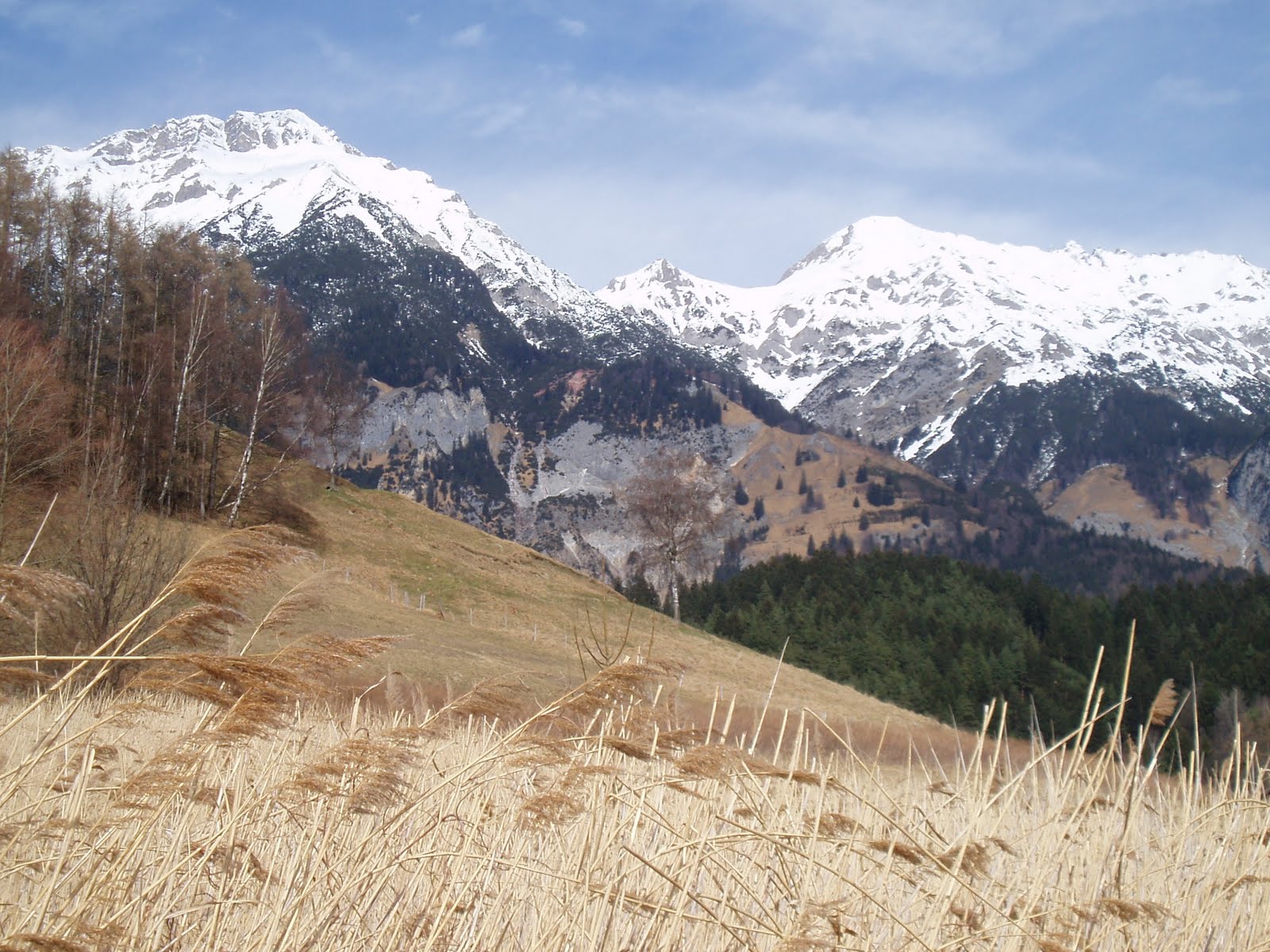
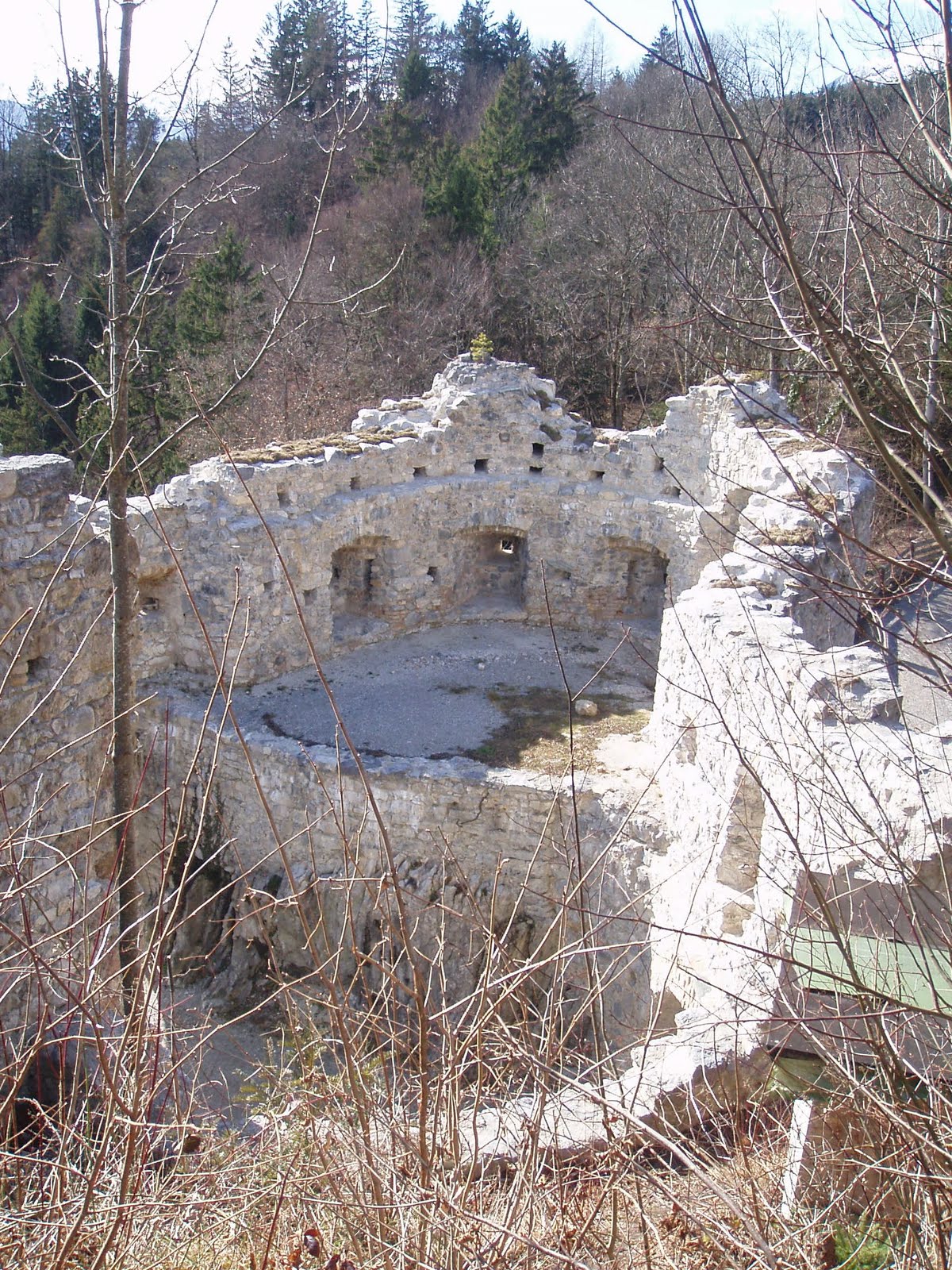
>There are so many “hidden” gems, right around Innsbruck, that most of the time you don’t even need public transportation to get to them. Yesterday I left my apartment and simply walked to the castle ruin above Thaur, a village in the hills beyond Innsbruck. It took about 2 hours. (I could have hopped on the bus to Thaur but it was a gorgeous day, perfect for a hike.)

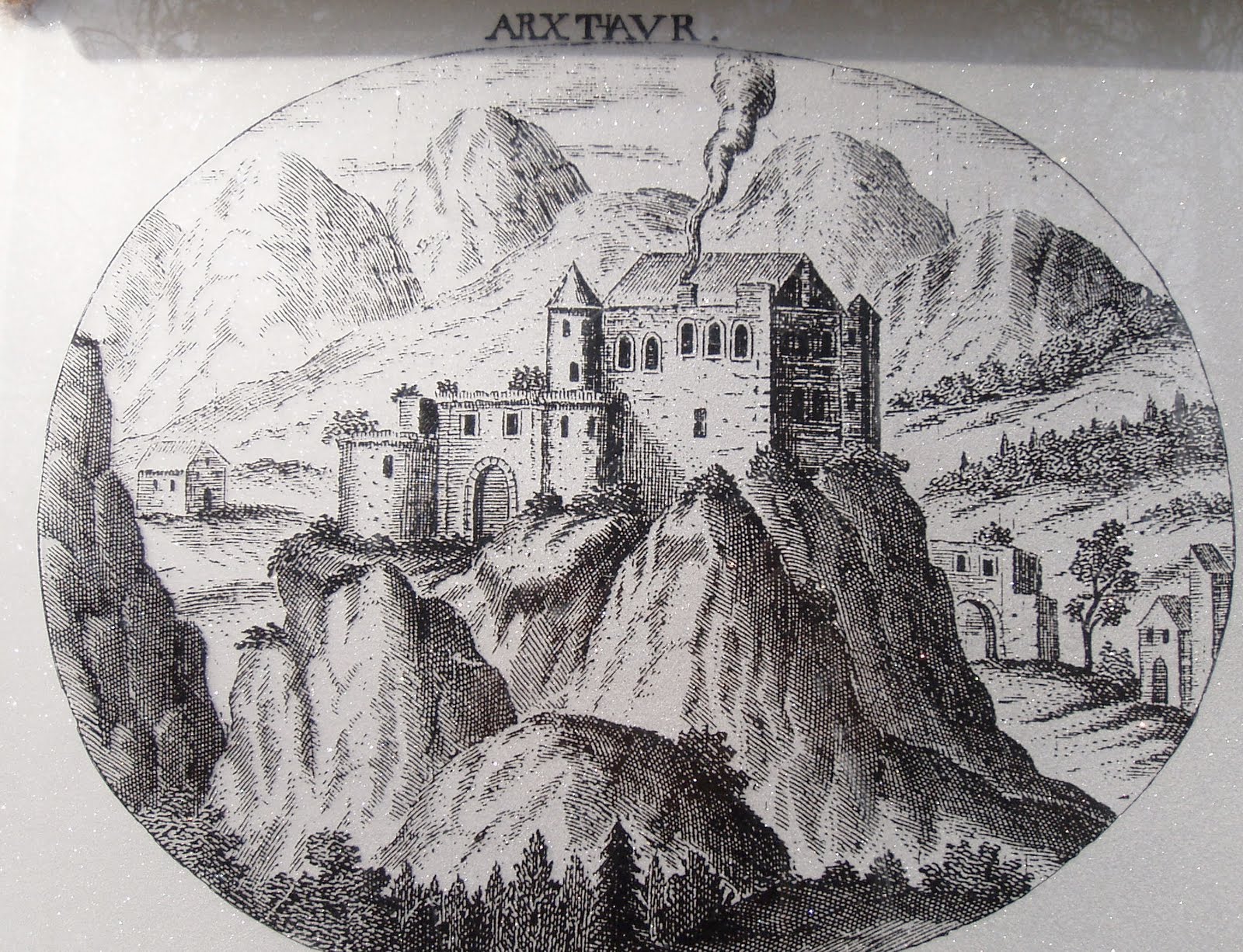
The sketch above is from 1699, and according to the plaque on which I found it, is a “stylized version” of the Thaur Castle in its prime, which would have been around 1500. Some sections date back to 1200.


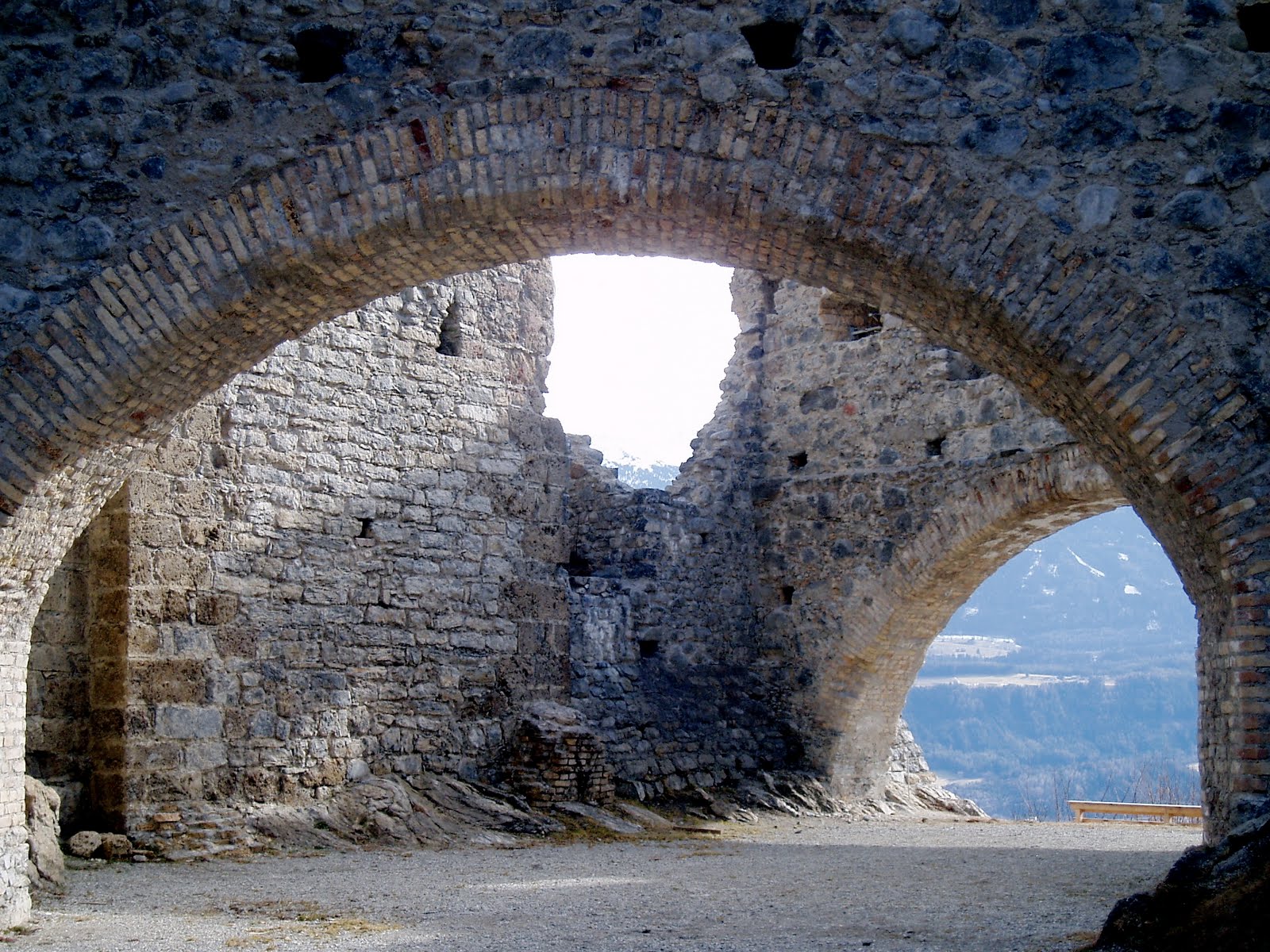
Small theater productions are put on inside the ruins — if you put the audience in the open space in the center (ground level), there are lots of doorways, arches and upper levels for the actors to use. And of course a breathtaking view on which to gaze during the intermission.

On the way back, I took the Adoph-Pichler-Weg (I said PICHLER, Adolf Pichler — he was a native son, alpine geologist, teacher and author, and took part in the 1848 Revolutions.) This forest road doubles as a nature trail and leads all the way back to Innsbruck along the high ridge to the north, a nice trail with a gentle profile. I walked the entire way, but one could take this trail to the Hungerburg and then take either the Hungerburgbahn or the J Bus back into town.