>Spuren des Anschlusses 5 : Bombenkrieg

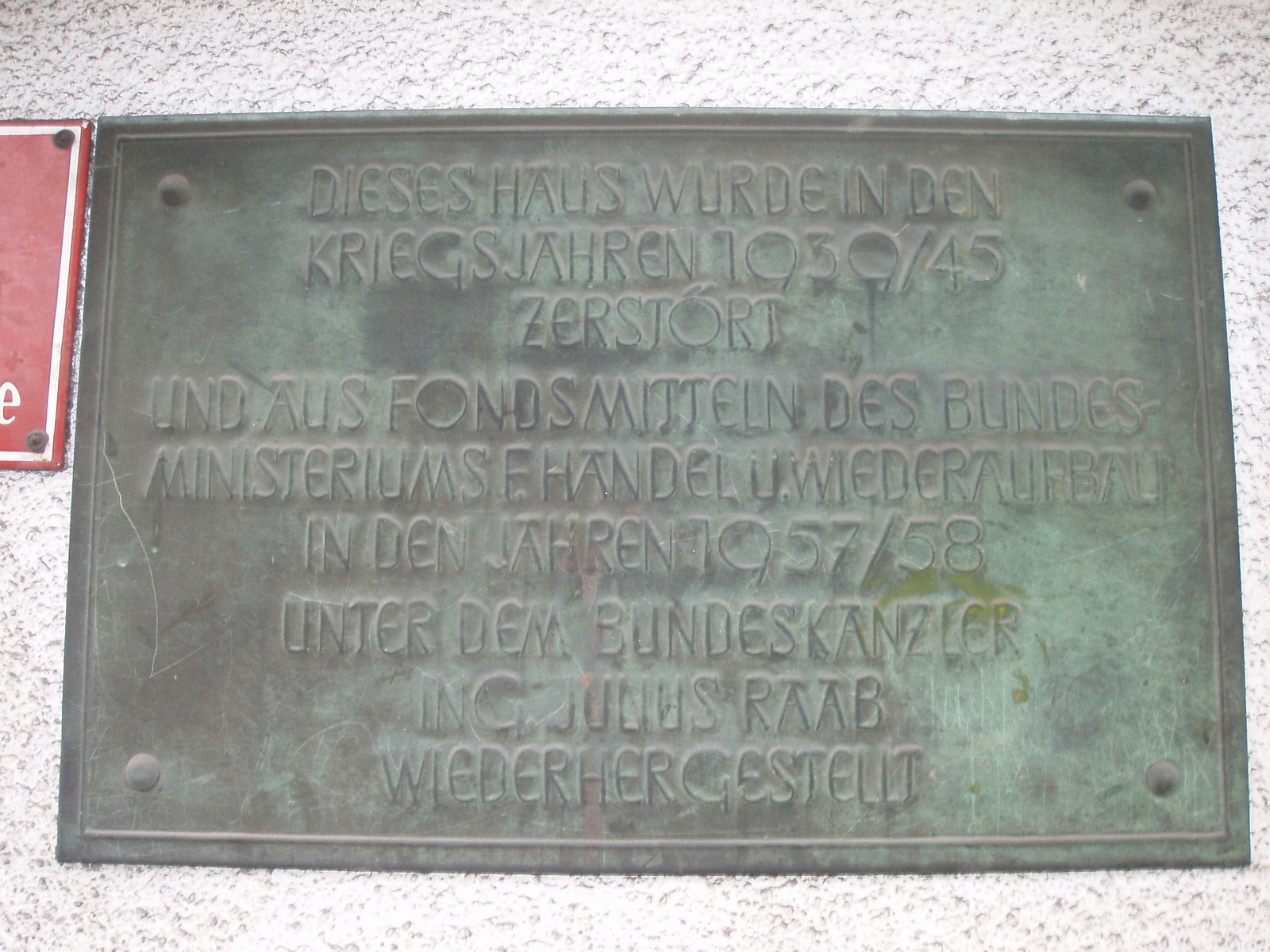
>This plaque happens to be on the front of my own apartment building, but it’s something you see often in certain parts of town, and in many Austrian towns. It says “This building was destroyed in the war years 1939/45, and rebuilt in the years 1957/58 under Chancellor Julius Raab, funded by the Federal Ministry for Commerce and Reconstruction.”

The Firestorms and massive wholesale destruction suffered by many German cities did not reach Innsbruck, but there were heavy bombings, and substantial damage inflicted upon the city. Innsbruck had begun to take on some of the armaments production, and had always been a strategic hub between Italy (via the Brenner Pass) and Germany (via the Inn Valley.)
On December 15th, 1943, the first air raids came with 48 B-17 (“Fortress”)Bombers and 39 P-38s (Jägers), dropping 126 tons of bombs on the city, mainly targeting the railways. On this day 269 Innsbruckers were killed, 500 wounded, 1,627 left homeless. Incomprehensibly, not long before the first attacks occurred, the regional government (Gaubezirksgruppe) expressly forbade the construction of tunnels in the mountainsides for bomb shelters.
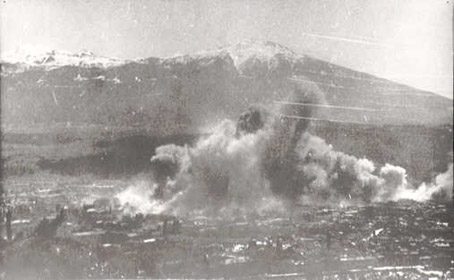
A second wave of bombing came 4 days later, on December 19, leaving 70 people dead. Only after January, 1944 did work begin on the bomb-shelter tunnels, thanks to approximately 600 forced laborers and Soviet prisoners of war.
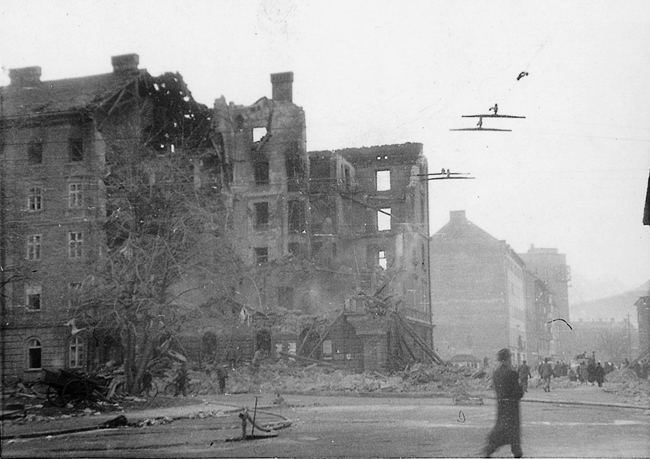
Attacks continued intermittently until the war’s end. In December 1944 bombs destroyed many central, public buildings including the railway station, town hall, cathedral, courthouse, and
municipal hall (Stadtsaal), killing 35. This time the NS press accused the enemy of “being no different from the Asiatic animals in the east”, for supposedly targeting civilians.
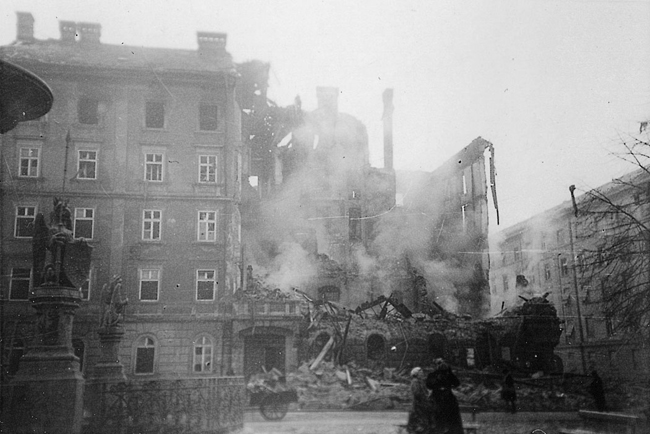

The mass evacuations out of Innsbruck and into the surrounding countryside led to further chaos and misery. The detention camp in Reichenau filled up. Seven foreign teenagers were hanged for “plundering”, having been caught with bread and marmelade, presumably purloined. A 34-year-old woman from Tirol was sentenced to death for stealing clothing from another woman’s suitcase.
By the time the American tanks rolled in (to much rejoicing, particularly because the townspeople had heard terrible things about the Russian soldiers and feared they would get there first), over 500 of Innsbruck’s citizens had been killed by Allied bombs, over 50% of the city’s buildings were destroyed, 2,062 of its young men had fallen in battles all over Europe, 1,228 returned wounded. These numbers do not include those killed by the NS government for racial and/or political reasons, nor the unknown number of forced laborers who died either during the air raids or “in custody.”

Horst Schreiber, “Im Bombenkrieg. Tirol und Vorarlberg 1943-45”, Innsbruck 1992 (Innsbrucker Forschungen zur Zeitgeschichte, volume 8)

Photos 2-5 from Peter Helfer’s CD-Rom, included in the book “Zeit — Raum — Innsbruck: Schriftenreihe des Innsbrucker Stadtarchivs,” Band 3, Universitätsverlag Wagner, Innsbruck.
>Spuren des Anschlusses 4 : Der Tummelplatz

>
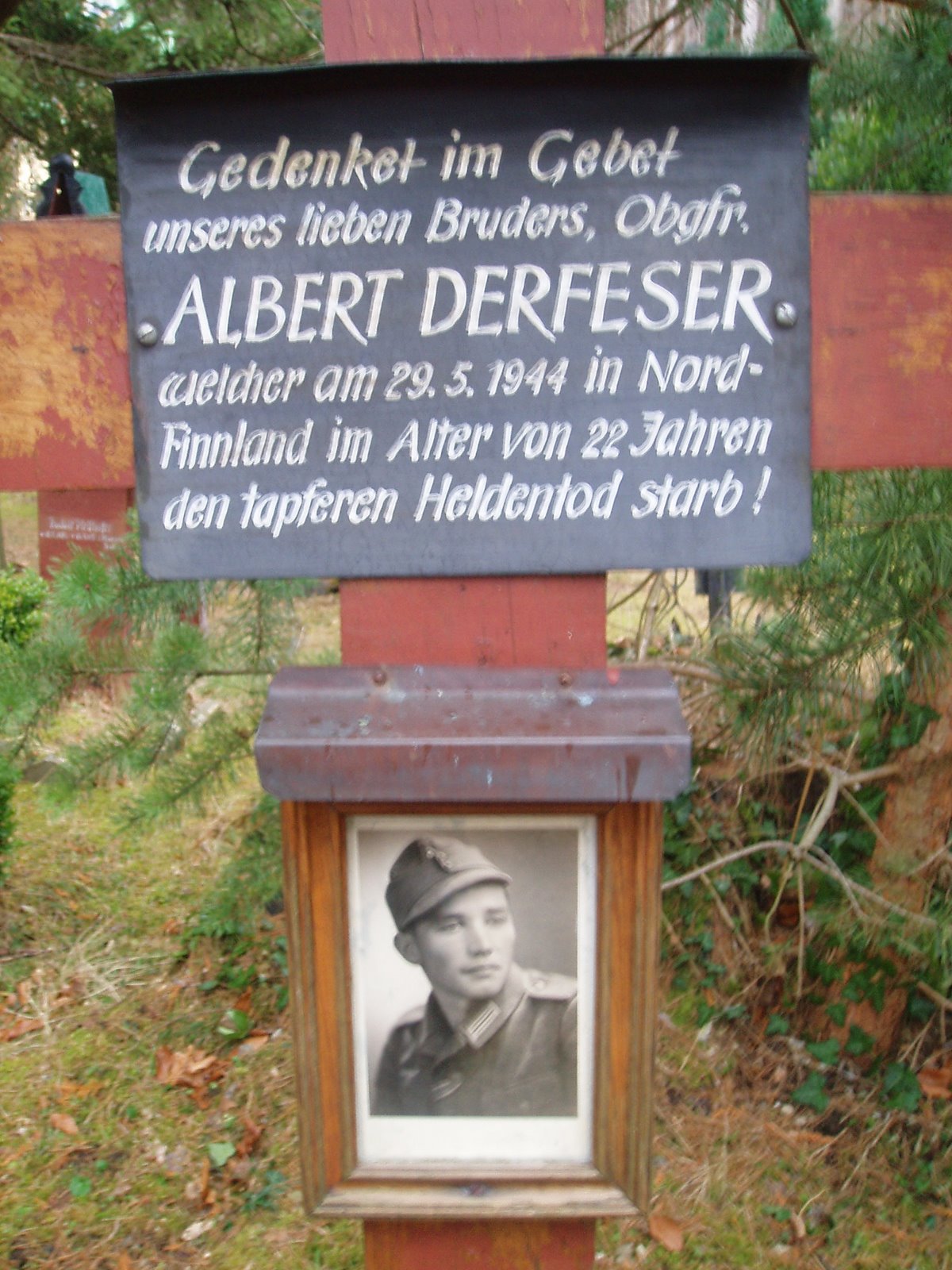
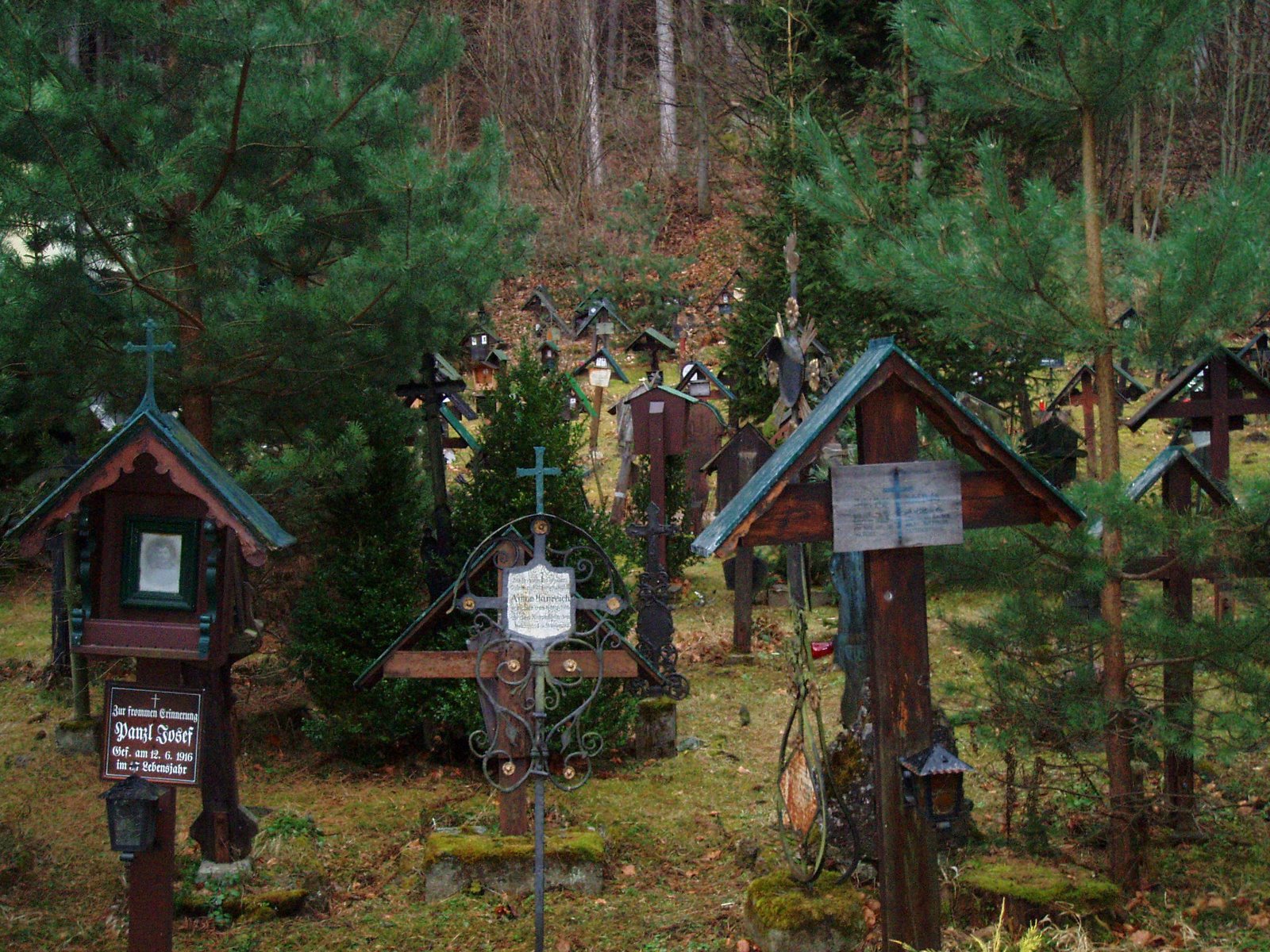
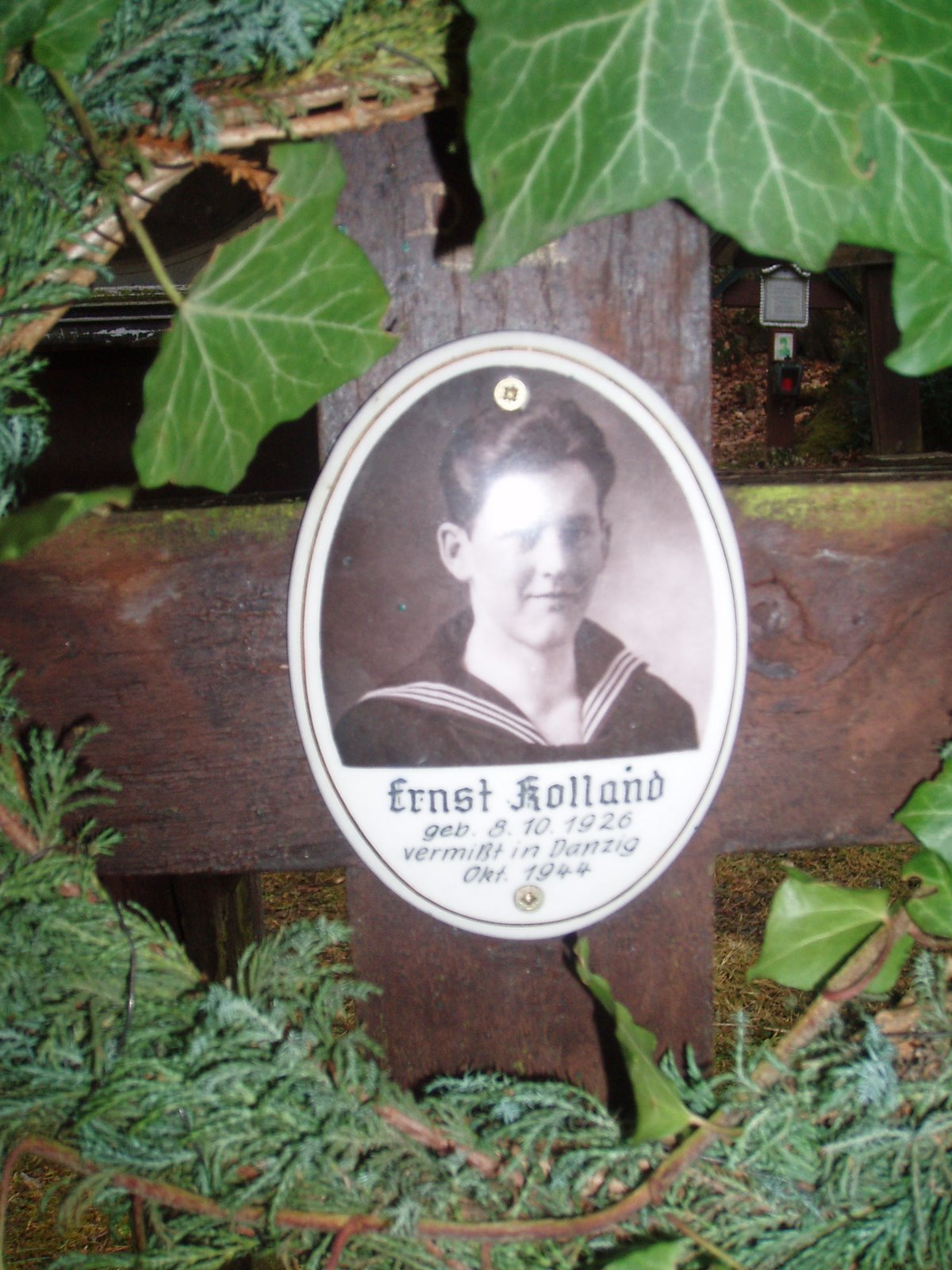
The “Tummelplatz” is a small field of memorial markers for fallen soldiers, tucked away in the wooded hills just above town. Originally a riding area for nobility, it was used as a war cemetery from 1797 to 1856. Since that time it has been filled with hundreds of markers honoring soldiers who have fallen on foreign soil, and whose bodies were never recovered, in the First and Second World Wars.
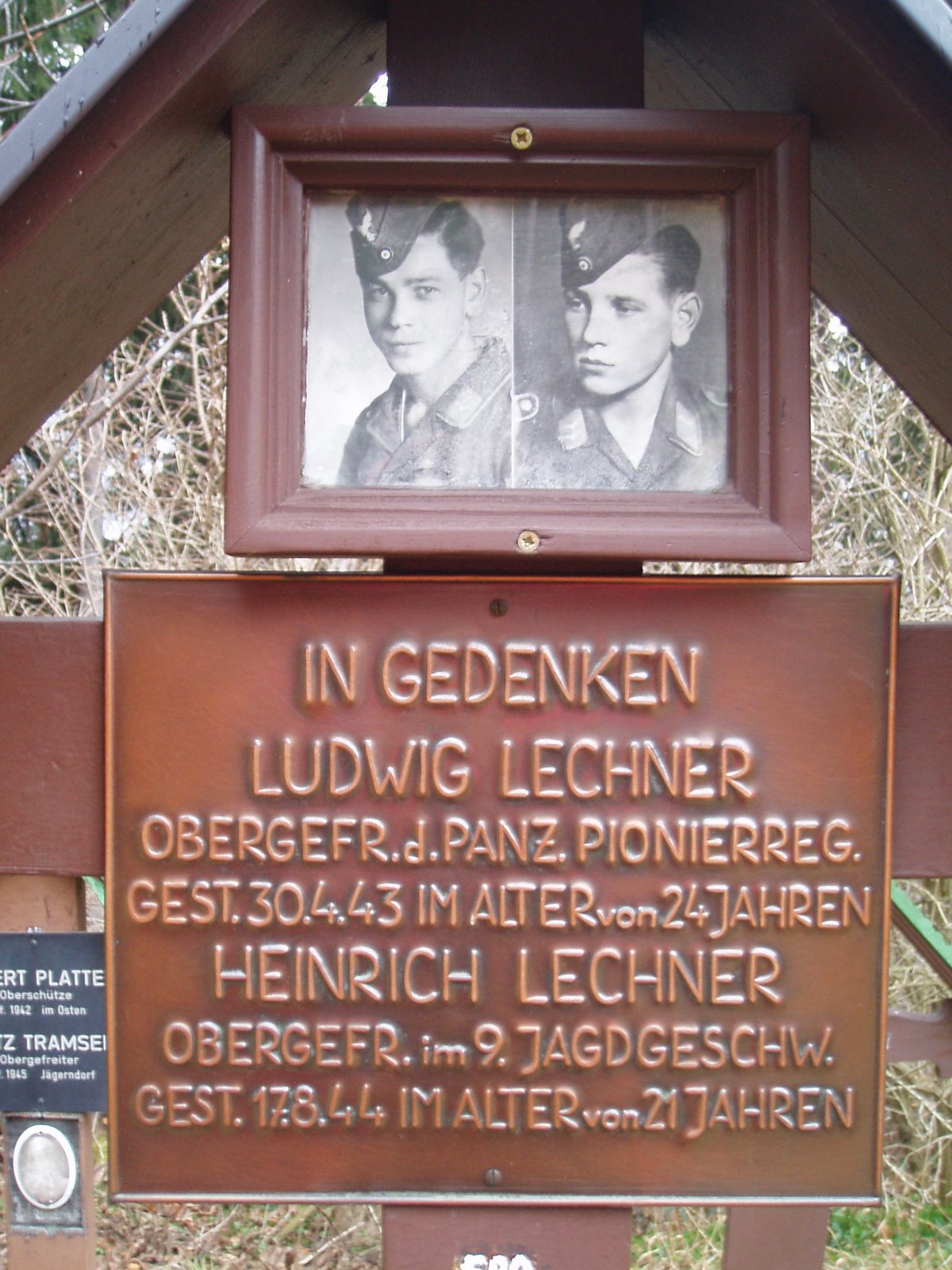
I have visited the Tummelplatz often; it’s just along one of my favorite hiking paths to the lake at Lans, and an interesting place to see. Each marker is individually designed, and often with a photograph of the fallen attached to it, with a few words: his name, age, and where he fell. As is the case with those missing in action, often this place was the only kind of “grave” the family had. I have included a few photos here, so that you can take a look at these “Nazis” yourself. Most of them were no more than boys, and none of them have the stiff, menacingly serious look that American military portraits have these days. They were young, and had absolutely no choice in the matter of joining up (refusal led in many instances to arrest, imprisonment, trial, execution.) Many of the markers speak of a “heroe’s death”.


Swastikas or any kind of Nazi symbols are nowhere to be seen (except, sadly, where someone defaced a chapel wall with spray paint.)
Is it wrong to honor a dead soldier if he died for an ignoble cause? Is it wrong to grieve for a son who shipped off to the Russian front, never to be heard from again? Of course it isn’t. The Tummelplatz reminds me that the last war is still a bit of an unhealed wound that people would rather forget than be confronted with regularly. There’s much to learn in the faces of these boys, which they themselves never had the chance to learn.

>Spuren des Anschlusses 3

>
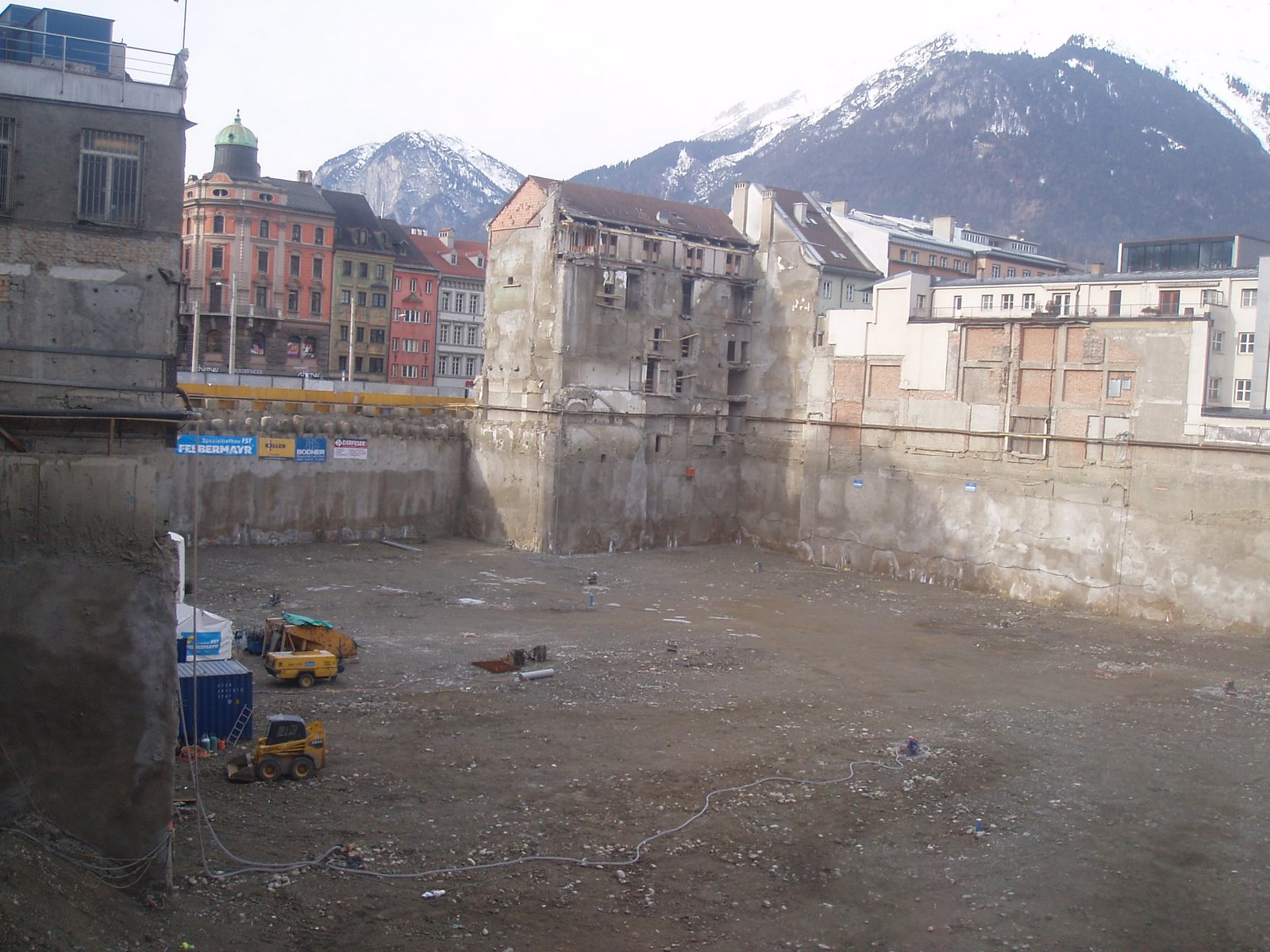
This empty lot is the once-and-future home of Kaufhaus Tirol, the only bona fide department store in the area. Its original name was Bauer & Schwarz, and was, among dozens of others, a very successful Jewish family-owned business. In April 1938, one month after the Anschluss, the owners succumbed to pressure from boycotts and “aryanized” the business by installing an aryan bookkeeper as director. Within 2 months the business was bankrupt, and bought for a song by a German company.
Co-owner Wilhelm Bauer was one of the victims of the terrors of Kristallnacht, murdered in his home. Many of the family were able to flee the country.

Back to modern times. Although not the only formerly-Jewish-owned business in Innsbruck, this one seems to have had permanent bad luck. Since I have lived here it’s been closed for long-term renovations twice, and now they’ve gone and plowed the whole thing under to start again. Last year there were artist’s renditions of the planned new facade shown in front of the construction site, something that resembled a giant igloo (all white and round) — at some point these plans were scrapped and now the building is to have a more traditional-looking facade, something which will fit in better with the old buildings surrounding it.

As far as I’m concerned, Mayan priests chanting ancient spirit-cleansing prayers couldn’t help this place — it’s cursed. The ghosts of the victims of Nazi terror in Innsbruck are going to hang around and give the place Bad Karma for a long time to come, no matter what fancy new building is erected there. I’m just sayin’.

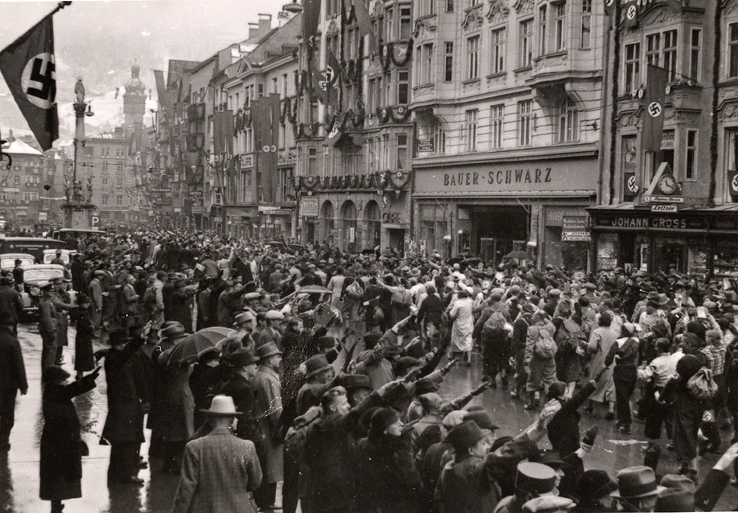
( On April 10, 1938 Austrians got to vote on whether to join the German Empire officially, and there was much fanfare for the occasion. Notice that the only store in the photograph not decorated to the hilt with swastikas was Bauer & Schwarz, which was not yet aryanized. )

Photo from Peter Helfer’s CD-Rom, included in the book “Zeit — Raum — Innsbruck: Schriftenreihe des Innsbrucker Stadtarchivs,” Band 3, Universitätsverlag Wagner, Innsbruck.
Update: Kaufhaus Tirol has been open for a while now and it’s been doing steady, good business — no longer as one department store but as a mall. Nice to have a Peek & Cloppenburg here.

>Spuren des Anschlusses 2

>
In my second or third month in Innsbruck, I was driven home by a new colleague after a party, and while we were waiting for a traffic light to turn, I noticed a small sign which said “KZ Mahnmal (memorial) Reichenau.”
Me: Was there a concentration camp in Innsbruck??
Colleague: I DON’T LIKE JEWS.
Me: (speechless.)

Well, that colleague turned out to be a good friend, and a bit of a human project for me, gently bringing her around to being open to the idea that maybe all the stuff she heard growing up (that the rich American Jews were making endless demands on poor Europe, all those reparations for their vacation cruises, they didn’t want to see that we all suffered, yadda yadda yadda) might not have been the whole truth.

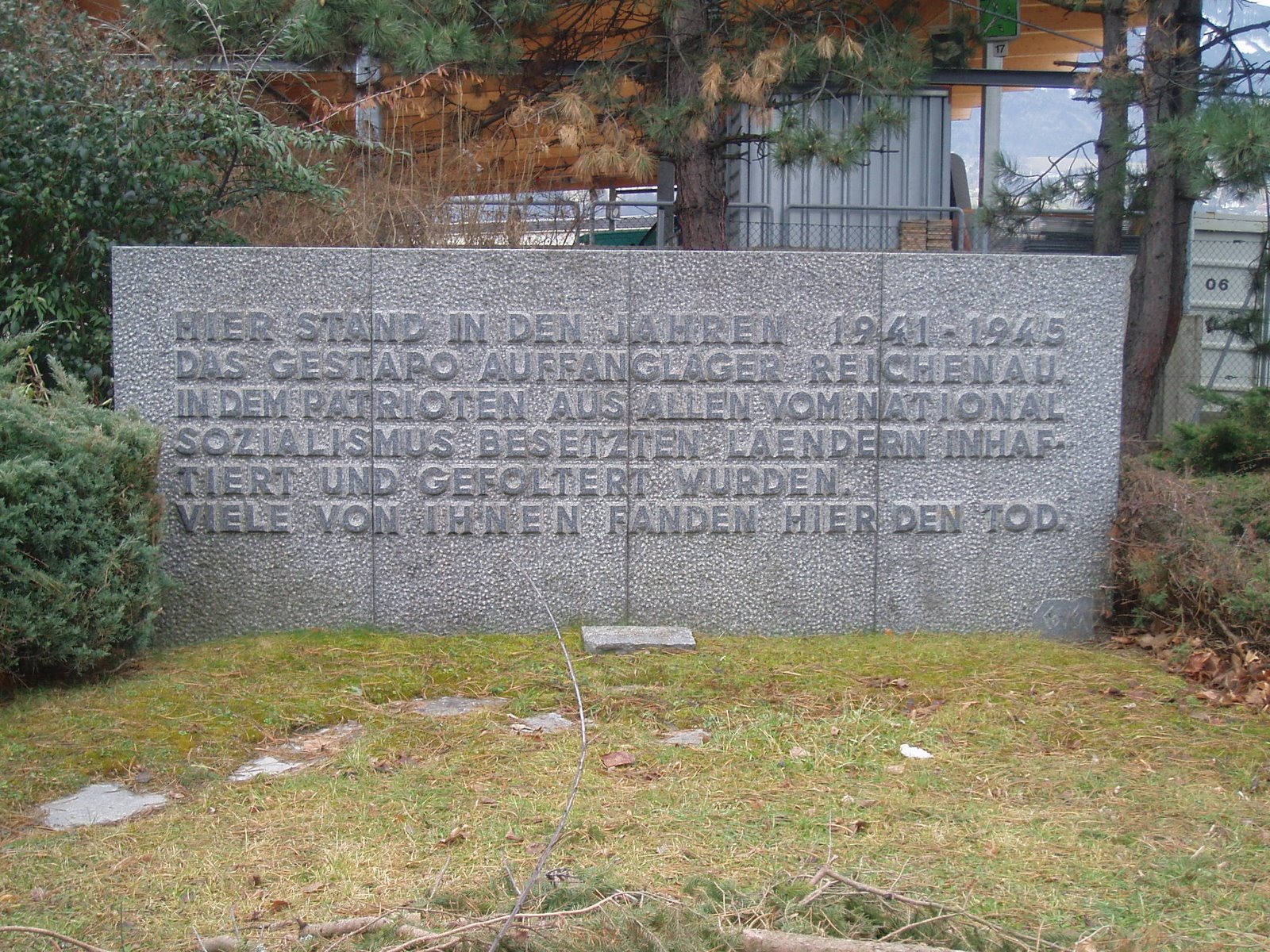
Much later, I went back to that sign and followed the arrow to this stone memorial, on the outskirts of town and on what is now property belonging to the town waste management services (trash and recycling center.) It reads:

Here stood, in the years 1941-1945
the Gestapo transit camp “Reichenau”
where patriots from all Nazi-occupied lands
were interned and tortured.
Many of them died here.

I don’t have any numbers but I’m willing to bet that very few Innsbruckers even know that this memorial exists.

Update — here is some more information gleaned from Wikipedia.de: the camp was created for the use of the Gau Tirol/Vorarlberg, for the rehabilitation of persons deemed guilty of refusing to work, skipping work or otherwise shirking their duties into useful civilians, “through strict discipline and hard work.”
As the war progressed, more and more political prisoners were taken there. From 1943 on it was used as a transit camp for Jews deported from northern Italy.
A total of 8,500 persons were interned at the KZ Reichenau, 130 of whom were murdered or died from inhumane treatment.