>Reith bei Seefeld

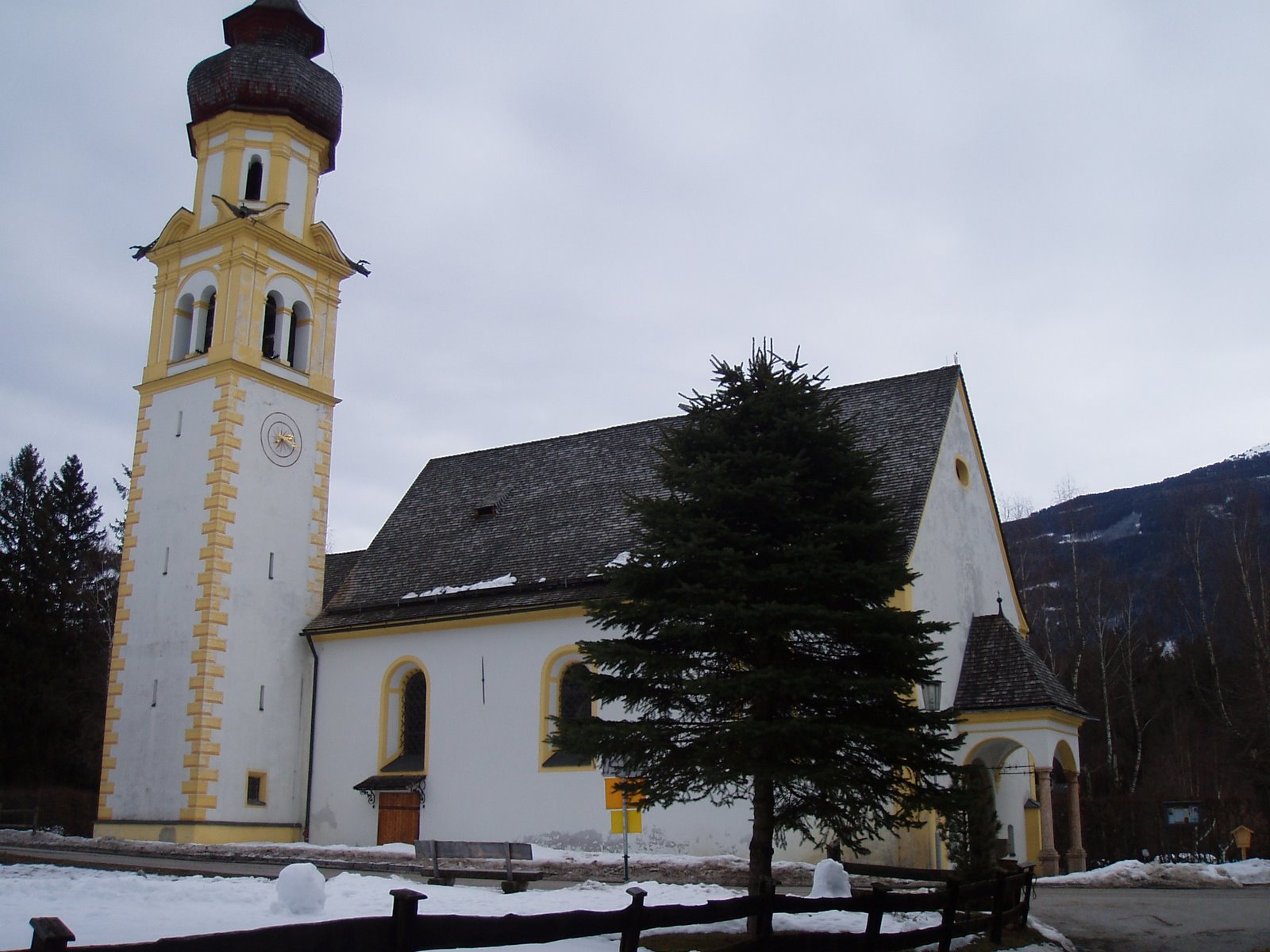
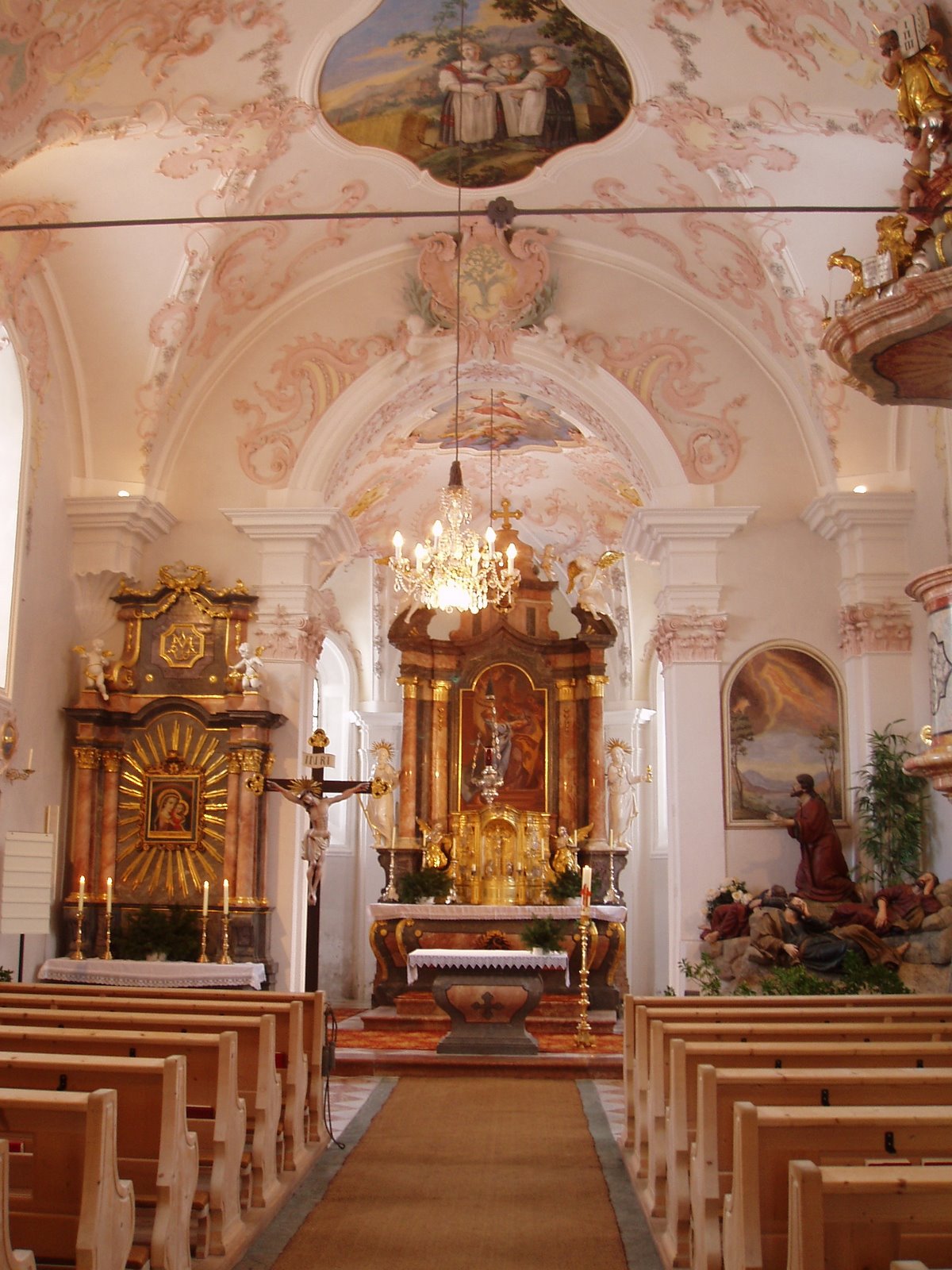
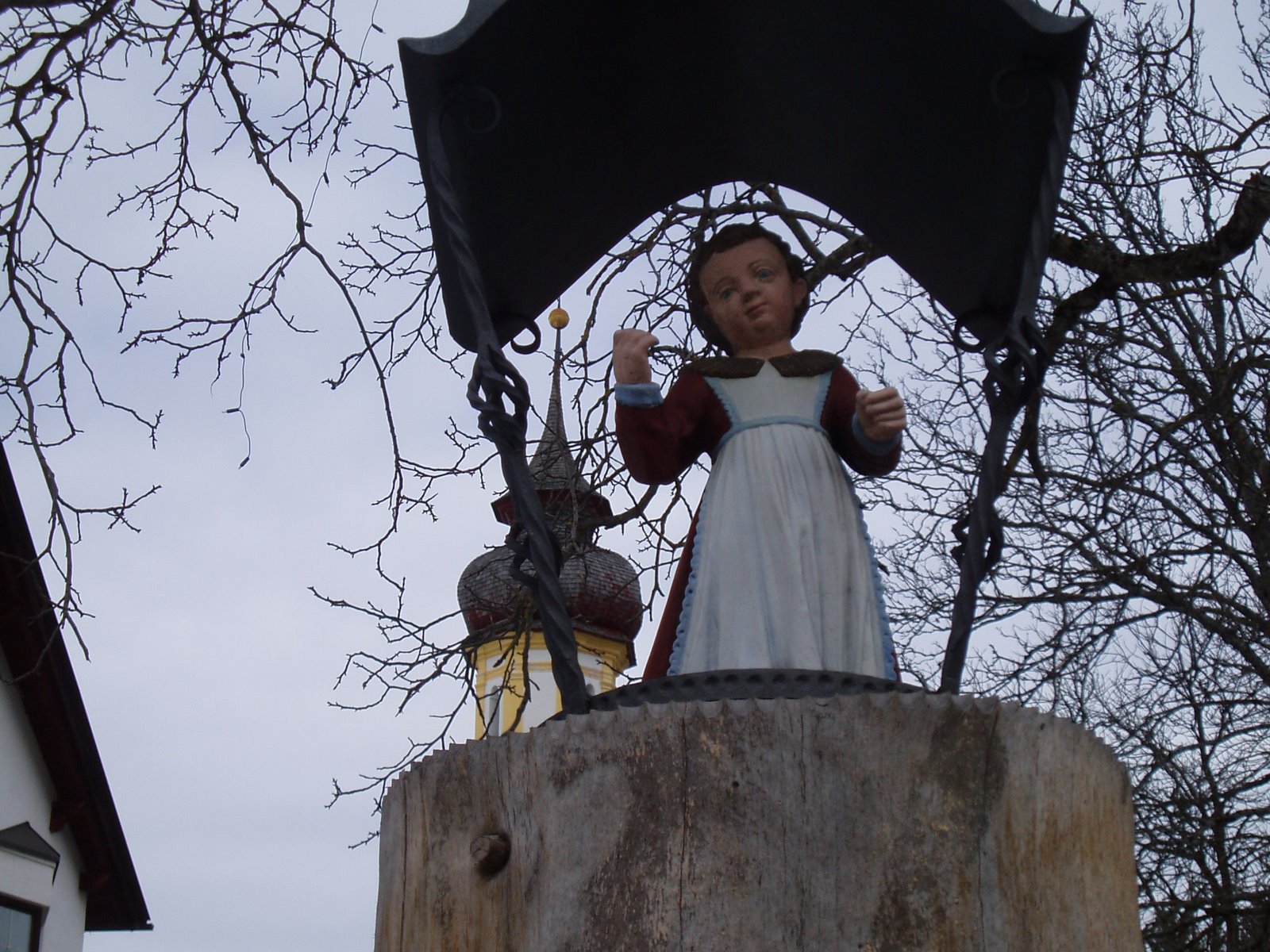
>The Mittenwaldbahn (a railway to Munich which goes through some splendid mountain scenery, and I do mean through — it’s all bridges and tunnels til Bavaria) stops in the village of Reith bei Seefeld, which claims a cultural walking tour of sorts through it and its neighboring village, Leithen. Some of it was the usual, chapels and Madonnas, but a few items were interesting.
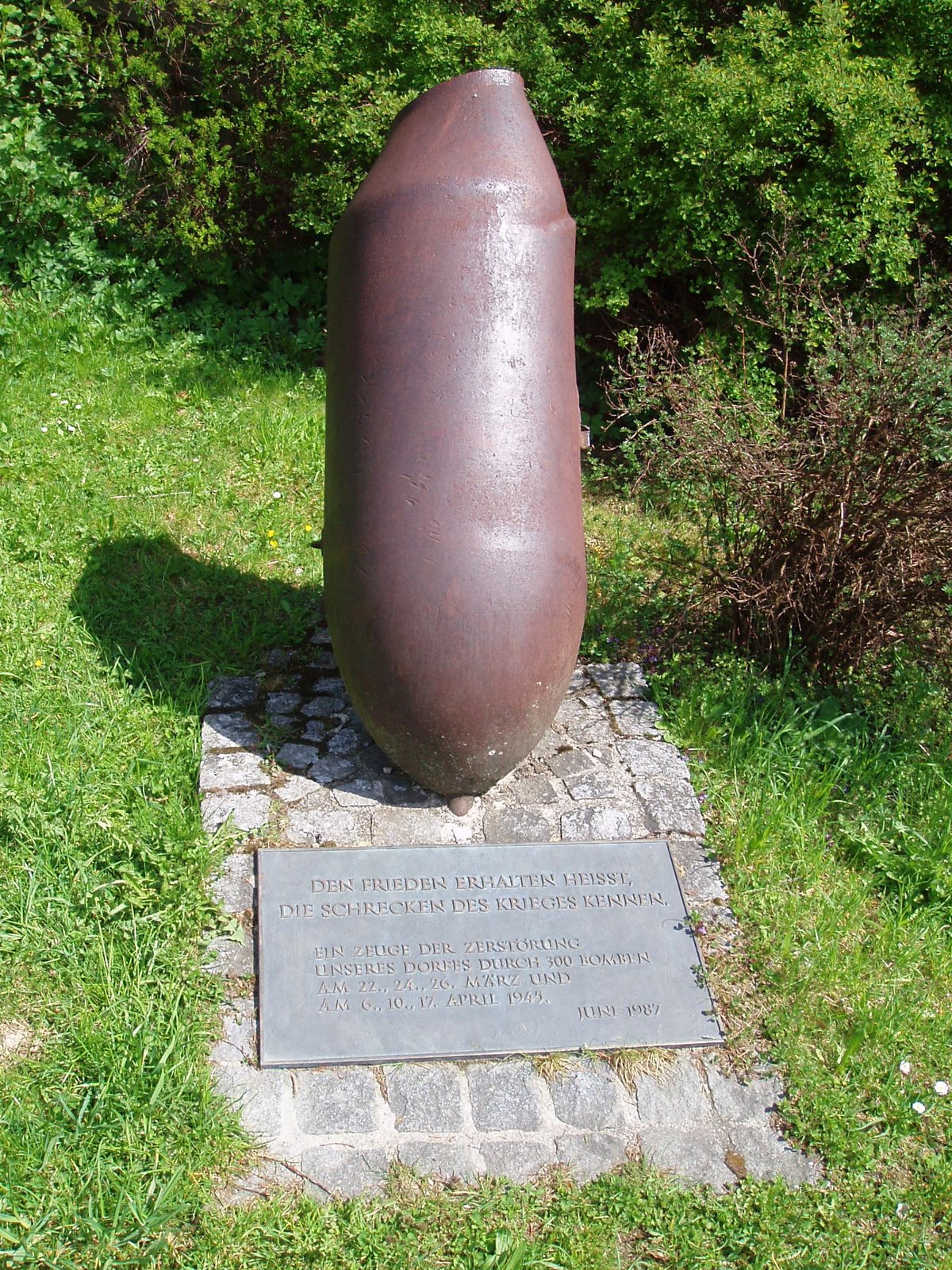
Reith saw its share of suffering from the World Wars — from the two wars it lost 28 men, which doesn’t sound like much until you remember how small this village is. Then in 1945 the Allies bombed it six times, dropping 300 bombs in attempts to destroy the rail line. This is an Allied bombshell from the time. (Note: Tirol was occupied by British forces after the war.)
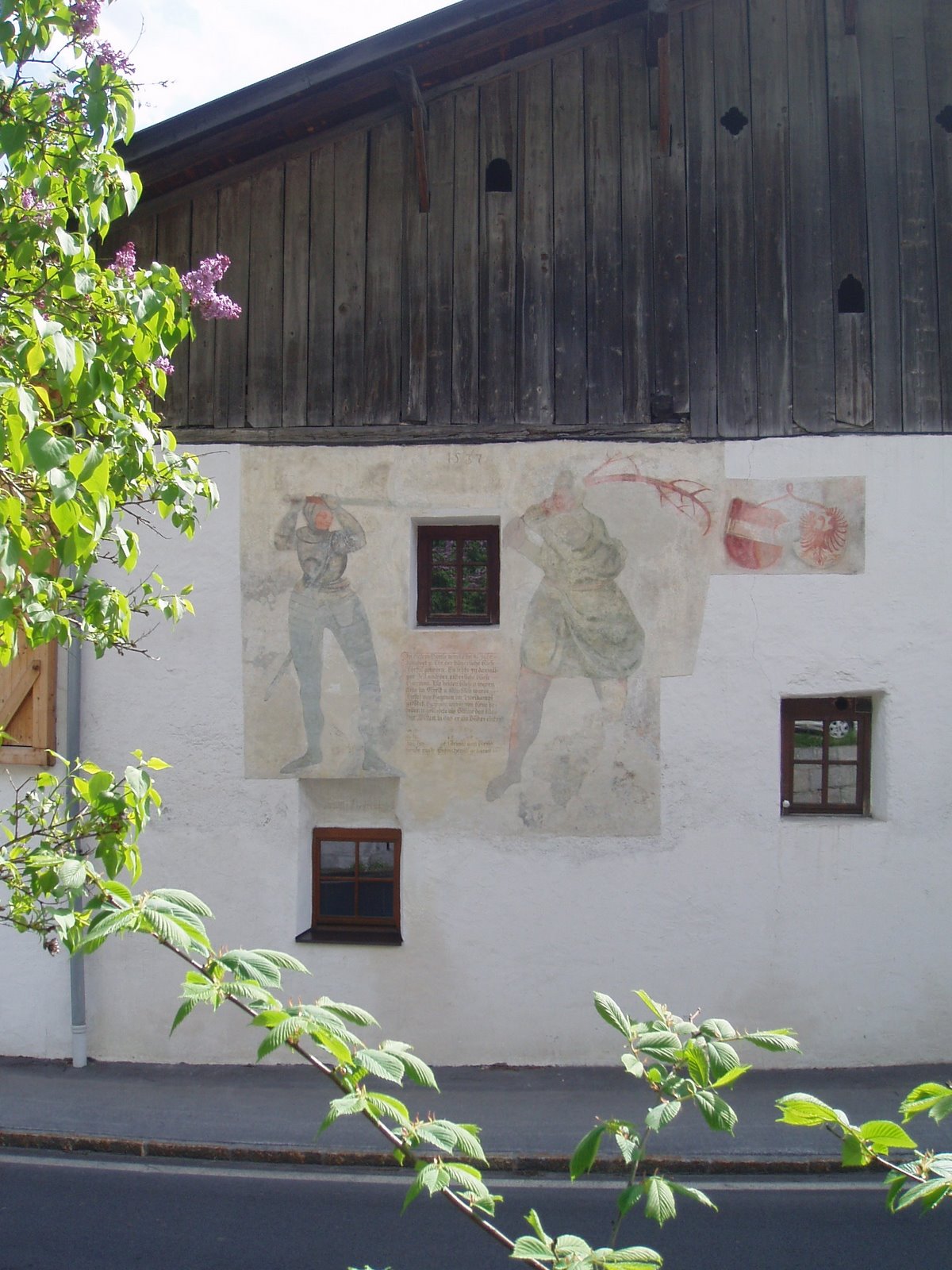
In Leithen one finds the alleged birthplace of Thyrsus, a 9th-century giant known for being killed by the more-famous Haymon the Giant, who regretted the act enough to build the collegiate church in Wilten. Historical researchers presume that Haymon was a Bavarian aristocrat with neighbor issues; so far I found no light on who Thyrsus really was. He’s the one on the right in this fresco. The saga relates that when Thyrus was slayed, his blood spilled into the ground and became oil shale, as indeed there are shale deposits in the region around Seefeld and Scharnitz.
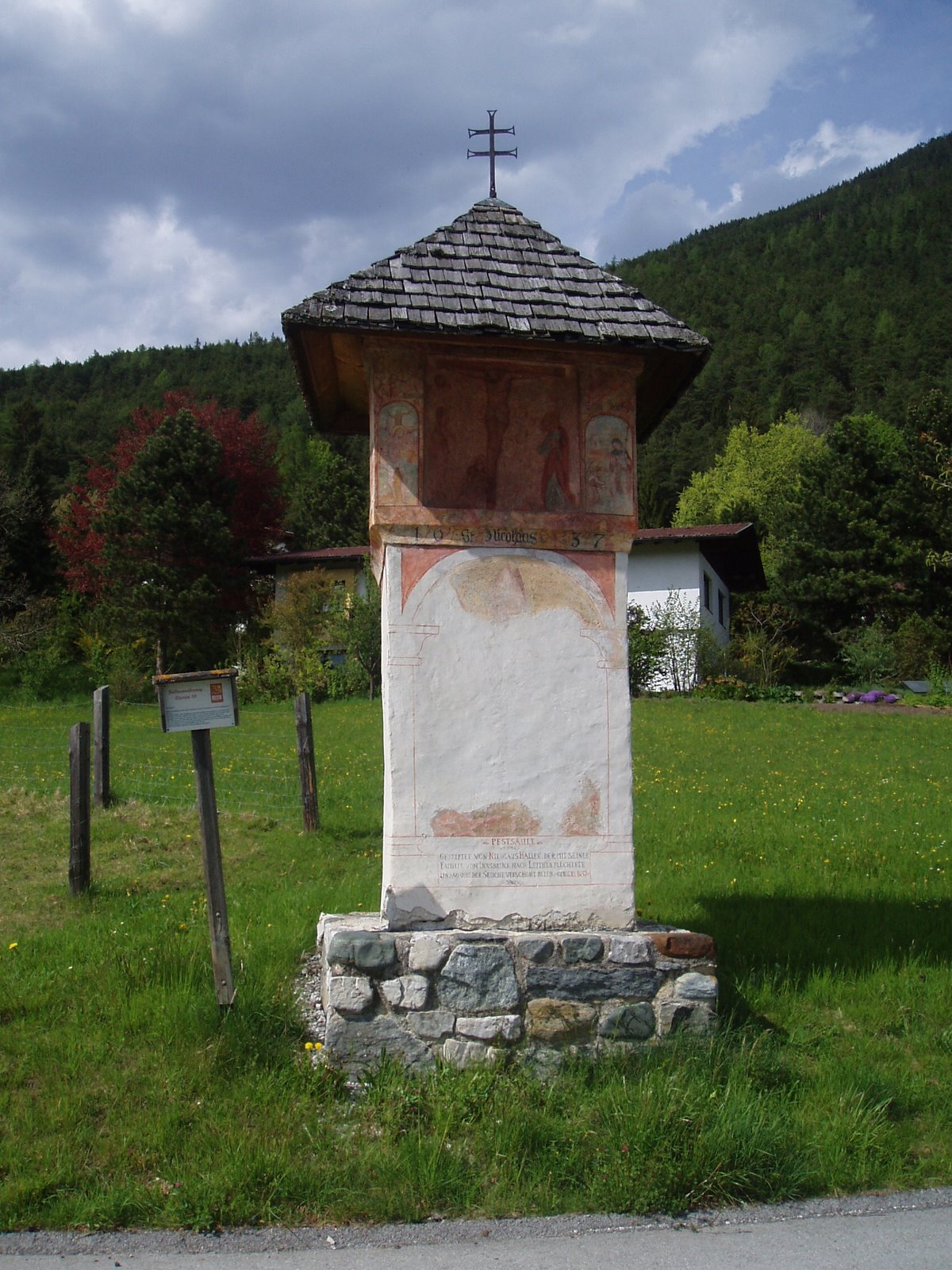
The Thirty Years’ War brought the Plague to Tirol. A wealthy Innsbruck merchant fled with his family to Leithen and fell ill there, but pledged to built this pillar, painted with scenes from the crucifixion, which he did in 1637. Often one finds not just a pillar but an entire church built out of gratitude for someone’s survival. Evidently many people made a lot of deals with God in the hopes of surviving the Plague, as Pestkirchen are abundant — in fact, there’s one at the end of my street.
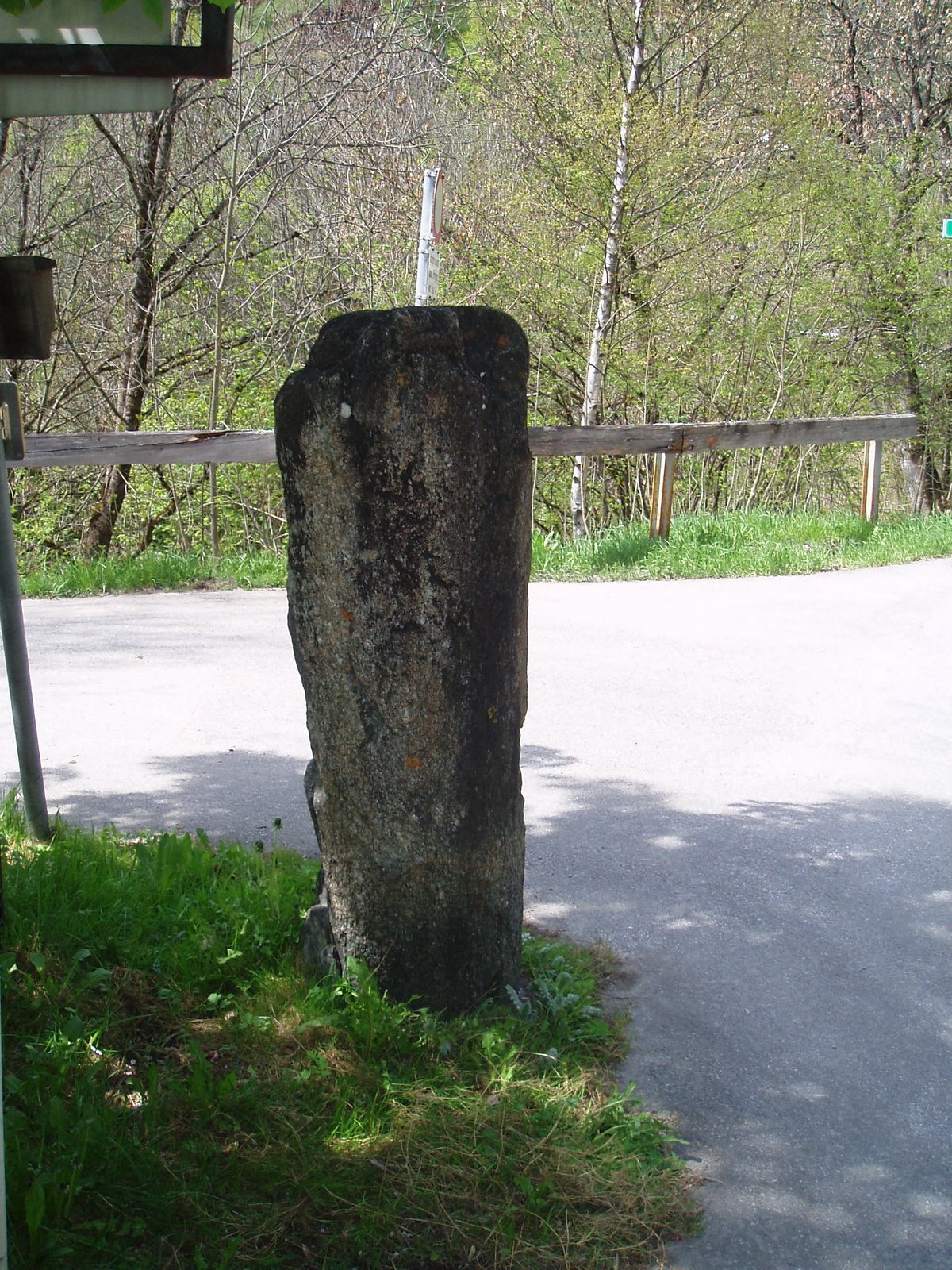
This rock sticking out of the ground would probably have escaped notice completely if not for the list of monuments found on the walking tour, which I picked up at the tourist information desk. It was once a milestone, with the figure of St. Nicholas (Reith’s patron saint) attached to the base. In 1703 Bavarian soldiers (in the War of Spanish Succession) sacked the village and ripped out the saint. Ever since, the base has stood there as a memorial (to what, I’m not sure. Possibly as a reminder to hate the Germans and the French.)

So, the general consensus seems to be that there was a lot of fighting going on, just like anywhere. Centuries of peaceful co-existence, then something happens, blood is shed. And humans memorialize it afterward, as best they can.
>Speaking About The Past

>Visited a Saturday morning flea market in the Altstadt last weekend, picked up some used books, including one out-of-print book titled “Man muß darüber reden” (“One Must Speak About It”), a collection of talks given by Nazi concentration camp survivors to classes of schoolchildren (high school age, one assumes, since the stories are pretty detailed) in the 1970s-80s. The book is really an interesting read, not only for the survivors’ stories, but for the questions asked by the pupils — sometimes naive, sometimes incredibly direct, and often questions that an adult would not be able to bring him- or herself to ask out loud.
For me, there was something new in the stories of how they came home after the war — and I find this is a big hole in my knowledge of the holocaust. How did people get home, did they have any help. how were they treated by their neighbors, was anything said about the past? And, the biggest question for me, why did they return to their homes, and not emigrate to other coutries, like many others? Some of the speakers in the book were Jewish, some had been Communists or otherwise politically active somehow against the Nazis, some were simply unlucky. They all, each and every one, spoke of how it was luck that enabled them to survive — luck and solidarity among the inmates, although solidarity alone didn’t help millions of others.
According to some accompanying words from a government minister at the back of the book, these talks are now a regular part of the school experience in Austria. I don’t know if that’s still true, given that the ages of survivors must be fairly advanced now. I need to ask some of my home-grown friends about it.
One often hears that Austrians have not come to terms with its Nazi past, and that may be true but it’s not for lack of effort by liberal-thinking people. There have been steps, small steps, all along the way. They are not always easy to see, especially by us Ausländer who see the xenophobic side of society often enough. But it’s most definitely part of The Discussion, and that offers hope.

>”Soldatenfriedhof” am Domplatz

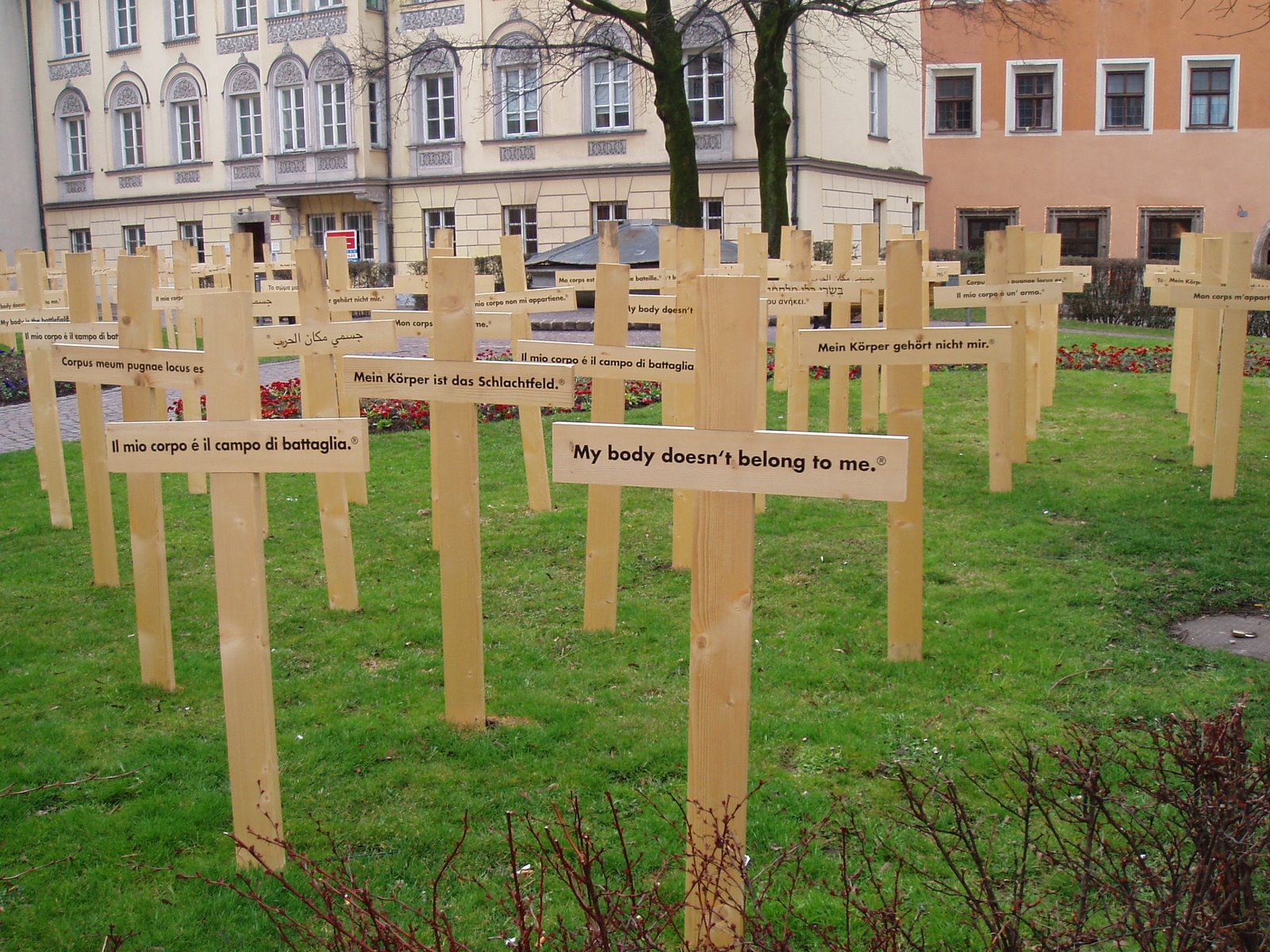
>The Cathedral has a few special installations for Lent, including this “soldiers’ cemetery” of wooden crosses out in the little park in the Domplatz, by the artist Franz Wassermann. The 200 crosses bear the words “My body doesn’t belong to me”, “My body is a weapon” and “My body is a battlefield”, in 6 languages including Latin, Hebrew and Arabic.
Also part of the installation are the six large flags hanging from the neighboring buildings, bearing anonymous portraits. Their intention is to remind one of the “abuse of religion, church, business and politics for nationalist purposes.” According to the Cathedral’s website, the idea is to provoke thoughts about the inhumanity of war especially now, in this 200th anniversary year of Tirolean Freedom Fighters.

>Judenstein, or The Jews’ Stone

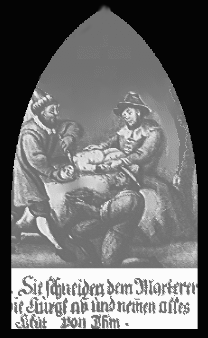
>Here’s something I contemplated blogging about for a while. Several years ago, when I’d first moved to Innsbruck, I set out one afternoon on a little day hike, hoping to find the name and location of a particularly pretty duet of onion-dome church towers which I could see from my window. From my hiking map it was difficult to figure out just how far away they might be, and I ended up overshooting and headed toward the hills above the next town over. Not knowing the name of the church, I looked for a “+” symbol on the map (signifying a chapel), and went for the one which looked like it might be in the right place. The area was called Judenstein. It wasn’t the chapel I was looking for, but it turned out to be much more interesting. The church at Judenstein has a history. The story goes like this: in 1462 (or so) a three-year-old boy named Anderl (diminutive for Andreas) Oxner went missing from his village. His body was found later, in the area. (This much might be true.) Roughly a hundred and fifty years later, a counter-reformationist and anti-Semite named named Hippolyt Guarinoni invented a story about Anderl’s death which he modeled after a popular story going around at the time involving a little boy named Simon in the city of Trent (as in the Council of Trent.) In Guarinoni’s new fable, traveling Jewish merchants bought the boy from his stepfather, then performed a ritual murder, cutting his throat open and collecting the blood. Guarinoni got a lot of traction out of this story, and with it built a church on the scene of the alleged crime and started up a cult venerating the “martyred” child. On top of this the Brothers Grimm picked up the story and took it all over Europe, if not the world, in their tale “Der Judenstein” (The Jews’ Stone). The little church, while quite lovely, has frescos on the ceiling depicting the disappearance of Anderl (one shows the grief of his mother when, while working in the fields, she learns of her son’s death). If you visit this church the one fresco you will NOT see is the one which was (thankfully) painted over — depicting little Anderl actually being cut open by Jewish men. I kid you not, I wish I were. I need to point out that, while the Roman Catholic church was instrumental in this kind of story gaining traction to begin with, in 1953 Paul Rusch, then Bishop of Innsbruck, struck the holiday commemorating Anderl’s “martyrdom” from the church calendar. In the 1980s Bishop Reinhold Stecher began to dismantle the cult by having Anderl’s bones removed from the altar, ordering the offending fresco to be painted over, and officially banning the cult from the church (in the 1990s). There is now a plaque inside the church explaining the myth and it’s falsehood. Problem was, by that time Anderl’s fans were not to be dissuaded — the annual pilgrimages occur every July on Anderl’s “day”, hosted privately (i.e. not through the Church) by various right wing extreme factions and Catholic fundamentalists. Tirol’s anti-Semitic and anti-other roots are complicated — more religious than racial, reflecting the fear of outsiders often encountered in mountain people, and encouraged by the church (right there alongside hatred toward heretics and Protestants) by calling Jews Christ-killers and all that other fun stuff. Then the Nazis took over and took things to extremes. Today, religion plays little part in the local bigotry. The right-wingers tend to harp on “preserving our way of life and our culture”, and work on keeping brown people and Slavs out. (Note to the BZÖ: It’s not working.) The right-leaning view Turks and other eastern European nationals today much in the same way American wingnuts view Mexican and Central American immigrants to the U.S. At the turn of the last century, even Italians were suspect. I know of a family who won’t talk to one of their daughters because she married a German. And another who can’t accept their daughter-in-law, for the crime of being (gasp) Swiss. I am speaking of things I have heard and personally learned, not of Tiroleans in general — there are lots of friendly and open-minded people here too, especially in the cities but out in the countryside as well. But things like this, the stuff not talked about, are embedded in the culture.

UPDATE: (16 February 2011): I have come across a book about pre-Christian finds in Austria, which has this to say about the Judenstein (translated here by me):

The “Judenstein” was without a doubt once an altar, where people had been once ritually sacrificed… According to the legend, after the murder, the Jews hung the boy from a birch tree. “That is a purely Heathen story, nothing Christian nor Jewish in it”, writes Norbert Mantl in his 1967 book about pre-Christian cult relics in the Upper Inn Valley.  “The saga deals with the memory of an ages-old fertility sacrifice whose ritual is still recognizable. Blood was spilled over the stone and the birch, representing all plant life necessary to humans, receiving the corpse as an offering. It had to do with fertility and a good harvest, but also for the welfare and prosperity of humans and their animals.”

So it is possible that the story did not get made up out of thin air, but was a contorted version of a much older “enemy” of the church, refitted for the Middle Ages.

>Nostalgietour: Andreas Hofer

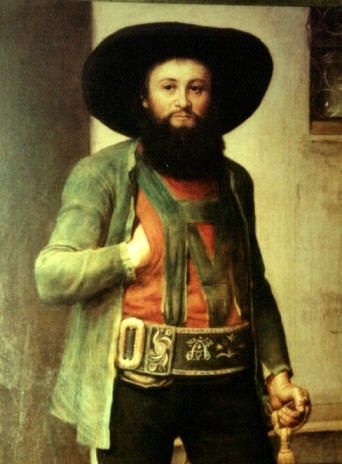
>Every Tirolean schoolchild knows who Andreas Hofer is, if not all the details of his life and circumstances. He is, simply put, Tirol’s best-known and most beloved Freedom Fighter. The man who organized successful resistance to Tirol’s being taken by the Bavarians (France’s ally in the Napoleonic Wars — don’t expect me to explain this long, drawn-out, revolving-cast war period. It’s too complicated for my opera singer’s brain. Suffice to say, they kept coming up with treaties, and Austria kept promising Hofer that Tirol would not be given away. And then it’d be given away.) A man betrayed by one of his own people, court-martialled and executed in Italy (Napoleon was King of Italy as well at the time. I told you it was complicated), and forever after a symbol of fierce Tirolean Independence. He was Ethan Allen and Nathan Hale rolled into one.

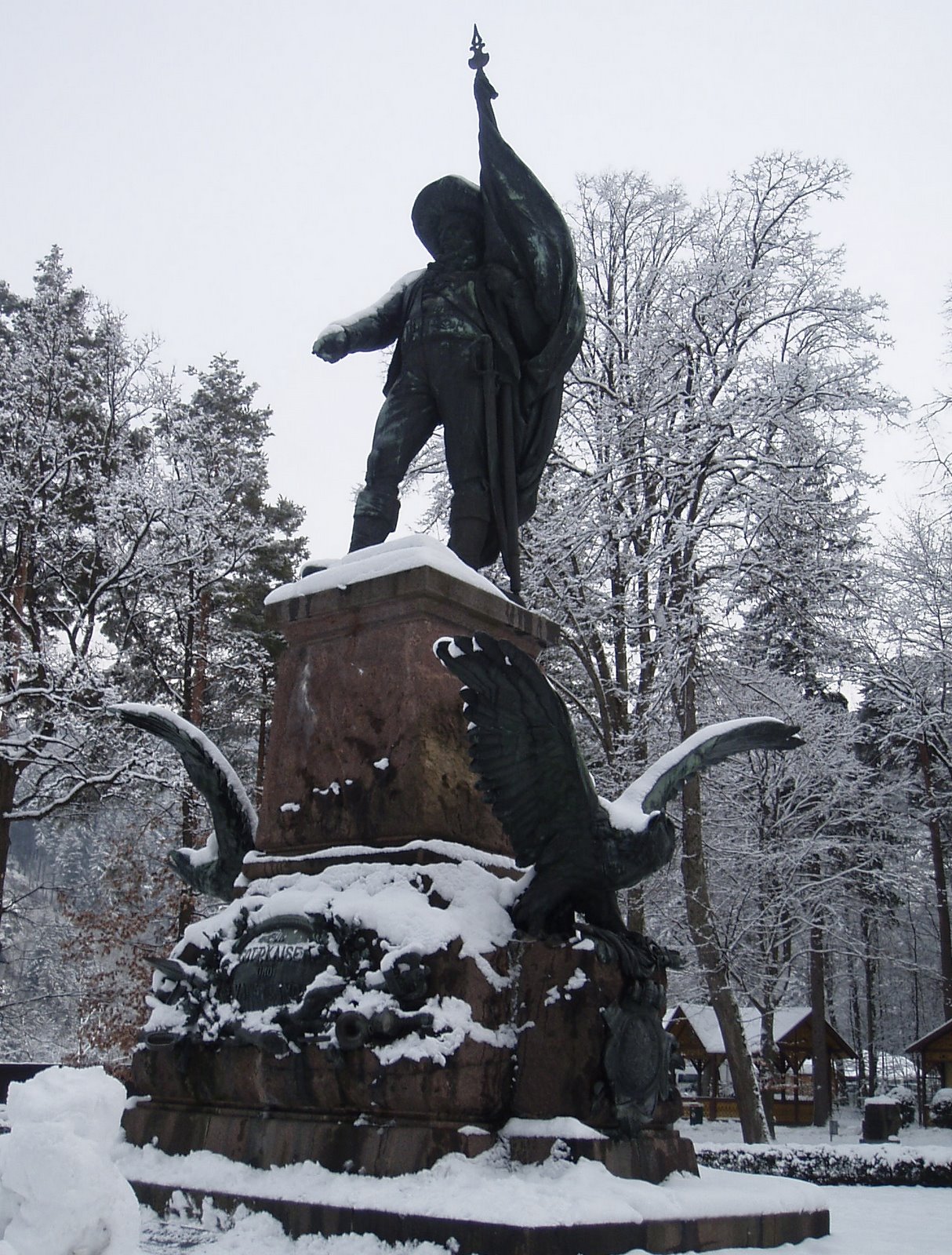
The site of Hofer’s most famous adventure, the Battle of Bergisel, is now home to a museum and a park with Monarchy-era monuments and statues, including the one below. The plaque at the base reads Für Gott, Kaiser und Vaterland. The Battle of Bergisel took place in 1809, and it is this year which is most closely identified with Hofer. 2009 being the 200th anniversary, there is much going on as far as cultural events and awareness in Innsbruck.
Just above the park is the entrance to the Bergisel Sprungschanze (ski jump), which I will cover at a later date.

>Spuren der DDR: Denkmale

>Freiberg is a pleasant small town in the state of Sachsen (Saxony), not far from Dresden. It has an old medieval wall and a pretty Altstadt, and a renowned Mining Academy. The locally made Nutcrackers, Christmas pyramids and other wooden figures are popular all over the world.
And, being within the former Deutsche Demokratische Republik, it has scars from both the Second World War and the Cold War, although they’re not immediately obvious. During a walk around the outskirts of town on Christmas Day , we stumbled upon a few of them.

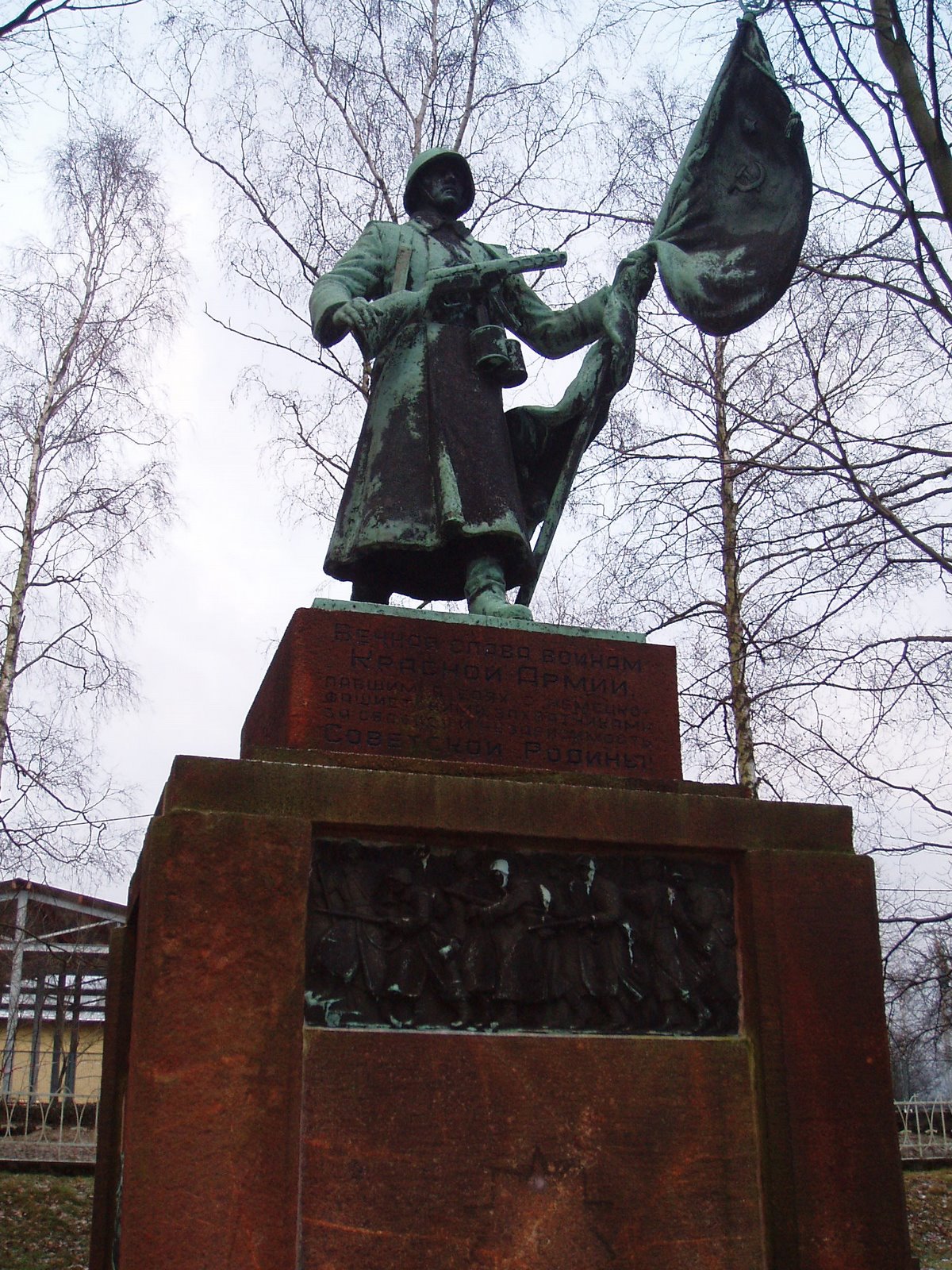
The monument above is in the center of the Russian Cemetery, the resting place of Soviet soldiers who fell in battle.
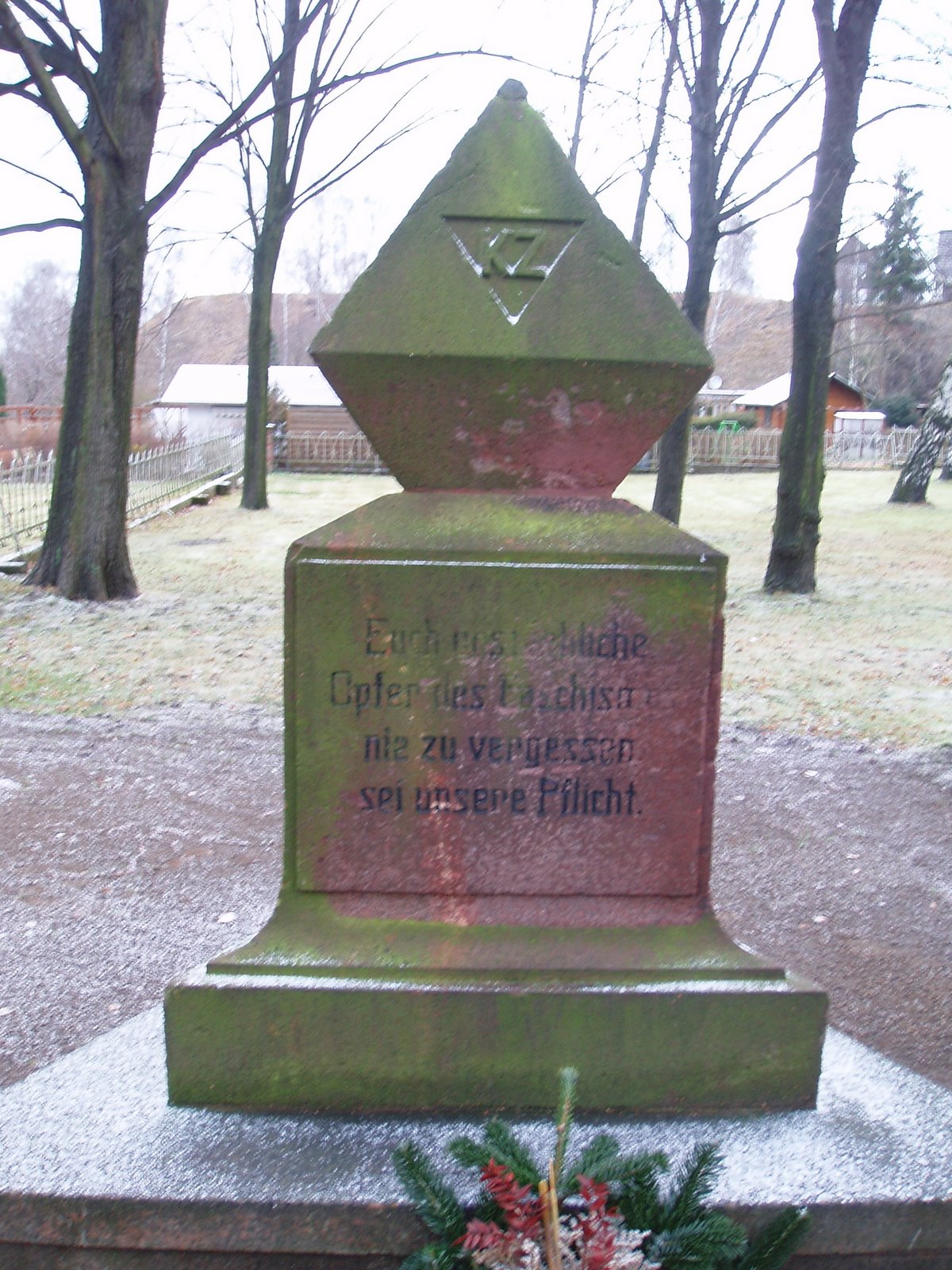
Not far from it we found a smaller monument in memory of concentration camp victims. The letters KZ in a triangle at the top is the short form for Konzentrationslager. The text reads, Euch unsterbliche Opfer des Faschismus nie zu vergessen sei unsere Pflicht (It is our duty never to forget you, the immortal victims of fascism.)
We Americans tend to think of German concentration camps being exclusively for Jews, and of course they were the special targets of the Nazis. However, and especially in the early years of the Third Reich, just about anyone who didn’t fit into Hitler’s plans — communists, homosexuals, protesting clergy, pacifists, gypsies, criminals, outsiders — was threatened with incarceration and eventual execution. East Germany’s post-war government put special emphasis on the oppression of communists, obviously to keep their Soviet overlords happy, and also to help along the myth that there were no Nazis in the GDR.
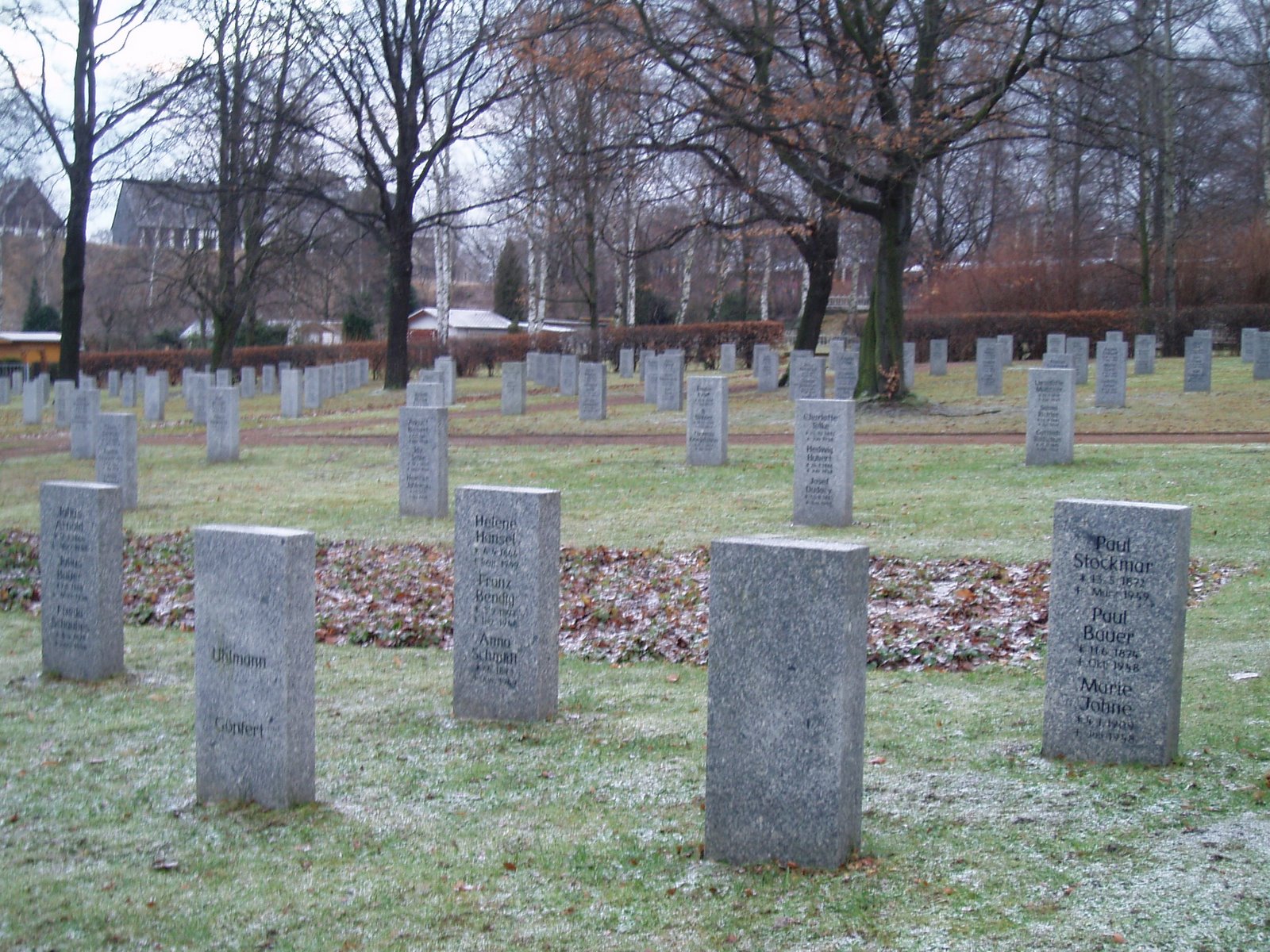
One block further down the hill we came to another kind of memorial — for the ethnic Germans, forced out of their homes in the east after the war, who died in the refugee camps at Freiberg. This was the final stop for 1,375 men, women and children from East Prussia, Pomerania, Silesia and Sudetenland, and they died of the usual refugee-related causes: injuries, hunger, cold, exhaustion.
Again, I realize that the near-automatic response to this is often “They had it coming.” It is important to remember, however, that these Germans had been settled in those far-off regions for hundreds of years, and many of them had no more political connection to the Fatherland than did the Pennsylvania Dutch . They ended up being just another group of people to suffer from Hitler’s follies, if indirectly, but just as fatally.

I’ve been reading Anna Segher’s “Transit”, a novel set in Marseilles in 1940 and populated with all sorts of people fleeing the Nazi regime. Pushed to the coasts in front of the advancing German troops, they stand in all sorts of consular lines waiting for their visas — entry visas, exit visas, transit visas necessary for passing through one or more countries on route to another, places on board departing ships. One would wait for that last piece of paper with the official stamp from the proper authorities, only to get it after another had passed its expiration date.

Much of the book must have been taken from her own experiences and those of countless friends, as she fled Germany herself in 1933, first to France and then to Mexico. Much of what happened in her best-selling novel “The Seventh Cross” (later made into a film starring Spencer Tracey) came from information from camp escapees, as well pure speculation as to what was going on inside the Reich. Although she clearly didn’t know about the extent of the Holocaust while she was writing, she conveys quite well the minute-to-minute anxiety of being on the run in a paranoid, fearful country.

A dedicated enthusiast to the cause of a “better Germany”, Seghers moved to the East after the war and, like Brecht, was held up as an example of the literature of communist East Germany. “The Seventh Cross” was required reading in the schools. Naturally, I had never even heard of her.

>Reschensee (Lago di Resia): II

>
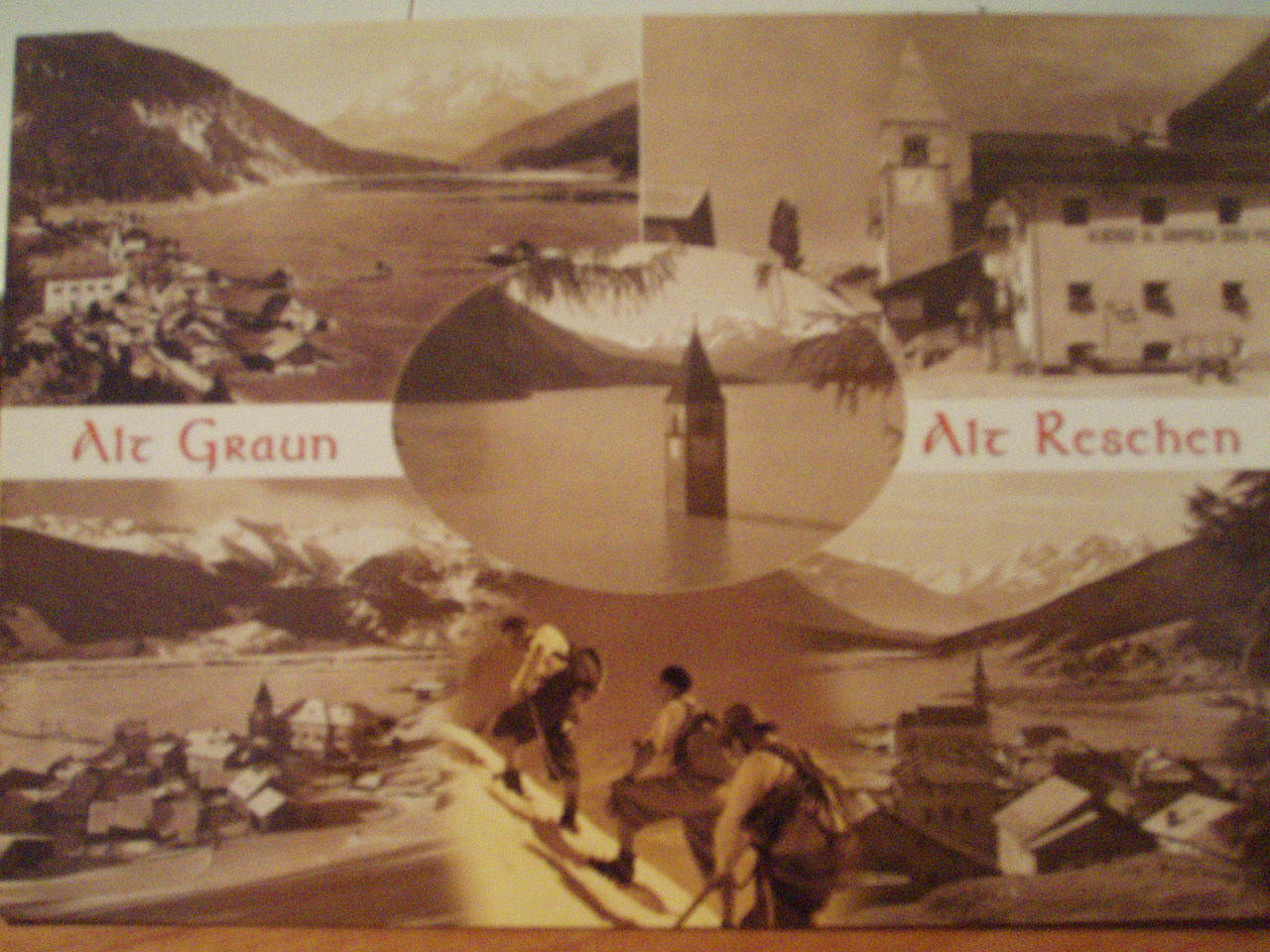
I was looking — unsuccessfully — for an image of the actual village on the internet for the post below. Today I found (buried among other papers, of course) a postcard that we picked up when we had visited the area, which shows photographs of Graun before the dam was built. The 14th-century bell tower is easily recognizable in the top right and bottom left photos (also in the top left photo but I was unable to get a clear image from photographing a postcard.)

Things like this — ghost towns, abandoned railroads, sunken villages — fascinate us, don’t they? I find myself particularly fascinated by what one finds under the water’s surface. The rivers and lakes of Europe have claimed millennia of artifacts, from pre-historic jewelry to medieval swords, and on through to Third Reich memorabilia. This online article (update: sorry, link now dead)  about diving for artifacts in the Salzkammergut region gives one a good idea of what’s down there.

Update: Divers have left reports online that one may dive (with permission from the municipality) but that there is nothing to see below the surface — the tower stands in about 2 meters of mud, and so the old streets, etc., are completely covered.

>Münchner Synagoge

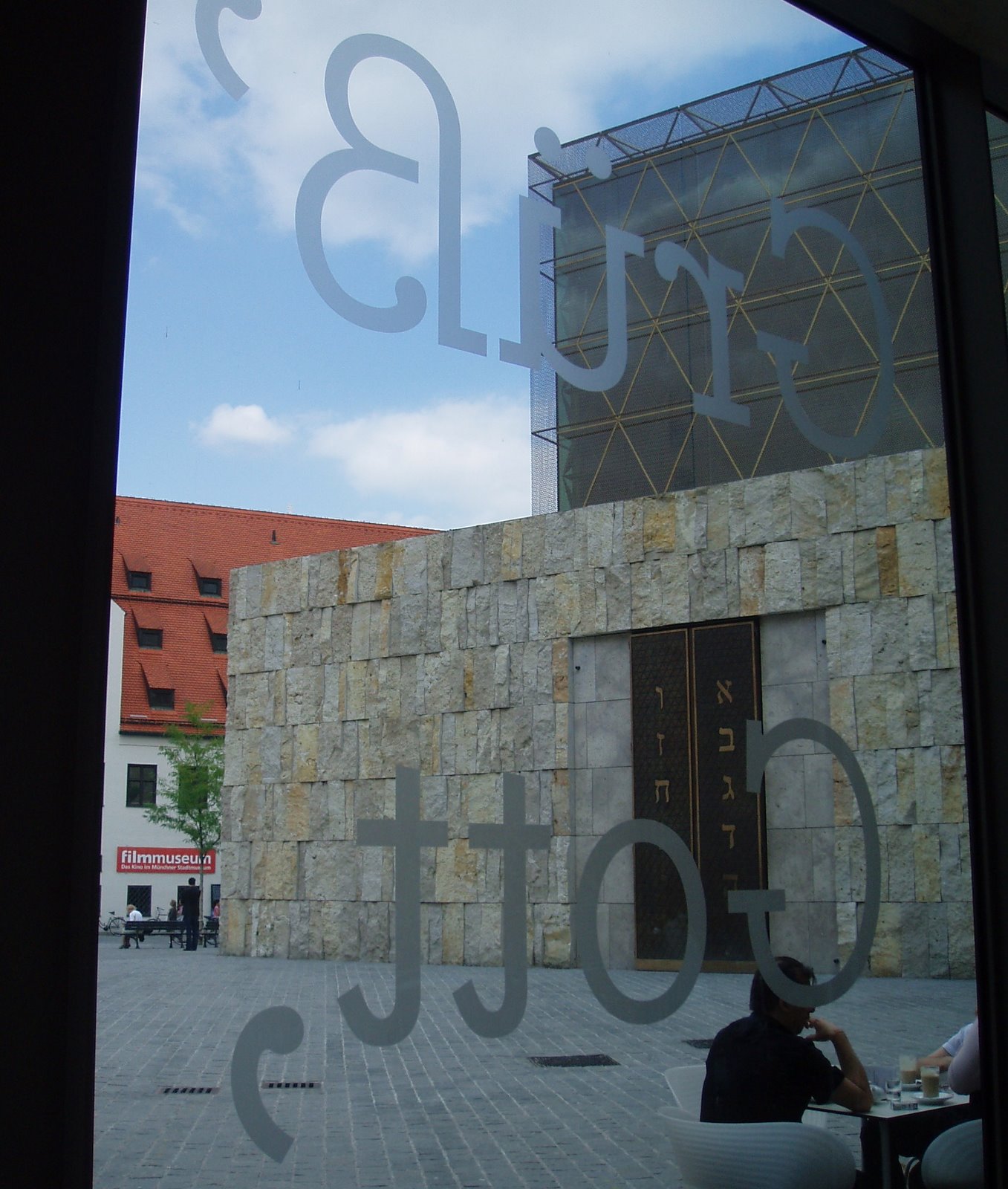
>We were in the area of the new (2006) Munich Synagogue recently, on Jakobsplatz. There are three separate buildings, actually — the temple (the massive block seen below), the Jewish Museum (opened in 2007) and the Community Center. We did not go into the museum, having just emerged from one (I can only soak in so much cultural information in one afternoon) but we noted that its glass walls are covered in written conversations between Jews and non-Jews and their feelings toward each other, and about what happened right here in Munich. Most of it is in English, and it’s very interesting to read.

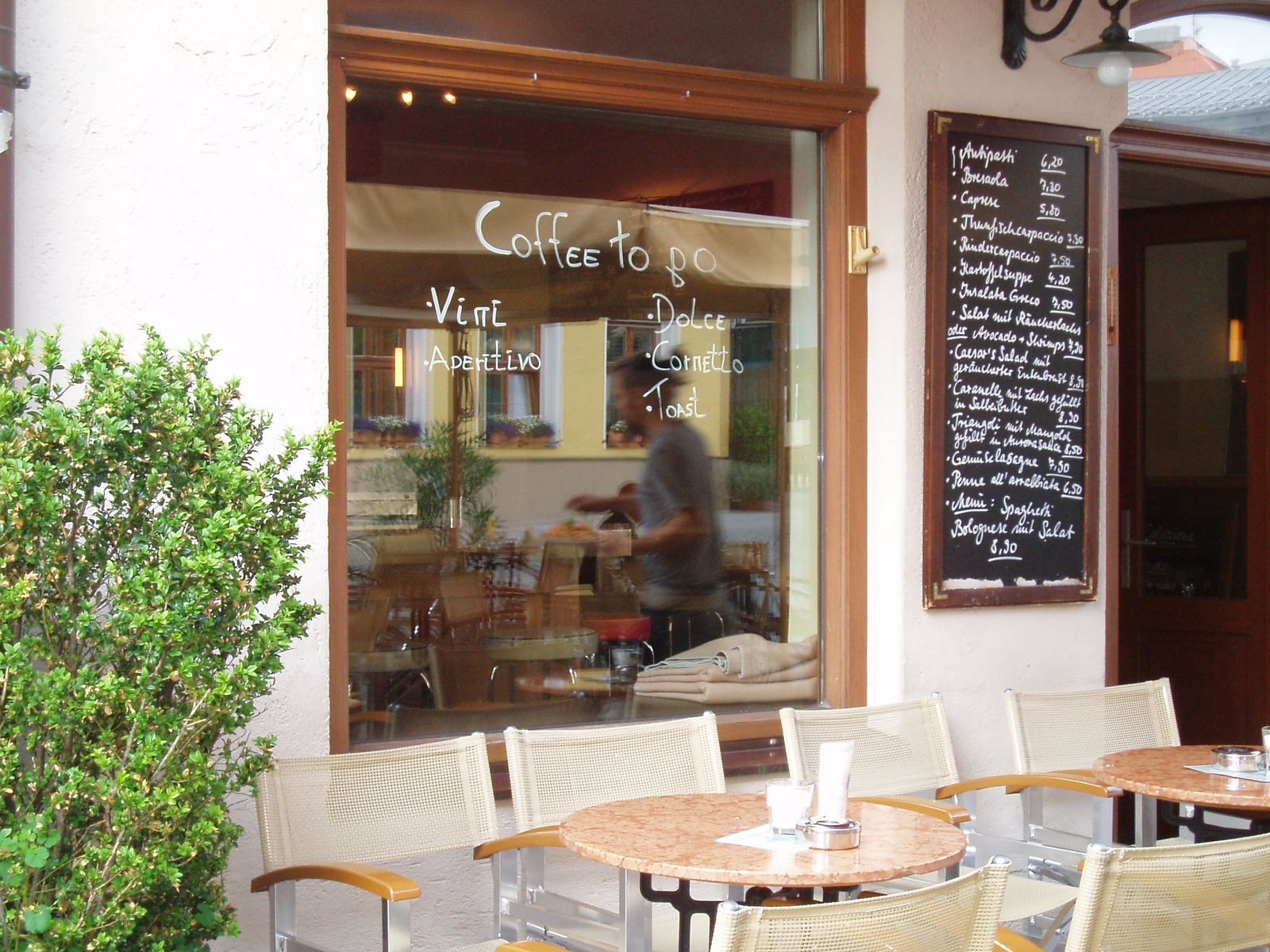
Lunch nearby; sometimes one finds English in unexpected places.

>St. Johann Nepomuk

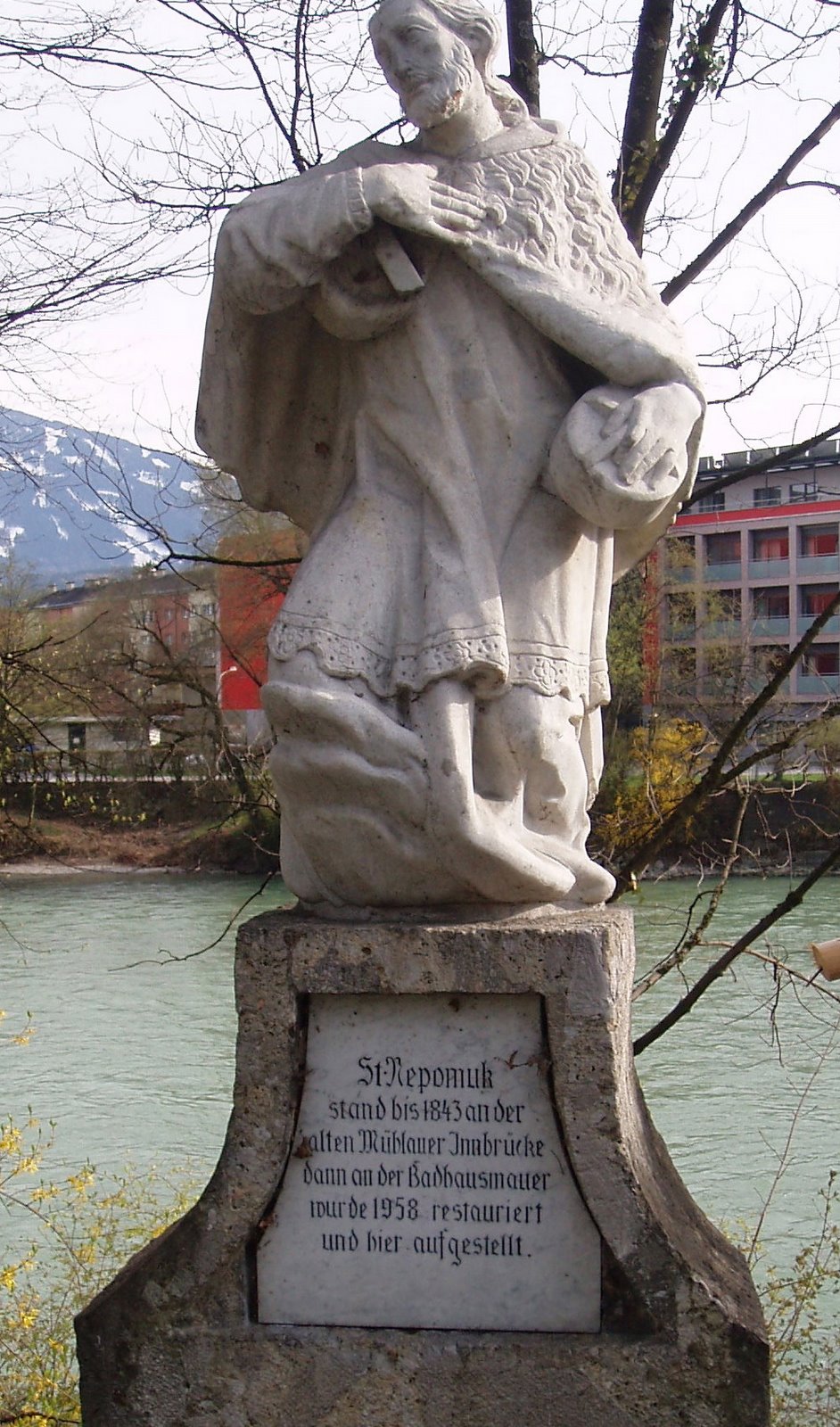
>There are thousands, if not tens of thousands of St. John Nepomuk statues on or near bridges throughout central and eastern Europe. He was the vicar-general to the Archbishop of Prague, and legend has it that he was martyred for refusing to divulge details of the Queen’s confession* to the King, Wenceslaus**, who had him thrown from the Charles Bridge into the River Vltava. He is the patron saint of rivers and protector from floods.

* There were of course more complicated reasons, involving the King’s support for the Avignon Papacy, and the growing Hussite reform movement in Bohemia.
**This is Wenceslaus IV. The “good” one mentioned in the Christmas carol is Wenceslaus I, IV’s great-great-great grandfather.

>Militärgebäude

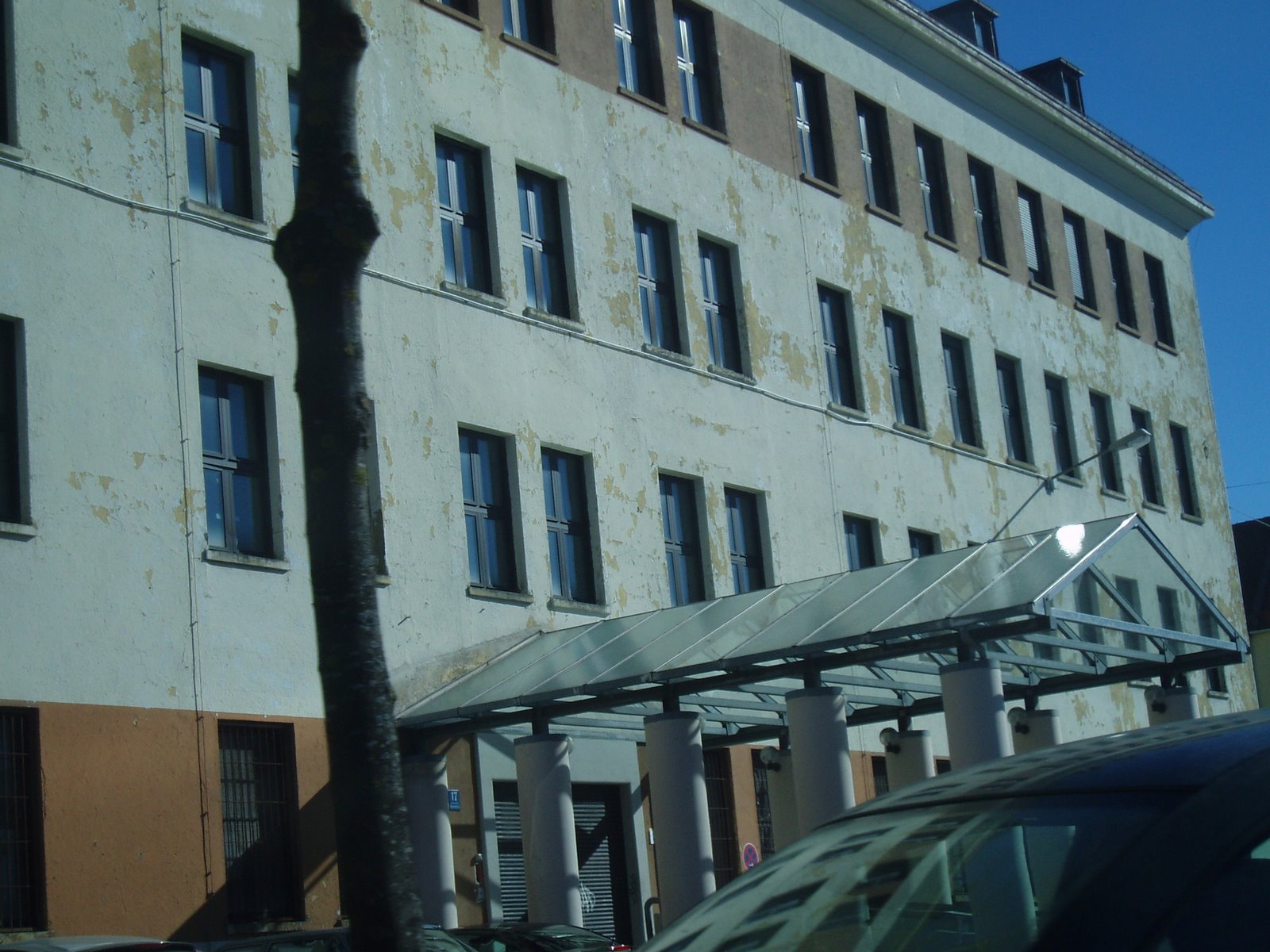
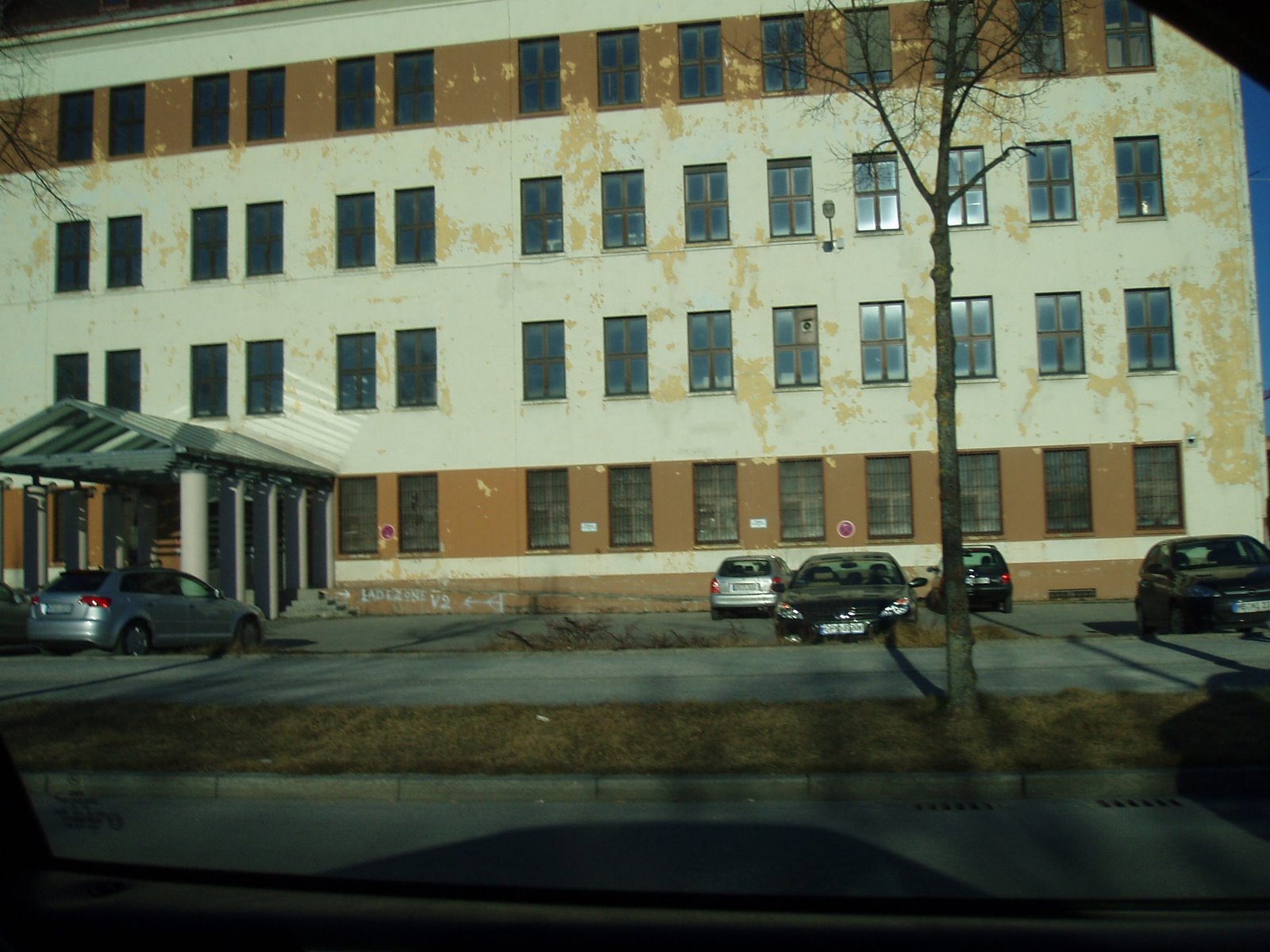
>Occasionally people will say that some neglected eyesore of a building looks like something “aus der DDR”, when it has that look of faded, socialist-architecture glory about it. My boyfriend says this too, and he should know, having grown up there.

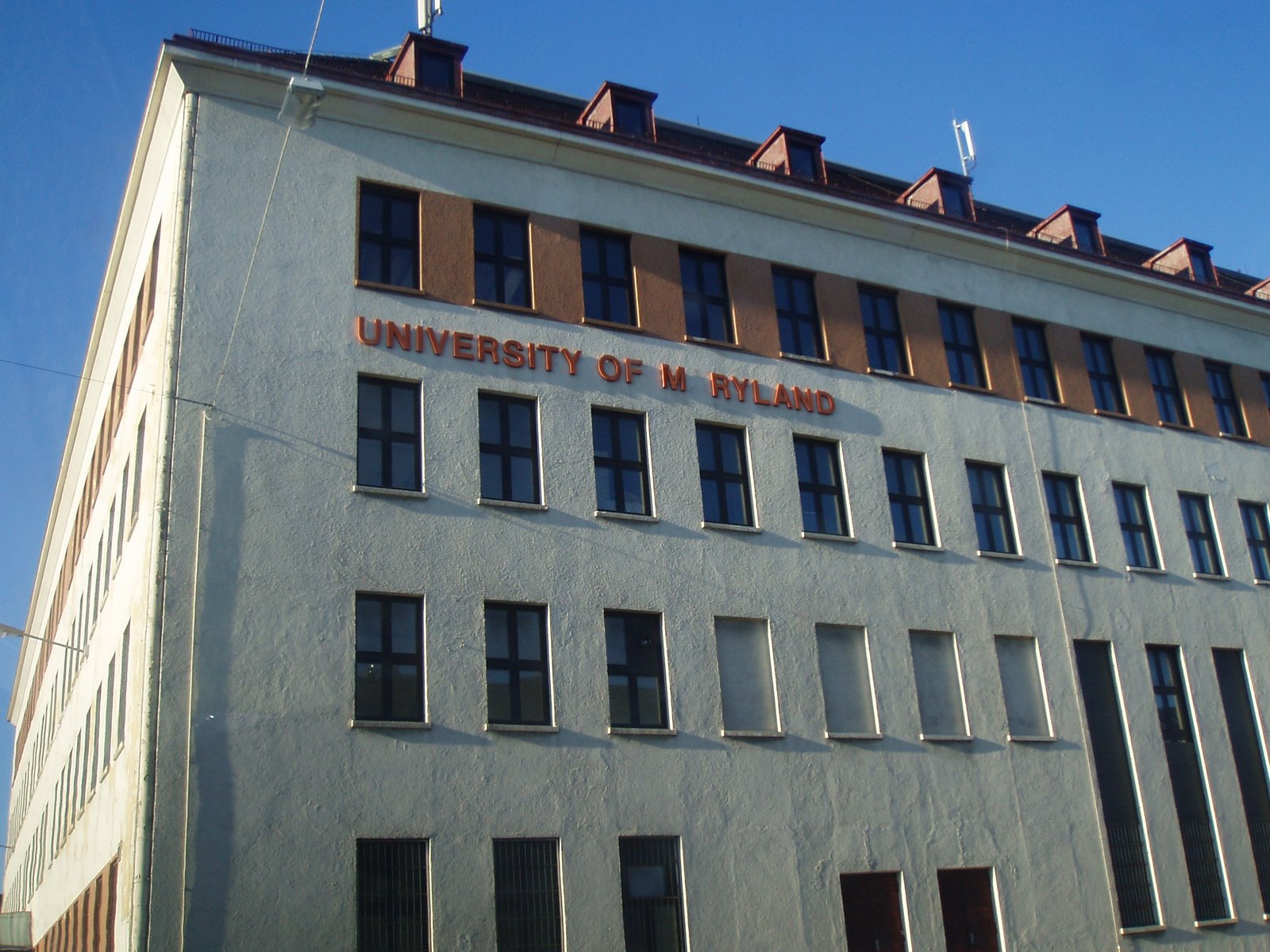
In Munich there is a particular building, attached to a complex of similar buildings, which has this look; massive, with small windows (for more fortress-like protection in case of attack), peeling paint, grass growing in the parking lot. Former Soviet Embassy? Gestapo building? Nope.

It’s OURS. Or was. This branch of the University of Maryland served mainly the children of soldiers stationed here at the neighboring McGraw base (now closed) and other bases in southern Germany. In 1992 the university moved its facilities to Augsburg, and then to Mannheim, where it is set to close any day (in May, I think.) A cursory internet search tell me that the Munich police now use the building, but for some reason they’ve left those letters hanging up there (and falling down) and haven’t bothered to repaint. I am not quite sure who actually owns these buildings now, and that might be the problem.
Like the war bunkers and monuments, these military-related buildings are reminders of a time past, when the cold war was in full swing.