>Spuren des Anschlusses 6: Um das Landhaus

>Innsbruck is Tirol’s capital, and the Landhaus is the seat of the state government. It has a beautiful 18th century facade but the back of it was rebuilt in 1938-40 in what we’ve all come to think of as Ugly Socialist Style. On the rear side of the building over the entrance (not shown) one finds three stone squares; the one on the left is a stone cut of the Tirolean coat-of-arms, on the right that of Vorarlberg (which had been merged with Tirol into one Gau at the time.) The square in the middle is empty, and I was told by a local historian that that is where the swastika was.
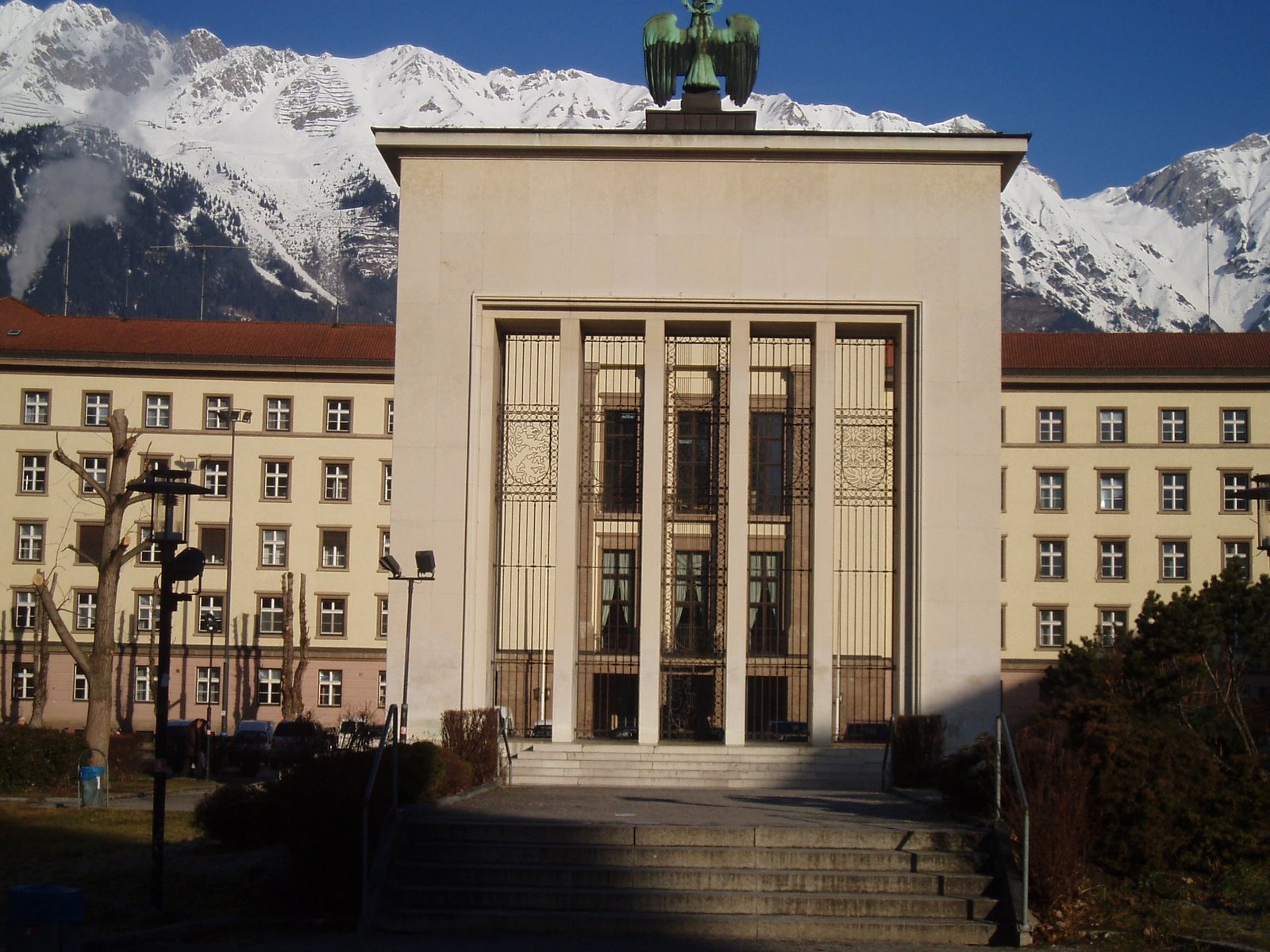
On the south side is the Landhausplatz, and looming in the middle of it is a rather imposing and Socialist-looking monument in the form of a gate. Actually, this monument was built just after the war by the French, as a memorial to her fallen soldiers. Eventually it acquired the words “Pro Libertate Austriae Mortuis”, which made it to honor all war dead. This photo shows the back of the memorial aligned with the Landhaus.
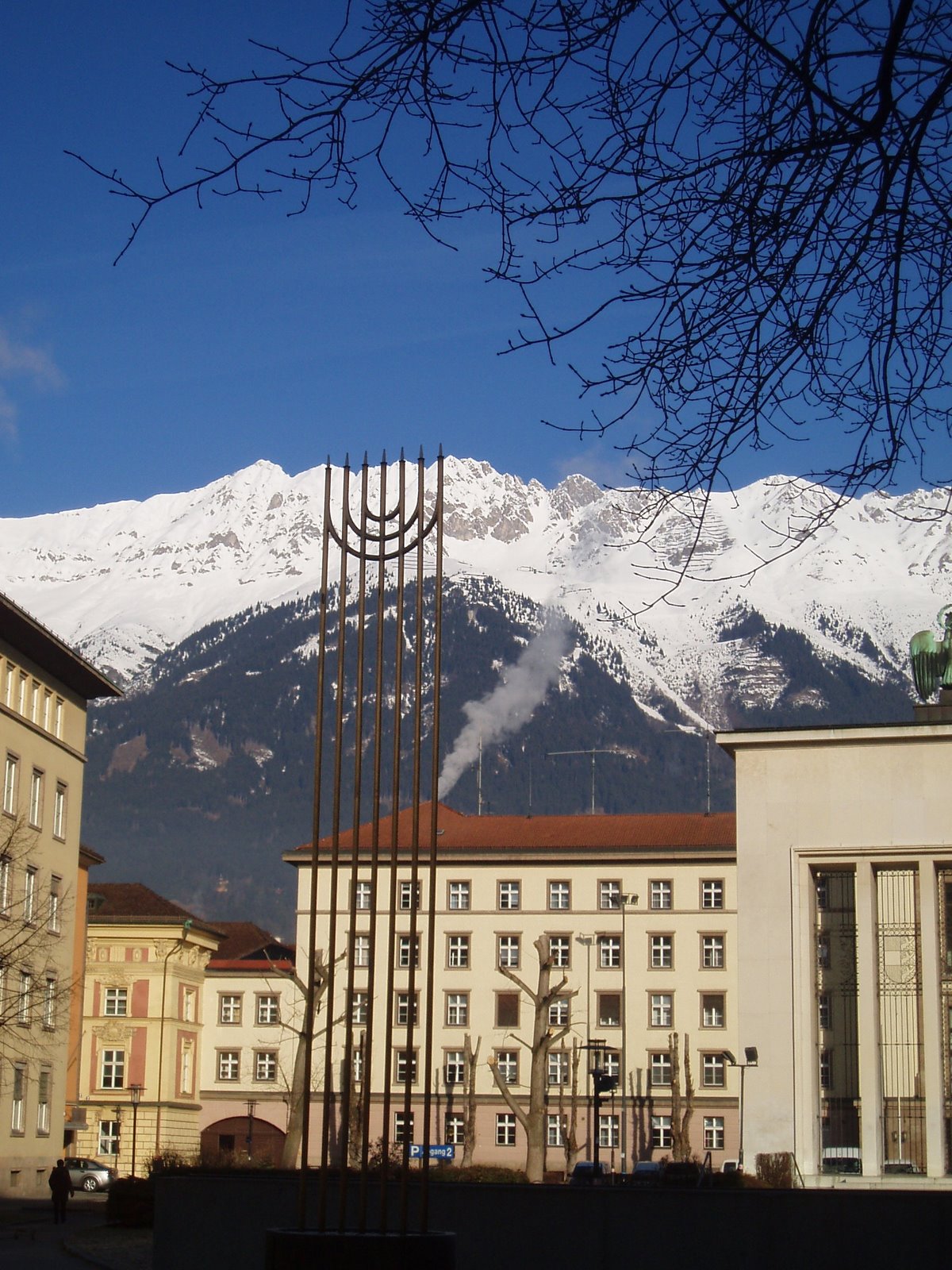
A few dozen meters from the French monument stands a much smaller memorial for the victims of Kristallnacht, November 9 1938. This was the result of a project initiated by the state government in 1997 and awarded to the winner of a local student design competition, the costs taken care of by the state. (The right-leaning Kronenzeitung came out with a complaint, predictably prefacing it’s gripes about money and questions about ulterior motives with “Nothing against memorials, but —.”) The memorial features a menorah design, and a separate sign nearby with the details of the pogrom in Innsbruck.
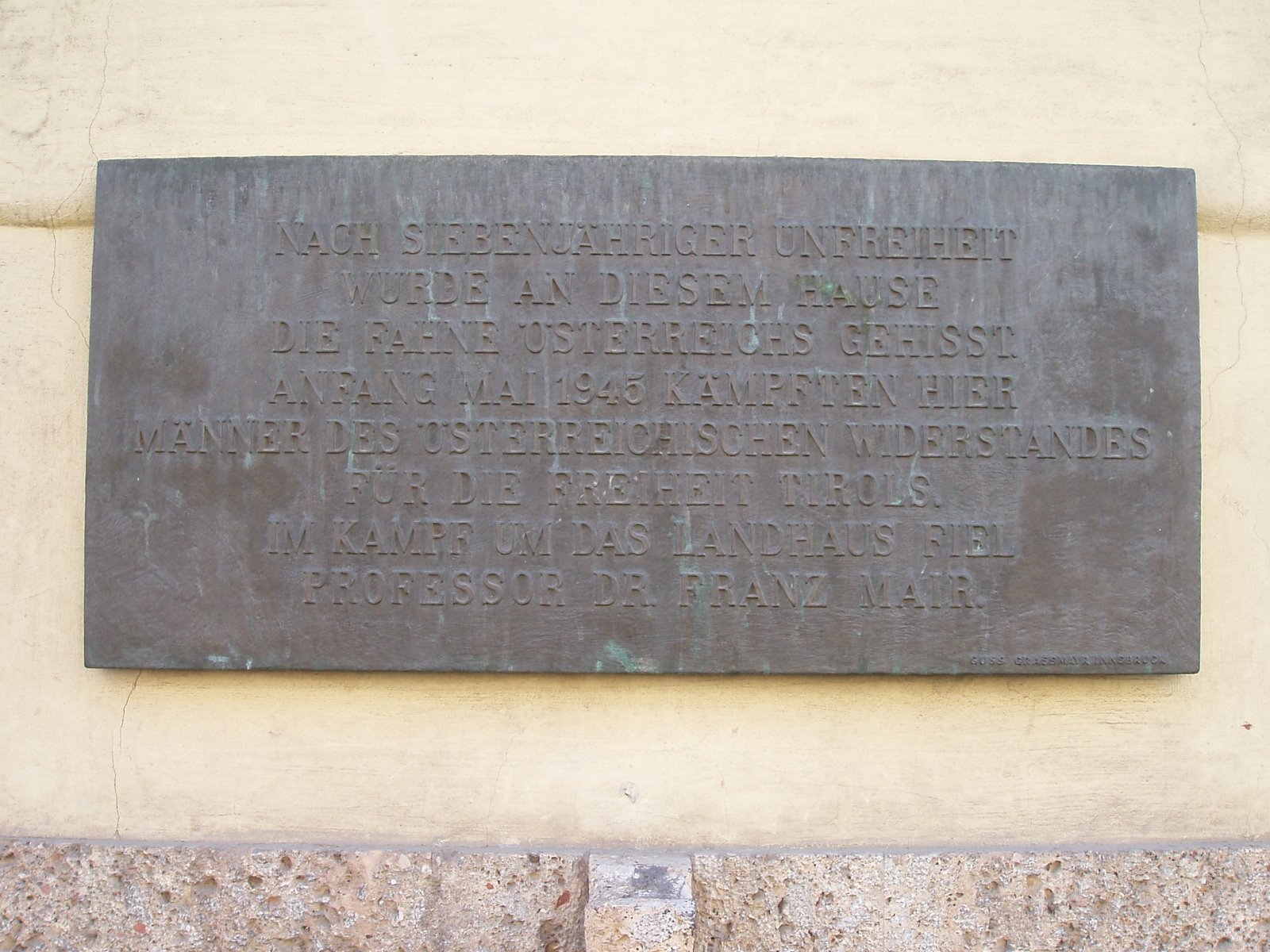
At the front of the Landhaus, just to the left of the main entrance on Maria-Theresien-Strasse, one finds a bronze plaque which reads thus:
After seven years of subjugation, the Austrian flag was raised again before this building. In early May, 1945, men from Austria’s Resistance Movement fought for Tirol’s freedom. At this place, Professor Franz Mair fell in battle.

Franz Mair was a popular high school teacher who led a secret resistance group among the brave and like-minded, including many of his students. When the war was all but over and the Americans had not yet reached the city, there were skirmishes between the still-loyal Wehrmacht and the resistance fighters, who took over the Landhaus in May. This was the first World War II plaque that I came across in Innsbruck, and I learned later that there’s an interesting story attached to it.
This plaque is actually the third incarnation to grace this wall. The first, erected in 1946, was just like it except that it began with the words “Nach sieben Jahre Unterdrückung“, “After seven years of oppression.” In 1955 it was taken down and a new, barely decipherable plaque was put up in its place, which read “In this place, Professor Franz Mair fell in the fight for Tirol’s freedom.” The reason given was that German tourists, taking their vacations in the merry Alps, had complained, although there was also plenty of speculation at the time that more than a few of the local ex-Nazis wanted it changed too.
There were protests, specifically from Catholic groups, and a new “old” version of the plaque then went up, true to the original in all but one word — in place of Unterdrückung, or oppression, this one used the more vague, less aggressive Unfreiheit. There’s not even a decent way to translate this word in the way that it’s meant — “nonfreedom.”
The choice of wording goes a long way to explain the internal conflict Austria had, and is still having, in finding its place during those frightful years. Victim, perpetrator, willing accomplice, resistance fighter, bearer of guilt, denier. All of the above. Unfreiheit.

For now, this is the last installment in my Anschluss history blogging. Thanks for reading it.

Heidemarie Uhl, “Das Gefallenengedenken als Antithese zum Geschichtsbild der Opferthese: von Opfermythos zur Mitverantwortungsthese,” in “Erinnerung-Absenz”, XING Magazine, available in PDF online (in German.)

>Spuren des Anschlusses

>I have been thinking about a series of posts on a topic that may or may not interest you; traces of Tirol’s history, with particular attention to the “Anschluss” years, when the Nazis were all but invited down to take things over. When I first moved to Austria, being an American I brought with me a certain morbid fascination with the Nazis and the Holocaust. Austria and its citizens have a complicated view of those years, as they would generally like to call themselves victims of an occupying fascist regime when that was not exactly the case. (There were plenty of victims, for sure. But that’s a bit like the old story of every Frenchman calling himself a résistance fighter.) Therefor, gathering anecdotal histories from friends and others has not been productive, and this I understand. If Europeans were to come to America and ask me endless questions about the Klan and other racist organizations, I would get pretty tired of that. They don’t really want to talk about what their grandparents may or may not have done 65 years ago, and I do not judge them on this.
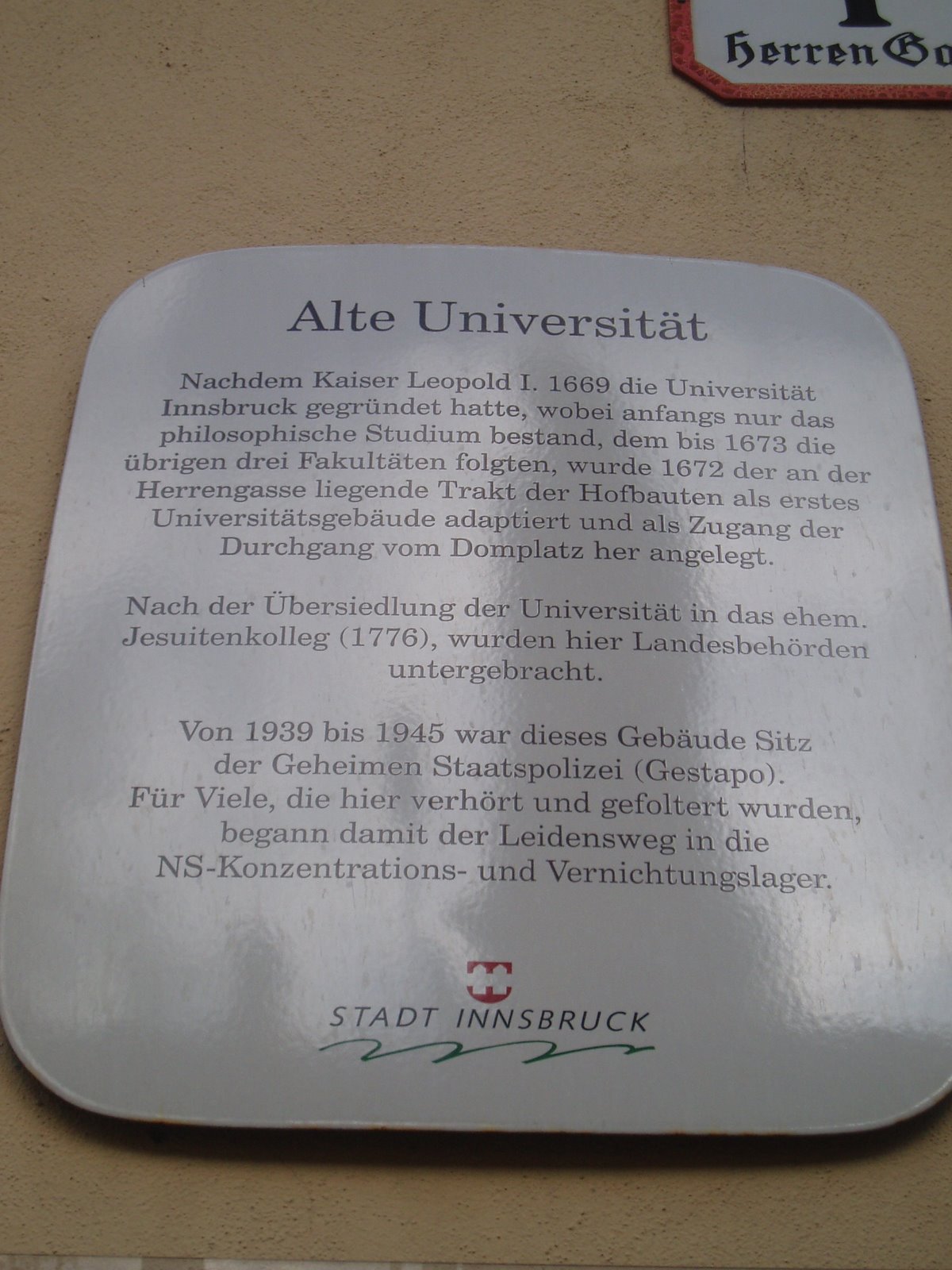
In my walks through town and hikes through the nearby hills, I have collected a sort of walking-tour of monuments, plaques and thoughts on that time, and this is as good a place as any to share all that. So here is, shall we say, example number one, the provincial government building entrance, at Herrengasse 1. As you see, there is an unassuming historical plaque near the door, and a bronze one to the left of the window:


“The Old University

After Emperor Leopold I founded the University of Innsbruck in 1669, which at first consisted only of a college of philosophy until three other faculties were added in 1673, the court buildings on the Herrengasse were converted into the first university facilities , along with a passage for access to to the Cathedral square.

After the university moved to the former Jesuit college in 1776, the buildings housed regional government offices.

This building was the seat of the Secret National Police (Gestapo.) For many who were interrogated and tortured here, this was the the first stop on their journey to Nazi concentration and extermination camps.”

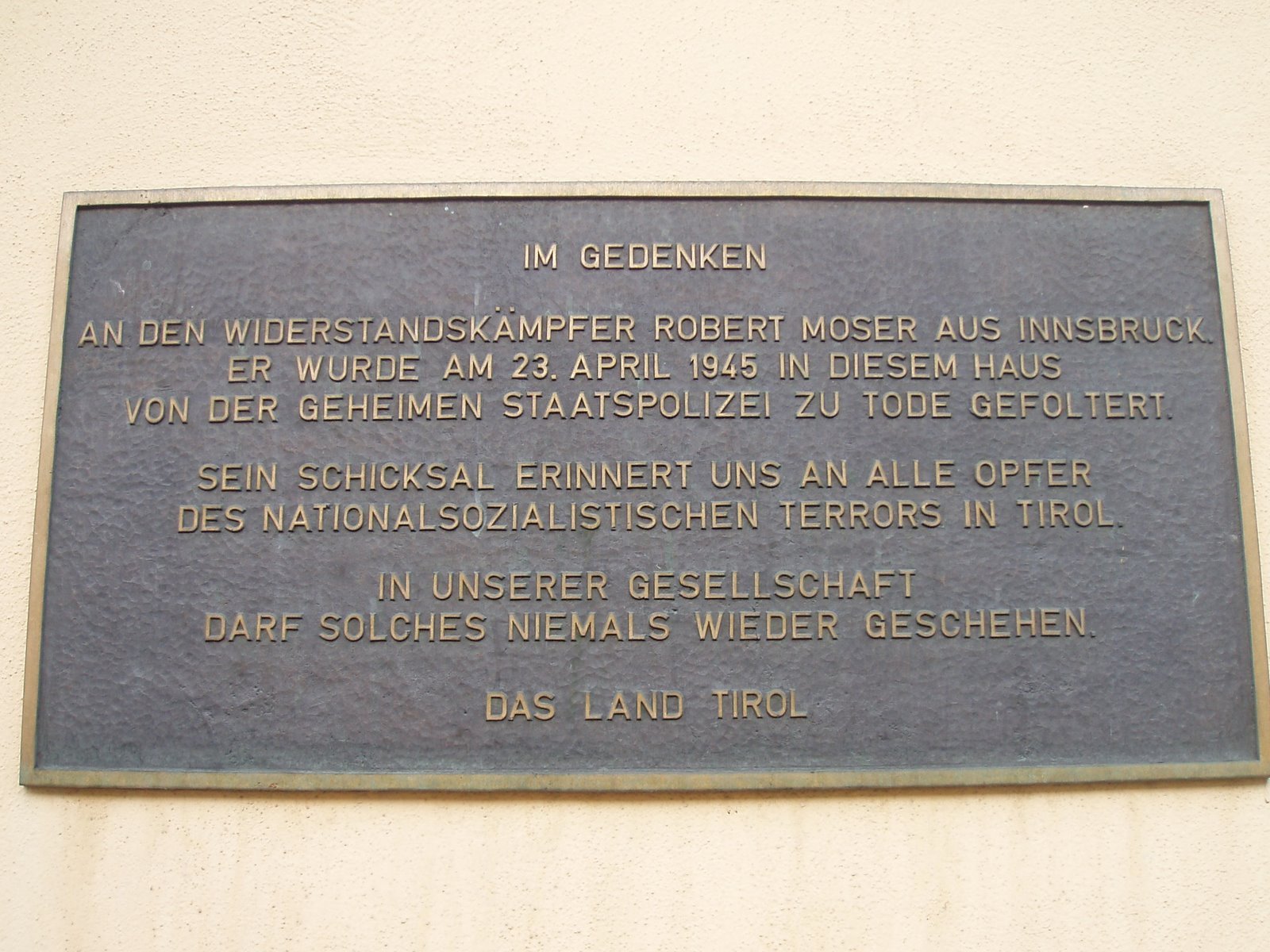
“In memory
of the resistance fighter Robert Moser, Innsbruck. He was tortured to death by the Gestapo in this building.
His fate reminds us on all victims of the National Socialist terror in Tirol.
Such a thing must never happen again in our society.

The Province of Tirol”

There is little information on the internet about Robert Moser, although I have come across some in the local library. The resistance movement in Tirol is said to have been small.

>Part 2

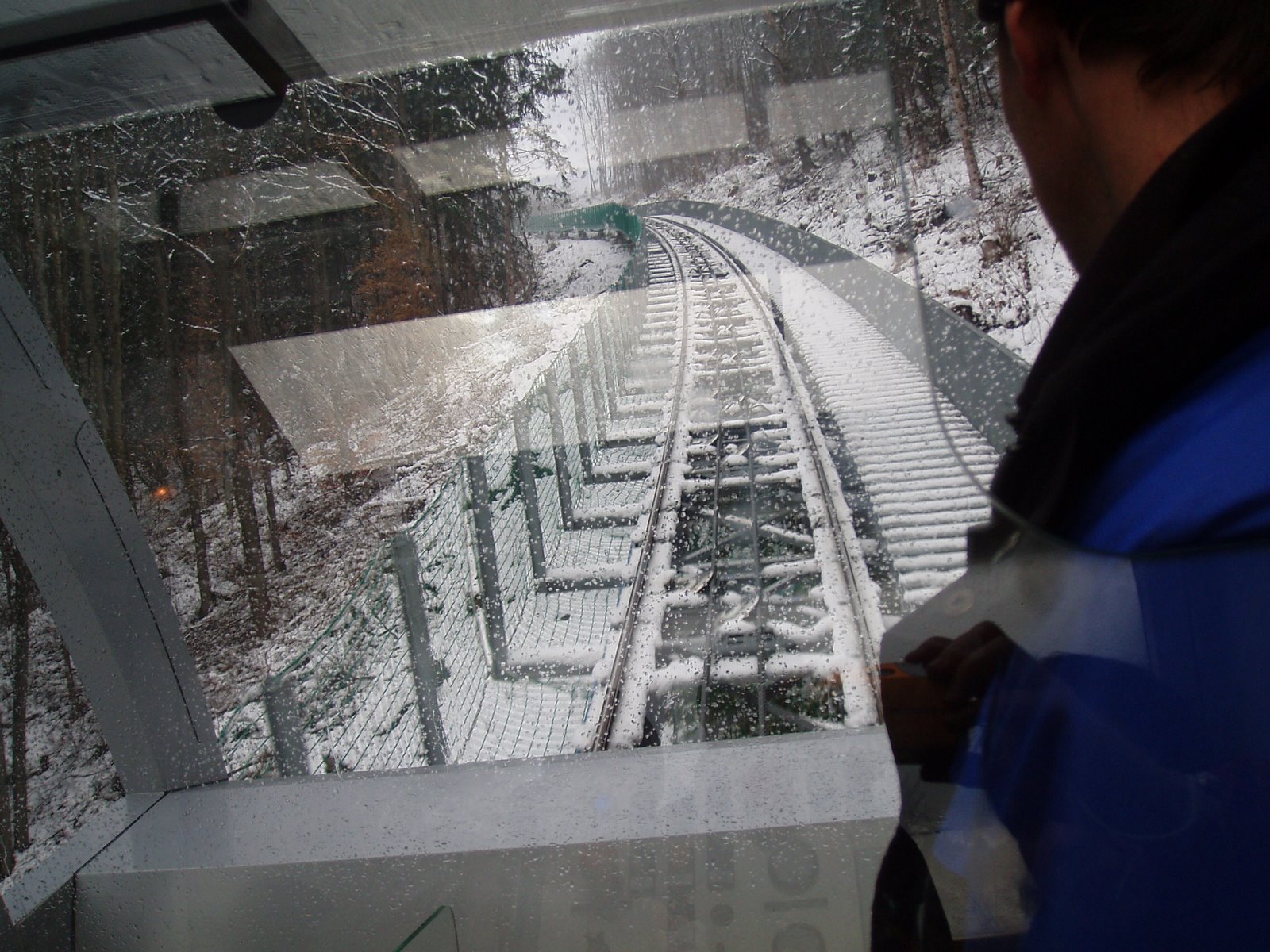
>Now we’re climbing at a pretty good speed, up to the “Mittelstation”, near the Alpenzoo.

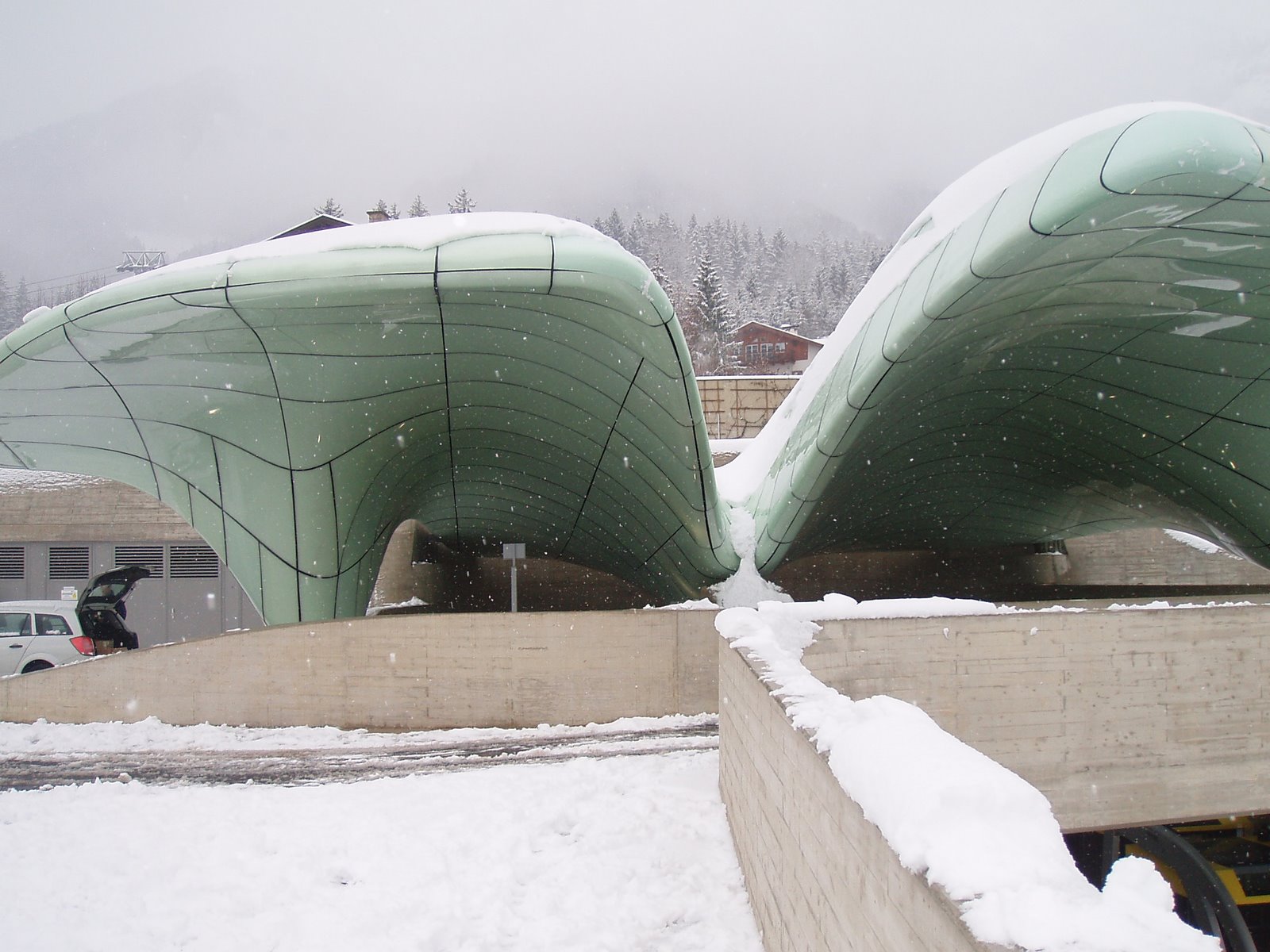
At the top, another animé sea monster…
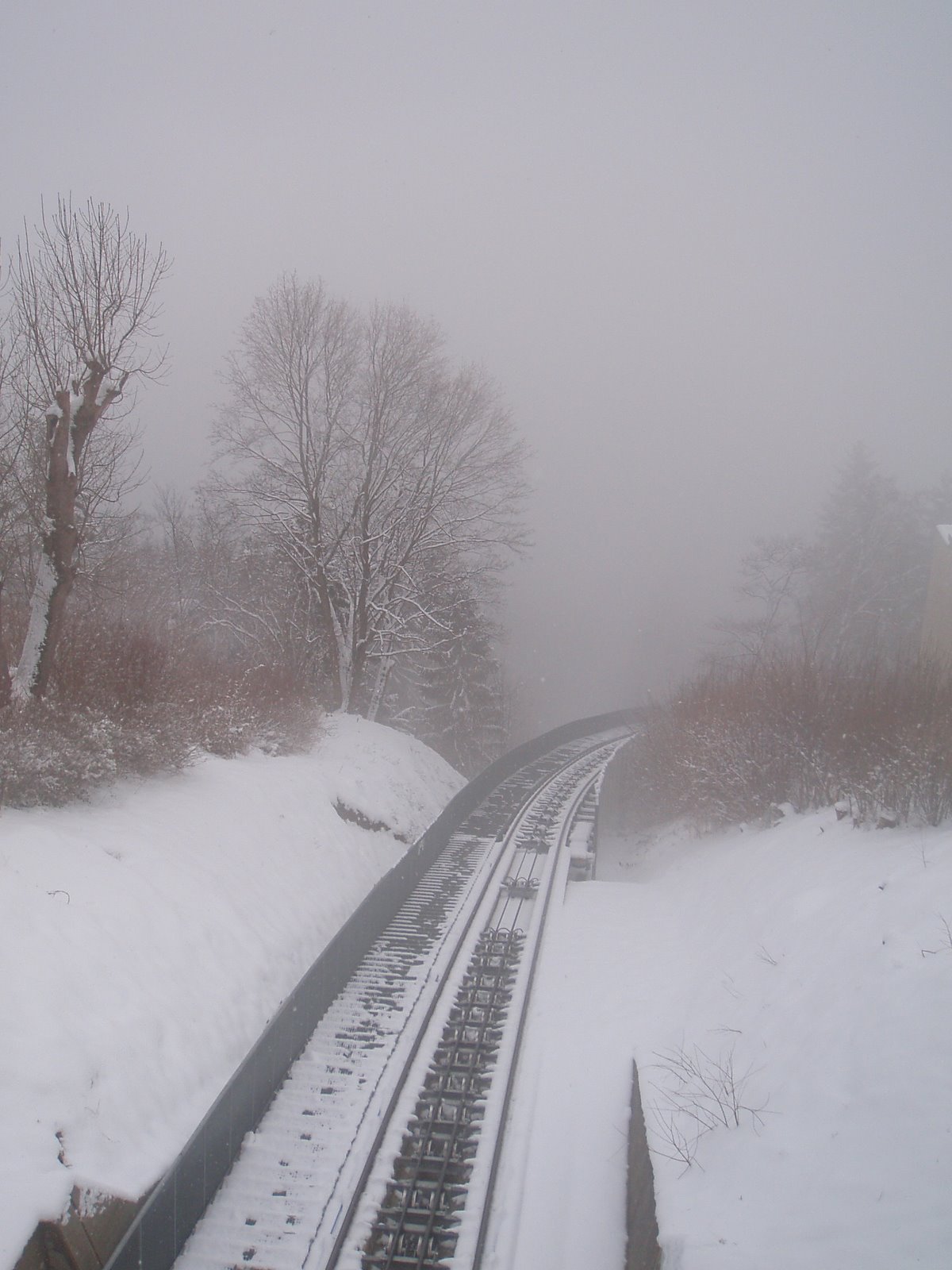
The fog gives the impression of a descent into nothingness.
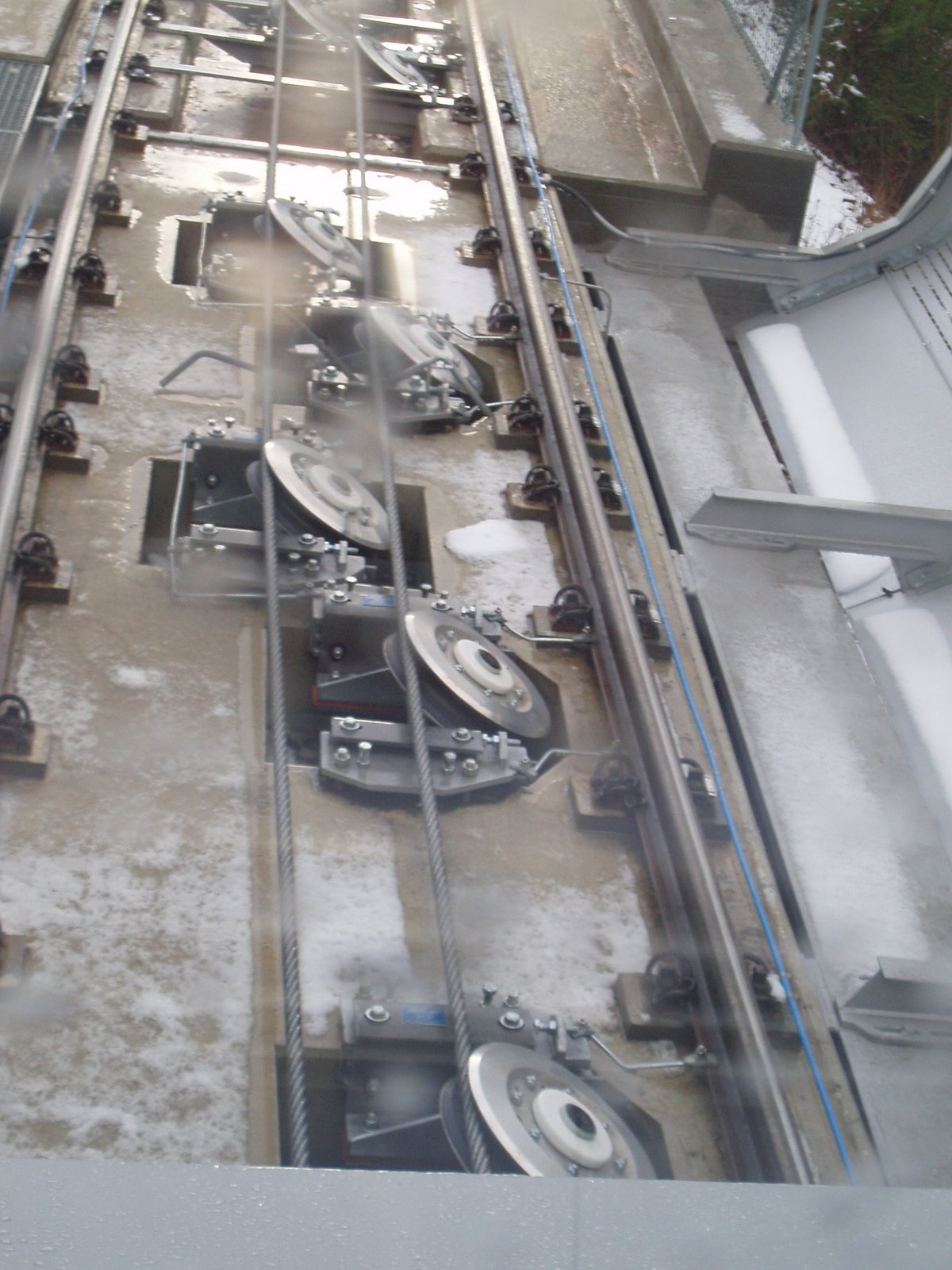
I know nothing about how cable cars work, but I found these hub-cap-like wheels interesting.

>A ride on the new Bahn, Part 1

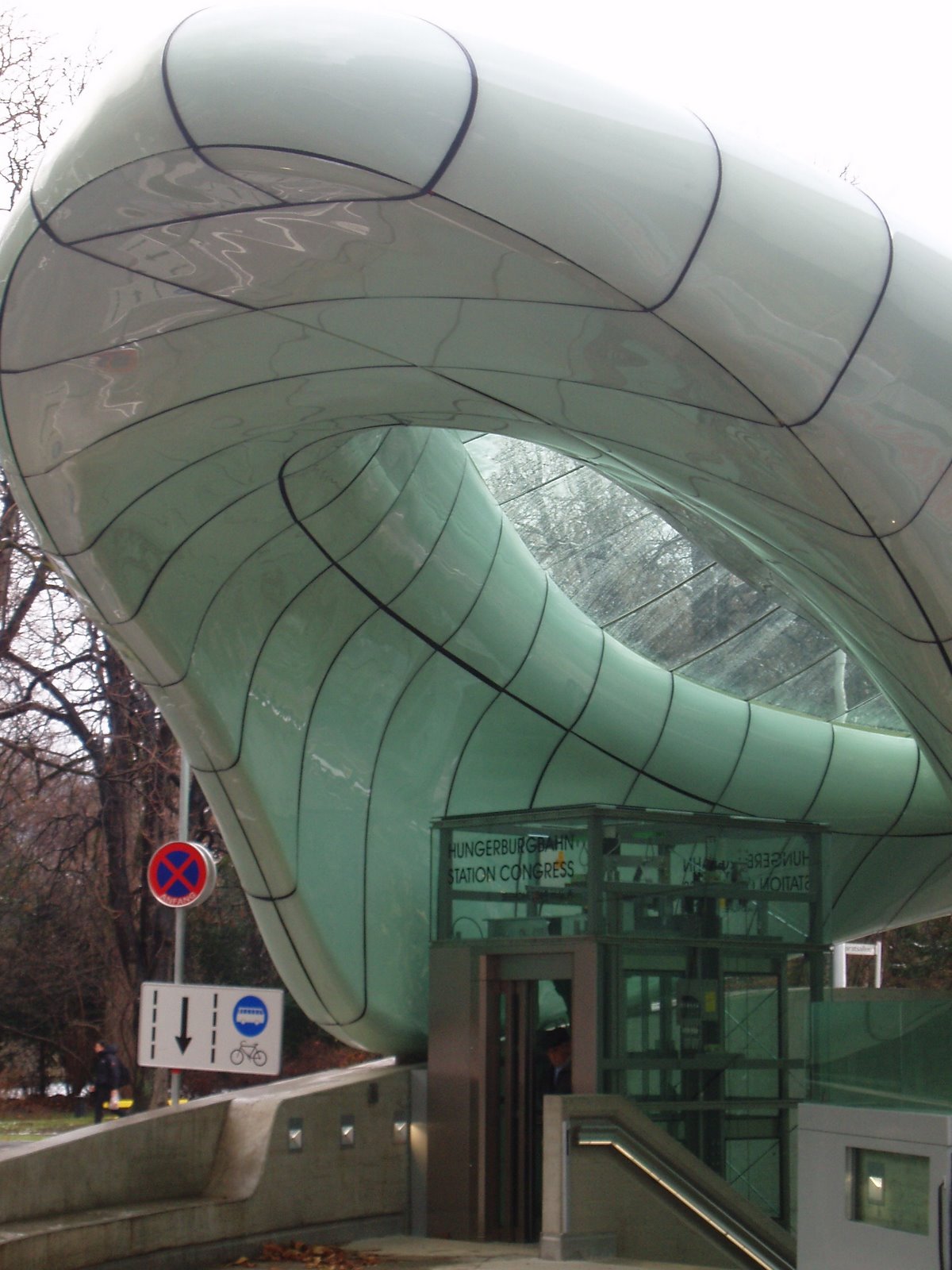
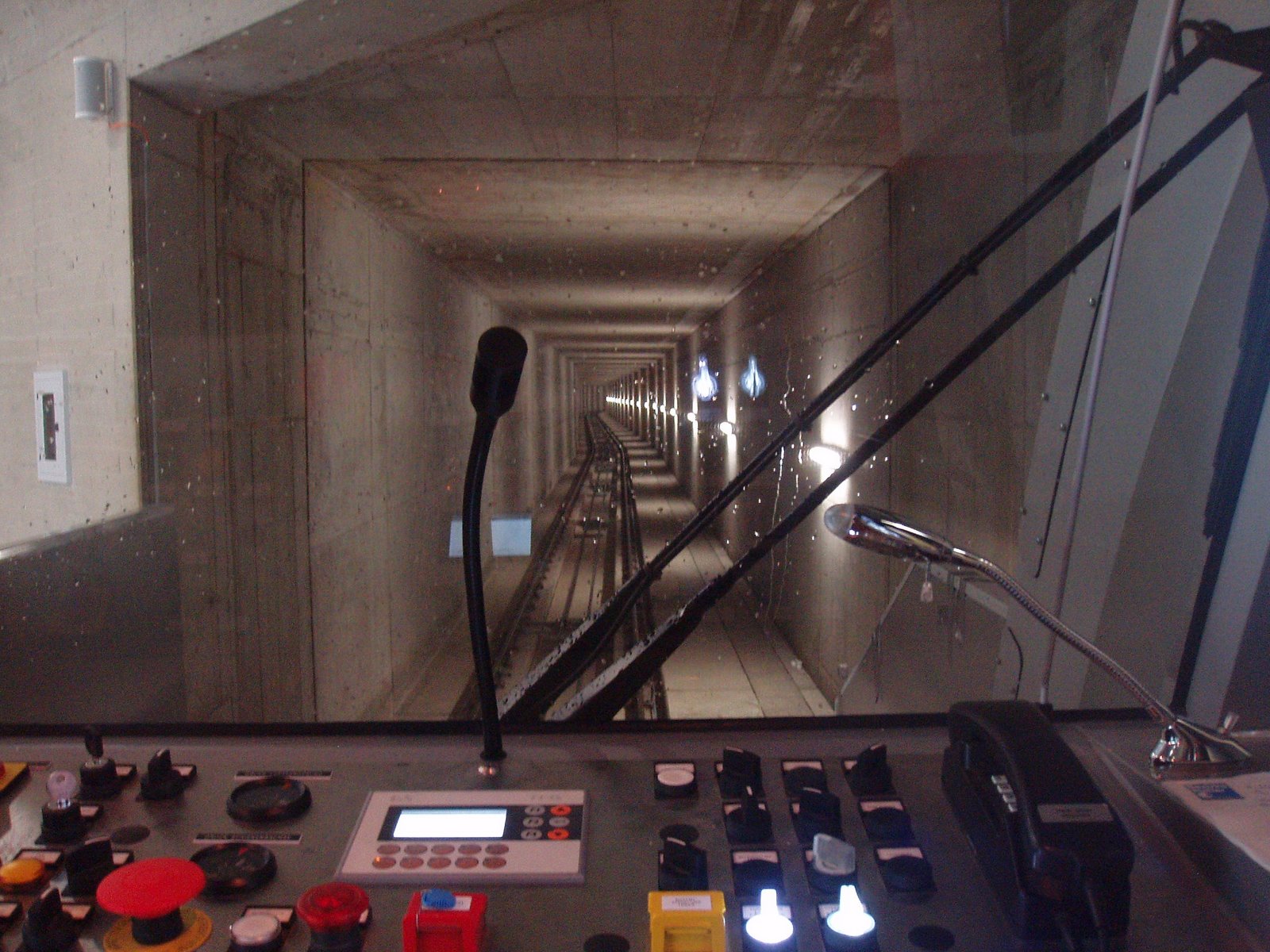
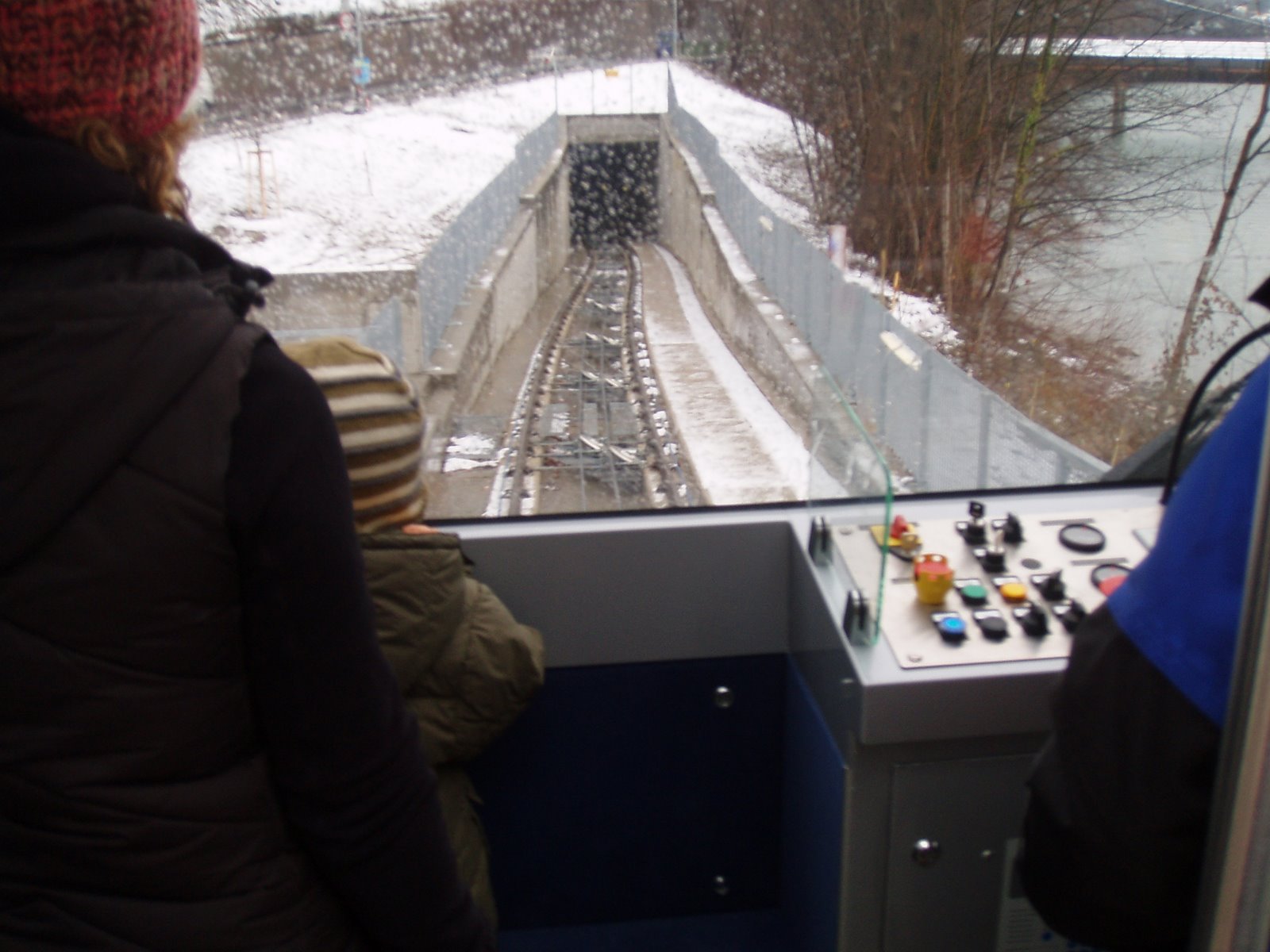
>I took some time this week to try out the new Hungerburgbahn, and came away a satisfied customer! Above is the Kongresshaus Station, the “bottom end” of the thing. You begin underground, much like a normal subway…
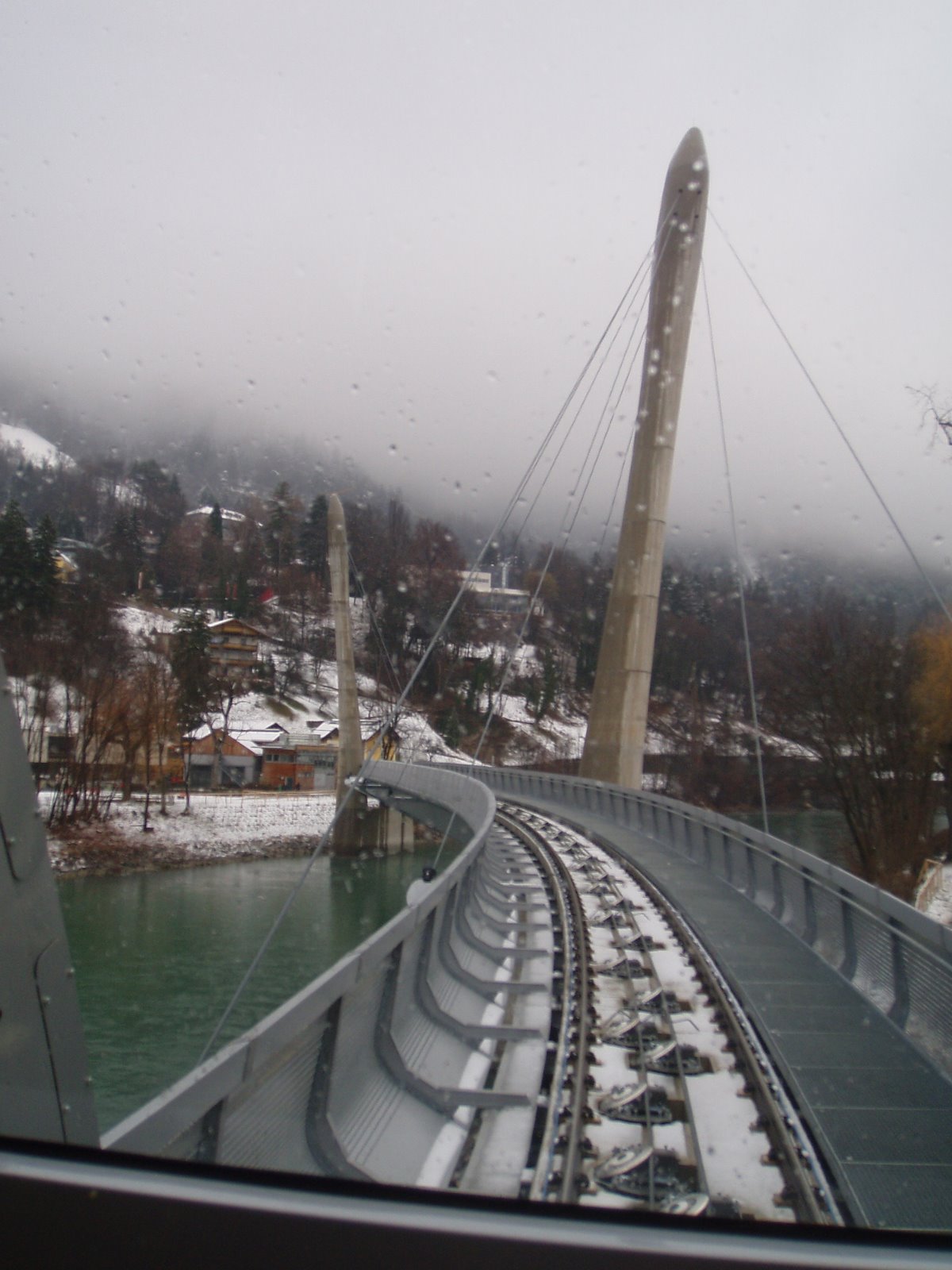
then emerge at the “Lowenhaus” Station right before crossing the bridge (with its two tall concrete “needles” over the Inn.
Once across the river the tracks descend once more into the earth,
and go down aways before a steep uphill climb to the surface.
(Continued in next post)

>The New Hungerburgbahn is Open

>UPDATE: On December 6 2007 I posted photos of my first ride on the new Hungerburgbahn, so you can see the whole experience. It runs every day until around 7pm, a round-trip ticket costs 4,50€ for “locals” (but they did not ask me for any ID.) I’m guessing it costs under 6,00€ for the tourists. And speaking of tourists, this is an excellent thing to do if you want an Alpine view but don’t care to take the ski lift all the way up. (And it’s wheelchair accessible!) Get out at the Gasthaus Lowenhaus on your way back for a nice warm drink.


Innsbruck has replaced its old Hungerburgbahn incline railway with a shiny new cutting-edge rail line. There’s been plenty of controversy about the need for a new one at all, when the old one worked perfectly well, etc.
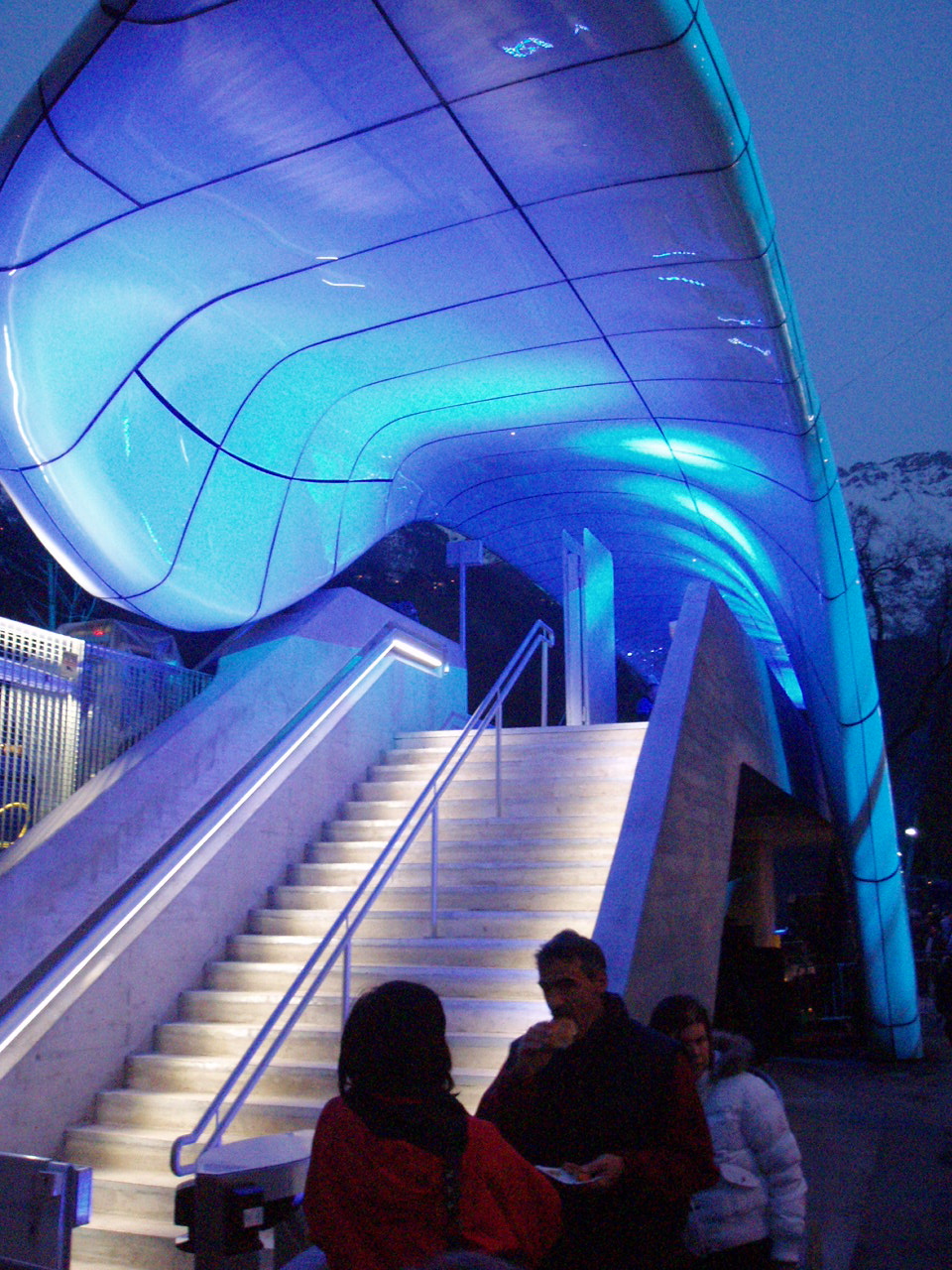
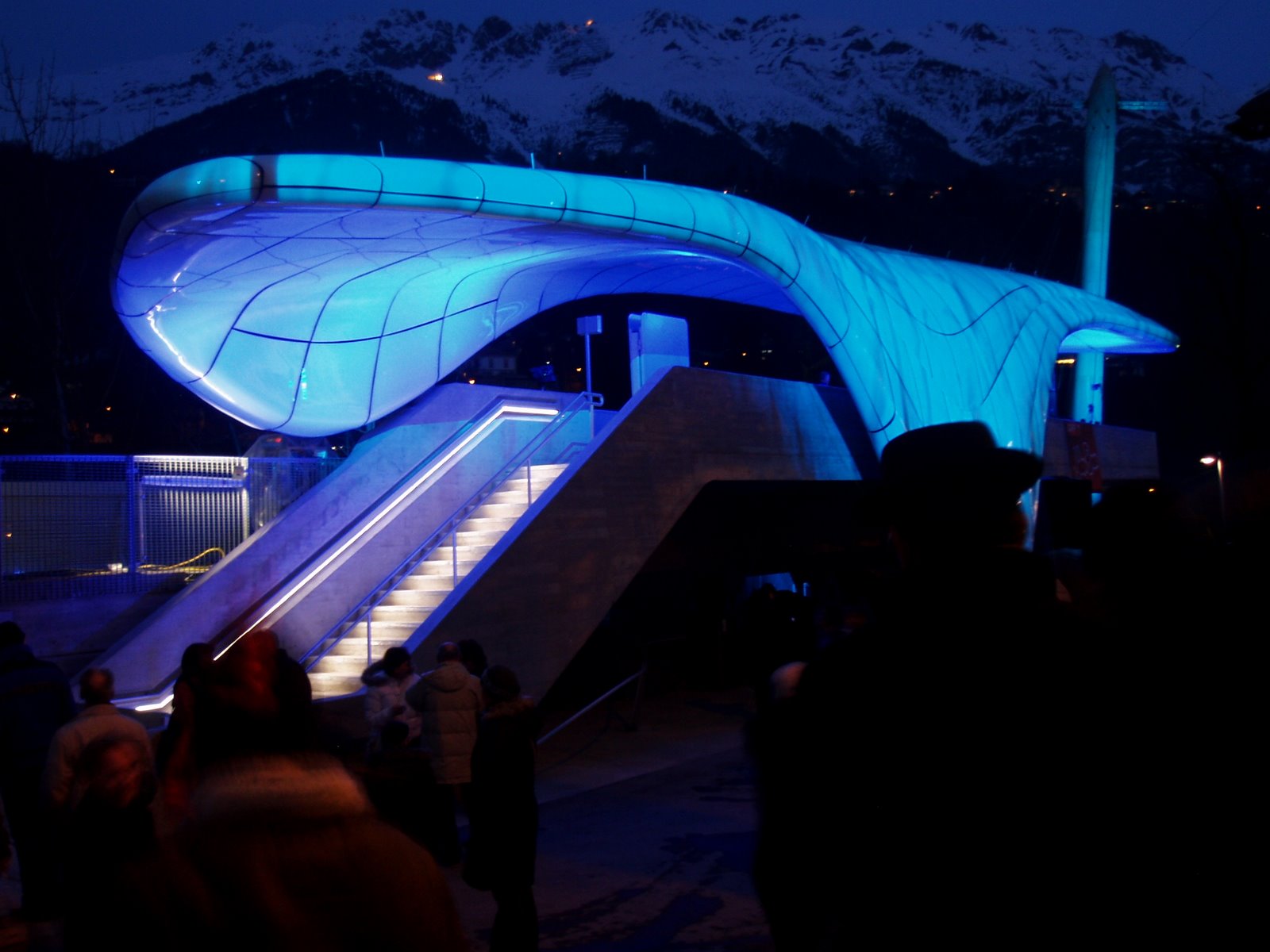
I like it. The stations are supposed to resemble ice forms; they also look a bit like Japanese anime sea monsters to me. In the daytime you can see that the translucent outer tiles are a pale green, similar to the chalky green of the river Inn. The architect, the renowned Zaha Hadid, also designed Innsbruck’s space-ship ski jump.
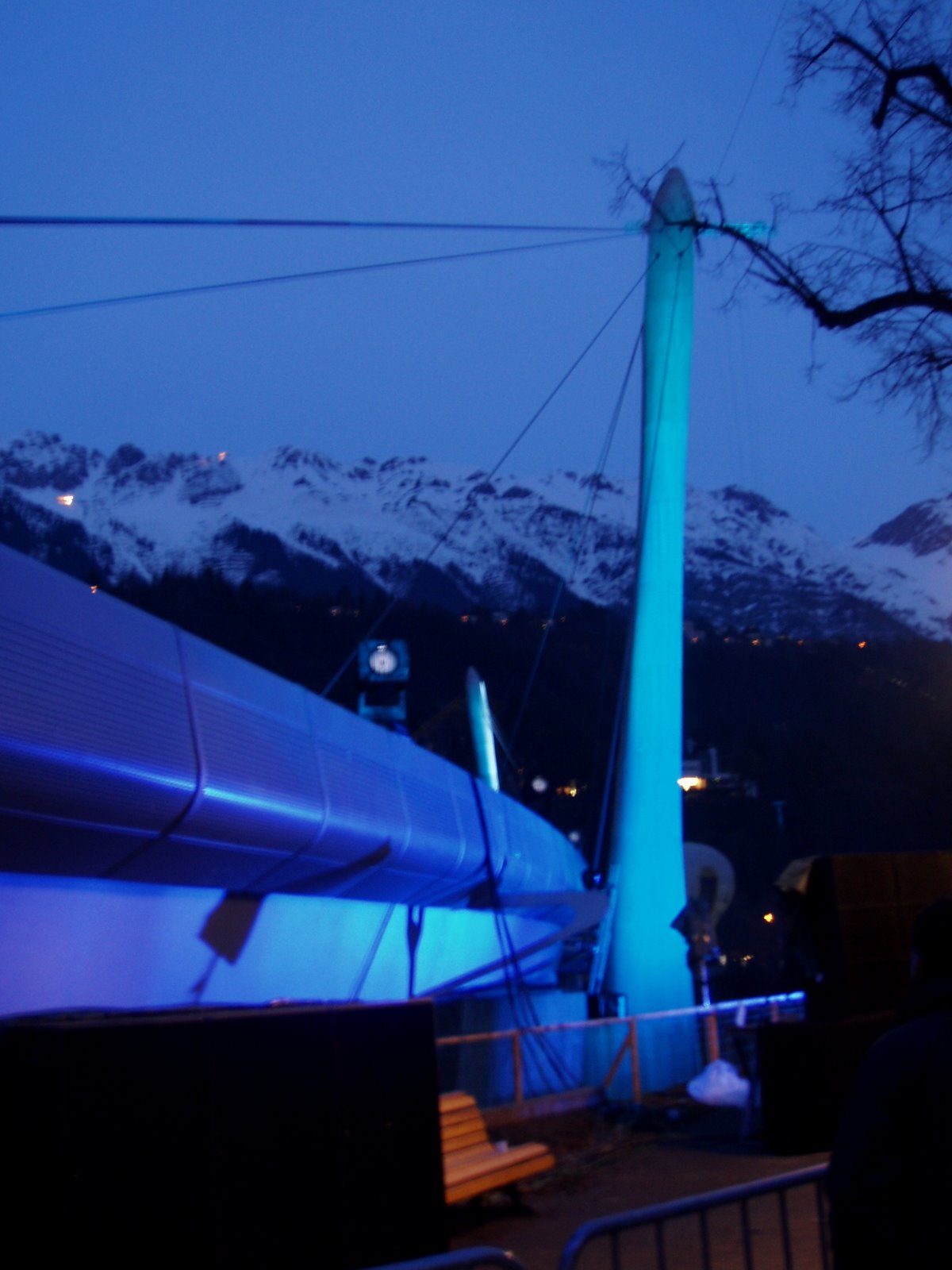
I went to the grand opening party yesterday evening, but it was pretty crowded and getting more so every minute, so I just took a few snapshots and left. Can’t wait to take a ride on the thing, though!